Meet the M8: The Muslim Bloc Trump Built

Eight Muslim countries issued a joint statement Sunday condemning Israel’s rejection of the latest roadmap for implementing President Donald Trump’s Gaza peace plan. They are: Saudi Arabia, Egypt, Jordan, Qatar, the United Arab Emirates, Turkey, Pakistan and Indonesia.

They have no formal collective name. So call them the Muslim Eight — the M8.

Together, the M8 countries have roughly 817 million people and contain forty percent of the world’s Muslims. Indonesia and Pakistan alone are two of the world’s largest Muslim-majority countries.

The M8 was assembled by U.S. President Donald Trump with a specific purpose.

On September 23, 2025, on the sidelines of the United Nations General Assembly, Trump convened the leaders and senior officials of these eight Arab and Muslim countries. The goal was to end the Gaza War and build a day-after framework. Trump needed Muslim and Arab countries with street-cred in Gaza to make that happen, as well as a history of operating functioning governments.

Egypt controlled the critical border with Gaza and, together with Qatar, was central to negotiations with Hamas. Jordan brought its relationship with Israel, the Palestinian Authority and sensitive holy sites in Jerusalem. Saudi Arabia brought money, Arab leadership and the enormous prize of possible normalization with Israel. The UAE brought capital, administrative expertise and an existing relationship with Israel. Turkey brought regional power and channels to Hamas. Pakistan and Indonesia brought two enormous Muslim populations and legitimacy extending well beyond the Arab world.

Trump assembled M8 to be directed at the problem in Gaza. Help end the war. Get the hostages released. Stabilize the ceasefire. Keep Hamas from returning to power. Reconstruct Gaza. Support a new Palestinian administration. Reform the Palestinian Authority. Create a workable security structure.

Six days after Trump’s meeting, the M8 jointly welcomed his Gaza peace proposal and committed themselves to working with the United States and the parties to implement it.

When Hamas responded to Trump’s proposal in October, the M8 responded together. When disputes developed over Rafah, the M8 responded together. When Trump established his Board of Peace to oversee Gaza’s transition, all eight announced together that they would join.

Trump had created a Muslim steering committee for Gaza. But soon, the M8 discovered it could steer other things.

By December, it was collectively defending UNRWA, even as Trump’s postwar architecture was establishing new institutions to govern, finance and rebuild Gaza.

In March 2026, the M8 jointly condemned Israeli restrictions at Al-Aqsa Mosque/ the Jewish Temple Mount. Later that month, it issued another statement about Muslim and Christian access to Jerusalem’s holy sites.

In April, it jointly declared that the entire 144-dunam Temple Mount/Haram al-Sharif compound was exclusively a Muslim place of worship and backed the Jordanian Waqf’s authority there.

The M8 began issuing collective positions on Israeli settlements, Israeli sovereignty measures, “settler violence” in Judea and Samaria.

None of that was why Trump assembled the M8.

The Board of Peace was created around a specific Gaza program: maintain the ceasefire, demilitarize Gaza, establish transitional Palestinian governance, rebuild the territory, reform Palestinian institutions and create conditions for a different future.

Yet the M8 now speaks on subjects well outside of Gaza with the institutional weight it acquired by becoming Trump’s chosen Arab-Muslim partner. A coalition created to solve Gaza has become a platform to pressure Israel over Jerusalem, Judea and Samaria, UNRWA and Palestinian statehood.

Trump gave the M8 a mandate to help fix Gaza. The M8 is turning it into a mandate to lecture Israel.

Israel’s Unicorn Boom Is Much Newer — and More American — Than You Think

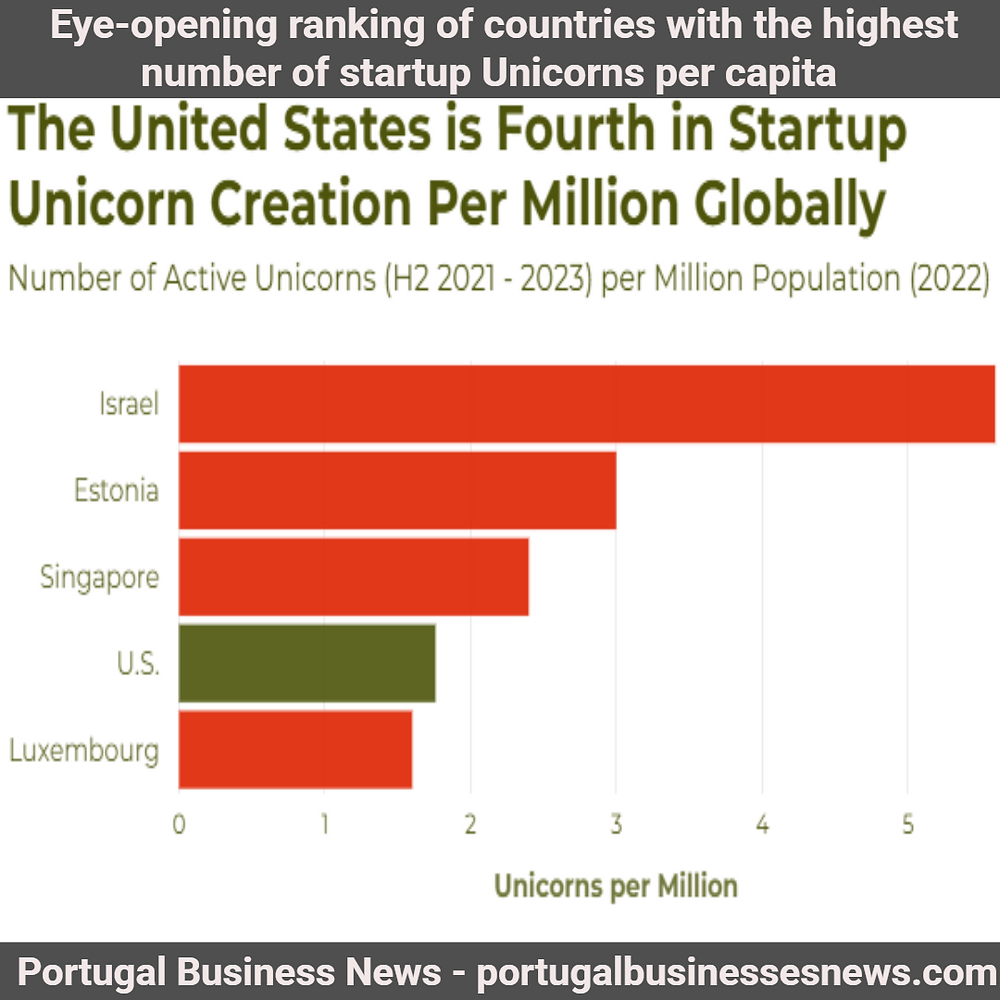
Charts regularly circulate showing the countries with the most “unicorns” — private companies that achieve valuations of at least $1 billion. Divide the totals by population and tiny Israel suddenly jumps toward the top of the world.

But the headline number obscures a three more interesting stories.

Israel did not spend 75 years steadily accumulating unicorns. Most of its unicorn phenomenon is remarkably recent. And many of the companies created by Israelis aren’t headquartered in Israel at all.

Then there is what these companies actually do.

Put those three pieces together — when they emerged, where they are headquartered and what they sell — and Israel’s unicorn story looks like a specialized company-production machine for today’s world.

The Unicorn Explosion

In 2011, only 16 new unicorns were created in the entire world. Israel was hardly overflowing with them either. TechAviv data show Israel produced just four new unicorns in 2015 and nine in 2019.

Then the curve turned sharply upward.

Israel produced 19 new unicorns in 2020 and 42 in 2021. By December 2021, TechAviv counted 79 Israeli-founded unicorns. By December 2022, there were 98.

That means the Israeli unicorn story people now take for granted is largely a phenomenon of the last several years.

“Israel ranked first globally in terms of its number of technology unicorns per capita. As of 2025, the country’s startup scene contained 90 active tech unicorns, and raised billions of dollars in investments annually. These are indicators of an exceptionally well performing startup ecosystem, which forms the basis of the country’s robust technology industry.” – Statista.com

The cheap-money technology boom certainly helped. Valuations soared everywhere in 2020 and 2021. But Israel’s performance was exceptional even within that global frenzy.

Israeli Unicorn Doesn’t Necessarily Mean in Israel

Of the 79 Israeli-founded unicorns counted at the end of 2021, only 33 — 42% — were headquartered in Israel.

The rest were spread around the world:

  • 19 in New York.
  • 15 in Silicon Valley.
  • 5 in Boston.
  • 3 in London.
  • 2 in Los Angeles.
  • 1 in Singapore.
  • 1 in Chicago.

A year later, the ratio was almost identical. Of 98 Israeli-founded unicorns in December 2022, 40 were headquartered in Israel and 58 abroad. Silicon Valley had 24 and New York had 19.

So roughly three out of every five Israeli-founded unicorns were headquartered outside Israel.

That matters when looking at those viral country rankings. A ranking based strictly on corporate headquarters can count an Israeli-founded company as American. A ranking based upon where the entrepreneurs came from can count the same company as Israeli.

Israel is creating companies for a market vastly larger than Israel.

What Israel Is Creating

Israeli unicorns aren’t distributed evenly across the economy. The country’s technology ecosystem has become increasingly concentrated around enterprise software, fintech and cybersecurity.

The Israel Innovation Authority found that these three categories represented 29.4% of companies founded in 2013 but 42% by 2021. By 2022 they were attracting 53.4% of all investment in Israeli startups.

Cybersecurity is particularly extraordinary.

Dealroom currently counts 26 cybersecurity unicorns headquartered in Israel. It calculates that Israel is 9.15 times more represented in cybersecurity unicorns than its overall share of the world’s unicorn population would predict. Tel Aviv alone ranks behind only the Bay Area in Dealroom’s global cyber-unicorn count.

And that is based on headquarters. It therefore doesn’t fully capture Israeli-founded cyber companies headquartered in places such as New York and Boston.

Israel also over-indexes in semiconductors, health technology and medtech, although nowhere close to its extraordinary concentration in cyber.

Meanwhile, the composition of Israeli technology has been changing.

Communications — historically one of Israel’s great technology strengths, including hardware infrastructure and chips — represented about 8% of newly established Israeli technology companies in 2013. By 2022 it was just 1.7%.

” In H1 2025, High-Tech accounted for 57% of all Israeli exports, the highest share ever recorded. The export mix points to a clear trend: 72% software services versus 28% High-Tech industry. This means Israel is increasingly reliant on software services exports, while the High-Tech industry, including the defense industry, has been relatively stagnant.  Israel increasingly went from building the pipes to building the software running through them.” – Israel Innovation Authority

Israel Invents. America Scales.

That industry mix helps explain the geography.

A cybersecurity company potential customers are banks, governments and Fortune 500 corporations around the planet. An enterprise-software company can develop its technology in Tel Aviv while putting executives and salespeople close to customers in New York. A fintech company can maintain Israeli engineering operations while establishing its corporate headquarters in the world’s largest financial market.

And those American headquarters aren’t simply mailing addresses.

In 2023, the United States–Israel Business Alliance identified 88 Israeli-founded unicorns with global or regional headquarters in the United States. Together, those companies employed nearly 62,000 people worldwide.

The available data do not establish how many of those employees were specifically in America, so the 62,000 should not be described as American jobs. But broader state studies show that Israeli-founded companies have become meaningful American employers. In California alone, Israeli-founded companies directly employed more than 14,000 people, with their broader economic activity supporting more than 22,000 jobs.

That economic relationship runs in both directions.

American venture-capital and private-equity firms finance Israeli entrepreneurs. Israeli founders establish U.S. headquarters and hire American salespeople, executives and other employees. American corporations then acquire some of the most successful companies, bringing Israeli-developed technology inside American businesses.

Google’s acquisition of Israeli-founded Wiz for $32 billion provides an extraordinary recent example. Cisco agreed to buy Israeli-founded CyberArk for approximately $25 billion in 2025. Intel’s earlier $15.3 billion acquisition of Mobileye demonstrated the same model on a massive scale. Three Israeli technology companies. More than $70 billion of announced acquisition value. Three American buyers.

The relationship is particularly important because Israel’s strongest sectors overlap with technologies the United States increasingly considers strategic: cybersecurity, artificial intelligence, semiconductors and advanced computing.

The Israeli and American ecosystems therefore aren’t competing with one another for unicorns. They are often parts of the same machine.

Israel supplies entrepreneurs, engineers, military-trained cyber expertise and dense technical networks. The United States supplies enormous customers, deep pools of capital, experienced executives and the world’s largest technology exit market.

The result is a peculiar multinational organism: Israeli-created, frequently American-headquartered, American-financed and globally sold.

A Very Young Herd

Israel’s unicorn phenomenon is not simply impressive because a country of roughly ten million people has produced so many billion-dollar technology companies. It is impressive because the herd appeared so quickly.

It is unusual because most of the herd established headquarters outside the country that produced its founders.

And it is revealing because the herd increasingly congregated in a few industries where Israel developed extraordinary comparative advantages — particularly cybersecurity, enterprise software and fintech.

For Americans, there is another reason to care.

Israel’s technology success isn’t occurring on the other side of the world in isolation from the American economy. Some of the value Israel creates lands in New York, California, Massachusetts and elsewhere in the United States — as headquarters, jobs, investment opportunities, technology and acquisitions.

The familiar unicorn-per-capita chart therefore captures only the surface. The deeper story isn’t that Israel has a lot of unicorns.

Over the last decade, Israel became very good at manufacturing global technology companies — together with American capital and talent.

Jihadi Protection Bills

Congress did not arrive at legislation protecting Hamas overnight. It arrived there one bill at a time.

For decades, debates over Israel revolved around diplomacy. Republicans and Democrats argued over settlements, negotiations, Jerusalem, and the contours of a future Palestinian state. Even lawmakers sharply critical of Israel generally framed their proposals around advancing a negotiated two-state solution. The disagreement was over how peace should be achieved, not whether Israel had the right to defend itself against terrorist organizations.

In 2020, as the Trump Administration unveiled its peace plan and Israel considered extending sovereignty to portions of the West Bank, progressive lawmakers introduced legislation preventing American assistance from supporting annexation. Whether one believed annexation was prudent or unwise, the objective remained fundamentally political. These bills sought to influence the outcome of negotiations and preserve the possibility of a future Palestinian state. The debate was about borders, diplomacy, and competing visions for peace.

That bill did not stand in isolation.

In 2019, Representative Betty McCollum (D-MN) also introduced legislation prohibiting U.S. assistance from supporting the military detention of Palestinian minors. On its face, the proposal carried moral appeal. No civilized society wants children caught in war, and few slogans resonate more powerfully than protecting minors.

Yet the legislation missed the point. Israel’s military justice system does not prosecute minors because they are children. It prosecutes minors accused of security offenses, including violent rioting, firebomb attacks, shootings, stabbings, and participation in terrorist organizations. Hamas, Palestinian Islamic Jihad, and the Popular Front for the Liberation of Palestine have all recruited teenagers into violent activity for decades.

Arab minors caught on camera right before they stab Israelis

The debate was no longer centered on where Israel’s borders should ultimately lie. It was becoming a debate over whether Congress should restrict Israel’s ability to prosecute those participating in terrorism.

That evolution became unmistakable after October 7.

The largest massacre of Jews since the Holocaust might reasonably have been expected to produce overwhelming congressional support for dismantling Hamas. Instead, it accelerated an entirely different legislative movement.

Arabs in Gaza take the body of Israeli woman they had just killed into Gaza where the crowds pelted her body and spat on her

One proposal after another sought to block the military tools Israel argued were necessary to fight the war. Senator Bernie Sanders (D-VT) repeatedly forced votes to halt major arms sales. Representative Rashida Tlaib (D-MI), Representative Pramila Jayapal (D-WA), Representative Delia Ramirez (D-IL), and others introduced the Block the Bombs Act. Senator Chris Van Hollen (D-MD) sought to impose additional legal restrictions before military assistance could proceed.

US Senator Chris Van Hollen attends a Senate subcommittee on the Justice Departments proposed 2027 budget, on Capitol Hill in Washington, May 19, 2026.

Supporters presented these bills as humanitarian safeguards designed to protect civilians and uphold international law. Their practical effect, however, would have been to deny or delay weapons while Israel was engaged in combat against a U.S.-designated terrorist organization that had murdered, raped, tortured, kidnapped, and burned civilians alive.

Congress was no longer principally debating the contours of a future peace agreement. It was debating how much of Israel’s wartime capability should be withheld while the war itself was still being fought.

And it continued.

In July 2026, Representative Thomas Massie (R-KY) introduced an amendment eliminating the entire $3.3 billion annual Foreign Military Financing package for Israel. Previous proposals had sought to condition aid or block particular weapons systems. Massie’s proposal went much further. It would have ended America’s regular military assistance altogether.

The amendment failed by a wide margin. But 104 members of Congress voted for it, including 103 Democrats alongside the bill’s Republican author.

That vote tells a larger story than the amendment itself.

Over the course of a few years, the legislative progression moved from opposing territorial annexation, to restricting Israeli counterterrorism practices, to limiting the weapons available to fight Hamas, and finally to questioning whether the United States should continue military assistance at all. Each bill built upon the political space created by the one before it. What once occupied the outer edge of congressional debate gradually became part of mainstream legislative discussion.

The coalition itself is unusual. Rashida Tlaib approaches the issue through Palestinian nationalism. Bernie Sanders emphasizes humanitarian law and civilian casualties. Chris Van Hollen argues for greater legal oversight of military assistance. Thomas Massie opposes foreign aid as a matter of constitutional principle. They arrive from very different ideological traditions, yet increasingly find themselves casting the same vote.

For generations, support for Israel was one of Washington’s few enduring bipartisan constants. That consensus has not disappeared; overwhelming majorities in Congress still support the alliance. But the terms of the debate have unmistakably changed.

Six years ago, Congress debated how American policy might influence a two-state solution. Today, members openly introduce legislation that would limit—or eliminate altogether—the military support Israel says it needs to defeat jihadist organizations committed not to coexistence, but to its destruction.

That is the real story of the Jihadi Protection Bills. Not that any single measure became law. But that, one bill at a time, the center of the American political conversation migrated from shaping the peace process to constraining Israel’s ability to wage war against jihadist movements to its basic ability to protect itself in a deeply hostile region.

Related

Nobody Protests the Military Bases in Germany (May 2026)

The End of Old Politics: Attention Has Replaced Trust

Jeffrey Epstein’s crimes revealed something important about American society that had nothing to do with criminal law.

Many people who knew Epstein committed no crime. Association alone was not illegal. Flying on his plane, attending dinners or appearing in his address book did not make someone criminally liable.

Yet many still paid an extraordinary price.

Apollo co-founder Leon Black resigned as CEO after scrutiny over his financial relationship with Epstein, despite an independent review finding no evidence that he participated in Epstein’s crimes. MIT Media Lab director Joichi Ito resigned after revelations that he accepted Epstein donations. Others quietly stepped away from hospital boards, museum trusteeships, and prominent civic roles.

None of these penalties came from a courtroom. They came from boards, donors, shareholders, alumni, customers, and communities that reached the same conclusion: institutions entrusted with the public’s confidence should be led by people whose judgment inspires trust. The standard was higher than legality.

America’s moral code was not confined by the criminal code. It asked something more.

Can this person still represent us?

So consider terrorist groups like Hamas. Federal law makes providing material support to Hamas a serious crime. But simply expressing support for Hamas, absent conduct that crosses legal lines, is generally protected by the First Amendment. Americans remain free to express offensive or deeply disturbing political views.

But how can such a person represent us? Why is expressing support for terrorists or protecting them not grounds for cancelation? In a society where just an association with a pedophile can cost so much, how can active expressions of support for murderers and rapists cost anything less?

On October 26, 2023, just weeks after the massacre of nearly 1,200 people and abduction of 251 as hostages in Israel, sixteen members of the House of Representatives refused to condemn the barbarity. Those voting against condemnation were Ilhan Omar (D-MN), Rashida Tlaib (D-MI), Jamaal Bowman (D-NY), Summer Lee (D-PA), Cori Bush ( D-MO), Alexandria Ocasio-Cortez (D-NY), André Carson (D-IN), Al Green (D-TX), Delia Ramirez (D-IL) and Thomas Massie (R-KY). Those voting “present” were Greg Casar (D-TX), Ayanna Pressley (D-MA), Joaquin Castro (D-TX), Nydia Velázquez (D-NY), Jesús “Chuy” Garcia (D-IL) and Pramila Jayapal (D-WA). [Those whose names have been crossed out have since lost their seats or retired since the vote, as of this writing.]

The legal question is straightforward. Politicans can say horrible things. But why aren’t more people paying the price of promoting hatred and violence?

The answer comes from a second dynamic beyond trust: attention.

Over the last decade, as Americans have allowed influencers to dictate their worldview, a new question has emerged: will you entertain us?

The attention culture operates on an entirely different calculus than trust.

Consider Hasan Piker. He has repeatedly drawn criticism for rhetoric about Israel and Hamas that minimize or excuse terrorism. He has faced advertiser pressure, platform suspensions, and other controversies. Yet his overall influence has grown. Millions follow him across platforms. He has interviewed major political figures. He attended the Democratic National Convention as credentialed media. He has mobilized thousands to vote.

Controversy did not marginalize him. It expanded his audience. That is because social media does not ask the same question that institutions ask.

Institutions ask: Can this person still represent us? Algorithms ask: Will people keep watching?

Those are fundamentally different moral systems. And America’s youth is addicted to the latter.

More pointedly, politics increasingly resembles social media more than institutional leadership.

Young Americans are less likely to learn politics from newspapers or civic organizations than from livestreams, podcasts, TikTok clips, and YouTube personalities. The people shaping civic values increasingly answer to subscriber counts and recommendation engines, not to trustees or the establishment.

The old model of leadership rewarded persuasion, restraint, and credibility. The new model often rewards performance.

The Roman poet Juvenal warned that a republic could decline into a politics of spectacle. In Gladiator, the same questions are shouted at the crowd: “Are you not entertained?” The crowd is caught in the frenzy, unaware of how the barbarity has advanced another level, a new hero crowned, and a potential new political leader anointed.

Algorithms have perfected that logic. Every outrage becomes content. Every controversy becomes engagement. Every conflict becomes a step towards power.

Whether the personality is Donald Trump, Alexandria Ocasio-Cortez, Hasan Piker, or someone not yet famous, the incentive structure is remarkably similar. Constant visibility. Constant reaction. Constant performance.

And incremental steps towards political power.

RankPersonFollowers
1Barack Obama~200+ million followers. ~ 131 million followers on X and 42+ million on Instagram
2Donald Trump~100+ million followers. 90+ million followers on X, and ~13 million on Truth Social
3Kamala Harris~35 million followers. Mostly Instagram, supported by millions on X and TikTok
4Bernie Sanders~20+ million followers. Primarily on X, Instagram, and Facebook
5Joe Biden~16 million followers. Largely across X and Instagram
6Alexandria Ocasio-Cortez15+ million followers. On X, Instagram, and Twitch
The politicians with enormous following on social media are almost exclusively Democrats

The real question is not whether social media has changed politics. It is whether politics has become social media.

If the next generation chooses its leaders using the same instincts it uses to choose influencers, then America’s civic culture will inevitably begin to resemble the platforms that shaped it.

Perhaps that explains why lawful association with Jeffrey Epstein could end a corporate career while despicable rhetoric can become fuel for greater online influence. The outrage of social media enlists the youth who turn out the votes for the revoluntionaries.

The youth vote propelled Abdul El-Sayed to victory in the Michigan Democratic Senate primary

The greatest danger may not be that one controversial figure gains another million followers. It is that the engine of engagement and vitriol has overtaken our politics, and weakened the country in this fast-changing and volatile world.

The idealism and sincerity of Mr. Smith Goes to Washington belong to a bygone era. Today, we elect Gladiators who entertain us.

Related

We Listen To Idiots (November 2022)

The Beginning of the End for the Establishment-led Democratic National Committee

For a decade, Democratic leaders have sought to preserve control of their party. Each decision made sense in the moment. Together, they have steadily eroded the confidence of both the activist base and, increasingly, the donor class.

The first crack appeared in 2016.

Bernie Sanders inspired millions of Democrats with a vision that challenged the party’s Clinton-era consensus. Yet the Democratic establishment rallied behind Hillary Clinton. Leaked DNC emails and the resignation of Chair Debbie Wasserman Schultz convinced many progressives that party insiders—not Democratic voters—were choosing the nominee.

And maybe the DNC’s action could have been excused had Hillary won. But she lost to Donald Trump.

Rather than disappear, the Sanders movement organized.

In 2017, former Sanders organizers founded Justice Democrats with a simple mission: elect a new generation of progressive Democrats and replace incumbents they believed had become too close to corporate donors. The movement was no longer asking for influence. It was organizing for control.

A year later, Alexandria Ocasio-Cortez defeated Joe Crowley, one of the most powerful Democrats in Congress and a presumed future Speaker of the House. At the same time, the Democratic Socialists of America expanded from a fringe organization into a national political force.

For years, party leaders dismissed these victories as isolated upsets. They can win in Brooklyn. They can win in Berkeley. But they cannot win statewide.

So the Democratic establishment continue to abuse its base. It lied to the country that President Joe Biden was fit for office long after it was clear he was not. The party leaders then coronated Vice President Kamala Harris to be the party nominee for president without a vote, in what many viewed as an act of treachery.

And now, Michigan has proven that the local alt-left phenomenon is much larger than the DNC pretended.

Representative Haley Stevens was exactly the kind of pragmatic, mainstream Democrat the party once expected to lead its next generation. Her defeat by Abdul El-Sayed, backed by the Democratic Socialists of America, suggests the insurgency has moved beyond city councils and safe House districts. It is now capturing statewide nominations in one of America’s most important swing states, predominantly with the support of young people who are turning out to vote in record figures.

Now even the donors are beginning to revolt.

According to a recent Politico report, major Democratic donors are openly questioning the direction and competence of the Democratic National Committee. Fundraising has weakened. Confidence has faded. One longtime donor summarized the mood in four words: “It’s beyond embarrassing.”

At the same time, the party’s ideological center has moved toward jihadists.

For generations, military support for Israel during wartime against those seeking its destruction was a bipartisan assumption. During Israel’s current multi-front war against Hamas, Hezbollah, the Houthis, and Iran itself, most congressional Democrats voted to block or condition additional military assistance. A position that would have been unimaginable when Barack Obama entered office has become increasingly mainstream within today’s Democratic coalition.

Trashing Israel has even become a primary tool to get out young voters on social media.


The struggle inside the Democratic Party is no longer about one primary, one chairman, or one election cycle.

The DNC establishment that repeatedly tried to manage its succession is undergoing a hostile takeover by the far-left. The donor class got the message and is leaving. Only older lifelong Democrats seem blind to the transformation of the party, or unable or unwilling to vote Republican to turn the tide.

Related:

Hamas and the DSA: Ideology + Grassroots Mobilization to Power + Destruction (January 2026)

Racism In The Old and Antisemitism In The Youth (February 2024)

Artificial Intelligence and The Civic Bargain

For most of human history, people did not belong to countries. They belonged to tribes.

Family came first. Then clan. Then religion. Then ethnicity. Your protection did not come from an impartial government but from the people who shared your blood and your history.

The modern nation-state asked humanity to do something profoundly unnatural. It asked millions of strangers to trust one another more than they trusted their tribe.

That may be civilization’s greatest political achievement.

Political scientist Francis Fukuyama has argued that human beings are naturally wired for tribalism. The genius of the modern state was not that it erased those instincts, but that it redirected them. Loyalty shifted from clan to constitution, from ancestry to citizenship, from family name to the rule of law.

No nation embodied that experiment more successfully than the United States.

America was never united by blood. It became a nation because generation after generation chose to believe that citizenship mattered more than ancestry. Irish immigrants, Jewish refugees, engineers from India, scientists from Taiwan, and millions of others came from different histories but increasingly shared one future.

“The Citizens of the United States of America have a right to applaud themselves for having given to mankind examples of an enlarged and liberal policy: a policy worthy of imitation. All possess alike liberty of conscience and immunities of citizenship. It is now no more that toleration is spoken of, as if it was by the indulgence of one class of people, that another enjoyed the exercise of their inherent natural rights. For happily the Government of the United States, which gives to bigotry no sanction, to persecution no assistance requires only that they who live under its protection should demean themselves as good citizens, in giving it on all occasions their effectual support.” – George Washington’s letter to the synagogue in Newport, RI in 1790

George Washington’s letter to the synagogue in Newport, RI in 1790

America never eliminated tribes. It simply made being American more important than belonging to one.

But that civic bargain rested on something deeper than patriotism. It rested on hope.

America has never been a perfect nation. It never claimed to be.

Slavery contradicted its founding ideals. Women were denied the vote. Segregation mocked the promise of equal protection. Entire groups were excluded from opportunities others took for granted.

Yet what distinguished America was not the absence of injustice. It was the belief that injustice could be corrected.

The nation repeatedly expanded the circle of citizenship. Slavery was abolished. Constitutional amendments extended the franchise. The civil rights movement dismantled legalized segregation. Immigration laws evolved. Opportunity broadened. Each generation inherited an imperfect republic and, however incompletely, tried to leave it more just than it found it.

People can tolerate inequality longer than they can tolerate hopelessness. They can accept that today’s America is imperfect if they believe tomorrow’s America will offer greater opportunity for themselves and for their children.

For much of our history, that belief proved remarkably resilient. Yet today it is under strain.

The reason is not simply that inequality has grown. It is that many Americans increasingly question whether the civic bargain still works.

Over the past two decades, extraordinary wealth has accumulated among roughly the wealthiest one-tenth of one percent of American households—families whose wealth is roughly $50 million and more. Together they now control a remarkable share of the nation’s wealth, much of it held not in homes or factories but in ownership stakes in software companies, semiconductor firms, and cloud infrastructure.

The question for ordinary Americans is whether they believe they have a realistic chance of becoming tomorrow’s winners.

Yet much of the political debate on the left uses the moral vocabulary of the twentieth century to explain the economics of the twenty-first. Progressives point to slavery, segregation, redlining, and inherited privilege. They therefore demand reparations. But that’s the lexicon and proposals of a period past.

Today’s economy is not dominated by inherited railroad empires or industrial monopolies. It is dominated by technological innovation.

According to Forbes, roughly two-thirds of America’s 400 richest people built their fortunes themselves rather than inheriting them. Many of the largest fortunes were created within a single generation through software, semiconductors, venture capital, and artificial intelligence. America continues to produce extraordinary upward mobility. Immigrants account for roughly one in seven American billionaires, and more than nine in ten of those immigrant billionaires are self-made, many arriving from India, Israel, Taiwan, and China before building companies at the forefront of the technology revolution.

America is still the land of remarkable opportunity for all but it is predominantly happening inside an innovation economy that relatively few people understand—and even fewer know how to enter.

That distinction changes the political conversation. And it is magnified by the fear of artificial intelligence.

As the AI economy concentrates wealth, the identities of many of its most visible participants also become politically salient. Many of America’s leading technology founders, investors, and executives are white, Asian, or Jewish—groups often associated with educational and entrepreneurial success. That should be irrelevant in a civic republic. But in a society increasingly tempted by tribal politics, economic frustration is often translated into identity politics. The result is a dangerous feedback loop: the far left explains disparities through privilege and oppression, while the far right responds with conspiracy theories about ethnic or religious elites. Both abandon the American principle that citizens should be judged primarily as individuals rather than as members of competing tribes.

Alexandr Wang, 29, Chief AI Officer at Meta, worth an estimated $3.3 billion

And the concern is no longer merely that the rich will become richer. It is that AI will automate millions of middle-class jobs. Lawyers, accountants, software developers, analysts, designers, customer service representatives, and countless others increasingly wonder whether they are watching the economic ladder disappear beneath them. That is not just the rich getting richer and the poor getting poorer. It is everyone below the 0.1% – the entire lower, middle and upper middle class – becoming significantly poorer.

That anxiety helps explain proposals such as far-left Senator Bernie Sanders’ American AI Sovereign Wealth Fund Act. Sanders argues that because artificial intelligence is trained on humanity’s collective knowledge, the extraordinary wealth it creates should not belong solely to a handful of technology companies and investors. Whether one agrees with that proposal or not, it marks a profound shift. The political debate is moving beyond redistributing wealth after it is created, toward seizing and controlling the technologies that create the wealth in the first place.

Never has the U.S. government considered inserting itself so forcefully into the leading drivers of innovation, jobs and wealth, and pitted itself against those “elites” spearheading the effort.


On one side, the far-left is organizing around tribalism focused on race, gender, and “privilege,” which produces a counter-movement on the far-right around White nationalism. Both movements are inherently anti-American and undermine the founders’ ideals of a grand civic bargain. Each tells its followers that the other tribe is responsible for the country’s decline. Both play a part.

America fractures as both right and left move towards tribalism, and no longer trust the “establishment” political class, mainstream media and failing schools. Meanwhile, the real enormous promise and fear of the future for both groups is playing out in real-time before everyone: that AI will exacerbate the inability to trust people, information and institutions, while simultaneously creating a cohort of individuals – seemingly of only a few tribes – with remarkable wealth as the middle class loses its wealth.

If AI becomes a dominant technology that only a tiny club understands, owns, and profits from, the civic bargain weakens. Citizens begin searching for smaller communities that promise protection and belonging. Race becomes more important than citizenship. Class becomes more important than opportunity. Tribe becomes more important than country.

That is a future we can, should and must avoid.

America has solved this problem before. Every great technological revolution—from the steam engine to electricity to the internet—created extraordinary fortunes for its pioneers. Yet each ultimately generated industries, professions, suppliers, entrepreneurs, investors, educators, and workers whose prosperity far exceeded that of the original inventors. The wealth did not remain confined to those who built the breakthrough. It spread through the countless derivative businesses, careers, and opportunities that followed.

Artificial intelligence should be no different. America should not punish the innovators building the future or discourage the investment and risk-taking that made these breakthroughs possible. The challenge is to ensure that the AI economy develops the same broad ecosystem that previous technological revolutions produced—new companies, new professions, new skills, new services, new capital formation, and new pathways into prosperity for millions of Americans.

Just as importantly, we must prevent the far left and the far right from hijacking this technological revolution for their own political ends. The left should resist reducing innovation to a story of privilege and oppression, while the right should resist turning successful innovators into symbols of ethnic or cultural conspiracy. Both narratives encourage Americans to see AI through the lens of tribe rather than citizenship, resentment rather than opportunity.

For 250 years, Americans repeatedly chose the civic bargain over tribalism because they believed each generation would inherit greater opportunity than the last. Artificial intelligence now puts that bargain to the test. The defining question of the AI age is not whether America can continue producing extraordinary innovators. It is whether the prosperity they create becomes the foundation for millions of new success stories.

The American experiment has never depended on preventing greatness. It has depended on ensuring that greatness inspires opportunity rather than resentment, and that every generation believes it still has a place in the nation’s future. If AI expands opportunity as dramatically as previous technological revolutions ultimately did, it will strengthen the civic bargain that has made America history’s most successful multiethnic republic.

America’s next century can be truly remarkable, if we avoid the partisan pitfalls that plague us.

Qatar’s Trojan Horse

Christopher Nolan’s The Odyssey will introduce a new generation to one of civilization’s oldest stories. Yet the tale of the Trojan Horse is not really about ancient Greece. It is about human nature.

For ten years, the Greeks could not breach the walls of Troy. So Odysseus abandoned force in favor of deception. The Greeks appeared to sail home, leaving behind a magnificent wooden horse as a peace offering. The Trojans admired it. They celebrated it. They pulled it through their own gates as a symbol of victory.

Only after nightfall did they discover what they had really accepted.

Clip from movie “Troy” on the Trojan horse

The lesson has survived for nearly three thousand years because it was never simply about a horse. It was about the danger of lowering one’s guard in the presence of an extraordinary gift.

Which brings us to a Boeing 747 from Qatar.

When Qatar offered President Donald Trump a 14-year old luxury aircraft for eventual use as Air Force One, the gesture was unlike almost anything in modern American history. The discussion quickly became political. Was it legal? Was it ethical? Should the United States accept such an expensive gift from a foreign government?

Those are important questions. But the first question national security professionals must ask is Can we trust it?

Air Force One is not merely an airplane. It is the President’s office, military command center, intelligence platform, and secure communications hub. Every inch of the aircraft—from its wiring and electronics to its communications systems and defensive capabilities—must be assumed vulnerable until proven otherwise.

Recent reporting highlighted the practical reality behind that principle. Secret service advised the president from flying on the Qatari aircraft as he left a NATO summit in Turkey. Heightened threats from the Islamic Republic of Iran on the president’s life, while he flew on a gifted plane from Qatar, another leading state sponsor of terrorism, as he departed from Turkey, an increasing radical Islamic country, demanded precaution.

None of this requires believing Qatar intended harm. In fact, that misses the point entirely.

The Trojan Horse was not a warning about any particular adversary. It was a warning about the responsibilities of those charged with protecting a nation. Their job is not to assume good intentions. Their job is to imagine every possibility before someone else does.

Caution is the foundation of prudent statecraft.

New York’s Supermajority: The Real Election Is the Legislature

Worried about New York City Mayor Mamdani’s politics going statewide and national? You need to do a lot more than show up to a protest with placards.

New York is not simply a Democratic state. It is a Democratic supermajority state.

The governor, Governor Kathy Hochul is a Democrat. Democrats hold 41 of the State Senate’s 63 seats and 103 of the Assembly’s 150 seats—more than enough for a veto-proof supermajority in the Assembly and just one seat shy of one in the Senate. The practical result is that currently, Republicans have little ability to force negotiation or compromise. The state’s most important political debates now occur almost entirely within the Democratic Party.

That is critical at a moment like this.

When organizations such as the Democratic Socialists of America (DSA) succeed in electing candidates or moving Democratic primaries to the far-left, the effects are no longer confined to activist circles. Ideas that gain traction within the Democratic caucus can become state policy without needing bipartisan support. Whether the issue is criminal justice, taxation, housing, energy, education, labor regulation, or Israel policy, the decisive battle is often the Democratic primary, not the general election.

This does not mean every progressive proposal becomes law. Democratic legislators disagree on many issues. But a supermajority means there are fewer institutional checks when one faction gains influence.

For New Yorkers who want a different direction than being advanced by the DSA and NYC Mayor Mamdani, the answer is not simply to oppose legislation after it is introduced. It is to change the composition of the Legislature itself.

That is why a relatively small number of competitive districts carry outsized importance this year.

Competitive legislative races do more than elect a senator or assemblymember. They build volunteer networks, raise money, increase turnout, and strengthen candidates throughout the ticket.

Congressman Mike Lawler’s race in the Hudson Valley is a prime example. His campaign in New York’s 17th Congressional District is again expected to be one of the nation’s most competitive House races. A strong Republican legislative effort in the region can reinforce his campaign, just as a strong Lawler campaign can help Republican candidates for the State Senate and Assembly. The same dynamic applies across Long Island, Staten Island, and other competitive suburban districts.

Congressman Mike Lawler (R-NY17)

Among the key legislative opportunities Republicans will target are suburban Senate districts on Long Island and in the Hudson Valley, along with competitive Assembly districts in Nassau and Suffolk Counties, Staten Island, Monroe County, Onondaga County, and the Capital Region.

Every election cycle, voters are told that one legislative seat cannot make much difference. In New York, the opposite is true.

A handful of seats in New York’s election can determine whether the Legislature remains a near-unchecked trifecta supermajority allowing radical far-left motions to become law or becomes a body where broader consensus is once again required. Those races will shape not only who governs in Albany, but how New York is governed.

Coalitions Don’t Survive Purity Tests

One of the more curious developments in American politics is watching mainstream Democrats increasingly tailor their positions to satisfy activists who still refuse to support them.

The answer lies in understanding the difference between a coalition and an ideology.

A coalition exists to win elections. It is broad by design. People disagree on taxes, immigration, foreign policy, and the Middle East, yet work together because they share enough common ground to govern. Coalitions ask one question: Can we work together despite our differences?

An ideological movement asks a different question: Do you believe what we believe?

That distinction changes everything.

Purity tests are not an accident of ideological movements; they are their natural consequence. If your goal is to advance a comprehensive worldview, disagreement is no longer just a different opinion but evidence that someone has failed the test.

This helps explain the relationship between the Democratic Party and organizations such as the Democratic Socialists of America. The Democratic Party is trying to hold together one of the broadest electoral coalitions in America. The DSA is advancing an ideology. It has shown little hesitation about opposing Democratic incumbents who fail its litmus tests, whether on capitalism, Israel, policing, or other defining issues.

Israel illustrates the divide clearly. Within a coalition, someone can support Israel’s defensive war while criticizing particular government officials or military actions. Within an ideological movement, those distinctions may not be enough.

That is why the political response of some mainstream Democrats is so puzzling. They often behave as though they are negotiating with another coalition partner. They are not. They are seeking approval from a movement whose purpose is to distinguish believers from non-believers. Incremental concessions rarely earn lasting acceptance. They simply establish a new baseline for the next demand.

The DSA’s own long-term political vision underscores the point. It has argued that America’s two-party system should ultimately be replaced by a multi-party parliamentary democracy. That is an entirely coherent position for an ideological movement. But it also reveals why the tension is so persistent. A movement that seeks its own distinct ideological party will naturally find itself in conflict with a broad coalition whose purpose is to assemble majorities among people who disagree on fundamental questions. The friction is inevitable.

Perhaps the better response for mainstream Democrats is not to seek the DSA endorsement at all.

Every endorsement tells voters something about shared values. If an organization rejects your belief in a market economy, your support for the Jewish State’s continued existence, or your willingness to govern through compromise rather than ideological purity, why should the DSA’s endorsement be considered a prize? A politician should not be embarrassed to say, “We simply have different visions for the country.”

In fact, the willingness to disappoint ideological movements may be one of the clearest signs that a politician still understands the difference between governing and evangelizing.

Sen. Chris Coons (D-DE) is a mainstream Democrats who has not been bullied into positions at odds with his belief

There is a lesson here for the pro-Israel community as well.

Politics rewards participation, not nostalgia. Elected officials respond to the people who organize, communicate with their offices, volunteer, build local networks, and vote. If supporters of the U.S.-Israel relationship want their voices heard, they must become a consistently visible part of the political coalition—not merely assume their support will be taken for granted.

Building coalitions by attempting to contort to the demands of extremist ideologues will be a painful exercise to watch. And to live with. It has made many Democrats feel abandoned by their party as it chases the far-left which despises most of the coalition.

Coalitions are built by persuading people who disagree to work together. Ideologies are built by deciding who belongs. The Democratic Party will remain a relevant governing party only if it remembers which one it is.

Related:

Hamas and the DSA: Ideology + Grassroots Mobilization to Power + Destruction (January 2026)

The Revolutionary Theology Has Gone Operational (December 2025)

You No Longer Have to Listen Closely

When I wrote I’m Offended, You’re Dead in 2015, I argued that the West fundamentally misunderstood violent jihadism. It was routinely described as the work of a tiny fringe because Western observers were looking almost exclusively at Europe and North America. But that was never where most Muslims lived or where most of the violence occured.

The view that a few “extremists” have hijacked Islam and are attacking the freedom of press is both myopic in terms of history and geography, and hazy in terms of numbers and scope

In the Global North, Muslims make up only about 2.6% of the population. Across the Global South, they account for roughly 28%. Excluding Latin America and China, that figure rises to about 42%. The attitudes that gave rise to violent jihadism were therefore never confined to a handful of isolated extremists. Across large parts of the Muslim world, Islamist movements and deeply illiberal religious doctrines already exercised enormous influence and persecute people attempting to live with basic human rights. The West mistook a geographic illusion for an ideological one.

Terrorist movements do not emerge in an ideological vacuum. An ideology does not need majority support to convince a determined minority that violence is both righteous and necessary.

And you no longer have to listen carefully to hear that message.

Over the past decade, migration, social media, and global communications have brought that ideological current into the daily background of Western life. Many will be alarmed and others will feel called. Either way, it has become ever-present and one no longer needs to search to find it.

The attacks increasingly follow a familiar pattern because they spring from the same worldview.

The gay patrons of the Pulse nightclub in Orlando were condemned as morally corrupt and massacred by a man with ties to al Qaeda and Hezbollah. This week, a Berlin Pride parade became the target of a man who had reportedly sought to join ISIS. Christmas markets in Germany have repeatedly been attacked by men invoking Islamist causes. Trucks and cars have been used as weapons against civilians in France, Germany, and Israel. In Manhattan, a deranged man allegedly shouted “Allahu Akbar” while carrying out a stabbing spree.

Moses Grunhaus after he was stabbed by a man yelling “Allahu Akbar.” He was in New York City to clear out his apartment to move to Florida because of the election of Mayor Zohran Mamdani

Different countries. Different perpetrators. Different personal histories.

Official Palestinian media produced cartoons calling for Arabs to run over Jews

Yet the underlying message is strikingly similar: for the jihadists, those who offend do not merely deserve criticism – they deserve elimination.

That is the lesson many in the West still refuse to absorb. We continue to interpret these attacks through the lens of isolated extremism, mental illness, or individual grievance. Those factors may help explain why one person acts and another does not. They do not explain why the same religious slogans, the same enemies – the West, and the same methods appear again and again across continents.

The lesson of I’m Offended, You’re Dead is even more relevant today than it was a decade ago. The argument was never that every Muslim is a jihadist. It was that an ideology can become pervasive enough to inspire violence far beyond the ranks of organized terrorist groups. Even beyond “lone wolves.” It becomes the default language of the street.

Islamic radicals riot in Paris, France

The West believes it is engaged in an argument over speech and tolerance. About the quantitative size of immigration and the culture of new arrivals. Because that is the culture of the West – to debate, to find compromise, to coexist.

But violent jihadism is engaged in something else entirely. It is not trying to persuade those it finds offensive. It seeks to destroy them.

A decade ago, you had to look for that message, to parse that difference. Today, you don’t.

The call of “Allahu Akbar” is no longer confined to jihadi groups or even “lone wolf” radicals as they commit attacks. Because the anti-West lexicon has become normalized on the angry streets, hunting people perceived of as “monsters.”