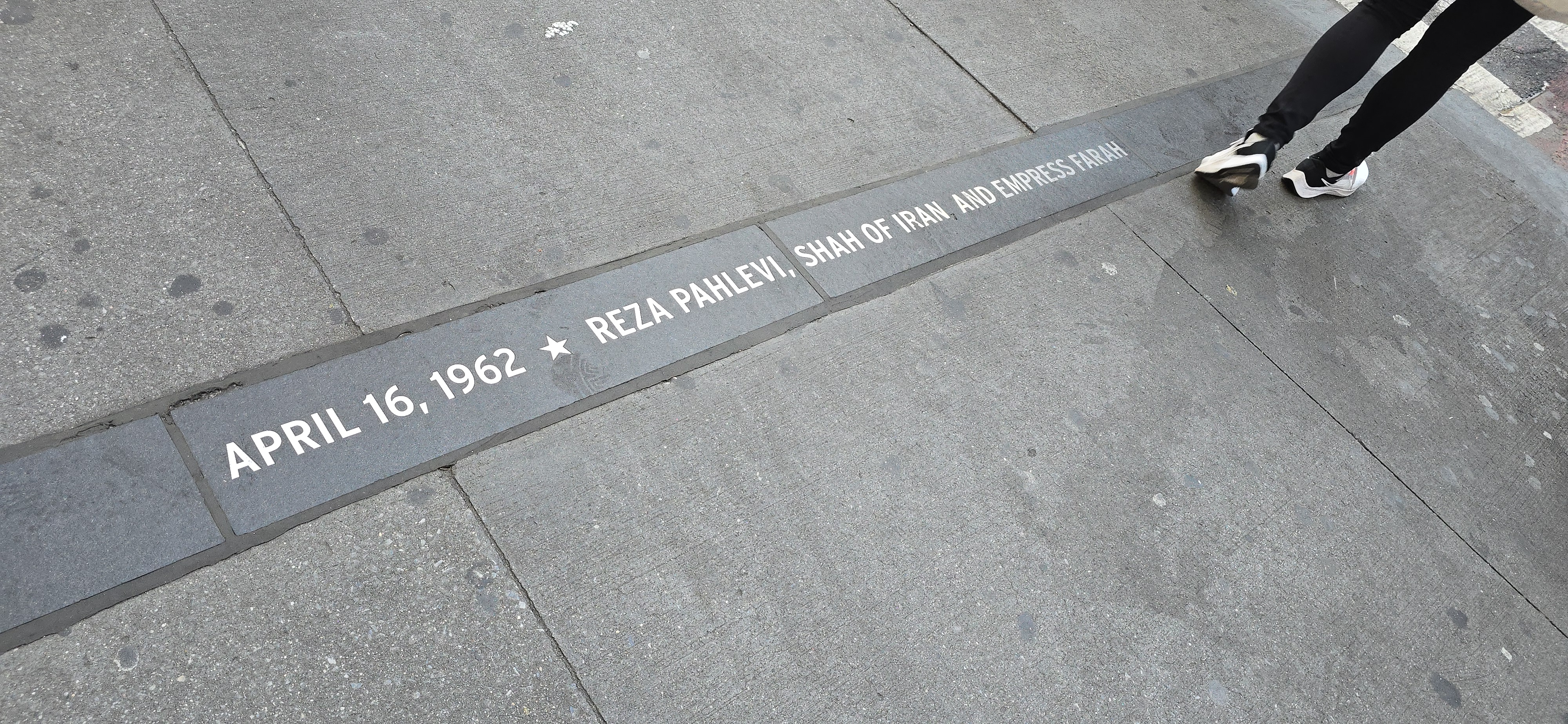
On April 16, 1962, New Yorkers lined Broadway to welcome Mohammad Reza Pahlavi, the Shah of Iran, and Empress Farah. The ruler of a Muslim-majority American ally received a ticker-tape parade through Lower Manhattan’s Canyon of Heroes. A plaque embedded in the sidewalk still commemorates their visit.
Marker on downtown Broadway sidewalk commemorating ticker tape parade for Shah of Iran and his wife (photo: First One Through)
Seventeen years later, the Islamic Revolution overthrew the Shah. Ayatollah Khomeini established a theocratic regime that called America the Great Satan, sought Israel’s destruction and held 52 Americans hostage for 444 days.
America had welcomed a Muslim ally. The jihadists who seized power declared America their enemy.
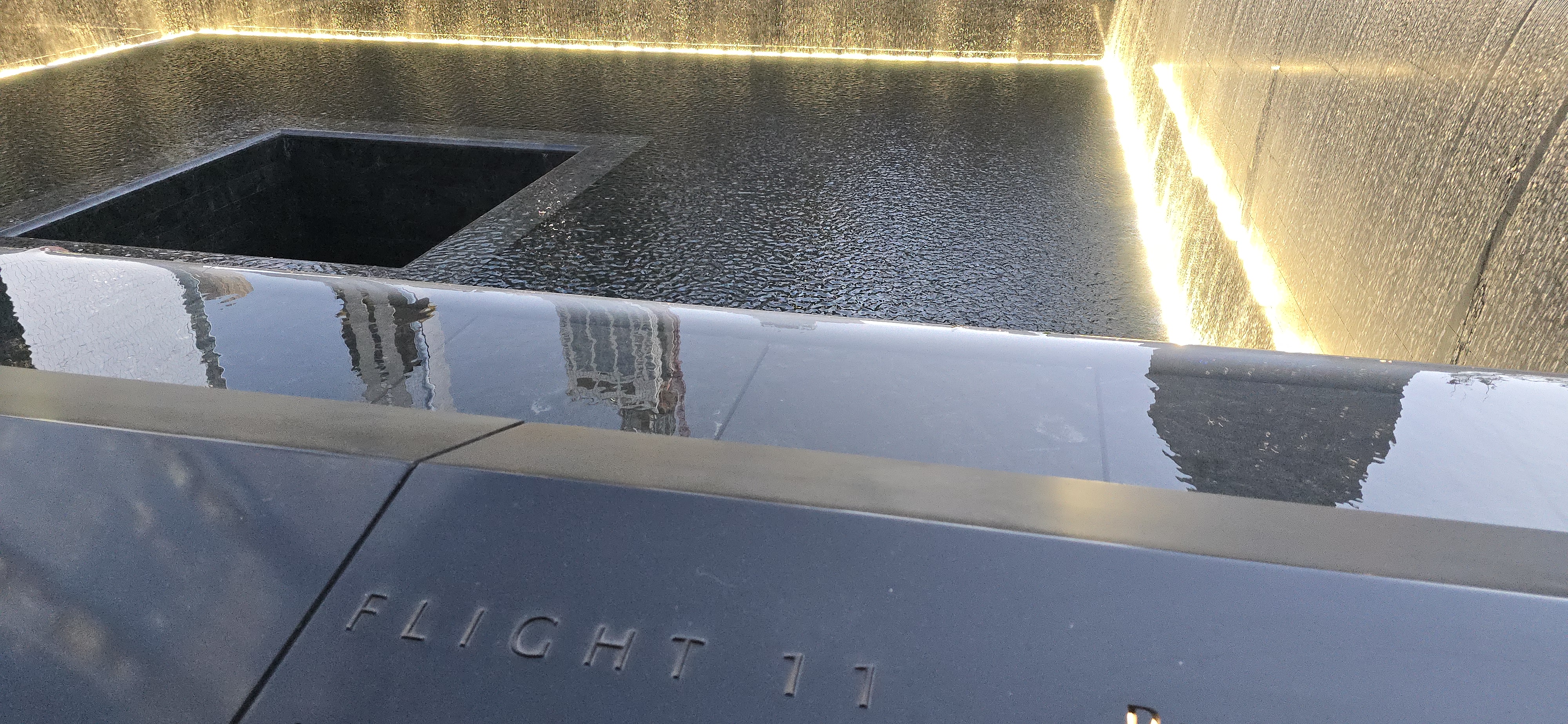
Their war against the West did not remain in the Middle East. Iranian revolutionaries seized Americans in Tehran, while Sunni jihadists carried their violence to American soil. Just blocks from the Shah’s parade route, Islamist terrorists bombed the World Trade Center in 1993 and destroyed its towers on September 11, 2001, murdering nearly 3,000 people.
World Trade Center memorial for those who died in the jihadi war on America on September 11, 2001 (photo: First One Through)
Different branches of radical Islam pursued their own visions of religious domination. ISIS declared a caliphate spanning national borders. Hamas, supported by Iran, sought an Islamist Palestine in place of Israel, massacring approximately 1,200 people and abducting 251 on October 7, 2023.
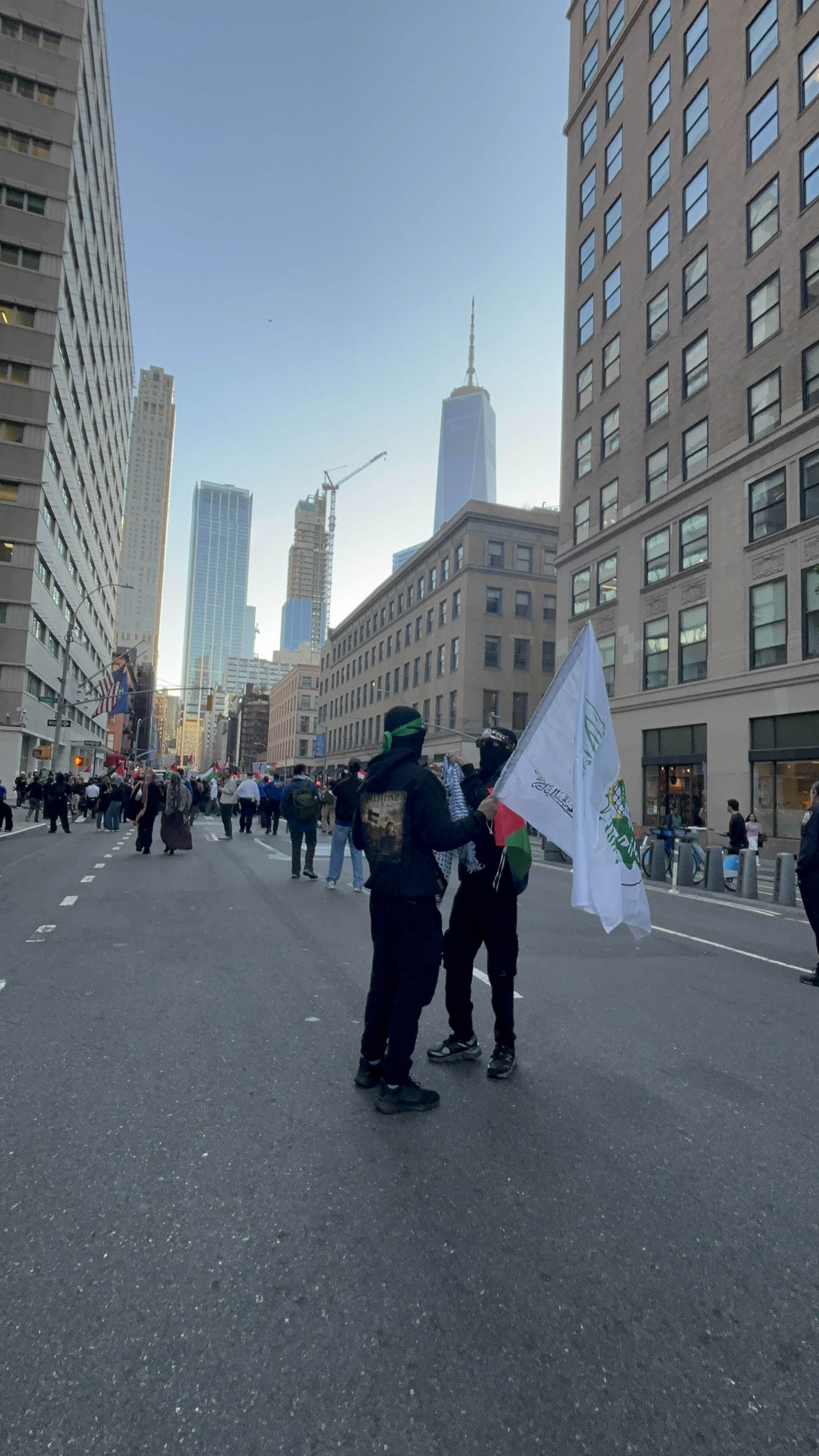
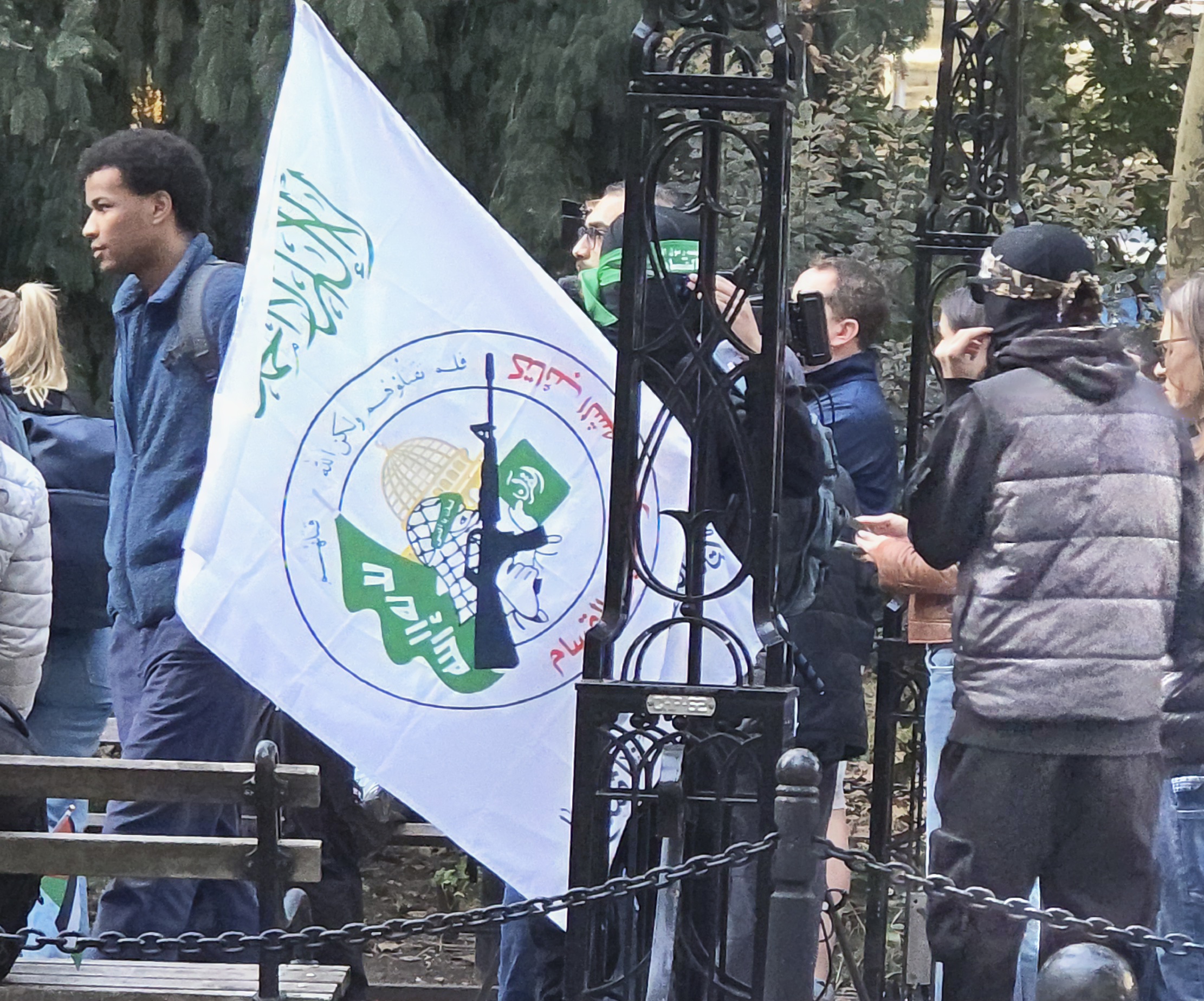
Three years later, masked demonstrators wearing green headbands marched along Lower Broadway displaying Hamas-associated symbols, with City Hall nearby and the rebuilt One World Trade Center rising behind them.
Young men with faces covered and Hamas headbands sporting jihadi flag, stand on Broadway before the World Trade Center to call for the continued war on Israel on the third anniversary of the October 7, 2023 jihadi massacre in Israel (photo: Gideon Askowitz)
Within a few blocks, the Canyon of Heroes had become the setting for three extraordinary encounters: Americans celebrating a Muslim ally, mourning the victims of Islamist terrorism and tolerating demonstrators displaying the symbols of a jihadi movement responsible for massacring Jews.
For decades, America has welcomed Muslims as allies, immigrants and citizens, embracing religious freedom and coexistence. At the same time, jihadist movements have declared their own war against the West, seeking religious and political domination. They carried that confrontation beyond the Middle East, taking American hostages, destroying American landmarks and massacring American allies.
The intersections of narrow streets in downtown Manhattan seemingly have compressed history into a web of toxins poisoned by Islamic radicals. Coexistence will only be permissible “under the wing of Islam,” as their “struggle” is perpetual and voracious.
“under the wing of Islam followers of all religions can coexist in security and safety where their lives, possessions and rights are concerned. In the absence of Islam, strife will be rife, oppression spreads, evil prevails and schisms and wars will break out.” – 1988 Hamas foundational charter
The West is in a defensive war against radical Islam. One can see the progression clearly on the streets of lower Broadway.
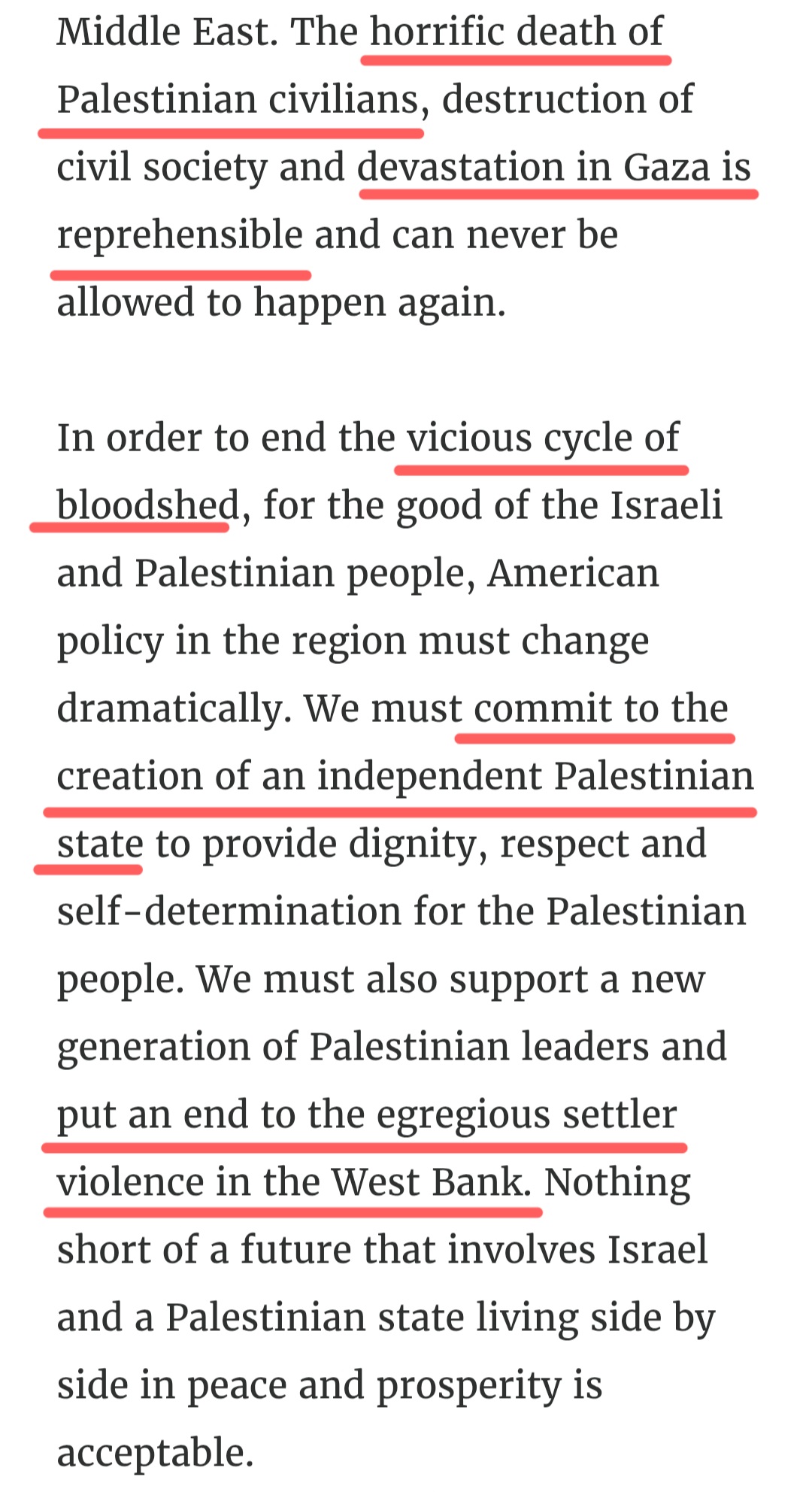
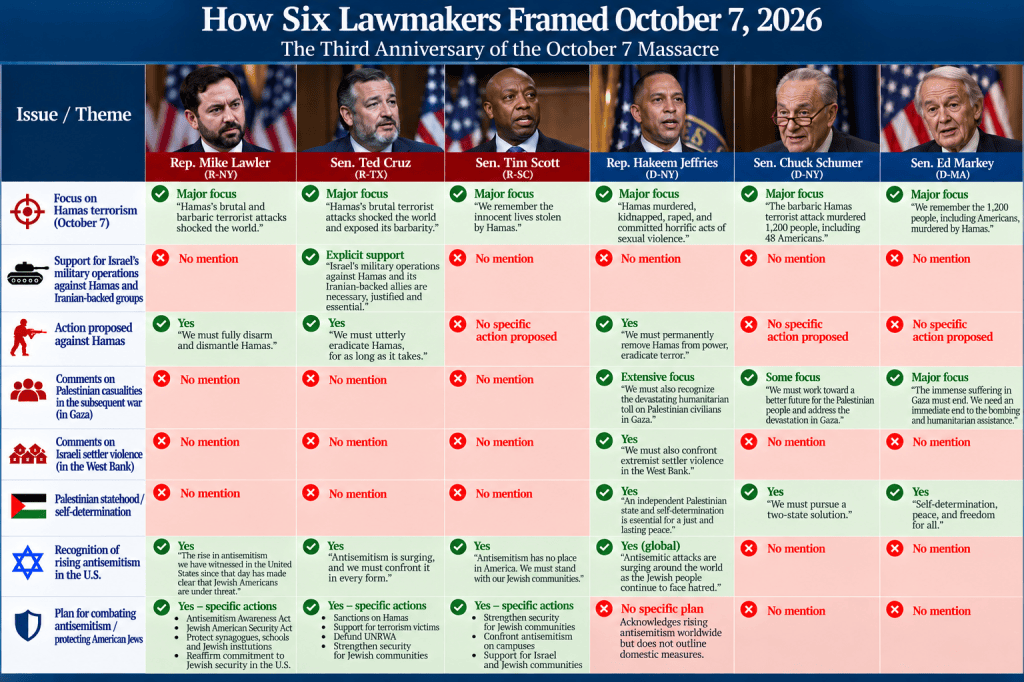
Three years after Hamas invaded Israel and slaughtered roughly 1,200 people, leading Democrats marked October 7 by remembering the murdered Israelis… but then immediately called out Palestinian Arabs who suffered in the war that they launched while condemning Israel.
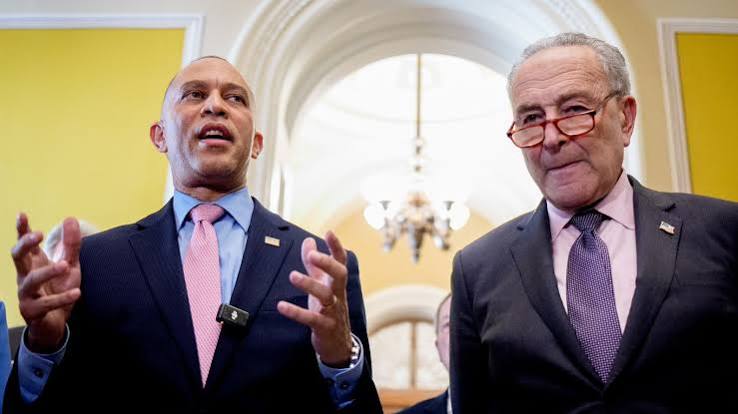
House Democratic Leader Hakeem Jeffries (D-NY) began appropriately. He described “Hamas terrorists intent on destroying Israel” who murdered, kidnapped and raped innocent civilians. Then he turned the anniversary toward Palestinians, calling civilian deaths and the devastation of Gaza “reprehensible,” demanding the “creation of an independent Palestinian state” and condemning Israeli settler violence.
Senator Ed Markey (D-MA) similarly remembered Hamas’s “heinous terror attack,” the 1,200 murdered and the hostages. Then came the turn: “Three years into the brutality of the war in Gaza,” followed by demands to stop the bombing, deliver aid and secure Palestinian self-determination.
Senate Democratic Leader Chuck Schumer (D-NY) devoted most of his statement to the massacre and hostages, but his conclusion expanded the October 7 commemoration to “the aid and well-being of the Palestinian people,” Gaza’s devastation, reconstruction and Palestinian statehood.
Hakeem Jeffries and Chuck Schumer
Apparently, commemorating a terrorist massacre now requires remembering the people who suffered when the country that was attacked went to war.
Well… only when it comes to the massacre of Jews.
Just four weeks ago, Markey commemorated the 25th anniversary of 9/11. He remembered the nearly 3,000 people murdered, the families in Massachusetts who lost loved ones, America’s resilience and the need to prevent another terrorist attack. He used the anniversary to demand better funding for the TSA.
Afghans and Iraqis never entered his statement.
Jeffries has followed the same convention. His 9/11 statement remembered the 2,977 people murdered by Al Qaeda and then extended the remembrance to first responders who became sick from exposure at Ground Zero. He noted that more FDNY responders had died from 9/11-related diseases than were killed in the attack itself.
Iraqis and Afghans never entered his statement.
Schumer went even further this September. In a lengthy address marking 25 years since 9/11, he remembered the dead, their families, sick first responders, people who developed cancer after working at Ground Zero, the rebuilding of Lower Manhattan and America’s resilience.
Iraqis and Afghans never entered his statement either.
And there were plenty of them to remember.
Brown University’s Costs of War project estimates that more than 940,000 people were killed directly in the major post-9/11 war zones, including more than 432,000 civilians. When indirect deaths from destroyed health systems, infrastructure, food insecurity and other consequences of war are included, Brown estimates 4.5 million to 4.7 million people died. More than 38 million people were displaced. Brown says the number wounded or made ill was higher still.
Yet nobody apparently told Jeffries, Markey or Schumer that a September 11 remembrance had to be balanced by those that Americans killed.
Because they knew that September 11 belongs to the people murdered on September 11. It belongs to the passengers who boarded airplanes that morning, the people who went to work in the World Trade Center and Pentagon, the families who never saw them again and the firefighters and police officers who ran toward burning buildings.
There are other days to debate Afghanistan, Iraq, American military policy and the enormous suffering those wars produced. But not the anniversary of the heinous jihadi terrorism.
These leading Democratic politicians know that. But they don’t care to apply the same decency when Jews are slaughtered and raped.
Jews slaughtered in their homes must share their anniversary with an accounting of their country’s subsequent conduct. The young people murdered at a music festival in Israel must make room for Gaza policy. The women sexually assaulted by Hamas terrorists must share the day with discussions of Palestinian statehood. The hostages dragged into Gaza become the introduction to a statement about Palestinian suffering.
These LEADING DEMOCRATS REVERSED THEIR BASIC HUMAN INSTINCT FOR COMPASSION in just a couple of weeks when the victims were Jews.
Why, when the victims are Jews, must the anniversary of their massacre become a day to remember everyone except just them?
In the 20th century, the term “G.I. Joe” was meant to describe the average American serviceman. He was the embodiment of a regular patriot fighting for America and American values.
Alas, today’s generation has Jihad Joe.
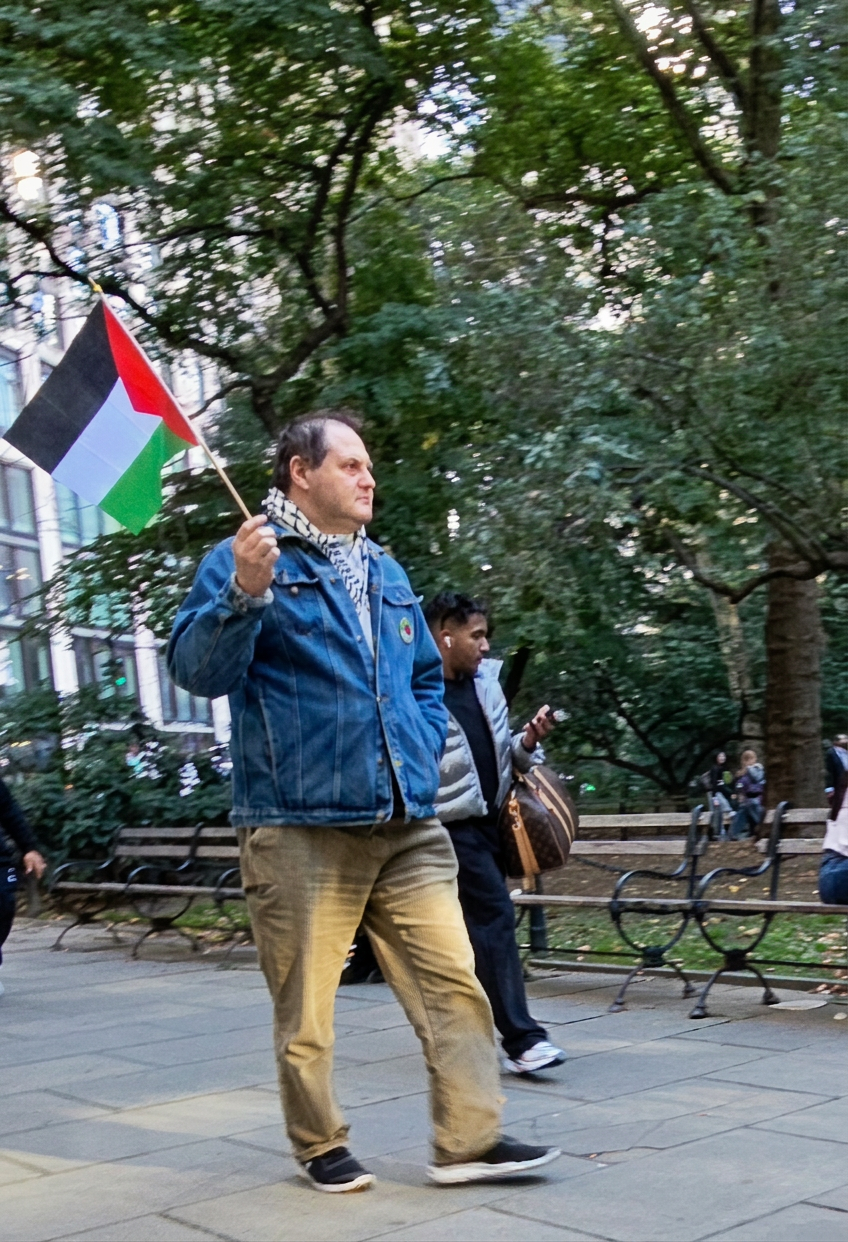
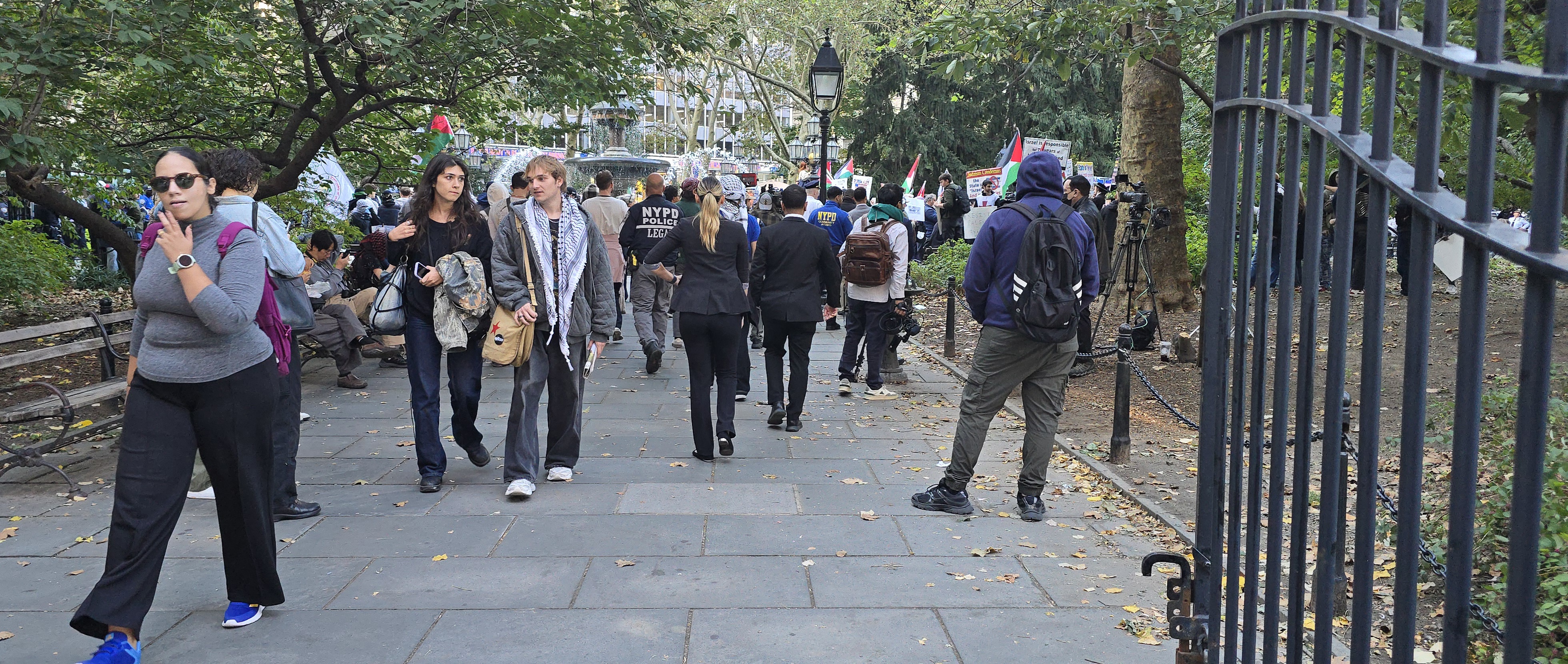
Pro-Palestinian man heading to protest Israel in front of City Hall in Manhattan on October 7, 2026 (photo: First One Through)
Jihad Joe celebrates the murder of Americans and American allies. He/ she uses anniversaries of the massacres of civilians – like 9/11/01 and 10/7/23 – to mock the death of thousands of innocent civilians. The Jihad Joes cheer ISIS, Hamas and the Islamic Republic of Iran.
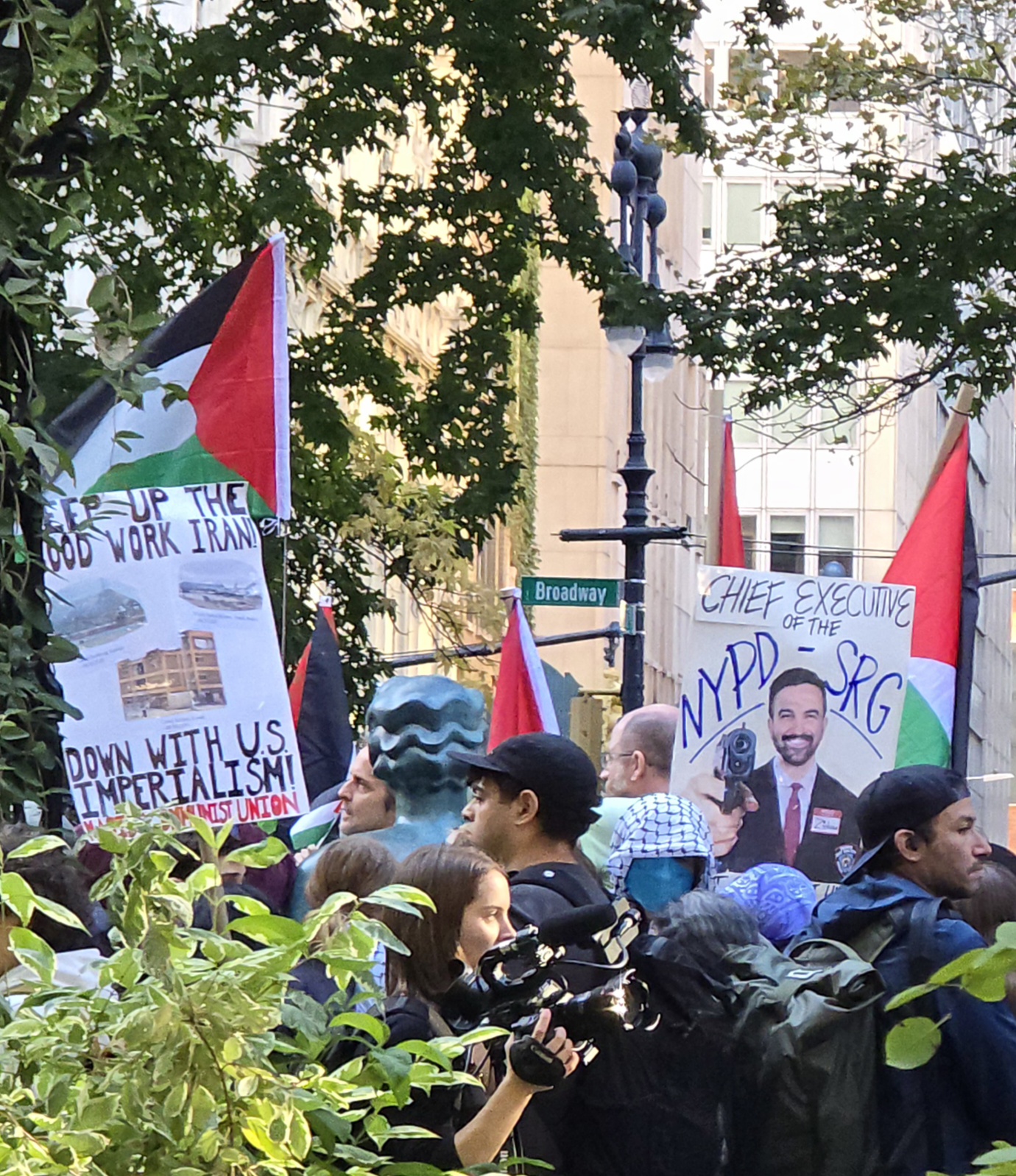
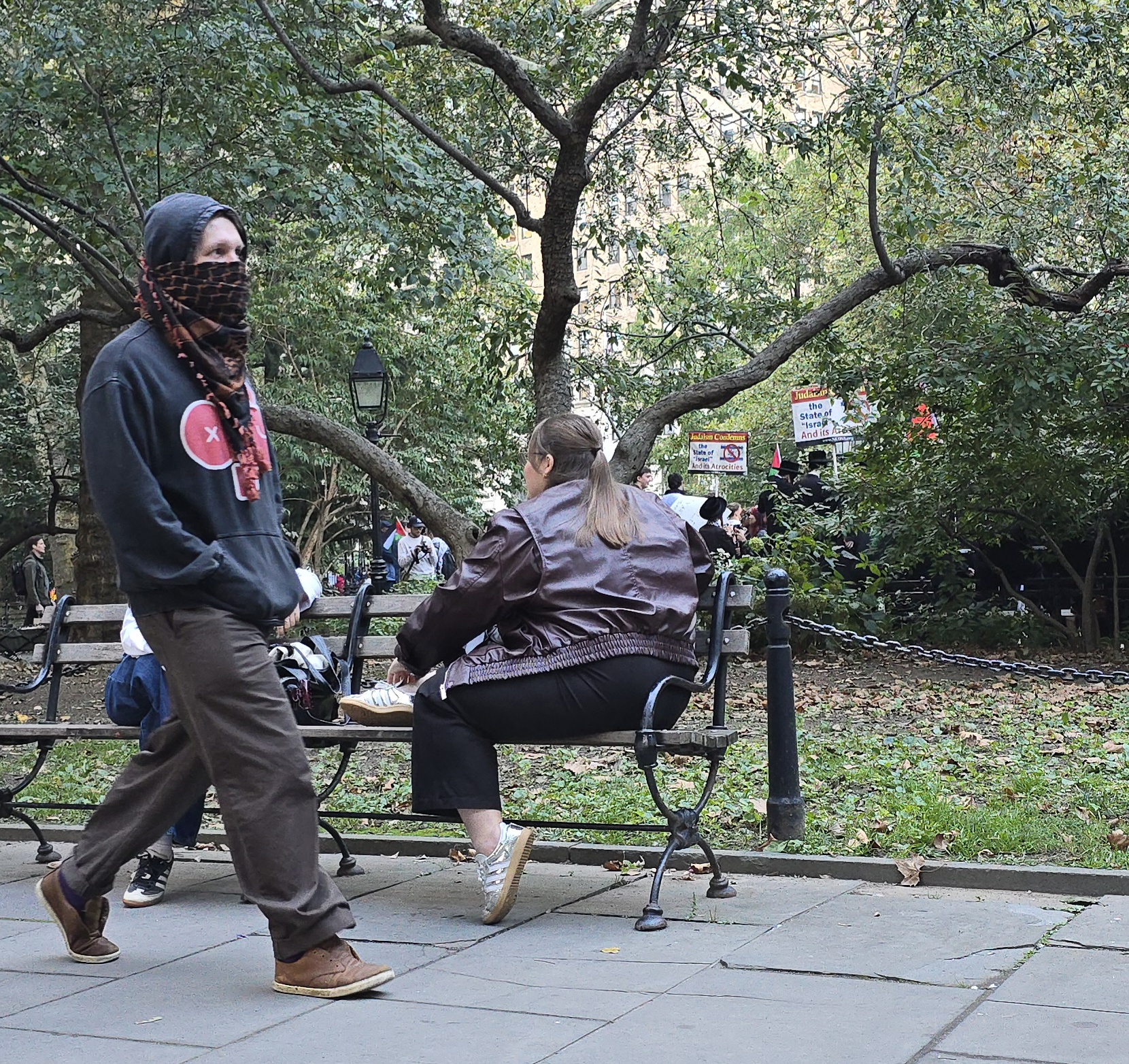
Anti-Israel protestors at City Hall in NYC on October 7, 2026 with posters mocking Mayor Zohran Mamdani as a Zionist and “Keep up the good work Iran! Down with U.S. Imperialism!” (photo: First One Through)
The crowd that gathered on October 7, 2026 at City Hall in New York City was mixed, with religious Muslims and anti-Israel Neturei Karta posing for the media. But there were also many White people in their 20s to 40s sporting Hamas headbands, chanting for the destruction of Israel, and that Jews are pedophiles.
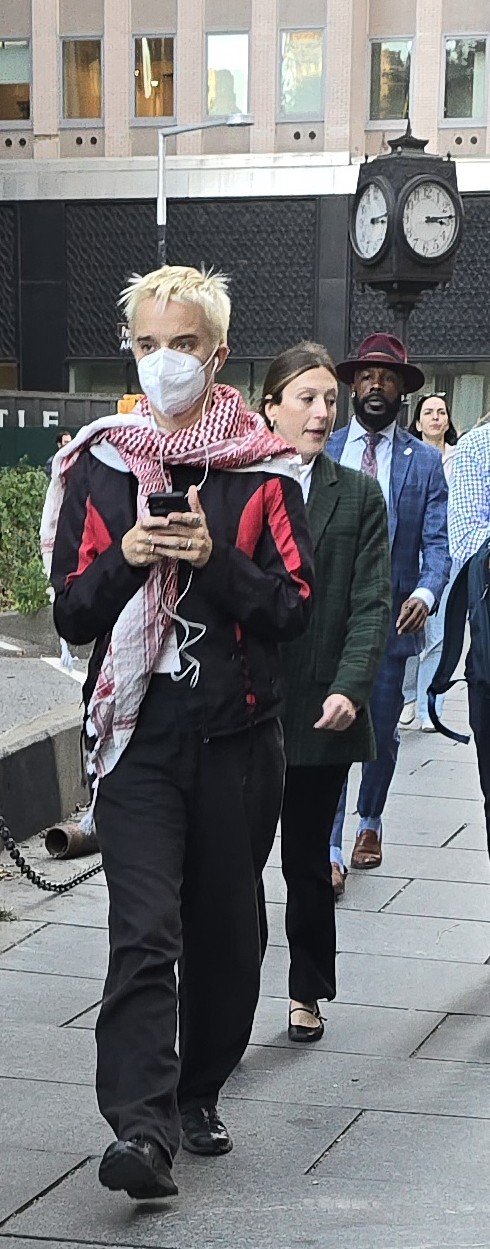
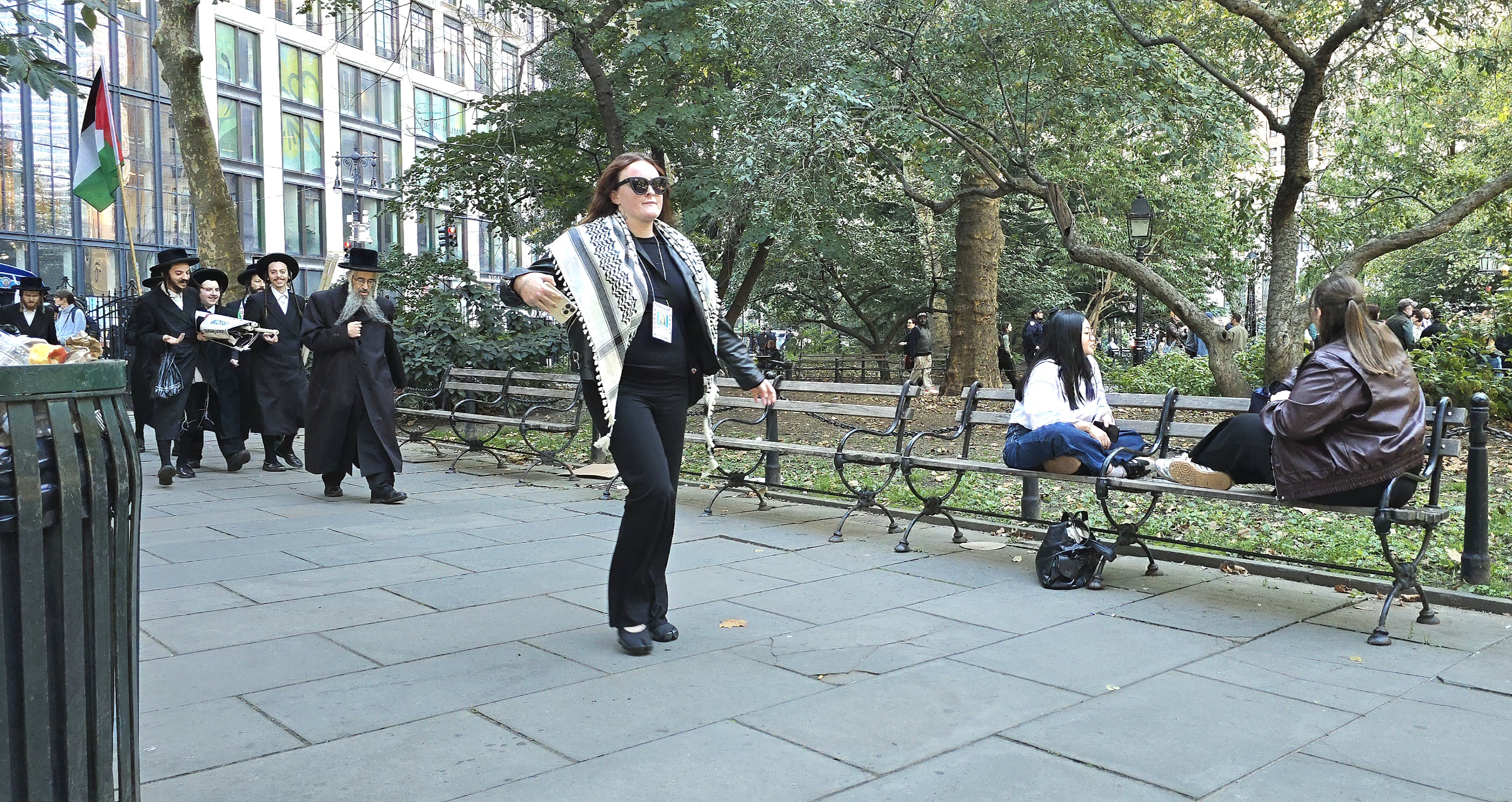
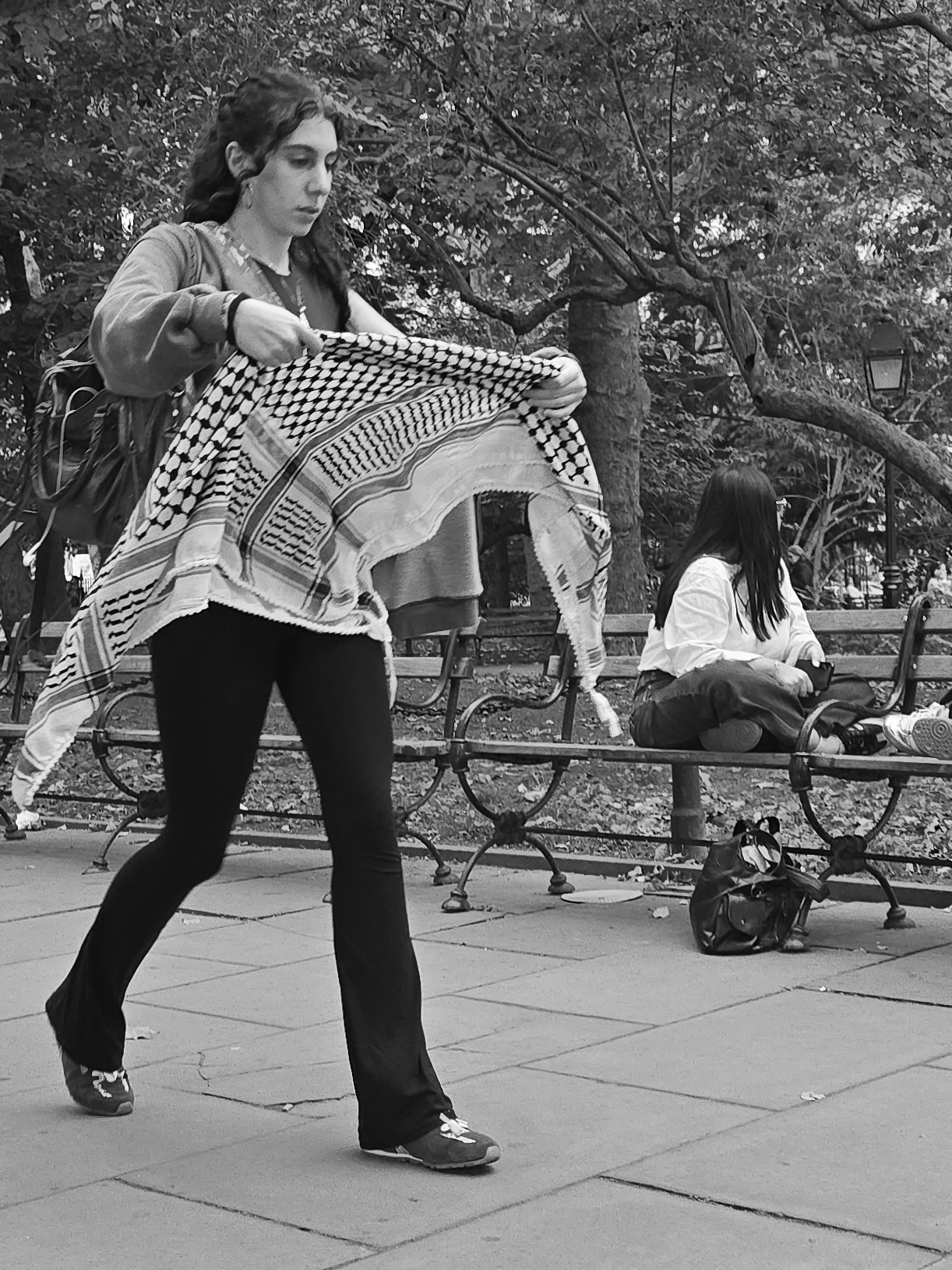
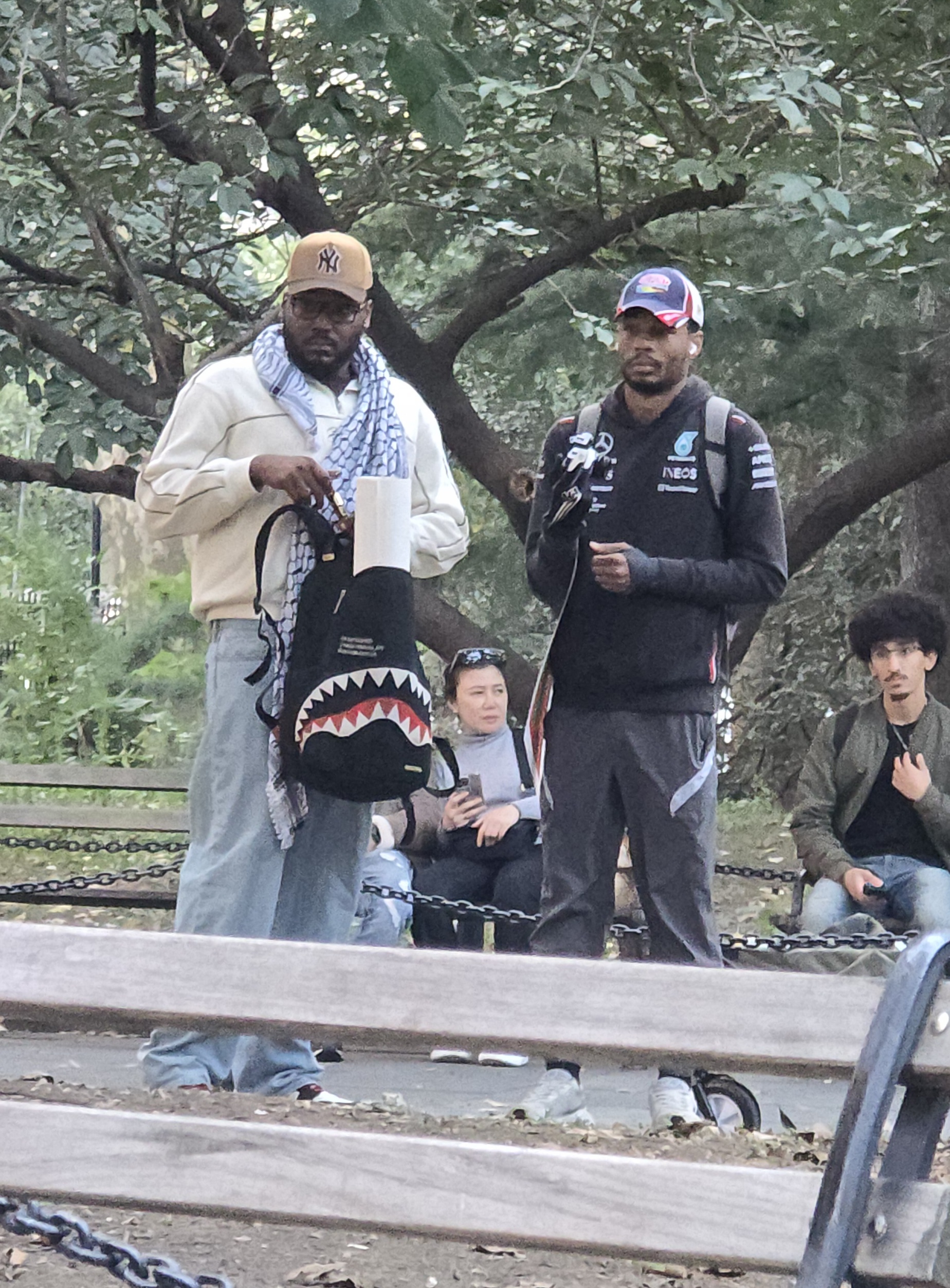
Woman with press credentials sporting a keffiyeh walking to anti-Israel protest at City Hall on October 26, 2026, ahead of group from Neturei Karta holding a Palestinian flag (photo: First One Through)Woman getting ready to join the anti-Israel protest, pulling out her keffiyeh at City Hall on October 7, 2026 (photo: First One Through)
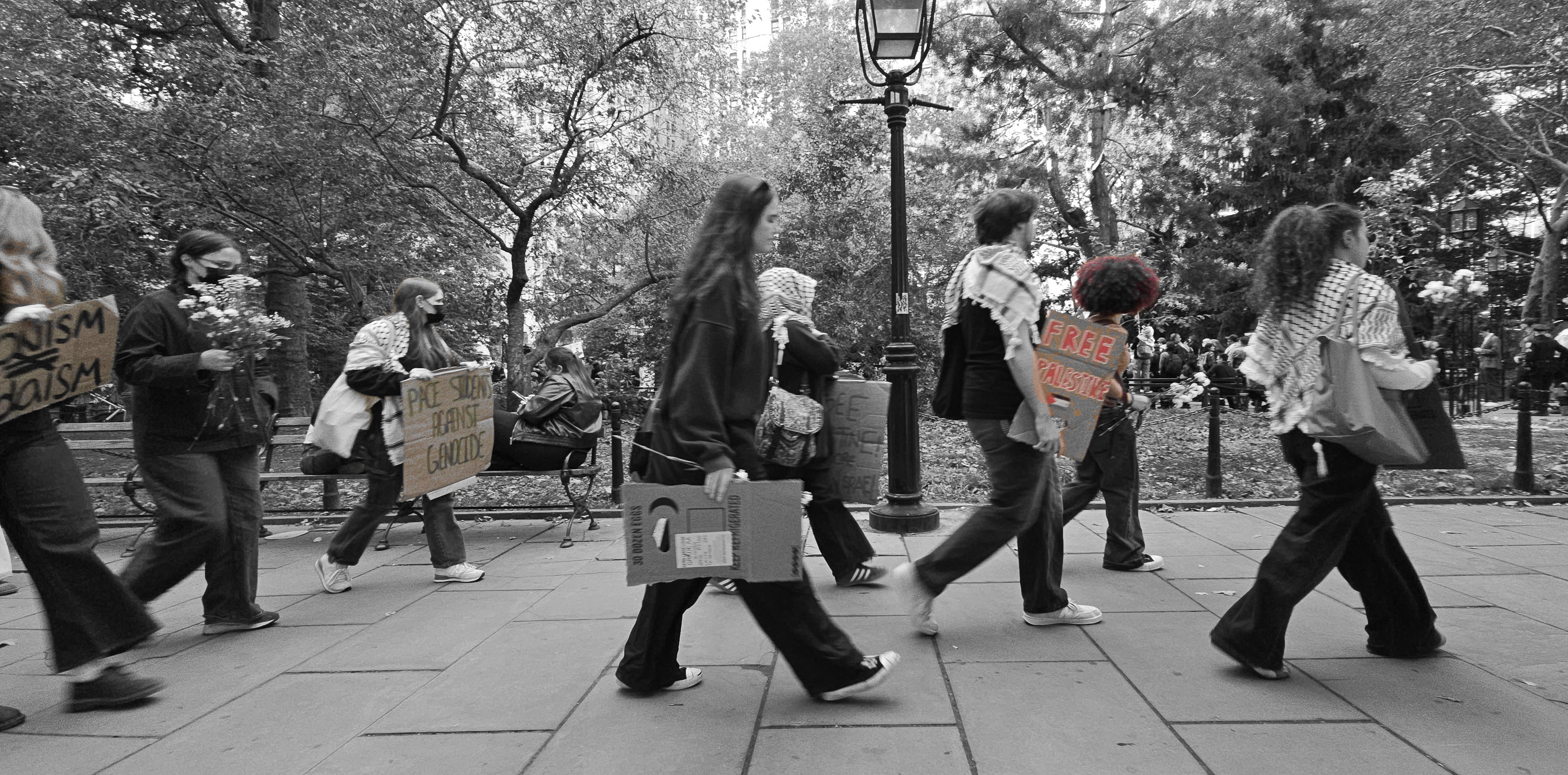
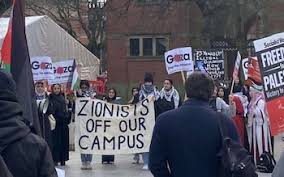
A group of students from nearby Pace University came by with placards to “Free Palestine” and “Zionism is not Judaism.” They joined crowds yelling things much more violent:
“Intifada revolution!”
“Zionism will fall!”
“Liberation is near!”
“We don’t want two states. We want ’48!”
“Mobilize the Intifada!”
Students from Pace University join an anti-Israel protest at City Hall on the anniversary of the slaughter of roughly 1,200 people in Israel and seizure of 251 hostages,on October 7, 2026 (photo: First One Through)
Today’s Jihad Joe doesn’t put his life at risk for America, American allies or American values. He mocks all of those things. Jihad Joe wishes them vanquished, celebrates their setbacks and chants for the jihadi vision for the U.S. and Israel, all from the quiet and comfortable streets that affords the freedom of speech and assembly not found in Islamic republics.
Jihad Joe sees G.I. Joe as an old and racist dead White man.
Two young men covering faces and sporting headbands with Hadiths for MohammedYoung men waving flag of armed Arab before Dome of the Rock
Imagine Canadians holding a march on September 11, 2026 cheering the work of the jihadists who killed nearly 3,000 people in the U.S., calling for the destruction of America. Yes, it is protected speech; but so what? It is repulsive and sick.
More, it reveals the depravity of a significant swath of Americans.
Crowd of people scream support for the antisemitic genocidal jihadists of Hamas, on third anniversary of the October 7 massacre (photo: First One Through)
Eighty years ago, America produced the Greatest Generation. G.I. Joe was its everyman: the ordinary American who put on his country’s uniform, crossed an ocean and fought against fascism and tyranny. Today we see a very different American archetype walking the streets of New York. He puts on the keffiyeh, embraces the symbols and slogans of foreign jihadist revolutionary movements, and mocks America, its allies and the rape and slaughter of its citizens.
In less than a century, we have descended from G.I. Joe to Jihad Jane.
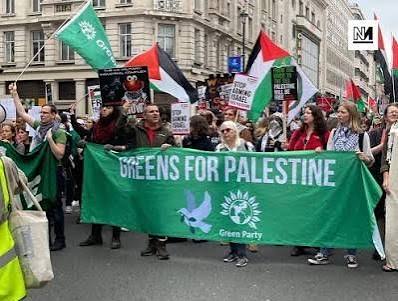
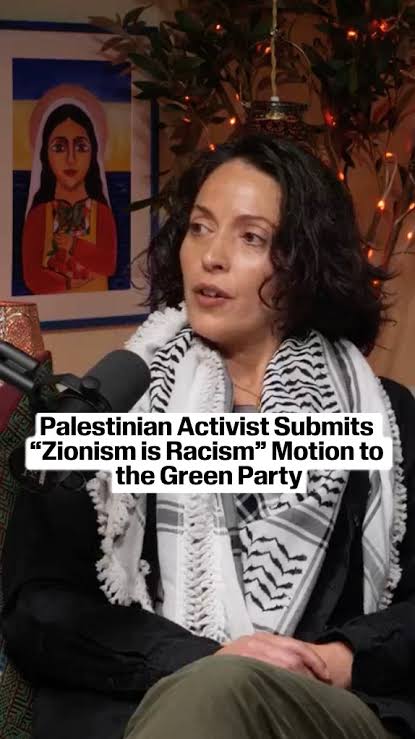
The Green Party charted a new course in British politics, calling for an end of the Jewish State of Israel and demanding a boycott of the country until it allows millions of Arabs into the territory and become a binational state. The alt-left group was immediately rebuked by members of the other British political parties.
Labour’s Bridget Phillipson, the equalities minister said the Green vote “crosses a line” and was “fundamentally wrong.” She explicitly connected her objection to the two-state solution saying “It is shameful to vote against a two-state solution for Israel and Palestine.”
David Pinto-Duschinsky, centre, and Bridget Phillipson, right, meet with Jewish school in London with the school’s headteacher
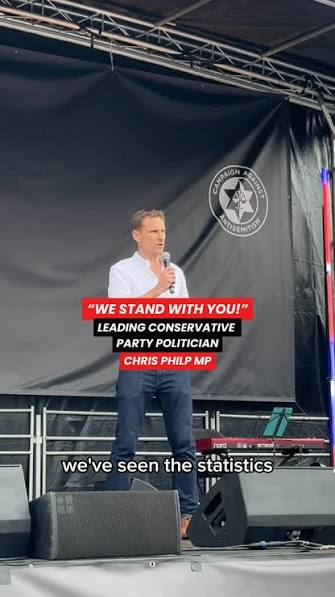
Conservatives shadow home secretary Chris Philp said of the Green vote “I think that’s completely wrong.” He called the resolution a “stereotypical and potentially antisemitic characterisation” and said the Greens needed to do more to combat antisemitism in their ranks. The Conservative Party subsequently issued an even more directly relevant statement through Philp: “British Jews should not have to disclaim a belief in Jewish self-determination and the existence of Israel.”
Liberal Democrats MP Luke Taylor MP said “This is a divisive motion that pours fuel on the fire of tensions in the UK,” and said it would leave many British Jews feeling less safe. Lib Dem foreign-affairs spokesman Calum Miller called the Green vote “deeply wrong” and a “deeply harmful failure of judgement.” Former leader Tim Farron said the Greens had been “captured.”
Green councillor Hau-Yu Tam (centre) pictured alongside Green Party deputy leader Zack Polanski (left). Photo Credit: London Green Party
“Zionism is pure evil and must be abolished.” “Zionism was undoubtedly and unquestionably the Nazism of our time.” – Green Party’s Hau-Yu Tam
Perhaps it is therefore time to move beyond making statements about the Green Party vote and push forward clear countering platforms: one that unequivocally expresses support for British Jews and their heritage and history in the Jewish Promised Land. And a second that declares that every country – including Israel – has an unambiguous right to decide who to permit into its country and to admit as citizens. As such, there is absolutely no so-called “right of return” of descendants of Arabs who once lived in the territory of Israel.
The Greens put their position to a vote. Now Labour, the Conservatives and Liberal Democrats should do the same. At their next party conferences, each should introduce resolutions affirming these two simple principles.
Condemning the Greens is easy. Put the alternative on the ballot and let British political parties tell the country – and British Jews – where they actually stand.
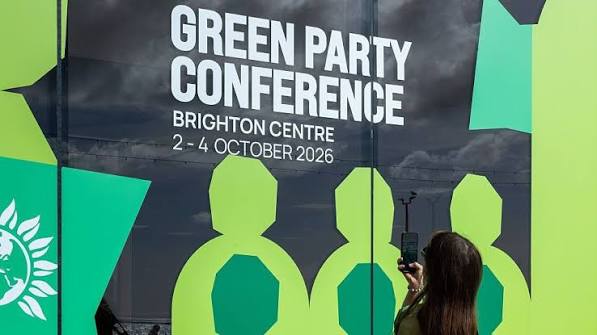
On October 4, 2026, as Jews marked Simchat Torah and the third Jewish-calendar anniversary of the Hamas-led massacre that killed about 1,200 people and saw 251 taken hostage, Britain’s Green Party voted to declare Zionism a form of racism.
By 1,022 votes to 813, the party formally declared itself anti-Zionist and endorsed replacing Israel with a single Palestinian state throughout the pre-1948 region of Palestine.
An earlier vote at the same conference was even more revealing about the party’s attitude towards Jews.
Jewish Green member Sam Alston proposed an amendment protecting Jewish members from being pressured or disciplined because they belonged to synagogues and other Jewish institutions associated with Zionism. He warned that without such protection the policy could result in “indirect religious discrimination.”
The Greens rejected his safeguard, 1,026 to 684.
So at this same conference, Jewish members were provided a safe room because some feared for their safety during the debate about Jews and the Jewish State, while rejecting their proposed protection from its new racism policy.
“We continue to see antisemitic sentiment appearing with increasing frequency,” – Laurence Taylor, the head of counter-terrorism policing
There may also be a legal problem.
Adam Wagner KC, a prominent British human-rights barrister, has warned of a “strong risk” that the resolution contravenes the Equality Act 2010. British law protects qualifying philosophical beliefs, and Wagner argues that Zionism is likely capable of qualifying for that protection.
There is already precedent from the other direction. David Miller, the former University of Bristol professor, successfully established before an employment tribunal that his anti-Zionism qualified as a protected philosophical belief under the Equality Act. Greens for Palestine cited the Miller case in defending anti-Zionist beliefs before the conference.
British law may already protect both the anti-Zionist and the Zionist.
The Green Party is no longer a fringe environmental entity. Membership has surged above 200,000, tripling its total in a single year.
Their electorate also looks markedly different from Britain as a whole. Analysis of the 2024 Green vote found an average age of 42 compared with 49 across the electorate. Green voters were more female, much more likely to be university graduates and less likely to own their homes. They were also twice as likely to be Muslim – 6 percent versus 3 percent nationally – and considerably more likely to have no religion.
The two conference votes reveal something more troubling.
While the voters against Zionism and protection for Jews stayed roughly the same – 1,022 and 1,026, respectively – 16 percent of those supporting Israel did not vote on protections for Britain’s Jewish community.
That leaves a question extending well beyond this conference: As hostility to Zionism moves deeper into the politics of the alt-left, who will insist on protecting Jews whose religious and communal lives remain connected to it?
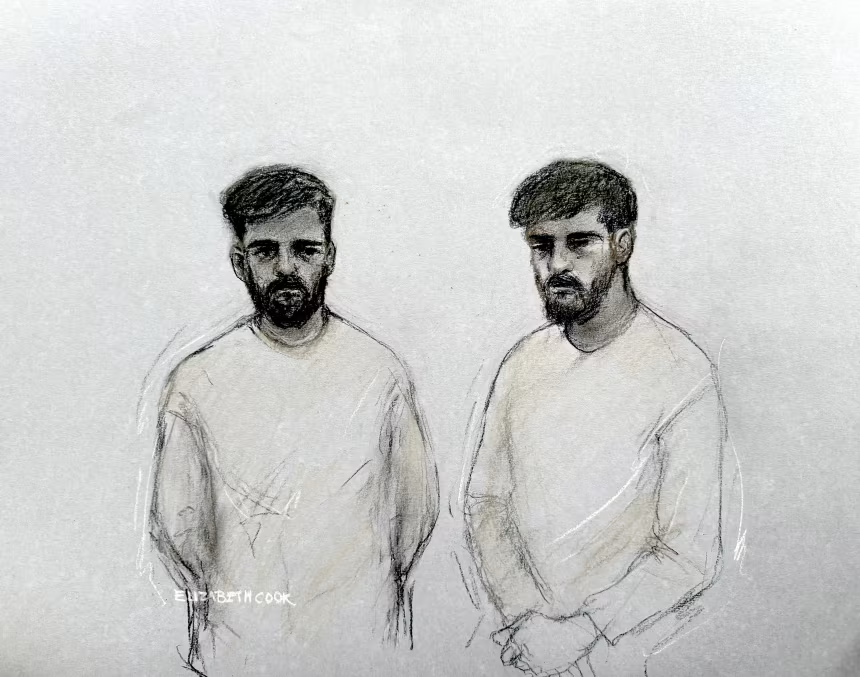
Two Iranian men – Salam Ahmadyan, 36, and Rahman Salehi, 34 – charged with attempting to bomb a synagogue in Manchester on Yom Kippur 2026, one year after other Jews were stabbed to death in the city
This Simchat Torah, I keep thinking about what is missing.
For some families, the absence is unbearable and permanent. A child, a parent, a spouse, a friend who was alive on the last Simchat Torah before October 7 and is no longer here. Every holiday marks time, but an anniversary holiday also measures absence. Another year has passed. Another place at the table remains empty. Another circle forms with someone missing from it.
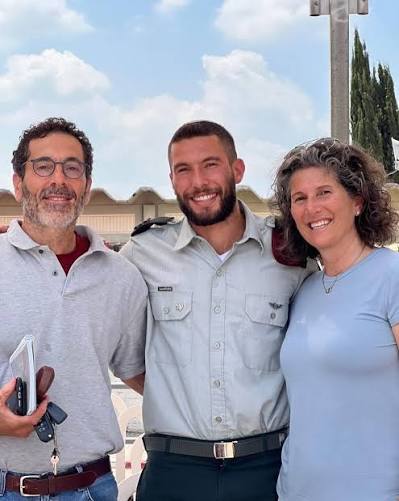
Aryeh Ziering with his parents, killed as he responded to the massacre by Gazans on October 7, 2023
Loss is embedded in Simchat Torah itself. We reach the end of the Torah and lose Moses.
The man who confronted Pharaoh, led us through the sea, brought down the commandments and carried an impossible people through the wilderness does not cross into the Jewish Promised Land. The Torah does not soften his death or pretend it did not happen. It records it and we read it aloud.
Moses seeing the Promised Land before he dies by James Tissot (1896-1902)
Over the past three years, other things have felt as though they have gone missing as well.
I have watched context disappear from too much of the media coverage of Israel and the Middle East. Iran can threaten Israel and the region through proxies, missiles and terrorism, yet somehow vanish from the frame through which individual events are reported.
I have watched the United Nations lose all credibility as an institution capable of treating Israel with the same standards it applies elsewhere. Its institutions can devote extraordinary attention to Israel while regimes and movements that openly threaten Jews and Israelis often recede into the background.
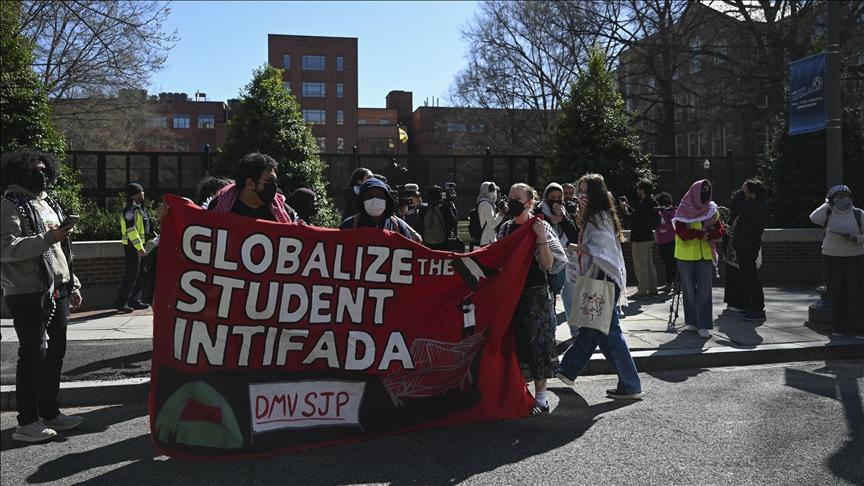
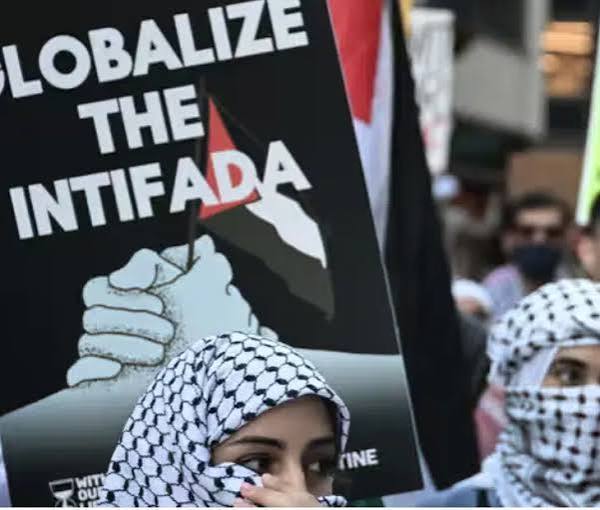
I have watched universities where “Globalize the Intifada” could become part of the vocabulary of protest after Jews had just experienced the deadliest day since the Holocaust. A recent report on American antisemitism could devote enormous attention to Israel, Palestinian Arabs, race and politics while ignoring the jihadist antisemitism that helped produce October 7 in the first place.
And increasingly, I wonder whether I am losing the Democratic Party I knew.
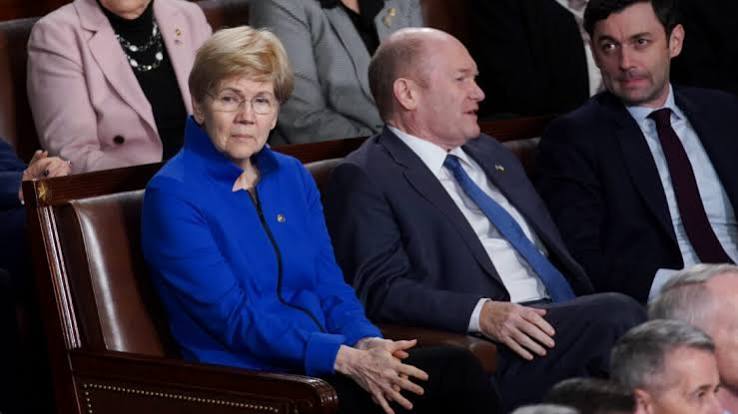
Senator Chris Coons is not someone I associated with the anti-Israel fringe. Yet he spearheaded legislation that would authorize American sanctions connected to construction in E1, including against foreign persons who simply submit bids for construction tenders. Threatening private parties with the force of the American financial system for bidding on residential construction near Jerusalem represents a place in that debate I never expected mainstream Democrats to reach.
Senators Elizabeth Warren and Chris Coons threaten financial retribution against firms considering building residential homes in Jerusalem suburbs
Some losses happened in a morning. Others have accumulated slowly enough that it took me time to recognize them.
Judaism does not ask us to pretend that loss isn’t real. The Torah certainly doesn’t.
Moses dies. But then we do something remarkable.
We don’t pause to mourn Moses on Simchat Torah. We stand up, sing and dance. We lift the Torahs and our children. And when we have read the Torah’s final words, we refuse to leave the scroll there. We immediately return to Bereishit, to the beginning.
We don’t erase the loss or manufacture comforting explanations for it. We don’t avert our eyes from the people and institutions we have lost or from the lessons their loss may teach us. But neither do we build our lives around the empty spaces.
That may be the lesson I need most this Simchat Torah.
Notice who is missing. Remember them. Look clearly at what else we have lost since October 7 and understand why. Fight where something worth preserving can still be preserved.
Then look around the circle and see who is still there. Hold them a little closer.
The U.S. Commission on Civil Rights released a 220-page report on September 26, 2026 on the explosion of antisemitism on American college campuses after October 7, 2023. Search those 220 pages for “jihad,” “Islamist” or “radical Islam” and you find nothing.
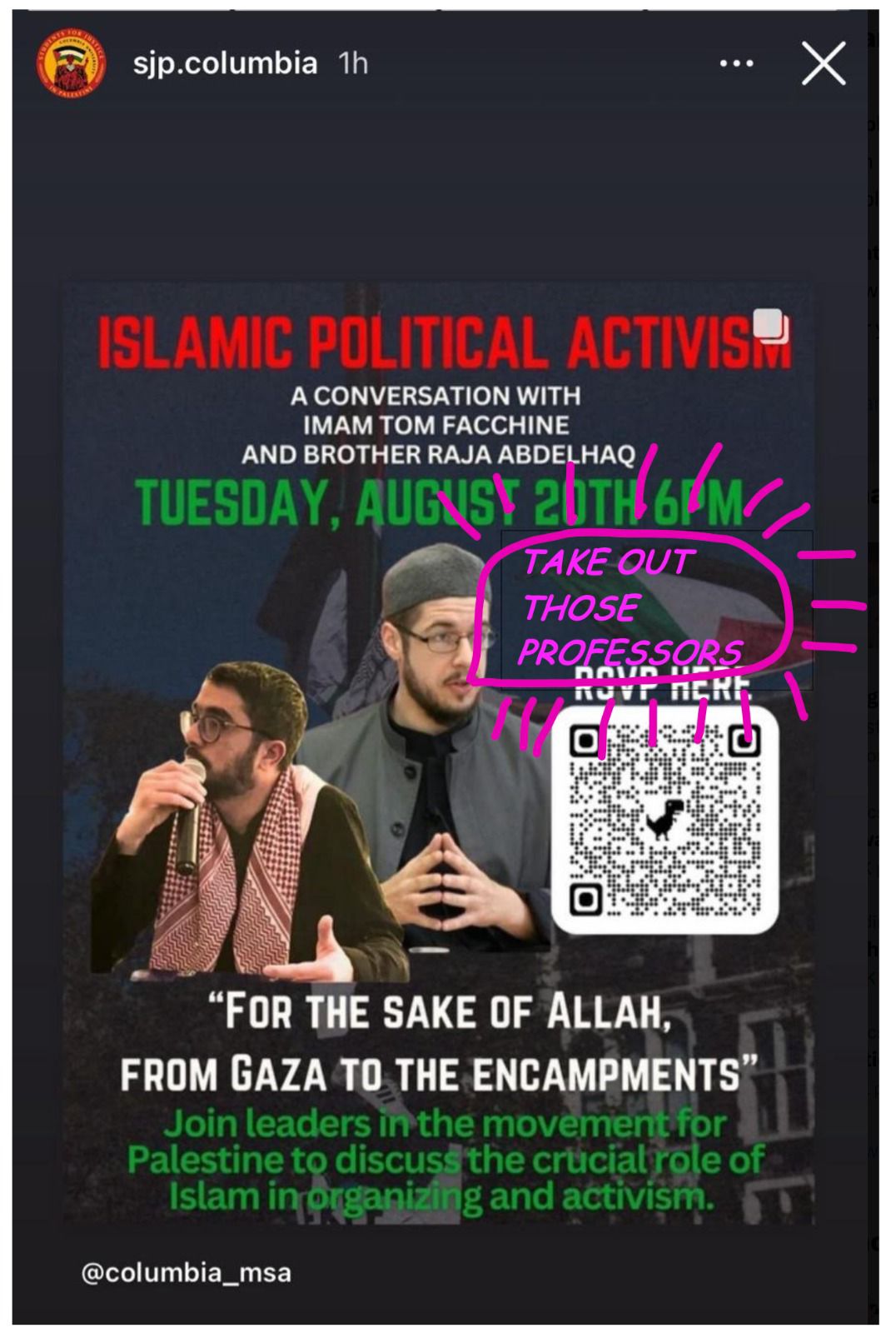
Columbia University’s SJP chapter featured “Islamic political activism”
That is an extraordinary omission because October 7 was not the opening battle in a campus dispute between supporters of Israel and Palestine. It was a massacre carried out by Hamas, a jihadist organization with a long history of explicit antisemitism. Yet the Commission largely interprets what followed through a political framework: Jewish and Israeli students on one side, Muslim and Palestinian students on the other, each reporting hostility and discrimination while universities struggled to balance Title VI, political expression and the First Amendment. Indeed, the Commission describes its own inquiry principally in terms of institutional and federal responses to allegations of antisemitism following the Hamas attack, with substantial attention to the distinction between unlawful discrimination and protected political expression.
In that framework, Jews increasingly become the pro-Israel constituency in an Israeli-Palestinian political dispute. What largely disappears is that some of what erupted on campuses reflected a very different phenomenon: jihadist antisemitism.
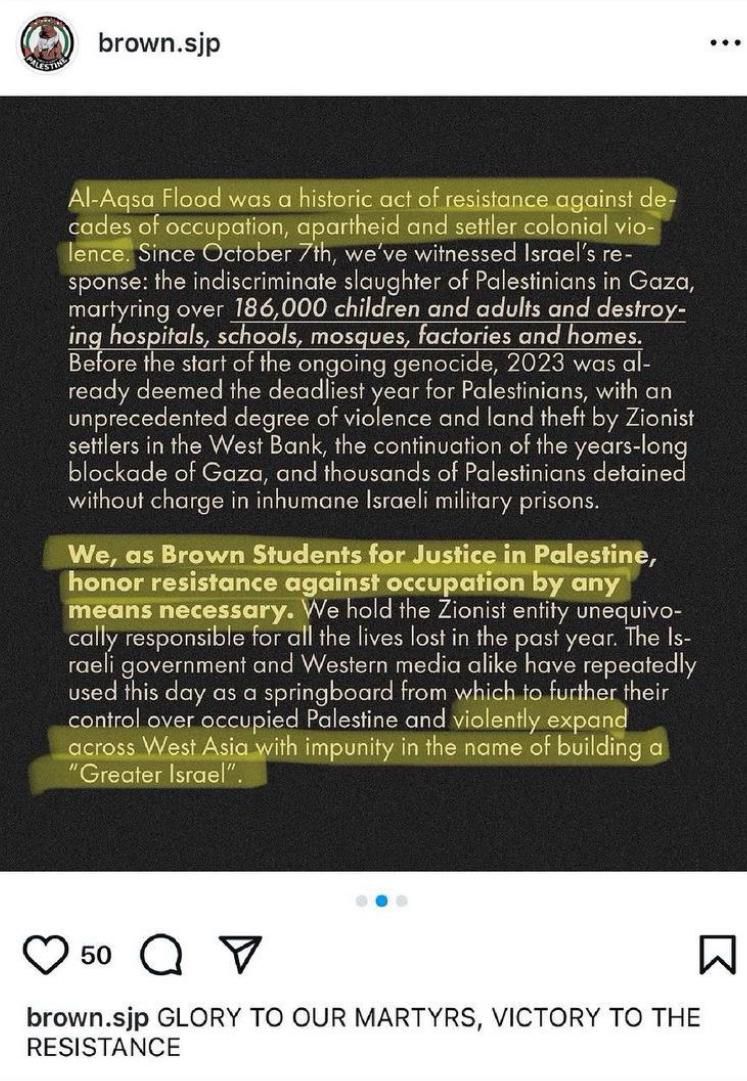
Brown University chapter of Students for Justice in Palestine “by any means necessary”
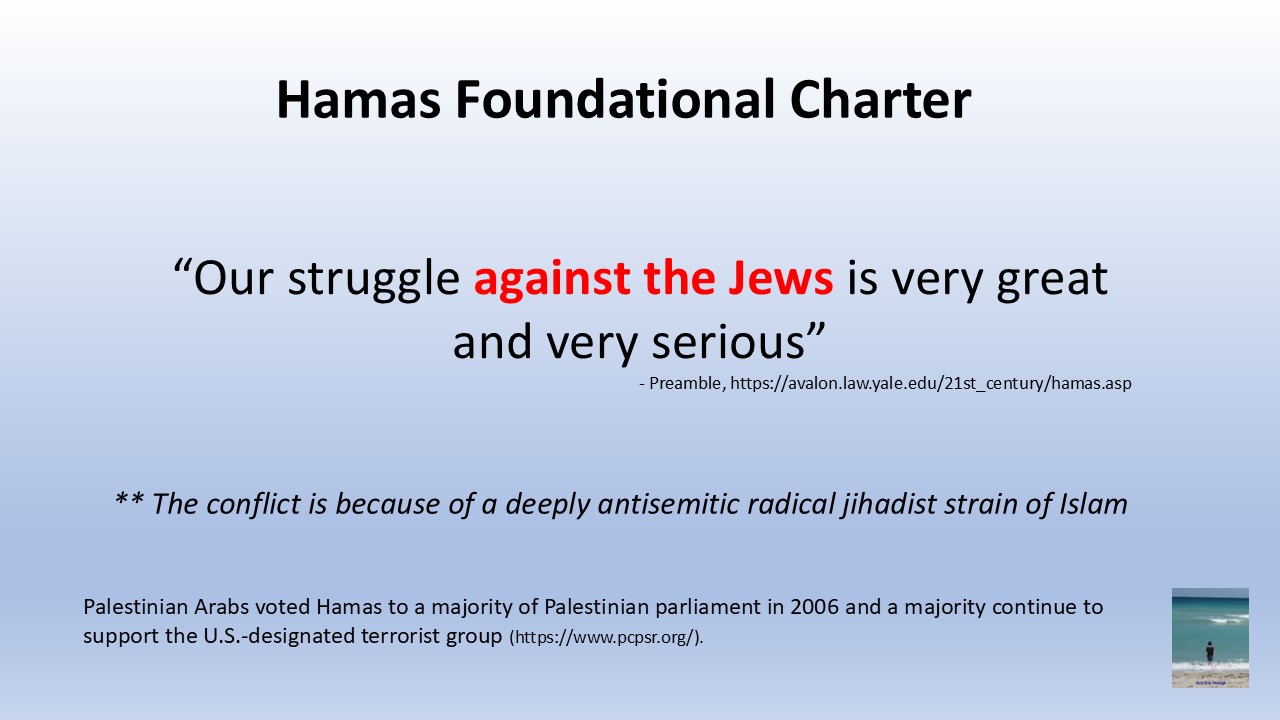
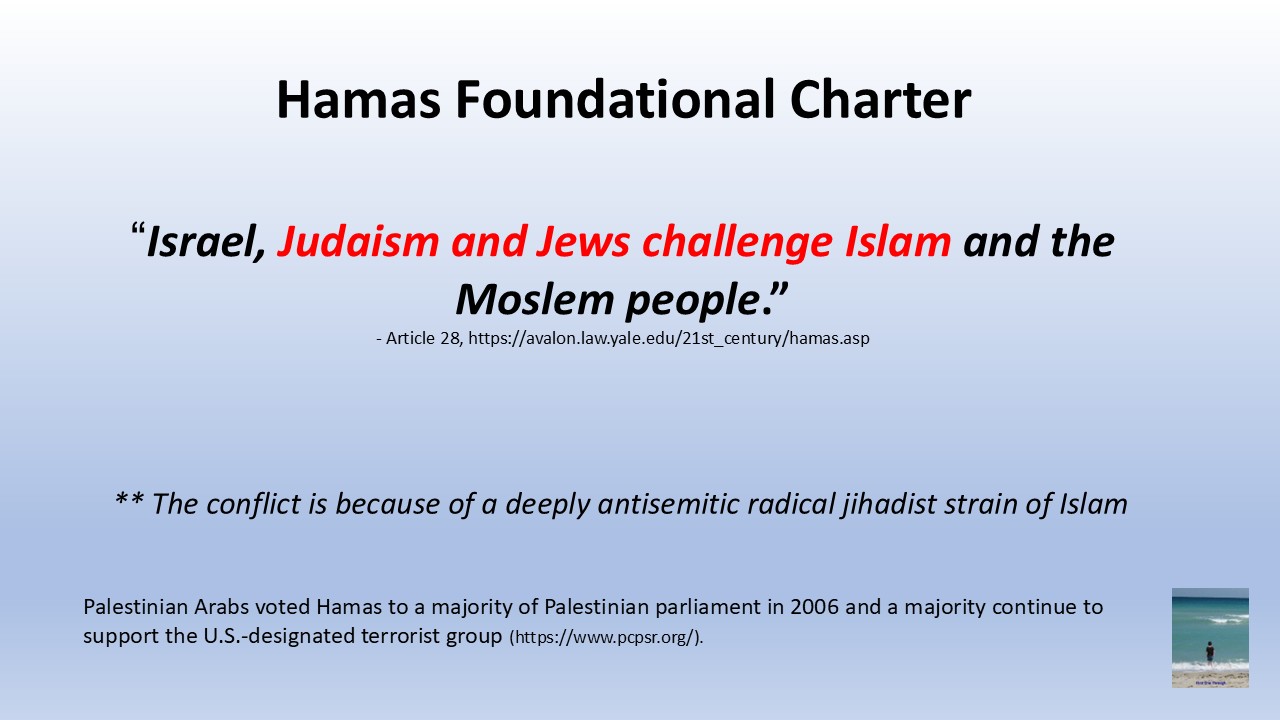
Hamas’s history should have made that an obvious subject of inquiry. Its 1988 founding covenant placed the struggle within an Islamic religious framework, declared that there was “no solution” to the Palestinian question except jihad, trafficked in antisemitic conspiracy theories and invoked a hadith envisioning Muslims fighting Jews.
Gazan jihadist calls parents to celebrate his slaughter of Jewish civilians
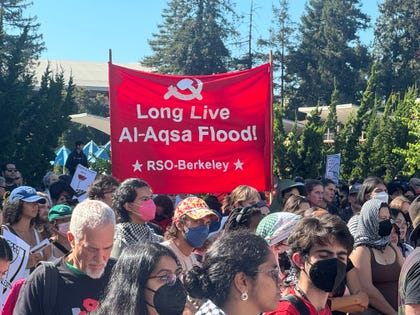
Nor did Hamas remain thousands of miles away from the American campus debate as an abstraction. The Commission itself received evidence of faculty-sponsored protests featuring “Long Live Al-Aqsa Flood,” Hamas’s name for its October 7 operation, along with a flag of the Popular Front for the Liberation of Palestine, which the report identifies as a U.S.-designated terrorist organization.
Berkeley celebrates the “Al-Aqsa Flood” massacre, named for the Islamic shrine atop the Jewish Temple Mount in Jerusalem
The Commission saw the evidence but never seriously followed the ideological trail.
Consider “Globalize the Intifada.” The phrase appears only once in the report, in its discussion of Rutgers. Yet contemporary campus reporting documented it many times among the very universities the Commission selected for study. At Stanford, students chanted “From Stanford to Gaza, globalize the Intifada.” At Cornell, protesters chanted both “globalize the intifada” and “There is only one solution, intifada revolution.”
SJP chapter for D.C., Maryland and Virginia
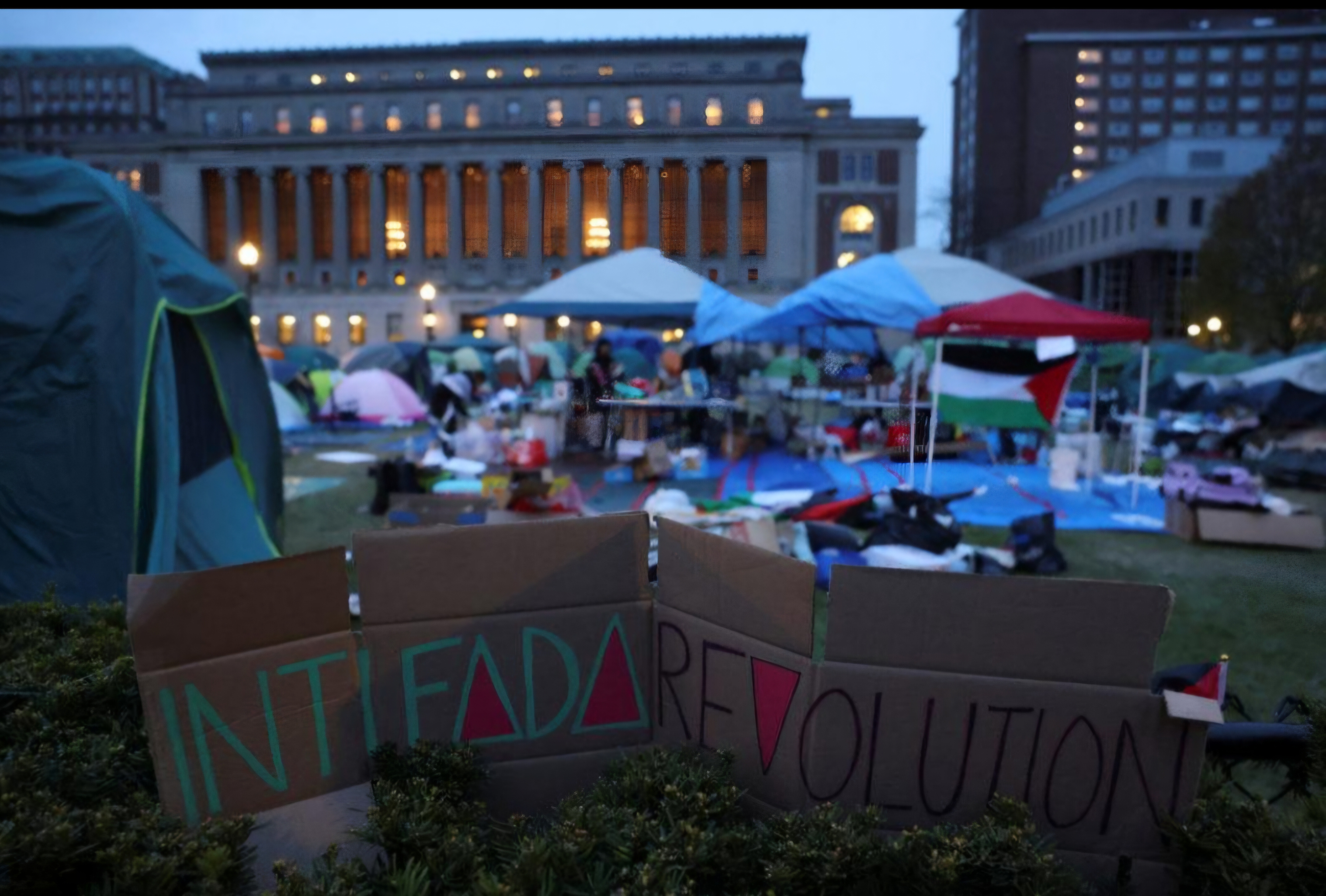
Cornell was not some campus the Commission lacked information about. The university supplied nearly 2,000 pages of material and received one of the longest individual university treatments in the report. Yet “Intifada Revolution” appears zero times.
Cornell professor said he was “exhilarated” by the October 7 massacre of Jews. The NY Times reported a story about Jews taking away public funds from students.
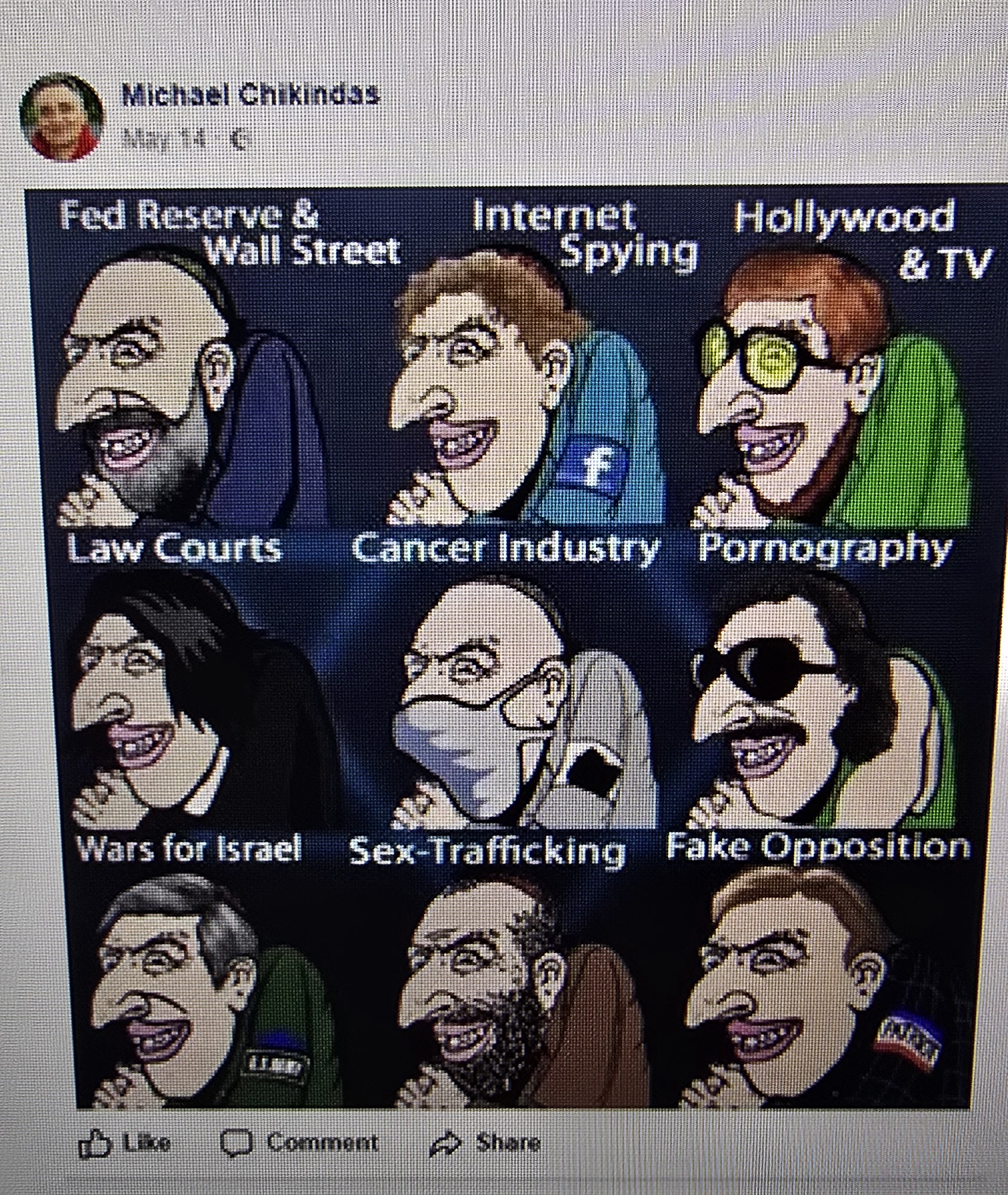
The gap becomes even more striking when compared with the Commission’s treatment of other ideological sources of antisemitism. The report examines far-right antisemitism, describing Jews portrayed as conspiratorial financial elites, competitors with white Americans and secret manipulators of political power. It discusses neo-Nazis and white nationalism. It also examines antisemitism arising from the political left, including depictions of Jews as privileged, capitalist or oppressive and the intersection between those ideas and hostility toward Israel.
Where is the corresponding examination of jihadi antisemitism?
Where is the history of Hamas’s antisemitic ideology, the examination of Hamas rhetoric about Jews, or the investigation of how the language and symbols of violent extremist organizations appeared in American campus protests immediately after October 7?
The Commission instead devotes considerable attention to deciding when anti-Israel rhetoric should be understood as political speech rather than discrimination. It examines “From the River to the Sea” at length, including competing interpretations of the slogan. It notes that “Intifada” can be frightening while remaining protected expression. At Rutgers, for example, it records “Globalize the Intifada” among the protest activity Jewish students said made them feel unsafe.
Imagine – feeling unsafe around a jihadist cry to kill non-Muslims everywhere.
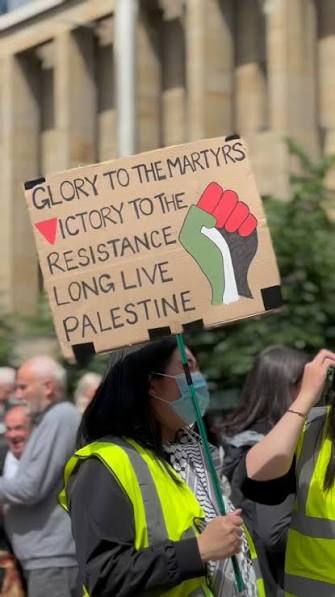
Rutgers “Glory to the martyrs”, praising the jihadists murderers
But cataloguing whether a slogan is legally protected is different from investigating the ideology being expressed by the people using it. The First Amendment can protect vile political speech. That does not make its ideological origin irrelevant to a federal investigation trying to understand antisemitism.
The omission is particularly consequential because the language of the campus protests did not develop in an intellectual vacuum. American universities have increasingly employed professors who view Israel through a settler-colonial framework. In its most categorical form, that theory casts Jews as foreign colonizers and Palestinians as the indigenous population resisting them. This screed is about Jewish presence in their homeland, not particular Israeli policies. It attempts to sever Jews from the land at the center of their history, religion, language and national identity and then uses that manufactured foreignness to challenge Jewish national self-determination. It is rank antisemitism that provides a logic other than Islamic supremacism to excuse Muslims preventing Jews from living and having self-determination “in any part of Palestine.”
“The conflict is cast in western circles as a local conflict over land between Jews and Arabs which can find compromise, but radical Islamists see it as a global religious matter between Muslims and Jews.” – First One Through July 2025
In such distorted worldview, October 7 becomes “resistance.” Hamas’s “Al-Aqsa Flood” becomes liberation. The intifada becomes something to globalize. Zionists become people to exclude, while Jews who object to any of this are reduced to the pro-Israel participants in a contentious political debate.
This is where the Commission missed the virulent strain of antisemitism it was supposed to investigate. The fear that swept through many Jewish communities after October 7 was not simply that Palestinian students disagreed with Jews about Israeli policy or conduct. Jews had watched an organization steeped in antisemitic ideology slaughter Israelis and take hostages. They then watched people in the West celebrate or rationalize the attack with the vocabulary of “resistance,” “intifada” and “Al-Aqsa Flood.”
While the Commission’s own evidence contained pieces of that story, its analytical framework never assembled them.
Columbia University encampment with “Intifada Revolution”
That failure has consequences. America has learned to recognize white-supremacist antisemitism – your father’s antisemitism – as an ideology rather than merely a collection of offensive statements. A swastika does not need to be accompanied by a dissertation on National Socialism before institutions understand the hatred behind it. The same intellectual seriousness should apply when antisemitism emerges from another extremist tradition.
Instead, this federal civil-rights report has provided universities with a framework that can make jihadist antisemitism remarkably difficult to see. While Jew hatred expressed in the vocabulary of white supremacy arrives already classified as extremism, similar hostility wrapped in the language of decolonization, resistance and intifada can be processed as politics, scholarship or protest. The Jewish student confronting it becomes the “pro-Israel” participant in a dispute, rather than a target of noxious hatred.
Jihadi antisemitism does not become benign when its vocabulary is translated for an American campus. Leaving that vector out of a federal investigation leaves universities less prepared to identify it, challenge it or protect the Jews it threatens.
The Commission set out to expose the forces driving contemporary campus antisemitism and instead helped preserve one of their safest hiding places: the assumption that when hatred of Jews arrives speaking the language of “resistance,” it is merely politics.
Major news organizations covering the extraordinary Flydubai incident have omitted a striking piece of context: five days earlier, a senior adviser to Iran’s Supreme Leader warned that if Iranian aircraft could not use regional airports, nobody else should expect to fly either.
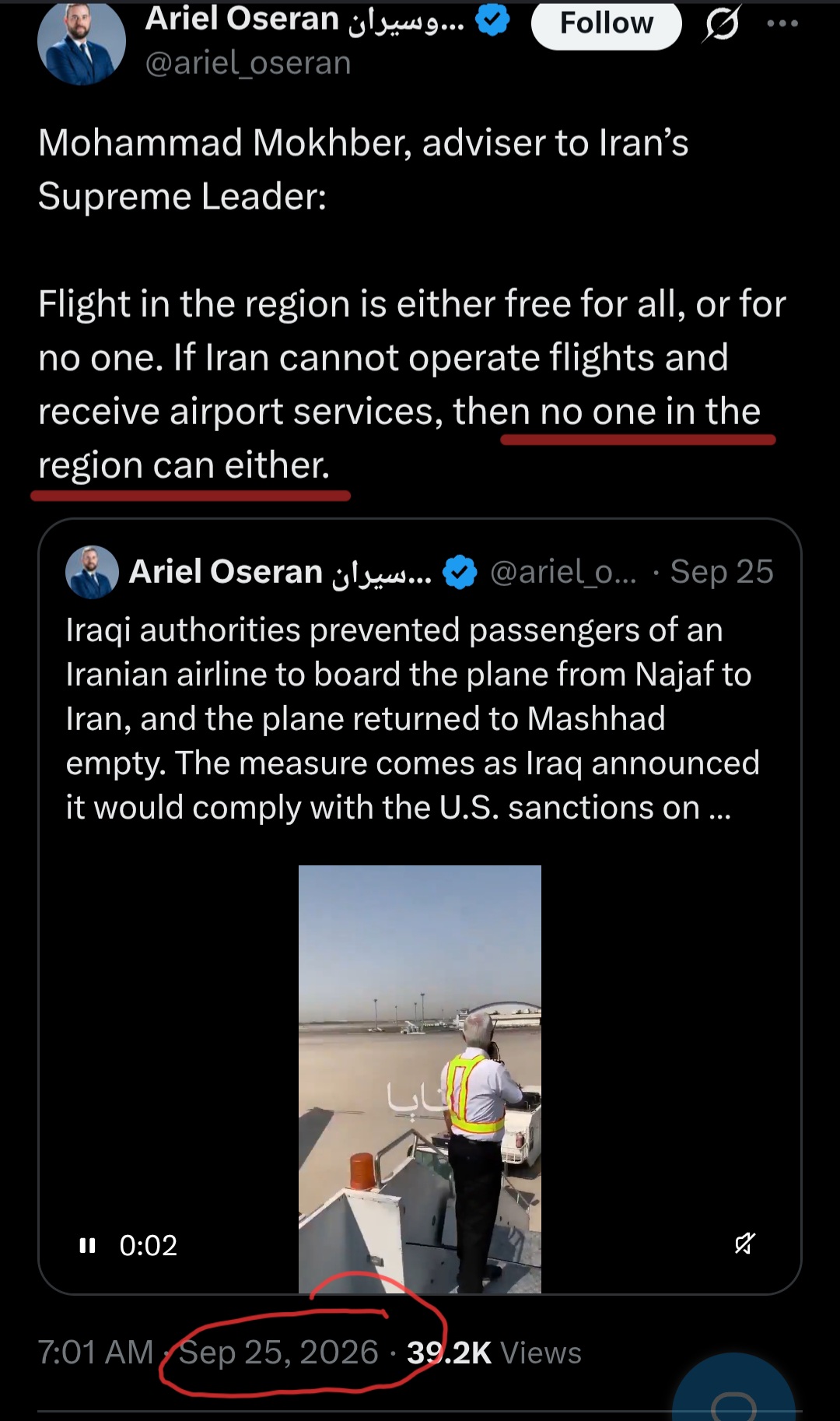
On September 25, Mohammad Mokhber, Iran’s former acting president and current adviser to Ayatollah Ali Khamenei, declared:
“Flight in the region is either free for all, or for no one.”
He added: “If Iran is denied the possibility of flight and access to airport services, no country in the region will have this possibility either.”
Days earlier, another senior Iranian official, Mohsen Rezaei, had issued a similar warning concerning neighboring airports.
Five days after Mokhber’s statement, a Flydubai aircraft carrying mostly Israelis from Dubai to Tel Aviv suffered an attempted hijacking. The captain was attacked, the aircraft rapidly lost altitude and the flight made an emergency landing in Saudi Arabia. The motive remains under investigation. There is no immediate evidence connecting Iran to the incident.
But Iran’s warning is missing from major coverage reviewed from Reuters, the Associated Press, the Guardian, Al Jazeera and The National. Reuters had itself reported Mokhber’s statement when he made it.
That omission is difficult to understand. A senior Iranian official had publicly warned that regional aviation could be disrupted. Five days later, an Emirati aircraft carrying over one hundred Israelis is put at risk by an Omani pilot.
Consider that Al Jazeera and the Guardian continue to say that Israel is at war with Iran even though that hasn’t been true for many months. They insert Israel into the war against Iran while they leave Iran out of the discussion about a potential killing of nearly two hundred Israelis.
Readers are being lied to by acts of insertion and omission, especially about Israel and Iran. It is critical to understand those basic facts and begin to ask why.
Resilience is a word we use so casually that we sometimes forget what it actually means. It comes from the idea of springing back: absorbing a blow without allowing the blow to determine what comes next.
Israel received an extraordinary demonstration of it Wednesday morning.
Flydubai Flight FZ1073 was flying from Dubai to Tel Aviv carrying roughly 150 Israelis when something went terribly wrong in the cockpit. The plane plunged rapidly, eventually transmitted the international code for unlawful interference and diverted to Saudi Arabia. Israeli officials now say they are investigating the incident as an attempted terrorist attack. According to Israeli officials cited in press reports, a pilot was stabbed during the cockpit struggle, and passengers and crew helped overpower the attacker. Everyone aboard survived.
The investigation is continuing, and some details remain unsettled. But the response aboard the aircraft is striking. A plane full of people suddenly drops thousands of feet. There is violence in the cockpit. Passengers realize their lives may depend upon what happens in the next few minutes. People act and the attacker is subdued. The aircraft lands.
That is resilience in its most compressed form.
Inside the cockpit chaos: Passengers describe blood, screams on Flydubai flight
For a slower version, look at Kibbutz Be’eri.
On October 7, 2023 Be’eri suffered a horrific massacre at the hands of jihadists from Gaza. Nearly three years later, its residents are rebuilding houses, schools and community facilities and preparing for a broader return. Most of the community says it wants to return. The rebuilding effort describes its purpose in the simplest possible terms: returning home rather than allowing jihadi terror to decide whether the community continues to exist.
That is resilience too. Not forgetting or forgiving. Not pretending nothing happened nor escaping grief. Rebuilding anyway.
There is another way some societies and movements can process grievance, and it has almost the opposite dynamic.
A grievance can become something to preserve rather than overcome. Suffering becomes justification for retaliation. Retaliation produces a counterattack. The counterattack becomes a new grievance. That grievance then justifies another attack. Instead of absorbing catastrophe and trying to restore ordinary life, the political ideology continually replenishes itself from catastrophe.
There is a name for this process: grievance-fueled radicalization. Over the course of a century, it has become the mantra of Palestinian Arabs.
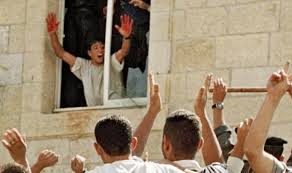
Palestinian Arabs mutilate Israelis in Ramallah and hold bloody hands aloft to cheering crowd at start of Second Intifada in October 2000
And it is impossible to understand Hamas and Palestinian Islamic Jihad without understanding how powerfully this mechanism operates within their ideology.
Hamas’ foundational charter did not merely object to particular Israeli borders or governments. It presented Palestine as an Islamic waqf that could not be surrendered and described the struggle over the land in explicitly religious terms. It was a call to “cleanse” the land of Jews and “Crusaders.”
Palestinian Islamic Jihad is even less ambiguous. The U.S. State Department has described PIJ as committed to Israel’s destruction and the creation of an Islamic state throughout historic Palestine, including present-day Israel.
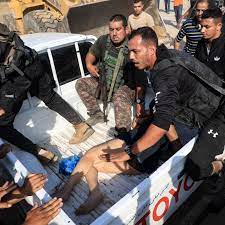
Hamas and PIJ bring back body of dead woman to cheering crowds in Gaza on October 7, 2023
The Palestinian jihadi movement built around grievance can interpret the consequences of its own violence as additional evidence for the grievance that justified the violence in the first place.
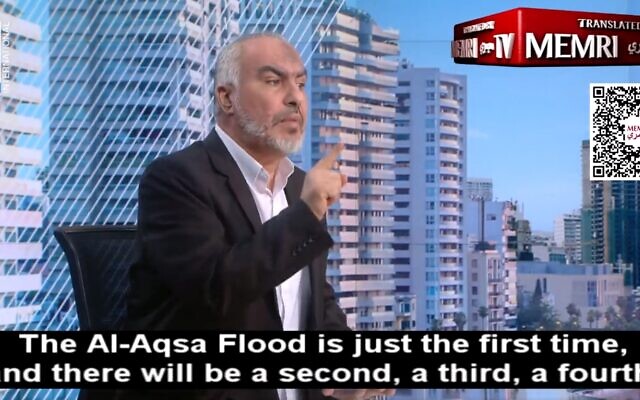
Hamas political bureau member Ghazi Hamad supplied an unusually stark example after October 7. He argued that Israel itself was responsible for the bloodshed, said Hamas would repeat October 7 again and again, and rejected the idea that Israel had a legitimate place on the land.
Consider the circularity. Israel’s existence is a grievance > Hamas attacks Israel is resistance > Israel response is a new grievance.
The cycle reproduces itself indefinitely because almost every possible outcome feeds it.
That is fundamentally the opposite of resilience.
Resilience does not require forgetting a grievance. Israelis certainly have not forgotten October 7, just as the people of Be’eri have not forgotten what happened in their homes. Resilience is the decision that suffering will not become the organizing principle of everything that follows.
The passengers on FZ1073 did not have the luxury of theorizing about any of this. Their aircraft was falling. They fought for control of it.
Be’eri has been doing essentially the same thing for three years, only much more slowly: taking back control of what comes next.
Israel has built resilience around what comes after catastrophe: survive, rebuild and move forward. Palestinian jihadist movements have built their cause around grievance that must be preserved, intensified and avenged. Coexistence becomes possible only when their stated mission to eliminate the Jewish state no longer governs the conflict.
The Palestinian Authority has a problem with Jews praying at Judaism’s holiest site.
Its Western supporters have a different problem. They keep telling us the Palestinian Authority is moderate, peaceful and reformed.
This week provides a useful test of both claims.
Sukkot is one of Judaism’s three ancient pilgrimage holidays. Jews have traveled to Jerusalem for Sukkot for thousands of years. They still do, including from around the world.
The United States is by far the largest source of foreign tourists to Israel. In August, Americans accounted for roughly 35 percent of foreign tourists, followed by France at 13 percent and Britain at 8 percent. Together, those three countries supplied about 56 percent of Israel’s foreign tourists.
Sukkot brings Jews to Jerusalem to do what Jewish pilgrims have done for generations: celebrate the holiday, carry the Four Species and pray.
This week, 1,731 Jews visited the Temple Mount in a single day. They carried lulavim and etrogim. They gathered together. They prayed. They sang.
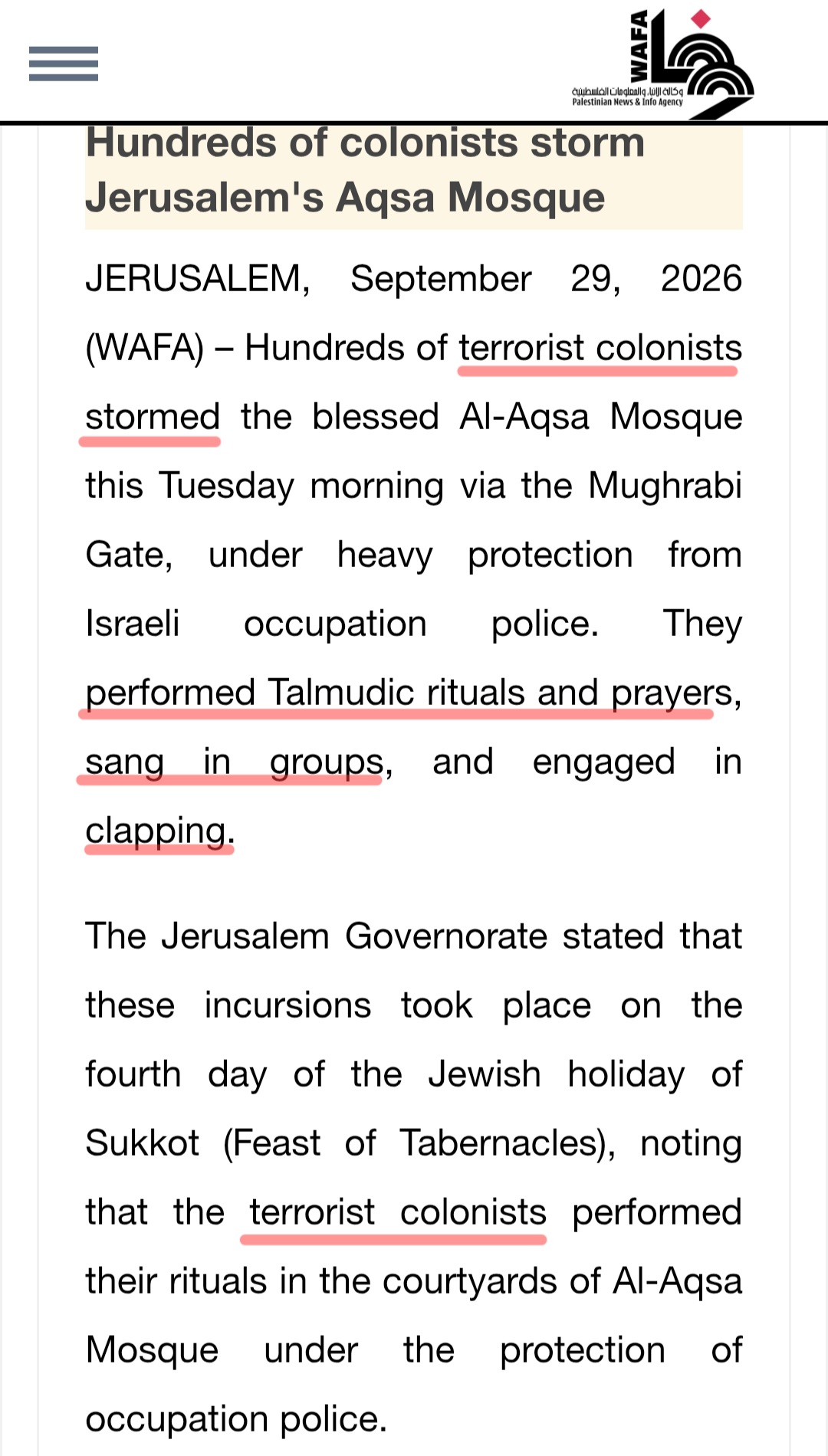
The Palestinian Authority’s official news agency called Jews doing this “terrorist colonists.”
WAFA’s own account described the supposed terrorism: they “performed Talmudic rituals and prayers, sang in groups, and engaged in clapping.”
Praying. Singing. Clapping.
Now consider what the political leaders back home have been saying about the Palestinian Authority.
French President Emmanuel Macron has pointed to Mahmoud Abbas’s commitment to fighting hate speech and placed a renewed Palestinian Authority at the center of his vision for a Palestinian state.
Britain says a Palestinian state should be led by a “reformed Palestinian Authority.”
The European Union has praised the PA’s reform agenda and backed it with substantial financial support.
American politicians have joined in.
Senator Chris Van Hollen has said the Palestinian Authority “seeks to accomplish its goals through non-violent means.”
Nineteen Democratic senators—including some of the Senate’s most progressive members—called for a Palestinian state governed by a “revitalized and reformed Palestinian Authority.” Their proposed framework specifically demanded that the PA combat “incitement to violence” and that its senior officials commit to nonviolence.
Perhaps they should read its official news service.
Senator Chris Van Hollen
Western governments have constructed the Palestinian Authority as the moderate alternative to Hamas: secular rather than Islamist, peaceful rather than violent, reforming rather than inciting.
Meanwhile, its official news agency looks at Jews celebrating Sukkot at Judaism’s holiest site and calls them “terrorist colonists.”
Jews travel to Jerusalem for Sukkot from America, France, Britain and elsewhere. They pray together. They sing. They carry their lulavim and etrogim. Then they return home.
They are your Jews. Your citizens.
Yet their own governments are actively aligning themselves with an authority whose official media labels Jews terrorists for peacefully practicing their religion at Judaism’s holiest site.
Macron should be asked whether this is the hate speech Abbas promised to fight. Britain and the European Union should explain how it fits their description of a reformed PA. And the American senators who specifically demanded that a revitalized PA combat incitement should decide whether calling Jewish worshippers terrorists qualifies.
These leaders now have a choice.
They can condemn the Palestinian Authority for calling Jews peacefully practicing their religion “terrorist colonists.” Or they can continue embracing it as moderate and reformed.
Governments cannot proclaim their opposition to antisemitism at home while ignoring it in the Palestinian Authority they champion abroad.
If Western leaders still call the Palestinian Authority moderate after it calls Jews “terrorists” for praying, they are no longer describing moderation. They are excusing jihadi antisemitism.