Gazans Own This War

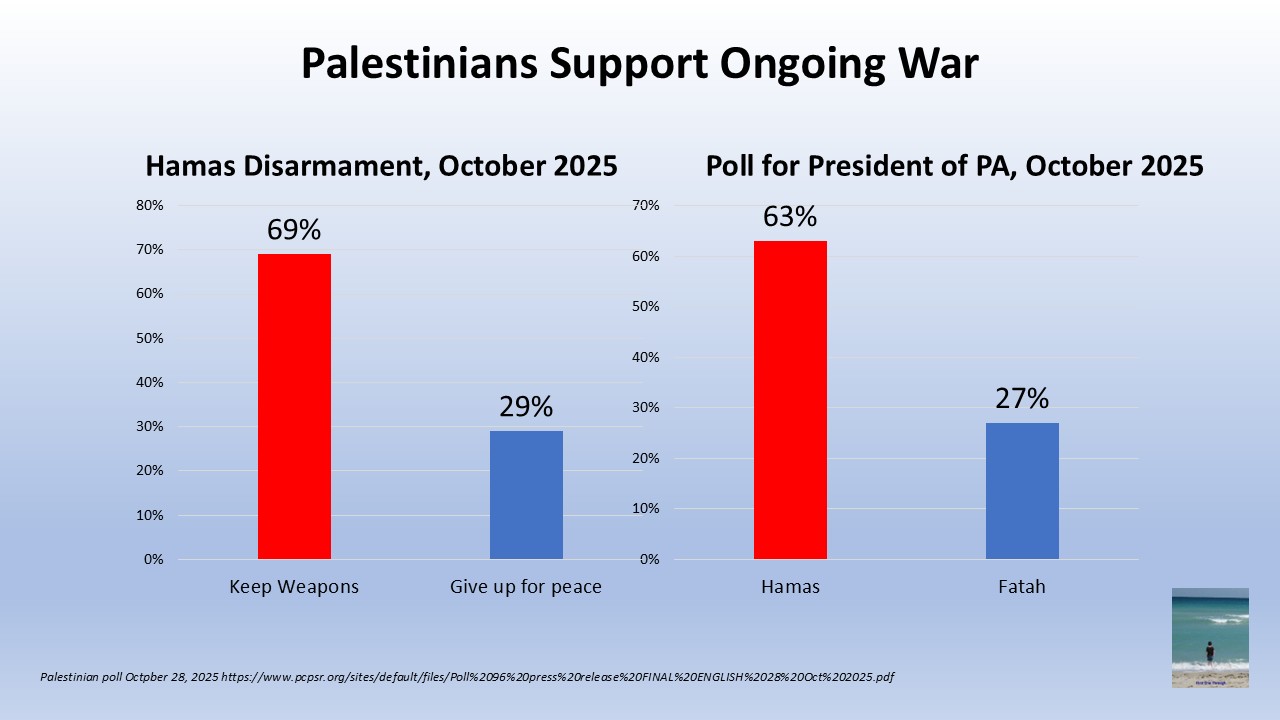
In October 2025, after two years of war and the devastation of Gaza, the Palestinian Center for Policy and Survey Research published findings that should have dominated headlines around the world:

  • Hamas remained the most popular Palestinian political movement.
  • More than half of Palestinians continued to view October 7 as the correct decision.
  • Nearly seven in ten opposed Hamas disarmament even if disarmament would prevent another war.

After two years of destruction, support for Hamas remained strong. Support for October 7 remained widespread. Opposition to disarmament remained overwhelming.

These findings did not come from Israeli politicians or government spokesmen. They came from Palestinians speaking to Palestinian pollsters.

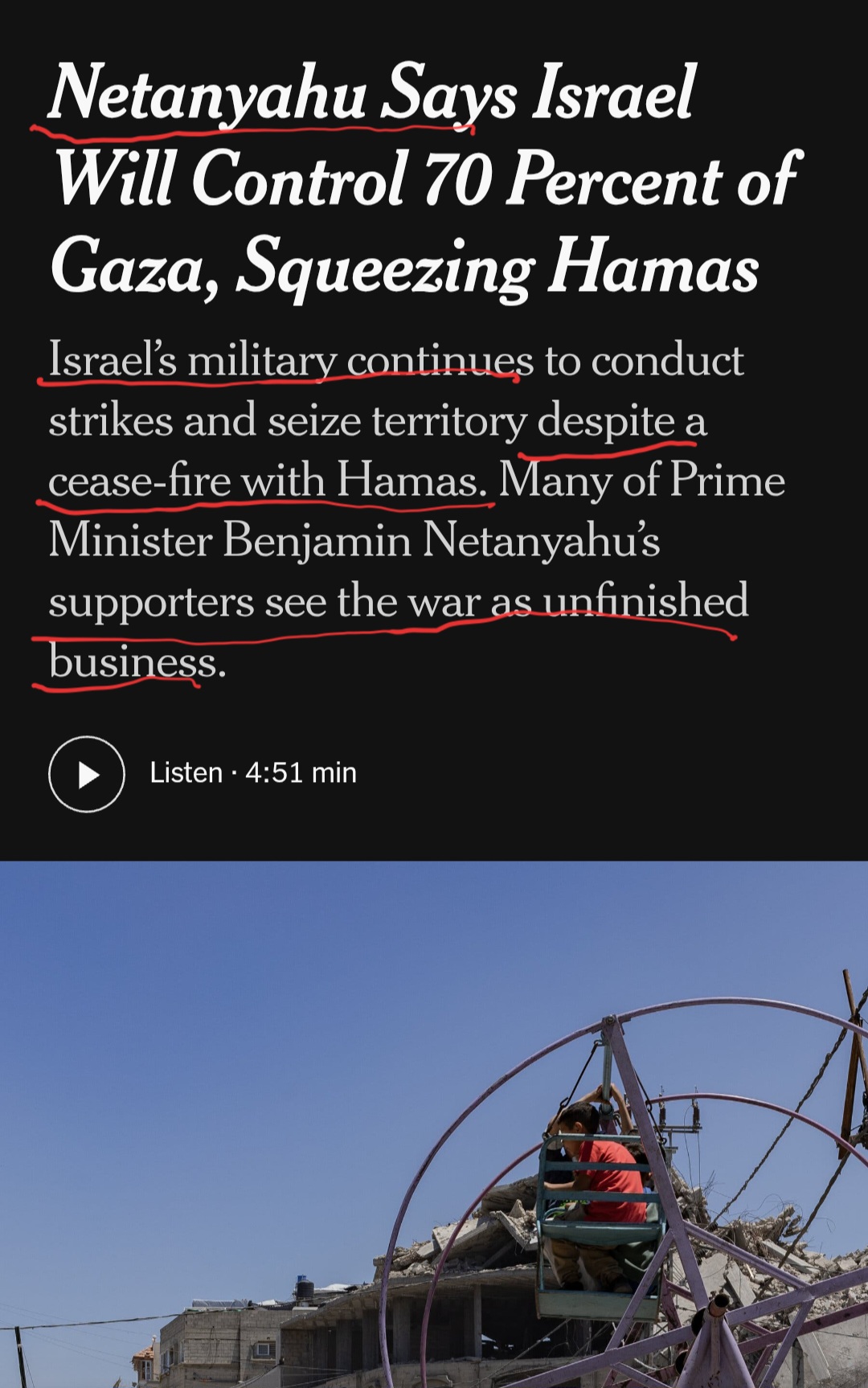
Yet still, the New York Times publishes lengthy articles that the Gaza war continues because of Israel.

Readers were taken inside Benjamin Netanyahu’s political calculations. They learned about coalition pressures, right-wing ministers, territorial ambitions, and supporters who view the war as unfinished business.

By the end, a clear narrative emerged: the war continues because Israelis want it to continue. Because of greed for land, for power.

There was no mention that Gazans want Hamas to remain armed and for the war to continue. That is the political reality that keeps a ceasefire from taking hold.

The omission matters because it changes the reader’s understanding of the conflict. It places blame solely on Israel when a majority of Palestinians continue to seek the destruction of Israel despite the devastation in Gaza.

Until journalists devote the same attention to Palestinian motivations that they devote to Israeli motivations, Americans will continue receiving a false explanation for why this war endures.

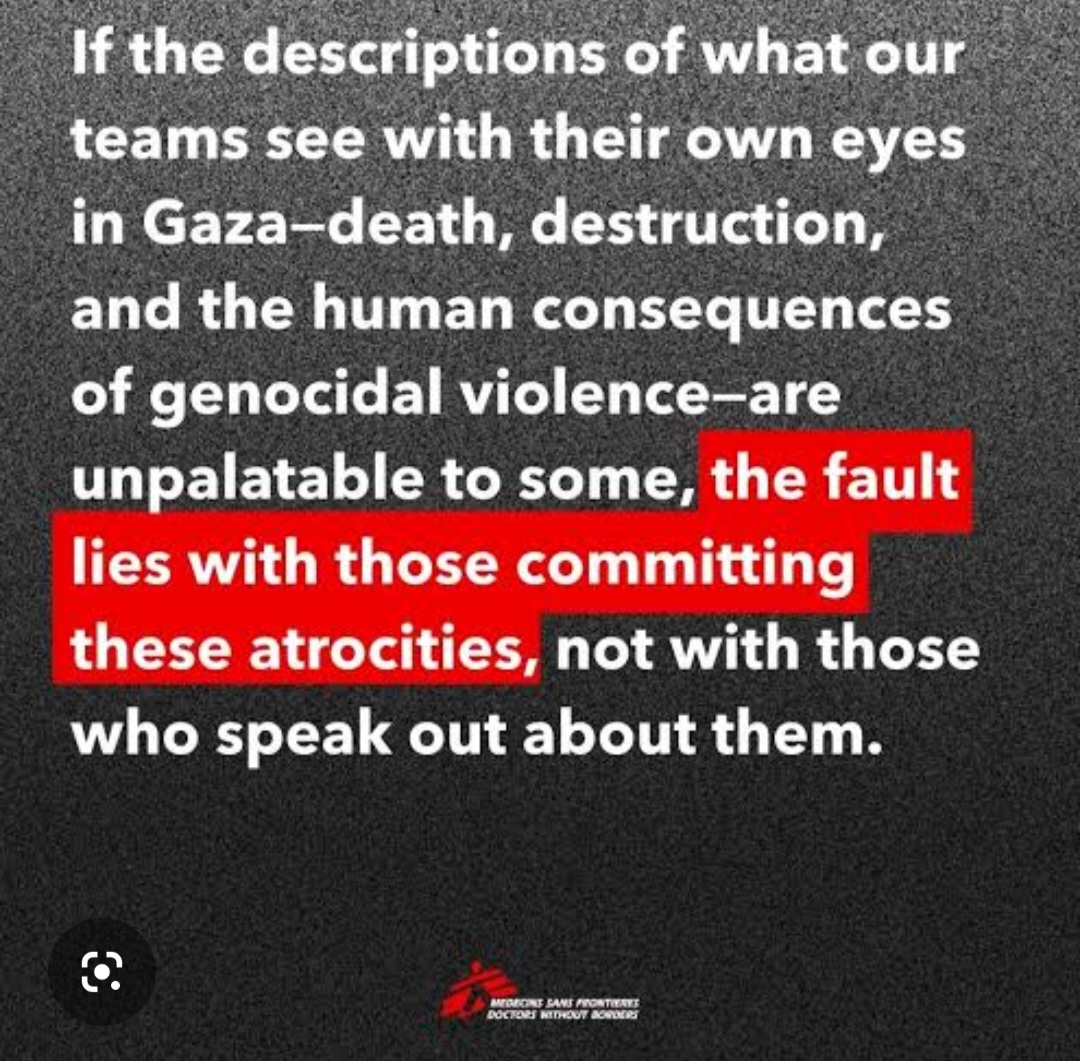
Doctors Without Borders Is Coming For Israel

Every modern humanitarian organization insists the same thing: suffering is not a business. The starving child is not a marketing asset. The bombed hospital is not a fundraising funnel. The crying mother under rubble is not a revenue generator.

Then the annual reports arrive.

Médecins Sans Frontières (MSF) / Doctors Without Borders crossed roughly €2.3 billion in annual revenue in 2022. Then roughly €2.35 billion in 2023 and €2.36 billion in 2024. Three consecutive years above €2 billion. Ninety-eight percent of funding came from private donors. More than seven million donors worldwide.
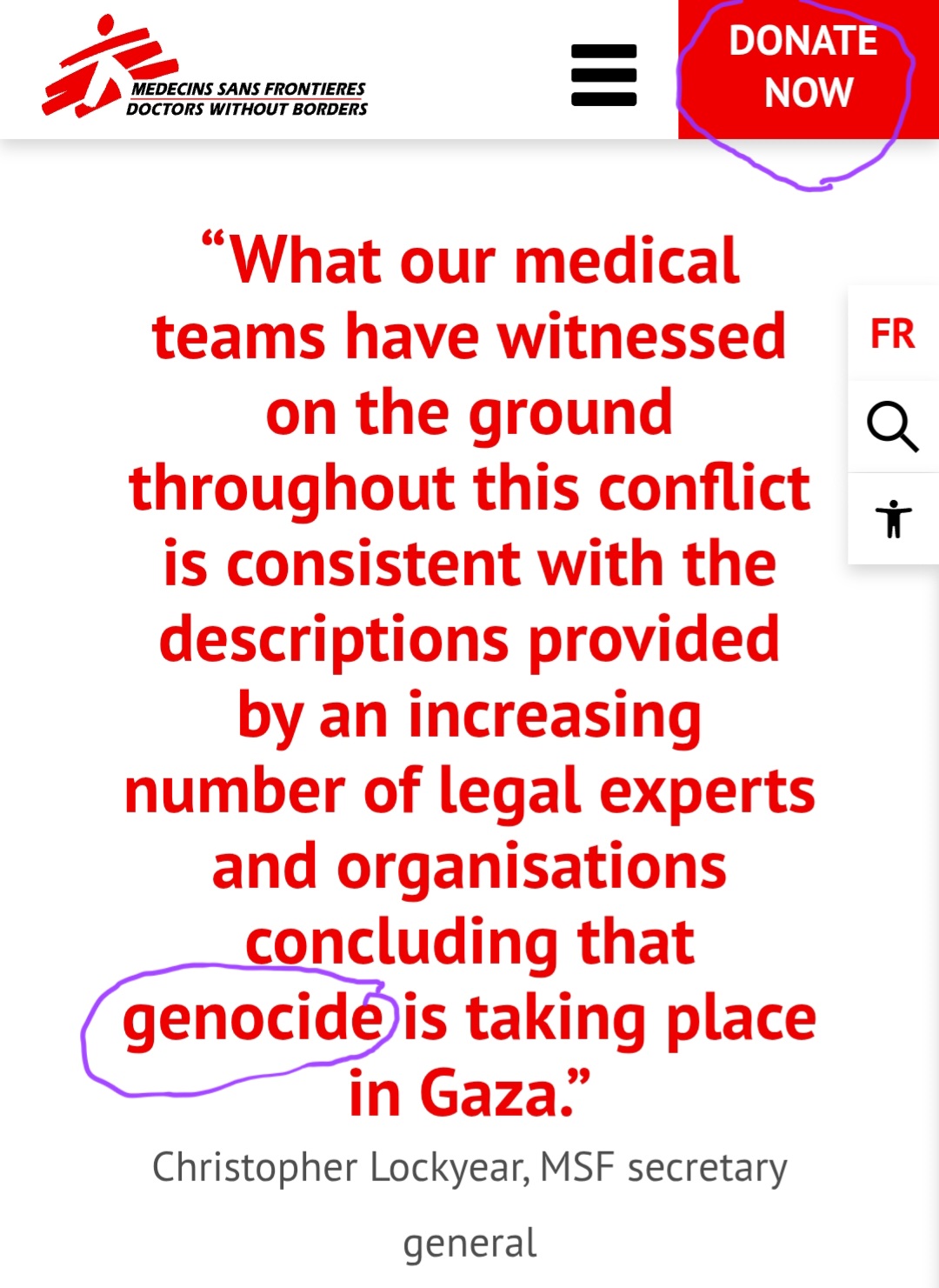
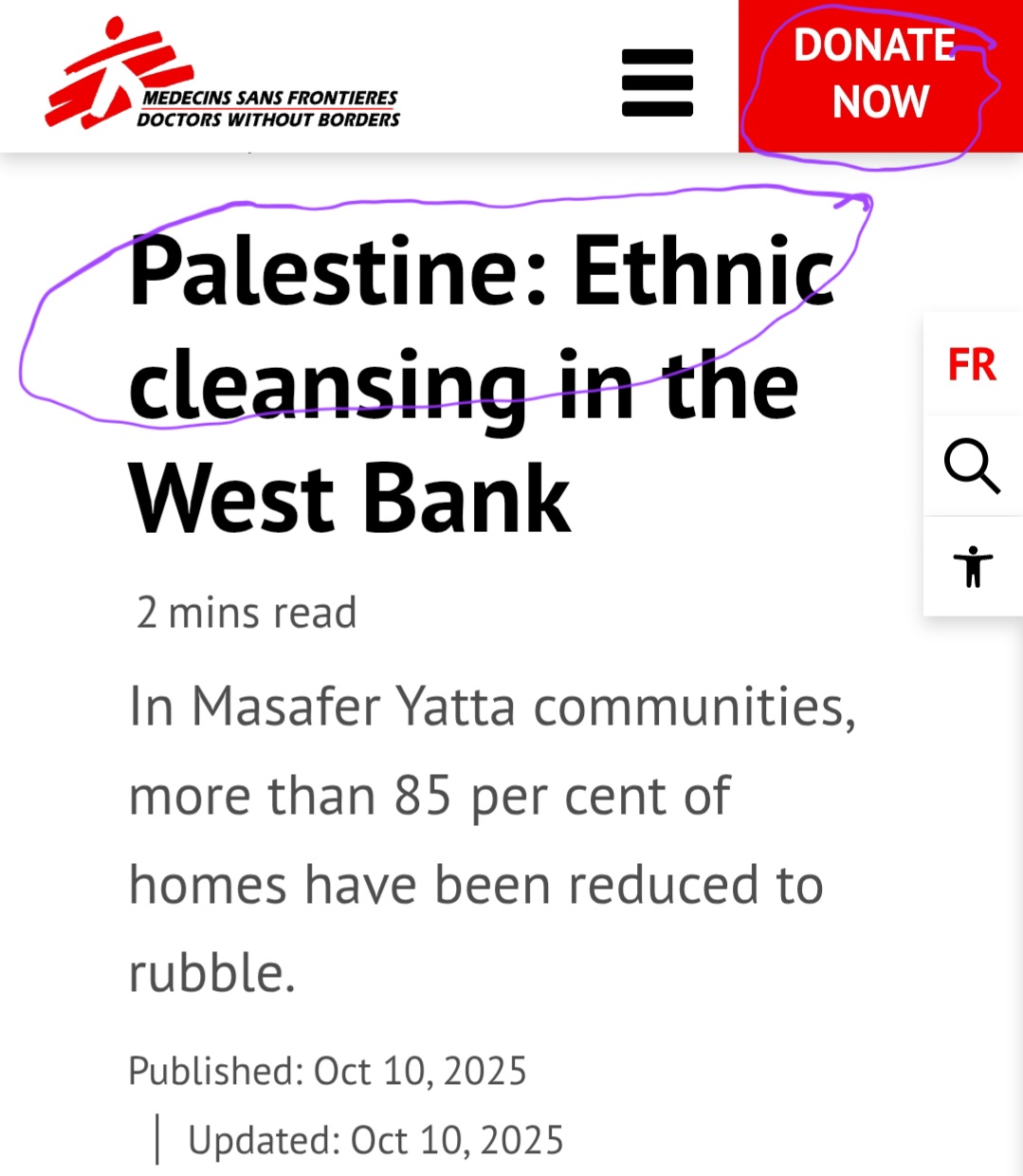
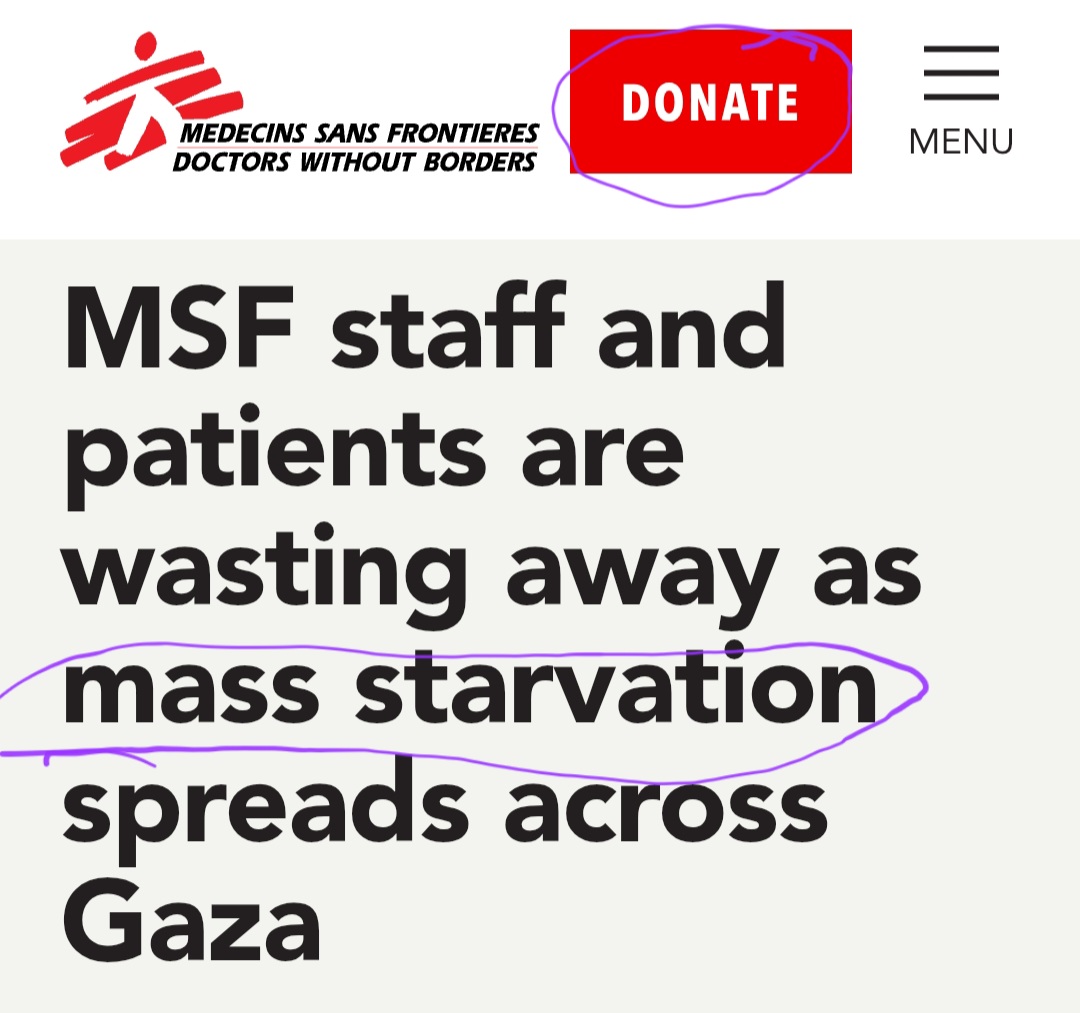
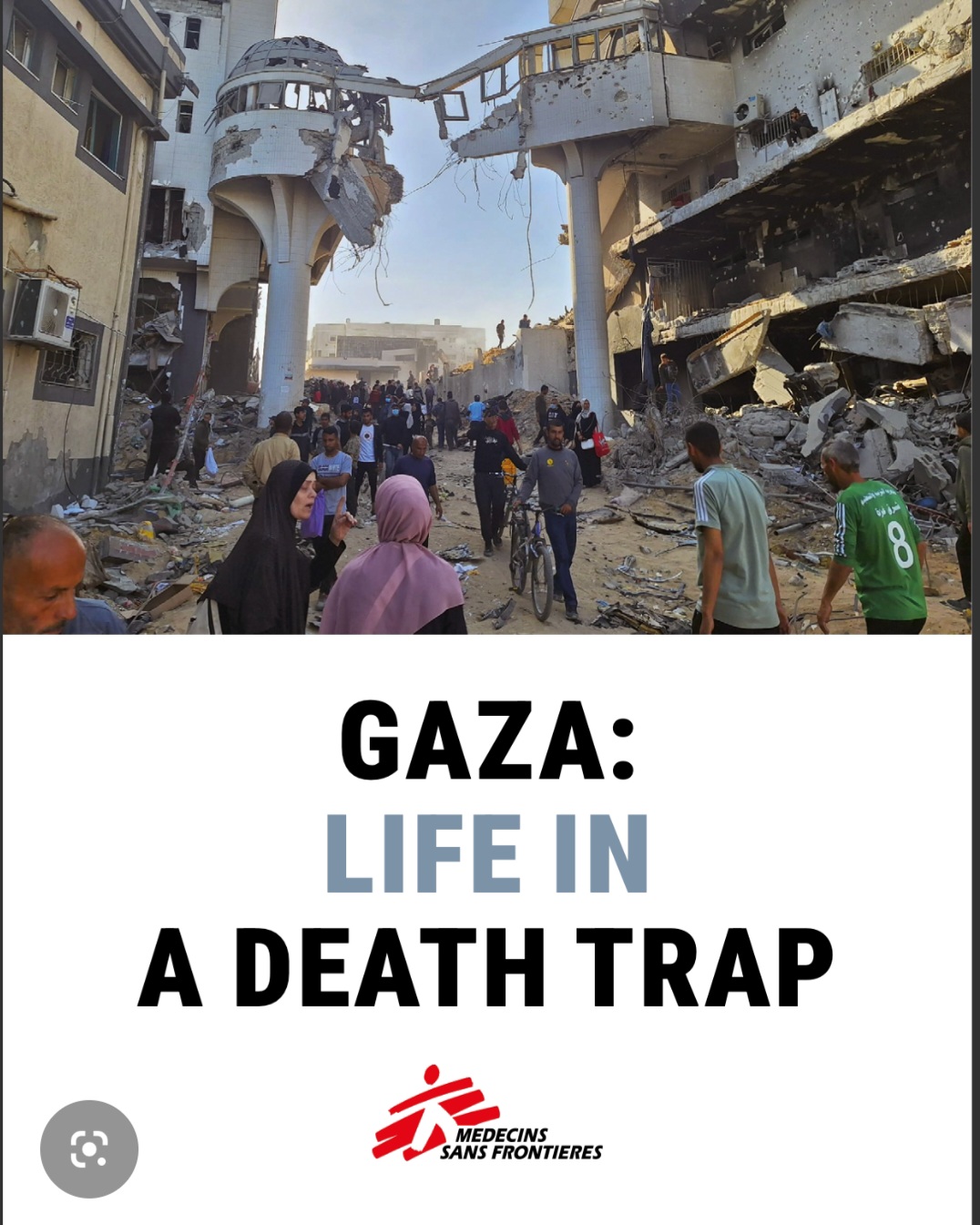
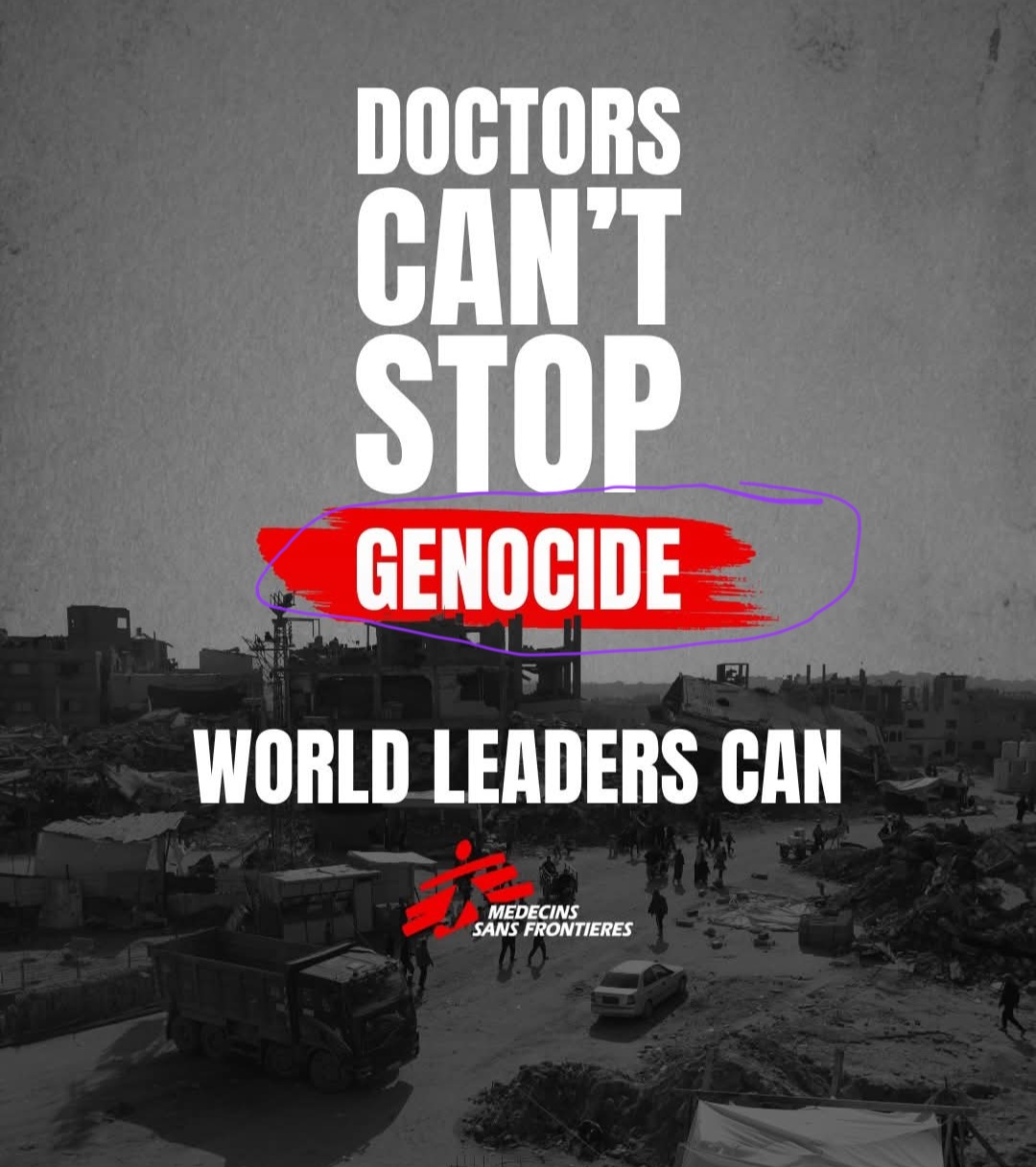
The organization presents this as proof of global compassion. It is also evidence of something else: misery has become one of the most effective fundraising products on earth. Especially if loaded with charges: “Genocide.” “Starvation.” “Ethnic cleansing.”

The humanitarian industry now operates inside the same emotional attention economy that drives political campaigns, cable news, and social media outrage. The more horrifying the imagery, the more morally charged the narrative, the more emotionally shattered the audience becomes, the faster the money moves.

And nobody understands this dynamic better than MSF.

MSF’s public communications increasingly fused emotionally maximalist language with direct fundraising infrastructure. A visitor no longer encountered merely medical updates. They encountered emotional conversion architecture.

The modern humanitarian sector has discovered what every digital platform already knows: emotionally devastating content converts. A dusty child under rubble produces more engagement than a policy paper. A charge of genocide and starvation moves directly into emotional reflex.

The uglier the images and explosive the charges, the healthier the fundraising pipeline becomes.

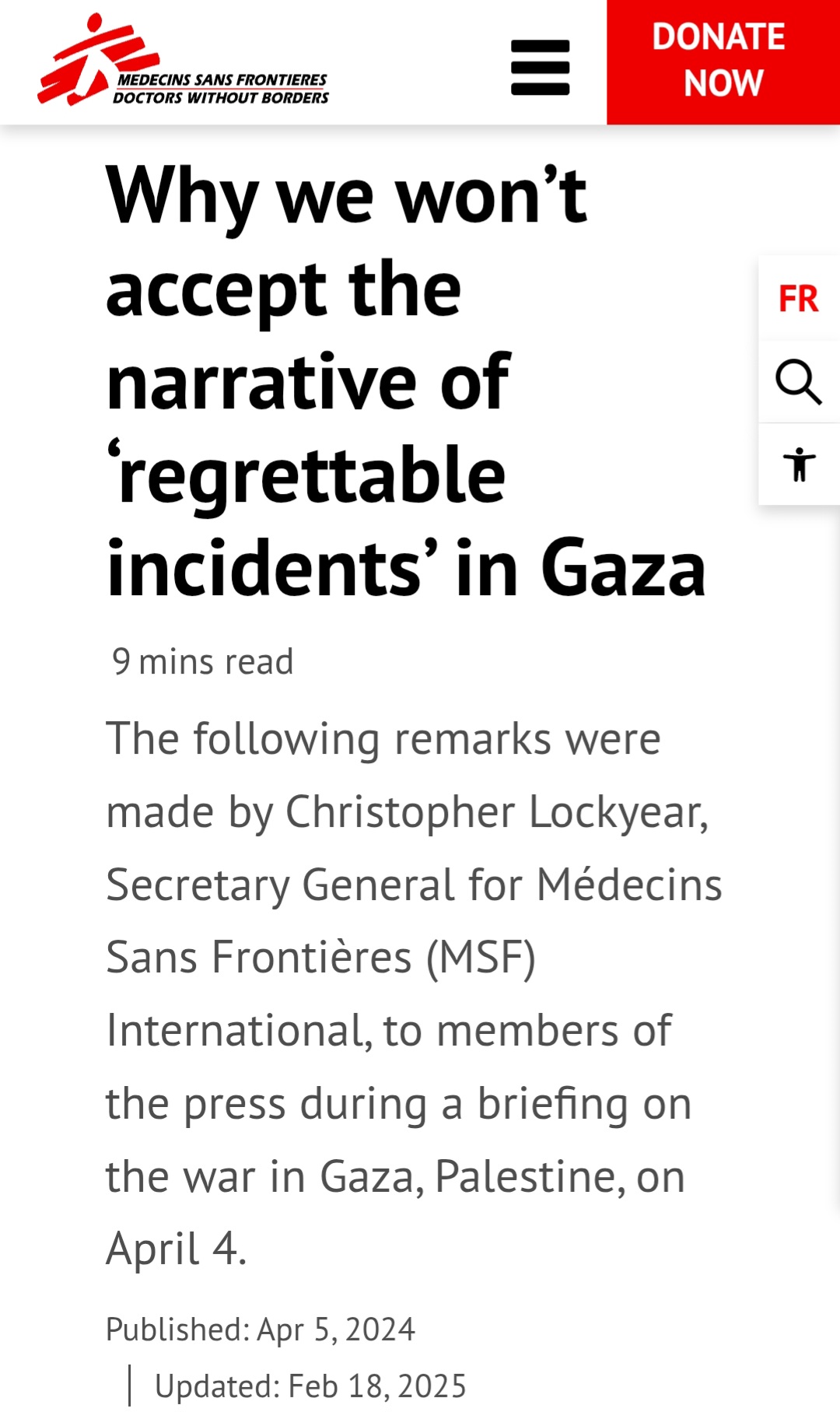
Doctors Without Borders is very selective in its explosive terminology regarding Israel. For MSF, Israel is the cause of all the ills in Gaza, not Hamas. Israel is directly called out, not the genocidal terrorist group that launched the war and hides in tunnels without letting civilians use them for protection. No excuse proffered by Israel will satisfy.

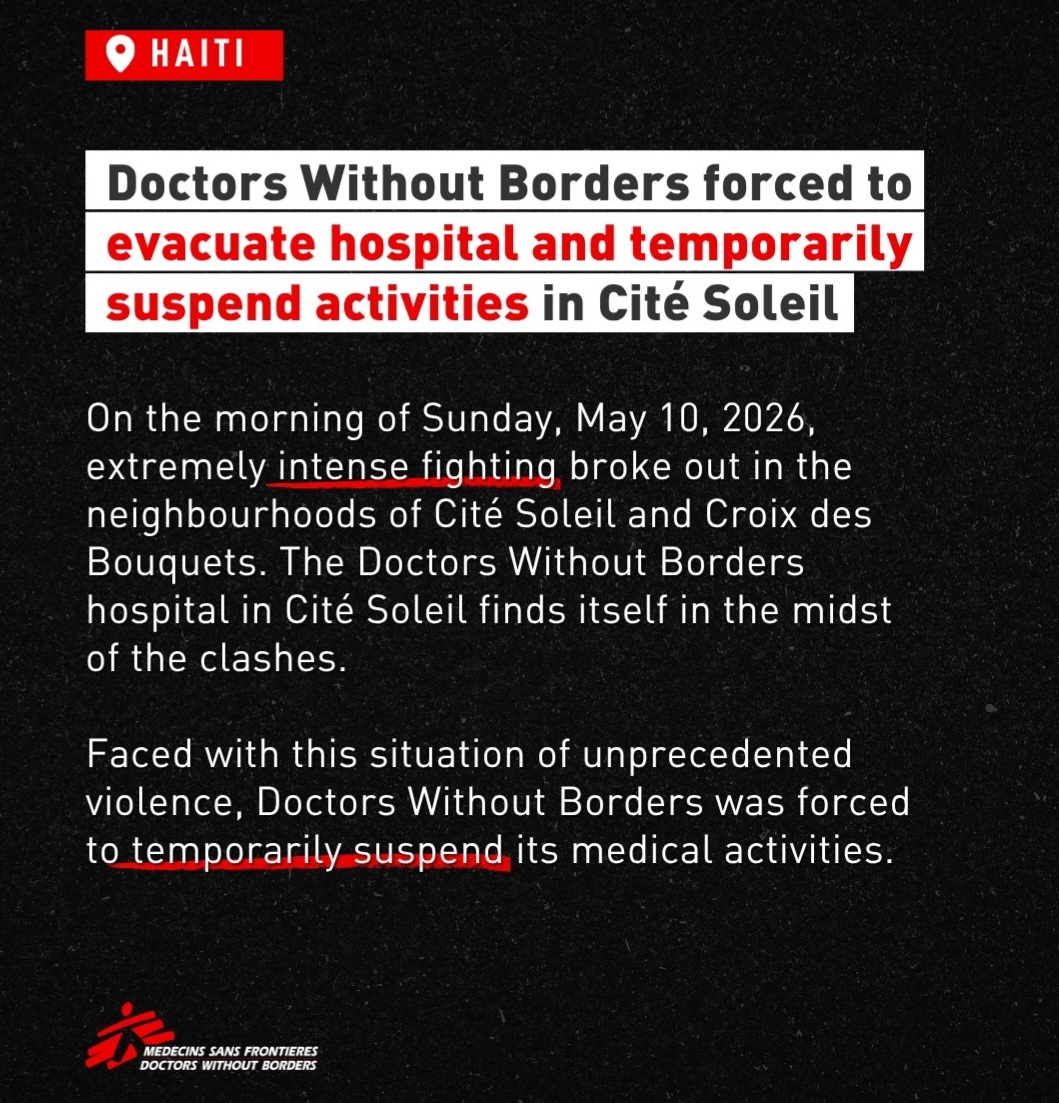
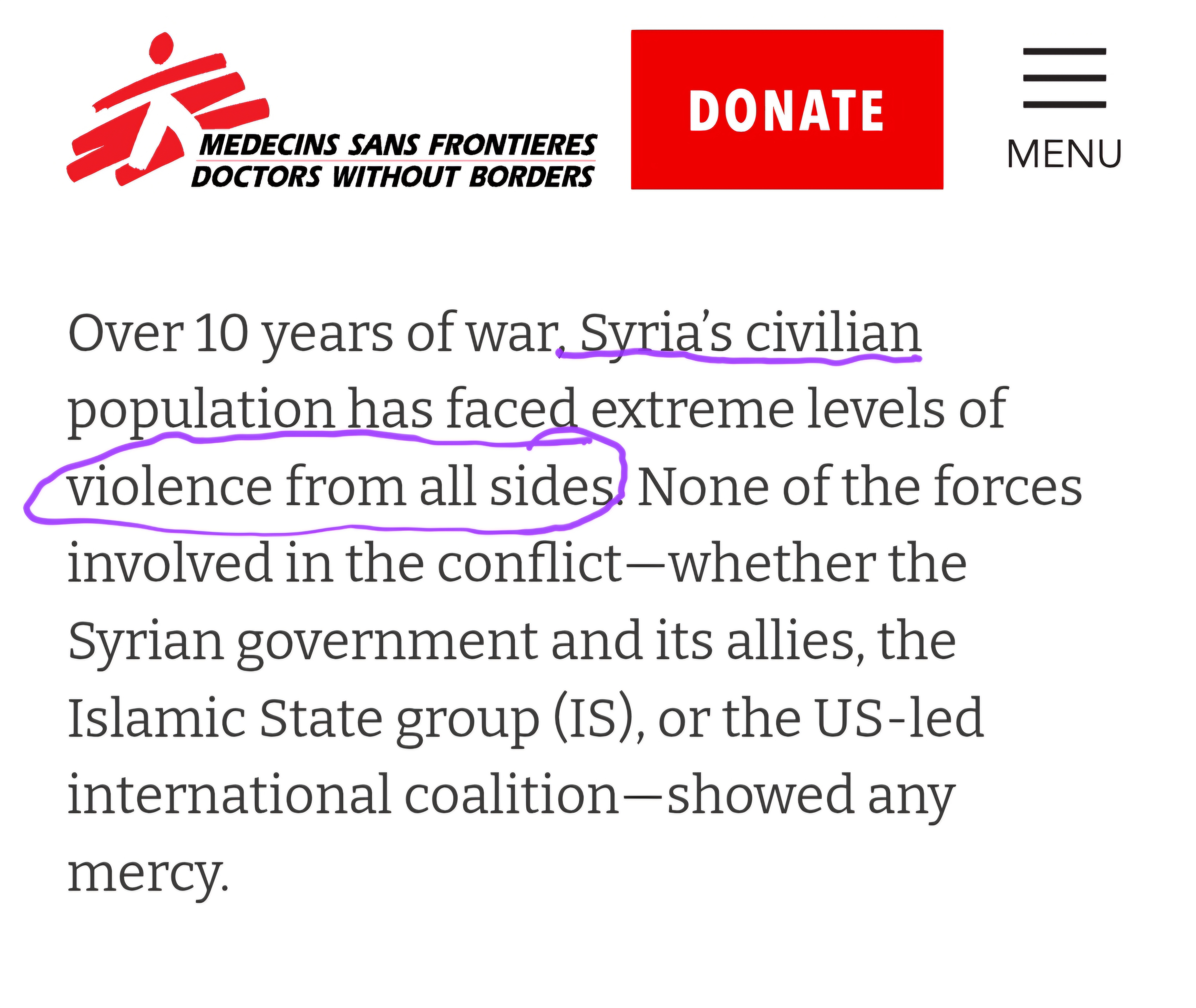
Doctors Without Borders doesn’t do this in other conflicts. Not in Sudan nor Somalia. Not in Syria nor Haiti. In those wars, either no one is called out or “all sides” are vilified.

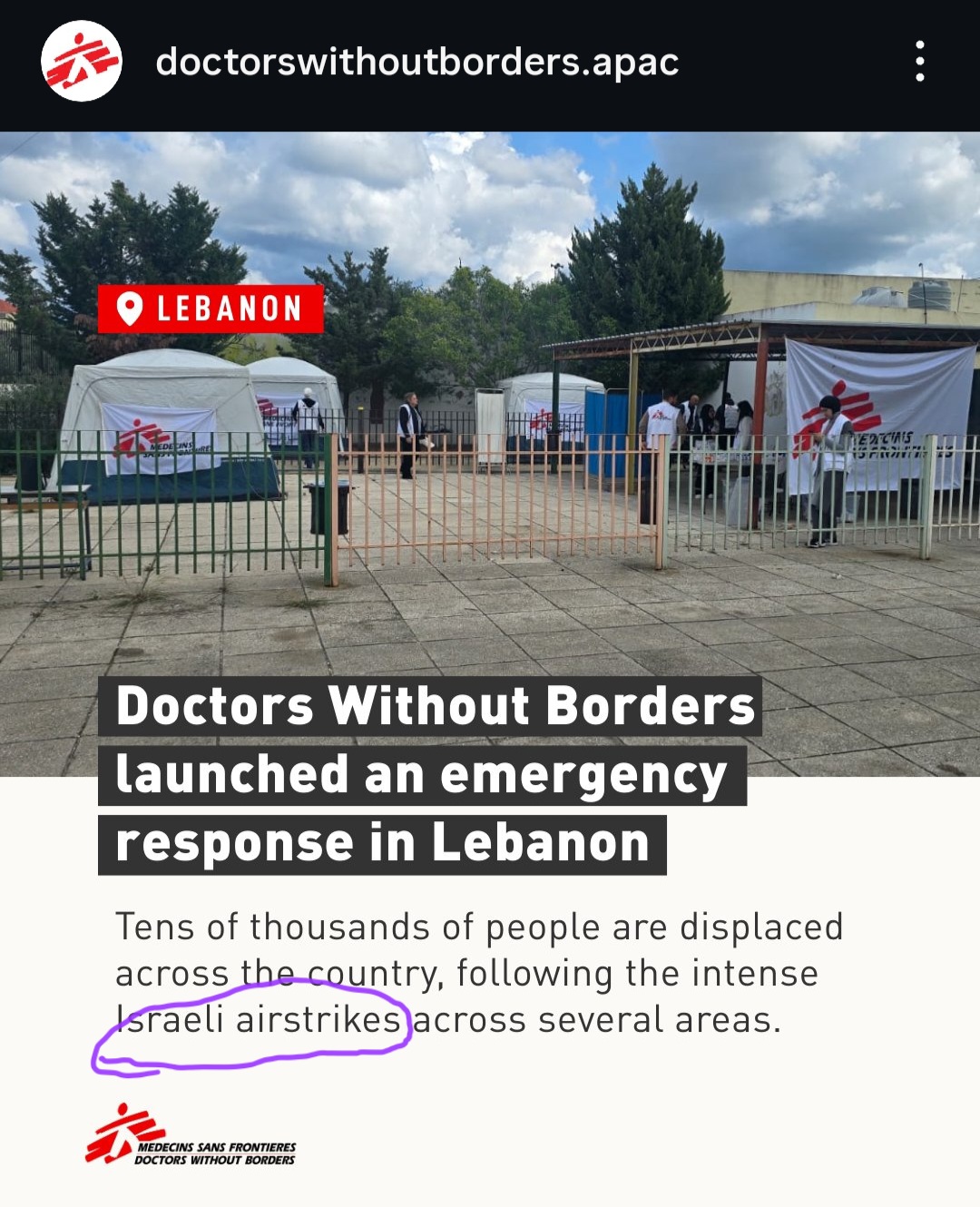
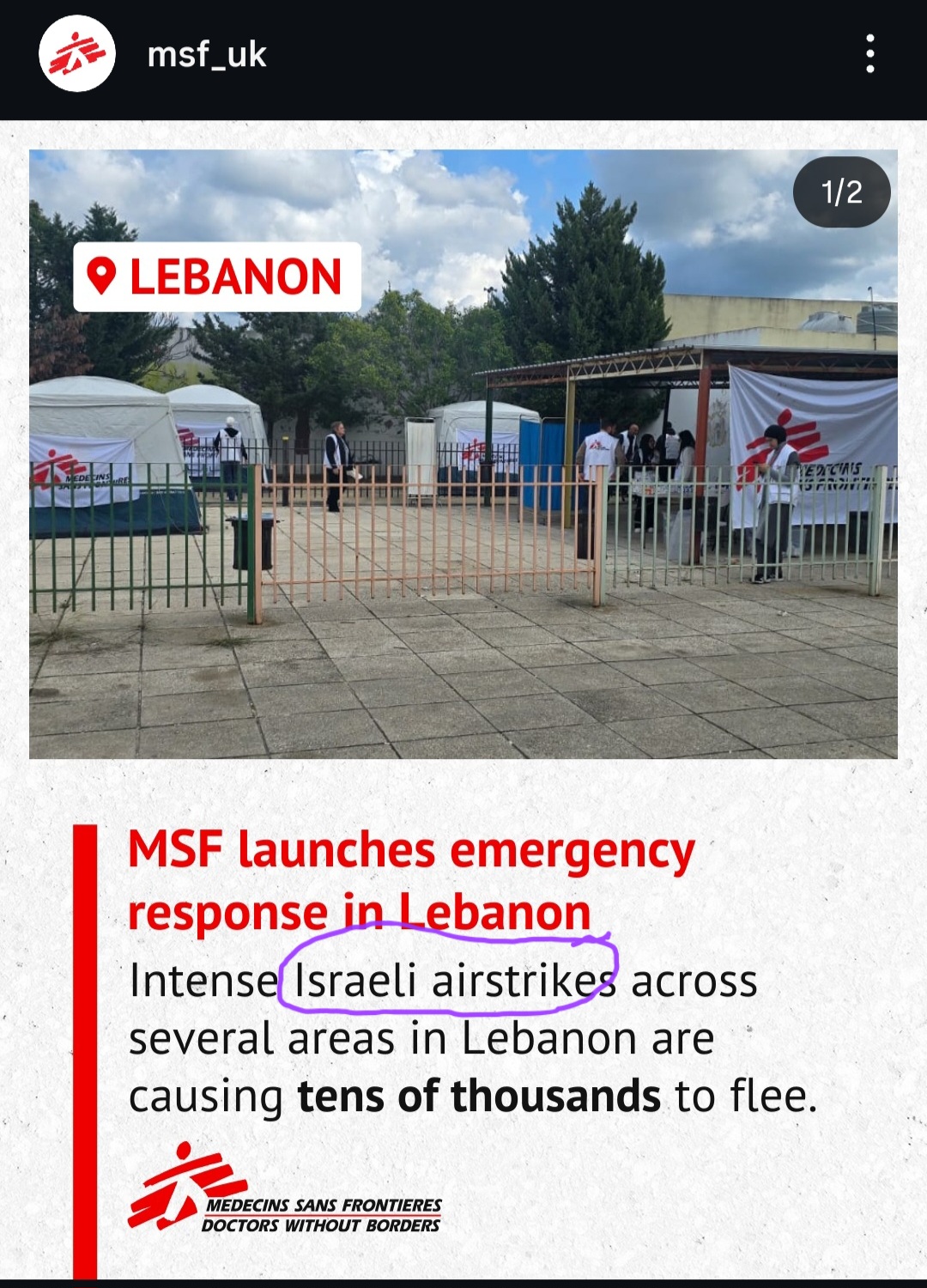
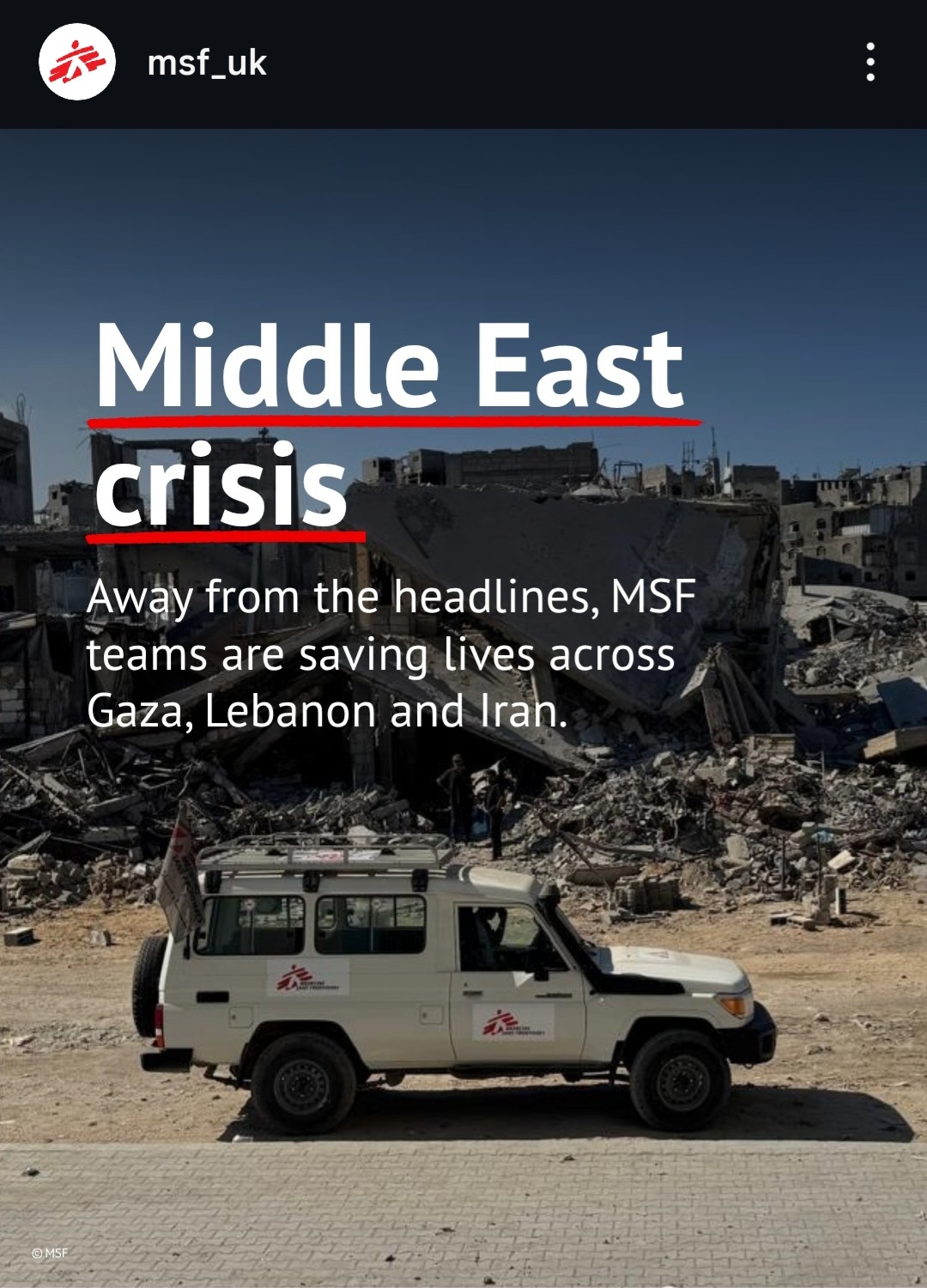
And MSF takes its anti-Israel campaign on the road. Wherever Israel is dragged into a defensive war against those determined to annihilate it, like Lebanon and Iran, MSF is standing guard and pointing fingers.

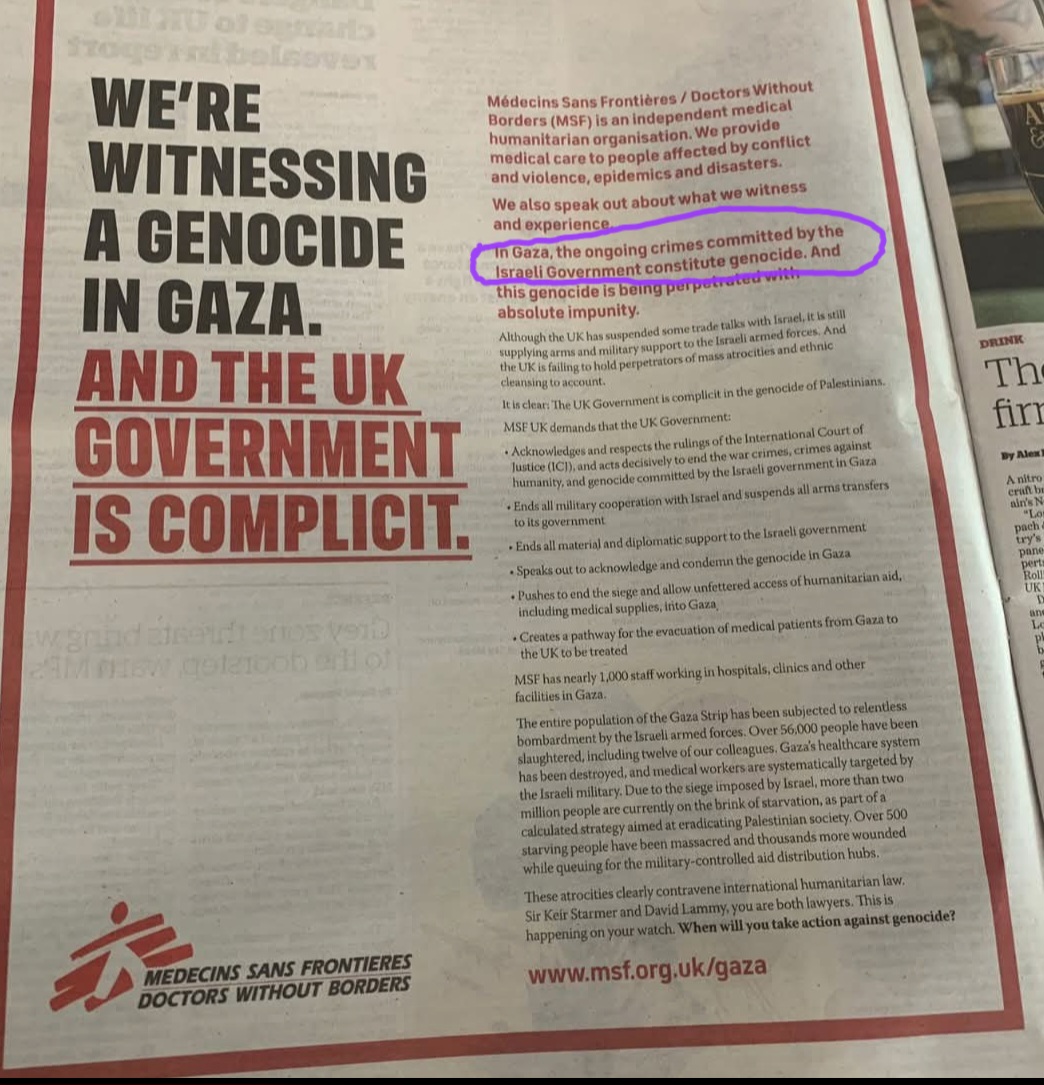
MSF does not limit itself to smear campaigns against Israel. It is a full lobbying shop, taking out full page ads in newspapers to rally the public against Israel. It pushes governments to stop supporting Israel in its defensive war.

So it is no surprise that MSF has officially backed the entire Iranian proxy war against Israel, telling the world that it rushes to protect “Gaza, Lebanon and Iran” from Israel.

Doctors Without Borders: 1) runs to assist jihadists in their active war against Israel; 2) raises money claiming the belligerent parties are the victims; 3) lobbies to have governments stop supporting Israel and 4) calls for the masses to protest the Jewish State. It does all of this, uniquely in Israel’s war.

Doctors Without Borders is not a humanitarian organization but an active instrument in the war to destroy Israel.

The Most Important Debris To Clear in Gaza is Ideological

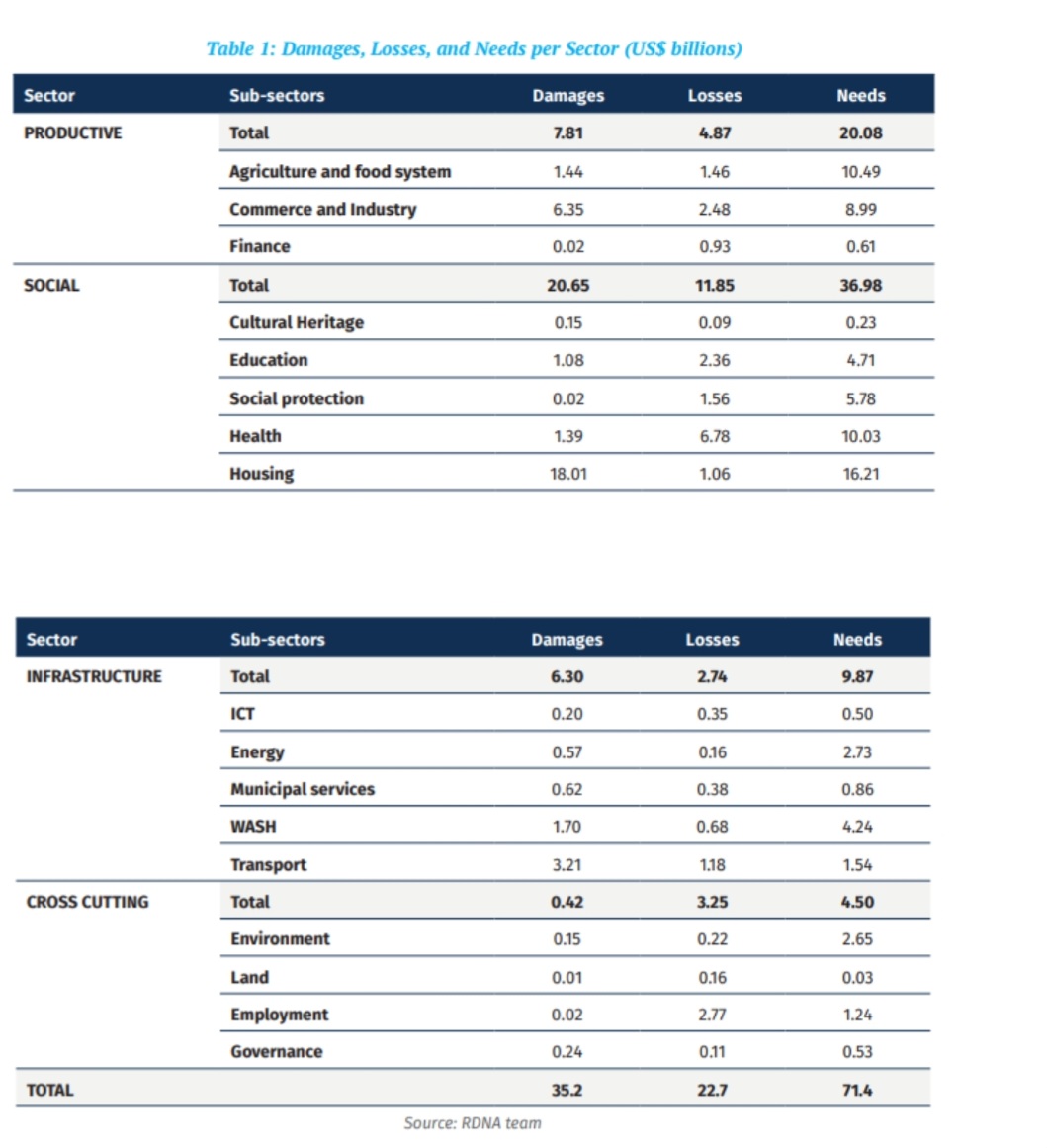
The world now knows what Gaza costs to rebuild: $71.4 billion. What it still does not know is what Gaza is supposed to become.

That is the number in the 2026 Rapid Damage and Needs Assessment (RDNA), produced by the United Nations with the World Bank and the European Union in April 2026. It is a vast and meticulous ledger of destruction, broken into sectors, sub-sectors, losses, and needs. It is also a revealing document, because the table tells you what the world thinks Gaza is.

A physical problem.

  • Housing: $16.21 billion.
  • Health: $10.03 billion.
  • Agriculture: $10.49 billion.
  • Commerce and industry: $8.99 billion.
  • Social protection: $5.78 billion.
  • Education: $4.71 billion.
  • Water and sanitation: $4.24 billion.
  • Energy: $2.73 billion.
  • Transport: $1.54 billion.

Total direct damages: $35.2 billion.
Total economic losses: $22.7 billion.
Total reconstruction needs: $71.4 billion.

RDNA assessment of cost to rebuild Gaza, April 2026

It is a complete inventory of physical devastation. Buildings crushed into powder. Water systems ruptured. Hospitals crippled. Roads fractured. Farms destroyed. Markets emptied.

The UN has priced the debris.

It has even priced the removal of the debris: $1.7 billion just to clear more than 68 million metric tons of wreckage.

But the table reveals something else.

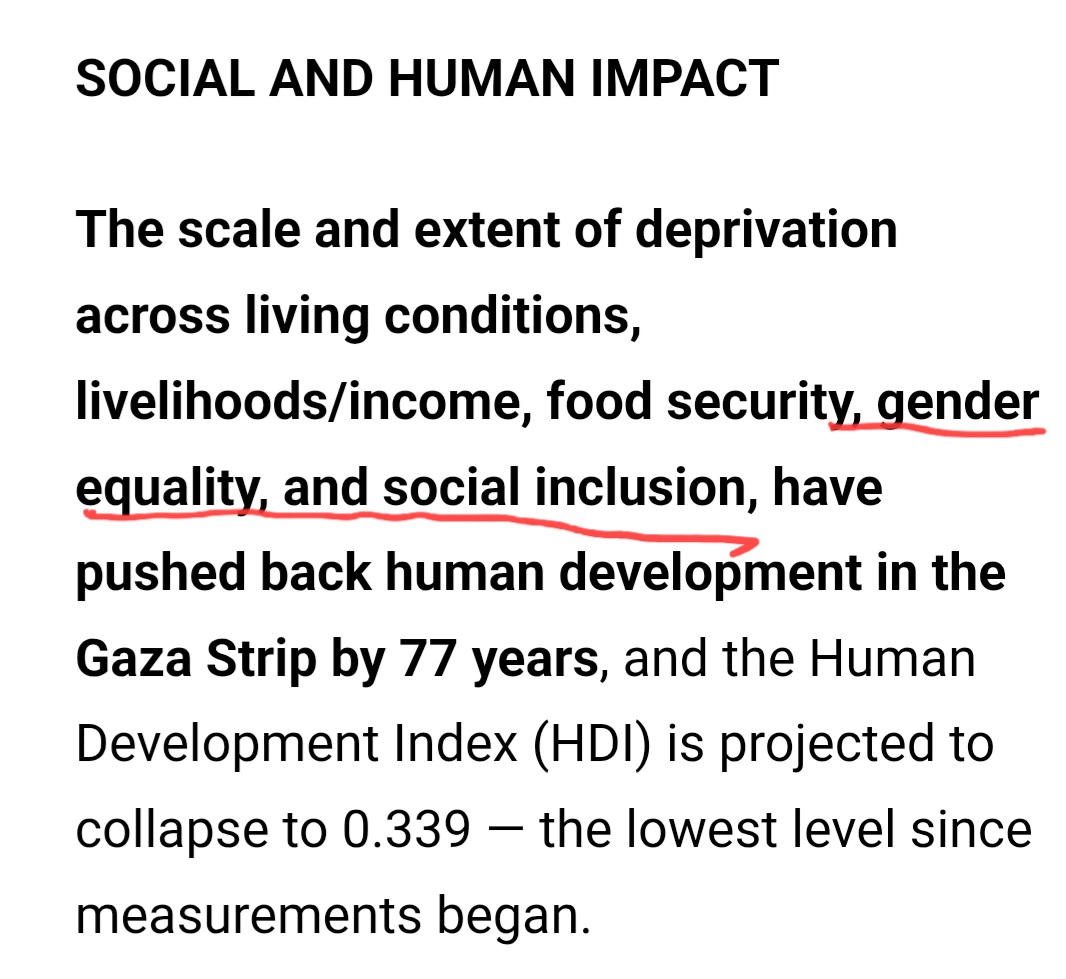
There is no line item for civic reconstruction. That is the missing category. There is something for “social protection” and even calls to improve “gender equality, and social inclusion,” but a refocus on building a healthy culture is absent.

RDNA report on rebuilding Gaza, April 2026

Not because it is unimportant. Because it is the hard. And the public may still be unwilling to accept it.

Civic reconstruction is the rebuilding of the political and social architecture of a society: education, norms, legitimacy, coexistence, rule of law, pluralism, and the delegitimization of political violence as a governing method.

Without it, reconstruction is replacement. There will be new buildings but the same “deformity” of ideology, to quote James Zogby in his testimony to the United Nations in June 2023.

Civic reconstruction requires power. And commitment. The UN has frameworks, funding channels, and institutional tools. It does not have sovereignty. It cannot rewrite a society by decree.

And that only makes the omission more consequential.

The UN report itself hints at the deeper crisis. It states that Gaza’s human development has been pushed back 77 years, with the Human Development Index projected to collapse to 0.339, the lowest level ever recorded.

Human development is not just electricity and sewage. It is the civic conditions that make human flourishing possible.

The report includes gender equality. Social inclusion. Employment. Governance.

All necessary.

But governance itself is budgeted at just $530 million, and that is administrative. Municipal function, institutional capacity and service delivery. Not civic transformation.

That distinction matters.

There is no budget line for:

  • coexistence education
  • curriculum reform
  • dismantling political incitement
  • independent civil society
  • women’s civic and legal empowerment beyond emergency protection
  • minority rights
  • ideological deradicalization

That is not a technical omission. It is the central question.

Postwar Germany was rebuilt through more than roads and housing. It went through total defeat, disarmament, a state monopoly on force, educational overhaul, and the systematic delegitimization of the ideology that had led it into catastrophe.

Postwar Japan followed the same path: constitutional redesign, political restructuring, educational transformation, and a new civic contract.

The physical debris mattered. But so did the ideological debris.

And ideological debris is harder to clear.

It does not sit in the streets. It lives in textbooks, political institutions, media ecosystems, religious messaging, and the stories a society tells itself about violence and legitimacy.

That debris remains.

The UN has measured Gaza’s physical debris. It has priced the roads, the hospitals, the pipes, the farms, the power grid. What it has not priced is the ideological wreckage underneath them.

That is the danger.

Physical reconstruction without civic reconstruction does not produce peace. It produces restoration.

And restoration means returning to the conditions that made destruction inevitable.

Schools can teach coexistence or sanctify martyrdom.
Hospitals can preserve life or sustain armed rule.
Roads can carry commerce or carry war.

A rebuilt Gaza can become the foundation of peace or the staging ground for the next war.

You can clear 68 million tons of rubble and still leave the most dangerous ruins standing.

The Critical and Ignored Lessons From the Most Important Poll in the Middle East 

The near-term ramifications of Hamas’s war against Israel are being crystalized. Hamas’s leadership is decimated and Gaza is in ruins. The political-terrorist group’s allies in Lebanon, Syria, Iran and Yemen have been dealt severe blows, perhaps fatal for some. Hamas’s cheerleaders in the Global North are the only ones to have gathered momentum, particularly in Australia and the United States where hunting season for Jews has a seemingly open permit.

To gain insight for the next tactical steps, world leaders are looking at the current situation and polls since October 7, 2023 and have drafted proposals and taken initial actions: The United Kingdom and Canada recognized a Palestinian State. The U.S.’s Trump administration put forward a plan for Gaza which would include a new governing entity. The West hopes that the targeted assaults and murder of Jews will peter out along with the end of war. And the United Nations keeps playing the same tune about supporting UNRWA.

These are bad decisions and conclusions, made on faulty assumptions.


There is an organization that has been polling Palestinian Arabs for decades, called the Palestinian Center for POLICY and SURVEY RESEARCH (PCPSR). It conducted a poll of Arabs in Gaza and the West Bank, just before the Hamas-led war, from September 28 to October 8, 2023. Because of the war, the results did not get published until June 26, 2024, and the world was too focused on the war to pay it any attention. It is deeply unfortunate, and it is required reading to help chart a better future for the region.

To start with the poll’s conclusions:

  • A large percentage of Palestinian Arabs have wanted to leave Gaza and the West Bank for years, not from the current destruction
  • Arabs are fed up with their own government – Hamas and the Palestinian Authority – much more than Israeli “occupation”
  • Canada is viewed much like Qatar for Gazans, a sympathetic haven

Palestinian Arabs Wanted to Emigrate Before the War

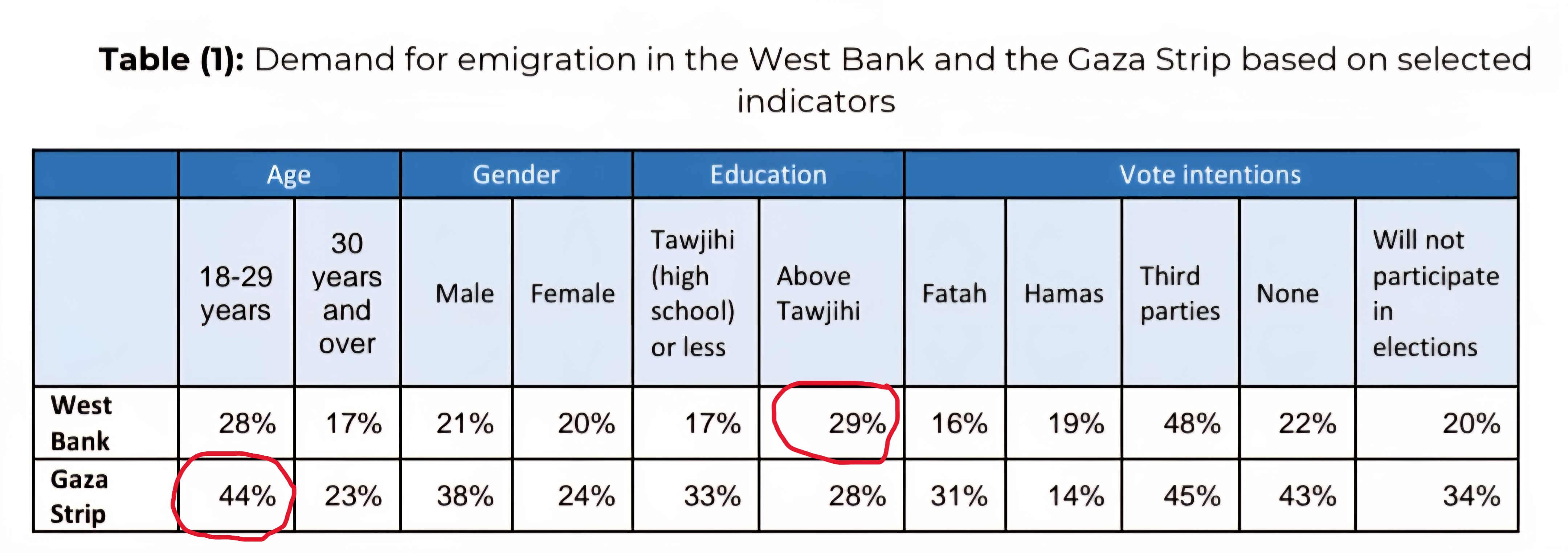
According to PCPSR, whether in October 2023 or November 2021, roughly 33% of Gazans and 20% of West Bank Arabs wanted to leave the region.

Men below age 30 make up the vast majority of those seeking to emigrate. As opposed to Gaza where both educated and uneducated people want to leave, it is the educated West Bank population that wants to move away. Among those wishing to leave, many would not vote in Palestinian elections, or if they would, they would sooner vote for third parties over Fatah or Hamas.

Palestinian Leadership is the Curse, More than Israel

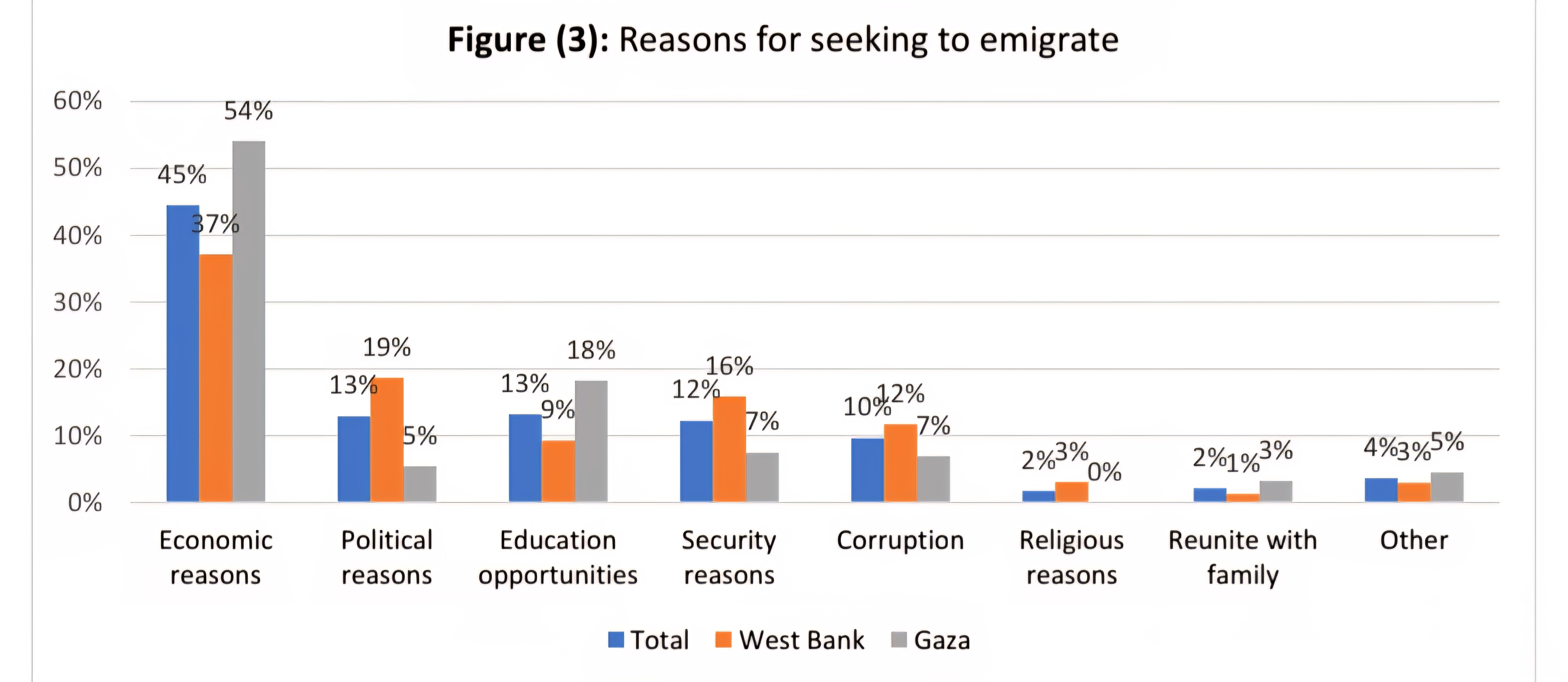
The number one reason for wanting to leave was economic conditions by a far margin. Reasons two and three were political reasons and educational opportunities. “Security reasons” came in fourth, with only 7% of Gazans focused on security; 12% overall. Corruption, religious reasons and to reunite with family rounded out the poll.

Canada as a Beacon

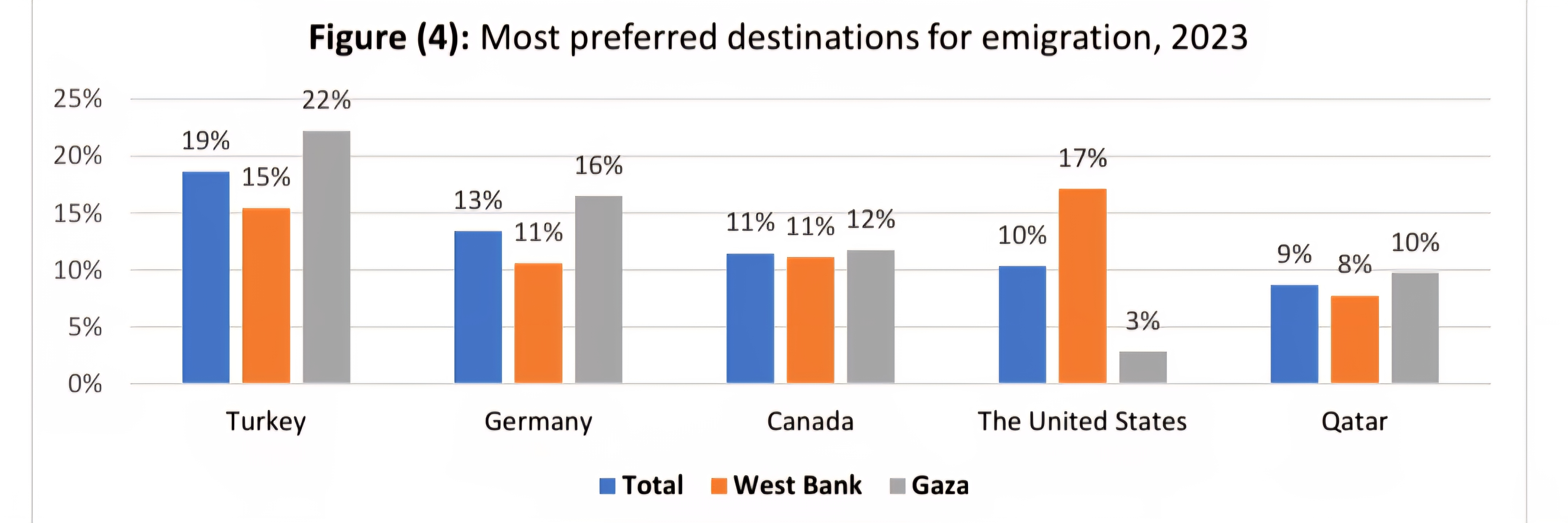
Turkey and Germany were the two most favorite destinations, especially for Gazans. Very few Gazans (3%) considered the United States, while West Bank Arabs put it as the number one choice (17%), likely seeking advanced degrees at left-wing universities. What is remarkable, is more of the Stateless Arabs (SAPs) would prefer going to Canada (11%) than Qatar (9%), the wealthy Muslim Arab nation that is a main sponsor of Hamas.


Honest Takeaways

These pre-war results leads to some basic and critical conclusions.

  • Complete Overhaul of Palestinian leadership, not just in Gaza

The desire of Arabs to leave was evident across both Gaza and the West Bank for many years. This was not a reaction to bombing or siege; it was a verdict on governance.

Hamas in Gaza rules through repression, diversion of aid, and religious militarism. The Palestinian Authority in the West Bank offers corruption, authoritarianism, and political stagnation. Together they have produced a society with no credible economic horizon, no accountable leadership, and no peaceful mechanism for change.

While a new entity is needed to administer Gaza, that role should be akin to a Chief Operating Officer overseeing construction. The Palestinian Authority itself needs to be gutted and rebuilt as it is a corrupt, unpopular and ineffective entity.

  • The United Nations Must Withdraw from Gaza and the West Bank

In its desire to create a Palestinian state, the U.N. has stripped the titular heads of Palestine of any responsibility. The UN protects Hamas despite its savagery. It props up the Palestinian Authority despite its rampant corruption. Palestinian leadership is a bed of paper scorpions.

The UN must withdraw from Gaza and the West Bank and allow local authorities to build a functioning leadership team.

  • The West Should Rescind Recognition of Palestine

There is no functioning Palestinian government and therefore no basic standard to recognize a Palestinian State. The United Kingdom, Australia and others should withdraw their recognition and make it conditional on building governing institutions that can lead and make peace with the Jewish State next door.

  • Reeducation in the West

The massacre did not arise from a sudden spike in pressure. It emerged from long-standing internal failure. Hamas chose atrocity because it couldn’t commit a complete genocide of Jews so exploited its own population to be fodder for Israel.

Western audiences were then handed a familiar script, complete with pictures. But the data taken just before the massacre tells a different story—one far more consequential. What is being taught in western public schools is divorced from reality and feeds global and local antisemitism.

  • Oh No, Canada

While the fears of antisemitism are focused on the United States and Australia because of recent attacks on Jews, Canada is in the hearts and minds of Palestinian Arabs seeking a warm diaspora community. Perhaps it started a decade ago under Justin Trudeau who followed U.S.’s President Barack Obama to embrace the Palestinian cause and Iranian regime over Israel. Perhaps it is because of the welcome mat for extremists groups like Samidoun. Or perhaps it is the perception that the heckler’s veto is fair game, and can run Jewish families off Canadian streets.

Whatever the inspiration, Canada is widely perceived as permissive, ideologically indulgent, and administratively porous—an attractive environment for “political activism” untethered from civic responsibility. It is a ticking time bomb.


The poll of Palestinian Arabs on the eve of the October 7 war reveals deeper truths than surface shots of leveled homes. The PCPSR findings point to a single truth: the Palestinian problem is fundamentally internal.

Ending Israeli control over territory without dismantling corrupt and extremist institutions will not deliver prosperity or peace. Statehood layered on top of dysfunction will harden it. And exporting populations shaped by jihadist rule into permissive Western societies without serious screening and integration, risks importing instability rather than relieving it.

Hamas and ISIS

The headlines are the same. Another plot uncovered. Another attacker radicalized online. Another manifesto stitched together from familiar phrases about vengeance, purity, and divine obligation.

Was it ISIS-inspired?
Was it Hamas-aligned?

In practice, the distinction is collapsing.

From Manchester to Sydney and across Europe and North America, security services increasingly encounter the same ideological core animating different actors. Antisemitism framed as righteousness. Violence framed as duty. Death framed as meaning. The slogans vary, the flags change, but the belief system underneath remains remarkably consistent.

ISIS flag on the car of murderers in Sydney, Australia

These movements are not converging by accident. They are aligned by doctrine. They are the banners of jihad.

When stripped of geography, branding, and media strategy, Hamas and the Islamic State reveal the same worldview: a sanctified war against Jews, against pluralism, and against life itself.

They are branches of the same antisemitic death cult.

God Alone Rules

Both movements begin with a totalizing claim: sovereignty belongs exclusively to God. Political authority, democratic choice, civil law—all are illegitimate intrusions into divine rule. Religion is not guidance; it is command.

This theology leaves no room for coexistence. Difference becomes defiance. Dissent becomes apostasy. Submission is the only acceptable outcome.

Violence as Obedience

Violence is not an unfortunate consequence of struggle. It is the struggle. Jihad is framed as obligation, killing as faithfulness, death as fulfillment.

This is why attacks around the world feel interchangeable. Civilian targets are central because civilians matter symbolically. Children are drawn into the story because innocence amplifies impact. Suicide becomes virtue because it collapses the distance between belief and action.

When ideology outranks life, mass killing is not excess. It is alignment.

Jews as a Theological Obstacle

The conflict is often described in political or territorial terms, but the animating hostility is theological. Jews are cast as an enduring enemy embedded in sacred narrative, not as a community with whom disagreement might be resolved.

That framing explains the permanence of the war. Agreements become pauses. Ceasefires mere tactics. The goal is not compromise but eradication.

Scripture, once weaponized, does not negotiate.

Death as Currency

In societies shaped by this ideology, death is elevated and life is instrumentalized. Martyrdom replaces mourning. Sacrifice replaces survival. Civilian neighborhoods are folded deliberately into military design.

Homes, schools, mosques, hospitals become launchpads and shields. Suffering is curated for export. Images of devastation are not collateral damage; they are strategic output.

What the outside world experiences as tragedy, the ideology treats as leverage.

Power Without Freedom

The end state is always the same. Total control enforced by fear and sanctified by religion. No speech outside doctrine. No faith outside orthodoxy. No dignity outside obedience.

ISIS ruled this way openly. Hamas learned to cloak the same destination in the language of resistance and grievance. The structure beneath remains unchanged.

The Lesson Already Learned

When ISIS surged across Iraq and Syria, the West recognized the threat clearly. It did not argue for partial containment. It did not imagine ideological evolution. It organized, committed resources, and dismantled the movement.

And it succeeded. For a while.

Israel has carried that same burden. By Israel’s own assessments, roughly 95 percent of Hamas’s fighting capacity—its leadership, battalions, tunnels, and command infrastructure—has been destroyed.

Stopping here would not stabilize anything. Allowing the group to maintain its weapons – the way the majority of the Stateless Arabs from Palestine (SAPs) want – would preserve the conditions for revival. Ideologies built on sanctified violence do not soften when wounded. They metastasize.

The remaining fragments are not a political movement in transition. They are an ideology waiting to rearm, re-export, and re-infect—far beyond Gaza.

Yet the world is rearming and financing ISIS and Hamas. It is allowing the jihadi groups to gain strength.

The world once understood this when ISIS was the name on the banner. The jihadist doctrine of Hamas is the same and has not changed. Only the branding has.

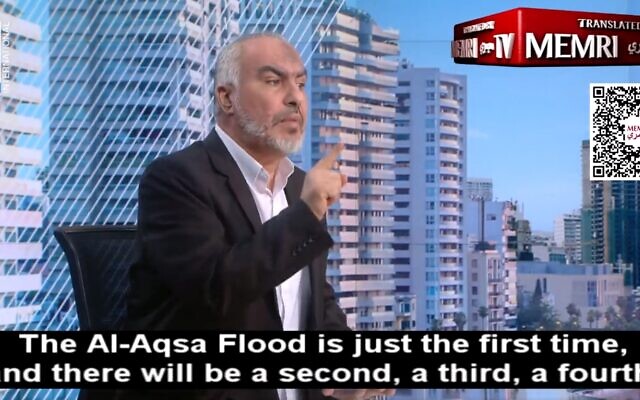
Hamas leadership promises to continue war against Israel forever

ISIS in Africa in Somalia, recruiting from around the world

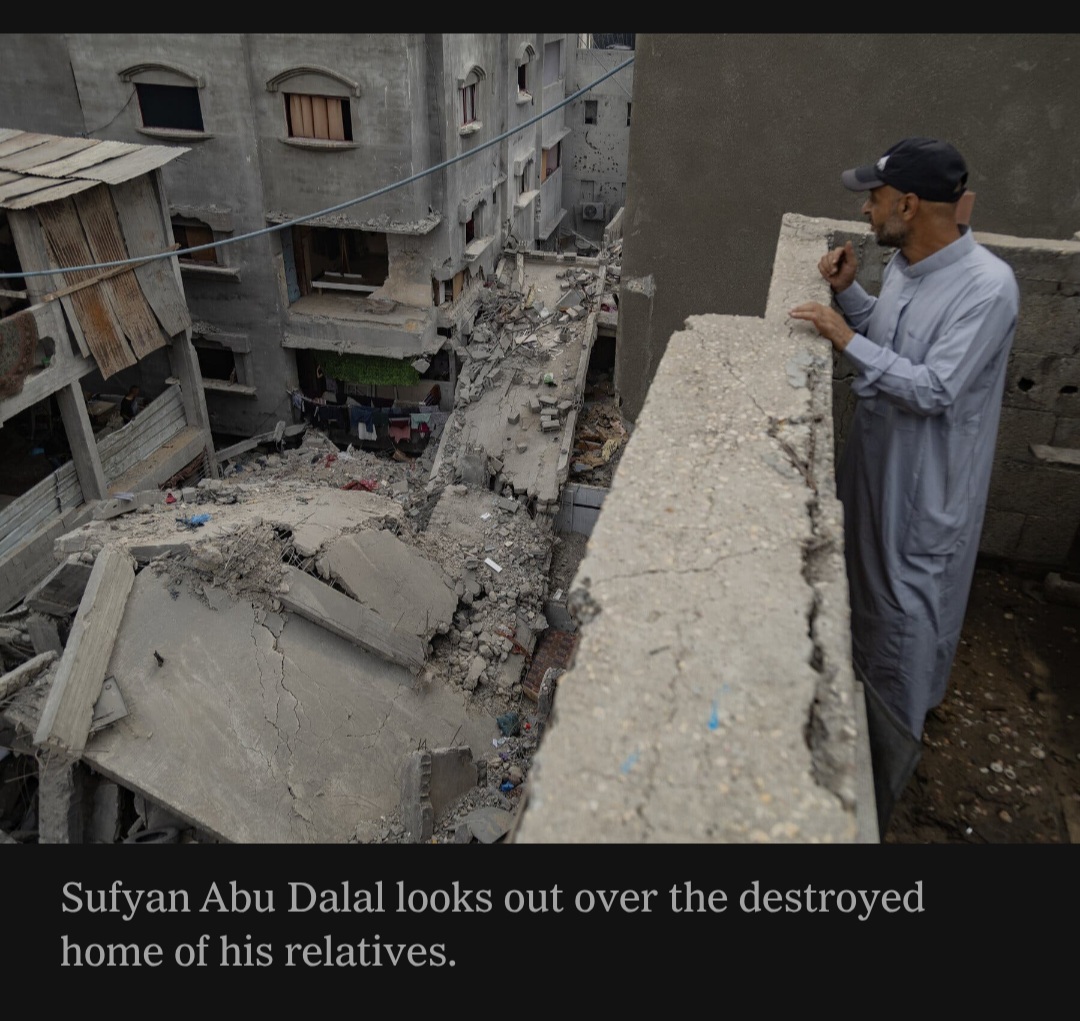
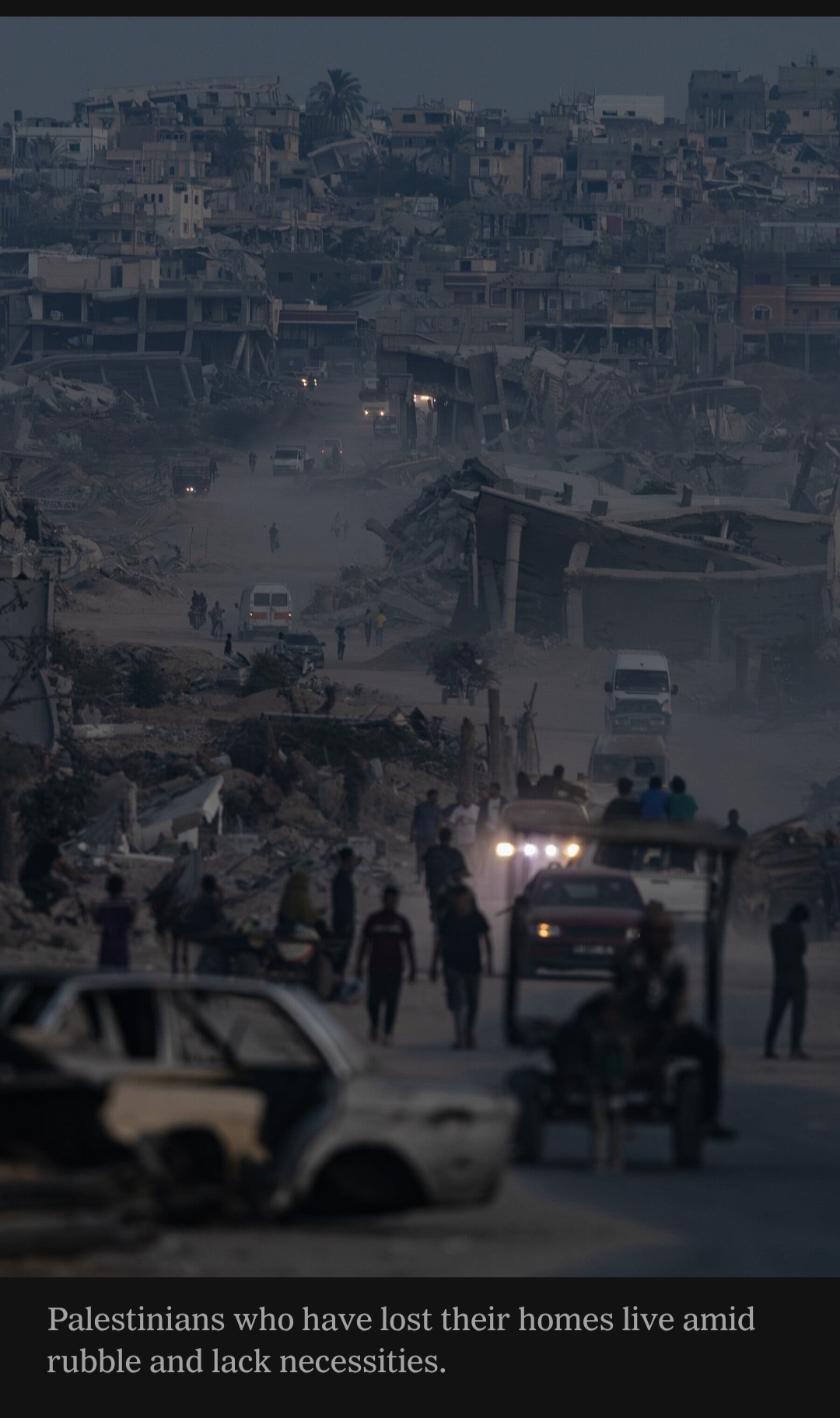
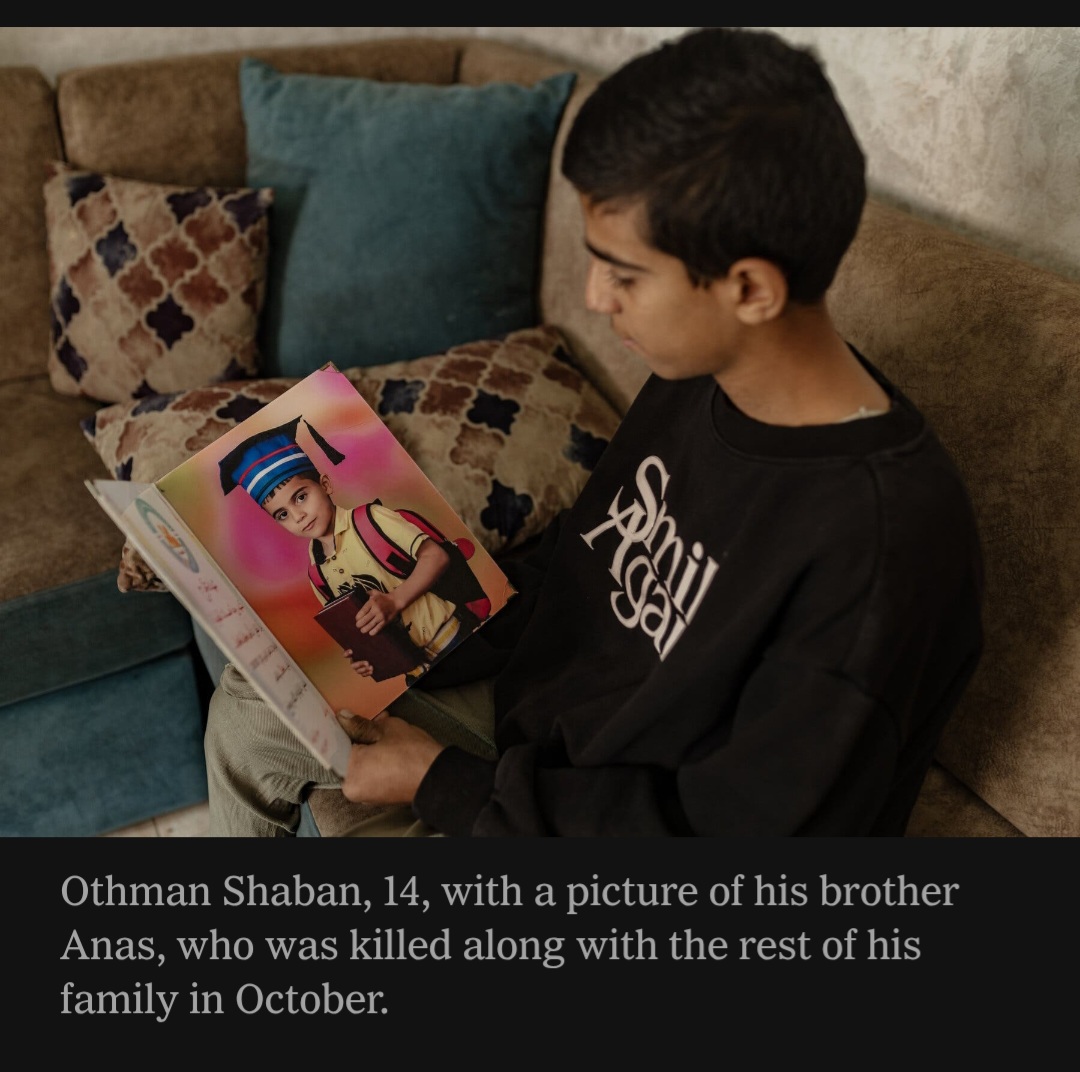
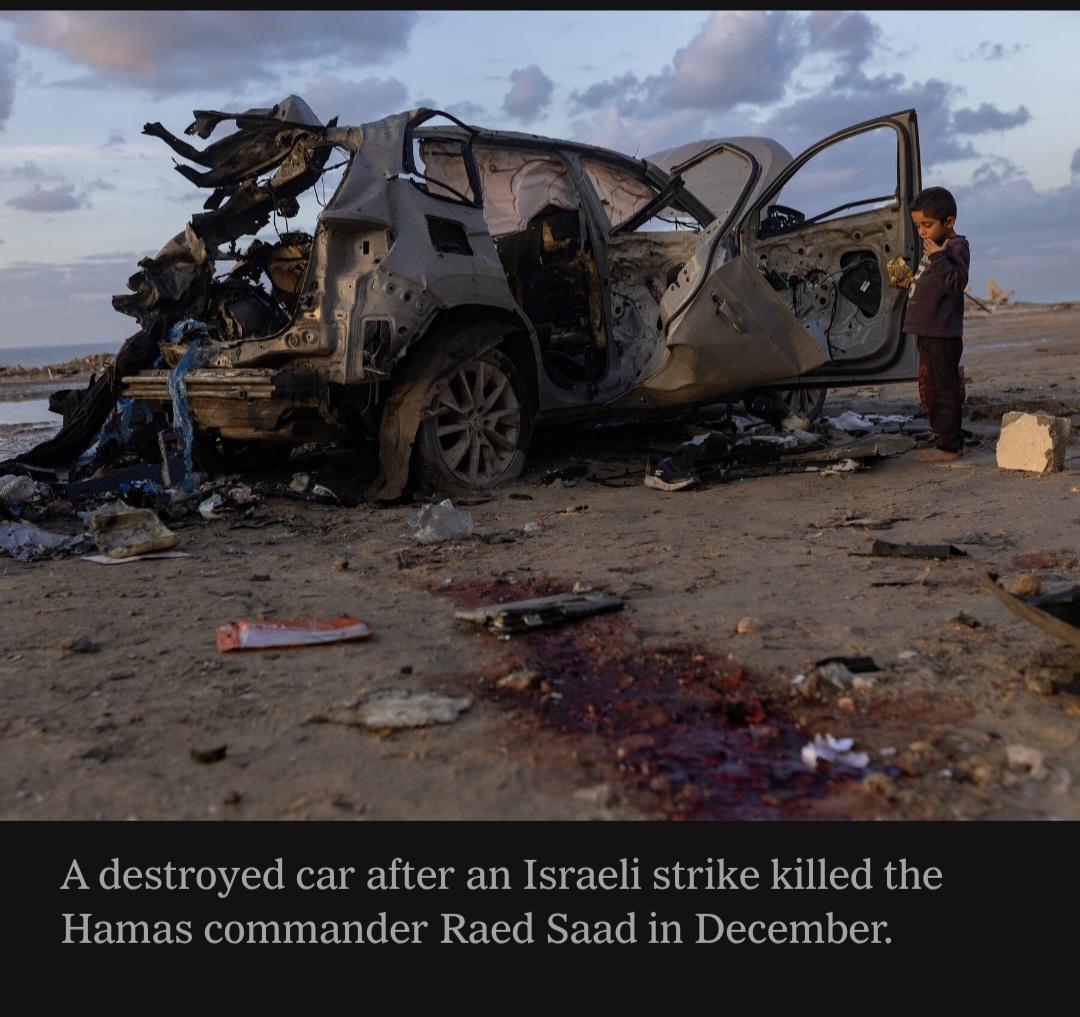
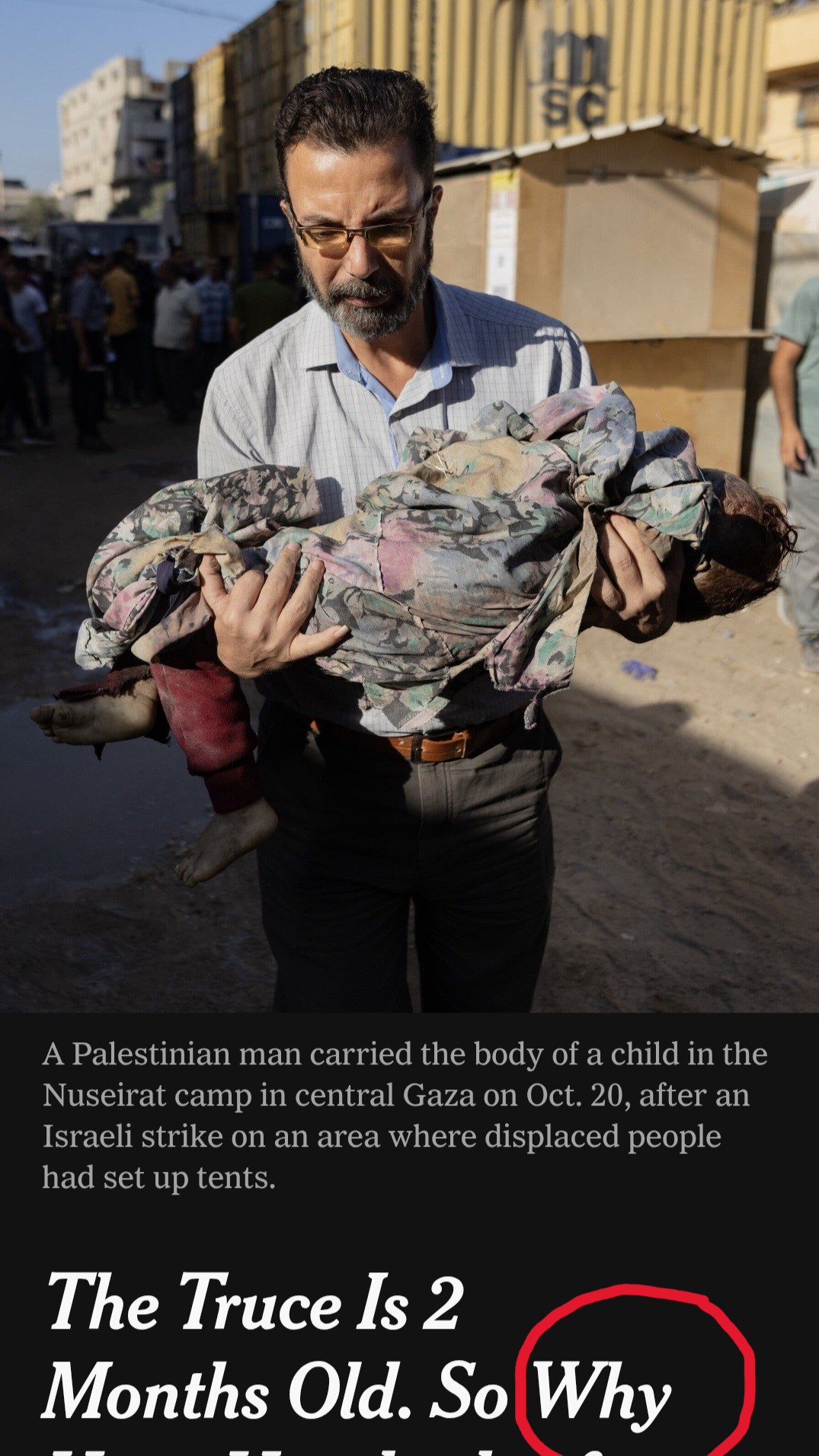
Every Picture Tells a Story: The War Gazans Didn’t Start—and Aren’t Ending

The headline asked why hundreds of Gazans have been killed. The article never answered.

In its December 24 piece, The New York Times assembled an inventory of grief—names, faces, photographs, shattered families—documenting civilian death in Gaza with intimate precision. What it did not assemble was an explanation. The question at the top functioned as decoration; the answer was assumed. Israel hovered everywhere as implication, never as argument.

What the article omitted is not marginal. It is decisive.

It did not say that Hamas still holds an Israeli hostage, in violation of the ceasefire framework. As long as that person remains captive, the war has not ended and the terms of the ceasefire have not been met.

It did not say that Hamas has refused to disarm—flatly, publicly—even though disarmament is a core requirement of the multi-point plan meant to end the fighting. The vast majority of Palestinian Arabs in both Gaza and the West bank agree. This is not procedural quibbling. A movement that keeps its weapons is declaring its intention to keep killing. Leaving that fact out does not clarify the story; it inverts it.

“a core, cross-regional [Gaza and West bank] red line remains: overwhelming opposition to disarming Hamas, complicating any post-war arrangement.” – PCPSR poll of October 28, 2025

It did not say that Hamas continues to state openly that it will pursue the war until the Jewish state is destroyed. These are not coded remarks. They are repeated commitments. When a belligerent announces genocidal intent and retains its arsenal, civilian deaths are not mysterious. They are the predictable outcome of strategy.

“The resistance is capable of continuing, and I am confident that the outcome of this conflict will be the demise of this entity [Israel].” – Senior member of the Palestinian resistance movement Hamas, Osama Hamdan on December 23, 2025

Instead, The Times presented Gaza as a place acted upon—its people rendered passive, its leadership reduced to background noise. The governing reality was blurred, that the popular, armed movement that began the war – with overwhelming local support – insists on continuing it. Palestinian Arabs appeared as if history were happening to them, rather than through institutions that still mobilize society for conflict.

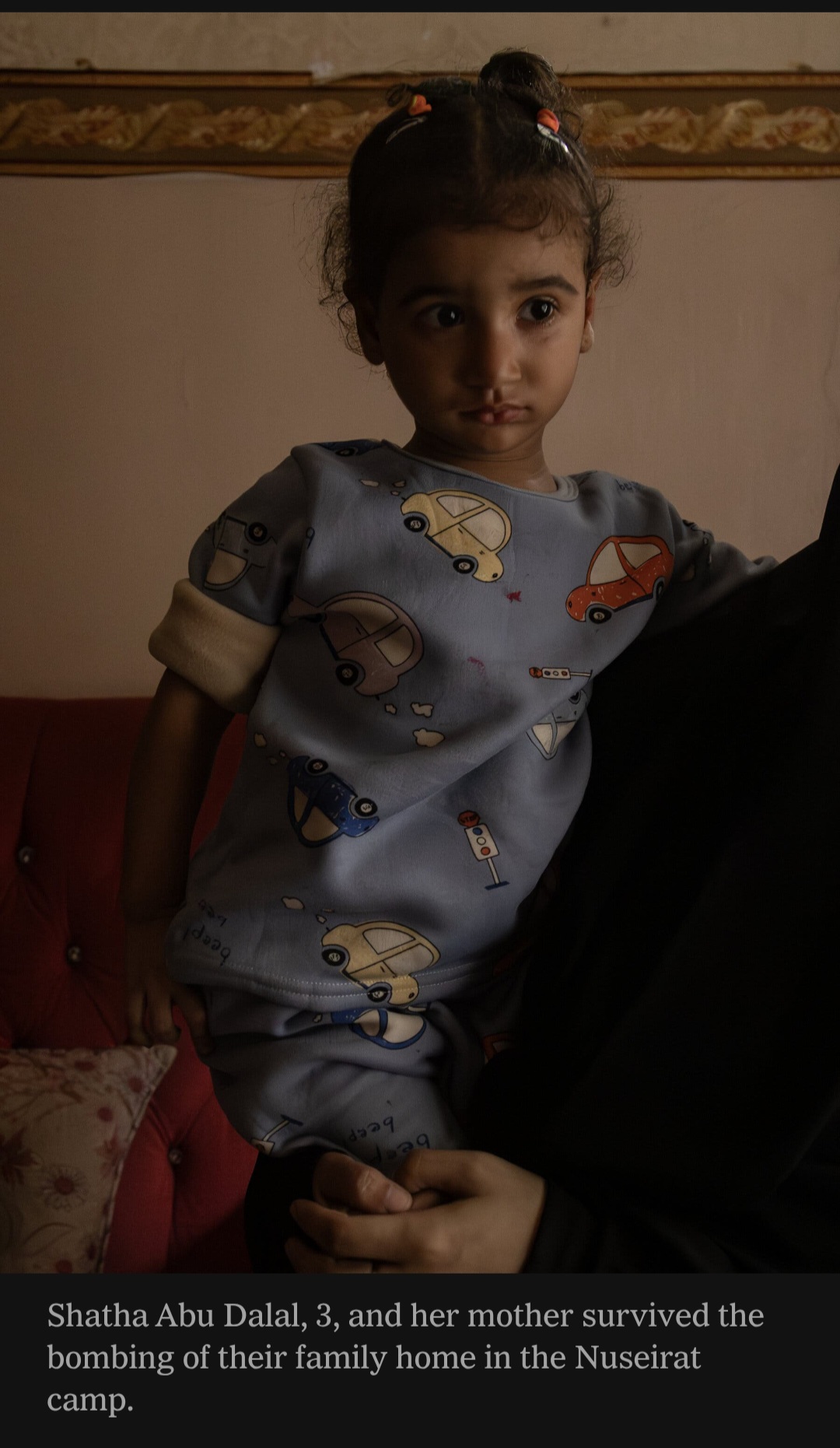
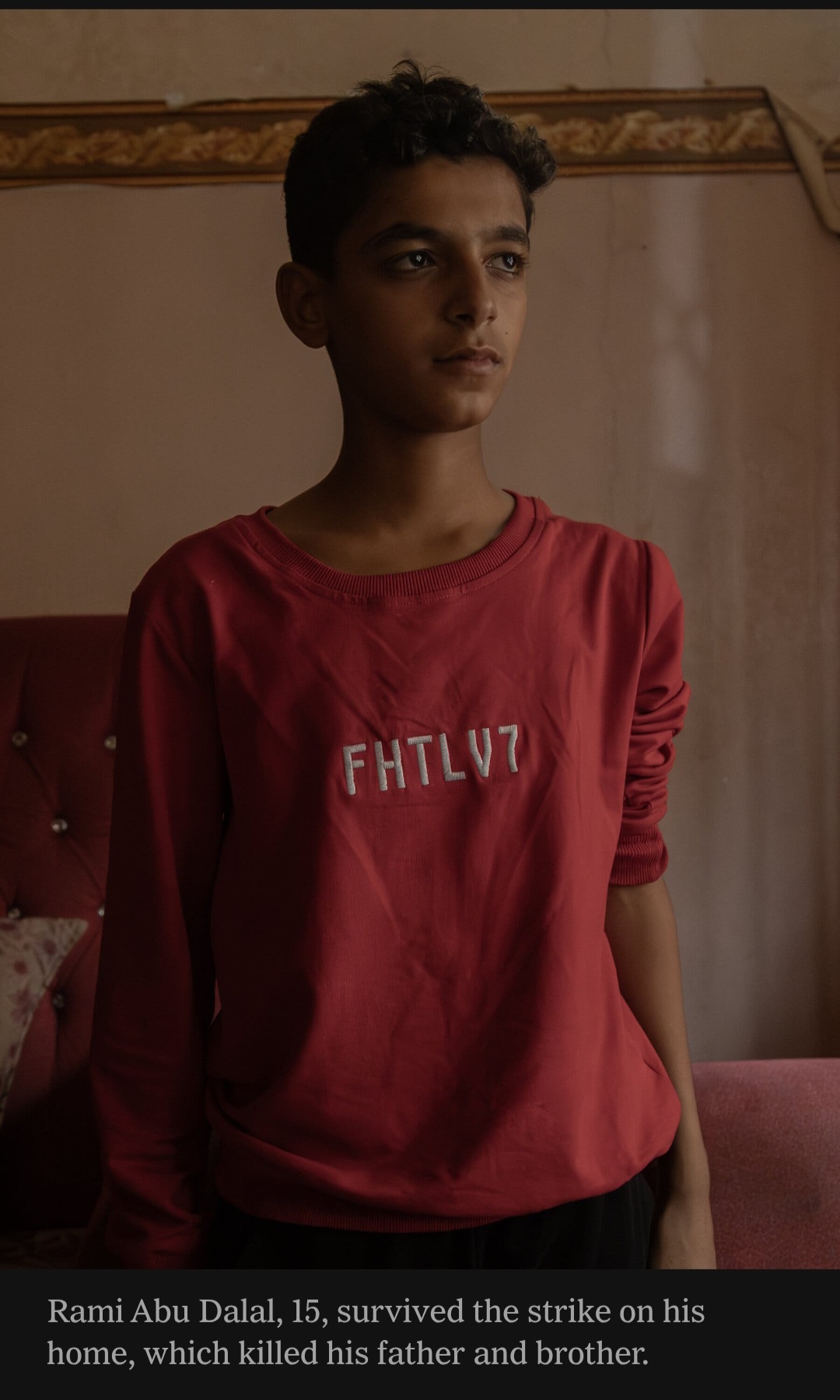
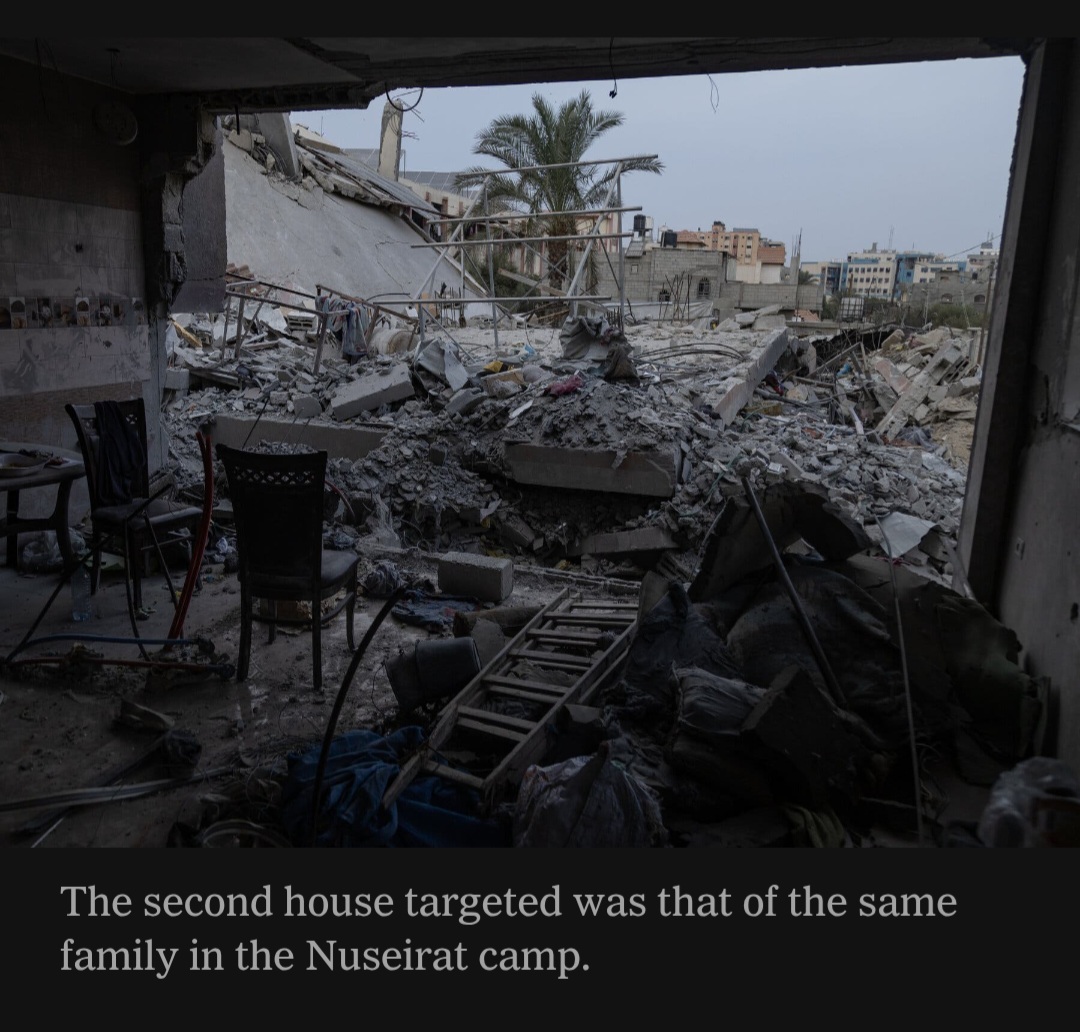
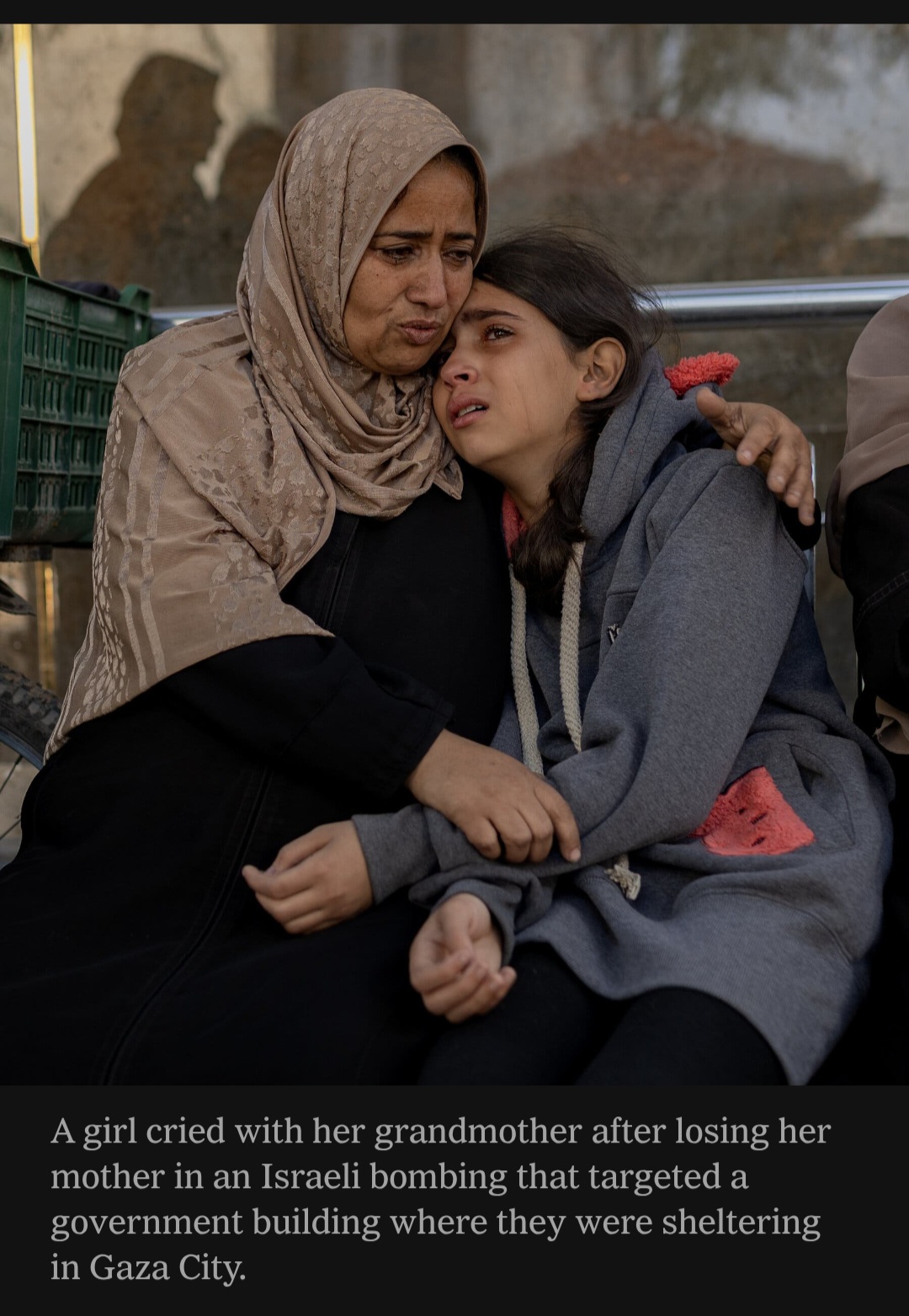
The photographs – eleven in all, a remarkable number for an article, mostly featuring children – did their work. They always do. Images narrow the moral aperture. They locate causality at the edge of the frame. What lies outside—tunnels, refusals, threats, the last hostage—falls away. Repetition turns absence into innocence.

This is not empathy. It is evasion.

Civilian death is tragic and deserves coverage. But tragedy without agency becomes accusation by implication. When Arab suffering is anatomized down to the last tear while their popular elected leadership’s war-making is erased, journalism is no longer news but advocacy.

The Times did not lie. It curated. It acted as the political-terrorist group’s propaganda arm.

Readers are left asking why Israel is still fighting, when the honest question is why Hamas is still waging war—still holding the last hostage, still refusing disarmament, still promising destruction.

Every picture tells a story. This one tells a story about the author.

The Ghosts of Genocide

To visit Poland is to walk among ghosts.
The thriving Jewish civilization that once filled its towns and marketplaces was almost completely erased. Three million Jews were targeted for extermination — a number too vast to grasp by walking through silent cemeteries. The absence alone cannot speak the full horror.

To stand where synagogues were razed, where schools once taught Torah and arithmetic, where playgrounds once rang with Yiddish laughter, is to feel the emptiness press against your chest. It forces the imagination to repopulate the void — to summon the Jewish ghosts who linger, waiting for conscience to remember them.

It is easier to look at the living.
Many Poles today are the grandchildren of those who watched as their Jewish neighbors were rounded up — and sometimes finished the work themselves when survivors returned seeking their homes. They became stand-ins for the killers of yesteryear, heirs to silence, envy, and complicity.

Now another people walks amid ruins.
In Gaza, millions return to their shattered neighborhoods under a ceasefire, and we are told they have survived a “genocide” at the hands of Jews. Yet the number of Palestinian Arabs has grown, not diminished — a population larger than before the war they themselves began. They tread among the skeletons of broken buildings built atop their army’s tunnels, while ghosts — Israeli civilians burned alive in their kibbutzim and those taken hostage and murdered in Gaza — cry out from the ashes.

The Bibas family from Israel was taken hostage by Gazans on October 7, 2023. The mother and two children were murdered in captivity

I ponder the ghosts of genocide:
the murdered and the murderers;
the societies that spawned the slaughter;
the peaceful towns that became infernos.

Infrastructure shelters ghosts. Societies are haunted by the ones they create, both killer and killed. The unseen dead can no longer showcase their dancing on the one hand, or lust to murder, on the other.

There are scarcely any Jews left in Poland; their ghosts appear only to those who seek them.
In Gaza, the ghosts are not gone. They walk the streets, armed and unrepentant — not spirits of victims, but kinsmen of murderers, now turning on one another.

Poland’s haunting is one of silence — an absence so total it chills the air. The ghosts there do not cry out; they wait to be remembered. Gaza’s haunting is the opposite: a cacophony of rage that refuses reflection. Its ghosts are not silent but screaming — not victims unburied, but hatreds unrepented.

Poland’s soil holds the murdered; Gaza’s streets still host the spirit of the murderers.
One ghost asks to be mourned; the other demands to be judged.

The haunting does not end with time.
It lingers wherever truth is buried,
and it deepens each time the living deny the past that shaped them.

Only when a people can face its ghosts —
naming both the murdered and the murderers —
can it begin to live freely again.

The Second Israeli Victory in Gaza and the War on Diaspora Jews

For decades, Palestinians have believed there were three paths to statehood—and they pursued them simultaneously.

1. Violence.
Hamas, Islamic Jihad, Fatah’s militias and several Palestinian Arab terrorist groups waged terror wars, convinced that bloodshed brought gains: the First Intifada led to the Oslo Accords; the Second Intifada drove Israel from Gaza and parts of the West Bank; the 2021 riots were hailed for halting evictions in Sheikh Jarrah.
The October 7 massacre, backed by roughly 75% of Palestinians, was the latest in that grim pattern.

2. International Pressure.
Even as rockets fell, Palestinian allies abroad pressed boycotts, divestment, sanctions, and United Nations resolutions, seeking to isolate Israel diplomatically and economically until it yielded territory.

3. Negotiations.
The Palestinian Authority claimed to prefer talks to gain legitimacy and foreign aid—but insisted on maximalist demands: all the West Bank, all of eastern Jerusalem, a Jew-free Palestine, and a mass “right of return.”
Yasser Arafat walked away from a state in 2000 and launched the Second Intifada instead.
His successor, Mahmoud Abbas, also spoke of peace while undermining it—keeping the notorious “pay-to-slay” stipends for terrorists’ families and, in a January 2018 speech, blessing those who chose violence even as he professed support for diplomacy.

Polling has consistently shown the order of Palestinian preference: violence first, global pressure second, negotiations last.

The Cost of Failed Strategies

Both violence and sanctions have brought suffering to Palestinians themselves.
Suicide bombings and rocket wars prompted Israel to build the security fence, which restricted movement and economic activity. The October 7 attack provoked a massive war in which Gaza was devastated and Hamas decimated.
Attempts to use international pressure backfired as well, leading Israel to withhold funds from the PA and tighten restrictions.

Israel fights like a cornered raccoon—fiercely, without backing down when attacked.
Every round of violence has left Palestinians weaker and poorer.

In the recent war, Israel scored a double victory:
It destroyed Hamas’s military capability, killing an estimated 25,000 fighters, and it refused to bow to global pressure, pressing on despite UN condemnations, ICC threats, and warnings of diplomatic isolation.

This shattered the long-held belief that if terror failed, the world could still coerce Israel into retreat.

A New Reality — and a Call to the Arab World

The old strategies of terror and economic warfare have failed and only deepened Palestinian misery. The third path—real negotiations—remains the only way forward.

Israel and the United States now hope the Arab world will engage Israel constructively, encouraging Palestinian leaders to abandon impossible UN demands and accept the reality of Israel’s permanence. Clinging to maximalist positions will only bring more rounds of bloodshed and despair.

And an Alternative Reality — Coming for Diaspora Jews

While Israel feels that it may have finally fought a war that could lead to long-term peace, there are those who still cling to eradicating the Jewish State. The international “Free Palestine” fighters do not want to see Israel holding onto the Old City of Jerusalem nor limiting the entry of millions of Arabs who claim UN’s mantle of “refugees.” The light at the end of the tunnel for them is not coexistence but a continued “Nakba,” a disaster.

So they are revamping the second front of international pressure, from targeting Israel to the soft targets of diaspora Jews.

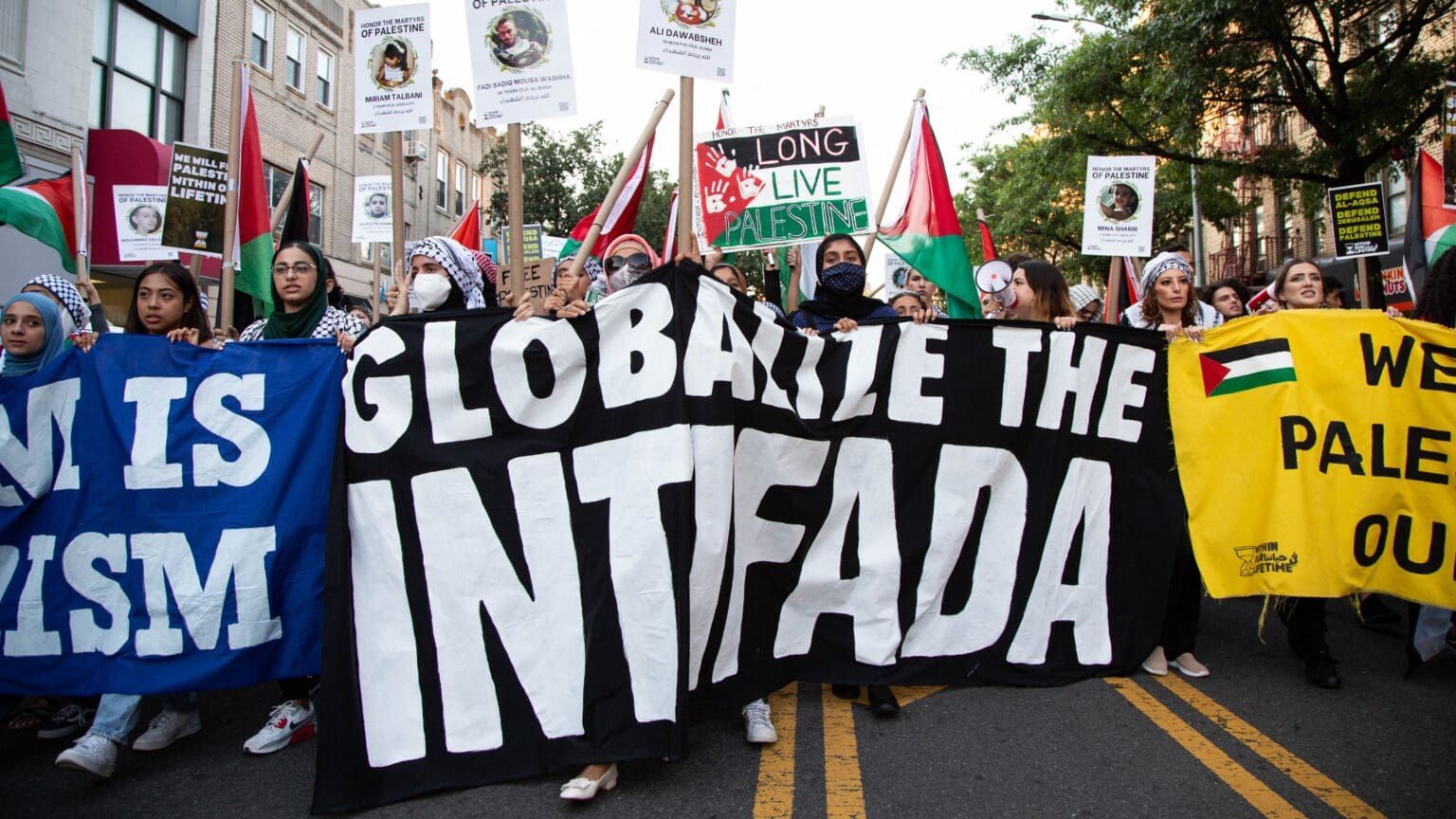
They are chanting to “globalize the Intifada” to bring the war to every Jew and pro-Israel person and organization. The incineration of the kibbutzim in Israel on the Jewish holiday of Simchat Torah was echoed in the burning of the Jewish governor of Pennsylvania’s home on the holiday of Passover. Burning Jews alive in Kibbutz Be’eri was mirrored in burning Jews in Boulder, Colorado.

While Israel sees that it is in a strongest position in the region since its reestablishment which may finally enable an enduring peace, the anti-Israel horde has opened a new front on the global diaspora.

The international pressure of the BDS camp has not been defeated but inflamed. They are ratcheting up their smears of “apartheid” to “genocide,” and marking local Jews as co-conspirators.

While Israel won the Iranian proxies war, the Free Palestine camp is taking millions of new hostages – diaspora Jewry. Who will fight for them?

The Weight of Nations

“Why do the nations rage, and the peoples plot in vain?” — Psalm 2:1

Saudi Arabia – the kingdom which Israel hoped would next join the Abraham Accords – sought to pressure Israel into ending its defensive war in Gaza by rallying nations of the Global North to recognize a State of Palestine. It found a partner in France, which successfully pulled the United Kingdom, Canada, and Australia into the orbit of recognition. In September 2025 at the United Nations, the group jointly declared their acknowledgment of a Palestinian state—with caveats—but the symbolism was unmistakable.

Israel did not budge. It viewed the coordinated announcement as an alarming reward for the genocidal Hamas regime that had unleashed war on October 7 two years earlier.

Enter the United States. President Donald Trump had tasked developer and confidant Steve Witkoff to lead a back-channel negotiation with Hamas for the release of Israeli hostages and an end to hostilities. Jared Kushner joined the effort more forcefully in September, unveiling a “20-point plan” aimed at ending the two-year war and reshaping the region’s political future.

To counter the Saudi-French gambit, Trump built his own coalition. The U.S. secured the backing of several Arab and Muslim nations from the Global South—including Qatar, Jordan, the United Arab Emirates, Indonesia, Pakistan, Türkiye, Saudi Arabia, and Egypt —for its peace framework. By October, the administration succeeded in gathering the leaders of 27 countries from across the North and South, including some that had just recognized Palestine, to fly to Egypt to sign what was billed as a ceasefire agreement.

A summit to support ending the more than two-year Israel-Hamas war in Gaza after a breakthrough ceasefire deal, Monday, Oct. 13, 2025, in Sharm El Sheikh, Egypt labeled “Peace 2025”

It was a mirage. Neither of the warring parties—Israel or Hamas—attended. The event was instead diplomatic theater, meant to transform a ceasefire proposal into a movement for regional peace. Trump designed the event to flip the script.

Where Saudi Arabia and France tried to impose the weight of the Global North on Israel, the United States sought to use the combined weight of both hemispheres on Hamas. The former demanded an immediate path to a two-state solution; the latter demanded the end of Hamas rule.

The Moral Gravity

The story of this moment is not only about geopolitics, but about moral gravity. The nations of the world have grown accustomed to weighing Israel’s every move while ignoring the crimes of its enemies. They call for “balance” in a war that began with mass murder, rape, and hostage-taking. They lecture the victim to compromise while the aggressor reloads. The UN Security Council could have easily passed resolutions to push for an end to the war if they had just condemned Hamas, but repeatedly refused to do so.

The weight of nations once meant the defense of justice and the pursuit of peace. Today, it is too often the ballast of perfidy—dragging down the innocent under the pretense of even-handedness.

Israel, standing increasingly alone, may yet prove that the true measure of a nation is not in the number of its allies, but in the steadiness of its conscience. It is fortunate to have President Trump in the White House as it shoulders this weight once again.

The tight bond between Israel and the United States has continued, despite Americans starting to sour on Israel since 2015.

The Next Part of the “20-Point Plan”: Drop Charges At The ICJ

The headline deal which everyone pretends is a simple human-rights triumph — hostages home in exchange for prisoners and a ceasefire — is, on its face, a moral imperative. Families and politicians, of course want the war to end and hostages back home. But if we treat this swap as merely a humanitarian ledger without thinking about incentives, strategy and deterrence, we invite a replay of October 7 — not because anyone wants it, but because the arithmetic of the deal makes another mass-carnage payoff seem rational to those who plan such crimes.

Palestinian Arabs wave Hamas flags atop the Red Cross truck bringing releases terrorists to the West Bank in November 2024

Here’s the cold calculus the bland statements miss.

Hostages for prisoners. Civilians for killers. A handful for hundreds. These trades have an immediate human relief value. The cost, however, is structural: they reset the reward function for terrorism. If a violent raid can reliably purchase the release of leadership, fighters, and political capital — and if the international response includes legal actions that delegitimize the responding state — then the net effect is to make mass atrocity an instrument of statecraft.

Celebrations for released Palestinian Arab terrorists in 2014

But the mathematics isn’t just – and must not be viewed as – the prisoner-to-hostage ratio. It includes the defensive response: the likely military, political, and territorial consequences of the assault. Hamas should be forced to accept that math too. If it contemplates another October 7-style operation as it has promised to do repeatedly, it must understand that the outcome will not be a tidy prisoner exchange and a televised victory lap. It will be the destruction of leadership and the decimation of military infrastructure, with broad international support for the defensive measures taken to prevent a repeat.

Which brings us to the international legal theater now playing out: the ICJ’s “genocide” accusations, the vociferous statements from states threatening arrest of Israeli officials, and the diplomatic embrace of Palestinian statehood in some quarters. These actions, however well intended by their proponents, have immediate strategic effects. They amplify Hamas’s narrative of global validation and, crucially, complicate the deterrent effect of defensive operations. If a state in self-defense risks being publicly criminalized or its leaders subject to arrest, the calculus of deterrence is altered – for the entire world.

So, what should sensible governments do if they insist on both protecting Palestinian rights and preventing another October 7? Two practical propositions:

  1. If regional governments want backing for Palestinian statehood and avoid terrorism in their own countries, they should drop the ICJ case. the Arab and Muslim countries which backed the U.S. ceasefire plan should pressure South Africa and other countries which brought the case to drop the charges and let diplomacy take center stage. Law and diplomacy should be tools of stability, not absolution for terror strategies.
  2. If the desired outcome is that populations on both sides live within range of cross-border terror and reprisals, then investing in defensive infrastructure as a bridge to a political solution is a rational step. The United Nations and donor states should be pressed to fund a replacement barrier between Gaza and Israel — walls and surveillance that reduce the risk of mass infiltrations, so that the question of where futures lie for Palestinians becomes a matter of state-building and safety inside Gaza, not a perpetual recruitment slogan for militancy.
Hamas breaks through security fence between Gaza and Israel on October 7, 2023, on way for mass murder and abductions

This is not a call to abandon human rights oversight or to whitewash abuses. Accountability and adherence to international law matter. But timing and incentives matter too. Legal actions taken in the heat of war — unmoored from a strategy to prevent recurrence — can harden positions and diminish the tools of deterrence. If the objective is to keep people alive and build a durable peace that allows Stateless Arabs from Palestine (SAPs) self-determination without repeated massacres, then international actors must think like engineers of stability, not moral prosecutors on a press release timetable.

If we are serious about both ending the war and preventing future acts of mass terrorism and barbarity, we must stop evaluating deals by immediate feel-good optics alone. The right measure of a deal includes whether it reduces the incentive to perpetrate mass atrocities, strengthens deterrence against their planners, and clears a path toward political arrangements that give civilians on all sides a future. Anything less is not a solution — it is an invitation.