A Culture of Building and a Culture of Destruction

Two words sit on the same date and define the cultures of the respective people.

Yom Ha’atzmaut – Independence Day in Hebrew – marks the moment a dispersed people executed a long-planned return to sovereignty. The modern engine was Zionism, but the impulse runs far deeper. A people with an ancient memory chose to translate that memory into institutions, borders, and power. The declaration in 1948 was the culmination of a project that built governing bodies, an economy, and a military before the flag went up. It was construction with intent.

Across the same date sits Nakba – “catastrophe” in Arabic. The word is used to describe a collapse that followed a war. In 1947, the United Nations Partition Plan for Palestine offered a fork in the road: two states, side by side. Jewish leadership accepted a constrained map and moved to build. Arab leadership rejected the partition and moved to prevent a Jewish state from coming into existence in “any part of Palestine.” Local forces and surrounding Arab states chose war at the point of birth.

This is the hinge that still carries the weight.

One side organized for sovereignty and then defended it. The other side organized to block that sovereignty and then defined its politics around that goal. The result was not an abstract failure. It was a battlefield outcome with lasting consequences.

The pattern did not end in 1948. It hardened into a language and culture of rejection—of undoing the Jewish state rather than existing alongside it—reappears across decades, sometimes dressed in diplomacy, often in violence. When you look at public opinion at key moments, you see the persistence of that horizon. In surveys like those conducted by the Palestinian Center for Policy and Survey Research in June 2023 (before the October 7 massacre), the majority of Arabs in West Bank and Gaza expressed confidence that Israel would not endure to its centennial and endorsed continued “resistance” (violence) as the path forward. The expectation is not coexistence after compromise. It is reversal over time.

A standard question in Palestinian quarterly polls like the one above (Q67) asked whether people supported “armed attacks against Israeli civilians.” In Gaza, the percentage was 76.7%

This is where the narratives diverge in a way that matters for the future.

The Israeli story is anchored in a completed act of construction that must be maintained. It argues from existence. It invests in capacity—military, economic, technological—because survival depends on it. It measures success in what stands and functions.

The dominant current in Palestinian politics has been anchored in an unfinished act of negation. It argues from a horizon in which Israel is temporary. It invests in leverage—diplomatic pressure, internationalization, and violence—because the objective is to change the end state rather than to consolidate its own future alongside it.

You can trace every failed negotiation back to that split. Offers are read through different endgames. Concessions are weighed against different destinations. One side asks what it takes to secure a state that already exists. The other asks what it takes to transform the map.

There is a moral discomfort here that people try to smooth over with softer language. It doesn’t hold. History keeps intruding with hard edges. A decision to reject partition and wage war in 1948 set a trajectory. Repeated bets on pressure and violence to force a different outcome have reinforced it. Each round that ends without destroying Israel strengthens the very state the strategy set out to undo.

A century is a long time in politics and a short time in memory. The Jewish project marked its independence by building a country that persists. The opposing project has too often measured progress by how close it can get to erasing that country. That is a strategy that has not delivered a state.

The calendar will keep bringing the same day back. One side will celebrate a construction that proved durable. The other will revisit a war whose objective still shapes its politics. The future will turn on whether the goal shifts from ending a state to building one of its own.

Storming Words, Not Mosques

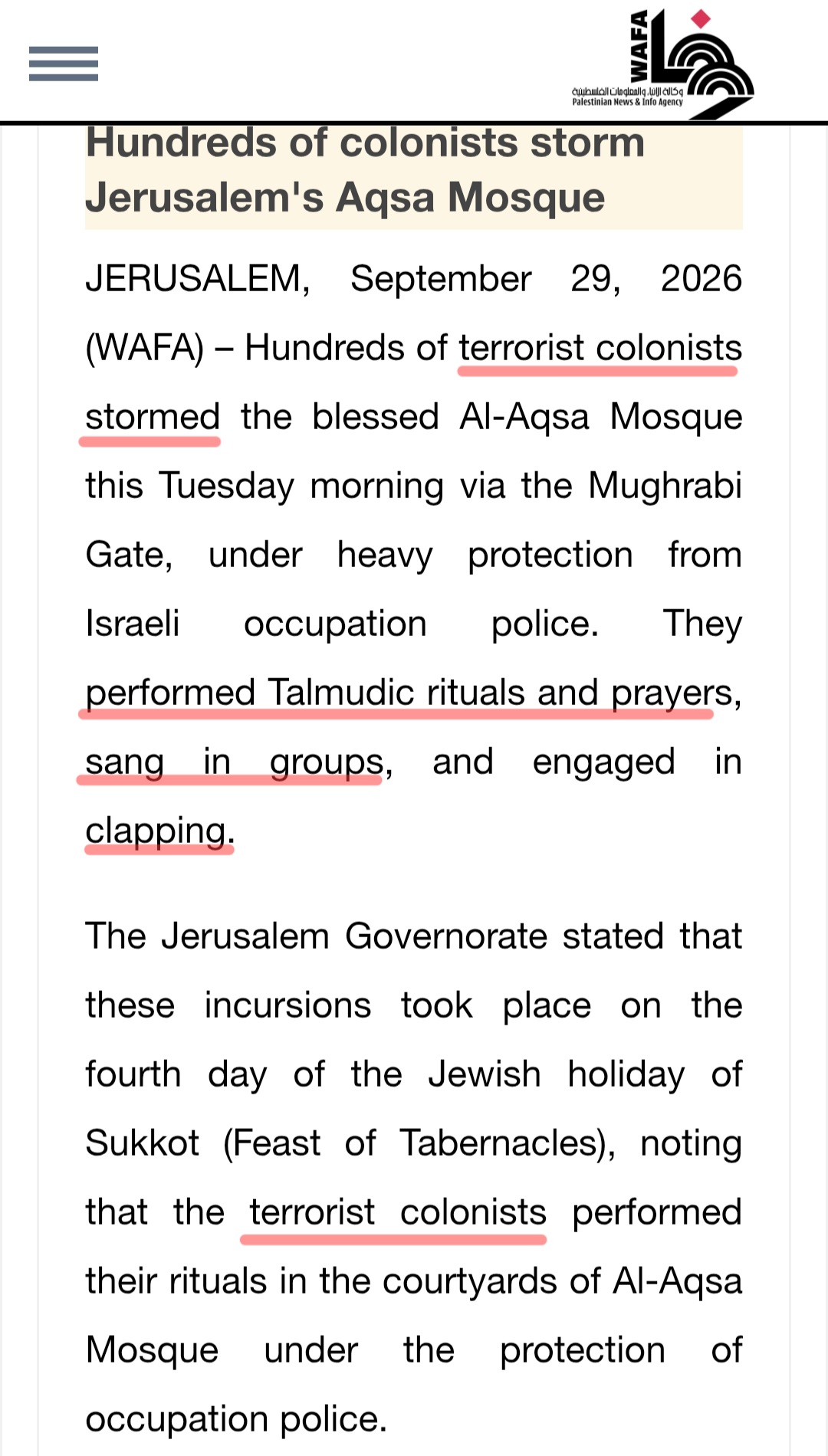
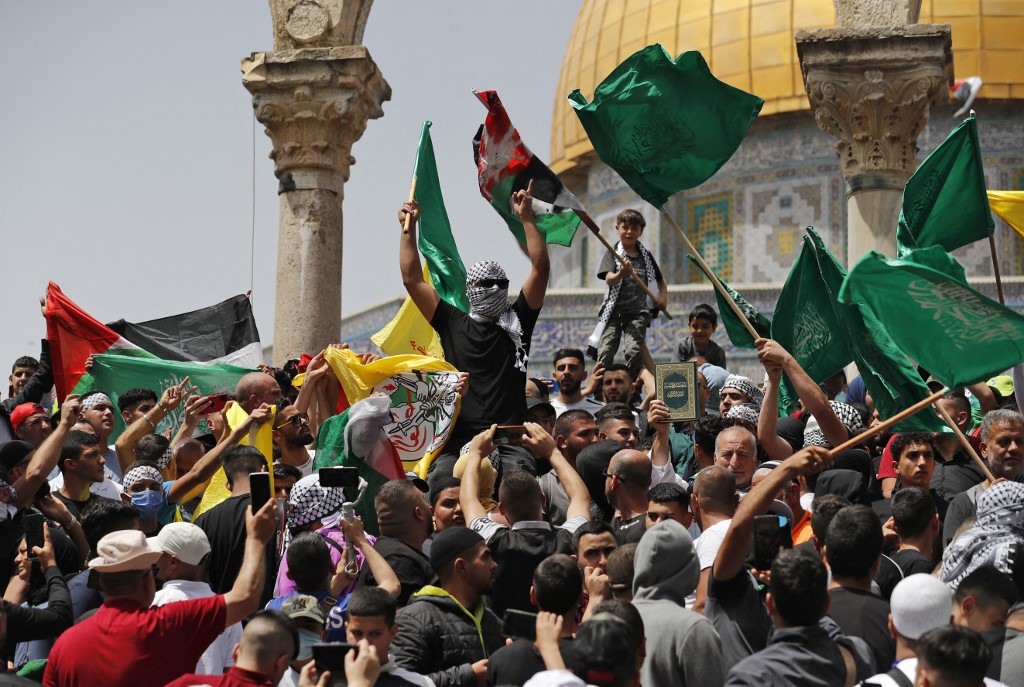
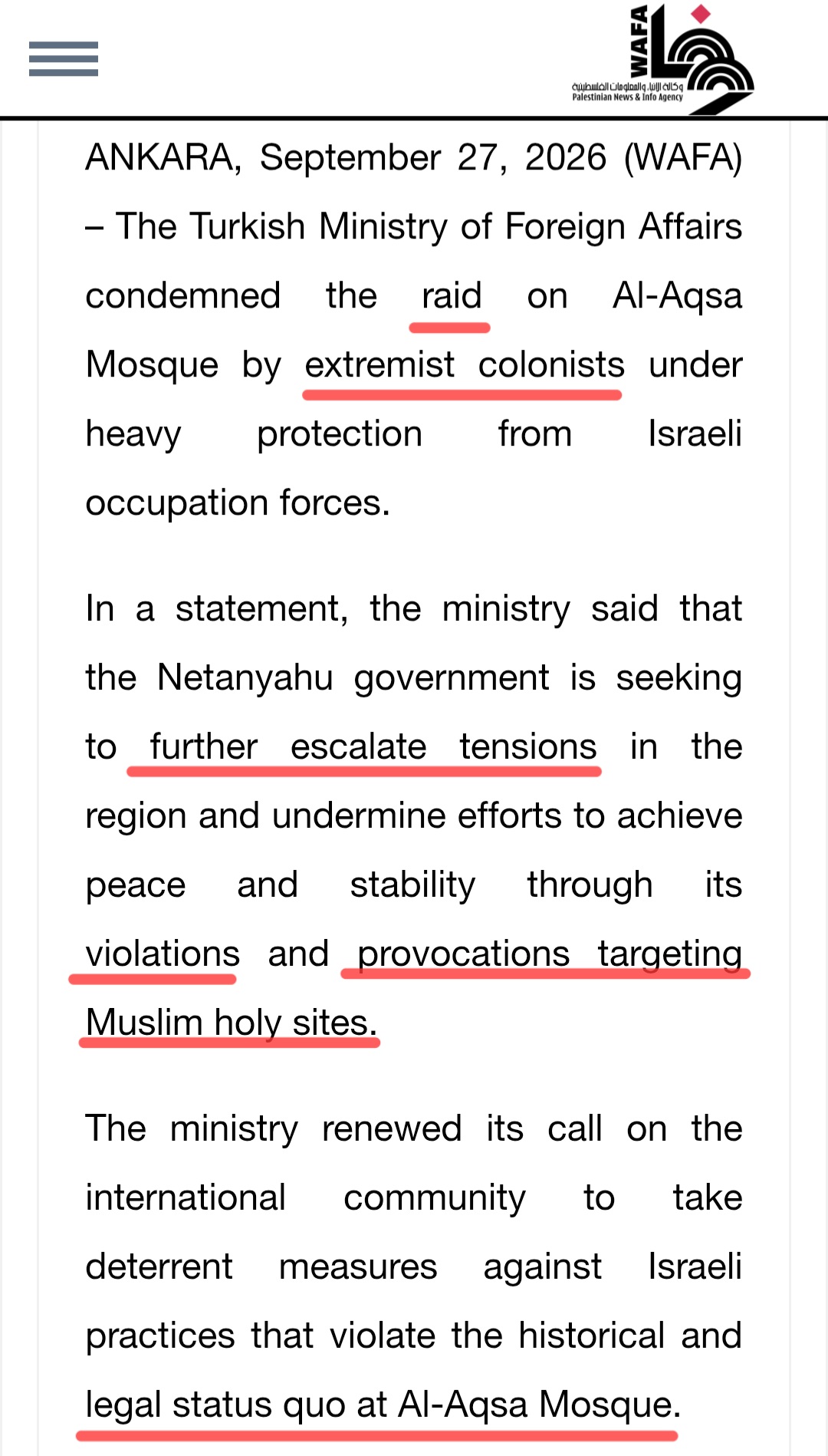
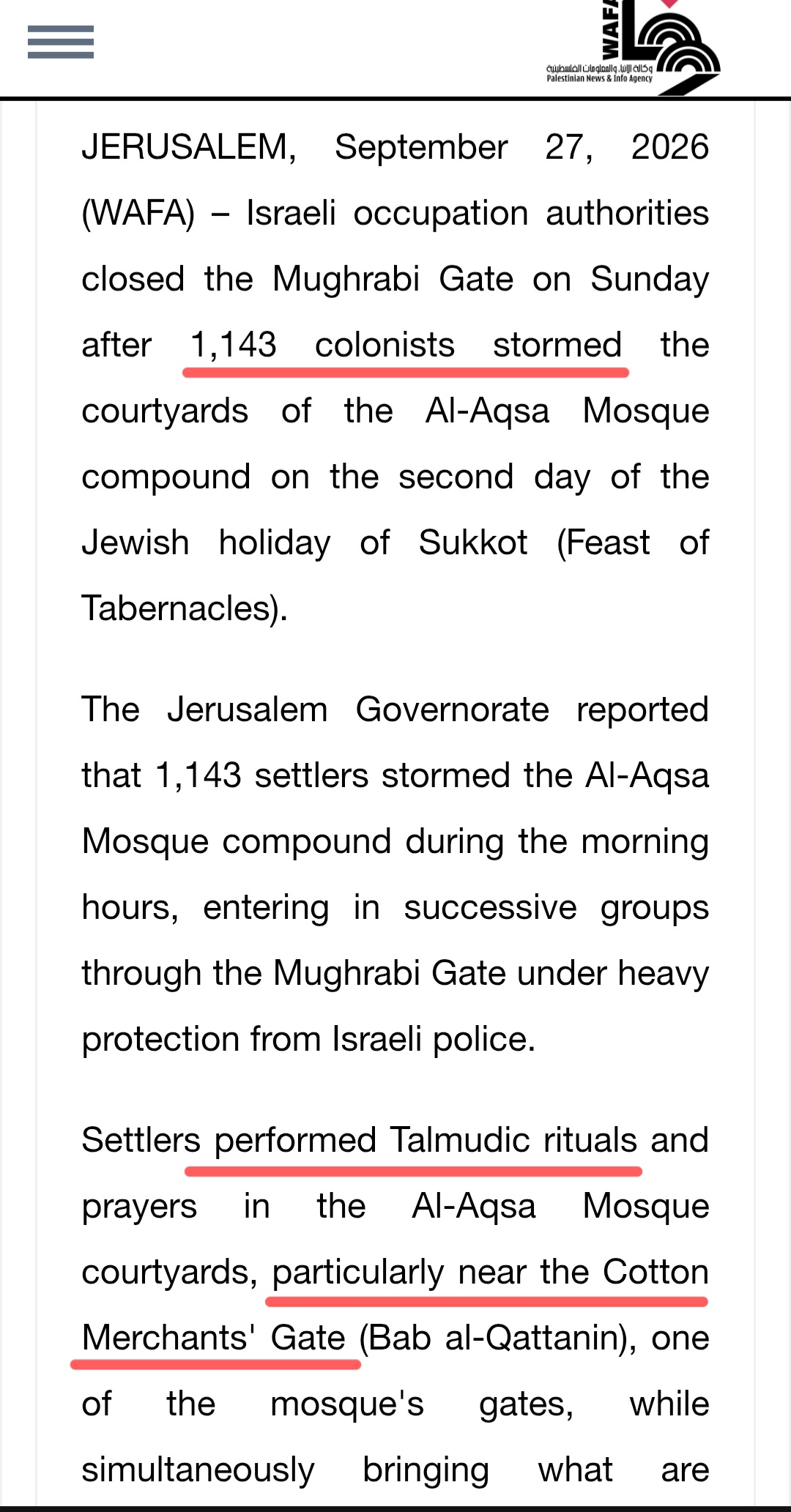
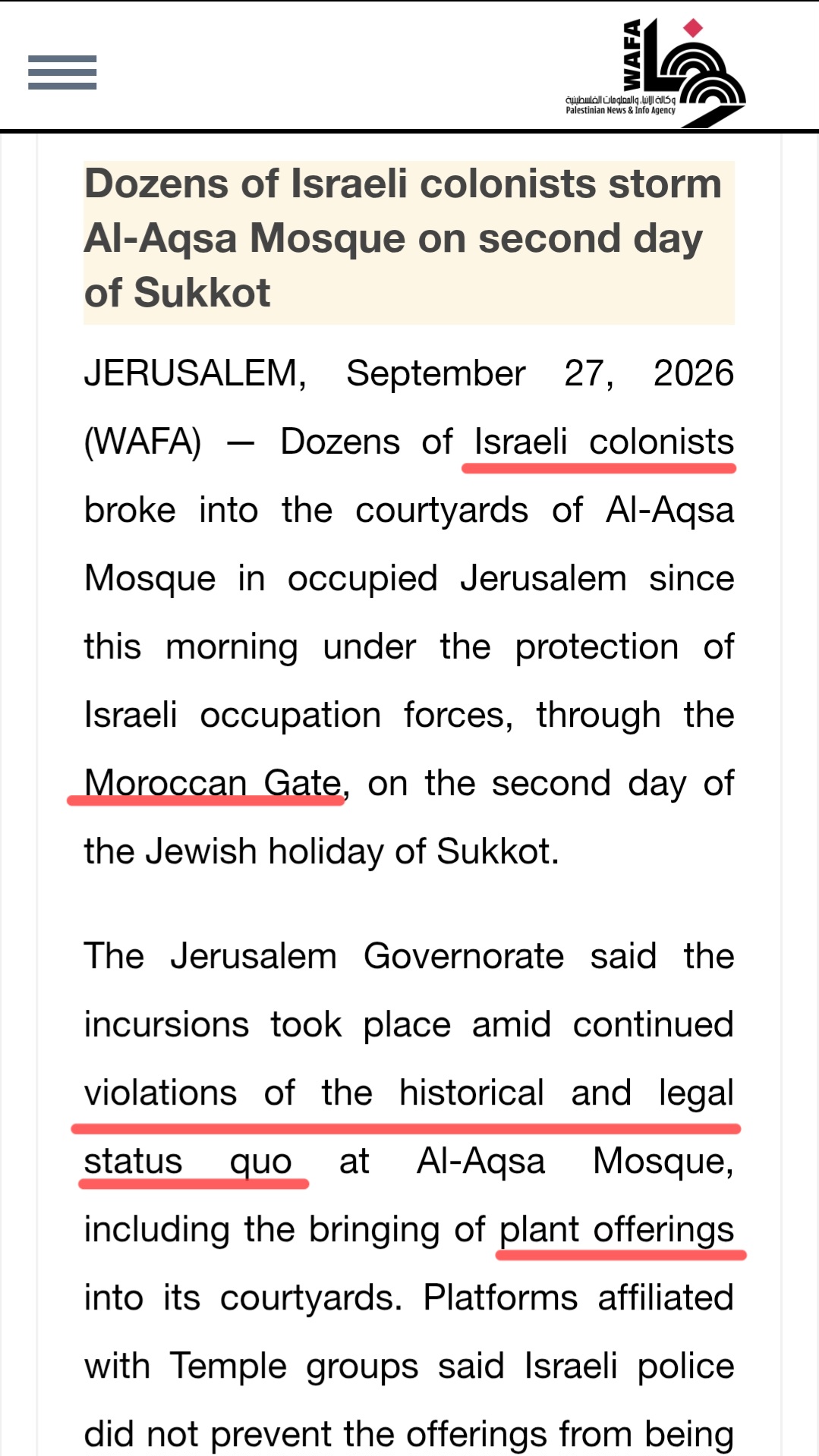
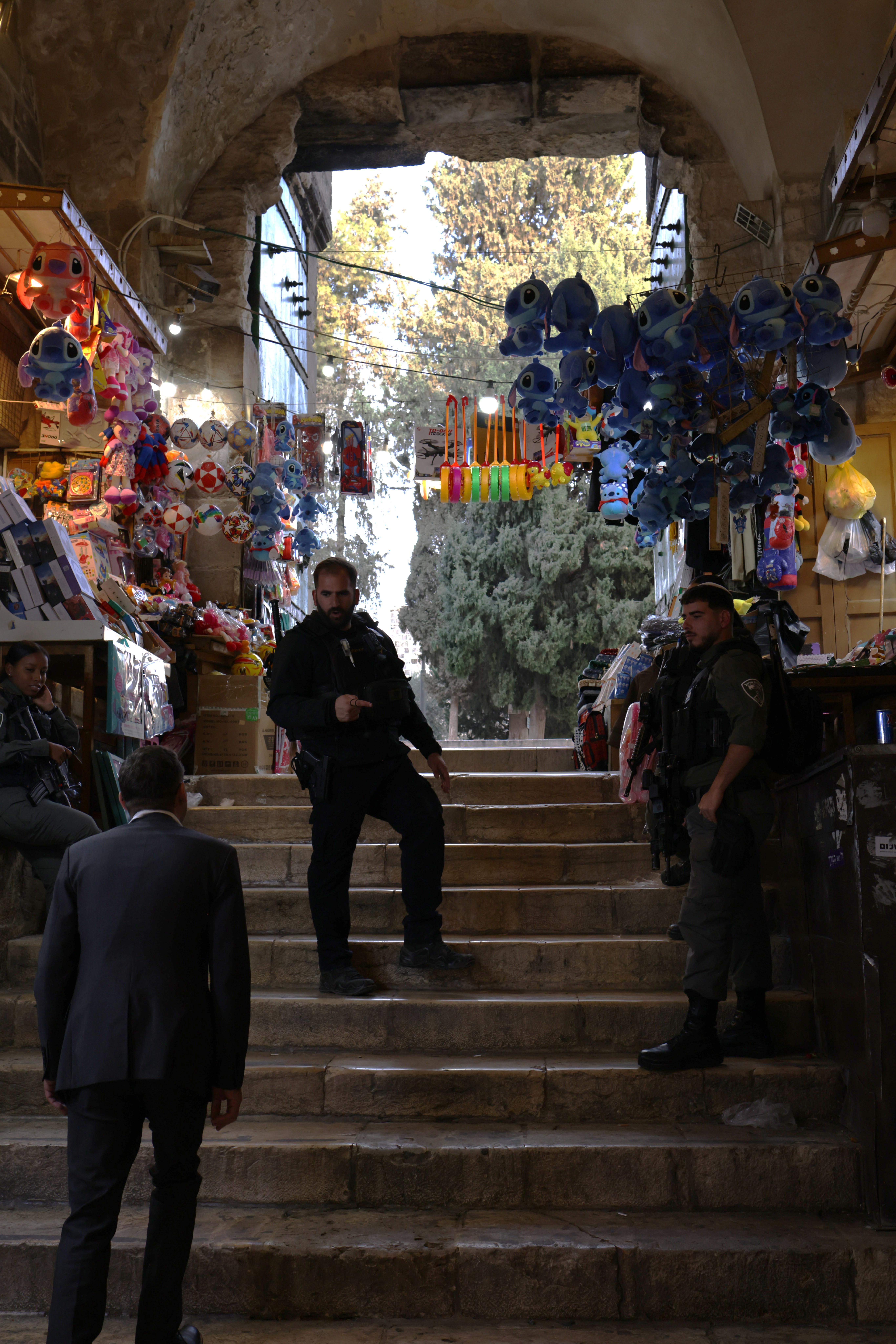
The jihadi war begins in the headline: “Israeli colonists storm Al-Aqsa Mosque under police protection.” Before a single fact appears, the verdict is already written—by the Palestinian Authority’s media outlet—in words designed to inflame.

  • Colonists erases history, recasting Jews as foreign intruders with no connection to the Temple Mount. 
  • Storm supplies violence whether any occurred or not. 
  • Al-Aqsa Mosque collapses the entire compound into the most sensitive Islamic structure to heighten the sense of desecration. 
  • Under police protection reframes standard security by the Israel Police, coordinated with the Jerusalem Islamic Waqf, as state-backed aggression.

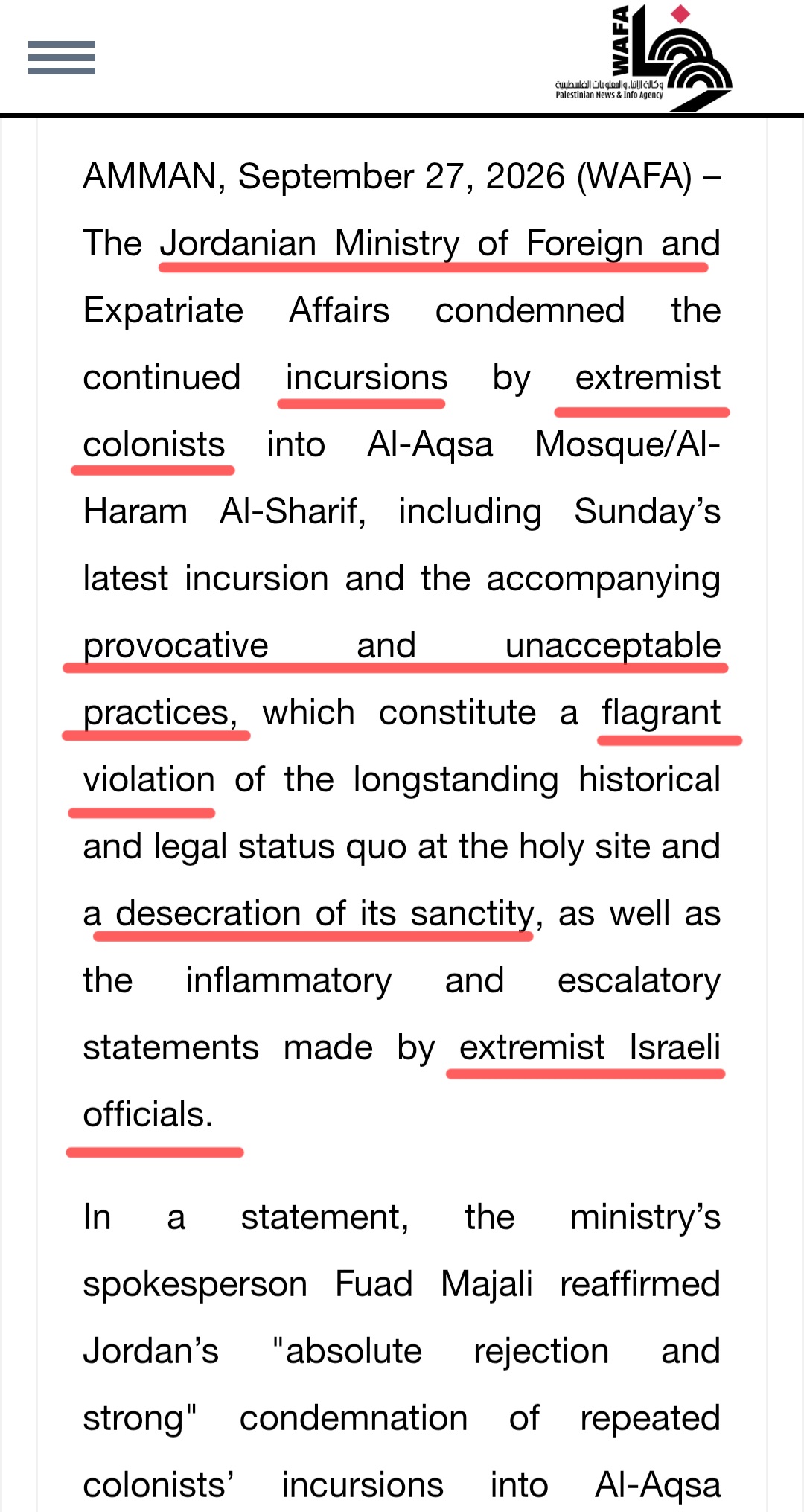
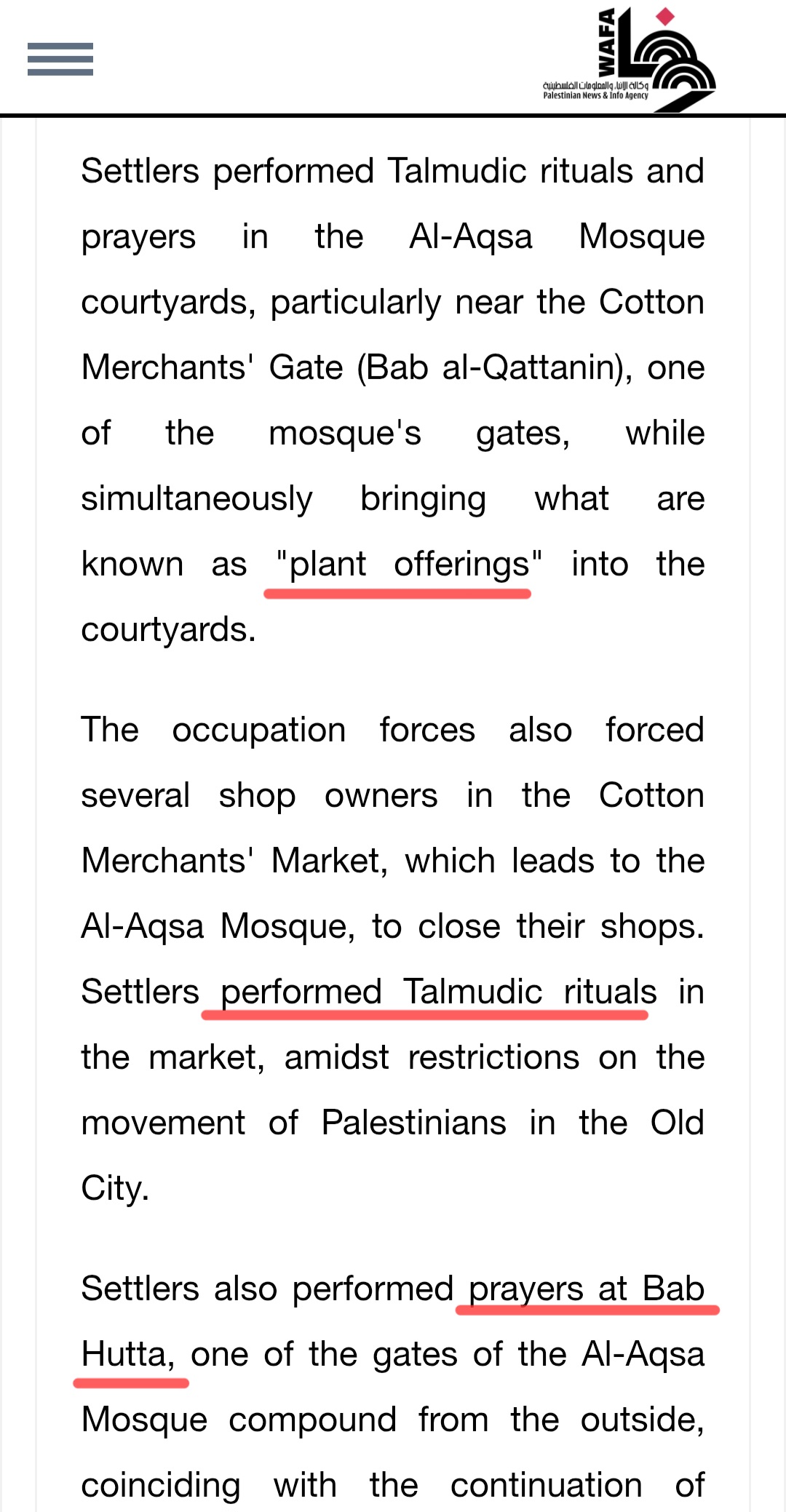
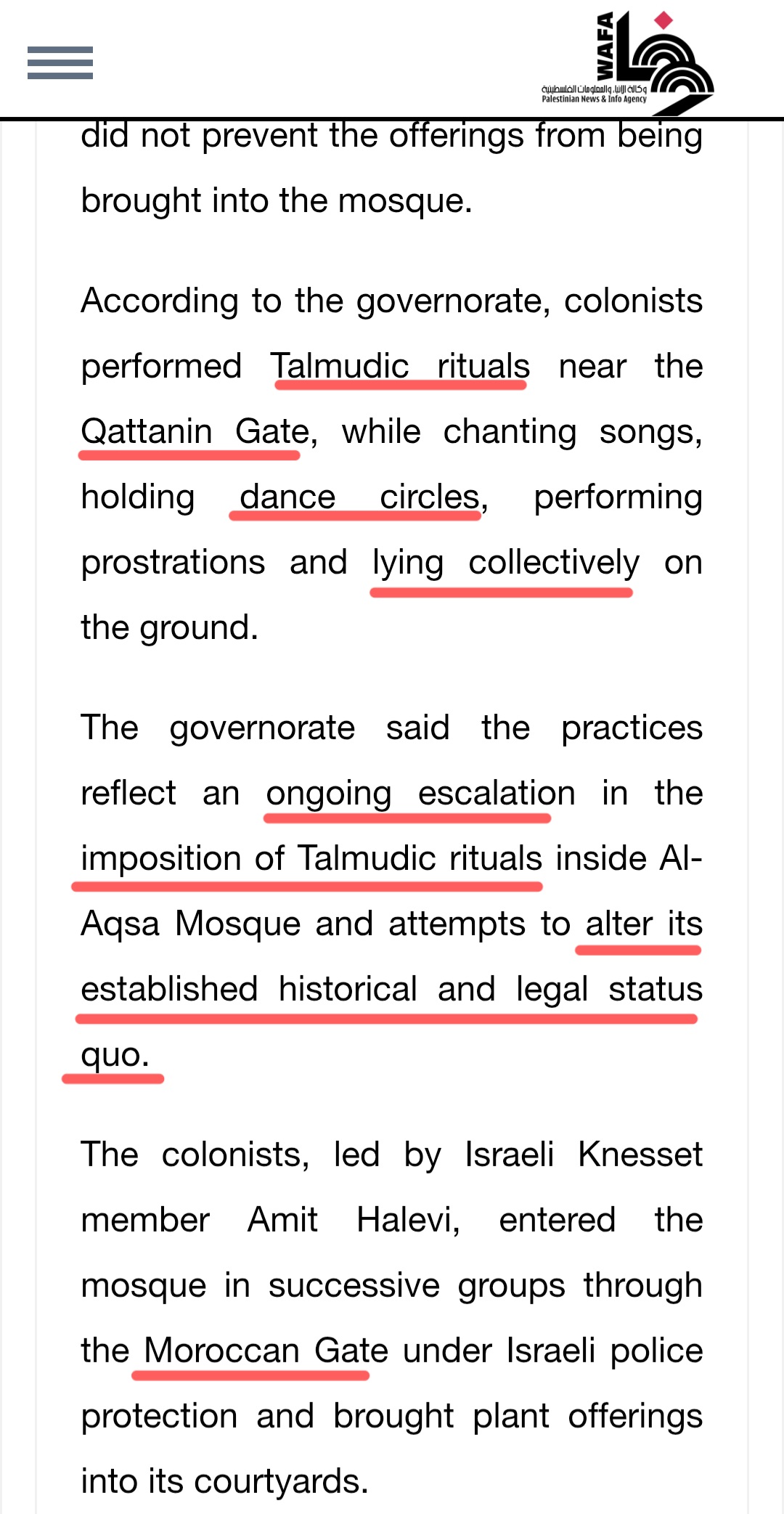
Then the language tightens. “Talmudic and provocative rituals.” “Frequent Israeli provocations, including repeated raids.” These aren’t descriptions. They’re verdicts. Quiet presence becomes intent. Routine visits become raids. Silent prayer becomes something suspect.

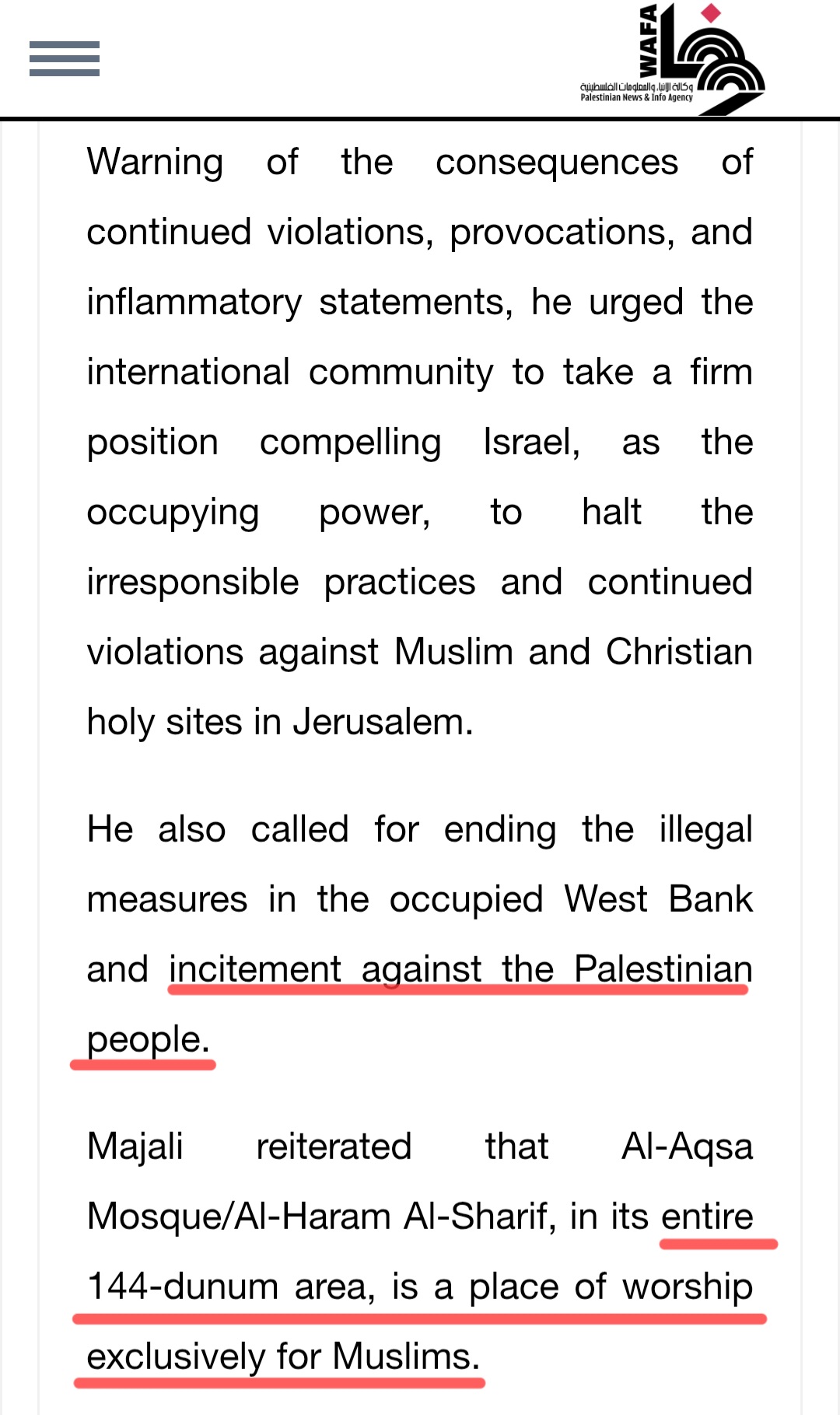
And then the omission that completes the frame. The site is only described as Islam’s third holiest. It is never described as Judaism’s holiest. The reader is left with a single conclusion: sanctity on one side, violation on the other.

This is narrative design. Islamic Supremacy.

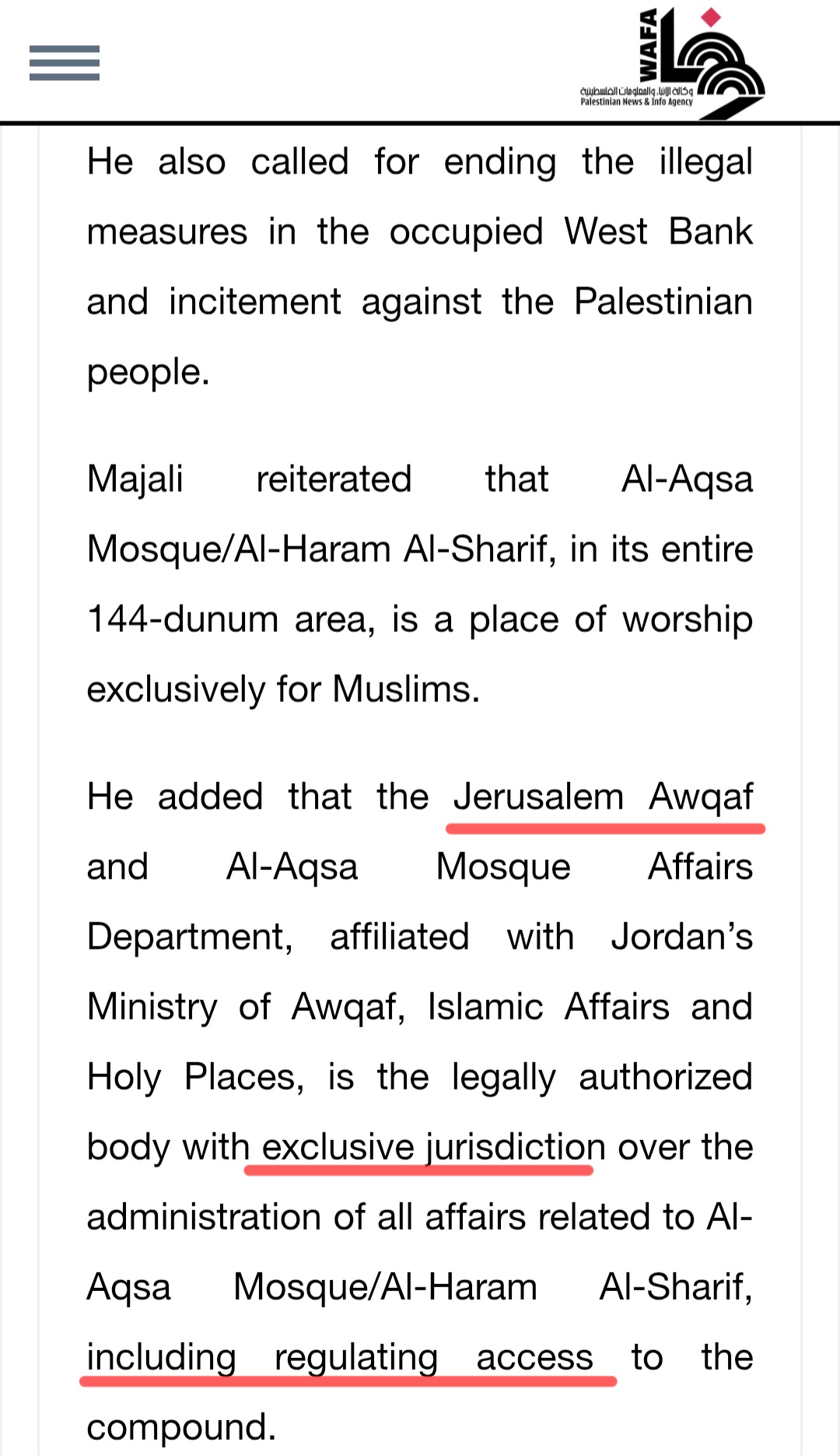
Strip legitimacy. Recast presence as desecration. Elevate exclusive holiness. Repeat it daily through a state-backed outlet overseen by the Palestinian Authority.

That is how a holy war is narrated into existence. By the “moderate” Palestinian Authority.

Mock the Dead, Police the Living

The uniform matters. The place matters more.

At Buchenwald concentration camp, the ground holds ash. It exists for a single purpose: to remember the industrial murder of Jews. The expectations are clear without being written—restraint, silence, humility.

Buchenwald concentration camp

Bring a keffiyeh into that space and call it “expression” and the word collapses under the weight of context. Symbols do not travel untouched. In that setting, it reads as intrusion—present politics laid over a site of extermination. Memory for mockery.

Yet the pro-Palestinian Arab mob wants to remind Jews that the genocide of Jews is not just in the past but in the present. They want their right of “free expression” precisely where it can hurt Jews the most. The right to bring a cause onto ground that was meant to remind people “never again” was targeted with “again now.”

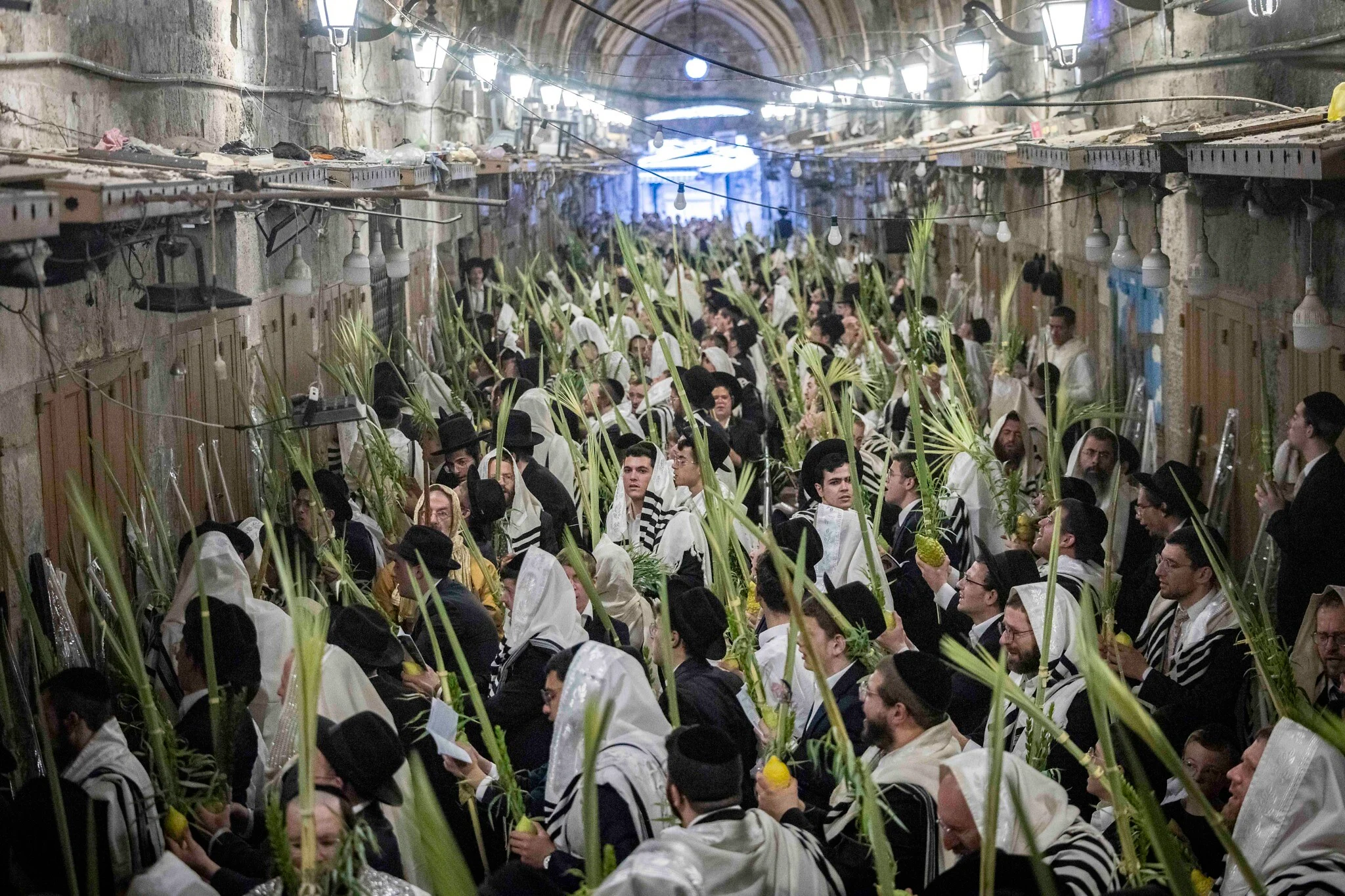
In their antisemitic zeal, they push the opposite at Temple Mount, the holiest site in Judaism. For centuries, Jewish prayer has pointed toward this place. Yet the pro-Palestinian crowd demands Jews be barred- not only no free expression but no freedom of religion.

“Status quo!” and “Provocation!” used very selectively, when Jews are the target.

The same principle—expression—stretches in one place and shrinks in another.

Expanded to override the norms of a concentration camp. Constrained to block prayer at Judaism’s holiest site.

That is the pattern.

It is not only a double standard. It is a antisemitism squared.

The past is diluted when a site of Jewish death is treated as open terrain for contemporary symbolism. The present is constrained when Jewish prayer is treated as a threat rather than a right.

Buchenwald should demand humility before the dead.
The Temple Mount should allow the living to pray.

When those principles reverse, the fracture is not rhetorical. It is civilizational. And the pro-Palestinian camp continues to reveal the profound “deformity in its culture,” and how it revels in Jew hatred.

The Bomb Shelters Gazans Were Never Allowed to Use

The images out of Gaza arrive stripped of their foundation. Open the The New York Times opinion pages this week and the story feels preassembled: civilians suffer, Israel strikes, outrage follows. It reads cleanly because something essential has been left out. This war does not begin and end on the surface.

It runs underground.

Beneath Gaza sits one of the most extensive underground military networks in the modern world, built by Hamas over years with money, materials, and time that could have gone elsewhere. The elaborate system of reinforced corridors, command centers, weapons depots, communications lines was designed to survive bombardment and keep a war going no matter what happens above.

Call it what it is: a vast network of bomb shelters.

Now say the part that rarely gets said clearly: Those shelters were never meant for civilians. They were never opened to families. They were never opened to children. They were never opened to the elderly. They were reserved—by design—for fighters, for leadership, for the preservation of the war machine itself.

In any other place, that would be unthinkable. Governments build shelters to protect their populations. When sirens sound, people go underground. Here, the system was inverted. Protection went below ground for those prosecuting the war. Exposure remained above ground for those living in it.

So when the bombs fall, the images follow. Families in rubble. Crowded rooms. Children pulled from collapsed buildings. The world reacts to an outcome shaped long before the first strike in this round of fighting. The protection existed. It was built. And Gazans were never allowed to use it.

That is the story that flips the frame.

This is not only a story of what Israel is doing. It is a story of what Hamas chose to build, and who it chose to protect with it. The tunnels are not just military infrastructure. They are a hierarchy set in concrete. Survival below ground for the regime. Exposure above ground for everyone else.

Once you see that, it becomes impossible to unsee. The destruction remains devastating but it has critical context. It sits alongside a governing strategy that hardened one layer of Gaza while leaving the other to absorb the war.

And that strategy is not finished. It points directly to what comes next. If Hamas remains, Gaza does not rebuild in the way people hope. It continues in the direction it has already taken. More tunnels. More infrastructure embedded beneath dense civilian areas. More resources pulled downward into war instead of upward into life.

The future of Gaza is not being debated. It has already been built.

It just was never built for the people living above it.

And the socialist-jihadi media like The New York Times, will paint a picture of pure fiction, one in which Gazans are the victims of rubble, not tunnels; victims of the Jewish State, not Hamas; victims of “genocide,” not perpetrators of genocide.

And for good measure, it will add a cartoon of a Jewish Holocaust survivor protesting about Israel committing a genocide in Gaza, to completely embalm its inversion of genocide.

Hamas built bomb shelters for the exclusive use of its terrorist army while it let women and children get attacked overhead. We are similarly witnessing the socialist-jihadi media build narrative shelters for those same jihadi terrorists, leaving Jews to take the brunt of the antisemitic tidal wave.

Jenin Terror Theater in New York

Jenin did not drift into the headlines after 2022. It started producing them.

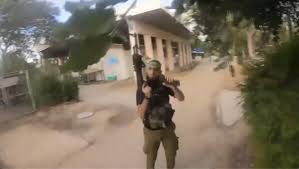
What emerged in Jenin was a terrorist factory. Fighters from Hamas, Palestinian Islamic Jihad, and Al-Aqsa Martyrs’ Brigades fused into a loose network called the Jenin Brigades that did not need a central command to be effective. Decentralized cells, shared infrastructure, constant regeneration.

The output showed up quickly. Bnei Brak shootings killed five. Tel Aviv shootings killed three. Elad stabbings and hacking with axes killed four. Different attackers, same origin point: Jenin.

Israeli investigations kept circling back to the same networks that planned, armed, and launched the murders. The response followed the pattern. Raids intensified through 2023 and 2024. Weapons labs were targeted and IED networks were dismantled. Yet the factory kept running, because the underlying condition never changed.

Governance had receded.

Palestinian terrorist from Jenin shot and killed three on Dizengoff Street in Tel Aviv, 2022

By 2024, the Palestinian Authority was largely absent inside the camp. Armed groups operated openly. Weapons moved with little friction. Jenin functioned less as a governed space and more as an incubator.

When the Palestinian Authority finally moved in, it revealed the reality it had long avoided. Arrests. Clashes. Fighters targeted in the same streets that had projected violence outward. An internal confrontation that made clear what Jenin had become.

That move came under pressure. As the transition toward Donald Trump in January 2025 approached, the Authority needed to show it could control territory. It signaled to Washington that it could confront militias, that it could govern, that it still mattered. At the same time, it faced a harder truth: those militias had the street. Polling from the Palestinian Center for Policy and Survey Research showed strong support for armed groups, especially in places like Jenin where the Brigades carried both weapons and legitimacy. The Authority moved against forces that many Palestinians saw as their representatives.

68% support the formation of armed groups, such as the “Lions’ Den,” and 87% believe the PA does not have the right to arrest members of these groupsPCPSR poll, March 2023

And then the story is exported for western audiences.

“The Freedom Theatre,” founded in 2006 inside the same camp, showcases a different version of Jenin. Its language is culture, resistance, narrative. On April 12, 2026, that version appears in Kingston, NY with a screening and discussion at the Old Dutch Church.

What arrives there is a story stripped of origin. No Bnei Brak attack. No Dizengoff murders. No Elad hacking. No accounting for the networks that produced them or the infrastructure that sustained them. The factory disappears. The output is reframed.

Groups like Jewish Voice for Peace and Democratic Socialists of America amplify that version—one that travels without the genocidal bloodlust, speaks the language of “grievance” and “resistance”, and leaves out the mechanics of violence that made Jenin central in the first place.

Two things now move out of Jenin. One is violence, forcing constant military response. The other is narrative, reshaping how that violence is understood far from its source. They are not separate tracks. One conditions the other.

Jenin is no longer just a location. It is a generator—of attacks, of responses, of competing realities.

Erasing a Country with a Date

Some arguments don’t come as arguments. They come as word choices.

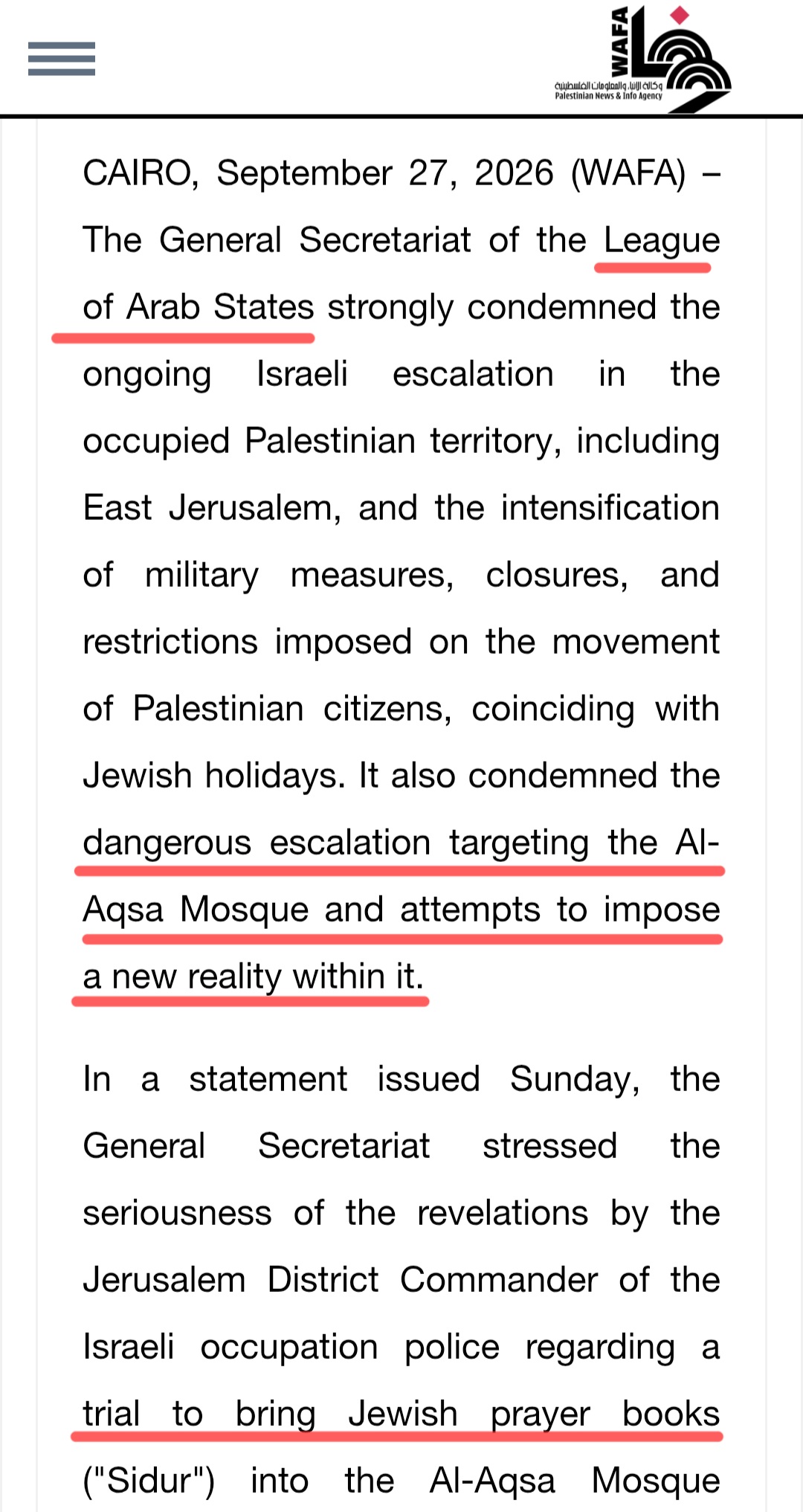
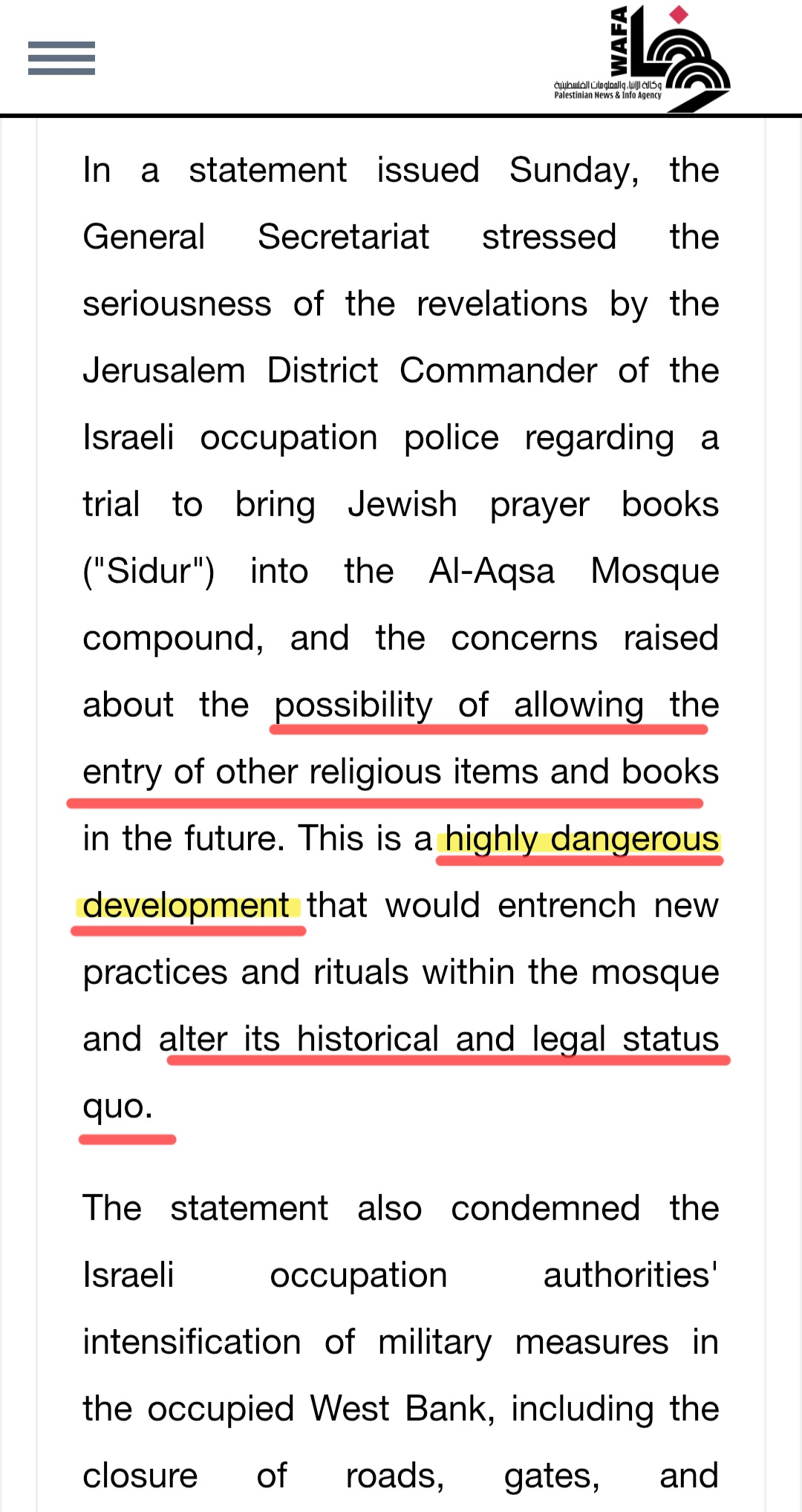
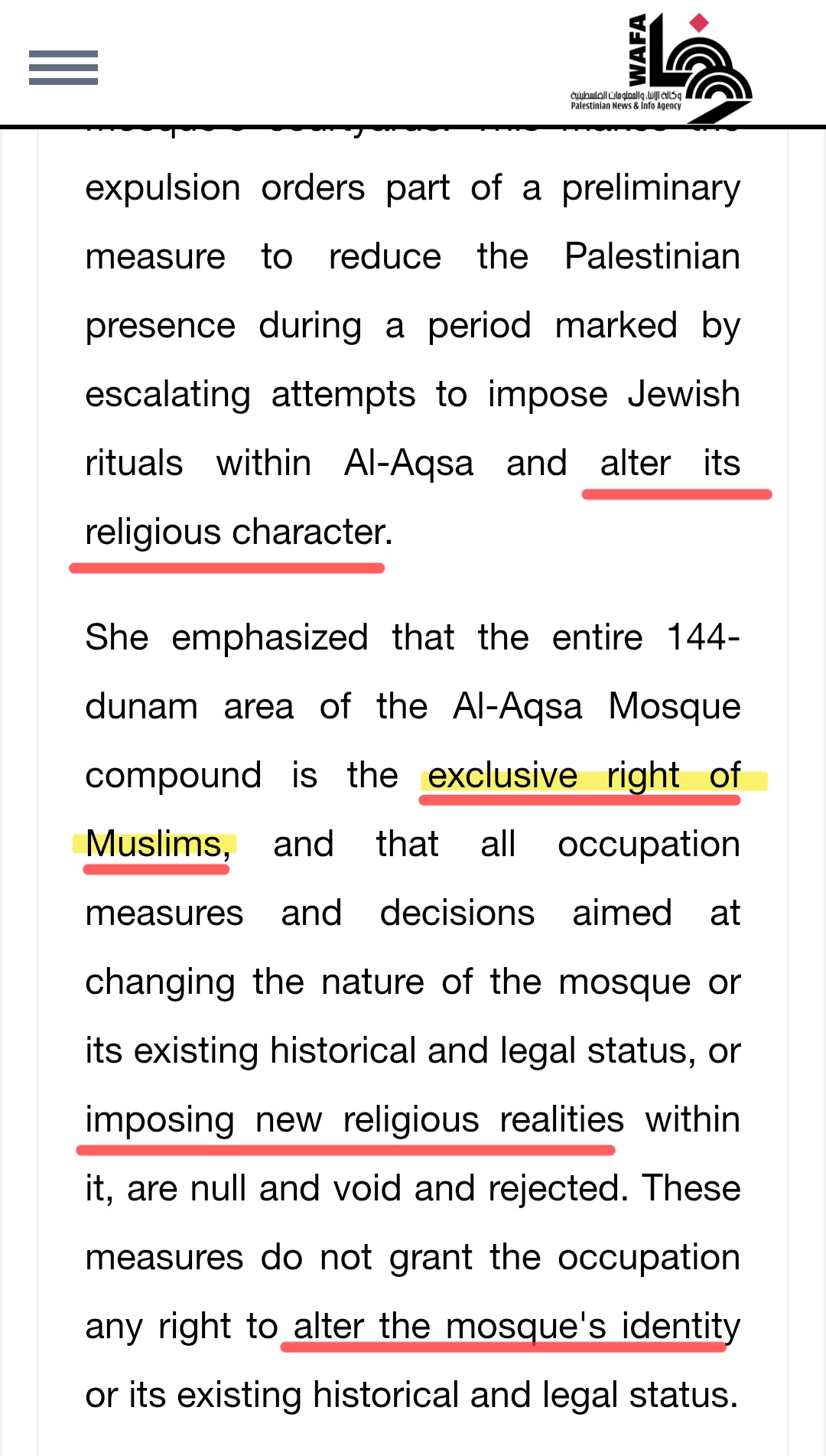
In a recent dispatch, the Palestinian Authority’s official news agency, WAFA, made a choice that says everything. Israel appears as an adjective when attached to institutions. Its actions carry familiar condemnations. And the land itself is recast as “the 1948 territories.”

That is not reporting. That is positioning.

1948 is a year of war and statehood. It marks the moment Israel came into being and survived an attempt to erase it at birth. Turning that year into a place rewrites the present. It drags today back into a permanent opening chapter, where the outcome still hangs in the balance.

A country becomes a placeholder. Sovereignty becomes provisional. Everything sits on ground that the language refuses to make firm.

This is how maximal claims stay alive.

If a state only exists as “1948,” then its future remains permanently negotiable.

The contradiction is visible in plain sight. Daily coordination with a functioning state on one hand. A refusal to grant that state permanence on the other. Even more, that the very land of that state is illegal, stolen. The phrase allows engagement without acceptance.

That approach carries consequences.

Conflicts move when both sides deal with what is actually there. Language that recasts reality into a provisional state keeps the dispute locked at its most basic level. Every negotiation floats above a refusal that pulls it back down.

This pattern extends well beyond a single outlet. It echoes across official statements, classrooms, and international stages. Words are chosen with care because they preserve a claim that facts have long since settled.

Israel is a state with institutions, borders, citizens, allies, and critics. It participates in the global system, fights wars, signs agreements, and argues with itself in open courts. None of that fits inside a date.

Calling it “the 1948 territories” keeps the founding war alive in the present tense.
And as long as that language holds, the conflict never leaves its opening scene.

Muslim – Muslim Wars

When Iran attacks neighboring countries, many observers react with confusion.

How could the Islamic Republic of Iran strike Muslim countries, they ask?

The question reflects a misunderstanding. Throughout modern Middle Eastern history, many of the region’s bloodiest conflicts have been Muslims fighting other Muslims. The idea of a unified “Muslim world” standing together against outsiders is largely a Western illusion.

Reality has always been far messier.

Muslims Fighting Muslims

One of the deadliest wars in the modern Middle East was the Iran–Iraq War. From 1980 to 1988, two Muslim-majority states fought a brutal conflict that killed hundreds of thousands and wounded millions. Both sides invoked Islam. It did nothing to prevent the slaughter.

More recently, the Syrian civil war has killed roughly 500,000 people, most of them Muslims, as factions divided along sectarian and political lines tore the country apart.

But these are far from isolated examples. Modern history is filled with wars in which Muslims killed other Muslims on a massive scale.

Major Muslim-vs-Muslim Conflicts

  • Iran–Iraq War (1980–1988)
    ~500,000–1,000,000 killed
    Shia Iran vs Sunni-led Iraq in one of the deadliest wars in modern Middle Eastern history.
  • Syrian Civil War (2011–present)
    ~500,000+ killed
    Assad regime, Sunni rebel groups, ISIS, and other militias fighting largely Muslim populations.
  • Yemen Civil War (2014–present)
    ~350,000+ killed (including famine and disease tied to the war)
    Iranian-backed Houthis vs Saudi-backed Yemeni government.
  • Sudan / Darfur conflicts (2003–present phases)
    ~300,000+ killed
    Fighting largely between Muslim militias and factions within Sudan.
  • ISIS war in Iraq and Syria (2013–2019)
    ~200,000+ killed
    ISIS fighting governments and populations that were overwhelmingly Muslim.
  • Algerian Civil War (1991–2002)
    ~150,000–200,000 killed
    Islamist insurgents vs Algerian government.
  • Iraq sectarian civil war (2006–2008 peak)
    ~100,000–200,000 killed
    Sunni and Shia militias fighting for control after the fall of Saddam Hussein.
  • Black September in Jordan (1970–1971)
    ~3,000–10,000 killed
    Jordanian army crushing Palestinian militant groups operating inside Jordan.
  • Hamas–Fatah conflict (2006–2007)
    ~600–1,000 killed
    Palestinian factions fighting for control of Gaza.

Together, these conflicts account for millions of deaths, overwhelmingly among Muslims themselves.

Members of ISIS about to burn Jordanian to death in a cage

Palestinians Killing Palestinians; Israel Arabs Killing Israeli Arabs

Even movements that claim to represent a single people often turn their guns inward.

In 2007, Hamas violently seized Gaza from Fatah, executing rivals and throwing some from rooftops in a bloody Palestinian power struggle.

The same pattern appears inside Israel.

Most Israeli Arabs who die from violence are killed by other Israeli Arabs, usually in criminal or clan disputes rather than in conflict with Jews.

Internal violence, not confrontation with Israel, accounts for the majority of these deaths.

Power Over Solidarity

Western observers often assume shared religion should produce political unity.

But the Middle East repeatedly shows otherwise.

Persians compete with Arabs.
Arabs compete with Turks.
Sunni compete with Shia.

Power, rivalry, and survival drive politics far more than religious solidarity.

A Familiar Pattern

Seen in this context, Iran attacking Muslim countries is not surprising.

It follows a long-standing regional pattern: Muslim states and factions frequently fight one another.

The Middle East’s wars are not unique. They follow the same rule that has governed politics everywhere:

Nations and movements fight for power and dominance—even when they share the same faith.

Perhaps It Is Time to Ask Israel What Two States Look Like

For decades the international community has insisted it already knew what a two-state solution should look like. The United Nations drew the parameters. Diplomats repeated the formula. Conferences were held. Resolutions were passed.

And tens of thousands of people died.

The problem may not be the idea of two states. The problem may be that the plan was written without the participation of the country expected to live beside that second state, after countless wars waged to eliminate it.

Israel accepted the concept of two states repeatedly. The Arab world rejected it outright in 1947 and chose war instead. For decades the objective was not coexistence but the elimination of the Jewish state “in any part of Palestine.

Only much later did some Palestinian leaders begin to speak about accepting two states. Even then the proposal contained a remarkable asymmetry: Arabs could potentially live in both Israel and a future Palestinian state while Jews would be barred from living in Palestine. Even under these terms, acceptance amongst the stateless Arabs from Palestine (SAPs) remained partial and fragile. Large segments of Palestinian society continued to reject the legitimacy of Israel itself.

War therefore continued.

The deeper flaw lay in the diplomatic architecture. The UN framework repeatedly demanded territorial concessions from Israel while simultaneously challenging the basic elements of Israeli sovereignty. The proposed Palestinian state would claim rights that no other neighboring state claims over another country, including constraints on Israel’s control over borders and immigration.

The Oslo Accords attempted to move the process forward through gradual autonomy. Palestinians gained control of Gaza, Area A of the West Bank, and some control in Area B. These territories were meant to become the early foundations of Palestinian self-governance and peaceful coexistence.

Instead they became platforms for continued war. Rockets came from Gaza. Terror networks operated openly in areas under Palestinian control. October 7 was simply the most brutal expression of a reality that had been building for years.

After October 7 it is difficult to imagine any Israeli government accepting the same international blueprint that guided diplomacy for the past thirty years.

Which raises a simple question that has never been asked: What would a two state solution designed by Israel actually look like?

For decades the world has demanded that Israel accept a state designed by others. When Israel raised concerns about security, sovereignty, or enforcement, those concerns were treated as obstacles to peace rather than as conditions necessary to achieve it.

Perhaps the time has come to reverse the process.

Instead of repeating a diplomatic formula that has failed repeatedly, the international community could ask Israel to define the conditions under which it could realistically accept a Palestinian state. Security arrangements, borders, governance standards, demilitarization, and phased recognition could all become part of a framework designed around coexistence rather than wishful thinking.

Whether the SAPs are willing to accept such conditions is a separate matter. Neither side ever fully accepted the UN blueprint. But continuing to impose a model that both parties reject has already produced decades of bloodshed.

Hashmonaim and separation barrier

The first fruits of Oslo were rotten. Continuing to plant the same tree will not produce a different harvest.

If the world truly wants two states living in peace, it may finally be time to ask the state expected to survive beside that new second state what peace actually requires.

A Capital Crime for Jews—and a Paper and World That Look Away

One fact should dominate any serious discussion of land and power in the West Bank: under Palestinian Authority law, a Palestinian who sells land to a Jew can face the death penalty.

That is not rumor or polemic. It is statute.

In areas governed by the Palestinian Authority in the West Bank and by Hamas in Gaza, selling land to Israeli Jews is prosecuted as treason. The charge is brought under Jordanian Penal Code No. 16 of 1960 — particularly Articles 113–118 and Article 114 on aiding the enemy — still in force in the West Bank, along with the PLO Revolutionary Penal Code of 1979. A 2014 decree by Mahmoud Abbas reaffirmed that such land sales constitute “collaboration with the enemy.” Courts have issued death sentences under these provisions.

The defining element is the identity of the buyer. A private real-estate transaction becomes a capital crime because the purchaser is Jewish and therefore legally framed as part of the “enemy.” Most countries reserve treason for espionage, armed rebellion, or wartime assistance to a hostile state. The Palestinian framework instead applies classic treason law to a civilian property sale — explicitly treating Jews, as a national collective, as the enemy for purposes of capital punishment.

Yet when the New York Times recently acknowledged this, it did so quietly, almost apologetically, inside an article whose primary concern was Israeli policy. The focus was not the law itself, but the risk that Israeli transparency might expose Palestinian Arabs to danger because the law exists.

That framing reverses cause and effect.

Israel was portrayed as aggressive and ideological, while the Palestinian Authority’s capital punishment for a racially defined transaction was treated as background context. Israeli officials were labeled “right-wing” and scrutinized by name. The PA, which enforces a law rooted in religious antisemitism, was spared comparable description. Its ideology went largely uninterrogated.

The article even suggested that sealed land records once served as a form of protection for Palestinians. That sentence alone concedes the nature of the regime. A governing authority from which citizens must be shielded because it may kill them for selling property to Jews is not a peace partner. It is a theocratic system enforcing ethnic taboos with lethal force.

If a Jewish state executed Jews for selling land to Arabs, that law would dominate media coverage. Instead, when Jews are the forbidden buyers, the death penalty becomes an inconvenience and the exposure of it becomes the problem.

UN Secretary-General Antonio Guterres “warns that the current trajectory on the ground, including this decision [to unseal the names of the owners of land making private real estate transactions easier], is eroding the prospect for the two-State solution. He reiterates that all Israeli settlements [the physical presence of Jews east of the 1949 Armistice Lines between Israel and the Kingdom of Transjordan, which specifically stated were not to be considered borders] in the occupied West Bank, including East Jerusalem, and their associated regime and infrastructure, have no legal validity and are in flagrant violation of international law, including relevant United Nations resolutions.”

This is how extremist antisemitism is normalized: by treating it as an immutable local condition, while directing moral outrage at those who reveal it. When selling land to a Jew carries a death sentence, that fact is not incidental. It is the moral center of the conflict.

Two Condemnations, One Moral Collapse

By any ordinary moral standard, the murder of worshippers in a house of prayer should provoke the clearest possible response: name the crime, demand justice, stand with the people and the government under attack. No hedging. No balancing. No political caveats.

The United Nations does that, except when Israeli Jews are the victims.

Read the paired statements issued by António Guterres after two attacks on places of worship: one at a mosque in Pakistan, the other at a synagogue in Jerusalem. The contrast reveals a complete moral collapse at the heart of the global body.

This matters even more because the Jerusalem statement was issued before Israel responded to October 7, 2023. Before Gaza. Before counteroffensives. Before a single Israeli military action the UN would later cite as justification for its posture.

Restraint was not urged because of Israeli action. It was urged instead of justice itself.

Statement by UN Secretary-General Antonio Guterres in February 2026 about the bombing of a mosque in Pakistan

In Pakistan, the Secretary-General “condemns in the strongest terms” the attack on worshippers. He demands that the perpetrators be “identified and brought to justice.” He affirms the “solidarity of the United Nations with the Government and people of Pakistan” and situates the crime squarely within the global fight against terrorism and violent extremism.

That is what moral clarity looks like.

Yet in Jerusalem, when Jews are murdered outside a synagogue in 2023—on International Holocaust Remembrance Day- a whisper. The Secretary-General “strongly condemns” the attack. He offers condolences. He notes that it is abhorrent to attack a place of worship. And then he pivots—not to justice, not to accountability, not to solidarity with the state charged with protecting its citizens.

He pivots to restraint.

Statement by UN Secretary-General Antonio Guterres in January 2023 about murder of Jews outside Jerusalem synagogue

The synagogue becomes a geographic detail. The murders are folded into “the current escalation in Israel and the occupied Palestinian territory.” There is no demand that the killers be found. No insistence on prosecution. No solidarity with the Government of Israel. No recognition that deterrence requires consequence.

This is not diplomatic caution. It is moral abdication.

This did not begin with Guterres

If this were merely the idiosyncrasy of one Secretary-General nearing the end of his ten year tenure, it might be dismissed as tone or temperament. It is not.

In 2014, after Arab terrorists entered a synagogue in Jerusalem wielding meat cleavers and hacked Jewish worshippers to death, Ban Ki-moon issued a statement that follows the exact same structure.

Statement by UN Secretary-General Ban Ki Moon in January 2014 about murder of Jews inside Jerusalem synagogue

He “strongly condemns” the attack. He offers condolences. And then—almost immediately—he moves “beyond today’s reprehensible incident” to discuss “clashes between Palestinian youths and Israeli security forces.” The massacre is submerged into “the situation.” The killers disappear into context.

There is no call to bring the perpetrators to justice.
No solidarity with the Israeli government.
No affirmation of Israel’s duty to eradicate the threat.

Instead, Ban Ki-moon calls for leadership on “both sides”, urges all parties to avoid “provocative rhetoric,” and frames the slaughter of Jews in a synagogue as a destabilizing dimension of the conflict—not as terrorism demanding elimination.

Different Secretary-General. Same choreography.

The explanation is not mysterious because the United Nations does not conceptualize Palestinian violence as extremism.

Extremism, in UN doctrine, is something that happens elsewhere—to states battling jihadists, insurgents, or transnational terror networks. Palestinian murder, by contrast, is treated as political expression: contextualized by grievance, softened by narrative, absorbed into a permanent dispute. It is violence to be managed, not defeated.

That is why justice is demanded in Pakistan and restraint is demanded in Jerusalem. One fits the UN’s extremism framework. The other does not.

“Restraint” here is not a plea for peace. It is a veto on justice.

When Jews are murdered, the UN permits mourning but denies agency. Condolences are extended to families, while the legitimacy of Jewish self-defense and Jewish sovereignty is quietly withheld. Sympathy is offered—but solidarity with the state is conspicuously absent.

The global body created in the shadow of the Holocaust cannot bring itself to say, plainly, that Jews murdered in synagogues deserve the same moral response as anyone else. It cannot say that Jewish sovereignty is legitimate. It cannot say that justice must follow Jewish bloodshed.

And the Stateless Arabs from Palestine (SAPs), its perennial wards, must be granted absolution.

Israel should draw the only conclusion that matters: the United Nations is not a moral compass or humanitarian organization. It is purely a political instrument.

#terrorismnotterrorism