
Every May, “Nakba Day” protests erupt across Western cities under the claimed banner of justice and liberation. Organizers describe them as commemorations of displacement and suffering. Yet listen carefully to the chants, read the signs, and study the ideology driving many of these demonstrations, and a darker reality emerges.
Nakba Day events are not about building a future alongside a Jewish state. They are about keeping alive the dream that the Jewish state should never have existed at all, and must be destroyed.
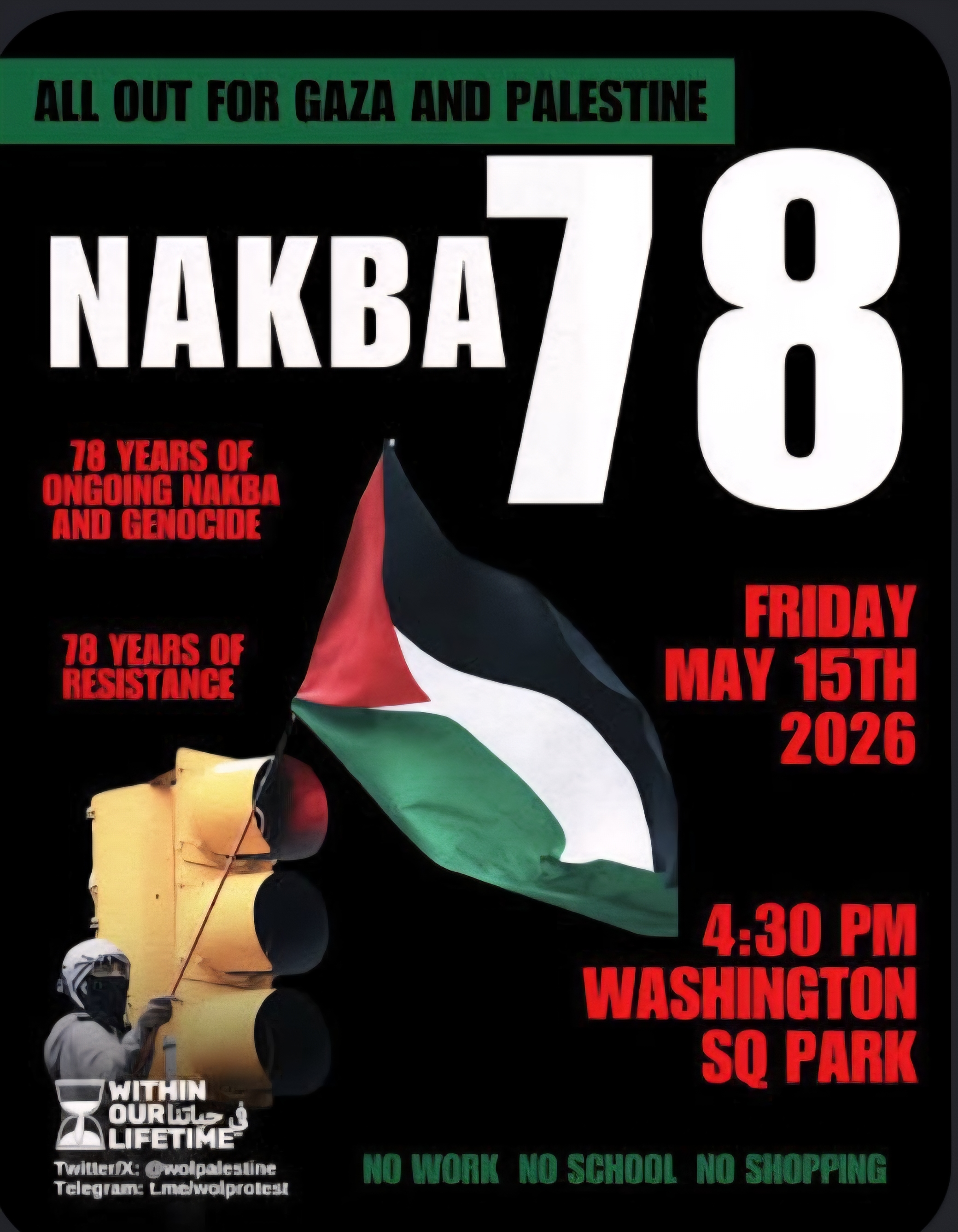
That is why the rhetoric so often revolves around “resistance until liberation,” “from the river to the sea,” and “globalize the intifada.” The message is unmistakable. The war of 1948 is not viewed as tragic history. It is viewed as unfinished business.
For 78 years, generations of the Stateless Arabs from Palestine (SAPs) and their supporters have been taught that the central injustice was not war itself, nor the suffering that war inevitably unleashed on all sides, but Jewish sovereignty. The catastrophe, in this telling, was that Jews regained independence anywhere in their ancestral homeland.
That poisonous premise has trapped both Palestinian Arabs and Israelis inside an endless cycle of bloodshed.
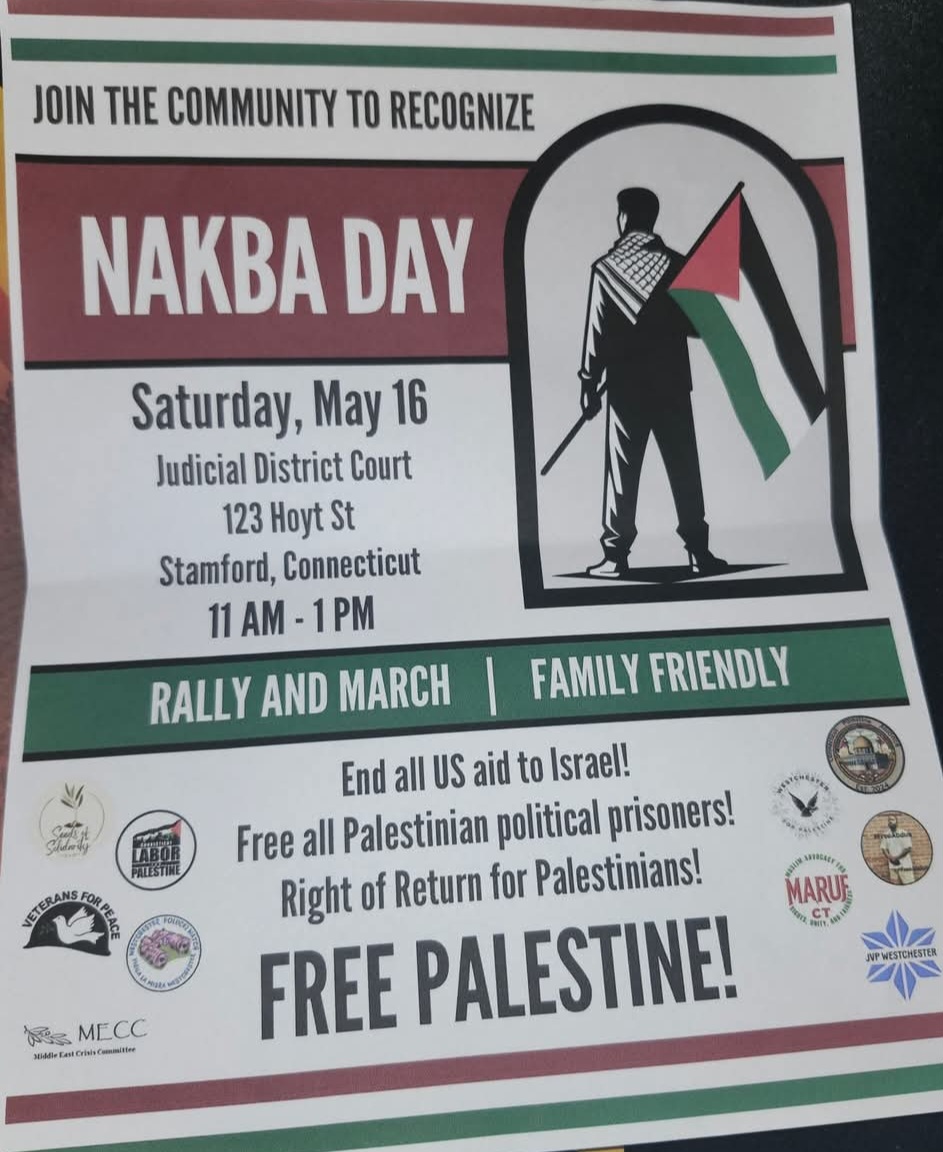
A movement built around the belief that Israel must someday disappear cannot produce coexistence. A political culture that teaches Jews are foreign colonial invaders rather than an indigenous Middle Eastern people returning to the land where Jewish civilization was born cannot produce peace. A worldview that refuses to acknowledge Jewish history in Jerusalem, Jewish ties to Hebron, or the sanctity of the Temple Mount to Judaism is rooted in antisemitism, not “anti-Zionism.” It is a deep “deformity” in Palestinian culture.
And so Nakba Day has increasingly become less a memorial to suffering than a ritual of perpetual war.
There is nothing wrong with mourning loss. Every nation remembers tragedy. The problem begins when remembrance becomes a doctrine that denies another people’s right to exist. To basic human rights. No peace movement can emerge from teaching generation after generation that coexistence itself is betrayal.
It is time to break that cycle.
Replace Nakba Day with Two State Day. A day dedicated not to reversing 1948, but to building 2048.
Imagine a new annual movement where Palestinian Arabs openly recognize that Jews are indigenous to the Land of Israel. One where activists acknowledge that Jewish attachment to Jerusalem did not begin in 1967 or 1948, but stretches back thousands of years. One where the Temple Mount is recognized not merely as a Muslim site built atop forgotten ruins, but as the spiritual center of Jewish civilization.
Imagine a Two State Day where Palestinian leaders finally say openly that Jews are not crusaders, not European interlopers, not temporary occupiers, but a people who originated in the very land they returned to.
And imagine Israeli Jews responding not with suspicion, but with an outstretched hand.
Imagine Israeli Independence Day celebrations where Muslim neighbors, Arab citizens, and Palestinians willing to embrace coexistence are invited to participate. Imagine Jewish speakers recognizing Palestinian suffering and aspirations, while Muslim speakers recognize Jewish indigenousness, Jewish history, and Israel’s permanence. Imagine both peoples publicly declaring that neither side is leaving and neither side’s history will be erased.
That would not erase either people’s narrative. It would humanize both.
The current version of Nakba politics freezes Palestinians psychologically in 1948, teaching generation after generation that justice means reversing history rather than building a future. It glorifies “resistance-violence” while discouraging reconciliation. It romanticizes intifada while Palestinians themselves continue paying the price in blood, corruption, isolation, and failed leadership.
This ideology has harmed Palestinians no less than Israelis.
Every year spent teaching children that Haifa, Jaffa, and Tel Aviv must someday be “liberated” is another year not spent building functioning institutions, economic opportunity, civil society, or genuine pathways to coexistence. Every rally that denies Jewish legitimacy hardens Israelis further against compromise and strengthens extremists on all sides.
The world has already seen where this road leads. October 7 was not born in a vacuum. It emerged from decades of indoctrination insisting that Jewish sovereignty itself is intolerable “in any part of Palestine” and that violence against it is inherently righteous “resistance.” The cheering crowds in Western capitals after the massacre exposed how deeply this toxic worldview has spread far beyond Gaza, chumming for the anti-Jewish horde.
But history is not destiny.
Two State Day could become something profoundly different. A day not of denial, but of mutual recognition. A day where SAPs mourn losses without denying Jewish legitimacy. A day where Jews acknowledge Palestinian Arab suffering without questioning Israel’s basic right to exist. A day where both peoples reject the poison of perpetual grievance and choose coexistence over endless war.
The future cannot belong to people still marching psychologically toward 1948. It must belong to those willing to build 2048.
A future where Palestinian children are not taught that Jews are foreign usurpers, but neighbors with ancient roots in the same land. A future where Jewish children no longer grow up expecting every concession to be answered with more violence. A future where the Temple Mount is not a symbol of exclusion, but proof that the land carries the sacred history of multiple peoples.
Real peace will never emerge from chants demanding the disappearance of one side or the other. It begins only when both peoples recognize each other’s humanity, legitimacy, and permanence.

 First One Through
Pingback: Hört auf für 1948 zu marschieren. Fangt an 2048 zu bauen. | abseits vom mainstream - heplev