Does Israel’s War Meet the Catholic Just War Test?

For more than sixteen centuries, the Catholic Church has wrestled with one of humanity’s most difficult questions: When, if ever, is war morally justified?

St. Augustine laid the foundation by teaching that, “The purpose of all wars is peace.” War was never to be pursued for conquest, revenge, or hatred, but only to restore a just peace.

St. Thomas Aquinas refined that principle, writing that, “In order for a war to be just, three things are necessary. First, the authority of the sovereign… Secondly, a just cause… Thirdly… the belligerents should have a rightful intention, so that they intend the advancement of good, or the avoidance of evil.”

The Catechism of the Catholic Church later added that “The strict conditions for legitimate defense by military force require rigorous consideration.” It identifies four additional requirements: the aggressor must inflict lasting, grave and certain damage; peaceful alternatives must have been exhausted; there must be a serious prospect of success; and the use of force must not create evils greater than those it seeks to eliminate.

These principles have recently been invoked by Catholics questioning Israel’s wars against Hamas, Hezbollah, and Iran.

The first question is legitimate authority.

Israel is a sovereign state with an elected government entrusted with protecting its citizens. Hamas is a terrorist organization that seized control of Gaza by force. Hezbollah is an Iranian-backed militia that operates independently of the Lebanese government while maintaining its own army. Iran finances, arms, trains, and directs proxy organizations across the region while repeatedly calling for Israel’s destruction.

The Catholic tradition recognizes a government’s duty to defend those under its care. That responsibility belongs to Israel’s government. It does not belong to terrorist organizations.

The second question is just cause.

Israel did not manufacture this conflict. On October 7, Hamas crossed into Israel and deliberately massacred civilians, raped women, tortured families, burned people alive in their homes, and kidnapped more than 250 men, women, children, and elderly people. Hezbollah opened a northern front with sustained rocket attacks, while Iran’s regional proxy network joined the conflict.

Catholic teaching has long recognized that governments possess both the right and the obligation to defend innocent life against grave aggression.

The third question is right intention.

Israel has repeatedly stated that its objective is the dismantling of Hamas’s military capability, the removal of Hezbollah’s threat along its northern border, and the degradation of Iran’s ability to wage war through proxies. Those are military objectives directed toward restoring security.

Its enemies have declared something fundamentally different: that the Jewish state should be destroyed. One side seeks to eliminate a military threat. The other seeks to eliminate a nation.

The Catechism next asks whether war is truly the last resort.

Israel withdrew every soldier and civilian from Gaza in 2005. Instead of peace, Hamas transformed Gaza into an armed fortress, investing billions in rockets, tunnels, command centers, and military infrastructure embedded beneath civilian neighborhoods. Ceasefires repeatedly collapsed. Diplomatic initiatives failed to end the attacks. Every pause became an opportunity for Hamas and Hezbollah to rearm.

Hamas tunnels

Catholic teaching does not require a nation to absorb repeated massacres while endlessly hoping the next ceasefire will succeed where every previous one failed.

There must also be a reasonable chance of success.

Israel’s objectives have been difficult but attainable: dismantling terrorist command structures, destroying military infrastructure, rescuing hostages, degrading missile capabilities, and reducing Iran’s capacity to project violence through its proxies. Success doesn’t mean perfect peace. It means substantially reducing a continuing threat to innocent life.

Finally comes proportionality and discrimination.

These principles are often reduced to comparing casualty figures. That is not how Catholic teaching understands proportionality. The question is whether the military response is proportionate to removing the evil being confronted and whether civilians are intentionally protected.

Hamas deliberately embeds military assets beneath hospitals, schools, mosques, and residential neighborhoods. It stores weapons among civilians, fires rockets from civilian areas, steals humanitarian aid, and has long been accused of using civilians as shields. It refuses to let civilians enter the tunnels for shelter. Hezbollah has similarly embedded military infrastructure within Lebanese civilian communities.

Those realities fundamentally shape how Israel’s responsibilities must be judged.

The Catholic just war tradition was never intended to evaluate only one participant in a conflict. Every criterion applies equally to every combatant. A moral framework that scrutinizes Israel while ignoring Hamas, Hezbollah, or Iran is no longer applying Catholic teaching consistently.

When the Church’s own criteria are applied carefully – legitimate authority, just cause, right intention, last resort, reasonable hope of success, proportionality, and discrimination – Israel’s campaign against Hamas and Iran’s proxy network presents a strong case for satisfying the classical requirements of a just war.

Who Gets to Define the Jewish People?

Parashat Balak contains one of the most unusual narratives in the Torah. For almost the entire portion, the Jewish people disappear from the story.

Throughout the Torah, we experience events through Moses, the Israelites, or God speaking directly to His people. This week is different. The Israelites continue their journey completely unaware of the drama unfolding around them. Instead, the Torah lifts us to the mountaintops of Moab, where King Balak and the prophet Balaam stand overlooking the Israelite camp below.

For the only time in the Torah, we see the Jewish people entirely through the eyes of outsiders.

That perspective is striking. The story told reminds us that long before anyone attempts to destroy a people, they first seek to define them.

Balak does not look upon Israel and see the descendants of Abraham returning to the land God promised their forefathers. He does not see a nation recently liberated from slavery or a people carrying a covenant that would shape the moral foundations of civilization. Looking down from the mountain, he sees only a threat. Once he reaches that conclusion, everything else follows naturally. A dangerous people deserve to be weakened. A dangerous people deserve to be cursed.

Before there is violence, there is narrative.

Balak understands that words have power. If Israel can be portrayed as an illegitimate menace, hostility becomes easier to justify. He therefore summons Balaam, believing that the right words can reshape reality itself.

But the Torah teaches exactly the opposite lesson.

Each time Balaam opens his mouth to curse Israel, God compels him to describe what he actually sees rather than what Balak wishes were true. The curses become blessings. The accusations become admiration. Instead of condemning Israel, Balaam proclaims, “How goodly are your tents, O Jacob, your dwelling places, O Israel.”

The battle in Parashat Balak is ultimately not over land or military strength. It is over definition. Who has the authority to describe the Jewish people? A fearful king looking down from a distant mountain, or the God who entered into covenant with them?

Rembrandt Harmenszoon van Rijn’s “Balaam’s Ass”, 1626

That ancient struggle continues today.

Many of the loudest voices speaking about the Jewish people insist on defining them for themselves. Jewish history is recast as though the connection between the Jewish people and the Land of Israel were a modern political invention rather than the foundation of Jewish civilization. Jerusalem is detached from the people who have been praying toward it for thousands of years. The descendants of ancient Israel become foreign colonizers in the very land where their national story began.

European Jewish Zionists claimed to be descendants of the ancient Palestinian Hebrews and to be merely “returning” to their ancient land.” – Columbia University professor Joseph Massad, July 2022

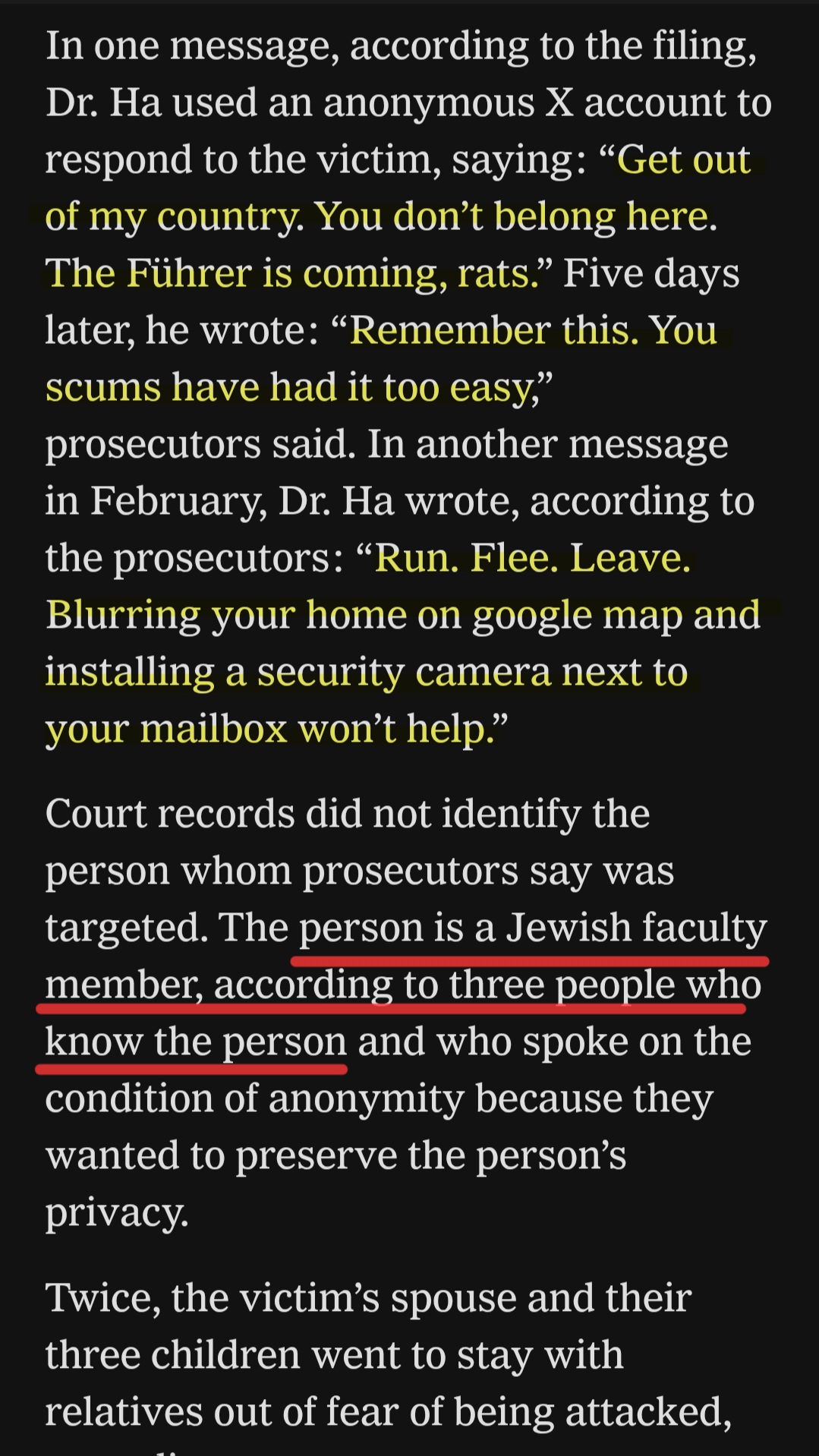
The same impulse appears in discussions of antisemitism. Increasingly, others claim the authority to determine what Jews should consider antisemitic while dismissing the experience of Jewish communities themselves. The people who are the object of hatred are told they cannot define the hatred directed against them.

The pattern is remarkably familiar.

Balak first decided the Israelites were a threat and concluded they deserved condemnation. The false identity justified the action.

The Torah overturns that process.

The only outsider whose words are remembered for eternity is the one whom God compels to abandon prejudice and speak truth. Balaam climbed the mountain intending to curse Israel, but he remained a prophet. He still recognized that there was a Judge above him. When God commanded him to bless, his own desires gave way to a higher truth.

Today’s loudest critics acknowledge no such authority beyond themselves. They do not seek God’s judgment but the approval of crowds, political movements, or academic fashions. Their words may echo through universities, international institutions, social media, and the halls of government, but they carry no weight in Heaven. They resonate only among fellow travelers who have already chosen contempt over truth.

Three thousand years ago, God refused to allow those who hated Israel to define Israel. That remains the enduring lesson of Parashat Balak. The Jewish people are not who their enemies say they are. They are who God says they are.

Israel’s Permanent Elimination Game

Every sports fan understands the pressure of an elimination game. One team takes the field knowing that a loss ends its season. There are no adjustments, no second chances. Everything rests on one contest.

The opposing team may desperately want to win, but the consequences of defeat are entirely different. It can return for another attempt with a new strategy, a new line up.

The scoreboard is the same. The stakes are not.

Now imagine a tournament where one team disappears forever if it loses, while its opponent simply waits for the next season. We would never describe that as an even contest. Yet that is remarkably close to the strategic reality Israel has faced throughout its history.

For Israel’s enemies, wars are not elimination games.

  • Egypt fought Israel repeatedly and lost. Egypt survived and eventually chose peace.
  • Syria launched major wars in 1948, 1967 and 1973. Each ended in defeat. Syria remained Syria.
  • Jordan lost territory but continued as a kingdom.

The pattern extends beyond states. Hamas has suffered repeated military defeats, lost senior leaders, and watched much of its military infrastructure destroyed. Yet after every conflict it has sought to rebuild. Hezbollah has absorbed devastating blows over decades while remaining a powerful force in Lebanon. Military defeat has never meant the end of either organization. They regroup, recruit, rearm and wait for another opportunity.

Hamas official stating that it will repeat the massacres of October 7 again and again

Israel has fought many opponents. Repeatedly.

That is because Israel’s war aims have been limited. Israel seeks to remove the military threat confronting its citizens. It has not sought the disappearance of Egypt, Syria, Lebanon or Iran. Even against terrorist organizations, its objective has been to dismantle military capabilities, not to eradicate an entire population.

Conversely, Israel’s adversaries have declared that the Jewish state should be destroyed. The objective was not merely to reverse a battlefield defeat or gain negotiating leverage. It was to eliminate Israel altogether.

That changes the meaning of every war.

Israel believes it cannot afford to lose an existential conflict because defeat would not simply mean surrendering territory, replacing a government, or rebuilding an army. Defeat would mean the destruction of the Jewish state.

Its adversaries have confronted a different calculation. If they fail, they survive. Their governments continue. Their organizations recruit new members. Their ideology remains intact. History gives them another chance.

Israel never assumes it will receive that luxury.

This asymmetry is one of the least understood aspects of the Arab-Israeli conflict. Outside observers often judge each round of fighting as though both sides enter the contest with identical risks and identical objectives.

They do not.

One side has repeatedly demonstrated that it can lose wars and return years later to fight again. The other has long believed that losing an existential war would leave no opportunity for a comeback.

Israel has lived for nearly eight decades in what often feels like a permanent one-sided elimination game. Its opponents have repeatedly lost wars and returned for another season. Israel has never believed it would be granted that same privilege.

That is why Israelis often see war differently than much of the world. The debate is rarely about this season’s standings. It is about whether there will be another season at all.

How New York City Was Lost

There was a time when many New Yorkers dismissed the Democratic Socialists of America (DSA) as a fringe movement. Their rallies were loud. Their rhetoric was provocative. But surely the city that built Wall Street, welcomed millions of immigrants, and was attacked on September 11 would never hand real political power to a movement whose rhetoric after October 7 shocked so many Americans.

Rally in Times Square the day after the massacre of 1,200 people in Israel and abduction of 251.

Yet here we are.

The new mayor is part of the DSA. DSA-backed candidates continue to win elections across New York City.

This is not merely a debate over tax rates or rent control. After Hamas murdered more than 1,200 Israelis on October 7, the New York City chapter of DSA helped organize demonstrations almost immediately afterward. Slogans and statements in Times Square celebrated the attack as “resistance” and chanted for it to continue “long live the Intifada!” DSA-NYC had long argued that Israeli civilians should not be viewed as innocent because they were participants in a “settler-colonial” society.

One might have expected that such rhetoric would permanently marginalize it. Instead, it grew. How?

Because its opponents fought the wrong war.

Organizations such as AIPAC concentrated enormous resources on defeating individual candidates where the ground game already indicated it could win. Sometimes they succeeded spectacularly. Millions of dollars were spent. Headlines proclaimed another victory over the anti-Israel Left.

But every expensive primary also reinforced the story DSA wanted to tell.

They were no longer simply neighborhood activists. They became the underdogs standing up to a wealthy political establishment. Every television advertisement became another fundraising email. Every outside dollar became another recruiting tool. Every victory over one candidate left the movement itself intact and often stronger.

AIPAC won campaigns but DSA built a movement.

Politics is ultimately about culture before it is about elections. Elections simply reveal where the culture already stands.

While establishment organizations measured success by defeating a particular candidate, DSA measured success by opening another neighborhood chapter, training another organizer, recruiting another volunteer, and persuading another generation that its worldview represented justice.

The results are now visible. A virtual sweep of DSA candidates in New York this week.

New York did not suddenly become socialist. It was organized into becoming more receptive to socialist candidates over many years. One neighborhood at a time. One group at a time.

J Street spent considerable time and effort over the past few years bashing AIPAC to build better alliances with the far-left. Now that multiple anti-Israel extremists have entered office while effectively echoing J Street’s smears of AIPAC, the left-wing “pro-Israel” group stayed mum and didn’t print a single press release.

That should be the lesson – not only for those who support Israel, but for anyone concerned about the city’s future.

Money can influence an election. It cannot substitute for a movement.

If New York is to change course, it will not happen because one organization writes larger checks. It will happen because people who believe in liberal democracy, civic responsibility, pluralism, and the moral distinction between murdering civilians and defending them begin organizing with the same patience and persistence that their opponents have displayed for years.

Jacobin lead is that Socialists defeated “AIPAC, racism” before anything else

Cities are not lost in a single election. They are lost one neighborhood at a time.

Related:

Overwinning (Sept 2025)

Completing Jerusalem

In July 1980, the Knesset passed the Basic Law: Jerusalem, Capital of Israel. Its opening declaration remains one of the clearest statements of Zionist purpose ever enacted by the State of Israel:

“Jerusalem, complete and united, is the capital of Israel.”

The law settled a question that had haunted Jewish history for centuries. Jerusalem would never again be divided by barbed wire, minefields, and sniper positions. The city reunited in 1967 would remain the political and spiritual heart of the Jewish state.

Forty-six years later, it is worth asking a simple question:

What does “united” mean?

The answer cannot be limited to municipal boundaries. It cannot be measured solely by roads, tax collection, or police jurisdiction. A united city is ultimately a civic reality. It is a city whose residents share a common framework of governance and belonging.

Image of man walking through Herod’s Gate in Old City of Jerusalem (FirstOneThrough with AI)

When Israel reunited Jerusalem in 1967, the decision to grant permanent residency rather than citizenship to the Arab residents made practical sense. The future of the broader Arab-Israeli conflict remained uncertain, and the status of Jerusalem itself was still contested internationally.

But those residents’ children are no longer children.

An Arab born in eastern Jerusalem in 1981 is now in his mid-forties. He has spent his entire life under Israeli administration. He attended schools in Jerusalem, received healthcare through Israeli institutions, worked in Jerusalem businesses, and raised a family in Jerusalem. For an entire generation born after the Jerusalem Law, the temporary arrangement has become a permanent condition.

An Arab born in Nazareth in 1981 became an Israeli citizen at birth. An Arab born in Jerusalem in 1981 generally remained a permanent resident. Both have lived under Israeli sovereignty their entire lives. One votes in national elections while the other does not.

If Jerusalem is truly united, how should that distinction be understood nearly half a century after the Basic Law was enacted?

The question is no longer theoretical. In recent years, thousands of eastern Jerusalem Arabs have applied for Israeli citizenship, reflecting a significant shift from earlier decades. The demand exists. What many applicants encounter instead is a cumbersome process that can stretch for years.

The issue has taken on added significance since October 7.

Hamas named its attack the “Al-Aqsa Flood” because it sought to seize sovereignty in Jerusalem. For decades, Hamas and other rejectionist movements have portrayed Jerusalem as a city temporarily under Jewish control and awaiting liberation.

A confident nation answers such claims by strengthening the institutions of sovereignty.

The ramifications would extend far beyond voting rights in Israel.

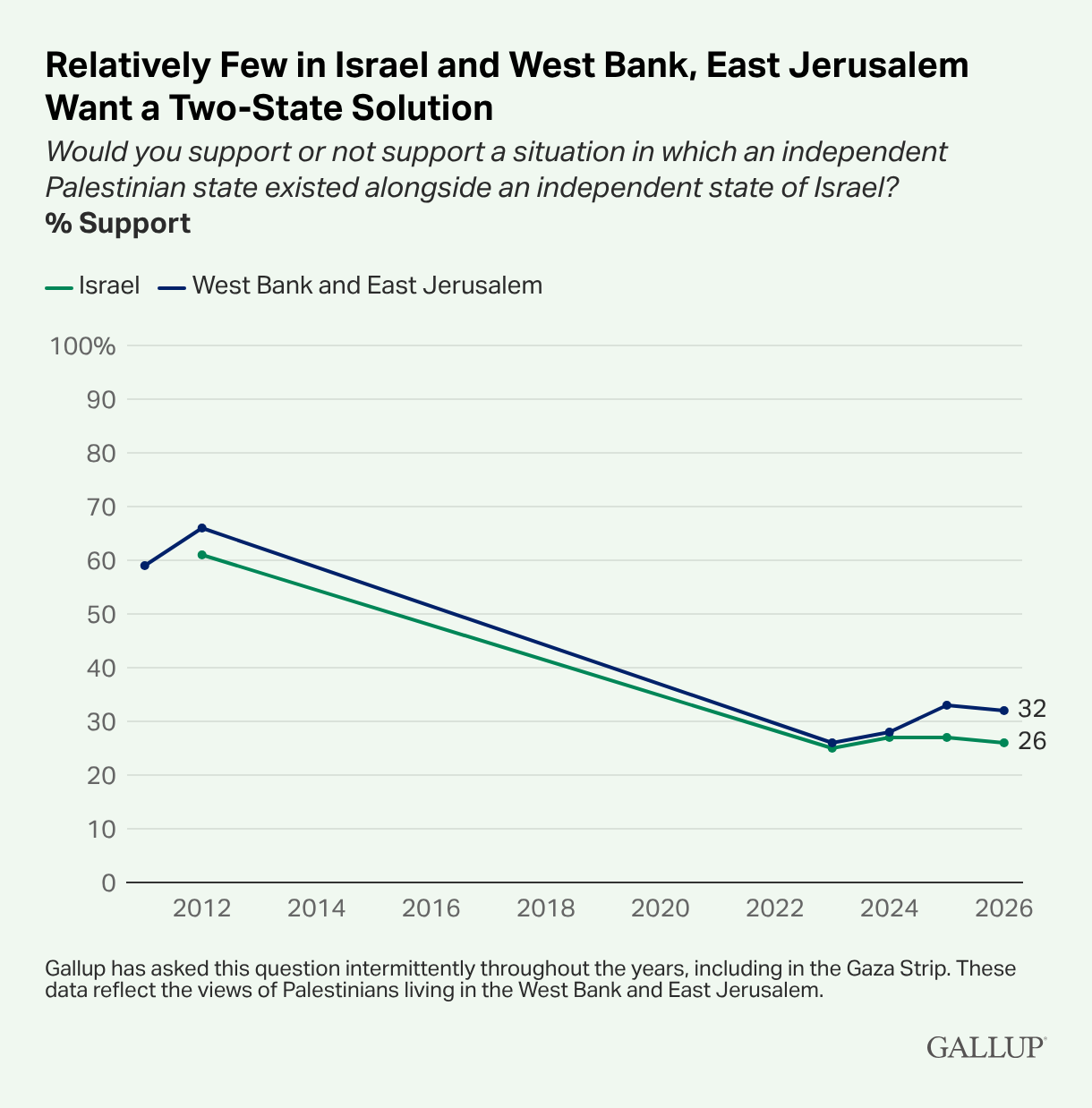
The Palestinian Authority presents “East Jerusalem” as the capital of a future Palestinian state. International organizations continue to describe “East Jerusalem” as occupied territory, while critics accuse Israel of apartheid and permanent disenfranchisement.

Yet what would happen if large numbers of Arabs born in Jerusalem after 1980 chose Israeli citizenship?

Hamas would struggle to explain why residents supposedly awaiting liberation had instead chosen participation in Israeli democracy. The Palestinian Authority would find it difficult to claim as its constituency citizens voting in Israeli elections. International institutions would confront a reality more complicated than diplomatic formulas unchanged since 1967. Critics would have to reconcile accusations of apartheid with a policy that expands citizenship and voting rights.

Jerusalem also offers a practical test for Israel’s broader sovereignty debate. Politicians who advocate annexing parts or all of Judea and Samaria should first explain their position regarding Arabs born after 1980 in Israel’s declared and united capital. If no consensus exists in Jerusalem, it is difficult to imagine one elsewhere.

Every party seeking to govern Israel should therefore answer a simple question: Do you support an expedited path to citizenship for Arabs born in eastern Jerusalem after the passage of the Jerusalem Law?

Such a program could include security screening, an oath of loyalty to the State of Israel and its laws, and a streamlined administrative process. Those who prefer permanent residency could retain it. Those seeking citizenship would no longer spend years navigating bureaucratic obstacles.

Jerusalem was reunited in 1967 and anchored in law in 1980. As the fiftieth anniversary of the Jerusalem Law approaches, Israelis should decide whether the next step is to complete the city’s civic integration.

The question is larger than citizenship. It is about the meaning of a united Jerusalem and the confidence of a sovereign nation in its eternal capital.

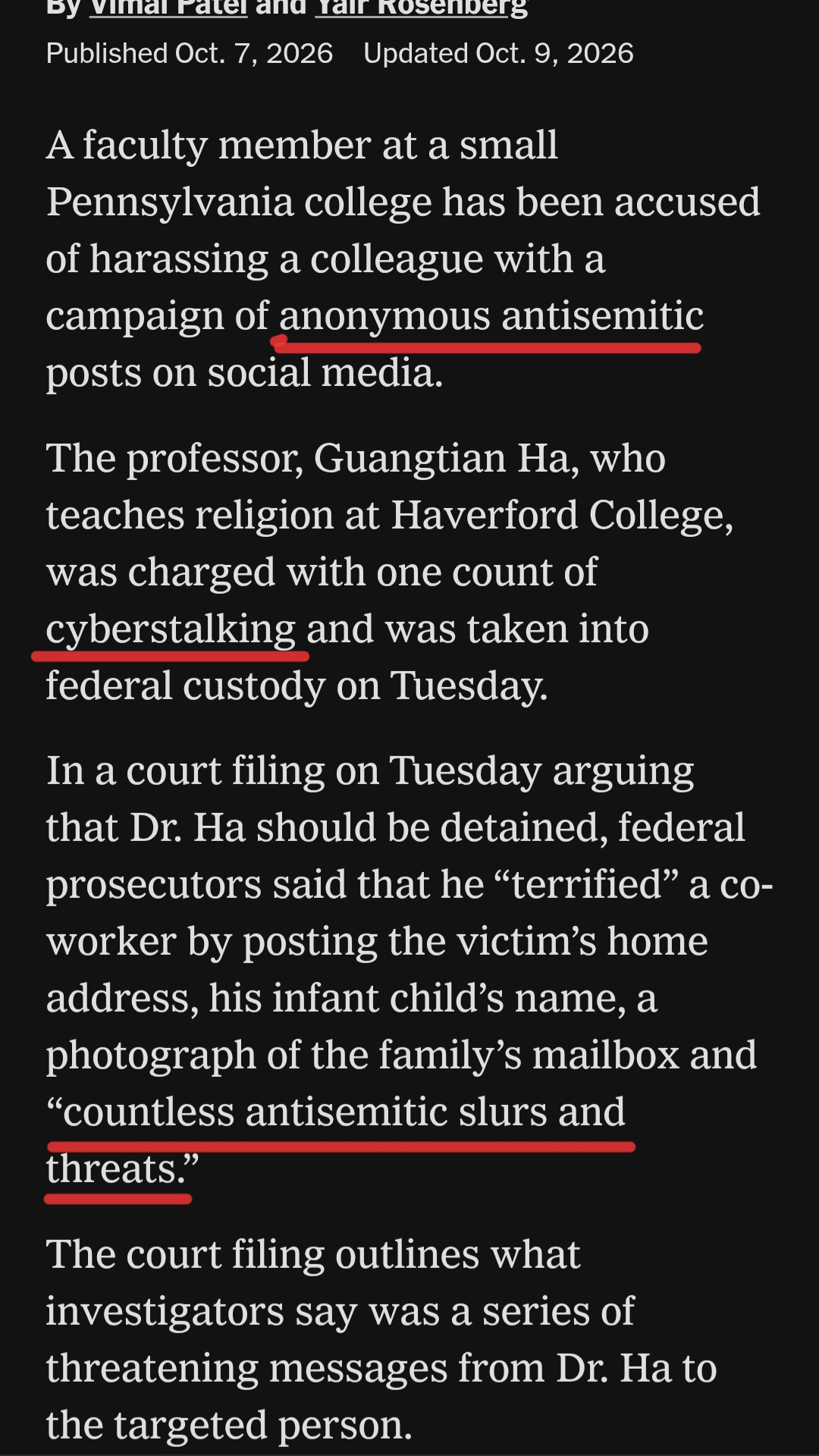
Palestinian Authority Mocks Jewish Children Murdered in Holocaust

How do you comprehend six million murdered Jews? One million murdered children?

The numbers are so large that the human mind struggles to grasp it. Six million becomes a statistic. A statistic becomes an abstraction. And an abstraction risks becoming forgettable.

For decades, Holocaust educators wrestled with that problem. Their answer was simple: stop counting and start remembering.

Programs such as Names, Not Numbers were created in Jewish schools to teach students that every Holocaust victim was an individual human being. Students interviewed survivors, recorded testimonies, learned family histories, and transformed statistics back into people. The goal was not merely to teach history. It was to restore identity to those whom the Nazis sought to erase.

The same idea appeared in the remarkable documentary Paper Clips.

In the film, students in a small town in Tennessee learned that six million was too large a number to understand. They discovered that Norwegians had worn paper clips as symbols of resistance to Nazi occupation and decided to collect six million paper clips – one for every murdered Jew.

As the clips accumulated, the students began to understand something profound. It was hard to gather millions of ordinary clips – it required enormous resources and participation of people and organizations far and wide. That millions of people could be exterminated deliberately was terrifying.

The educational programs also sought to do more than humanize the victims and demonstrate the scale of the atrocities.

Nazis literally transformed people into numbers. Upon arrival at Auschwitz, many prisoners were stripped of their names and tattooed with identification numbers. It was part of a larger project to erase individuality, dignity, and humanity. The Holocaust was not only a campaign to murder Jews. It was a campaign to reduce them to anonymous units in a machinery of extermination.

Jewish children display tattooed numbers that Nazis put on their arms during the Holocaust

The Holocaust was not simply a story within a war. More than one million Jewish children were murdered not because they were caught in a battlefield, not because they belonged to an opposing army, but because they were Jewish. The Nazi regime actively hunted them for liquidation. Jewish babies, toddlers, and schoolchildren were marked for death from birth.

They were not collateral damage. They were targets.

For decades, educators, museums, survivors, and Jewish communities worked to preserve those names and those stories. The idea that victims should be remembered as human beings rather than statistics became one of the defining themes of Holocaust education around the world.

Which is why the recent Palestinian campaign, “Their Names Are Not Numbers,” is so striking.

The slogan echoes language that Holocaust educators spent generations developing. It draws upon a framework created to explain why victims of genocide should be remembered as individuals rather than numbers.

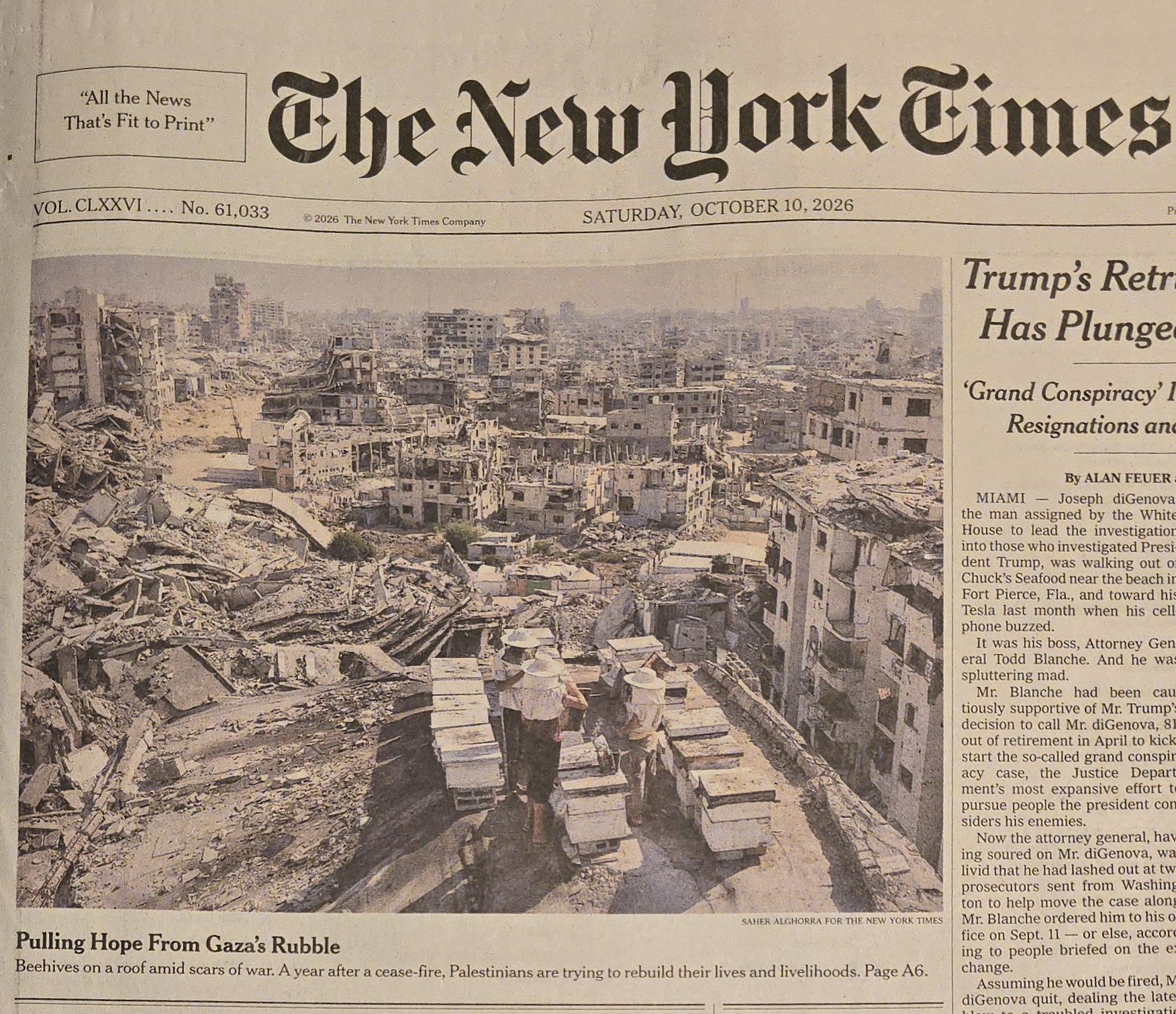
Palestinian Arabs are using a cruel tool in a flimsy attempt to wipe away their own guilt for launching a genocidal war with broad support, and for deliberately banning children from entering the tunnel infrastructure that leadership spent years and billions of dollars constructing. The Palestinian Authority is not merely making the dead children martyrs at someone else’s hands rather than their own, but deliberately lifting the campaign from an actual genocide. They have turned Holocaust remembrance against the Jewish state.

This is a moral perversion.

The Holocaust was a state-directed project of extermination whose goal was the disappearance of the Jewish people. Israel’s war against Hamas is a war against an armed movement that invaded Israel, massacred civilians, took hostages, and openly declares its intention to destroy the Jewish state.

Equating those realities with the Holocaust is not simply immoral but antisemitic. Borrowing the language developed to remember murdered Jews is not simply appropriation but sadistic.

Names, Not Numbers was created to ensure that the victims of history’s greatest campaign of anti-Jewish extermination would never be reduced to statistics. To take that language and deploy it as part of a campaign that casts Israel as Nazi Germany not only vilifies Israel unjustly but negates the Holocaust of its meaning and mocks the memory of a million murdered Jewish children.

Jerusalem Awakens

Sunrise on the Mount of Olives facing the Temple Mount is one of Jerusalem’s great experiences.

Because the sun rises from behind the mountain, the first light does not strike the Temple Mount itself. Instead, it touches the higher elevations to the west. For a few moments, the city reveals an unexpected truth: despite its name, the Temple Mount sits lower than much of the surrounding Old City.

One by one, Jerusalem awakens.

The first rays illuminate the new tall buildings in the west and slowly reach the Church of the Holy Sepulchre, and domes of the Hurva Synagogue and the newly rebuilt Tiferet Israel Synagogue in the Old City. Then the golden Dome of the Rock catches the morning light. Soon after, the ancient walls of Jerusalem glow softly, followed by the gray dome of Al-Aqsa Mosque.

Jerusalem at dawn, June 2026 (photo: First One Through)

The city appears to come alive in stages.

There is something fitting in that. The most famous places in the city do not receive the first light. The sun touches distant rooftops and forgotten hills before reaching the mount that has occupied the prayers of generations. Jerusalem seems to offer a quiet reminder that holiness is often revealed gradually, not all at once.

You might imagine crowds gathering on the stone promenade built for precisely this view. Even on a cool, windy morning, one would expect visitors eager to witness the sunrise over one of the most consequential pieces of land on earth.

Yet there were surprisingly few people.

A single bus of Asian tourists arrived to take photographs. Some stared in awe. Some stretched. Some danced gently to greet the morning.

Jerusalem at dawn, June 2026 (photo: First One Through)

But they were there.

Most had traveled thousands of miles to reach this spot. They all stood facing the same holy sites whether or not they shared any of the three monotheistic faiths, waiting for the same sun. The same moment of inspiration.

The quiet was perhaps the most surprising part. At an hour when millions of people around the world were asleep, one of the holiest and most contested places on earth belonged to a few dozen strangers sharing a sunrise. No speeches. No arguments. No headlines. Just the wind, the light, the sound of roosters, and a city slowly waking beneath them.

Before them stood the Temple Mount, the focus of Jewish longing for nearly two thousand years. Below them stretched the ancient cemetery of the Mount of Olives, where generations of Jews chose to be buried facing Jerusalem, believing they would be among the first to witness redemption. Around them stood a city sacred to billions, where history, faith, conquest, destruction, and renewal are layered one upon another in stone.

Jerusalem at dawn, June 2026 (photo: First One Through)

As the sunlight slowly spread across the city, it became clear why people return here again and again. Jerusalem does not reveal herself all at once. Like the sunrise itself, she emerges gradually – first one dome, then another, one wall, one hilltop, one memory at a time.

As I turned to leave, the city was waking to another day. Yet for a brief hour on the Mount of Olives, surrounded by centuries of Jewish memory and facing the skyline of Jerusalem, the city felt less like a place on a map and more like a conversation between heaven and earth, carried on in stone and sunlight for thousands of years.

The Flag, the Staff, and the Fight for Civilization

One of the most enduring images of the American Revolution is not a musket fired at Lexington or a cannon at Yorktown. It is a flag.

“Spirit of ’76” by Archibald Willard, 1875

In paintings celebrating the American Revolution, men advance carrying banners while drummer boys beat the cadence beside them. Often these figures are unarmed or lightly armed. To a modern observer, this seems irrational. Why would an army send men into battle carrying flags and drums instead of rifles?

Because they were not there to fight but to remind others why the fight mattered.

The flag represented the regiment, the cause, and the emerging nation. The drum provided rhythm and cohesion amid the chaos of battle. Neither was a weapon. Yet both were indispensable.

While tools like weapons help achieve an objective, symbols give meaning to the objective.

The Declaration of Independence was not a weapon. Neither was the America flag. Yet without them, the American Revolution would have been little more than a military rebellion. The cause and symbols transformed a collection of armed colonists into a people united by a common purpose.

The same lesson appeared thousands of years earlier in the Torah.

Moses’ staff began as an ordinary shepherd’s stick. In Egypt it became a symbol of divine authority. It was present during the plagues, at the splitting of the sea, and throughout Israel’s journey in the wilderness.

Similarly, during the battle against Amalek, Moses stood on a hill overlooking the fighting. When he raised his hands, Israel prevailed.

The rabbis famously ask whether Moses’ hands actually won the battle. Of course not. Joshua and the soldiers were the actual fighters. Like the flag carried by a Revolutionary soldier, the Moses’ raised arms pointed upwards. It reminded the warriors that victory depended not only on military strength but on the faith that united them.

Moses’ arms raised during fight with Amalek

Unfortunately, Moses later forgot the important distinction between symbol and tool. In Numbers 20, God instructs Moses to speak to a rock to make it produce water but instead Moses used the staff to hit the rock.

“And the LORD spake unto Moses, saying, Take the tent and gather the congregation together, you and Aaron your brother, and speak to the rock before their eyes, and give them water from it,… And Moses lifted up his hand, and smote the rock with his rod, and there came out abundant water,… And the LORD said unto Moses and unto Aaron, Because ye believed me not, to sanctify me in the sight of the children of Israel, therefore ye shall not bring this congregation into the land which I have given them.”

Had Moses held the staff and spoken to the rock, it would have been clear that Moses was acting as an agent of God. However, by using the staff to hit the rock, the appearance to the congregation was that Moses produced the water through his physical actions. The important symbol was converted into a mere tool.

That temptation remains with every generation.

Today, neither America nor Israel doubts the superiority of its weapons. The United States and Israel possess military capabilities far beyond those of the jihadist movements that seek their destruction.

But this war is not only about weapons and short-term military victory.

The jihadists understand the power of symbols. They flew their flags over burned civilian homes and corpses of families. Their propaganda celebrates martyrdom of their own people. Their movements are built around vile narratives and identity.

So the engagement with the enemies must be beyond tools and include symbols.

The challenge facing America as it approaches its 250th birthday, and Israel as it continues its long war against jihadist movements sworn to its destruction, is not merely maintaining military superiority. It is ensuring that the superiority of their cause is just as visible.

For Israel, that means rebuilding the communities of the Gaza Envelope, returning families to their homes, raising the flag over places terrorists tried to erase, and celebrating Jewish life where jihadists sought death.

For America, it means reclaiming the language of the Declaration of Independence, speaking unapologetically about liberty and human rights, and using international forums not merely to condemn violence in general but to condemn noxious jihadist violence specifically.

The free world must repeatedly denounce genocidal jihadists like Hamas and Hezbollah and pass resolutions that celebrate democracy, defend religious freedom, and affirm the dignity of every human being.

The current fight matters more than military victory. It requires weapons, and also a proud display of enduring Jewish and Democratic values.

Tools win battles. Symbols sustain civilizations. They are both distinct and required at pivotal moments like today.

From Jesus the Jew to Gaza: The Vatican’s Dangerous Narrative

For years, pro-Palestinian activists have promoted the false claim that Jesus was a Palestinian.

Jesus was a Jew, born to a Jewish family, living in the Jewish homeland, speaking to Jewish audiences, teaching from the Hebrew Bible, and making pilgrimages to the Jewish Temple in Jerusalem. The word “Palestine” was not even the name of the province during His lifetime. The Roman renaming of Judea to Syria Palaestina occurred about a century after His death.

Yet the claim persists because it serves an ahistorical but political purpose: If Jesus can be transformed from a Jew into a Arab, then the central figure of Christianity can be detached from Jewish history and reinserted into a modern political narrative. Suddenly, Jews are no longer obvious indigenous people in the Holy Land, but Arabs – who did not arrive en masse to region for another six centuries – are the real Jews.

The recent Vatican News article about Gaza takes that process one step further.

The article does not explicitly call Jesus a Palestinian. Instead, it wraps a Gazan narrative in the language of Christ’s passion, death, and resurrection. Gaza becomes the tomb. The refugee becomes the suffering servant. The journey out becomes resurrection.

The symbolism is unmistakable.

For centuries, Christians looked to the suffering of Jesus as a uniquely sacred story. Increasingly, anti-Israel agitators are attempting to woo parts of the Christian world by recasting that story through the lens of the Israeli-Palestinian conflict, with Palestinian Arabs occupying the role once reserved for Christ Himself.

The war in Gaza did not begin with suffering descending from heaven. It began with decisions made by thousands of Gazans. Hamas invaded Israel, murdered civilians and took hostages. Hamas launched a war that it knew would bring devastating consequences to Gaza as it hid it tunnels and refused to let women and children enter the shelters.

Does that resemble Jesus?

Genocidal psychopaths are being transformed into the innocent sufferer. The political and military context disappears from view. Agency gives way to symbolism.

What makes this especially troubling for many Jews is that the institution promoting this narrative is no longer just fringe anti-Israel groups or university protest movements.

It is the Vatican itself.

For two thousand years, the Church has wrestled with the consequences of separating Christianity from its Jewish roots. In recent decades, Catholic-Jewish relations made enormous progress by reaffirming the Jewishness of Jesus and Christianity’s historical connection to the Jewish people.

That progress is undermined when contemporary narratives replace Jesus the Jew with a new symbolic figure: the Palestinian sufferer who cheered Jews being burned alive.

The War Over Hebron: Abraham’s Tomb, Oslo’s Legacy, and Hamas’s Shadow

This week, Palestinian officials accused Israeli Finance Minister Bezalel Smotrich of making a “terrorist decision” after he announced that Israel would assume planning authority around Hebron’s Cave of the Patriarchs.

Cave of the Jewish Patriarchs and Matriarchs

The rhetoric was explosive. Yet the dispute reaches far beyond construction permits or municipal authority. It touches one of Judaism’s holiest sites, one of the most complicated agreements of the Oslo era, and one of Hamas’s strongest bastions in the West Bank.


If you read Palestinian official state media, the story sounds straightforward: Israel has seized Palestinian powers and is annexing another piece of the West Bank. If you read Israeli nationalist media, the story sounds equally straightforward: Israel is finally correcting a decades-old mistake and restoring authority over one of Judaism’s holiest sites.

Neither version tells readers what is actually happening. To understand the dispute, you first need to understand Hebron.

Hebron is not just another city in the West Bank. According to the Bible, it is where Abraham purchased the Cave of Machpelah as a burial place for Sarah. Jewish patriarchs and matriarchs Abraham and Sarah, Isaac and Rebecca, and Jacob and Leah are buried there. Long before Jerusalem became the capital of King David, Hebron was David’s first capital.

For Jews, it is one of the holiest places on earth. For Muslims, the same structure is known as the Ibrahimi Mosque and is among Islam’s revered sites in the region.

Unlike most cities in the West Bank, Hebron is also home to a small Jewish community living amid a much larger Palestinian population. That unique reality led negotiators in the Oslo era to treat Hebron differently from every other Palestinian city.

In 1997, Israel and the Palestinian Authority signed the Hebron Protocol. The agreement divided the city into two sectors: H1, roughly 80 percent of the city, was placed under Palestinian Authority control. H2, roughly 20 percent of the city, remained under Israeli security control and included the Jewish neighborhoods and the Cave of the Patriarchs.

What many people do not realize is that the Protocol never clearly settled who would ultimately govern Hebron. It created temporary arrangements and postponed the hardest questions to future negotiations that never happened.

Yet today’s argument is unfolding against a backdrop far different than the one envisioned by Oslo.

Hebron has become one of Hamas’s strongest centers in the West Bank. In 2025, Israeli security forces announced the dismantling of one of the largest Hamas networks uncovered in E49 (east of the 1949 Armistice Lines)/ “West Bank” in years, centered in the Hebron area. Authorities alleged the network included dozens of operatives, weapons caches, financing channels, recruitment efforts, and plans for future attacks.

The threat remains active. This week Hamas claimed responsibility for the shooting attack near Hebron that killed an Israeli officer.

For many Israelis, the debate over Hebron is therefore inseparable from a larger question: if authority shifts in the city, who ultimately benefits from that shift?

That brings us to the current controversy.

For years, Israeli officials sought approval for maintenance, accessibility, and infrastructure projects at the Cave of the Patriarchs, including an elevator for elderly and disabled worshippers and improvements to covered prayer areas. Palestinian municipal authorities and the Islamic Waqf opposed those projects, arguing that such decisions belonged to Palestinian institutions under the Hebron Protocol.

To Israelis, the arrangement had become unworkable. To Palestinians, it represented one of the few remaining authorities preserved under the Oslo framework.

Over time, courts, administrators, and politicians became entangled in disputes that were ostensibly about construction but were really about governance. Now they have exploded.


The argument unfolding in Hebron sits atop three unresolved realities: the ancient claim of Abraham’s burial place, the unfinished compromises of Oslo, and the persistent presence of Hamas in and around the city.

Nearly thirty years after negotiators divided Hebron into H1 and H2, the questions they postponed have returned. Not as diplomatic clauses on paper, but as arguments over sovereignty, security, and history.