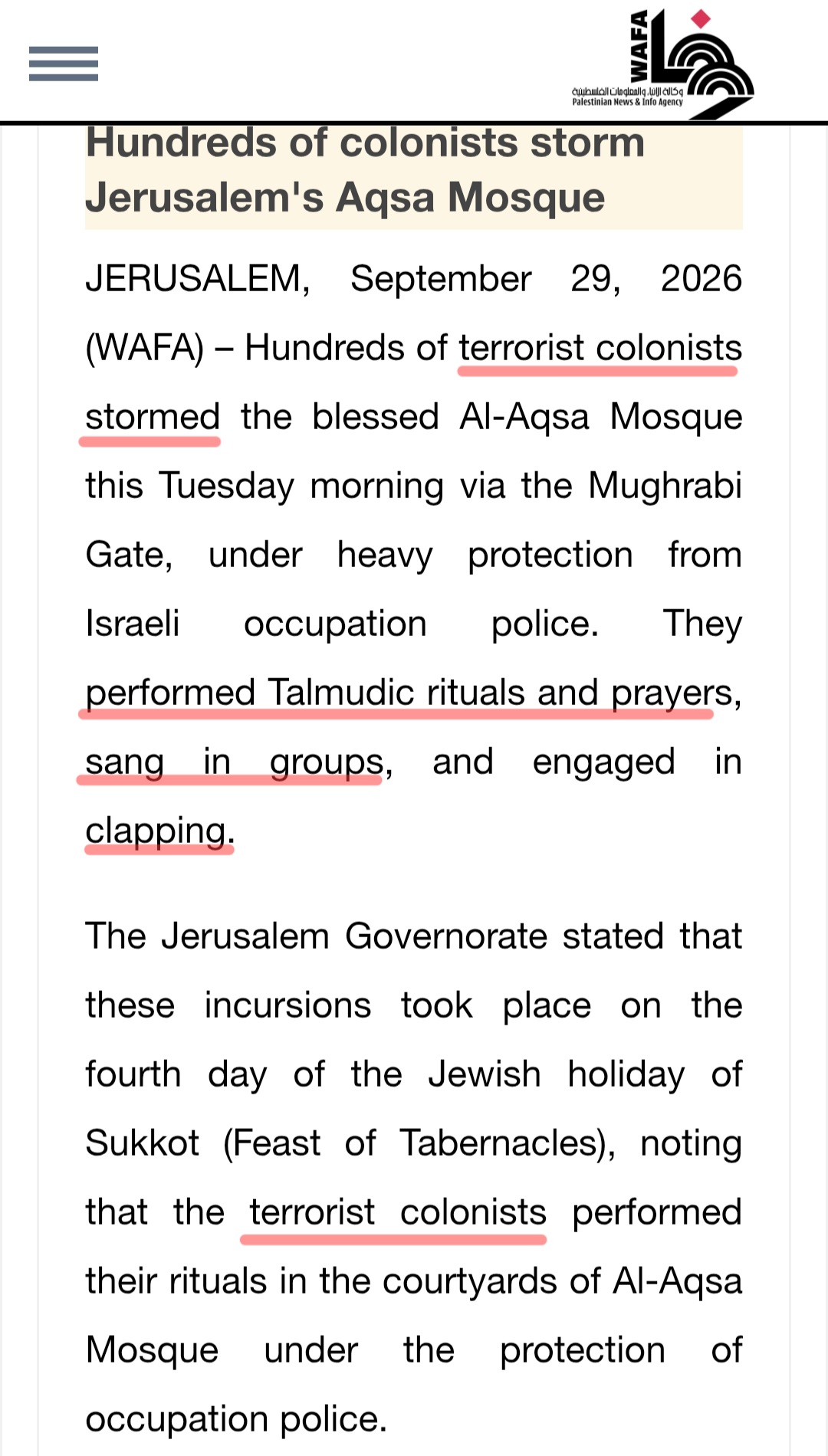
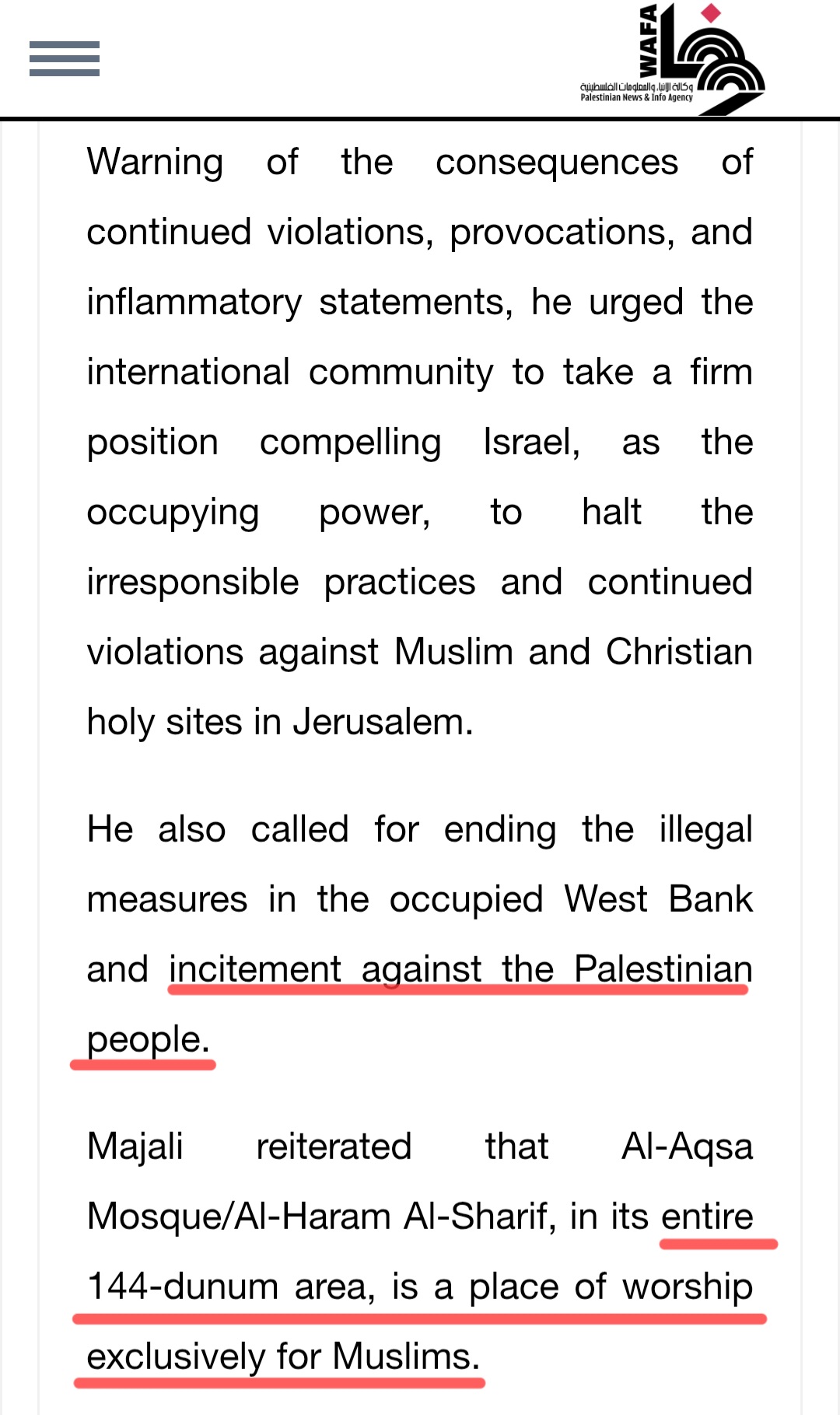
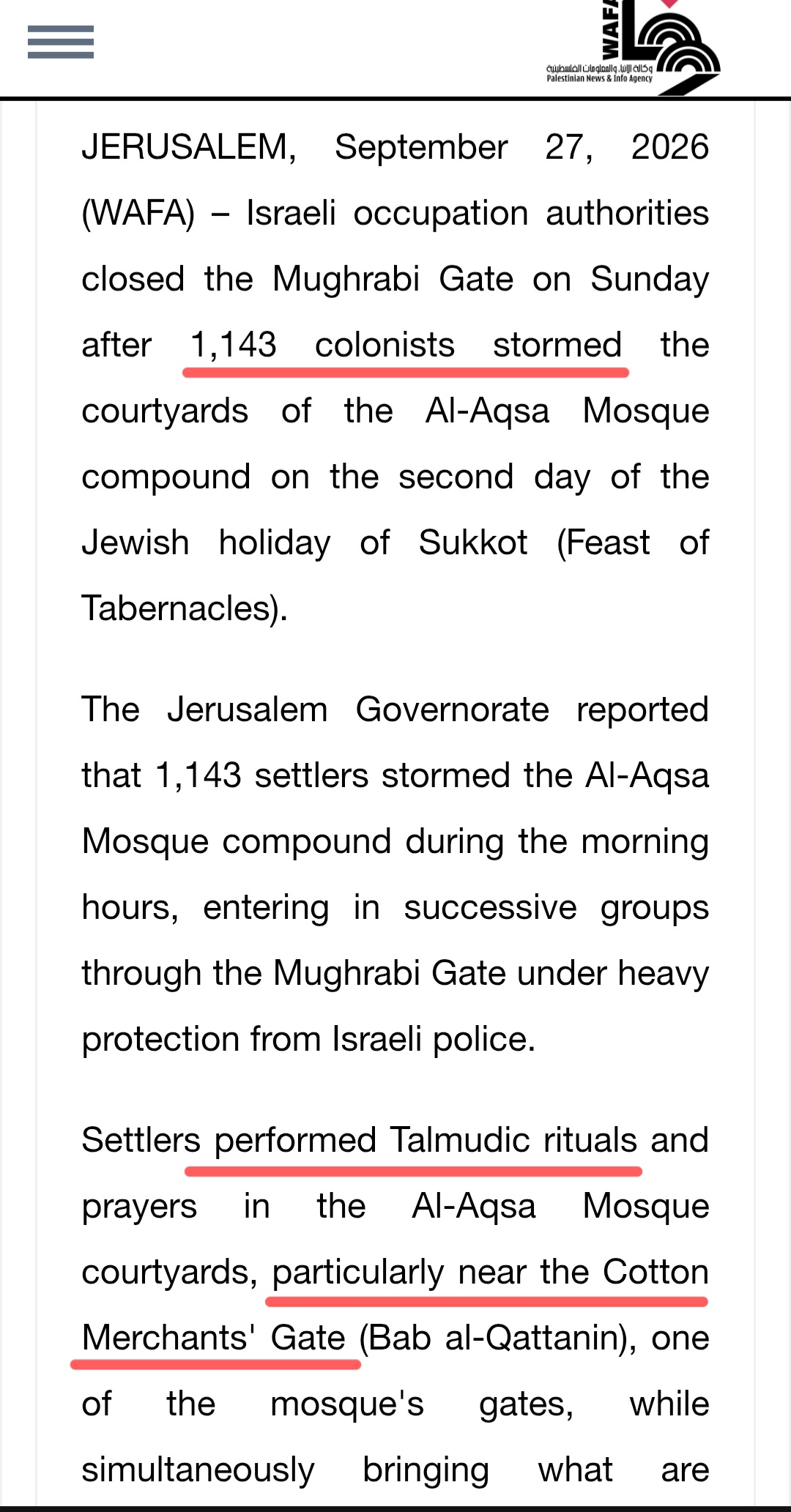
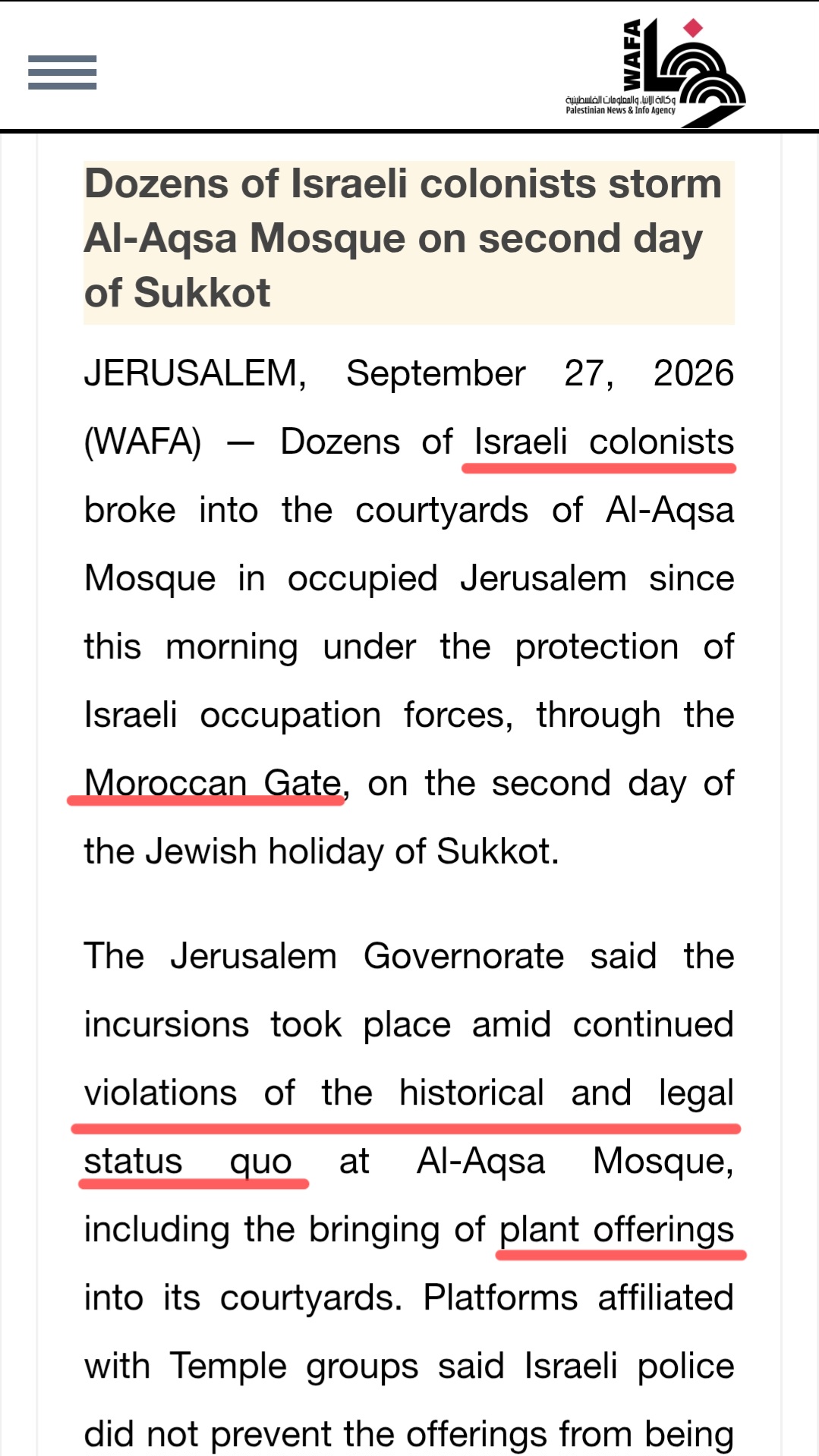
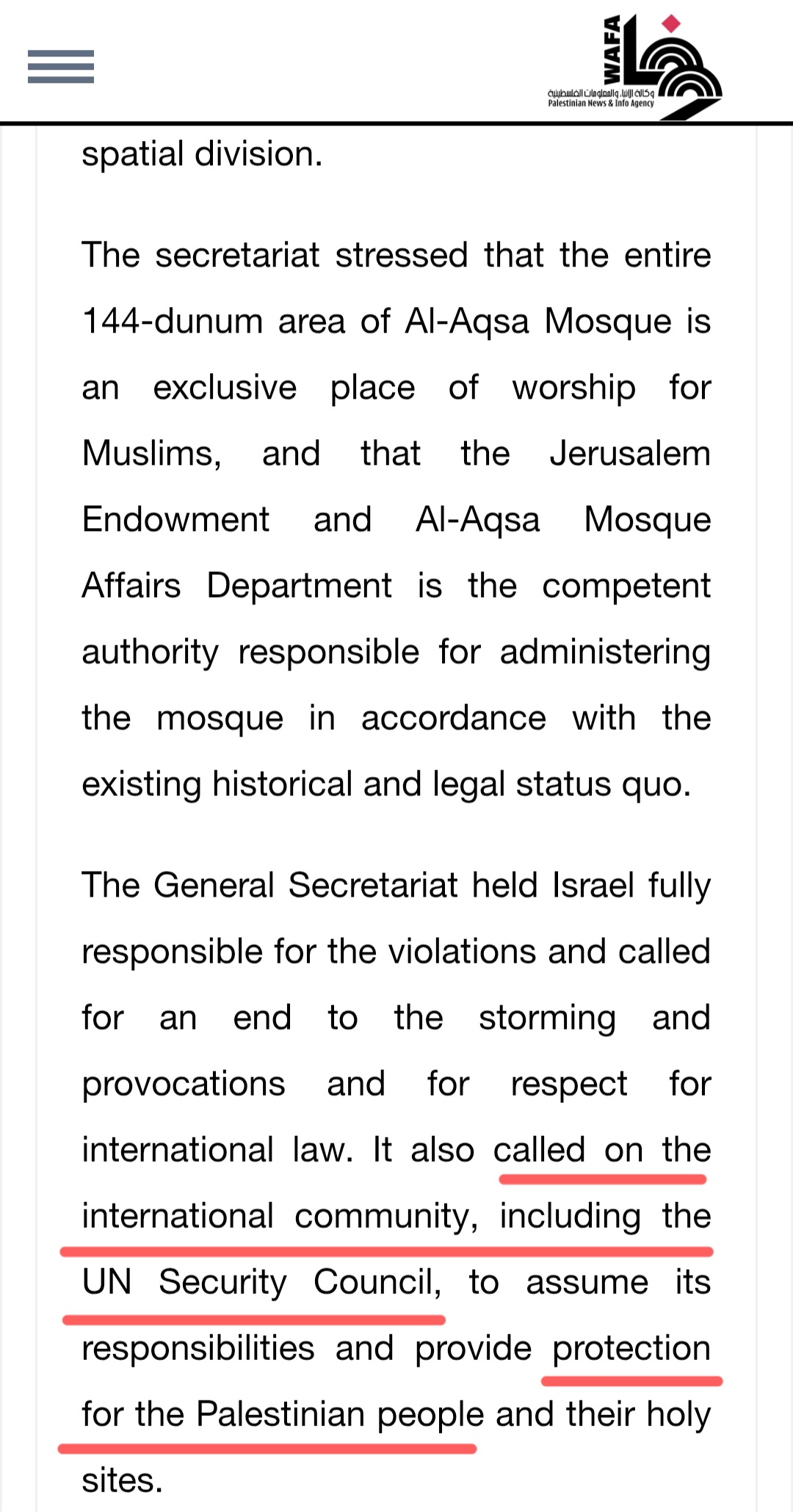
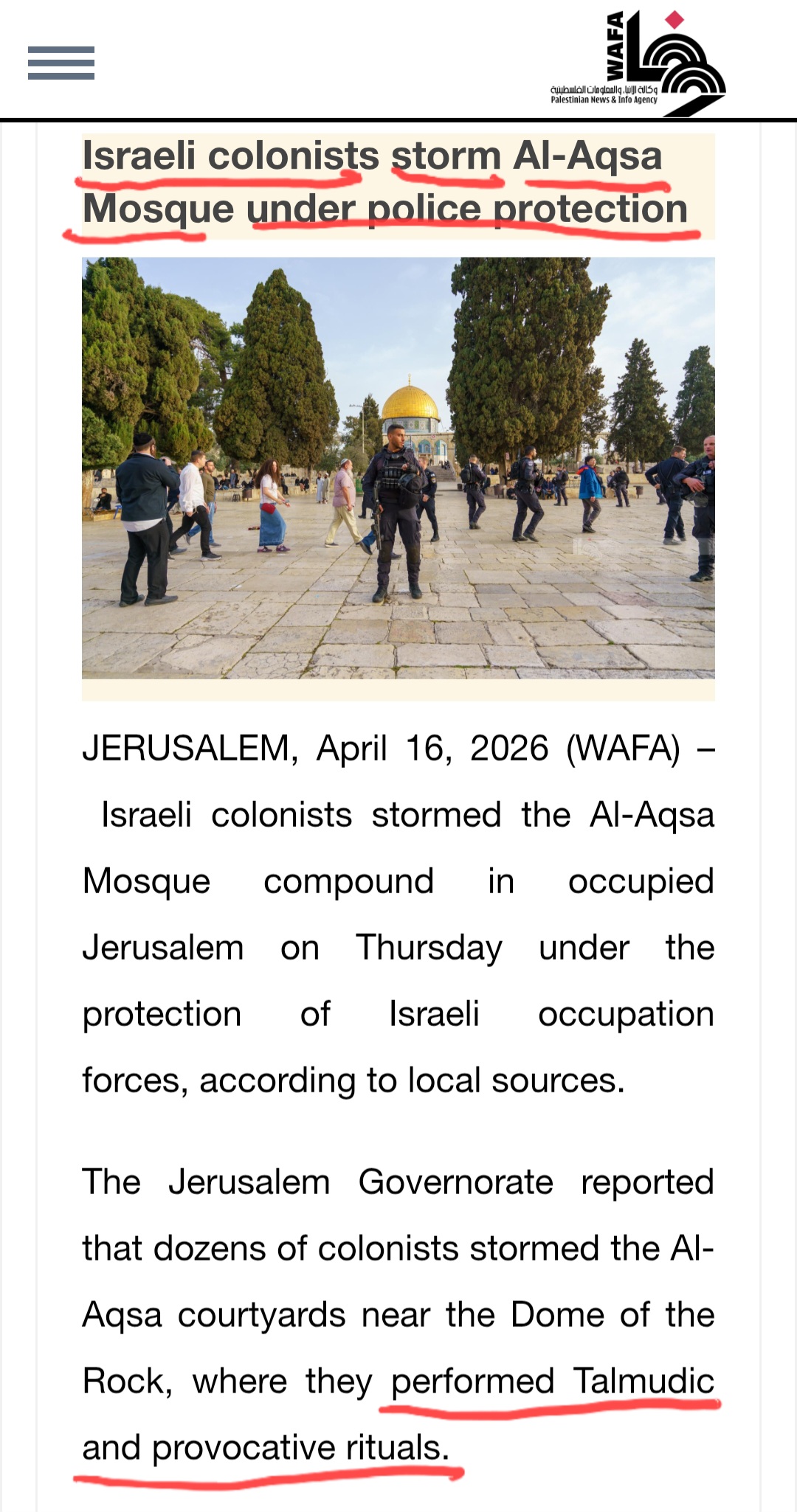
For the Palestinian Authority, Jews who visit Jerusalem during Sukkot, one of Judaism’s three pilgrimage holidays, are “terrorist colonists.”
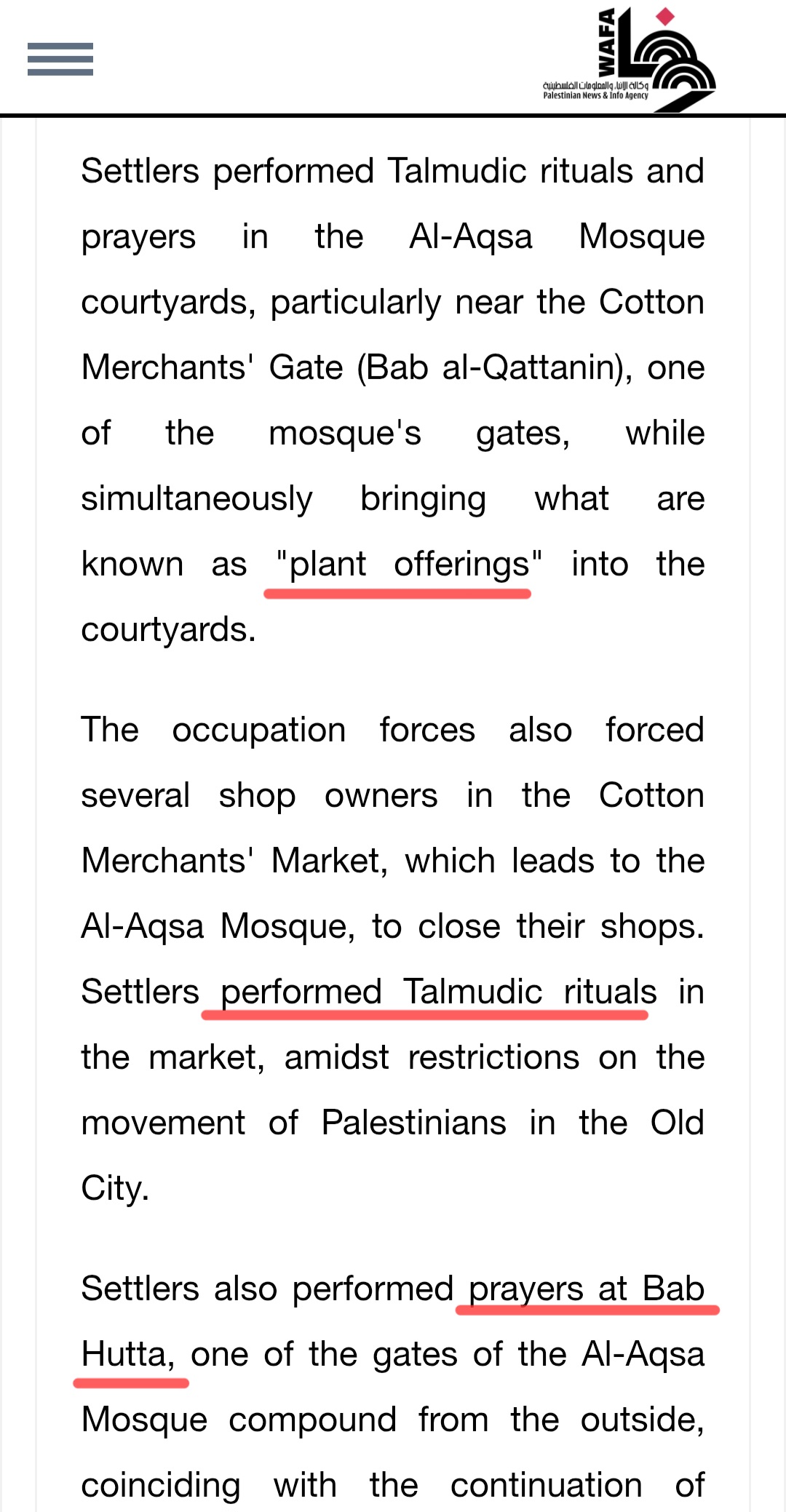
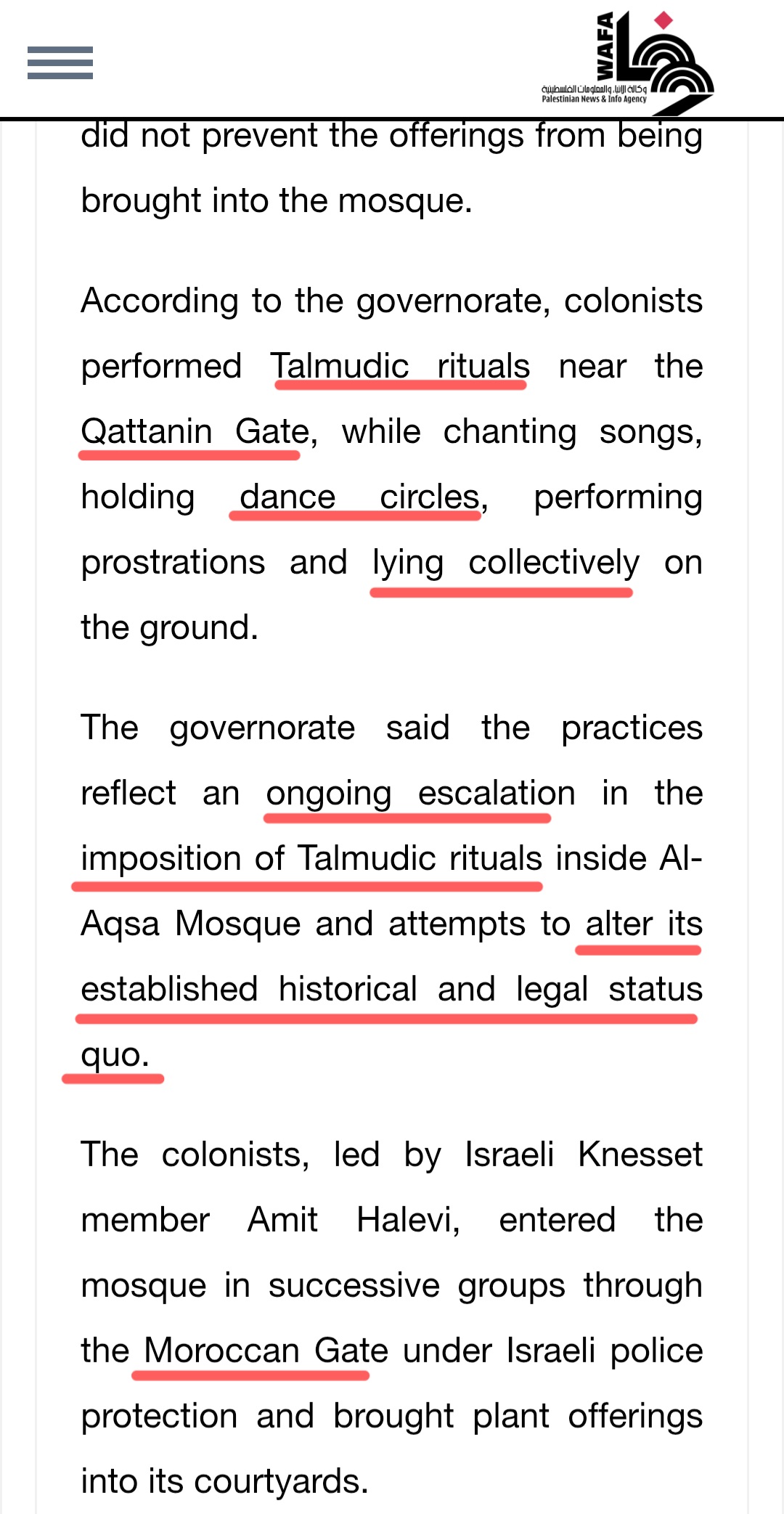
What did these Jewish “terrorists” do? According to WAFA, the Palestinian Authority’s official news agency, they prayed, sang and clapped together. They gathered among themselves for peaceful Jewish worship at Judaism’s holiest site during a Jewish pilgrimage holiday.
This is terrorism?
This is the language of jihad. It begins by transforming ordinary religious practice into aggression. A Jew praying becomes a provocateur. A group singing together becomes a threat. A religious pilgrimage becomes an invasion. Once worshippers have been labeled “terrorists,” hostility toward them has already been given a vocabulary of supposed self-defense.
That is radical Islam applied to one of the most contested religious sites in the world: not simply insisting upon Muslim rights, but denying equivalent Jewish religious rights and portraying their exercise as an attack.
Every global leader taking the podium at the United Nations should condemn this screed. So should political leaders around the world asking voters to believe they oppose antisemitism and religious extremism.
The question is simple: Do you condemn the Palestinian Authority calling Jews engaged in prayer at their holiest site “terrorist colonists”?
Ignoring this rhetoric while rallying to the defense of the Palestinian Authority encourages the targeting of Jews around the world. The people WAFA describes are not firing weapons or fighting soldiers. They are Jews praying, singing and observing Sukkot.
Islamic supremacy does not only call for expelling every Jew. It also means insisting that Jews remain religiously subordinate – that Muslim prayer is a right while Jewish prayer is a provocation.
Calling Jewish worship terrorism is where the demand for Islamic domination becomes even darker. It turns Jews practicing Judaism into the enemy and fuels a global jihad.
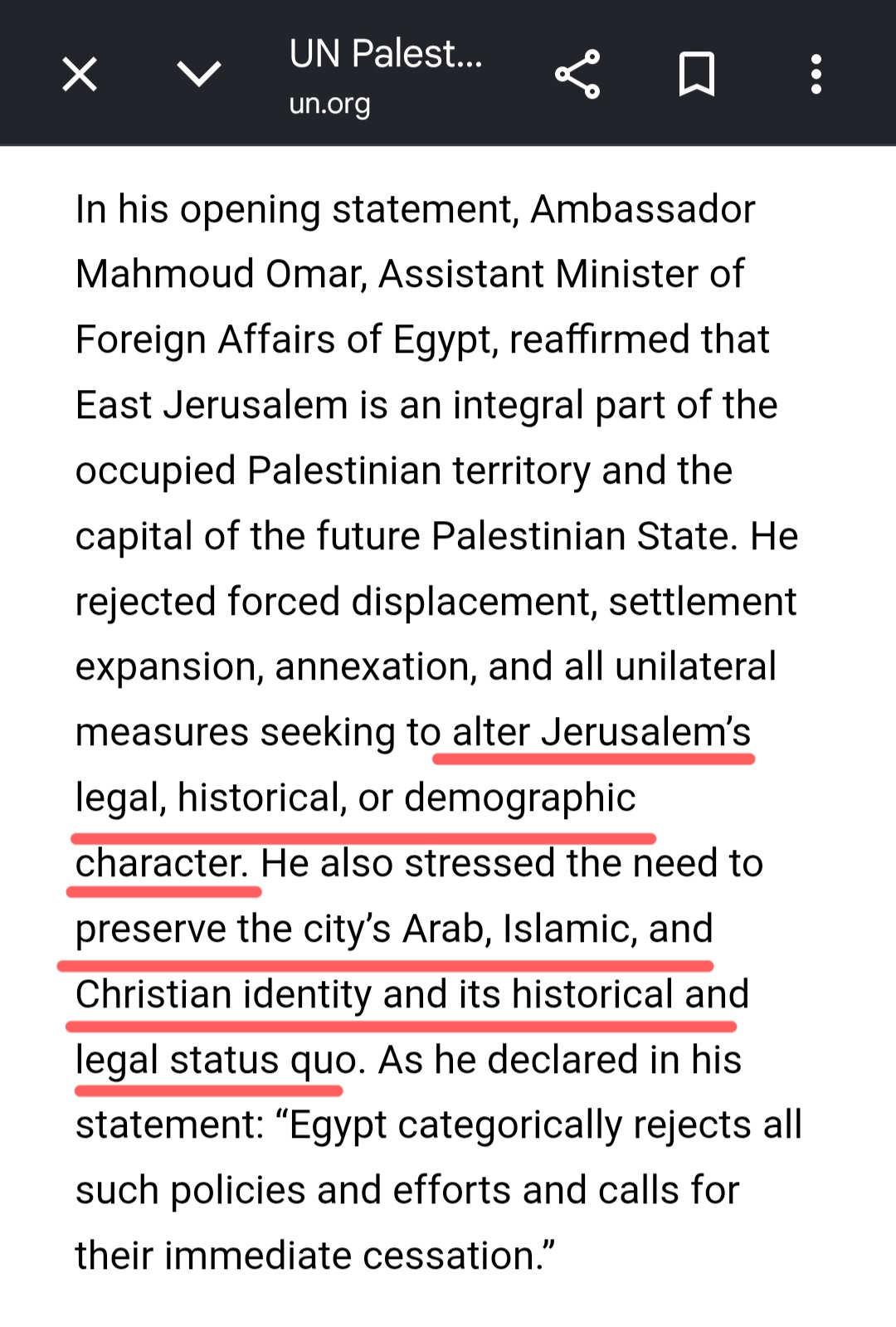
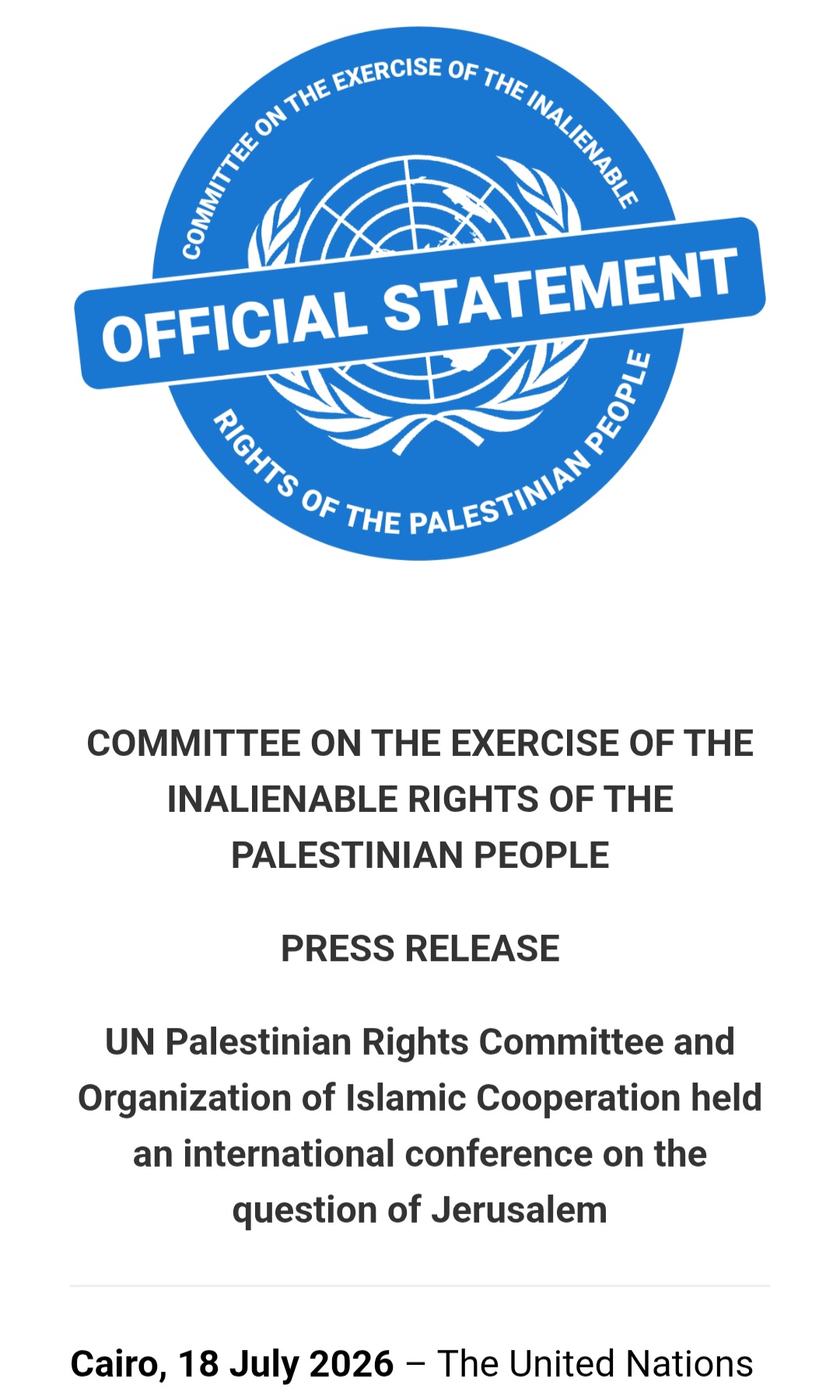
In July, 2026 the United Nations and the Organization of Islamic Cooperation convened a conference in Cairo devoted to Jerusalem. The UN described Jerusalem as sacred to the three monotheistic religions and the conference as an “important platform for interreligious dialogue.”
Then it offered a remarkable description of what that dialogue looked like: “Muslim and Christian leaders reflected on Jerusalem’s profound significance to the three monotheistic faiths.”
Three religions. Two of them discussing what Jerusalem means to all three.
This was not a conference where religion was incidental. Its first substantive session was a two-hour panel titled “Saving the Holy City, Safeguarding the historic status quo at the Holy Sites.” The speakers included representatives of the Hashemite Fund for the Restoration of Al-Aqsa Mosque and the Dome of the Rock, Al-Azhar, the Latin Patriarchate, the Jerusalem Awqaf and Al-Aqsa, and the Coptic Orthodox Church.
There was no Jewish religious representative.
That absence was consistent with the conference’s design. The UN announcement said the gathering would highlight the “concerns of Christian and Muslim leaders regarding restrictions on worship and threats to Holy Sites.”
Not Jewish leaders.
That left an empty chair at precisely the discussion where a Jewish voice might have asked some uncomfortable questions.
Start with the name of the place being discussed.
The conference repeatedly spoke of Al-Aqsa Mosque and Al-Haram al-Sharif. But this same 144-dunam platform is the Temple Mount, location of the First and Second Temples and the holiest site in Judaism. Yet throughout the conference, the Islamic name and Islamic religious administration were the starting point for discussing the site. Where was the Temple Mount? A conference devoted to Jerusalem’s “multireligious character” could have acknowledged both names.
Then there is the considerably larger question of worship.
The Cairo conference repeatedly invoked freedom of worship and access to sacred places. Yet the historic status quo it sought to protect has restricted Jewish prayer on the Temple Mount. Muslims worship there. Jews have historically been allowed to visit only during restricted periods but denied the same right to pray.
At Cairo, former Jerusalem Awqaf official Atallah Naser warned about “settler incursions and rituals” and what he considered an emerging “temporal and spatial division” of Al-Aqsa. Another speaker complained about increased “religious rituals” by Jews at the site.
At a conference about religious freedom, that should have produced an obvious question: Why is peaceful Jewish prayer at Judaism’s holiest site itself treated as a threat?
Nobody on the panel was there to ask it.
Nor was anyone there to ask why the practical restrictions on Jewish worship received so little attention:
Why should Jewish visits be confined to particular hours?
Why are Jews only allowed to enter the Temple Mount via single portal while Muslims can use any?
Why should Jewish religious practice require close police management?
Why does a conference concerned with restrictions imposed upon Muslim and Christian worshippers not apply the same scrutiny to restrictions affecting Jews?
Then there is the question of who administers the site.
Cairo speakers repeatedly defended the Islamic Waqf and Jordan’s Hashemite custodianship. The Waqf retains the central religious administrative role at a site that is the holiest place in Judaism. Why?
Why should Judaism’s holiest site have an Islamic religious authority but no corresponding Jewish religious authority? Why should Jewish representatives have no formal role in decisions involving Jewish worship there? Why not shared administration? Why not a multifaith governing or consultative structure? Why not Muslim administration of the mosques alongside recognized Jewish religious rights elsewhere on the enormous platform?
Those possibilities were apparently not part of Cairo’s “interreligious dialogue.”
Instead, the conference treated preservation of the “historic status quo” and protection of “freedom of worship” as though they necessarily meant the same thing.
They do not.
If the status quo restricts the religious practice of one faith at its holiest location, preserving that restriction is not the same question as protecting religious freedom.
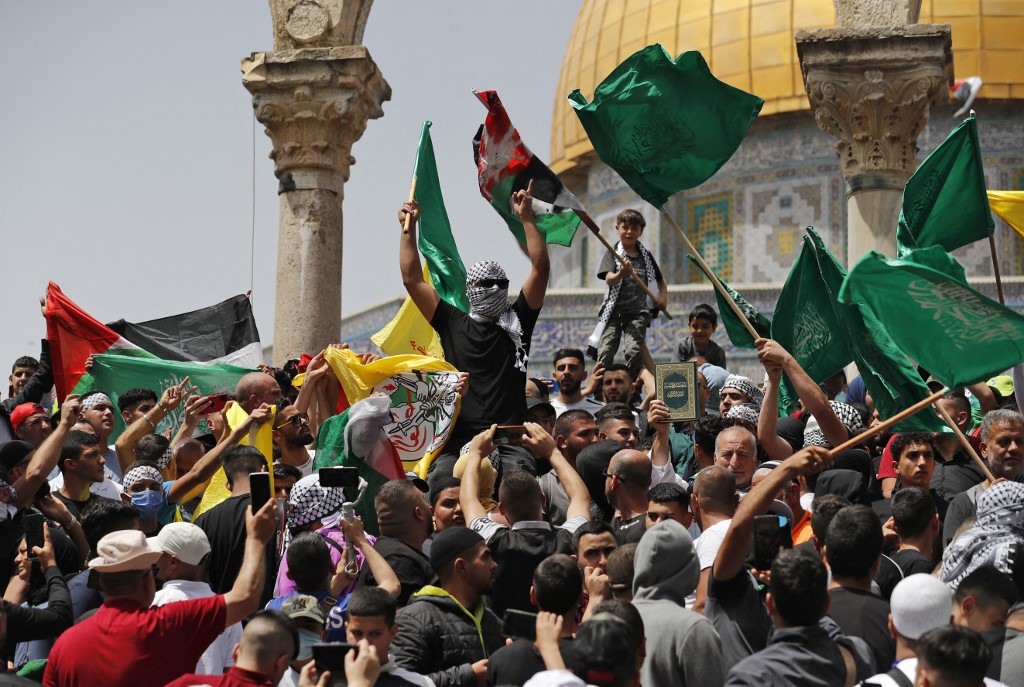
Palestinian protesters wave Palestinian and Islamic flags as they rally at the Dome of the Rock following the last Friday prayers of the Muslim month of Ramadan, on April 29, 2022. (Photo by Ahmad GHARABLI / AFP)
UN Committee Chairman Coly Seck supplied the principle that should have started this discussion. “For Muslims, Christians and Jews,” he said, “Jerusalem carries prayers, history and hope.” He declared that freedom of worship is a right and that “No worshipper should be stopped because of who they are. No community should feel that its faith is being pushed out of its own city. Jerusalem’s religious character must not be used as a tool of control. It must remain a bridge connecting people from the three major faiths. A meeting point. A shared responsibility.”
Those words raise obvious questions about Jewish worship on the Temple Mount.
Cairo simply lacked someone at the table to ask them.
The United Nations called Jerusalem sacred to three religions and convened an interreligious dialogue in Cairo about protecting their holy places. But only Muslim and Christian representatives came. They pretended to discuss the religious interests of three faiths, while using it as an opportunity to blame all religious tension on the Jews not in the room.
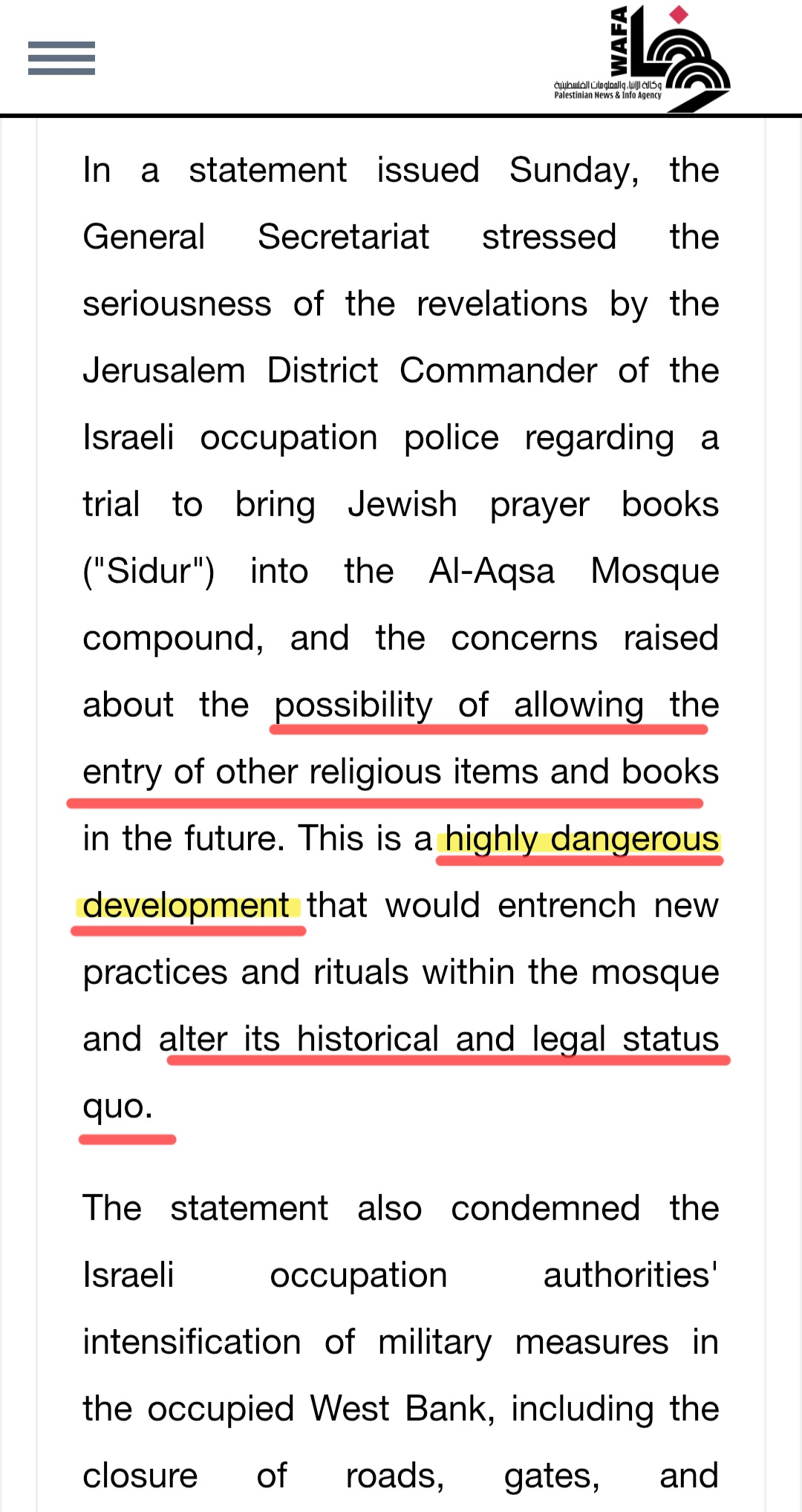
A Jewish prayer book is now a “highly dangerous development” in the Middle East according to the region’s Muslim leaders.
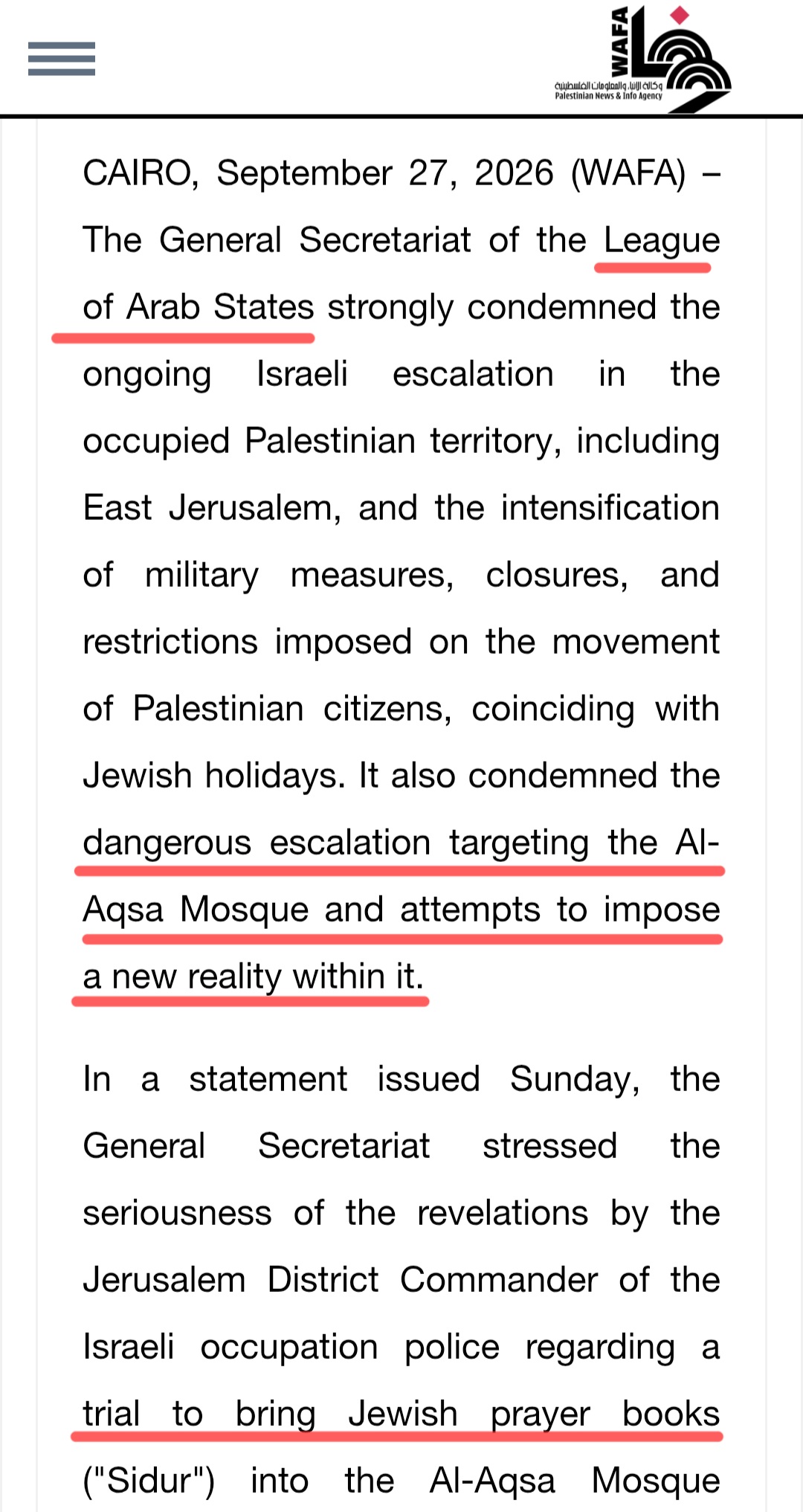
That was the Arab League’s description Sunday of reports that Israeli police are testing allowing Jewish prayer books — siddurim — onto the Temple Mount. The League warned that allowing them could establish new Jewish religious practices and alter the “historical and legal status quo.”
It wasn’t the only alarm sounded during Sukkot.
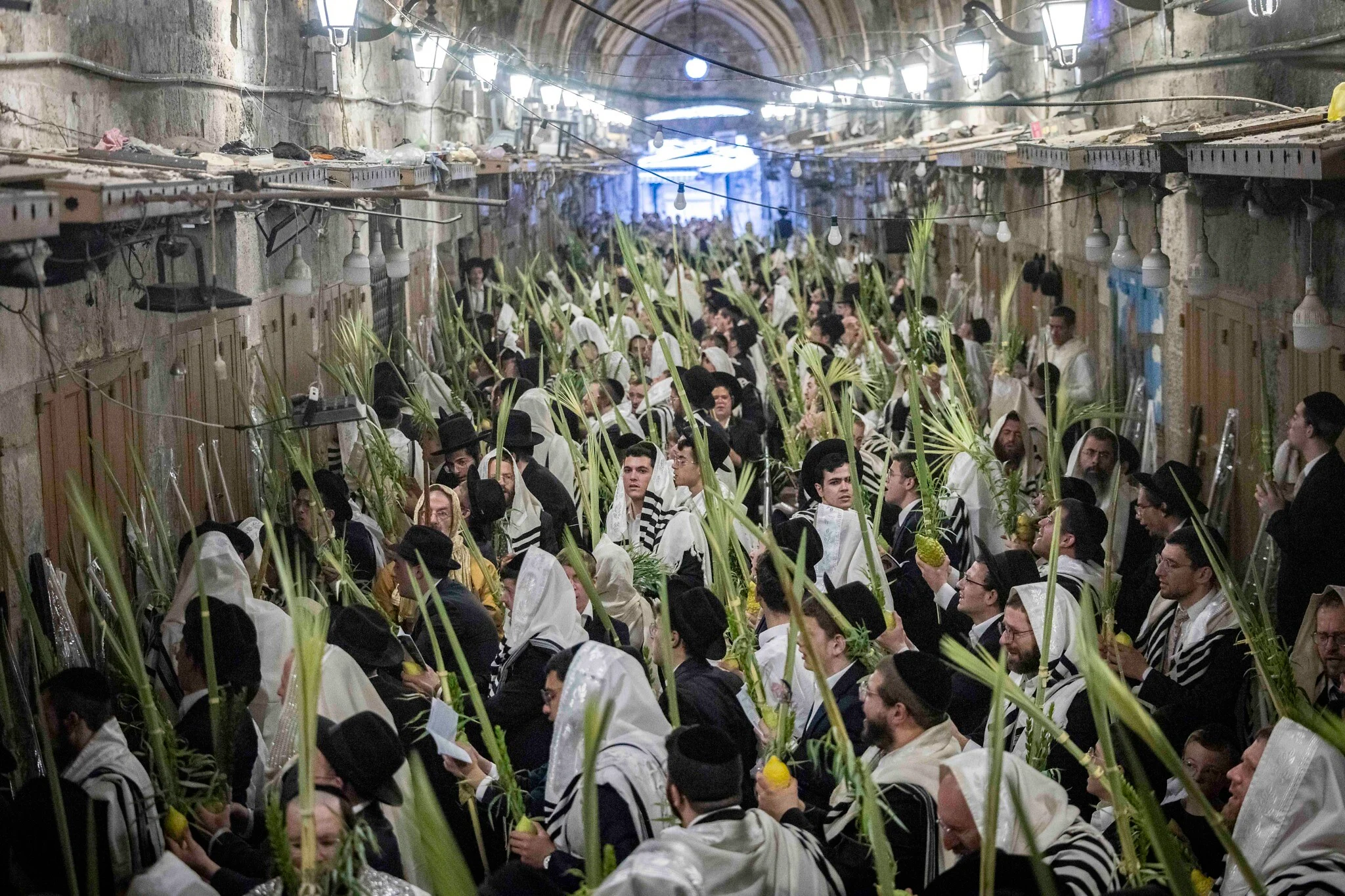
Over 1,000 Jews visited the Temple Mount on Sunday, with some openly praying and carrying the Four Species.
For perspective, roughly 80,000 Muslims attended the first Friday prayers at Al-Aqsa during Ramadan earlier this year. In normal years, Ramadan Friday attendance can reach 200,000.
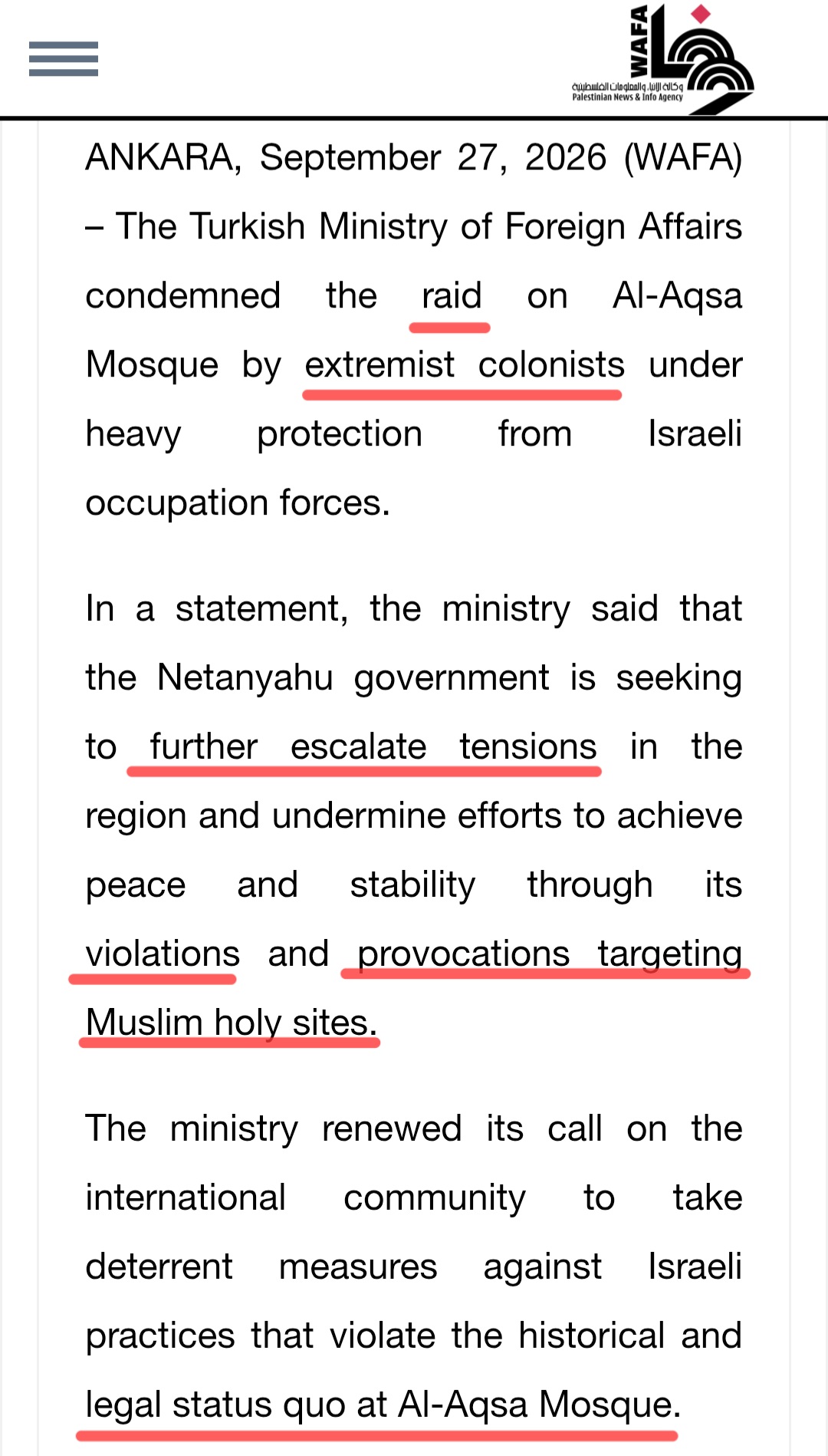
For the Muslim world, Muslims were “worshippers” while Jews were “extremist” Israelis conducting “Talmudic rituals.”
Jewish men covered in prayer shawls hold the Four Species as they take part in morning prayers during the holiday of Sukkot at the Cotton Merchant’s Gate entrance to the Temple Mount in Jerusalem’s Old City, September 27, 2026. (Chaim Goldberg/Flash90)
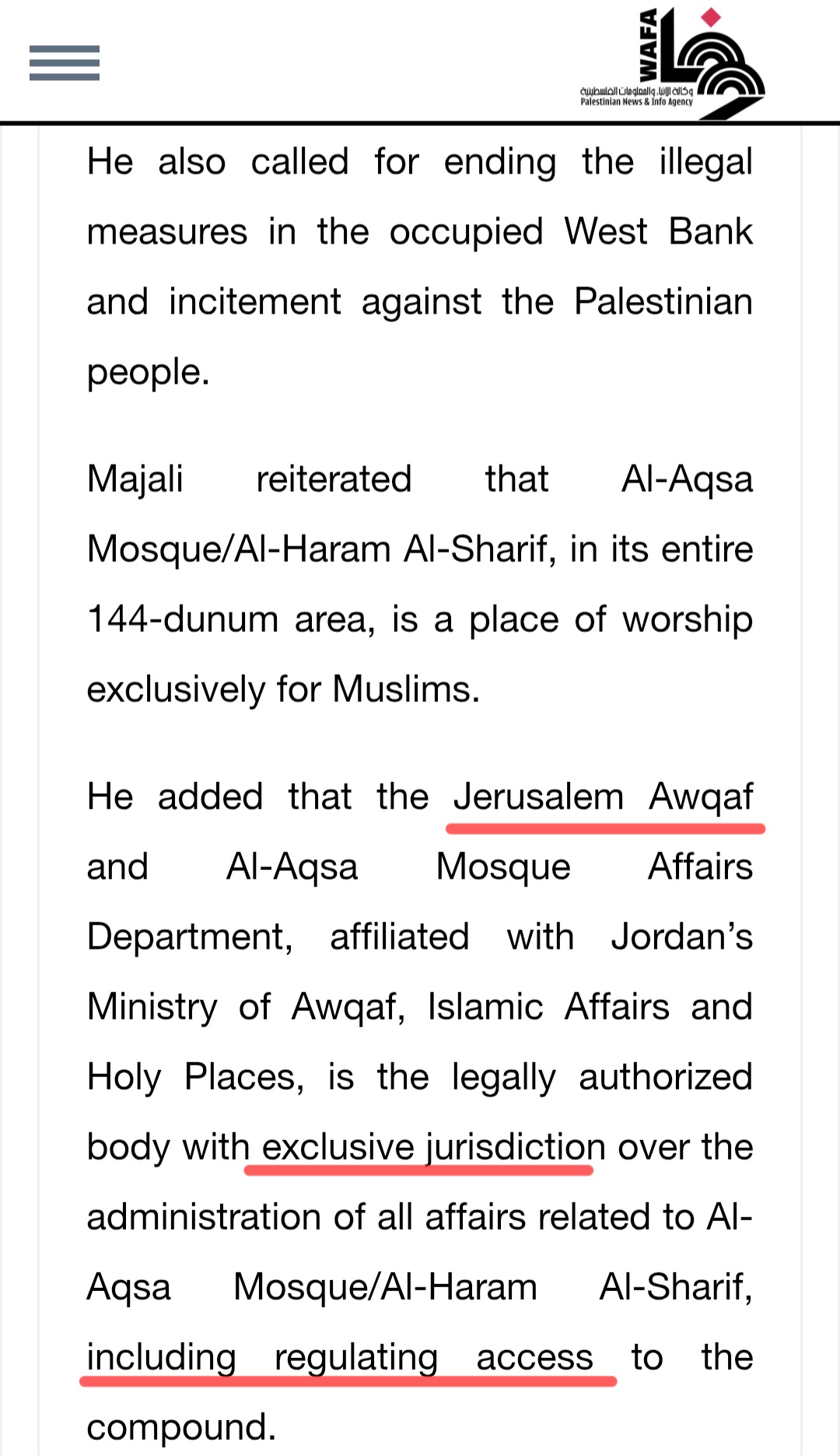
Palestinian Authority spokesman Nabil Abu Rudeineh warned that Israel risked transforming the political conflict into a “religious war.” He declared the entire 144 dunams of the Temple Mount an exclusively Muslim place of worship that cannot be divided or shared.
The reaction extends well beyond the Palestinian Authority.
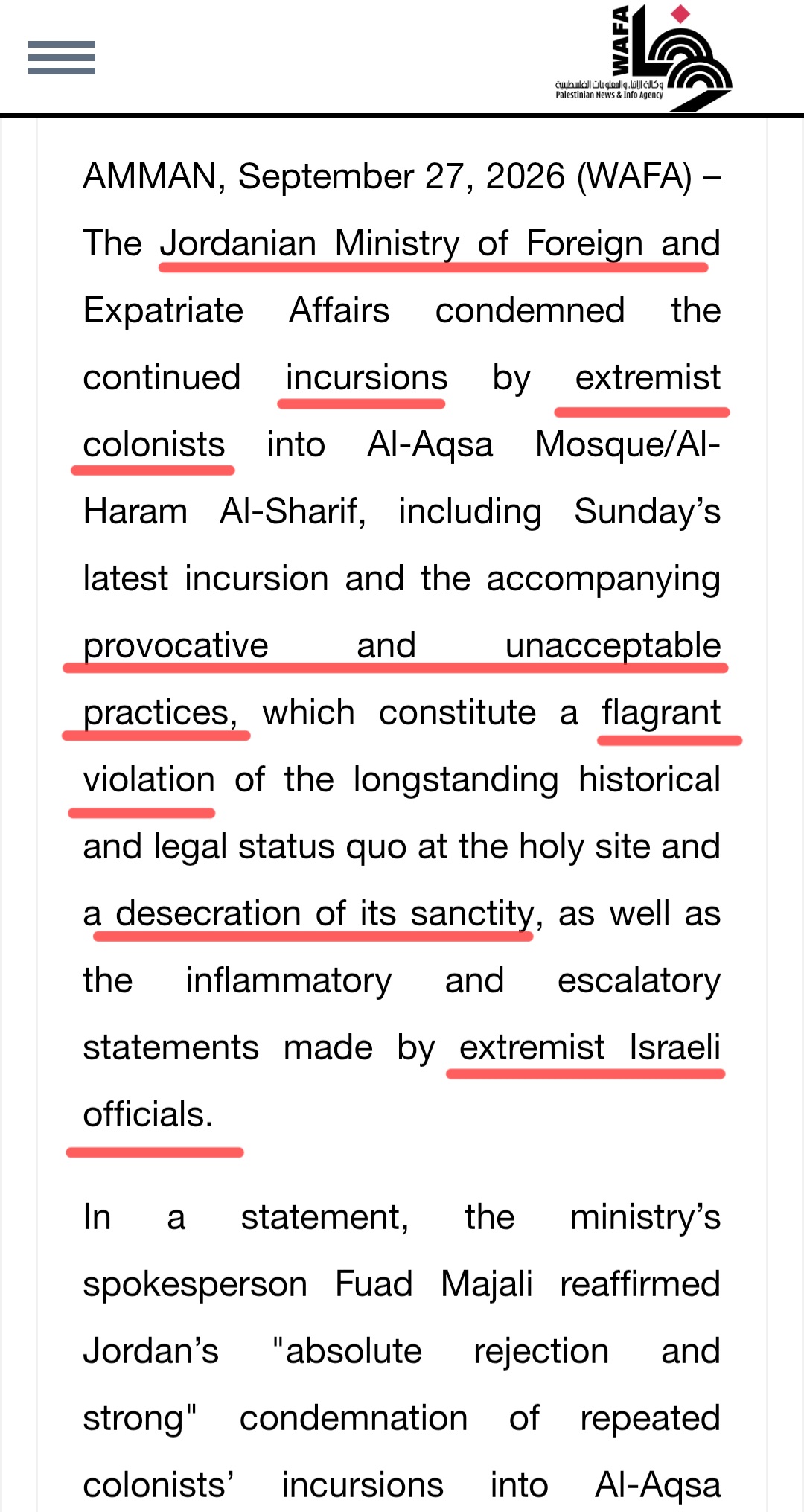
Jordan condemned Sunday’s Jewish visits and again declared all 144 dunams exclusively Muslim. And Turkey, Egypt, Indonesia, Jordan, Pakistan, Qatar, Saudi Arabia and the United Arab Emirates have jointly used the same formulation: the entire compound is exclusively for Muslim worship and the Jordanian Waqf has exclusive jurisdiction to administer it and regulate entry.
Three weeks ago, I wrote about the effort to redefine the Temple Mount “status quo,” transforming restrictions on Jewish prayer into a broader claim that the entire compound is exclusively Muslim.
Sukkot takes the story further.
There is no question that Israel is changing its own practice. For decades, Israeli governments maintained the policy that Muslims prayed on the Temple Mount while non-Muslims visited. Israeli police restricted Jewish prayer and barred siddurim and other Jewish religious objects.
Israel observed those restrictions for decades. But it never enacted a permanent statutory ban on Jewish prayer or agreed that the entire Temple Mount would forever be exclusively Muslim.
Now Israel is allowing some Jews to worship at Judaism’s holiest site.
The response is not simply a demand that Israel return to its previous practice. Multiple Muslim governments are declaring that all 144 dunams are exclusively Muslim. The possibility of a Jew carrying a siddur is described as a “desecration of its sanctity,” and jihadi calls for a “religious war.”
And this is happening during Sukkot, one of Judaism’s three biblical pilgrimage festivals, historically centered on Jews traveling to Jerusalem and the Temple. Jews were making pilgrimage there during Sukkot more than a thousand years before Islam existed.
A small number of Jews praying peacefully at their holiest site during their pilgrimage holiday is used as incitement to jihad. And Muslim governments demanded that the “international community” take actions against the Jews.
Perhaps it is time for the international community to explain to radical Islamists what coexistence means.
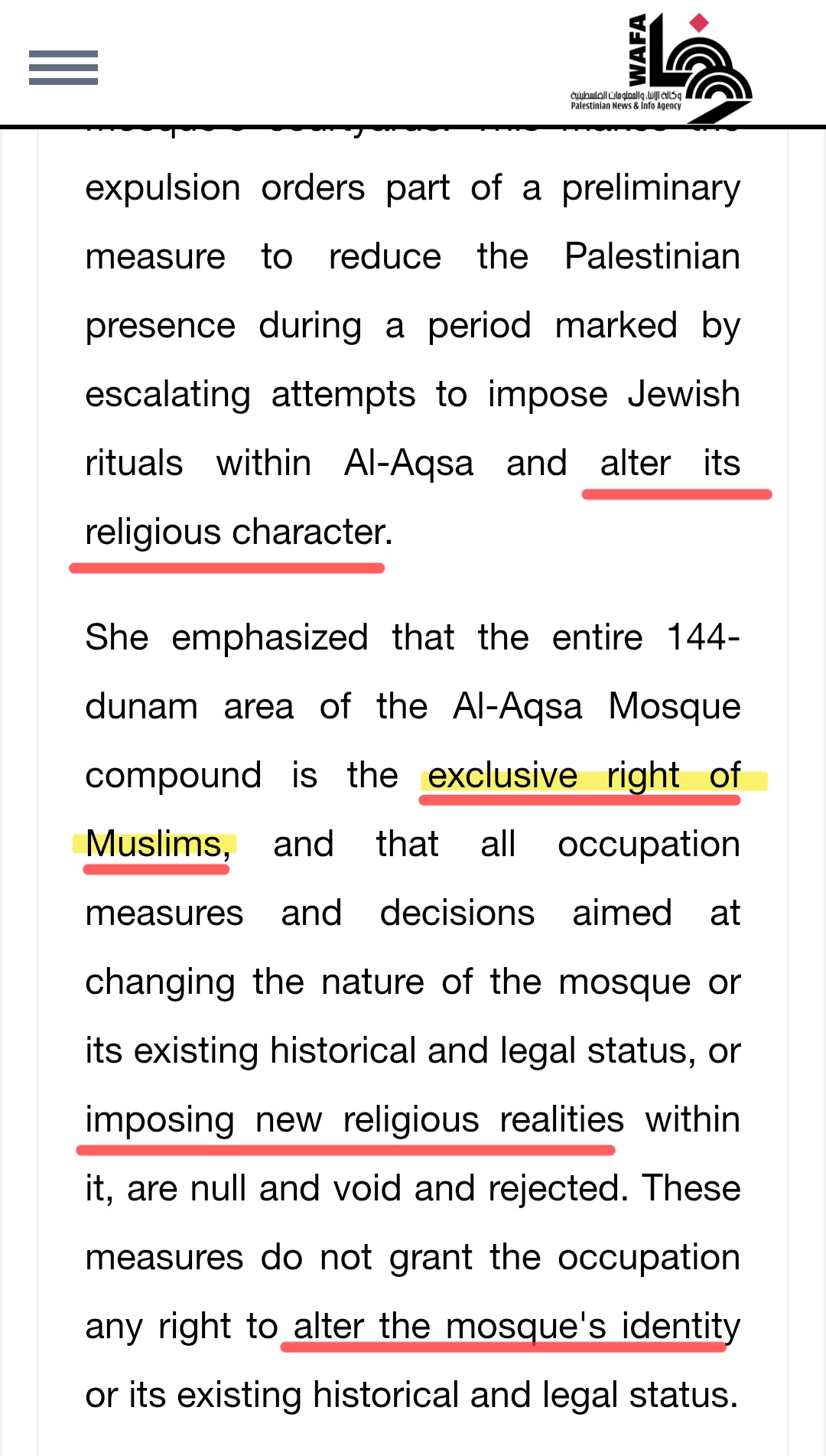
The Palestinian Authority has declared the Temple Mount — the holiest site in Judaism — the “exclusive right of Muslims.”
That is not the historic status quo. It is an attempt to rewrite it.
After Israel took control of Jerusalem’s Old City in 1967, day-to-day religious administration of the Temple Mount/Haram al-Sharif remained with the Islamic Waqf, while Israel retained responsibility for security and substantial control over access. The Waqf permitted Muslims to pray on the Mount, while non-Muslims could visit, prayer was restricted.
The arrangement governed administration, access and worship. It did not declare the Temple Mount the exclusive possession or religious entitlement of Muslims.
The Palestinian Authority’s Jerusalem Governorate crossed that line explicitly on September 6. It condemned Jews conducting “Talmudic rituals and prayers” as attempts to “alter its religious character,” declared the entire 144-dunam compound the “exclusive right of Muslims” and warned against changing its “identity.”
Those words matter.
Waqf administration is one thing. Restrictions on Jewish prayer are another. Declaring the site itself the “exclusive right” of Muslims is something else entirely.
The status quo regulates what Jews may do there. It never determined what the place is.
The First and Second Jewish Temples stood on the Temple Mount. Jewish prayer has faced Jerusalem for millennia. Jewish liturgy, mourning and hopes for redemption are bound to it. Many observant Jews have historically declined to walk upon portions of the Mount precisely because they consider the ground too holy to enter without the required ritual purity.
For some Jews, not ascending is itself an expression of the Mount’s extraordinary Jewish sanctity.
That makes the new language especially provocative. Jews visiting Judaism’s holiest place become “settlers” conducting “incursions.” Jewish prayer becomes threatening “Talmudic rituals.” A restriction accepted to preserve religious peace is transformed into evidence that Jewish religious expression does not belong there at all.
Jewish restraint was supposed to preserve coexistence. It cannot become a permission slip for Jewish erasure.
The international reaction sharpens that dynamic. The United Nations itself has called upon the parties to refrain from “provocative actions, incitement and inflammatory rhetoric,” especially in places of “religious and cultural sensitivity.” In the very next paragraph, it demanded that Jerusalem’s historic status quo be respected “in word and practice” and urged “all sides” to halt provocations and incitement at the holy sites.
By the UN’s own standard, words can threaten the status quo. Yet when an official Palestinian governmental authority declares Judaism’s holiest site the “exclusive right of Muslims,” it is greeted with a silent nod of approval.
And this occurs as the anti-Israel horde discusses so-called “Jewish supremacy.” Zohran Mamdani has attacked privileging one religion over another (meaning Jews over Muslims). Hasan Piker denounces “ethnoreligious supremacist values.” At the Jewish Temple Mount, the principle stripped of abstraction: one religion claiming exclusive entitlement to the holiest site of another.
And that raises a more fundamental question about the status quo itself.
Perhaps placing religious administration of a multi-faith holy site exclusively in the hands of one of the religions claiming it was always structurally unstable.
The Waqf is not a neutral administrator. It is an Islamic religious institution representing one faith at a site sacred to several. That arrangement can function while custodianship means administration. It becomes difficult to justify when the authority entrusted with the site participates in or endorses a doctrine that denies another faith any legitimate claim to it.
The test should be remarkably simple: Can the authorities administering the Temple Mount state unambiguously that it is Judaism’s holiest site?
Acknowledging that fact surrenders nothing about Islam’s attachment to Al-Aqsa. But an administrator that cannot acknowledge the most basic religious identity of the people whose holiest site it administers has a profound conflict with the responsibilities of custodianship.
If the Waqf and Jordan cannot pass that test, their fitness to exercise exclusive administration should be questioned.
The logical alternative is administration by a political authority obligated to protect multiple religions rather than a religious authority representing one of them. Israel already bears responsibility for security at the compound and exercises substantial control over access. Any new arrangement would have to fully protect Muslim worship and Islamic holy places while recognizing rather than suppressing the religious attachments of others.
The status quo was built on the assumption that Islamic administration could coexist with Jewish restraint. The assertion of “Muslim exclusivity” is breaking that bargain.
If the Waqf cannot acknowledge Judaism at Judaism’s holiest site, it should no longer be entrusted to administer it.
WAFA, the Palestinian Authority’s official media, has spent years describing Jews who enter the Temple Mount as “storming Al-Aqsa.” I have written about that linguistic sleight of hand before.
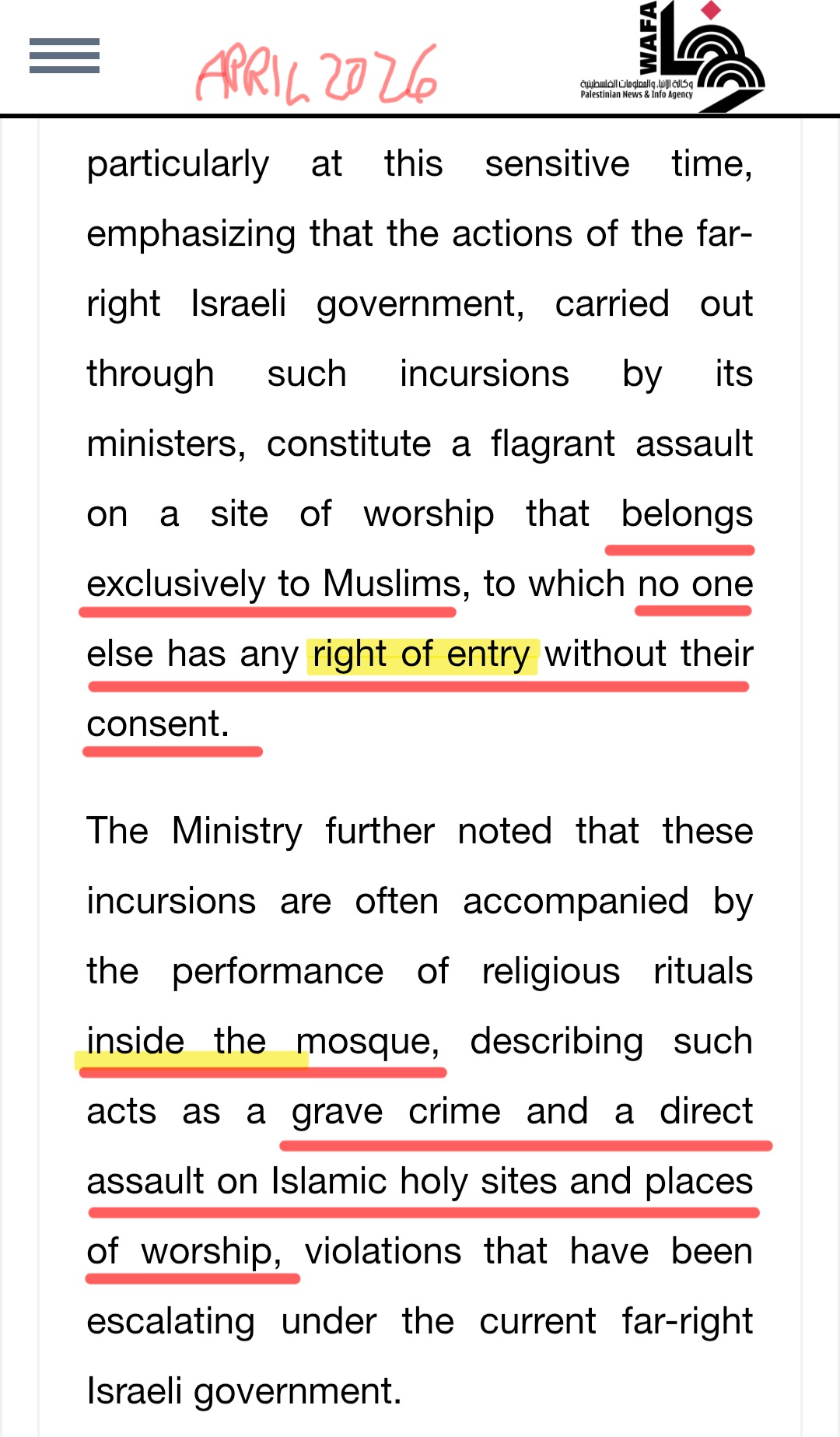
Now WAFA is promoting something more dangerous: that Jews have no right to enter Judaism’s holiest site without Muslim permission, and that Jewish worship there is an assault on Islamic sanctity.
In April 2026, WAFA reported a Palestinian statement declaring the site one that “belongs exclusively to Muslims, to which no one else has any right of entry without their consent.”
On August 13, WAFA carried an Arab League statement condemning Jews entering the site and performing religious rituals as a “blatant violation of the sanctity of the mosque.”
WAFA promoted several lies:
Muslims do not control entry. Israel controls security and access to the Temple Mount. The Jordanian-backed Waqf administers Muslim religious affairs there. Presenting Muslim consent as a prerequisite for Jewish entry is totally false.
The compound does not “belong exclusively to Muslims.” That is a religious and political claim masquerading as settled fact about the Temple Mount—the holiest site in Judaism.
Jewish presence does not inherently violate Islamic sanctity. Islam does not have a general rule that a Jew entering Muslim sacred space desecrates it. Restrictions on Jewish prayer under the status quo are one issue; declaring Jewish worship itself an assault on Islam is another.
Then comes another sleight of hand.
Having defined Jewish presence as an offense against Islam, these organizations pivot to demanding action by the international community on behalf of Palestinians.
But those categories – Muslims and Palestinian Arabs – are not interchangeable.
Some 1.85 million Muslims live in Israel, nearly one-fifth of the country’s population. And the Muslim religious administration of the Temple Mount is handled by the Jordanian-backed Waqf. Palestinian Arabs do not exercise control over entry to the site, nor do they represent all Muslims in the region.
So why transform an asserted Muslim religious grievance into a Palestinian national claim demanding international intervention?
Because the lies are the tell.
The argument is no longer about protecting Muslim worship. It takes an assertion of Muslim religious exclusivity, converts it into a Palestinian territorial right, and then asks the world to enforce that right against Israel and Jews.
The implications become darker when the same logic is applied beyond the Temple Mount. Hamas’s 1988 charter declared all of Palestine an Islamic waqf. Combine that doctrine with the claim being promoted around Al-Aqsa—that Jewish physical presence and worship offend Islamic sanctity—and expelling Jews can be transformed into protecting Muslim holy land.
“the land of Palestine is an Islamic Waqf consecrated for future Moslem generations until Judgement Day. It, or any part of it, should not be squandered: it, or any part of it, should not be given up.” – Hamas Foundational Charter, Article 11
That is why the Arab League and WAFA’s language matters. By repeatedly publishing these false assertions, it helps turn a Palestinian territorial claim into a purported Islamic prohibition against Jewish presence.
And it begins at the most perverse possible location: Judaism’s holiest site.
The progression is stark:
Declare the Jewish holy site exclusively Muslim.
Deny Jews the right to enter without Muslim permission.
Call Jewish presence and worship a desecration of Islam.
Turn that religious claim into a Palestinian territorial right.
Ask the world to enforce it.
The Arab League and Palestinian Authority are building a religious and political case for removing Jews from their own holy land.
The United Nations speaks constantly of justice, equality and freedom of worship in Jerusalem. Yet when confronted with the denial of the most basic religious freedom at Judaism’s holiest site, it demands that the discrimination continue.
This is not the position of one committee or one conference. It is the official position of the United Nations.
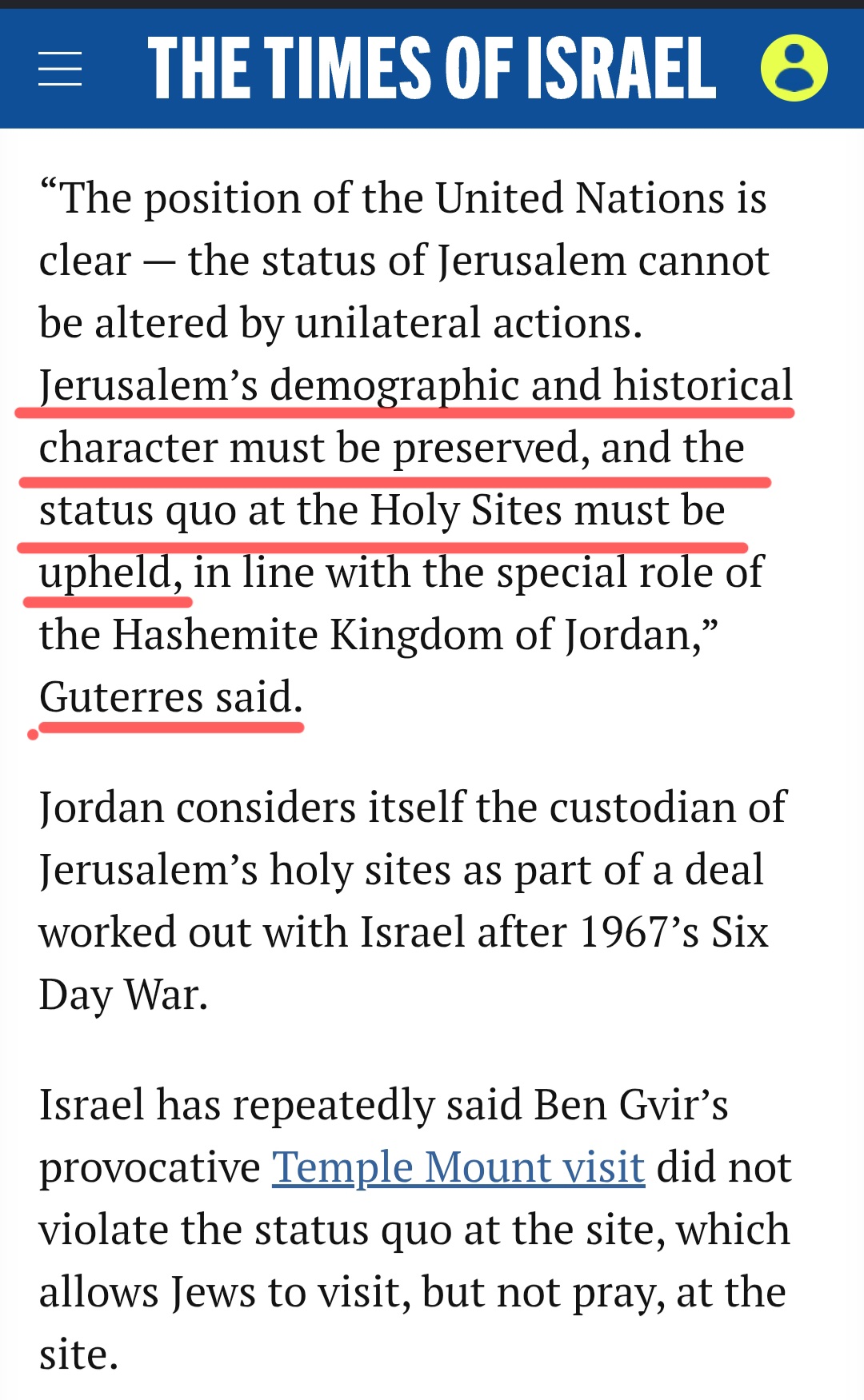
Following a recent visit by Israel’s National Security Minister to the Temple Mount, Secretary-General António Guterres declared that “the status quo at the Holy Sites must be upheld.” His spokesman, Stéphane Dujarric, went further on July 23, insisting that “there is a status quo regarding the holy sites of Judaism, Christianity and, of course, Islam in Jerusalem” and that “the faithful of all religions are able to interact with those sites… in a free manner.”
Those statements cannot both be true.
On the Temple Mount—the holiest site in Judaism—the “status quo” bars Jews from praying openly. Jews may visit during limited hours, but they are prohibited from conducting public prayer under the religious administration of the Islamic Waqf.
The United Nations therefore advocates preserving a system that denies Jews the freedom to pray at their holiest site while simultaneously claiming that people of all faiths are able to worship freely.
That is not religious equality. It is institutionalized religious discrimination.
Imagine the United Nations calling for the preservation of a system that prohibited Christians from praying at the Church of the Holy Sepulchre or Muslims from praying at the Al-Aqsa Mosque. Such a position would rightly be condemned around the world. Yet when the restriction applies to Jews, it is described as preserving the “status quo.”
The phrase has become a euphemism for unequal rights. For sanctioned antisemitism.
The UN states that the “Palestinian people” have “inalienable rights” in Jerusalem, while insisting that Jews have none
Peace is not built by requiring one religion alone to surrender the right to pray at its holiest place.
The United Nations should stop demanding preservation of the Temple Mount status quo and instead demand its reform.
The UN Human Rights Council should establish a permanent agenda item asking a single question: Why are Jews still barred from praying openly at Judaism’s holiest site?
Every report by the Secretary-General on Jerusalem should state whether that prohibition remains in force.
Every General Assembly debate on Jerusalem should require Jordan and the Islamic Waqf to explain why the ban continues and what concrete steps are being taken to end it.
Every UNESCO discussion of the Temple Mount should address not only Jewish history at the site, but whether Jewish freedom of worship is being respected there today.
Every UN conference on Jerusalem should repeat the same demand until the answer changes:
End the prohibition on peaceful Jewish prayer on the Temple Mount.
The United Nations cannot credibly champion freedom of worship while defending a religious order that denies Jews that very freedom at Judaism’s holiest site.
For nearly 2,000 years, Jews have fasted on Tisha B’Av to mourn the destruction of the First and Second Temples, the loss of Jewish sovereignty, exile from Jerusalem, and a long chain of national tragedies.
Jewish tradition also teaches that the fast will not last forever. The prophet Zechariah envisioned a day when the fasts commemorating Jerusalem’s destruction would become days of “joy and gladness and cheerful festivals.” Many rabbis have understood that era to arrive with the rebuilding of the Temple.
No one knows when that day will come.
Yet the last century has witnessed changes that generations of Jews scarcely dared imagine.
The Jewish people returned to their ancestral homeland. The State of Israel was reborn (1948). Jerusalem was reunited under Jewish sovereignty (1967). For the first time in nearly two thousand years, Israel is home to the world’s largest Jewish population (2012).
Israel has also become increasingly accepted by its Arab and Muslim neighbors, establishing diplomatic relations with Egypt (1979), Jordan (1994), the United Arab Emirates (2020), Bahrain (2020), Morocco (2020), Sudan (2020, pending implementation), and Kosovo (2021). Meanwhile, the United States (2018), Guatemala (2018), Honduras (2021), Kosovo (2021), Papua New Guinea (2023), Paraguay (2024), and Fiji (2024) have moved their embassies to Jerusalem, while other countries (Slovenia and Nauru) are considering doing the same.
Last year (2025), more than 75,000 Jews ascended the Temple Mount – a modern record that would have been unimaginable only a generation ago.
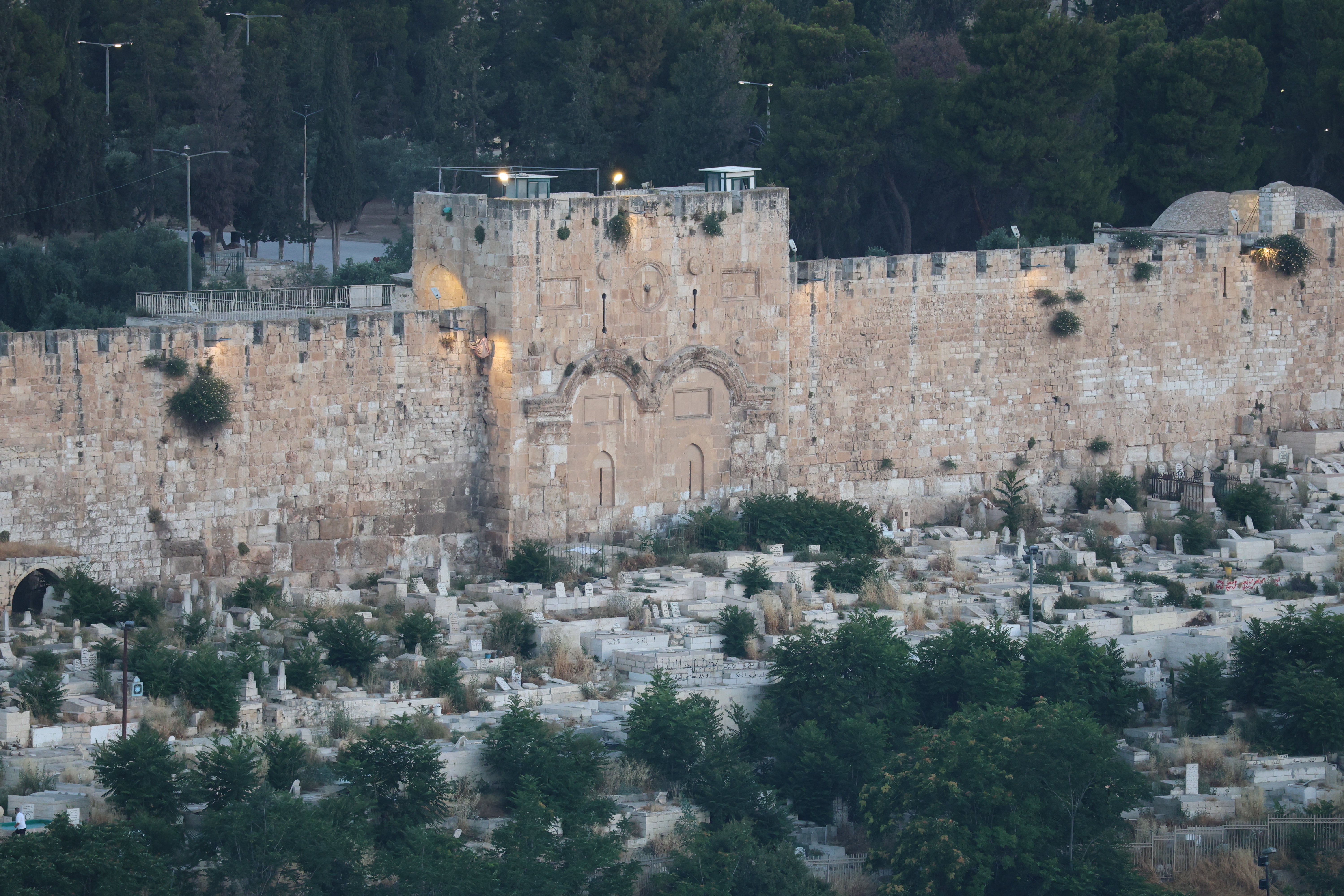
The Golden Gate in Jerusalem’s Old City exterior wall (photo: First One through)
The Temple remains unbuilt and Tisha B’Av remains a day of mourning.
But it does raise a question that previous generations could scarcely have imagined asking: Will this be the last Tisha B’Av fast?
Perhaps Jews a century from now will still be asking the same question. Or perhaps they will look back and realize that ours was among the last generations to mourn the destruction rather than celebrate the restoration.
For almost two thousand years, that possibility seemed unimaginable. Today, it no longer does.
There is something profoundly human about gathering related things into a single vessel.
We do it with photo albums, where a lifetime of moments is gathered into one book. We do it with museums, where centuries of artifacts are brought together under one roof.
The Jewish calendar does the same with time.
Tisha B’Av is not merely the anniversary of the destruction of the First and Second Temples. Over centuries it became the vessel into which Jewish history poured its sorrows – from the destruction of the Temples to the expulsions from England and Spain, to catastrophes that culminated in the Holocaust. Generations found in Tisha B’Av a place large enough to hold them all.
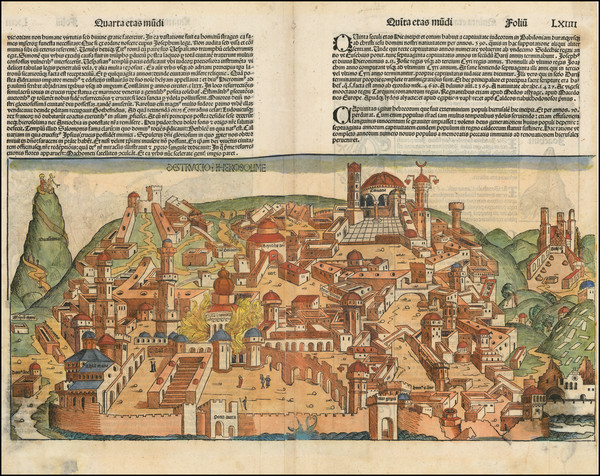
The Nuremberg Chronicle showing the destruction of Jerusalem
The Temple Mount in Jerusalem became another vessel. Of place.
For much of history, Jerusalem was known as the city of the Jewish Temple. But over time it gathered far more meaning. It became the location of the near sacrifice of Isaac, the destination of pilgrimage, the focus of exile, and the direction toward which Jews have prayed for thousands of years.
Other faiths also poured meaning into Jerusalem. Christians revere it as the place of Jesus’ crucifixion and resurrection. Muslims honor it as the destination of Muhammad’s Night Journey. Layer upon layer, century upon century, Jerusalem became more than a city. It became a vessel carrying humanity’s deepest convictions, hopes, and conflicts.
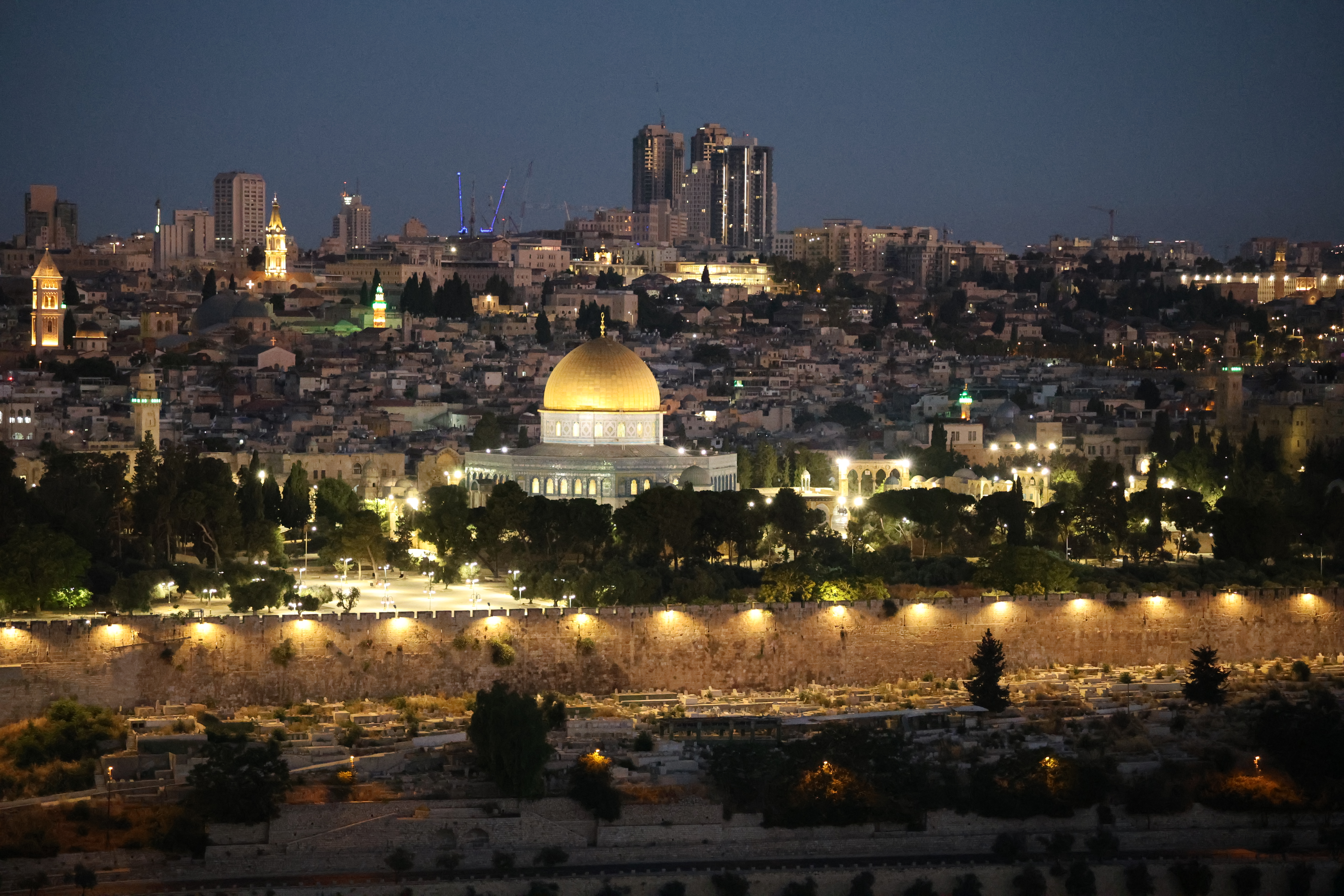
Temple Mount at dawn (photo: First One Through)
And then there is a unique people.
The Jewish people became a vessel unlike any other. Across thousands of years they carried covenant, exile, learning, persecution, survival, and hope. They preserved ancient language, sacred texts, melodies, customs, and memory across continents and generations. They became the vessel through which memory survived when kingdoms fell, empires vanished, and even the Temple itself lay in ruins.
Every vessel carries something. Some carry water. Some carry treasure. Some carry ashes. The greatest vessels carry what cannot be touched: memory, identity, covenant, and hope.
And that is what the Jewish people, Jerusalem, and Tisha B’Av have become. Three vessels in one elaborate story.
Every generation poured something more into those vessels: not only grief, but hope.
Within them rests the hope captured in the Israeli national anthem, Hatikvah: that the Jewish people will live as a free people in their own land, with Jerusalem at its heart.
And on Tisha B’Av in particular, the vessel holds one additional hope above all others: the rebuilding of the Beit HaMikdash. Not because Jews long merely for stones and walls, but because it represents the restoration of wholeness – between God and humanity, a people and their land, memory and redemption.
Every Tisha B’Av, Jews gather into one day the grief of centuries, turn toward one city, and renew one hope. As they do, they recognize that this is more than a story of three fused vessels. It is that together they carry one enduring promise.
For many people, Jewish holidays are family traditions: apples and honey on Rosh Hashanah, a Passover Seder, Hanukkah candles, or a sukkah in the backyard. Yet beneath these customs lies the deeper reality that every major Jewish holiday is connected in some way to the Temple in Jerusalem.
The Temple was not simply a house of worship. It was the spiritual, national, and legal center of Jewish life. Pilgrimages, sacrifices, priestly service, national assemblies, and the calendar itself revolved around Jerusalem. Even after the Temple’s destruction in 70CE, the holidays preserved its memory and continue to point toward it.
Rosh Hashanah marks the Jewish New Year and the sounding of the shofar. In Temple times, witnesses testified before the Sanhedrin in Jerusalem to establish the new month, and the shofar echoed through the Temple courts. Today, Jews still pray that God’s kingship will once again be recognized from Zion.
Yom Kippur is inseparable from the Temple. The High Priest entered the Holy of Holies only once a year to seek atonement for the nation. Modern synagogue services painstakingly recount the Temple ritual, preserving the memory of the day’s most sacred service.
Sukkot was one of the three pilgrimage festivals when Jews ascended to Jerusalem. The Temple hosted the joyous water-drawing ceremony (Simchat Beit HaShoeva), accompanied by music, dancing, and water libations on the altar. Rabbinic tradition describes it as one of the greatest celebrations ever witnessed.
Shemini Atzeret and Simchat Torah conclude the festival cycle begun at the Temple with Sukkot. While Simchat Torah developed later, it celebrates the Torah that was publicly taught and read in Jerusalem.
“Ki mitzion tetze torah” (כִּי מִצִּיּוֹן תֵּצֵא תוֹרָה). “For instruction shall come forth from Zion, The word of God from Jerusalem.” – Isaiah (Chapter 2, Verse 3)
Hanukkah commemorates the rededication of the Second Temple after it was reclaimed from the Seleucid Greeks. Every candle recalls the restoration of Jewish worship in Jerusalem.
Tu BiShvat, the New Year for Trees, determined agricultural laws whose tithes and first fruits were ultimately brought to the Temple.
Purim is the only holiday without a direct Temple ritual, yet its story ensured the survival of the Jewish people who would rebuild and worship in the Second Temple. Jerusalem itself celebrates Purim a day later, preserving its ancient status as a walled city.
Passover was the greatest pilgrimage festival. Hundreds of thousands ascended to Jerusalem to offer the Passover sacrifice before gathering in homes throughout the city for the Seder. Even today Jews conclude the Seder with the words, “Next year in Jerusalem.”
Tens of thousands of Jews at the Kotel Plaza in the Old City of Jerusalem during Passover, as they cannot ascend to the Temple Mount today
Shavuot celebrated the first fruits brought to the Temple in elaborate processions from across the Land of Israel. Farmers entered Jerusalem carrying decorated baskets while choirs sang Psalms of thanksgiving.
Tisha B’Av mourns above all the destruction of both the First and Second Temples. It is the day on which Jews sit on the floor, recite Lamentations, and remember the loss of Jerusalem’s spiritual heart.
Even holidays with no formal Temple ceremony ultimately orbit Jerusalem. They celebrate the survival of the Jewish people, the covenant, the Land of Israel, and the hope of restoration.
Jerusalem is not merely Judaism’s holiest city; it is the organizing principle of the Jewish calendar itself. The cycle of holidays begins and ends with memories of Temple worship, pilgrimages, offerings, repentance, thanksgiving, and national gathering in one place.
For centuries Jews prayed facing Jerusalem, broke a glass at weddings to remember its destruction, left part of a home unfinished in mourning, and ended the Passover Seder and Yom Kippur with the same aspiration: “Next year in Jerusalem.”
The Jewish calendar is more than a record of sacred time. It is a map whose destination is Jerusalem, carrying the memory of the Temple from one generation to the next.
For decades the argument over the Jewish Temple Mount has been framed in one direction only: Jewish prayer must be restricted because Jewish prayer may trigger Muslim violence. The legal scaffolding for that argument is old and sturdy. The British Mandate for Palestine built it directly into Article 13, promising free exercise of worship while “ensuring the requirements of public order and decorum.” Later arrangements, including Oslo, preserved the same operating logic in practical form, with Israel retaining security authority even while leaving day-to-day religious administration to the Jerusalem Islamic Waqf.
That logic has governed the Mount for a century.
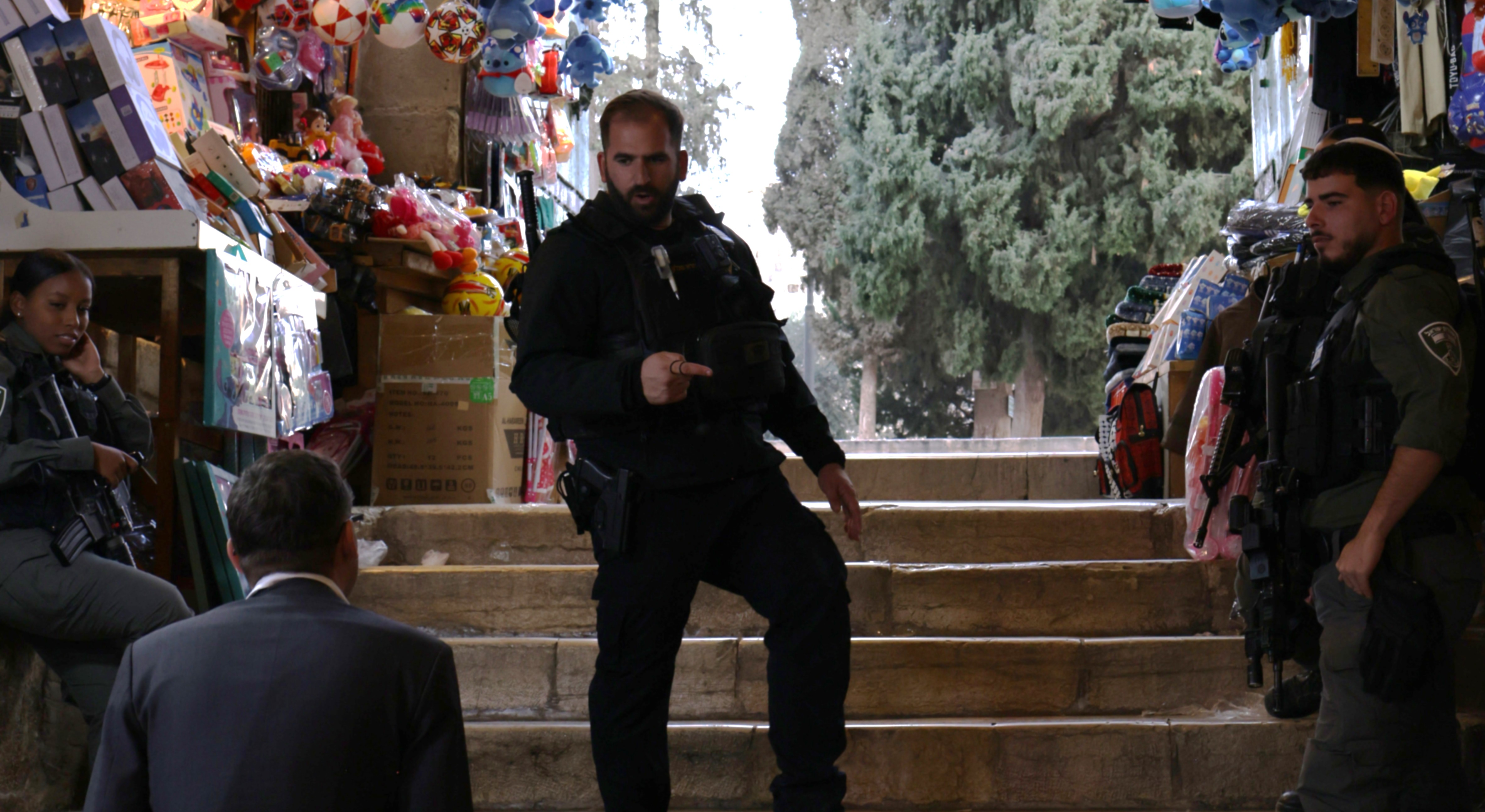
Israeli police block a Jew from ascending steps to the Temple Mount at the Cotton Gate in November 2025 (photo: First One Through)
But what happens when the status quo itself becomes the source of disorder?
This is the question no one wants to ask.
Every few weeks, Palestinian media like WAFA warns that “the Al Aqsa Mosque is in danger” from “radical settlers.” The phrase has become ritualized, almost liturgical in Palestinian political culture. A Jew walking quietly on the Mount becomes a provocation. A Jew moving his lips in silent prayer becomes an assault. A Jew bowing his head becomes a threat to Islam itself.
That rhetoric has had a practical effect. It has transformed Jewish prayer into a public order problem.
But there is another side to this equation.
What if the continued suppression of Jewish prayer is itself becoming a generator of instability? What if the status quo, designed to contain conflict, has begun producing it?
A legal order built to preserve peace cannot become a machine for preserving grievance.
Under the British Mandate, the answer is surprisingly clear. Article 13 protects “existing rights,” but only while ensuring public order. That means the status quo is protected only insofar as it serves order. If preserving inherited arrangements creates recurring confrontation, the law and history allows recalibration.
That was the hidden flexibility in the Mandate and ongoing governing principle. Status quo is presumptive; order is mandatory.
Oslo is even more direct, though in a different way. Oslo does not sanctify the Temple Mount arrangement. It simply leaves it in place while preserving Israeli security. That means if Israeli authorities conclude that the present arrangement itself is a long term security risk, they possess the legal architecture to modify access, prayer rules, and crowd management.
The Old City of Jerusalem including the Jewish Temple Mount/ Al Aqsa Compound. Thousands of Jews can be sound in the Western Wall Plaza, unable to ascend onto the Temple Mount.
The irony is brutal.
For decades the legal doctrine has been used to suppress Jewish prayer because Muslim violence was threatened. But if that suppression itself produces radicalization, frustration, and growing confrontation, the same legal doctrine could justify expanding Jewish prayer in order to restore order.
The law cuts both ways.
“The status quo” sounds ancient and immovable. In truth it is neither. It is a management system. And management systems are judged by outcomes.
If a system preserves peace, it earns its legitimacy. If a system preserves resentment and recurrent crisis, its legal rationale weakens.
The day may soon be arriving that structured, regulated Jewish prayer may become the stabilizing mechanism rather than the destabilizing one.
A designated time. A designated place. A formalized right.
The central legal truth of the Temple Mount has always been misunderstood. The governing principle was never the status quo itself. The governing principle was order.