The UN No Longer Defends Religious Liberty

Religious liberty is not complicated. It does not require panels, frameworks, or warnings about artificial intelligence. It requires clarity.

The right to choose your faith.
The right to practice it as you see fit.
The right to pray openly, in your way, at your holy places.
The right to walk away from it—without fear, without punishment, without death.

This is not a modern reinterpretation. It is the original standard.

In 1948, in the aftermath of a world war that exposed the catastrophic consequences of state control over belief and identity, the United Nations adopted the Universal Declaration of Human Rights. At its core sat Article 18, crafted with precision that set religious freedom as a benchmark of human rights.

“Everyone has the right to freedom of thought, conscience and religion; this right includes freedom to change his religion or belief, and freedom, either alone or in community with others and in public or private, to manifest his religion or belief in teaching, practice, worship and observance.” – UN Declaration of Human Rights, Article 18

Change it. Practice it. Live it.

That was the UN at its founding: defining principles meant to bind nations, not accommodate them.

That is not the UN on display today.

When the Secretary-General recently addressed a conference on religious liberty on March 24, 2026, the words sounded familiar. Religious freedom was a “cornerstone of human dignity.” And then the center shifted—toward global pressures, social cohesion, artificial intelligence.

Artificial intelligence?
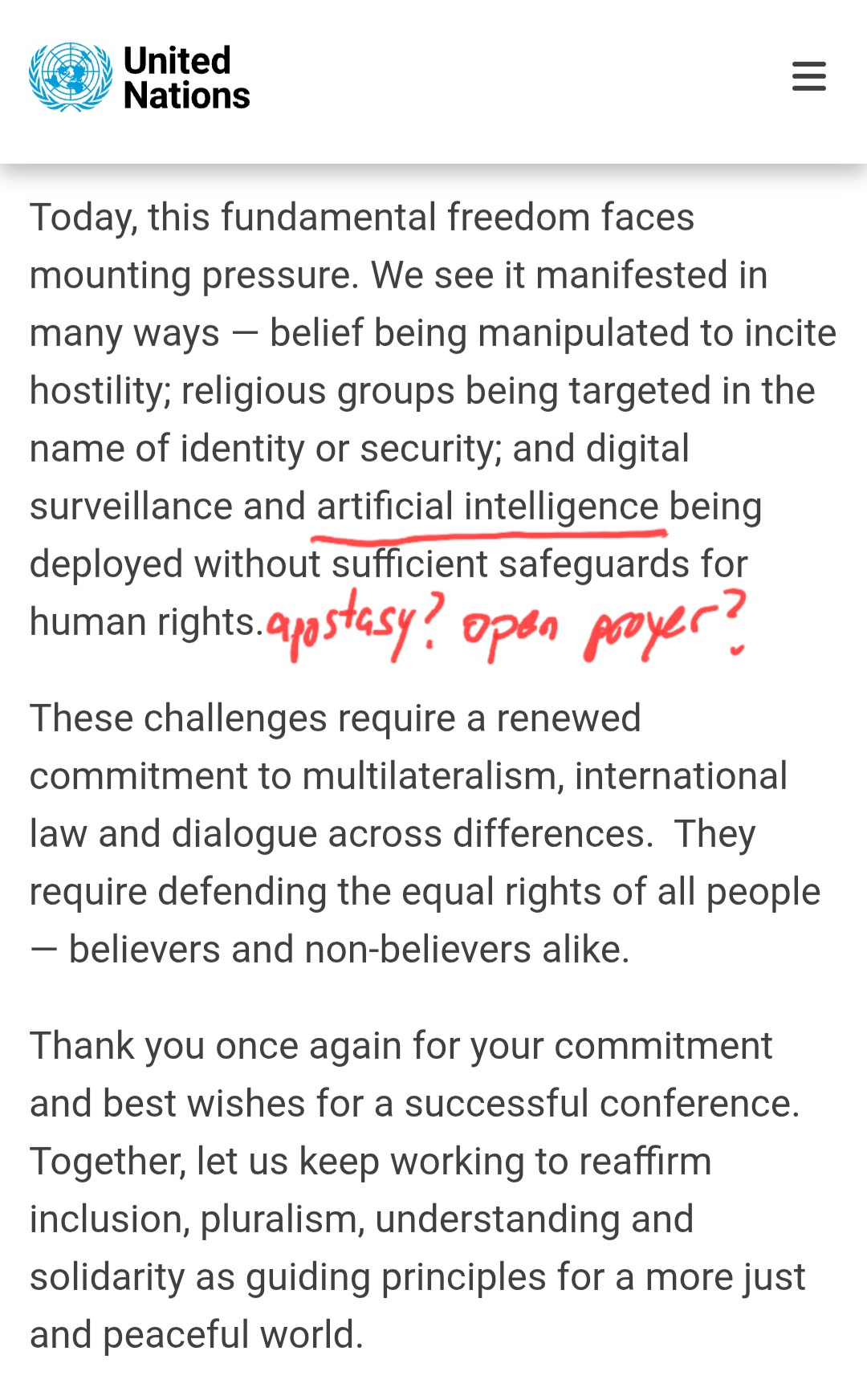
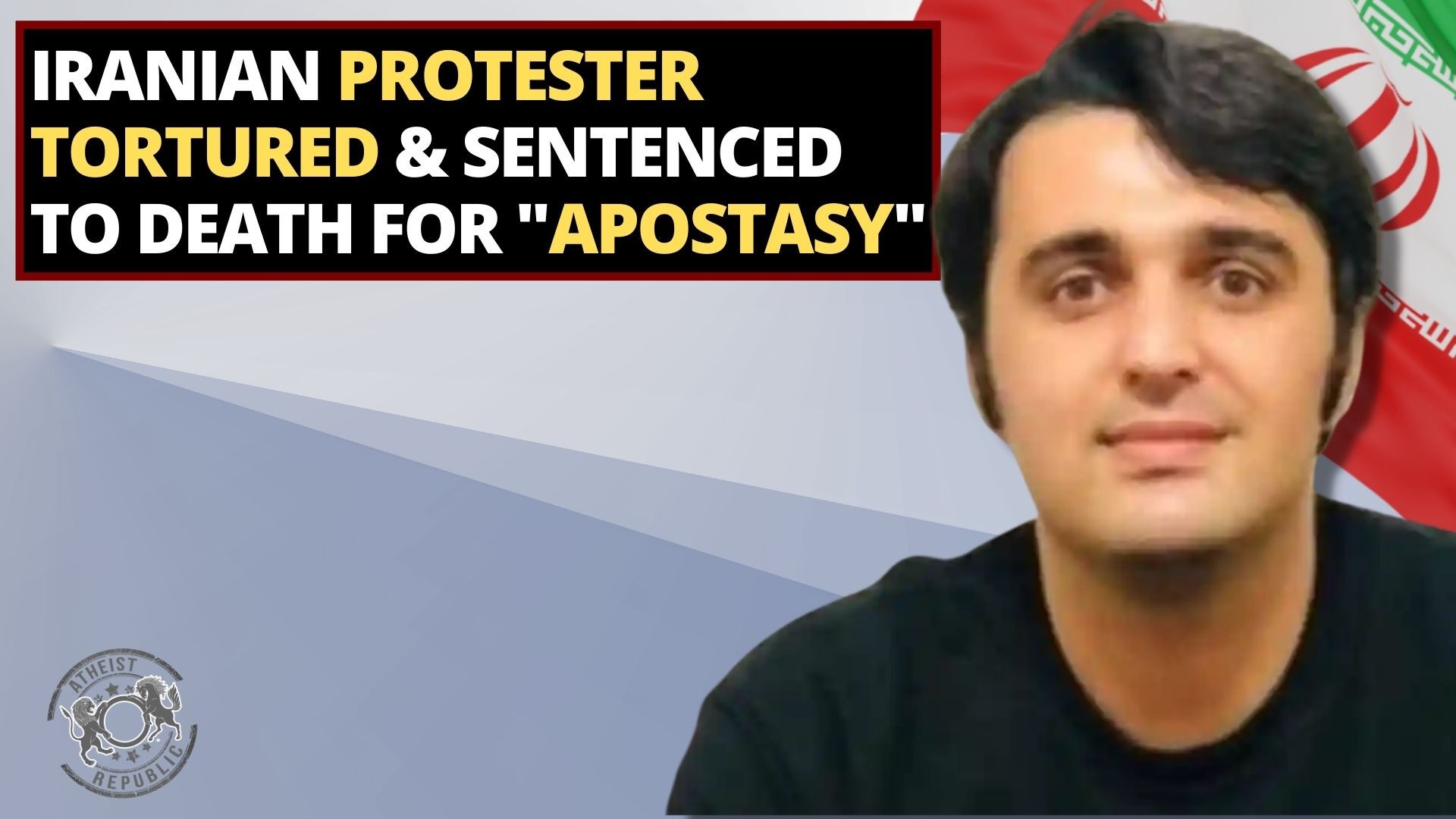
If the speech had stayed anchored to Article 18, the omissions would have been impossible to ignore: apostasy treated as a crime, in some places a capital one; the right to convert denied in law; and access to holy sites restricted where it is most visible and most contested, to Jews on the Temple Mount in Jerusalem.

These are not edge cases. They are direct contradictions of the standard set in 1948.

They went unmentioned.
The reason is not subtle. The United Nations that wrote Article 18 was asserting principle in the shadow of catastrophe. The United Nations that speaks today operates at the consent and behest of large voting blocs. Many of those blocs come from the Global South, including dozens of Muslim-majority states that reject the core of Article 18 where it matters most: the right to change religion and the expectation that religious access should be reciprocal.

Within that reality, the boundaries of acceptable language narrow.

No mention of apostasy laws.
No mention of capital punishment for conversion.
No mention of restricted prayer where it cuts closest to the principle.

So the language adapts. The sharp edges of Article 18 are rounded into generalities that everyone can endorse, including those who, in practice, deny them. The result is a version of “religious liberty” that survives as rhetoric while its substance is negotiated away.

This is not an evolution of human rights. It is a retreat from them.

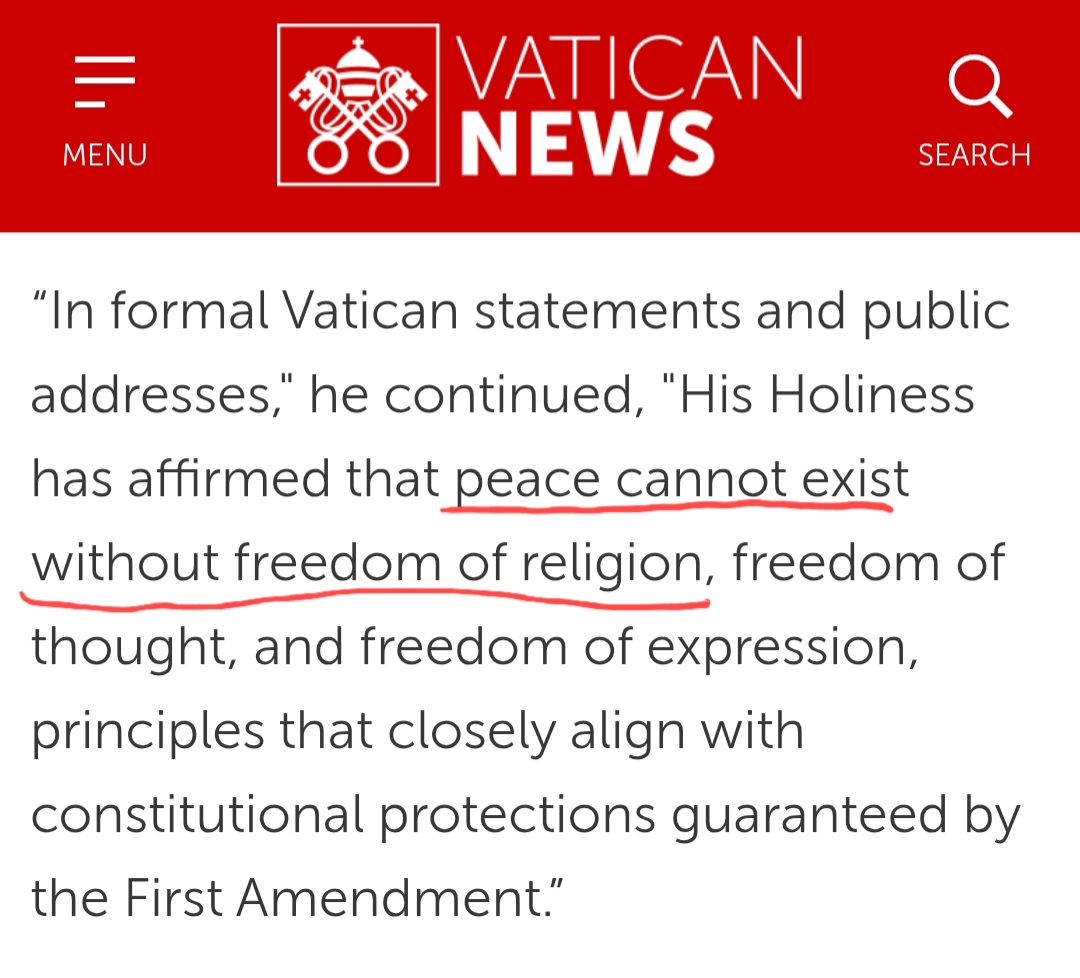
The United Nations once set a standard that stood above politics. Today, it reflects the ugly politics of those who sit within it. And as the Pope will tell you, there can be no peace without religious liberty. Ergo, the UN has become one of the primary sources of discord and violence in the world today.
#IslamicSupremacy


All Muslims Are Not Jihadists

There is a temptation in moments of fear and anger to reach for the bluntest possible instrument: collective blame.

We are seeing it again now, in calls from some politicians and commentators to treat Muslim Americans not as individuals, but “as a class.” It is offensive. It is wrong. And it is profoundly un-American.

We have been here before.

American history offers a warning that should never be forgotten: General Ulysses S. Grant’s order expelling Jews “as a class” from parts of the South during the Civil War. It was born of frustration, prejudice, and expedience. It is remembered today as a stain.

That is what collective guilt produces. Not security. Not clarity. Just injustice.

And it obscures the truth.

Because the truth is more important: not all Muslims are jihadists. The overwhelming majority are not. But there exists, within every society, a subset animated by radical, supremacist ideology. In this case, that subset is jihadists and they are a very real problem.

We have seen synagogues attacked, Jewish schools targeted, and civilians murdered around the world – from New York to Paris, from Sydney to Jerusalem. These acts are not isolated. They are the violent edge of a broader ideological ecosystem that glorifies terror, sanctifies hatred, and seeks legitimacy in the West.

That ecosystem is not confined to foreign battlefields. It has nodes here.

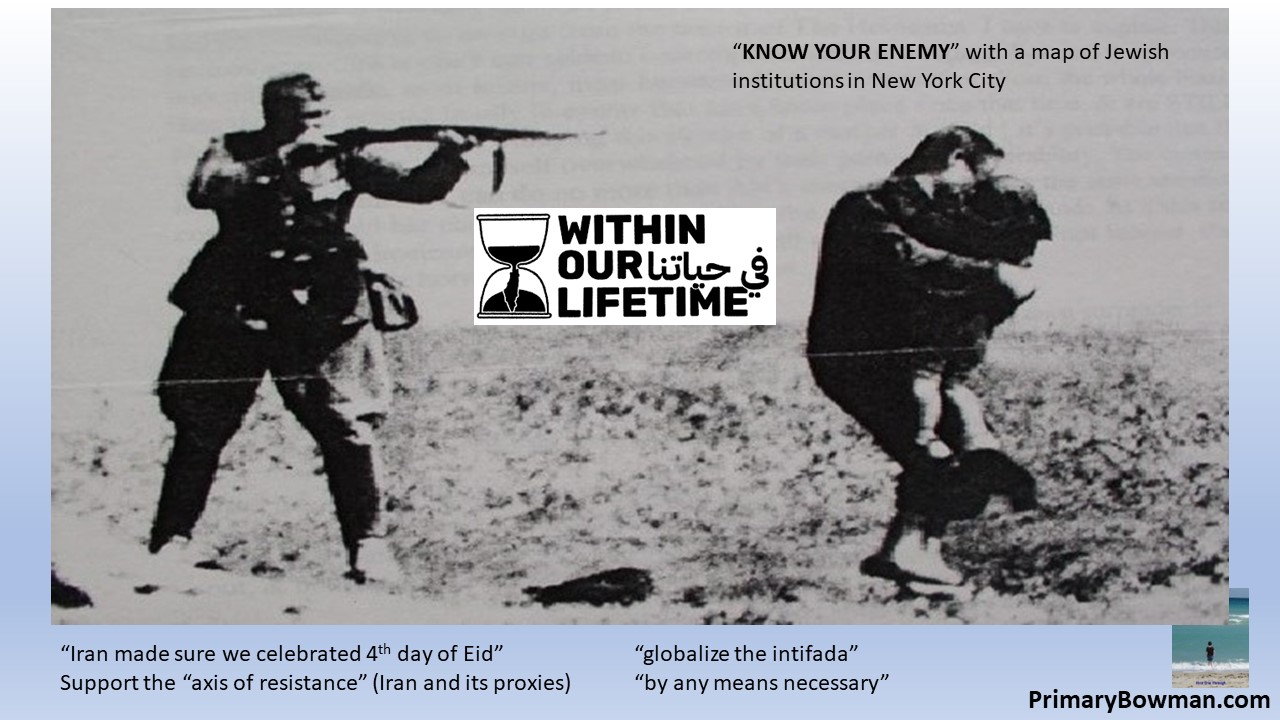
Organizations like Students for Justice in Palestine (SJP) and Within Our Lifetime do not operate as neutral advocacy groups. Their rhetoric, tactics, and alliances echo the narratives of jihadist movements – erasing terrorism, justifying atrocities, and turning mass violence against Jews into something to be rationalized and celebrated.

This is where scrutiny belongs.

Not on millions of Muslim Americans living ordinary lives who are part of the American fabric. But on the networks, organizations, and ideologies that radicalize, that excuse violence, and that deliberately blur the moral line between protest and terror.

Failing to make that distinction is not only unjust but dangerous.

When everything is labeled the problem, nothing is. When all Muslims are treated as suspects, actual jihadists disappear into the noise. They benefit from that confusion. They rely on it.

And worse, it hands them a propaganda victory: proof, in their telling, that the West is inherently hostile, that coexistence is impossible, that radicalism is justified.

That is why calls to expel Muslims from the United States are not just racist; they are strategically self-defeating. They punish the innocent, betray American principles, and distract from the real threat.

A serious society does not fight ideologies with hysteria. It fights them with precision.

It identifies the threat clearly: jihadist ideology, its enablers, and the institutions that normalize or legitimize it. It protects the innocent. And it refuses, no matter how charged the moment, to abandon the principles that distinguish a free society from the movements that seek to destroy it.

Will CAIR Support Jewish Prayer on the Temple Mount During Passover?

CAIR (Council on American-Islamic Relations) recently accused Israel of “waging war on Islam” after security restrictions limited Muslim access to the Al-Aqsa compound during Ramadan.

According to CAIR, preventing Muslim worship at one of Islam’s holy sites is proof of hostility toward Islam itself.

If that is the standard, then a simple question follows:

Will CAIR support Jewish prayer on the Temple Mount during Passover?

Because if restricting prayer equals religious persecution, then Muslims have been denying Jews the right to pray at their holiest site for generations.

The Holiest Site in Judaism

The compound Muslims call Haram al-Sharif is the Jewish Temple Mount, the holiest site in Judaism.

It is where the First Temple of King Solomon stood.
It is where the Second Temple stood until the Romans destroyed it in 70 CE.

For nearly two thousand years Jews have prayed toward this location.

Yet today Jews are largely forbidden from praying there.

Under the “status quo” arrangement Israel maintained after capturing Jerusalem in the Six-Day War, Jews may visit the Temple Mount during narrow windows of time via a single entry portal, but are generally prohibited from praying, even silently.

The reason is simple: Muslim authorities insist Jewish prayer there is unacceptable.

A Short History of the Ban

The prohibition on Jewish worship at the site did not begin recently.

  • Under Ottoman rule, Jewish prayer on the Temple Mount was restricted.
  • From 1948 to 1967, when Jordan controlled eastern Jerusalem, Jews were banned entirely from visiting the Old City, even the Western Wall, Judaism’s most sacred accessible prayer site.
  • After 1967, Israel regained control of the Old City but maintained Muslim administrative authority over the mount to prevent unrest.

The result is an unusual reality:
The holiest site in Judaism is effectively the only major religious site in the world where adherents of that religion are largely barred from praying.

A One-Way Principle

CAIR’s accusation therefore reveals a remarkable double standard.

When Muslim access is restricted temporarily during wartime security conditions, it is framed as an attack on Islam. But when Jews are prevented from praying at their holiest site at all times, it is treated as normal.

Religious freedom, apparently, runs in only one direction.

The Passover Test

If CAIR genuinely believes preventing prayer at a holy site is an attack on religion, the principle should apply equally. Which leads to a straightforward test:

Will CAIR support Jewish prayer on the Temple Mount during Passover?

Not silent whispers quickly stopped by police. Actual prayer at Judaism’s holiest location.

If religious liberty is universal, that should be an easy position to endorse.

The Irony

Israel remains one of the few countries in the Middle East where Muslims freely maintain and worship at major holy sites. Yet Israel is accused of “waging war on Islam” for imposing security restrictions during a war.

The claim collapses the moment the broader reality is considered.

So instead of outrage, perhaps the most useful response to CAIR’s statement is curiosity: Will CAIR support Jewish prayer on the Temple Mount this Passover?

Or is religious freedom a principle that applies only when the worshippers are Muslim?

#IslamicSupermacy

Outrage at History, Silence at Doctrine

The U.S Ambassador to Israel, Mike Huckabee, referenced ancient Jewish kingdoms. History. Memory. Geography.

And the world went nuts.

US Ambassador to Israel Mike Huckabee interviewed by Tucker Carlson

He cannot redraw borders. He has no authority to even set U.S. policy, let alone Israel’s.

Yet the reaction was immediate: he was condemned and vilified through the Muslim world.

At the same time, doctrines that openly reject Israel’s existence are treated as mere rhetoric.

Israel’s record makes the contrast unavoidable. After military victory, it returned the Sinai Peninsula to Egypt. It withdrew from Gaza, dismantling settlements and military presence. Few states concede territory after defeating enemies committed to their destruction.

The popular political-terrorist group Hamas begins from the opposite premise. Its doctrine frames the land as “waqf,” a permanent religious trust, and within the logic of Dar al-Islam, territory that can never be relinquished because it was once ruled by Muslims. This is not metaphor but structure. The conflict is defined as unfinished until sovereignty changes.

And this doctrine is not isolated to a particular politician.

Qatar and Turkey – on a sanctioned national level as a matter of policy – host and politically enable Hamas leadership. They provide access, legitimacy, and endurance for a movement whose framework rejects Israel’s permanence as a foundational principle.

The asymmetry is stark.

A Western figure referencing ancient Jewish kingdoms triggers global outrage. A movement invoking waqf and Dar al-Islam to destroy the Jewish State draws no scrutiny.

This is dangerous narrative selection.

Speculative Jewish expansion is treated as imminent risk, while explicit ideological rejection of Jewish sovereignty is normalized.

In this world view, Jewish history is reframed as provocation and therefore the basic fabric of Jewish peoplehood is positioned as dangerous to be erased. At the same time, maximalist jihadi philosophy is normalized into diplomatic background.

And the press keeps feeding you this antisemitic bile, and no one pauses to call it out.

The core issue in the Middle East is the attempted obliteration of Jewish history and the presence of Jews in the name of Islamic supremacy. We are seeing it daily but failing to identify it plainly.