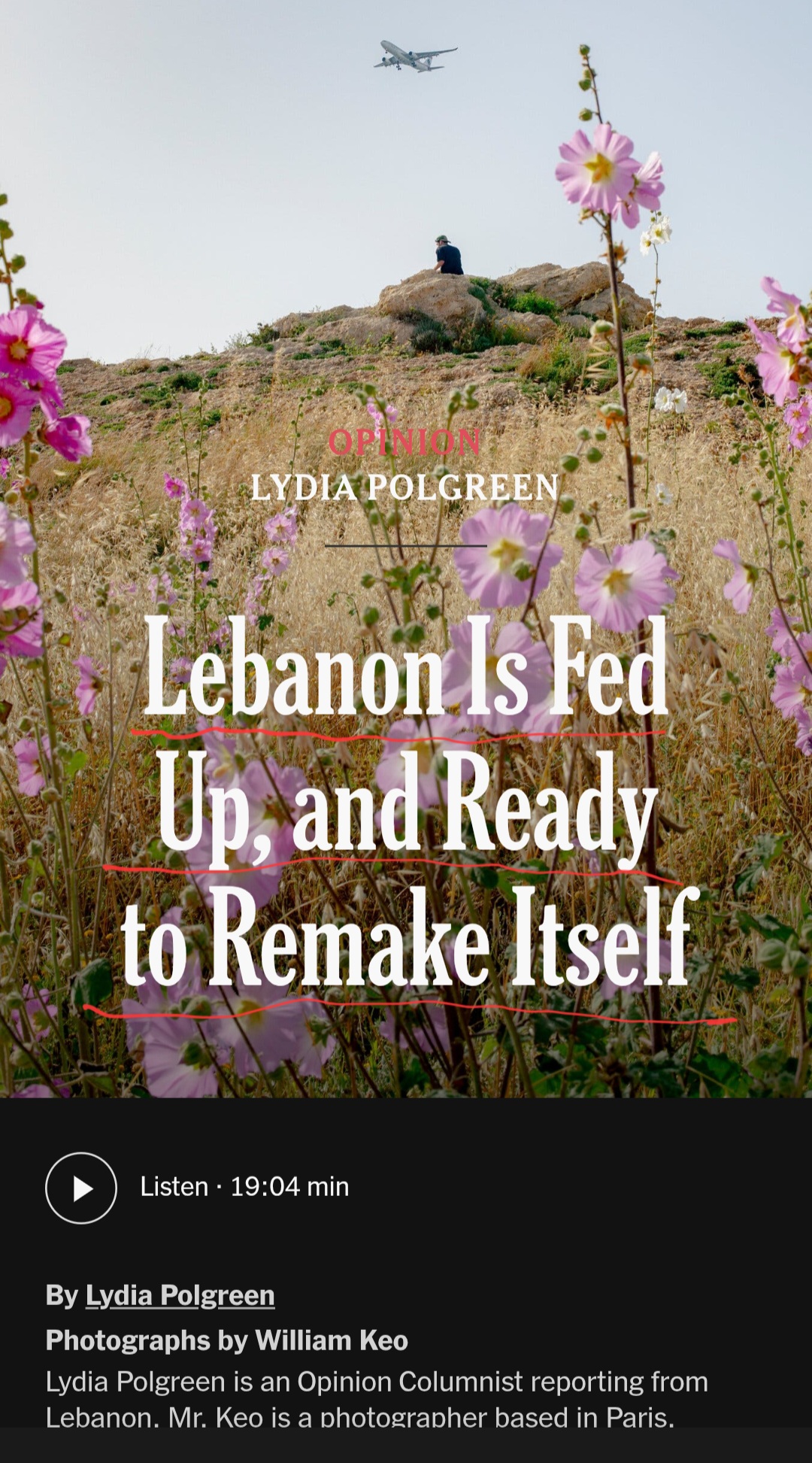
The most revealing part of a recent New York Times essay on Lebanon by Lydia Polgreen is that it eventually stops being about Lebanon.

Readers are taken through a long 3,200-word editorial about an “ancient” country recovering from war. They meet civilians, politicians, intellectuals, and even Hezbollah supporters. They hear about sovereignty, reconstruction, and national renewal.
Then the focus shifts.
What begins as a reflection on Lebanon’s future gradually becomes a discussion of whether Israel should continue to exist in its present form.
That turn reveals the essay’s central assumption.
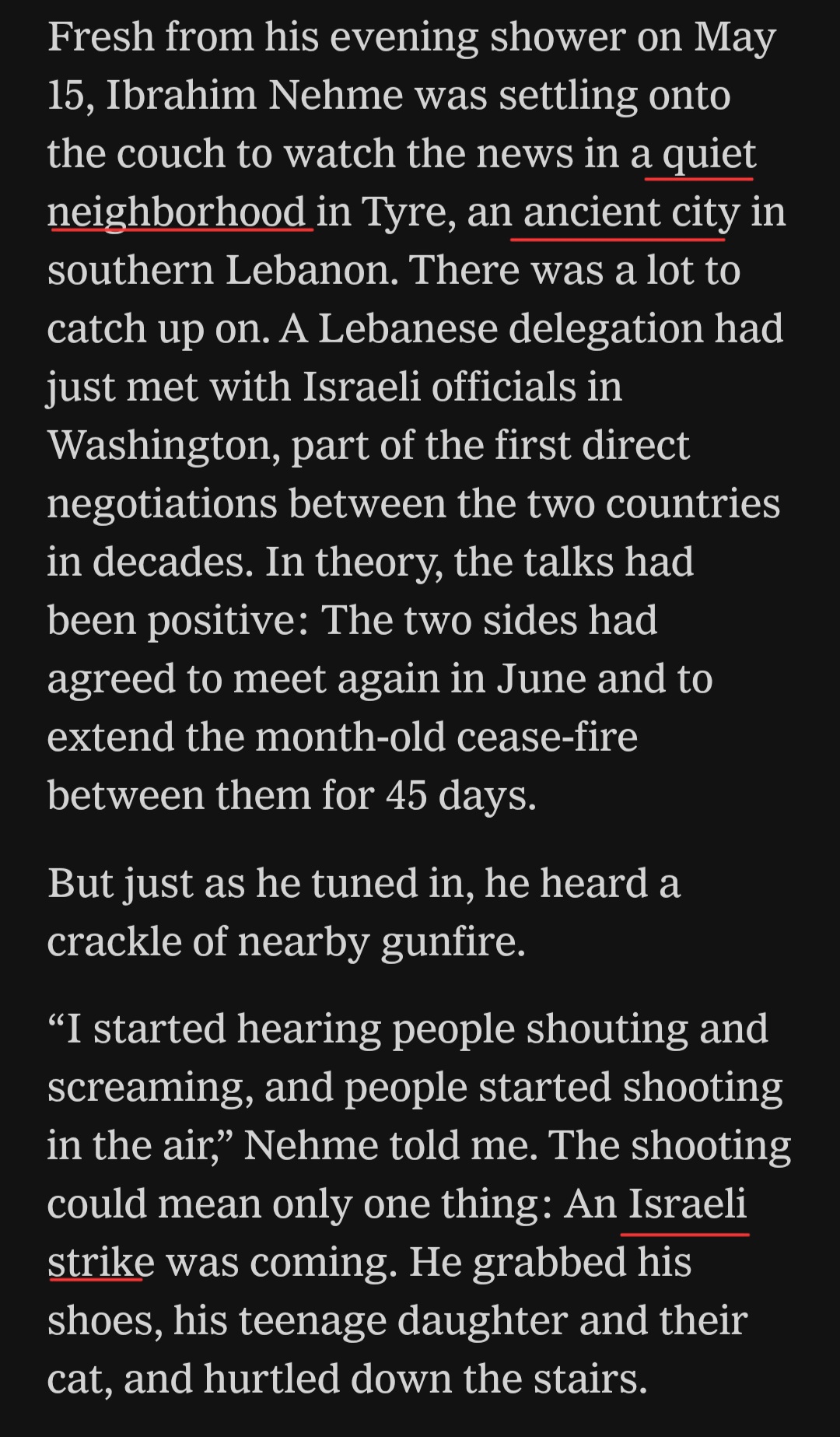
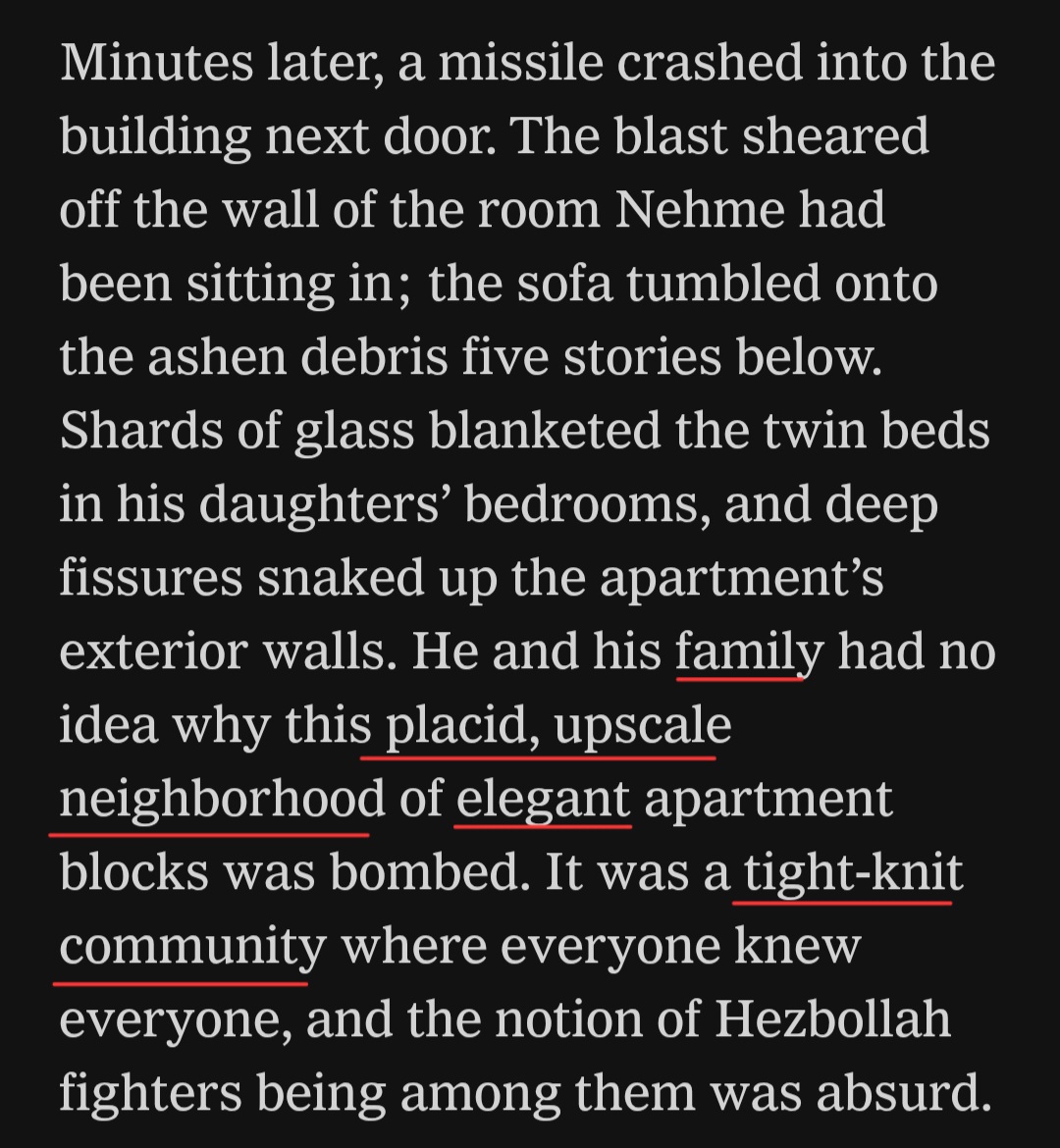
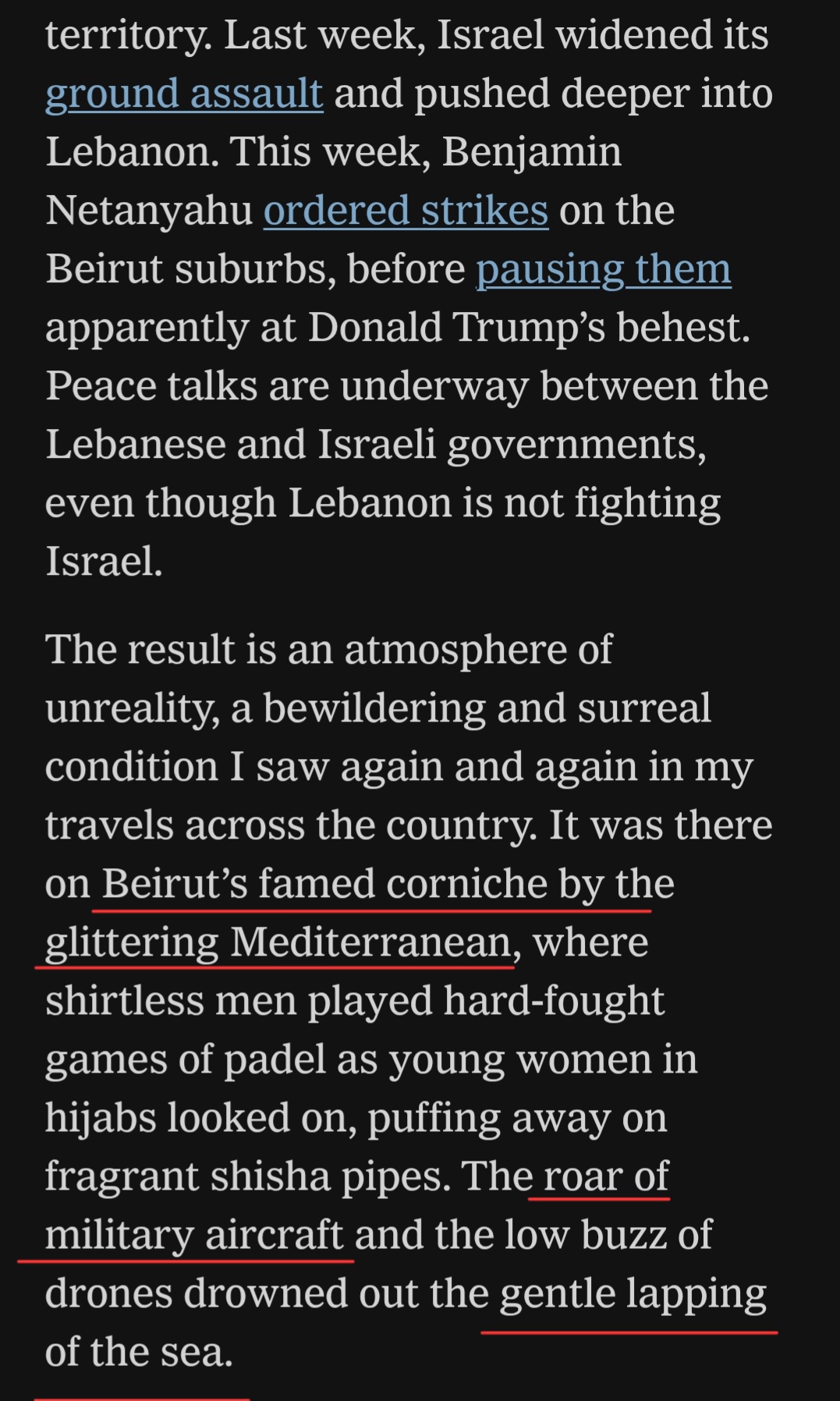
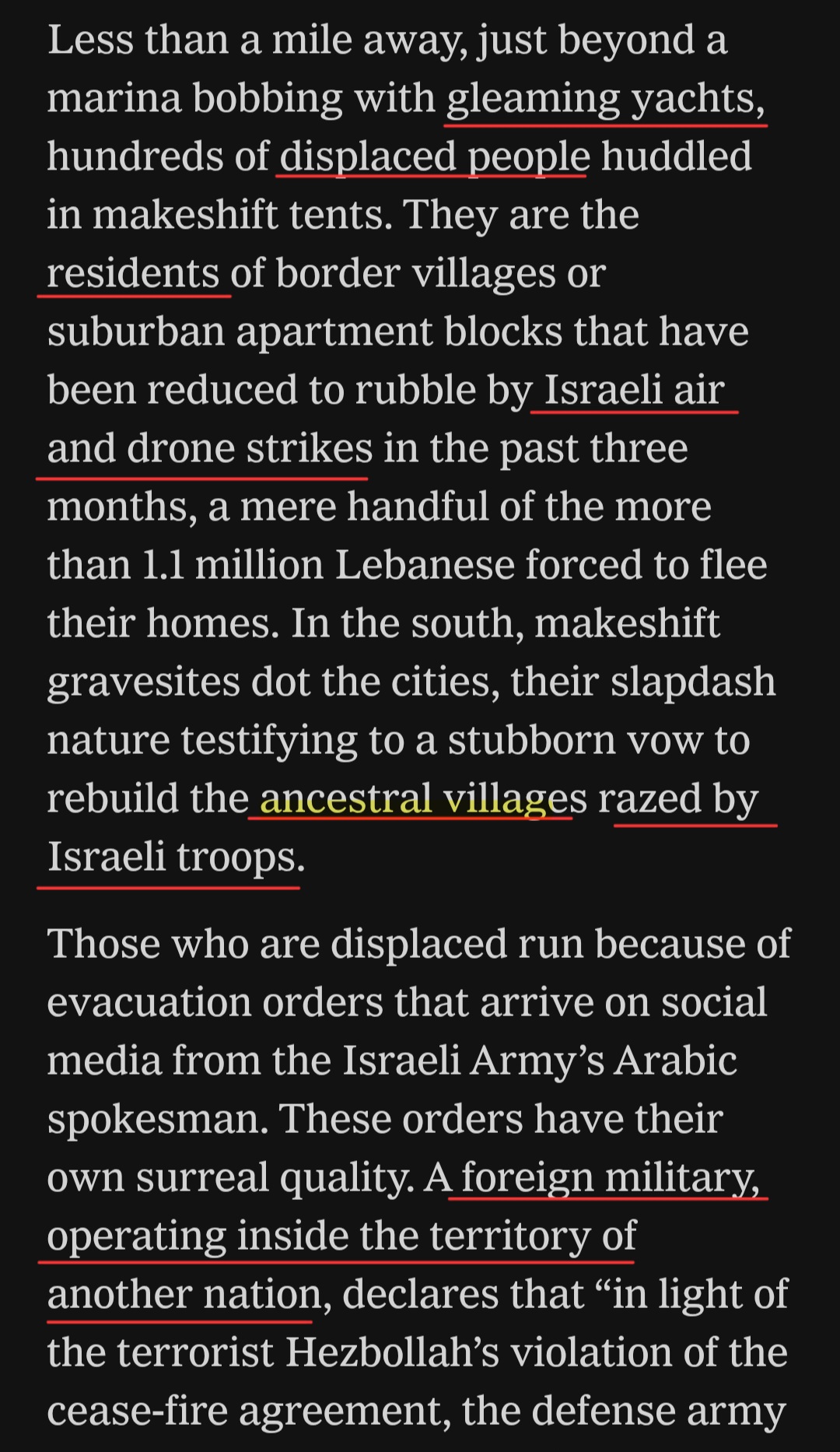
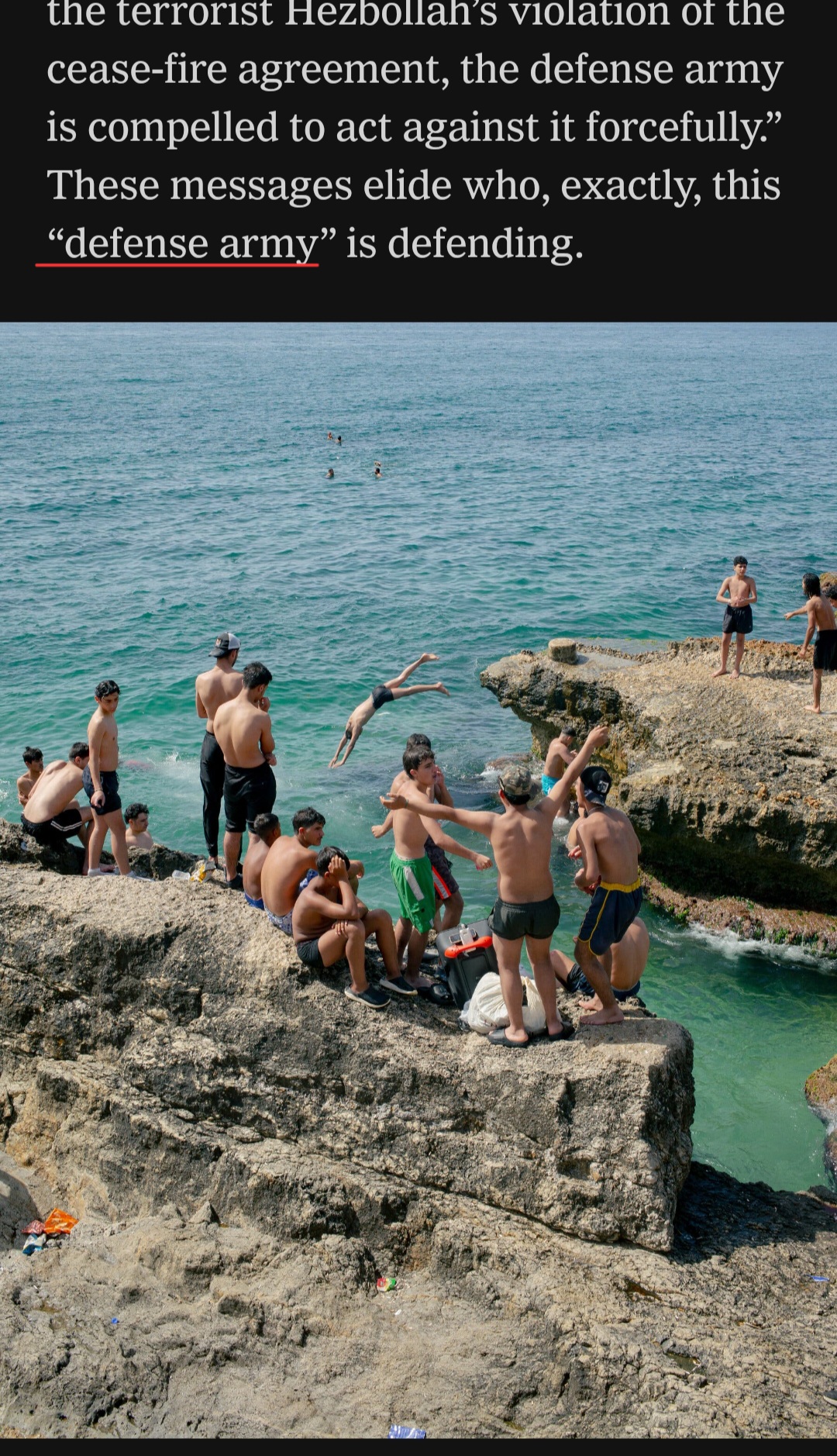
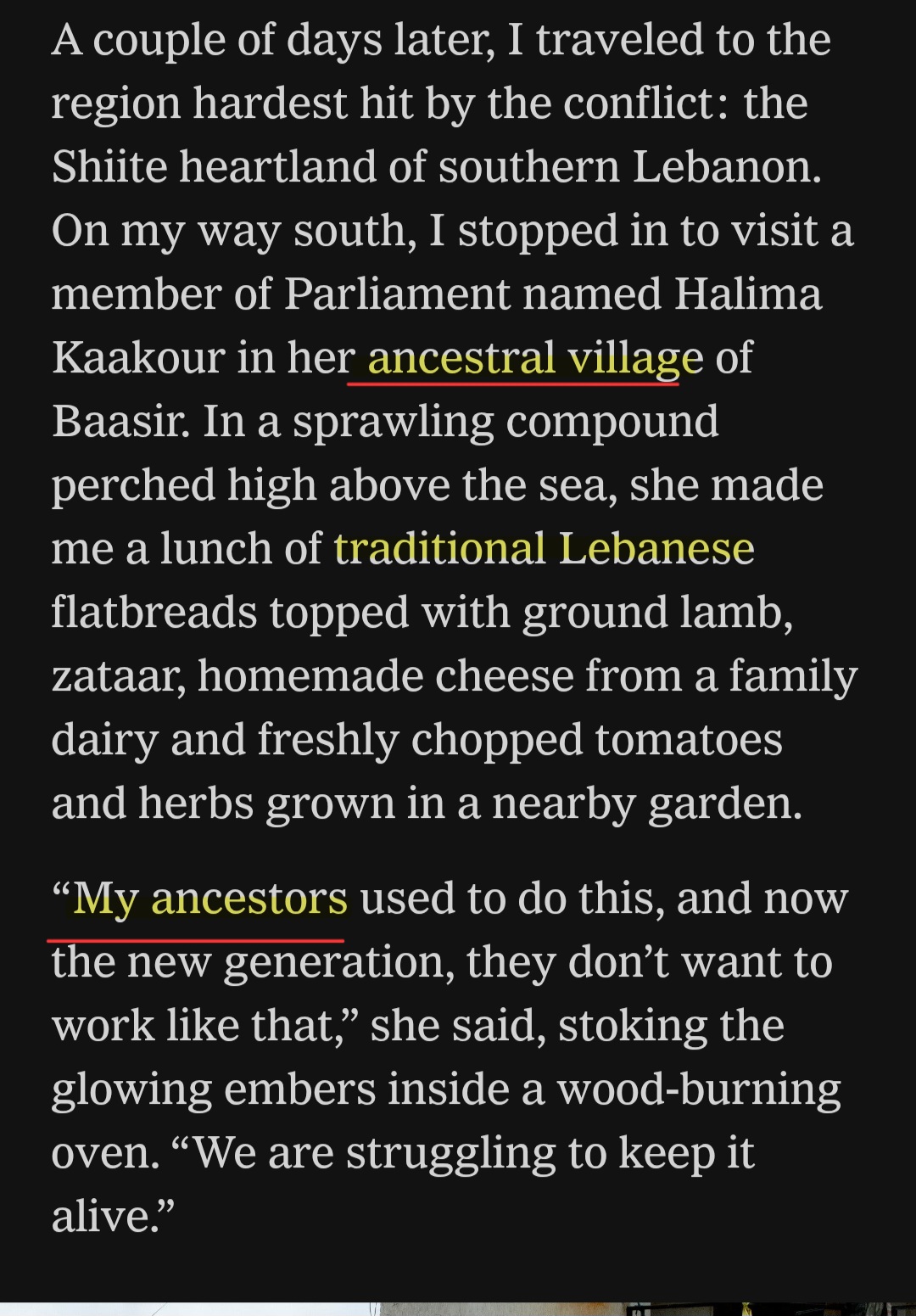
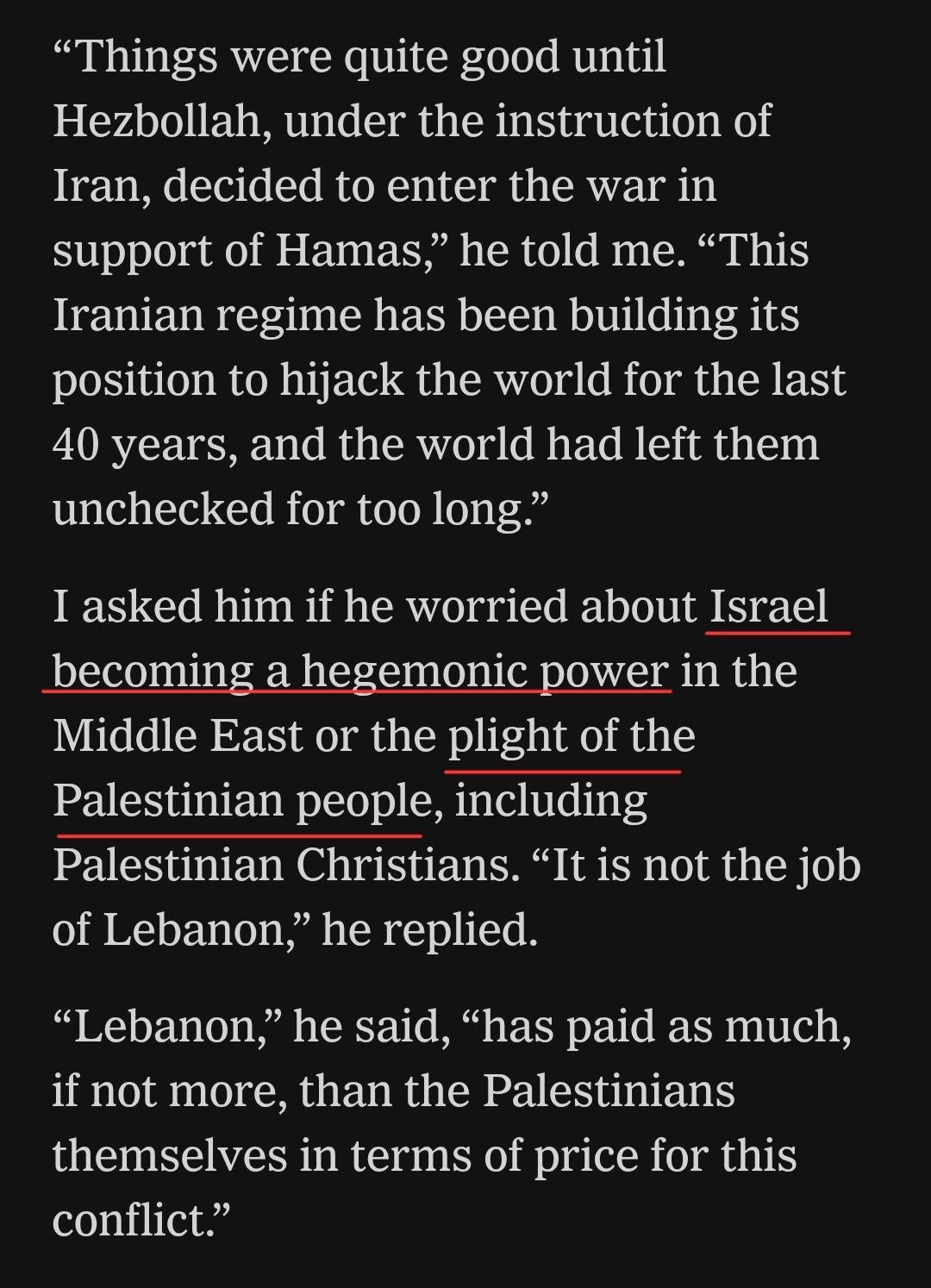
Lebanon is introduced through the language of continuity. Tyre is an “ancient city.” Villages are “ancestral.” Sectarian divisions are “ancient.” The country is presented as a society with deep roots struggling to reclaim its future.
Israel receives a different vocabulary.
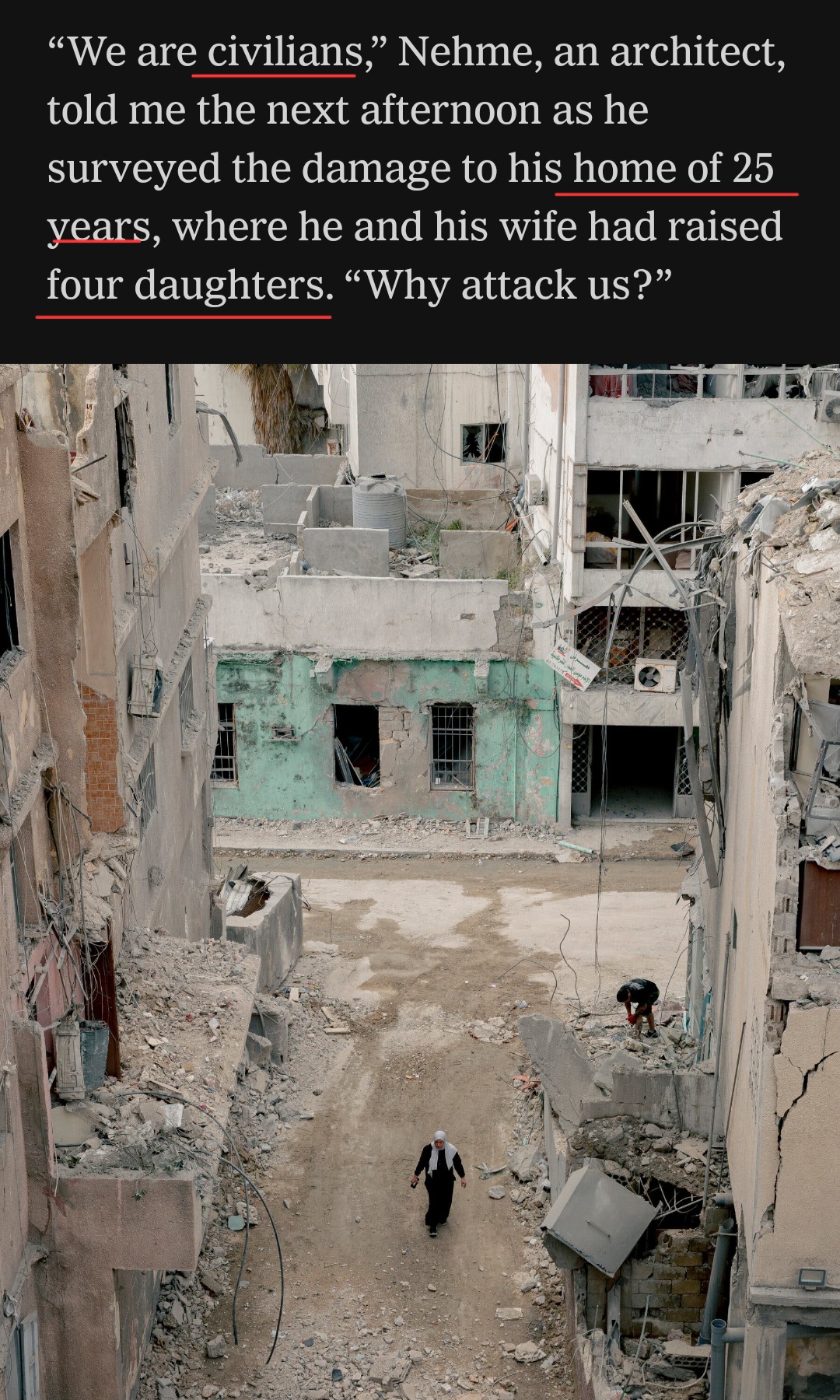
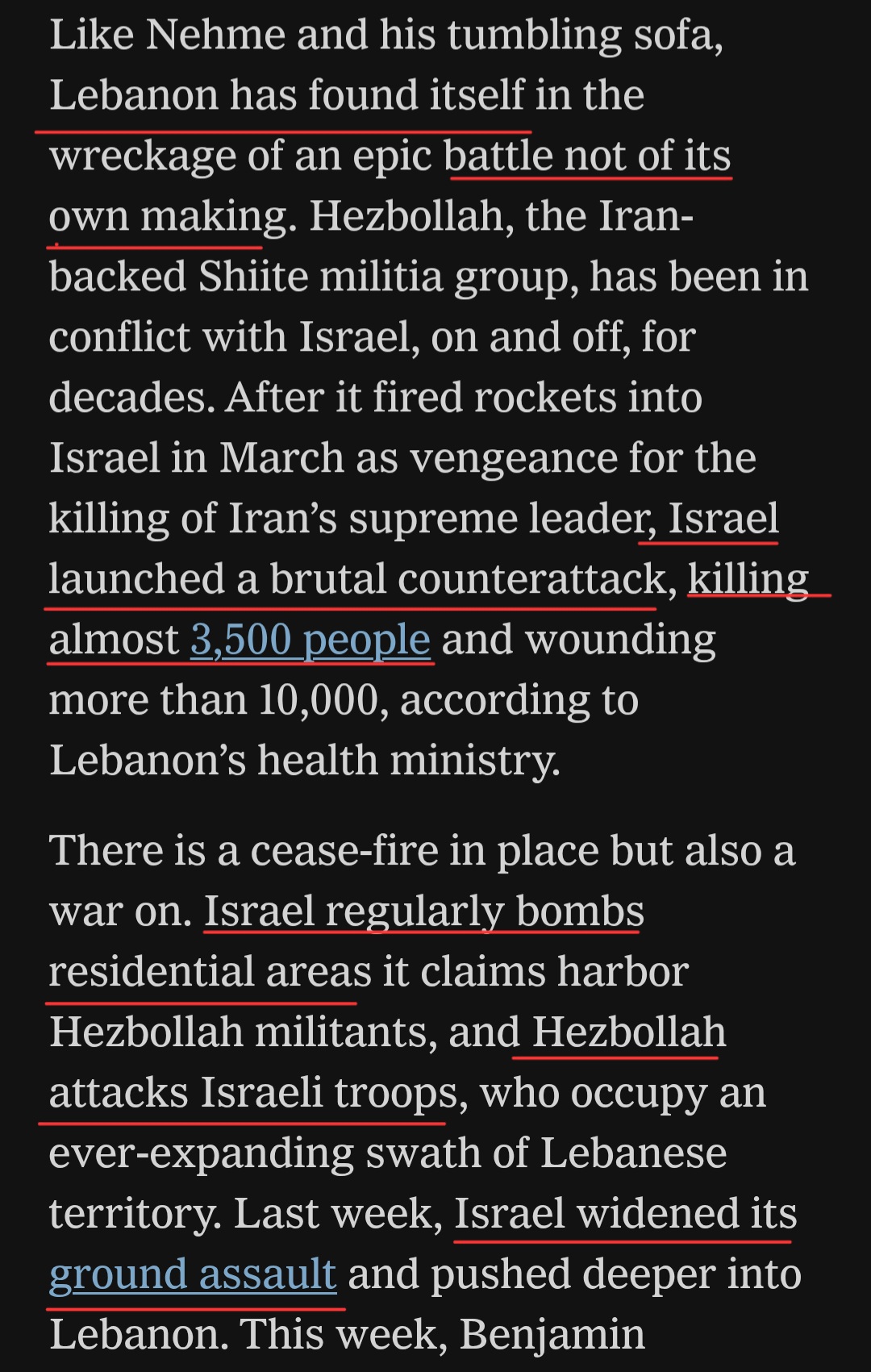
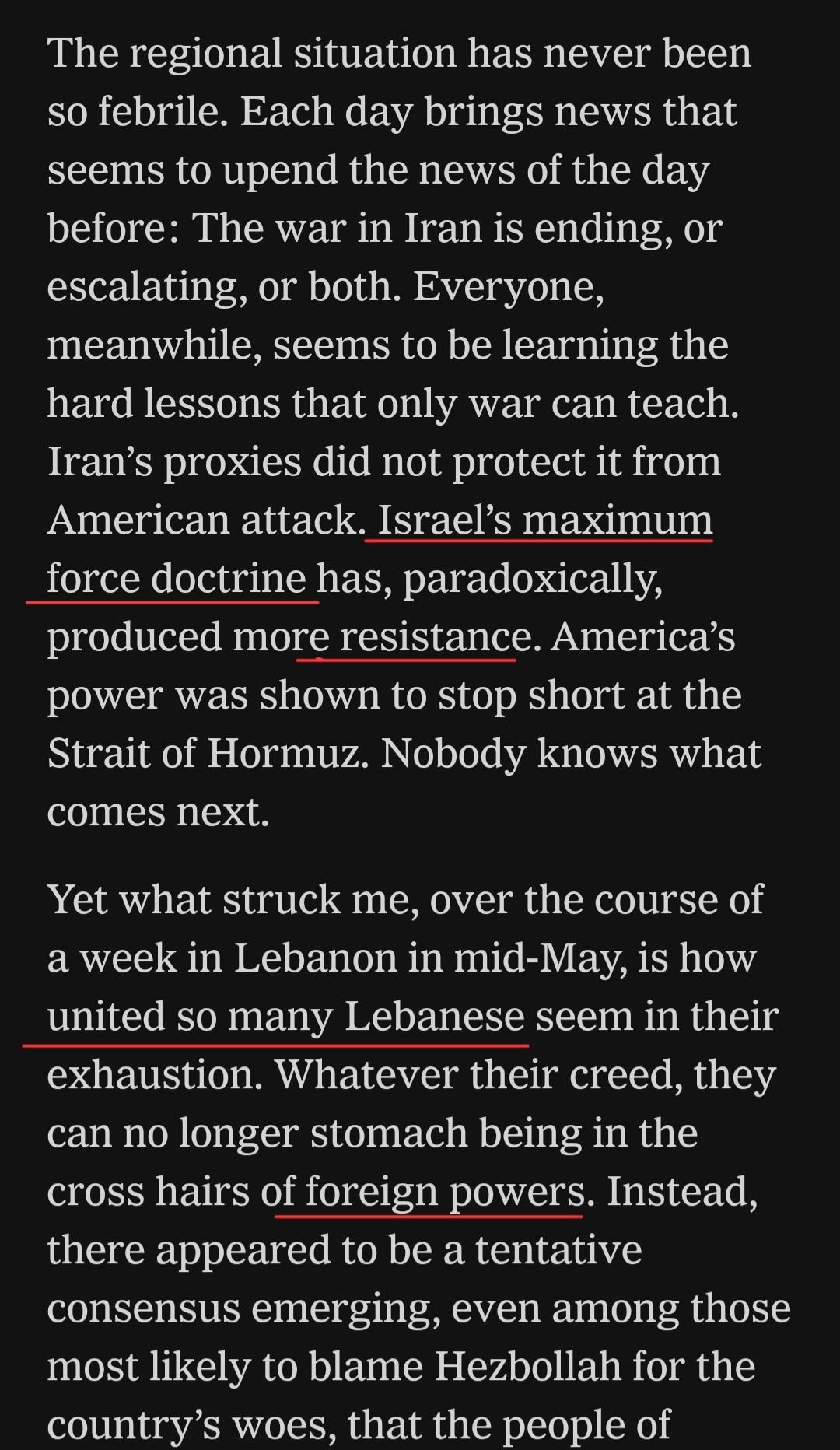
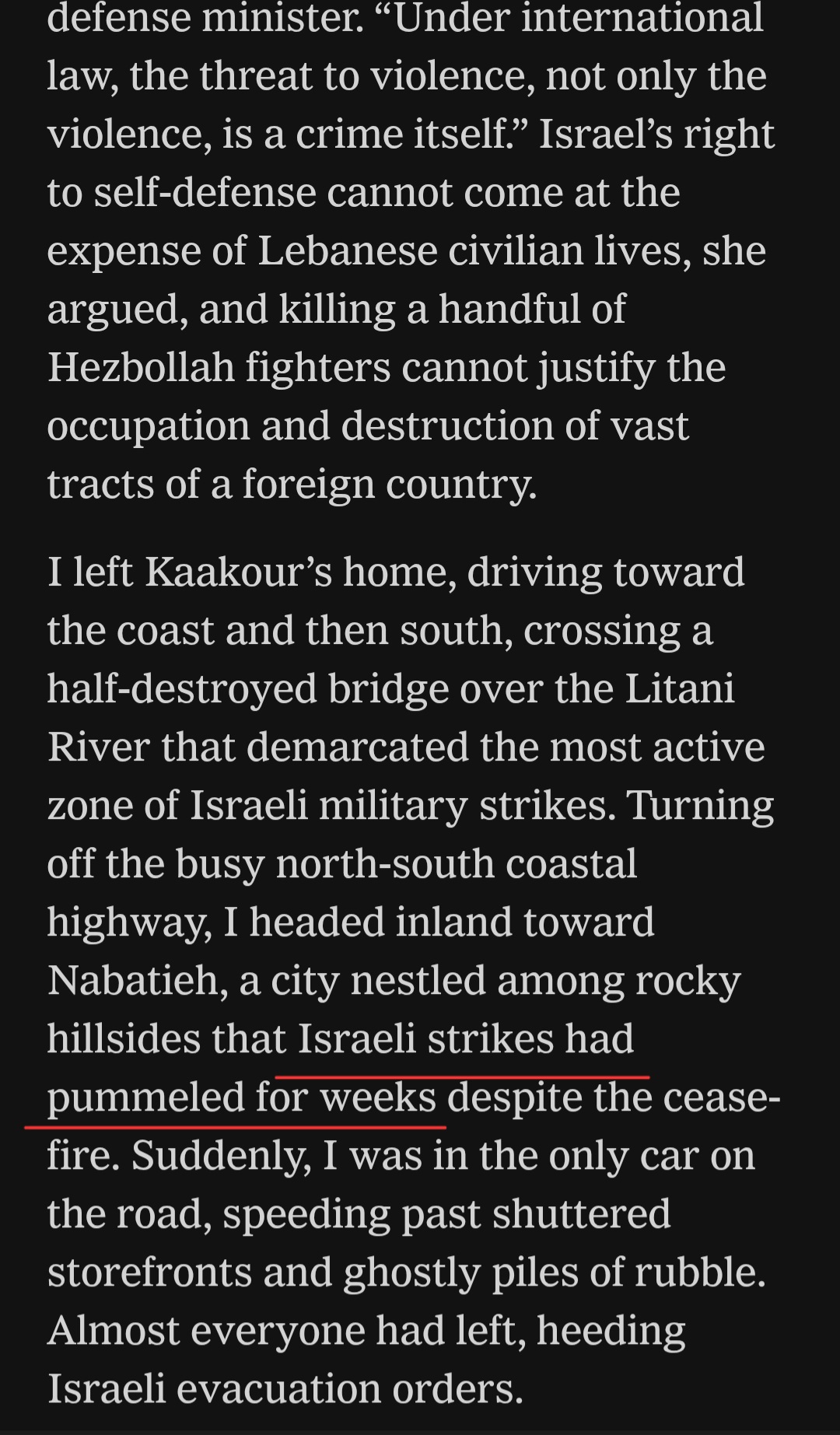
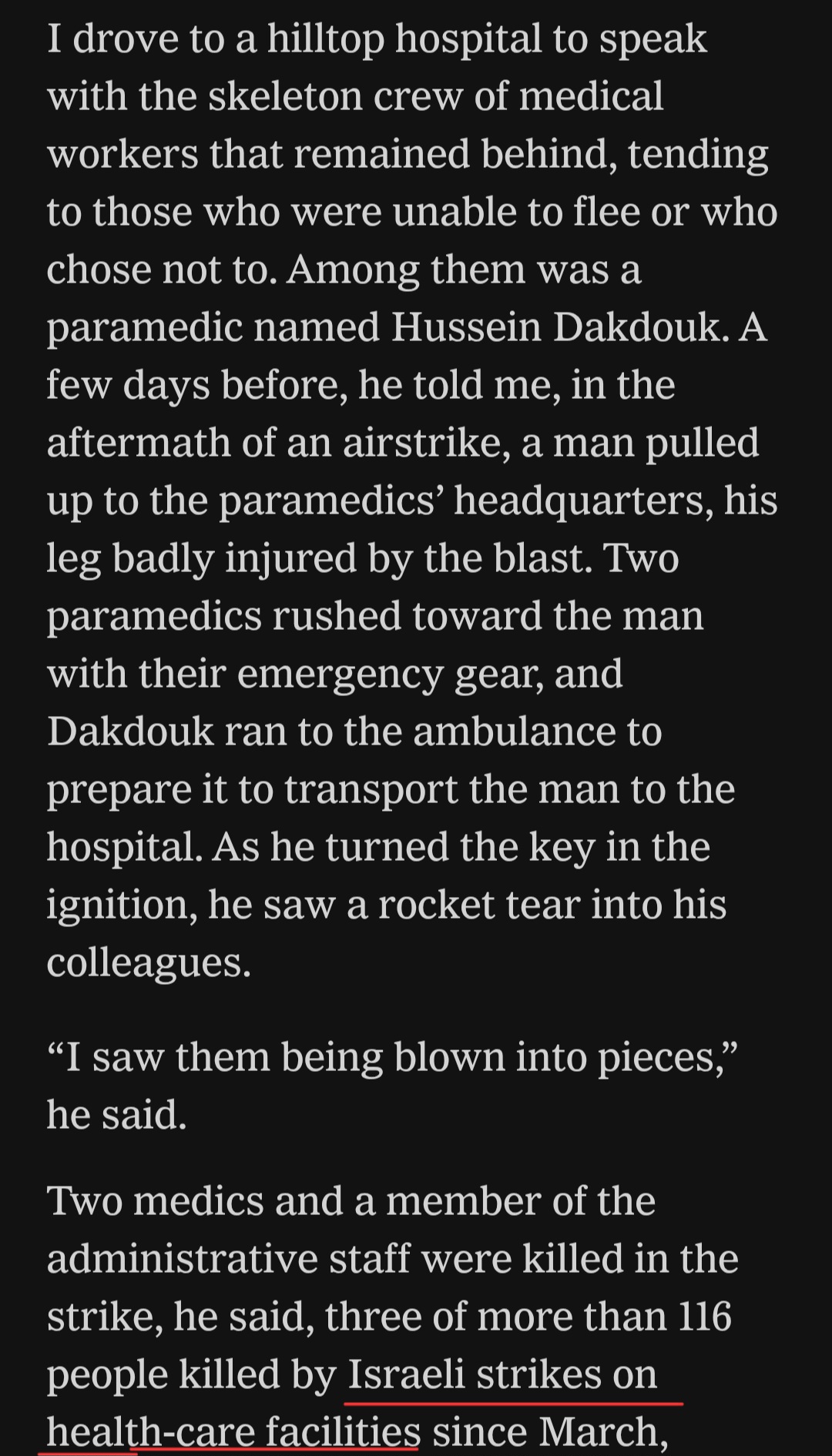
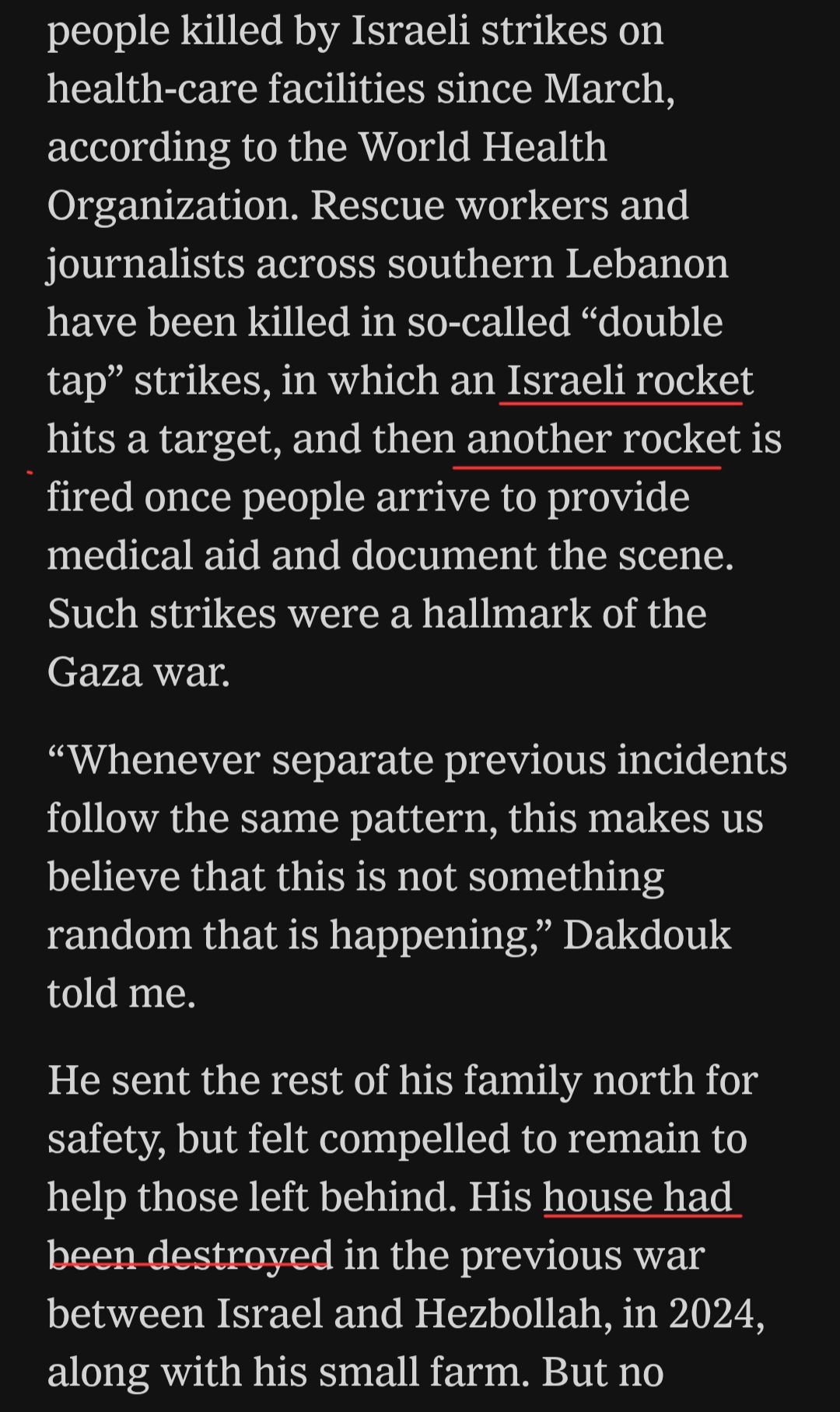
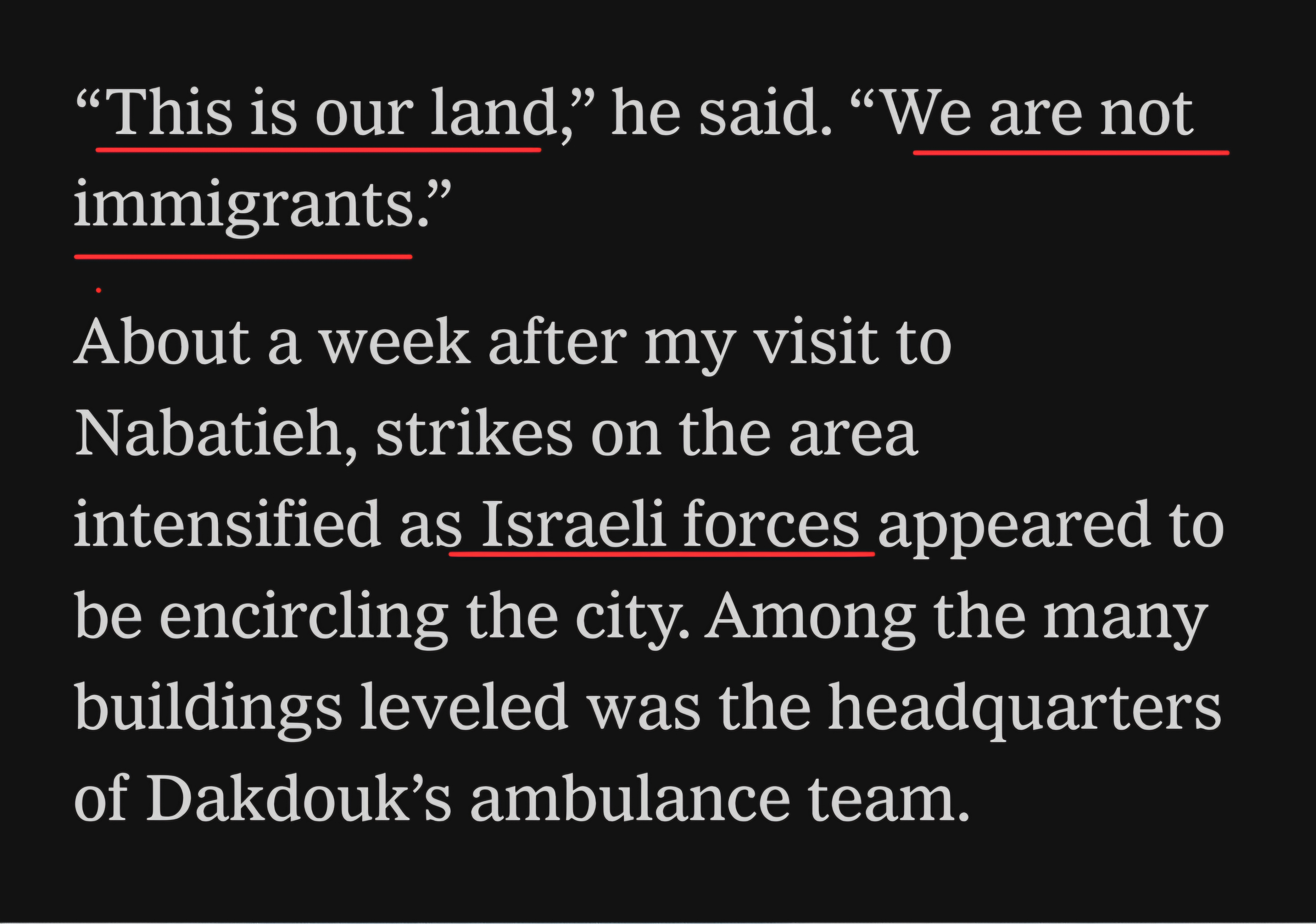
Israel occupies. Israel expands. Israel bombs. Israeli troops hold an “ever-expanding swath” of territory. The Israel is a “foreign military” operating inside another country. Israeli actions are repeatedly interpreted through ideological labels such as a “maximum-war doctrine.”
One nation is described through history and belonging. The other through power and force.
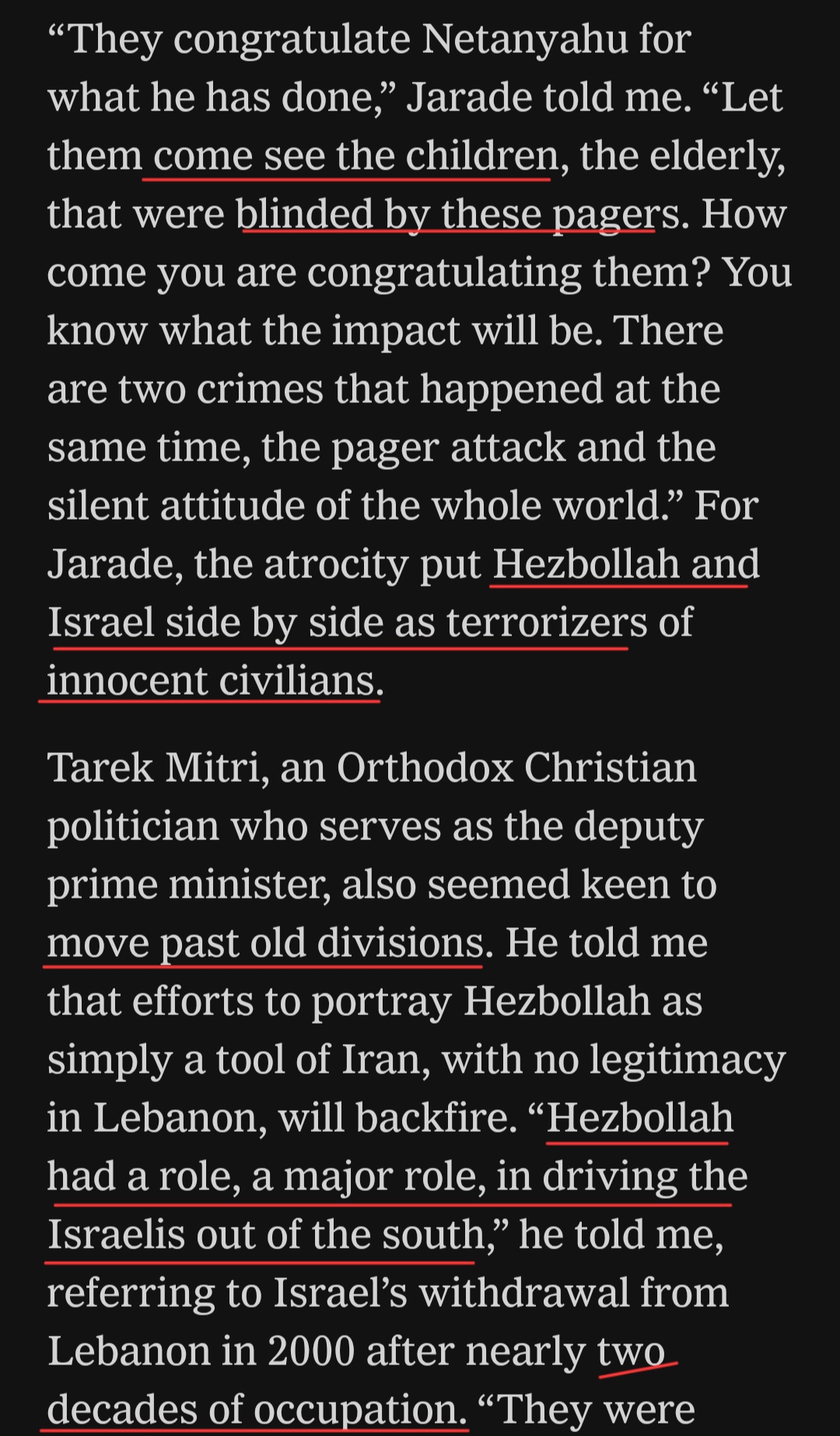
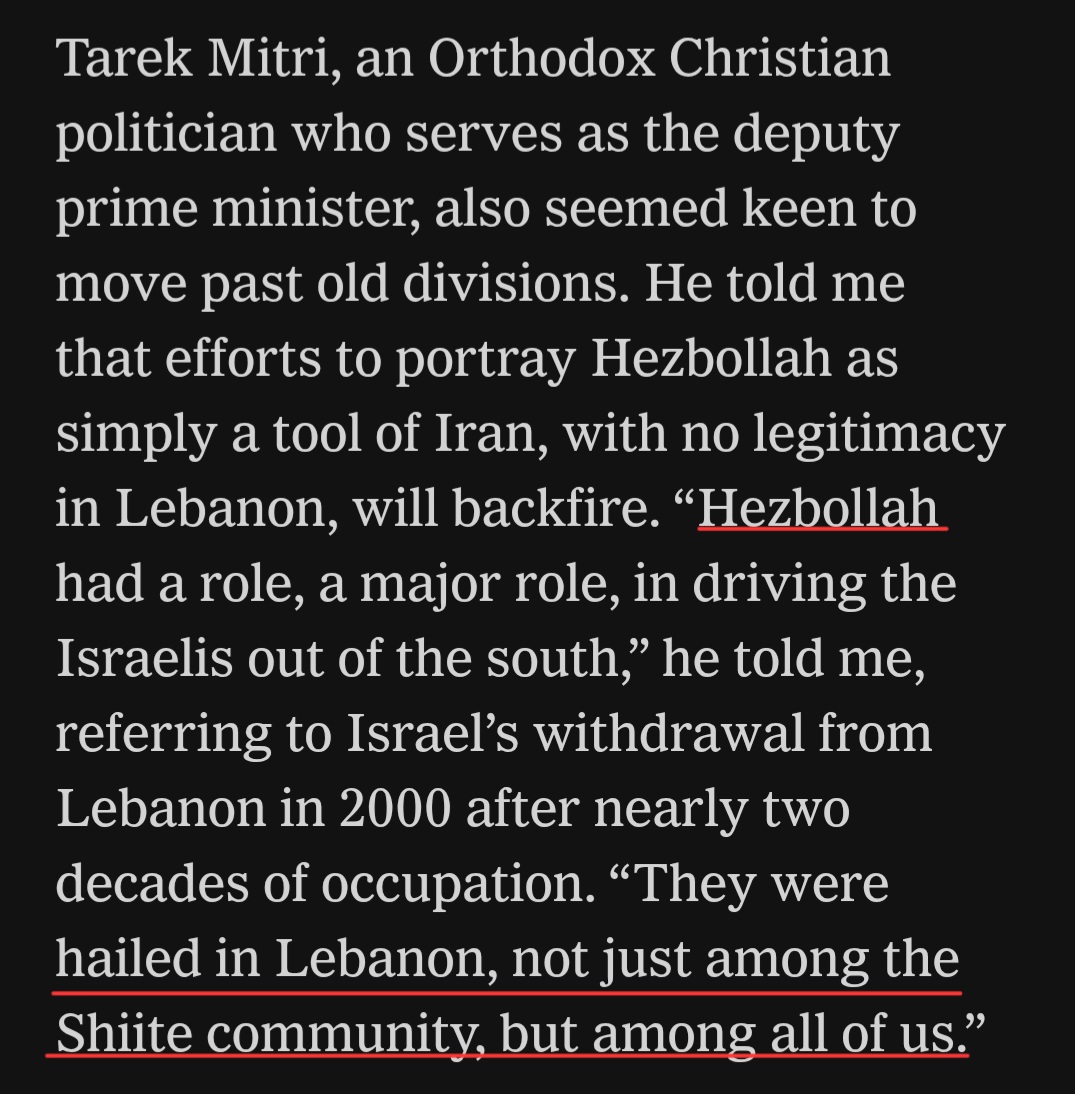
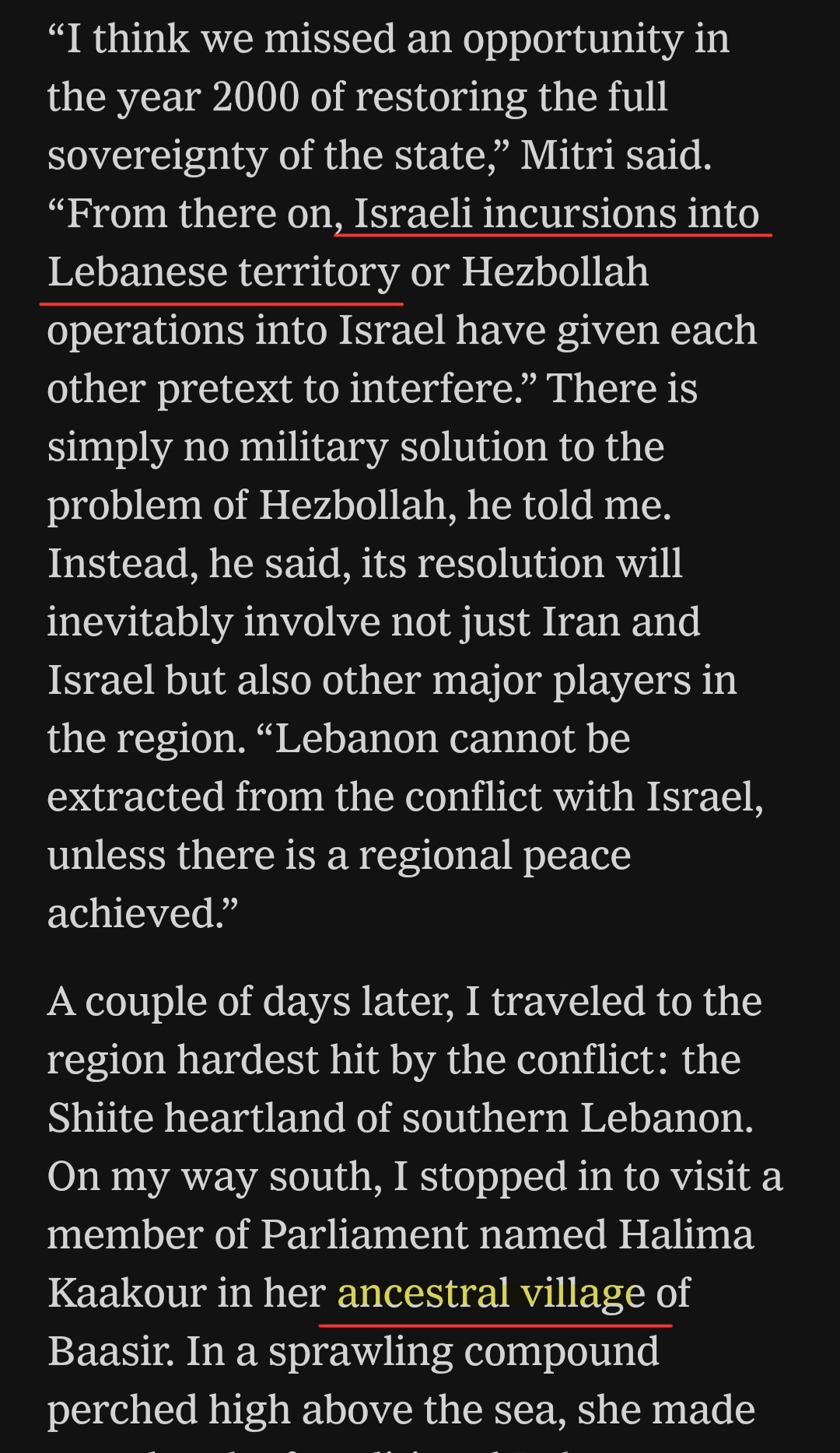
The contrast becomes more striking when the essay turns to sovereignty.
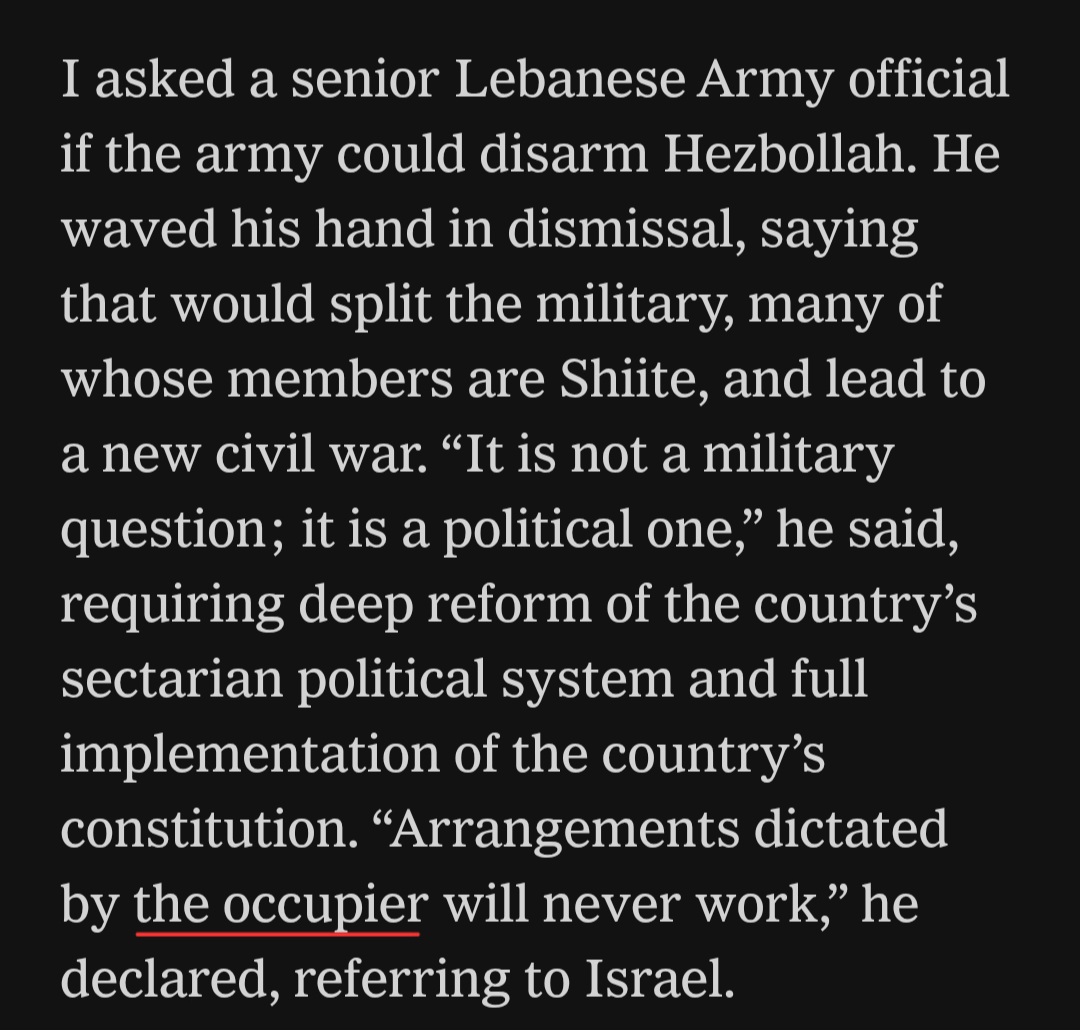
The preferred frame is Israeli intrusion into Lebanese sovereignty. Yet the defining political reality of modern Lebanon is that sovereignty itself remains unresolved.
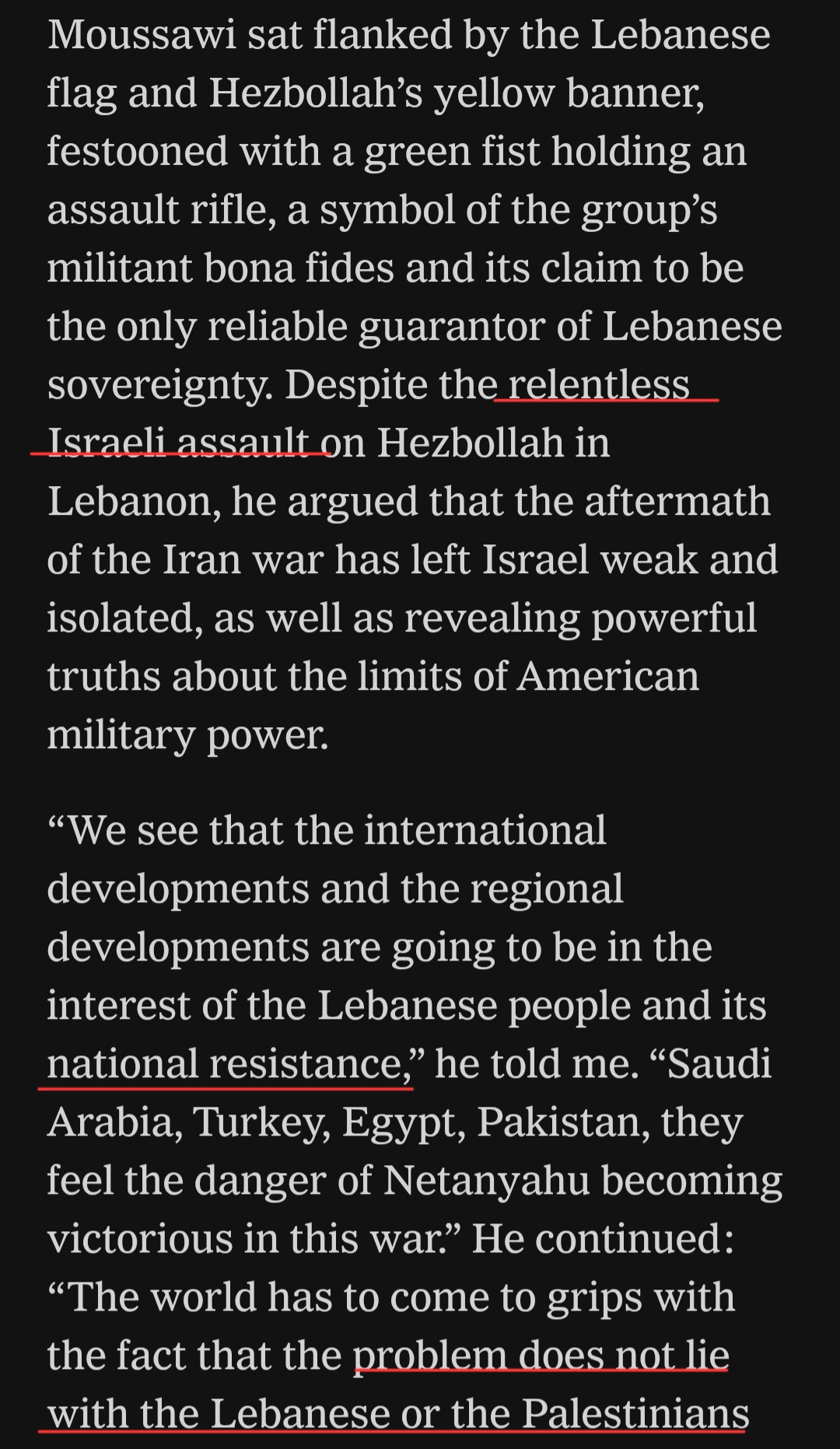
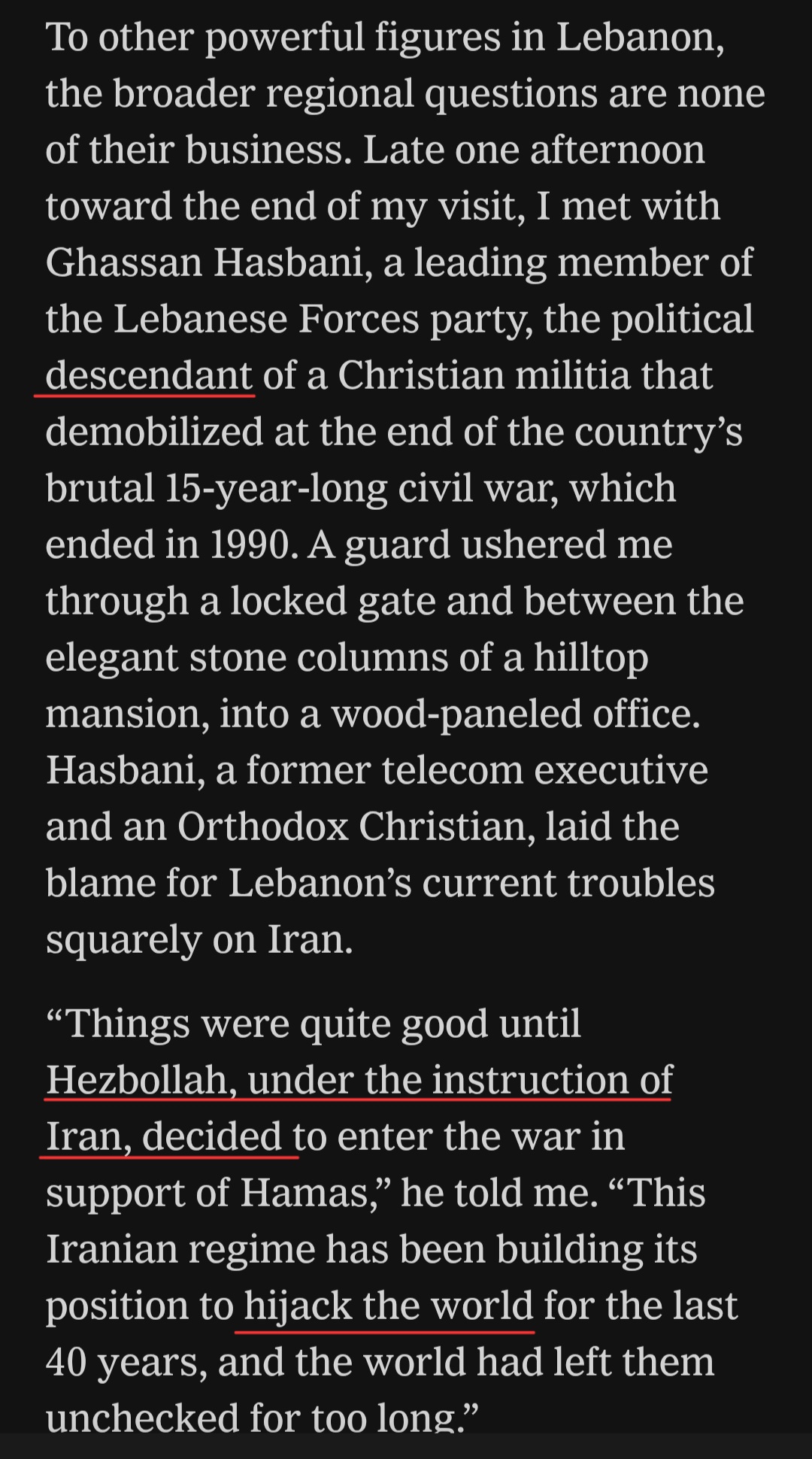
Hezbollah maintains an independent army outside the authority of Beirut. It receives funding, weapons, and strategic direction from Iran. It launched attacks on Israel after October 7 without authorization from the Lebanese government. For decades, Lebanese governments have struggled to establish a monopoly on force within their own borders.
The central question facing Lebanon is not merely reconstruction. It is sovereignty. Who governs southern Lebanon? Who decides questions of war and peace? Who controls the country’s most powerful armed force?
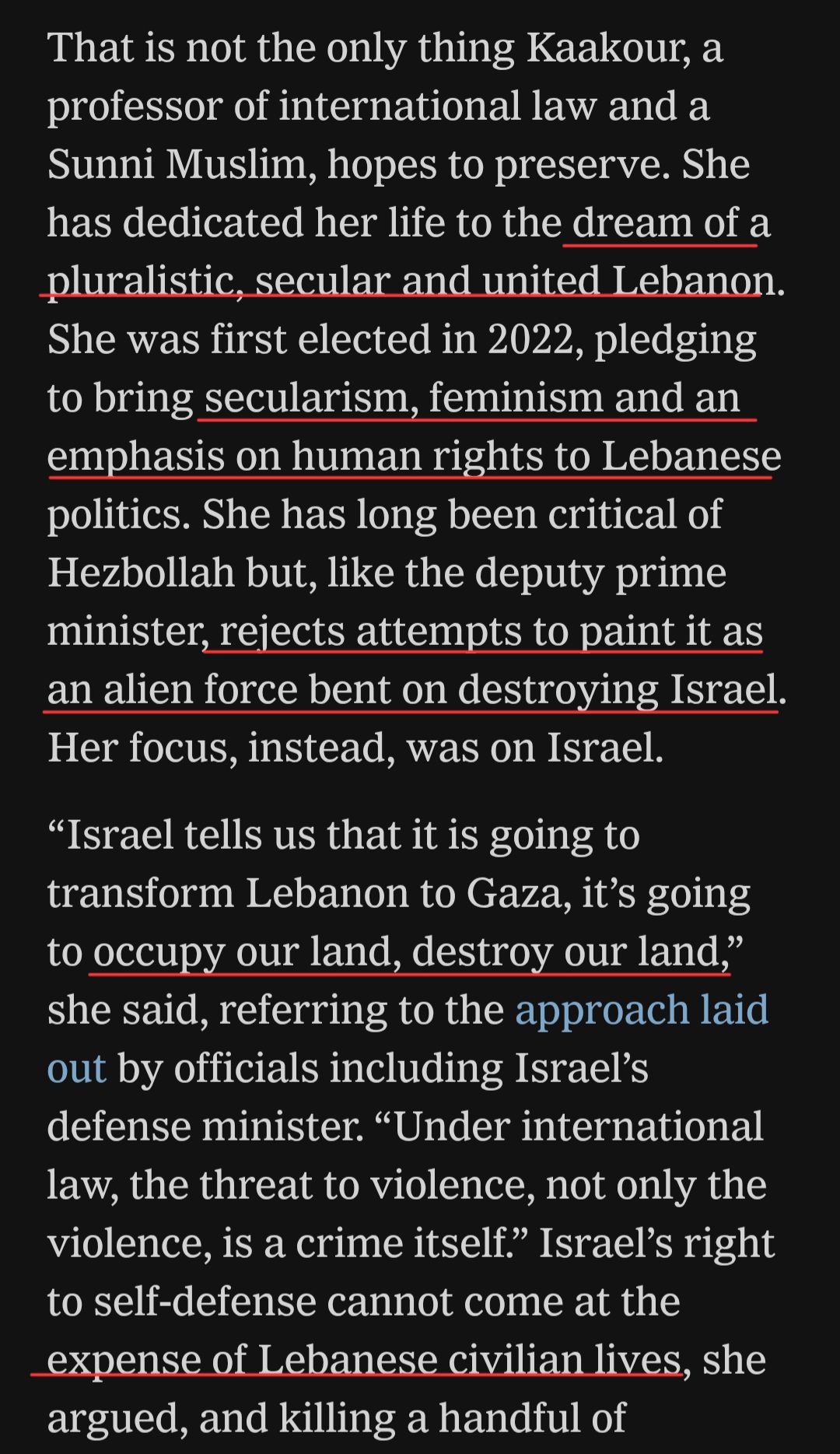
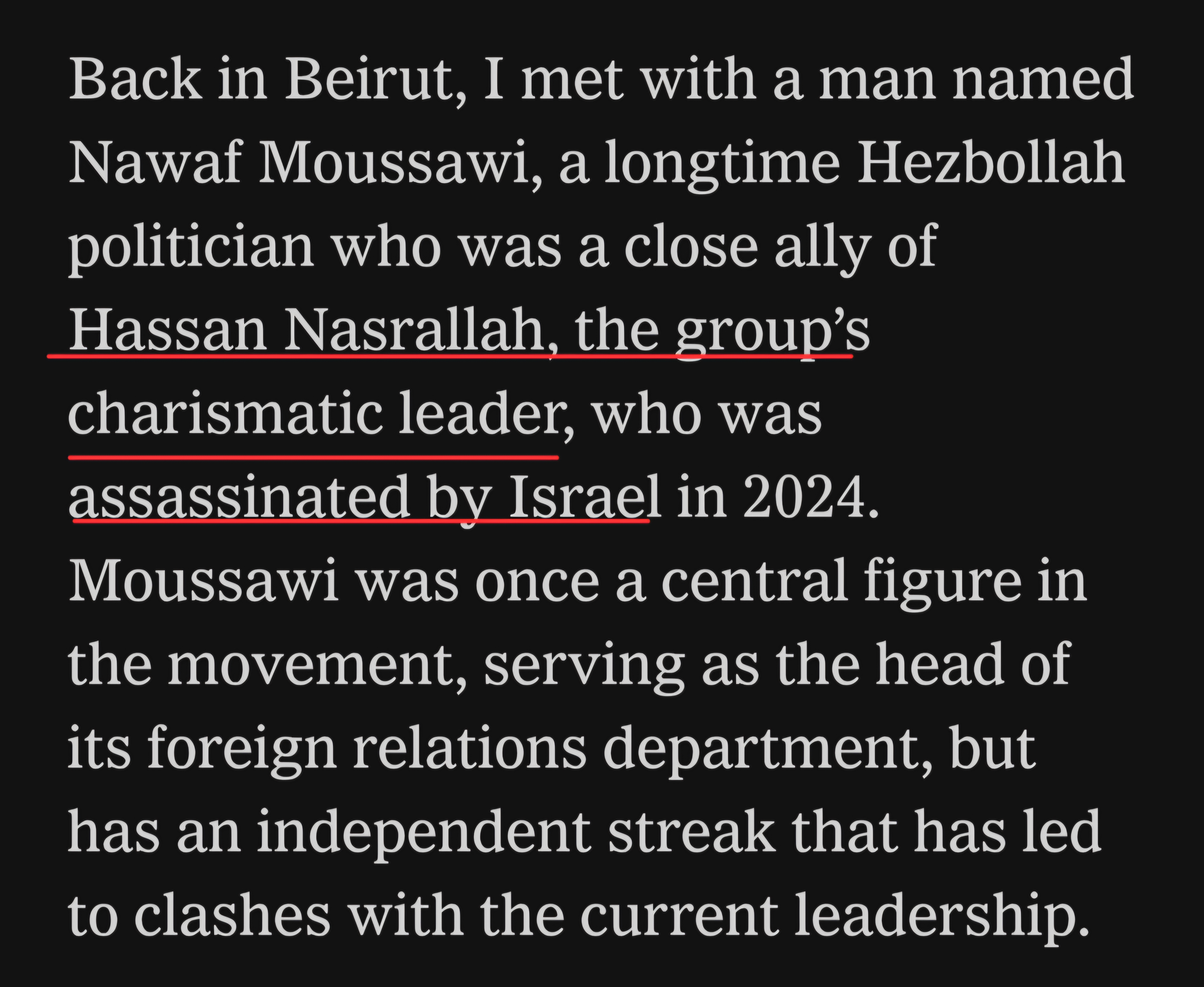
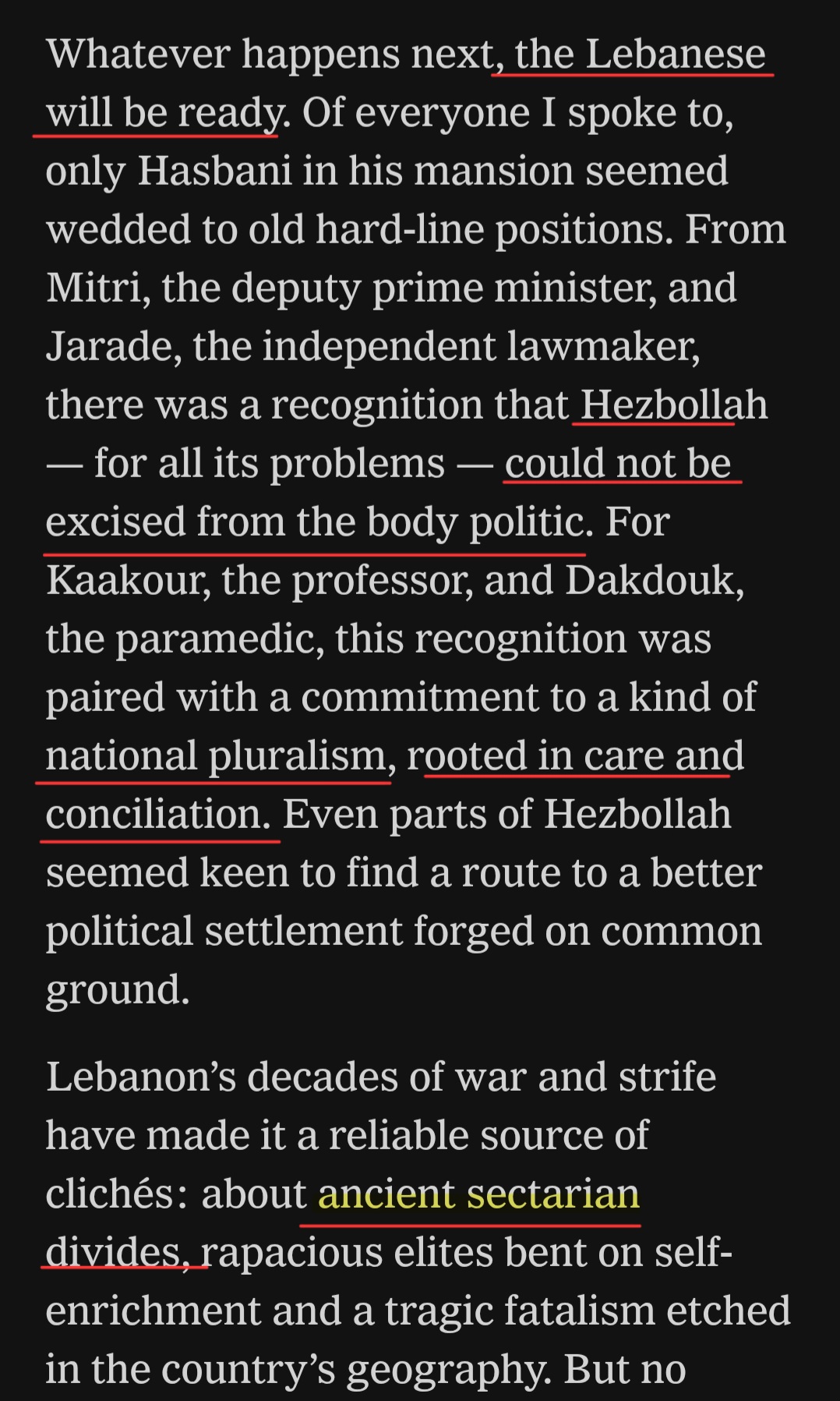
Those questions sit surprisingly close to the margins of the essay. Polgreen concludes that Hezbollah – even after the demise of its “charismatic leader” Hassan Nasrallah – will endure and be part of a “pluralistic” Lebanese society (“pluralism” and “pluralistic” show up four times in the article).
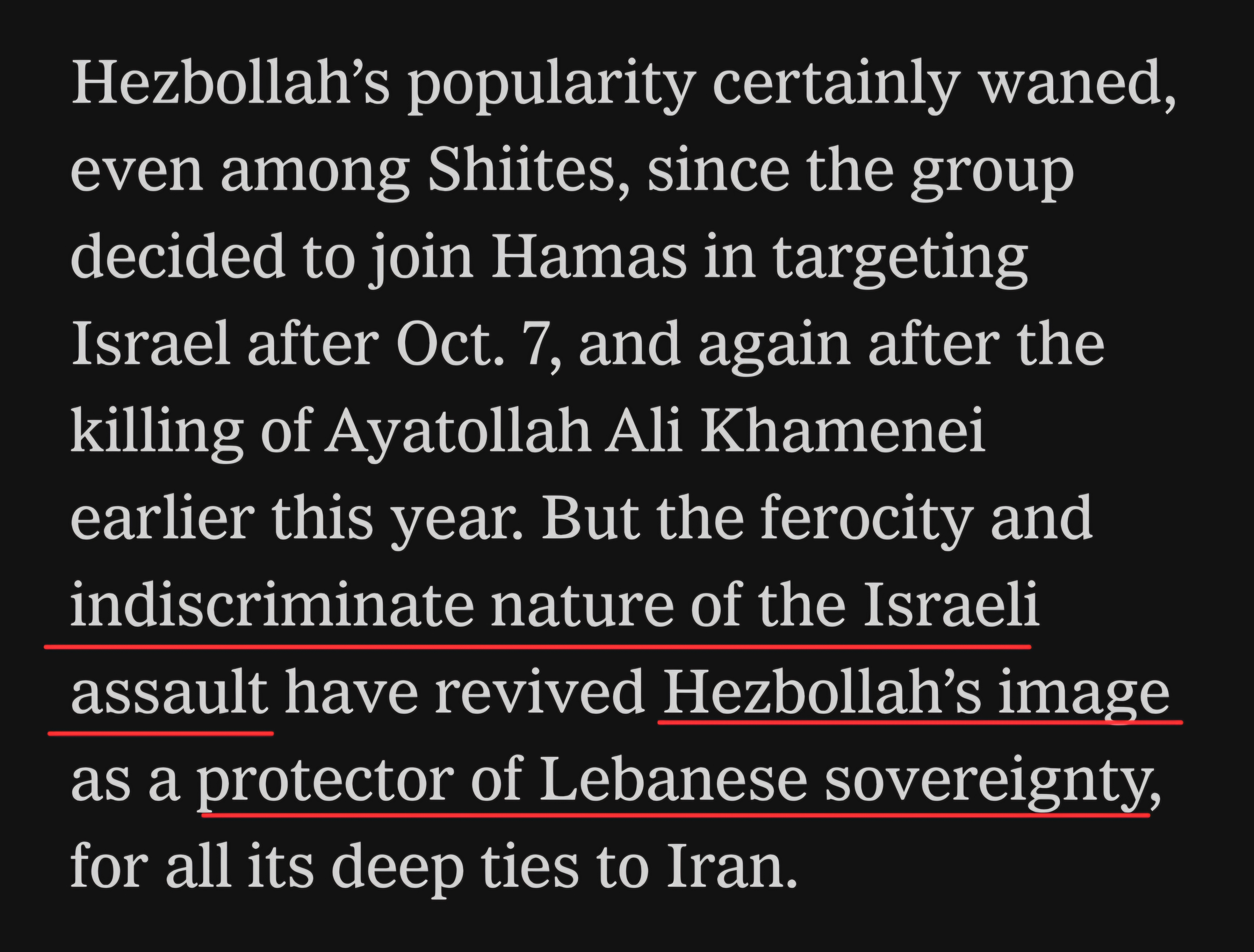
Readers learn far more about Israeli power than about Lebanese weakness.
Near the end, the essay abandons its own logic.
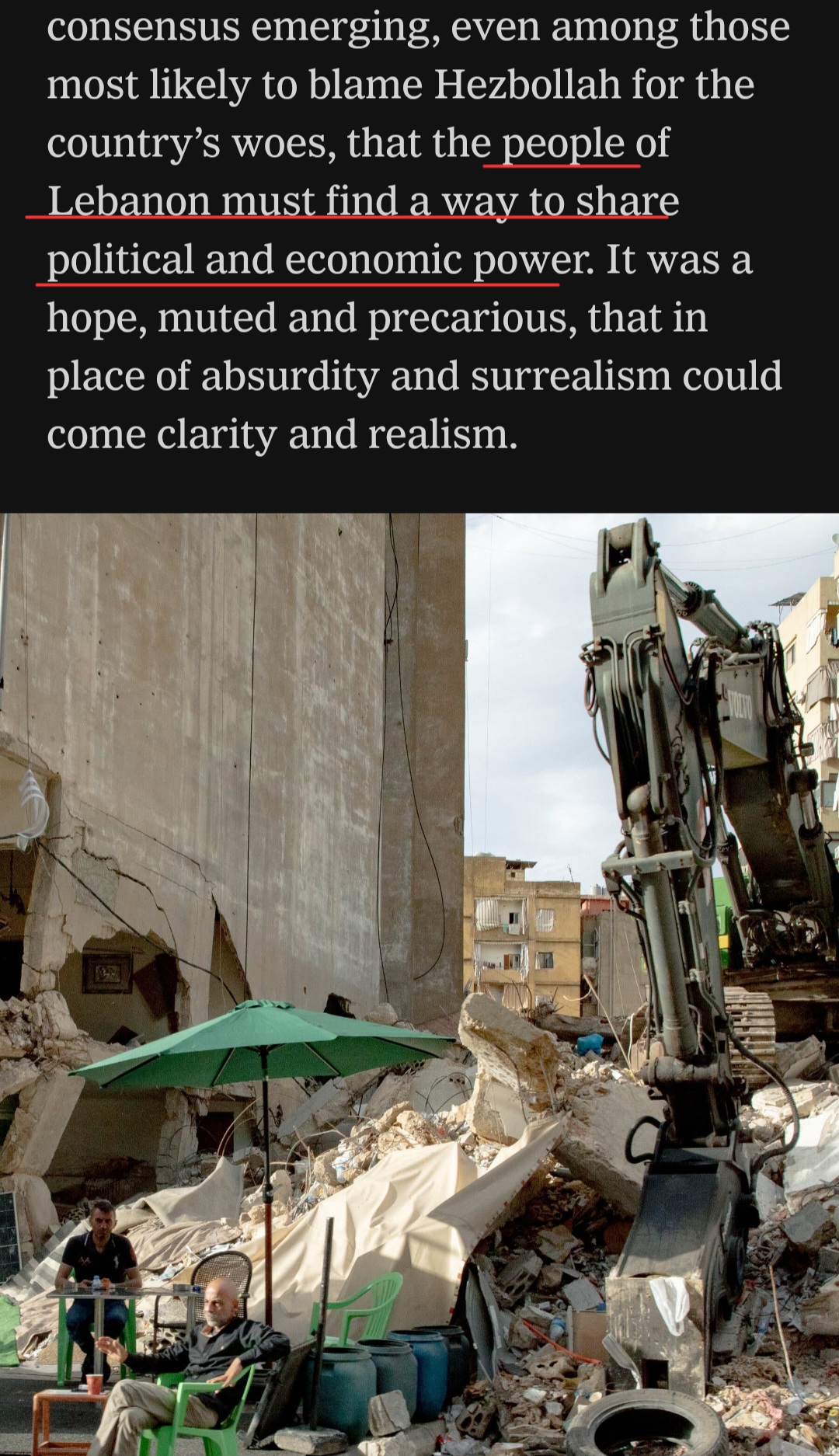
At one point readers are told that Hezbollah “could not be excised from the body politic.” Political reality, in other words, must be acknowledged. Hezbollah has supporters, influence, institutions, and representation. Lebanon’s future must somehow accommodate that reality.
Yet that principle vanishes when the discussion turns to Israel.
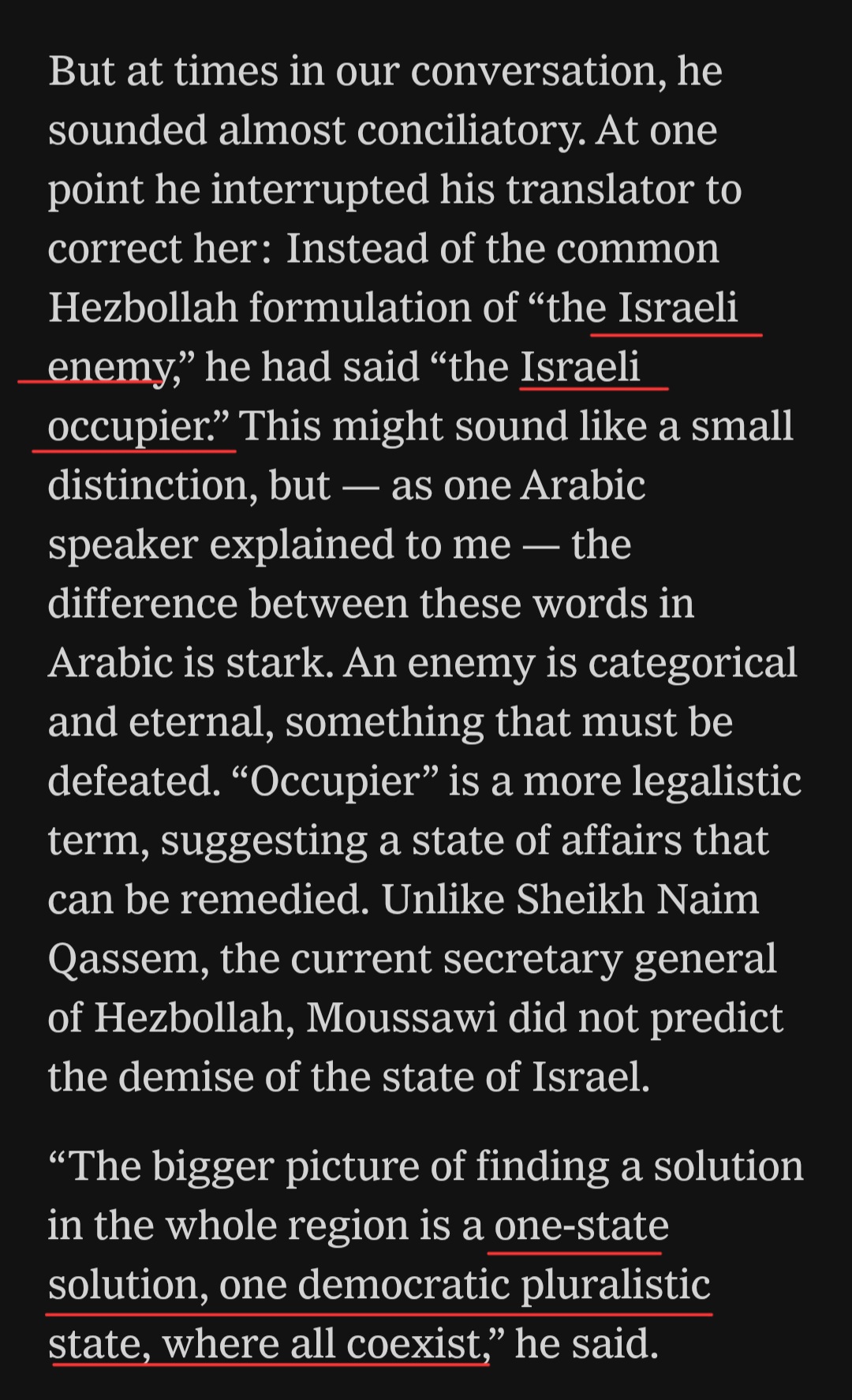
After thousands of words about Lebanon, readers are introduced to arguments for a one-state future that would effectively end Israel as the Jewish nation-state. An “emerging international consensus” suddenly becomes relevant to determining Israel’s future.
The contrast is revealing.
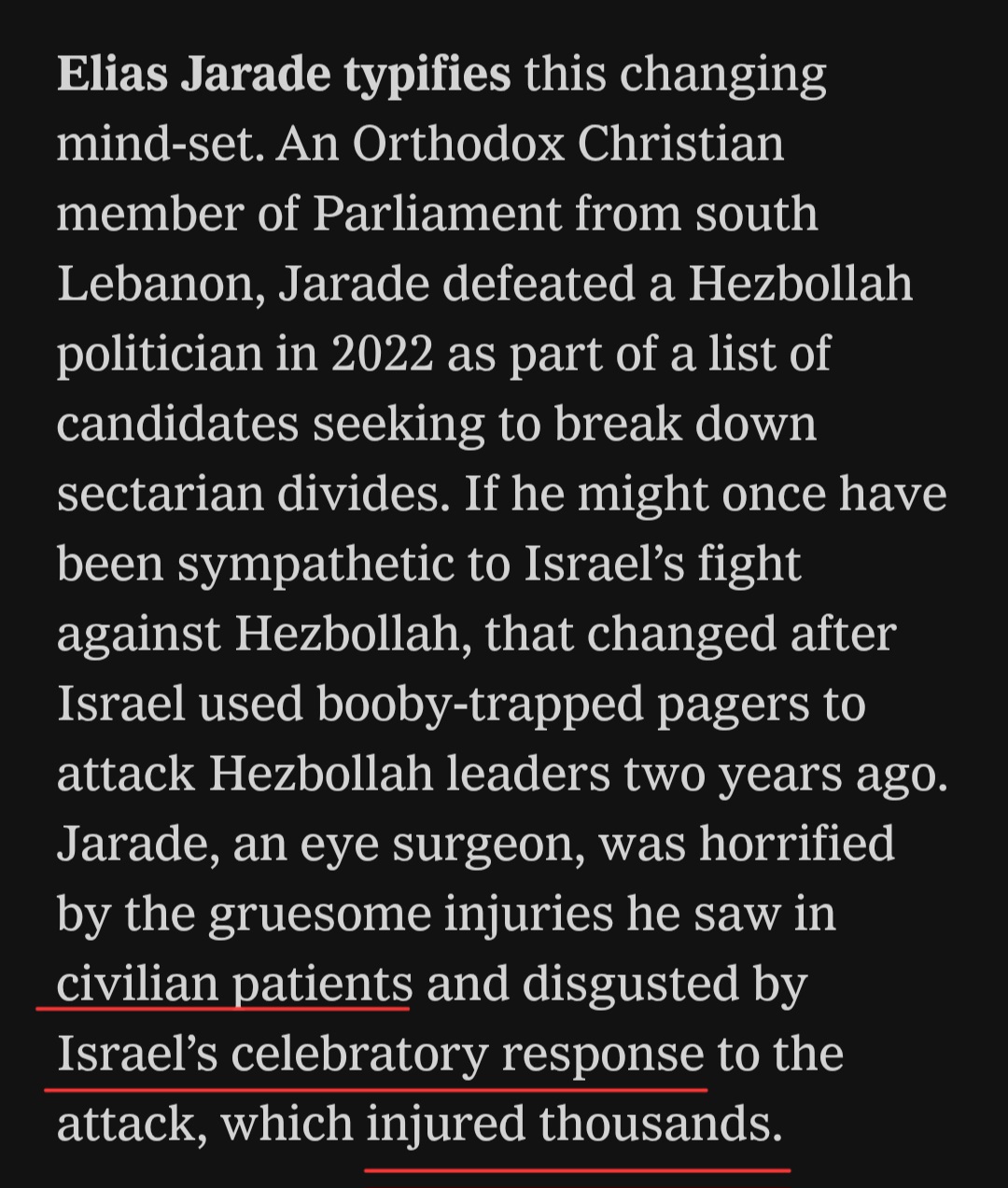
When discussing Lebanon, the essay asks Lebanese people what they want. Readers hear from civilians, intellectuals, politicians, and Hezbollah supporters. Their aspirations become the measure of Lebanon’s future, which we are informed will be pluralistic and peaceful, even when including Hezbollah.
When discussing Israel, Israelis are nowhere to be found. Readers have no context what the average Israeli wants. They are not told that overwhelming majorities support maintaining Israel as a Jewish state. Instead, the relevant question becomes what an international consensus believes should happen.
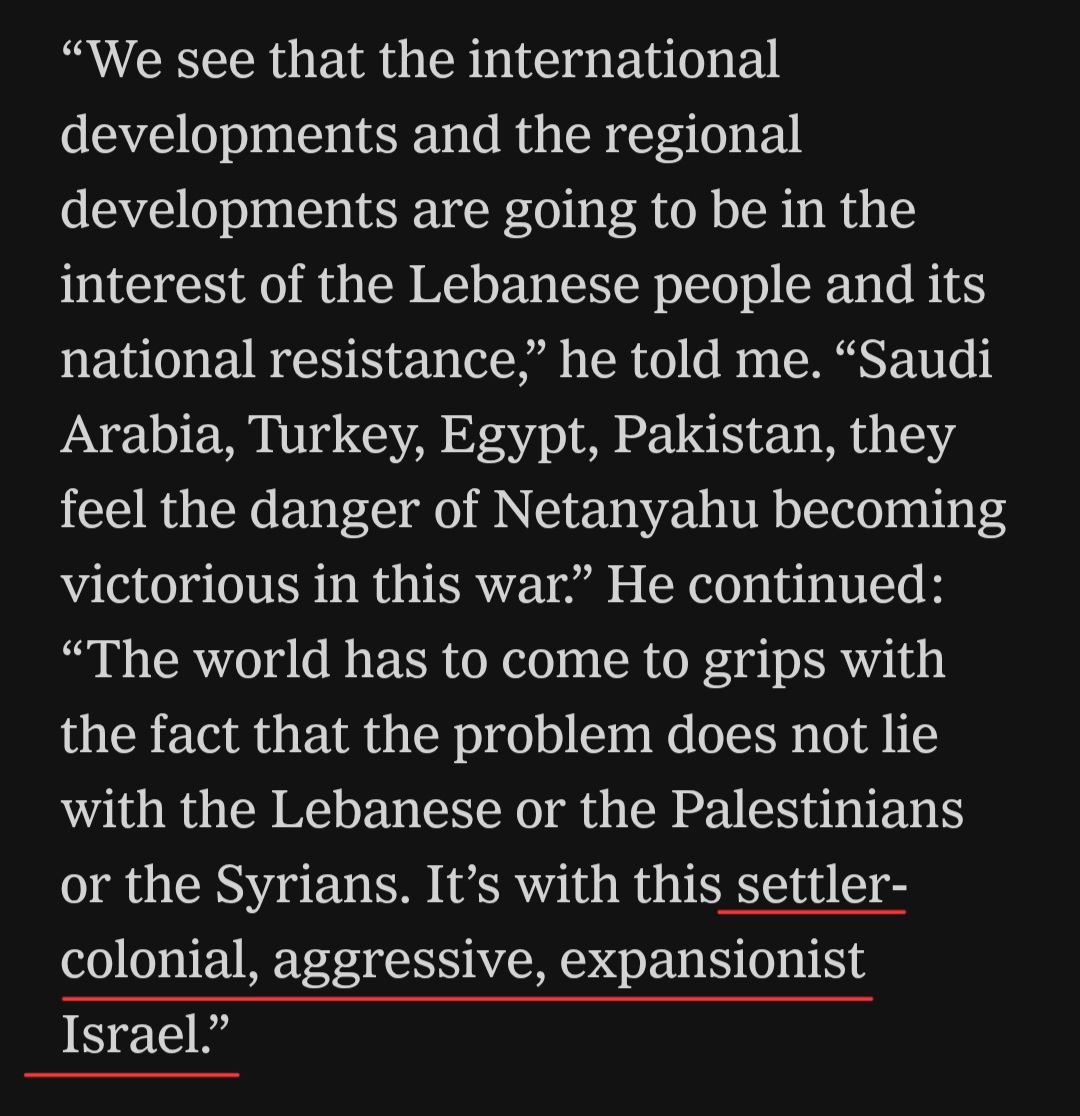
The people whose “settler-colonial, aggressive, expansionist” state is cast as being temporary are absent from the discussion. Presumably, the readers are being led to the conclusion that international pressure must be placed on Israel to let Lebanon live.
Lebanon’s future belongs to the Lebanese. Israel’s future belongs to everyone else.
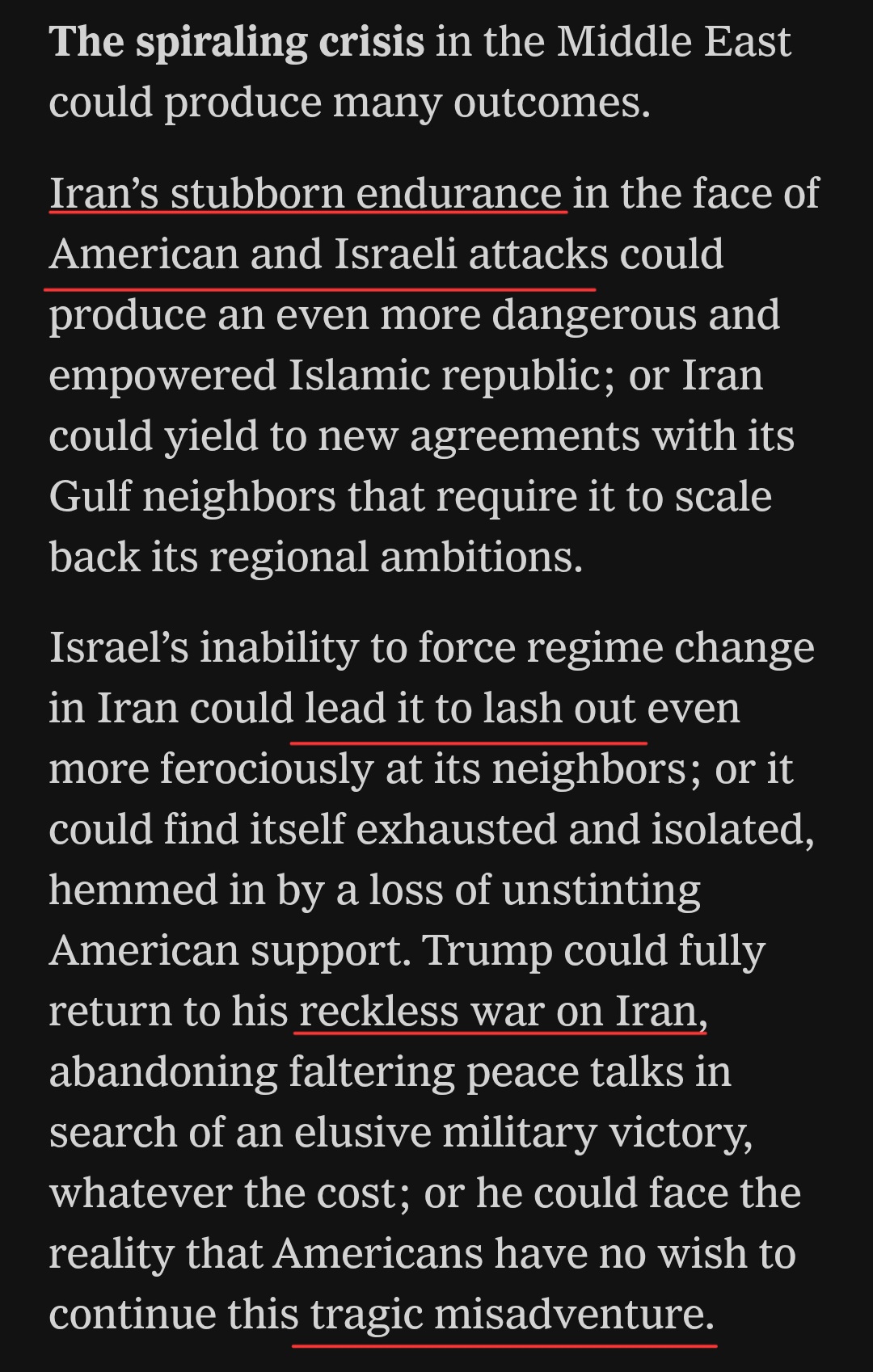
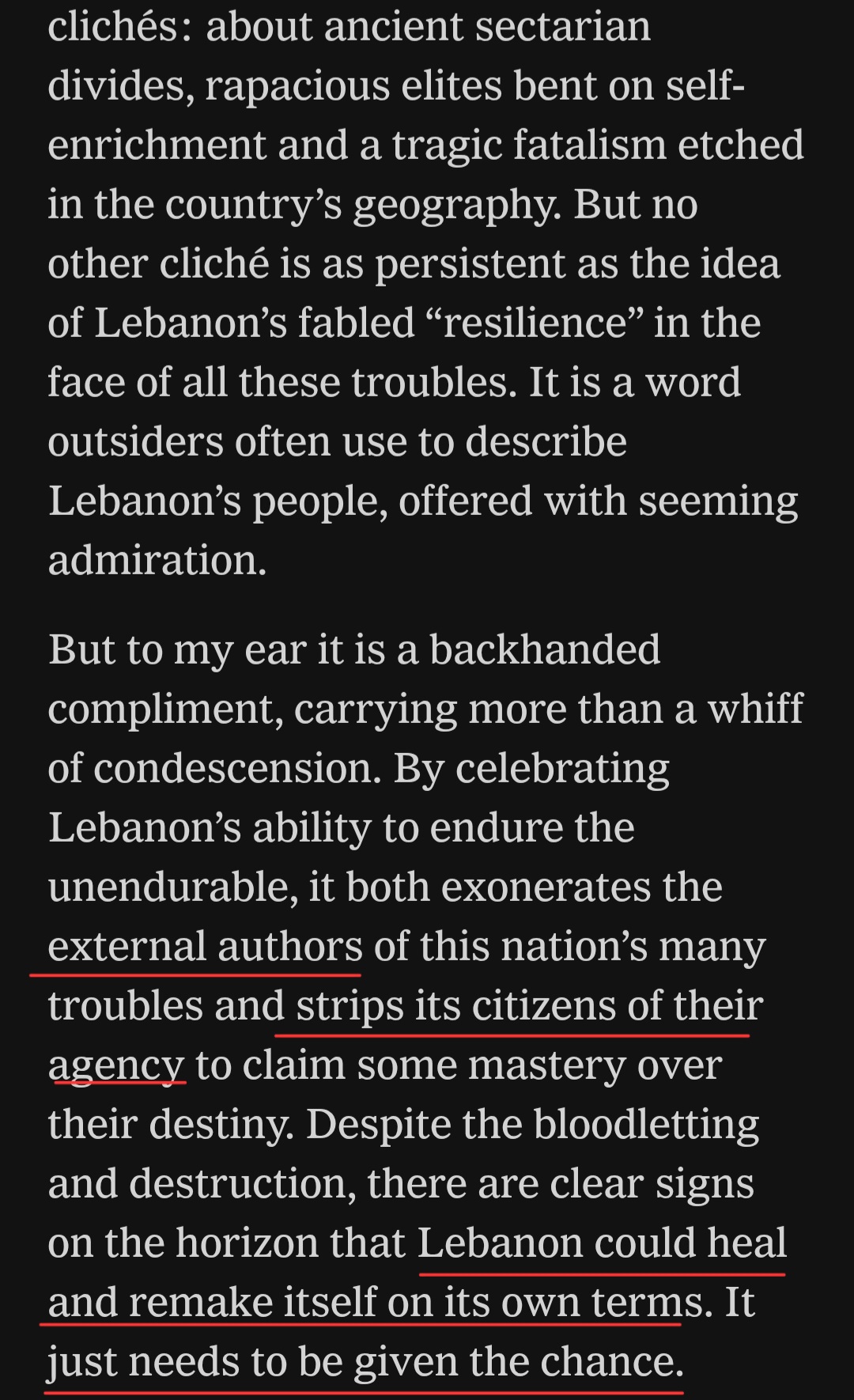
By the end, readers know that Lebanon is an ancient nation whose sovereignty deserves restoration. Hezbollah is an enduring political reality that must be accommodated. Israel is a state whose identity should be reshaped by outside opinion.
Hezbollah is never properly labeled a US-designated foreign terrorist organization. Israel is never described as an American ally. Lebanon is not painted as a failed country which cannot control its failed economy or borders or manage a distinct military force outside governmental control.
A country that struggles to control its own territory is granted unquestioned legitimacy. A country with functioning institutions, competitive elections, and one of the region’s strongest economies is presented as a candidate for political reinvention.
The essay asks readers to accept permanence for Hezbollah, self-determination for Lebanon, and international supervision for Israel.
It begins by asking how Lebanon should recover from war. It ends by asking whether Israel should remain Israel.
For an essay about Lebanon, that is an oddly revealing destination.


