Forgiven Isn’t Fixed

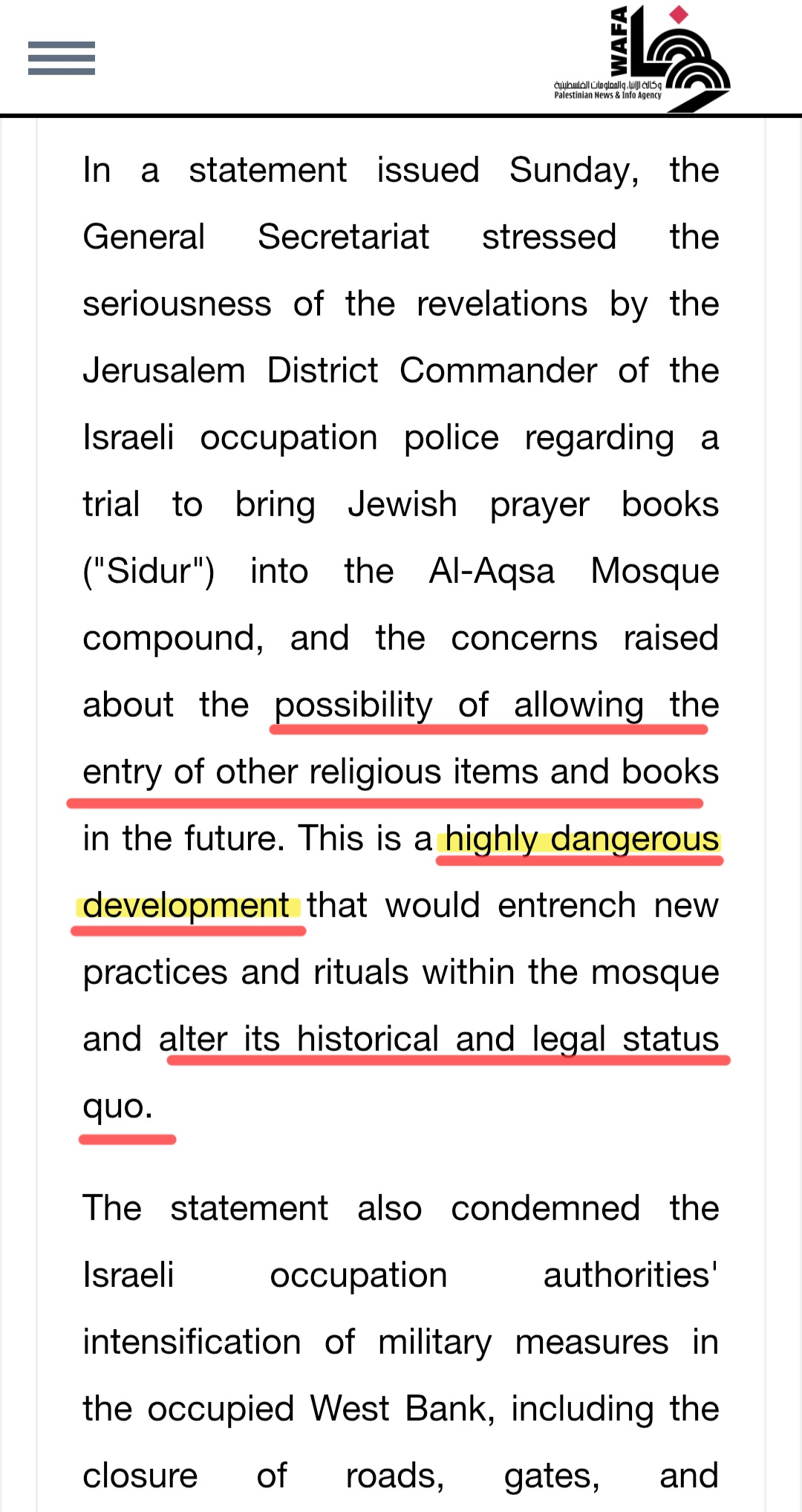
At the center of Achrei Mot, on Yom Kippur, two goats stand side by side. Both identical and indistinguishable. Then, a lottery is cast.

If all you wanted was forgiveness for sins, one goat would be enough. Yet the Torah insists on two.

Forgiveness is easy. Change is not.

We like to believe wrongdoing is a series of isolated acts. You did something wrong, you regret it, you fix it, you move on. Clean, contained, manageable. It is how legal systems work and how people prefer to understand themselves.

It is also incomplete.

Most failure is not a moment. It is a pattern. It accumulates, settles in, becomes familiar, then invisible.

The altar can address the act. It cannot address the drift.

Rabbi Joseph B. Soloveitchik drew a distinction that cuts through the ritual with precision. There is kapparah, atonement, and there is taharah, purification. A person can be forgiven and still remain unchanged. The ledger is cleared, but the self is not.

The first goat is about repair. Something was broken and must be restored. There is acknowledgment, cost, and a return toward the center. Without that, nothing holds.

But even after the offering, something remains unresolved. What about the part of you that made the act possible in the first place? What about the force that will bring you back to the same place again?

The second goat answers without pretending to solve. It is not elevated nor transformed. It is taken and removed, sent beyond the camp into a space outside structure and control. The Torah does something more honest than erasure. It refuses to let that force sit at the center.

Rabbi Jonathan Sacks drew the line just as sharply. The Torah distinguishes between what you did and who you are. The act can be real, heavy, even defining in its moment, and still not be allowed to define you going forward.

That distinction is fragile. Without it, people fall into two familiar traps. One is denial, the instinct to send everything away, to blame, to project, to say the problem lives somewhere else. The other is paralysis, the belief that failure is permanent, that the stain cannot be lifted, that there is no meaningful way forward.

Two goats, not one, because one would allow the situation to settle in a bad place.

The first says you are responsible. The second says you are not reducible to what you did. Hold only the first and you collapse under your past. Hold only the second and you lose accountability.

Together they force something far less comfortable.

You are forgiven, but the forces that led you there still exist.

There is no promise here that the internal engine disappears. No claim that a single day resets human nature. The ritual does not erase memory or capacity. It offers something more restrained and more demanding. The sin is acknowledged, gathered, and pushed to the margins. No longer central, no longer defining, but not imaginary either.

You walk forward without it at your core. You do not pretend it was never there.

Two goats, identical at the start, divided by fate. One ascends, one disappears, and between them stands a person who has to live with both truths at once.

You can be restored. You are still capable of returning.

In a world where scapegoats have become the rage, let us all relearn and teach the world that the just path forward requires both atonement and purification of self.

Centuries of Kashrut, Now in Question

The laws in Parshat Shemini do something unusual. They take holiness out of the abstract and force it into the body. This is permitted; that is not. Eat this; reject that. The categories are exact, and they carry consequences.

Kashrut is not belief. It is execution.

It depends on classification, preparation, and one decisive act: a method of slaughter. Remove any part of that sequence and the system collapses into theory.

For centuries, it did not collapse. It moved intact into daily life, into kitchens and markets, into habits that required no defense because they were simply practiced. By the 19th century, that system was functioning inside modern Europe. Jews in FrankfurtVienna, and Budapest were citizens, participants, integrated—and still able to keep kosher.

The paintings of Moritz Daniel Oppenheim and Isidor Kaufmann quietly confirm that reality. They show a world where nothing needs to be argued. The system works. The meal appears. The law reaches the plate.

That is the baseline: not tolerance of identity, but permission of practice.

The modern shift begins where the system is most exposed—at the knife.

Kosher meat depends on shechita, a method of slaughter that prohibits pre-stunning. Increasingly, that is where democratic states have drawn a line. Across Europe, bans or effective prohibitions have taken hold:

  • Belgium
  • Denmark
  • Sweden
  • Norway
  • Iceland
  • Switzerland
  • New Zealand

Others—GermanyFranceNetherlands—permit it only through narrowing exemptions.

The language used is procedural. They argue that animal welfare requires stunning the animal before slaughter. It sounds neutral but it ends kashrut.

That pressure has forced a new response. Not abandonment, but adaptation. Across Europe and Israel, efforts are underway to reconcile halachic requirements with regulatory demands:

  • Post-cut stunning, applied immediately after the kosher slaughter
  • Reversible stunning technologies, designed to preserve the animal’s halachic status at the moment of the cut
  • Greater integration of veterinary oversight with rabbinic supervision

None of this is settled. Many rabbinic authorities resist any modification that risks invalidating the historic process. Regulators resist exceptions that fragment uniform standards. The space for compromise is narrow and technical.

But the direction is unmistakable. The debate has moved from theology to engineering.

Liberal democracies pride themselves on protecting religious freedom. Yet during ritual slaughter for kosher meat, they are testing a boundary: whether they will protect belief while constraining the mechanisms required to live it.

Vayikra and Social Media: Rethinking the Korban

There is something striking about Parshat Vayikra.

Just weeks after the drama of Exodus – splitting seas, revelation at Sinai, a nation coming into being – the Torah seemingly turns inward. The focus shifts to offerings, detail, repetition, and discipline. It feels quieter, but far more demanding.

Because the Torah is no longer telling the story of a history of a people. It is shaping the inner life of a person and framing a community.


Korban: The Work of Drawing Close

The word korban comes from the Hebrew word karov, to draw close.

This is the Torah’s language for repairing distance. Every lapse in judgment, every compromise, every moment we fall short creates space between who we are and who we are meant to be. That distance accumulates. It dulls awareness. It reshapes identity over time.

Korban is the act of closing that gap through deliberate engagement.


The Offering as Mirror

The individual places hands on the offering before it is brought forward. The gesture is direct and personal.

The animal reflects the instinctive layer of the self: of impulse, appetite, anger, ego. The act forces recognition: this energy exists within me. It must be directed, refined, elevated.

The fire on the altar becomes the mechanism of transformation. What is raw is lifted. What is uncontrolled is shaped into something purposeful.

Responsibility leads to possibility.


Atonement Requires Engagement

Vayikra establishes a system built on participation. Atonement unfolds through action, awareness, and presence.

A person must recognize the failure, step toward it, and engage with it. That process creates movement. It slows the instinct to gloss over mistakes and replaces it with something more durable: change that is earned.


The Hidden Becomes Visible

As important, korbanot were not private moments.

They took place in the open, at the center of the community. A person brought an offering in full view; sometimes for something no one else knew, a failure that could have remained hidden.

That public act carries a dual force. It is a form of confession. It acknowledges that private actions shape a public self.

It also reshapes how we see each other. Everyone comes forward. The composed, the successful, the admired, all stand at the same altar. They, too, confront failure. They, too, seek repair.

The system dismantles the illusion of perfection and replaces it with something far more stable: a community built on shared imperfection and ongoing effort.


The World We Built Instead

Today, we have constructed the opposite system.

Our lives are increasingly public, yet carefully edited. Success is broadcast. Struggle is concealed. Identity becomes something managed rather than lived.

Platforms reward the appearance of control, clarity, and achievement. Failure is filtered out. Weakness is reframed or hidden entirely.

The result is a quiet distortion.

People begin to believe that others are living more complete, more resolved lives. The gap between appearance and reality widens. Struggle becomes isolating rather than connective.

In a world like this, growth becomes harder. Without visibility, there is less accountability. Without shared imperfection, there is less permission to confront what is broken.


The Measure Is Intent

The mincha, the simple grain offering, carries the same weight as more elaborate offerings.

A handful of flour stands beside an animal offering because the Torah measures sincerity. The system resists performance and centers intention, reinforcing that what matters is the internal work, not the external display.


The Real Offering

At the center of Vayikra is a simple idea: the offering is the self, refined over time.

The challenge today is not understanding that idea. It is living it in a world that encourages concealment over confrontation.

Vayikra describes a life where people engage their shortcomings directly and are willing to be seen in that effort. The question that remains is whether we can build lives that allow for that kind of honesty again.

The Mirror Nations Refuse to Face

This week’s parsha, Vayakhel, introduces one of the Torah’s most overlooked symbols: mirrors. The bronze basin used by the priests in the Mishkan was fashioned from the mirrors donated by Israelite women. Before performing sacred service, the priests had to wash there as a ritual reminder that moral authority begins with reflection.

Rashi (1040-1105) says these mirrors carried a deeper story. They were not instruments of vanity. In Egypt, when slavery crushed hope and dignity, the women used those mirrors to encourage their husbands and restore their spirit, and thereby build families that would become the nation of Israel. What appeared to be self-reflection was in fact an act of national responsibility.

Now Moses was about to reject them [mirrors] since they were made to pander to their vanity, but the Holy One, blessed be He, said to him, “Accept them; these are dearer to Me than all the other contributions, because through them the women reared those huge hosts in Egypt!” For when their husbands were tired through the crushing labor they used to bring them food and drink and induced them to eat. Then they would take the mirrors, and each gazed at herself in her mirror together with her husband, saying endearingly to him, “See, I am handsomer than you!” Thus they awakened their husbands’ affection and subsequently became the mothers of many children, – Rashi on Exodus 38:8

Egyptian copper mirror

The Torah’s insight is timeless: using a mirror as a tool for the greater good. Individuals often avoid doing so. Nations, virtually never.

Spain today offers a vivid example of what happens when a country replaces the mirror with a flattering portrait of itself.

Spain presents itself as a moral voice on the international stage, particularly when it comes to Israel. Spanish officials speak the language of humanitarian principle and international law, portraying their stance as the product of ethical clarity.

But when viewed through the mirror the Torah describes, Spain’s posture looks far less like moral leadership and far more like moral performance.

The issue is not disagreement with Israeli policy. Democracies criticize one another all the time. The issue is the enormous gap between Spain’s self-image and its conduct. Spain condemns Israel in sweeping moral terms while maintaining quiet relationships with regimes like the Islamic Republic of Iran whose human rights records make Israel’s conflicts look restrained by comparison. It speaks loudly about justice in the Middle East while applying far less scrutiny elsewhere.

The mirror reveals something uncomfortable: a country congratulating itself for moral courage while directing its harshest condemnation toward the world’s only Jewish state.

This pattern does not arise in a vacuum. Spain’s relationship with Jews carries a long and painful history, culminating in the Alhambra Decree. The ease with which moral outrage is directed toward Jews while harsher regimes escape similar condemnation raises an uncomfortable question about whether some old instincts still linger beneath the surface.

The mirrors of Vayakhel represent the opposite instinct. The women of Israel used mirrors not to flatter themselves but to build a future. Their reflection demanded responsibility, not self-congratulation. That is why those mirrors became the basin in which priests purified themselves before entering sacred service.

The Torah’s message is simple: before claiming moral authority, look honestly into the mirror.

Spain seems to have replaced the mirror with a portrait of itself as a defender of justice. But to many observers the reflection looks different: moral preening, selective outrage, and criticism of the Jewish state so disproportionate that it begins to resemble something older and much uglier.

The basin in the Mishkan stood at the entrance to sacred service. Every priest had to wash there before speaking in the name of holiness.

Nations should consider doing the same.

Religious Antisemitism and the Stiff-Necked Nation

There are many forms of antisemitism. This review is about religious antisemitism, specifically from Christians and Muslims.

As a clear disclaimer, not all Muslims or Christians hate Jews. Or the Jewish State. But there are undeniable fundamental differences in how religions perceive each other which are sometimes caustic.


The world often describes the three great monotheistic religions together: Judaism, Christianity and Islam. But lumping Jews with the other two faiths leads people to falsely put the three on the same plane. There are roughly 2.2 billion Christians and 2.0 billion Muslims today, compare to only 15 million Jews. To give the scale some perspective, if people of the three faiths were in a stadium, all the levels of half the stadium would be Christians while the other half would be Muslim, with Jews only wrapping the entrance portals for the players.

Christianity and Islam are global religions – they have brought their faith to the far corners of the world by sword and missionaries. But Judaism is more akin to a local tribal religion in Africa or South America. The faith is tied to a specific piece of land – the land of Israel. Jews do not seek to convert people or believe non-Jews are destined to eternal damnation unless they follow the same belief system.

When Muslims and Christians conquered / invaded / colonized the Americas and Africa, they believed they were helping people by spreading a faith the locals had never heard of. One cannot blame an Amazonian tribe for not believing in Jesus when they never heard of him. One cannot immediately hate the local African tribe for not believing in Mohammed when the name and faith were brand new.

But Christians and Muslims cannot say the same of Jews. Their faiths share a common history.

Jesus was a Jew who lived in the land of Israel. Mohammed was an Arab, a descendant of the same forefather Abraham who is also the forefather of Judaism.

For devout Christians and Muslims who feel that spreading their faith is integral to their belief – a form of religious supremacy – Jews are forever a stiff-necked people who refuse to join the global masses and appreciate the true prophets.

So how, when and why did the Jews become so stubborn?

In the biblical parsha of Ki Tisa, the Jewish nation was called a stiff-necked people several times – by God. When the people became worried that Moses had disappeared and made themselves a golden calf idol, God said to Moses:

“I have seen these people,” the Lord said to Moses, “and they are a stiff-necked people.” – Exodus 32:9

The Adoration of the Golden Calf by Nicolas Poussin (1594-1665)

The phrase is meant as a criticism that Jews cannot get out of their old habits and will not be able to adopt the new laws that God has set out for the nation. The phrase appears repeatedly, including:

  • “Go up to the land flowing with milk and honey. But I will not go with you, because you are a stiff-necked people and I might destroy you on the way.” – Exodus 33:3
  • For the Lord had said to Moses, “Tell the Israelites, ‘You are a stiff-necked people. If I were to go with you even for a moment, I might destroy you. Now take off your ornaments and I will decide what to do with you.’ – Exodus 33:5
  • “Lord,” he said, “if I have found favor in your eyes, then let the Lord go with us. Although this is a stiff-necked people, forgive our wickedness and our sin, and take us as your inheritance.” – Exodus 34:9

The last quote is from Moses to God, in which he uses the same language God invoked. But Moses argues that the trait should be and will be their salvation. He argues that they need more of God’s compassion than others because of their nature, and once they know God and learn the commandments, they will become affixed forever.

Just as the Jews were becoming a nation, God was worried about their stubborn nature, but Moses assured God that the same trait will make them a holy nation forever that deserved forgiveness and the promise of internal inheritance. That same stubborn trait has kept the Jews alive, distinct, and small, for thousands of years, an easy group to ignore or appreciate on a global scale, or a perpetual irritant for those who cannot enjoy humble faith, and demand religious superiority over this small ancient people.

From Mishkan to Mikdash

Parshat Terumah introduces the Mishkan, a sanctuary built in the wilderness, precise in measurements and portable by design. It moved as the people moved. God’s presence rested among a nation without a permanent home.

For nearly two thousand years, Jewish life functioned in Mishkan mode.

Without sovereignty and without a Temple, Jewish law became the architecture that traveled. Halacha, Jewish law, created sacred space wherever Jews settled. The synagogue stood in place of the courtyard and the Shabbat table carried echoes of the altar. Study sustained covenant across continents.

Judaism survived in the diaspora because it was built to move.

But the Mishkan was never meant to be the final form. It pointed toward the Mikdash, the Temple that was ultimately built 3,000 years ago in Jerusalem, enduring and anchored in sovereignty. The Mishkan belongs to wandering. The Mikdash assumes a people settled in its land.

Exile required portability. The State of Israel reintroduces permanence.

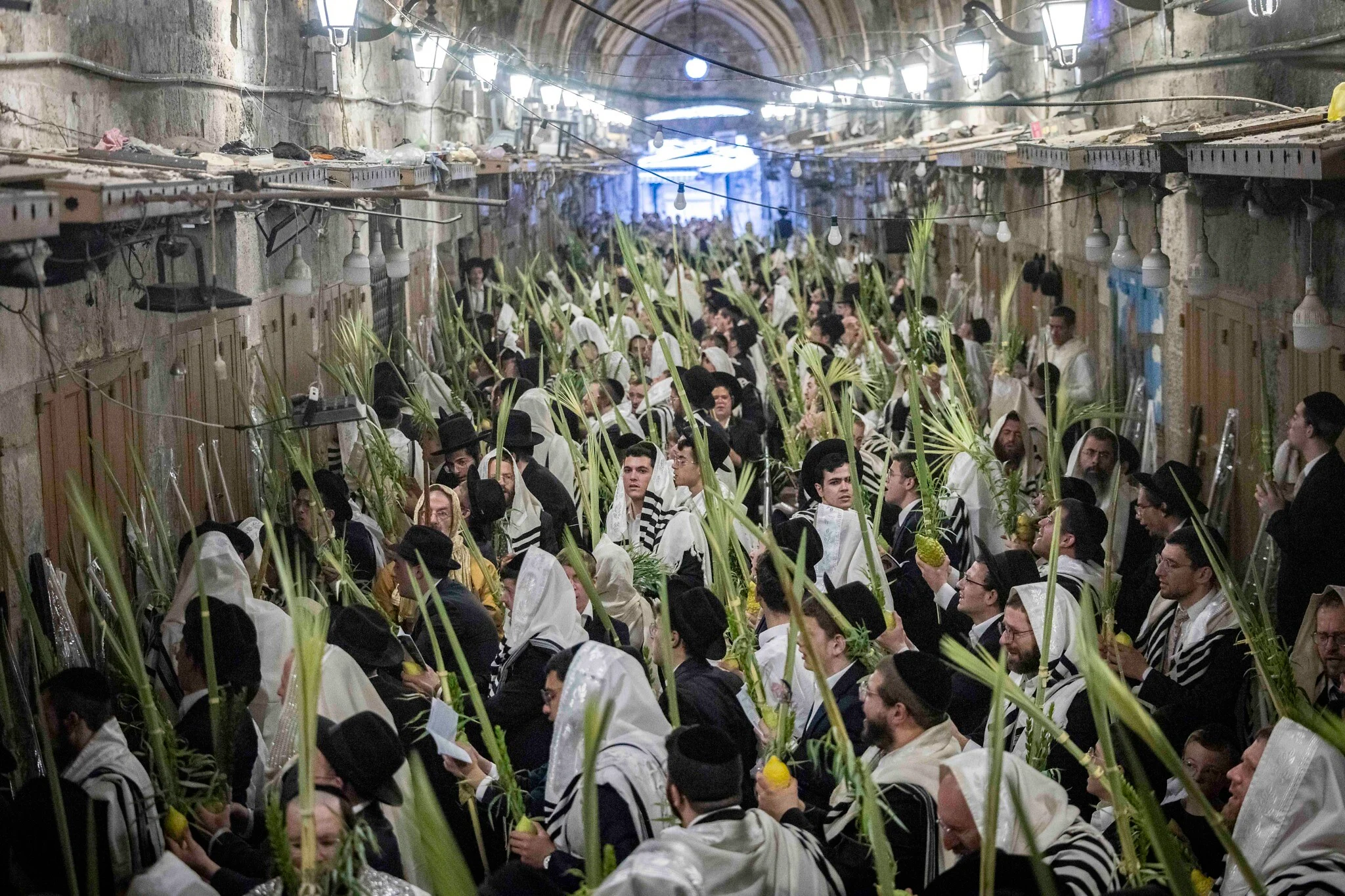
The Old City of Jerusalem including the Jewish Temple Mount/ Al Aqsa Compound

That shift changes the demands of Jewish life. Law still shapes the individual and the community, but it now encounters public power. Covenant enters the arena of governance.

The wilderness sanctuary rose from voluntary gifts. The Temple required national structure and responsibility. Now, sovereignty requires the same. While a portable faith sustains survival, a rooted nation must translate that faith into courts, policy, defense, and public ethics.

Jewish history has moved from dispersion to statehood. Yet the deeper challenge is spiritual: whether a tradition perfected in exile can shape a society in power without losing its moral clarity.

Terumah begins with a traveling sanctuary. It gestures toward something fixed and enduring.

The journey from Mishkan to Mikdash continues in our own time.

When Justice Refuses to Bend

In Parshat Mishpatim, the Torah builds a society of responsibility: protect the widow, guard the orphan, lend to the poor, restrain the creditor, pay damages, return what you hold as collateral before nightfall.

This is structural compassion.

And then comes the line that seemingly defines the entire architecture:

“You shall not favor the poor in his dispute.” (Exodus 23:3)

Care for the vulnerable, but do not tilt the scale for them.

The Torah draws a boundary that modern culture struggles to maintain: the difference between moral obligation and legal judgment.

Society should be generous, while the legal system must be neutral.

In the current climate, that distinction feels almost alien. Sympathy gathers momentum as institutions rush to align themselves with the seemingly weaker side in an “oppressor/oppressed” narrative. The presumption of righteousness often follows the presumption of disadvantage. It becomes an empathy swamp that drowns moral and legal clarity.

Mishpatim resists that impulse.

The courtroom is not a venue for moral correction. It is a place for weighing evidence. A judge may not rule by instinct, pressure, or empathy. Justice must be blind because fairness depends on restraint.

The Torah has forms of structural redistribution via charity and debt release, but it refuses to let generosity rewrite verdicts. Liability flows from action. If you damage, you pay. If you steal, you repay. Identity and circumstance do not determine guilt.

Call for Justice for Hamas has been counter-cultural

The Torah denies the emotional satisfaction of siding automatically with the weaker party. It insists that compassion operate through obligation, not through distorted judgment.

Mishpatim protects the vulnerable by strengthening society, while protecting justice by disciplining the court. Because when justice refuses to bend, society can remain both compassionate and fair.

Two Story Arcs and Parshat Yitro

The final season of Game of Thrones disappointed many viewers.

For years the show carried two storylines: an existential threat to humanity and a political struggle for the throne. When the ending came, the cosmic danger faded first and the camera returned to palace intrigue. Technically both plots resolved but emotionally, it felt like the story had mistaken the setup for the destination.

That structural tension comes to mind every year at Parshat Yitro.

The most dramatic moment in Jewish history — Sinai, revelation to the entire people, the Ten Commandments — arrives astonishingly early in the Torah. If receiving the law is the climax, why does it appear so soon in the Bible?

Because it isn’t the ending; it’s the beginning.

Sinai gives the people a constitution. It shapes their character, their obligations, their relationship with God and each other. But from the very first promise to Abraham, the Torah’s narrative is moving somewhere concrete — toward a land.

Walk the text and it reads like a map: journeys, wells, borders, inheritances. The story is geographic as much as spiritual. It is about building a nation in a place.

Torah and land were always meant to live together.

Torah without a homeland leaves Jewish life suspended in theory. A homeland without Torah loses its moral compass. Sinai forms the people; the land is where that formation is meant to be lived.

Over a thousand years of exile forced a different emphasis. When Jews lost soil, they carried scrolls. When borders disappeared, mitzvot became portable homeland and identity. That devotion was critical for survival.

Now history has shifted again.

For the first time since antiquity, a plurality of Jews lives in the Land of Israel, and soon it will likely be a majority. The part of the Torah that once felt distant and theoretical — sovereignty, agriculture, public responsibility, national life — is no longer abstract. It is daily reality.

Which reframes Parshat Yitro.

Sinai is not the finale of the Jewish story. It is the preparation. The training. The moment a people receives the tools it will need to build something lasting in its own land.

The Torah itself tells us this by where it ends: at the edge of the land, looking forward.

After centuries of mastering how to live as guests in other people’s history, Jews are being invited back to the main storyline: living in the land, with the Torah in hand.

The Travels of Benjamin of Tudela was an eight year travelog from circa 1165 to 1173, chronicling the pilgrimage of a Jew from Spain to the Jewish holy land.

The Plagues Were for Egypt. The Sea Was for the Jews.

The Exodus is often told as a single story of liberation, but Parshat B’shalach insists on a sharper distinction. The plagues and the splitting of the sea were aimed at different audiences, and they served different purposes. Confusing them obscures the Torah’s deepest lesson about real freedom.

The plagues were for Egypt. They dismantled Pharaoh’s authority, exposed the limits of imperial power, and forced the expulsion of a people the system refused to release voluntarily. Their purpose was external and coercive. Egypt had to be broken in order to let go.

But expulsion is not freedom. Being pushed out does not mean having moved on.

That is what the splitting of the sea achieved.

The splitting of the sea was for the Jews. At that moment, the message shifted inward. The people needed to see that the world they had left could no longer be reentered. When the waters closed, the route back to slavery closed with them. The drowning of the Egyptians was not vengeance; it was finality. History sealed behind them.

This distinction explains why the Exodus alone was incomplete. Egypt released the Jews, but the Jews had not yet released Egypt. As long as return remained imaginable, fear and discomfort could always make bondage sound reasonable again. Freedom cannot take root while the past remains accessible.

Only after that closure does the Song at the Sea emerge. The song is not merely celebration; it is internalization. A people sings when it understands that a threshold has been crossed and that what lies behind is no longer an option. Memory, at that moment, stabilizes rather than seduces. The song teaches that freedom requires acceptance of permanence.

That lesson extends beyond the biblical moment. Systems and institutions can serve as tools of liberation in one era and become obstacles to maturity in another. They remain attractive precisely because they feel moral, familiar, and legitimizing long after their original purpose has passed.

The United Nations increasingly functions as a structure that keeps the road backwards open. Born from catastrophe, it was meant to prevent a return to unconstrained power and mass violence. Over time, however, it has become a place where history is managed rather than concluded.

Consider the 1947 Partition Plan which would create a Jewish State and an Arab State in the region of Palestine. It was the logical vision of the moment and Jews accepted it and built a state. The Arabs rejected it for decades and to this date, many still believe that an Arab state will be the only reality in the region. They see a past as achievable, a Muslim-majority holy land.

Worse, the United Nations itself tells Arabs that descendants of people who lived in what is now Israel will get to move back to towns and homes. The UN continues to pass laws and resolutions to this effect, making the past the direction of time, not a future of two states living in coexistence.

The splitting of the sea teaches that freedom demands the courage to let certain paths disappear. Growth requires recognizing when a framework has completed its historical role and must be left behind. Without that willingness, societies drift endlessly between liberation and dependence, mistaking motion for progress.

The plagues ended Egypt’s control while the sea ended the possibility of return. That is the difference between being released and being free. Today, the United Nations is preventing the Israelis and the Stateless Arabs from Palestine (SAPs) from transitioning to the other side of the sea, moving on to freedom for all.

Every generation must choose which comforting and destructive structures it is finally prepared to leave in the past. Today, the United Nations may be the choice before us.

The Blood Libel Was Always About Denying Jewish Freedom

The blood libel begins with how the Book of Exodus is misremembered. Exodus is a story of Jewish liberation, yet antisemites preserve it as a story of punishment. That inversion is not confusion but tradition. Every generation dresses the libel in new language, while the structure never changes.

The plagues were directed at dismantling Egyptian authority with precision. The opening strike hit the Nile—Egypt’s god, economy, and source of life—and exposed a crime already committed there. Egypt had drowned Israelite infants in that river to erase a future it feared. The first plague named that bloodshed and stripped Egypt of moral order.

What followed was escalation with restraint. Egypt lost land, productivity, and cosmic claims. Darkness collapsed Pharaoh’s divine authority. What remained was the empire’s final refuge: the belief that continuity would return, that tomorrow would repair what today exposed.

The final plague took it. The death of the firstborn judged a state that had already made children expendable. It revoked Egypt’s claim on the future. Regimes that destroy children forfeit moral legitimacy. Measure followed measure.

The Israelites did not celebrate death. They marked their doors, stayed inside, and departed at dawn. Their defining act was escape from bloodlust, not indulgence in it. Freedom—not punishment—was the center of the story.

Antisemitism begins by erasing that fact.

Across centuries, Jews were remembered not as a people who fled violence but as a people who embodied it. Divine judgment on a tyrannical state was detached from context and reassigned as a permanent Jewish trait. Victims became perpetrators. Liberation became threat. From this inversion, the blood libel followed naturally, and not surprisingly, during Jewish celebrations of Passover when they left Egypt.

Anti-Israel protestors frame Jews as Christ killers and invert reality stating Jesus was a Palestinian instead of a Jew

The charge did more than justify violence; it recoded Jews as a permanent danger. If society believes Jews possess bloodlust, then Jews must be watched, monitored, restricted, and scrutinized. They become an unwanted risk. Suspicion overwhelms citizenship. Surveillance replaces equality. In this logic, it is only a matter of time before Jews are assumed to act—and preemptive punishment becomes rationalized as self-defense.

This is how the libel works. It marks Jews forever as dangerous rather than as people who long for freedom. It recasts victims as villains and turns survival itself into evidence of guilt. The blood libel means that Jews are never trusted as equals, and never accepted as free.

That inheritance governs today’s rhetoric. Calling Jews “baby killers” is not a factual claim; it is the inherited reflex of a culture that never accepted Jewish freedom. The accusation is identity-based, not evidence-based. It exists to keep Jews outside the circle of legitimate humanity and to deny the moral standing of Jewish self-defense before it is even asserted.

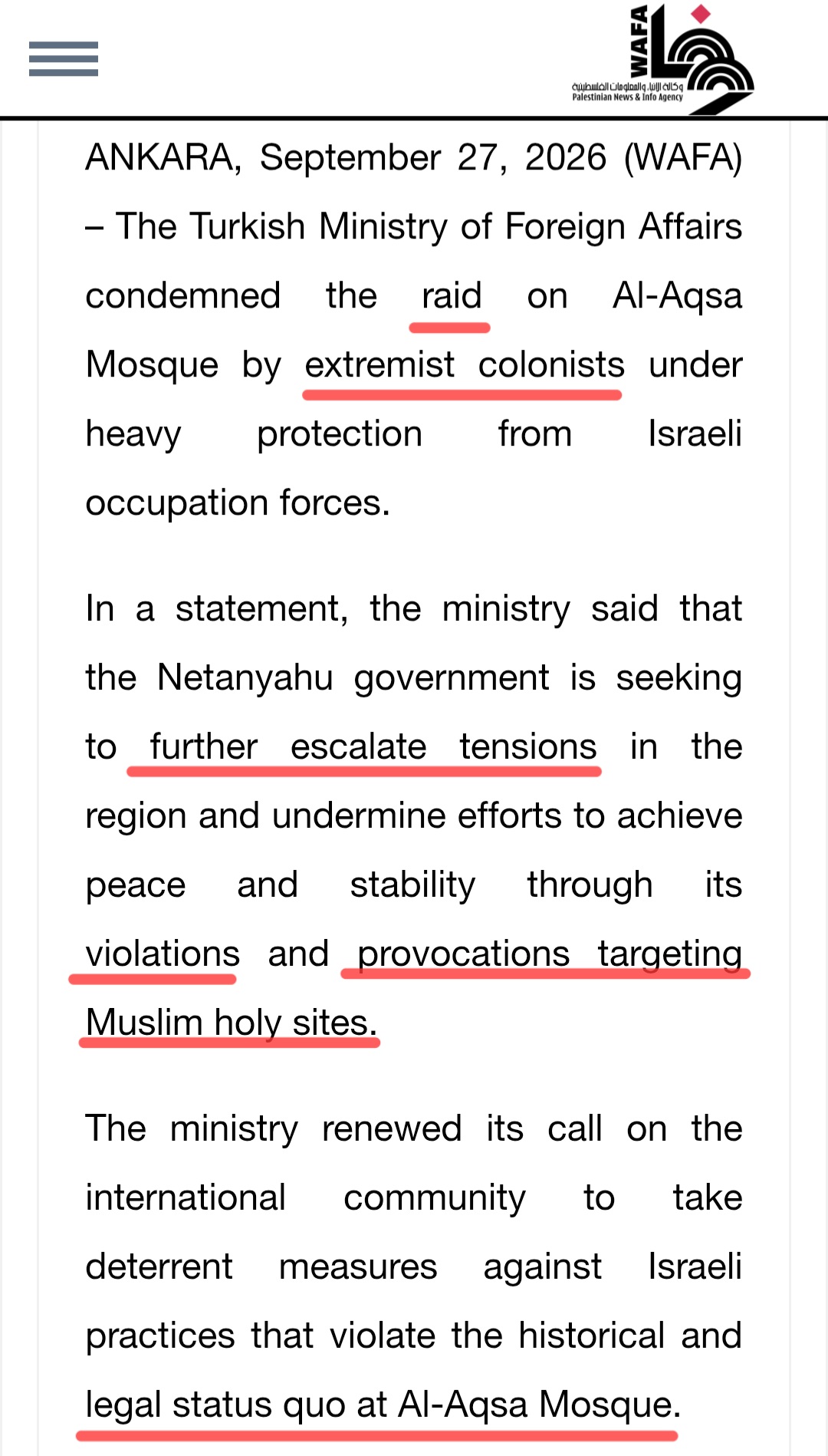
Turkey fans the blood libel in Hamas’s latest war to destroy Israel

This mindset survives because it is passed down, laundered through new vocabulary, and presented as moral concern. But it is the same lie. It refuses to see Jews as a people who escaped societies that murdered their children and insists instead on seeing Jews as the source of murder itself.

The story that antisemitism started when Pharoah forgot Joseph and became worried about the growing number and power of Jews was the fear of a monarch. Antisemitism was instilled in the masses when the Exodus story was flipped that Jews had a bloodlust and didn’t deserve equality. Every society that accepted the libel eventually convinced itself that Jewish freedom was intolerable—and acted accordingly.