For most of the Torah, the covenant looks backward.
God remembers Abraham, Isaac and Jacob. Their children inherit promises made before they were born. The land before them was promised to their fathers.
Jewish history begins with memory.
Then, near the end of the Torah, the direction reverses.
Moses gathers the people on the edge of the Land of Israel and tells them:
“Not with you alone do I make this covenant… but with those who are standing here with us today before the Lord our God, and with those who are not here with us today.” (Deuteronomy 29:13–14)
The covenant changes tense. Until now, we are bound to people who came before us. Now people who do not yet exist are bound to us.
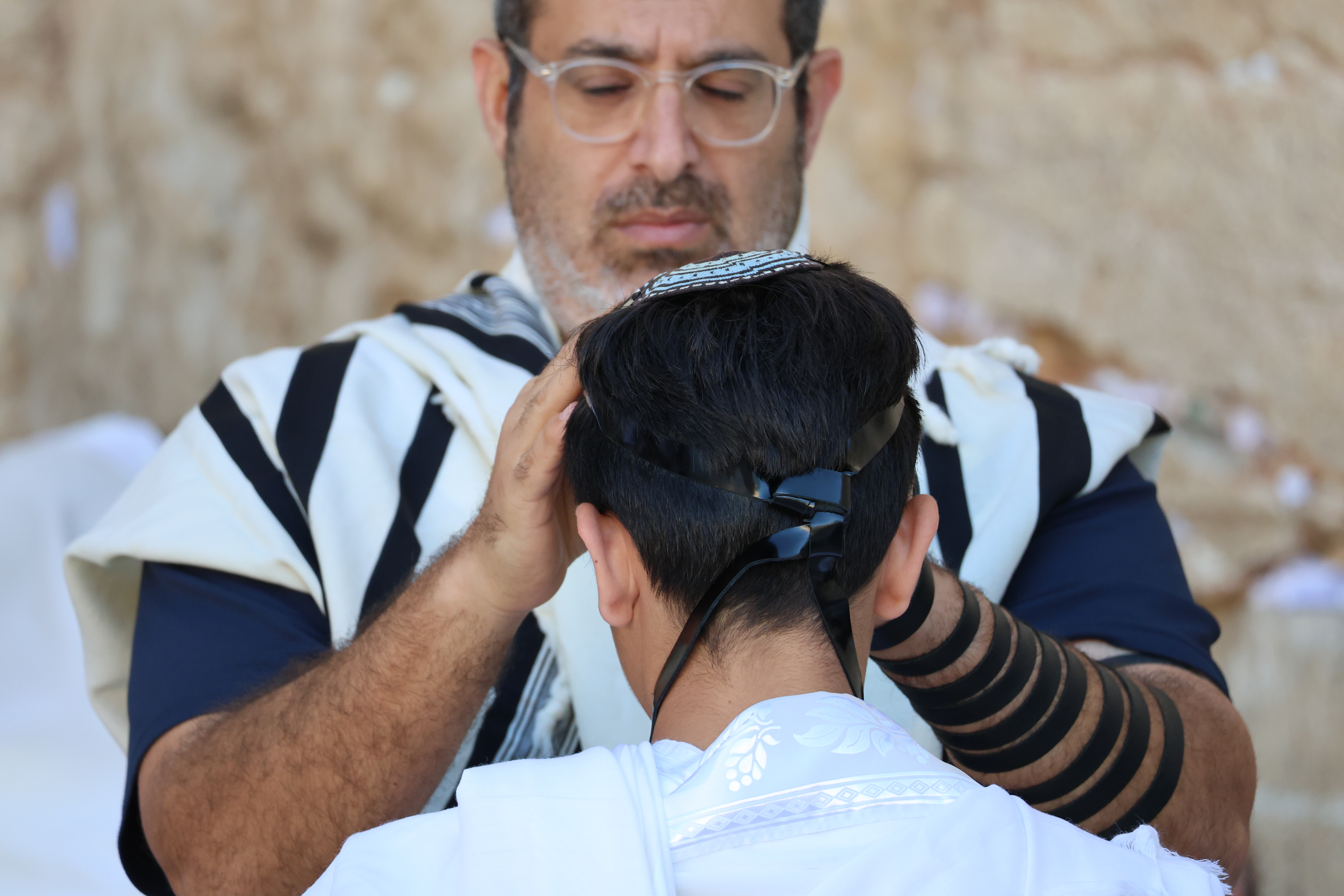
A Jewish father blesses his son at the Kotel in Jerusalem, as he puts on tefillin for the first time (photo: FirstOneThrough)
Abraham enters a covenant whose fulfillment he will never see. Generations later, his descendants stand together and accept a covenant for generations they will never see.
Genesis says: You are here because of those who came before you. Nitzavim says: Those who come after you are part of what you do here.
And connecting them is the land.
Almost immediately after extending the covenant to generations yet unborn, Moses foretells that the Jewish people will be scattered among the nations. Then God will gather them and “bring you to the land that your fathers possessed, and you shall possess it.” (Deuteronomy 30:5)
The land comes from the fathers. The covenant passes to the children. Exile comes between them. And still the chain holds.
It is a story that cannot begin at a convenient modern date. Jews do not suddenly appear in Europe, in Israel in 1948, or Jerusalem in 1967. Nitzavim describes a people moving through time, bound backward to its ancestors and forward to its descendants, with the land running through it all.
Everyone knows why October 7, 2023 changed Israel. But an obscure Ottoman law makes another date worth watching: October 7, 2026.
In 1858, the Ottoman Empire enacted a land code under which three consecutive years without cultivationcould have consequences for rights to certain agricultural land.
Now, three years after October 7, that old rule may suddenly matter.
The Three-Year Rule
Much of the agricultural land of the Ottoman Empire was classified as miri. The sovereign retained ultimate title (“state land”) while individuals could acquire valuable rights of possession and use, known as tasarruf.
Active use of the land mattered.
Article 68 of the Ottoman Land Code addressed agricultural land left uncultivated for three consecutive years without a valid excuse. The original Ottoman mechanism was more complicated than “three years and the government automatically owns your land,” involving tapu, the status of the holder and opportunities to recover the right.
But the underlying principle was clear: continued cultivation could matter to continued land rights.
Ottoman term
Meaning
Relevance
Miri
State land carrying individual possession/use rights
Much agricultural land
Tasarruf
Right of possession and use
The individual’s valuable land right
Mahlul
Lapsed/reverted possessory right
Potential consequence of qualifying non-cultivation
Tapu
Land registration/title system
Documentary evidence of rights
This is not merely an Ottoman historical curiosity. It passed on to the British, Jordanians and then Israel with few modifications.
In 2020, Israel’s Supreme Court addressed the rule directly in HCJ 5426/17, Barakat v. Head of the Civil Administration in the West Bank (Nov. 29, 2020). The Court held that under the Jordanian land law still applicable in the territory, an unregisteredtasarruf right acquired through cultivation could be extinguished if the land was left uncultivated for three consecutive years, causing the land to revert to the government under Article 68’s mahlul doctrine. By contrast, a tasarruf right that had been formally registered generally was not lost merely because the land subsequently lay fallow.
So the three-year rule remains relevant to unregistered land in Judea and Samaria today.
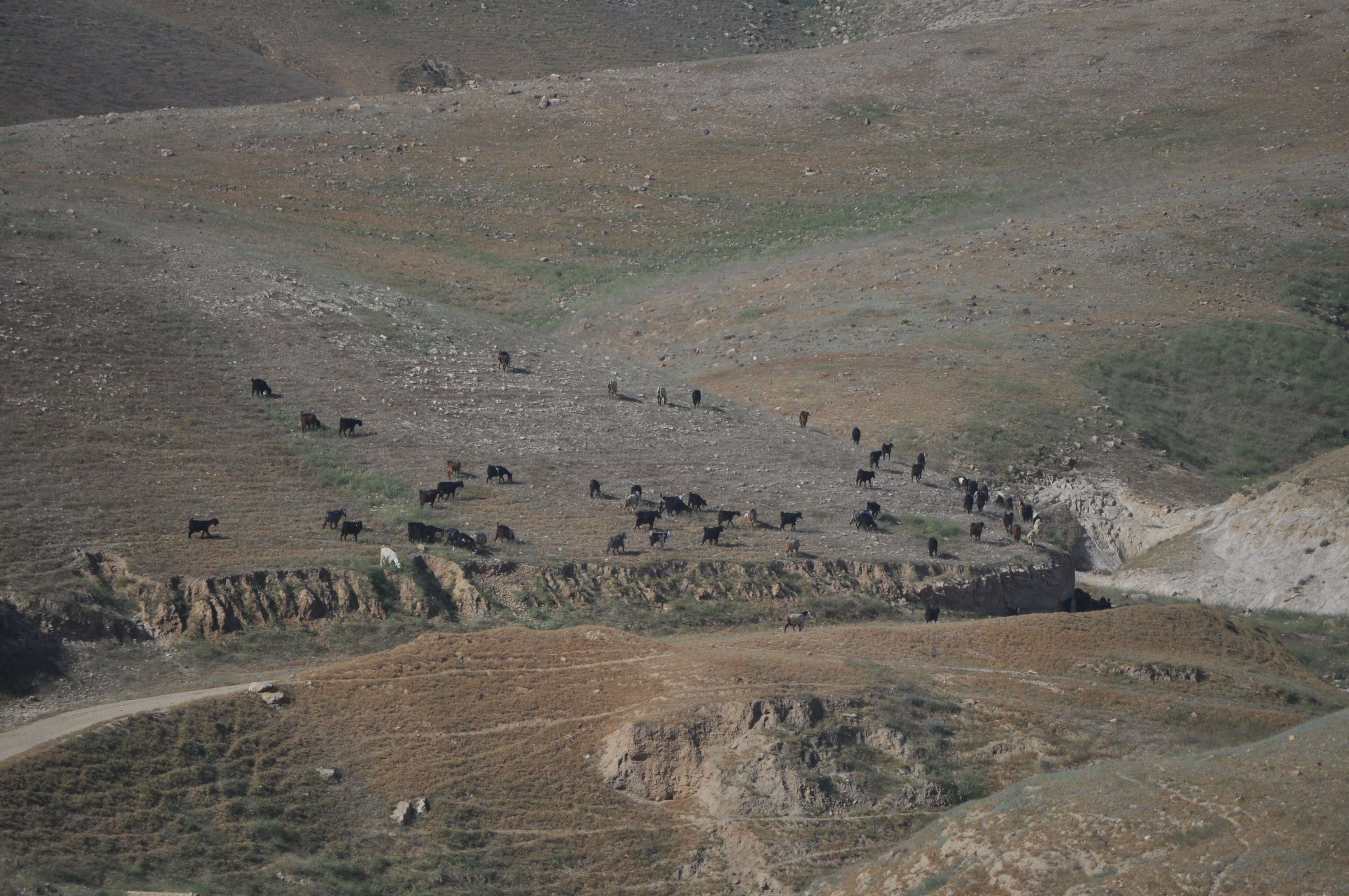
Goats owned by Bedouins graze in Judea and Samaria (photo: FirstOneThrough)
Then Came October 7
After the October 7 massacre by Gazans, security conditions dramatically changed access to agricultural land across the region. OCHA reported that more than 96,000 dunams of olive-cultivated land went unharvested during the 2023 season following access restrictions and violence. By the 2025 olive harvest, OCHA was reporting that farmers from multiple villages had been completely denied access for the third consecutive year to certain olive groves.
That creates the question: How much unregistered agricultural land has actually gone uncultivated since October 7, 2023?
The Eye in the Sky
There is something unusual about these particular three years.
Israel has had extraordinary security reasons since October 7 to maintain extensive aerial surveillance of Judea and Samaria.
At the same time, the Civil Administration already uses sophisticated geographical information in determining land status. Its Surveying Unit maintains cadastral and mapping information, while its Supervision Unit operates a team whose stated function is examining land through survey procedures “aimed at locating state land in the area, for declaration as such.”
The Civil Administration therefore potentially possesses an extraordinarily detailed record of whether cultivation occurred.
Request For Access
Consider two claimants whose land appears uncultivated in aerial photographs for three years. One produces repeated applications showing: I wanted to cultivate my land. Israel prevented me from reaching it. The other has no comparable record.
Those are materially different factual cases based on the background discussed above.
OCHA reports that Palestinian liaison authorities submit farmers’ access requests to Israeli authorities and tracks approvals, denials and pending requests in particular areas. Those applications coupled with the aerial documentation, may move the land into a different legal category.
Meanwhile, Israel Is Looking for State Land
This is where the 1858 law meets 2026.
The Civil Administration openly maintains a Survey Lands team charged with examining whether land can be declared government property. Its newly published procedures show that potential survey areas are placed on a priority list requiring approval by the head of the Civil Administration and the Defense Minister or an authorized representative.
The State Comptroller describes the same team’s purpose as locating and marking land in Judea and Samaria that can be declared government property.
And Israel has dramatically accelerated state-land declarations.
In February 2026, the Israeli government approved the resumption of systematic land-registration proceedings in Area C, allocating approximately NIS 244 million to the effort—the first such broad registration initiative since Israel suspended the previous settlement-of-title process after 1967.
Peace Now calculates that approximately 27,119 dunams had been declared state land under the current government by June 2026, nearly as much as it says had been declared during the entire period since the Oslo Accords. A Palestinian Authority commission consequently calculates that approximately 29,335 dunams have been included in state-land declarations since October 7, 2023.
And we haven’t yet reached the anniversary when many West Bank Arabs encountered more restrictions on movement due to the war their Gazan brothers waged on Israel.
October 7, 2026
That is what makes the third anniversary different.
Consider the ramifications of Ottoman law to this point in time:
1858: Ottoman law makes three years of non-cultivation legally significant for certain land rights.
2020: Israel’s Supreme Court confirms that the Article 68 mahlul doctrine remains relevant to unregistered tasarruf rights in Judea and Samaria.
2023: October 7 is followed by enormous disruption of access to agricultural land.
2023–2026: Israel accumulates an extraordinary photographic record of what is happening on the ground.
2024–2026: state-land declarations accelerate.
2026: Israel funds a major new land-registration initiative.
October 7, 2026: three years have elapsed for when many West Bank Arabs accessed land they had used previously.
Nothing automatically changes ownership at midnight of 10/7. Many questions remain.
How much affected land is actually unregistered miri land? Was it legally “uncultivated”? What constitutes a sufficient excuse? What happens when Israeli security restrictions themselves prevented cultivation? And what evidence exists showing that individual claimants continued asserting their rights?
Those questions will have to be answered parcel by parcel.
But after October 7, something will exist that did not exist before: three complete post-massacre years of evidence.
October 7, 2023 changed the security map of the Middle East. October 7, 2026 may begin changing the actual map of Judea and Samaria as well.
The Jewish story in the Land of Israel is often told with an enormous hole in the middle.
The script runs something like: there were ancient Jewish kingdoms and then Rome destroyed the Second Temple in 70 CE. Jews were forced into exile, and then, nearly 1,800 years later, Zionists began arriving in Palestine.
That shorthand turns one of history’s longest relationships between a people and a land into an unexplained disappearance and sudden reappearance.
The actual story is more remarkable.
After the Destruction of the Second Temple
The destruction of Jerusalem in 70 CE was catastrophic, but it did not empty the land of Jews. Six decades later, Jews launched the Bar Kokhba Revolt from Judea. After its defeat in 135, Roman repression devastated Jewish life in Judea and severely restricted Jews in Jerusalem.
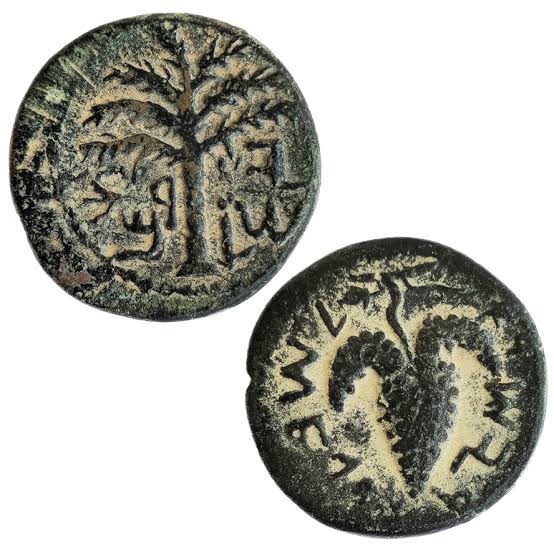
Ancient coins minted during the Bar Kochba revolt
So Jewish life shifted north. The Galilee became its major center, particularly Tiberias and Sepphoris. Around 200 CE, Judah ha-Nasi compiled the Mishnah in the Land of Israel. Centuries later, Jewish scholars there produced the Jerusalem Talmud. Archaeology has uncovered synagogues across the country from this period.
The Jewish state was gone. The Jews were not.
Jerusalem, Tiberias, Safed and Hebron
The rulers changed repeatedly with new invaders: Roman, Byzantine, Muslim, Crusader, Mamluk and Ottoman. So did the size and location of the Jewish population.
Under early Muslim rule, Jews reestablished themselves in Jerusalem. The Crusader conquest brought another catastrophe, including killings and displacement.
Again, Jews returned.
In 1267, Nachmanides—Ramban—arrived in Jerusalem and helped rebuild its shattered Jewish community.
After the expulsion from Spain in 1492 and the Ottoman conquest in 1517, Safed became an international center of Jewish civilization, producing Joseph Karo, whose Shulchan Aruch became a foundational code of Jewish law, and Isaac Luria, whose teachings transformed Jewish mysticism.
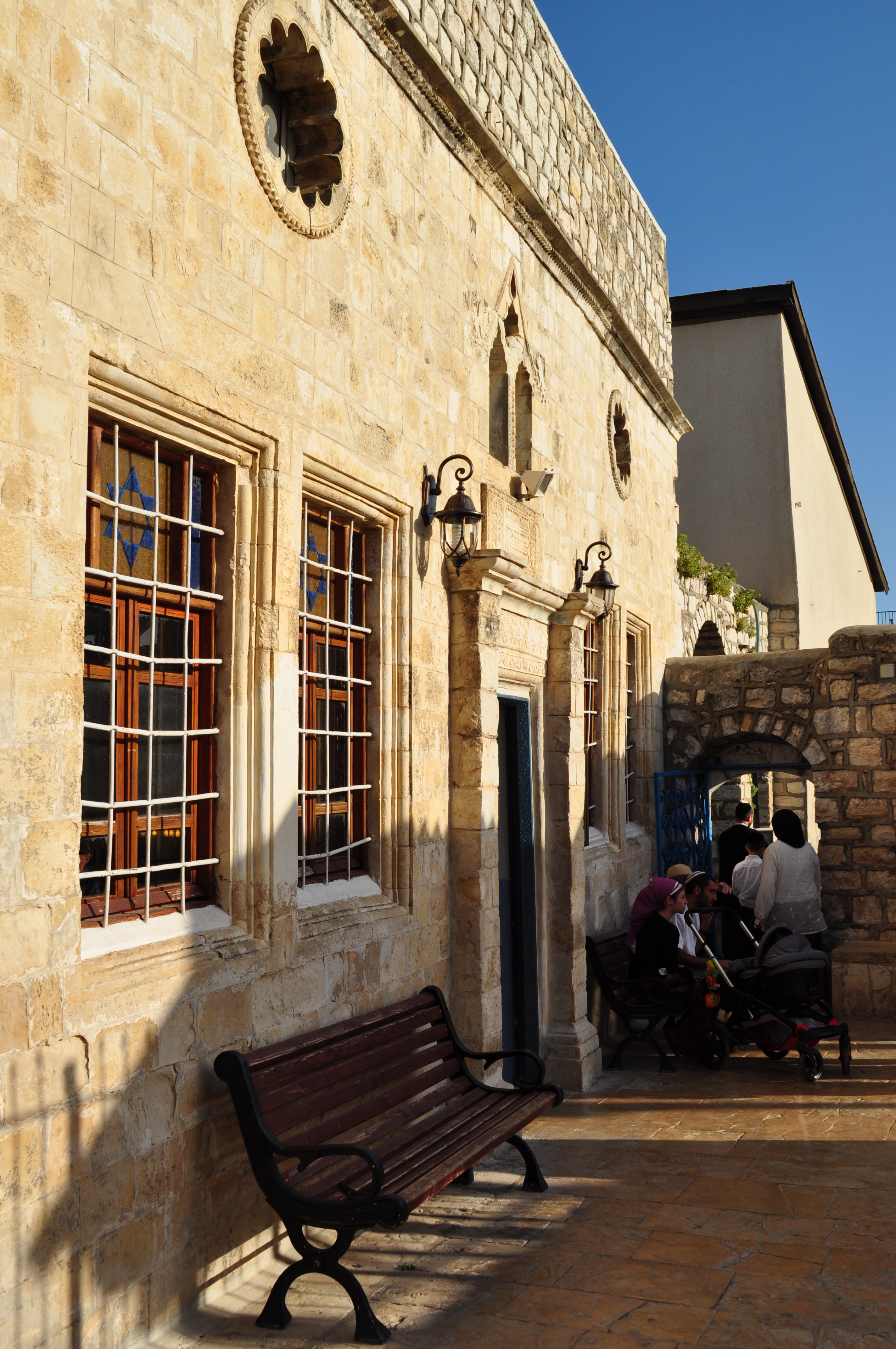
Old synagogue in Safed / Tzfat (photo: FirstOneThrough)
Ottoman tax records make the population visible. Safed/Tzfat contained 233 Jewish households in 1525–26; by 1567–68 there were 945. Jews were also recorded in Jerusalem, Gaza, Nablus, Peki’in and elsewhere.
The Four Holy Cities
Over time, four cities became especially identified with Jewish life in the land: Jerusalem. Hebron. Safed. Tiberias.
Their Jewish populations rose and fell through war, disease, earthquakes, economic hardship and persecution. The communities kept being rebuilt, and Jews kept arriving.
Hundreds accompanied Judah HeHasid to Jerusalem in 1700. Hasidic Jews came from Eastern Europe in 1777. Beginning in 1808, disciples of the Vilna Gaon arrived in successive waves.
By the nineteenth century, the continuity becomes difficult to miss. Moses Montefiore’s censuses recorded dramatic growth:
City
1839
1875
Jerusalem
2,916
11,237
Safed
1,384
3,753
Tiberias
801
1,552
Hebron
419
939
Jaffa
86
660
Haifa
138
531
The communities covered by the census tripled from 6,173 Jews in 1839 to 18,672 in 1875.
Historical estimates differ because Ottoman-era demographic records were not modern censuses. But the trend is unmistakable. One reconstruction estimates roughly 6,700 Jews in the country in 1800, 42,900 in 1890 and 94,000 by 1914.
And Jews were not simply scattered individuals. By 1880, one reconstruction estimates Jews constituted approximately 57% of Jerusalem, 52% of Safed and 60% of Tiberias.
Modern Zionism Accelerated the Return
This is where conventional histories often begin. But it wasn’t the beginning; it was an acceleration.
Petah Tikva was founded in 1878, in part by Jews from the existing Jerusalem community. The First Aliyah began in the 1880s, helping establish and expand agricultural communities including Rishon LeZion, Zikhron Ya’akov and Rosh Pina.
The Second Aliyah brought another wave. In 1909, Jews founded Tel Aviv.
Meanwhile, something extraordinary was occurring: Hebrew returned as the everyday language of a society. A language preserved through centuries of prayer, scholarship and literature became the language of children, workers and shopkeepers.
What About the Land?
By the end of the British Mandate, Jews did not privately own most of Palestine. British statistics for April 1945 put Jewish landholdings at approximately 1.49 million dunams, or 5.67% of the total territory.
The remaining territory was not privately owned “Arab land.” It included state domain, desert, communal lands and other Ottoman and British legal classifications.
Jewish ownership was concentrated where Jewish society was developing. By the mid-1940s, historical land statistics put Jewish ownership at roughly 39% in the Jaffa/Tel Aviv subdistrict, 38% in Tiberias, 35% in Haifa, and 18% in Safed.
And much of this land had been purchased.
The British Survey of Palestine recorded a net 938,365 dunams purchased and registered by Jews between 1920 and the end of 1945 alone.
Presence, Memory, Return
The nearly 1,900 years between Rome and Israel can be understood through three words.
Presence. Jews continued living in the land, sometimes in substantial communities, despite conquest, persecution and repeated displacement.
Memory. Jews elsewhere continued facing Jerusalem in prayer, praying for return, remembering Jerusalem at weddings, ending Passover with the hope of being there the following year and financially supporting Jewish communities in the land.
Return. Ramban came in 1267 after the Crusades. Jews came from Spain after 1492. Many followed Judah HeHasid in 1700, the Hasidim in 1777, the disciples of the Vilna Gaon beginning in 1808, the First and Second Aliyahs, fleeing Russian pogroms and Nazism, and as survivors of the Holocaust.
The scale changed. The political objective changed. The ability to return changed.
1948 Was Not the Beginning
Beginning the story of Israel in 1948 – or even with Herzl in 1897 – fundamentally distorts Jewish history. Those were not years when Jews suddenly showed up. They were the times when Jews accelerated their return and became self-governing once again.
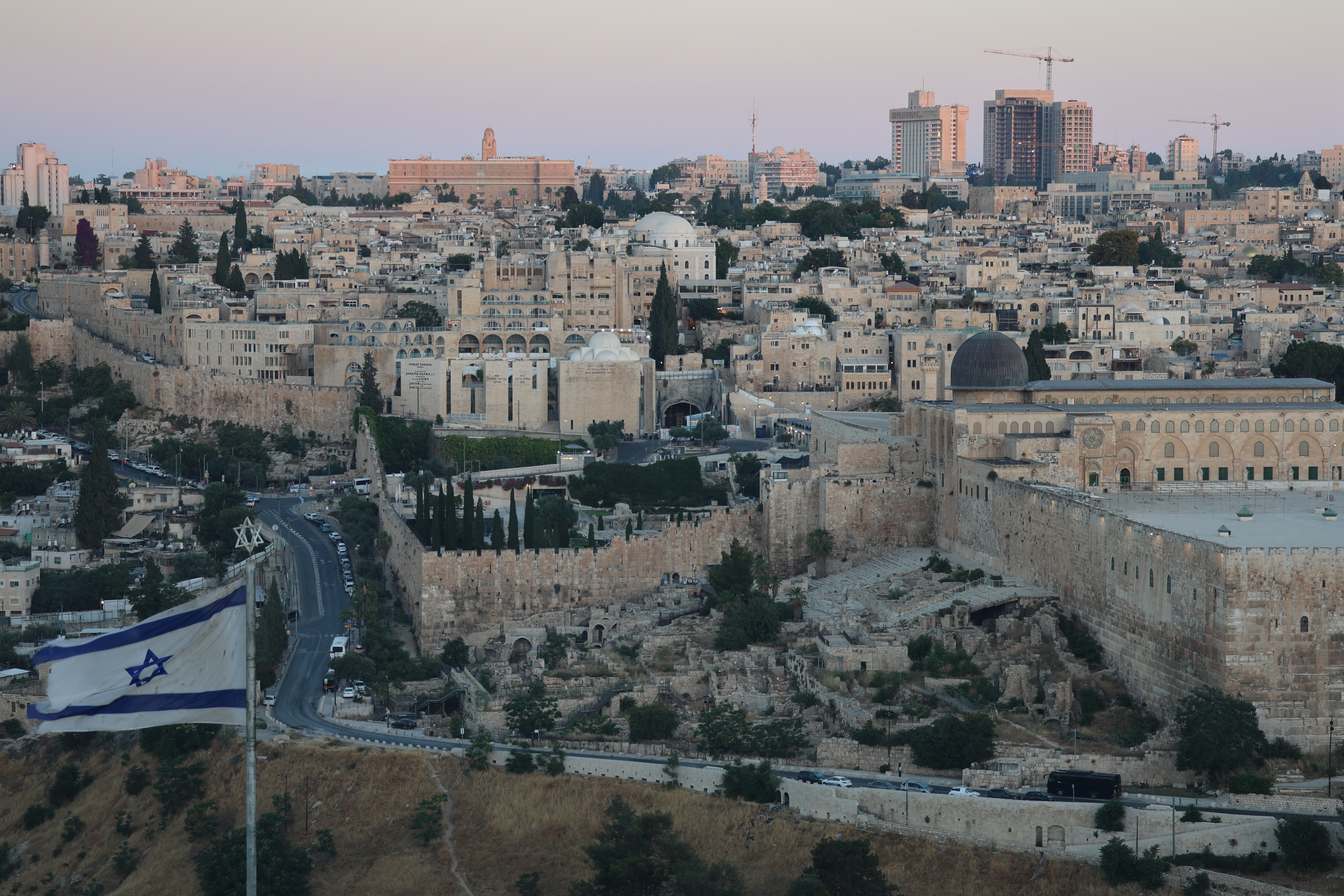
The Israeli flag waves in the foreground, with the white domes of the rebuilt Tiferet Israel and Hurva Synagogues in the center, and the grey Al Aqsa mosque dome to the right. In the distance, cranes build new residential towers in the western parts of the city. (photo: FirstOneThrough)
“This day you have become a people to the Lord your God.” (Deuteronomy 27:9)
It is a strange declaration in this week’s parsha, Ki Tavo.
Why now?
God had already called the Israelites “My people” while they were slaves in Egypt. They left Egypt together and crossed the sea together.
At Sinai, they received the Torah and entered a covenant with God. There, they were called “a kingdom of priests and a holy nation.” (Exodus 19:6)
Yet forty years later, as they prepare to enter Israel, Moses declares: “This day you have become a people.”
What changed?
Ki Tavo opens with the answer:
“When you enter the land that the Lord your God is giving you as an inheritance, and you possess it and settle in it…” (Deuteronomy 26:1)
Only then begins the commandment of Bikkurim, bringing the first fruits. Standing on the Land with its produce in his hands, the farmer must recount Jewish history: the descent into Egypt, suffering, liberation and finally:
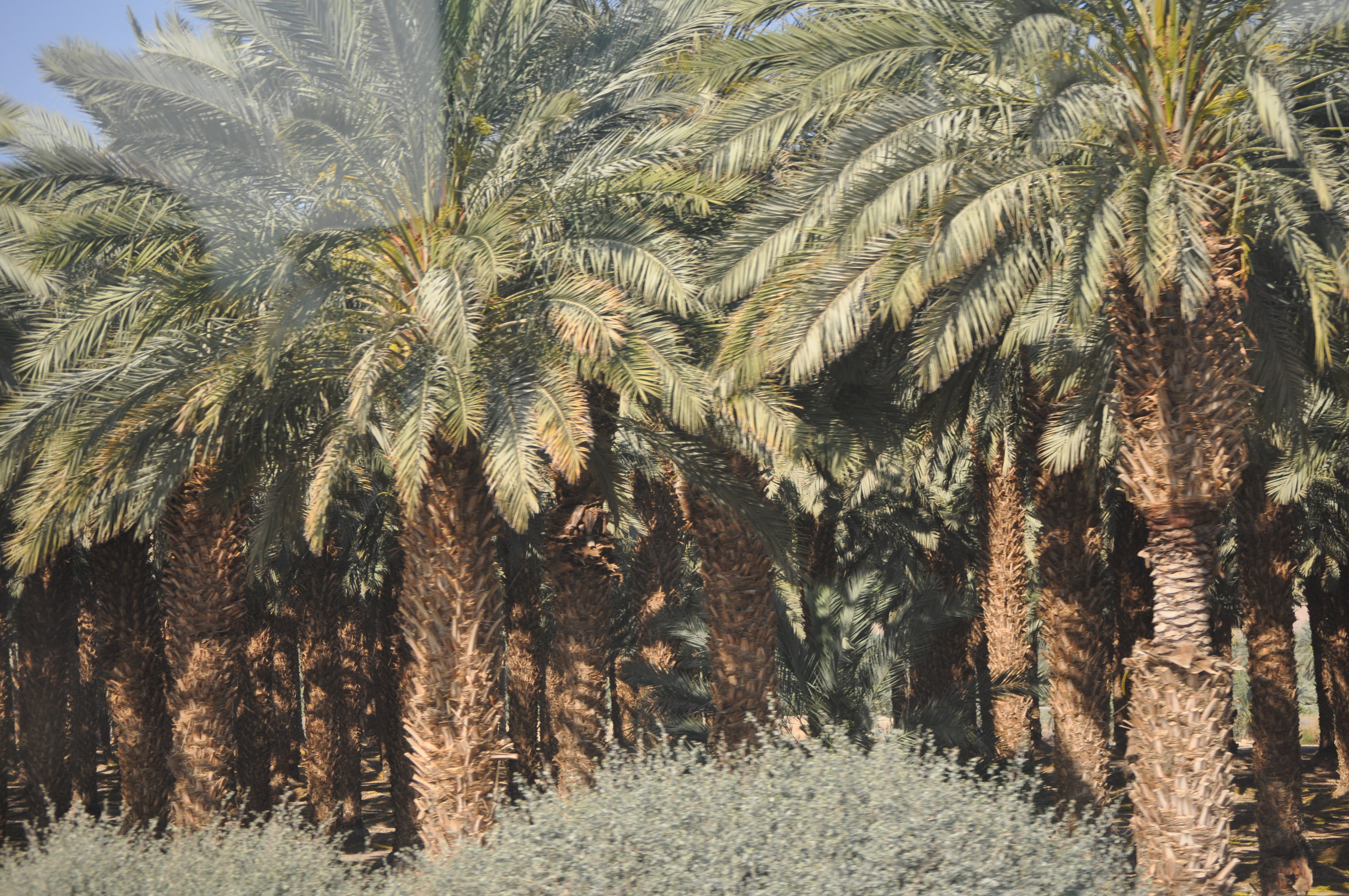
Palm trees in the Jordan Valley (photo: FirstOneThrough)
“He brought us to this place and gave us this land.” (Deuteronomy 26:9)
The Exodus was not simply about leaving Egypt. It was part of a journey toward somewhere.
Egypt gave us freedom. Sinai gave us the covenant. The Land gave us responsibility.
Israel was already a people in Egypt and a covenantal community at Sinai. But entering the Land changed the nature of that covenant.
Now Jews would have land, property, businesses, courts, borders, wealth and poverty. They would no longer simply receive God’s laws. They would be responsible for effectuating them through a society of their own.
That is why Bikkurim matters. Sovereignty does not permit the successful farmer to begin his story with himself. Holding what he grew on his own land, he must recite the history that put him there.
History creates the claim. Covenant creates the obligation. Sovereignty makes both real.
That gives “this day you have become a people” particular resonance after nearly two thousand years without Jewish sovereignty.
A people is not fully defined by what happened to it, what it believes or even the laws it accepts. It is also defined by what it takes responsibility for building.
For many people, Jewish holidays are family traditions: apples and honey on Rosh Hashanah, a Passover Seder, Hanukkah candles, or a sukkah in the backyard. Yet beneath these customs lies the deeper reality that every major Jewish holiday is connected in some way to the Temple in Jerusalem.
The Temple was not simply a house of worship. It was the spiritual, national, and legal center of Jewish life. Pilgrimages, sacrifices, priestly service, national assemblies, and the calendar itself revolved around Jerusalem. Even after the Temple’s destruction in 70CE, the holidays preserved its memory and continue to point toward it.
Rosh Hashanah marks the Jewish New Year and the sounding of the shofar. In Temple times, witnesses testified before the Sanhedrin in Jerusalem to establish the new month, and the shofar echoed through the Temple courts. Today, Jews still pray that God’s kingship will once again be recognized from Zion.
Yom Kippur is inseparable from the Temple. The High Priest entered the Holy of Holies only once a year to seek atonement for the nation. Modern synagogue services painstakingly recount the Temple ritual, preserving the memory of the day’s most sacred service.
Sukkot was one of the three pilgrimage festivals when Jews ascended to Jerusalem. The Temple hosted the joyous water-drawing ceremony (Simchat Beit HaShoeva), accompanied by music, dancing, and water libations on the altar. Rabbinic tradition describes it as one of the greatest celebrations ever witnessed.
Shemini Atzeret and Simchat Torah conclude the festival cycle begun at the Temple with Sukkot. While Simchat Torah developed later, it celebrates the Torah that was publicly taught and read in Jerusalem.
“Ki mitzion tetze torah” (כִּי מִצִּיּוֹן תֵּצֵא תוֹרָה). “For instruction shall come forth from Zion, The word of God from Jerusalem.” – Isaiah (Chapter 2, Verse 3)
Hanukkah commemorates the rededication of the Second Temple after it was reclaimed from the Seleucid Greeks. Every candle recalls the restoration of Jewish worship in Jerusalem.
Tu BiShvat, the New Year for Trees, determined agricultural laws whose tithes and first fruits were ultimately brought to the Temple.
Purim is the only holiday without a direct Temple ritual, yet its story ensured the survival of the Jewish people who would rebuild and worship in the Second Temple. Jerusalem itself celebrates Purim a day later, preserving its ancient status as a walled city.
Passover was the greatest pilgrimage festival. Hundreds of thousands ascended to Jerusalem to offer the Passover sacrifice before gathering in homes throughout the city for the Seder. Even today Jews conclude the Seder with the words, “Next year in Jerusalem.”
Tens of thousands of Jews at the Kotel Plaza in the Old City of Jerusalem during Passover, as they cannot ascend to the Temple Mount today
Shavuot celebrated the first fruits brought to the Temple in elaborate processions from across the Land of Israel. Farmers entered Jerusalem carrying decorated baskets while choirs sang Psalms of thanksgiving.
Tisha B’Av mourns above all the destruction of both the First and Second Temples. It is the day on which Jews sit on the floor, recite Lamentations, and remember the loss of Jerusalem’s spiritual heart.
Even holidays with no formal Temple ceremony ultimately orbit Jerusalem. They celebrate the survival of the Jewish people, the covenant, the Land of Israel, and the hope of restoration.
Jerusalem is not merely Judaism’s holiest city; it is the organizing principle of the Jewish calendar itself. The cycle of holidays begins and ends with memories of Temple worship, pilgrimages, offerings, repentance, thanksgiving, and national gathering in one place.
For centuries Jews prayed facing Jerusalem, broke a glass at weddings to remember its destruction, left part of a home unfinished in mourning, and ended the Passover Seder and Yom Kippur with the same aspiration: “Next year in Jerusalem.”
The Jewish calendar is more than a record of sacred time. It is a map whose destination is Jerusalem, carrying the memory of the Temple from one generation to the next.
Parshat Bamidbar appears to focus on logistics: censuses, military formations, camp arrangements. Yet beneath the counting sits a striking idea. The Jewish people are becoming a nation, while still preserving tribes.
That is extraordinary.
The descendants of Jacob had spent centuries in Egypt. They suffered together, left Egypt together, received one Torah together, and followed one prophet toward one land. Most nations formed through such an experience would emerge flattened into a single identity.
Yet Bamidbar carefully restores the tribes as though the years in Egypt had barely interrupted the original family structure.
Judah remains Judah. Ephraim remains Ephraim. Dan remains Dan.
The land itself will eventually be divided according to those ancient tribal lines, rooted in the original sons of Jacob. Time passed. Generations died. Slavery reshaped the people. Yet the inheritance map waiting in Canaan hundreds of years earlier remained intact.
The Torah is preserving continuity.
Modern states often try to weaken regional, familial, or tribal identities in favor of a single centralized national identity. Bamidbar moves differently. The tribes each have their own banner, leader, place in the camp, and future territory. Later Jewish history associates distinct characteristics with them: Judah and kingship, Levi and spiritual service, Issachar and scholarship, Zebulun and commerce.
The camp around the Mishkan reflects this structure beautifully. At the center stands the shared spiritual core. Around it stand distinct tribes in ordered formation. Difference remains visible, yet everything faces the same center.
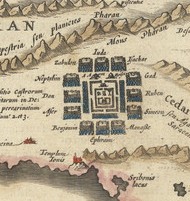
Closeup of tribes around mishkan from Jan Jansson (1588-1664) map of the Holy Land, 1630
That may be one of Bamidbar’s deepest teachings about nationhood. A healthy nation leaves room for distinct identities, histories, and roles while binding them to a larger shared mission.
The census itself reinforces this idea. People are counted through families and ancestral houses. The Torah is reconnecting the wilderness generation to the covenantal family that entered Egypt centuries earlier. Egypt could enslave the Israelites, but the deeper inheritance endured.
Jewish history would repeat this pattern again and again. Jews entered foreign civilizations across thousands of years while carrying older identities beneath the surface. Languages changed. Governments changed. Geography changed. The continuity remained.
Bamidbar therefore reads as far more than a census. It is a declaration that covenant survives exile, and that unity becomes strongest when rooted in enduring memory, shared purpose, and distinct communities gathered around a sacred center.
In the Hebrew Bible, Abraham, the father of monotheism, is tested ten times. The biblical commentator Rashi (1040-1105) lists them out, and it is curious to line them against the ten nations that inhabit the land that God promises to Abraham.
10 Tests according to Rashi
10 Nations in the promised land
Abraham hid underground for 13 years from King Nimrod, who wanted to kill him.
Kenites
Nimrod flung Abraham into a burning furnace.
Kenizzites
Abraham was commanded to leave his family and homeland.
Kadmonites
As soon as he arrived in Canaan, he was forced to leave to escape famine to Egypt.
Hittites
Sarah was kidnapped by Pharaoh’s officials.
Perizzites
The 4 kings captured Lot, and Abraham went out to war to rescue him.
Rephaites
God told Abraham that his offspring would suffer exile and slavery for 400 years initially four monarchies.
Amorites
At 99, Abraham was commanded to circumcise himself and his household.
Canaanites
Abraham was instructed to drive away Ishmael and Hagar.
Girgashites
He was commanded to sacrifice Isaac.
Jebusites
The Torah never tells us to match them one by one, but two of Abraham’s tests align so precisely with two of those nations that they reveal the architecture of the covenant itself: one in the flesh, one on the mountain.
The first is brit milah and Canaan, what we know of today as the bulk of the land of Israel.
When God first expands Abraham’s promise of land in Book of Genesis 13, He tells him to rise and walk it: Arise, walk through the land, its length and breadth, for I will give it to you.
Abraham walks the land before he owns it.
But in Genesis 17, when the covenant is deepened through circumcision, the order changes. God commands Abraham to mark the covenant into his own body and then immediately ties that mark to the promise of land: I will give to you and your descendants after you the land of your sojournings, all the land of Canaan.
The sequence is striking.
First Abraham walks the land. Then Abraham marks the flesh. The lesson is deeper than ownership. You cannot carry covenantal land unless the covenant is carried within you.
Before borders, there is obligation. Before sovereignty, there is submission.
The modern world treats land as politics—lines, armies, treaties. The Torah treats land as moral space. Canaan is not merely inherited geography. It is covenantal geography. And covenantal geography requires covenantal people.
Brit milah is the title deed, not written on parchment, but on the body itself.
The land of Canaan is not inherited simply because it was promised. It is inherited because Abraham accepted what the promise demanded.
Then comes the Akedah and the Jebusites, which takes place in Jerusalem.
If brit milah secures the land broadly, the Akedah secures its heart.
Abraham’s greatest trial takes place on Mount Moriah, where he binds Isaac and prepares to surrender the son through whom every promise was meant to continue. Jewish tradition identifies that mountain with the future Temple Mount, the site held by the Jebusites until King David captures it and makes it the spiritual center of Israel, 3,000 years ago.
That means Abraham’s greatest and final test takes place at the future center of Jewish history. That is not incidental.
Long before David purchases it, long before King Solomon builds the Temple, long before priests serve and pilgrims ascend, Abraham stands there and confronts the deepest truth of covenant: even the future belongs to God.
Canaan is the inheritance of the body. Its covenant is sealed in flesh.
Jerusalem is the inheritance of the soul. Its covenant is sealed in surrender.
One is broad territory. The other is concentrated holiness.
The land of the Canaanites – the land of Israel – is the essence of the covenant between God and the Jews; the land of the Jebusites – Jerusalem – is the center of that faith. These are lessons that God imparted to Abraham in the year 2023 of the Jewish calendar that anchors Judaism to this day.
Parshat Terumah introduces the Mishkan, a sanctuary built in the wilderness, precise in measurements and portable by design. It moved as the people moved. God’s presence rested among a nation without a permanent home.
For nearly two thousand years, Jewish life functioned in Mishkan mode.
Without sovereignty and without a Temple, Jewish law became the architecture that traveled. Halacha, Jewish law, created sacred space wherever Jews settled. The synagogue stood in place of the courtyard and the Shabbat table carried echoes of the altar. Study sustained covenant across continents.
Judaism survived in the diaspora because it was built to move.
But the Mishkan was never meant to be the final form. It pointed toward the Mikdash, the Temple that was ultimately built 3,000 years ago in Jerusalem, enduring and anchored in sovereignty. The Mishkan belongs to wandering. The Mikdash assumes a people settled in its land.
Exile required portability. The State of Israel reintroduces permanence.
The Old City of Jerusalem including the Jewish Temple Mount/ Al Aqsa Compound
That shift changes the demands of Jewish life. Law still shapes the individual and the community, but it now encounters public power. Covenant enters the arena of governance.
The wilderness sanctuary rose from voluntary gifts. The Temple required national structure and responsibility. Now, sovereignty requires the same. While a portable faith sustains survival, a rooted nation must translate that faith into courts, policy, defense, and public ethics.
Jewish history has moved from dispersion to statehood. Yet the deeper challenge is spiritual: whether a tradition perfected in exile can shape a society in power without losing its moral clarity.
Terumah begins with a traveling sanctuary. It gestures toward something fixed and enduring.
The journey from Mishkan to Mikdash continues in our own time.
The final season of Game of Thrones disappointed many viewers.
For years the show carried two storylines: an existential threat to humanity and a political struggle for the throne. When the ending came, the cosmic danger faded first and the camera returned to palace intrigue. Technically both plots resolved but emotionally, it felt like the story had mistaken the setup for the destination.
That structural tension comes to mind every year at Parshat Yitro.
The most dramatic moment in Jewish history — Sinai, revelation to the entire people, the Ten Commandments — arrives astonishingly early in the Torah. If receiving the law is the climax, why does it appear so soon in the Bible?
Because it isn’t the ending; it’s the beginning.
Sinai gives the people a constitution. It shapes their character, their obligations, their relationship with God and each other. But from the very first promise to Abraham, the Torah’s narrative is moving somewhere concrete — toward a land.
Walk the text and it reads like a map: journeys, wells, borders, inheritances. The story is geographic as much as spiritual. It is about building a nation in a place.
Torah and land were always meant to live together.
Torah without a homeland leaves Jewish life suspended in theory. A homeland without Torah loses its moral compass. Sinai forms the people; the land is where that formation is meant to be lived.
Over a thousand years of exile forced a different emphasis. When Jews lost soil, they carried scrolls. When borders disappeared, mitzvot became portable homeland and identity. That devotion was critical for survival.
Now history has shifted again.
For the first time since antiquity, a plurality of Jews lives in the Land of Israel, and soon it will likely be a majority. The part of the Torah that once felt distant and theoretical — sovereignty, agriculture, public responsibility, national life — is no longer abstract. It is daily reality.
Which reframes Parshat Yitro.
Sinai is not the finale of the Jewish story. It is the preparation. The training. The moment a people receives the tools it will need to build something lasting in its own land.
The Torah itself tells us this by where it ends: at the edge of the land, looking forward.
After centuries of mastering how to live as guests in other people’s history, Jews are being invited back to the main storyline: living in the land, with the Torah in hand.
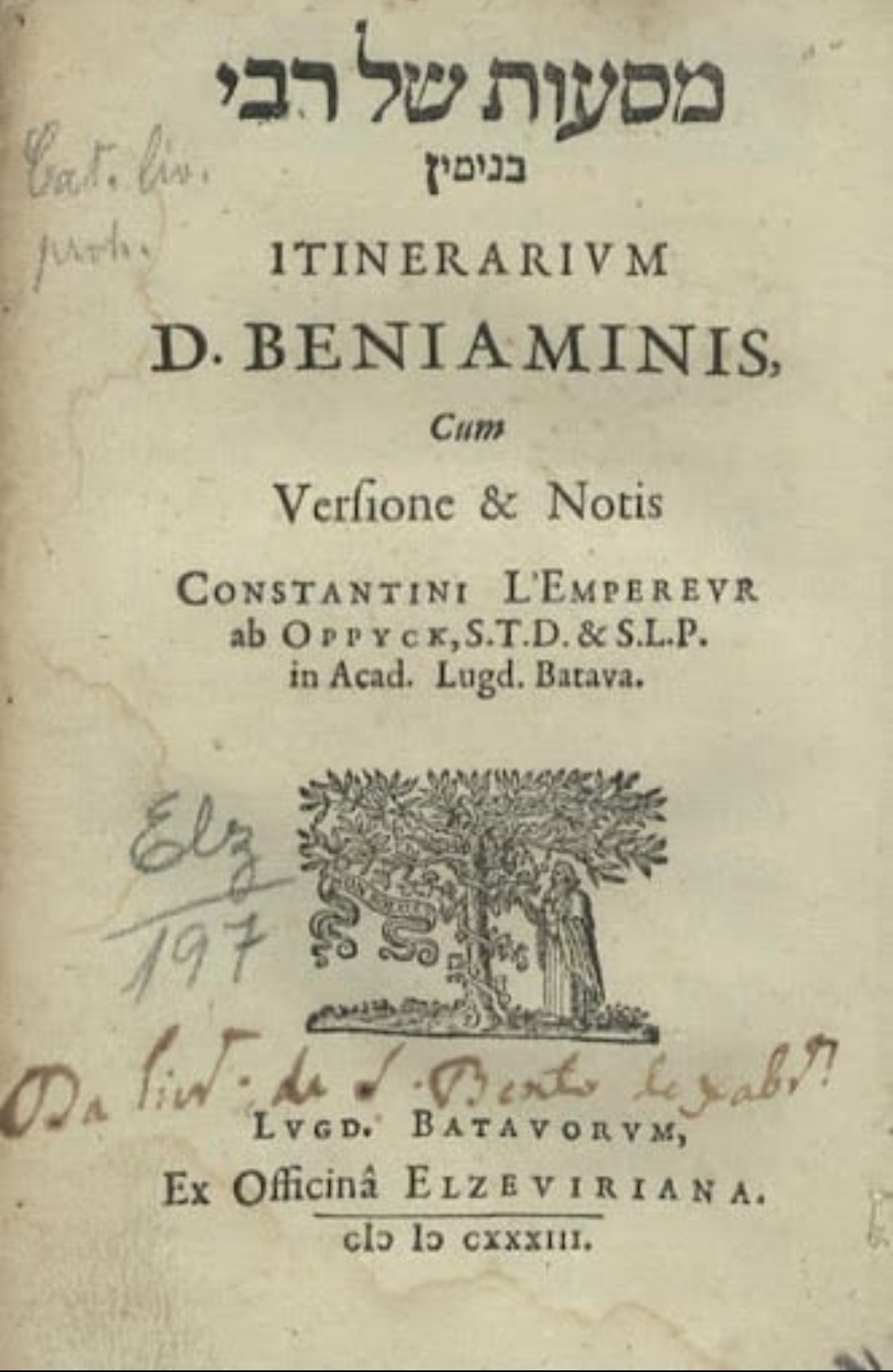
The Travels of Benjamin of Tudela was an eight year travelog from circa 1165 to 1173, chronicling the pilgrimage of a Jew from Spain to the Jewish holy land.
When famine made Canaan (the land of Israel today) unlivable, Jacob’s family went down to Egypt. What began as a temporary refuge became something else entirely. Goshen (Genesis 45:9) was fertile, welcoming, and safe. The Jews prospered there. They built families, livelihoods, and a future. And for a time, it worked.
That is what makes Goshen so instructive. Unlike earlier famine detours in Genesis, this was not a brief excursion. Goshen was a one-way trip. It felt secure enough to settle into—and that comfort lasted generations. Until it didn’t.
Jews talk about it today as they ponder antisemitism’s historic trajectory. It has moved millions of Jews around the world for thousands of years, marking them as the “wandering Jew.” In 1900, most Jews spoke Russian, German, Polish and Arabic. In 2025, they almost all speak Hebrew and English, with French and Spanish covering virtually everyone else.
The land of Israel itself was not without Jewish migration. The land flourished, kingdoms rose, institutions formed. Then came division, exile, and destruction. First the northern tribes disappeared into history. Later Judah followed. The Jews did not just lose modern incarnations of Goshen; they lost their homeland for nearly two thousand years.
Parshat Vayigash is often used as the Torah’s first meditation on long-term diaspora. It offers no illusion that comfort guarantees permanence. Goshen was pleasant until a Pharaoh arose who no longer remembered Joseph. But the Jewish homeland was also strong until it fractured from within and fell to external powers. Neither place offered permanent security.
The lesson is not that exile is doomed or that the Jewish Promised Land is automatically safe. It is that where Jews live is often situational, not absolute. Prosperity can mask vulnerability. Stability can decay quietly. The obligation is vigilance—reading the environment honestly, assessing quality of life soberly, and understanding that history turns even when life feels settled.
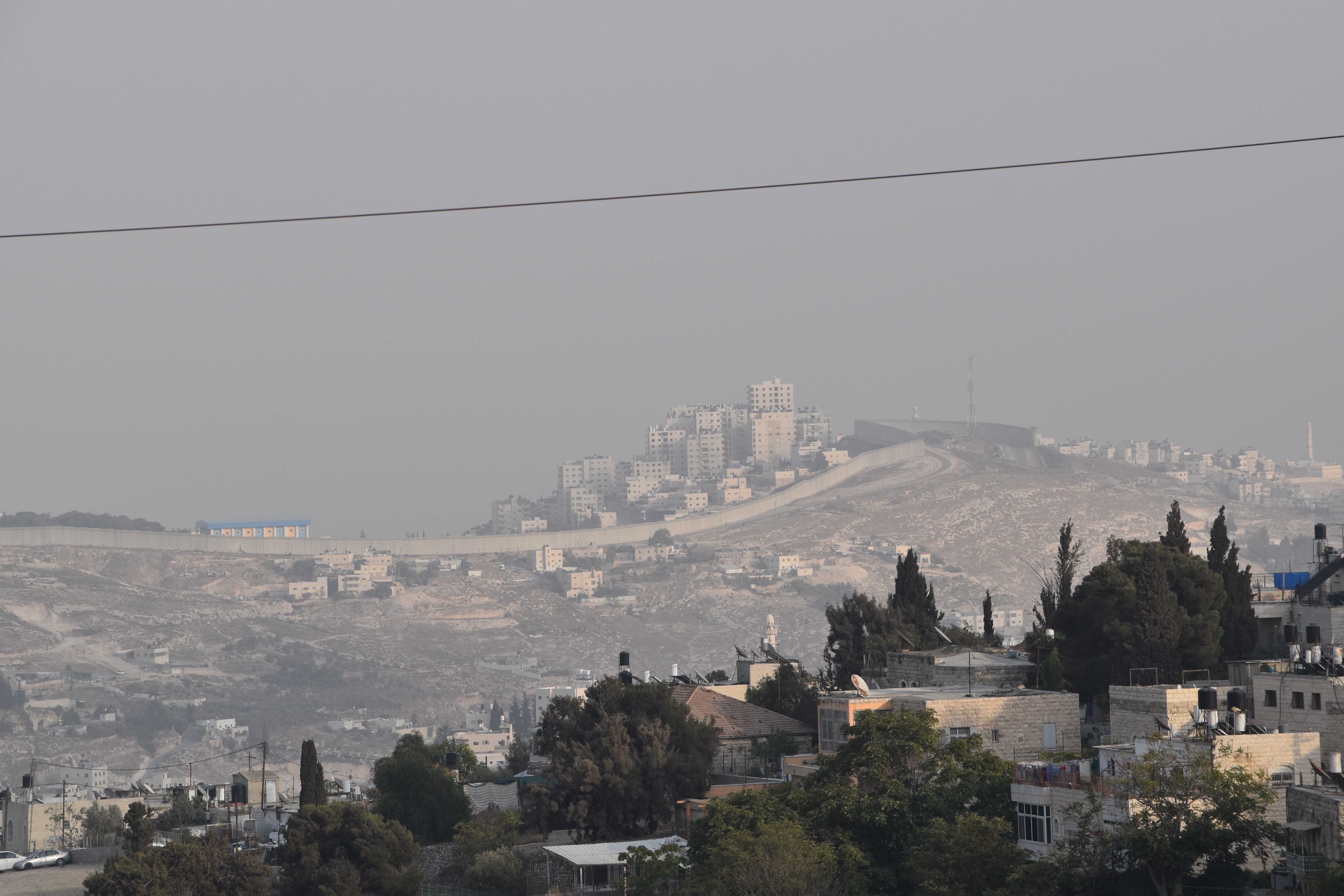
Israel’s Security Barrier as seen from Jerusalem, built to stop terrorism during the “Second Intifada”
Goshen teaches that success today is not a promise for tomorrow. But Israel teaches the same. Awareness, not geography, is what determines whether a place remains livable.