From Cain and Abel to the Third Anniversary of October 7
The first murder in the Bible takes place in the fourth chapter of Genesis. Cain kills his brother Abel, and God asks him a simple question: “Where is Abel your brother?”
God already knows the answer. The question gives Cain an opportunity to acknowledge his crime. Instead, Cain replies, “I do not know. Am I my brother’s keeper?”
With those words, the first murderer in human history also becomes the first to attempt to redirect the narrative away from his victim. God asks about Abel. Cain makes the conversation about himself, challenging the very notion that he bears responsibility for his brother.
God refuses to follow him.
“What have you done? The voice of your brother’s blood cries out to Me from the ground.”
Abel is dead. He cannot describe his suffering, challenge Cain’s account, or defend his memory. Cain remains alive, free to explain himself and change the subject. But God insists that the victim’s blood speaks louder than the murderer’s words.
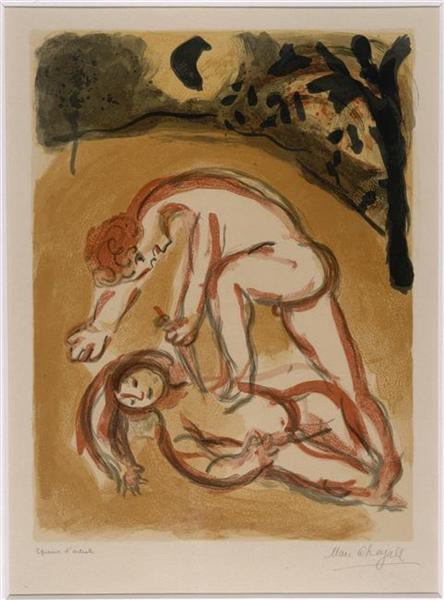
Cain and Abel by Marc Chagall (1960)
There is an extraordinary detail in the Hebrew. God refers to demei achikha, literally “your brother’s bloods,” in the plural. Rashi, drawing on rabbinic tradition, explains that the words encompass Abel’s blood and the blood of all his descendants who would never be born.
The first murder extinguished generations of possibilities. Children, grandchildren, families, and entire futures disappeared with Abel.
Combine these two ideas – the living control the narrative and the dead include generations – and one can see that the murderer will attempt to frame history for all time.
These opening chapters of Genesis offer a striking perspective on the third anniversary of the October 7 massacre.
On October 7, 2023, Hamas terrorists invaded Israel, murdered 1,195 people, and abducted 251 hostages. Families were slaughtered in their homes, young people were murdered at a music festival, and entire communities were devastated.
Three years later, the struggle over how to commemorate the massacre has become a struggle over whose story is being told.
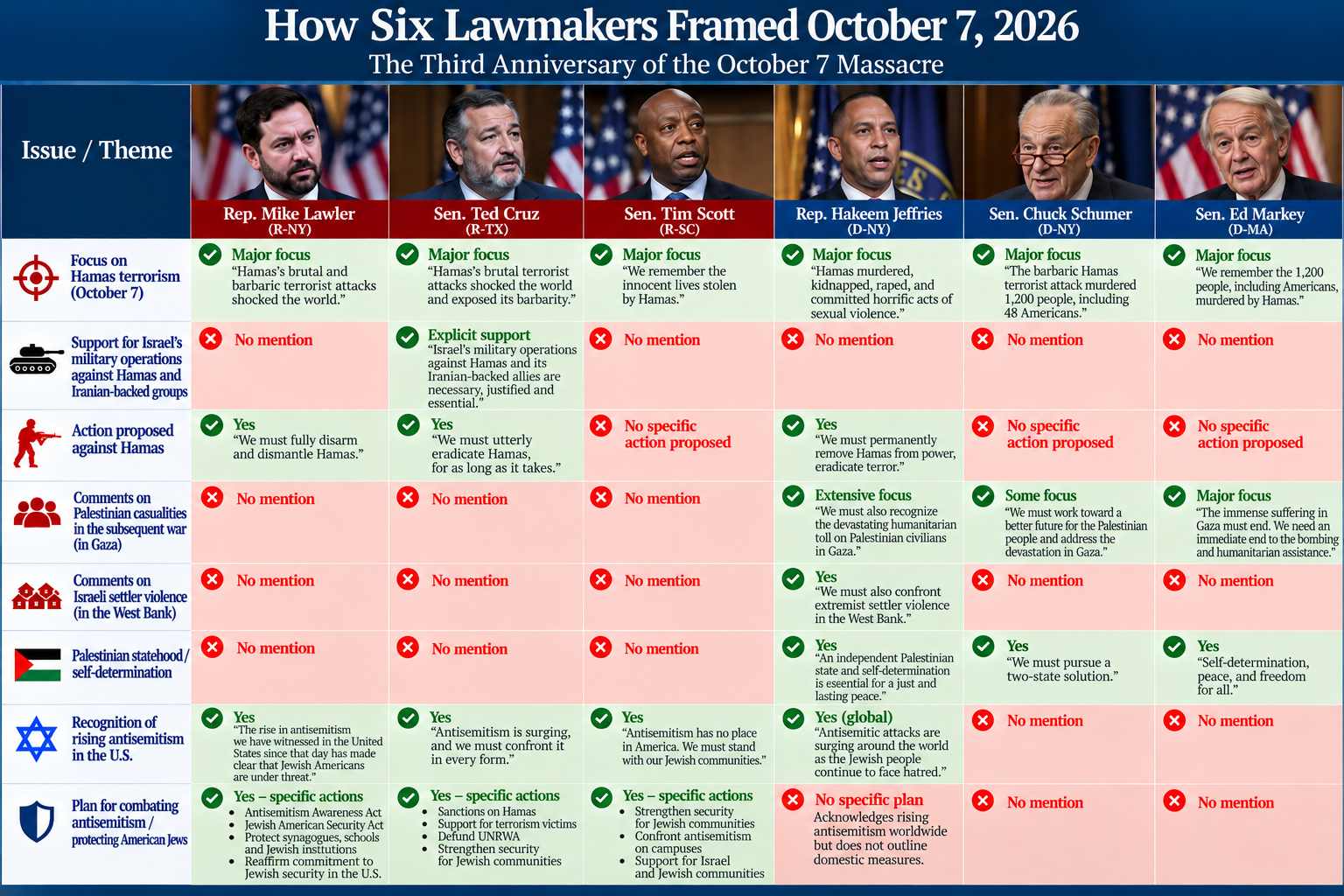
New York City Mayor Zohran Mamdani acknowledged the Hamas killings in his anniversary statement before shifting substantial attention to Israel’s subsequent military campaign and Palestinian suffering. Several leading democratic politicians did the same.
And just two days after the October 7 massacre anniversary, the Nobel Peace Prize was awarded to the United Nations’ Navi Pillay, the woman who helped spread the genocide libel about Israel’s defensive war against jihadi terrorists. Seen together, the world is establishing the narrative that will prevail into the future, where the Bibas babies’ descendants who will never be born, will not be able to counter the charge.
The Bibas brothers with their mother, slaughtered by Gazan terrorists
Cain asks, “Am I my brother’s keeper?” as a diversionary tactic to invert the subject.
God never answers that question directly. Instead, He demands, “What have you done?”
Three years after October 7, the United Nations and too many politicians have learned to answer questions about the murdered by changing the subject.
In the 20th century, the term “G.I. Joe” was meant to describe the average American serviceman. He was the embodiment of a regular patriot fighting for America and American values.
Alas, today’s generation has Jihad Joe.
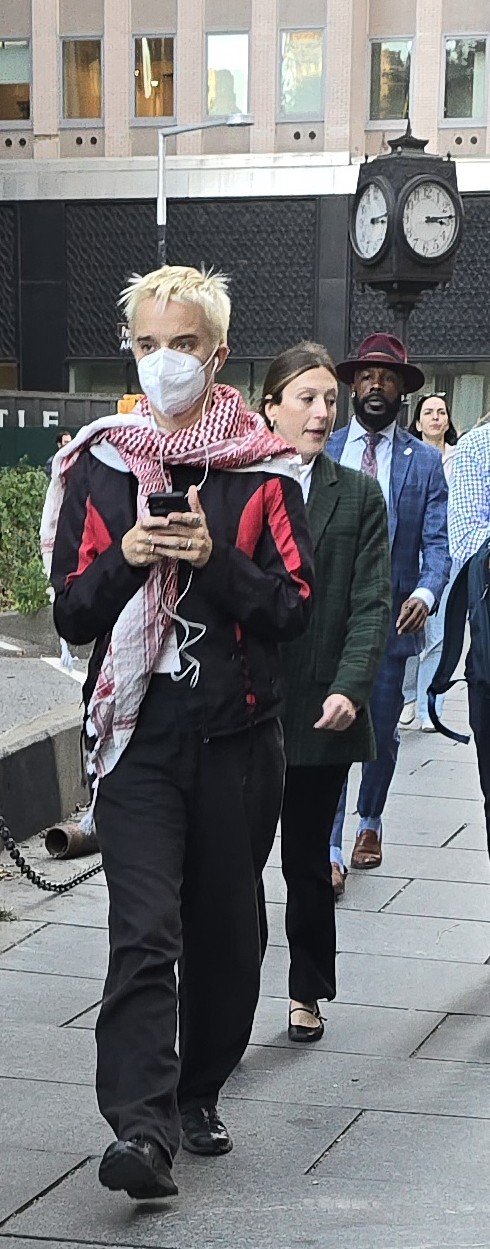
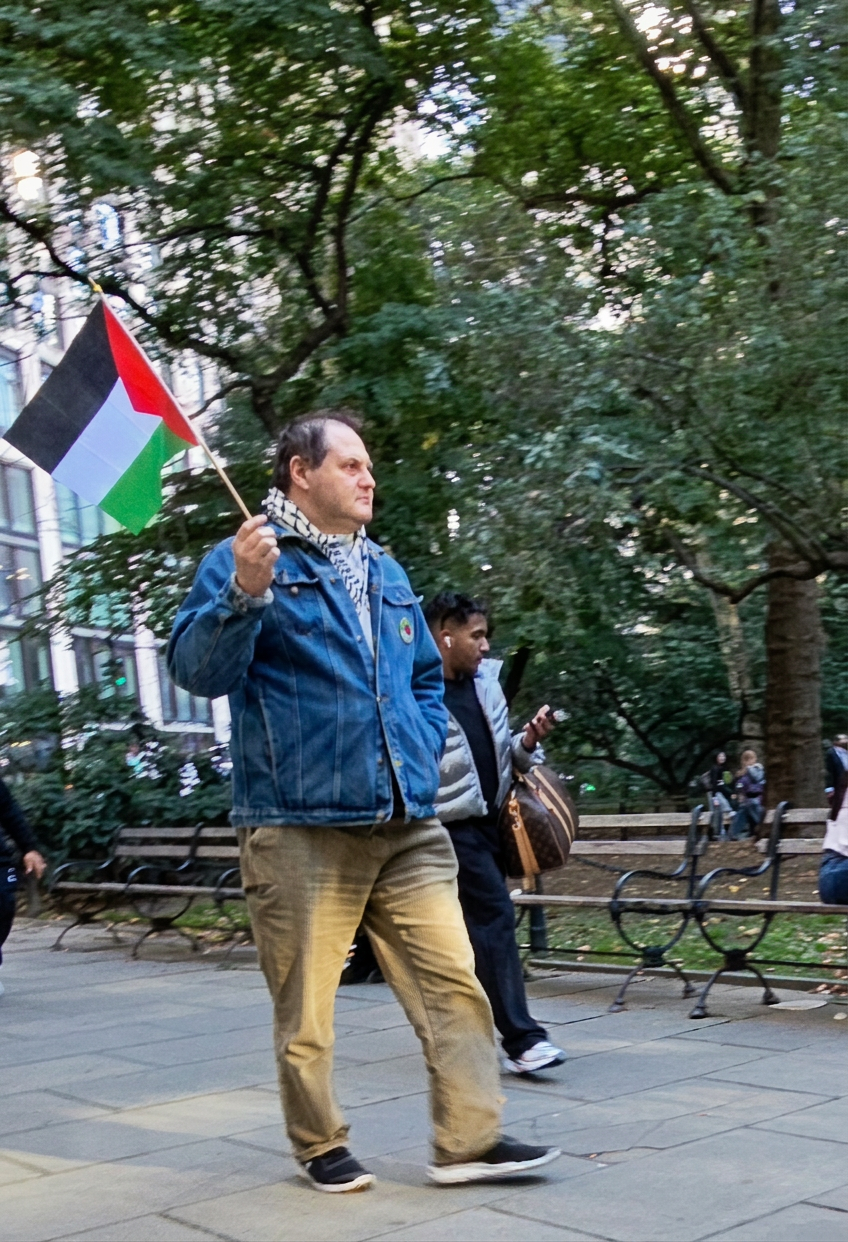
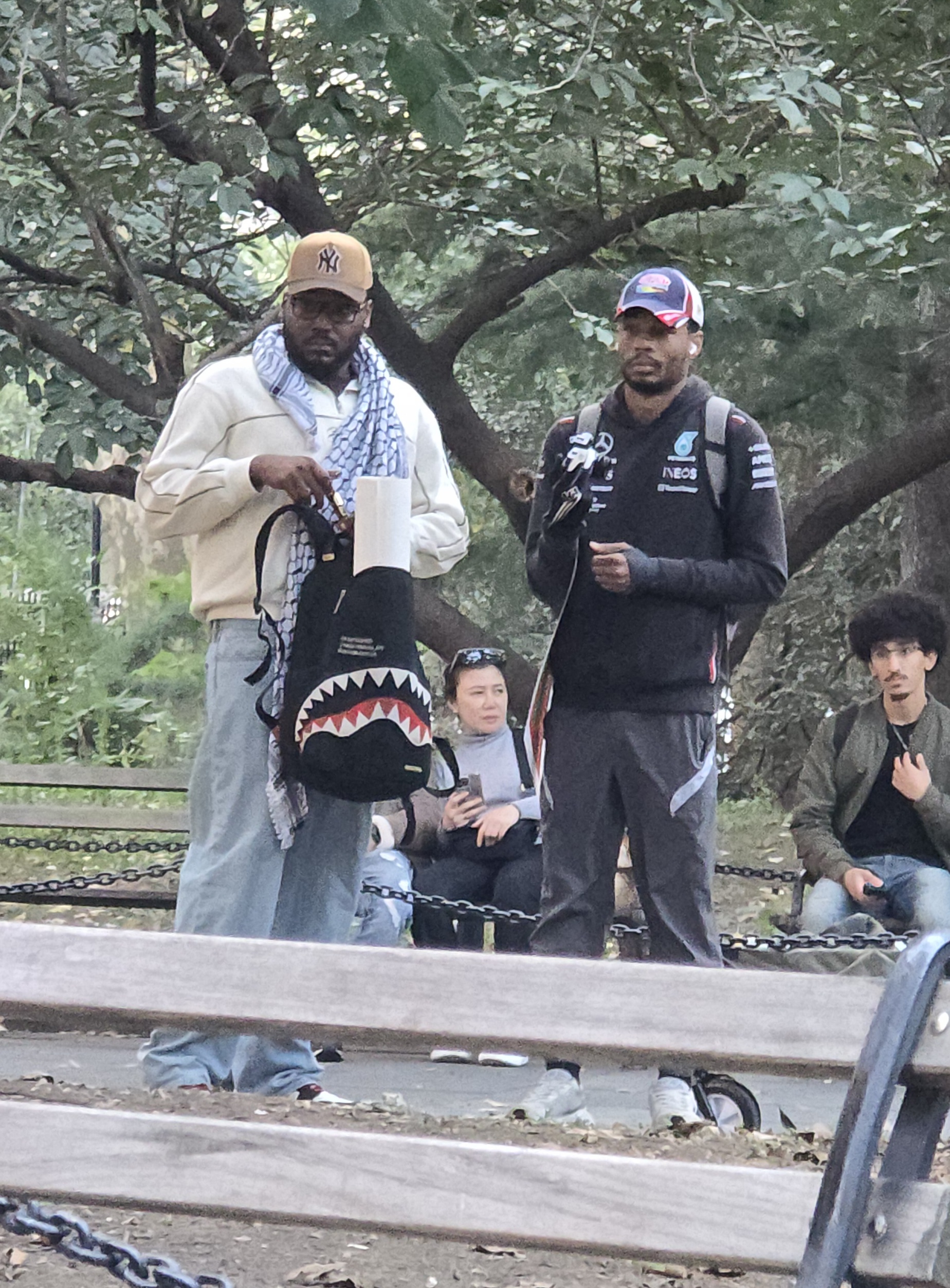
Pro-Palestinian man heading to protest Israel in front of City Hall in Manhattan on October 7, 2026 (photo: First One Through)
Jihad Joe celebrates the murder of Americans and American allies. He/ she uses anniversaries of the massacres of civilians – like 9/11/01 and 10/7/23 – to mock the death of thousands of innocent civilians. The Jihad Joes cheer ISIS, Hamas and the Islamic Republic of Iran.
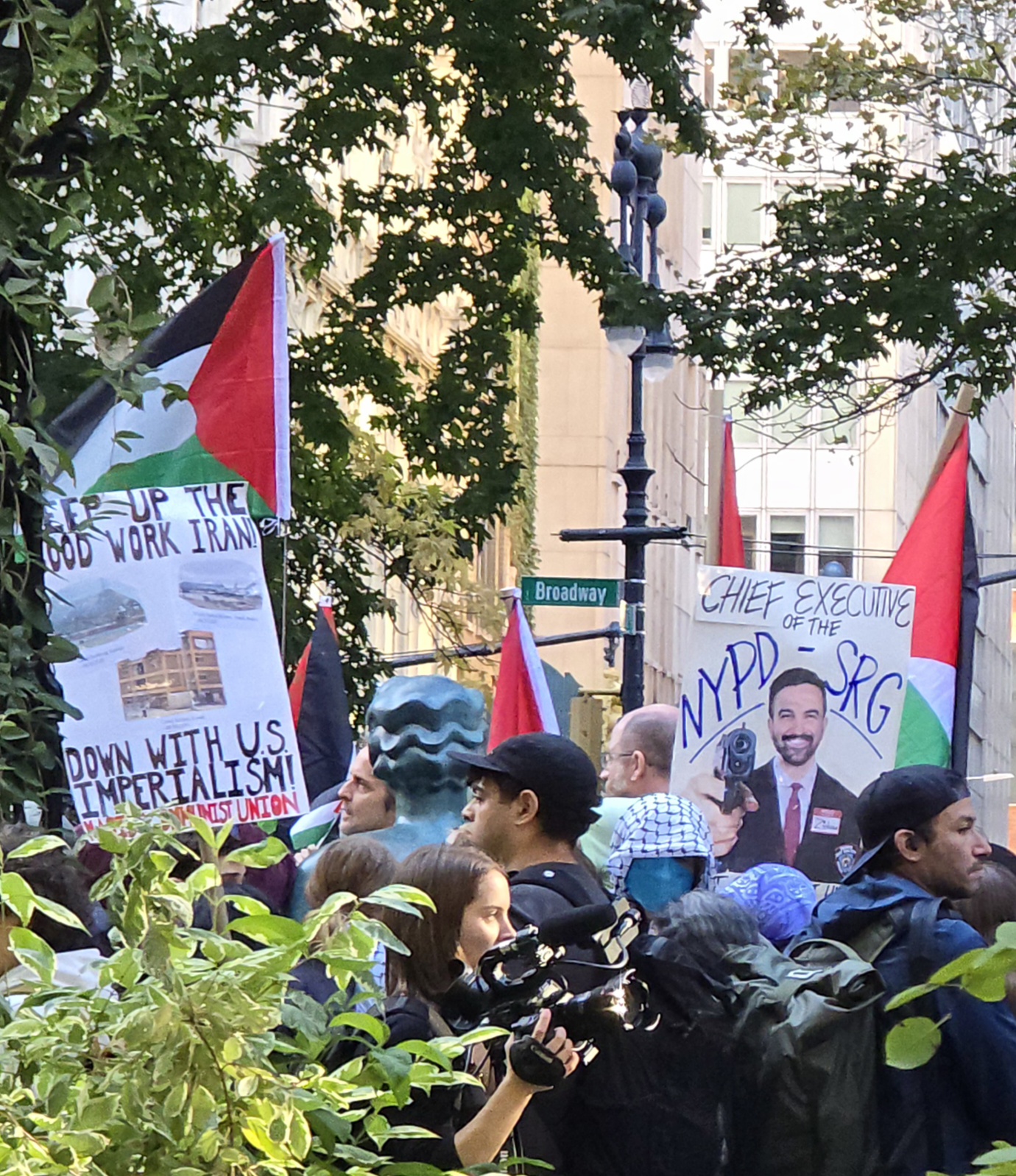
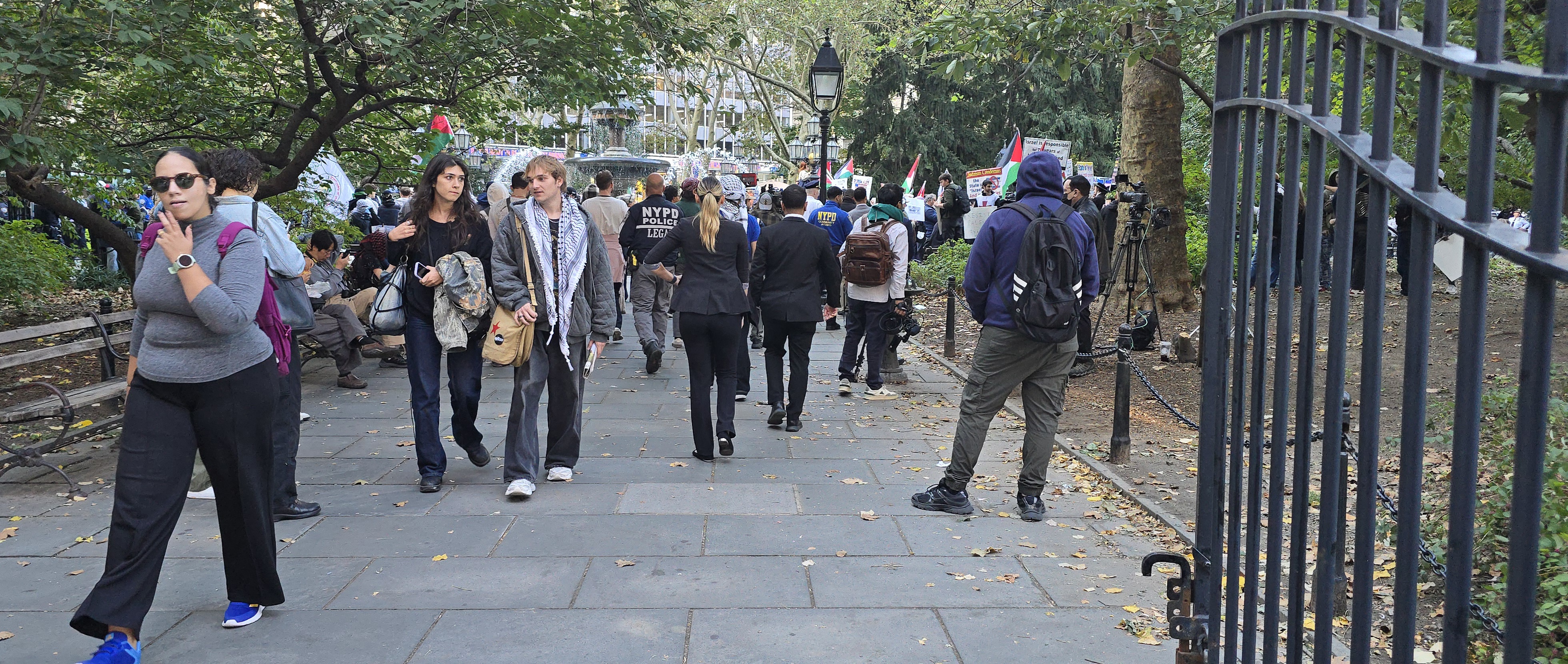
Anti-Israel protestors at City Hall in NYC on October 7, 2026 with posters mocking Mayor Zohran Mamdani as a Zionist and “Keep up the good work Iran! Down with U.S. Imperialism!” (photo: First One Through)
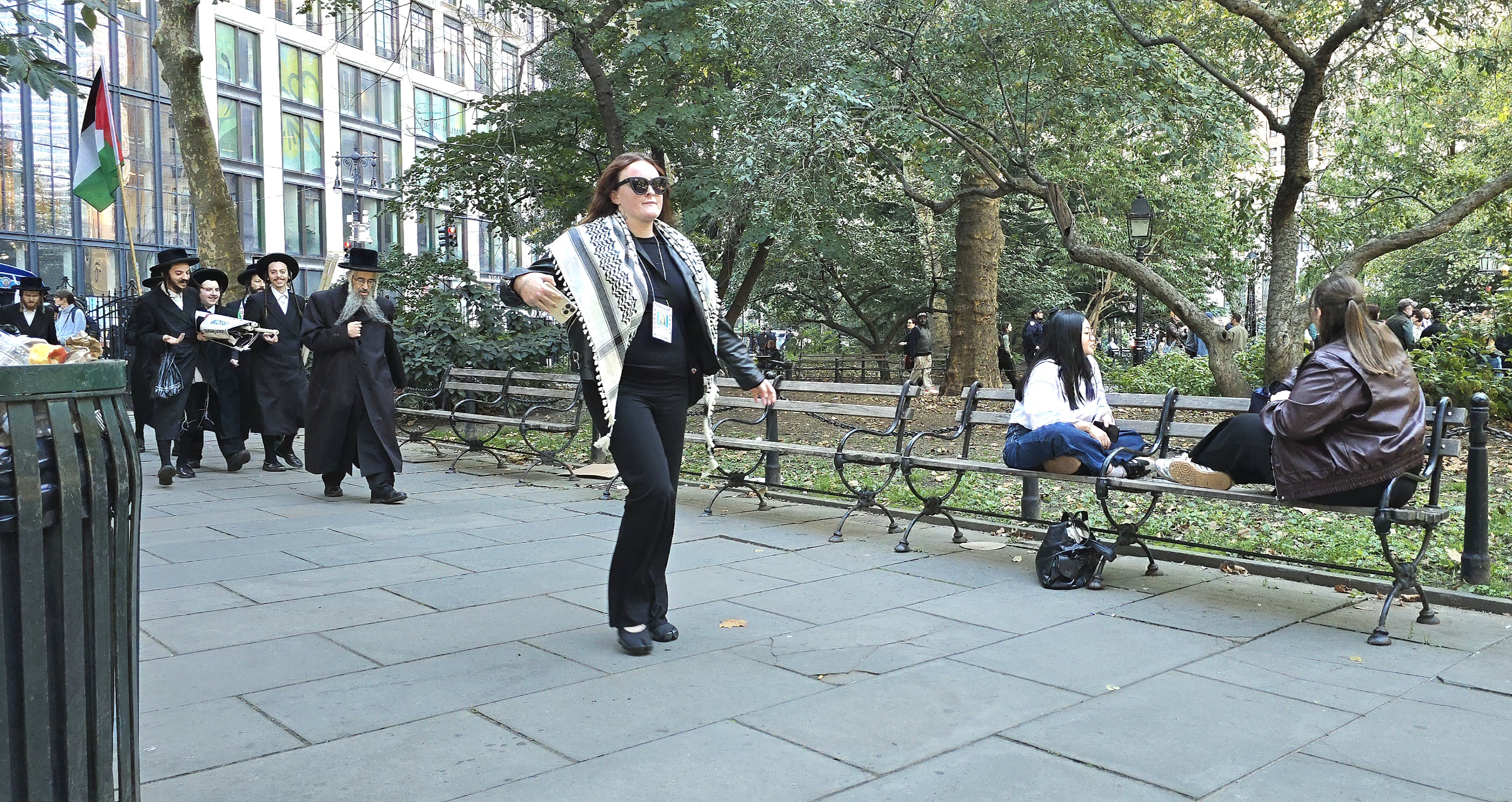
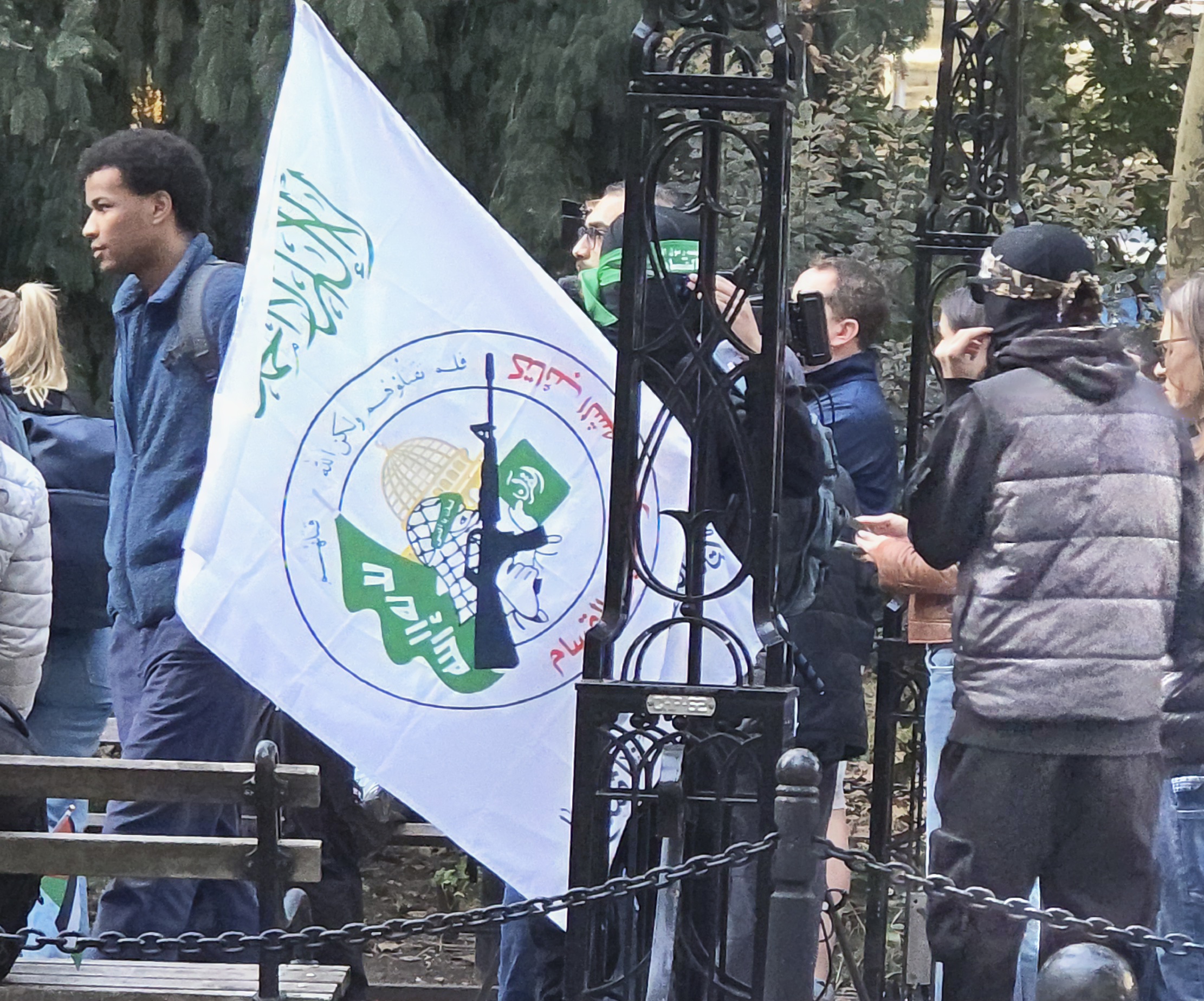
The crowd that gathered on October 7, 2026 at City Hall in New York City was mixed, with religious Muslims and anti-Israel Neturei Karta posing for the media. But there were also many White people in their 20s to 40s sporting Hamas headbands, chanting for the destruction of Israel, and that Jews are pedophiles.
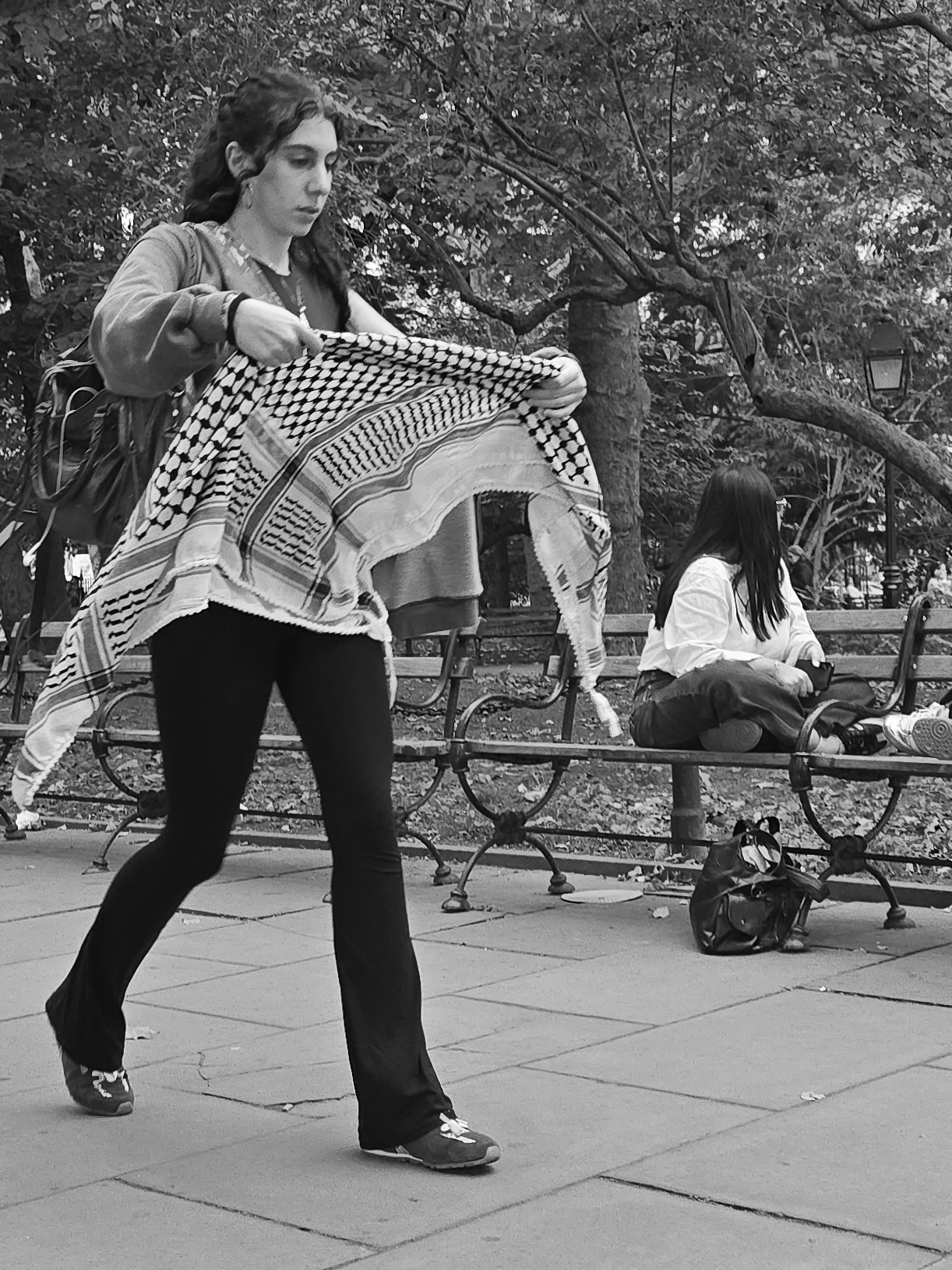
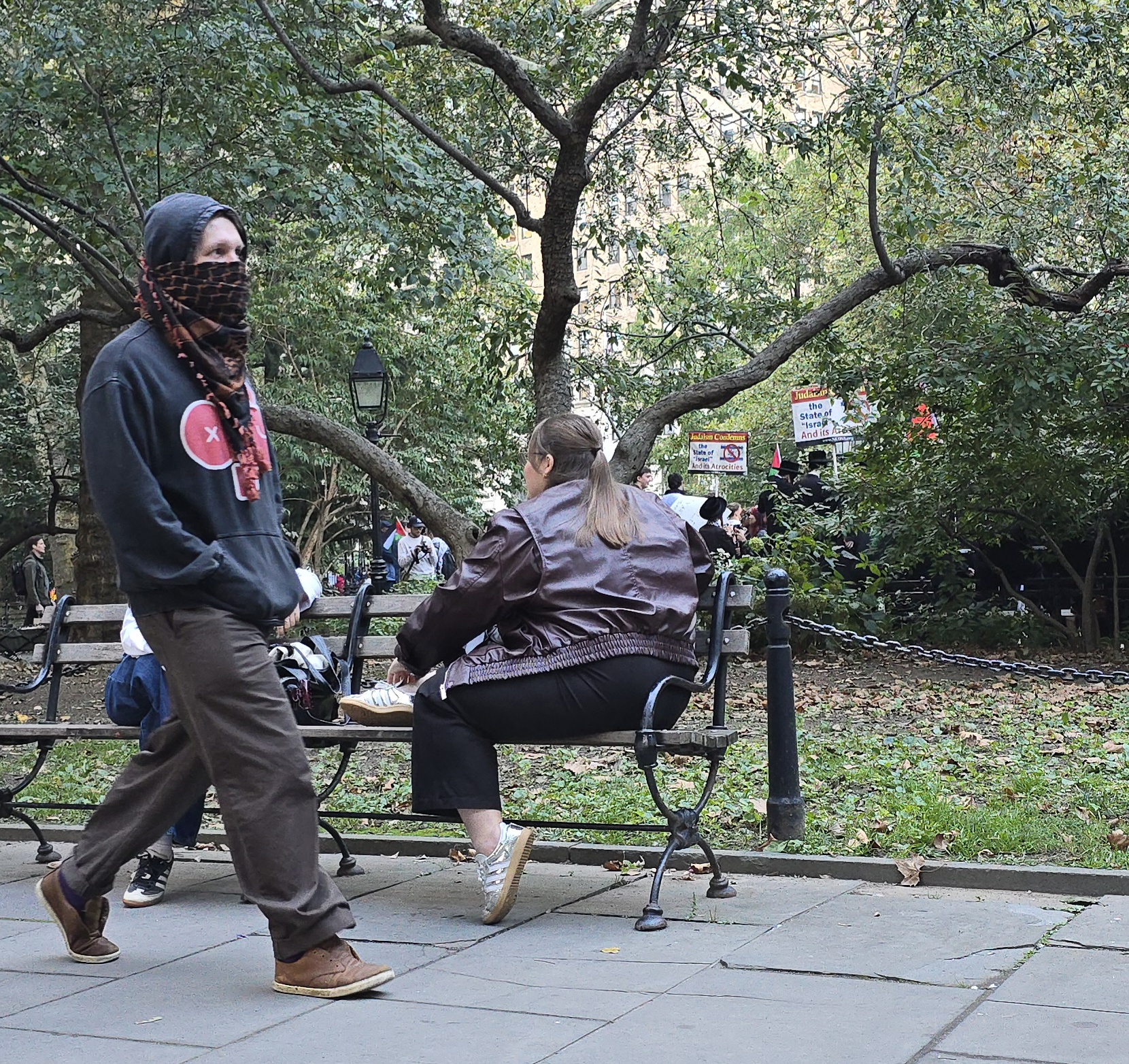
Woman with press credentials sporting a keffiyeh walking to anti-Israel protest at City Hall on October 26, 2026, ahead of group from Neturei Karta holding a Palestinian flag (photo: First One Through)Woman getting ready to join the anti-Israel protest, pulling out her keffiyeh at City Hall on October 7, 2026 (photo: First One Through)
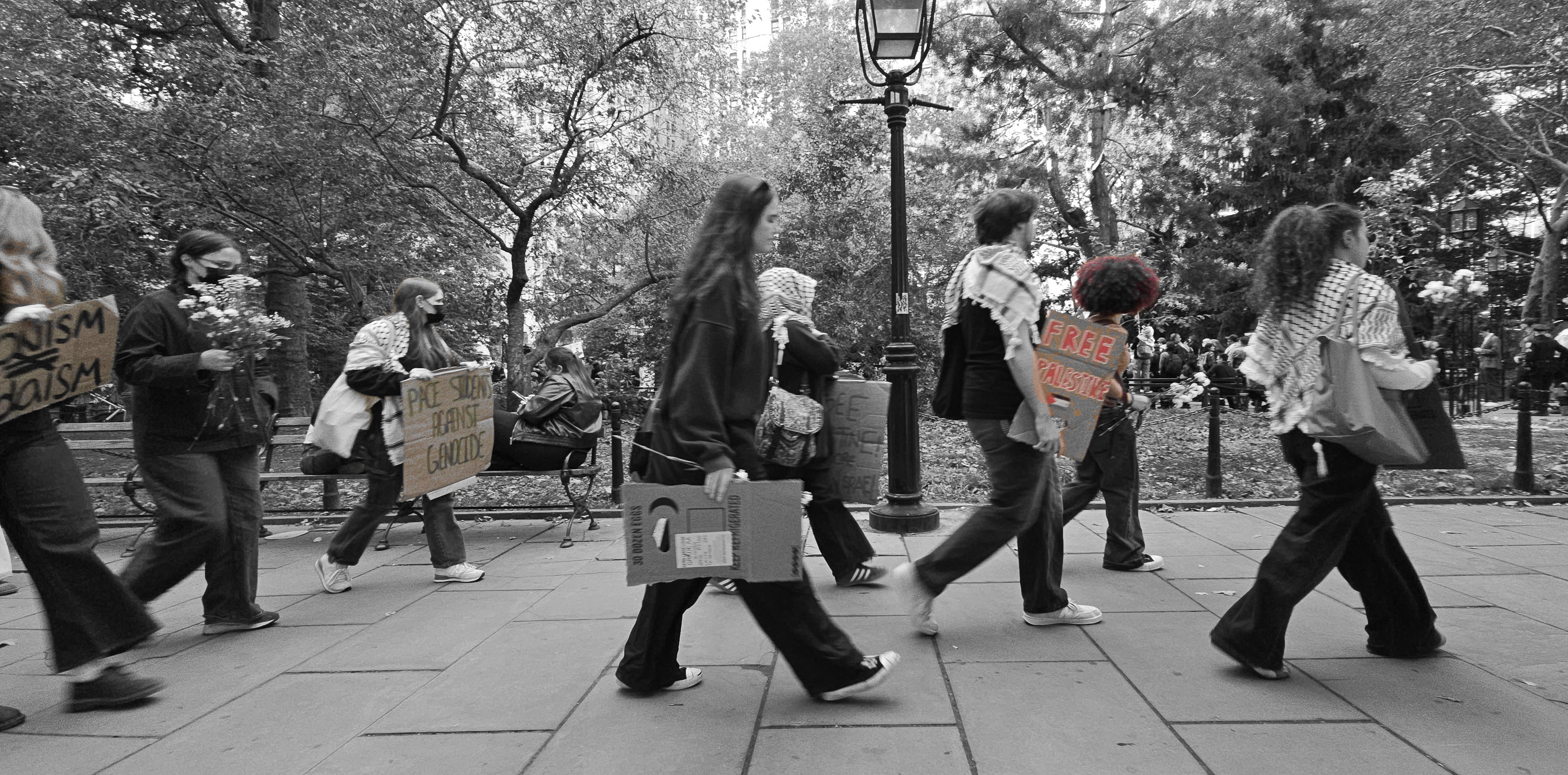
A group of students from nearby Pace University came by with placards to “Free Palestine” and “Zionism is not Judaism.” They joined crowds yelling things much more violent:
“Intifada revolution!”
“Zionism will fall!”
“Liberation is near!”
“We don’t want two states. We want ’48!”
“Mobilize the Intifada!”
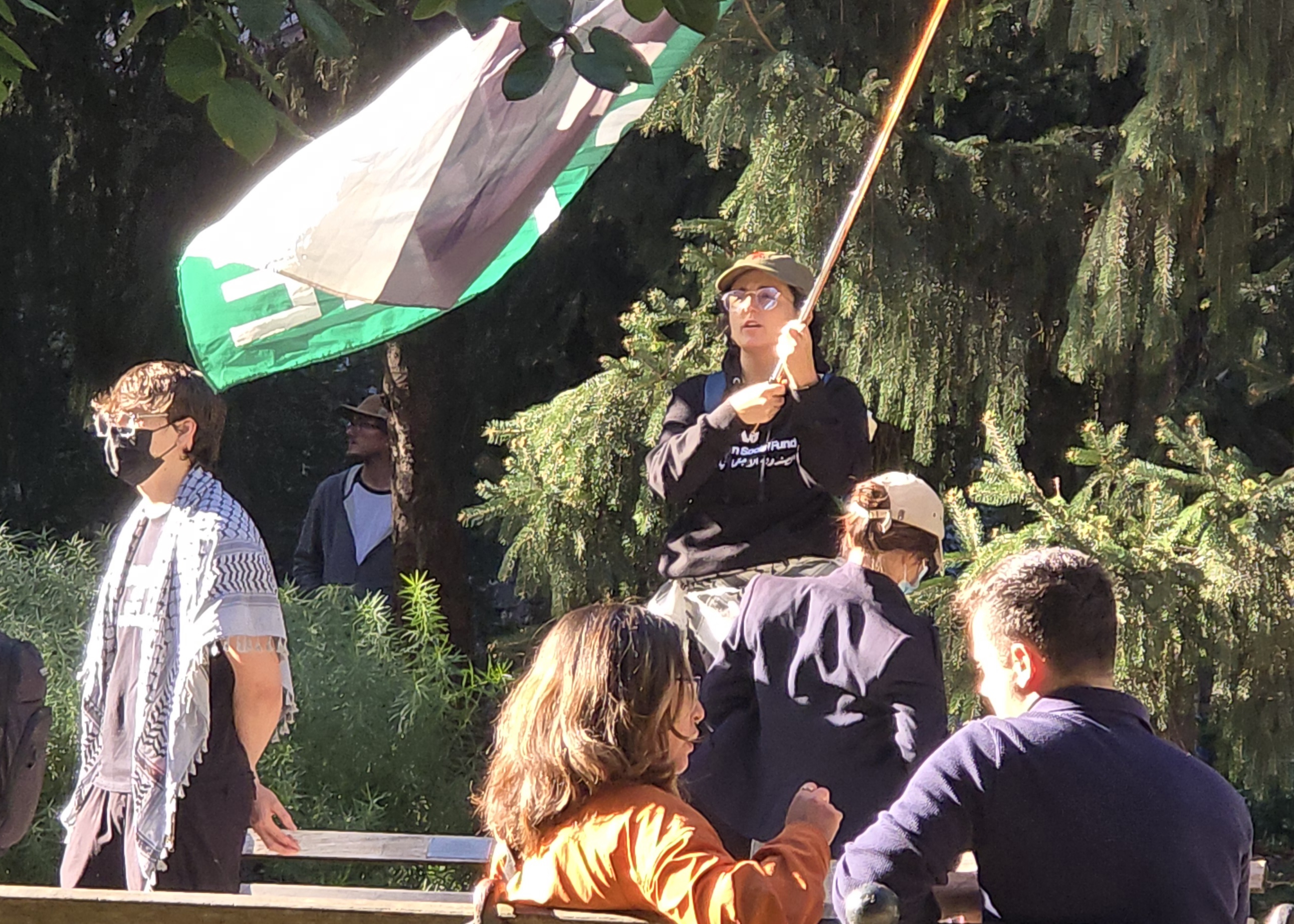
Students from Pace University join an anti-Israel protest at City Hall on the anniversary of the slaughter of roughly 1,200 people in Israel and seizure of 251 hostages,on October 7, 2026 (photo: First One Through)
Today’s Jihad Joe doesn’t put his life at risk for America, American allies or American values. He mocks all of those things. Jihad Joe wishes them vanquished, celebrates their setbacks and chants for the jihadi vision for the U.S. and Israel, all from the quiet and comfortable streets that affords the freedom of speech and assembly not found in Islamic republics.
Jihad Joe sees G.I. Joe as an old and racist dead White man.
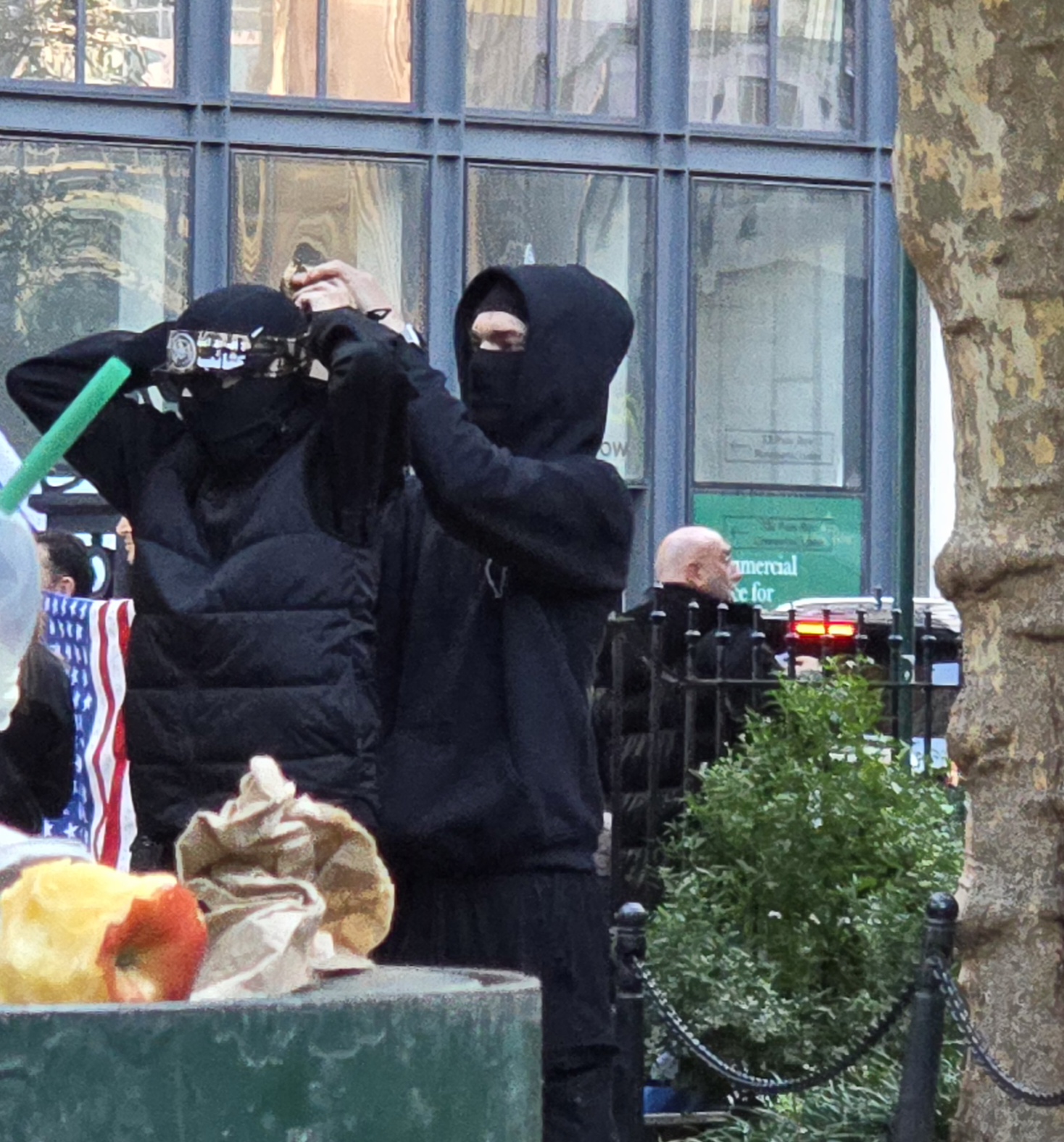
Two young men covering faces and sporting headbands with Hadiths for MohammedYoung men waving flag of armed Arab before Dome of the Rock
Imagine Canadians holding a march on September 11, 2026 cheering the work of the jihadists who killed nearly 3,000 people in the U.S., calling for the destruction of America. Yes, it is protected speech; but so what? It is repulsive and sick.
More, it reveals the depravity of a significant swath of Americans.
Crowd of people scream support for the antisemitic genocidal jihadists of Hamas, on third anniversary of the October 7 massacre (photo: First One Through)
Eighty years ago, America produced the Greatest Generation. G.I. Joe was its everyman: the ordinary American who put on his country’s uniform, crossed an ocean and fought against fascism and tyranny. Today we see a very different American archetype walking the streets of New York. He puts on the keffiyeh, embraces the symbols and slogans of foreign jihadist revolutionary movements, and mocks America, its allies and the rape and slaughter of its citizens.
In less than a century, we have descended from G.I. Joe to Jihad Jane.
The Green Party charted a new course in British politics, calling for an end of the Jewish State of Israel and demanding a boycott of the country until it allows millions of Arabs into the territory and become a binational state. The alt-left group was immediately rebuked by members of the other British political parties.
Labour’s Bridget Phillipson, the equalities minister said the Green vote “crosses a line” and was “fundamentally wrong.” She explicitly connected her objection to the two-state solution saying “It is shameful to vote against a two-state solution for Israel and Palestine.”
David Pinto-Duschinsky, centre, and Bridget Phillipson, right, meet with Jewish school in London with the school’s headteacher
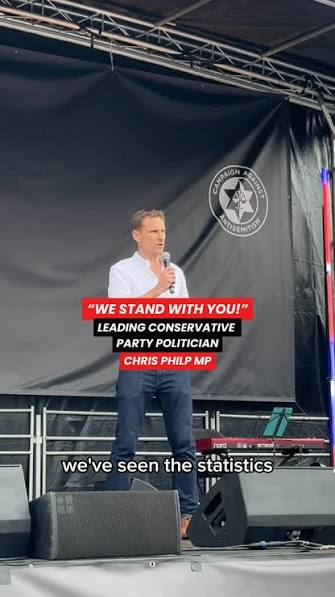
Conservatives shadow home secretary Chris Philp said of the Green vote “I think that’s completely wrong.” He called the resolution a “stereotypical and potentially antisemitic characterisation” and said the Greens needed to do more to combat antisemitism in their ranks. The Conservative Party subsequently issued an even more directly relevant statement through Philp: “British Jews should not have to disclaim a belief in Jewish self-determination and the existence of Israel.”
Liberal Democrats MP Luke Taylor MP said “This is a divisive motion that pours fuel on the fire of tensions in the UK,” and said it would leave many British Jews feeling less safe. Lib Dem foreign-affairs spokesman Calum Miller called the Green vote “deeply wrong” and a “deeply harmful failure of judgement.” Former leader Tim Farron said the Greens had been “captured.”
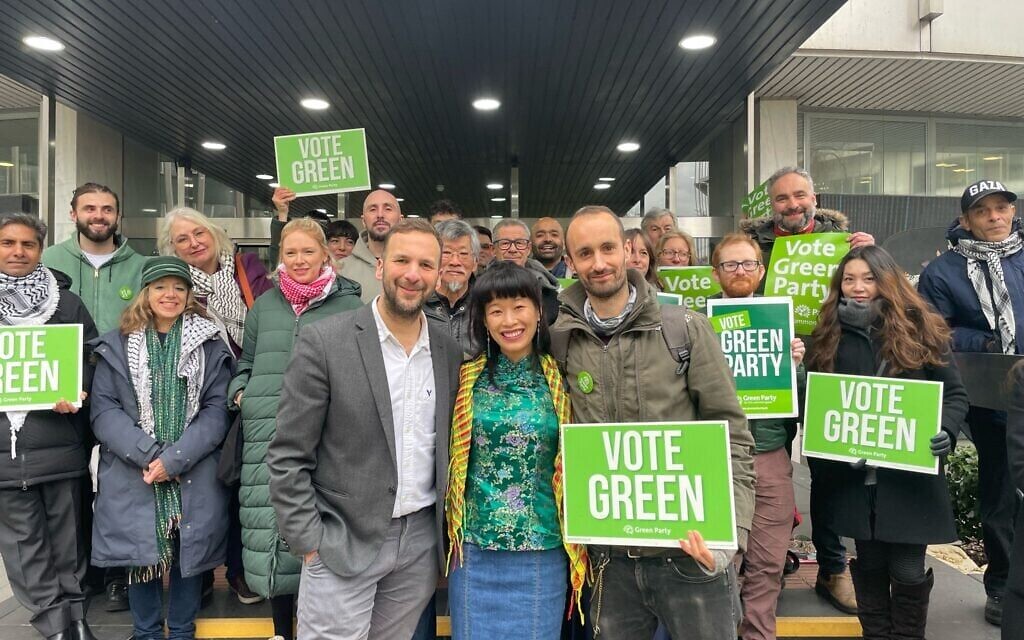
Green councillor Hau-Yu Tam (centre) pictured alongside Green Party deputy leader Zack Polanski (left). Photo Credit: London Green Party
“Zionism is pure evil and must be abolished.” “Zionism was undoubtedly and unquestionably the Nazism of our time.” – Green Party’s Hau-Yu Tam
Perhaps it is therefore time to move beyond making statements about the Green Party vote and push forward clear countering platforms: one that unequivocally expresses support for British Jews and their heritage and history in the Jewish Promised Land. And a second that declares that every country – including Israel – has an unambiguous right to decide who to permit into its country and to admit as citizens. As such, there is absolutely no so-called “right of return” of descendants of Arabs who once lived in the territory of Israel.
The Greens put their position to a vote. Now Labour, the Conservatives and Liberal Democrats should do the same. At their next party conferences, each should introduce resolutions affirming these two simple principles.
Condemning the Greens is easy. Put the alternative on the ballot and let British political parties tell the country – and British Jews – where they actually stand.
The Palestinian Authority has a problem with Jews praying at Judaism’s holiest site.
Its Western supporters have a different problem. They keep telling us the Palestinian Authority is moderate, peaceful and reformed.
This week provides a useful test of both claims.
Sukkot is one of Judaism’s three ancient pilgrimage holidays. Jews have traveled to Jerusalem for Sukkot for thousands of years. They still do, including from around the world.
The United States is by far the largest source of foreign tourists to Israel. In August, Americans accounted for roughly 35 percent of foreign tourists, followed by France at 13 percent and Britain at 8 percent. Together, those three countries supplied about 56 percent of Israel’s foreign tourists.
Sukkot brings Jews to Jerusalem to do what Jewish pilgrims have done for generations: celebrate the holiday, carry the Four Species and pray.
This week, 1,731 Jews visited the Temple Mount in a single day. They carried lulavim and etrogim. They gathered together. They prayed. They sang.
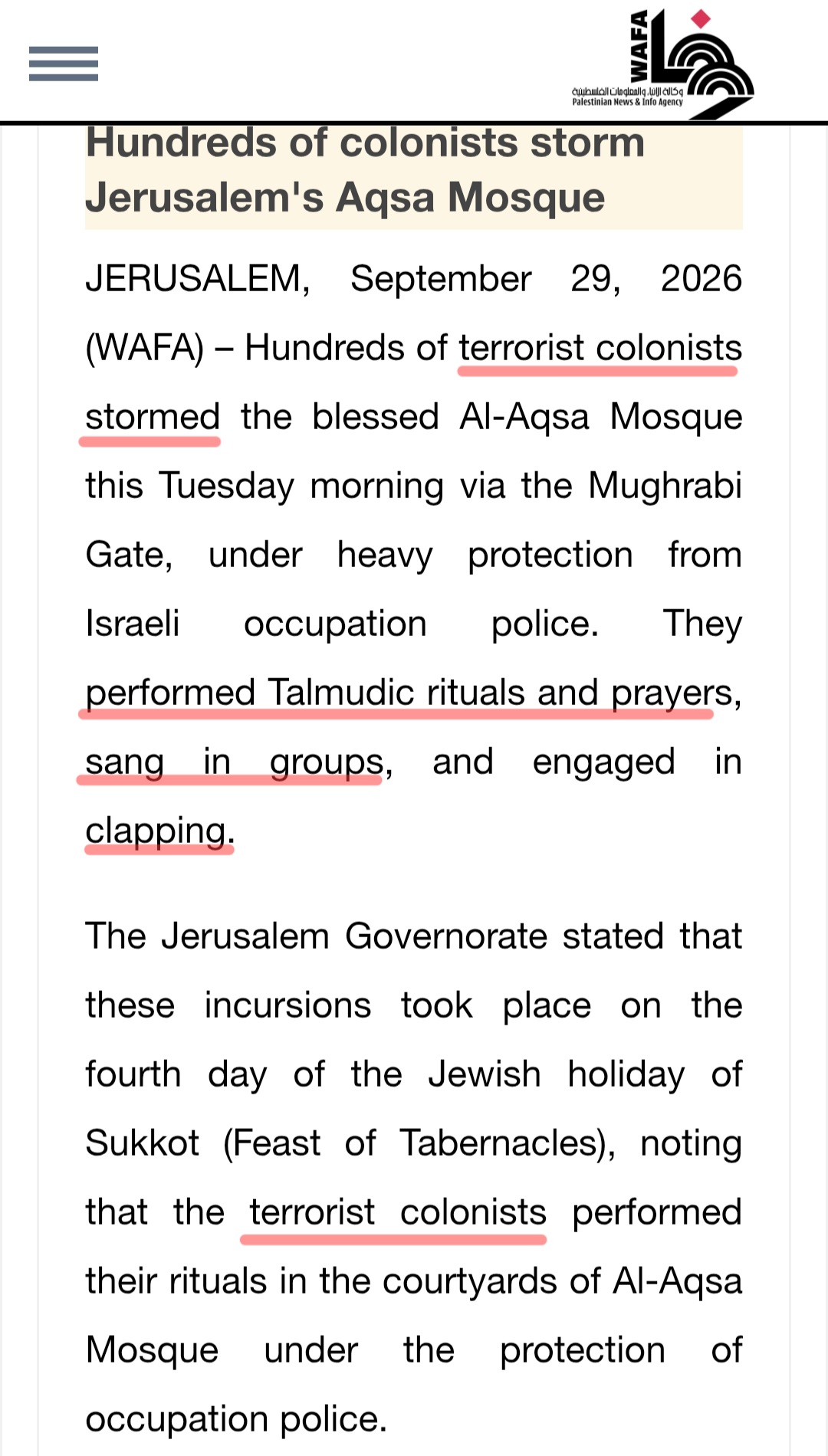
The Palestinian Authority’s official news agency called Jews doing this “terrorist colonists.”
WAFA’s own account described the supposed terrorism: they “performed Talmudic rituals and prayers, sang in groups, and engaged in clapping.”
Praying. Singing. Clapping.
Now consider what the political leaders back home have been saying about the Palestinian Authority.
French President Emmanuel Macron has pointed to Mahmoud Abbas’s commitment to fighting hate speech and placed a renewed Palestinian Authority at the center of his vision for a Palestinian state.
Britain says a Palestinian state should be led by a “reformed Palestinian Authority.”
The European Union has praised the PA’s reform agenda and backed it with substantial financial support.
American politicians have joined in.
Senator Chris Van Hollen has said the Palestinian Authority “seeks to accomplish its goals through non-violent means.”
Nineteen Democratic senators—including some of the Senate’s most progressive members—called for a Palestinian state governed by a “revitalized and reformed Palestinian Authority.” Their proposed framework specifically demanded that the PA combat “incitement to violence” and that its senior officials commit to nonviolence.
Perhaps they should read its official news service.
Senator Chris Van Hollen
Western governments have constructed the Palestinian Authority as the moderate alternative to Hamas: secular rather than Islamist, peaceful rather than violent, reforming rather than inciting.
Meanwhile, its official news agency looks at Jews celebrating Sukkot at Judaism’s holiest site and calls them “terrorist colonists.”
Jews travel to Jerusalem for Sukkot from America, France, Britain and elsewhere. They pray together. They sing. They carry their lulavim and etrogim. Then they return home.
They are your Jews. Your citizens.
Yet their own governments are actively aligning themselves with an authority whose official media labels Jews terrorists for peacefully practicing their religion at Judaism’s holiest site.
Macron should be asked whether this is the hate speech Abbas promised to fight. Britain and the European Union should explain how it fits their description of a reformed PA. And the American senators who specifically demanded that a revitalized PA combat incitement should decide whether calling Jewish worshippers terrorists qualifies.
These leaders now have a choice.
They can condemn the Palestinian Authority for calling Jews peacefully practicing their religion “terrorist colonists.” Or they can continue embracing it as moderate and reformed.
Governments cannot proclaim their opposition to antisemitism at home while ignoring it in the Palestinian Authority they champion abroad.
If Western leaders still call the Palestinian Authority moderate after it calls Jews “terrorists” for praying, they are no longer describing moderation. They are excusing jihadi antisemitism.
For the Palestinian Authority, Jews who visit Jerusalem during Sukkot, one of Judaism’s three pilgrimage holidays, are “terrorist colonists.”
What did these Jewish “terrorists” do? According to WAFA, the Palestinian Authority’s official news agency, they prayed, sang and clapped together. They gathered among themselves for peaceful Jewish worship at Judaism’s holiest site during a Jewish pilgrimage holiday.
This is terrorism?
This is the language of jihad. It begins by transforming ordinary religious practice into aggression. A Jew praying becomes a provocateur. A group singing together becomes a threat. A religious pilgrimage becomes an invasion. Once worshippers have been labeled “terrorists,” hostility toward them has already been given a vocabulary of supposed self-defense.
That is radical Islam applied to one of the most contested religious sites in the world: not simply insisting upon Muslim rights, but denying equivalent Jewish religious rights and portraying their exercise as an attack.
Every global leader taking the podium at the United Nations should condemn this screed. So should political leaders around the world asking voters to believe they oppose antisemitism and religious extremism.
The question is simple: Do you condemn the Palestinian Authority calling Jews engaged in prayer at their holiest site “terrorist colonists”?
Ignoring this rhetoric while rallying to the defense of the Palestinian Authority encourages the targeting of Jews around the world. The people WAFA describes are not firing weapons or fighting soldiers. They are Jews praying, singing and observing Sukkot.
Islamic supremacy does not only call for expelling every Jew. It also means insisting that Jews remain religiously subordinate – that Muslim prayer is a right while Jewish prayer is a provocation.
Calling Jewish worship terrorism is where the demand for Islamic domination becomes even darker. It turns Jews practicing Judaism into the enemy and fuels a global jihad.
On Friday morning, students from SAR, Ramaz, Kehilath Jeshurun and other Jewish institutions will gather outside Gracie Mansion for Shacharit. They will pray, sing and speak about their love for New York, their love for Israel and their right to feel safe in the city where they were born.
Rabbi Binyamin Krauss, principal of SAR Academy, explains that the gathering is both prayer and statement. Its location is intentional: many Jewish New Yorkers believe that the mayor’s rhetoric about Israel and not condemning the phrase shouted at city universities “globalize the intifada” has made them easy targets. Prayer outside his residence ensures that the message cannot easily be ignored.
Yet Friday falls within the Ten Days of Repentance, when Jews should be especially clear about whom they are addressing. Gracie Mansion may be the location, but the mayor is not the audience. God is.
Prayer expresses the Jewish belief that political power is never the highest power. During these ten days, Jews repeatedly say Avinu Malkeinu – Our Father, Our King. They gather before God.
The Torah reading the following morning makes that message unmistakable. Haazinu is Moses’ final song, delivered as the Jewish people prepare to enter the Land of Israel. It calls heaven and earth as witnesses and describes the entire movement of Jewish history: God finds Israel in the wilderness, protects it, brings it to a fertile land and warns that prosperity can produce complacency.
Then comes one of the song’s most famous lines:
“Jeshurun grew fat and kicked.” – Deuteronomy 32:15
Jeshurun is an affectionate name for Israel. The warning is directed at successful Jews who have become so secure that they mistake comfort for permanence. They enjoy the land’s bounty, forget its source and abandon the Rock of their salvation.
The presence of Kehilath Jeshurun and Rabbi Chaim Steinmetz makes the verse impossible to miss. The very congregation joining the prayer bears the name invoked by Moses. This week, the children of Jeshurun will walk from their schools and shuls in one of the most prosperous Jewish neighborhoods in the world and pray in the public square.
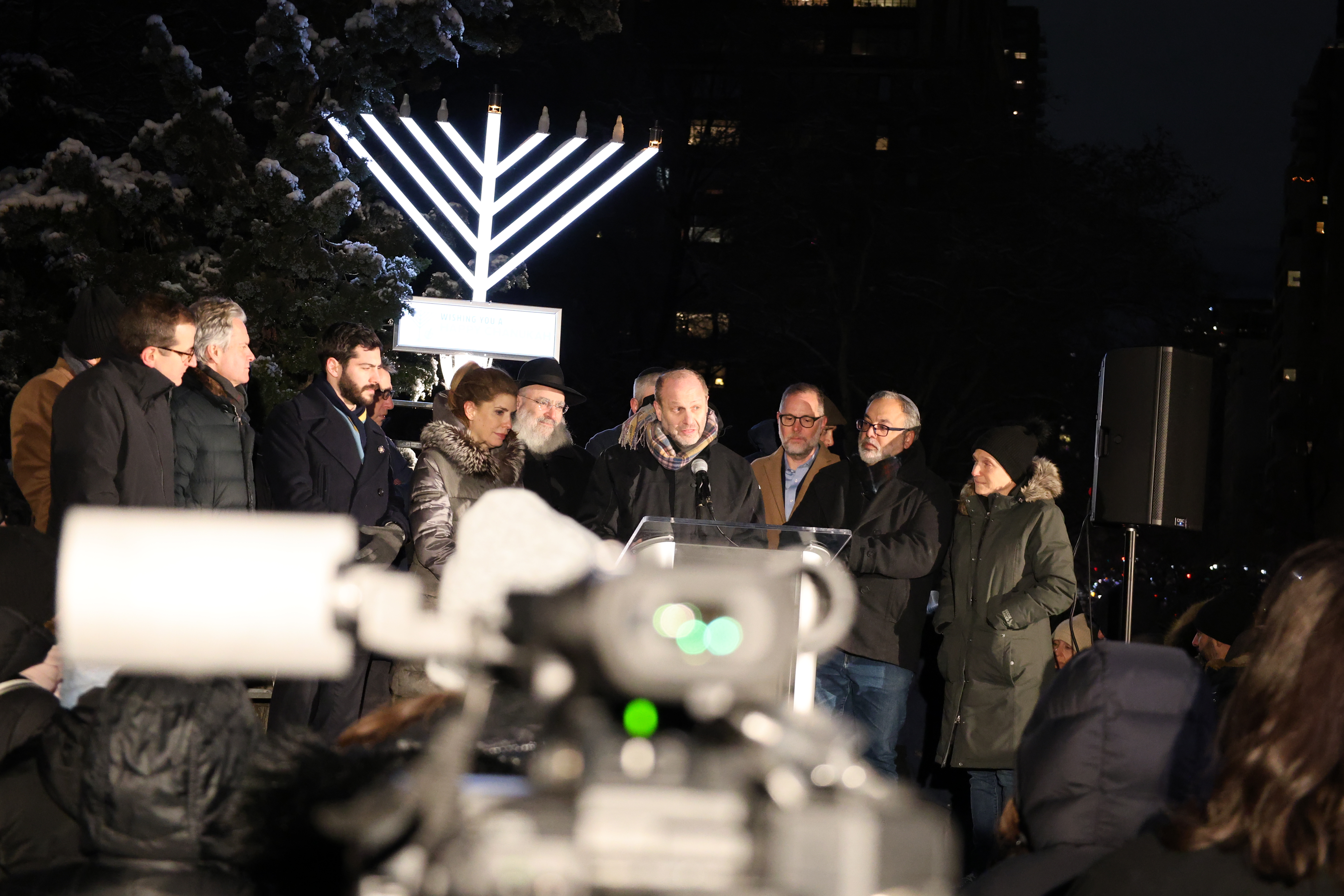
Rabbi Chaim Steinmetz of Kehilat Jeshrun lighting Chanukah candles next to Gracie Mansion in December 2025 before a crowd and reporters, alluding to the new mayor’s anti-Jewish opinions and statements (photo: First One Through)
These Jews are heirs to what may have been one of the greatest Diaspora golden ages in Jewish history. New York Jews built synagogues, schools, hospitals, charities, businesses and cultural institutions. They rose to the highest levels of civic life and came to regard their acceptance as a permanent feature of the city. Their children could be openly Jewish, openly Zionist and fully American without perceiving any contradiction.
Recent attacks and an increasingly hostile public climate have shaken that confidence. Rabbi Krauss writes that students returned to school carrying both fear and a need to answer it. That answer should not be a plea for acceptance from a mayor. It should be a declaration that Jewish identity does not depend upon a mayor’s approval.
Haazinu does not teach that Jewish survival rests upon the favor of rulers. It teaches that the Jewish relationship with God, Torah and the Land of Israel survives the rise and fall of political powers. Moses delivers the song while standing outside the land he will never enter, yet he speaks of the connection between Israel and its land as something deeper than temporary possession or political recognition. Governments may contest it, enemies may attack it and Jews themselves may neglect it, but the covenant remains.
That should be the meaning of Friday’s public prayer. The students should not perform Judaism for the mayor. They should show New York what Judaism looks like: children praying openly, affirming their faith, facing Jerusalem and refusing to sever their attachment to Israel in exchange for political comfort.
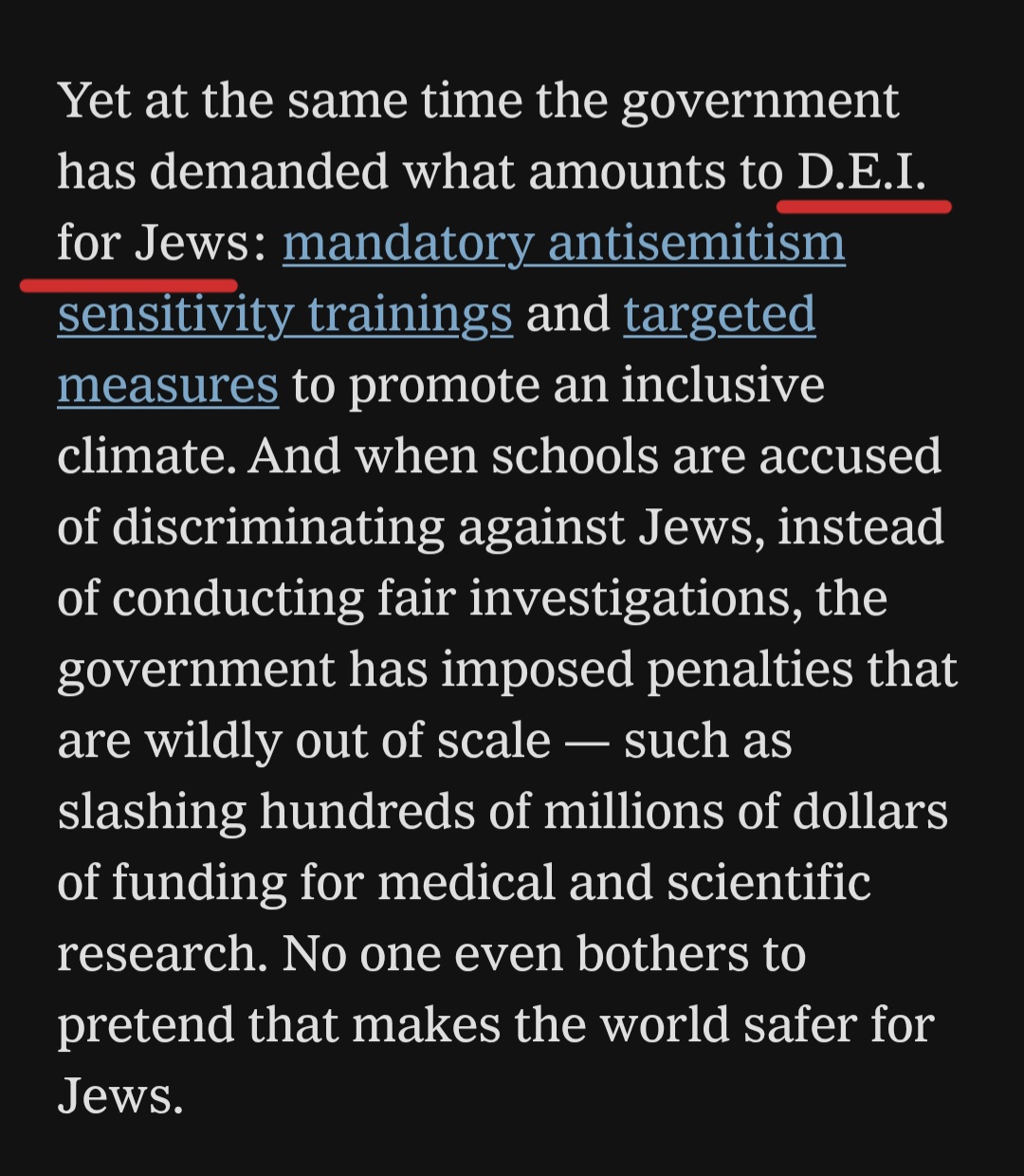
The Trump administration, he writes, has demanded “what amounts to D.E.I. for Jews.”
What he means is antisemitism training and measures intended to ensure that Jewish students can attend classes, use campus facilities and participate in university life without harassment or intimidation.
That is not D.E.I. It is equal protection.
D.E.I. programs may use identity-conscious policies to pursue representation or other preferred outcomes. On the other hand, civil-rights law imposes a simpler rule: institutions receiving federal funds may not discriminate against students because of their race, ethnicity or shared ancestry.
Preferred outcomes and equal protection are not just not the same thing.They are opposites.
If Black students are targeted, the law protects them. If Muslim or Arab students are targeted, the law protects them. If Jewish students are targeted, the law protects them. Applying the same rule to Jews does not create a Jewish preference.
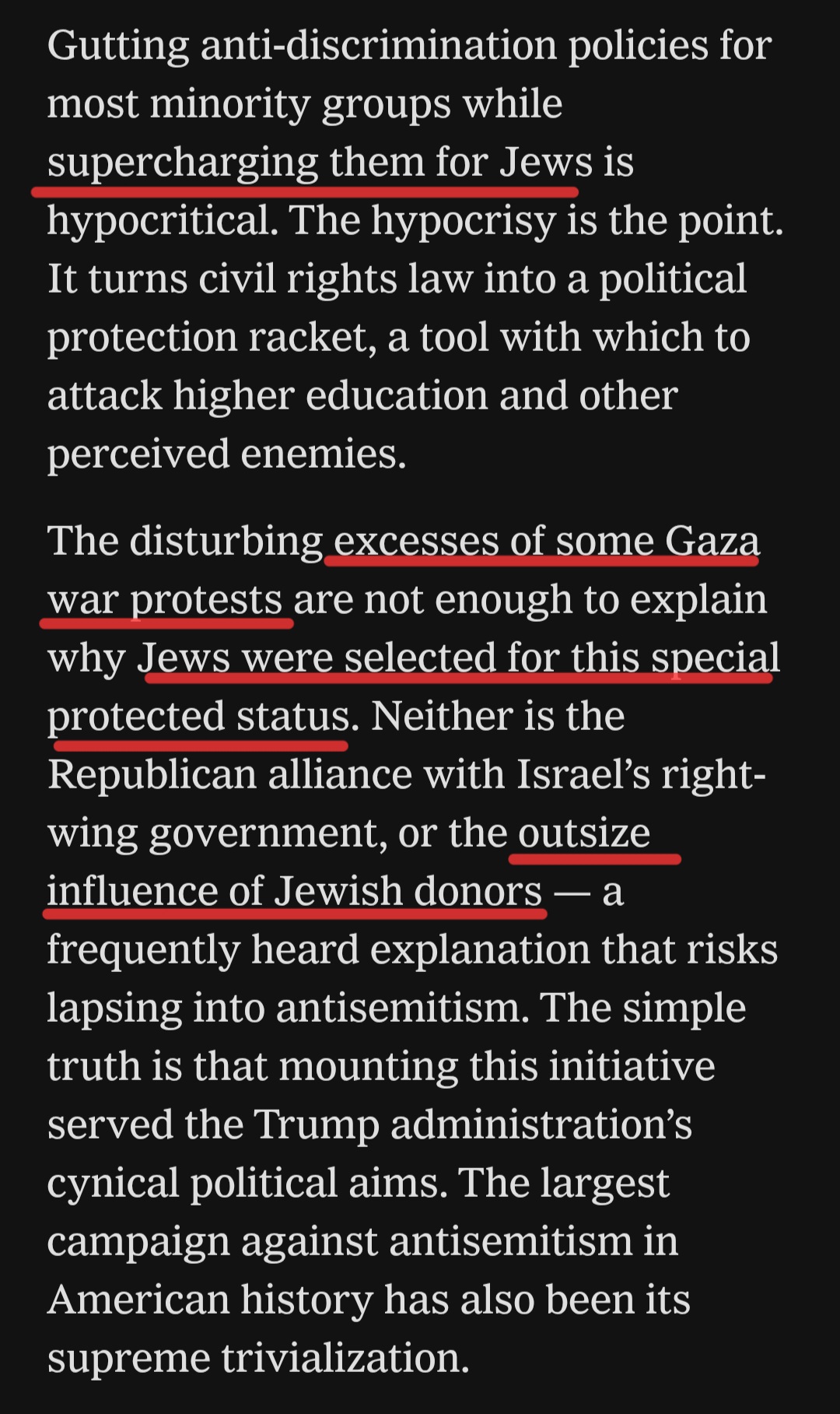
Loeffler nevertheless describes Jews as having been selected for special protection. That is absurd. Title VI has long covered antisemitic discrimination, just as it covers comparable discrimination against other groups. Whether a particular penalty is proportionate is a separate question from whether protecting Jewish students constitutes D.E.I.
Loeffler avoids that basic distinction by reducing the conduct surrounding Gaza protests to “excesses.” But the issue was not criticism of Israel or a few offensive placards. Jewish students faced ongoing intimidation, exclusion, celebrations of Hamas murderers and rapists, and chants invoking violence while universities failed to enforce their own rules.
The relevant question is whether universities tolerated treatment of Jewish students that they would have confronted had another minority been targeted. Instead, Loeffler makes the government’s response the scandal. His essay moves away from the students suffering harassment toward theories about Trump, demographic change, white panic and “Jewish donors.” The people seeking protection disappear into an argument about the motives of those enforcing the law.
That this comes from a professor of modern Jewish history is difficult to understand. Loeffler is not an uninformed commentator stumbling over the difference between a preference and a right. His credentials rest on Jewish history, antisemitism and civil liberties. He is a research fellow at the Shalom Hartman Institute which promoted the article on its website.
How does a scholar with that background look at the present condition of American Jews and identify their protection as the suspicious development? How does he see Jewish students threatened and excluded, yet reserve his strongest language for the government finally acting? How does an authority on antisemitism mistake equal treatment for Jewish favoritism?
The New York Times paraded an “As A Jew” with Trump Derangement Syndrome to encourage students coming back to school to come after their Jewish classmates once more and vote against Republicans in the mid-term elections.
Disliking the administration enforcing the law does not transform the law into D.E.I. Equal protection does not become preferential treatment when the people receiving it are Jews.
You can also share your thoughts with the Shalom Hartman Institute for having Loeffler be an ongoing research fellow and promoting his article at 212-268-0300.
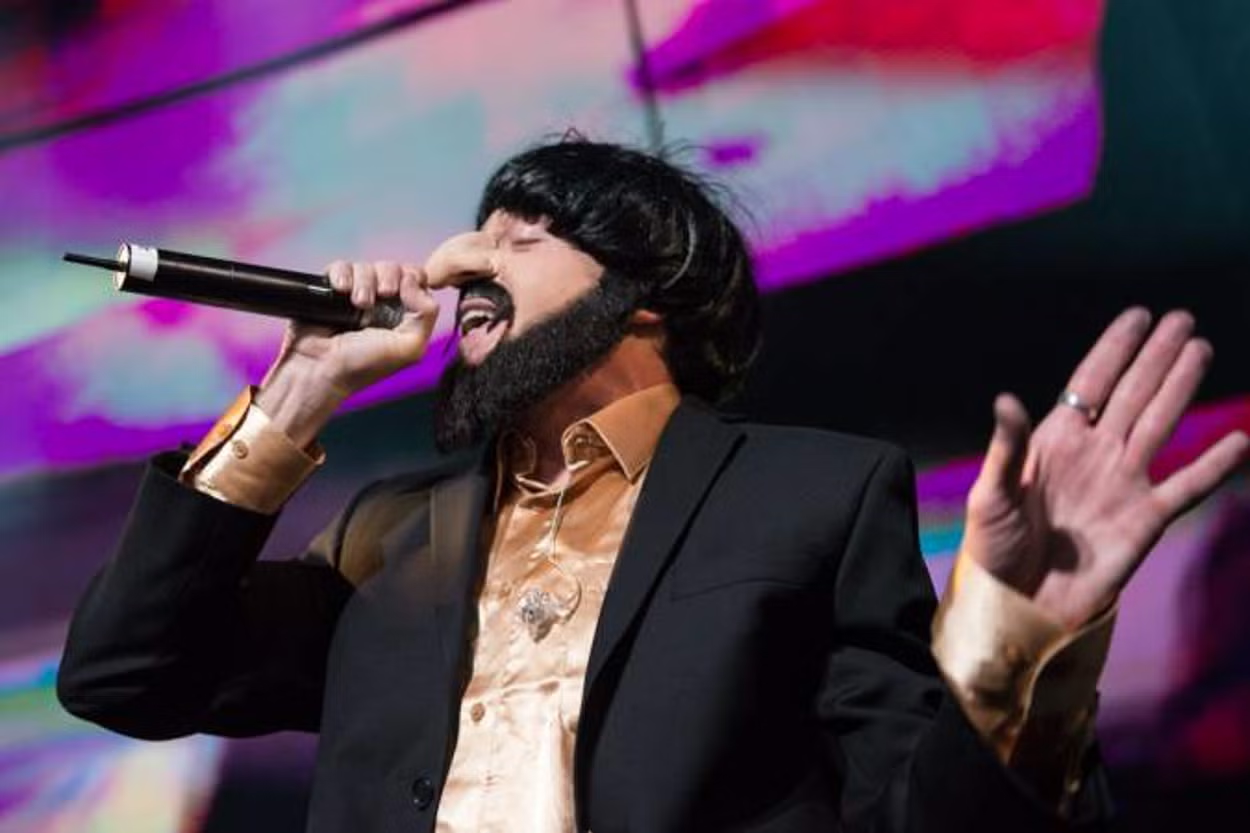
In May 2014, Macklemore walked onto a Seattle stage wearing a large prosthetic nose, dark wig, beard and black suit. Then he performed “Thrift Shop,” a song about being cheap.
Macklemore in Jewface in 2014, singing about being cheap
It would be difficult to construct a more recognizable antisemitic spectacle: the exaggerated Jewish nose, the beard, the dark clothes, all while singing about bargain hunting. Actor Seth Rogen mocked Macklemore’s explanation that it was merely a random disguise: if someone were instructed to assemble an antisemitic Jewish costume, Rogen wrote, “they’d have that exact shopping list.”
As criticism mounted, Macklemore apologized. He acknowledged that the outfit could be understood as a Jewish caricature but maintained that no Jewish stereotype had crossed his mind.
Yeah, right. That should have been a simple moment for the Anti-Defamation League to clearly denounce the spectacle.
Instead, the ADL chose absolution.
“We take him at his word that he did not have any ill intent,” then-ADL director Abraham Foxman said, “and unreservedly accept his apology.” And then Macklemore gave the ADL a promotional shout-out. “Through this situation I’ve got hip to some incredible groups like the ADL,” he wrote, encouraging people to check out their “great work.”
The country’s best-known antisemitism organization publicly and “unreservedly” accepted his apology and also his advertisement. It is unclear whether there was a quid-pro-quo and whether the ADL was trying to promote its antisemitism study it released the week before.
As they say in text-land: “WTF?”
Twelve Years Later
It is now 2026, and antisemitism is raging through American public life. Much of it no longer arrives wearing a fake nose and beard. It travels under political banners, frequently through rhetoric about Zionists and Israel.
And Macklemore is back on a concert stage.
Opening for Ed Sheeran at MetLife Stadium, he told tens of thousands of people why he had joined the tour: so that he could stand in stadiums and say, “Free Palestine.” He accused Israel of genocide, performed “Hind’s Hall” against a backdrop of footage from pro-Palestinian campus encampments and turned part of the concert into a political demonstration.
This time, the ADL wasn’t offering absolution.
“They came for a concert, not performative, biased and hateful anti-Israel ‘activism’ from his opener, Macklemore,” the organization declared. It pointed to what it describes as his record of demonizing Israel and Israelis, falsely accusing Israel of genocide and engaging in antisemitic rhetoric and behavior.
When Macklemore was subsequently removed from the remainder of Sheeran’s tour, head of ADL Jonathan Greenblatt applauded the decision, saying that “for years, Macklemore has pushed antisemitic tropes and demonized Israel and Israelis.”
What a difference twelve years makes.
The Permission Slip
The problem in 2014 wasn’t only that the ADL accepted an apology. It was that it seemingly confused forgiving the man with minimizing the act.
America’s leading antisemitism organization effectively told the public that Macklemore’s updated and revised intentions settled the matter. A concocted and forced apology after multiple attempts to satisfy the offended, became another chip on the accused – I’m sorry you were offended, not I’m sorry that I have done something terrible that offended you.
Jews are the subject. Always. The antisemite is a victim of Jewish sensitivity.
The ADL granted a permission slip of sorts to this vulgarity and inanity. Permission for American culture to treat an astonishingly recognizable Jewish caricature as something that could be quickly explained away if the right person said he hadn’t meant it.
Now, the ADL that once took Macklemore at his word is no longer particularly interested in his assurances about what he means. It considers impact. The false charge of “genocide” against Israel in Israel’s defensive war is a common pretext to attack Jews today. Macklemore’s appeal to thousands wasn’t a call for peace but incitement to pogrom.
But that was precisely the lesson the ADL could have taught in 2014.
There is an important role for forgiveness in fighting hatred. People must be allowed to recognize mistakes, apologize and change. That is what the Ten Days of Repentance we are in right now is about.
But forgiveness without the party internalizing the matter coupled with contrition is meaningless. It is actually much worse. It is a wink with a get-out-of-jail card. Carry on with spreading antisemitism; we’ll only call it out when the situation becomes intolerable.
Neither October 7, 2023 nor October 8 appeared magically. First One Through has been writing about this phenomenon nearly every day since those same days in May 2014, when it wrote about the UN’s Richard Falk stating that Israel’s “criminal intention [toward Palestinians] is genocidal.”
Does that word have a familiar ring to it? The UN has been using it constantly for well over a decade; before the wars of 2014, 2021 or 2023.
On May 21, 2025, Yaron Lischinsky and Sarah Milgrim walked out of a reception at the Capital Jewish Museum in Washington, DC. They were young Israeli Embassy employees and a couple. Lischinsky had bought a ring and planned to propose.
Alas, Elias Rodriguez, a pro-Palestinian anarchist, fired approximately 20 rounds at the couple shouting “free Palestine.” Inside the museum afterward, he allegedly said, “I did it for Palestine. I did it for Gaza.”
Rodriguez had brought an explanation with him.
His manifesto, Explication, dated the previous day, defended the “morality of armed demonstration.” He wrote that he had considered such violence justified during the 2014 Gaza war, but understood that most Americans then would have found it “illegible” and “insane.”
By 2025, he believed America was different. “I am glad that today at least there are many Americans for which the action will be highly legible and, in some funny way, the only sane thing to do.”
In his mind, the violence had not changed. The audience had.
Rodriguez described armed action as “theater and spectacle.” He had watched enormous demonstrations against Israel, accusations of genocide become commonplace and supporters of Israel portrayed as complicit in mass killing. Yet, he complained, “the rhetoric has not amounted to much.”
The violence would be the spectacle. The manifesto would tell the audience how to read it.
Especially because of the timing: May 20, 2025.
Rodriguez penned his manifesto on the same day that UN humanitarian chief Tom Fletcher told the BBC that 14,000 babies in Gaza would die within 48 hours unless aid reached them.
The claim was completely false. The comment was a distorted derivative of a report that approximately 14,000 cases of severe acute malnutrition among young children might occur over the next year. And he placed all of the blame on Israel.
The accusation spread quickly. That afternoon, CAIR issued a call for action after the UN said 14,000 Palestinian babies could die under what CAIR called Israel’s “forced starvation campaign.” Genocide supplied the larger charge.
Shortly before his murder the next day, Lischinsky reportedly shared criticism of Fletcher’s claim that called it a “blood libel.” The blood libel was much more than a charge of accusing Jews of killing children; it gave license to an audience to kill Jews in their defense.
Rodriguez had another word for encouraging the crowds to murder: Legible.
And he was right.
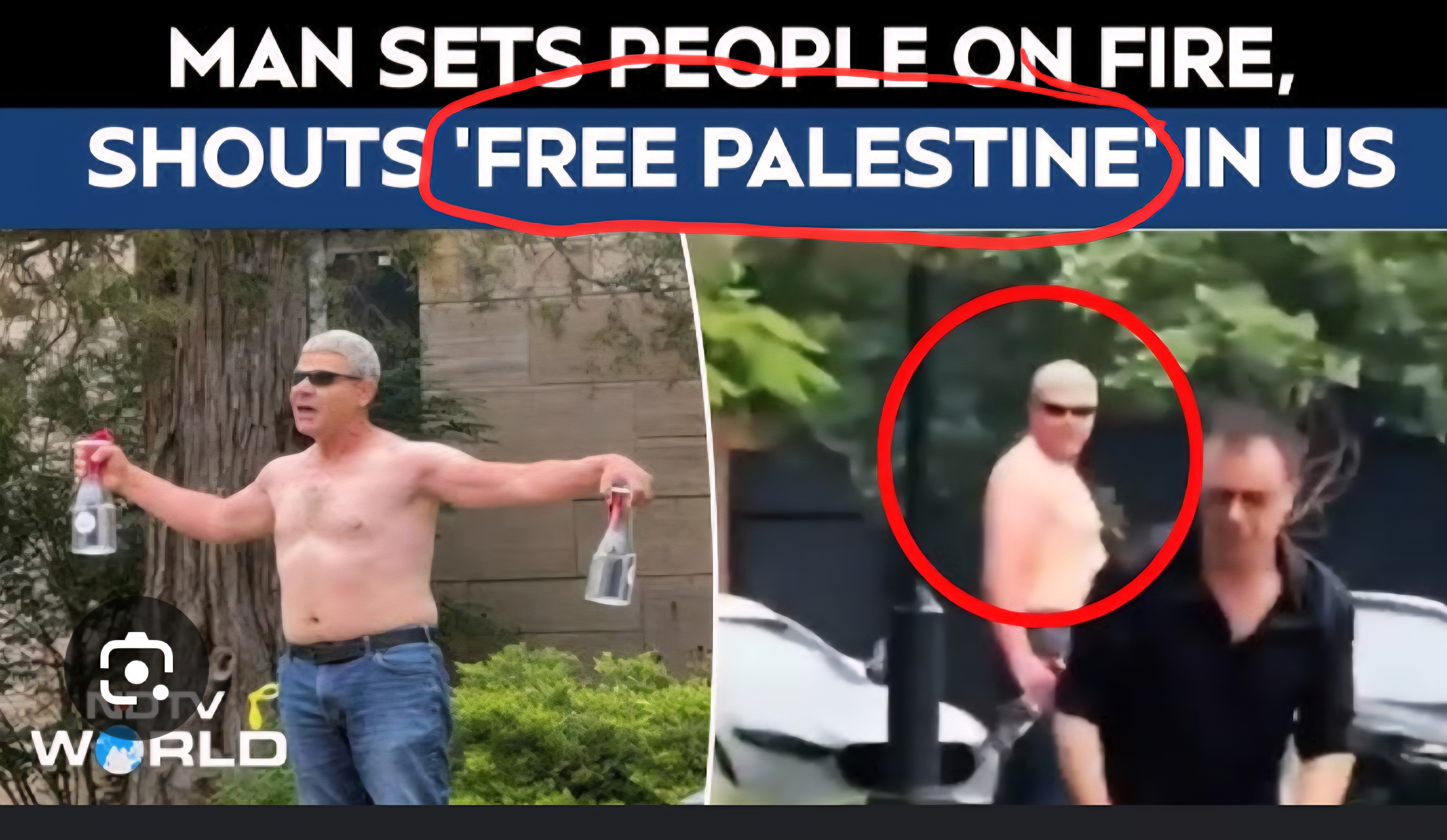
Eleven days later, in Boulder, Colorado, prosecutors say a man attacked a peaceful gathering supporting Israeli hostages with Molotov cocktails while shouting “Free Palestine.” One victim died.
In August 2026, popular pro-Palestinian podcaster Hasan Piker said that if American Jews continued publicly associating themselves with Israel, “eventually someone’s going to come around and take action, not against the State of Israel, mind you, but against American Jews.” Keep associating with those falsely accused of genocide, and people will come for you.
Anger and frustration are being harnessed through podcasts and manifestos to inflame passions and violence. The audience is all too happy to join the spectacle these days.
Because the violence is legible.
So crowds cheer on the killer of a United Healthcare executive, gunned down in the streets. They listen to their alt-left congressman shout on the streets that the rape of Jewish women never happened, to turn the victims into aggressors. They watch an Ariane Grande video of a frustrated musician cutting old white men to pieces to rapture and applause.
Zeteo’s Mehdi Hasan at the alt-left Zohran Mamdani NYC mayoral victory party with Hasan Piker and Jamaal Bowman, November 2025. (start at 52:00)
Legible.
Once upon a time – say 2010 – the mass murder by an angry person was viewed through a lens of pity and disbelief. What did we do as a society that enabled isolation and frustration to turn into heinous violence? Pearl Jam’s Jeremy is a cry out of pain – for the victims and the shooter. There are no winners, just anguish.
No longer. The audience has changed. We revel in the spectacle. If the dead are cast as privileged and powerful, part of a caste that keeps people down, the revolution will celebrate the rolled heads.
More, they will want to participate.
There has always been violence, assassinations and terrorism. But we are no longer appalled universally, only selectively. The crowds have read the jihadi-socialist manifestos and they appallingly read “sane.” LEGIBLE.
James Zogby, President of the Arab American Institute, spoke to the United Nations in June 2023 – months before the October 7 massacre of Israelis by Gazans – and bemoaned “that a recent poll shows a majority of Palestinians rejecting moderate leadership, despairing of peaceful change and now favouring armed struggle? That tragic deformity in Palestinian political culture is the result of the continued brutality of the occupation.” He warned that the mob – his own people – had become so twisted that they were itching for Jewish blood.
That same deformity showed itself on American university campuses right after October 7. It has continued to spread outward to American streets as false charges of genocide and mass starvation make the violence “the only sane thing to do.“
And it is no longer just the alt-left drowning in the empathy swamp. All of those little screens that we carry every waking second make us an addicted audience, barraged by posts and podcasts, amplified by bots and armies of American foes. We listen to idiots and lies openly and frequently, and have lost our moral compass in the process.
We have reached a point where the reluctant assassin may become more willing to join the anarchy, believing the crowd might finally understand and appreciate mass murder as a noble cause, rather than a heinous crime.
We have crossed the tipping point of moral collapse. Sensing the panic, we point a finger at artificial intelligence as the problem, willfully blind that the toxin is already in the bloodstream. AI is just an accelerant, not the root of the sickness.
We are entering a new year in the Jewish calendar. As we read from the special Rosh Hashanah prayer book and ask God to have mercy on humanity, consider how many people have internalized very different – and deeply evil – texts and messages. Pray that the sound of the shofar will not only reach Heaven, but awaken the audience on earth from the hypnotic spell that has deformed their moral judgment.
Fear of Muslims is called Islamophobia. Hatred of Jews is called antisemitism.
One word announces fear (phobia) while the other focuses on hatred (anti).
Graffiti in London, England blames Jews on the September 11 terrorist attack that was committed by jihadi terrorists, in December 2019 during Hanukkah, or perhaps that terrorism was coming for Jews
Yet much of antisemitism has always been built on fear: fear of Jewish money, Jewish influence, Jewish intelligence, Jewish loyalty, Jewish networks, Jewish control. The classic antisemite does not merely dislike Jews. He believes Jews possess too much power and have things that do not rightfully belong to them.
That makes antisemitism, in a very literal sense, a phobia.
And comparing it with Islamophobia reveals something important about how the two prejudices work.
In Whole or Part
There are roughly 2 billion Muslims in the world and radical jihadists constitute a tiny fraction of them. Yet that fringe has caused extraordinary damage. Nineteen radical Islamic hijackers carried out September 11. ISIS murdered thousands and terrorized millions while representing a small share of the world’s Muslims.
That creates a fear rooted in uncertainty. The danger from jihadists is real; Islamophobia spreads that danger to innocent non-jihadi Muslims.
Antisemitism runs in the opposite direction.
There are only about 15 million Jews in the world. Their tiny numbers become part of the conspiracy. Jews constitute a fraction of one percent of humanity, yet Jews have achieved prominence in business, finance, academia, science, politics, media and culture.
The antisemite sees those accomplishments and converts disproportionate success into disproportionate power. Individual Jews disappear. There is only the Jews, a coordinated power.
Zero Sum Grievance Versus Sporadic Safety
There is a crucial difference between the fears.
Islamophobia begins with the violent actions of some Muslims and enlarges the circle of suspicion. Even the person consumed by fear of jihadism understands that every Muslim cannot be a jihadist. But the Muslim stranger becomes frightening because he might belong to the dangerous subset. There could be an attack at discrete moments in time.
Fear of Jews is about undeserved and evil coordinated power. It has an economic component which makes the fear especially combustible: Jews have something at the expense of others. The view of a zero sum game is that the Jewish power comes at the expense of your power; their wealth is taken from your wealth. If someone believes Jews control banks, corporations, universities, governments or the media, almost any personal grievance can acquire a Jewish culprit.
Movement
That difference in the fears makes its spread very distinct. Those disillusioned with their status in life can find a scapegoat in Jews. Poor or lost a job? Probably the fault of the Jews. Your favorite politician lost? Probably Jewish money and influence. Your culture going in a direction you don’t like? Jews control the media and Hollywood. Don’t have a functioning country? Must be the fault of the Jews.
Antisemitism takes fear and a zero-sum philosophy and allows it to travel to the corners of the world which don’t even have Jews. It is inherently portable.
But Islamophobia is a localized fear. It is not within your mind about everything that makes you upset; it is a tangible fear of your physical safety. It has an address.
Consequent Actions of Antisemitism and Islamophobia
With such orientation, the vectors to attack Jews become multiple. Remove them from positions of power: vote them out of office, get them off boards of directors, expunge them from teaching positions. Make it impossible for them to live nearby through banning kosher meat, circumcision, an eruv. Cast their lobbying group as uniquely nefarious compared to vastly larger and more powerful non-Jewish lobbying groups.
The Islamophobes’ battle against Muslims is not removal of a handful of people but placing a barrier from admitting billions of people. Limit immigration from Muslim-majority countries. Block mosques or Islamic centers from being built in the community. Keep the tsunami at bay before they overwhelm.
Between Fear and Hate
We readily describe fear surrounding Muslims with a word ending in phobia. It inherently carries the meaning “irrational.” There really is no reason to fear Muslims is the embedded argument – despite the global terrorism committed by jihadi terrorists. The language tells us that one’s fear is really a bias.
Antisemitism runs in a different direction.
There have been centuries obsessed with Jewish power, Jewish influence, Jewish wealth, Jewish loyalty and Jewish control without putting fear anywhere in its name. Doing so gives the hatred the comfort of being rational. There are data points – there’s a wealthy Jewish man! – and the cascade of evil thoughts that he must be responsible for anything wrong in your life is not a crazy leap but an endorsed component of a corroding society. The cure for this toxin is being promoted by teachers’ unions and radical politicians: that Jews must be stripped of any wealth, possessions, title, honor or business and their inherently illegal items given to victims of preference.
“Islamophobia” tells us to stop the irrational fear which leads us to hateful actions; “Antisemitism” is wired as an accelerant in a society whose foundation is grievance and victimhood.
We are arriving at the 25th anniversary of the September 11 jihadi attacks on the United States and subsequent War on Terror. It was a battle against the radical Islamic terrorist group al Qaeda, and the various sister organizations such as the Taliban, ISIS and Boko Haram to different extents.
We are also coming to the third anniversary of the October 7 jihadi massacre in Israel and its subsequent multi-front war with the Islamic Republic of Iran and its various proxies of Hezbollah, the Houthis and Hamas.
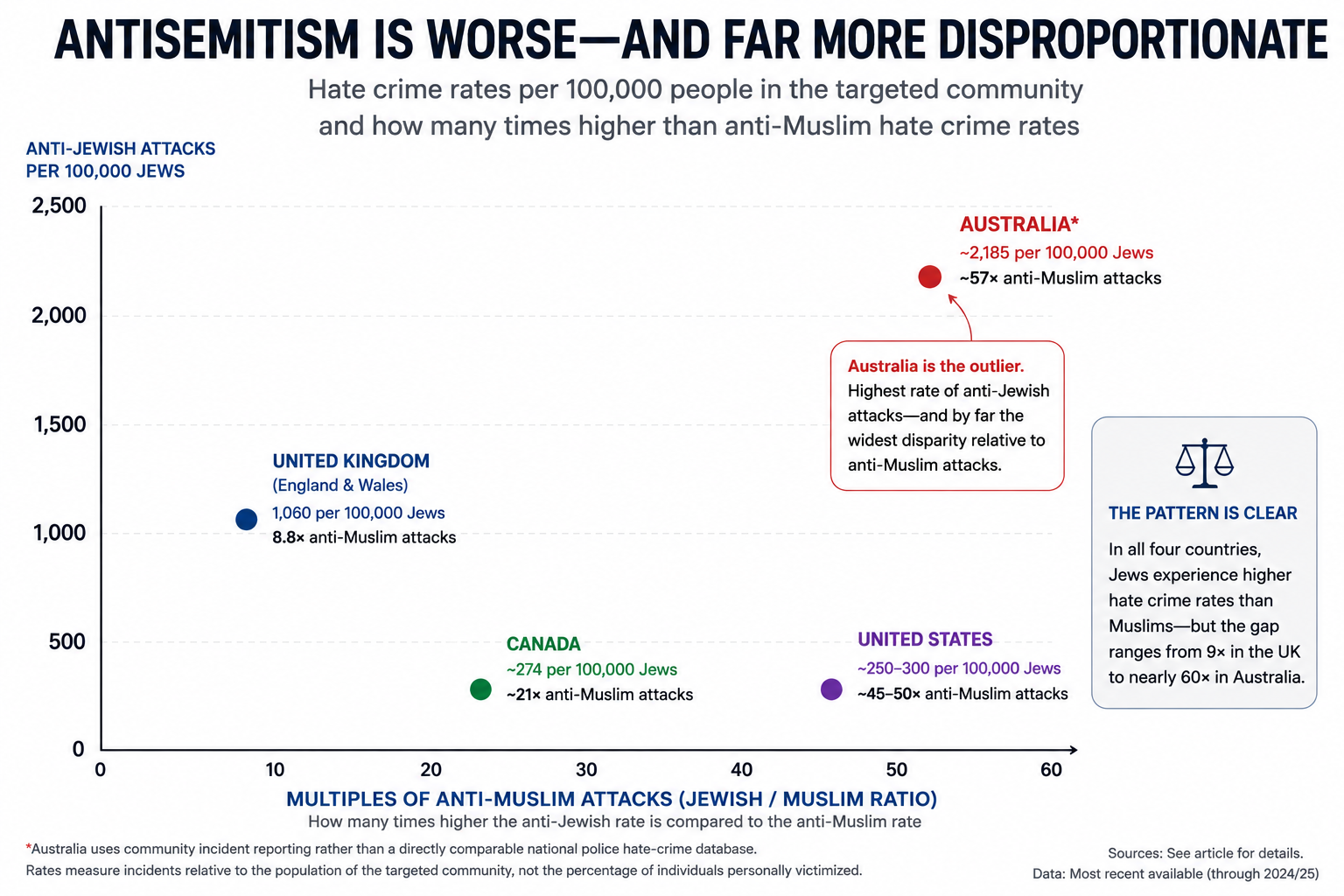
Lost in these anniversaries and large military battles against global jihadism is the softer war of words. Of civilian fear and hatred taking place on city streets and school campuses. Of the vastly disproportionate attacks on Jews than on Muslims in the English-speaking world.
There is no quick fix to stopping the torrent of attacks on Jews. But perhaps it is time to change the English term for Jew hatred to something like “Jewphobia” which forces people to confront their hatred as both irrational and anchored in fear. And then maybe the United Nations would finally recognize it the way it has elevated the less common “Islamophobia,” encourage governments and institutions to fight the scourge, as well as confront its own deep hostility for Jews around the world.