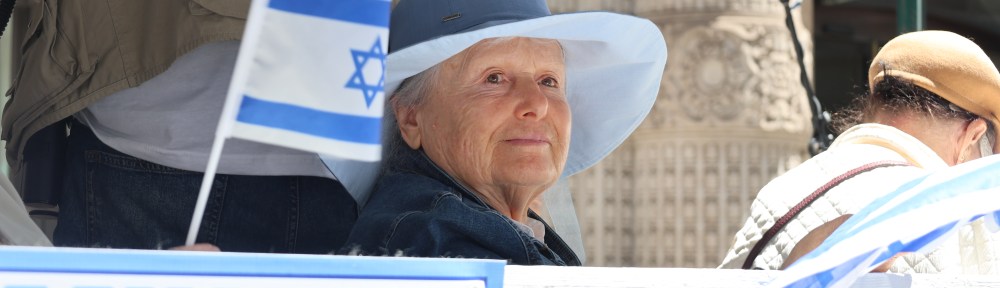
Two years ago at New York City’s Celebrate Israel Parade, Holocaust survivors climbed down from their float and danced with the children marching beside them. This year the children climbed up onto the float and sat beside the survivors.
The change captured something unmistakable: distance in years sometimes requires an inverse relationship in physical space.
As the float moved down Fifth Avenue, Holocaust survivors waved Israeli flags toward the crowd. Around them stood students, children, grandchildren, and thousands of New Yorkers carrying American and Israeli flags. Some of those cheering were the children and grandchildren of Survivors who are no longer here.
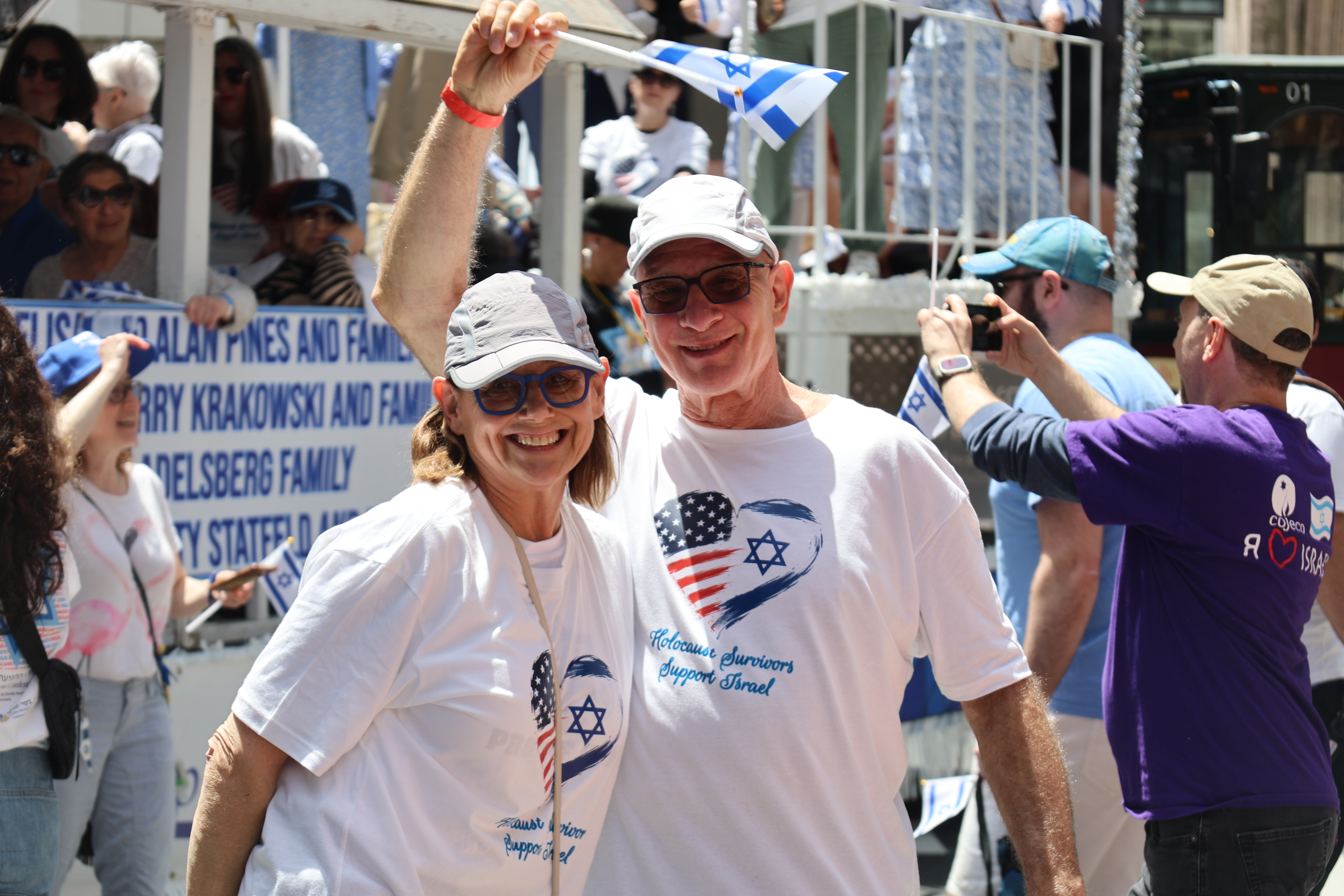
They felt what we saw: how much smaller the group of survivors had become.
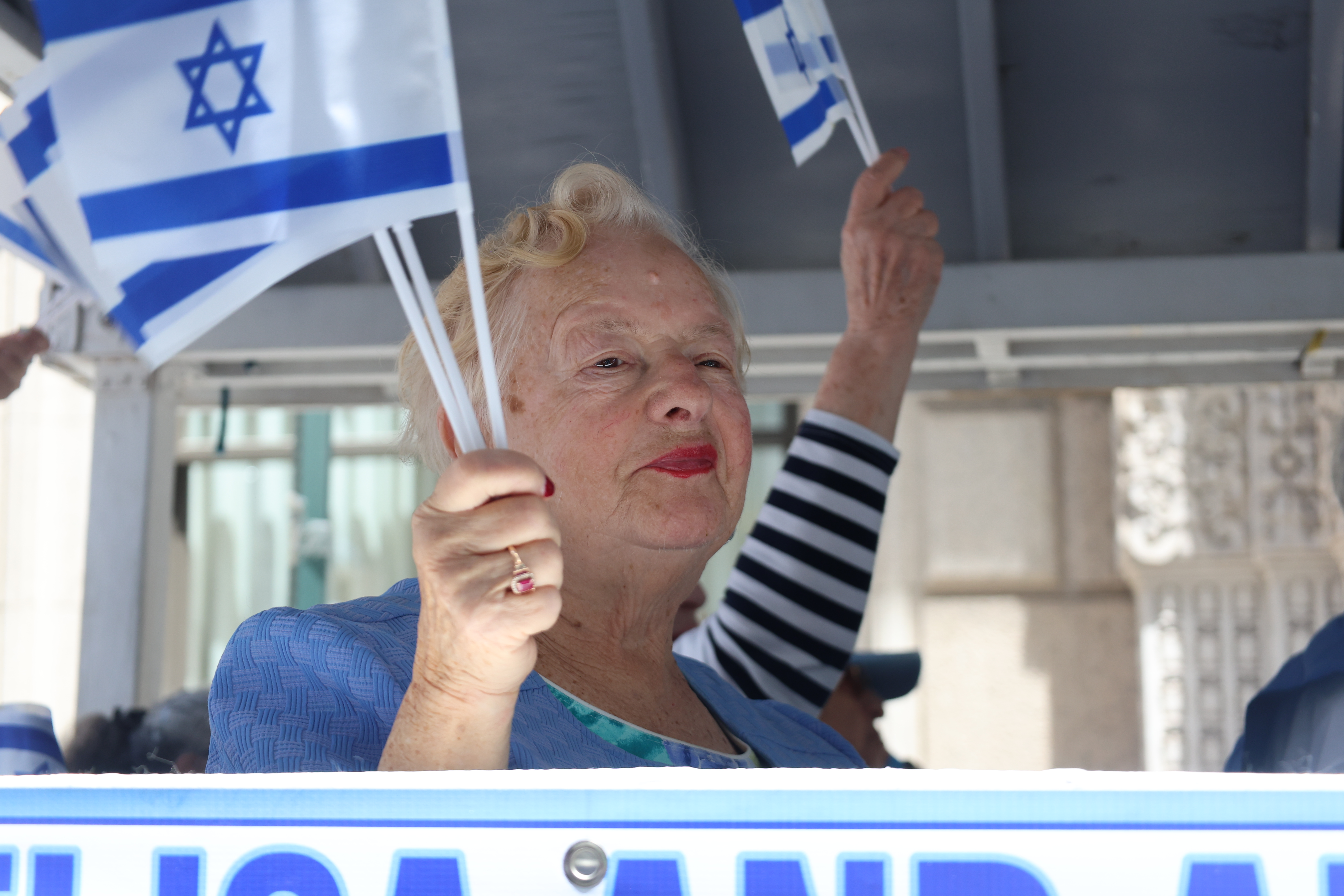
An elderly woman sat quietly beneath a blue hat, an Israeli flag resting beside her. Nearby, several other survivors smiled and waved to the crowd. Looking across the float, one could not help noticing who was missing.
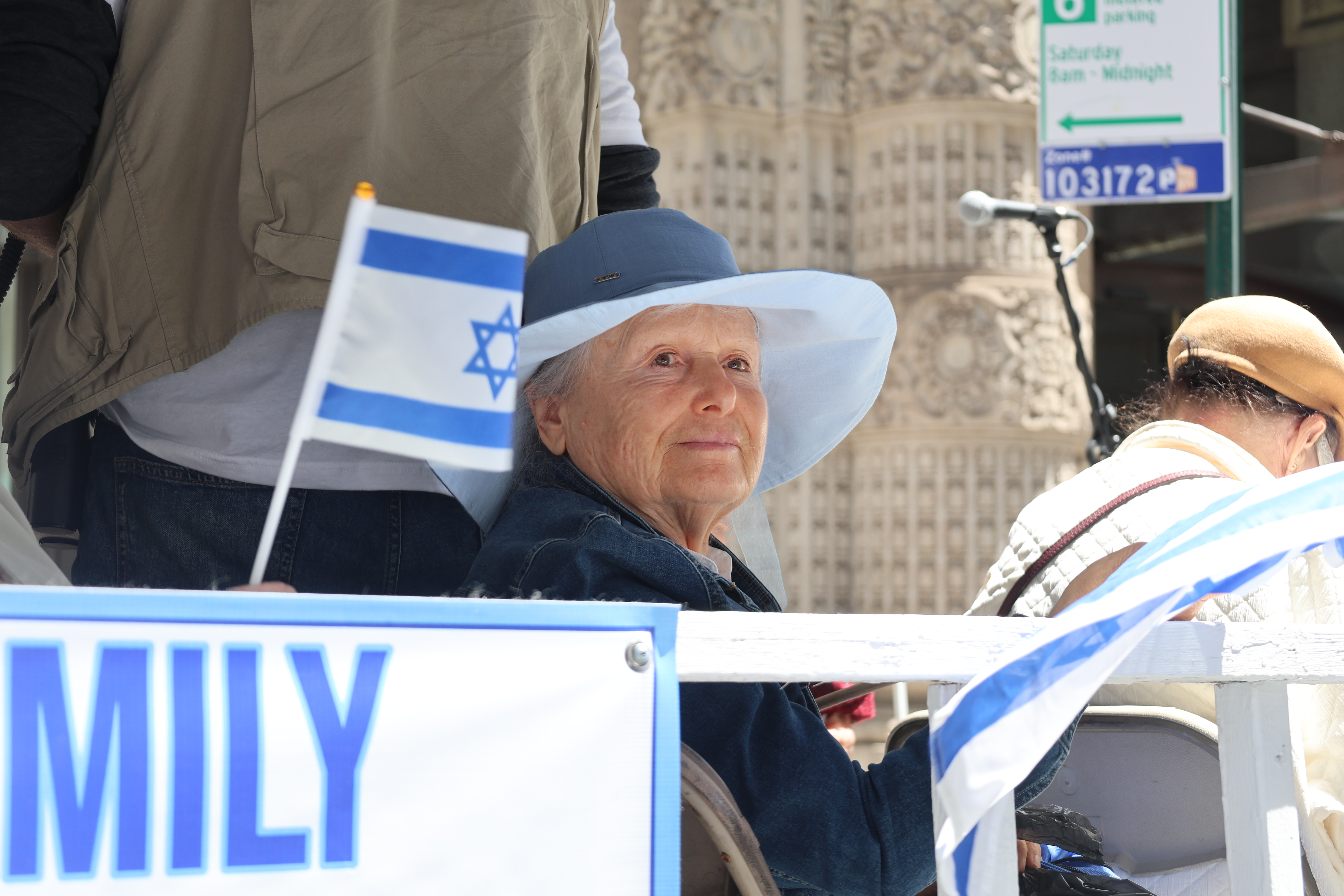
The men are disappearing.
Every year there are fewer survivors able to spend a day riding through Manhattan. Husbands, brothers, and friends who once shared these memories are no longer there. Increasingly, the survivors are women carrying stories that were once held by entire families and communities.
The Holocaust is passing from lived experience into history.
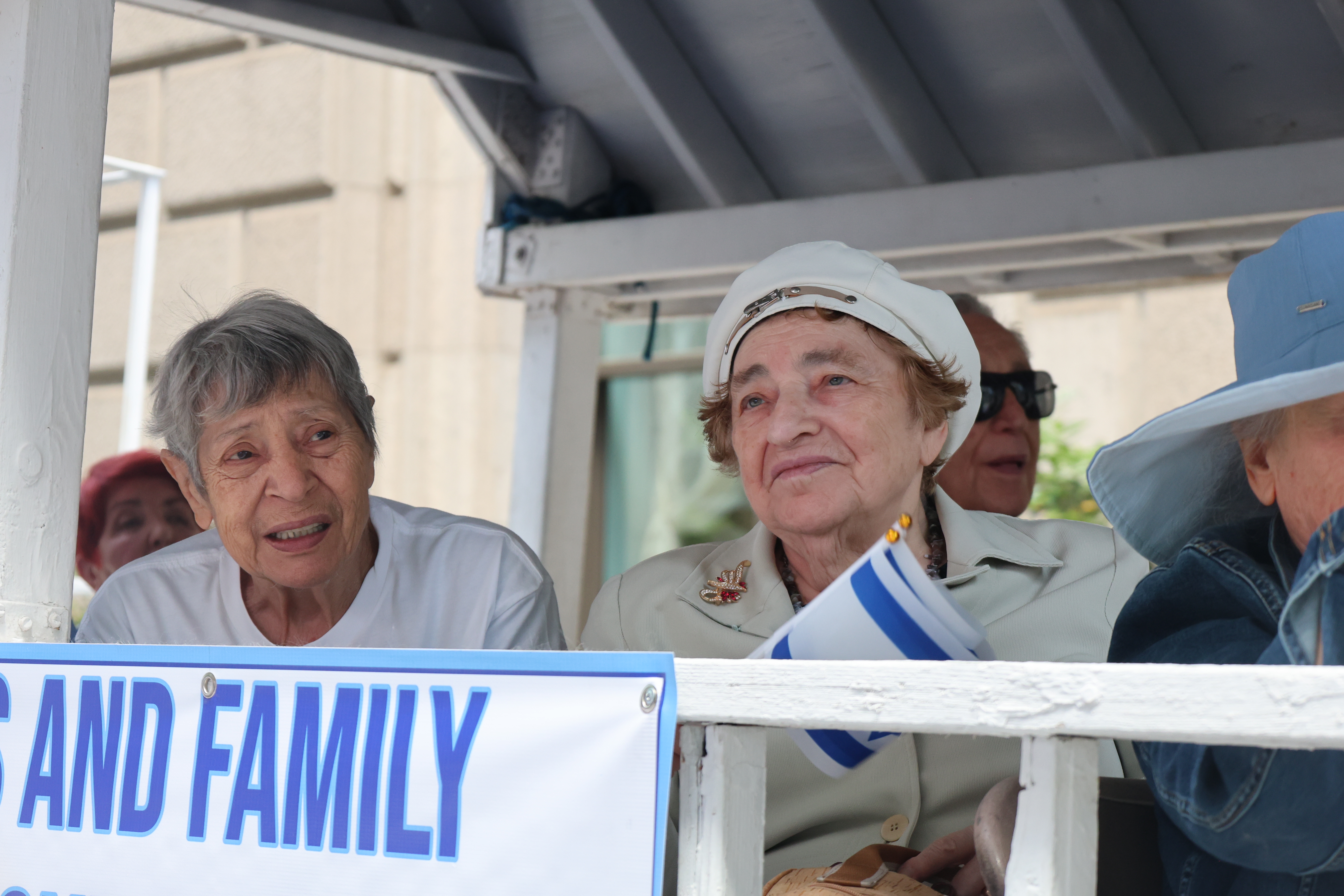
The banner on the float read simply: “Holocaust Survivors Support Israel.”
For many aboard, Israel is not a political issue. They remember something most Jews today know only from books: a world in which there was no Jewish state. A world in which the doors of country after country remained closed while European Jewry was destroyed.
That reality gave the float a weight extending far beyond the parade itself.
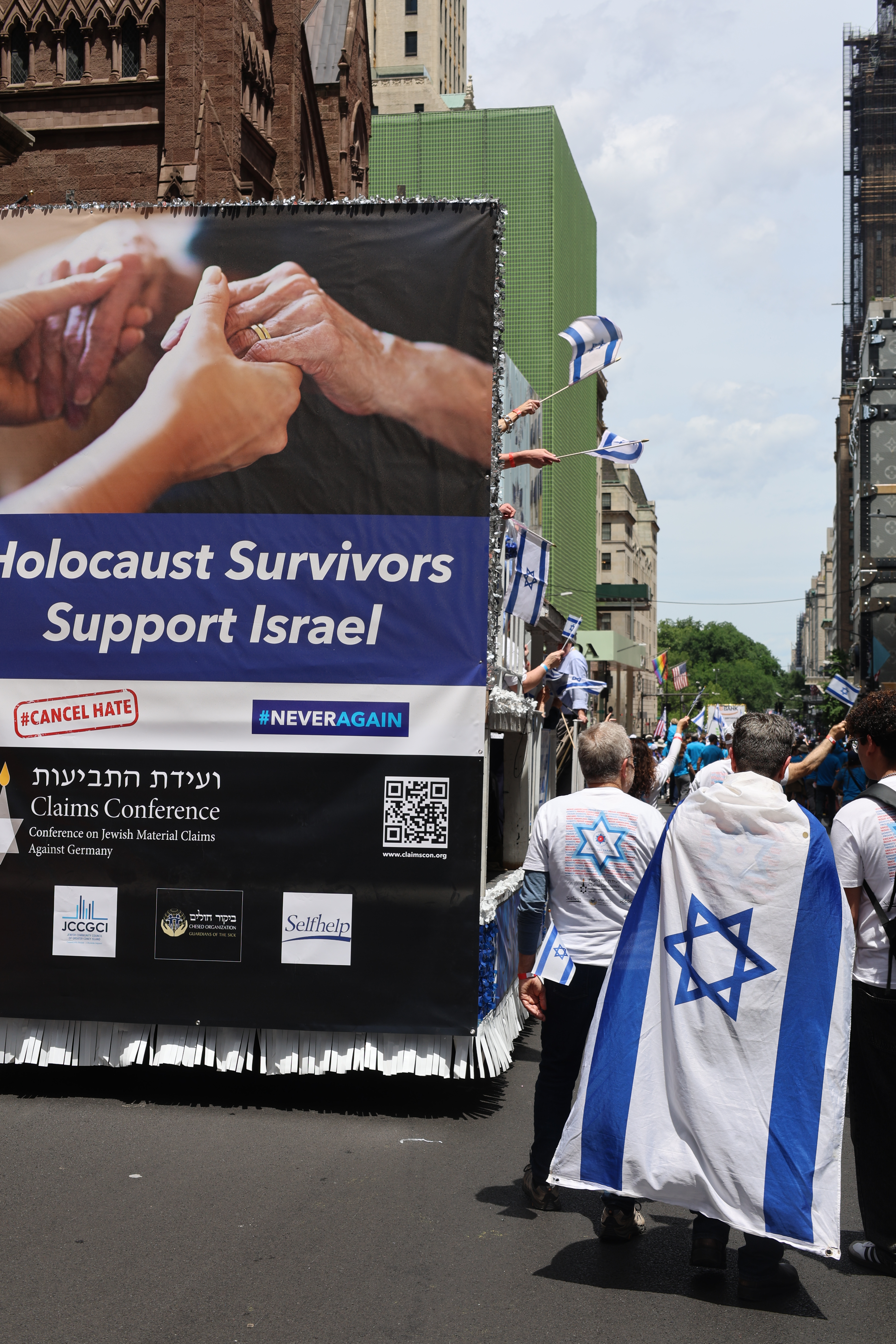
Yet the most moving scenes took place between the survivors and the young people gathered around them.
Some students and families from the Heschel School spent part of the afternoon alongside the survivors. Conversations unfolded between people separated by seventy or eighty years, yet connected by a common story. One survivor leaned over the railing to hand a parent a reference to a book he had written. Others stopped to speak with children standing beside the float.
The survivors can no longer carry these memories alone.
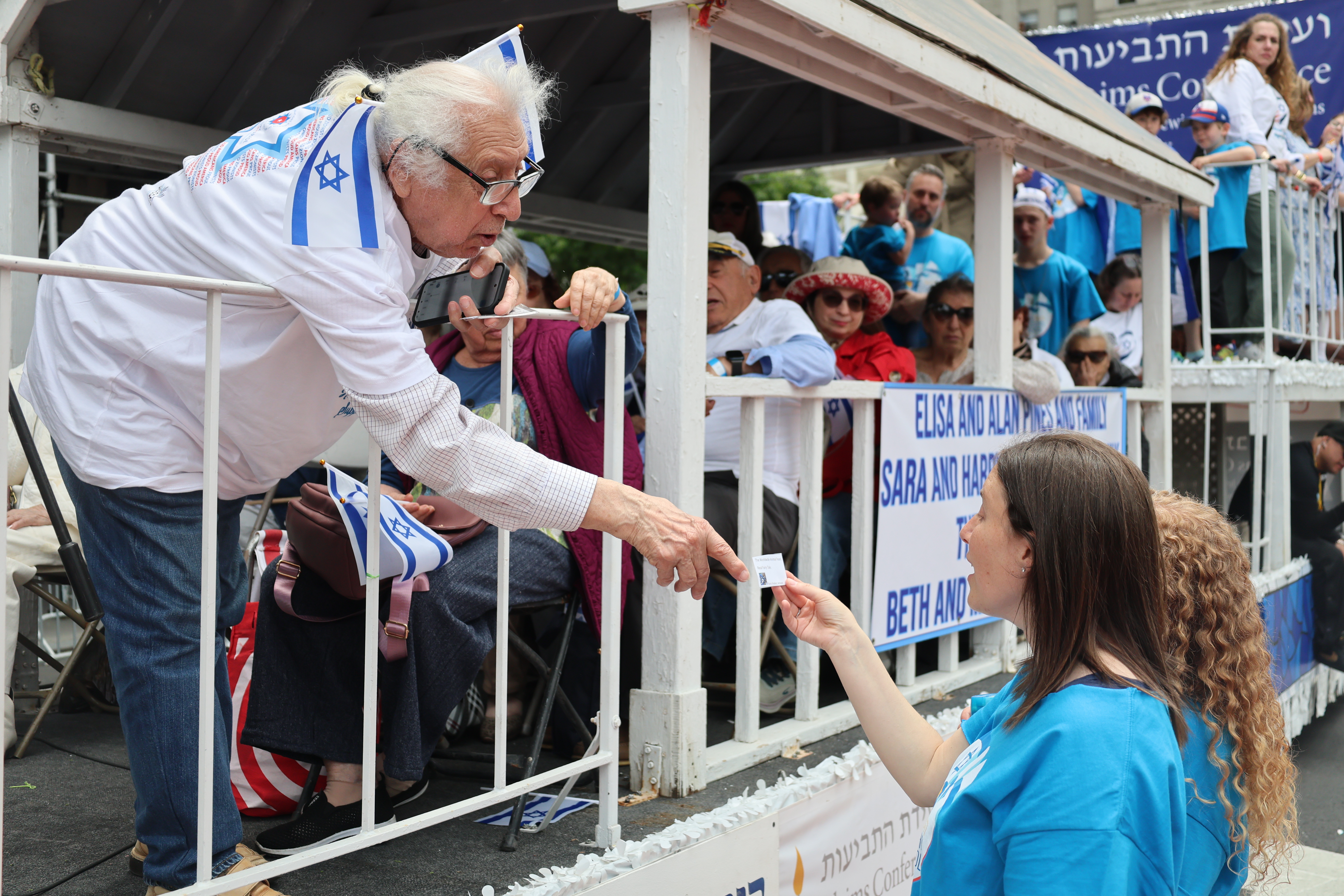
Others must carry them forward.
Perhaps that is why they continue to come.
Waving for hours on a hot day is not easy at ninety years old. Yet year after year they return because memory survives only when it enters public life and passes from one generation to the next.
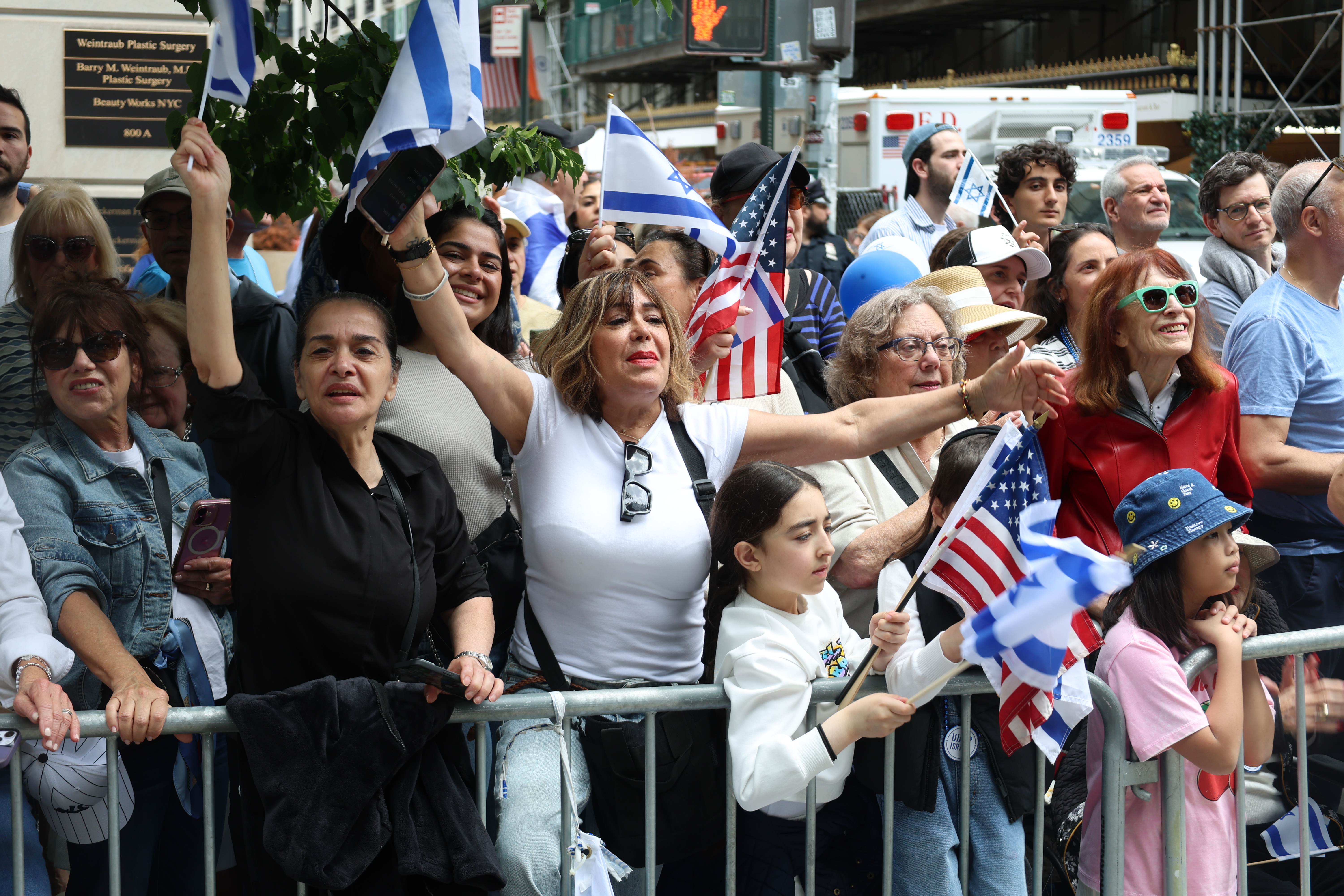
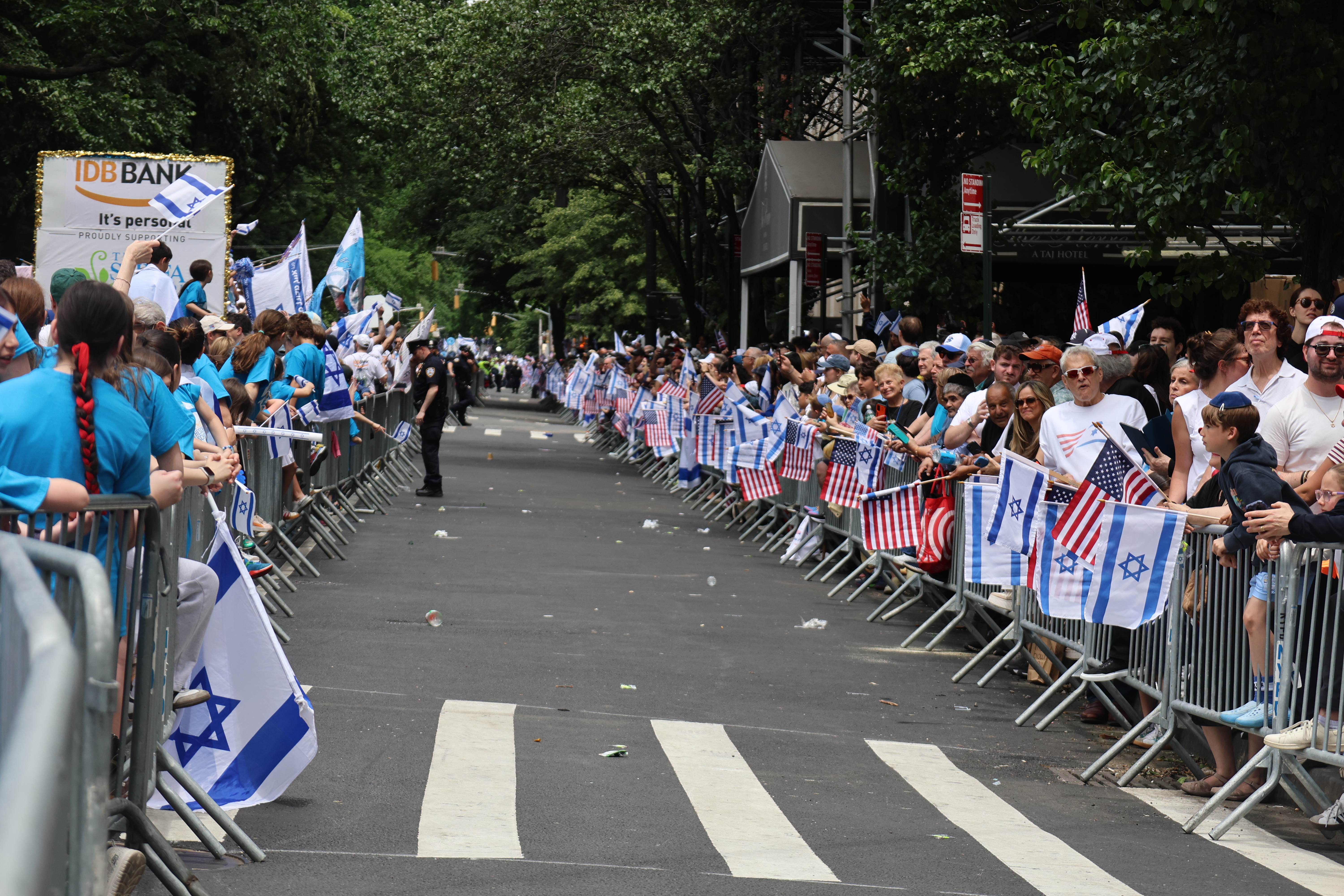
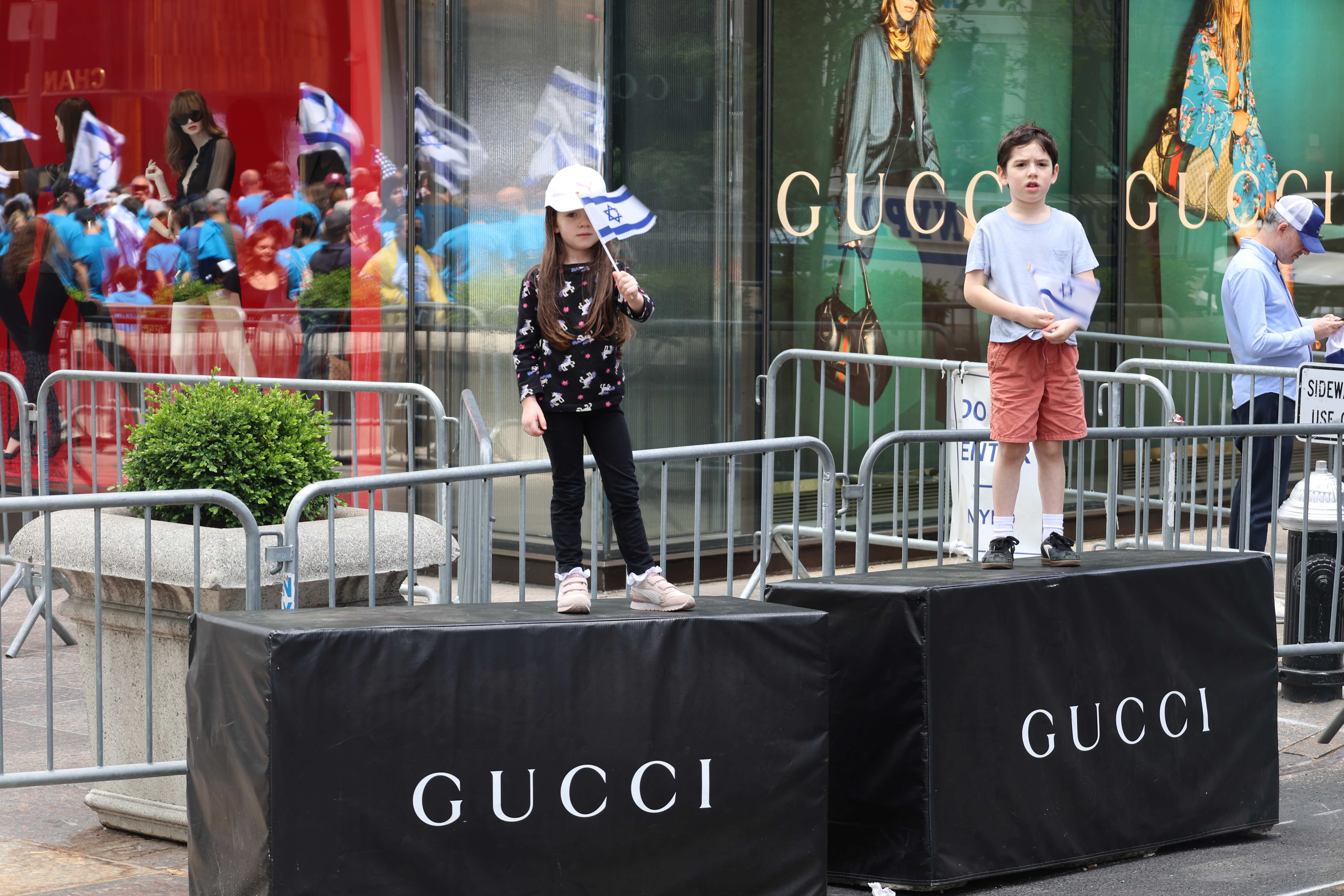
Around them, the parade moved forward. Families lined the route waving American and Israeli flags. Children danced in the streets. Chabad volunteers helped Jewish men put on tefillin along the sidewalks. The crowd cheered as marchers passed.
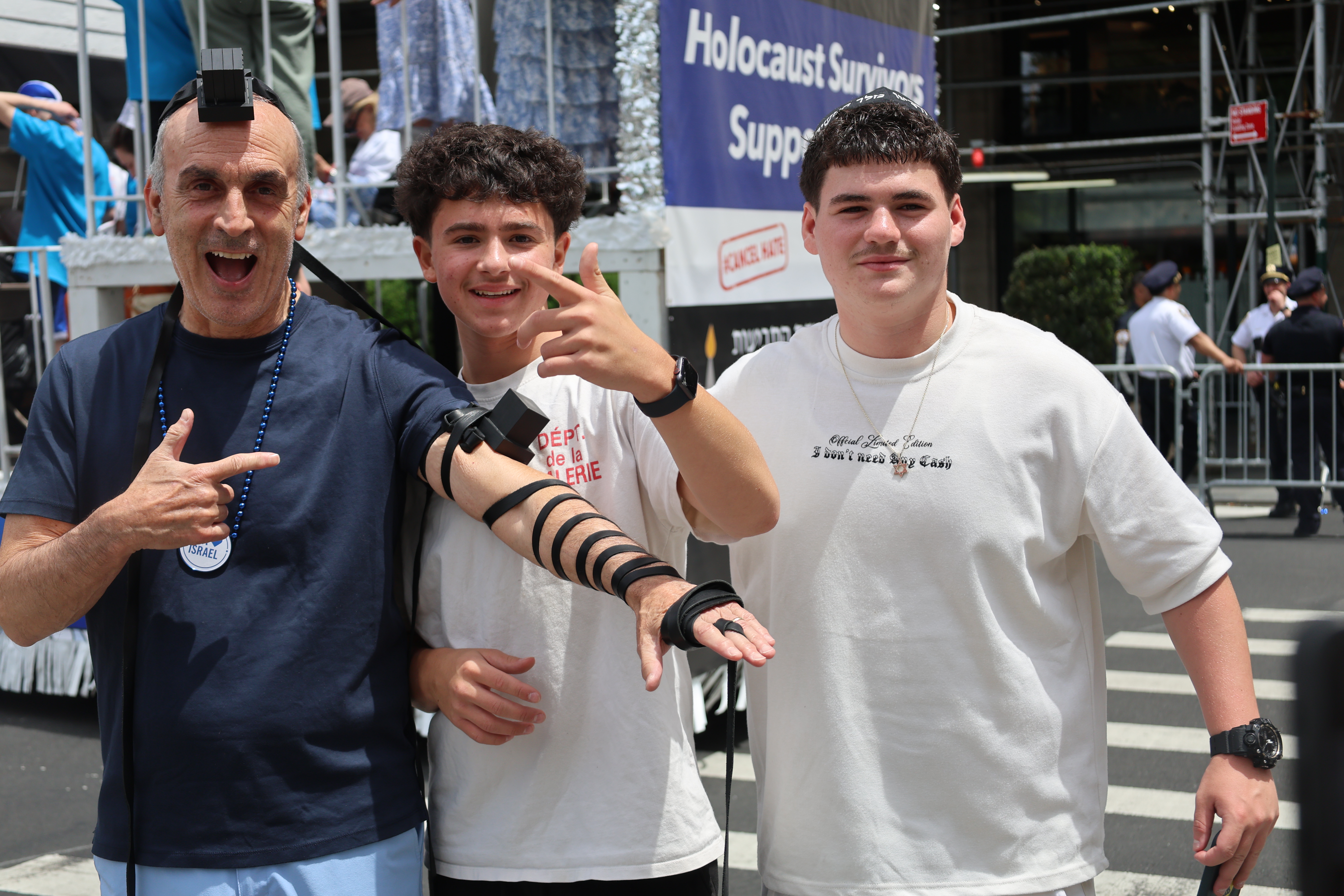
Young men put tefillin on Jewish men
at Celebrate Israel Parade 2026 (photo: First One Through)
The city itself felt different than it had a few years ago.
The parade was peaceful, but the precautions were impossible to miss. Police officers lined the route. Barricades stood farther from the crowd than in years past – perhaps twelve feet this year up from eight in years past.
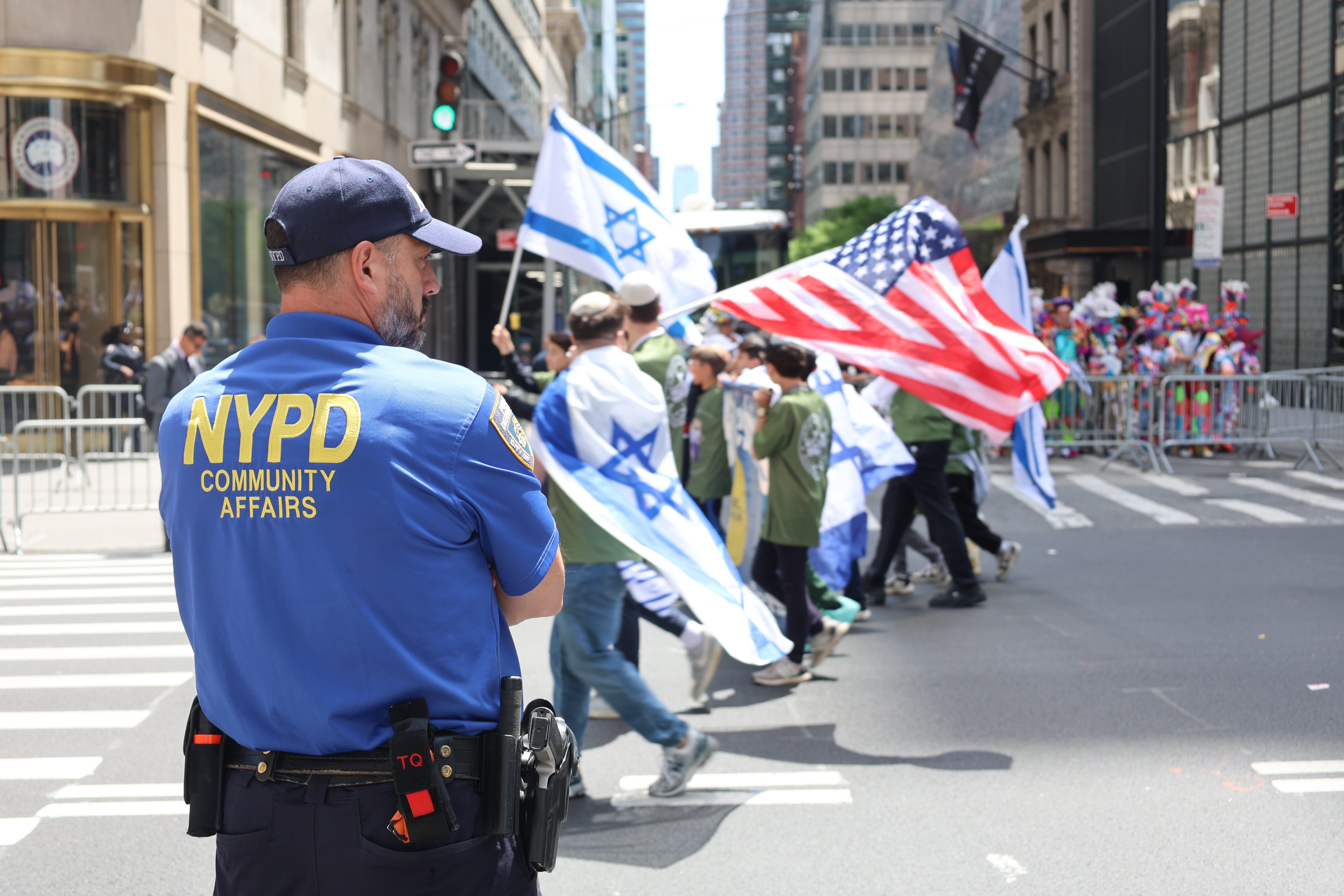
NY Police watching over the Celebrate Israel Parade 2026 (photo: First One Through)
There was another difference as well.
Two years ago New York City’s mayor proudly marched in the parade. This year the mayor made a big show of not showing up because of his anti-Israel opinions. Support for Israel, once treated as an easy civic consensus, now feels more contested amid the ongoing Iranian proxy war on Israel.
The survivors understood such realities better than anyone. They have seen societies become less welcoming before.
Yet as the float rolled down Fifth Avenue, those tensions faded into the background. What remained was something older and more enduring.
Young people sat beside Holocaust survivors. They waved Israeli flags.
The scene compressed centuries of Jewish history. Survivors who remembered Europe before the Holocaust sat beside children growing up in America after the creation of Israel. The last witnesses shared space with those who will soon become witnesses for them.
Soon there will be no Holocaust survivors left to ride down Fifth Avenue.
The children waving beside them will inherit stories they never experienced themselves. They will become the custodians of memories that once belonged to the people sitting beside them.
Two years ago the survivors climbed down from the float and danced with the children. This year the children climbed onto the float and sat beside the survivors.
The time distance between those moments is only two years. The physical distance between those generations has shrunk by necessity.

Holocaust Survivor at Celebrate Israel Parade 2026 (photo: First One Through)


