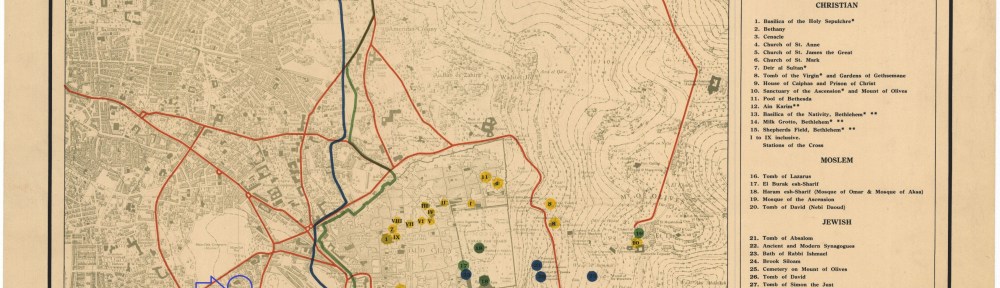
The Temple Mount is the holiest site in Judaism.
For nearly two thousand years, Jews have ended prayers with the hope of returning to Jerusalem and rebuilding what once stood there. It is the location of the First and Second Temples. Jewish longing for Jerusalem is woven into daily prayers, holidays, weddings, and mourning rituals.
Yet major international bodies have passed resolutions referring to the site primarily through its Muslim names while minimizing or omitting its central place in Jewish history. Imagine a resolution discussing the Vatican without mentioning Christianity, or Mecca without mentioning Islam. The absurdity would be obvious.
The issue extends beyond language.

The international community supports a protocol under which Muslims may pray freely on the Temple Mount while Jews are restricted from praying at Judaism’s holiest site. The result is extraordinary: the world’s only Jewish state is expected to enforce a policy under which Jews do not support a basic human right at their holiest location in favor of members of another faith.
The Temple Mount is not merely a religious site. It sits at the heart of a larger question: whether the Jewish people are entitled to the same rights afforded to every other people.
Around the world, international institutions celebrate indigenous peoples reconnecting with ancestral lands, reviving ancient languages, protecting sacred sites, and preserving cultural traditions. Yet only in the case of the Jewish people does a return to the place where their civilization, language, religion, and national identity were born become a form of “colonialism.“
International institutions routinely describe the Temple Mount and the Jewish Quarter as part of “occupied Palestinian territory.” Yet these are the very places where Jewish civilization was born, where the ancient Temples stood, and where Jewish communities lived for centuries.
Jordan’s capture of eastern Jerusalem in 1948 resulted in the expulsion of its Jewish population and the denial of Jewish access to the Western Wall, the Temple Mount, and the Jewish Quarter for nineteen years. It granted citizenship to residents as long as they weren’t Jewish. The UN seemingly liked this. International discussion of the Old City of Jerusalem begins after the expulsion of Jews, as though their absence were the natural condition and their return the disruption.
The same pattern appears in discussions of territory.
The Green Line was never intended to be a permanent border. The 1949 Armistice Agreements explicitly stated that the line was not a political boundary and would not prejudice future negotiations. It was a military ceasefire line drawn after a war.
Yet decades later, much of international law treats that armistice line as though it were a sacred border whose crossing transforms ordinary Jews into international criminals.
A Jew who moves across that line becomes a “settler.” An Arab who moves into the same building does not. The geography is identical. The identity of the resident is what changes.
International institutions frequently oppose changes to the “demographic character” of eastern Jerusalem. But demographic character relative to what date?
The answer is effectively 1949, the year after Jordan captured eastern Jerusalem and expelled every Jew from the Jewish Quarter and surrounding areas. Why should the demographic baseline for justice be the moment immediately following the ethnic cleansing of Jews?
Why not 1980? Why not 2000? Why not today?
Human beings move. Cities evolve. Neighborhoods change.
The only way to preserve a specific demographic snapshot forever is to decide that one particular population must be prevented from returning.
In Jerusalem, that population happens to be Jews.
Then there is the question of refugees.
The same international system that opposes Jews moving into neighborhoods beyond the Green Line frequently endorses claims that millions of Palestinian refugees and descendants should be allowed to settle inside Israel.
Movement in one direction is described as a right. Movement in the other direction is described as a violation of international law.
The asymmetry is impossible to miss.
Every era develops its own vocabulary for antisemitism. In medieval Europe it often spoke the language of theology. In the nineteenth century it spoke the language of race. Today it increasingly speaks the language of international law.
Around the world, international institutions celebrate indigenous peoples reclaiming ancestral lands, reviving ancient languages, protecting sacred sites, and restoring cultural traditions.
Jews have done all of those things.
They returned to the land where their civilization was born. They revived Hebrew from a language of prayer into a language of everyday life. They restored Jewish sovereignty to the city that has stood at the center of Jewish life for three millennia. They reestablished communities at many of their most ancient holy sites.
Yet only in the case of the Jewish people does this story become one of colonialism rather than return.


Pingback: There is a Missing On Simchat Torah | First One Through