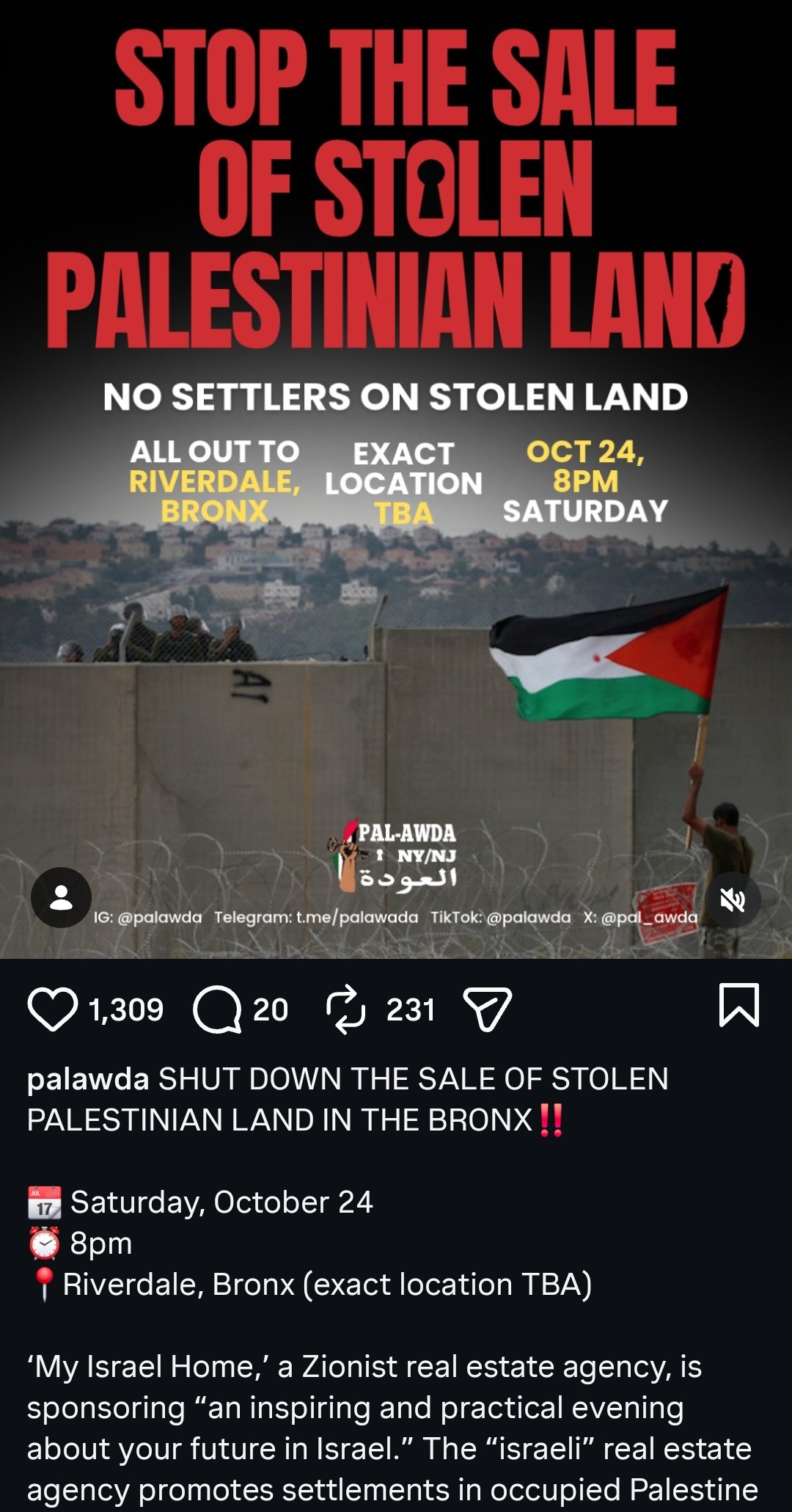
Pal-Awda is organizing a protest in Riverdale, Bronx, on October 24 to stop what it calls the sale of “stolen Palestinian land.” Its target is a Jewish real estate event organized by My Israel Home.
The accusation is enormous. The evidence is missing.
The protesters identify no stolen property, no dispossessed owner, no fraudulent deed and no evidence that anyone offering a home for sale acquired it unlawfully. They simply declare the land stolen and demand that the sale be stopped.
And what exactly makes a privately owned home “Palestinian land”?
There has never been an independent sovereign country called Palestine. Even if there had been, that would establish nothing about ownership of a particular house.
Imagine a homeowner in Dallas selling a house to someone from Los Angeles. Protesters descend on the transaction, shouting, “Stop the sale of stolen Dallas land!”
Stolen from whom? The homeowner? The city? Everyone who ever lived in Dallas?
Dallas describes an actual place. It does not own every home within its boundaries. A homeowner can sell to another person, regardless of where the buyer was born or lives.
The same is true in Judea and Samaria. Land owned by an Arab is the property of that owner, just as land owned by a Jew is the property of that owner. Lawful ownership can change hands. A property’s location or the ethnicity of its former owner establishes neither permanent ownership nor theft.
Pal-Awda previously celebrated forcing a Jewish gathering out of Queens. It targeted an event at a synagogue in Manhattan. Now it is targeting Riverdale, seeking to stop Jewish families from gathering to consider buying homes in Israel.
“It is our duty to make them think twice before holding these events. We need to make them scared! We need to make them scared! We need to make them scared.” – people at PAL-Awda protest in front of a synagogue event helping Jews move to Israel in November 2025
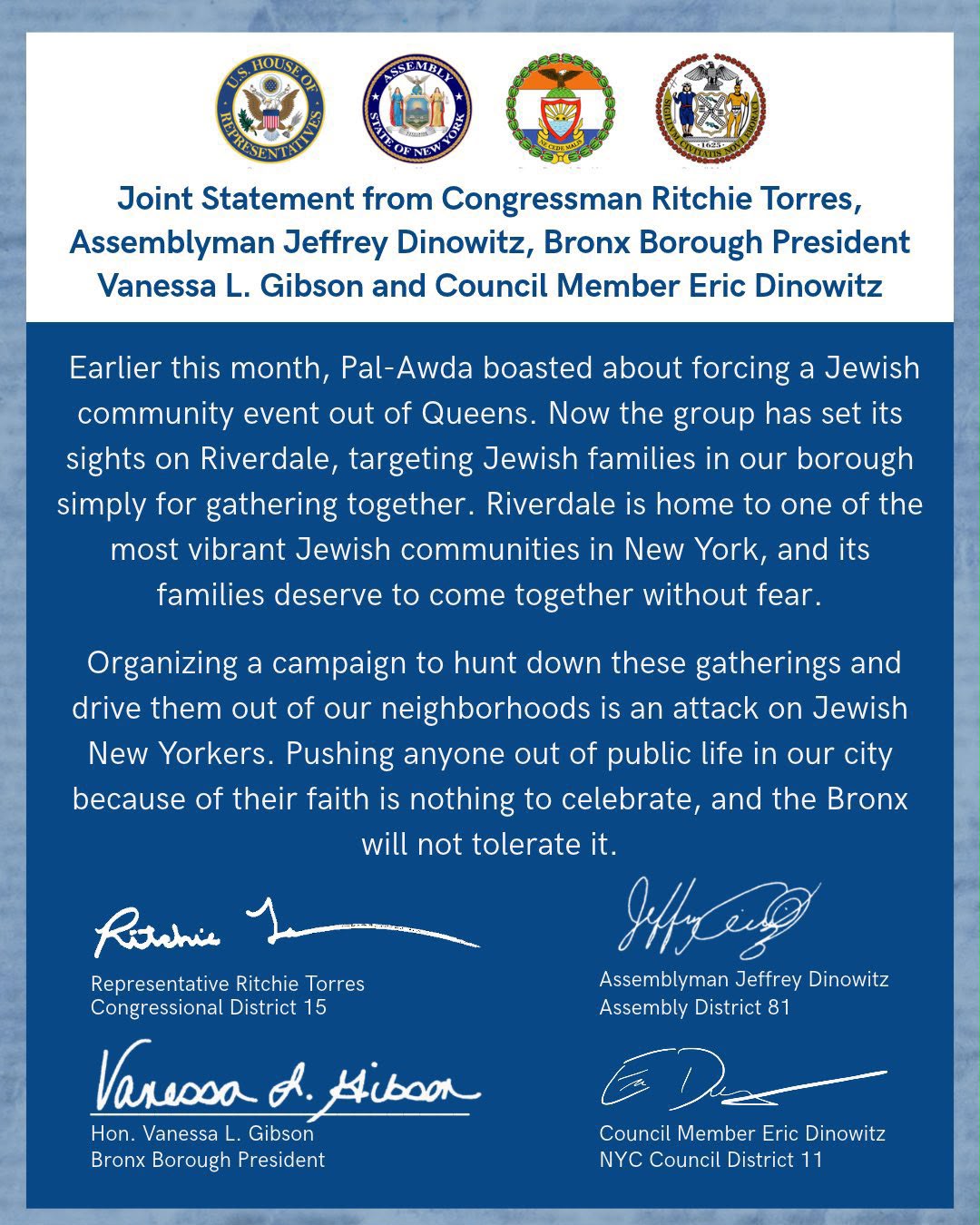
Congressman Ritchie Torres, Assemblyman Jeffrey Dinowitz, Bronx Borough President Vanessa Gibson and Council Member Eric Dinowitz condemned the campaign in a joint statement, calling it “an attack on Jewish New Yorkers” and declaring that “the Bronx will not tolerate it.”
The campaign has a documented pattern: targeting Jewish real estate gatherings, pressuring venues and celebrating when Jewish events are driven out of New York City. And this is in regards to ALL of Israel, as Pal-Awda has condemned all Jews making aliyah regardless of where they intend to live.
“Settler, settler, go back home, Palestine is ours alone!” – PAL-Awda’s Instagram
The protesters have identified no stolen home. But they have identified their target: Jews.
Simply allowing the event to take place is an inadequate response. The entire Riverdale community – Jewish and non-Jewish alike – should stand together in visible opposition to those who gather to harass and intimidate Jewish homebuyers. Elected officials who condemn antisemitism in statements should stand alongside the people being targeted.
Antisemites should never be allowed to decide where Jews can gather, where they can buy homes or whether they can live openly as Jews. Riverdale should make that unmistakably clear.
More than 100 Jews gathered in Brooklyn this month to plan a network of anti-Zionist synagogues, schools and summer camps. The emerging Jewish Diaspora Movement brought together people associated with Jewish Currents, Rabbis for Ceasefire, Jews for Racial & Economic Justice (JFREJ) and the American Council for Judaism. Rabbi Alissa Wise, formerly of Jewish Voice for Peace, is among its founders. Discussions included plans for a Jewish day school in Boston in 2029.
The gathering is part of a broader effort to reshape what future generations of American Jews learn about their religion, history and relationship to Israel.
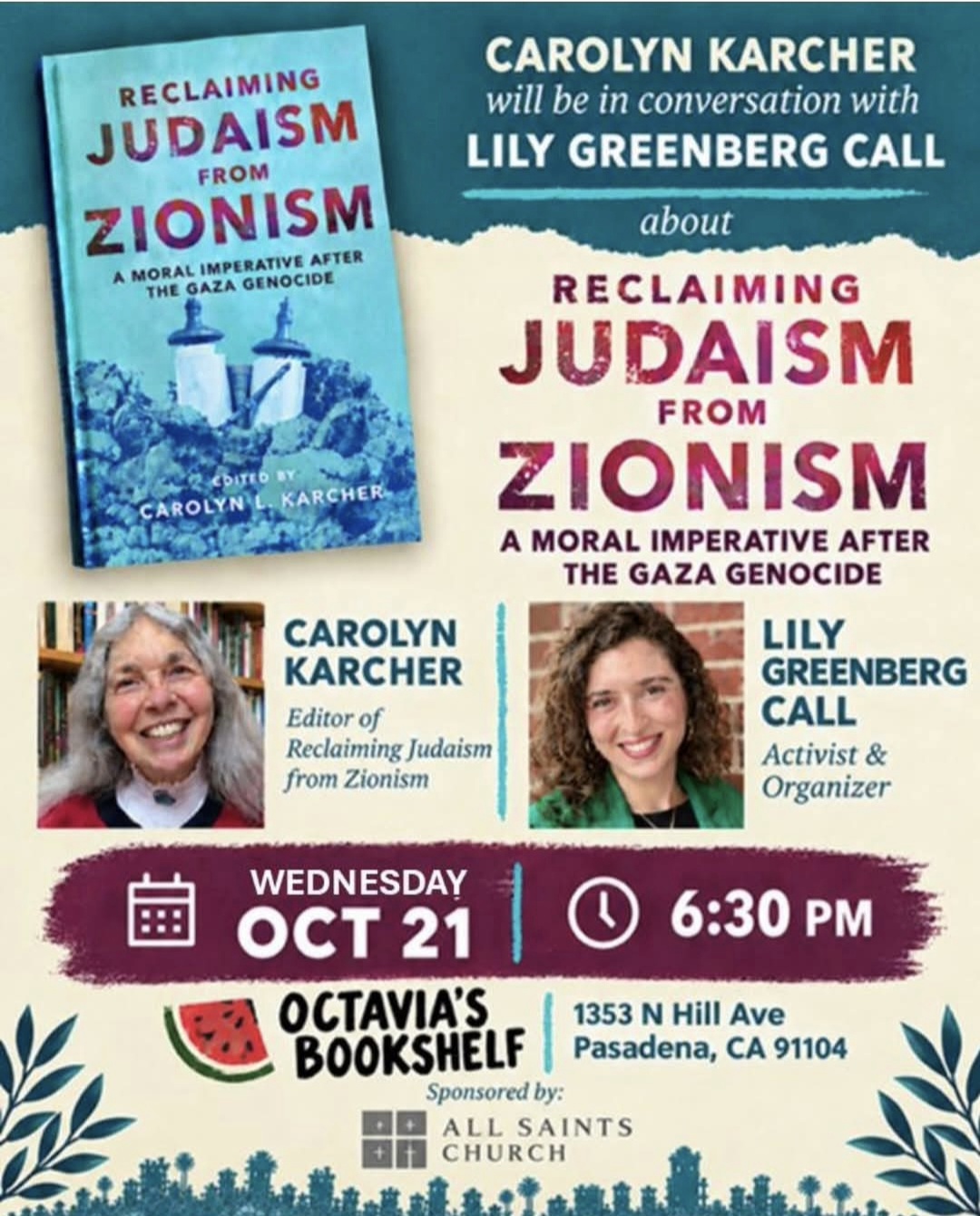
The “intellectual” groundwork is expanding. Temple University professor emerita Carolyn Karcher’s Reclaiming Judaism from Zionism, featuring 47 Jewish contributors, includes a guide encouraging readers to bring anti-Zionist arguments into synagogues and families. Pulitzer Prize-winning author Benjamin Moser’s Anti-Zionism: A Jewish History profiles twelve Jewish opponents of Zionism, placing their dissent within a longer Jewish intellectual tradition.
Jewish opposition to modern Zionism has a history. Jewish attachment to the Land of Israel has a far longer one.
Judaism is an ancient, land-based religion. Abraham traveled to Canaan. The Israelites returned from Egypt. Jerusalem became the center of Jewish worship. The Torah commanded pilgrimage to Jerusalem three times annually, during Passover, Shavuot and Sukkot. For millennia, Jews have prayed toward Jerusalem, mourned the destruction of its Temple and concluded the Passover Seder with the aspiration of returning there.
Opposing modern Jewish statehood is a political or theological position. Denying the Jewish people’s ancient connection to the Land of Israel is a historical falsehood. The distinction matters because Judaism’s scriptures, laws, holidays and prayers are rooted in a particular people and their ancestral homeland.
A Jew may reject God, violate Shabbat, oppose circumcision or denounce Israel and remain Jewish. Jewish belonging encompasses believers and atheists, the observant and secular, Zionists and anti-Zionists.
A Jew can reject a teaching of Judaism and remain Jewish. But that does not transform the rejection into a teaching of Judaism.
A Jew who eats ham makes a personal choice. A rabbi who certifies ham as kosher betrays the trust of Jews who rely on that certification to observe their religion. Similarly, a Jewish school that teaches children to deny their ancestral connection to Israel betrays the trust of parents who expect it to transmit Jewish history and tradition faithfully.
Jews who disagree with established organizations are free to create alternatives reflecting their beliefs. Existing institutions have the same right to preserve their missions. The Jewish identity of an institution’s founders establishes its origins. Its teachings and conduct determine whether it deserves the community’s trust.
Rabbi Brant Rosen, founder of the anti-Zionist congregation Tzedek Chicago, described his community as “consciously not an inclusive community.” His congregation establishes boundaries around its beliefs. Yet Open Hillel challenges Hillel’s restrictions on sponsoring organizations that advocate boycotts of Israel or reject its legitimacy as a Jewish state.
Hillel welcomes Jews across denominations, levels of observance and political beliefs while maintaining a mission that includes strengthening Jewish connections to Israel. Anti-Zionist congregations defend their own ideological boundaries while demanding that Hillel loosen its own. BDS supporters advocate withholding institutional support from organizations whose values they oppose, yet object when Jewish institutions apply similar standards to BDS.
At Emory Hillel, Rabbi Nikki Golomb was dismissed in August, weeks after beginning her position. She attributes the decision to her fiancé’s fierce criticism of Israel; Hillels of Georgia disputes that account, citing concerns about transparency and alignment with its mission. Golomb was affiliated with Rabbis for Ceasefire, founded by Alissa Wise. Whatever the disputed circumstances, Hillel has the right to expect its religious educators to uphold its mission.
Jewish disagreement has produced competing religious movements and institutions for centuries. But religious harm occurs when an institution entrusted with Jewish education misrepresents foundational elements of Jewish history or tradition. A school that teaches children to deny the Jewish people’s connection to Israel can legitimately have its claim to teach authentic Judaism challenged by the broader Jewish community. Opposition to modern Jewish sovereignty alone does not establish that denial.
Physical harm presents a separate and more urgent threshold. Organization that campaign to deprive threatened Jewish schools or synagogues of reasonable security protections, or to deny Israeli civilians protection against attack – like JVP, JFERJ, IfNotNow NYC and the American Council for Judaism – know that they expose Jewish lives to danger. The Jewish community has the right to challenge such conduct, withdraw communal recognition and support, and defend institutions that faithfully serve their missions.
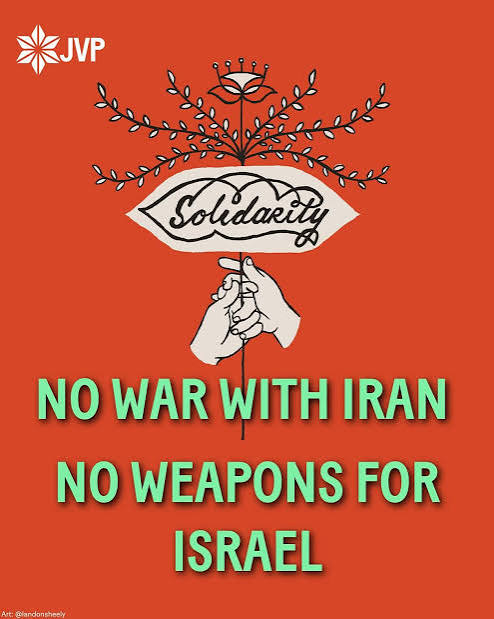
Jewish Voice for Peace is against defensive weapons for Israel
Every Jew belongs to the Jewish people. Every institution founded by Jews does not automatically speak for Judaism. And when an institution uses the Jewish name to falsify Jewish history, betray Jewish trust or endanger Jewish lives, the Jewish community has a responsibility to confront it.
Jewish law still sanctions Jews who deliberately harm other Jews. Why has the community become so reluctant to consider that authority when the harm threatens thousands or millions?
In 1656, the Jewish community of Amsterdam excommunicated a 23-year-old philosopher named Baruch Spinoza (1632–1677). Its leaders pronounced a devastating herem, a religious ban that severed him from communal Jewish life. Members were forbidden to associate with him, speak with him or read his writings. The condemnation became one of the most famous excommunications in Jewish history.
For centuries, Jewish communities disciplined members whose conduct threatened religious obligations or communal life. Jewish law developed several levels of sanctions, most notably nidui and herem.
Nidui was the lesser punishment, a form of temporary religious and social ostracism, traditionally lasting 30 days in diaspora (non-Israel) communities. It restricted ordinary social interaction, sometimes requiring others to maintain a distance of four cubits, roughly six feet. Its purpose was to induce repentance and correction of the offending behavior.
Herem was more severe, imposing deeper and potentially indefinite exclusion from communal life. Depending on the circumstances, it could restrict social relationships, commercial dealings and religious participation. In tightly integrated Jewish communities, exclusion could devastate a person’s livelihood and standing in society.
Maimonides, the Rambam (1138–1204), enumerated 24 grounds for nidui in his Mishneh Torah. They included maintaining dangerous conditions, such as a vicious dog or unstable ladder; refusing to obey a religious court; and preventing the public from performing a commandment.
That last provision is particularly important. Jewish law recognized that obstructing a community’s religious obligations could warrant religious discipline.
These sanctions remain part of modern Jewish life. Orthodox communities still employ religious and social pressure against husbands who refuse to grant their wives a get, the Jewish divorce document required for remarriage under Jewish law. When a rabbinical court determines that a husband must grant a get and he refuses, communal measures may include exclusion from synagogue honors, religious gatherings and other forms of participation. Depending on the circumstances, formal nidui or herem may also be considered.
The Organization for the Resolution of Agunot (ORA) organizes communal pressure against recalcitrant spouses, including public demonstrations and campaigns encouraging synagogues to impose restrictions, with appropriate rabbinic authorization.
Jewish communities recognize that one Jew’s deliberate conduct can cause another such serious harm that communal intervention becomes necessary. Yet these sanctions are rarely discussed when the threatened harm extends beyond an individual to an entire Jewish community.
A husband who refuses a get may face public ostracism for trapping one woman in a marriage. What of a Jew who deliberately works to prohibit circumcision, obstruct synagogue security or prevent entire communities from fulfilling religious commandments?
Three fundamental obligations provide a framework: protecting Jewish lives, preserving religious observance and sustaining Jewish communal continuity.
Protecting Jewish Lives
Jewish law places the preservation of human life, pikuach nefesh, above almost every other religious obligation. Leviticus commands, “Do not stand idly by the blood of your neighbor.” The Talmud extends this principle into an affirmative obligation to rescue someone facing danger.
The clearest case involves a Jew knowingly facilitating violence against other Jews or deliberately obstructing their rescue from an immediate threat. Such conduct directly violates the obligation to protect human life and demands serious religious and communal accountability.
Consider a person deliberately sabotaging essential security at a synagogue or yeshiva facing credible threats. Jewish institutions increasingly depend on trained guards, controlled entrances and protective infrastructure. Knowingly interfering with necessary safeguards could expose worshippers and children to foreseeable danger.
A related question arises when someone campaigns to eliminate protective buffer zones around synagogue or school entrances. Where violent intimidation or obstruction threatens access, removing necessary security measures could endanger the community.
The issue becomes more complicated when the discussion moves to Israel’s national defense. Israeli missile-defense systems, including Iron Dome, David’s Sling and Arrow, protect civilians against incoming rockets and missiles. Campaigning to eliminate essential defensive capabilities without adequate alternatives could foreseeably increase the danger to millions of people.
Broader opposition to American military assistance to Israel presents a less direct case. Military assistance encompasses different weapons, defensive systems and strategic objectives. A Jew who advocates eliminating defensive funding despite a demonstrated threat raises different questions from someone disputing a particular military appropriation.
Jewish law has long required Jews to address threats to human life. Religious authorities should be prepared to examine whether deliberately undermining essential security, whether at a synagogue or across Israel, violates that obligation.
Protecting Jewish Religious Observance
A Jewish community can endure poverty, exile and political upheaval while preserving its identity through religious practice. The covenant of circumcision, the laws of kashrut, prayer, Torah study and communal institutions have sustained Jewish life across generations.
Maimonides explicitly includes preventing the public from fulfilling a commandment among the grounds for nidui. This provides a classical foundation for examining deliberate interference with Jewish observance.
Consider a Jew actively working to outlaw brit milah, the covenant established with Abraham. A successful prohibition would directly prevent Jews from performing one of their foundational commandments. A campaign specifically intended to achieve that result should invite serious halachic examination.
A campaign to prohibit kosher slaughter, shechita, presents a similar concern. Such a law would prevent traditional ritual slaughter within the jurisdiction and could make religious observance substantially more difficult.
The same questions arise when Jews advocate prohibitions on synagogue worship, Torah education or the construction of religious facilities such as mikvaot. Restrictions on kippot and other religious clothing can also interfere with Jewish practice, depending on their scope.
These are precisely the kinds of conflicts in which religious authorities should examine whether conduct constitutes the deliberate obstruction of commandments. Where a recognized court determines that a violation warrants nidui, continued defiance may raise the question of stronger sanctions under Jewish law.
Further along the spectrum lies the controversy over government funding for yeshivas. Some advocates want public funding conditioned on students meeting secular educational standards in English and mathematics. Such requirements may create financial pressure on religious schools, while educational oversight also serves legitimate public purposes.
Jewish law must distinguish legitimate public oversight from deliberate obstruction of religious commandments. Where that boundary is crossed, religious authorities should be prepared to act.
Protecting Jewish Communal Continuity
The Jewish connection to the Land of Israel is integral to Judaism. Jerusalem occupies a central place in Jewish prayer, religious memory and law. Nachmanides, the Ramban (1194–1270), regarded settling the Land of Israel as a positive biblical commandment, although later authorities have debated its precise scope and application.
Consider a Jew advocating a prohibition on Jewish immigration to Israel. Such a restriction would interfere with the ability of Jews to settle in their ancestral homeland, an act that major halachic authorities regard as religiously significant.
Preventing Jews from visiting or praying at their holy sites raises related questions about religious access and worship. Restrictions on Jewish homeownership introduce another dimension, particularly where they specifically target Jewish purchasers.
These concerns are already entering American legislation. In October 2026, Representative Joaquin Castro introduced the Stop the Settlements Act, backed by dozens of Democratic lawmakers. The bill would impose sanctions on certain foreign persons involved in “settlement” activities and prohibit imports from covered settlements. Its reference to the West Bank raises a disturbing question: Would eastern Jerusalem, including the Jewish Quarter of the Old City, fall within its reach?
If so, Jewish organizations involved in purchasing and renovating homes, restoring historic synagogues such as Tiferet Yisrael, or supporting archaeological projects at the City of David could face sanctions-related consequences. The bill leaves critical questions about its application to these activities unresolved. Its sponsors should be required to explain whether Jewish religious and communal institutions in Jerusalem could become targets.
The possibility that American Jewish lawmakers would support legislation reaching Jewish religious institutions in Jerusalem is extraordinary. If Jews knowingly work to obstruct other Jews from maintaining synagogues, owning homes or fulfilling religious obligations in Jerusalem, why should their conduct escape the scrutiny of Jewish law?
Rep. Sara Jacobs (D-CA) co-sponsored the Stop the Settlement Act
Further along the spectrum are efforts to boycott Israeli universities, exclude Israeli rabbis or educators, or discourage purchases of Israeli goods. Such actions may weaken educational, economic and communal relationships, although their connection to established grounds for nidui is less direct.
The case for religious sanctions is strongest where conduct directly obstructs an identifiable commandment or violates another established halachic obligation.
From Nidui to Herem
Jewish communities have historically imposed sanctions on individuals and movements. In 1772, rabbinic authorities associated with the Vilna Gaon (1720–1797) supported bans against the emerging Hasidic movement, a precedent that also illustrates the danger of communal authorities misjudging religious differences. Today, institutions such as Hillel restrict partnerships with organizations supporting BDS such as Jewish Voice for Peace, while the Conference of Presidents rejected J Street’s membership application in 2014. Between silence and herem lies a range of communal measures, from public censure to restrictions on institutional membership and leadership. These measures require clear standards and responsible authority.
The Jewish community is fraying. Its religious institutions, security and connection to Israel face growing internal conflict. Jewish law already recognizes that deliberate harm to another Jew can warrant communal sanctions. Qualified religious leaders should be prepared to examine serious violations, distinguish them from political disagreement and apply appropriate measures where justified.
If Jewish law can sanction a man for trapping one Jewish woman in a marriage, how can Jewish leadership refuse even to consider sanctions against those who deliberately endanger Jewish communities or obstruct their commandments?
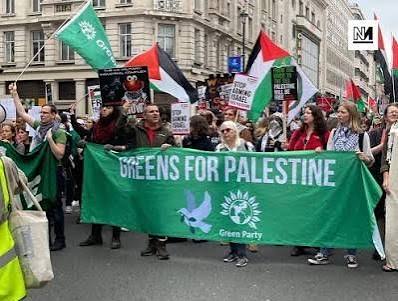
The Green Party charted a new course in British politics, calling for an end of the Jewish State of Israel and demanding a boycott of the country until it allows millions of Arabs into the territory and become a binational state. The alt-left group was immediately rebuked by members of the other British political parties.
Labour’s Bridget Phillipson, the equalities minister said the Green vote “crosses a line” and was “fundamentally wrong.” She explicitly connected her objection to the two-state solution saying “It is shameful to vote against a two-state solution for Israel and Palestine.”
David Pinto-Duschinsky, centre, and Bridget Phillipson, right, meet with Jewish school in London with the school’s headteacher
Conservatives shadow home secretary Chris Philp said of the Green vote “I think that’s completely wrong.” He called the resolution a “stereotypical and potentially antisemitic characterisation” and said the Greens needed to do more to combat antisemitism in their ranks. The Conservative Party subsequently issued an even more directly relevant statement through Philp: “British Jews should not have to disclaim a belief in Jewish self-determination and the existence of Israel.”
Liberal Democrats MP Luke Taylor MP said “This is a divisive motion that pours fuel on the fire of tensions in the UK,” and said it would leave many British Jews feeling less safe. Lib Dem foreign-affairs spokesman Calum Miller called the Green vote “deeply wrong” and a “deeply harmful failure of judgement.” Former leader Tim Farron said the Greens had been “captured.”
Green councillor Hau-Yu Tam (centre) pictured alongside Green Party deputy leader Zack Polanski (left). Photo Credit: London Green Party
“Zionism is pure evil and must be abolished.” “Zionism was undoubtedly and unquestionably the Nazism of our time.” – Green Party’s Hau-Yu Tam
Perhaps it is therefore time to move beyond making statements about the Green Party vote and push forward clear countering platforms: one that unequivocally expresses support for British Jews and their heritage and history in the Jewish Promised Land. And a second that declares that every country – including Israel – has an unambiguous right to decide who to permit into its country and to admit as citizens. As such, there is absolutely no so-called “right of return” of descendants of Arabs who once lived in the territory of Israel.
The Greens put their position to a vote. Now Labour, the Conservatives and Liberal Democrats should do the same. At their next party conferences, each should introduce resolutions affirming these two simple principles.
Condemning the Greens is easy. Put the alternative on the ballot and let British political parties tell the country – and British Jews – where they actually stand.
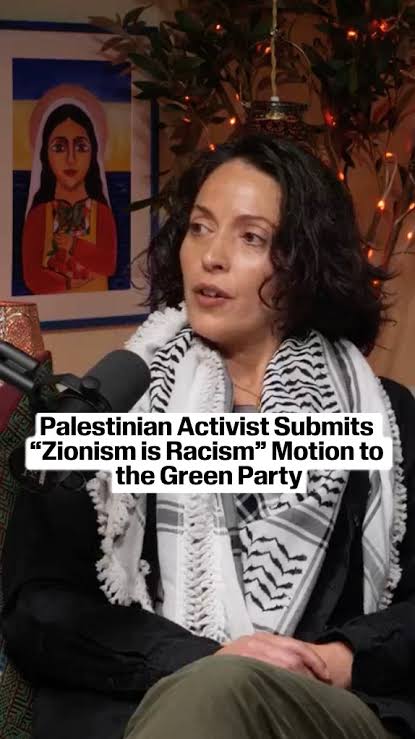
On October 4, 2026, as Jews marked Simchat Torah and the third Jewish-calendar anniversary of the Hamas-led massacre that killed about 1,200 people and saw 251 taken hostage, Britain’s Green Party voted to declare Zionism a form of racism.
By 1,022 votes to 813, the party formally declared itself anti-Zionist and endorsed replacing Israel with a single Palestinian state throughout the pre-1948 region of Palestine.
An earlier vote at the same conference was even more revealing about the party’s attitude towards Jews.
Jewish Green member Sam Alston proposed an amendment protecting Jewish members from being pressured or disciplined because they belonged to synagogues and other Jewish institutions associated with Zionism. He warned that without such protection the policy could result in “indirect religious discrimination.”
The Greens rejected his safeguard, 1,026 to 684.
So at this same conference, Jewish members were provided a safe room because some feared for their safety during the debate about Jews and the Jewish State, while rejecting their proposed protection from its new racism policy.
“We continue to see antisemitic sentiment appearing with increasing frequency,” – Laurence Taylor, the head of counter-terrorism policing
There may also be a legal problem.
Adam Wagner KC, a prominent British human-rights barrister, has warned of a “strong risk” that the resolution contravenes the Equality Act 2010. British law protects qualifying philosophical beliefs, and Wagner argues that Zionism is likely capable of qualifying for that protection.
There is already precedent from the other direction. David Miller, the former University of Bristol professor, successfully established before an employment tribunal that his anti-Zionism qualified as a protected philosophical belief under the Equality Act. Greens for Palestine cited the Miller case in defending anti-Zionist beliefs before the conference.
British law may already protect both the anti-Zionist and the Zionist.
The Green Party is no longer a fringe environmental entity. Membership has surged above 200,000, tripling its total in a single year.
Their electorate also looks markedly different from Britain as a whole. Analysis of the 2024 Green vote found an average age of 42 compared with 49 across the electorate. Green voters were more female, much more likely to be university graduates and less likely to own their homes. They were also twice as likely to be Muslim – 6 percent versus 3 percent nationally – and considerably more likely to have no religion.
The two conference votes reveal something more troubling.
While the voters against Zionism and protection for Jews stayed roughly the same – 1,022 and 1,026, respectively – 16 percent of those supporting Israel did not vote on protections for Britain’s Jewish community.
That leaves a question extending well beyond this conference: As hostility to Zionism moves deeper into the politics of the alt-left, who will insist on protecting Jews whose religious and communal lives remain connected to it?
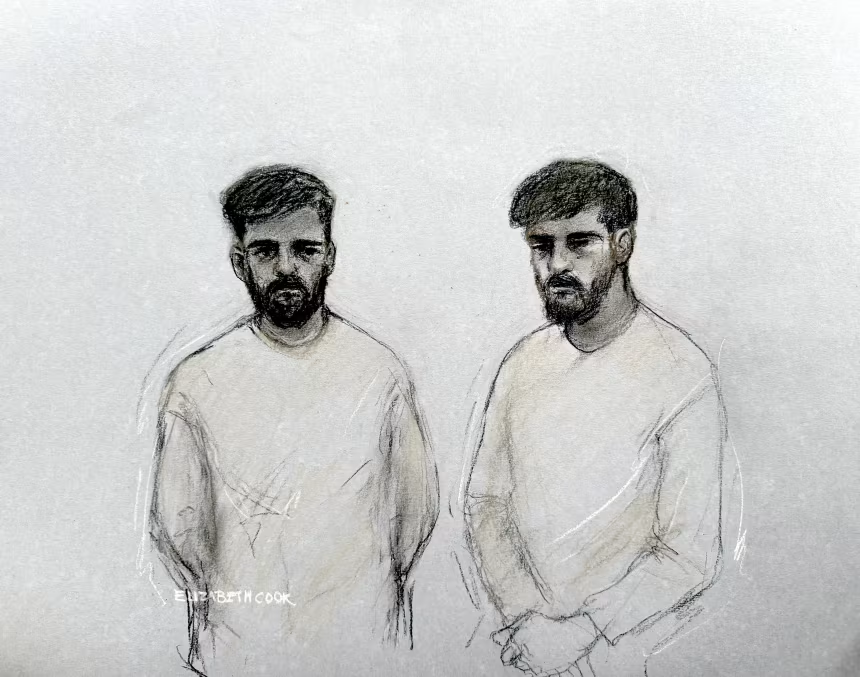
Two Iranian men – Salam Ahmadyan, 36, and Rahman Salehi, 34 – charged with attempting to bomb a synagogue in Manchester on Yom Kippur 2026, one year after other Jews were stabbed to death in the city
This Simchat Torah, I keep thinking about what is missing.
For some families, the absence is unbearable and permanent. A child, a parent, a spouse, a friend who was alive on the last Simchat Torah before October 7 and is no longer here. Every holiday marks time, but an anniversary holiday also measures absence. Another year has passed. Another place at the table remains empty. Another circle forms with someone missing from it.
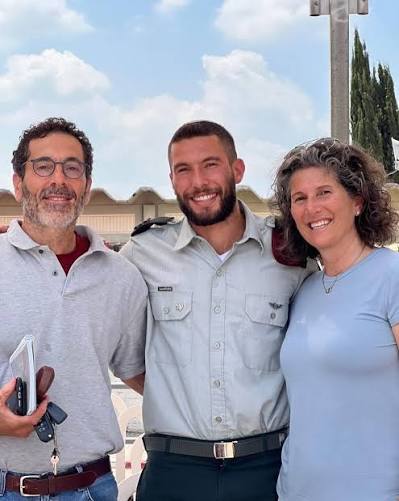
Aryeh Ziering with his parents, killed as he responded to the massacre by Gazans on October 7, 2023
Loss is embedded in Simchat Torah itself. We reach the end of the Torah and lose Moses.
The man who confronted Pharaoh, led us through the sea, brought down the commandments and carried an impossible people through the wilderness does not cross into the Jewish Promised Land. The Torah does not soften his death or pretend it did not happen. It records it and we read it aloud.
Moses seeing the Promised Land before he dies by James Tissot (1896-1902)
Over the past three years, other things have felt as though they have gone missing as well.
I have watched context disappear from too much of the media coverage of Israel and the Middle East. Iran can threaten Israel and the region through proxies, missiles and terrorism, yet somehow vanish from the frame through which individual events are reported.
I have watched the United Nations lose all credibility as an institution capable of treating Israel with the same standards it applies elsewhere. Its institutions can devote extraordinary attention to Israel while regimes and movements that openly threaten Jews and Israelis often recede into the background.
I have watched universities where “Globalize the Intifada” could become part of the vocabulary of protest after Jews had just experienced the deadliest day since the Holocaust. A recent report on American antisemitism could devote enormous attention to Israel, Palestinian Arabs, race and politics while ignoring the jihadist antisemitism that helped produce October 7 in the first place.
And increasingly, I wonder whether I am losing the Democratic Party I knew.
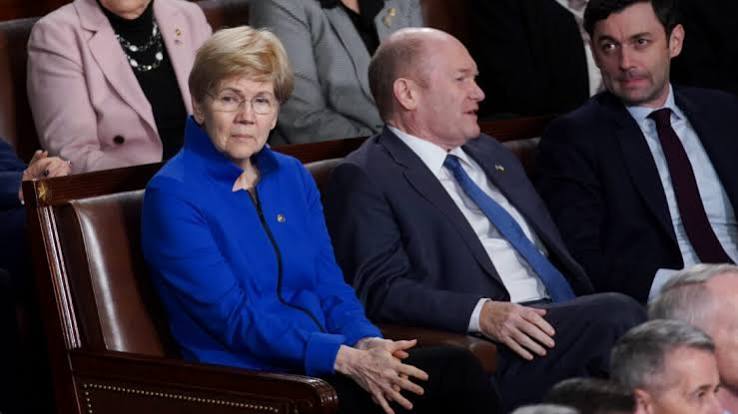
Senator Chris Coons is not someone I associated with the anti-Israel fringe. Yet he spearheaded legislation that would authorize American sanctions connected to construction in E1, including against foreign persons who simply submit bids for construction tenders. Threatening private parties with the force of the American financial system for bidding on residential construction near Jerusalem represents a place in that debate I never expected mainstream Democrats to reach.
Senators Elizabeth Warren and Chris Coons threaten financial retribution against firms considering building residential homes in Jerusalem suburbs
Some losses happened in a morning. Others have accumulated slowly enough that it took me time to recognize them.
Judaism does not ask us to pretend that loss isn’t real. The Torah certainly doesn’t.
Moses dies. But then we do something remarkable.
We don’t pause to mourn Moses on Simchat Torah. We stand up, sing and dance. We lift the Torahs and our children. And when we have read the Torah’s final words, we refuse to leave the scroll there. We immediately return to Bereishit, to the beginning.
We don’t erase the loss or manufacture comforting explanations for it. We don’t avert our eyes from the people and institutions we have lost or from the lessons their loss may teach us. But neither do we build our lives around the empty spaces.
That may be the lesson I need most this Simchat Torah.
Notice who is missing. Remember them. Look clearly at what else we have lost since October 7 and understand why. Fight where something worth preserving can still be preserved.
Then look around the circle and see who is still there. Hold them a little closer.
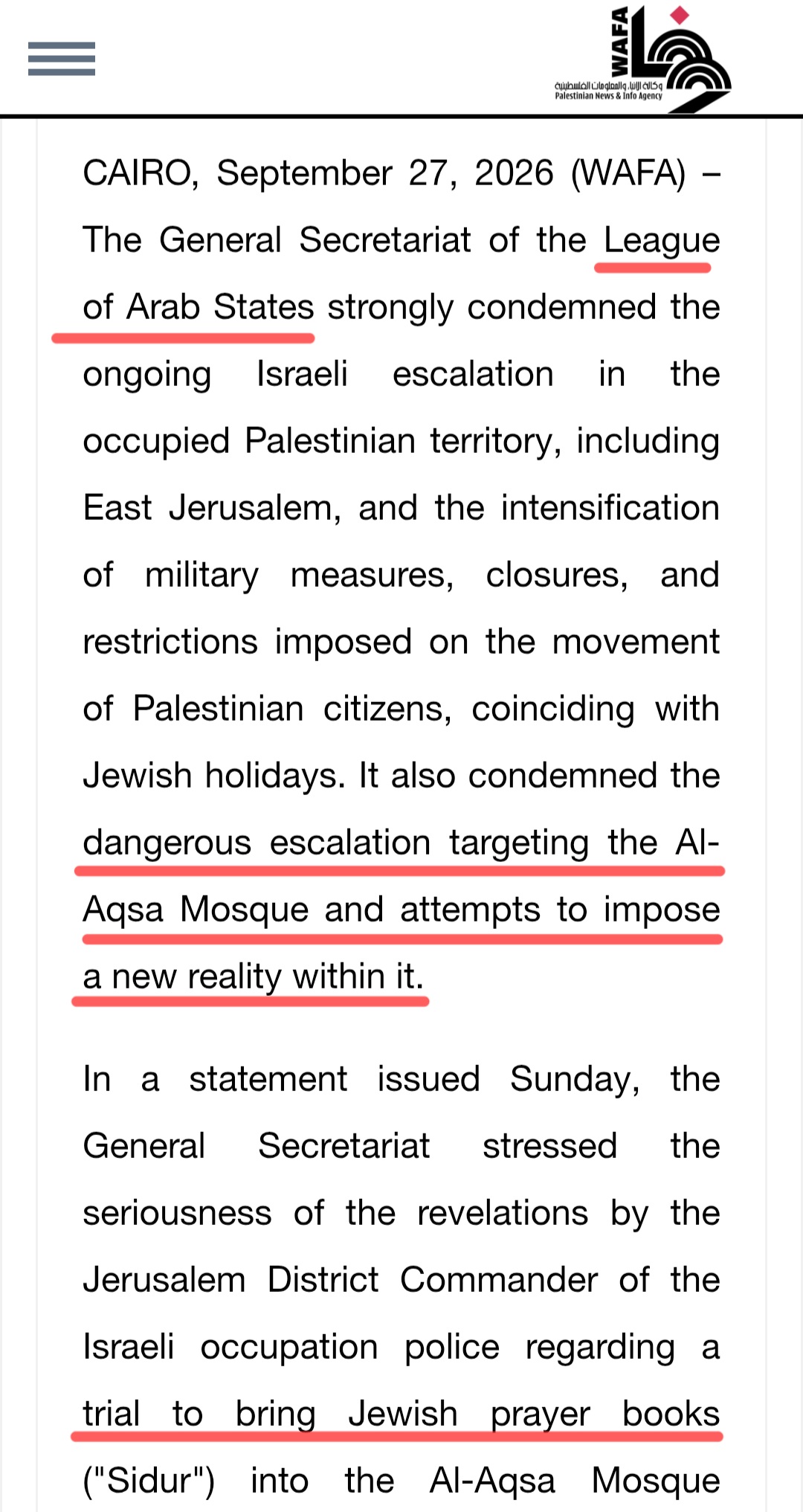
A Jewish prayer book is now a “highly dangerous development” in the Middle East according to the region’s Muslim leaders.
That was the Arab League’s description Sunday of reports that Israeli police are testing allowing Jewish prayer books — siddurim — onto the Temple Mount. The League warned that allowing them could establish new Jewish religious practices and alter the “historical and legal status quo.”
It wasn’t the only alarm sounded during Sukkot.
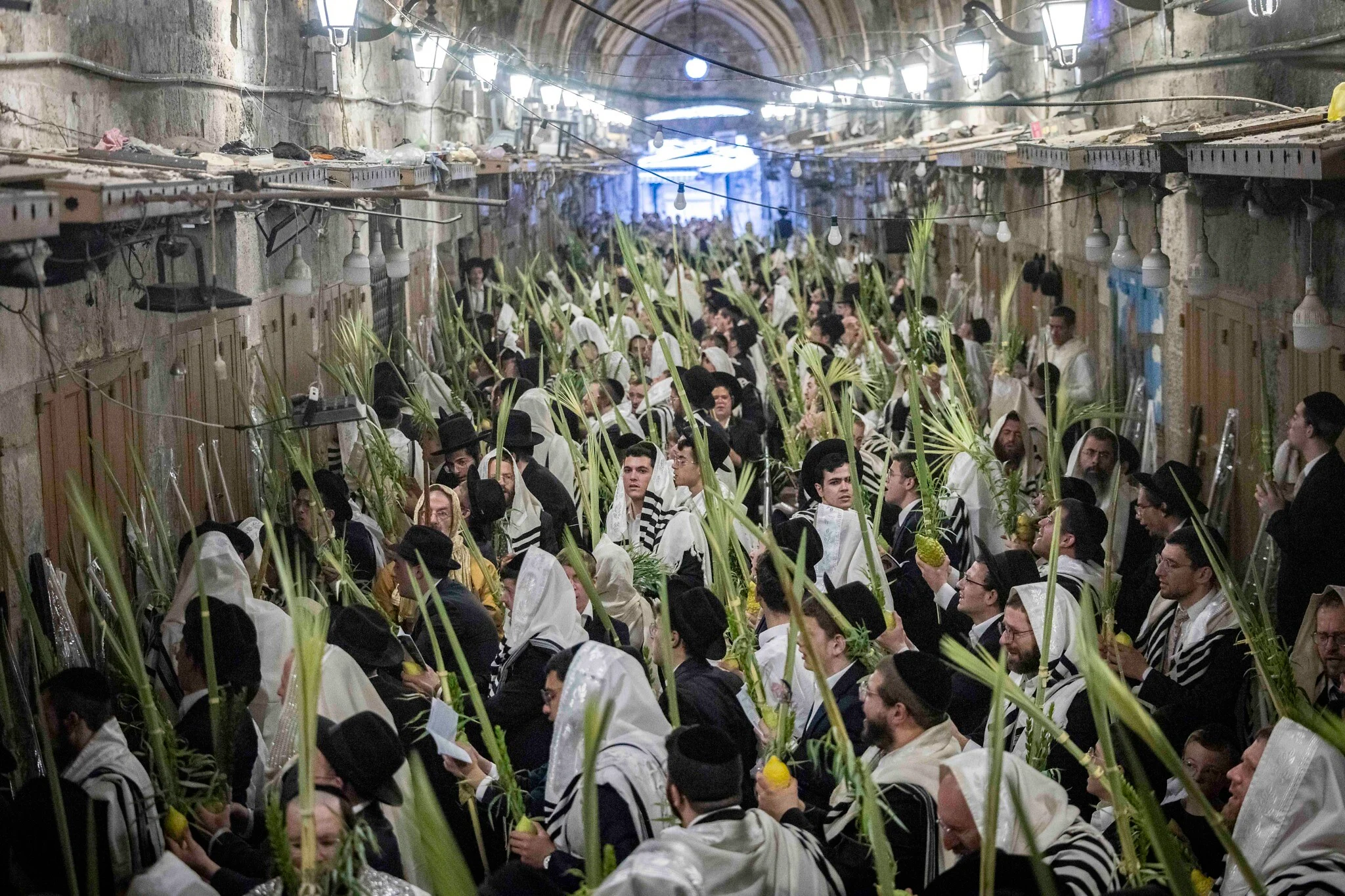
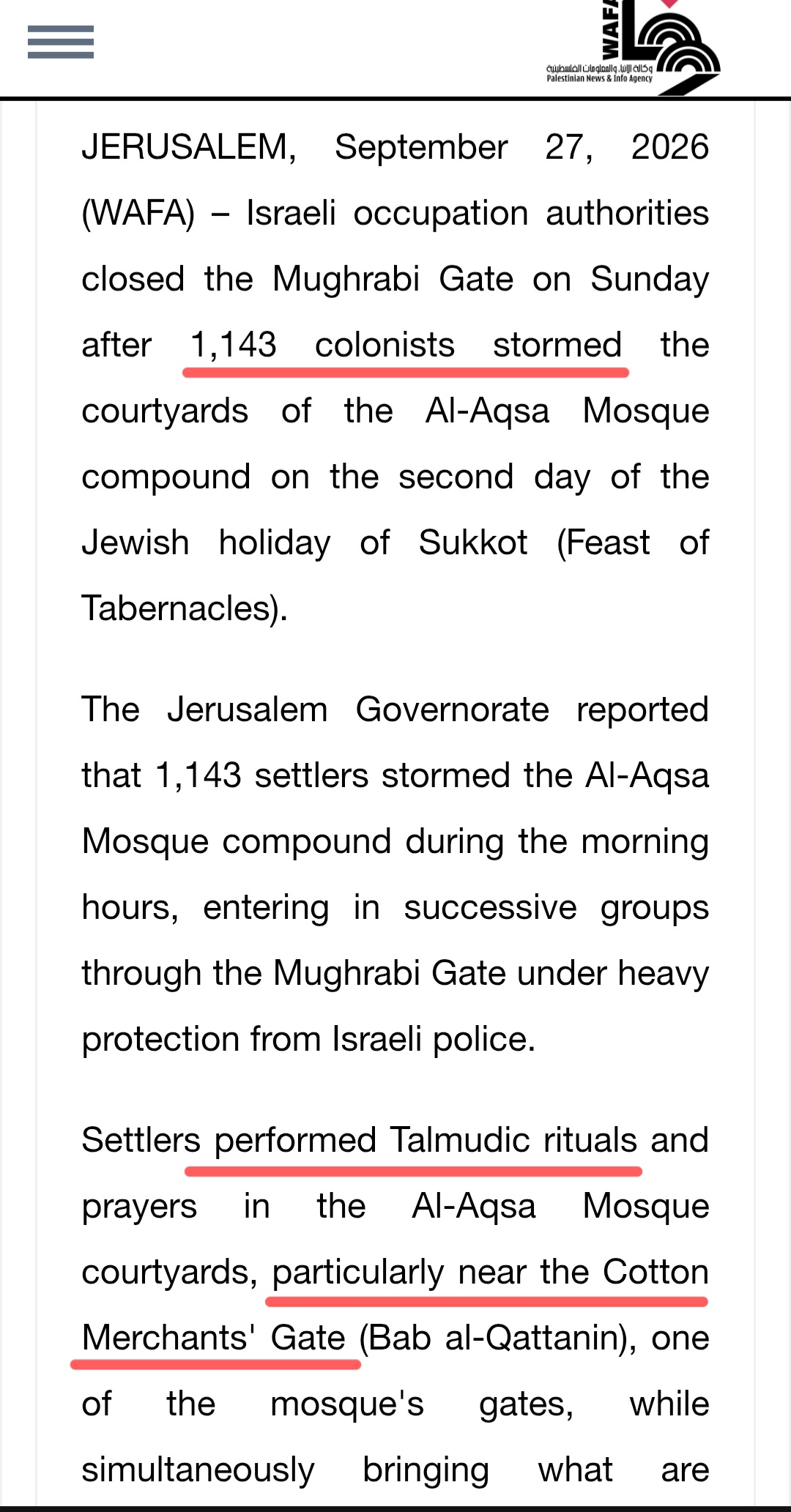
Over 1,000 Jews visited the Temple Mount on Sunday, with some openly praying and carrying the Four Species.
For perspective, roughly 80,000 Muslims attended the first Friday prayers at Al-Aqsa during Ramadan earlier this year. In normal years, Ramadan Friday attendance can reach 200,000.
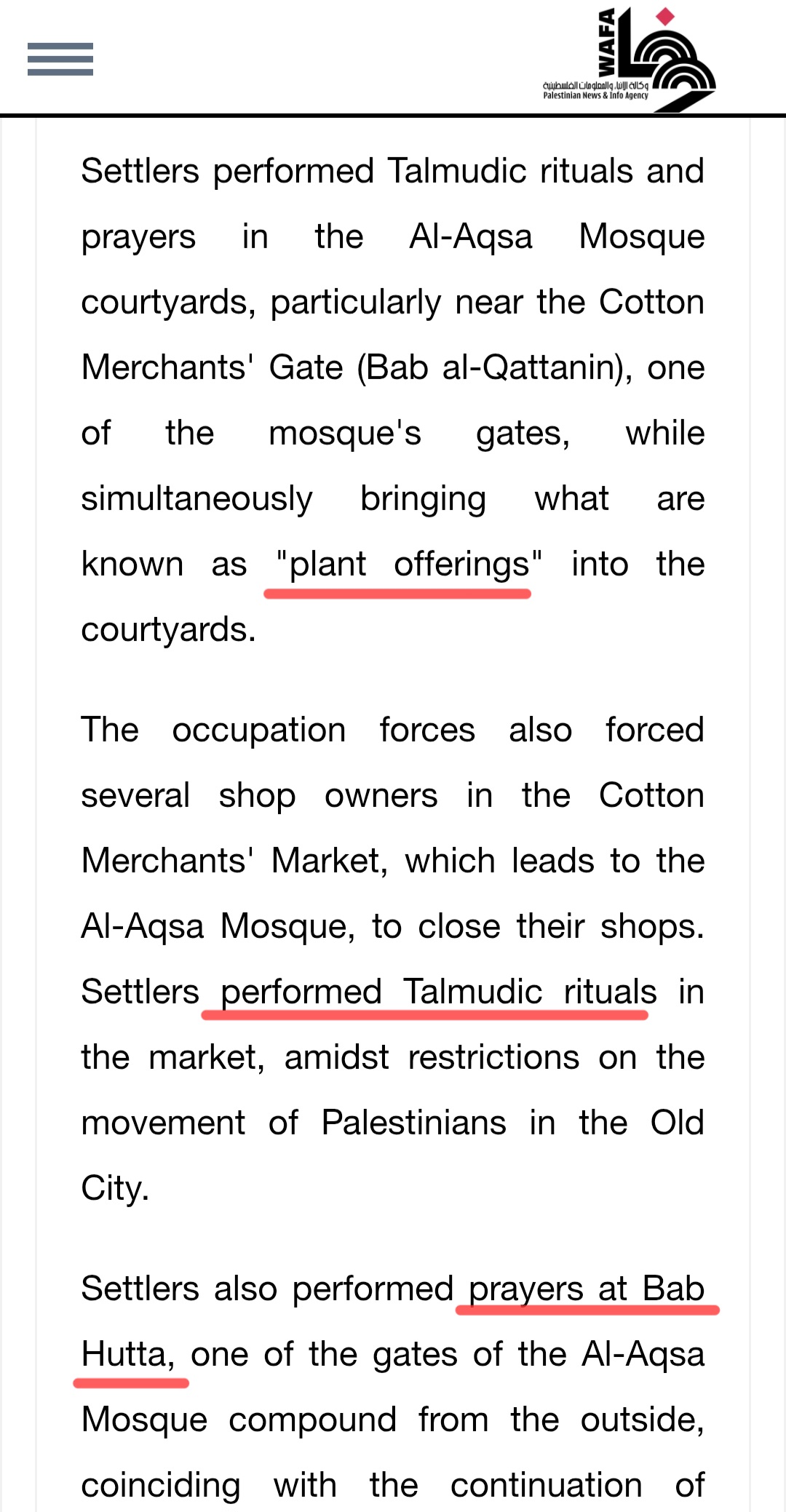
For the Muslim world, Muslims were “worshippers” while Jews were “extremist” Israelis conducting “Talmudic rituals.”
Jewish men covered in prayer shawls hold the Four Species as they take part in morning prayers during the holiday of Sukkot at the Cotton Merchant’s Gate entrance to the Temple Mount in Jerusalem’s Old City, September 27, 2026. (Chaim Goldberg/Flash90)
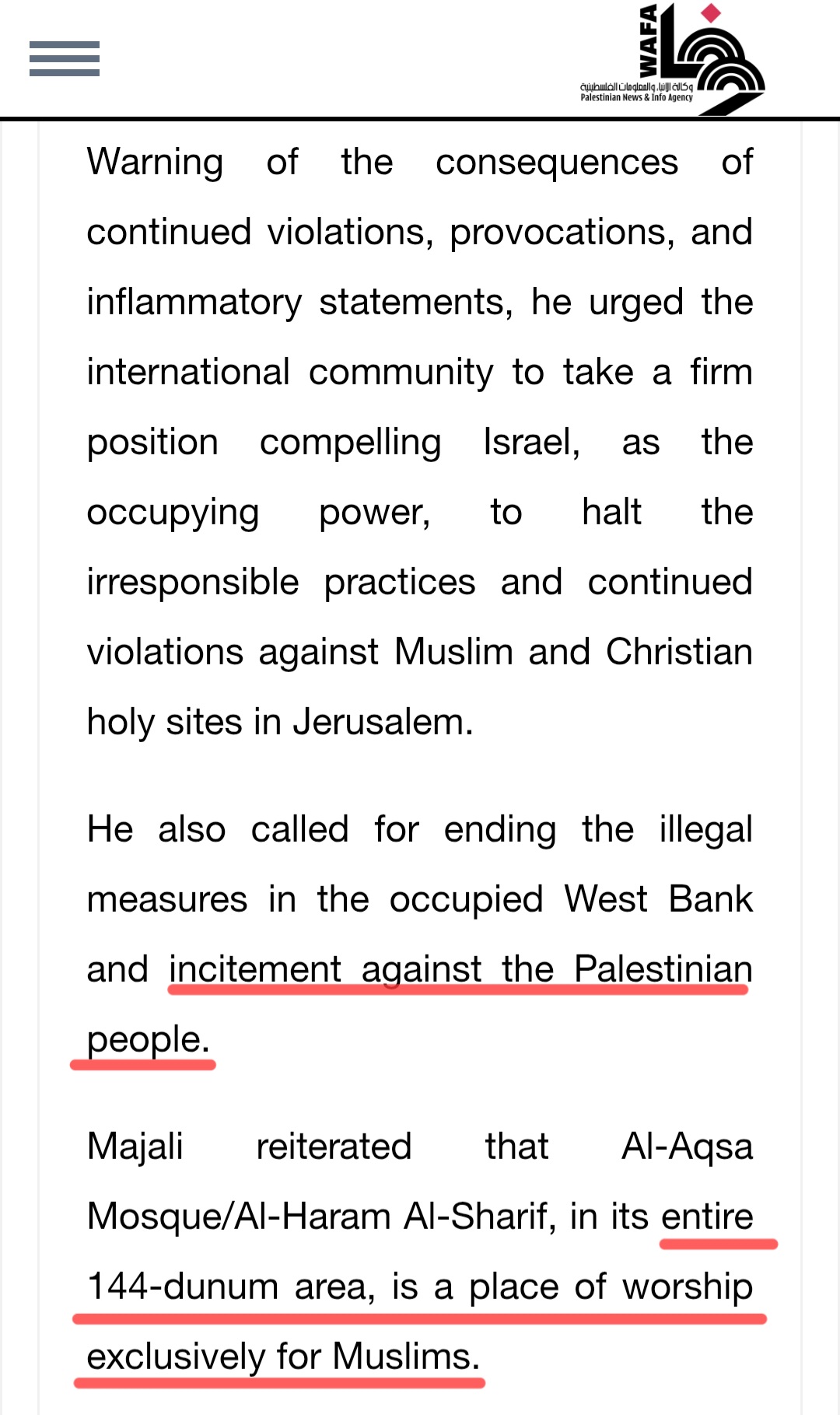
Palestinian Authority spokesman Nabil Abu Rudeineh warned that Israel risked transforming the political conflict into a “religious war.” He declared the entire 144 dunams of the Temple Mount an exclusively Muslim place of worship that cannot be divided or shared.
The reaction extends well beyond the Palestinian Authority.
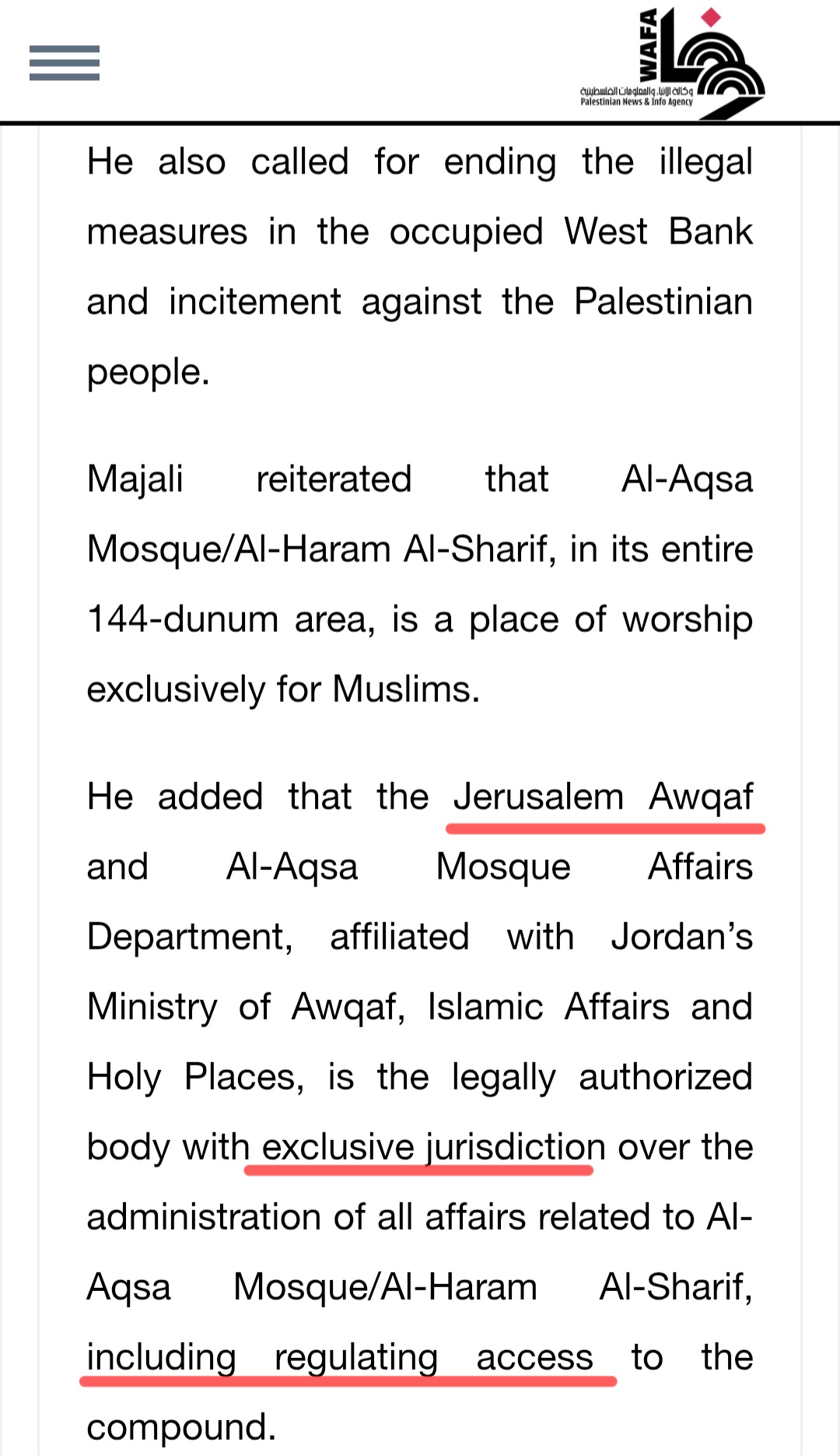
Jordan condemned Sunday’s Jewish visits and again declared all 144 dunams exclusively Muslim. And Turkey, Egypt, Indonesia, Jordan, Pakistan, Qatar, Saudi Arabia and the United Arab Emirates have jointly used the same formulation: the entire compound is exclusively for Muslim worship and the Jordanian Waqf has exclusive jurisdiction to administer it and regulate entry.
Three weeks ago, I wrote about the effort to redefine the Temple Mount “status quo,” transforming restrictions on Jewish prayer into a broader claim that the entire compound is exclusively Muslim.
Sukkot takes the story further.
There is no question that Israel is changing its own practice. For decades, Israeli governments maintained the policy that Muslims prayed on the Temple Mount while non-Muslims visited. Israeli police restricted Jewish prayer and barred siddurim and other Jewish religious objects.
Israel observed those restrictions for decades. But it never enacted a permanent statutory ban on Jewish prayer or agreed that the entire Temple Mount would forever be exclusively Muslim.
Now Israel is allowing some Jews to worship at Judaism’s holiest site.
The response is not simply a demand that Israel return to its previous practice. Multiple Muslim governments are declaring that all 144 dunams are exclusively Muslim. The possibility of a Jew carrying a siddur is described as a “desecration of its sanctity,” and jihadi calls for a “religious war.”
And this is happening during Sukkot, one of Judaism’s three biblical pilgrimage festivals, historically centered on Jews traveling to Jerusalem and the Temple. Jews were making pilgrimage there during Sukkot more than a thousand years before Islam existed.
A small number of Jews praying peacefully at their holiest site during their pilgrimage holiday is used as incitement to jihad. And Muslim governments demanded that the “international community” take actions against the Jews.
Perhaps it is time for the international community to explain to radical Islamists what coexistence means.
One points to June 1967 for borders, East Jerusalem and the West Bank.
Another points to 1948 for refugees and their descendants.
Another reaches to 1947, before the United Nations proposed dividing Mandatory Palestine into Jewish and Arab states.
Another reaches to 1917, before the Balfour Declaration endorsed a Jewish national home in Palestine.
And when even that is too late, the clock can be wound back to the Ottoman era, when Palestine was governed by a Muslim empire.
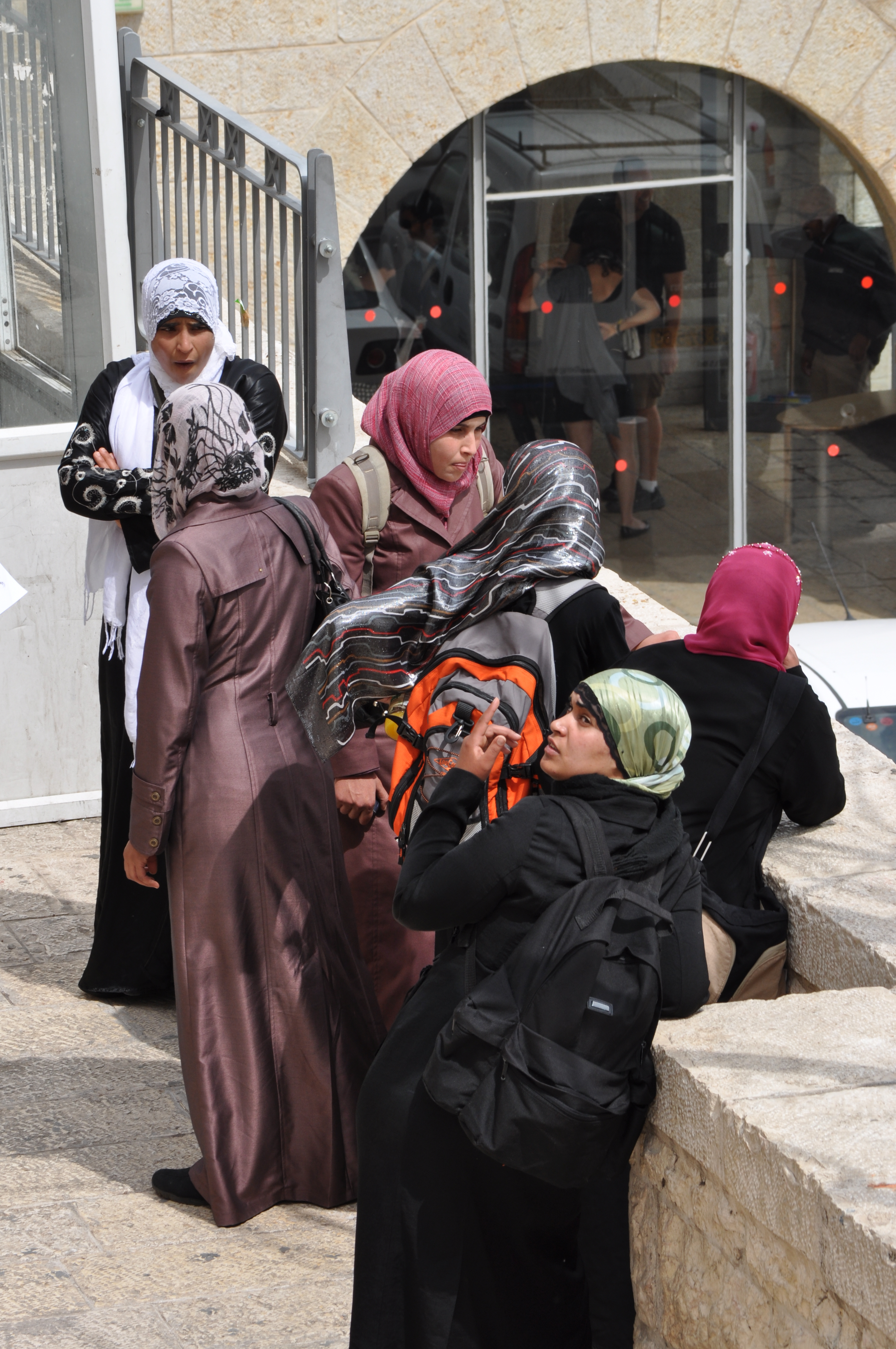
Muslim women prepare to enter the Western Wall Plaza in 2010 (photo: First One Through)
The hands do not need to agree. They serve different purposes.
The President of the Palestinian Authority, Mahmoud Abbas has spent decades demonstrating how it works.
1967: The Border Hand
For the borders of a Palestinian state, Abbas is precise.
In his 2016 address to the United Nations, he said the PLO had accepted a Palestinian state on the “4 June 1967 borders with East Jerusalem as its capital.”
He has repeated the formulation for years. In 2014, he called for Palestinian independence over the “entire Palestinian Territory occupied in the 1967 war,” with East Jerusalem as its capital. In 2022, standing beside President Joe Biden, Abbas again called for a Palestinian state “with East Jerusalem as its capital, on the 1967 borders.”
Why June 4, 1967? Look at the picture the clock produces.
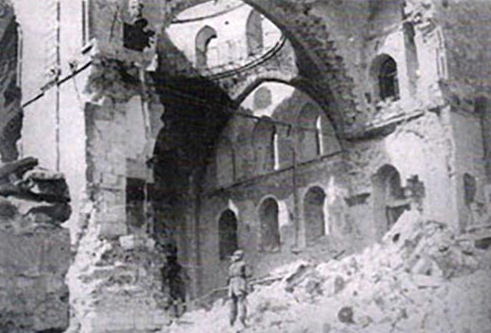
There were no Jews living in the Jewish Quarter of the Old City. Its Jewish residents had been expelled after the Quarter fell to Jordanian forces in 1948. By June 1967, Hebron’s centuries-old Jewish community no longer existed either, evacuated after Palestinian Arabs massacred them in 1929.
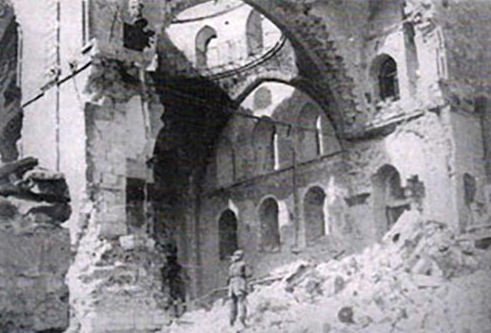
Jordanian soldiers destroyed the Hurva Synagogue in the Old City of Jerusalem
So June 4, 1967 creates a remarkably convenient baseline. The Jewish communities that exist today in eastern Jerusalem, Hebron and throughout the West Bank disappear from the photograph.
But the Palestinian clock has another hand.
1948: The Refugee Hand
When Abbas talks about Arab refugees, June 1967 suddenly becomes useless. So the clock jumps backward another nineteen years.
In 2021, Abbas appeared before the United Nations holding up the deed to his family’s property and said Palestinians still possess deeds and keys to their former homes. He argued that Palestinian refugees have the right to “return to their homeland” and recover their properties.
In 2025, he was even more explicit. Abbas said there were now more than seven million Palestine refugees and declared that the “right of return” was an inalienable right that Palestinian Arabs “will not forsake.”
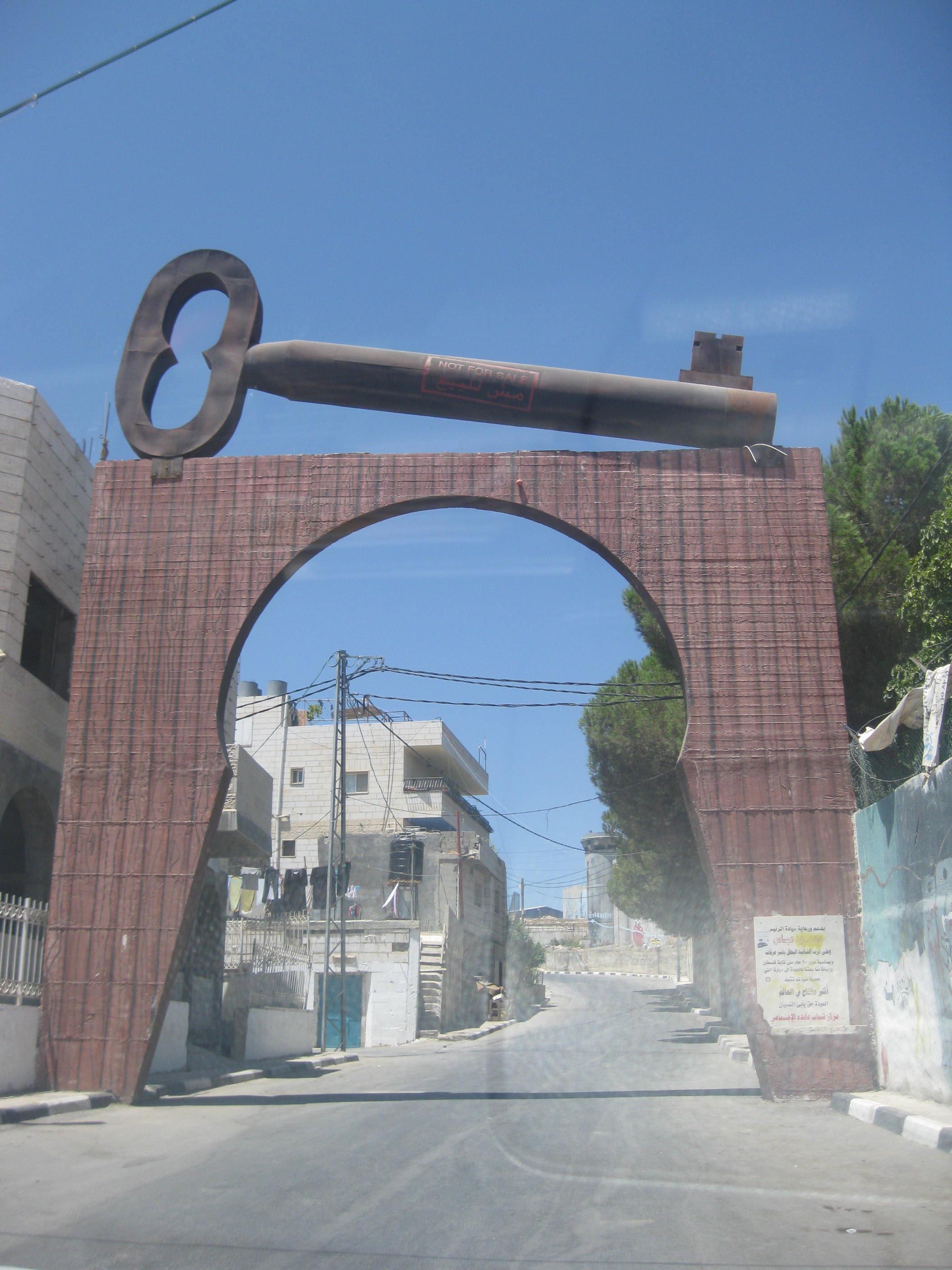
Entrance to UNRWA “refugee camp” in Bethlehem with a key on top representing that UNRWA is the portal for descendants of internally displaced Arabs to move into grandparents’ houses in Israel
Watch the hands.
For the territory of a new Palestinian state, the clock says 1967.
For Palestinians claiming homes and property inside Israel, it says 1948.
Apply 1967 consistently and the mass refugee claim reaching into Israel loses its 1948 baseline. Apply 1948 consistently and Jewish communities and property claims erased by the 1967 baseline return to the picture.
The clock cannot stay on either date.
It has to move with the argument.
1947: The Sovereignty Hand
Israel already exists in 1948, a bone in the throat of Palestinian Arabs, or a “painful settlement” to quote Abbas. So the sovereignty hand moves to 1947.
In November of that year, the United Nations proposed partitioning Mandatory Palestine into a Jewish state and an Arab state. So the clock reaches a moment before Israeli sovereignty.
But international recognition of Jewish national aspirations predates partition by decades.
Move the hand again.
The Holocaust: The Colonial Hand
Abbas wrote his doctoral thesis on Holocaust denial. He dismisses the entire victimization of Jews and argued that Jews brought the Holocaust upon themselves – and Palestinian Arabs have been forced to pay the price for it.
In an April 2018 speech in Ramallah he said “the reason for the hatred of the Jews is not their religion but their function in society…. So the Jewish question, which was prevalent in all European countries, the anti-Jewish (sentiment) was not because of their religion, but because of their function in society, which had to do with usury, banks, and so on…. So their narrative about coming to this country because of their longing for Zion, or whatever – we’re tired of hearing this. The truth is that this is a colonialist enterprise, aimed at planting a foreign body in this region…”
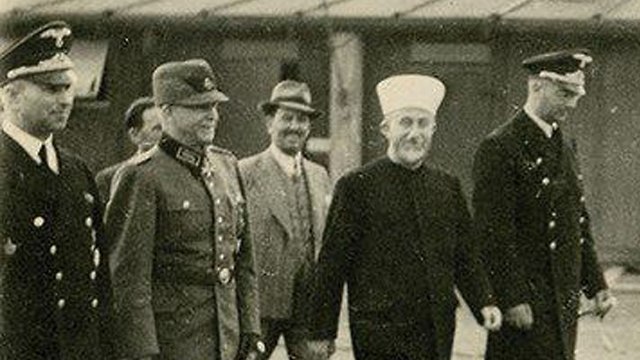
Haj Amin al-Husseini, the Grand Mufti of Jerusalem, visiting Nazi Germany in 1943
1917: The Zionism Hand
In his 2016 United Nations address, Abbas attacked not the borders created by the 1967 war or the displacement of 1948, but the Balfour Declaration of 1917.
He called it the “notorious Balfour Declaration” and demanded that Britain apologize for the “catastrophes, miseries and injustices” he said it had created.
Look how far the clock has moved. A century.
A time when there was no modern state of Israel. There was no 1948 refugee crisis. There was no occupation resulting from the 1967 war. There wasn’t even a British Mandate for Palestine yet.
The objection has reached the international recognition of Jewish national aspirations themselves.
Still too late.
The Ottoman Hand
Before Balfour, Palestine was part of the Ottoman Empire. Even though there was no sovereign Palestinian Arab state, the land was totally controlled by Muslims. Jews remained a small minority.
Abbas’ longtime adviser on Religious and Islamic Affairs and the PA’s Supreme Shari’ah Judge, Mahmoud al-Habbash said in 2014 that “The entire land of Palestine is [Islamic] waqf and is blessed land… it is prohibited to sell, bestow ownership or facilitate the occupation of even a millimeter of it.” In 2016 he said about Jerusalem “We cannot allow or agree to it being under sovereignty that is not Muslim sovereignty.”
Israeli police block Jewish man from ascending to the Temple Mount because he is a Jew, in Novemnber 2025 (photo: First One Through)
Abbas referenced the Ottoman period in a speech in 2014 when he said “Jews, Christians and Muslims have lived peacefully together in Palestine for centuries. So peace between religions runs through the heart of the most sacred City in the world, Jerusalem. Peace between the world’s religions runs through Jericho the Oldest City on Earth. Peace between the world’s religions runs through Palestine.”
Hamas’s 1988 foundational charter makes the point clear: “raise the banner of Allah over every inch of Palestine, for under the wing of Islam followers of all religions can coexist in security and safety where their lives, possessions and rights are concerned. In the absence of Islam, strife will be rife.”
Watch the Hands
There is one time the Palestinian clock rarely points to: today. Because today leaves too many Jews in the picture.
Jews live in Jerusalem, Hebron and throughout the West Bank. Israel exists as a Jewish state. Jewish sovereignty and self-determination are facts rather than historical proposals.
To say openly that Jews should be removed from those places, that the Jewish state is illegitimate or that Jews should be denied national rights would make the prejudice difficult to disguise.
History offers a more respectable vocabulary. Just choose an earlier date when the particular Jews, Jewish sovereignty or Jewish rights inconvenient to the argument were absent.
That is why the Palestinian clock needs so many hands. No single date erases everything neatly.
History provides the dates. Antisemitism chooses the hand.
On Friday morning, students from SAR, Ramaz, Kehilath Jeshurun and other Jewish institutions will gather outside Gracie Mansion for Shacharit. They will pray, sing and speak about their love for New York, their love for Israel and their right to feel safe in the city where they were born.
Rabbi Binyamin Krauss, principal of SAR Academy, explains that the gathering is both prayer and statement. Its location is intentional: many Jewish New Yorkers believe that the mayor’s rhetoric about Israel and not condemning the phrase shouted at city universities “globalize the intifada” has made them easy targets. Prayer outside his residence ensures that the message cannot easily be ignored.
Yet Friday falls within the Ten Days of Repentance, when Jews should be especially clear about whom they are addressing. Gracie Mansion may be the location, but the mayor is not the audience. God is.
Prayer expresses the Jewish belief that political power is never the highest power. During these ten days, Jews repeatedly say Avinu Malkeinu – Our Father, Our King. They gather before God.
The Torah reading the following morning makes that message unmistakable. Haazinu is Moses’ final song, delivered as the Jewish people prepare to enter the Land of Israel. It calls heaven and earth as witnesses and describes the entire movement of Jewish history: God finds Israel in the wilderness, protects it, brings it to a fertile land and warns that prosperity can produce complacency.
Then comes one of the song’s most famous lines:
“Jeshurun grew fat and kicked.” – Deuteronomy 32:15
Jeshurun is an affectionate name for Israel. The warning is directed at successful Jews who have become so secure that they mistake comfort for permanence. They enjoy the land’s bounty, forget its source and abandon the Rock of their salvation.
The presence of Kehilath Jeshurun and Rabbi Chaim Steinmetz makes the verse impossible to miss. The very congregation joining the prayer bears the name invoked by Moses. This week, the children of Jeshurun will walk from their schools and shuls in one of the most prosperous Jewish neighborhoods in the world and pray in the public square.
Rabbi Chaim Steinmetz of Kehilat Jeshrun lighting Chanukah candles next to Gracie Mansion in December 2025 before a crowd and reporters, alluding to the new mayor’s anti-Jewish opinions and statements (photo: First One Through)
These Jews are heirs to what may have been one of the greatest Diaspora golden ages in Jewish history. New York Jews built synagogues, schools, hospitals, charities, businesses and cultural institutions. They rose to the highest levels of civic life and came to regard their acceptance as a permanent feature of the city. Their children could be openly Jewish, openly Zionist and fully American without perceiving any contradiction.
Recent attacks and an increasingly hostile public climate have shaken that confidence. Rabbi Krauss writes that students returned to school carrying both fear and a need to answer it. That answer should not be a plea for acceptance from a mayor. It should be a declaration that Jewish identity does not depend upon a mayor’s approval.
Haazinu does not teach that Jewish survival rests upon the favor of rulers. It teaches that the Jewish relationship with God, Torah and the Land of Israel survives the rise and fall of political powers. Moses delivers the song while standing outside the land he will never enter, yet he speaks of the connection between Israel and its land as something deeper than temporary possession or political recognition. Governments may contest it, enemies may attack it and Jews themselves may neglect it, but the covenant remains.
That should be the meaning of Friday’s public prayer. The students should not perform Judaism for the mayor. They should show New York what Judaism looks like: children praying openly, affirming their faith, facing Jerusalem and refusing to sever their attachment to Israel in exchange for political comfort.
Britain is suddenly alarmed about supposed “ethnic cleansing” in the West Bank.
The British government warns that Israeli policies could force Palestinian Arabs from parts of Judea and Samaria. It is sanctioning Israelis, condemning “settlements” and portraying demographic change in territory claimed by Palestinians as a grave moral offense.
Britain has seen ethnic cleansing in this territory before. Its reaction was very different.
In 1948, The Kingdom of Transjordan crossed the Jordan River and conquered Judea and Samaria and eastern Jerusalem. It then destroyed and expelled the Jewish communities that had lived across the territory. The ancient Jewish Quarter of Jerusalem’s Old City was emptied of its Jews. Jews were then barred from their holiest sites, as synagogues were destroyed or desecrated.
Jordanian soldiers destroyed the Hurva Synagogue in 1949
The result was remarkably complete: the territory Jordan occupied was ethnically cleansed of Jews. And less than two years later, Britain formally recognized Jordan’s union with the territory it had invaded and conquered, one of the only countries in the world to do so.
Jordan then made the demographic principle explicit. Its 1954 nationality law extended Jordanian nationality to former Palestinian citizens residing in the kingdom while expressly carving out “the Jews.”
Jordan expelled and excluded the Jews in its holy land, and Britain’s response was recognition.
In 2005, Britain would celebrate again, this time in Gaza.
Israel decided to dismantle every Jewish community in the Gaza Strip. Israeli soldiers physically removed roughly 8,000 Jews from their homes and twenty-one Jewish communities disappeared. A Jew-free Gaza emerged.
Britain did not describe this as ethnic cleansing. Prime Minister Tony Blair praised Israeli Prime Minister Ariel Sharon’s “courage” and offered Britain’s “full support” for the withdrawal. His foreign secretary called it a hugely significant step toward peace.
Now consider 2026.
Britain warns against the possible displacement of Palestinian Arabs from Area C of the West Bank, territory that has remained under Israeli civil and security control under the Oslo framework pending a final agreement. It speaks of forcible displacement, imposes sanctions and treats the prospect of Palestinian Arabs losing their communities as intolerable.
The moral principle sounds admirable. It would be more convincing if Britain had ever applied it equally to Jews in the region.
When some Palestinian Arabs might be displaced from territory it hopes to use in a future Palestinian state, Britain suddenly discovers that removing a particular ethnic population from its homes is beyond the pale. Instead, England demands that the region be ethnically cleansed – of Jews – citing the antisemitic UN Security Council Resolution 2334.
There is a British consistency here: ethnic cleansing is only appropriate when Jews are removed.
For generations, British policy has treated the removal of Jews from disputed territory as compatible with peace. A Palestinian Gaza without Jews was progress. A Jordanian West Bank without Jews was acceptable. A future Palestinian state is still routinely imagined as a place where Jewish communities cannot remain.
Only the possibility of some Arab relocation produces moral outrage.
That exposes the deeper problem with the diplomatic vocabulary surrounding the conflict. “Two states” has quietly come to mean one multicultural Jewish state containing a large Arab minority alongside one Palestinian state expected to contain no Jews. One and one-half states for Arabs; half a state for Jews.
England understands the ethnic cleansing of Jews – it did it itself in 1290 – the only minority group to ever be expelled from the country. It seems to continue to only have a taste for that kind of hatred and ethnic cleansing, including in the Jewish homeland.