In the 20th century, the term “G.I. Joe” was meant to describe the average American serviceman. He was the embodiment of a regular patriot fighting for America and American values.
Alas, today’s generation has Jihad Joe.
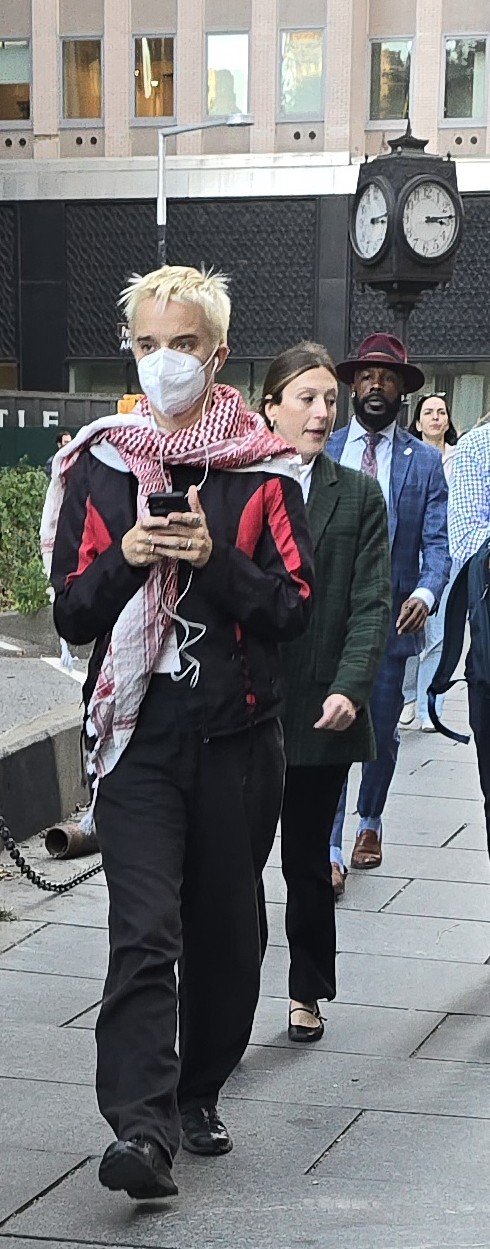
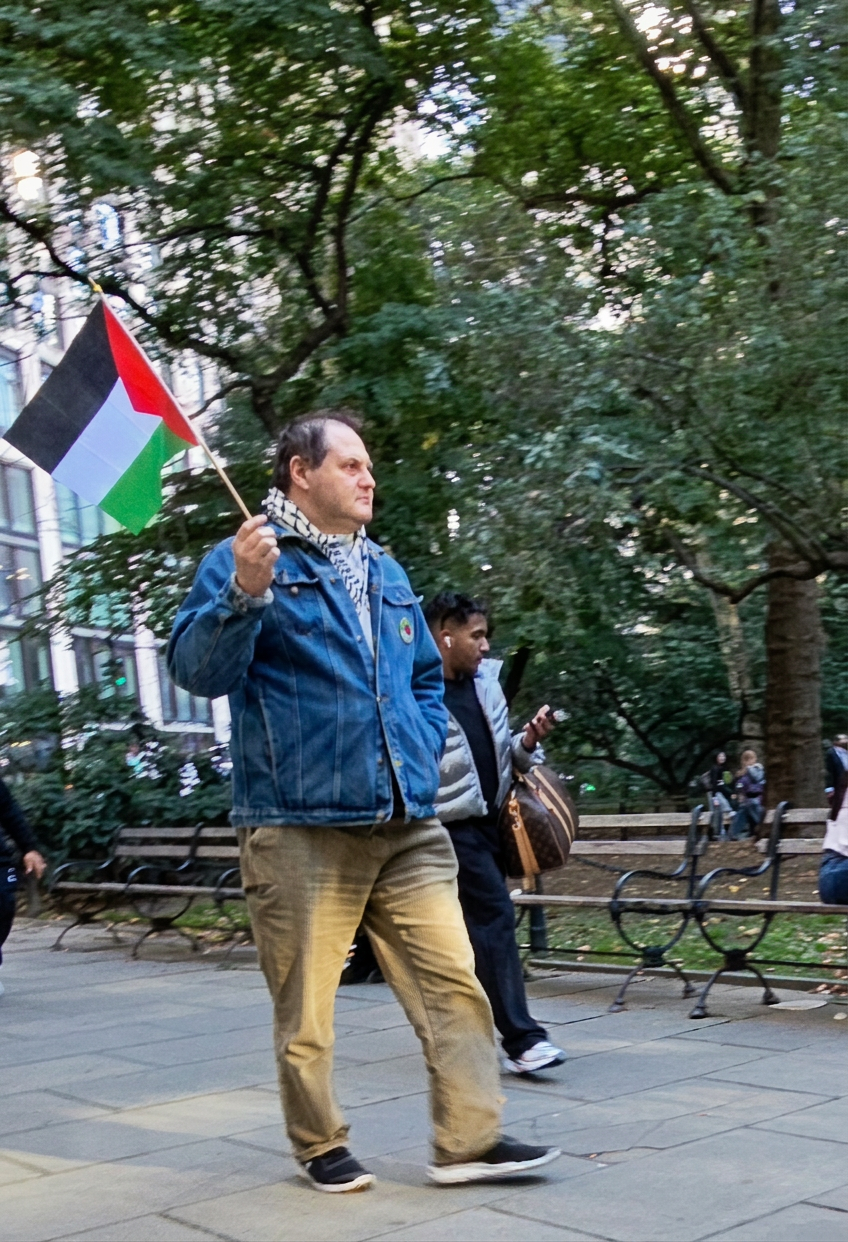
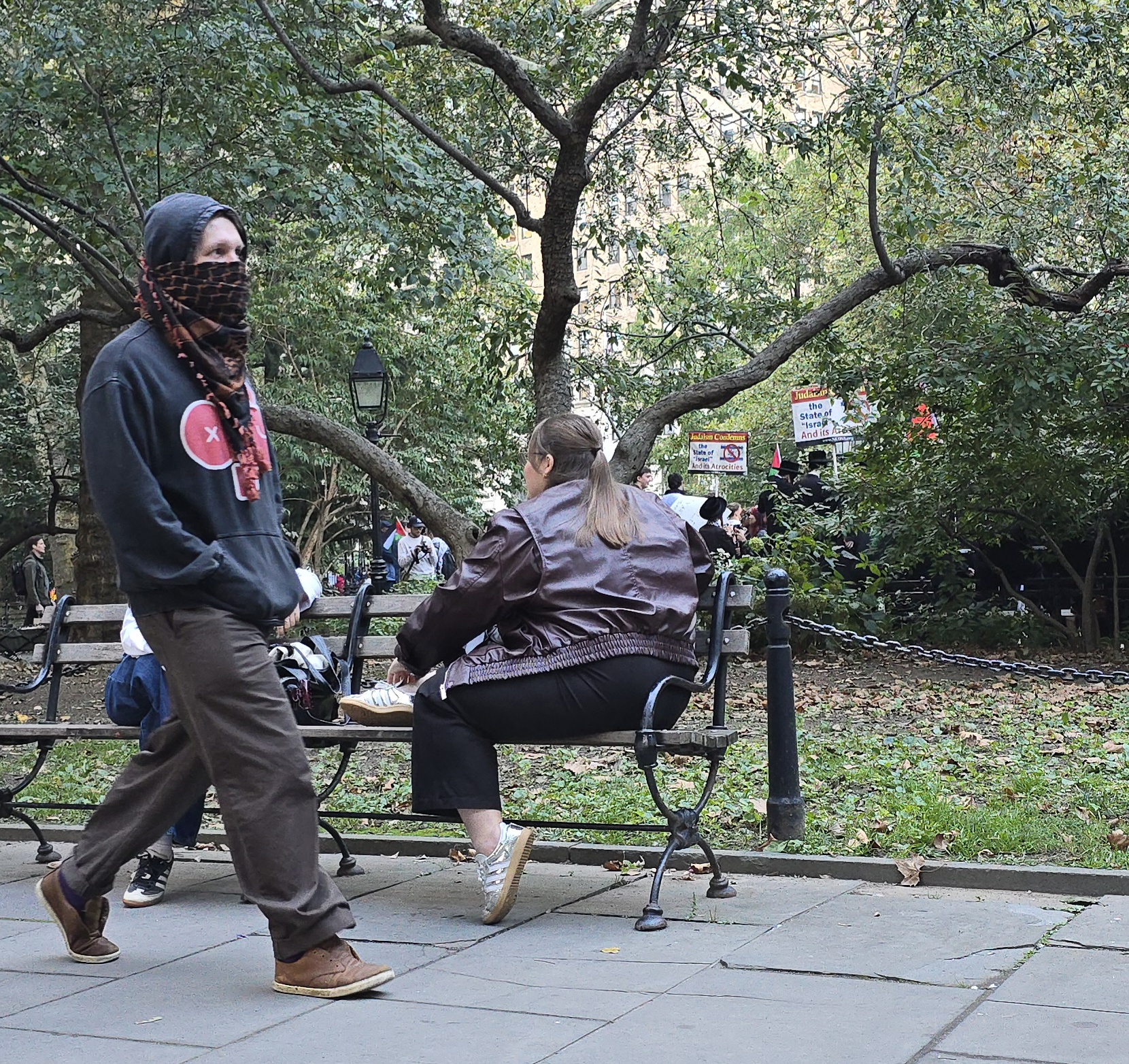
Pro-Palestinian man heading to protest Israel in front of City Hall in Manhattan on October 7, 2026 (photo: First One Through)
Jihad Joe celebrates the murder of Americans and American allies. He/ she uses anniversaries of the massacres of civilians – like 9/11/01 and 10/7/23 – to mock the death of thousands of innocent civilians. The Jihad Joes cheer ISIS, Hamas and the Islamic Republic of Iran.
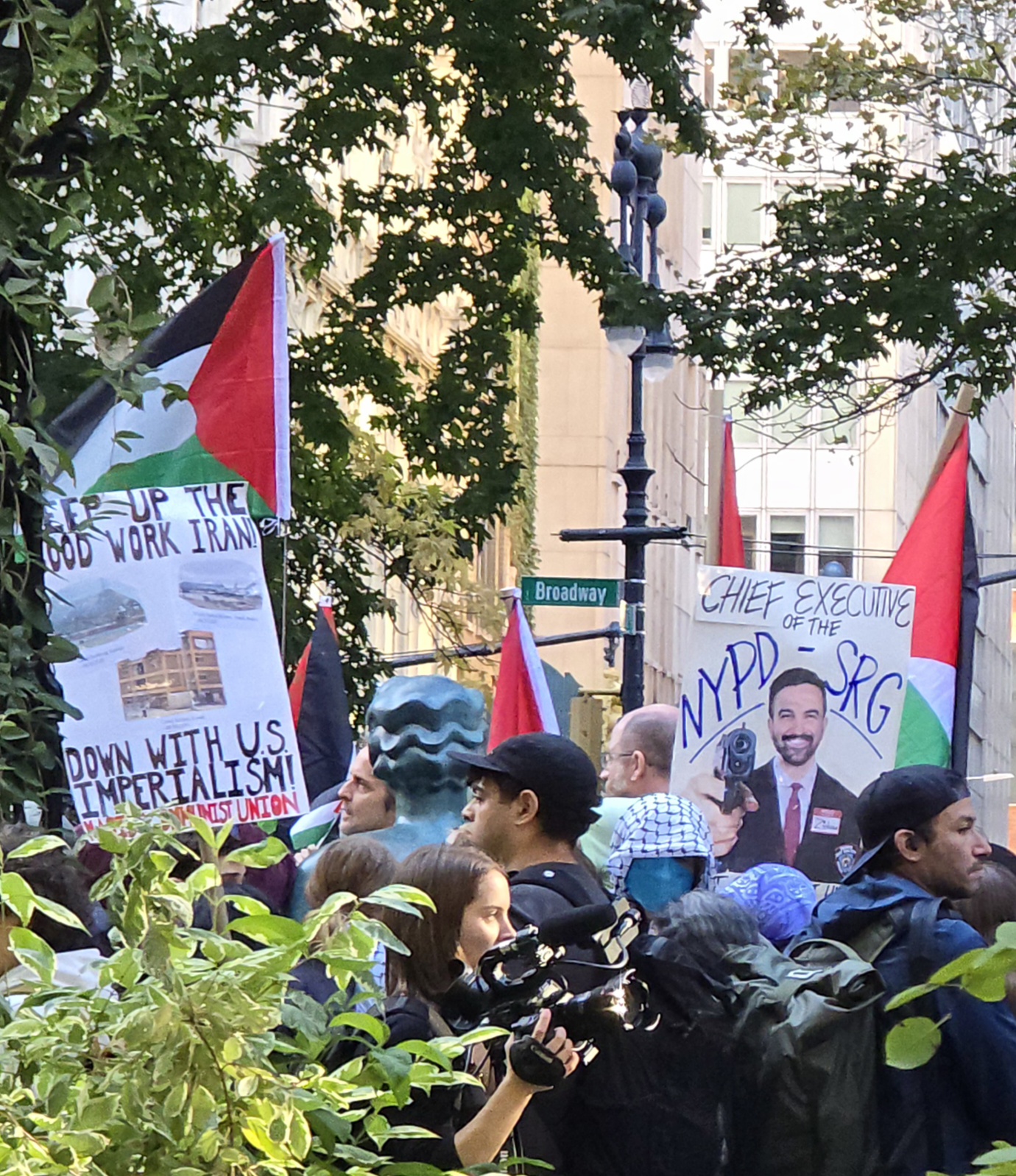
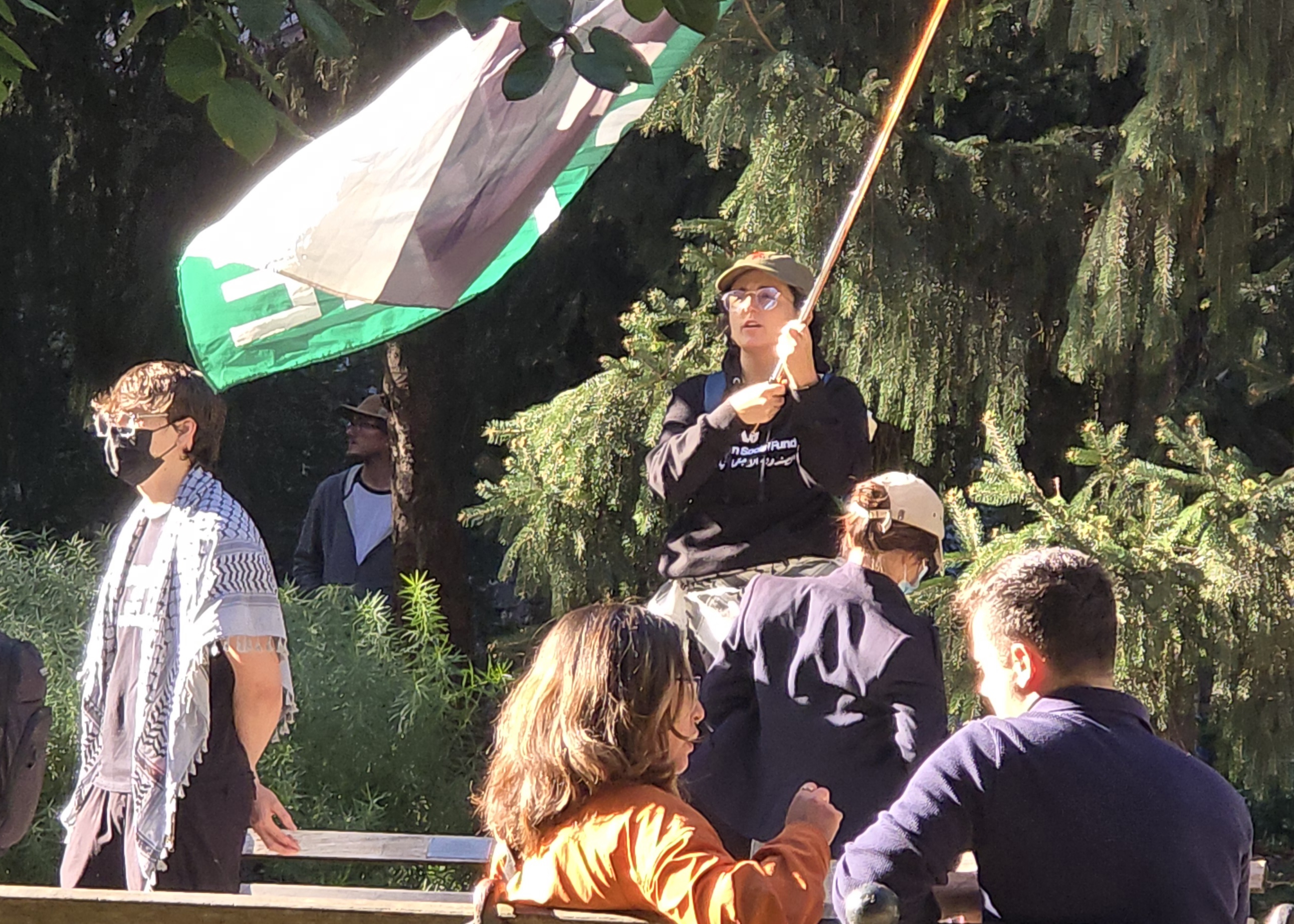
Anti-Israel protestors at City Hall in NYC on October 7, 2026 with posters mocking Mayor Zohran Mamdani as a Zionist and “Keep up the good work Iran! Down with U.S. Imperialism!” (photo: First One Through)
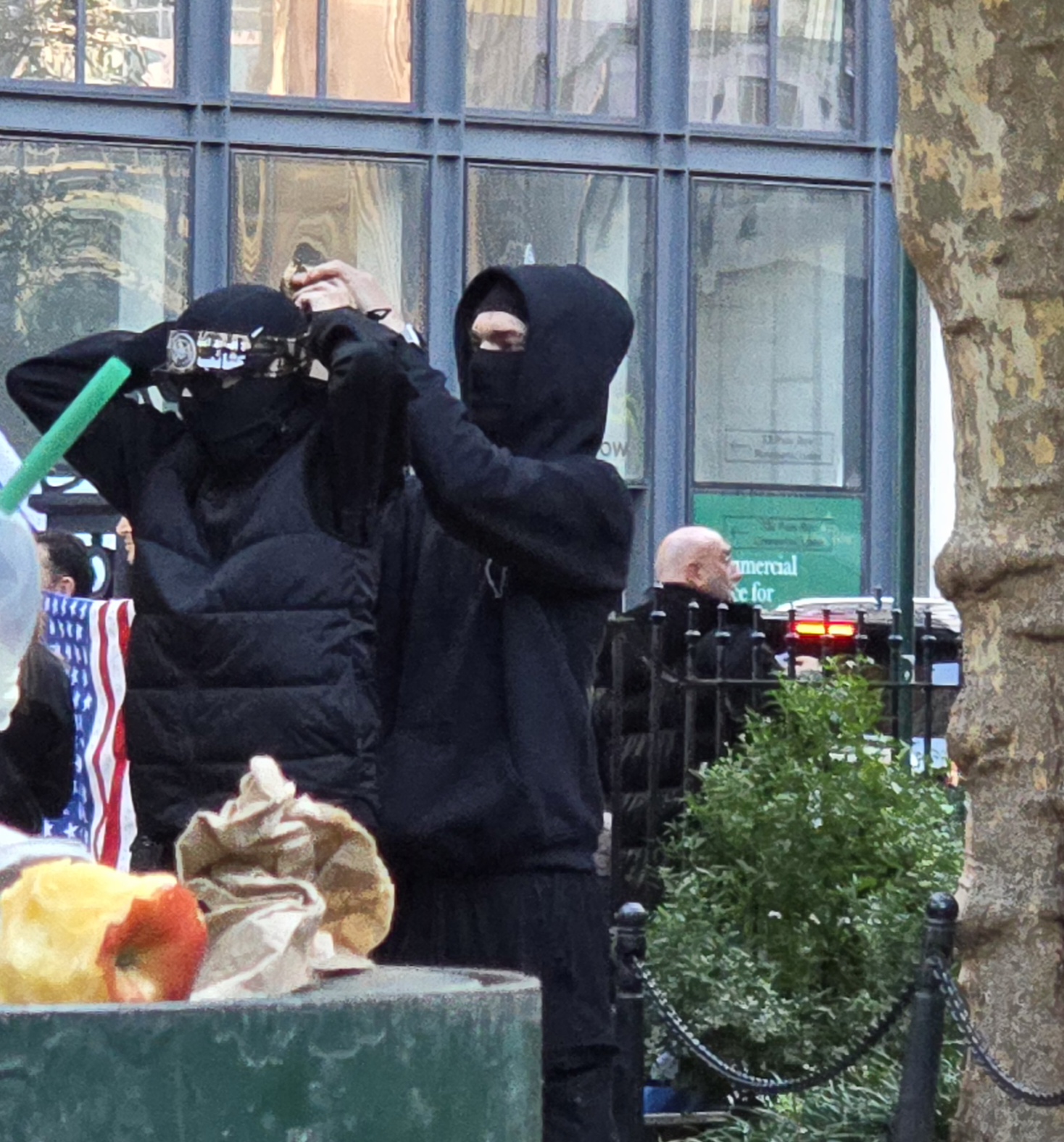
The crowd that gathered on October 7, 2026 at City Hall in New York City was mixed, with religious Muslims and anti-Israel Neturei Karta posing for the media. But there were also many White people in their 20s to 40s sporting Hamas headbands, chanting for the destruction of Israel, and that Jews are pedophiles.
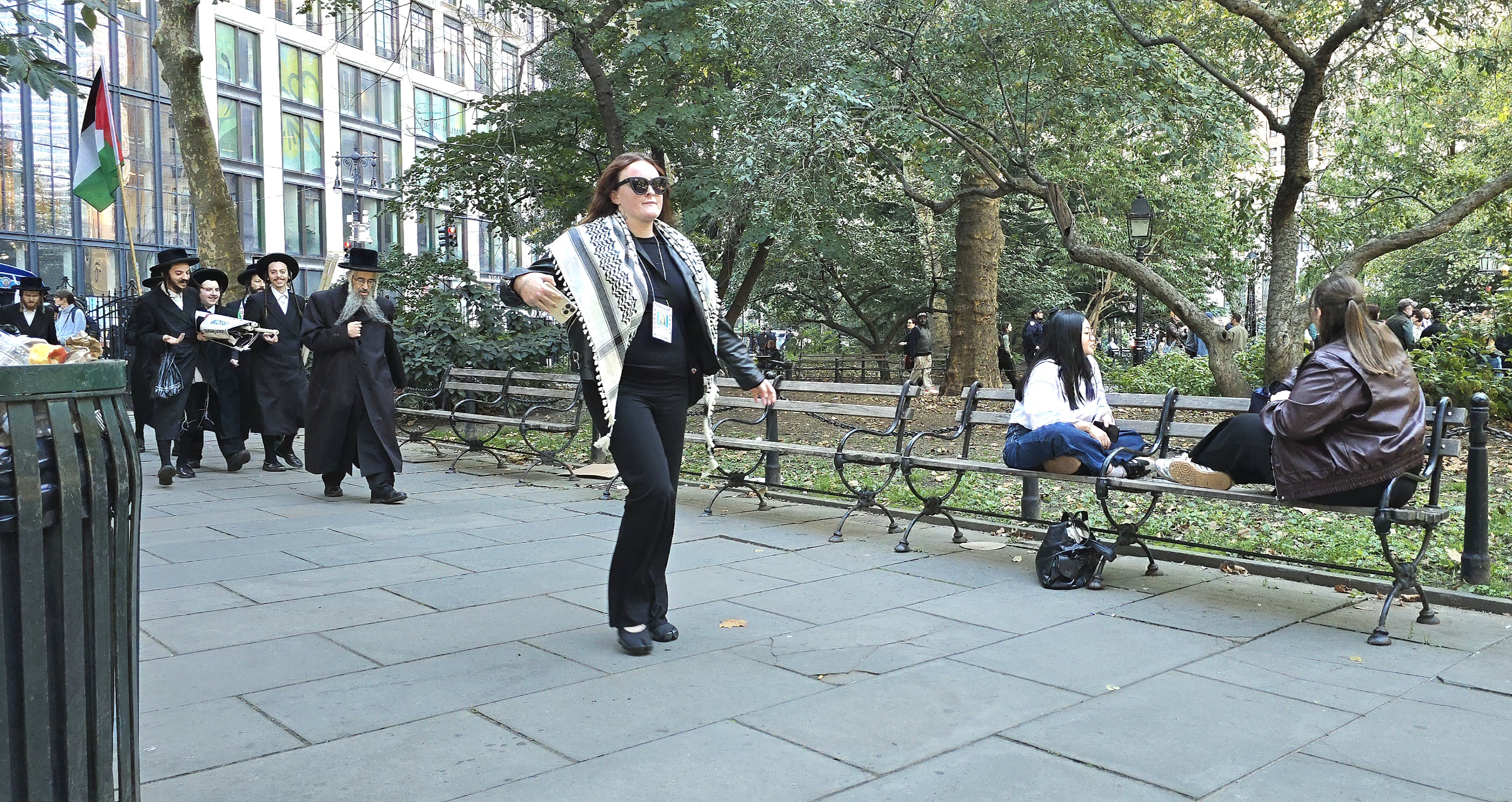
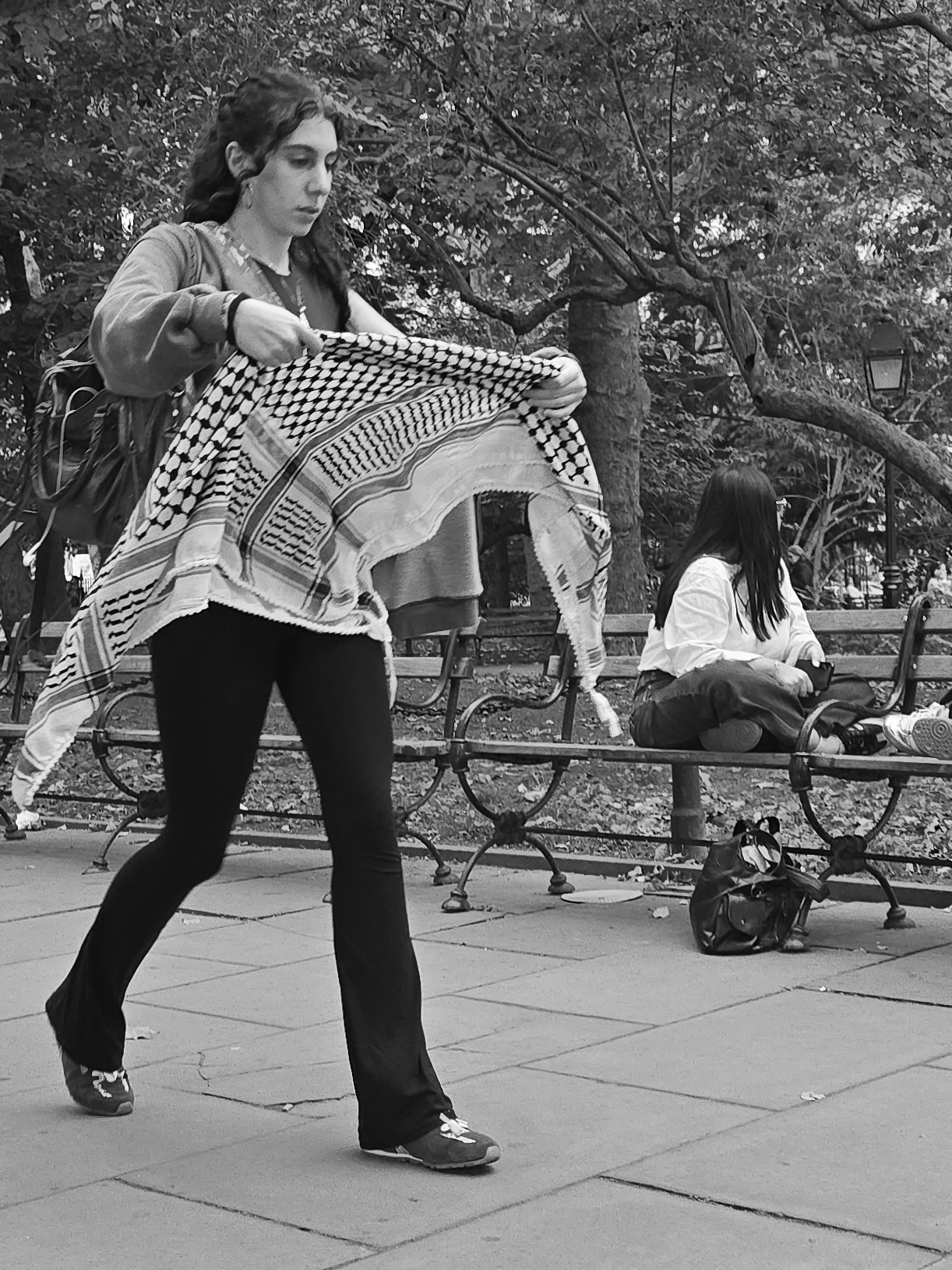
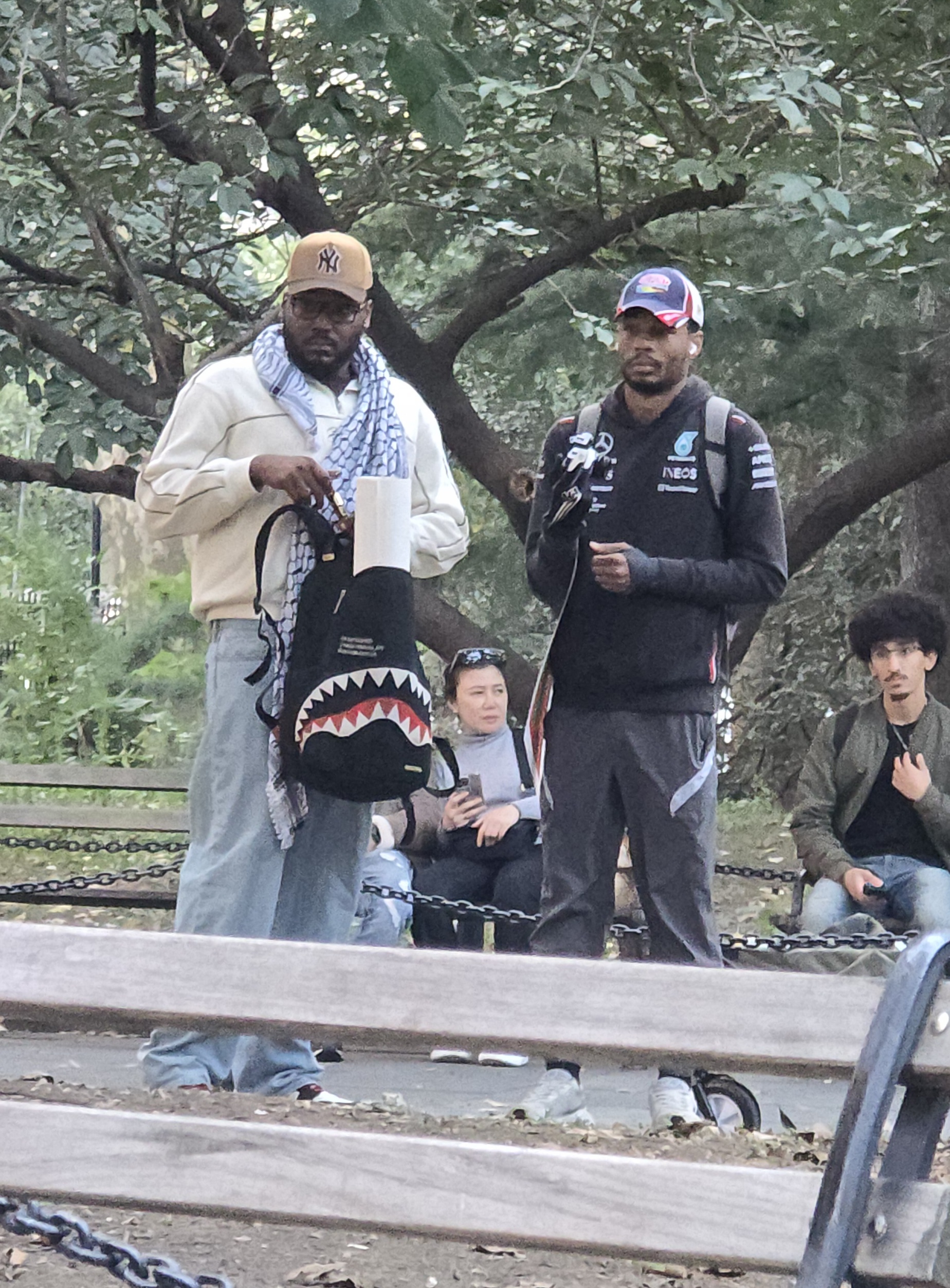
Woman with press credentials sporting a keffiyeh walking to anti-Israel protest at City Hall on October 26, 2026, ahead of group from Neturei Karta holding a Palestinian flag (photo: First One Through)Woman getting ready to join the anti-Israel protest, pulling out her keffiyeh at City Hall on October 7, 2026 (photo: First One Through)
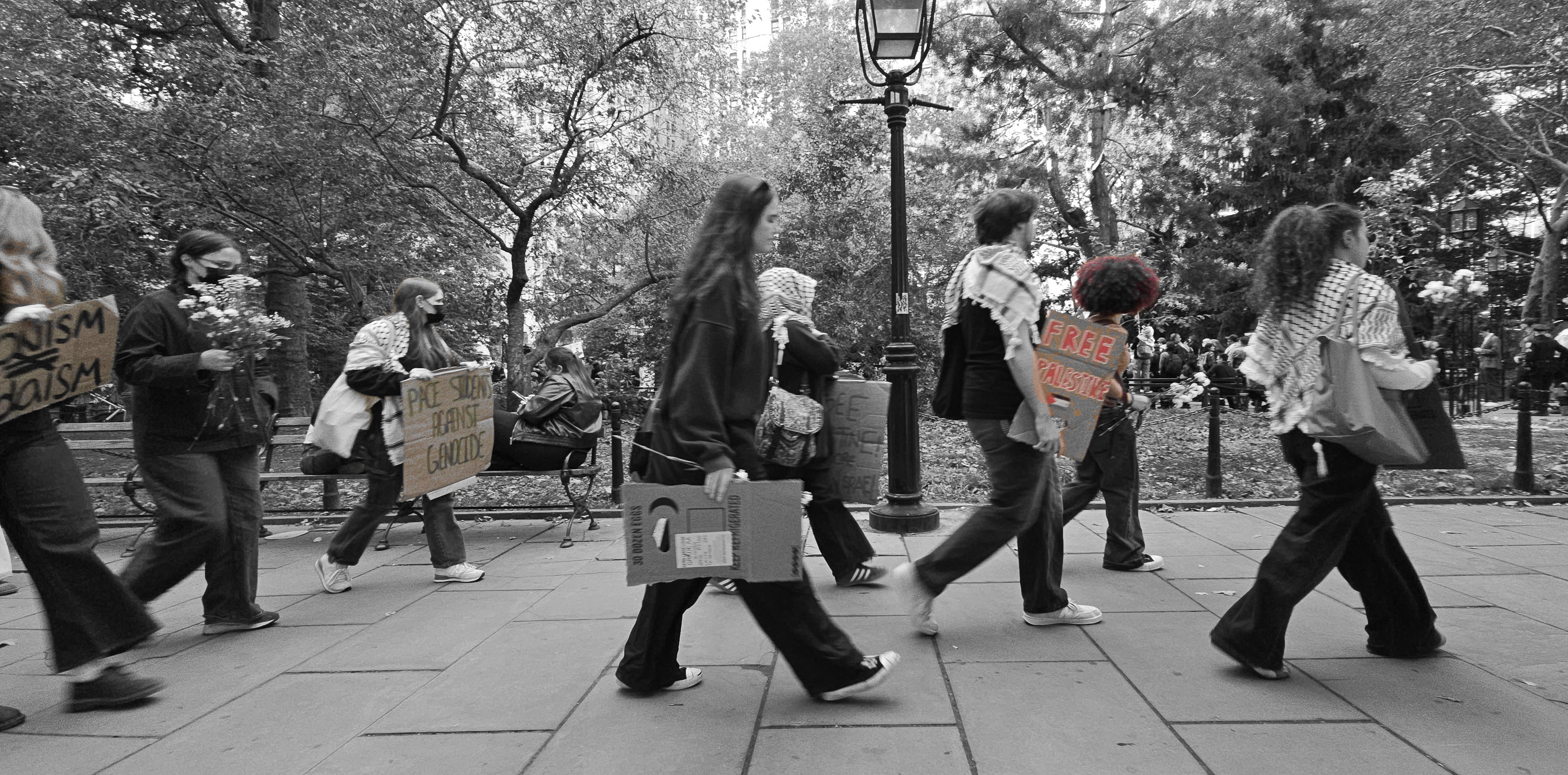
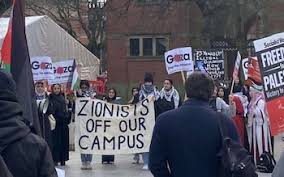
A group of students from nearby Pace University came by with placards to “Free Palestine” and “Zionism is not Judaism.” They joined crowds yelling things much more violent:
“Intifada revolution!”
“Zionism will fall!”
“Liberation is near!”
“We don’t want two states. We want ’48!”
“Mobilize the Intifada!”
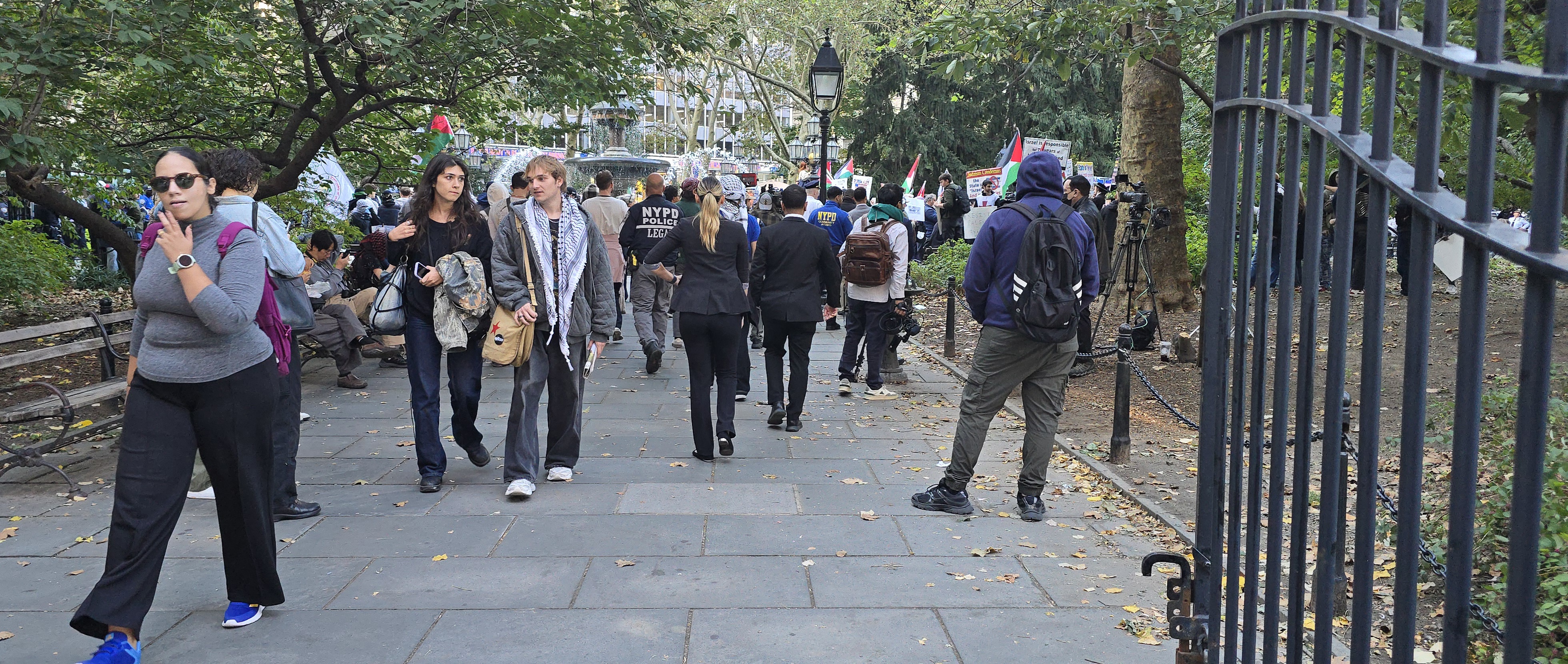
Students from Pace University join an anti-Israel protest at City Hall on the anniversary of the slaughter of roughly 1,200 people in Israel and seizure of 251 hostages,on October 7, 2026 (photo: First One Through)
Today’s Jihad Joe doesn’t put his life at risk for America, American allies or American values. He mocks all of those things. Jihad Joe wishes them vanquished, celebrates their setbacks and chants for the jihadi vision for the U.S. and Israel, all from the quiet and comfortable streets that affords the freedom of speech and assembly not found in Islamic republics.
Jihad Joe sees G.I. Joe as an old and racist dead White man.
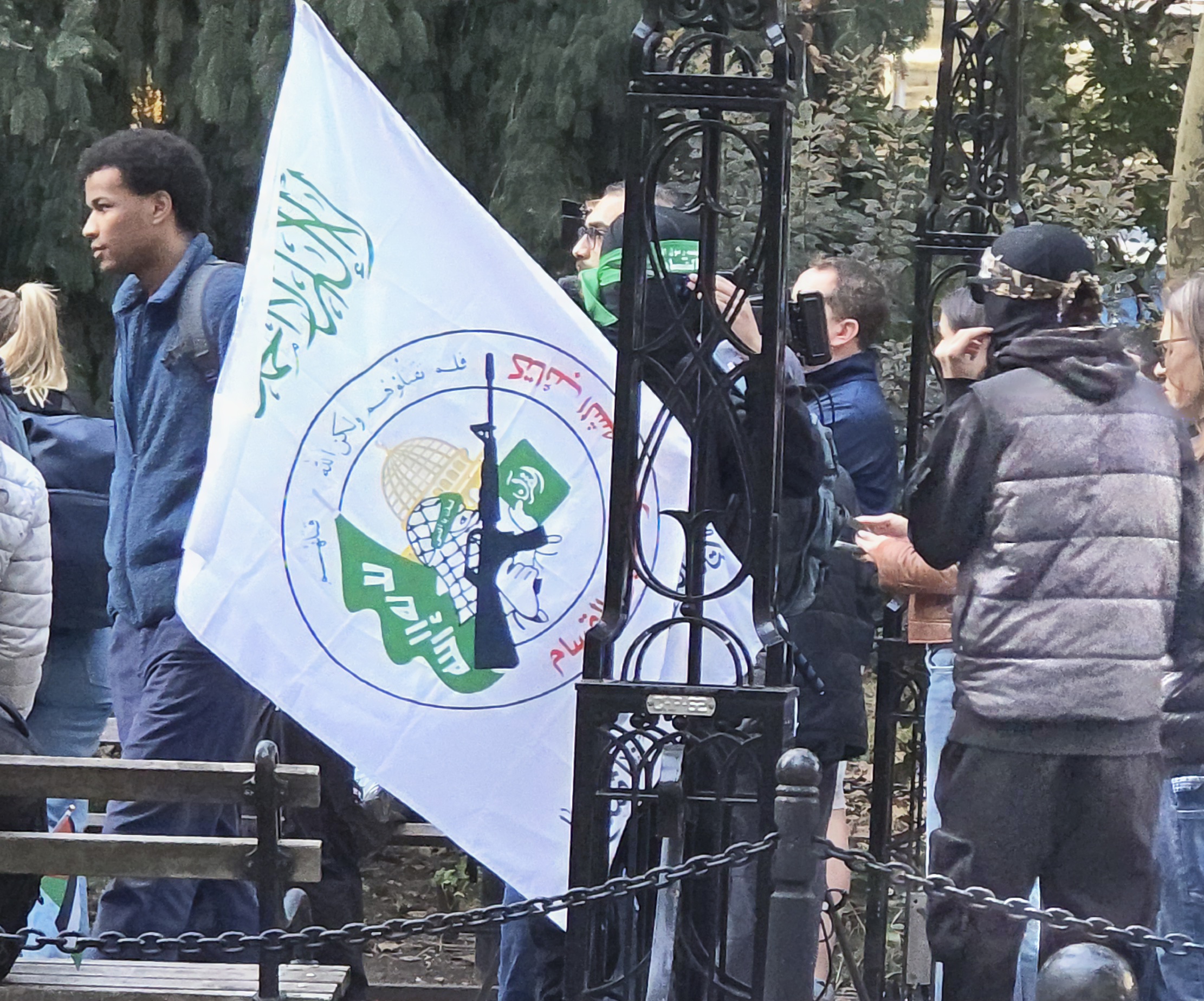
Two young men covering faces and sporting headbands with Hadiths for MohammedYoung men waving flag of armed Arab before Dome of the Rock
Imagine Canadians holding a march on September 11, 2026 cheering the work of the jihadists who killed nearly 3,000 people in the U.S., calling for the destruction of America. Yes, it is protected speech; but so what? It is repulsive and sick.
More, it reveals the depravity of a significant swath of Americans.
Crowd of people scream support for the antisemitic genocidal jihadists of Hamas, on third anniversary of the October 7 massacre (photo: First One Through)
Eighty years ago, America produced the Greatest Generation. G.I. Joe was its everyman: the ordinary American who put on his country’s uniform, crossed an ocean and fought against fascism and tyranny. Today we see a very different American archetype walking the streets of New York. He puts on the keffiyeh, embraces the symbols and slogans of foreign jihadist revolutionary movements, and mocks America, its allies and the rape and slaughter of its citizens.
In less than a century, we have descended from G.I. Joe to Jihad Jane.
The U.S. Commission on Civil Rights released a 220-page report on September 26, 2026 on the explosion of antisemitism on American college campuses after October 7, 2023. Search those 220 pages for “jihad,” “Islamist” or “radical Islam” and you find nothing.
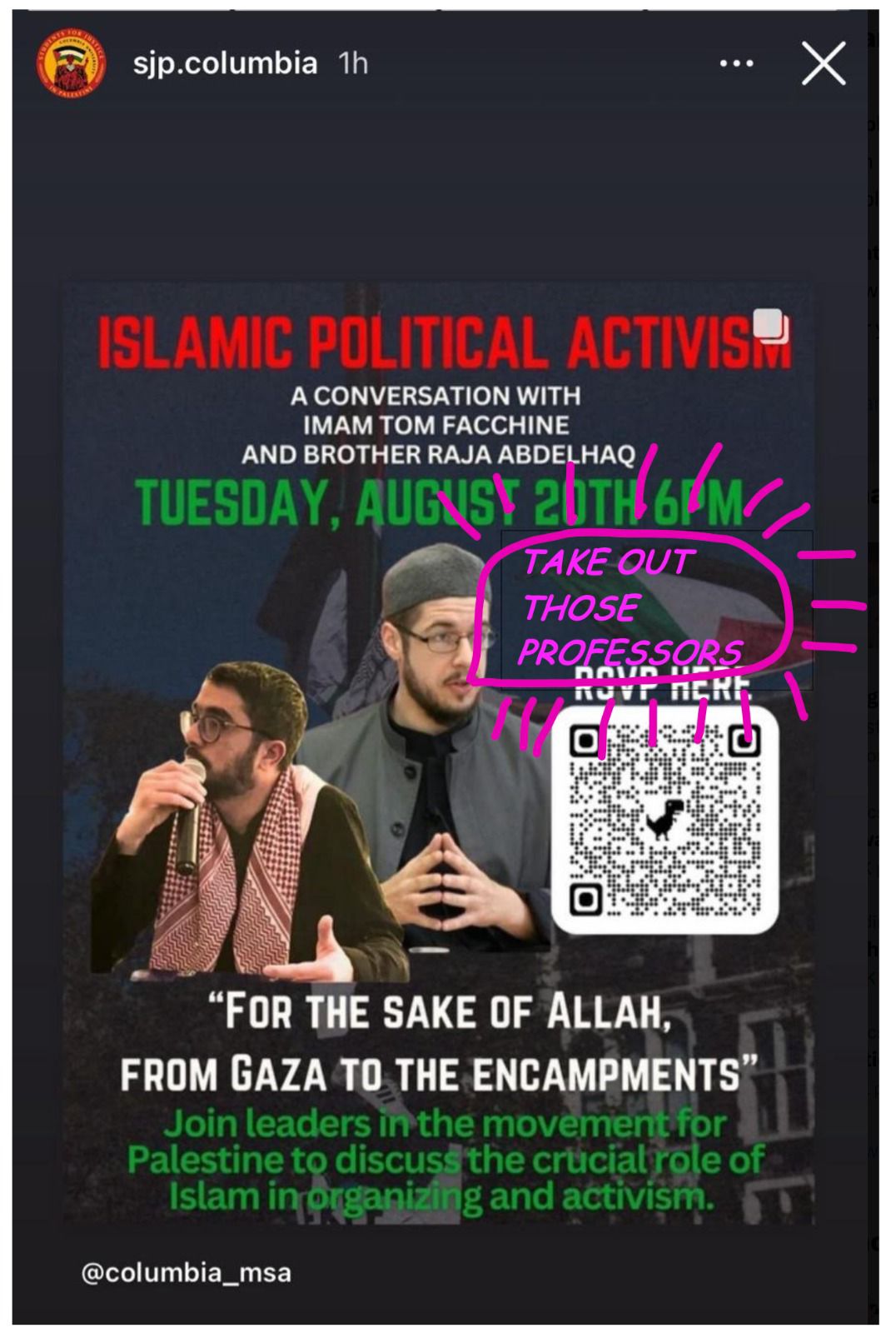
Columbia University’s SJP chapter featured “Islamic political activism”
That is an extraordinary omission because October 7 was not the opening battle in a campus dispute between supporters of Israel and Palestine. It was a massacre carried out by Hamas, a jihadist organization with a long history of explicit antisemitism. Yet the Commission largely interprets what followed through a political framework: Jewish and Israeli students on one side, Muslim and Palestinian students on the other, each reporting hostility and discrimination while universities struggled to balance Title VI, political expression and the First Amendment. Indeed, the Commission describes its own inquiry principally in terms of institutional and federal responses to allegations of antisemitism following the Hamas attack, with substantial attention to the distinction between unlawful discrimination and protected political expression.
In that framework, Jews increasingly become the pro-Israel constituency in an Israeli-Palestinian political dispute. What largely disappears is that some of what erupted on campuses reflected a very different phenomenon: jihadist antisemitism.
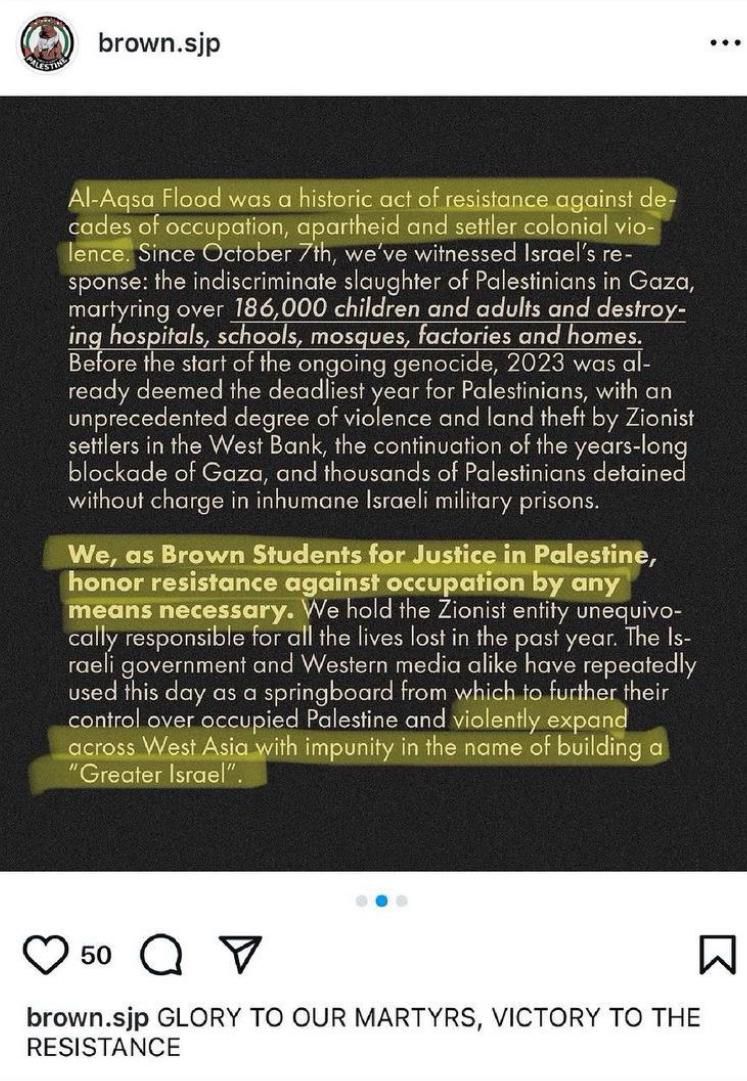
Brown University chapter of Students for Justice in Palestine “by any means necessary”
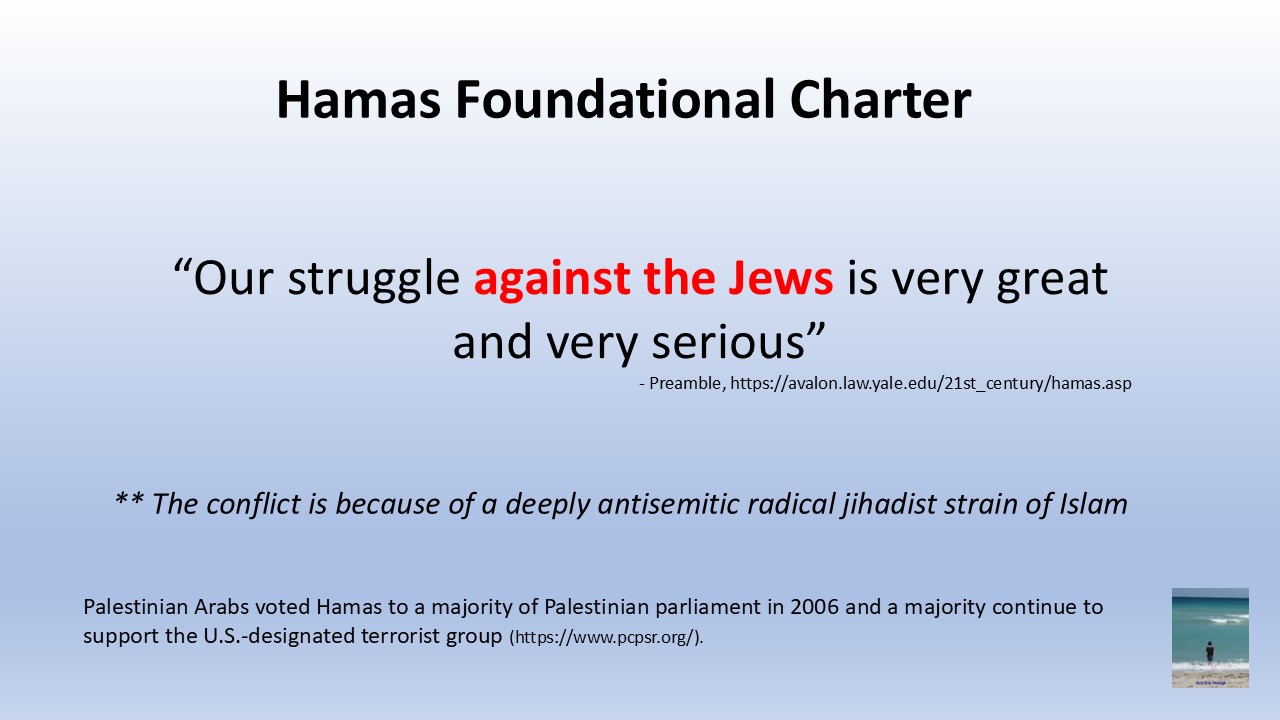
Hamas’s history should have made that an obvious subject of inquiry. Its 1988 founding covenant placed the struggle within an Islamic religious framework, declared that there was “no solution” to the Palestinian question except jihad, trafficked in antisemitic conspiracy theories and invoked a hadith envisioning Muslims fighting Jews.
Gazan jihadist calls parents to celebrate his slaughter of Jewish civilians
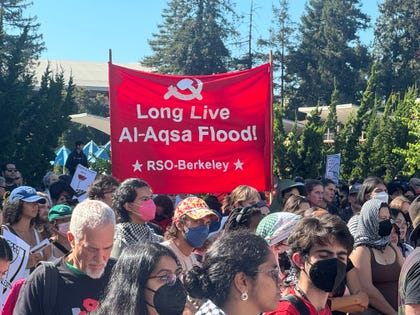
Nor did Hamas remain thousands of miles away from the American campus debate as an abstraction. The Commission itself received evidence of faculty-sponsored protests featuring “Long Live Al-Aqsa Flood,” Hamas’s name for its October 7 operation, along with a flag of the Popular Front for the Liberation of Palestine, which the report identifies as a U.S.-designated terrorist organization.
Berkeley celebrates the “Al-Aqsa Flood” massacre, named for the Islamic shrine atop the Jewish Temple Mount in Jerusalem
The Commission saw the evidence but never seriously followed the ideological trail.
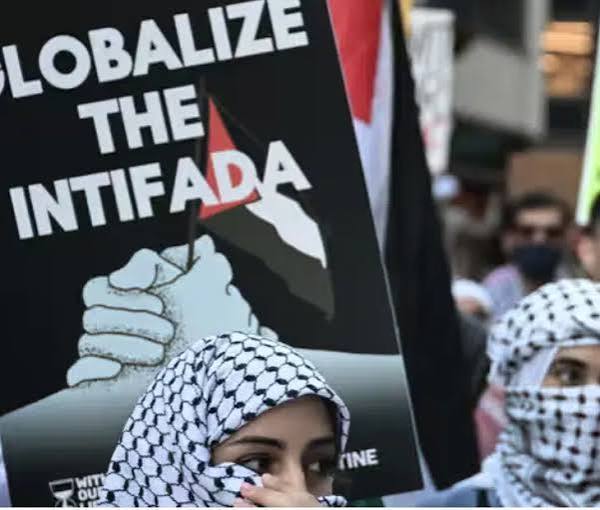
Consider “Globalize the Intifada.” The phrase appears only once in the report, in its discussion of Rutgers. Yet contemporary campus reporting documented it many times among the very universities the Commission selected for study. At Stanford, students chanted “From Stanford to Gaza, globalize the Intifada.” At Cornell, protesters chanted both “globalize the intifada” and “There is only one solution, intifada revolution.”
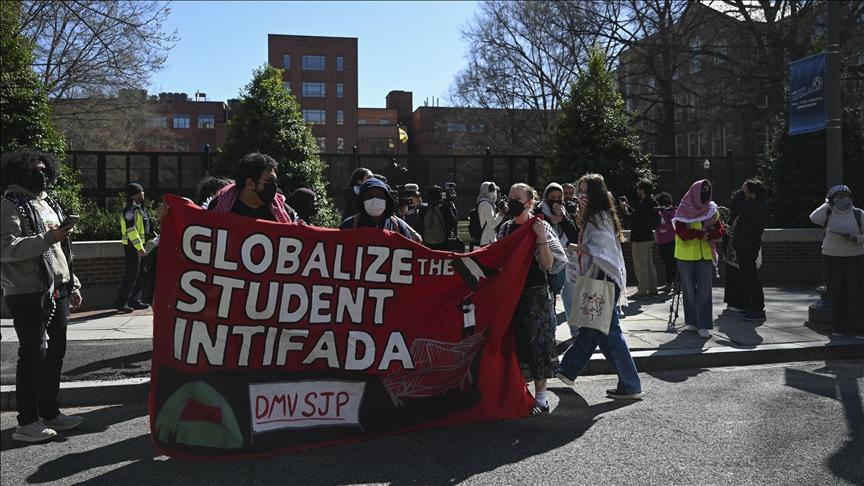
SJP chapter for D.C., Maryland and Virginia
Cornell was not some campus the Commission lacked information about. The university supplied nearly 2,000 pages of material and received one of the longest individual university treatments in the report. Yet “Intifada Revolution” appears zero times.
Cornell professor said he was “exhilarated” by the October 7 massacre of Jews. The NY Times reported a story about Jews taking away public funds from students.
The gap becomes even more striking when compared with the Commission’s treatment of other ideological sources of antisemitism. The report examines far-right antisemitism, describing Jews portrayed as conspiratorial financial elites, competitors with white Americans and secret manipulators of political power. It discusses neo-Nazis and white nationalism. It also examines antisemitism arising from the political left, including depictions of Jews as privileged, capitalist or oppressive and the intersection between those ideas and hostility toward Israel.
Where is the corresponding examination of jihadi antisemitism?
Where is the history of Hamas’s antisemitic ideology, the examination of Hamas rhetoric about Jews, or the investigation of how the language and symbols of violent extremist organizations appeared in American campus protests immediately after October 7?
The Commission instead devotes considerable attention to deciding when anti-Israel rhetoric should be understood as political speech rather than discrimination. It examines “From the River to the Sea” at length, including competing interpretations of the slogan. It notes that “Intifada” can be frightening while remaining protected expression. At Rutgers, for example, it records “Globalize the Intifada” among the protest activity Jewish students said made them feel unsafe.
Imagine – feeling unsafe around a jihadist cry to kill non-Muslims everywhere.
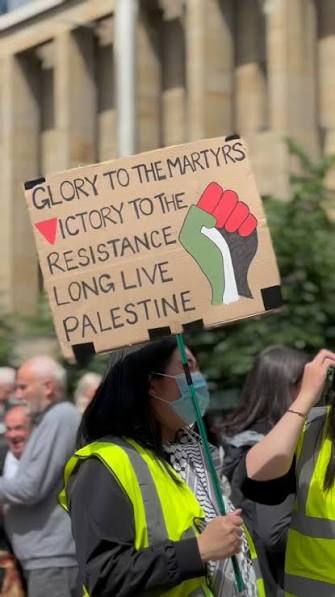
Rutgers “Glory to the martyrs”, praising the jihadists murderers
But cataloguing whether a slogan is legally protected is different from investigating the ideology being expressed by the people using it. The First Amendment can protect vile political speech. That does not make its ideological origin irrelevant to a federal investigation trying to understand antisemitism.
The omission is particularly consequential because the language of the campus protests did not develop in an intellectual vacuum. American universities have increasingly employed professors who view Israel through a settler-colonial framework. In its most categorical form, that theory casts Jews as foreign colonizers and Palestinians as the indigenous population resisting them. This screed is about Jewish presence in their homeland, not particular Israeli policies. It attempts to sever Jews from the land at the center of their history, religion, language and national identity and then uses that manufactured foreignness to challenge Jewish national self-determination. It is rank antisemitism that provides a logic other than Islamic supremacism to excuse Muslims preventing Jews from living and having self-determination “in any part of Palestine.”
“The conflict is cast in western circles as a local conflict over land between Jews and Arabs which can find compromise, but radical Islamists see it as a global religious matter between Muslims and Jews.” – First One Through July 2025
In such distorted worldview, October 7 becomes “resistance.” Hamas’s “Al-Aqsa Flood” becomes liberation. The intifada becomes something to globalize. Zionists become people to exclude, while Jews who object to any of this are reduced to the pro-Israel participants in a contentious political debate.
This is where the Commission missed the virulent strain of antisemitism it was supposed to investigate. The fear that swept through many Jewish communities after October 7 was not simply that Palestinian students disagreed with Jews about Israeli policy or conduct. Jews had watched an organization steeped in antisemitic ideology slaughter Israelis and take hostages. They then watched people in the West celebrate or rationalize the attack with the vocabulary of “resistance,” “intifada” and “Al-Aqsa Flood.”
While the Commission’s own evidence contained pieces of that story, its analytical framework never assembled them.
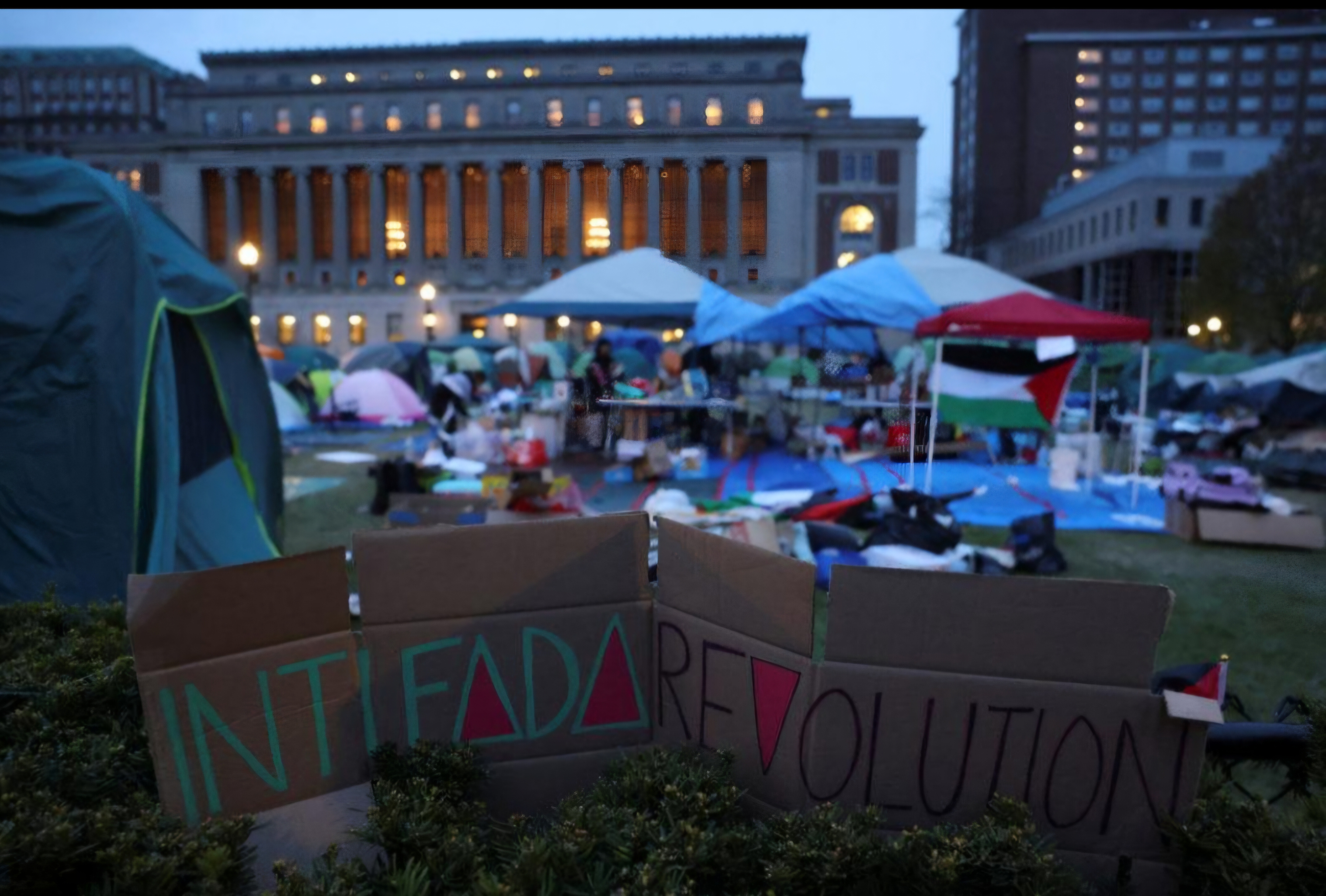
Columbia University encampment with “Intifada Revolution”
That failure has consequences. America has learned to recognize white-supremacist antisemitism – your father’s antisemitism – as an ideology rather than merely a collection of offensive statements. A swastika does not need to be accompanied by a dissertation on National Socialism before institutions understand the hatred behind it. The same intellectual seriousness should apply when antisemitism emerges from another extremist tradition.
Instead, this federal civil-rights report has provided universities with a framework that can make jihadist antisemitism remarkably difficult to see. While Jew hatred expressed in the vocabulary of white supremacy arrives already classified as extremism, similar hostility wrapped in the language of decolonization, resistance and intifada can be processed as politics, scholarship or protest. The Jewish student confronting it becomes the “pro-Israel” participant in a dispute, rather than a target of noxious hatred.
Jihadi antisemitism does not become benign when its vocabulary is translated for an American campus. Leaving that vector out of a federal investigation leaves universities less prepared to identify it, challenge it or protect the Jews it threatens.
The Commission set out to expose the forces driving contemporary campus antisemitism and instead helped preserve one of their safest hiding places: the assumption that when hatred of Jews arrives speaking the language of “resistance,” it is merely politics.
Resilience is a word we use so casually that we sometimes forget what it actually means. It comes from the idea of springing back: absorbing a blow without allowing the blow to determine what comes next.
Israel received an extraordinary demonstration of it Wednesday morning.
Flydubai Flight FZ1073 was flying from Dubai to Tel Aviv carrying roughly 150 Israelis when something went terribly wrong in the cockpit. The plane plunged rapidly, eventually transmitted the international code for unlawful interference and diverted to Saudi Arabia. Israeli officials now say they are investigating the incident as an attempted terrorist attack. According to Israeli officials cited in press reports, a pilot was stabbed during the cockpit struggle, and passengers and crew helped overpower the attacker. Everyone aboard survived.
The investigation is continuing, and some details remain unsettled. But the response aboard the aircraft is striking. A plane full of people suddenly drops thousands of feet. There is violence in the cockpit. Passengers realize their lives may depend upon what happens in the next few minutes. People act and the attacker is subdued. The aircraft lands.
That is resilience in its most compressed form.
Inside the cockpit chaos: Passengers describe blood, screams on Flydubai flight
For a slower version, look at Kibbutz Be’eri.
On October 7, 2023 Be’eri suffered a horrific massacre at the hands of jihadists from Gaza. Nearly three years later, its residents are rebuilding houses, schools and community facilities and preparing for a broader return. Most of the community says it wants to return. The rebuilding effort describes its purpose in the simplest possible terms: returning home rather than allowing jihadi terror to decide whether the community continues to exist.
That is resilience too. Not forgetting or forgiving. Not pretending nothing happened nor escaping grief. Rebuilding anyway.
There is another way some societies and movements can process grievance, and it has almost the opposite dynamic.
A grievance can become something to preserve rather than overcome. Suffering becomes justification for retaliation. Retaliation produces a counterattack. The counterattack becomes a new grievance. That grievance then justifies another attack. Instead of absorbing catastrophe and trying to restore ordinary life, the political ideology continually replenishes itself from catastrophe.
There is a name for this process: grievance-fueled radicalization. Over the course of a century, it has become the mantra of Palestinian Arabs.
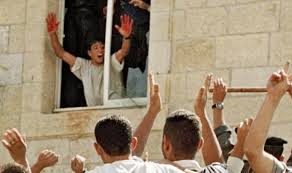
Palestinian Arabs mutilate Israelis in Ramallah and hold bloody hands aloft to cheering crowd at start of Second Intifada in October 2000
And it is impossible to understand Hamas and Palestinian Islamic Jihad without understanding how powerfully this mechanism operates within their ideology.
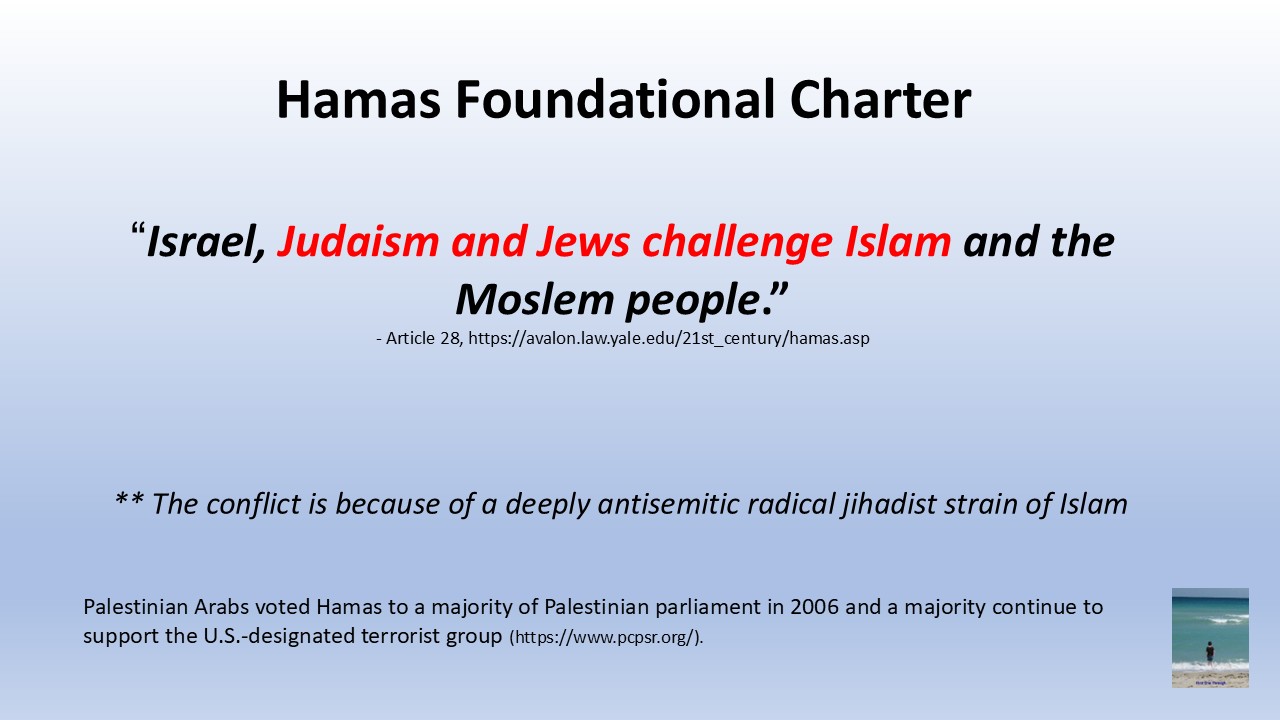
Hamas’ foundational charter did not merely object to particular Israeli borders or governments. It presented Palestine as an Islamic waqf that could not be surrendered and described the struggle over the land in explicitly religious terms. It was a call to “cleanse” the land of Jews and “Crusaders.”
Palestinian Islamic Jihad is even less ambiguous. The U.S. State Department has described PIJ as committed to Israel’s destruction and the creation of an Islamic state throughout historic Palestine, including present-day Israel.
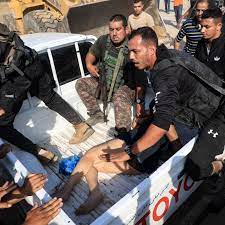
Hamas and PIJ bring back body of dead woman to cheering crowds in Gaza on October 7, 2023
The Palestinian jihadi movement built around grievance can interpret the consequences of its own violence as additional evidence for the grievance that justified the violence in the first place.
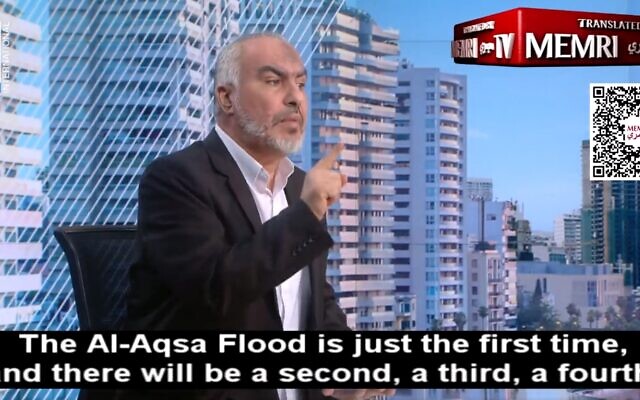
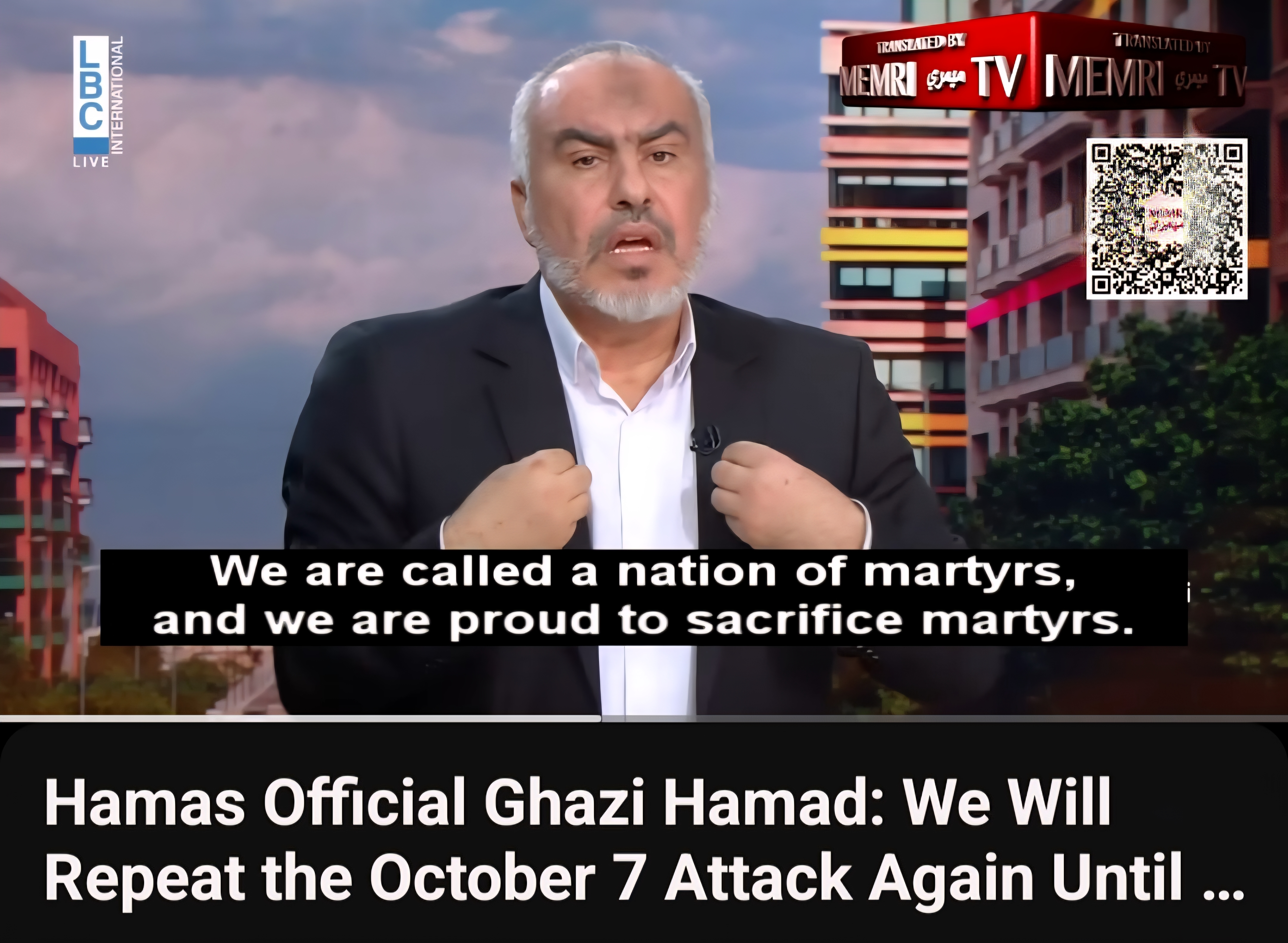
Hamas political bureau member Ghazi Hamad supplied an unusually stark example after October 7. He argued that Israel itself was responsible for the bloodshed, said Hamas would repeat October 7 again and again, and rejected the idea that Israel had a legitimate place on the land.
Consider the circularity. Israel’s existence is a grievance > Hamas attacks Israel is resistance > Israel response is a new grievance.
The cycle reproduces itself indefinitely because almost every possible outcome feeds it.
That is fundamentally the opposite of resilience.
Resilience does not require forgetting a grievance. Israelis certainly have not forgotten October 7, just as the people of Be’eri have not forgotten what happened in their homes. Resilience is the decision that suffering will not become the organizing principle of everything that follows.
The passengers on FZ1073 did not have the luxury of theorizing about any of this. Their aircraft was falling. They fought for control of it.
Be’eri has been doing essentially the same thing for three years, only much more slowly: taking back control of what comes next.
Israel has built resilience around what comes after catastrophe: survive, rebuild and move forward. Palestinian jihadist movements have built their cause around grievance that must be preserved, intensified and avenged. Coexistence becomes possible only when their stated mission to eliminate the Jewish state no longer governs the conflict.
The Palestinian Authority has a problem with Jews praying at Judaism’s holiest site.
Its Western supporters have a different problem. They keep telling us the Palestinian Authority is moderate, peaceful and reformed.
This week provides a useful test of both claims.
Sukkot is one of Judaism’s three ancient pilgrimage holidays. Jews have traveled to Jerusalem for Sukkot for thousands of years. They still do, including from around the world.
The United States is by far the largest source of foreign tourists to Israel. In August, Americans accounted for roughly 35 percent of foreign tourists, followed by France at 13 percent and Britain at 8 percent. Together, those three countries supplied about 56 percent of Israel’s foreign tourists.
Sukkot brings Jews to Jerusalem to do what Jewish pilgrims have done for generations: celebrate the holiday, carry the Four Species and pray.
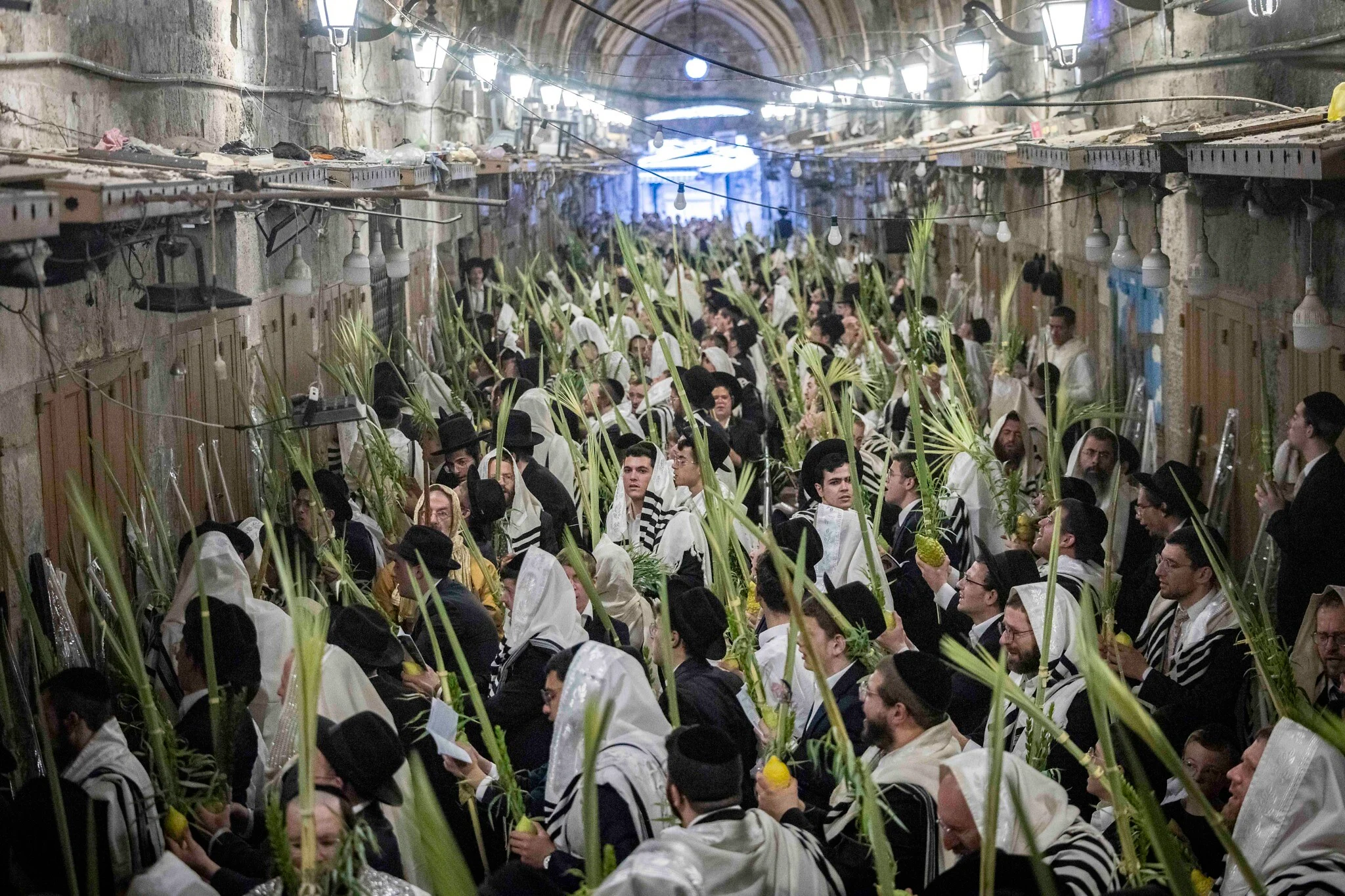
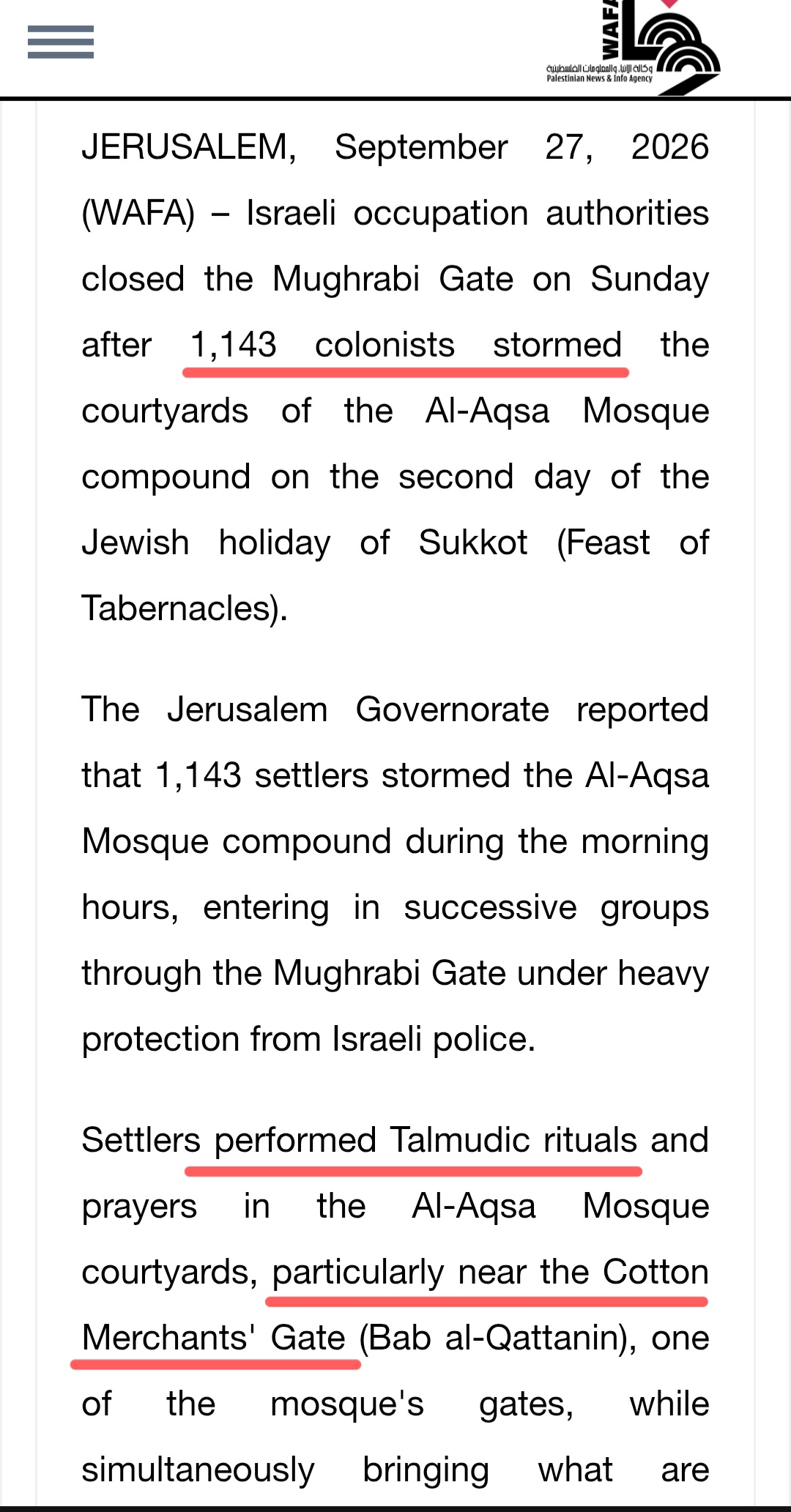
This week, 1,731 Jews visited the Temple Mount in a single day. They carried lulavim and etrogim. They gathered together. They prayed. They sang.
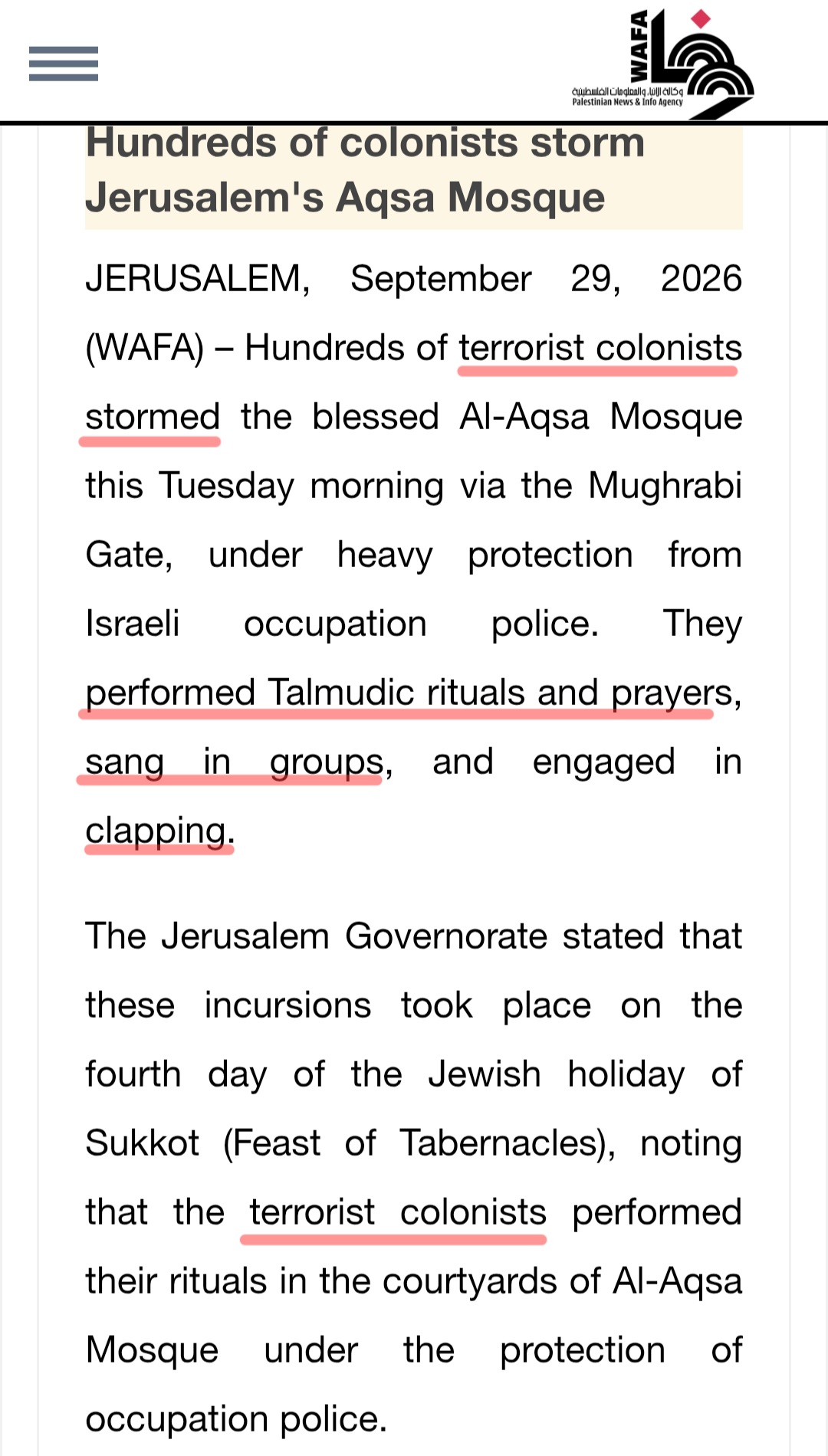
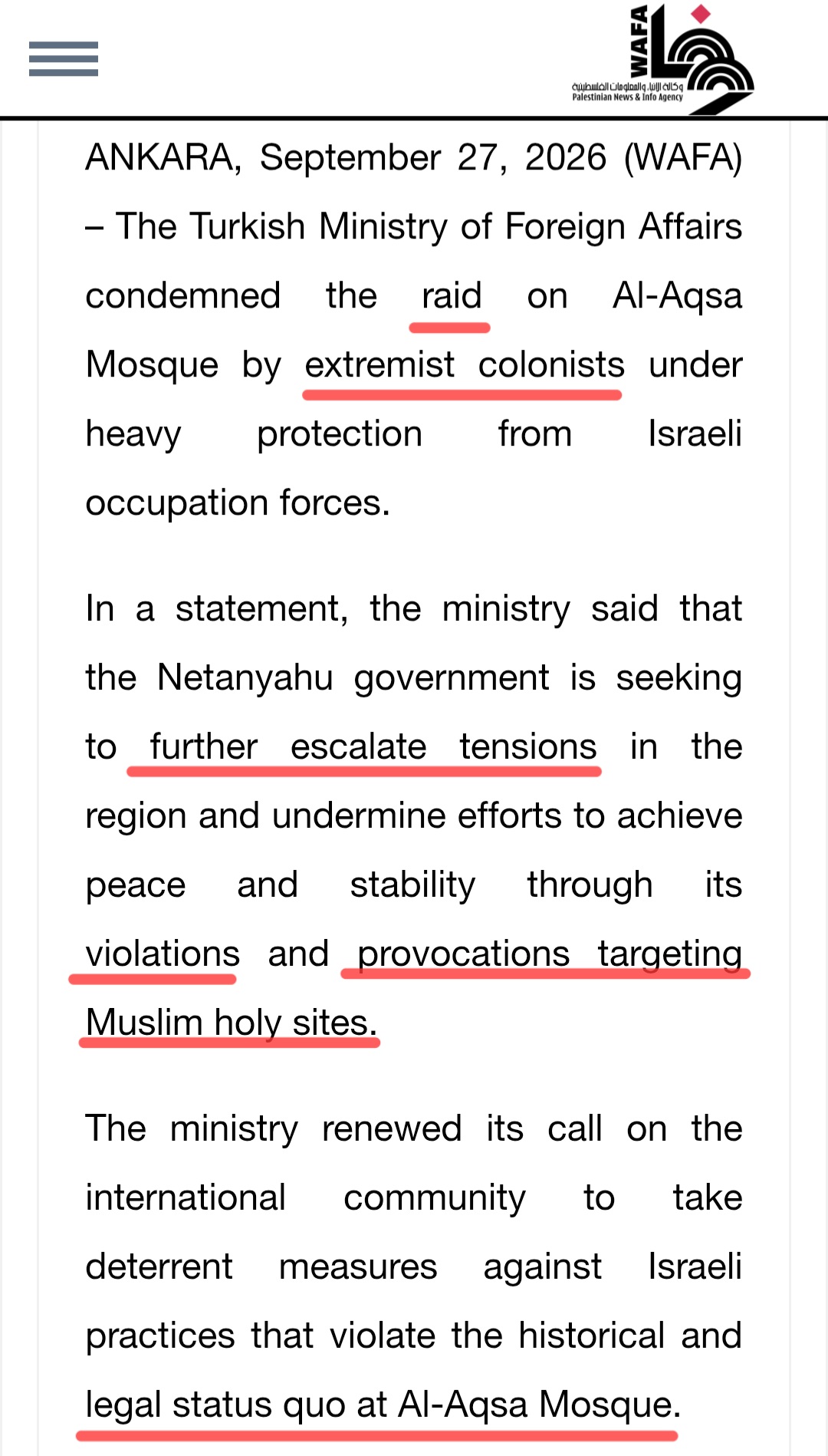
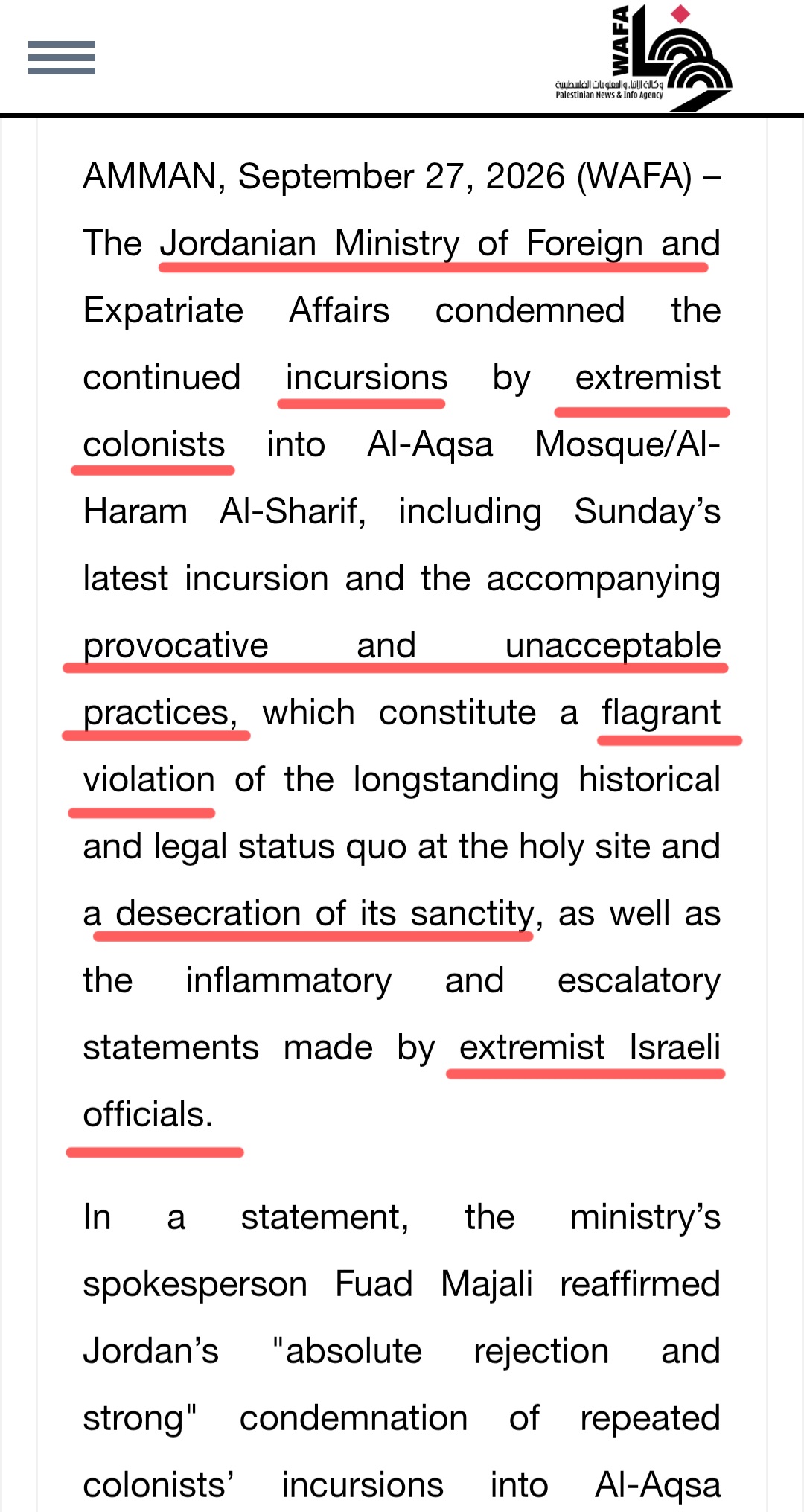
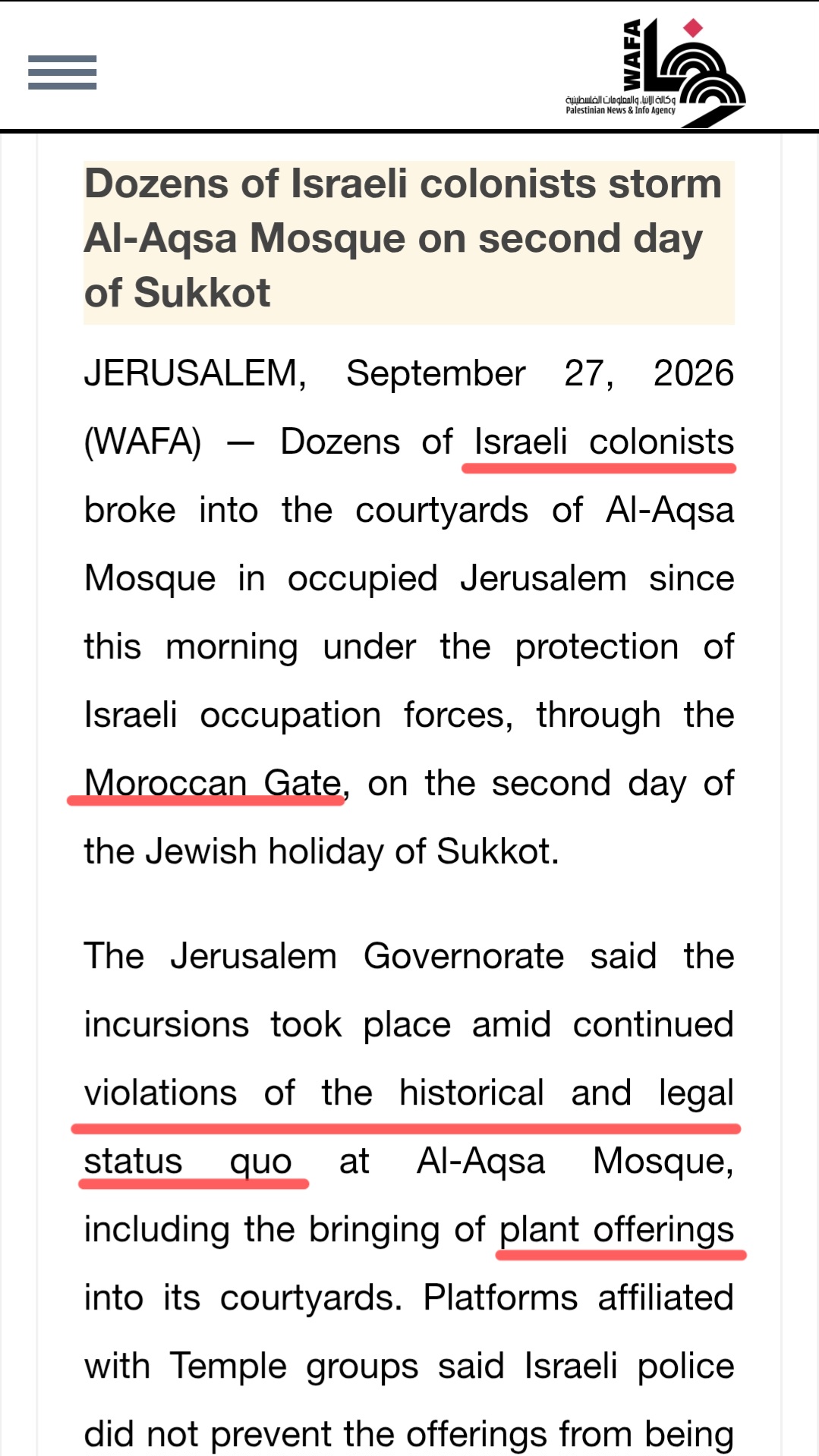
The Palestinian Authority’s official news agency called Jews doing this “terrorist colonists.”
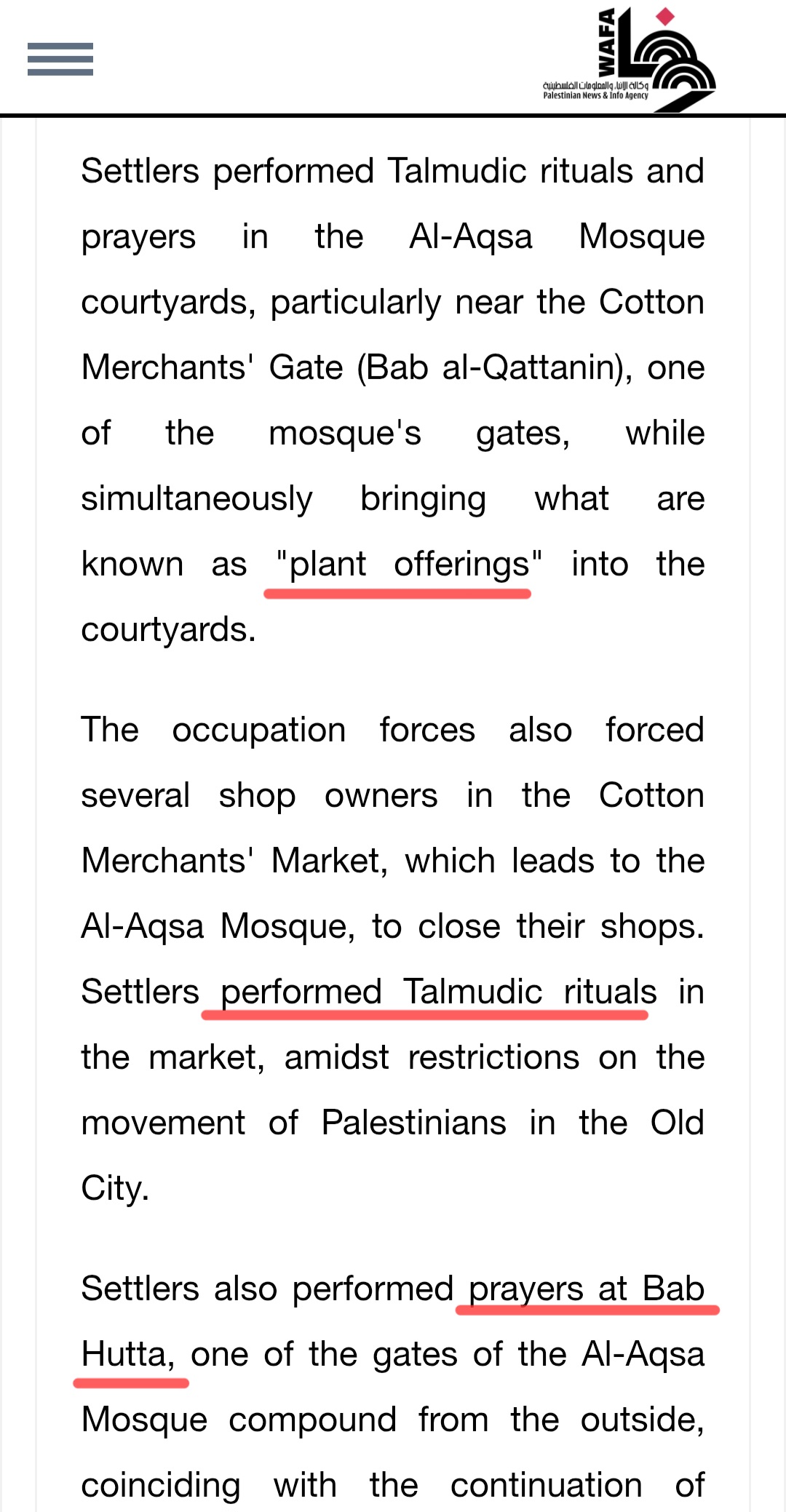
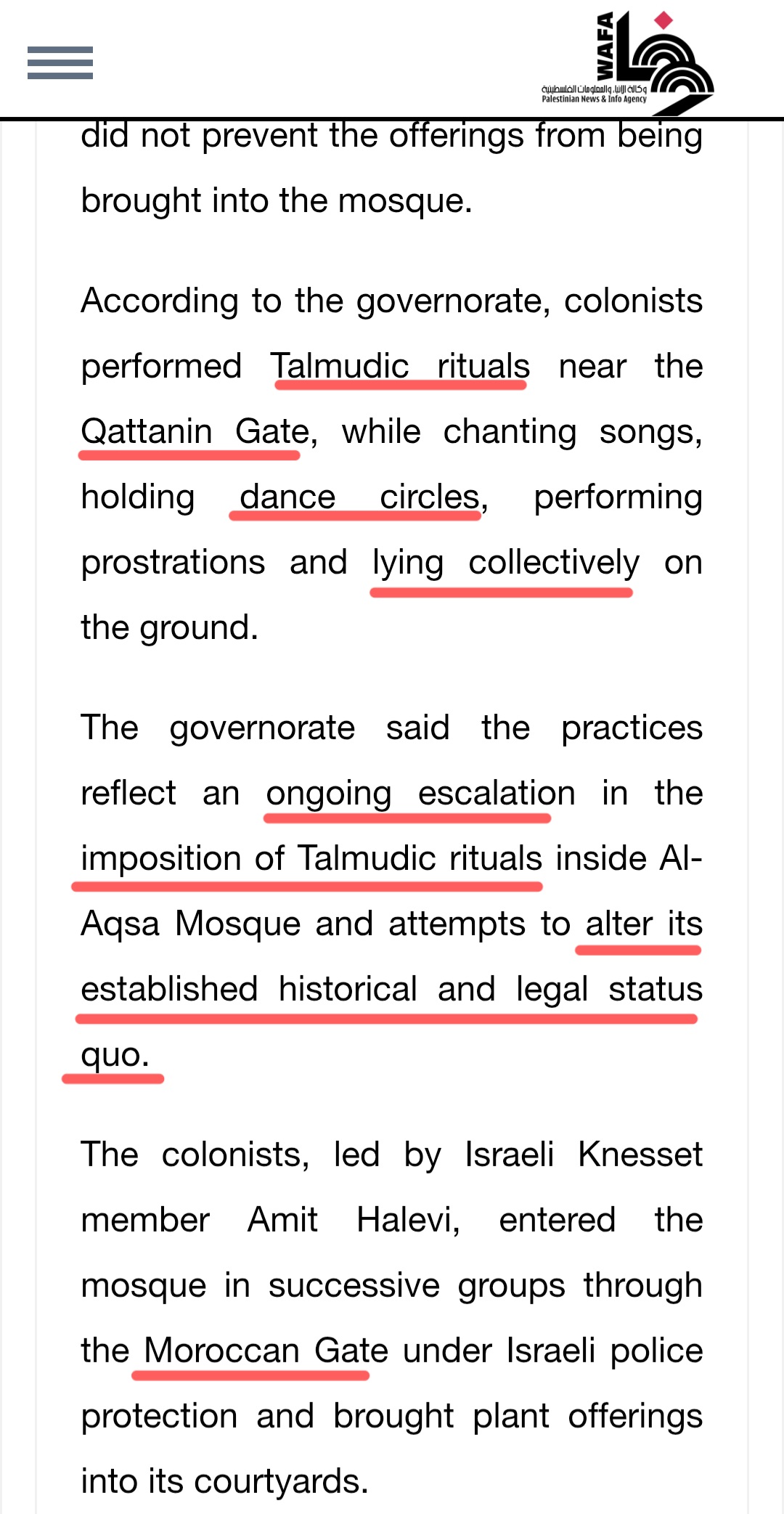
WAFA’s own account described the supposed terrorism: they “performed Talmudic rituals and prayers, sang in groups, and engaged in clapping.”
Praying. Singing. Clapping.
Now consider what the political leaders back home have been saying about the Palestinian Authority.
French President Emmanuel Macron has pointed to Mahmoud Abbas’s commitment to fighting hate speech and placed a renewed Palestinian Authority at the center of his vision for a Palestinian state.
Britain says a Palestinian state should be led by a “reformed Palestinian Authority.”
The European Union has praised the PA’s reform agenda and backed it with substantial financial support.
American politicians have joined in.
Senator Chris Van Hollen has said the Palestinian Authority “seeks to accomplish its goals through non-violent means.”
Nineteen Democratic senators—including some of the Senate’s most progressive members—called for a Palestinian state governed by a “revitalized and reformed Palestinian Authority.” Their proposed framework specifically demanded that the PA combat “incitement to violence” and that its senior officials commit to nonviolence.
Perhaps they should read its official news service.
Senator Chris Van Hollen
Western governments have constructed the Palestinian Authority as the moderate alternative to Hamas: secular rather than Islamist, peaceful rather than violent, reforming rather than inciting.
Meanwhile, its official news agency looks at Jews celebrating Sukkot at Judaism’s holiest site and calls them “terrorist colonists.”
Jews travel to Jerusalem for Sukkot from America, France, Britain and elsewhere. They pray together. They sing. They carry their lulavim and etrogim. Then they return home.
They are your Jews. Your citizens.
Yet their own governments are actively aligning themselves with an authority whose official media labels Jews terrorists for peacefully practicing their religion at Judaism’s holiest site.
Macron should be asked whether this is the hate speech Abbas promised to fight. Britain and the European Union should explain how it fits their description of a reformed PA. And the American senators who specifically demanded that a revitalized PA combat incitement should decide whether calling Jewish worshippers terrorists qualifies.
These leaders now have a choice.
They can condemn the Palestinian Authority for calling Jews peacefully practicing their religion “terrorist colonists.” Or they can continue embracing it as moderate and reformed.
Governments cannot proclaim their opposition to antisemitism at home while ignoring it in the Palestinian Authority they champion abroad.
If Western leaders still call the Palestinian Authority moderate after it calls Jews “terrorists” for praying, they are no longer describing moderation. They are excusing jihadi antisemitism.
A Jewish prayer book is now a “highly dangerous development” in the Middle East according to the region’s Muslim leaders.
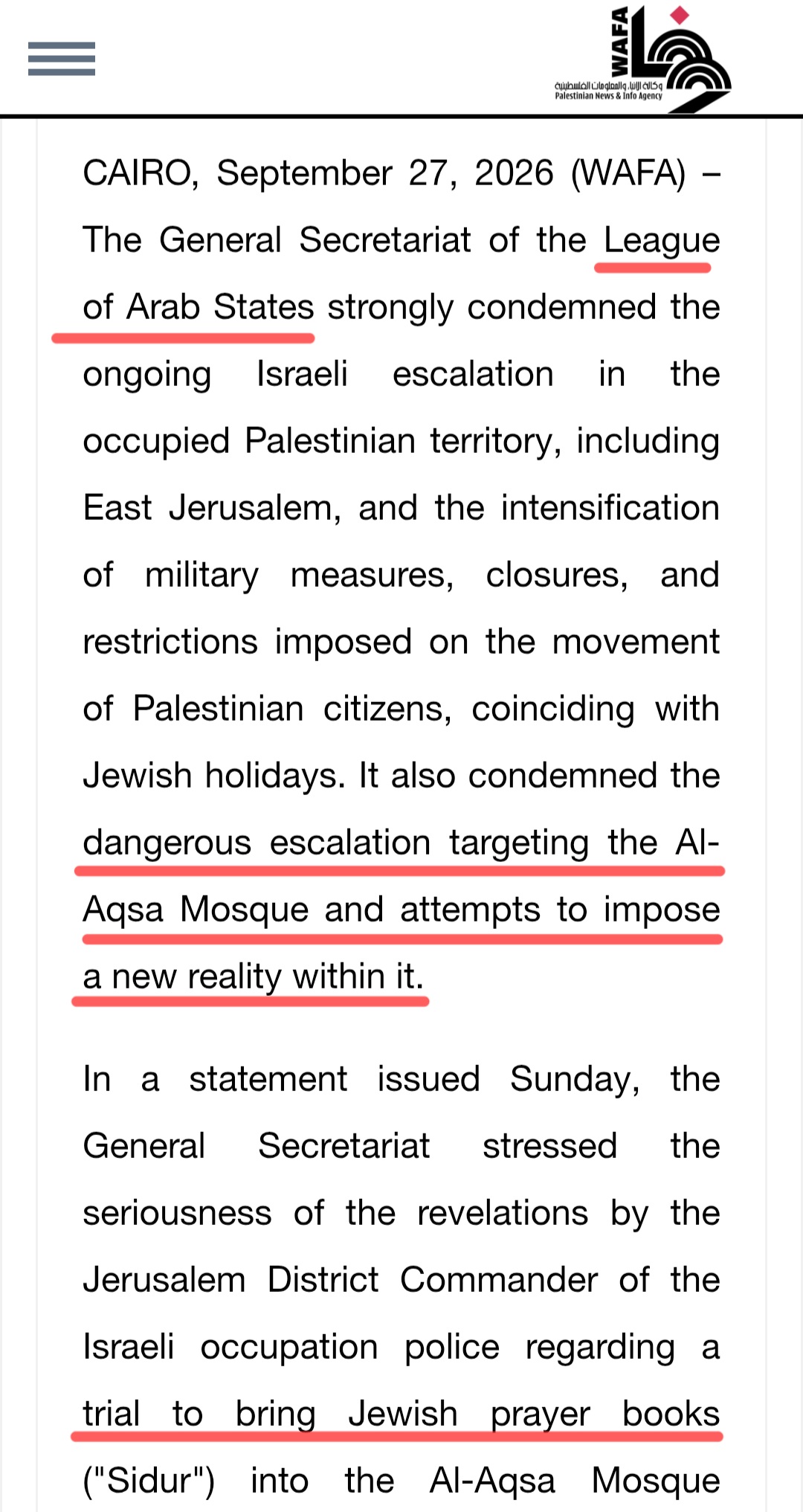
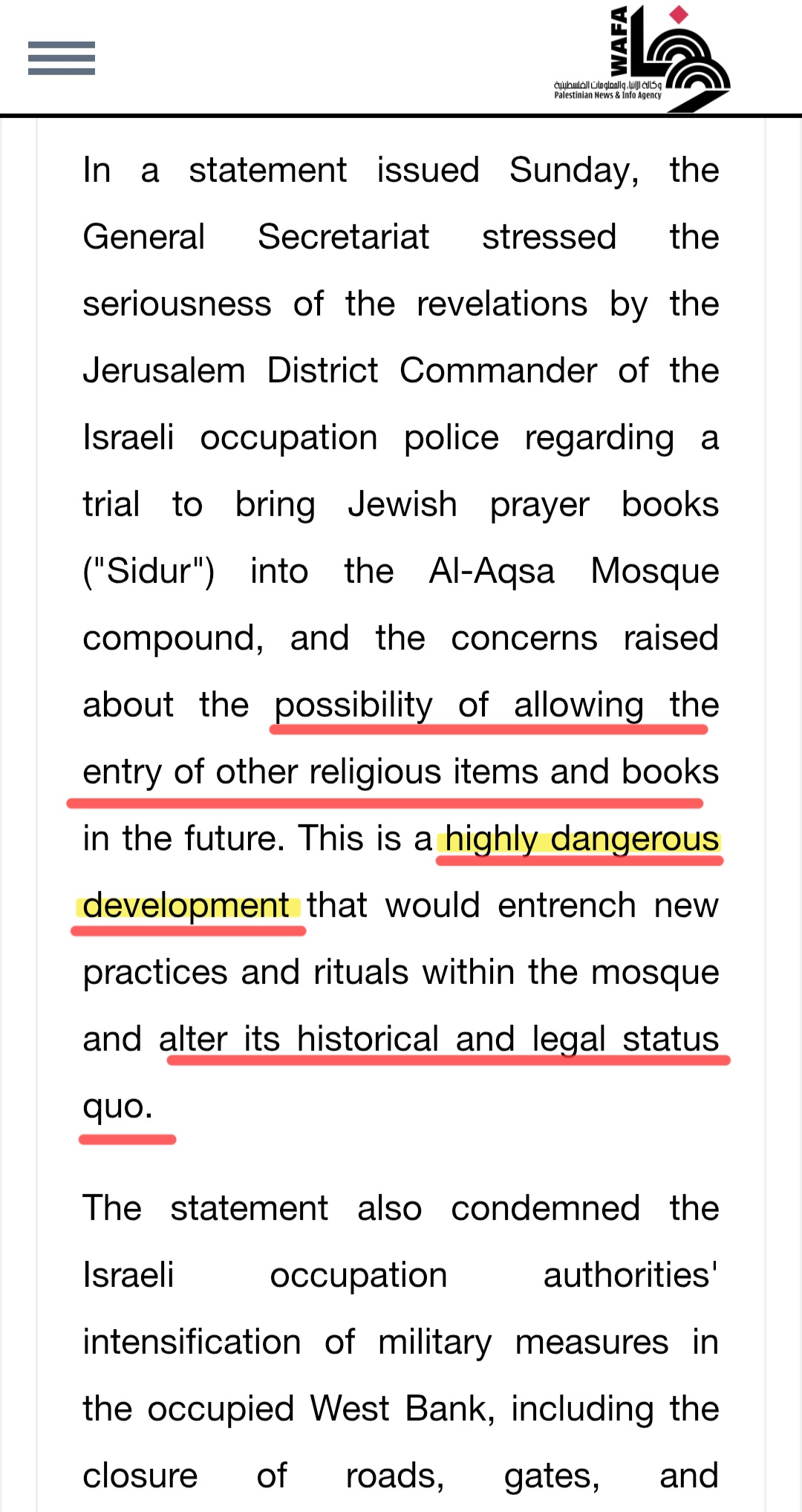
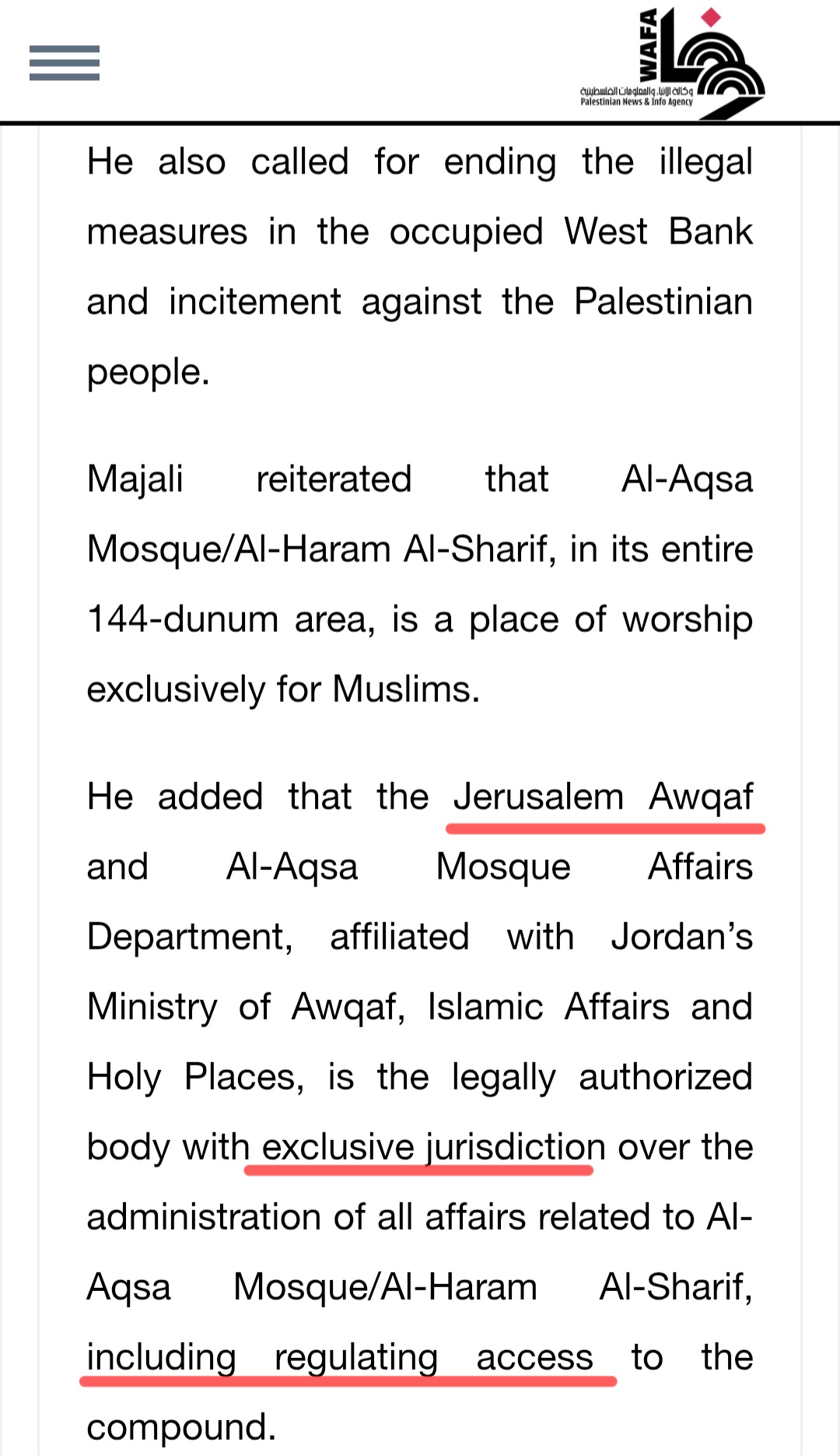
That was the Arab League’s description Sunday of reports that Israeli police are testing allowing Jewish prayer books — siddurim — onto the Temple Mount. The League warned that allowing them could establish new Jewish religious practices and alter the “historical and legal status quo.”
It wasn’t the only alarm sounded during Sukkot.
Over 1,000 Jews visited the Temple Mount on Sunday, with some openly praying and carrying the Four Species.
For perspective, roughly 80,000 Muslims attended the first Friday prayers at Al-Aqsa during Ramadan earlier this year. In normal years, Ramadan Friday attendance can reach 200,000.
For the Muslim world, Muslims were “worshippers” while Jews were “extremist” Israelis conducting “Talmudic rituals.”
Jewish men covered in prayer shawls hold the Four Species as they take part in morning prayers during the holiday of Sukkot at the Cotton Merchant’s Gate entrance to the Temple Mount in Jerusalem’s Old City, September 27, 2026. (Chaim Goldberg/Flash90)
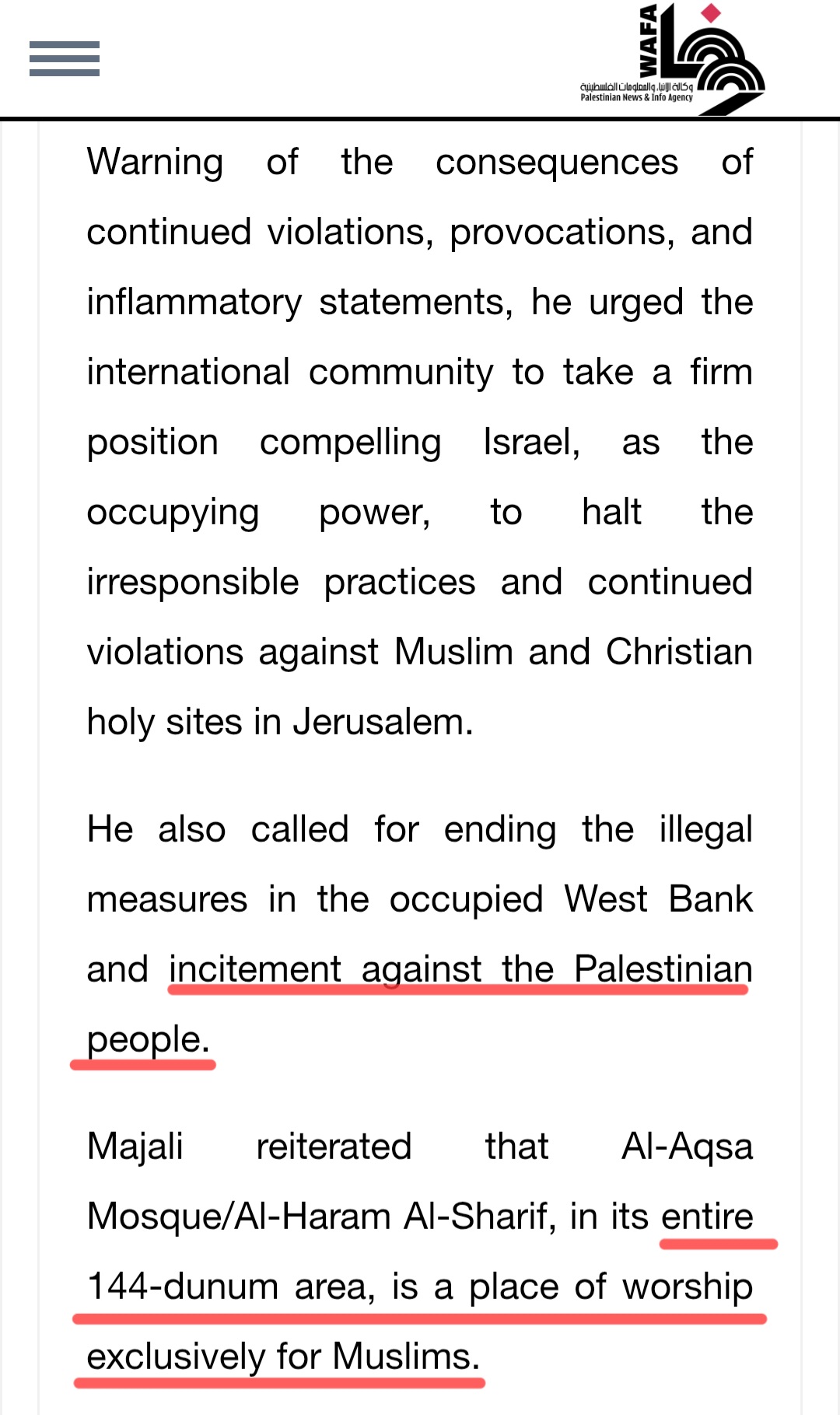
Palestinian Authority spokesman Nabil Abu Rudeineh warned that Israel risked transforming the political conflict into a “religious war.” He declared the entire 144 dunams of the Temple Mount an exclusively Muslim place of worship that cannot be divided or shared.
The reaction extends well beyond the Palestinian Authority.
Jordan condemned Sunday’s Jewish visits and again declared all 144 dunams exclusively Muslim. And Turkey, Egypt, Indonesia, Jordan, Pakistan, Qatar, Saudi Arabia and the United Arab Emirates have jointly used the same formulation: the entire compound is exclusively for Muslim worship and the Jordanian Waqf has exclusive jurisdiction to administer it and regulate entry.
Three weeks ago, I wrote about the effort to redefine the Temple Mount “status quo,” transforming restrictions on Jewish prayer into a broader claim that the entire compound is exclusively Muslim.
Sukkot takes the story further.
There is no question that Israel is changing its own practice. For decades, Israeli governments maintained the policy that Muslims prayed on the Temple Mount while non-Muslims visited. Israeli police restricted Jewish prayer and barred siddurim and other Jewish religious objects.
Israel observed those restrictions for decades. But it never enacted a permanent statutory ban on Jewish prayer or agreed that the entire Temple Mount would forever be exclusively Muslim.
Now Israel is allowing some Jews to worship at Judaism’s holiest site.
The response is not simply a demand that Israel return to its previous practice. Multiple Muslim governments are declaring that all 144 dunams are exclusively Muslim. The possibility of a Jew carrying a siddur is described as a “desecration of its sanctity,” and jihadi calls for a “religious war.”
And this is happening during Sukkot, one of Judaism’s three biblical pilgrimage festivals, historically centered on Jews traveling to Jerusalem and the Temple. Jews were making pilgrimage there during Sukkot more than a thousand years before Islam existed.
A small number of Jews praying peacefully at their holiest site during their pilgrimage holiday is used as incitement to jihad. And Muslim governments demanded that the “international community” take actions against the Jews.
Perhaps it is time for the international community to explain to radical Islamists what coexistence means.
Twenty-five years after September 11, the United Nations remembered the 2,977 people murdered in what it called the “heinous terrorist attacks” of September 11, 2001, “an assault on humanity itself.” It declared that “the fight against terrorism is a shared, unfinished task.”
But something rather important was missing.
Who were the terrorists? What did they believe? Why did they do it?
There was no al-Qaeda. No Osama bin Laden. No Islamist extremism. No jihadism. Nothing about an ideology whose most famous declaration called for jihad against “Jews and Crusaders.”
Perhaps the United Nations simply avoids attaching ideologies to terrorism. It does not.
After a white supremacist murdered 49 Muslims at two Christchurch mosques in 2019, the UN spoke explicitly about “anti-Muslim hatred,” “anti-Islamic sentiments” and Islamophobia. Secretary-General António Guterres described the Pittsburgh Tree of Life massacre as the “worst antisemitic attack in the history of the United States.” Discussing the Halle synagogue attack and related violence, the UN warned about “antisemitic hatred,” “Neo-Nazis and white supremacists” and their “poisonous ideology.”
That is exactly what an institution confronting extremism should do. Terrorism is an act; ideology can explain its motivation.
Then consider Sri Lanka.
On Easter Sunday 2019, radical Islamist suicide bombers attacked churches and hotels, killing roughly 270 people. Sri Lanka subsequently told the UN that the terrorists had been “inspired and indoctrinated” by extremist organizations including ISIL/Daesh and had “specifically targeted churches.”
Yet on the seventh anniversary in 2026, the UN remembered the victims of the “Easter Sunday attacks.” Not terrorist attacks. Not ISIS-inspired terrorism. Not jihadism or Islamist extremism. Not anti-Christian hatred. The killers’ ideology had vanished.
That makes the 9/11 omission considerably harder to dismiss as an unfortunate choice of words. When Muslims are murdered by an anti-Muslim extremist, the ideology matters. When Jews are murdered by antisemites or neo-Nazis, the ideology matters. But when jihadists murder Americans or ISIS-inspired suicide bombers slaughter Christians at Easter, the UN retreats into the bloodless vocabulary of “terrorism” and “attacks.”
The problem is not that the UN says Islamophobia, antisemitism, white supremacy or neo-Nazism. The problem is its apparent inability to apply the same principle to jihadism.
That is no longer merely a question of consistency.
A 2024 study by the French think tank Fondapol catalogued 66,872 Islamist terrorist attacks since 1979, killing nearly 250,000 people. Roughly 243,000 of those deaths occurred after 2001. Almost 89 percent of the dead were killed in Muslim-majority countries. The Taliban, Islamic State, Boko Haram, al-Shabaab and al-Qaeda accounted for more than four-fifths of the victims.
“Islamist attacks around the world are more numerous today than ever before.” – Fondapol study
Jihadist ideology is therefore hardly an extinct doctrine being dredged up to explain a 25-year-old atrocity. Al-Qaeda survives. ISIS and its affiliates survive. Jihadist organizations continue to recruit and kill around the world, with Muslims overwhelmingly among their victims.
Calling that ideology jihadist or Islamist extremism no more condemns Muslims generally than calling an ideology neo-Nazi condemns Germans. In fact, refusing to make that distinction does Muslims no favor. It obscures an extremist ideology that has slaughtered enormous numbers of Muslims themselves.
Nor are the extremists coy about what they believe. They publish it, preach it, recruit with it and murder in its name. It is the international institutions confronting them that increasingly seem afraid to repeat what the killers themselves say.
So the UN should answer a straightforward question: Why can it say “white supremacist” and “neo-Nazi,” but not “jihadist”?
Has fear of accusations of Islamophobia—or pressure from states and organizations determined to shield Islamist ideology from scrutiny—become so powerful that jihadist supremacy alone receives a linguistic sanctuary at the United Nations?
Whatever the explanation, the consequence is dangerous. An ideology does not become less lethal because international institutions refuse to name it. It simply becomes harder to confront.
When terrorists can proclaim their ideology more plainly than the United Nations can describe it, sensitivity has crossed the line into surrender.
One of the most enduring images of the American Revolution is not a musket fired at Lexington or a cannon at Yorktown. It is a flag.
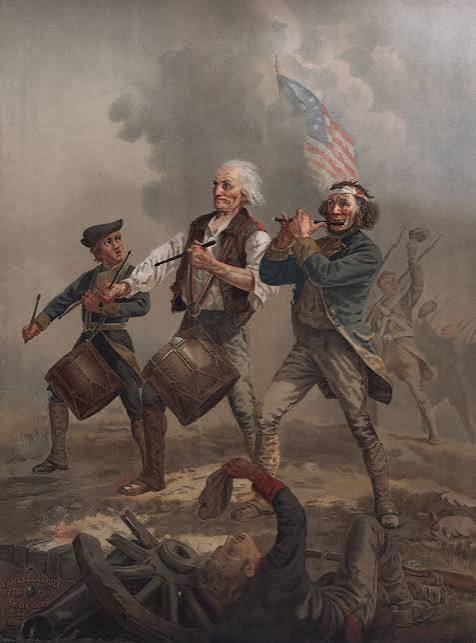
“Spirit of ’76” by Archibald Willard, 1875
In paintings celebrating the American Revolution, men advance carrying banners while drummer boys beat the cadence beside them. Often these figures are unarmed or lightly armed. To a modern observer, this seems irrational. Why would an army send men into battle carrying flags and drums instead of rifles?
Because they were not there to fight but to remind others why the fight mattered.
The flag represented the regiment, the cause, and the emerging nation. The drum provided rhythm and cohesion amid the chaos of battle. Neither was a weapon. Yet both were indispensable.
While tools like weapons help achieve an objective, symbols give meaning to the objective.
The Declaration of Independence was not a weapon. Neither was the America flag. Yet without them, the American Revolution would have been little more than a military rebellion. The cause and symbols transformed a collection of armed colonists into a people united by a common purpose.
The same lesson appeared thousands of years earlier in the Torah.
Moses’ staff began as an ordinary shepherd’s stick. In Egypt it became a symbol of divine authority. It was present during the plagues, at the splitting of the sea, and throughout Israel’s journey in the wilderness.
Similarly, during the battle against Amalek, Moses stood on a hill overlooking the fighting. When he raised his hands, Israel prevailed.
The rabbis famously ask whether Moses’ hands actually won the battle. Of course not. Joshua and the soldiers were the actual fighters. Like the flag carried by a Revolutionary soldier, the Moses’ raised arms pointed upwards. It reminded the warriors that victory depended not only on military strength but on the faith that united them.
Moses’ arms raised during fight with Amalek
Unfortunately, Moses later forgot the important distinction between symbol and tool. In Numbers 20, God instructs Moses to speak to a rock to make it produce water but instead Moses used the staff to hit the rock.
“And the LORD spake unto Moses, saying, Take the tent and gather the congregation together, you and Aaron your brother, and speak to the rock before their eyes, and give them water from it,… And Moses lifted up his hand, and smote the rock with his rod, and there came out abundant water,… And the LORD said unto Moses and unto Aaron, Because ye believed me not, to sanctify me in the sight of the children of Israel, therefore ye shall not bring this congregation into the land which I have given them.”
Had Moses held the staff and spoken to the rock, it would have been clear that Moses was acting as an agent of God. However, by using the staff to hit the rock, the appearance to the congregation was that Moses produced the water through his physical actions. The important symbol was converted into a mere tool.
That temptation remains with every generation.
Today, neither America nor Israel doubts the superiority of its weapons. The United States and Israel possess military capabilities far beyond those of the jihadist movements that seek their destruction.
But this war is not only about weapons and short-term military victory.
The jihadists understand the power of symbols. They flew their flags over burned civilian homes and corpses of families. Their propaganda celebrates martyrdom of their own people. Their movements are built around vile narratives and identity.
So the engagement with the enemies must be beyond tools and include symbols.
The challenge facing America as it approaches its 250th birthday, and Israel as it continues its long war against jihadist movements sworn to its destruction, is not merely maintaining military superiority. It is ensuring that the superiority of their cause is just as visible.
For Israel, that means rebuilding the communities of the Gaza Envelope, returning families to their homes, raising the flag over places terrorists tried to erase, and celebrating Jewish life where jihadists sought death.
For America, it means reclaiming the language of the Declaration of Independence, speaking unapologetically about liberty and human rights, and using international forums not merely to condemn violence in general but to condemn noxious jihadist violence specifically.
The free world must repeatedly denounce genocidal jihadists like Hamas and Hezbollah and pass resolutions that celebrate democracy, defend religious freedom, and affirm the dignity of every human being.
The current fight matters more than military victory. It requires weapons, and also a proud display of enduring Jewish and Democratic values.
Tools win battles. Symbols sustain civilizations. They are both distinct and required at pivotal moments like today.
We tend to think of “ground zero” as a place, a site of destruction. Where you can point to and say: it happened here.
The new ground zeros are not simply where attacks occur. They are where the vulgar idea stops sounding outrageous.
They form in environments where the rules quietly change, where violence against Jews is never explicitly endorsed, but is no longer cleanly condemned. It is where it is explained. Contextualized. Where the language shifts just enough that the victim is converted into the villain.
You can see it in parts of political culture that elect figures like Rashida Tlaib and Zohran Mamdani without seriously confronting the ideological space around them.
Rep. Rashida Tlaib called Jews conspirators who operate “behind the curtain” to “make money off of racism” at the Democratic Socialist of America convention
Ayman Mohamad Ghazali, the man who came to murder hundreds of children at a Jewish day school in Michigan, lived in Rashida Tlaib’s Michigan district, home to thousand of people who believe Tlaib’s rhetoric, who support – or least excuse – her vile antisemitism.
The same motion can be seen in New York City where Emir Balat, 18, and Ibrahim Kayumi, 19, pledged allegiance to the Islamic State and came to the city that elected a jihadist mayor to rain violence on perceived enemies.
When enough people participate in erasing the moral line, the boundary that once made violence unthinkable begins to weaken. And when that boundary weakens, the outliers don’t need instructions.
They need atmosphere.
The new ground zero is not the place where it happens. It is where it no longer feels impossible.
There is a temptation in moments of fear and anger to reach for the bluntest possible instrument: collective blame.
We are seeing it again now, in calls from some politicians and commentators to treat Muslim Americans not as individuals, but “as a class.” It is offensive. It is wrong. And it is profoundly un-American.
We have been here before.
American history offers a warning that should never be forgotten: General Ulysses S. Grant’s order expelling Jews “as a class” from parts of the South during the Civil War. It was born of frustration, prejudice, and expedience. It is remembered today as a stain.
That is what collective guilt produces. Not security. Not clarity. Just injustice.
And it obscures the truth.
Because the truth is more important: not all Muslims are jihadists. The overwhelming majority are not. But there exists, within every society, a subset animated by radical, supremacist ideology. In this case, that subset is jihadists and they are a very real problem.
We have seen synagogues attacked, Jewish schools targeted, and civilians murdered around the world – from New York to Paris, from Sydney to Jerusalem. These acts are not isolated. They are the violent edge of a broader ideological ecosystem that glorifies terror, sanctifies hatred, and seeks legitimacy in the West.
That ecosystem is not confined to foreign battlefields. It has nodes here.
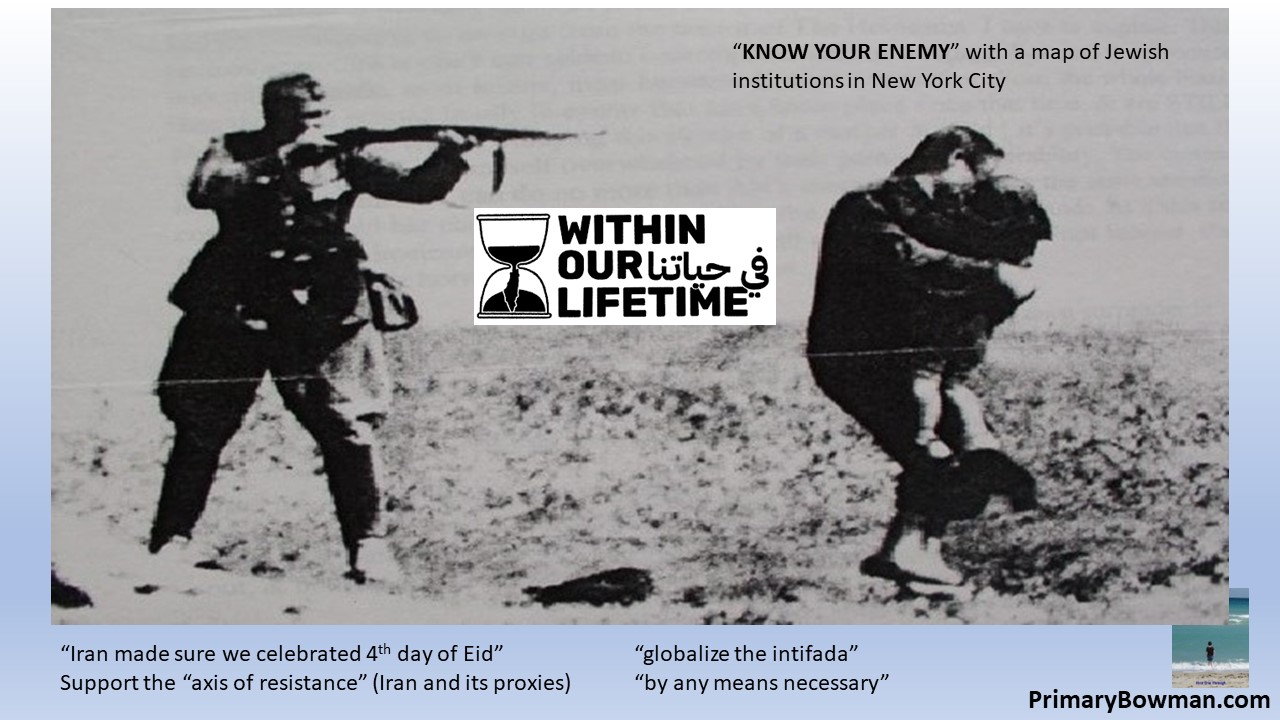
Organizations like Students for Justice in Palestine (SJP) and Within Our Lifetime do not operate as neutral advocacy groups. Their rhetoric, tactics, and alliances echo the narratives of jihadist movements – erasing terrorism, justifying atrocities, and turning mass violence against Jews into something to be rationalized and celebrated.
This is where scrutiny belongs.
Not on millions of Muslim Americans living ordinary lives who are part of the American fabric. But on the networks, organizations, and ideologies that radicalize, that excuse violence, and that deliberately blur the moral line between protest and terror.
Failing to make that distinction is not only unjust but dangerous.
When everything is labeled the problem, nothing is. When all Muslims are treated as suspects, actual jihadists disappear into the noise. They benefit from that confusion. They rely on it.
And worse, it hands them a propaganda victory: proof, in their telling, that the West is inherently hostile, that coexistence is impossible, that radicalism is justified.
That is why calls to expel Muslims from the United States are not just racist; they are strategically self-defeating. They punish the innocent, betray American principles, and distract from the real threat.
A serious society does not fight ideologies with hysteria. It fights them with precision.
It identifies the threat clearly: jihadist ideology, its enablers, and the institutions that normalize or legitimize it. It protects the innocent. And it refuses, no matter how charged the moment, to abandon the principles that distinguish a free society from the movements that seek to destroy it.
A man attempted to massacre Jews at a synagogue and preschool in Michigan.
He drove a truck into the building, fired a rifle, and carried explosives and gasoline. Inside were more than a hundred children and staff. Only the quick response of security guards prevented what could have been a mass slaughter of Jewish children.
That should have been the story.
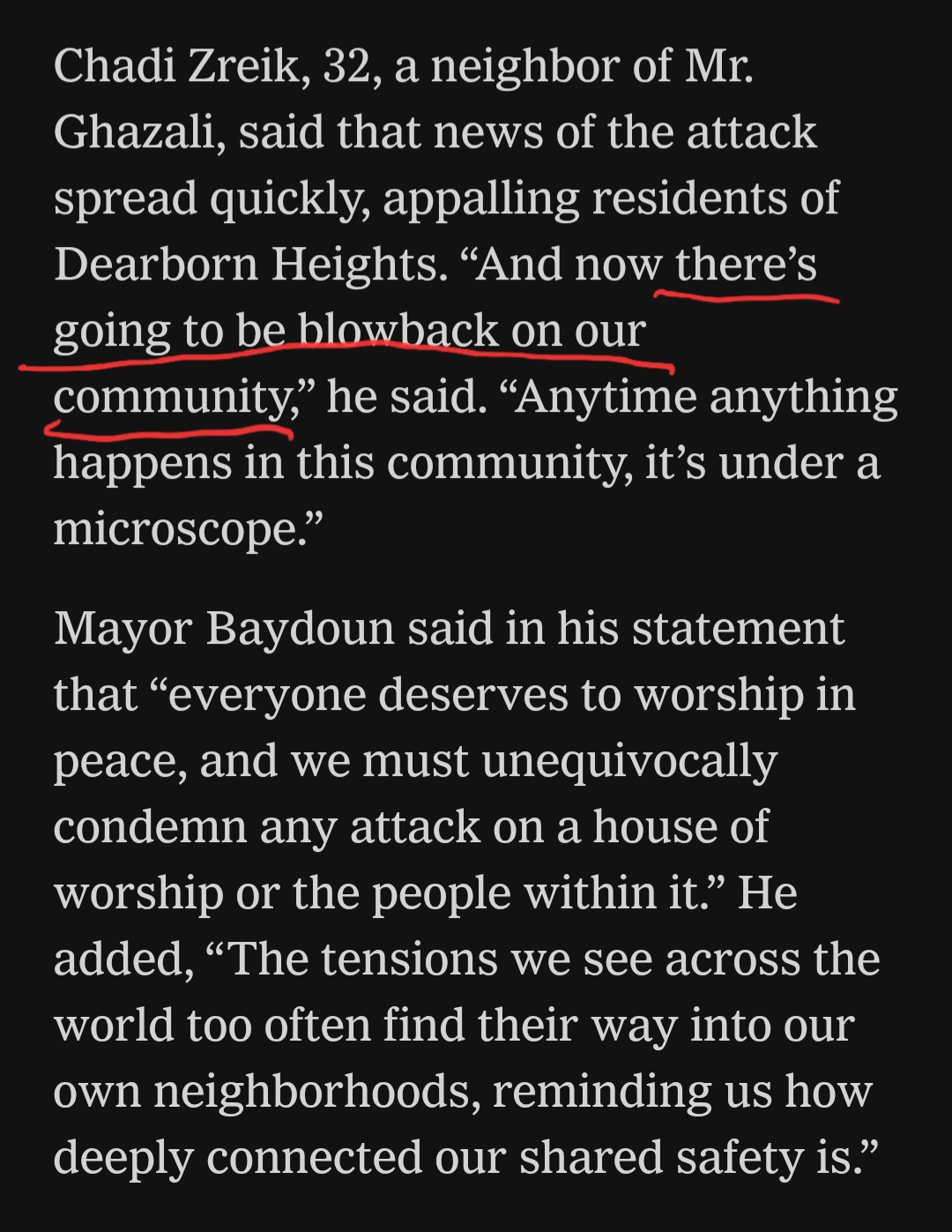
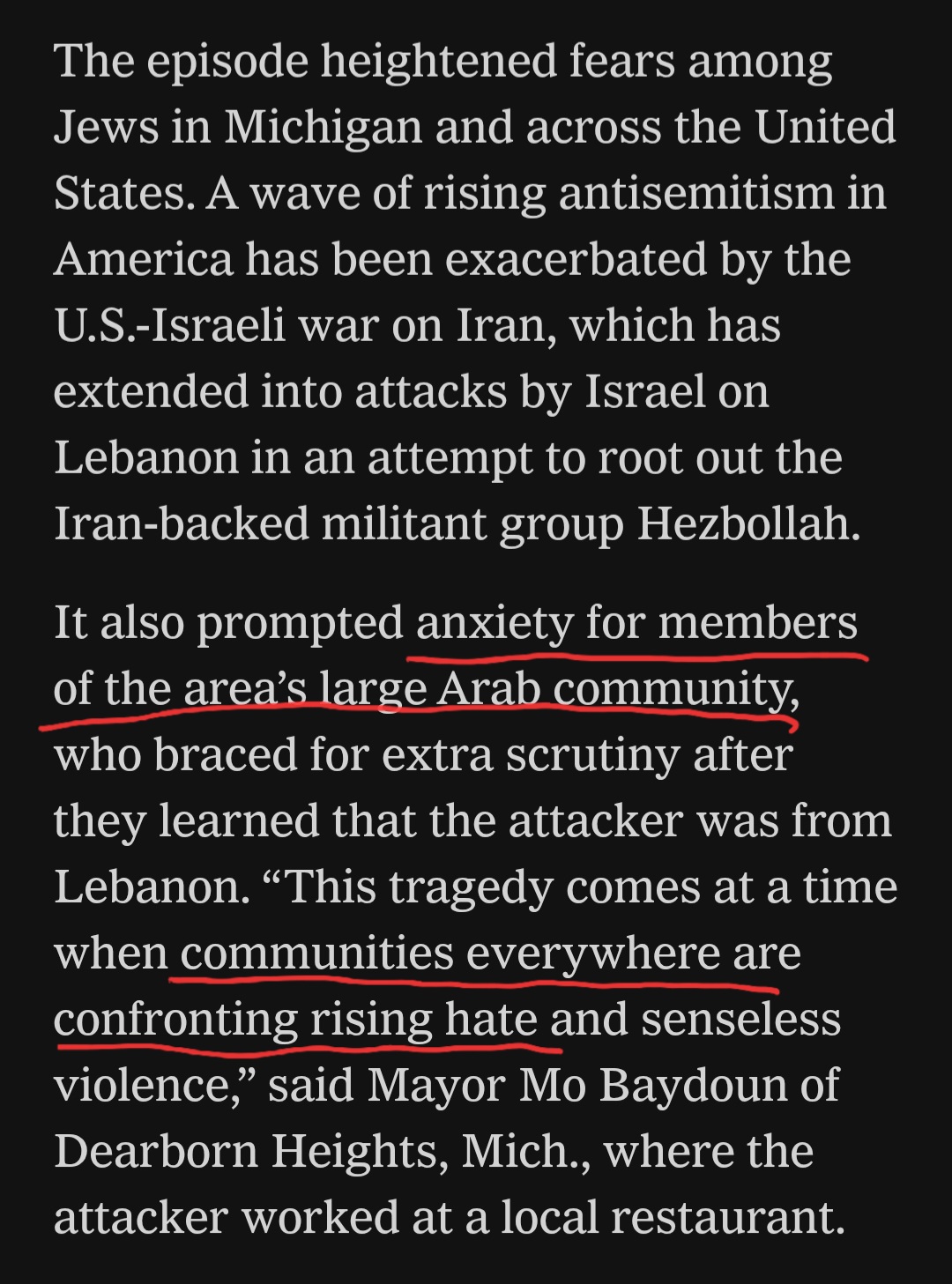
Instead, in its coverage of the attack, The New York Times quickly shifted the emotional center somewhere else. The paper highlighted concern that Muslims or members of the local Arab community had “anxiety,” worried they might face might face “blowback” after the attack.
Pause for a moment and consider the moral inversion.
A man tries to murder Jewish children in a synagogue, and the newspaper of record worries about the social consequences for people who share the attacker’s background, and “communities everywhere.. confronting rising hate.”
Would this framing appear in any other circumstance?
If a white nationalist attempted to burn down a Black church, would the central concern in the article be whether white Americans might face uncomfortable scrutiny?
If a neo-Nazi attacked a mosque, would journalists pivot immediately to the anxiety of Christians worried about backlash?
Of course not.
The victims would be the story. The ideology behind the violence would be examined directly and without hesitation.
But when Jews are attacked – especially by jihadists – the narrative too often drifts away from them.
The Reality the Coverage Avoids
There is another uncomfortable fact that often disappears in these discussions.
In the United States, Jewish institutions have repeatedly been targets of ideological violence.
Synagogues, kosher markets, Jewish schools, and community centers have been attacked by extremists motivated by antisemitism and/or jihadist ideology.
The list is tragically familiar:
the Tree of Life synagogue massacre in Pittsburgh
the Poway synagogue shooting
the Jersey City kosher market attack
the Colleyville synagogue hostage crisis
Across Europe the pattern is even clearer: the Toulouse Jewish school massacre, the Hyper Cacher supermarket attack in Paris, and numerous synagogue shootings and plots across the continent have been by jihadists.
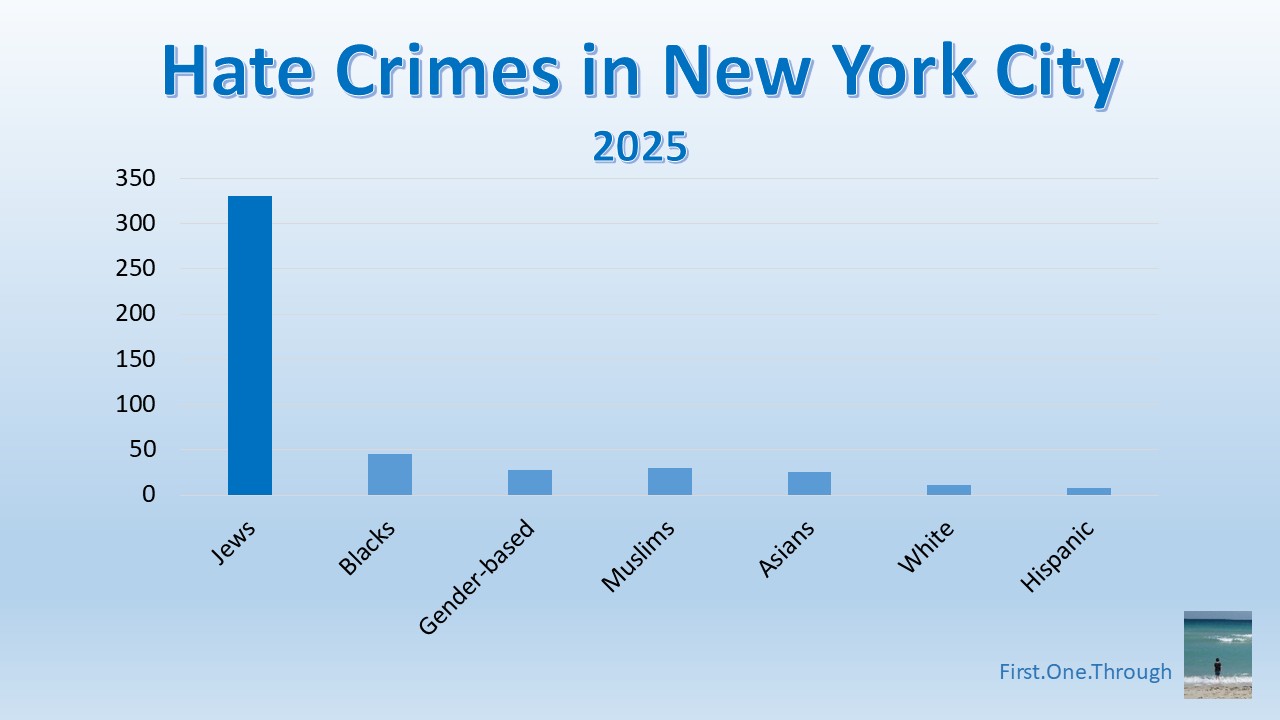
Yet the reverse pattern is almost nonexistent.
There is no recurring history in the United States of Jews entering mosques to massacre Muslims, no wave of Jewish attackers targeting Muslim schools or grocery stores.
The asymmetry matters.
Jewish institutions build security fences, hire armed guards, and train for active shooters not because of paranoia, but because experience has taught them they are frequent targets.
The Michigan synagogue had security for exactly this reason.
Without it, the story might have been hundreds of funerals.
A Pattern of Moral Softening
The New York Times’ framing of the Michigan attack fits a broader pattern that has become increasingly visible in recent years.
When jihadist-inspired violence occurs, the language often softens. Motives become vague. Ideology dissolves into references to “grievances,” “tensions,” or the emotional distress of communities associated with the attacker.
Select context is provided for the perpetrator that make him appear a victim, such as mourning the loss of family members in the Middle East, without sharing that those family members were members of jihadi terrorist groups.
This is no longer news but distortion.
Journalism is supposed to clarify reality, not obscure it. When coverage instinctively protects the social sensitivities of the attacker’s community while barely dwelling on the intended victims, it creates a moral fog.
No serious observer believes entire communities are responsible for the crimes of individuals. That principle should remain unquestioned.
But shifting sympathy away from the Jewish victims of an attack to the jihadi attacker is a failure to report the truth clearly for the purpose of a twisted narrative. One that continues to put the most attacked minority-minority in the crosshairs while falsely painting their most frequent attackers as the ones needing sympathy.