An Election for a Failed State

Palestinian Arabs are scheduled to vote on November 28 in their first legislative election in twenty years. International observers will naturally ask whether the election is free and fair. But there is a more fundamental question:

Will Palestinians actually be electing a government capable of governing?

The problem begins with the Palestine Liberation Organization.

The PLO was established in 1964, decades before there was a Palestinian Authority. In 1993, it was the PLO—not the Palestinian Authority—that entered the Oslo process with Israel. Those agreements established the framework for Palestinian self-government in the West Bank and Gaza and contemplated an elected Palestinian Council. The Palestinian Authority and the executive institutions emerged from that process as the interim governing apparatus.

The PLO is the institutional skeleton on which the Palestinian political system was built.

And that makes the coming election peculiar.

Electing People Who Reject the System

The August modification to the election law requires candidates to commit to recognition of the PLO as the sole legitimate representative of the Palestinian people, as well as its political and national program and relevant international resolutions.

Yet Palestinians overwhelmingly reject that requirement.

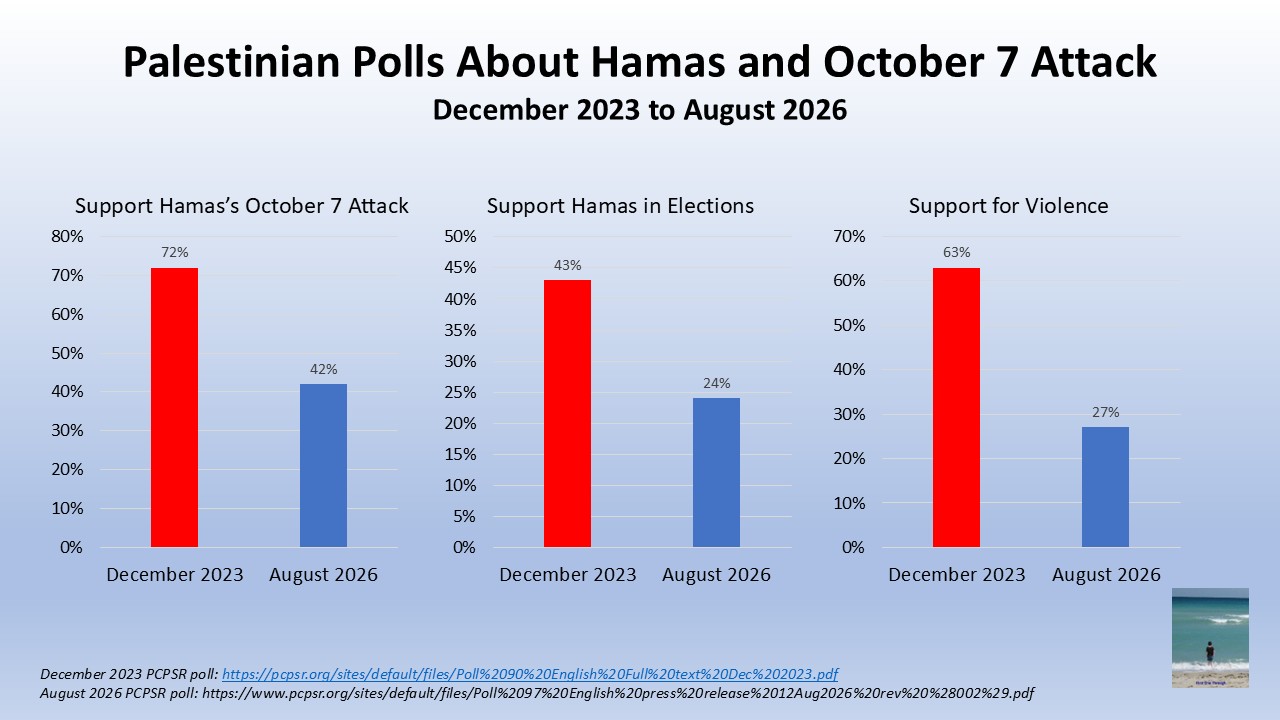
According to the Palestinian Center for Policy and Survey Research, two-thirds oppose requiring candidates to accept the PLO’s commitments, including its agreements with Israel. Only 27% support the requirement.

That is not an opinion related to dissatisfaction with Mahmoud Abbas, Fatah or the incumbent government. That is an outright rejection of the entire government structure and institutions. Palestinians want to elect the government while leaving unsettled whether the people elected to run it accept the foundations of the system they are entering.

It is a election whose foundation is anarchy.

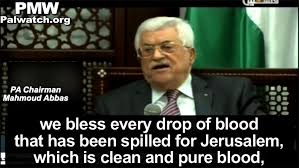
PA President Mahmoud Abbas

If insufficient, the Arabs want to vote for terrorism.

Ballots Without Giving Up the Guns

Democratic government requires more than elections. Ultimately, the elected government must possess political authority and a monopoly on legitimate force. Yet Palestinian politics continues to blur the distinction between a political party and an armed organization.

Hamas is the clearest example.

The devastation of the Gaza war appears to have changed Palestinian calculations. Only 20% now say Hamas won the war, compared with 39% ten months earlier. Support for “armed struggle” (terrorism) as the most effective means of achieving Palestinian statehood has fallen from 41% to 27%, which was around two-thirds immediately after October 7, 2023. Meanwhile, support for negotiations has risen from 36% to 44%, its highest level in four years.

That all sounds encouraging. But look more closely at what changed.

Palestinians only moved toward negotiations as violence has proven devastating and unsuccessful. Yet even after that experience, 72% oppose Hamas disarming before Israel completely withdraws from Gaza. And 53% believe that even if Hamas gives up its weapons, it will remain both an armed resistance movement and a political movement. Only 36% expect it to become solely political. So 89% (basically everyone) thinks the group that most of the Global North has labeled a terrorist organization, will be part of the Palestinian government.

That holds true for the various Palestinian terrorist groups. A society established in which various militias will be free to operate their own foreign affairs and military engagements.

An Elected Government That May Not Govern

If not appalling enough, there is another revealing number.

If elections are held and a new Palestinian government is formed, only 28% of Palestinians say they would prefer that elected government to administer Gaza. Thirty-two percent prefer the separate National Committee, while 34% prefer neither.


Consider these three facts:

  • Palestinians are preparing to elect a legislature for a political system whose foundational commitments most do not want imposed on candidates.
  • They may elect factions that retain independent armed power outside the government’s control.
  • They do not want the resulting elected government to govern Gaza.

Combined, this is not merely an imperfect election in the shadow of war of a fledgling state.

It is a vote for anarchy with a veneer of cohesion.

Related:

Israel Is Surrounded by Failed States – and Failed States in Waiting (July 2026)

Before Palestinians Can Hold an Election, They Must Decide Who Is Palestinian (June 2026)

Judea, Long, Long Before Muhammad

Long before the Islamic prophet Muhammad was born, long before Arab armies invaded Jerusalem, there was Judea.

It was called Judea in the Books of Maccabees. The Greek geographer Strabo called it Judea. Josephus called it Judea. The Roman historian Tacitus called it Judea. The Christian New Testament called it Judea. Rome governed a province called Judaea.

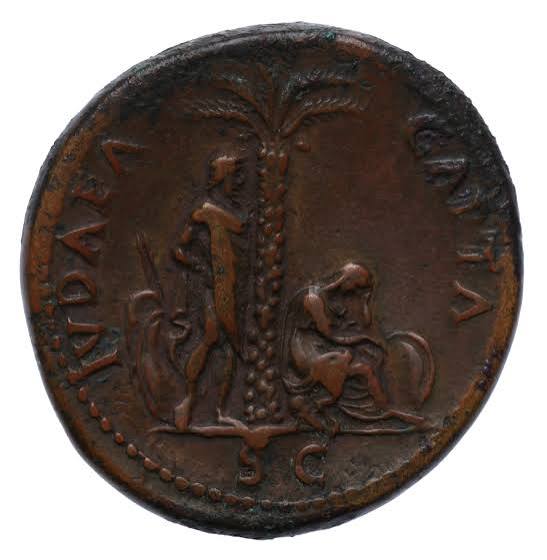
And when the Romans defeated the Jews there, they minted coins celebrating IVDAEA CAPTA — “Judea Captured.”

Roman coin from 71AD with Emperor Vespesian on one side and “Judea Capta” on the other

All of that happened centuries before Muhammad was born in Arabia and Arabs invaded the Jewish holy land.

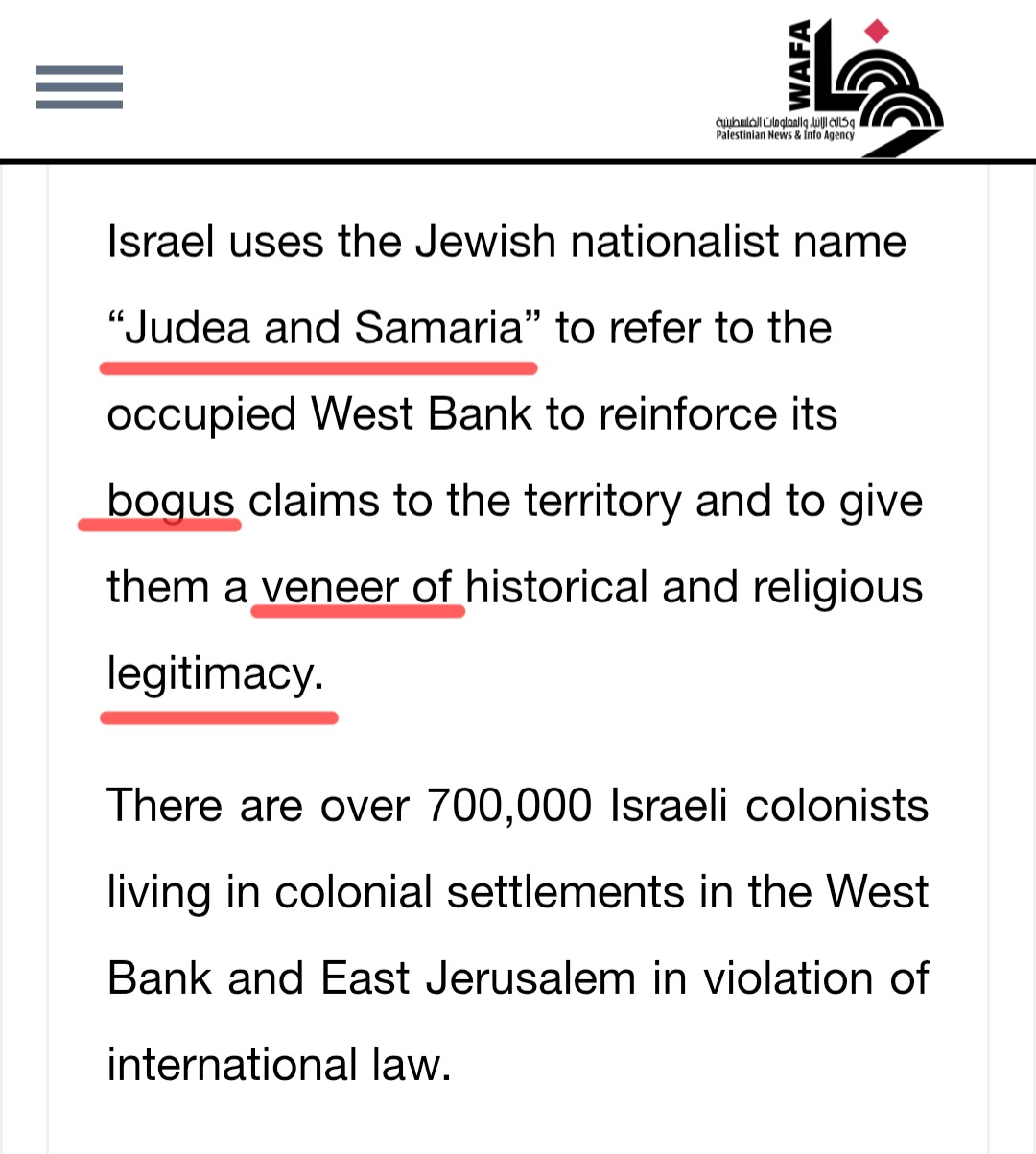
Yet today WAFA, the Palestinian Authority’s official news agency, describes Israel’s use of “Judea and Samaria” as an effort to give its “bogus claims… a veneer of historical and religious legitimacy.”

Bogus?

The Romans weren’t Zionists. Tacitus wasn’t working for the Israeli government. Roman coins celebrating the defeat of a Jewish rebellion certainly weren’t designed to manufacture Jewish history.

They called it Judea because Judea was its name.

And Judea, Judah and Jew share the same historical root. The Jewish people carry the connection to this land in their very name.

So why does the Palestinian Authority choose to call that heritage and homeland claim “bogus”?

Perhaps because acknowledging Judea creates an enormous problem for the narrative the PA and WAFA promote every day, calling Jews living in the land of Israel as “colonists.” But colonizers are outsiders who arrive in someone else’s homeland. It becomes considerably harder to sustain that description while acknowledging that the people being called colonizers take their name from the very land in which they supposedly have no indigenous history.

This is antisemitic historical erasure—and it should be condemned as such.

It should be condemned at the United Nations. It should be condemned by governments that have chosen in recent years to recognize a Palestinian state. Britain, Canada and others should demand something elementary in return: recognition of the history and heritage of the Jewish people.

Because recognition cannot sensibly run in only one direction.

If the Palestinian Authority asks the world to recognize the local Arabs attachment to this land while its own official news agency dismisses the Jewish people’s vastly documented attachment as “bogus,” the problem is larger than terminology.

It goes to coexistence.

Two peoples cannot make peace if one insists that acknowledging the other’s history is itself illegitimate. A Palestinian state cannot be built on the proposition that Jewish history deserves international negation.

ACTION ITEM

Contact governments of Canada, Britain, France, Australia, Mexico and others that they demand that the Palestinian Authority stop calling the long Jewish history in the holy land “bogus.”

The Religious Formula for Ethnic Cleansing Jews

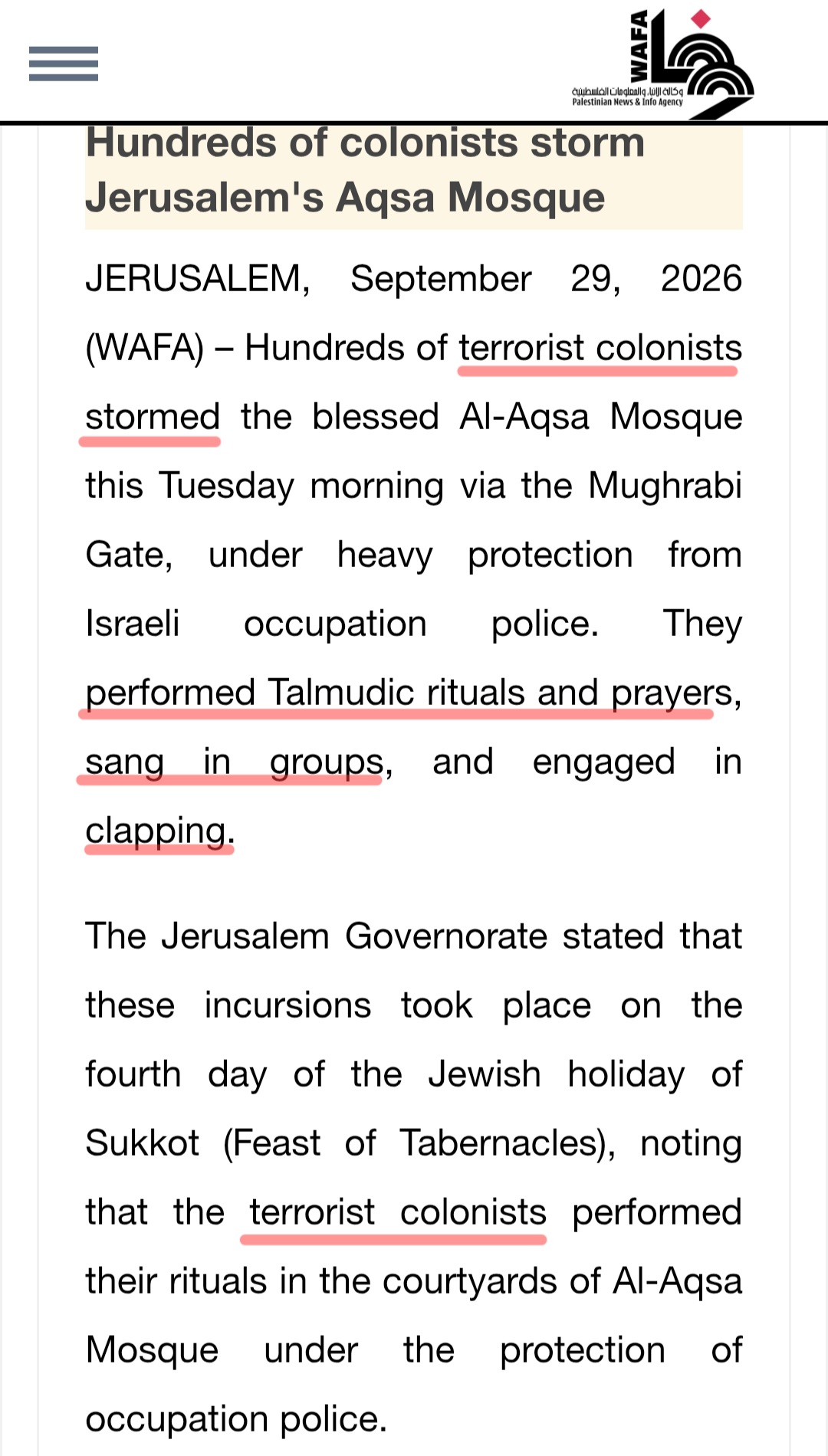
WAFA, the Palestinian Authority’s official media, has spent years describing Jews who enter the Temple Mount as “storming Al-Aqsa.” I have written about that linguistic sleight of hand before.

Now WAFA is promoting something more dangerous: that Jews have no right to enter Judaism’s holiest site without Muslim permission, and that Jewish worship there is an assault on Islamic sanctity.

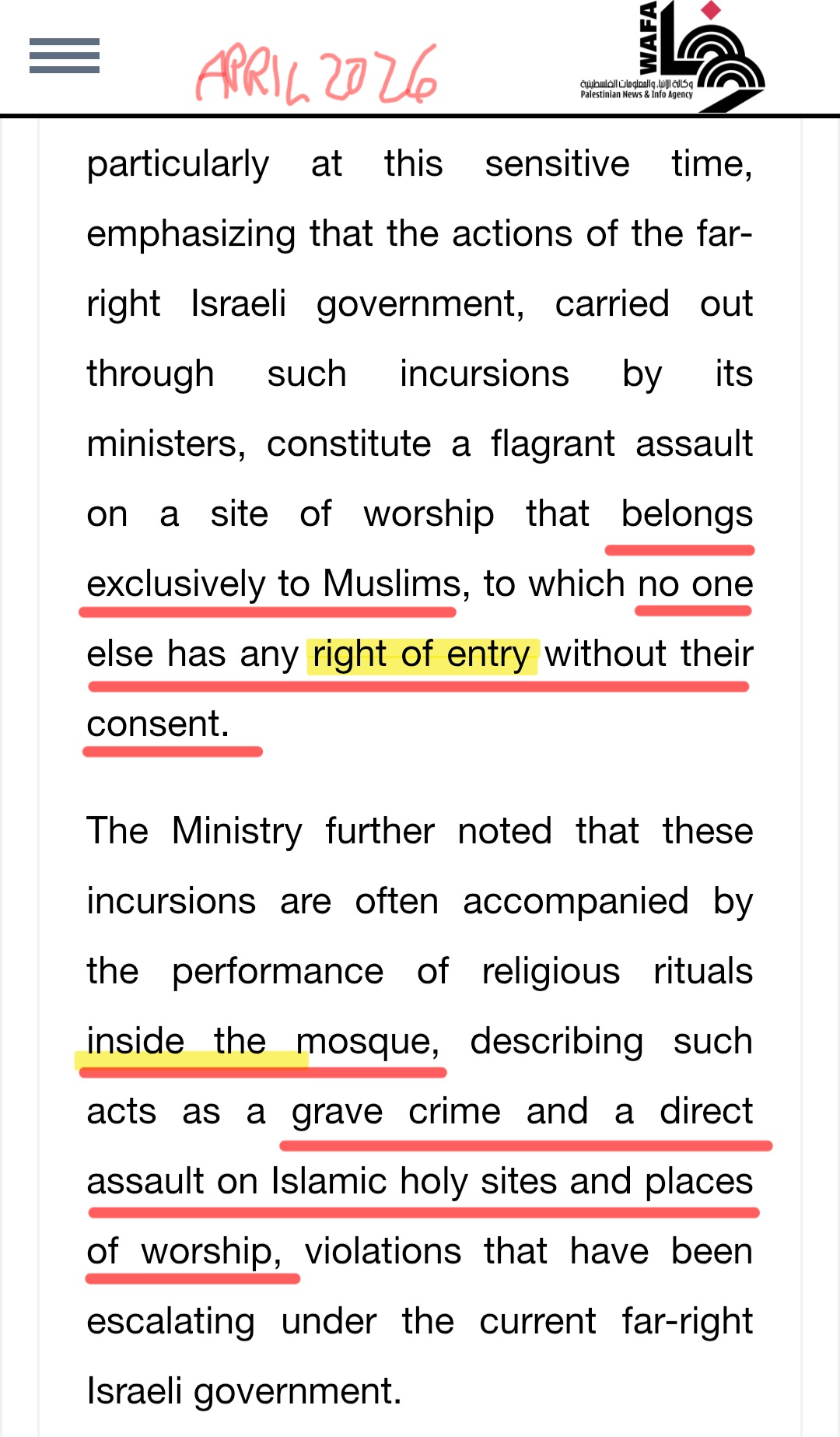
In April 2026, WAFA reported a Palestinian statement declaring the site one that belongs exclusively to Muslims, to which no one else has any right of entry without their consent.

On August 13, WAFA carried an Arab League statement condemning Jews entering the site and performing religious rituals as a blatant violation of the sanctity of the mosque.”

WAFA promoted several lies:

  • Muslims do not control entry. Israel controls security and access to the Temple Mount. The Jordanian-backed Waqf administers Muslim religious affairs there. Presenting Muslim consent as a prerequisite for Jewish entry is totally false.
  • The compound does not “belong exclusively to Muslims.” That is a religious and political claim masquerading as settled fact about the Temple Mount—the holiest site in Judaism.
  • Jewish presence does not inherently violate Islamic sanctity. Islam does not have a general rule that a Jew entering Muslim sacred space desecrates it. Restrictions on Jewish prayer under the status quo are one issue; declaring Jewish worship itself an assault on Islam is another.

Then comes another sleight of hand.

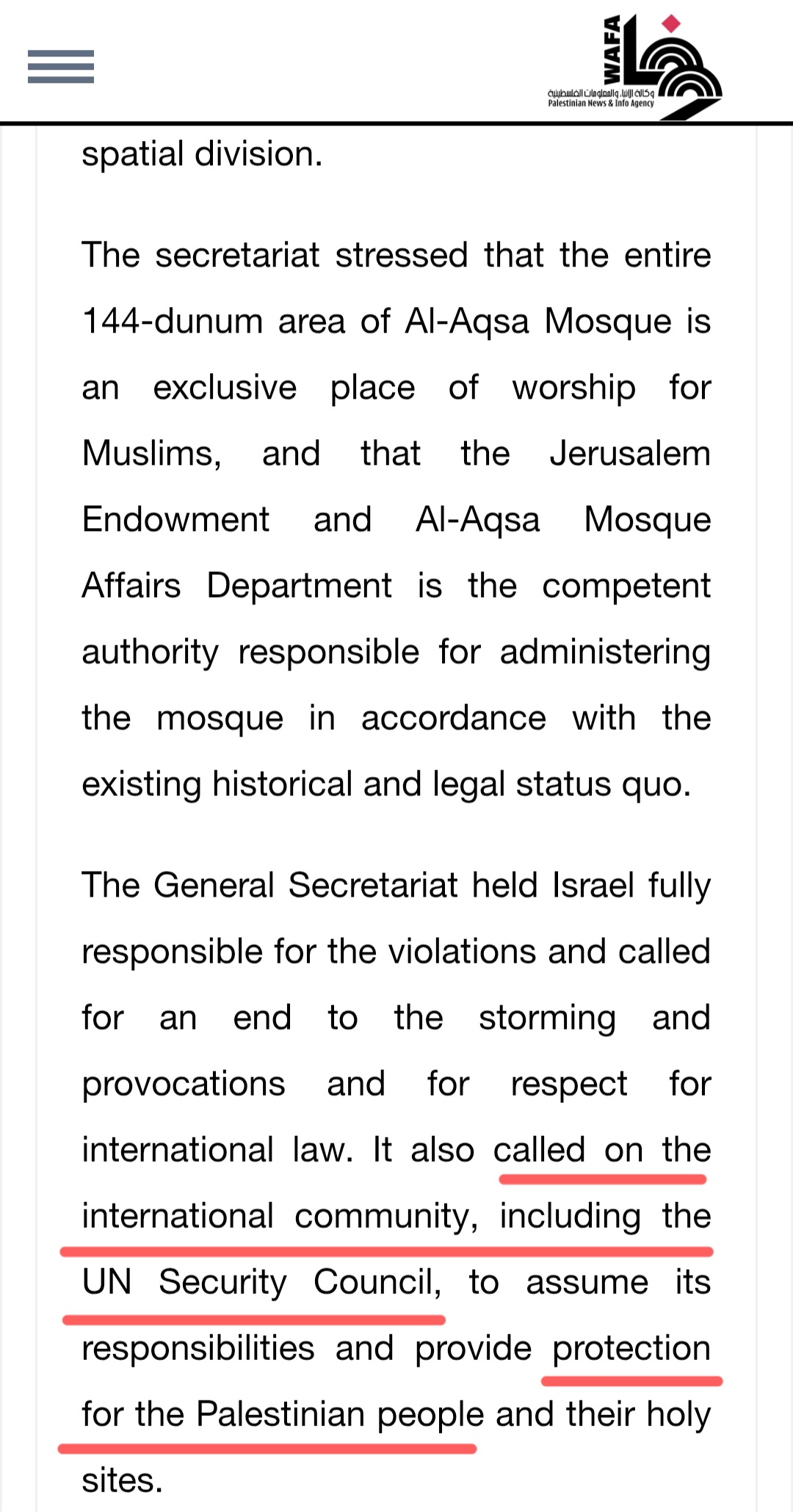
Having defined Jewish presence as an offense against Islam, these organizations pivot to demanding action by the international community on behalf of Palestinians.

But those categories – Muslims and Palestinian Arabs – are not interchangeable.

Some 1.85 million Muslims live in Israel, nearly one-fifth of the country’s population. And the Muslim religious administration of the Temple Mount is handled by the Jordanian-backed Waqf. Palestinian Arabs do not exercise control over entry to the site, nor do they represent all Muslims in the region.

So why transform an asserted Muslim religious grievance into a Palestinian national claim demanding international intervention?

Because the lies are the tell.

The argument is no longer about protecting Muslim worship. It takes an assertion of Muslim religious exclusivity, converts it into a Palestinian territorial right, and then asks the world to enforce that right against Israel and Jews.

The implications become darker when the same logic is applied beyond the Temple Mount. Hamas’s 1988 charter declared all of Palestine an Islamic waqf. Combine that doctrine with the claim being promoted around Al-Aqsa—that Jewish physical presence and worship offend Islamic sanctity—and expelling Jews can be transformed into protecting Muslim holy land.

“the land of Palestine is an Islamic Waqf consecrated for future Moslem generations until Judgement Day. It, or any part of it, should not be squandered: it, or any part of it, should not be given up.” – Hamas Foundational Charter, Article 11

That is why the Arab League and WAFA’s language matters. By repeatedly publishing these false assertions, it helps turn a Palestinian territorial claim into a purported Islamic prohibition against Jewish presence.

And it begins at the most perverse possible location: Judaism’s holiest site.

The progression is stark:

  • Declare the Jewish holy site exclusively Muslim.
  • Deny Jews the right to enter without Muslim permission.
  • Call Jewish presence and worship a desecration of Islam.
  • Turn that religious claim into a Palestinian territorial right.
  • Ask the world to enforce it.

The Arab League and Palestinian Authority are building a religious and political case for removing Jews from their own holy land.

Basic National Rights… For Some

The Palestinian Authority had no trouble explaining what every nation deserves.

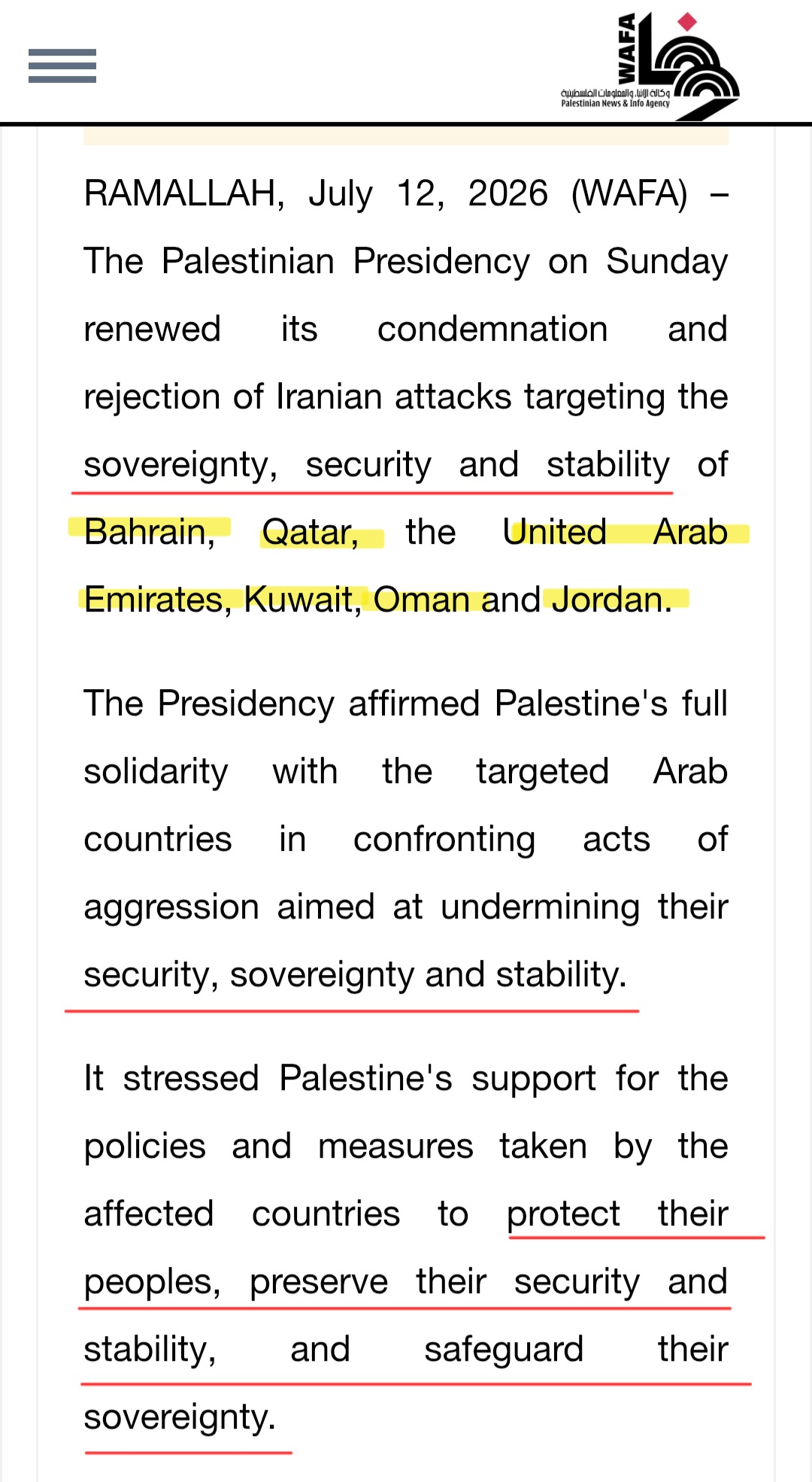
In a statement condemning Iran’s attacks on Bahrain, Qatar, the United Arab Emirates, Kuwait, Oman, and Jordan, the PA repeatedly invokes the same principles: sovereignty, security, stability, and protection of civilians.

PA President condemns Iranian attacks on July 12, 2026

Iran is condemned for violating each of them. The Arab governments are praised for taking measures to defend them.

“The Organization is based on the principle of the sovereign equality of all its Members.” United Nations Charter (Article 2(1))

Where were these principles when Israel was attacked?

When Iran launched missiles at Israel, did the Palestinian Authority defend Israel’s sovereignty?

When Hezbollah rained rockets on Israeli cities for months, did it affirm Israel’s right to security and stability?

states “refrain… from the threat or use of force against the territorial integrity or political independence of any state.” UN Charter (Article 2(4))

When the Houthis fired missiles toward Israel, did it support Israel’s right to protect its people?

And most pointedly, when Hamas – fellow local Arabs of the Palestinian parliament – crossed an international border on October 7, murdered civilians, kidnapped hostages, and occupied Israeli communities, did the PA condemn it as an assault on Israel’s sovereignty?

“the inherent right of individual or collective self-defence if an armed attack occurs against a Member of the United Nations.” UN Charter (Article 51)

A principle that applies only to friends is not a principle. It is a preference.

The Palestinian Authority’s own statement demonstrates that it understands exactly what every nation deserves. Its silence when those same principles are violated openly and repeatedly against Israel says just as much as its words.

When Words Erase a People

The United Nations is right about one thing.

Words matter.

This week, the UN will commemorate the genocide at Srebrenica under the theme From Words to Violence. The lesson is that language is never merely language. The words societies choose shape how they understand people, history, and ultimately what actions become acceptable.

That lesson should not stop with Srebrenica.

Over the past month, another campaign of words has accelerated – not directly aimed at the destruction of lives, but at the erasure of history.

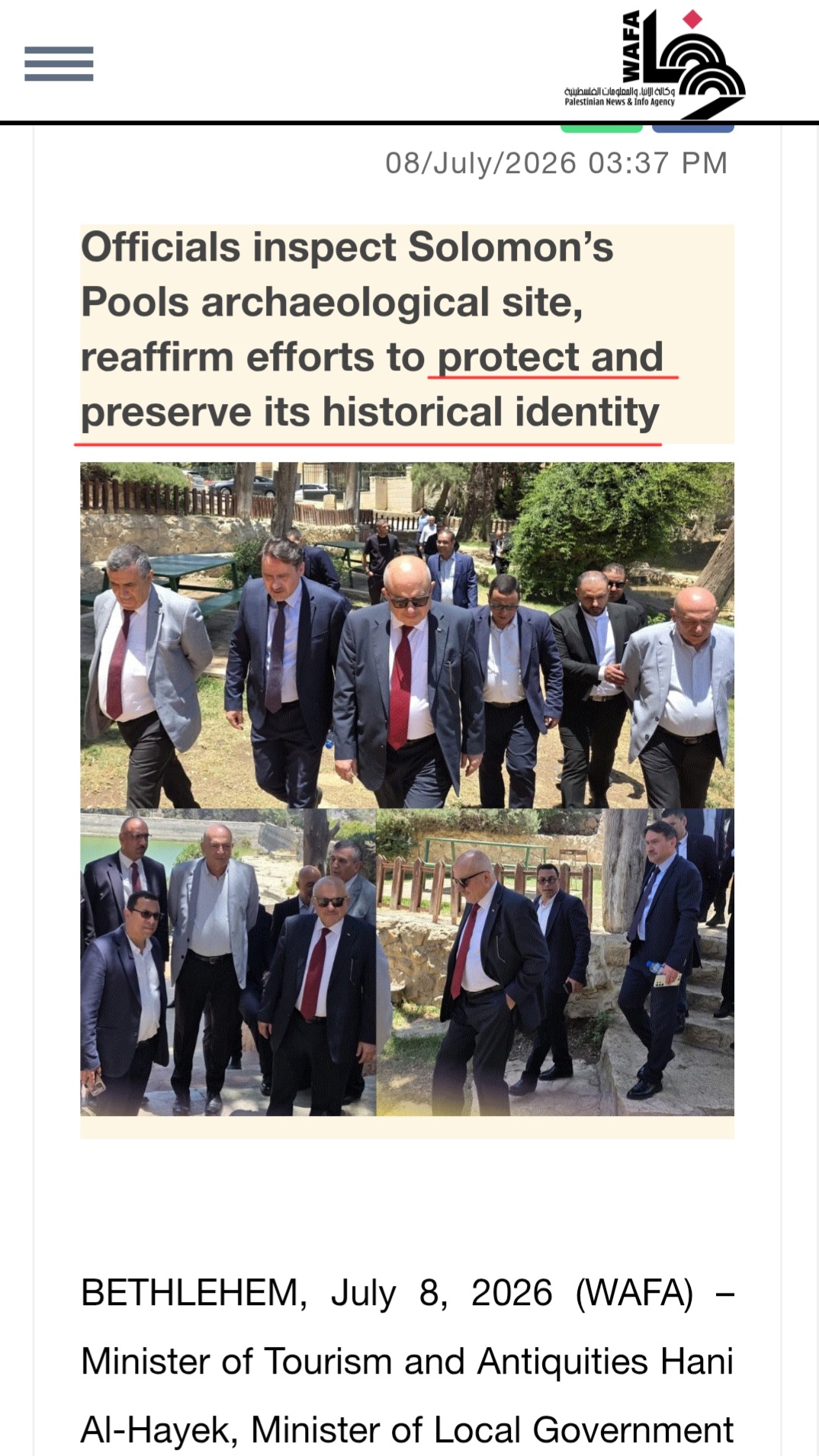
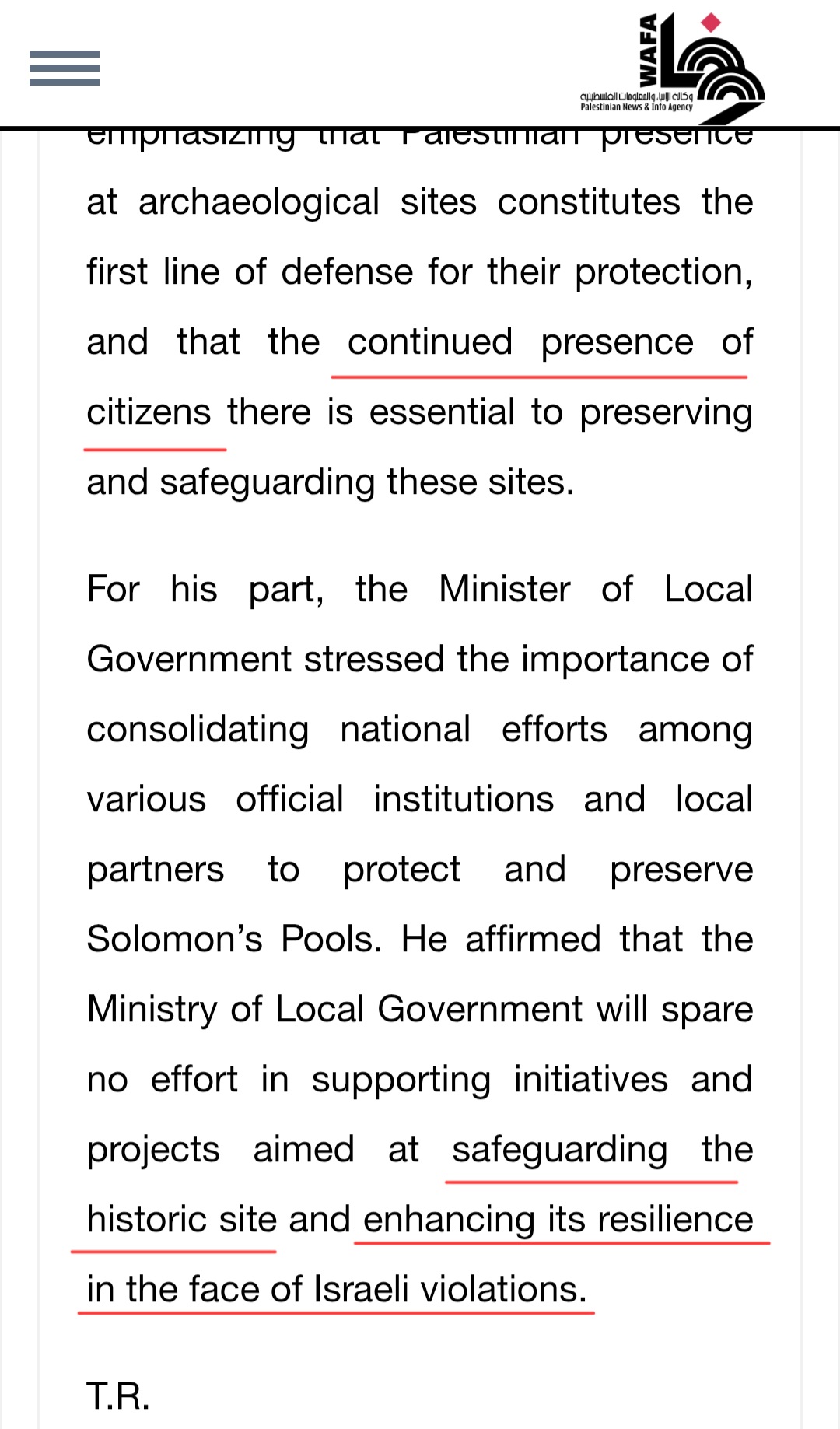
A month ago, I wrote about the battle over Solomon’s Pools. At the time, the concern was that one of Judaism’s great archaeological treasures was being detached from the people who built it.

Today, the campaign has moved far beyond stewardship.

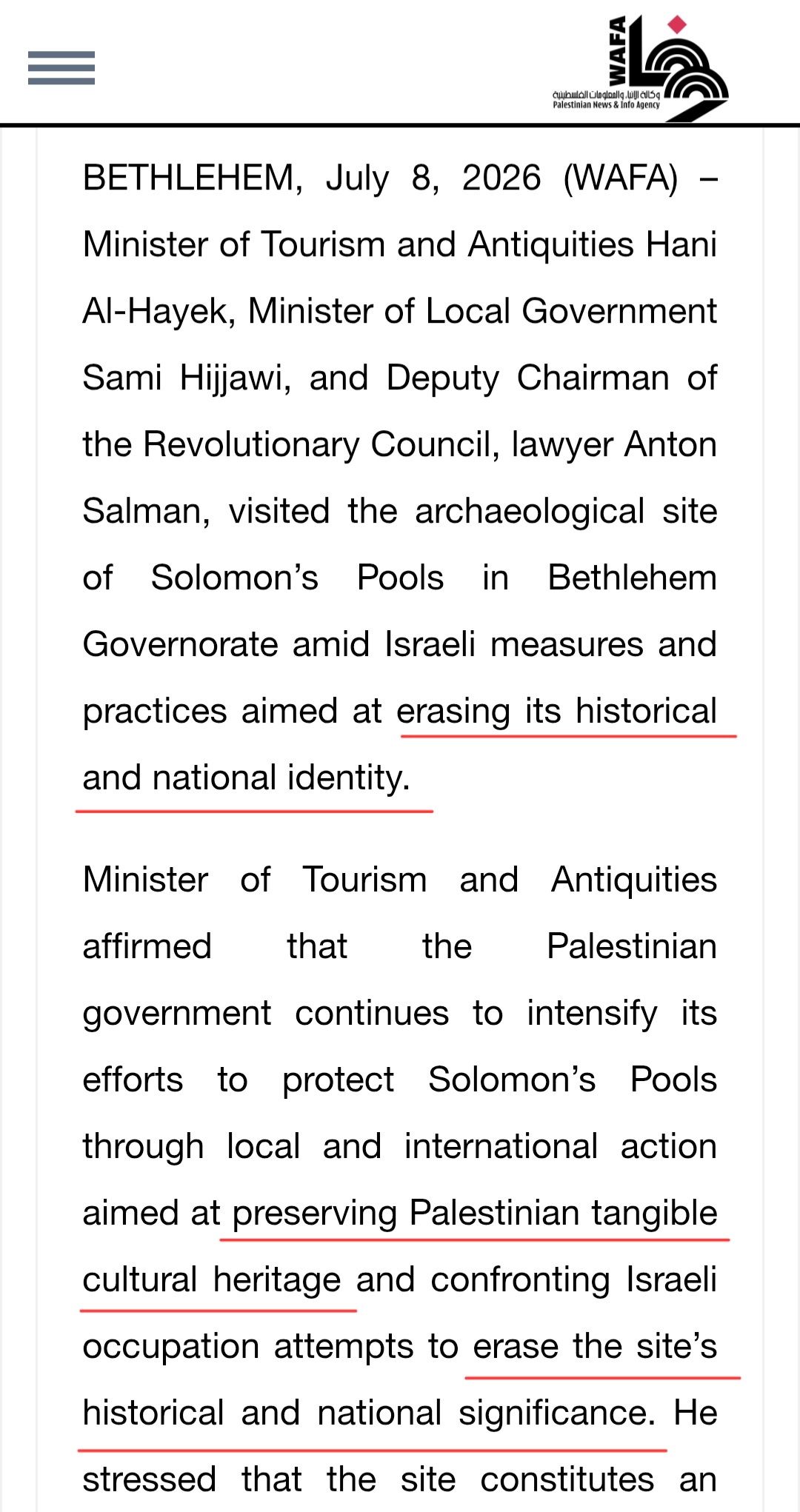
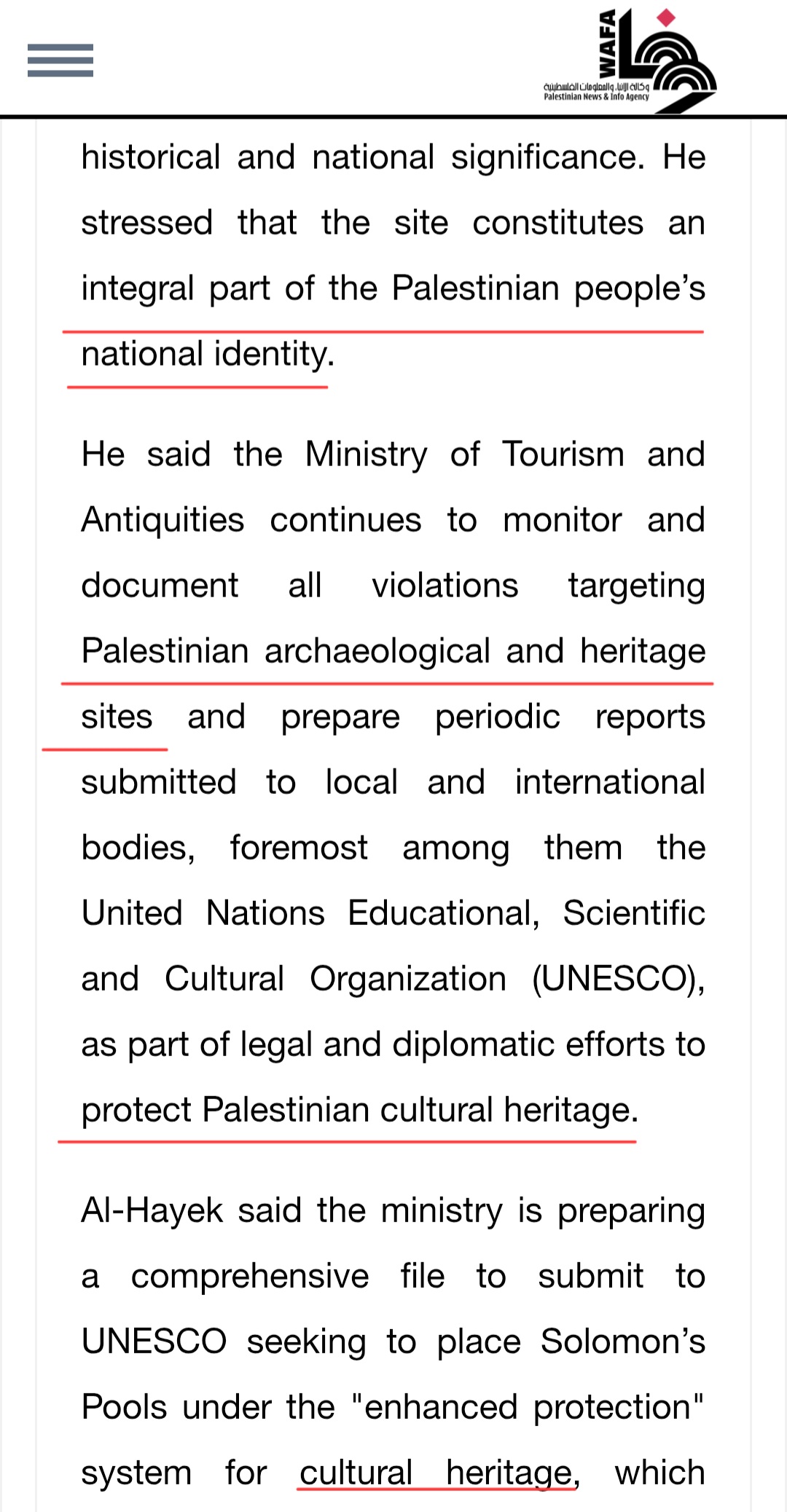
The Palestinian Authority’s official news agency, WAFA, now repeatedly describes Solomon’s Pools as “Palestinian archaeological and heritage sites,” “Palestinian cultural heritage,” and “an integral part of the Palestinian people’s national identity.” It accuses Israel of attempting to erase the site’s Palestinian identity while announcing plans to seek UNESCO protection for that very narrative.

This is historical revisionism.

For more than two thousand years, Solomon’s Pools have been recognized as part of the ancient water system that supplied Jerusalem and the Second Temple. Yet the new narrative increasingly erases that Jewish history while attempting to replace it with a Palestinian Arab one.

That is how historical erasure begins, with words.

It continues with cultural appropriation – taking another civilization’s achievements and presenting them as one’s own. A site built to sustain Jewish Jerusalem is no longer described as part of Jewish civilization, but as an expression of “Palestinian national identity.”

Solomon’s Pools is not an isolated example.

Over the years, Palestinian rhetoric has increasingly described biblical figures and ancient Jewish sites through a Palestinian national lens.

Individually these statements may appear rhetorical. Collectively they reveal a sustained and malicious effort to replace one people’s historical memory with another’s national story.

When a people’s documented history is systematically erased, it reveals a bigotry directed not only against living Jews but against Jewish civilization itself. It reflects national chauvinism, elevating one national identity by absorbing the achievements of another.

And it does this with particular purpose: to strip Jews of their indigeneity in their holy land, to recast them as interlopers and “European settler colonizers” which is deeply infused with a righteous sense of xenophobia.

That is why UNESCO’s role matters.

An organization created to preserve humanity’s cultural heritage should never become an instrument of historical revisionism. If it legitimizes narratives that obscure the well-documented Jewish origins of sites like Solomon’s Pools, it is no longer merely protecting monuments. It is helping redefine what future generations believe those monuments represent.

Turkish media TRT lies to the world that Solomon’s Pools are a 6,000 year-old Canaanite site, as Palestinian Arabs have attempted to recast themselves as ancient Canaanites to pre-date the Jewish forefather Abraham

The danger is larger than a single archaeological site. Words are attempting to erase Jewish history and heritage throughout the Jewish homeland.

The United Nations is correct: words can lead to terrible consequences.

And these words and actions have a particularly dangerous strain of antisemitism. It does not involve attacking Jews physically, which Palestinian Arabs have done repeatedly at scale. It is an insidious attempt to get the world to endorse a narrative that Jews are foreigners in the land to frame a future without the Jewish State. This is the destruction and genocide that emerges from language.
When international institutions lend their authority to that process, they cease to be guardians of history and become participants in its erasure.

Palestinian Authority Mocks Jewish Children Murdered in Holocaust

How do you comprehend six million murdered Jews? One million murdered children?

The numbers are so large that the human mind struggles to grasp it. Six million becomes a statistic. A statistic becomes an abstraction. And an abstraction risks becoming forgettable.

For decades, Holocaust educators wrestled with that problem. Their answer was simple: stop counting and start remembering.

Programs such as Names, Not Numbers were created in Jewish schools to teach students that every Holocaust victim was an individual human being. Students interviewed survivors, recorded testimonies, learned family histories, and transformed statistics back into people. The goal was not merely to teach history. It was to restore identity to those whom the Nazis sought to erase.

The same idea appeared in the remarkable documentary Paper Clips.

In the film, students in a small town in Tennessee learned that six million was too large a number to understand. They discovered that Norwegians had worn paper clips as symbols of resistance to Nazi occupation and decided to collect six million paper clips – one for every murdered Jew.

As the clips accumulated, the students began to understand something profound. It was hard to gather millions of ordinary clips – it required enormous resources and participation of people and organizations far and wide. That millions of people could be exterminated deliberately was terrifying.

The educational programs also sought to do more than humanize the victims and demonstrate the scale of the atrocities.

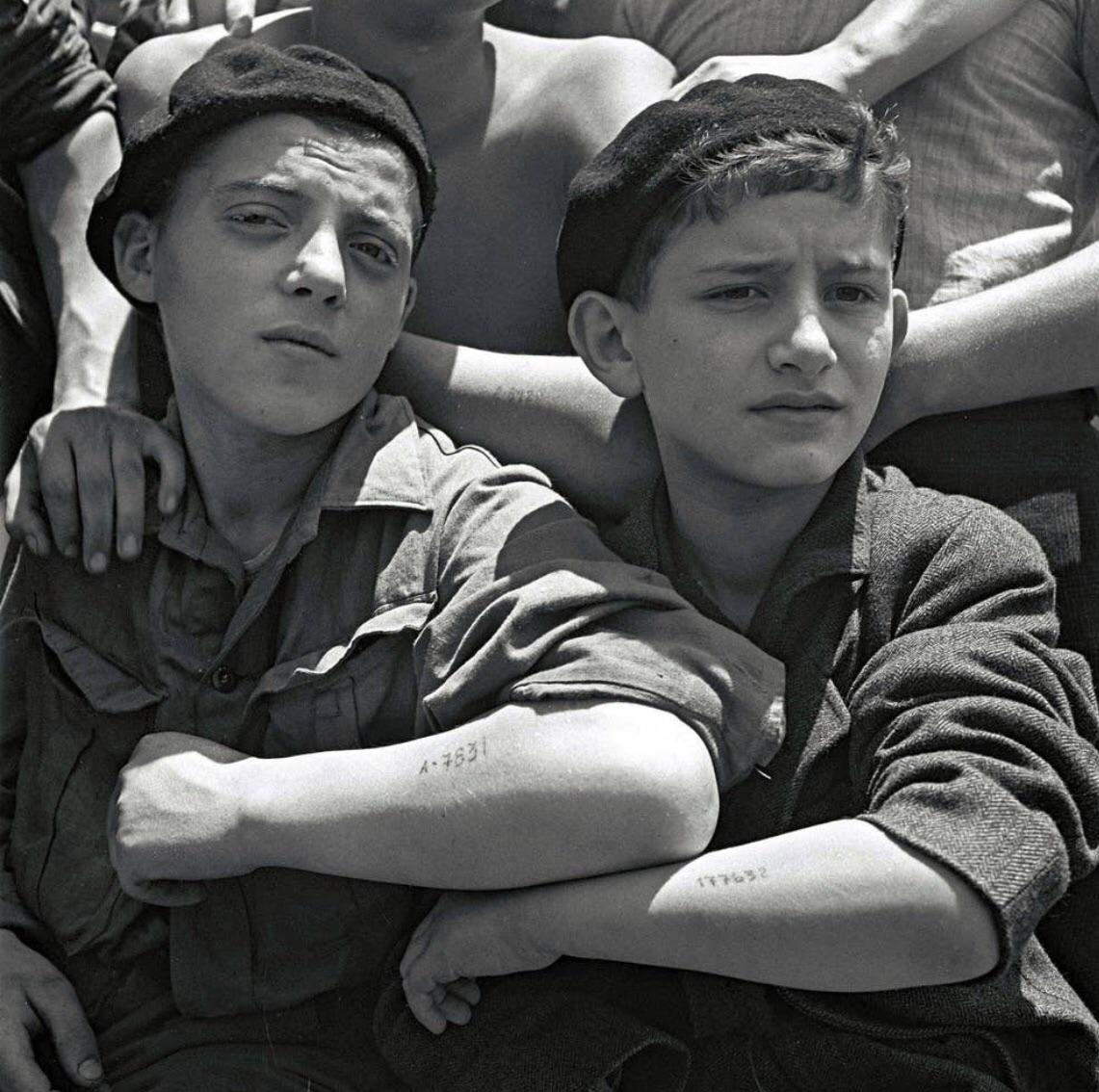
Nazis literally transformed people into numbers. Upon arrival at Auschwitz, many prisoners were stripped of their names and tattooed with identification numbers. It was part of a larger project to erase individuality, dignity, and humanity. The Holocaust was not only a campaign to murder Jews. It was a campaign to reduce them to anonymous units in a machinery of extermination.

Jewish children display tattooed numbers that Nazis put on their arms during the Holocaust

The Holocaust was not simply a story within a war. More than one million Jewish children were murdered not because they were caught in a battlefield, not because they belonged to an opposing army, but because they were Jewish. The Nazi regime actively hunted them for liquidation. Jewish babies, toddlers, and schoolchildren were marked for death from birth.

They were not collateral damage. They were targets.

For decades, educators, museums, survivors, and Jewish communities worked to preserve those names and those stories. The idea that victims should be remembered as human beings rather than statistics became one of the defining themes of Holocaust education around the world.

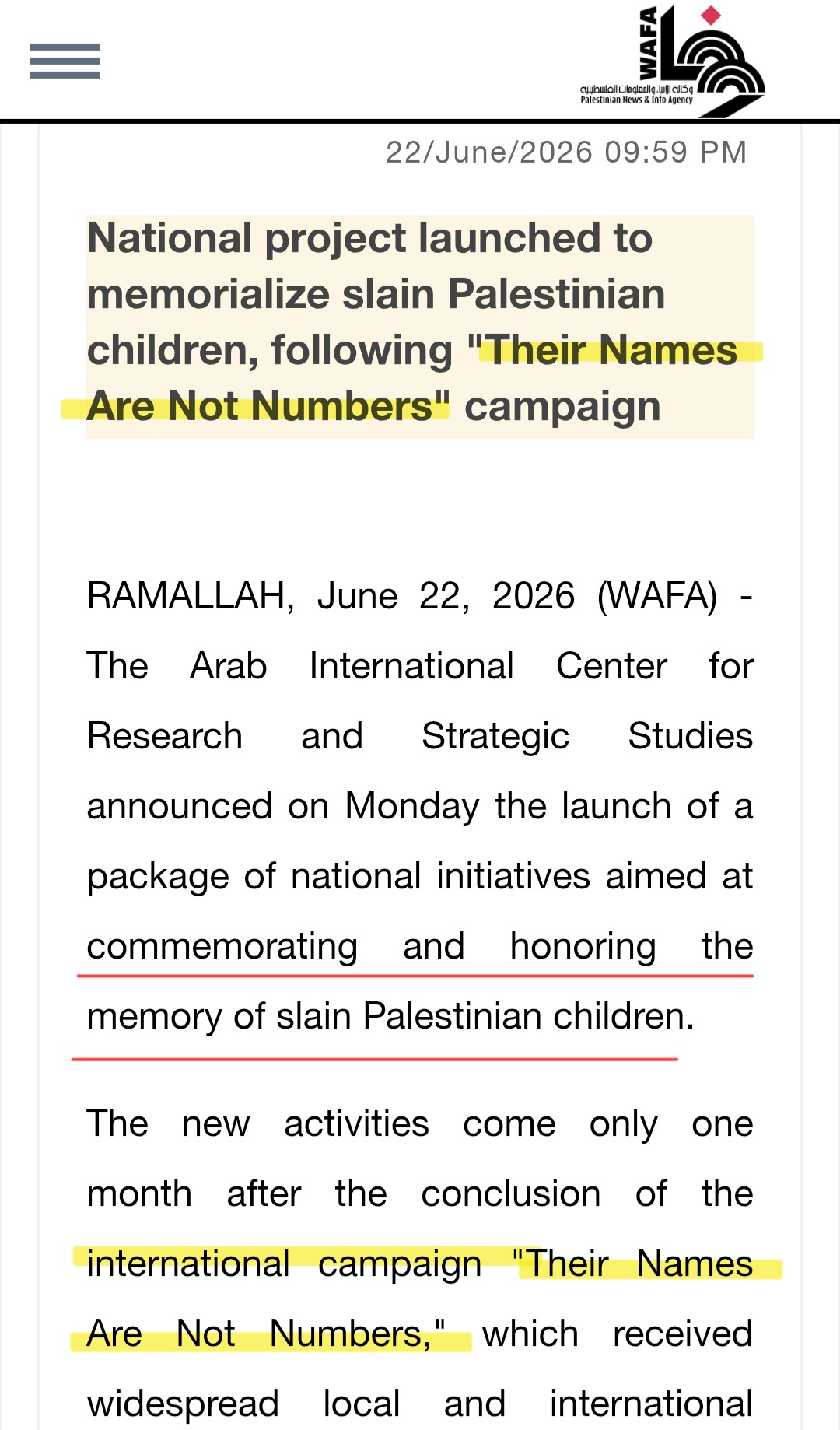
Which is why the recent Palestinian campaign, “Their Names Are Not Numbers,” is so striking.

The slogan echoes language that Holocaust educators spent generations developing. It draws upon a framework created to explain why victims of genocide should be remembered as individuals rather than numbers.

Palestinian Arabs are using a cruel tool in a flimsy attempt to wipe away their own guilt for launching a genocidal war with broad support, and for deliberately banning children from entering the tunnel infrastructure that leadership spent years and billions of dollars constructing. The Palestinian Authority is not merely making the dead children martyrs at someone else’s hands rather than their own, but deliberately lifting the campaign from an actual genocide. They have turned Holocaust remembrance against the Jewish state.

This is a moral perversion.

The Holocaust was a state-directed project of extermination whose goal was the disappearance of the Jewish people. Israel’s war against Hamas is a war against an armed movement that invaded Israel, massacred civilians, took hostages, and openly declares its intention to destroy the Jewish state.

Equating those realities with the Holocaust is not simply immoral but antisemitic. Borrowing the language developed to remember murdered Jews is not simply appropriation but sadistic.

Names, Not Numbers was created to ensure that the victims of history’s greatest campaign of anti-Jewish extermination would never be reduced to statistics. To take that language and deploy it as part of a campaign that casts Israel as Nazi Germany not only vilifies Israel unjustly but negates the Holocaust of its meaning and mocks the memory of a million murdered Jewish children.

Solomon’s Pools and the Battle to Replace the Builders

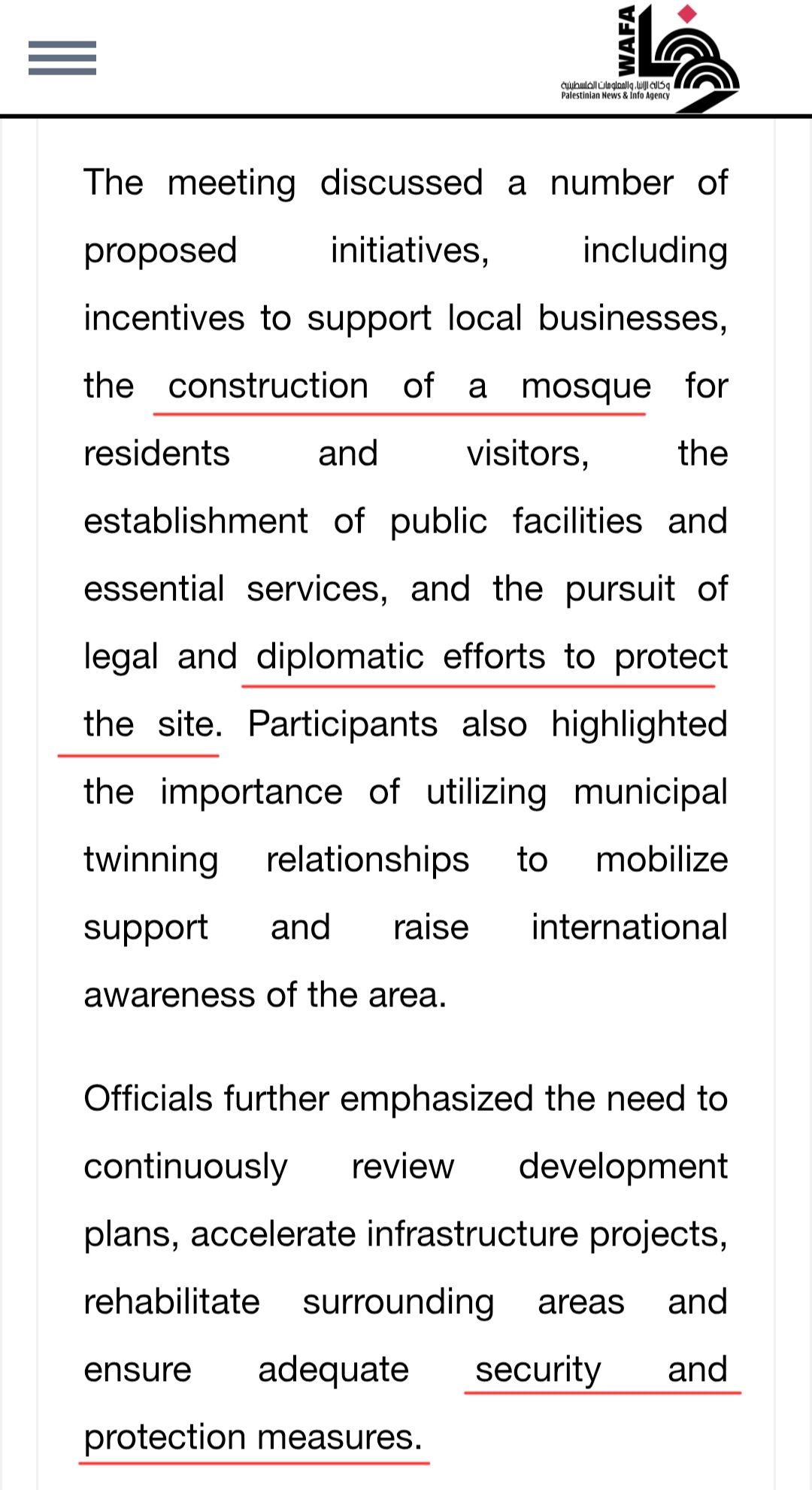
The Palestinian Authority has announced plans to transform Solomon’s Pools, between Bethlehem and Efrat, into a major Palestinian tourist, cultural, and religious destination. The project includes a mosque, tourism infrastructure, educational programs, international advocacy campaigns, and efforts to preserve what officials describe as the site’s historical and demographic character.

The irony is hard to miss.

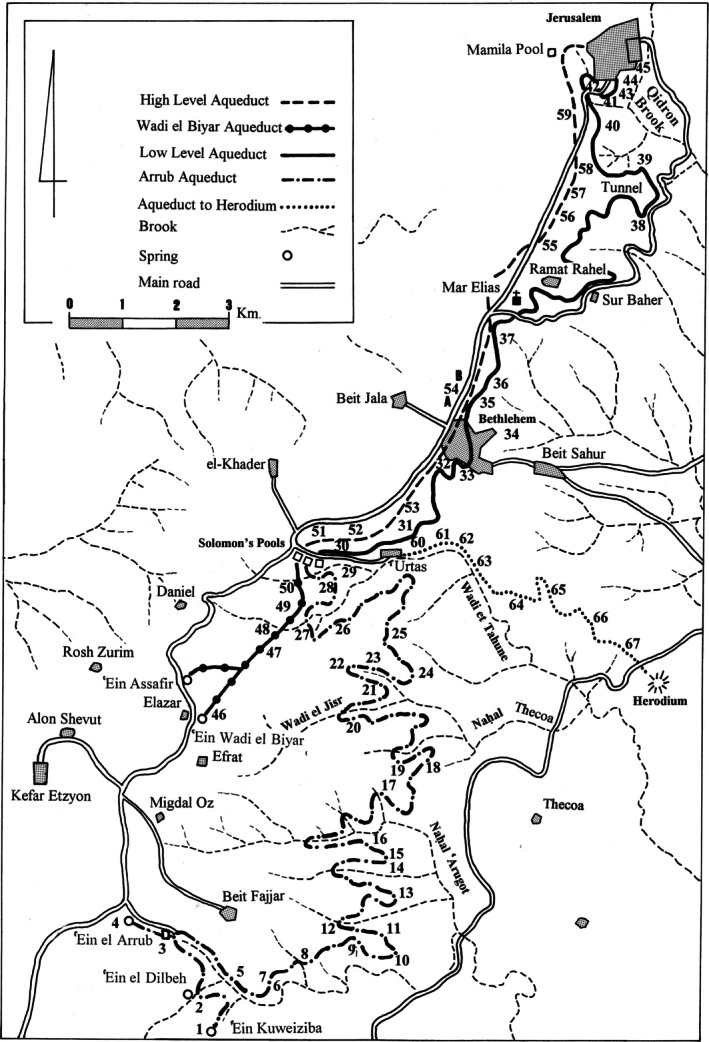
Solomon’s Pools are among the most important surviving engineering works of ancient Judea. Built during the Second Temple period, the reservoirs and aqueducts supplied water to Jerusalem and the Jewish Temple. Their existence is evidence of the Jewish civilization that built and governed Jerusalem over two thousand years ago, that grew the city towards the end of the Second Temple period to approximately 50,0000 people.

Mazar, A.A. 2002. Survey of the aqueducts to Israel. In The Aqueducts of Israel, ed. Amit D., Patrich J., and Hirschfeld Y., 212–244.

Without Jewish Jerusalem, there would be no Solomon’s Pools.

Yet Palestinian officials speak of preserving the site’s historical character while proposing changes that have no connection to the history that made the site significant.

  • If the goal is to preserve the site’s historical character, why alter it?
  • If the goal is to protect its demographic character, what demographic character existed when the reservoirs were built?

The people who built Solomon’s Pools were Jews. The reservoirs were built to serve a Jewish capital. The aqueducts carried water to the Jewish Temple. The site’s significance is inseparable from ancient Jewish Jerusalem.

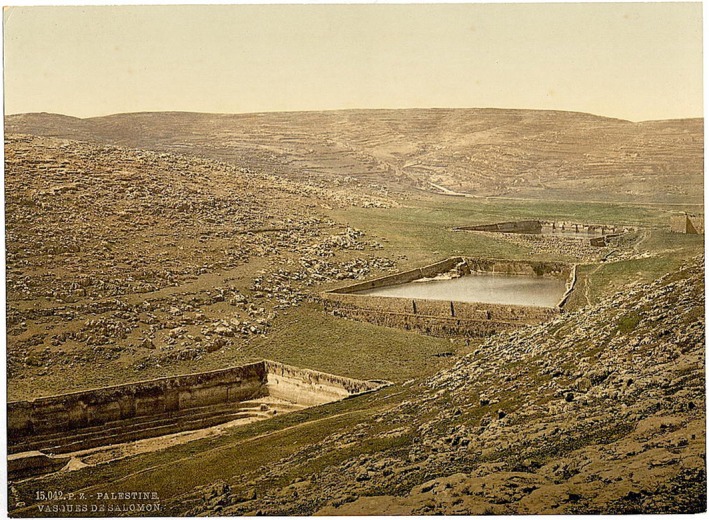
Solomon’s Pools c. 1890

So why place a mosque at a reservoir built by Jews to serve Jewish Jerusalem while claiming to preserve its historical character?

The answer appears in the language of the project itself. Officials speak of strengthening Palestinian presence, reinforcing Palestinian identity, and mobilizing international support for Palestinian claims.

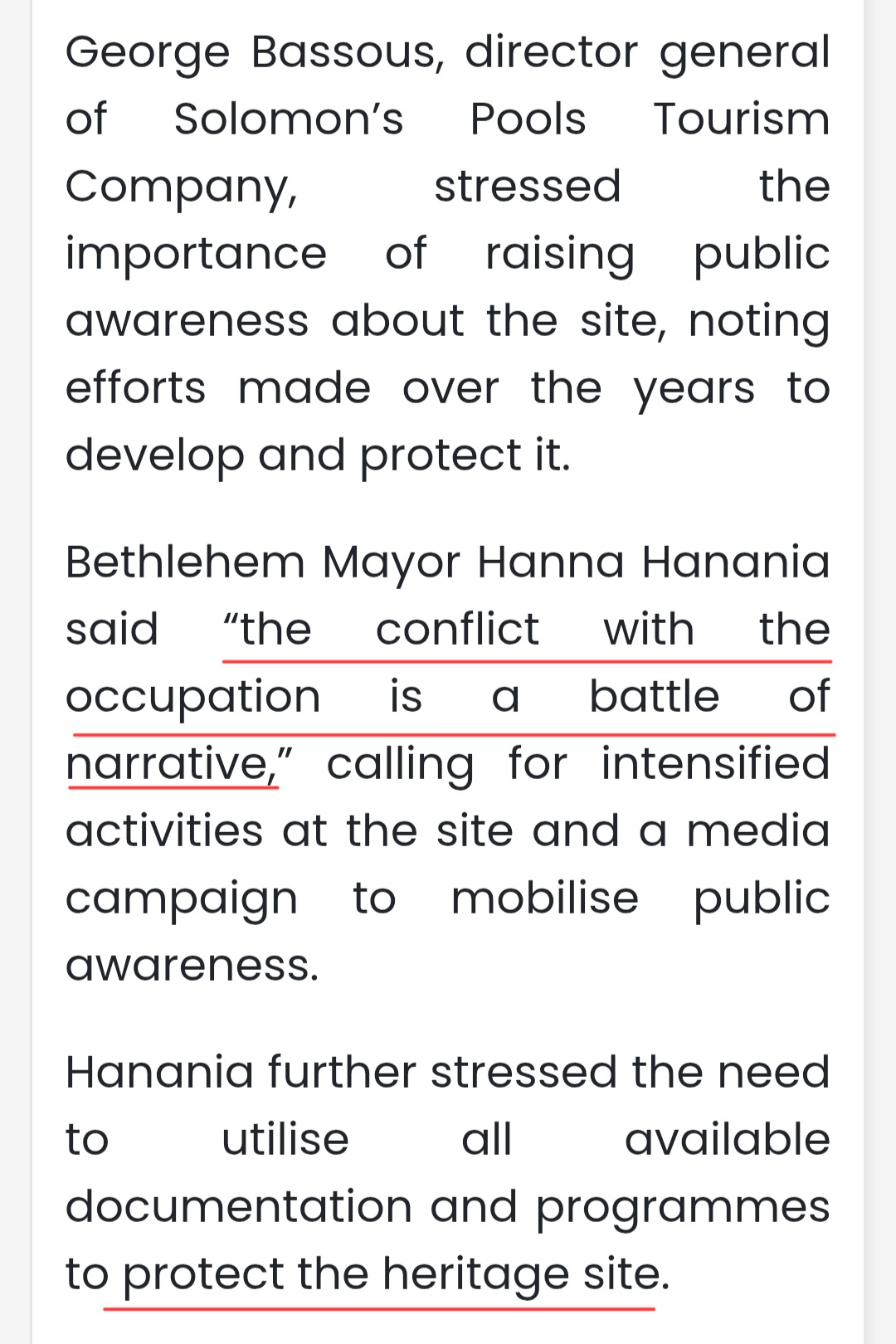
This is not preservation. This is a battle of historical replacement.

A generation from now, visitors may encounter a mosque, Palestinian tourism facilities, and Palestinian historical narratives. What may become increasingly distant is the reason the site exists at all: it was built by Jews to serve Jerusalem, the capital of the Jewish people.

“We know that the prime Zionist goal is emptying this land of its Christians and Muslims. They [the Jews] don’t want anyone here other than themselves. The Christians before the Muslims, because the Christians were here on this land before the Muslims… the Christian is the brother of the Muslim. They celebrate together, suffer together, live together, work together, and fight together against their enemy, because we have been the owners of this land since this land’s existence… We will remain in this land forever, while the attackers [the Jews] have no place in Jerusalem and no place here.” – Palestinian Authority President Mahmoud Abbas March 2023

That is how historical replacement works. The monument is not destroyed. The identity of its builders is replaced.

Solomon’s Pools stand as evidence of Jewish statehood, Jewish engineering, and Jewish life in the land of Israel long before the rise of Christianity, Islam, or modern Palestinian nationalism.
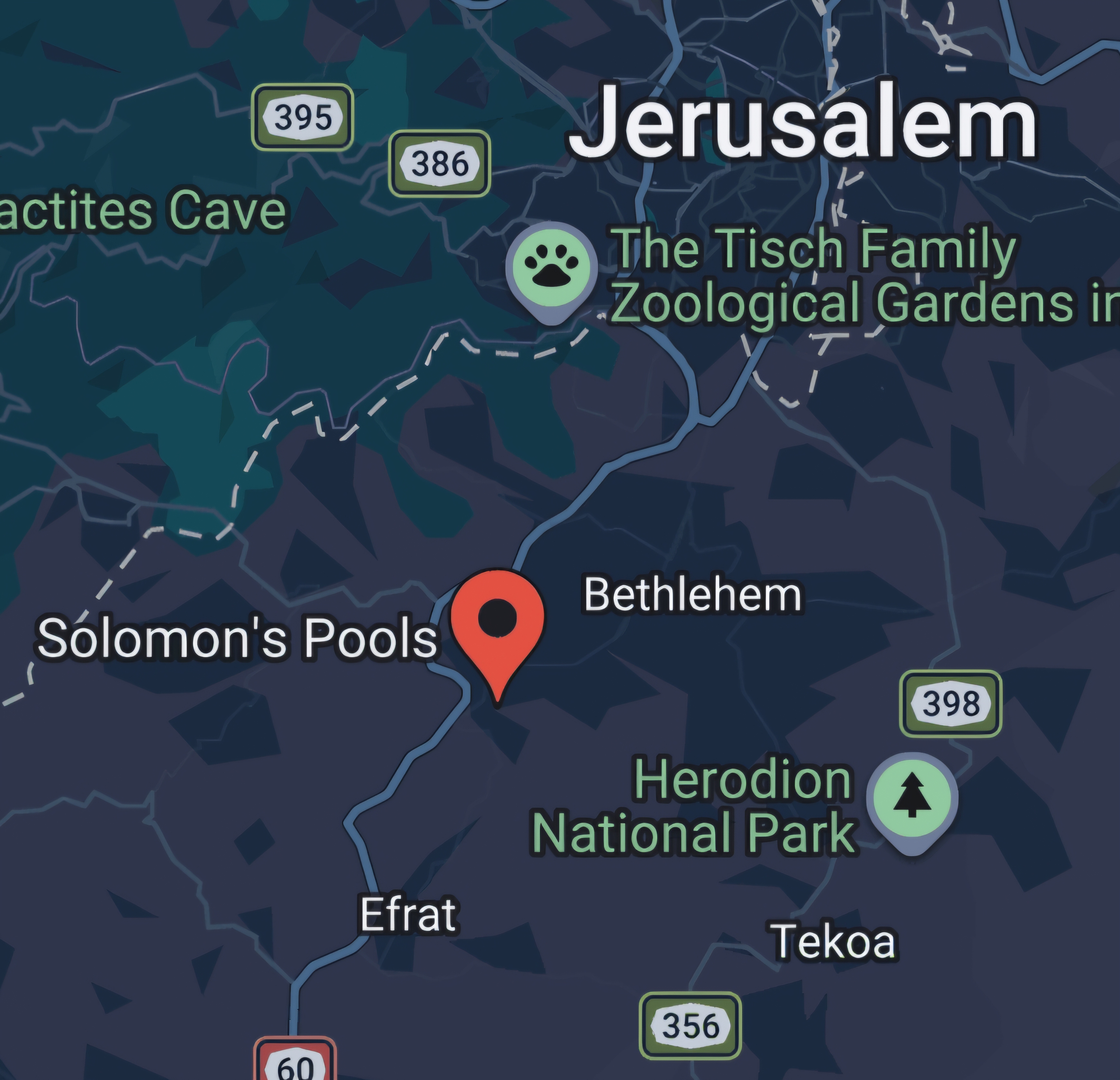
Solomon’s Pools is located off Road 60, between Efrat and Bethlehem

Palestinians’ nationalism is being built on erasing Jewish history and heritage. Today, it is clearly evident at Solomon’s Pools.

From a Hamas Double Standard to the Hamas Dangerous Standard

United Nations Secretary-General António Guterres recently declared that he supports “a monopoly on weapons by the Lebanese Government.”

He is right.

No sovereign state can exist when an organization maintains its own army outside central government control. Hezbollah may hold seats in parliament and participate in Lebanese politics, but that does not give it the right to possess an independent military force and wage war outside the direction of the government.

The obvious question is why the Secretary-General does not apply the same principle to Gaza.

If Lebanon requires a state monopoly on force, then so does any future Palestinian state. Hamas must be disarmed. There is no path to peace while an independent army remains outside governmental authority.

Yet the United Nations does not say so. Instead, it issues endless calls for ceasefires, negotiations, and diplomacy while avoiding the central reality that an armed movement dedicated to Israel’s destruction cannot simultaneously be the foundation for coexistence.

That double standard helps sustain the current conflict. Israelis and Gazans continue to suffer while international institutions refuse to confront the most basic requirement for ending the war.

But today’s war is not the real danger.

The real danger is what comes next.

Every major Palestinian poll points in the same direction. Palestinians are increasingly likely to hand control of the Palestinian Authority itself to Hamas or leaders who share Hamas’s objectives.

The result will not be a Palestinian Authority that replaces Hamas but Hamas becoming the Palestinian Authority.

At that point, Hamas will no longer be an armed movement operating from Gaza. It will be the internationally recognized government of Palestinian Arabs in Gaza and the West Bank. Its army will no longer be described as a militia but the armed forces of Palestine, internationally recognized, and still committed to the destruction of the Jewish state.

If so, the suffering of Israelis and Gazans today will pale in comparison to the conflict that follows.

Difficult situations are sometimes referred to as being between a rock and a hard place. The popular Palestinian terrorist group places the Middle East between a double standard and a destructive standard.

Related:

When Founding Fathers Are Psychopaths And Cowards (January 2024)

Storming Words, Not Mosques

The jihadi war begins in the headline: “Israeli colonists storm Al-Aqsa Mosque under police protection.” Before a single fact appears, the verdict is already written—by the Palestinian Authority’s media outlet—in words designed to inflame.

  • Colonists erases history, recasting Jews as foreign intruders with no connection to the Temple Mount. 
  • Storm supplies violence whether any occurred or not. 
  • Al-Aqsa Mosque collapses the entire compound into the most sensitive Islamic structure to heighten the sense of desecration. 
  • Under police protection reframes standard security by the Israel Police, coordinated with the Jerusalem Islamic Waqf, as state-backed aggression.

Then the language tightens. “Talmudic and provocative rituals.” “Frequent Israeli provocations, including repeated raids.” These aren’t descriptions. They’re verdicts. Quiet presence becomes intent. Routine visits become raids. Silent prayer becomes something suspect.

And then the omission that completes the frame. The site is only described as Islam’s third holiest. It is never described as Judaism’s holiest. The reader is left with a single conclusion: sanctity on one side, violation on the other.

This is narrative design. Islamic Supremacy.

Strip legitimacy. Recast presence as desecration. Elevate exclusive holiness. Repeat it daily through a state-backed outlet overseen by the Palestinian Authority.

That is how a holy war is narrated into existence. By the “moderate” Palestinian Authority.

A Capital Crime for Jews—and a Paper and World That Look Away

One fact should dominate any serious discussion of land and power in the West Bank: under Palestinian Authority law, a Palestinian who sells land to a Jew can face the death penalty.

That is not rumor or polemic. It is statute.

In areas governed by the Palestinian Authority in the West Bank and by Hamas in Gaza, selling land to Israeli Jews is prosecuted as treason. The charge is brought under Jordanian Penal Code No. 16 of 1960 — particularly Articles 113–118 and Article 114 on aiding the enemy — still in force in the West Bank, along with the PLO Revolutionary Penal Code of 1979. A 2014 decree by Mahmoud Abbas reaffirmed that such land sales constitute “collaboration with the enemy.” Courts have issued death sentences under these provisions.

The defining element is the identity of the buyer. A private real-estate transaction becomes a capital crime because the purchaser is Jewish and therefore legally framed as part of the “enemy.” Most countries reserve treason for espionage, armed rebellion, or wartime assistance to a hostile state. The Palestinian framework instead applies classic treason law to a civilian property sale — explicitly treating Jews, as a national collective, as the enemy for purposes of capital punishment.

Yet when the New York Times recently acknowledged this, it did so quietly, almost apologetically, inside an article whose primary concern was Israeli policy. The focus was not the law itself, but the risk that Israeli transparency might expose Palestinian Arabs to danger because the law exists.

That framing reverses cause and effect.

Israel was portrayed as aggressive and ideological, while the Palestinian Authority’s capital punishment for a racially defined transaction was treated as background context. Israeli officials were labeled “right-wing” and scrutinized by name. The PA, which enforces a law rooted in religious antisemitism, was spared comparable description. Its ideology went largely uninterrogated.

The article even suggested that sealed land records once served as a form of protection for Palestinians. That sentence alone concedes the nature of the regime. A governing authority from which citizens must be shielded because it may kill them for selling property to Jews is not a peace partner. It is a theocratic system enforcing ethnic taboos with lethal force.

If a Jewish state executed Jews for selling land to Arabs, that law would dominate media coverage. Instead, when Jews are the forbidden buyers, the death penalty becomes an inconvenience and the exposure of it becomes the problem.

UN Secretary-General Antonio Guterres “warns that the current trajectory on the ground, including this decision [to unseal the names of the owners of land making private real estate transactions easier], is eroding the prospect for the two-State solution. He reiterates that all Israeli settlements [the physical presence of Jews east of the 1949 Armistice Lines between Israel and the Kingdom of Transjordan, which specifically stated were not to be considered borders] in the occupied West Bank, including East Jerusalem, and their associated regime and infrastructure, have no legal validity and are in flagrant violation of international law, including relevant United Nations resolutions.”

This is how extremist antisemitism is normalized: by treating it as an immutable local condition, while directing moral outrage at those who reveal it. When selling land to a Jew carries a death sentence, that fact is not incidental. It is the moral center of the conflict.