The War Against Jewish History. Will Come For Jews

A lecture on the archaeology of ancient Israel and Judah was supposed to take place at the British Museum this month. Instead, it was postponed after organizers learned that protesters intended to disrupt the event.

The subject was not the Gaza war nor settlements nor Israeli Prime Minister Benjamin Netanyahu.

It was archaeology.

It has happened before. In 2014, UNESCO canceled an exhibition on the Jewish people’s 3,500-year history in the Land of Israel after objections from Arab states. More recently, Palestinian Authority President Mahmoud Abbas repeatedly denied that the Jewish Temples stood in Jerusalem, at one point claiming they were actually located in Yemen.

These episodes share a common thread. The dispute is no longer simply about the modern State of Israel nor its policies or actions. It is increasingly about the history of the Jewish people themselves.

Yet the evidence is overwhelming. The kingdoms of Israel and Judah are among the best-documented societies of the ancient Near East. Their existence is attested through inscriptions, seals, coins, manuscripts, monuments, and the records of neighboring civilizations. The British Museum itself houses artifacts that tell this story.

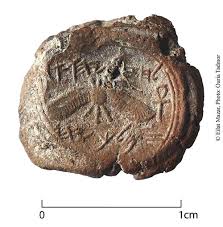
Seal of King Hezekiah found in Jerusalem, around 700 BCE

That is why archaeology poses such a problem for those who seek to portray Jews as foreign interlopers – colonizers – with no ancient connection to the land. Artifacts cannot be pressured into changing their testimony. Every discovery points in the same direction: the Jewish story in the Land of Israel stretches back thousands of years, before the births of Jesus and Mohammed.

Few people would tolerate a museum debating whether ancient Egypt existed or whether Rome stood in Italy. Yet Jewish history is increasingly treated as uniquely negotiable.

Curiously and alarmingly, the protest at the British Museum had a much more immediate backdrop than the current war. This talk was to take place during Jewish Culture Month and the protestors were assembled by an anti-Israel group called “Jewish Artists for Palestine.” The museum’s efforts to highlight Jewish history in the land of Israel during a period of focus on Jewish culture brought out Jewish anti-Israel protestors.


Institutions are backing away from Jewish history and culture with the backing of fringe extremist Jews and anti-Israel Arabs. So basic history becomes debate, and the debate has moved from the policies of the Israeli government to Jews themselves.

The Nazis physically annihilated the Jews of Europe as it sought to place their culture as historical artifacts in museums. Now, museums and institutions seek to erase Jewish history and culture as a prelude to eradicating Jews in the Middle East.

The Prayer That Never Left Jerusalem

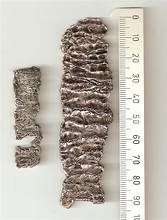
In 1979, archaeologists excavating a burial cave at Ketef Hinnom, on a hillside overlooking the Old City walls of Jerusalem, discovered two tiny silver scrolls. When carefully unrolled, they revealed words that Jews still recite today.

Ketef Hinnom scrolls

The scrolls, engraved more than 2,600 years ago, contain the priestly blessing from Parshat Naso:

“May the Lord bless you and keep you. May the Lord make His face shine upon you and be gracious to you. May the Lord lift up His face upon you and grant you peace.”

They are the oldest known biblical texts ever discovered.

Every year, Jews encounter these verses when Parshat Naso is read in synagogue. Parents recite them over their children on Friday nights. In Israel, kohanim still stand before congregations every day and deliver the same blessing first commanded to Aaron and his descendants in the wilderness.

What makes the Ketef Hinnom discovery extraordinary is not only its age, but its location.

The silver scrolls were found only a short distance from the Temple Mount, where priests once pronounced these words over the people of Israel. Few archaeological discoveries draw such a direct line across three millennia. The oldest surviving biblical text was found almost within sight of the place where it was commanded to be spoken.

The content of the blessing is equally remarkable. The oldest biblical inscription yet discovered is neither a king’s decree nor a military victory. It is a passage from the Bible that culminates in a single aspiration:

Shalom. Peace.

The prayer asks for blessing, protection, grace, and ultimately peace itself. Those hopes remain as familiar today as they were to the Jerusalem resident who carried the silver amulet twenty-six centuries ago.

The scrolls from Ketef Hinnom remind us that Jerusalem, the Bible, and the pursuit of peace have stood at the center of Jewish life for thousands of years.

“May the Lord bless you and keep you.”

The empires of the ancient world survive in ruins. This blessing survives in a people. 

The New York Times All Out Assault on Jewish Jerusalem

The week before Israeli elections always brings out the bile in the anti-Zionist New York Times. This election, scheduled for September 17, was no exception.

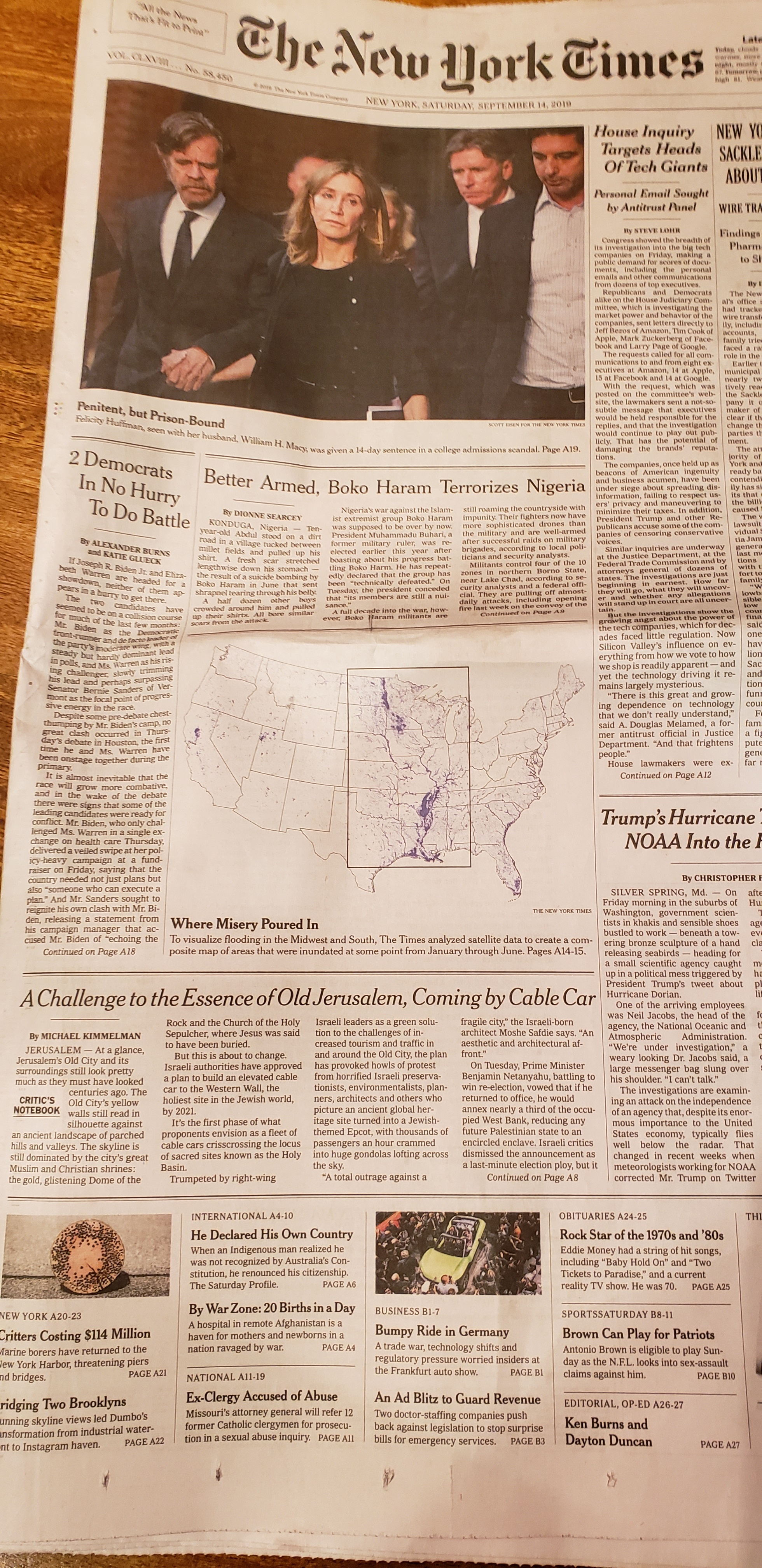
The front page screed (not worthy of being called news) on September 14, 2019 called “A Challenge to the Essence of Old Jerusalem, Coming by Cable Car,” was written by Michael Kimmelman, an architecture critic, leading a reader to imagine a piece covering the “essence” of Jerusalem’s architecture and the proposed modern cable car. While the article did touch on those points, the observations were drowned out by the paper’s anti-Jewish narrative of Judaism’s holiest city.

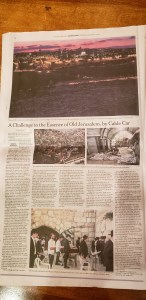
Front page and page A8 of the September 14, 2019 New York Times

The opening paragraph directs the reader that Jerusalem is a city of Muslims and Christians and… well, there aren’t any Jews.

“At a glance, Jerusalem’s Old City and its surroundings still look pretty much as they must have looked centuries ago. The Old City’s yellow walls still read in silhouette against an ancient landscape of parched hills and valleys. The skyline is still dominated by the city’s great Muslim and Christian shrines: the gold, glistening Dome of the Rock and the Church of the Holy Sepulchre, where Jesus was said to have been buried.”

Has Kimmelman even visited the city? The “parched hills and valleys” are dotted with modern apartment buildings and hotels. The Old City skyline includes the newly rebuilt Hurva Synagogue (2010), reconstructed now for the third time, first built in 1694.
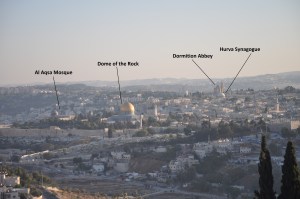
Jerusalem’s Old City with a mix of Muslim, Christian and Jewish sites
(photo: First.One.Through)

The article’s second paragraph showed ignorance in addition to blindness.

“But this is about to change. Israeli authorities have approved a plan to build an elevated cable car to the Western Wall, the holiest site in the Jewish world, by 2021.”

The Western Wall, the Kotel, is not the holiest site in Judaism; that is the Temple Mount. The Kotel is only a retaining wall of the Temple Mount where Jews have been relegated to use since Suleiman I kicked the Jews off of the Temple Mount in the 16th century.

With bona fides of ignorance established, the author leaned into his bias, pointing a finger at “right-wing Israeli leaders” as the promoters of a plan which “has provoked howls of protest from horrified Israeli preservationists, environmentalists, planners, architects and others who picture a global heritage site turned into a Jewish-themed Epcot.

This is the “essence” of the article.

Israelis enjoy a full-throated democracy and opine on everything. Such a new visible transportation system would obviously prompt outcries, mostly on the basis of aesthetics, which is presumably why it was an architecture critic penning the article. But The Times’ anti-Israel politics quickly overwhelmed the story.

The article stated that the cable car proposal is being advanced by “right wing” leaders and opposed by many Israelis. The “global heritage site” – which readers were just educated has no Jewish ties – will be transformed by the radicals into a Jewish Disneyland (ie. fake and cheesy to bring in tourist dollars). Even fellow Jews were nauseated. The Arabs must be apoplectic.

Queue the Times’ right-wing racist Prime Minister Netanyahu theme music.

Moving quickly from the architecture of the site, Kimmelman went full-politics describing Netanyahu’s announcement of annexing “nearly a third of the occupied West Bank.” This diversion from transportation and architecture into politics went to the heart of the author’s view: the cable car is a Jewish takeover of Arab sites and heritage. Tying those themes together Kimmelman continued:

“The cable car project is an example, illustrating how Israel wields architecture and urban planning to extend its authority in the occupied territories. Whatever its transit merits, which critics say are negligible, the cable car curates a specifically Jewish narrative of Jerusalem, furthering Israeli claims over Arab parts of the city.

For the Times, the environmentally-friendly approach of helping bring the over 2.4 million tourists visit the Kotel in the cramped ancient city had little to do with tourism or transportation, but served as yet another example of Israel’s right-wing government turning Arab lands into Jewish assets. The article never mentioned that Jews have been a majority in Jerusalem for 150 years, that two Jewish Temples stood at the center of the Temple Mount, nor that Jerusalem is the focus of prayer for Jews around the world.

Instead, the article continued on a theme that Jewish fanatics were forcing Arabs from their homes and entrenching an illegal occupation.

“From Mount Zion, the cars will land near the Western Wall, on the rooftop of what is to be multistory center for a right-wing Jewish settler organization called the City of David Foundation, in the midst of a Palestinian district of East Jerusalem called Silwan. The City of David oversees archaeological excavations centered on uncovering biblical Jewish remains in an effort to cement an ancient Jewish connection to a contested site. Israel considers East Jerusalem annexed, but international law considers it occupied territory.”

A paragraph so rich in alternative facts and fake history, it deserves to be unpacked:

  • The City of David Foundation is not a “right-wing settler organization” but a foundation which promotes archaeological discovery and tourism, something that people of all religions and political persuasions enjoy.
  • The City of David does not “oversee” excavations; they help fund the work which is performed by the Israel Antiquities Authority.
  • The area of Silwan was originally founded by Jews from Yemen in early 1880’s. It is not a “district of East Jerusalem.” East Jerusalem was a blip in history that lasted for only 19 of Jerusalem’s 4,000 years, which ceased to exist over 50 years ago. Further, it is not “Palestinian,” but a predominantly Arab neighborhood which also includes Jews.
  • The notion that the only reason that Israel is doing excavations is to “cement an ancient Jewish connection to a contested site” is vile and disgusting. Israel has archaeological excavations all over the country – do Jews need to validate their history everywhere in the holy land? Uncovering the unified Jewish capital city of King David and King Solomon from 3,000 years ago is an exciting discovery for the entire world and each discovery is a celebration for anyone who has read the bible. But not for Kimmelman, who added “Archaeology works hand in glove here with settler efforts to press Jewish claims to the land.

Remarkably, the article descended into further conspiracy theories from there.

Kimmelman wrote that Israelis treat Arabs as invisible and are forcibly evicting them from their homes to make way for this attraction. The goal is to give tourists a “Jewish version of the city’s history” from a time when “there were no Christians or Muslims.

The author leaves the reader with the feeling that it is also the current intent of the right-wing settler government of Israel to see a city devoid of Muslims and Christians, as “the cladding of East Jerusalem’s settlements in Jerusalem stone, the architectural uniform traditionally worn by buildings in Jewish West Jerusalem, helps spread the image of a single Jewish city.

For the New York Times, the “essence” of the Old City of Jerusalem is its Arab character navigated via narrow walkways, now being violated by right-wing Jewish invaders changing and scarring its demographics, character and approach. Especially at election time, the Times wants to warn everyone that the “essence” of this Israeli government is racist colonial Jewish supremacists.


Related First.One.Through articles:

The New York Times will Keep on Telling You: Jews are not Native to Israel

The Remarkable Tel Jerusalem

The Jews of Jerusalem In Situ

The Dark Side of Jerusalem Day: Magnifying the Kotel and Minimizing the Temple Mount

Ending Apartheid in Jerusalem

The New York Times Inverts the History of Jerusalem

The New York Times Major anti-Netanyahu Propaganda Piece

750 Years of Continuous Jewish Jerusalem

Arabs in Jerusalem

Today’s Inverted Chanukah: The Holiday of Rights in Jerusalem and Judea and Samaria

Palestinians agree that Israel rules all of Jerusalem, but the World Treats the City as Divided

The Arguments over Jerusalem

Reunified Capitals: Berlin @25; Jerusalem @47

First.One.Through music videos:

The anthem of Israel is Jerusalem (Hatikvah)

Judea and Samaria (music by Foo Fighters)

Subscribe YouTube channel: FirstOneThrough

Join Facebook group: Israel Analysis and FirstOneThrough

 

The Jews of Jerusalem In Situ

The Cambridge Dictionary defines the term “in situ” as “in the original place, or the place where something should be,” or, alternatively, “in the original place instead of being moved to another place.” In the world of archaeology, there is nothing more valuable than finding an object “in situ” as it gives the ancient room, building and town where the object was found, important context in both time and purpose. Unfortunately, due to ancient sites being raided for centuries, most historical finds are traded in the black market, destroying the ability to accurately relay the provenance of the object and the story of the place from which it was taken.

However, last week the world was blessed by two remarkable discoveries in the City of David, just south of the Old City of Jerusalem’s external walls, of ancient Jewish objects found in situ.

In the ruins of what is currently thought to be a large municipal building dating back to the 6th or 7th century BCE, was a clay seal bearing the inscription “LeNathan-Melech Eved HaMelech – which translates to “[belonging] to Nathan-Melech, Servant of the King.” Such servant to the king is mentioned in the Hebrew Bible in 2 Kings 23:11.

The second item is a blue agate seal saying “LeIkar Ben Matanyahu” – “(belonging) to Ikar son of Matanyahu.”

Finding these two items in their original location is a blessing and curse for many. For those people who enjoy learning about history, these ancient Jewish finds in what is believed to be the original capital of the unified kingdom of Israel under King David is considered an important piece of the puzzle to understanding the location and way of life of the Jewish people in Jerusalem thousands of years ago. However, for those people who want to see modern Jews evicted from Jerusalem in favor of Arabs, the findings present an obstacle in convincing Jews that they should abandon their history and religion.

Like the finding of the seal of King Hezkiah in Jerusalem in December 2015, and the burnt remains of a Torah scroll found in a synagogue in Ein Gedi, these findings attest to the long history of Jews living throughout the area east of the Green Line. Arab news sites like Al Jazeera refuse to print any of these stories, in an effort to continue to lie to its readership about the history of the Jews in the holy land which predates Islam by thousands of years.

The incredible discoveries makes one consider the two alternative definitions for “in situ” described above: the ancient Jewish finds in Jerusalem were located “in the original place instead of being moved to another place,” while the modern Israeli Jews themselves and the capital of the Jewish State are “in the original place, or the place where something should be,” in Jerusalem.


Related First.One.Through articles:

Gimme that Old-Time Religion

Squeezing Zionism

The New York Times will Keep on Telling You: Jews are not Native to Israel

Subscribe YouTube channel: FirstOneThrough

Join Facebook group: FirstOne Through Israel Analysis and FirstOneThrough
Gimme that Old-Time Religion

Two of the three main monotheistic faiths had amazing historical revelations in July 2015. If you read the New York Times, you only learned about one of them.

Quran

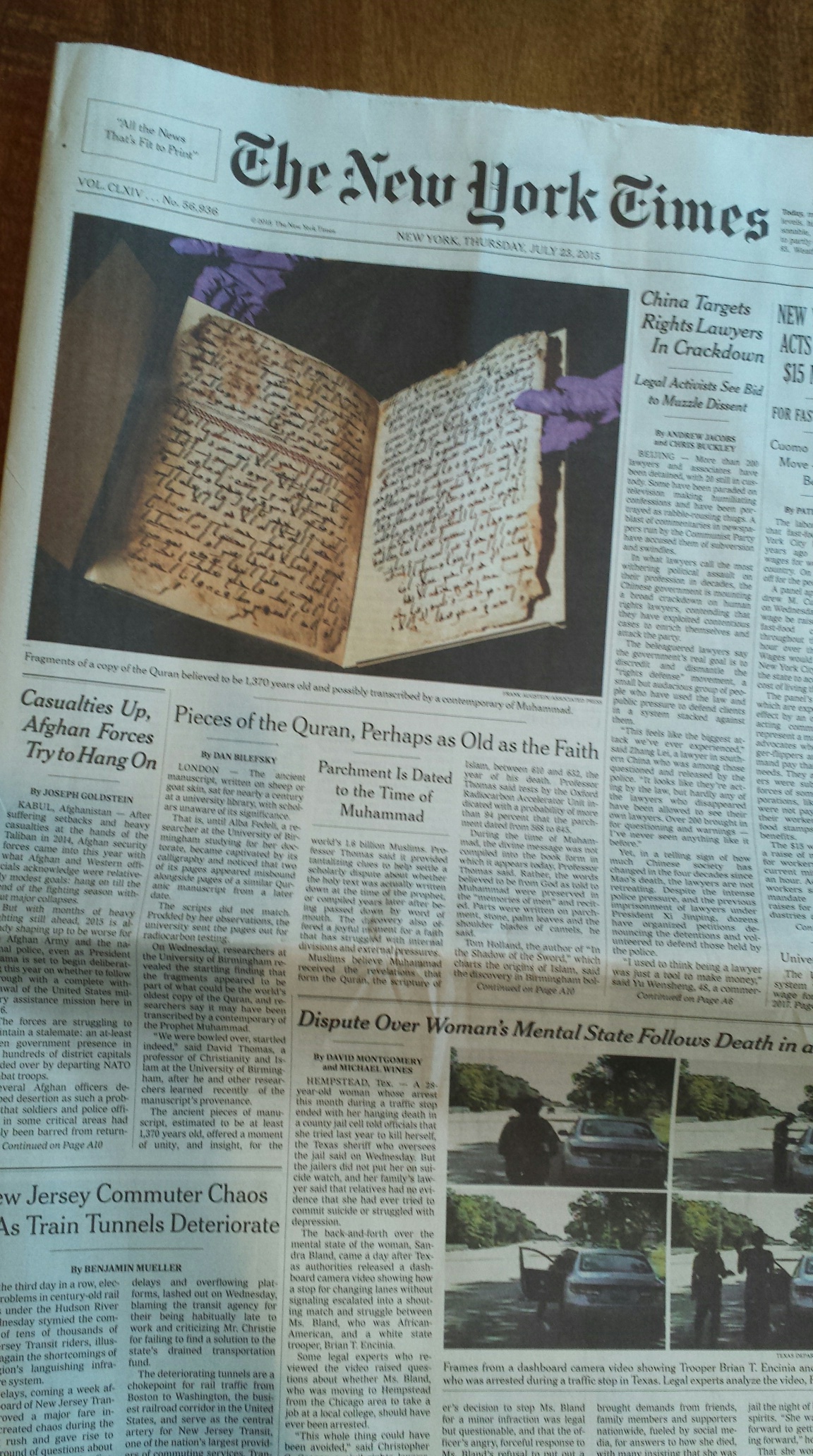
On a front page story with a large accompanying color picture, the New York Times relayed an incredible discovery: an old Quran that had been sitting on the shelves of the University of Birmingham, England for a century, was dated to around the year 600CE plus or minus 50 years.  That would make this version of the Quran the oldest manuscript in Islam.

20150724_072357
New York Times Front Page Story on Quran,
July 23, 2015

According to Islamic tradition, their prophet Mohammed received divine revelations and compiled the Quran sometime between 610 to 632CE. Religious scholars had debated whether the Quran was passed down in oral form for many generations after Mohammed’s death before ultimately being written down. If the text indeed was written down on the parchment when it was prepared (sometimes parchments were washed and reused, and carbon-dating only relates to the parchment but not the actual ink and text), it would answer that outstanding question.

The Hebrew Bible

Three days before the world heard about the dating of the oldest Quran, researchers uncovered one of the oldest texts of the Hebrew Bible, dating from around 500CE.

EinGediscroll1
Charred scroll from synagogue in Ein Gedi
(photo: Shay Halevi/Israel Antiquities Authority)

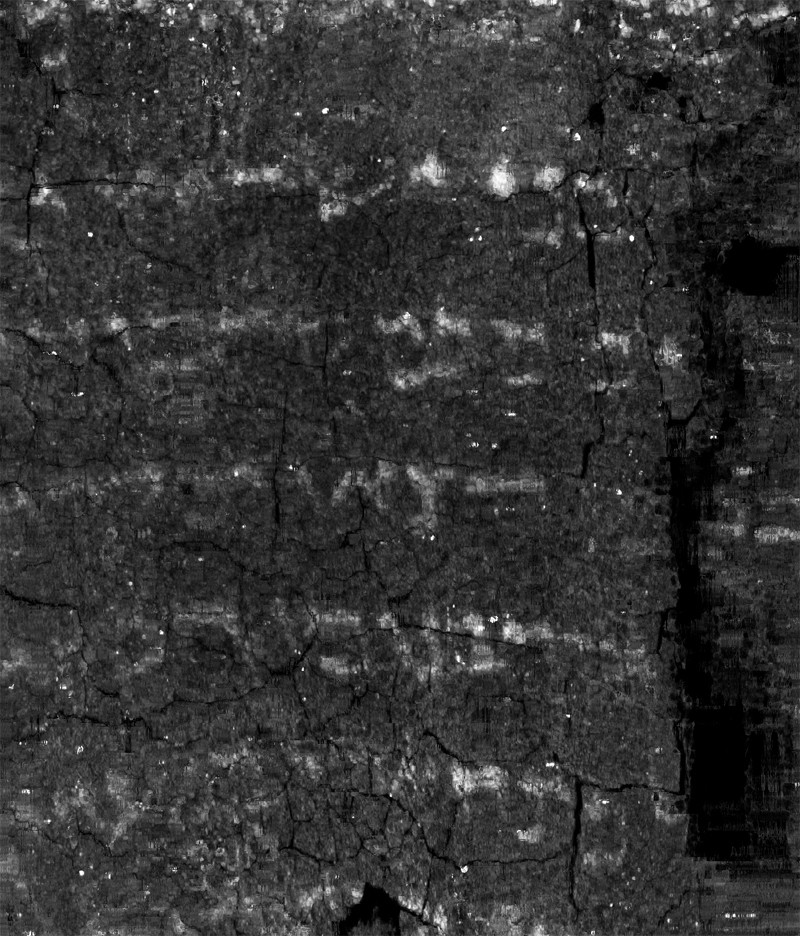
In the 1970s, the piece of a charred scroll was discovered in Ein Gedi in the Judean Desert. Only in July 2015 were researchers able to use the latest technology to decipher the damaged text to reveal sentences from the book of Leviticus. While older documents (by 500+ years) of the Hebrew Bible had been discovered not far from Ein Gedi, those documents were found hidden in jars within caves.  This scroll was found in the ancient synagogue of Ein Gedi, revealing the earliest discovery of a Torah scroll housed in a synagogue.

scroll-800x936
Text from the Ein Gedi scrolls
(photo: University of Kentucky)

Both of these stories are amazing in terms of history, religion and science.  It brings to mind an old gospel song: “Give Me that Old Time Religion!”

Yet the part “that’s NOT good enough for me” (to paraphrase the song) is the nagging question why the New York Times never misses an opportunity to slight Israel.  The discovery of one old religious treasure received front page attention (for Islam) but a text from 100 years earlier didn’t even get a passing mention (for Judaism).  Was it because the scrolls were found in the Judean Desert which further underscores the long history of Jews in the contentious Jordan Valley?

Why do you think the NYT mentioned only one of these stories?


Related FirstOneThrough articles:

When were Jews barred from living in Judea & Samaria?

Names and Narrative: The West Bank / Judea and Samaria

The Subtle Discoloration of History: Shuafat

Subscribe YouTube channel: FirstOneThrough

Join Facebook group: FirstOne Through  Israel Analysis