The Prayer That Never Left Jerusalem

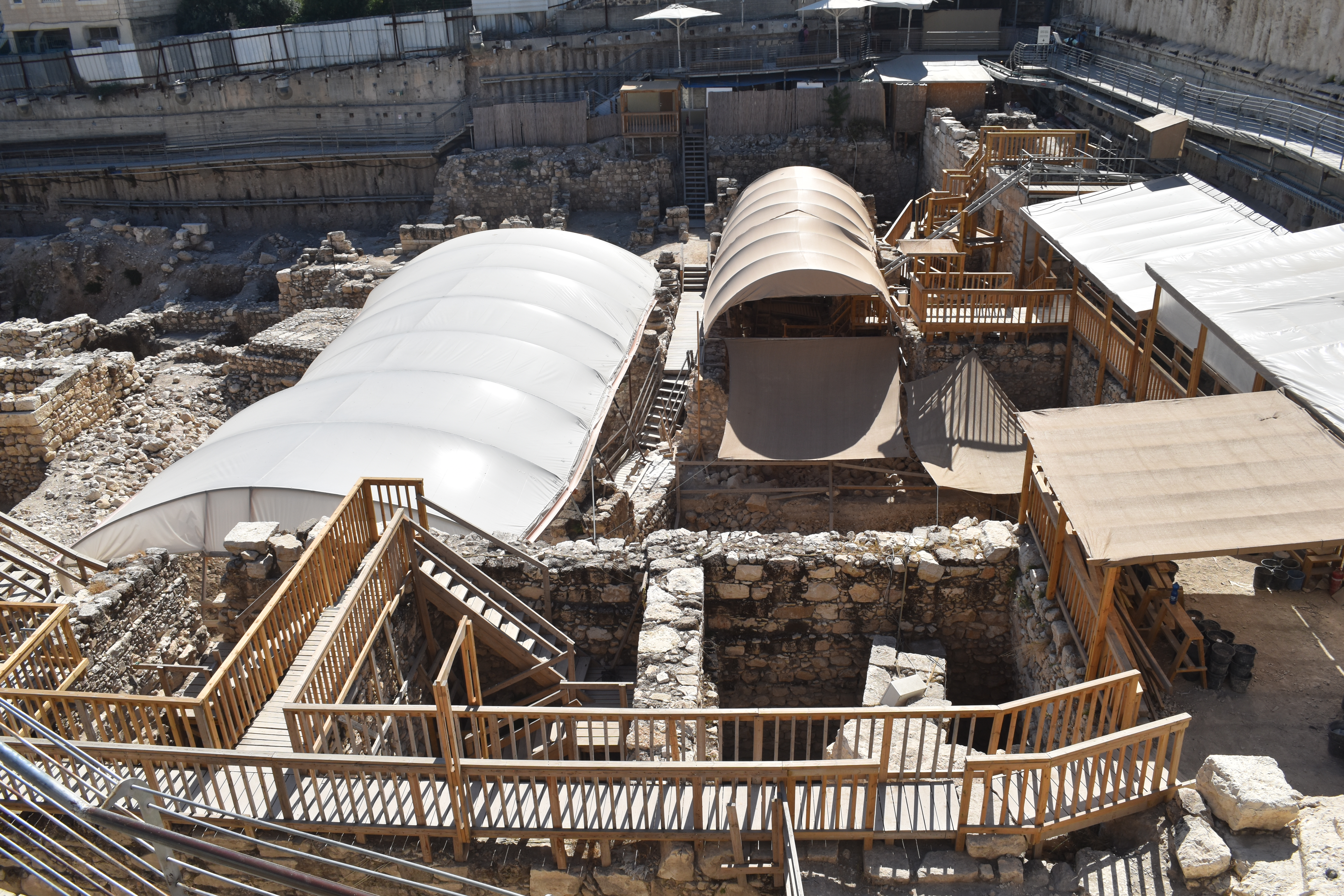
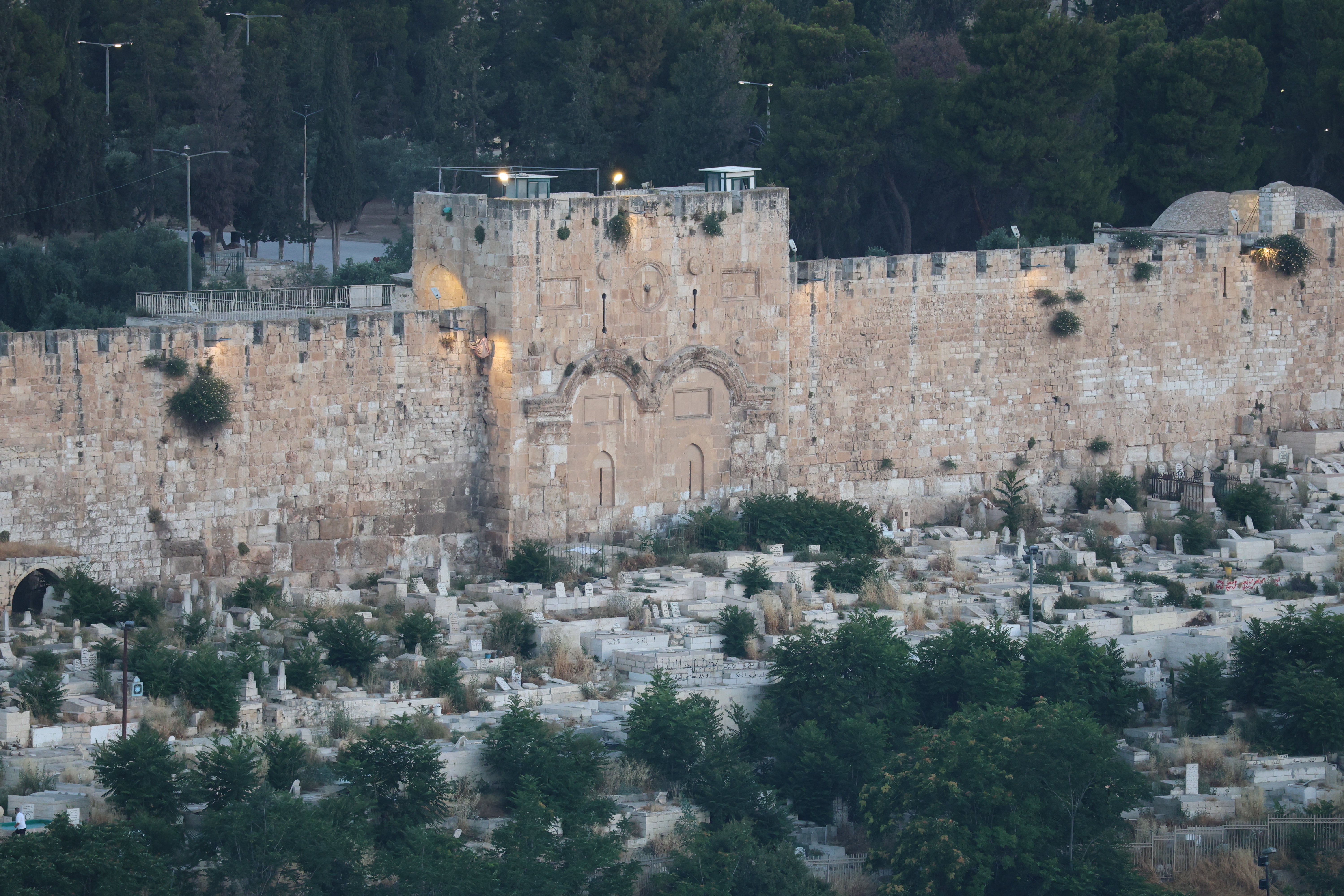
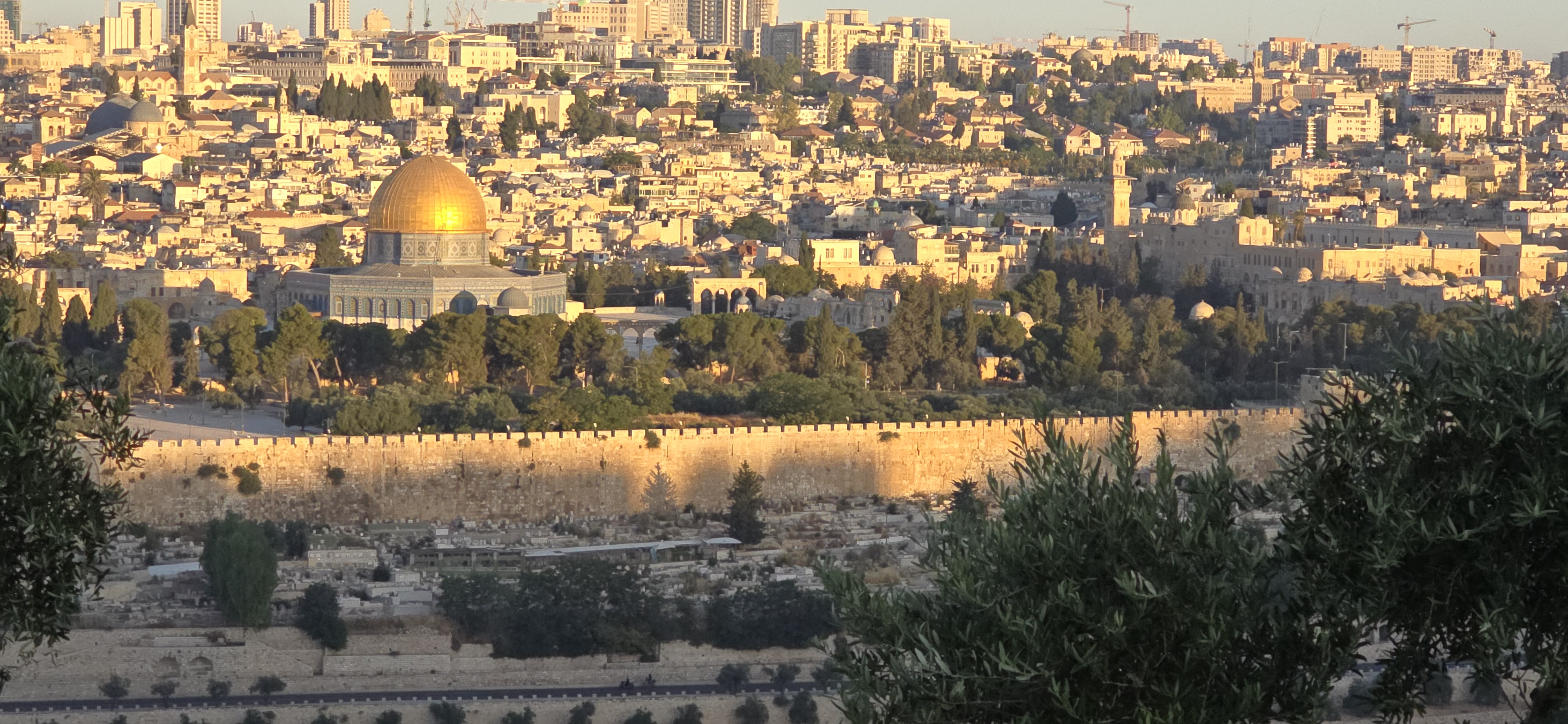
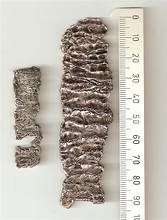
In 1979, archaeologists excavating a burial cave at Ketef Hinnom, on a hillside overlooking the Old City walls of Jerusalem, discovered two tiny silver scrolls. When carefully unrolled, they revealed words that Jews still recite today.

Ketef Hinnom scrolls

The scrolls, engraved more than 2,600 years ago, contain the priestly blessing from Parshat Naso:

“May the Lord bless you and keep you. May the Lord make His face shine upon you and be gracious to you. May the Lord lift up His face upon you and grant you peace.”

They are the oldest known biblical texts ever discovered.

Every year, Jews encounter these verses when Parshat Naso is read in synagogue. Parents recite them over their children on Friday nights. In Israel, kohanim still stand before congregations every day and deliver the same blessing first commanded to Aaron and his descendants in the wilderness.

What makes the Ketef Hinnom discovery extraordinary is not only its age, but its location.

The silver scrolls were found only a short distance from the Temple Mount, where priests once pronounced these words over the people of Israel. Few archaeological discoveries draw such a direct line across three millennia. The oldest surviving biblical text was found almost within sight of the place where it was commanded to be spoken.

The content of the blessing is equally remarkable. The oldest biblical inscription yet discovered is neither a king’s decree nor a military victory. It is a passage from the Bible that culminates in a single aspiration:

Shalom. Peace.

The prayer asks for blessing, protection, grace, and ultimately peace itself. Those hopes remain as familiar today as they were to the Jerusalem resident who carried the silver amulet twenty-six centuries ago.

The scrolls from Ketef Hinnom remind us that Jerusalem, the Bible, and the pursuit of peace have stood at the center of Jewish life for thousands of years.

“May the Lord bless you and keep you.”

The empires of the ancient world survive in ruins. This blessing survives in a people. 

AP: Have I Told You Lately That Israel Is Racist?

The Associated Press did not cover Jerusalem Day as a story about Jews returning joyfully to the holiest city in Judaism after nineteen years of exclusion under illegal Jordanian occupation. It covered it as a story about Jewish menace.

That framing decision is visible before readers even reach the second sentence.

“Ultranationalist Jews chant racist slogans during annual march into Jerusalem’s Old City.”

The rare racist chants reported at the march were ugly and deserve condemnation. But AP transformed the fringe into the essence of the event itself. Tens of thousands of Jews marched peacefully, sang, danced and celebrated Jerusalem Day. Yet readers encountering the article for the first time would assume the defining feature of the event was racist hooliganism when in fact it was joyous celebration.

AP’s linguistic stacking is relentless:

“ultranationalist Jews.”
“racist slogans.”
“violent confrontations.”
“hard-line government.”
“provocative visit.”
“inflame tensions.”

Every descriptor pushes readers toward the same emotional conclusion: Jewish sovereignty in Jerusalem is dangerous, aggressive and destabilizing. Palestinians are the natural residents and Jews are interlopers who threaten violence.

The false narrative erases the actual historical meaning of the day.

Jerusalem Day marks the reunification of Jerusalem in 1967 after Jordan’s nineteen-year occupation of the eastern part of the city. During those years Jews were expelled from the Jewish Quarter, synagogues were destroyed, Jewish cemeteries were desecrated and Jews were barred from praying at the Western Wall despite explicit guarantees of access under the armistice agreements.

Without that context, Jewish celebration is transformed into something alien and sinister. Readers are shown Jews marching through Jerusalem, but never fully told why entering the Old City carries such emotional and historical weight in the first place.

Erased from the narrative is the uncomfortable fact that Jews were once the excluded population in the very places now described almost exclusively through Palestinian identity.

The asymmetry in labeling is impossible to miss. Arabs in Jerusalem are described as “Palestinians” or “Palestinian residents,” language that subtly implies an already-existing Palestinian sovereignty over the city. Jews, meanwhile, are repeatedly subdivided into ideological categories: “ultranationalists,” “hard-line,” “settlers.”

One side receives an organic national identity. The other receives political suspicion.

AP even refers to “Palestinian areas” of Jerusalem while never acknowledging the basic legal and political reality that these residents are primarily Israeli citizens or permanent residents under Israeli administration. There is no Palestinian state governing Jerusalem. Yet the article’s language continuously nudges readers toward imagining Jews as intruding into someone else’s sovereign national space.

Even the treatment of the Temple Mount follows the same pattern. AP describes MK Itamar Ben Gvir’s visit as “provocative” before readers are even reminded that the site is the holiest place in Judaism, where the biblical temples once stood.

Imagine covering Muslims praying in Mecca or Catholics gathering in the Vatican first through the lens of how upsetting their presence might be to others.

Buried later in the article is a participant explaining that the racist chants came from “a small minority” of marchers. But by then the framing work is complete. The reader has already absorbed the article’s core emotional message: Jewish nationalism itself is the problem.

There is a profound difference between reporting that some participants at a massive public gathering behaved disgracefully and presenting those fringe elements as representative of the gathering’s essential character.

One reports misconduct. The other assigns collective identity.

And the asymmetry becomes impossible to ignore when comparing coverage standards. When participants at a pro-Palestinian rally praised terrorism or chanted genocidal slogans, major international outlets avoid headlines assigning those slogans to Palestinians collectively. Readers would receive sociological context, political nuance and careful distinctions between extremists and the broader movement.

Jewish events rarely receive the same interpretive charity.

The deeper issue exposed by the article is not merely media bias. It is discomfort with Jewish sovereignty itself.

Jewish attachment to Jerusalem is welcomed when it is passive and distant. The moment it expresses sovereignty, history or power, the vocabulary changes. Then Jews become “ultranationalists.”

The article unintentionally reveals a larger truth about modern international discourse surrounding Israel. Jewish history is acceptable. Jewish prayer is acceptable. Jewish suffering is acceptable. What remains difficult for much of the international press is Jewish power: Jews governing Jerusalem, policing Jerusalem, marching through Jerusalem and refusing to behave like temporary guests in their own civilizational center.

Abraham’s Tests and the Covenantal Land

In the Hebrew Bible, Abraham, the father of monotheism, is tested ten times. The biblical commentator Rashi (1040-1105) lists them out, and it is curious to line them against the ten nations that inhabit the land that God promises to Abraham.

10 Tests according to Rashi10 Nations in the promised land
Abraham hid underground for 13 years from King Nimrod, who wanted to kill him.Kenites
Nimrod flung Abraham into a burning furnace.Kenizzites
Abraham was commanded to leave his family and homeland.Kadmonites
As soon as he arrived in Canaan, he was forced to leave to escape famine to Egypt.Hittites
Sarah was kidnapped by Pharaoh’s officials.Perizzites
The 4 kings captured Lot, and Abraham went out to war to rescue him.Rephaites
God told Abraham that his offspring would suffer exile and slavery for 400 years initially four monarchies.Amorites
At 99, Abraham was commanded to circumcise himself and his household.Canaanites
Abraham was instructed to drive away Ishmael and Hagar.Girgashites
He was commanded to sacrifice Isaac.Jebusites

The Torah never tells us to match them one by one, but two of Abraham’s tests align so precisely with two of those nations that they reveal the architecture of the covenant itself: one in the flesh, one on the mountain.

The first is brit milah and Canaan, what we know of today as the bulk of the land of Israel.

When God first expands Abraham’s promise of land in Book of Genesis 13, He tells him to rise and walk it: Arise, walk through the land, its length and breadth, for I will give it to you.

Abraham walks the land before he owns it.

But in Genesis 17, when the covenant is deepened through circumcision, the order changes. God commands Abraham to mark the covenant into his own body and then immediately ties that mark to the promise of land: I will give to you and your descendants after you the land of your sojournings, all the land of Canaan.

The sequence is striking.

First Abraham walks the land. Then Abraham marks the flesh. The lesson is deeper than ownership. You cannot carry covenantal land unless the covenant is carried within you.

Before borders, there is obligation. Before sovereignty, there is submission.

The modern world treats land as politics—lines, armies, treaties. The Torah treats land as moral space. Canaan is not merely inherited geography. It is covenantal geography. And covenantal geography requires covenantal people.

Brit milah is the title deed, not written on parchment, but on the body itself.

The land of Canaan is not inherited simply because it was promised. It is inherited because Abraham accepted what the promise demanded.

Then comes the Akedah and the Jebusites, which takes place in Jerusalem.

If brit milah secures the land broadly, the Akedah secures its heart.

Abraham’s greatest trial takes place on Mount Moriah, where he binds Isaac and prepares to surrender the son through whom every promise was meant to continue. Jewish tradition identifies that mountain with the future Temple Mount, the site held by the Jebusites until King David captures it and makes it the spiritual center of Israel, 3,000 years ago.

That means Abraham’s greatest and final test takes place at the future center of Jewish history. That is not incidental.

Long before David purchases it, long before King Solomon builds the Temple, long before priests serve and pilgrims ascend, Abraham stands there and confronts the deepest truth of covenant: even the future belongs to God.

Canaan is the inheritance of the body. Its covenant is sealed in flesh.

Jerusalem is the inheritance of the soul. Its covenant is sealed in surrender.

One is broad territory. The other is concentrated holiness.

The land of the Canaanites – the land of Israel – is the essence of the covenant between God and the Jews; the land of the Jebusites – Jerusalem – is the center of that faith. These are lessons that God imparted to Abraham in the year 2023 of the Jewish calendar that anchors Judaism to this day.

Three Interesting and Unique Things About Israel’s National Anthem

The Olympics are a unique time when the national anthems of many countries get played in succession. It is a time to consider how unique Israel’s anthem is.

Hope versus Superiority and Sacrifice

Most of the national anthems in the world were written to rally a nation. They evoke war themes and superiority over a nation’s foes. Consider the United States anthem about “the rockets red glare, the bombs bursting in air,” or Germany’s original “Germany, Germany over all. Over everything in the world!”

In the Muslim Middle East, most countries have anthems that describe sacrifice:

But the State of Israel’s national anthem “Hatikvah” is about hope. Not superiority. Not vendetta, sacrifice or struggle. HOPE.

Its Capital City

While most countries’ anthems surround themes of victory and struggle, Israel uniquely focuses its anthem on its capital city, Jerusalem. In fact, no other country even mentions its capital, while Israel does so in an anthem just a few lines long.

One of the Oldest in the Middle East

The world changed dramatically after the end of World War I, with the collapse of the Austria-Hungarian and Ottoman empires, the end of the USSR, and end of decolonization. The number of countries multiplied over the last century, to nearly 200 today.

Israel’s national anthem is the oldest of the new nations, especially in the Middle East.

  • Israel written in 1878
  • Turkey 1921
  • Syria 1938
  • Jordan 1946
  • Libya 1951
  • Oman 1970
  • Kuwait 1978
  • Tunisia 1987
  • Iran 1990
  • Yemen 1990
  • Palestinian Authority 1996
  • Iraq 2004

While Jews are falsely accused of being recent interlopers and invaders, with no right to live in Jerusalem, and the Jewish State is smeared as a racist country built on superiority and imperialism, its national anthem is the oldest in the region, only speaks of hope and freedom, and is uniquely about its capital city of Jerusalem.

Israel national anthem:

As long as in the heart within,
The Jewish soul yearns,
And toward the eastern edges, onward,
An eye gazes toward Zion.

Our hope is not yet lost,
The hope that is two-thousand years old,
To be a free nation in our land,
The Land of Zion, Jerusalem.

The Only Place Jewish Murder In a Synagogue Isn’t Antisemitism

When Jews are murdered in synagogues in Europe, the United Nations speaks plainly. The attacks are labeled antisemitic. The violence is called terrorism. Solidarity with the Jewish community is explicit, and justice is demanded.

UN Secretary-General calls killing of Jews in Germany “demonstration of antisemitism” in 2019
UN Secretary-General calls killing of Jews in United Kingdom in 2025 “antisemitism” and “stresses the urgent need to confront hatred and intolerance in all their forms.”

When Jews are murdered in synagogues in Jerusalem, that clarity vanishes.

The same act—killing Jews at prayer—suddenly requires “context.” Terrorism is softened into “violence.” Antisemitism dissolves into “tensions.” Victims are anonymized, motives left unexplored, ideology carefully avoided. Language that flows easily in Europe locks up entirely in Israel’s capital.

UN Secretary-General never calls killing of Jews in Jerusalem rooted in “antisemitism.”

This is not rhetorical drift. It is doctrine.

The UN has formally adopted the Palestinian demand that Jews should not live in Jerusalem. Through measures such as UN Security Council Resolution 2334, it asserts that Jews may not alter the city’s “demographic composition.” That position freezes Jerusalem at a moment immediately following the Jordanian army’s ethnic cleansing of all Jews from the eastern half of the city between 1948 and 1967. Jewish expulsion is accepted as a legitimate baseline. Jewish return is treated as a violation of international law.

This is not neutrality. It is the institutionalization of an antisemitic premise: that Jews, uniquely among peoples, have no right to live in their holiest city.

UN Secretary-General calls killing of Jews in United States “antisemitism” THREE TIMES.

Once that premise is accepted, Jewish life in Jerusalem becomes conditional. Jewish neighborhoods are labeled illegal. Jewish prayer is framed as provocation. Jewish presence itself is cast as destabilizing. Violence against Jews no longer reads as antisemitism but as political reaction to an allegedly illegitimate reality.

Under those conditions, motive cannot be named. Calling synagogue murders in Jerusalem “antisemitic terrorism” would require acknowledging that Jews are being targeted for who they are, in a city where the UN has already ruled they should not be. It would expose the connection between UN doctrine and the moral evasions that follow.

So the motive is omitted.

Aftermath of Jews slaughtered in synagogue

The UN does not merely tolerate the idea of Jews being removed from Jerusalem; it has encoded it. The language is bureaucratic—demographics, international law, peace—but the result is stark: a city where Jewish existence is treated as unlawful, and Jewish murder as a political complication.

The contrast with the rest of the world makes the pattern undeniable. The UN knows exactly how to speak about antisemitism. That moral vocabulary disappears only in Judaism’s holiest city, in the Jewish State’s capital, because the United Nations has endorsed the antisemitic wishes of radical jihadists.

UNRWA’s Jerusalem Exception

Every UN humanitarian agency coordinates with the authority that governs where it operates—except in Jerusalem. That exception is not a footnote. It is the story. And it exposes a mandate failure driven by politics, not humanitarian necessity.


UNRWA holds that humanitarian work requires coordination with governing authorities. In practice, it does so almost everywhere: with Jordan, Lebanon, Syria, the Palestinian Authority—and even with Hamas in Gaza, despite Hamas’s terrorist designation by the United States, the EU, the UK, and others.

In Jerusalem alone, UNRWA refuses to coordinate with Israel, the authority exercising full municipal, policing, and regulatory control over the city.

Call it “coordination for access” if you like. It is still coordination. And municipal coordination is not a sovereignty concession (if one believes that Israel does not have sovereignty over eastern Jerusalem despite annexing it in 1980); it is a humanitarian necessity.

How the Facilities Came to Exist

UNRWA’s Jerusalem facilities were established between 1949 and 1967, when Jordan seized and annexed the eastern half of the city in a move not recognized by the UN or the international community. UNRWA nonetheless coordinated with the Hashemite authorities to build schools, clinics, and service centers—because humanitarian work requires coordination with whoever governs in fact.

That history matters. UNRWA’s Jerusalem footprint exists specifically because it once coordinated with an unrecognized occupier.

UNRWA offices in Jerusalem (photo: First One Through)

The Reversal

In 1967, Jordan entered the war, violated the armistice, and lost control of Jerusalem. Israel assumed governance and unified the city. Palestinian Arab residents became permanent residents with access to Israeli courts, healthcare, municipal services, and the right to apply for citizenship.

At that point, UNRWA reversed its logic. Where it coordinated with Jordan despite non-recognition, it now refuses to coordinate with Israel—by labeling eastern Jerusalem “occupied Palestinian territory,” theoretically negating its obligation to work with Israel.

That label sits uneasily with the UN’s own history. The 1947 Partition Plan never intended Jerusalem—east or west—to belong to an Arab state. The city was designated a corpus separatum, an internationally administered entity. Jerusalem was never meant to be Arab sovereign territory.

The contours of “Corpus Separatum” (in pink) in the United Nations 1947 Partition Plan stretched over Greater Bethlehem and Greater Jerusalem, marking the region as an international Holy Basin to be administered by the UN

An Outlier by Design

UNRWA’s mandate emphasizes cooperation with local authorities to ensure access, security, and civilian protection. That cooperation exists everywhere except Jerusalem. UNRWA coordinates with armed groups and unrecognized authorities elsewhere, yet refuses coordination with the governing authority in the city where coordination is most essential.

Refusing to coordinate with the authority responsible for public safety is not neutrality. It is an affirmative political act—one that inverts humanitarian logic by privileging narrative over civilian protection. UN immunity exists to facilitate coordination, not to replace it.

Continuity of Care—and the Standoff

Israel has enacted laws to shutter UNRWA offices in Jerusalem. UNRWA refuses to comply, invoking immunity and operating facilities largely outside municipal oversight. The confrontation exists because UNRWA chose inconsistency in the one city where consistency matters most.

“The UNRWA Jerusalem Health Centre, which serves hundreds of Palestine refugee patients every day is, for most of them, their only possibility of having access to primary healthcare….
These [Israeli] measures are a violation of the inviolability of United Nations premises and an obstacle to the implementation of the clear mandate of the General Assembly for UNRWA’s continued operations in the Occupied Palestinian Territory, including East Jerusalem.” – UN Secretary General Antonio Guterres January 15, 2026

The closure of UNRWA offices in Jerusalem would not create a humanitarian vacuum. Education, healthcare, and social services are already provided through municipal systems, national institutions, other UN bodies, and a dense NGO network operating in the city. What would end is not care delivery, but UNRWA’s parallel governance model.

Palestinian Arabs in Jerusalem rely daily on municipal emergency services, hospitals, and courts. UNRWA’s non-coordination removes the safety mechanisms coordination is meant to provide—for civilians, staff, students, and patients alike.

The Reckoning

UNRWA coordinated with Jordan when Jordan’s rule was unrecognized. It coordinates with Hamas despite terrorist designations. Yet it refuses to coordinate with Israel while Israel governs the city, extends legal status to its Arab residents, and has a network of service providers which can easily replace UNRWA in Jerusalem.

That is not humanitarian principle. It is selective politics.

Consistency is the minimum requirement of a mandate.
A mandate that works everywhere but Jerusalem is not a mandate—it is a message, and it is that UNRWA is not a humanitarian organization.

UNRWA remains a rusty tool of the 1947 Partition Plan which insists that holy sites in Jerusalem never fall under Jewish rule.

The Gates of the Temple Mount

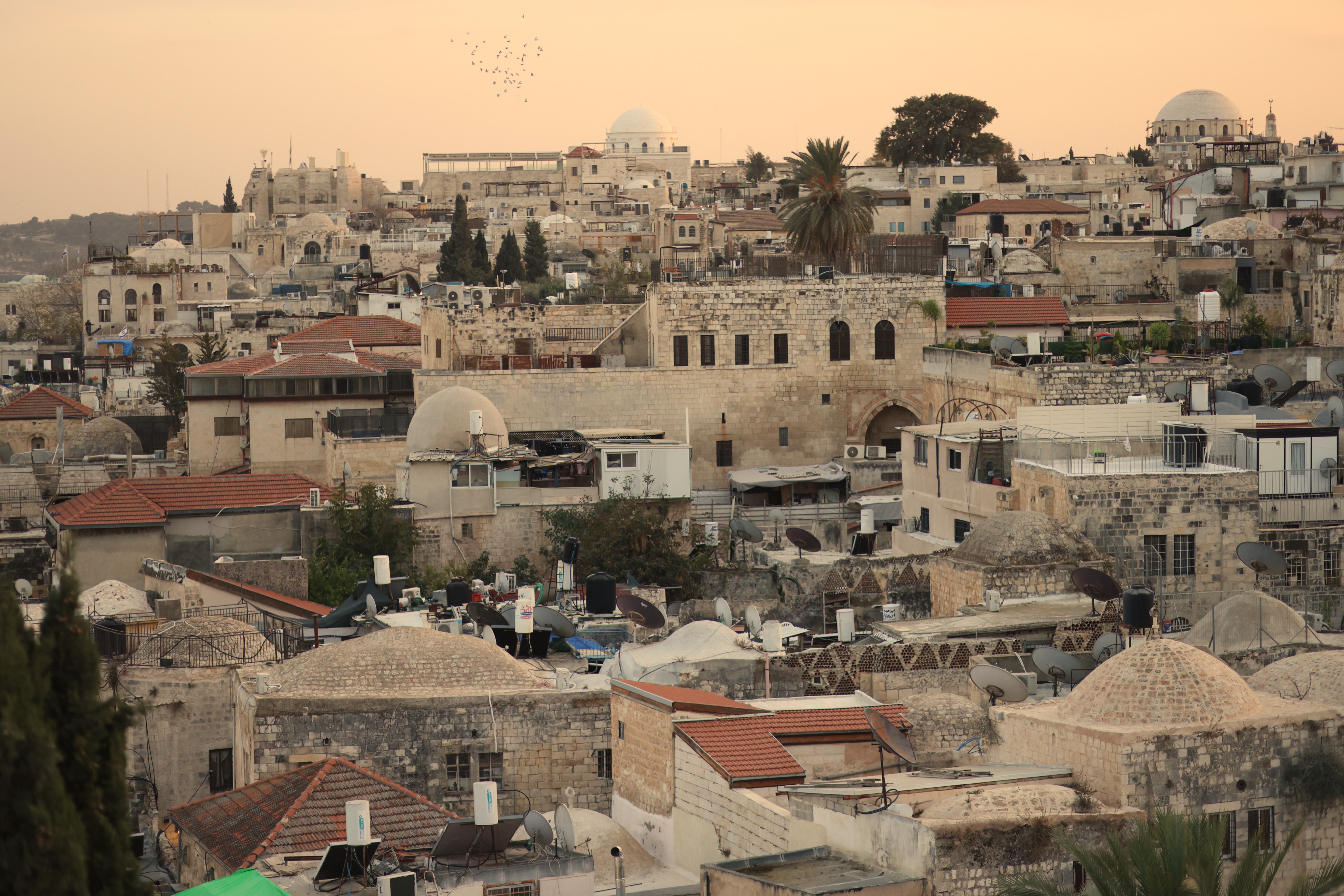
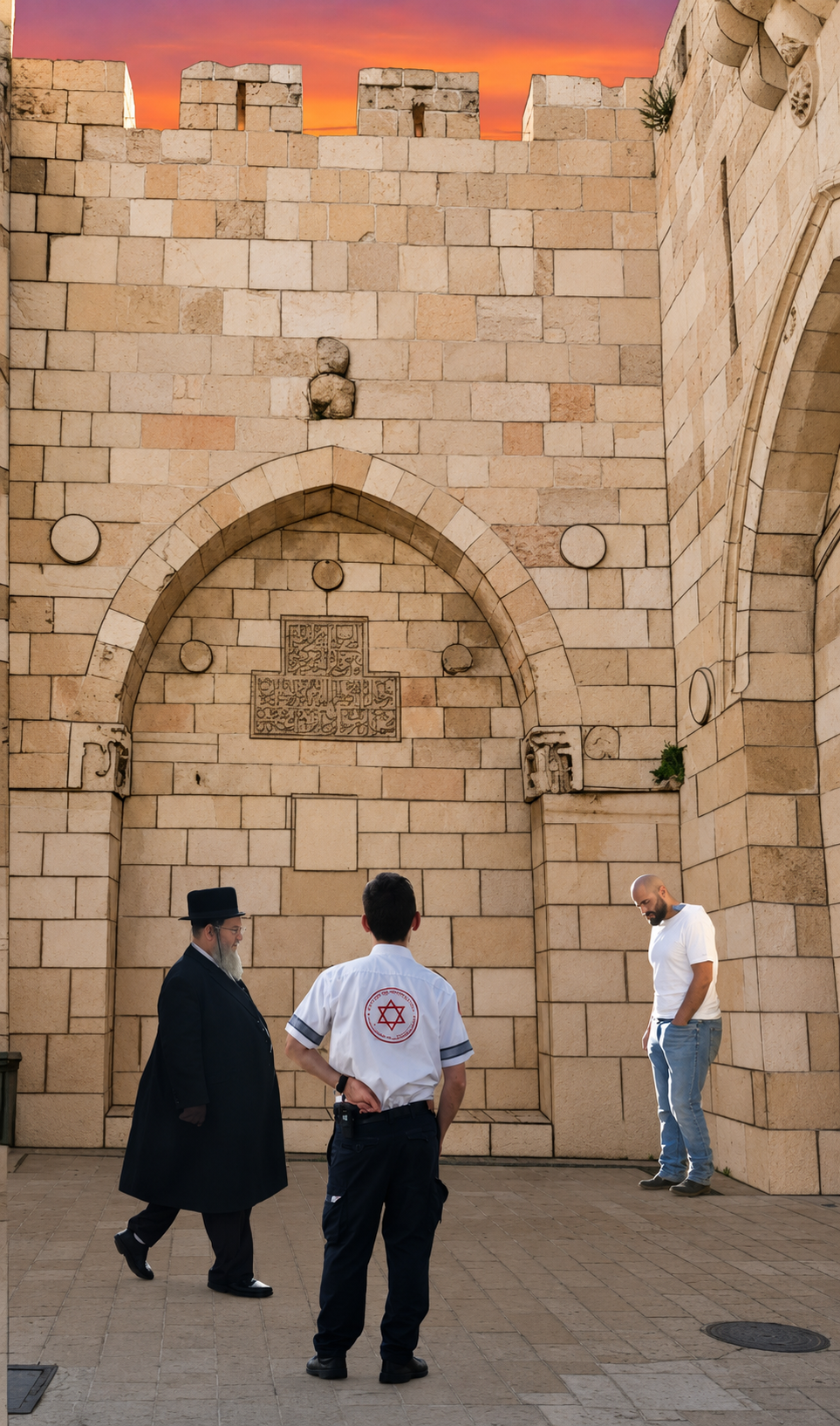
Jerusalem is a city of gates. Stone thresholds worn smooth by centuries of feet. Arches that promise passage, and others that deny it.

Nowhere is this more literal—and more symbolic—than at the gates to the Temple Mount.

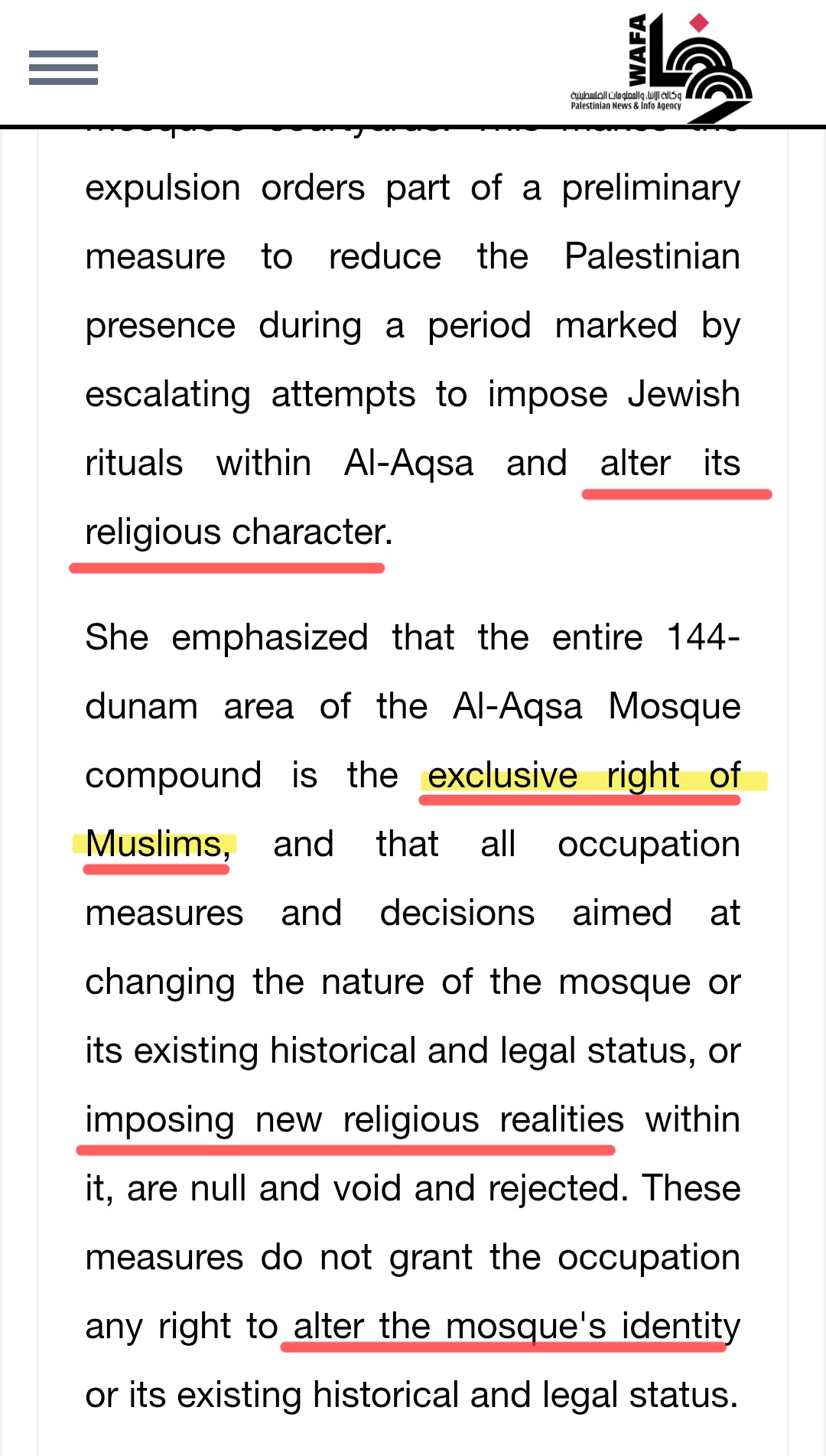
There are many gates along its walls. Some are sealed, some are ceremonial, and some are active. But in practice, Muslims ascend and descend freely through multiple entrances, while non-Muslims are funneled through a single ramp, tightly controlled, time-limited, and revocable at will.

Group of Muslim women come down from the Jewish Temple Mount at the Cotton Merchants’ Gate (photo: First One Through)

This is not accidental. It is policy.

Muslims enter through gates embedded naturally in the Old City’s fabric—the Cotton Merchants’ Gate among them. There, the walls are alive. Candy shops spill color onto the stones. Children’s clothing hangs in soft defiance of gravity. The scent of sweets mixes with dust and history. Life flows in and out, up and down, as it has for generations.

Jews, by contrast, are stopped.

They are turned away from nearly every gate. Not questioned. Not debated. Simply blocked.

Despite the Temple Mount being the holiest site in Judaism, Jews are told—by police, by signs, by precedent—that they may not enter as worshippers.

A solitary Jew is blocked from ascending the steps to the Jewish Temple Mount, the holiest location in Judaism, because he is a Jew. (photo: First One Through)

They are redirected instead to a single entrance ramp, detached from the Old City’s living arteries. The ramp rises from the edge of the Western Wall plaza, a vast open expanse that functions less like a neighborhood and more like a giant stone parking lot. From there, Jews may ascend only during narrow windows, under escort, forbidden to pray, forbidden to whisper, forbidden even to move their lips in devotion.

Jews are limited to prayer at the Western Wall, a supporting wall to the Temple Mount. The ramp to the Mughrabi Gate (top right) is the only gate of the ten operating gates where Jews can pass onto the Temple Mount, in limited numbers, at limited times. (photo: First One Through)

Jews are told to make do.

Make do with praying to a retaining wall of the Temple Mount.
Make do with history filtered through permission.
Make do with holiness at a distance.

This arrangement is often called the “status quo,” as if it were ancient, neutral, or inevitable. It is none of those things. It is modern. It is enforced. And it rests on a single premise: Islamic supremacy over the site requires Jewish silence at Judaism’s holiest place.

Muslims may ascend and descend at will. Jews may only look up.

The irony is almost unbearable. Judaism sanctified this mountain long before Islam existed. The Temples stood here before the Qur’an was written, before the Dome of the Rock was imagined, before the word “status quo” could be used to freeze injustice in place.

And yet today, Jewish presence itself is treated as a provocation.

Not violence. Not disruption. Presence.

The gates tell the story more honestly than any diplomatic statement ever could. Gates that welcome. Gates that redirect. Gates that close.

It’s a caste system familiar to Black Americans. “For Whites Only” is now “For Muslims Only” for 90% of the gates to the Temple Mount. “Negro Entrance” read “Non-Muslim Entrance” is plastered atop a ramp in the far corner of the Temple Mount. While racial Jim Crow laws ended in the U.S. decades ago, Jews remain subject to open religious discrimination at their holiest location. At the insistence of the United Nations.

In Jerusalem, everyone speaks of coexistence. But coexistence cannot survive when one faith ascends freely and another is barred from its own summit.

What Is A Moon In Jerusalem?

People assume the moon is a universal constant. A simple shared celestial orb rising and falling across planet Earth.

At first glance, that seems right. The phases of the moon follow the same cycle for everyone. The waxing crescent in New York is the waxing crescent in Nairobi. The full moon bathing Buenos Aires is the same one brightening Beijing.

But the details betray the simplicity.

Because of Earth’s curvature and tilt, the angle of the moon changes depending on where you stand. In the northern hemisphere, the crescent opens to one side; in the southern hemisphere, it opens to the other. Near the equator, the crescent often lies on its back like a cup collecting light. The horizon line shifts the moon’s ascent and descent, making the same moon feel subtly unfamiliar across latitudes.

Phases of the moon in northern and southern hemispheres

So while the moon itself is constant, the human experience of it is not. Geography shapes perception.

Which brings us to a particular location: Jerusalem.

Why did ancient Jewish sages insist that the new month—the very heartbeat of the Jewish calendar—could only be declared there? Why could only witnesses standing in that one city testify that they had seen the first thin sliver of the new moon? It wasn’t because Jerusalem had the sharpest skies or the best astronomical vantage point. Other regions had clearer air, lower humidity, more favorable horizons.

The choice was not scientific. It was cultural.

The sages understood that if the Jewish calendar were anchored anywhere else—in Babylonia, in Alexandria, in Rome—it would become a local calendar. A diaspora calendar, and reflection of exile. Time would belong to the places where Jews merely lived, not the place where they belonged.

And so they declared: the Jewish month begins only where Jewish destiny begins.
In Jerusalem.

The moon in Jerusalem is not visually unique. It does not shine brighter, hang lower, or reveal a different pattern of craters. What is different is what it carries.

Elsewhere, the moon is a mechanism of light in the night. In Jerusalem, it is a messenger and message.

In the city, it rises over stones worn by millennia, over a city that has been destroyed and rebuilt and prayed toward more times than any other on earth. Outside of Jerusalem, generations of Jews looked to that moon to mark the days of their wandering. Prisoners in Soviet cells whispered its phases in the dark. Families in medieval Europe and North Africa opened their windows each month hoping for a sliver that someone in Jerusalem might already have seen.

For them, the new moon was a signal: Somewhere, in the city we lost, time is still ours.

The moon is the same everywhere, but meaning is not. For Jews, the appearance of the moon in Jerusalem was the moment when wanderers and exiles, merchants and mystics, shepherds and scholars all re-entered the same story, no matter how far they lived from its setting, regardless of their own particular vision of the moon.

The world sees a reflection of the sun’s light in the moon. Jews see a reflection of their unique common heritage, and permanent tie to Jerusalem.

Children of a Lesser God, on the Temple Mount

Mark Medoff titled his play Children of a Lesser God to expose the way society infantilized the deaf, treating them as incomplete people. The phrase still burns because it names the humiliation: being allowed to exist but denied equal dignity.

That is precisely the status of Jews on the Temple Mount. The holiest place in Judaism, the very ground of the First and Second Temples, the site of the binding of Isaac. Yet Jews are barred from uttering a prayer there. Visitors, reluctantly and barely; worshipers, never. The “status quo” enforced by the Jordanian Waqf with United Nations’ support dictates that Jews must keep their mouths shut.

It is a civic cruelty disguised as compromise. Jews are told they may stand in the place of their ancestors, but only as tourists in a museum, not as children before God. Muslims pray freely on the Mount by the millions, but Jews are gagged at their own holiest site. That is not neutrality — it is Islamic Imperialism.

The excuses are familiar: security, stability, avoiding unrest. But those words simply sanctify discrimination as pragmatism. As every Jew is expelled for moving lips in silent prayer, the world is reminded: some children are still treated as children of a “lesser” god.

At the very moment Jews prayed in synagogues over Rosh Hashanah 5786 in September 2025, reading the story of Abraham binding Isaac on the Temple Mount and repeatedly praying for a complete Jerusalem, the Islamic world – from as far away as Pakistan and Indonesia – made demands of the United States that it would ensure that Israel maintains the “status quo” on the Mount. The despicable continued humiliation of Jews was essential for them even under the guise of stopping the Hamas war. Even above “humanitarian aid to Gaza.”

Islamic world makes demands on the United States to stop the war – and Jews attempting to pray at their holiest location

International diplomacy has institutionalized the humiliation of Jews. The so-called status quo is nothing but a permanent statement of inequality.

Medoff’s play forced audiences to confront a society that silenced the deaf. The Temple Mount forces us to confront a world that silences Jews. While both are intolerable, the latter is demanded at the anti-Jewish United Nations.

Ki Tavo: From Wandering to Rooted

When the Torah commands the farmer to bring his first fruits, it does not let him talk about his soil or his labor. Instead, the ritual begins: “My father was a wandering Aramean…” (Deuteronomy 26:5) The commentators note that gratitude is not complete without memory. To thank God for the harvest, one must first recall that the Jewish story began in exile and slavery. Only against that backdrop does the basket of figs become miraculous.

Later in the same parsha (Deuteronomy 28:4), the Torah turns to blessings and curses. If Israel listens to God, “Blessed shall be the fruit of your womb, the fruit of your soil, and the fruit of your livestock.” If not, those very fruits will wither. Here too, fruit is not agricultural output — it is covenantal currency.

Put together, the two passages form a cycle. The first fruits ceremony roots gratitude in memory: remember that you were once landless and fruitless. The blessings and curses tie the future of fertility to obedience: remember that your continued abundance is not guaranteed.

And notice where this all happens: Jerusalem. The farmer did not simply thank God in his vineyard or whisper gratitude in his kitchen. He carried his produce up to the city, presented it at the Temple, and declared his history publicly. Jerusalem was not just a capital; it was the beating heart of Jewish memory and faith. The fruits gained meaning when they were placed before God in the city chosen for His name.

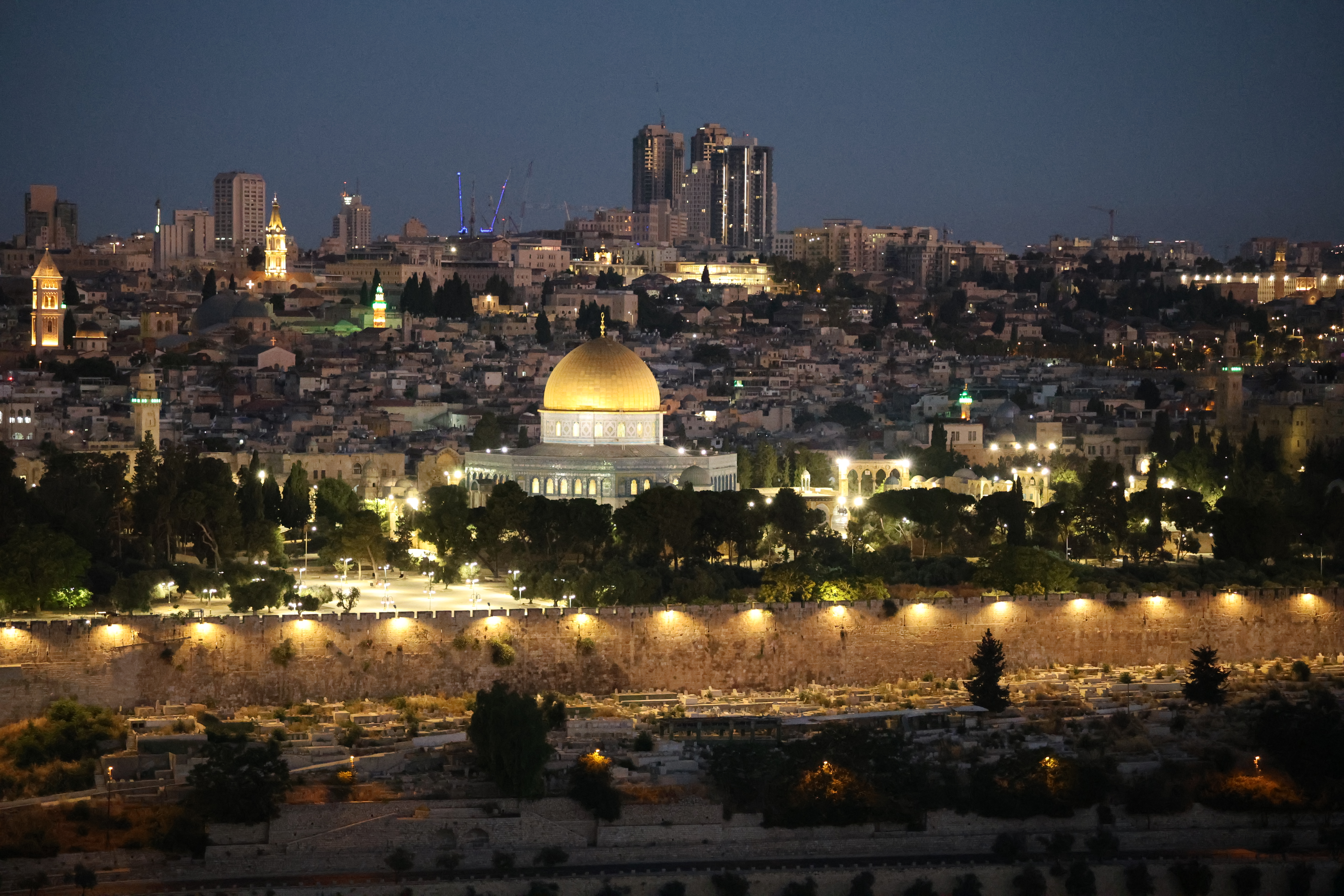
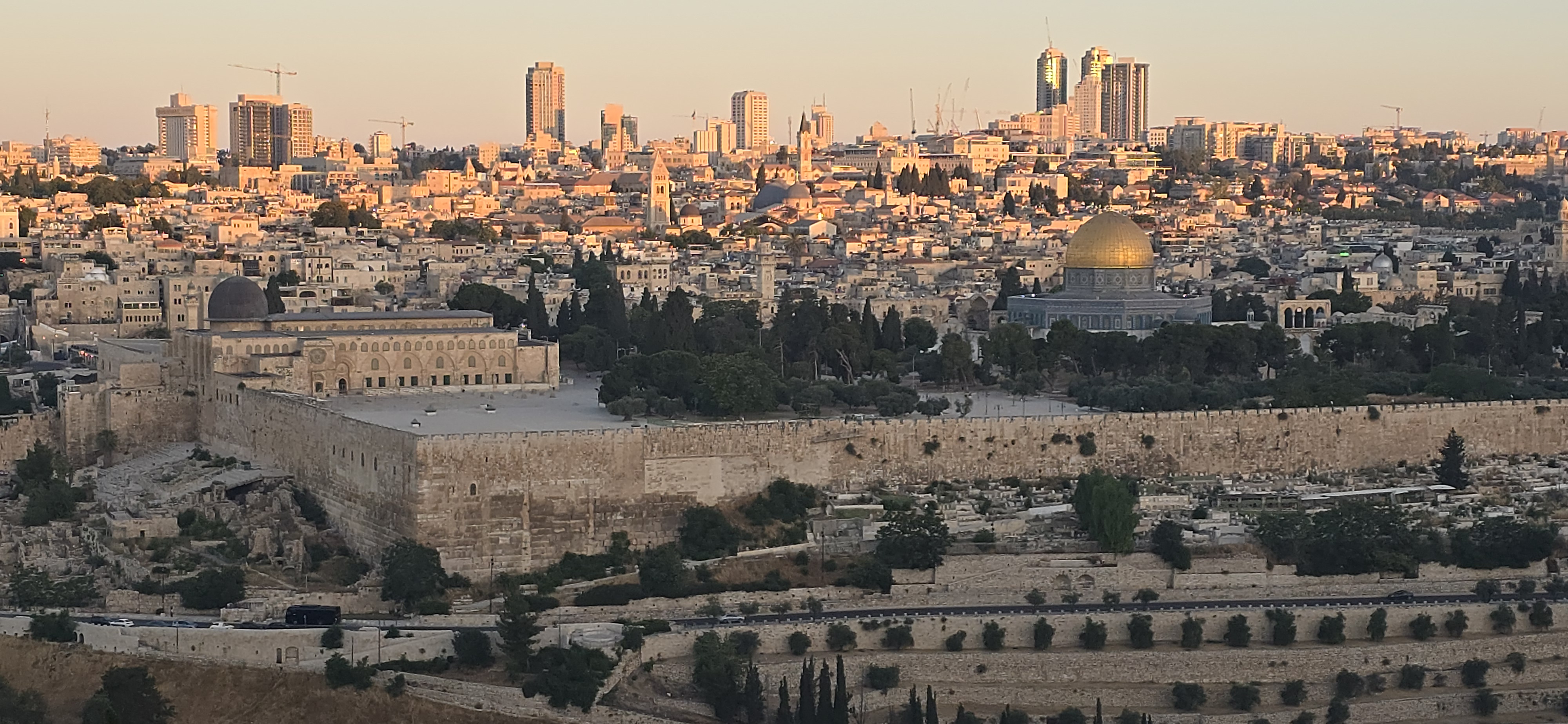
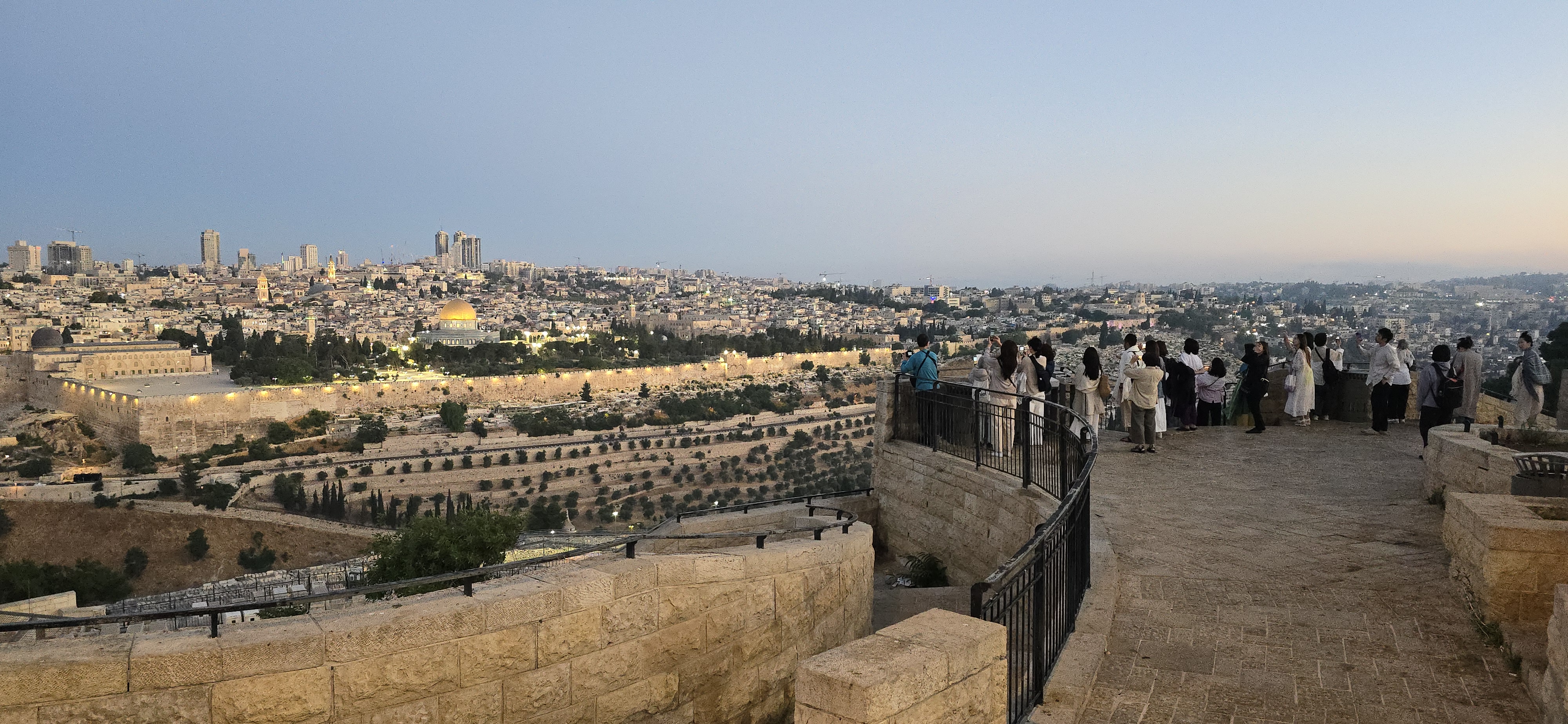
The Old City of Jerusalem including the Jewish Temple Mount

This is why the prophets, the rabbis, and Jewish history itself encircle Jerusalem. The city is not peripheral to Judaism — it is central. It is where private labor becomes national testimony, where agriculture becomes covenant, where the wandering Jew becomes rooted in a people’s eternal home.

To this very day, Jews sing at their wedding the verses of Psalms 137:5-6: “If I forget you, O Jerusalem, let my right hand wither; let my tongue stick to my palate if I cease to think of you, if I do not keep Jerusalem in memory even at my happiest hour.” Jerusalem is bound in memory, that same memory that reminds us of our history, our promise, our obligations.

Today, too, the Jewish people encircle Jerusalem. Jews bring their “first fruits” to the city not only in the form of produce, but through aliyah, prayer, innovation, and sovereignty. Just as in ancient days, the city transforms personal blessings into collective covenant.

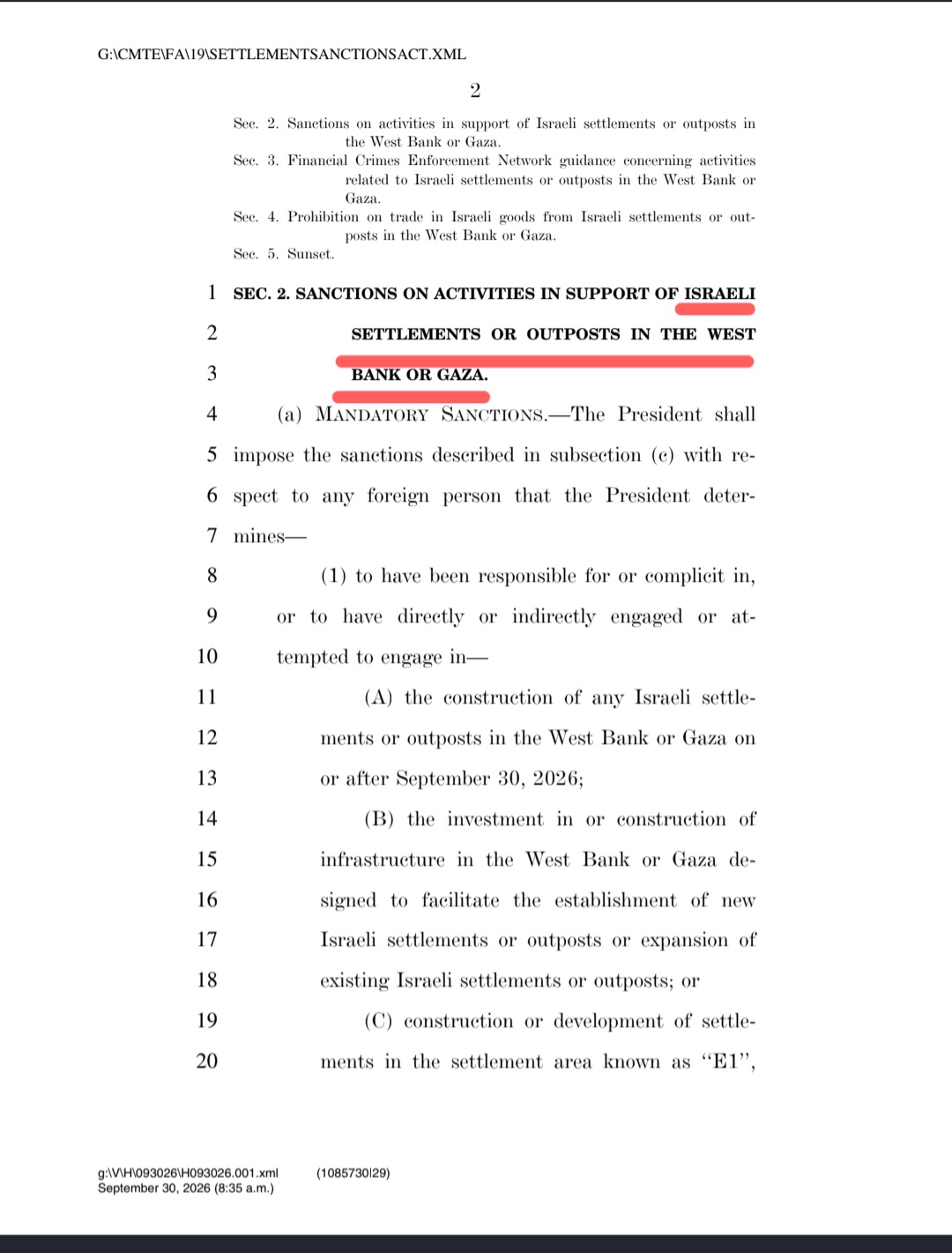
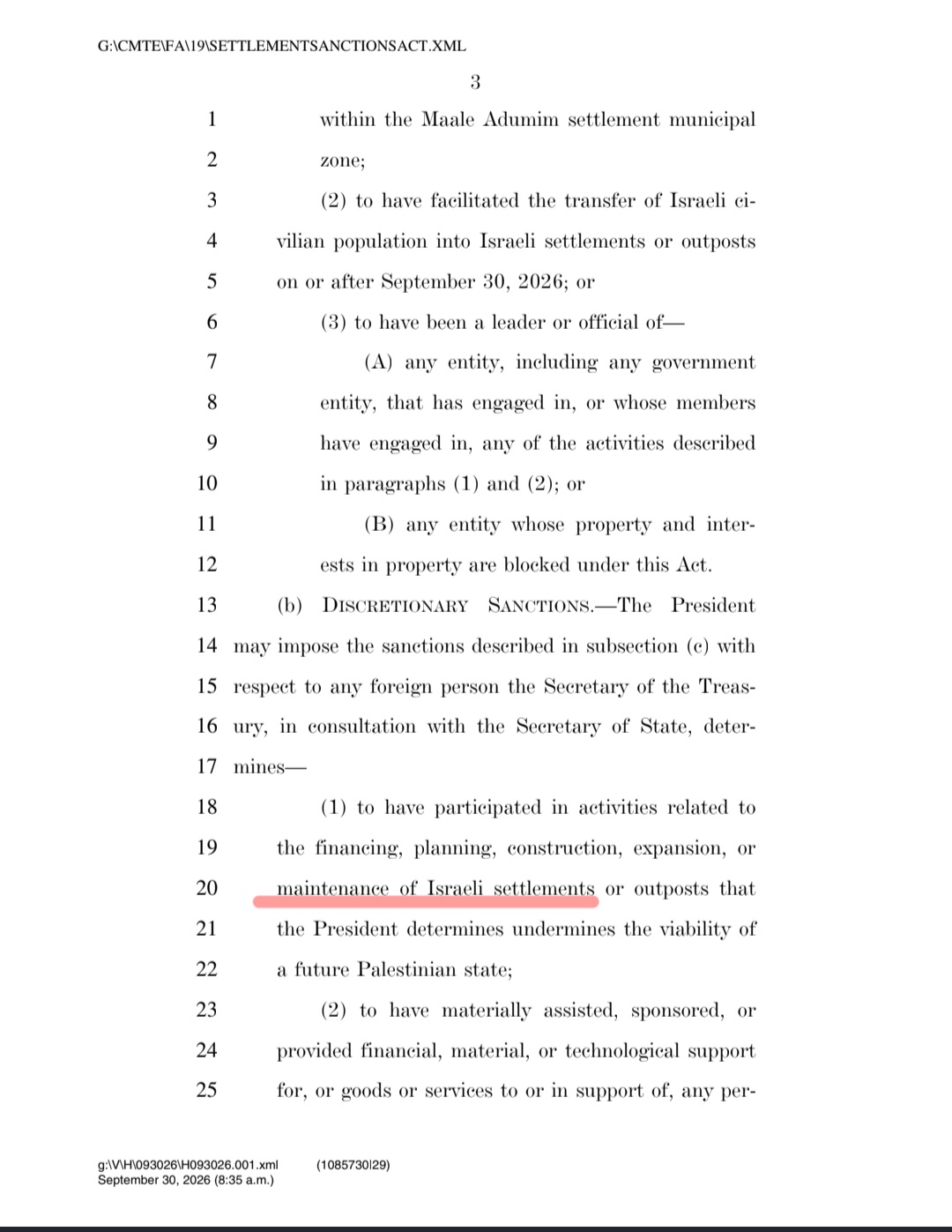
And yet, the world still questions that rootedness. Governments refuse to recognize Jerusalem as Israel’s capital. Diplomats condemn the building of homes in areas like E1 — the very corridor that links Jerusalem to the rest of the land, enabling Jews from north, south, east, and west to come to their eternal city.

Ki Tavo reminds us that Jerusalem cannot be negotiable. To encircle it, to build in it and around it, is not a matter of politics but of foundational principle. Without Jerusalem at the center, our fruits risk becoming mere produce, and the people risk becoming wanderers once more.