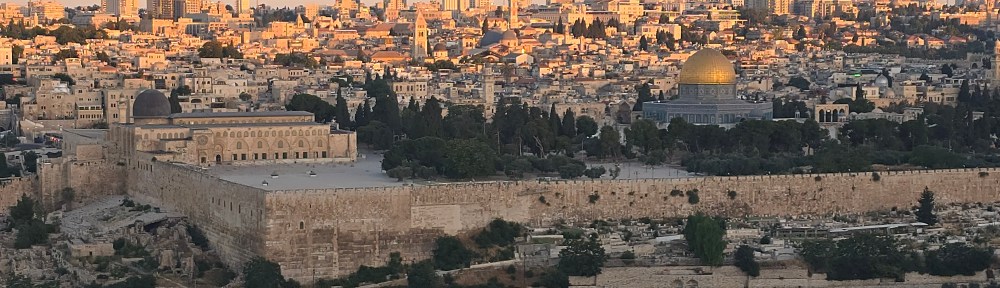
Sunrise on the Mount of Olives facing the Temple Mount is one of Jerusalem’s great experiences.
Because the sun rises from behind the mountain, the first light does not strike the Temple Mount itself. Instead, it touches the higher elevations to the west. For a few moments, the city reveals an unexpected truth: despite its name, the Temple Mount sits lower than much of the surrounding Old City.
One by one, Jerusalem awakens.
The first rays illuminate the new tall buildings in the west and slowly reach the Church of the Holy Sepulchre, and domes of the Hurva Synagogue and the newly rebuilt Tiferet Israel Synagogue in the Old City. Then the golden Dome of the Rock catches the morning light. Soon after, the ancient walls of Jerusalem glow softly, followed by the gray dome of Al-Aqsa Mosque.
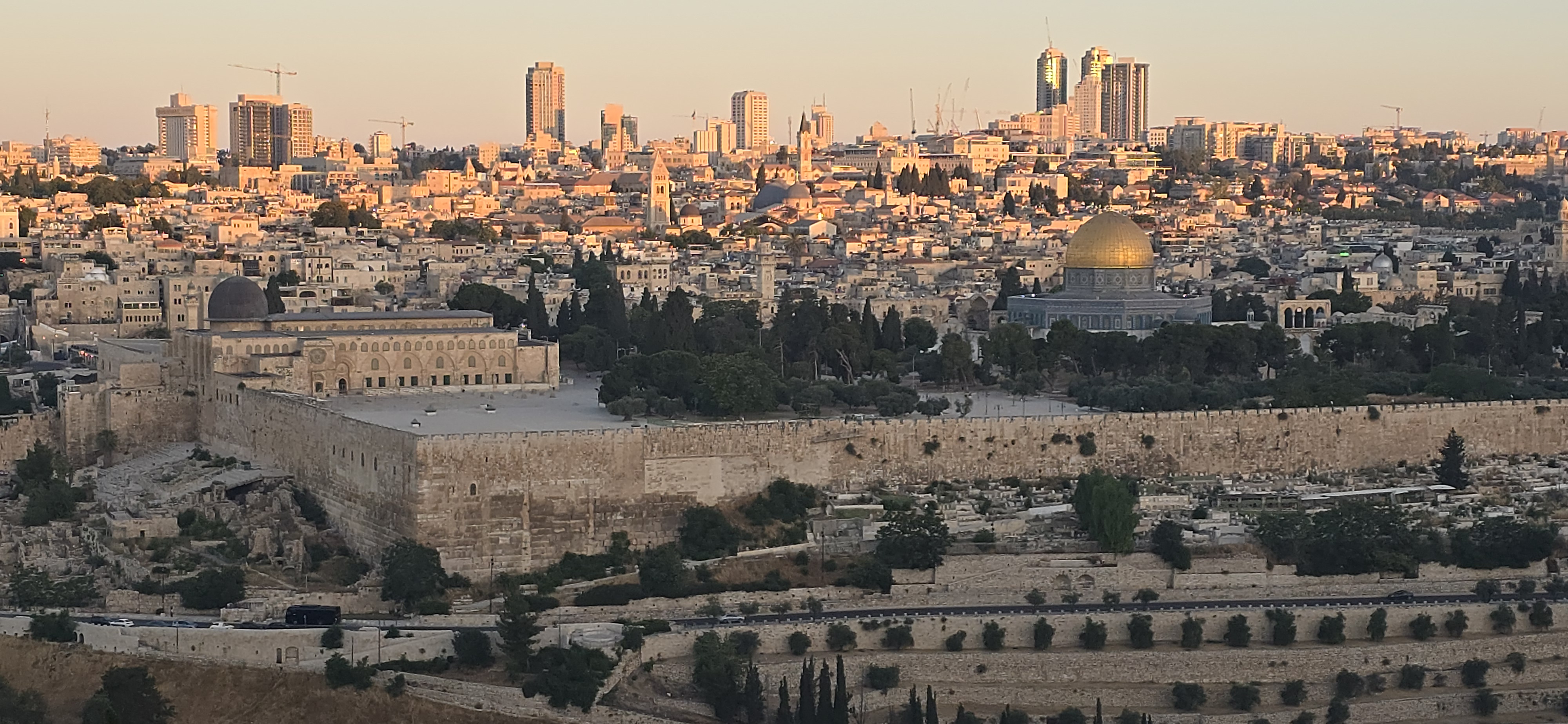
The city appears to come alive in stages.
There is something fitting in that. The most famous places in the city do not receive the first light. The sun touches distant rooftops and forgotten hills before reaching the mount that has occupied the prayers of generations. Jerusalem seems to offer a quiet reminder that holiness is often revealed gradually, not all at once.
You might imagine crowds gathering on the stone promenade built for precisely this view. Even on a cool, windy morning, one would expect visitors eager to witness the sunrise over one of the most consequential pieces of land on earth.
Yet there were surprisingly few people.
A single bus of Asian tourists arrived to take photographs. Some stared in awe. Some stretched. Some danced gently to greet the morning.
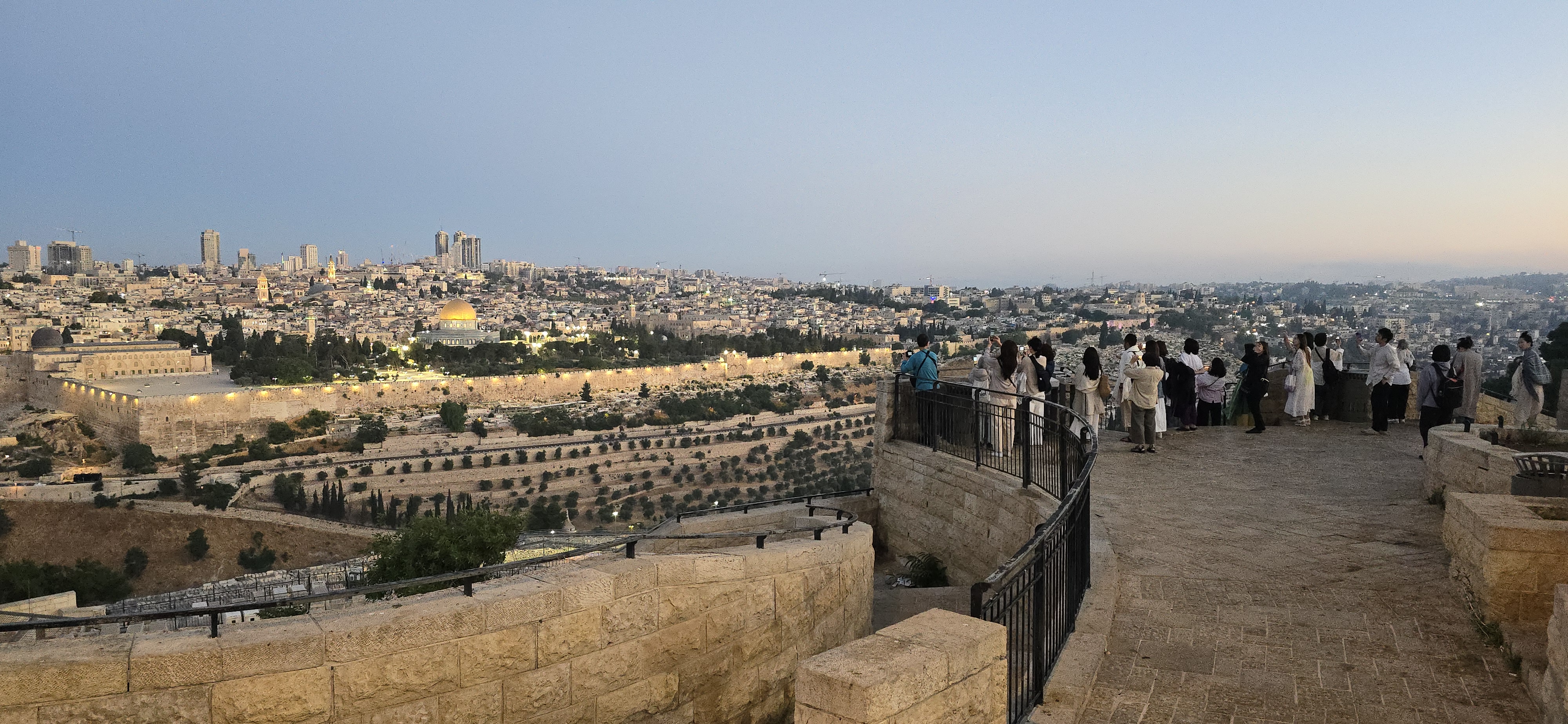
But they were there.
Most had traveled thousands of miles to reach this spot. They all stood facing the same holy sites whether or not they shared any of the three monotheistic faiths, waiting for the same sun. The same moment of inspiration.
The quiet was perhaps the most surprising part. At an hour when millions of people around the world were asleep, one of the holiest and most contested places on earth belonged to a few dozen strangers sharing a sunrise. No speeches. No arguments. No headlines. Just the wind, the light, the sound of roosters, and a city slowly waking beneath them.
Before them stood the Temple Mount, the focus of Jewish longing for nearly two thousand years. Below them stretched the ancient cemetery of the Mount of Olives, where generations of Jews chose to be buried facing Jerusalem, believing they would be among the first to witness redemption. Around them stood a city sacred to billions, where history, faith, conquest, destruction, and renewal are layered one upon another in stone.
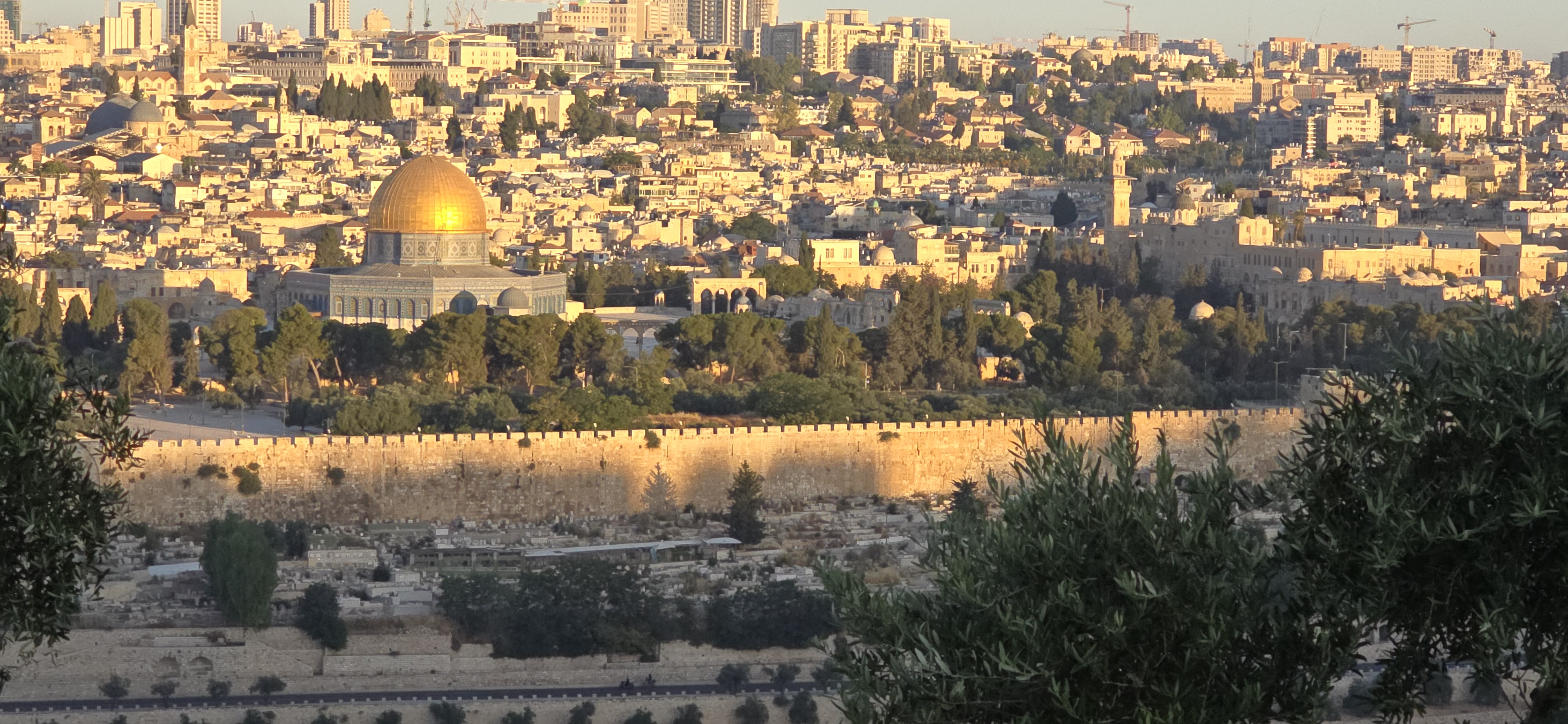
As the sunlight slowly spread across the city, it became clear why people return here again and again. Jerusalem does not reveal herself all at once. Like the sunrise itself, she emerges gradually – first one dome, then another, one wall, one hilltop, one memory at a time.
As I turned to leave, the city was waking to another day. Yet for a brief hour on the Mount of Olives, surrounded by centuries of Jewish memory and facing the skyline of Jerusalem, the city felt less like a place on a map and more like a conversation between heaven and earth, carried on in stone and sunlight for thousands of years.


