How do you comprehend six million murdered Jews? One million murdered children?
The numbers are so large that the human mind struggles to grasp it. Six million becomes a statistic. A statistic becomes an abstraction. And an abstraction risks becoming forgettable.
For decades, Holocaust educators wrestled with that problem. Their answer was simple: stop counting and start remembering.
Programs such as Names, Not Numbers were created in Jewish schools to teach students that every Holocaust victim was an individual human being. Students interviewed survivors, recorded testimonies, learned family histories, and transformed statistics back into people. The goal was not merely to teach history. It was to restore identity to those whom the Nazis sought to erase.
The same idea appeared in the remarkable documentary Paper Clips.
In the film, students in a small town in Tennessee learned that six million was too large a number to understand. They discovered that Norwegians had worn paper clips as symbols of resistance to Nazi occupation and decided to collect six million paper clips – one for every murdered Jew.
As the clips accumulated, the students began to understand something profound. It was hard to gather millions of ordinary clips – it required enormous resources and participation of people and organizations far and wide. That millions of people could be exterminated deliberately was terrifying.
The educational programs also sought to do more than humanize the victims and demonstrate the scale of the atrocities.
Nazis literally transformed people into numbers. Upon arrival at Auschwitz, many prisoners were stripped of their names and tattooed with identification numbers. It was part of a larger project to erase individuality, dignity, and humanity. The Holocaust was not only a campaign to murder Jews. It was a campaign to reduce them to anonymous units in a machinery of extermination.
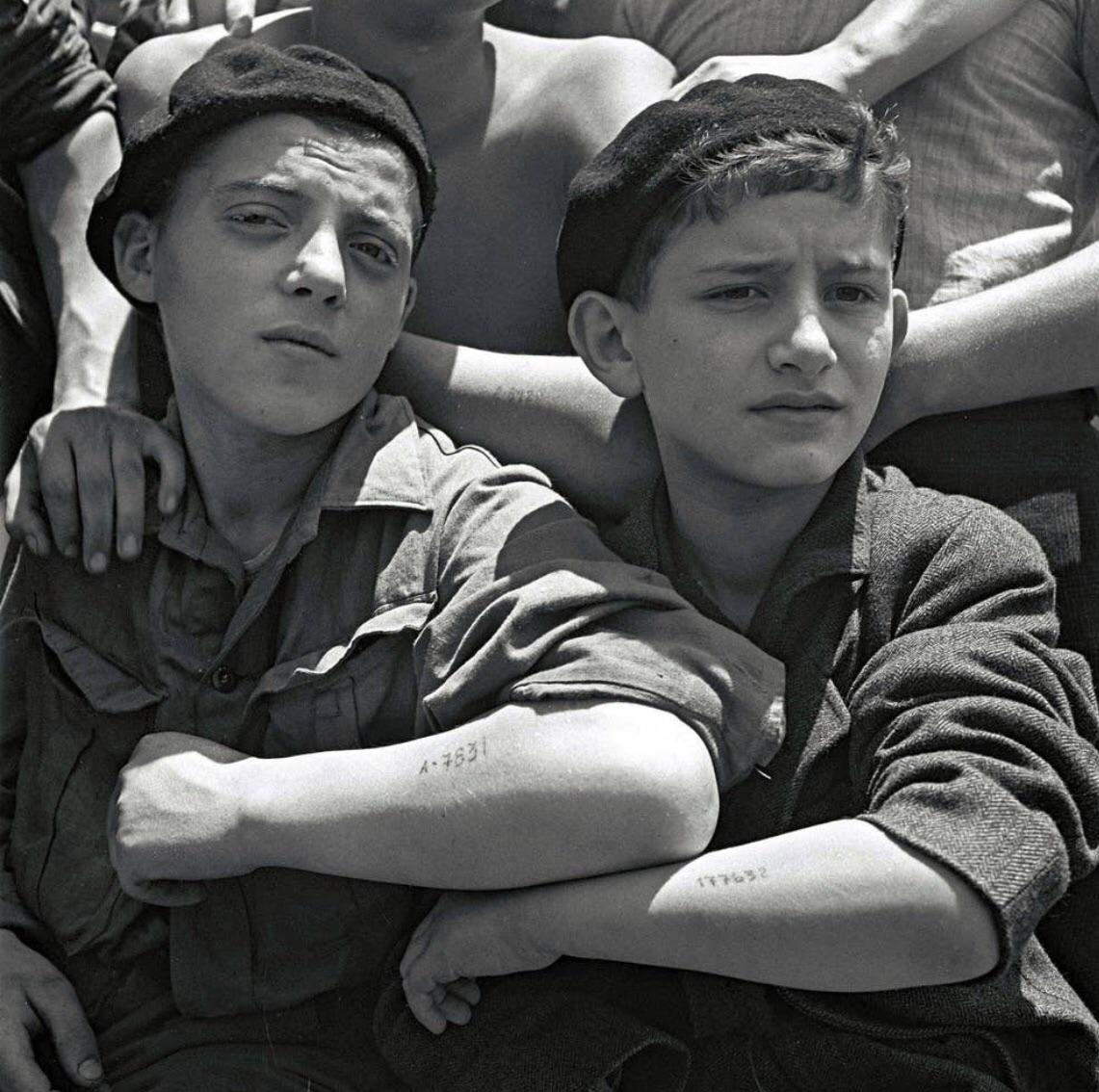
The Holocaust was not simply a story within a war. More than one million Jewish children were murdered not because they were caught in a battlefield, not because they belonged to an opposing army, but because they were Jewish. The Nazi regime actively hunted them for liquidation. Jewish babies, toddlers, and schoolchildren were marked for death from birth.
They were not collateral damage. They were targets.
For decades, educators, museums, survivors, and Jewish communities worked to preserve those names and those stories. The idea that victims should be remembered as human beings rather than statistics became one of the defining themes of Holocaust education around the world.
Which is why the recent Palestinian campaign, “Their Names Are Not Numbers,” is so striking.
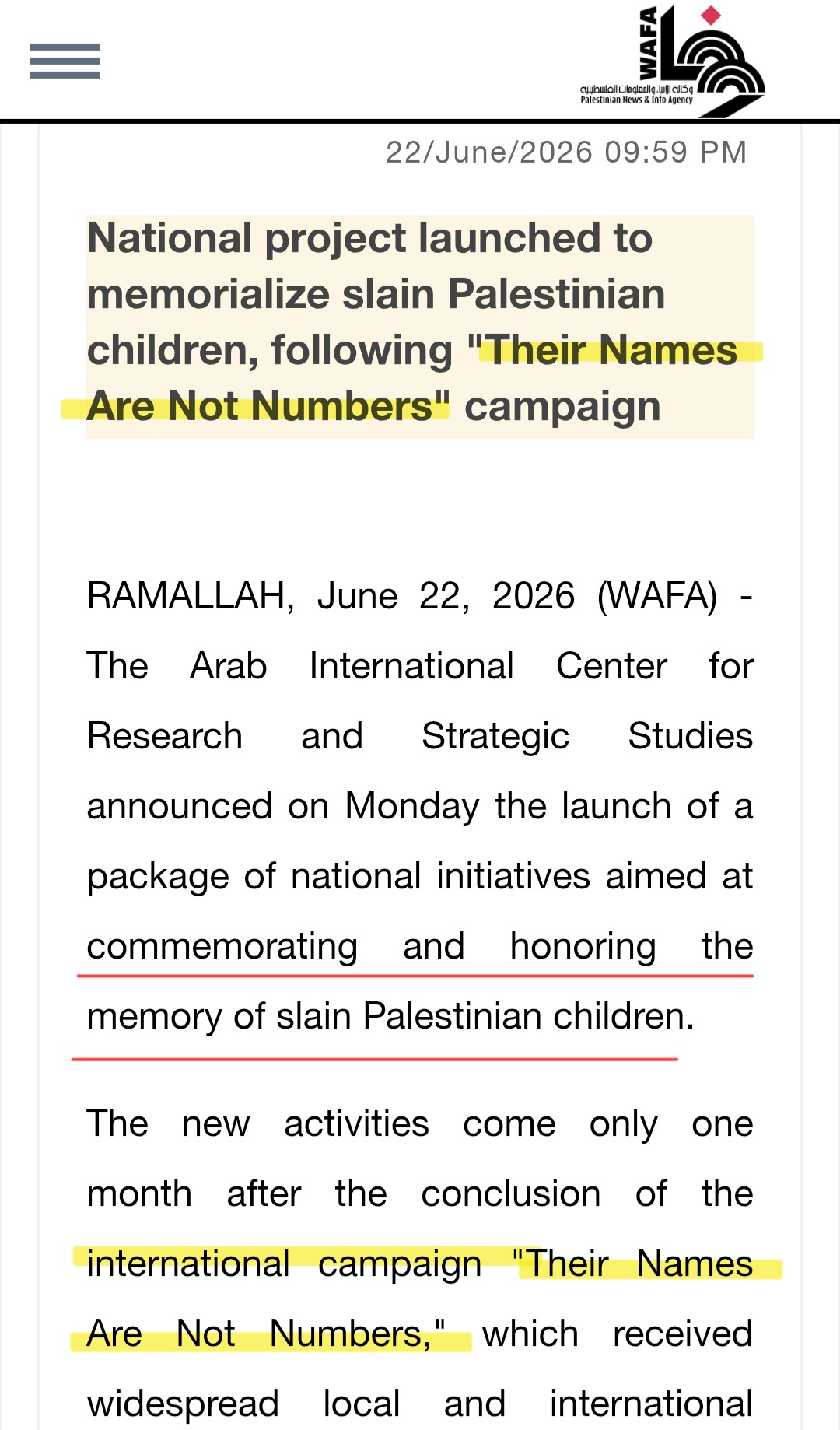
The slogan echoes language that Holocaust educators spent generations developing. It draws upon a framework created to explain why victims of genocide should be remembered as individuals rather than numbers.
Palestinian Arabs are using a cruel tool in a flimsy attempt to wipe away their own guilt for launching a genocidal war with broad support, and for deliberately banning children from entering the tunnel infrastructure that leadership spent years and billions of dollars constructing. The Palestinian Authority is not merely making the dead children martyrs at someone else’s hands rather than their own, but deliberately lifting the campaign from an actual genocide. They have turned Holocaust remembrance against the Jewish state.
This is a moral perversion.
The Holocaust was a state-directed project of extermination whose goal was the disappearance of the Jewish people. Israel’s war against Hamas is a war against an armed movement that invaded Israel, massacred civilians, took hostages, and openly declares its intention to destroy the Jewish state.
Equating those realities with the Holocaust is not simply immoral but antisemitic. Borrowing the language developed to remember murdered Jews is not simply appropriation but sadistic.
Names, Not Numbers was created to ensure that the victims of history’s greatest campaign of anti-Jewish extermination would never be reduced to statistics. To take that language and deploy it as part of a campaign that casts Israel as Nazi Germany not only vilifies Israel unjustly but negates the Holocaust of its meaning and mocks the memory of a million murdered Jewish children.


