
Christopher Nolan’s The Odyssey will introduce a new generation to one of civilization’s oldest stories. Yet the tale of the Trojan Horse is not really about ancient Greece. It is about human nature.
For ten years, the Greeks could not breach the walls of Troy. So Odysseus abandoned force in favor of deception. The Greeks appeared to sail home, leaving behind a magnificent wooden horse as a peace offering. The Trojans admired it. They celebrated it. They pulled it through their own gates as a symbol of victory.
Only after nightfall did they discover what they had really accepted.
The lesson has survived for nearly three thousand years because it was never simply about a horse. It was about the danger of lowering one’s guard in the presence of an extraordinary gift.
Which brings us to a Boeing 747 from Qatar.
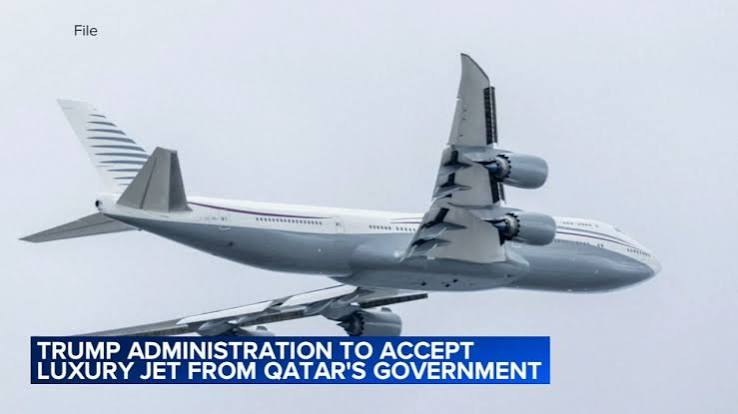
When Qatar offered President Donald Trump a 14-year old luxury aircraft for eventual use as Air Force One, the gesture was unlike almost anything in modern American history. The discussion quickly became political. Was it legal? Was it ethical? Should the United States accept such an expensive gift from a foreign government?
Those are important questions. But the first question national security professionals must ask is Can we trust it?
Air Force One is not merely an airplane. It is the President’s office, military command center, intelligence platform, and secure communications hub. Every inch of the aircraft—from its wiring and electronics to its communications systems and defensive capabilities—must be assumed vulnerable until proven otherwise.
Recent reporting highlighted the practical reality behind that principle. Secret service advised the president from flying on the Qatari aircraft as he left a NATO summit in Turkey. Heightened threats from the Islamic Republic of Iran on the president’s life, while he flew on a gifted plane from Qatar, another leading state sponsor of terrorism, as he departed from Turkey, an increasing radical Islamic country, demanded precaution.
None of this requires believing Qatar intended harm. In fact, that misses the point entirely.
The Trojan Horse was not a warning about any particular adversary. It was a warning about the responsibilities of those charged with protecting a nation. Their job is not to assume good intentions. Their job is to imagine every possibility before someone else does.
Caution is the foundation of prudent statecraft.


