Major news organizations covering the extraordinary Flydubai incident have omitted a striking piece of context: five days earlier, a senior adviser to Iran’s Supreme Leader warned that if Iranian aircraft could not use regional airports, nobody else should expect to fly either.
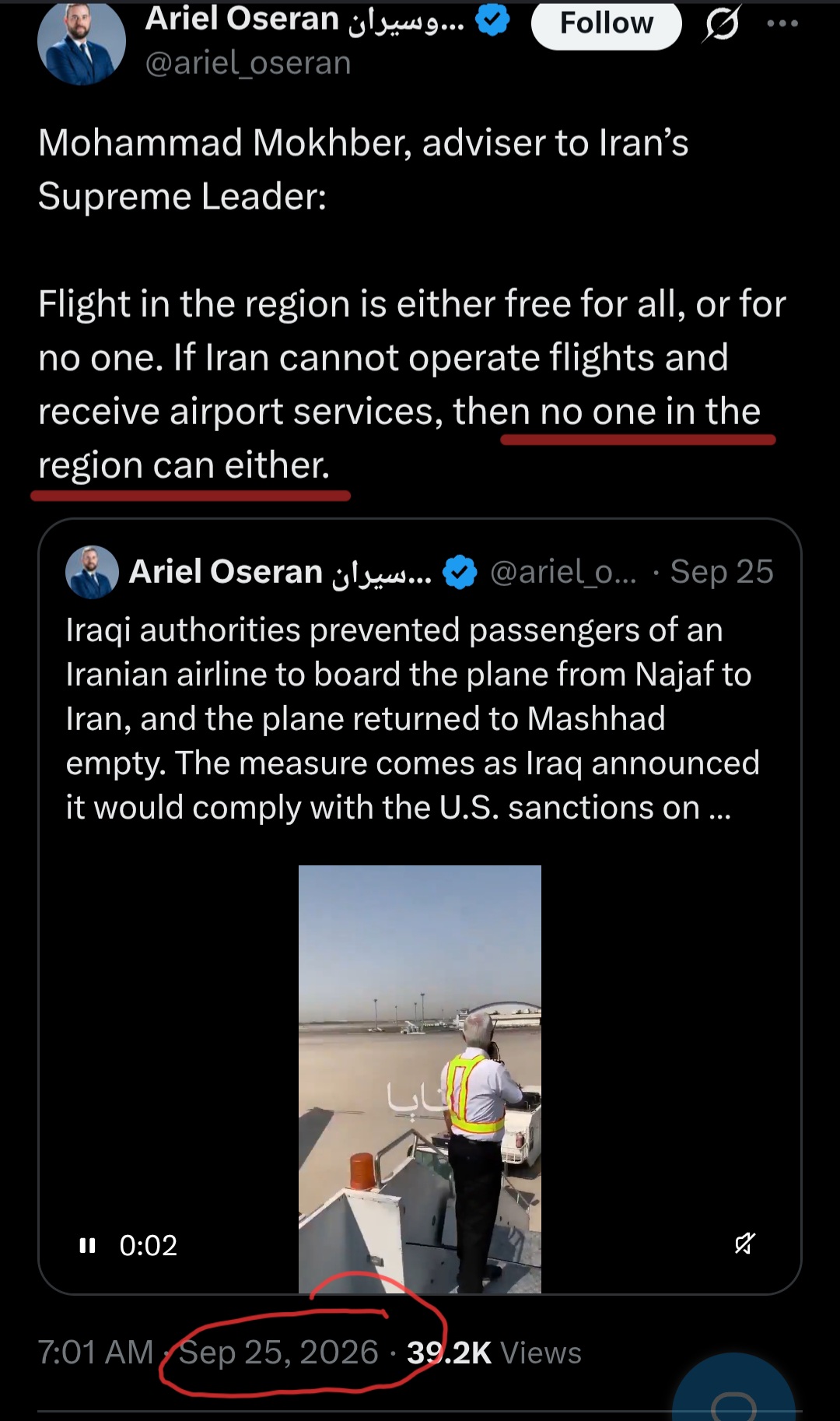
On September 25, Mohammad Mokhber, Iran’s former acting president and current adviser to Ayatollah Ali Khamenei, declared:
“Flight in the region is either free for all, or for no one.”
He added: “If Iran is denied the possibility of flight and access to airport services, no country in the region will have this possibility either.”
Days earlier, another senior Iranian official, Mohsen Rezaei, had issued a similar warning concerning neighboring airports.
Five days after Mokhber’s statement, a Flydubai aircraft carrying mostly Israelis from Dubai to Tel Aviv suffered an attempted hijacking. The captain was attacked, the aircraft rapidly lost altitude and the flight made an emergency landing in Saudi Arabia. The motive remains under investigation. There is no immediate evidence connecting Iran to the incident.
But Iran’s warning is missing from major coverage reviewed from Reuters, the Associated Press, the Guardian, Al Jazeera and The National. Reuters had itself reported Mokhber’s statement when he made it.
That omission is difficult to understand. A senior Iranian official had publicly warned that regional aviation could be disrupted. Five days later, an Emirati aircraft carrying over one hundred Israelis is put at risk by an Omani pilot.
Consider that Al Jazeera and the Guardian continue to say that Israel is at war with Iran even though that hasn’t been true for many months. They insert Israel into the war against Iran while they leave Iran out of the discussion about a potential killing of nearly two hundred Israelis.
Readers are being lied to by acts of insertion and omission, especially about Israel and Iran. It is critical to understand those basic facts and begin to ask why.
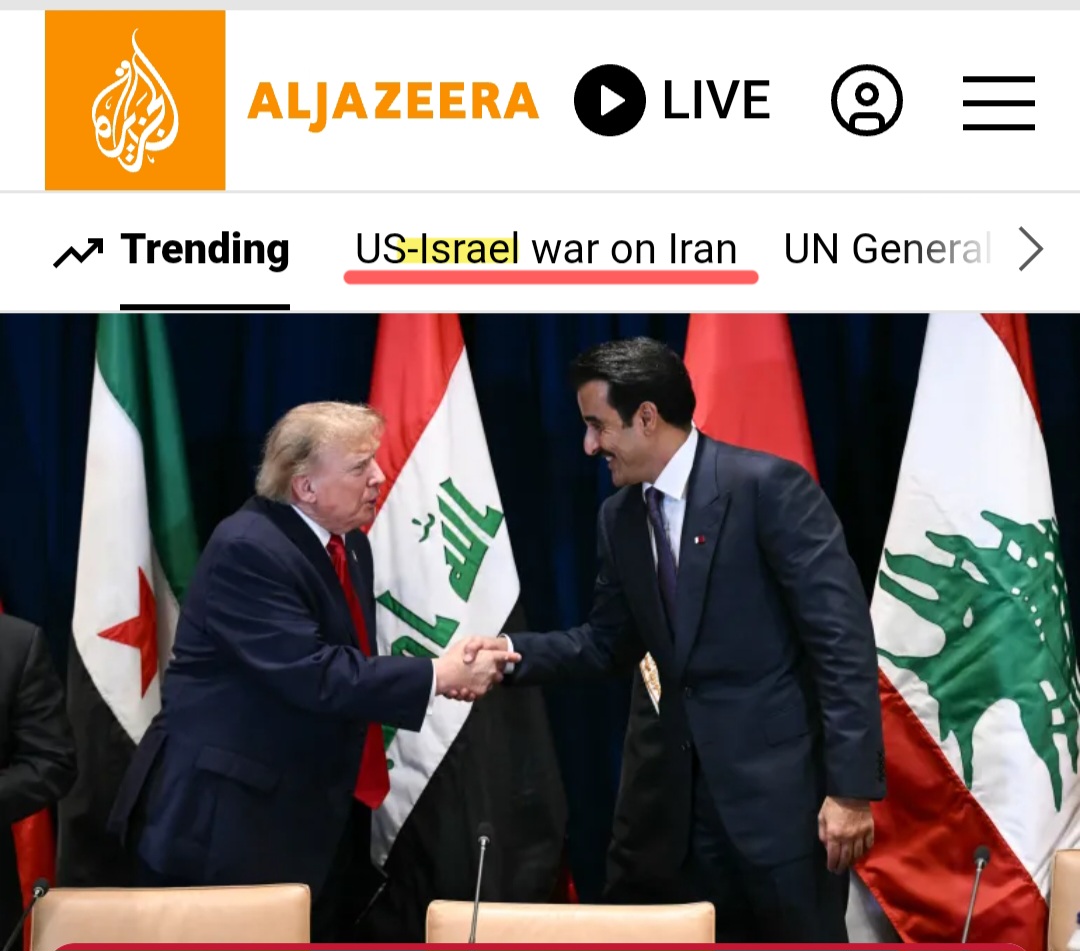
The Guardian continues to place its Iran coverage under the banner: “US-Israel war on Iran.”
Al Jazeera uses the same formulation.
It was an accurate description when the war began. It isn’t anymore.
The United States and Israel attacked Iran on February 28. Iran retaliated against both countries. For the opening weeks, the United States and Israel were both directly at war with Iran. That fighting ended with the April 8 ceasefire.
There was one brief interruption. In June, after Israel attacked Hezbollah in Beirut, Iran fired missiles at Israel. Israel responded by striking Iran. The exchange lasted roughly two days ans stopped.
The Congressional Research Service says the June 7–8 fighting “appears to be the last direct exchange of fire between the two countries as of September 2026.”
The United States and Iran, meanwhile, have continued fighting.
That makes the media labeling increasingly strange.
The Guardian and Al Jazeera maintain an entire section called “US-Israel war on Iran” even when it is clear even in their own articles that Israel is no longer involved. Even more, it is Iran and its proxies that have waged war ON ISRAEL, not the reverse.
Why?
Does keeping Israel permanently attached to the war serve a purpose — reinforcing the idea that every American bomb dropped on Iran is also somehow an Israeli bomb, and every American decision to continue the war is part of an Israeli-American campaign? That every spike in energy prices is Israel’s fault?
For outlets whose audiences are already intensely hostile toward Israel, the distinction is not trivial. It is propaganda to inflame millions.
The name made sense at Israel’s founding. Israel fought wars against the armies of Egypt, Jordan, Syria, Iraq and other Arab states. The conflict was understood principally as one between the Jewish State and the surrounding Arab world.
Then the map changed.
Egypt made peace with Israel in 1979. Jordan followed in 1994. During the horrific Second Intifada, the suicide bombings, shootings and other attacks were overwhelmingly part of a localized war involving Palestinian Arabs. The terminology narrowed accordingly. The Arab-Israeli Conflict increasingly became the Palestinian-Israeli Conflict.
That description is now inadequate too as the map evolved again over the past several years.
The Abraham Accords fundamentally changed the regional picture. The United Arab Emirates, Bahrain and Morocco normalized relations with Israel. Trade, tourism, investment and security cooperation followed. Other Muslim-majority countries have also maintained or developed relations with the Jewish State.
Yet at the same time, Israel has faced repeated war from Hamas in Gaza, Hezbollah in Lebanon, the Houthis in Yemen and, increasingly directly, the Islamic Republic of Iran. These forces are separated by borders, ethnicity and even the Sunni-Shiite divide. What connects them is not Arab identity. It is a radical Islamist rejectionism that refuses to accept a sovereign Jewish state in the Middle East.
It is therefore time for the terminology to catch up. This is increasingly the Jihadi-Israel Conflict.
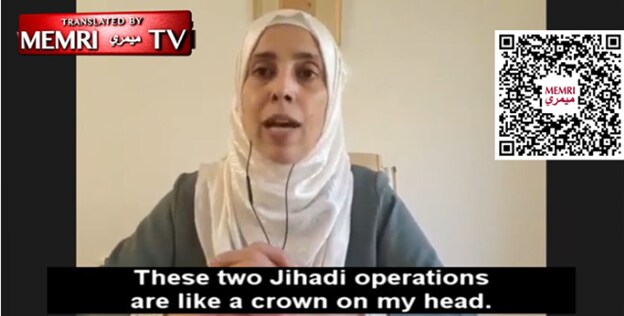
Ahlam Tamimi, who helped plan and transported the suicide bomber to the 2001 Sbarro restaurant bombing in Jerusalem and now lives in Jordan.
The term captures the venom, vitriol and violence of Hamas and the armed Islamist movements aligned against Israel. It encompasses Hezbollah and the Houthis and, most importantly, the Islamic Republic of Iran that has armed, financed and supported much of the network surrounding Israel.
It also leaves room to describe the roles of Qatar and Turkey, whose close relationships with Hamas and fierce political hostility toward Israel place them in a very different category from Muslim and Arab governments pursuing normalization.
Most importantly, the new terminology does something the old terminology cannot: it separates Muslims and Arabs who seek peace with Israel from radical Islamists committed to its destruction and the slaughter of Jews.
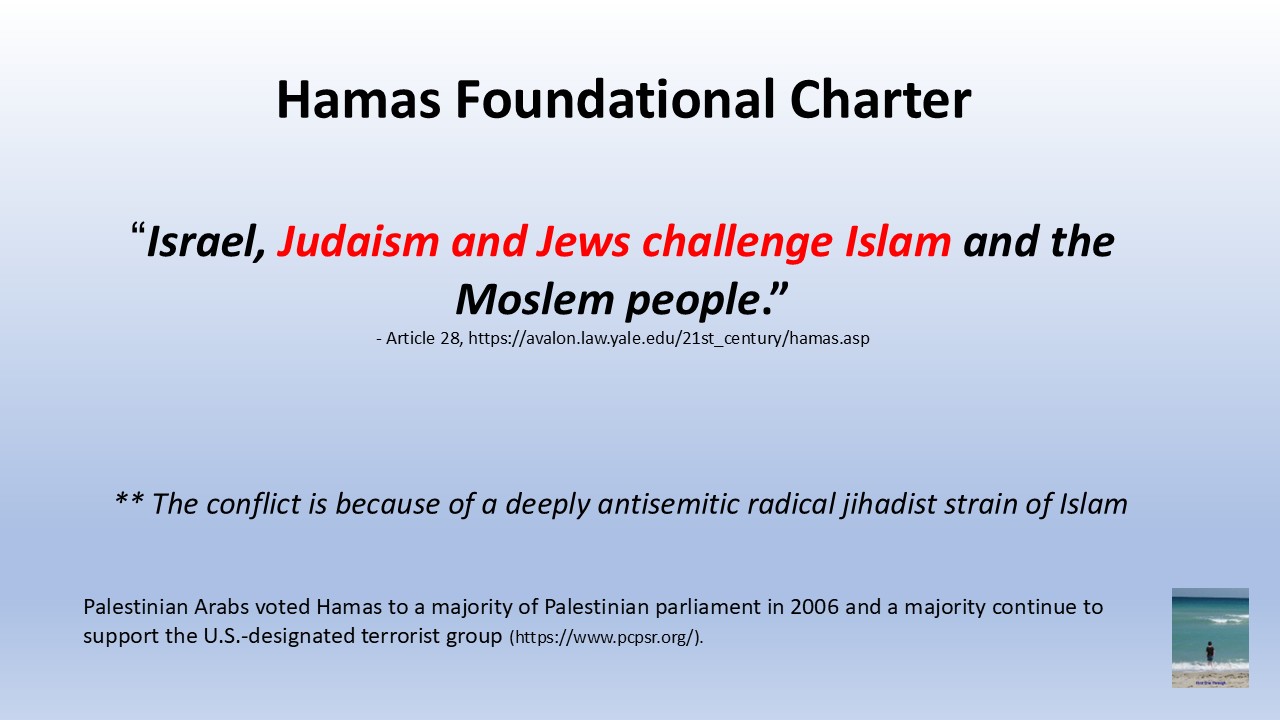
Hamas leader calling for slaughtering Jews as a religious Islamic principle
The dividing line has moved.
And that makes the choices facing Lebanon, Syria and Saudi Arabia especially important. They can move toward a Middle East built around trade and coexistence, or remain trapped in a conflict driven by radical Islamist movements that reject Jewish sovereignty, basic human rights and self-determination.
The conflict has become crystallized for what it likely always was: the Jihadi-Israel Conflict.
When Iran offered condolences after the death of former Qatari emir Sheikh Hamad bin Khalifa Al Thani, the gesture appeared incongruous. Iran had recently been firing missiles and drones at Qatar and across the Gulf. So why the words of consolation?
Iran was not primarily attacking Qatar as a Muslim or Arab society. It was targeting the American military presence on Qatari soil. The same pattern has extended across the region: U.S. facilities and assets in Qatar, Bahrain, Kuwait and Jordan, as well as American positions in Iraq and Syria, have come under Iranian attack. Recent strikes included an early-warning installation in Qatar, Patriot systems in Kuwait, a U.S. fuel depot in Bahrain and military facilities in Jordan.
That reveals the real fault line in the Middle East.
It is not simply Sunni against Shia, Arab against Persian or even Muslim country against Muslim country. It is increasingly a divide over how to handle the United States: between governments and movements determined to expel American power and those that invite it in and then seek to shape it.
Iran represents the first model. Since 1979, its hostility has been explicit. It calls America the enemy, demands the removal of U.S. forces and uses missiles, drones and proxies against American military positions. Its war is visible. It announces its contempt and fires at the flag.
Qatar perfected a more nuanced model.
Under Sheikh Hamad, Qatar financed and expanded Al Udeid Air Base, which became central to U.S. operations in Afghanistan, Iraq and across the region. At the same time, Doha built influence inside the United States, financing American university campuses, purchased entry into American television distribution, invested in think tanks and businesses, hired lobbyists and cultivated political relationships. It also hosted anti-Western terrorist groups including Hamas leaders and Muslim Brotherhood figures, and used Al Jazeera to broadcast narratives often deeply hostile to the West and its allies.
Iran attacks American power from the outside. Qatar embraces it corrodes it from within.
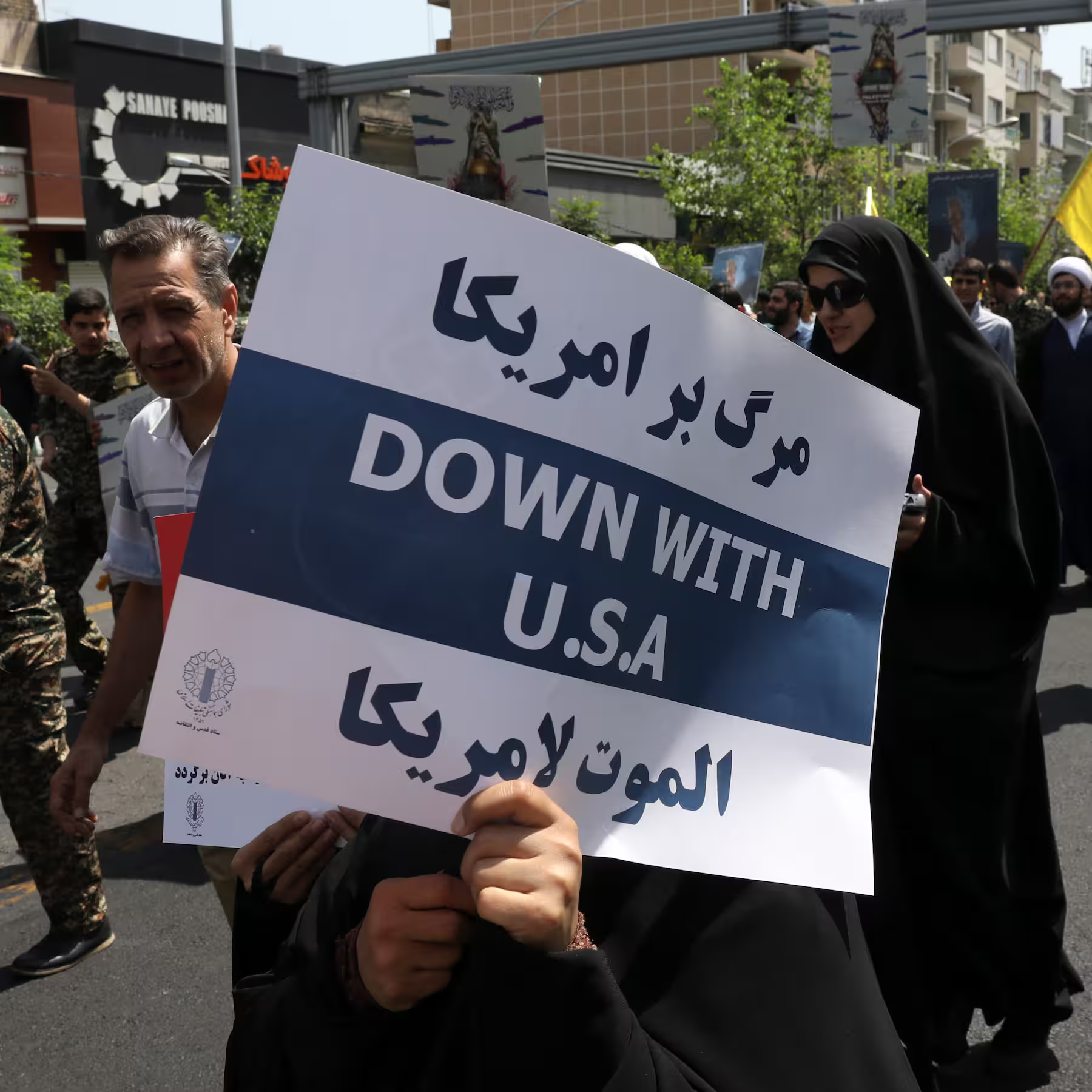
anti-American Iranians
Iran seeks direct confrontation; Qatar seeks leverage.Iran’s weapons are missiles and militias. Qatar’s are money, access, prestige and indispensability.
The West is naturally more alarmed by Iran’s model. And Qatar’s model is harder to confront because it arrives as partnership.
The military base protects American interests. The university campus carries a prestigious name. The investment creates jobs. Each relationship is defensible in isolation. Together, however, they create influence on a scale no tiny monarchy could achieve through military power alone.
The broader contest is therefore not between countries that love America and countries that hate it. Iran and Qatar represent different tactics of genocidal jihadists. One strategy attacks the fortress. The other purchases rooms inside it.
Iran’s war is louder. Qatar’s may prove more insidious and enduring.
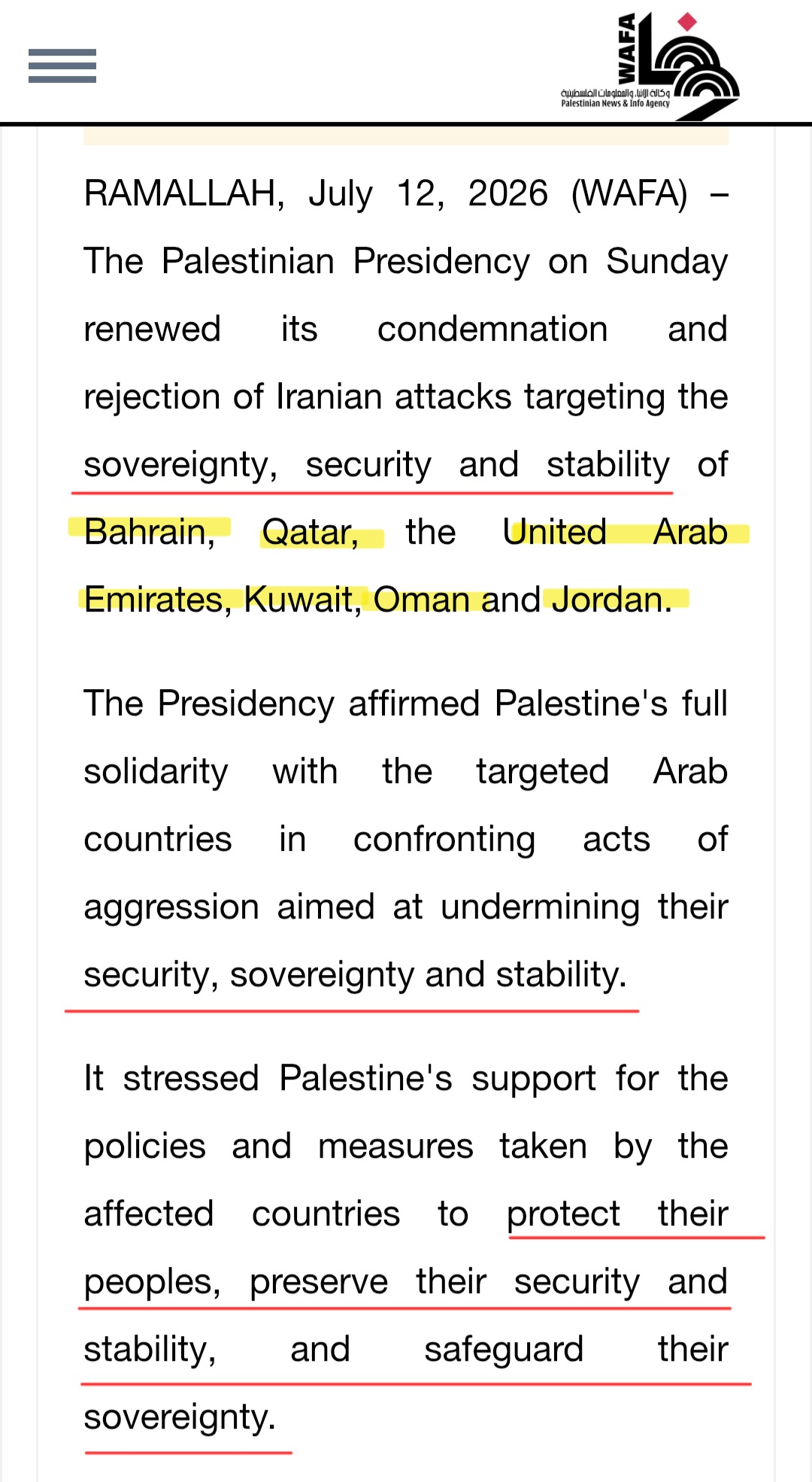
The Palestinian Authority had no trouble explaining what every nation deserves.
In a statement condemning Iran’s attacks on Bahrain, Qatar, the United Arab Emirates, Kuwait, Oman, and Jordan, the PA repeatedly invokes the same principles: sovereignty, security, stability, and protection of civilians.
Where were these principles when Israel was attacked?
When Iran launched missiles at Israel, did the Palestinian Authority defend Israel’s sovereignty?
When Hezbollah rained rockets on Israeli cities for months, did it affirm Israel’s right to security and stability?
states “refrain… from the threat or use of force against the territorial integrity or political independence of any state.” UN Charter (Article 2(4))
When the Houthis fired missiles toward Israel, did it support Israel’s right to protect its people?
And most pointedly, when Hamas – fellow local Arabs of the Palestinian parliament – crossed an international border on October 7, murdered civilians, kidnapped hostages, and occupied Israeli communities, did the PA condemn it as an assault on Israel’s sovereignty?
“the inherent right of individual or collective self-defence if an armed attack occurs against a Member of the United Nations.” UN Charter (Article 51)
A principle that applies only to friends is not a principle. It is a preference.
The Palestinian Authority’s own statement demonstrates that it understands exactly what every nation deserves. Its silence when those same principles are violated openly and repeatedly against Israel says just as much as its words.
The debate over American support for Ukraine and Israel has largely focused on the cost. Politicians argue over billions of dollars appropriated, weapons transferred, and whether American taxpayers are carrying too much of the burden. Far less attention has been paid to the return on that investment.
Since 2022, the United States has authorized roughly $195 billion related to Ukraine and approximately $16–22 billion in supplemental wartime assistance for Israel. Critics see enormous expenditures. Strategically, however, those dollars have enabled two allies to inflict historic damage on two of America’s principal adversaries – Russia and Iran – without the United States deploying large combat formations or suffering the thousands of battlefield casualties that defined Vietnam, Iraq, and Afghanistan.
That comparison matters.
The wars in Iraq and Afghanistan cost the United States more than $5 trillion in direct and related costs, with broader post-9/11 war obligations rising above $8 trillion when future veteran care, interest, and long-term commitments are included. Nearly 7,000 American service members were killed. More than 52,000 were wounded.
And what was the lasting strategic benefit?
Afghanistan ended with the Taliban back in power. Iraq removed Saddam Hussein, but the aftermath empowered Iran, fractured the region, drained American credibility, and produced years of instability. The United States paid in terrible blood and treasure, and the final balance sheet is hard to defend.
Ukraine and Israel present a very different model.
Consider Russia.
More than four years after launching its invasion of Ukraine, Russia has suffered an estimated1.4 million military casualties, including approximately 450,000 dead. Its armored forces have been severely depleted. The Black Sea Fleet has largely been driven from its historic operating areas. Ukraine has repeatedly demonstrated the ability to strike deep inside Russian territory. The military once regarded as NATO’s greatest conventional threat has been dramatically weakened.
“The number of Russian casualties and fatalities are astonishing. Since World War II, no major power has suffered anywhere near these numbers of casualties or fatalities in any war…. Russia’s economy is in distress, and Russia’s wartime spending may be increasingly untenable.” – Center for Strategic and International Studies July 2026
Now consider Iran.
For four decades the leading state sponsor of terrorism invested billions of dollars constructing what it proudly called the “Axis of Resistance” – a network stretching from Iran through Iraq and Syria to Lebanon and Gaza. Hamas, Hezbollah, Shiite militias, the Houthis, and the Assad regime were components of a single strategy designed to project Iranian power, surround Israel and challenge American influence in the region and threaten much of the global oil supply.
That strategy has suffered a tremendous setback.
Hamas has lost much of its military and infrastructure. Hezbollah has absorbed devastating blows to its command structure and missile capabilities. The Assad regime in Syria – Tehran’s indispensable Arab ally and the geographic bridge connecting Iran to Hezbollah – has fallen, shattering the land corridor that Iran spent decades building. The regional network that once appeared to surround Israel and terrorize America’s Arab allies now is dramatically weakened.
Iran’s nuclear ambitions have suffered major setbacks as well. Israeli and American strikes severely damaged key nuclear facilities, disrupted important elements of Iran’s enrichment infrastructure, and forced Tehran to devote enormous resources simply to rebuilding capabilities it once assumed were secure. Intelligence agencies continue to debate precisely how long the program has been delayed, but there is broad agreement that it suffered one of the most significant setbacks in its history.
None of this diminishes the immense human suffering. Ukraine has endured staggering casualties and destruction. Israel suffered the deadliest attack in its history on October 7 and has paid a heavy military, economic, and emotional price ever since.
But viewed through an American lens of grand strategy, another reality emerges.
Rather than sending hundreds of thousands of American troops to fight Russia or Iran directly as was done in Afghanistan and Iraq, the United States enabled allies already under attack to defend themselves. Those allies have imposed extraordinary military and strategic costs on governments that have spent decades challenging American interests.
This is what is so often missing from the public debate.
The wars are typically discussed separately. Ukraine is presented as a European conflict while Israel is portrayed as a Middle Eastern conflict. Yet both Russia and Iran were strategic partners, cooperating militarily, economically, and diplomatically while sharing an interest in weakening the United States and the Western alliance. Seen together, Ukraine and Israel have not merely been fighting for their own survival, they have been successfully degrading two pillars of a powerful anti-Western axis.
The long-term upside could be enormous. A surviving, Western-aligned Ukraine would become one of Europe’s most battle-tested militaries, a major reconstruction market, an energy and agricultural partner, and a permanent barrier to Russian expansion. A stronger Israel, with Iran weakened and Syria and Lebanon no longer functioning as Tehran’s strategic bridge, could help reshape the Middle East around technology, defense cooperation, energy corridors, trade, and normalization with Arab states that increasingly fear Iran more than they resent Israel.
That is the opportunity Iraq and Afghanistan never produced. Those wars consumed American power and America left no assets behind. These wars, fought by allies, may extend American power with powerful allies at the vanguard.
History may conclude that this period represents one of the most effective uses of American alliance power in generations. For roughly $215 billion – less than one-twentieth of the direct and related cost of Iraq and Afghanistan – the United States helped enable allies to severely weaken Russia’s conventional military, fracture Iran’s regional proxy empire, remove Syria and Lebanon from Tehran’s sphere of influence, and significantly set back Iran’s nuclear program, all without committing large American ground forces or sustaining the massive battlefield casualties that characterized previous generations of U.S. warfare.
America’s greatest military victory in the past 75 years may ultimately be its most subtle.
Every sports fan understands the pressure of an elimination game. One team takes the field knowing that a loss ends its season. There are no adjustments, no second chances. Everything rests on one contest.
The opposing team may desperately want to win, but the consequences of defeat are entirely different. It can return for another attempt with a new strategy, a new line up.
The scoreboard is the same. The stakes are not.
Now imagine a tournament where one team disappears forever if it loses, while its opponent simply waits for the next season. We would never describe that as an even contest. Yet that is remarkably close to the strategic reality Israel has faced throughout its history.
For Israel’s enemies, wars are not elimination games.
Egypt fought Israel repeatedly and lost. Egypt survived and eventually chose peace.
Syria launched major wars in 1948, 1967 and 1973. Each ended in defeat. Syria remained Syria.
Jordan lost territory but continued as a kingdom.
The pattern extends beyond states. Hamas has suffered repeated military defeats, lost senior leaders, and watched much of its military infrastructure destroyed. Yet after every conflict it has sought to rebuild. Hezbollah has absorbed devastating blows over decades while remaining a powerful force in Lebanon. Military defeat has never meant the end of either organization. They regroup, recruit, rearm and wait for another opportunity.
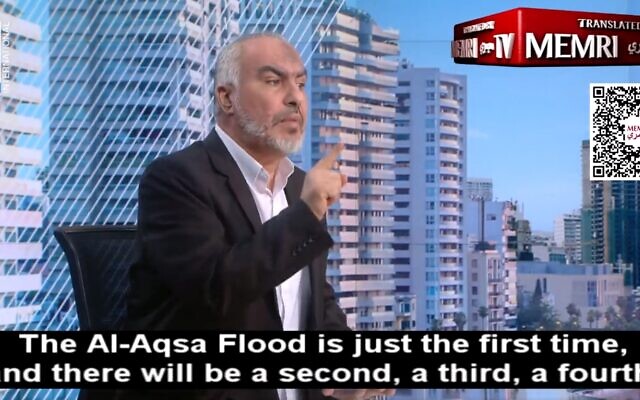
Hamas official stating that it will repeat the massacres of October 7 again and again
Israel has fought many opponents. Repeatedly.
That is because Israel’s war aims have been limited. Israel seeks to remove the military threat confronting its citizens. It has not sought the disappearance of Egypt, Syria, Lebanon or Iran. Even against terrorist organizations, its objective has been to dismantle military capabilities, not to eradicate an entire population.
Conversely, Israel’s adversaries have declared that the Jewish state should be destroyed. The objective was not merely to reverse a battlefield defeat or gain negotiating leverage. It was to eliminate Israel altogether.
That changes the meaning of every war.
Israel believes it cannot afford to lose an existential conflict because defeat would not simply mean surrendering territory, replacing a government, or rebuilding an army. Defeat would mean the destruction of the Jewish state.
Its adversaries have confronted a different calculation. If they fail, they survive. Their governments continue. Their organizations recruit new members. Their ideology remains intact. History gives them another chance.
Israel never assumes it will receive that luxury.
This asymmetry is one of the least understood aspects of the Arab-Israeli conflict. Outside observers often judge each round of fighting as though both sides enter the contest with identical risks and identical objectives.
They do not.
One side has repeatedly demonstrated that it can lose wars and return years later to fight again. The other has long believed that losing an existential war would leave no opportunity for a comeback.
Israel has lived for nearly eight decades in what often feels like a permanent one-sided elimination game. Its opponents have repeatedly lost wars and returned for another season. Israel has never believed it would be granted that same privilege.
That is why Israelis often see war differently than much of the world. The debate is rarely about this season’s standings. It is about whether there will be another season at all.
Pip: There is something clarifying about discovering that a political vocabulary you assumed was spontaneous had a drafting committee — and a host country.
Mara: Today we are following First.One.Through into the history of how anti-Israel rhetoric was systematically constructed, tracing the ideological architecture back to a 2001 conference in Tehran. Let's start with where that script came from.
The Genocide Script Was Written by Iran in 2001
Mara: The central question here is whether the language of "apartheid," "settler colonialism," and "genocide" applied to Israel emerged organically from events on the ground — or whether it was a pre-built ideological framework deployed strategically.
Pip: The post answers that directly. Here is the setup: this was February 2001 — Hamas had not yet seized Gaza, Israel had not disengaged, October 7 was over two decades away — and yet the declaration from Iran's UN preparatory conference already described Israeli policy as "a new kind of apartheid," "a crime against humanity," and "a form of genocide."
Mara: The upshot is that the vocabulary was not a reaction to events. The moral categories were assigned before the events now routinely cited to justify them existed.
Pip: And the post walks through exactly what that vocabulary contained: apartheid, settler colonialism, genocide, racial supremacy, alien domination, decolonization. The full lexicon, complete, in 2001.
Mara: What the post argues is that Iran understood something many Western governments did not — that narratives outlast battlefields. The framing is precise: "Terror attacks shock people temporarily. Moral frameworks reshape generations."
Pip: The mechanism described is a kind of moral laundering. Traditional antisemitism had been discredited after the Holocaust, so hostility toward the Jewish state was repackaged in the language of anti-racism and liberation. The old demand that Jews disappear became "decolonization."
Mara: The post traces how that vocabulary migrated — from the Tehran declaration into NGO reports, university syllabi, newsroom style guides, and eventually street protests. Students repeating those phrases today are, as the post puts it, echoing a script written by regimes that openly sought Israel's destruction.
Pip: The inversion the post identifies is the sharpest part: a regime animated by eliminationist antisemitism repositioned itself as an anti-racist moral authority, while recasting the Jewish state as the great racist evil of the modern era.
Mara: And the asymmetry in the Tehran document itself is telling — exhaustive attention to portraying Israel as racist, and nothing on antisemitism in the Arab world, terrorism against Israeli civilians, or the expulsion of Jews from Arab countries. That imbalance was not accidental.
Pip: The post's conclusion is blunt: October 7 did not write the script. It activated one that had been waiting since 2001.
Mara: Which raises the harder question — what it means to engage with that vocabulary now, knowing where it was built.
Pip: When the moral framework precedes the facts it claims to describe, the facts stop doing the work.
Mara: That is the thread worth pulling — how political language gets built, distributed, and eventually treated as self-evident. More on that next time.
Every modern humanitarian organization insists the same thing: suffering is not a business. The starving child is not a marketing asset. The bombed hospital is not a fundraising funnel. The crying mother under rubble is not a revenue generator.
Then the annual reports arrive.
Médecins Sans Frontières (MSF) / Doctors Without Borders crossed roughly €2.3 billion in annual revenue in 2022. Then roughly €2.35 billion in 2023 and €2.36 billion in 2024. Three consecutive years above €2 billion. Ninety-eight percent of funding came from private donors. More than seven million donors worldwide.
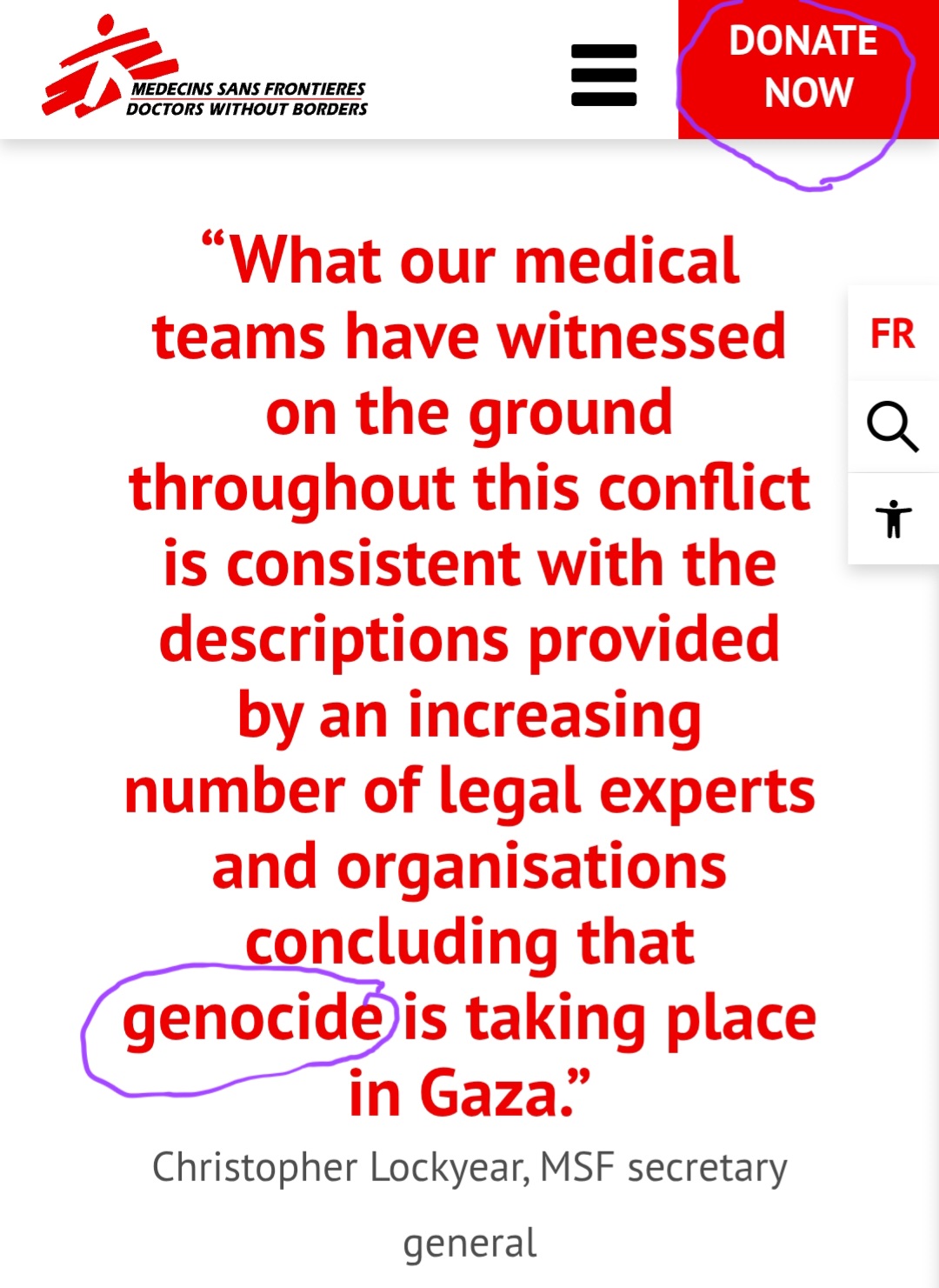
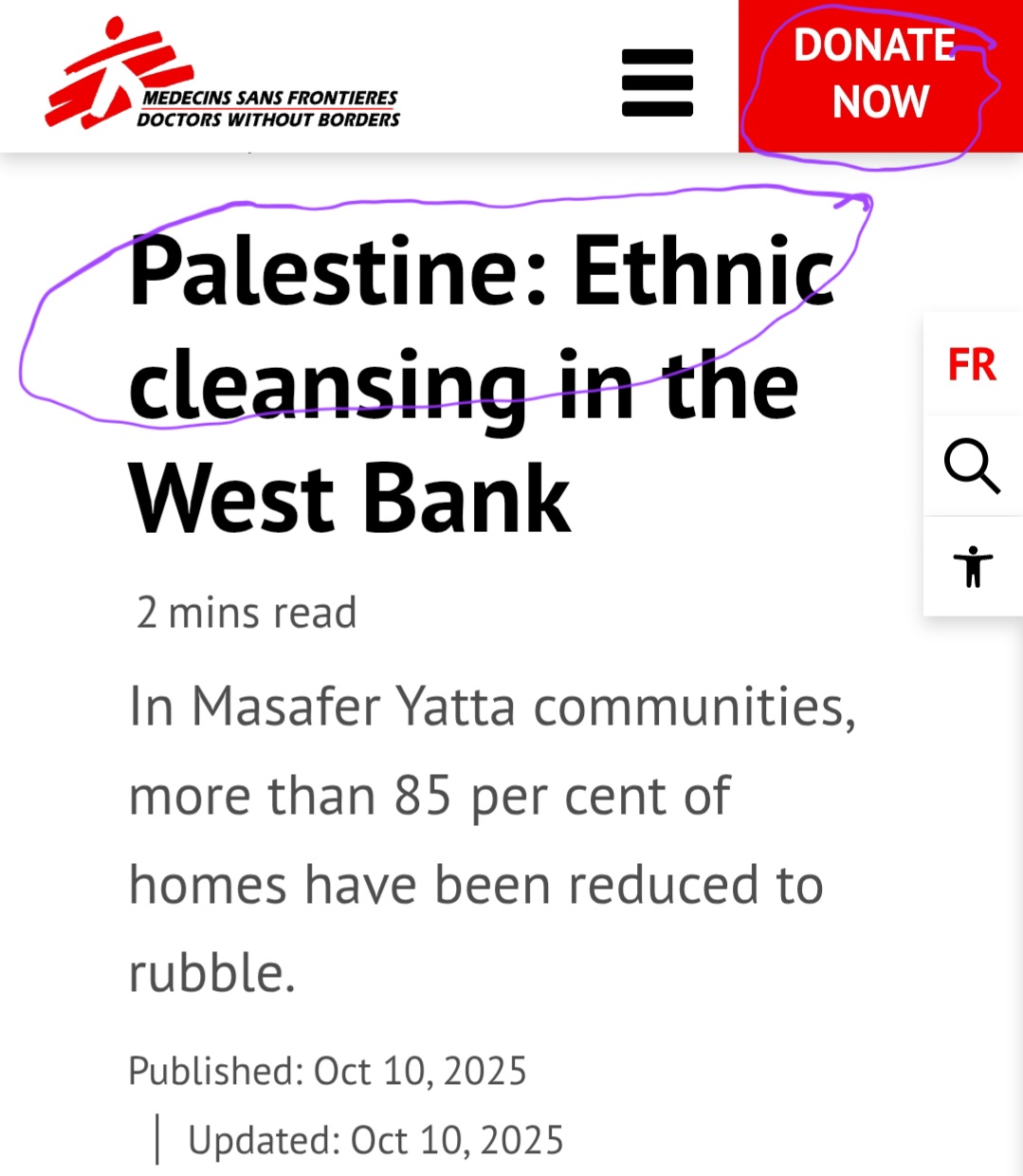
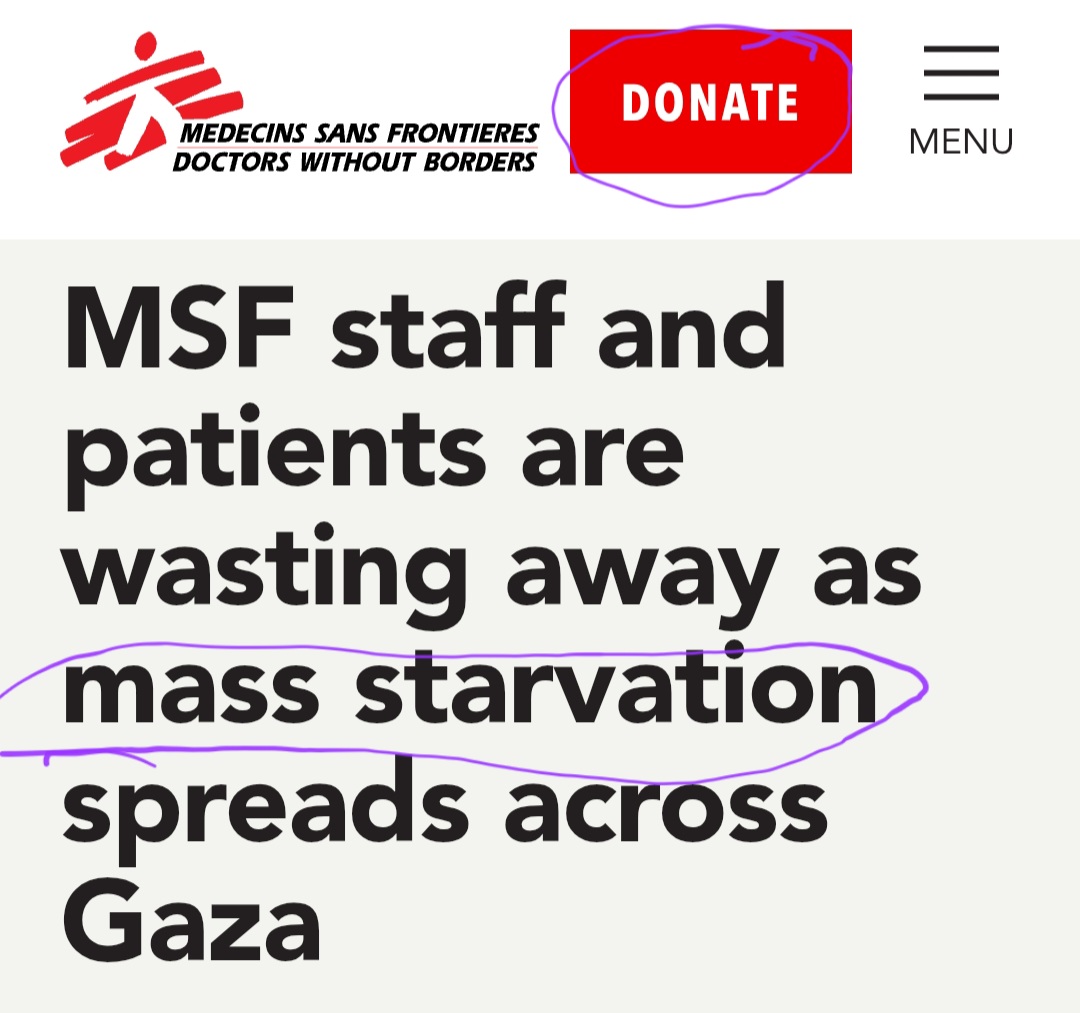
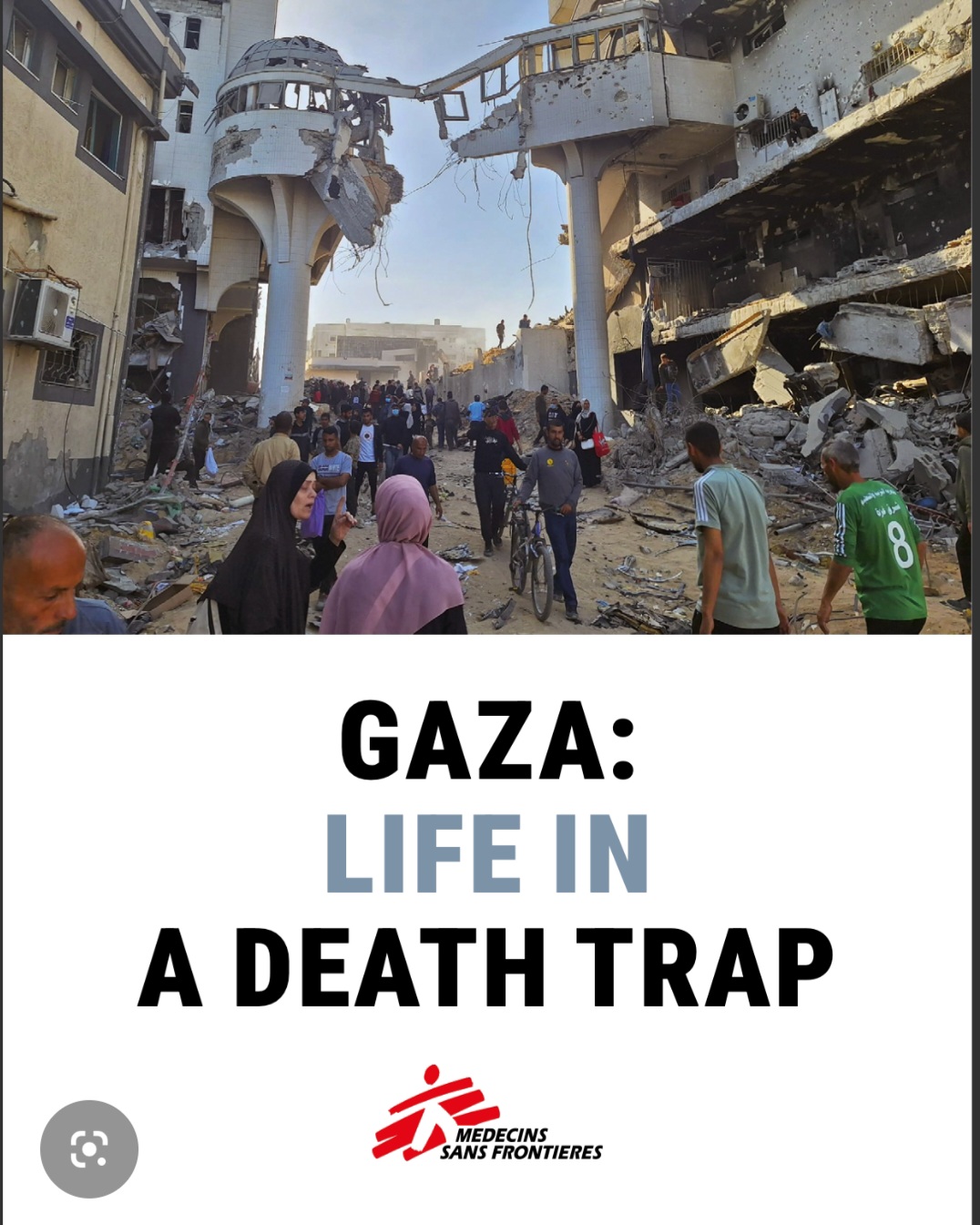
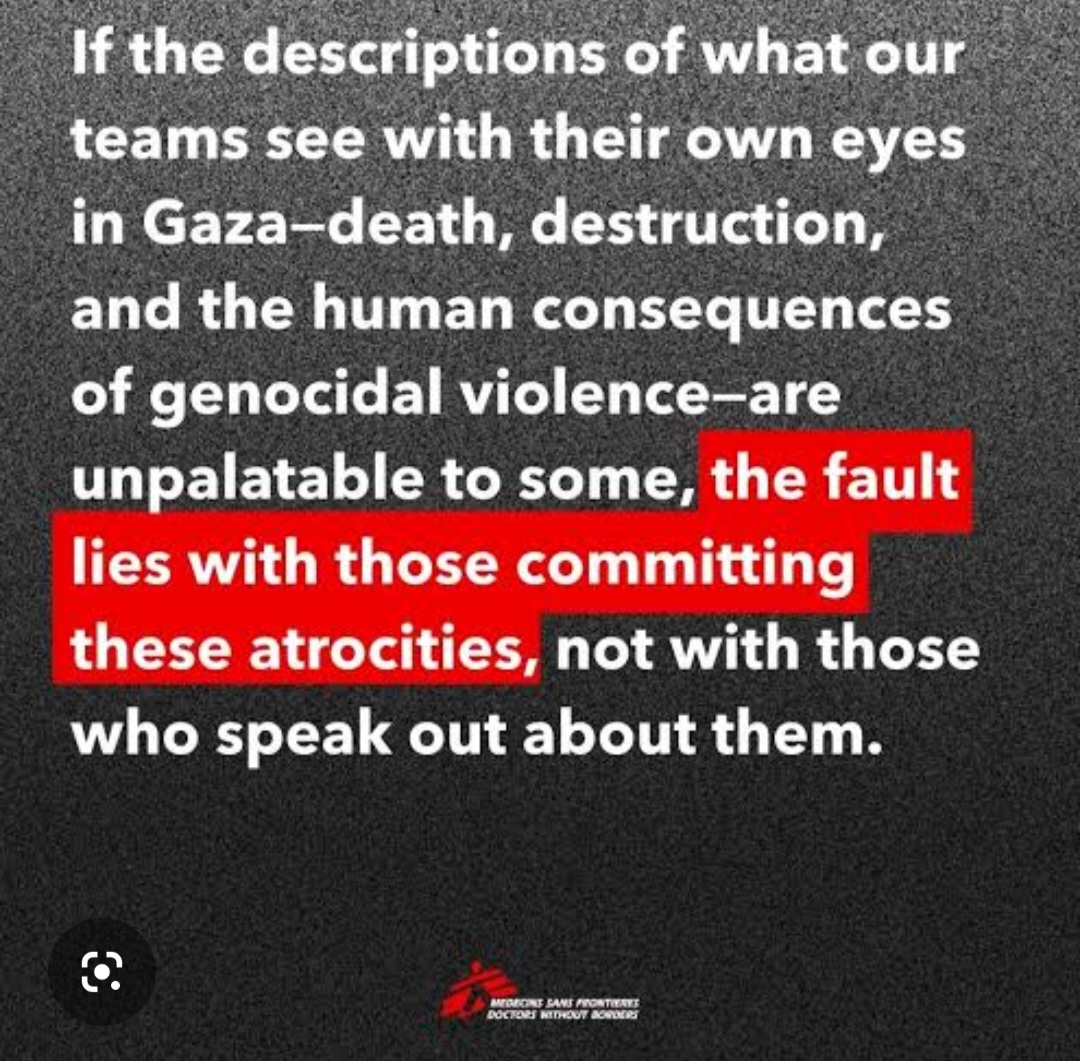
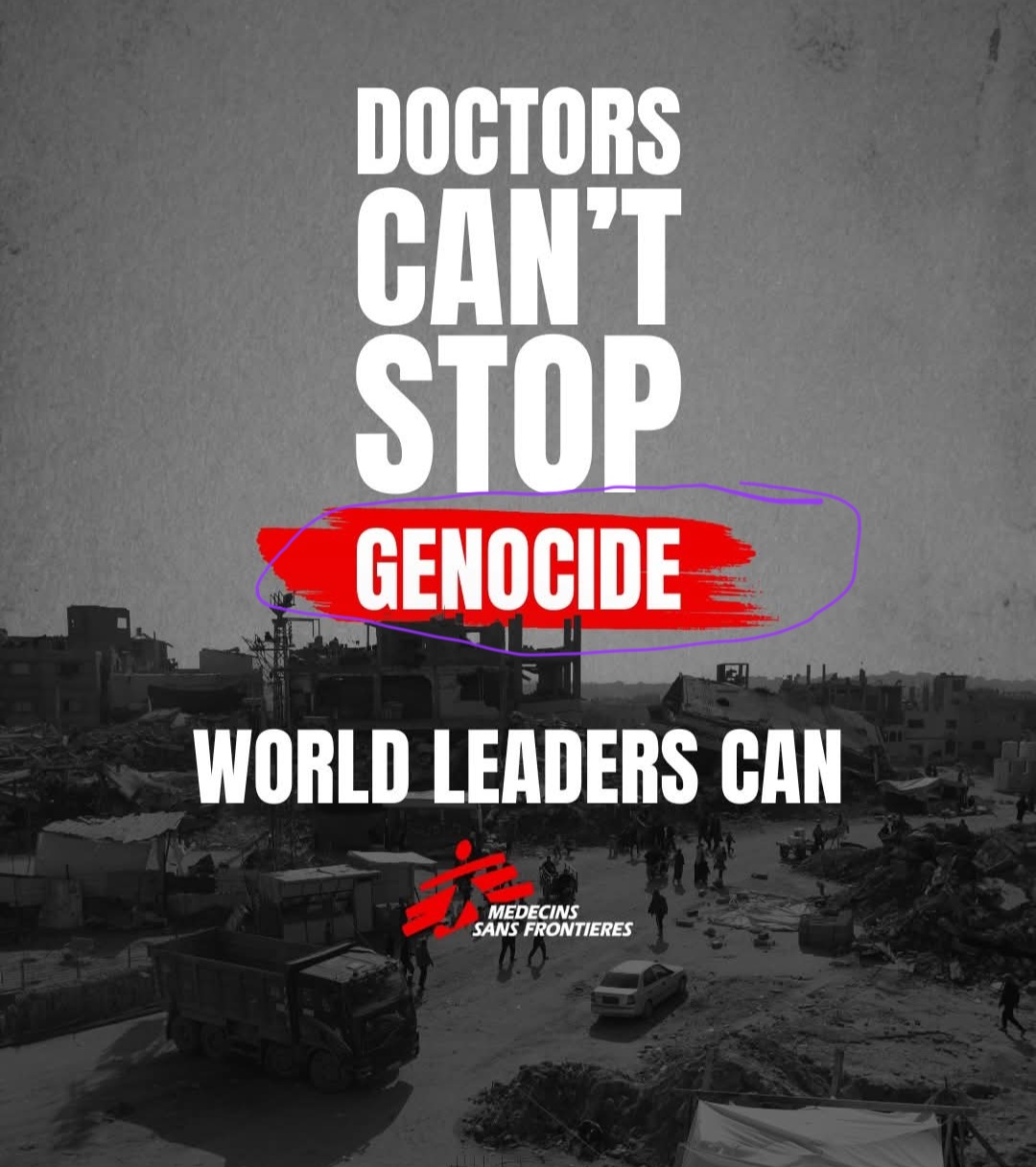
The organization presents this as proof of global compassion. It is also evidence of something else: misery has become one of the most effective fundraising products on earth. Especially if loaded with charges: “Genocide.” “Starvation.” “Ethnic cleansing.”
The humanitarian industry now operates inside the same emotional attention economy that drives political campaigns, cable news, and social media outrage. The more horrifying the imagery, the more morally charged the narrative, the more emotionally shattered the audience becomes, the faster the money moves.
And nobody understands this dynamic better than MSF.
MSF’s public communications increasingly fused emotionally maximalist language with direct fundraising infrastructure. A visitor no longer encountered merely medical updates. They encountered emotional conversion architecture.
The modern humanitarian sector has discovered what every digital platform already knows: emotionally devastating content converts. A dusty child under rubble produces more engagement than a policy paper. A charge of genocide and starvation moves directly into emotional reflex.
The uglier the images and explosive the charges, the healthier the fundraising pipeline becomes.
Doctors Without Borders is very selective in its explosive terminology regarding Israel. For MSF, Israel is the cause of all the ills in Gaza, not Hamas. Israel is directly called out, not the genocidal terrorist group that launched the war and hides in tunnels without letting civilians use them for protection. No excuse proffered by Israel will satisfy.
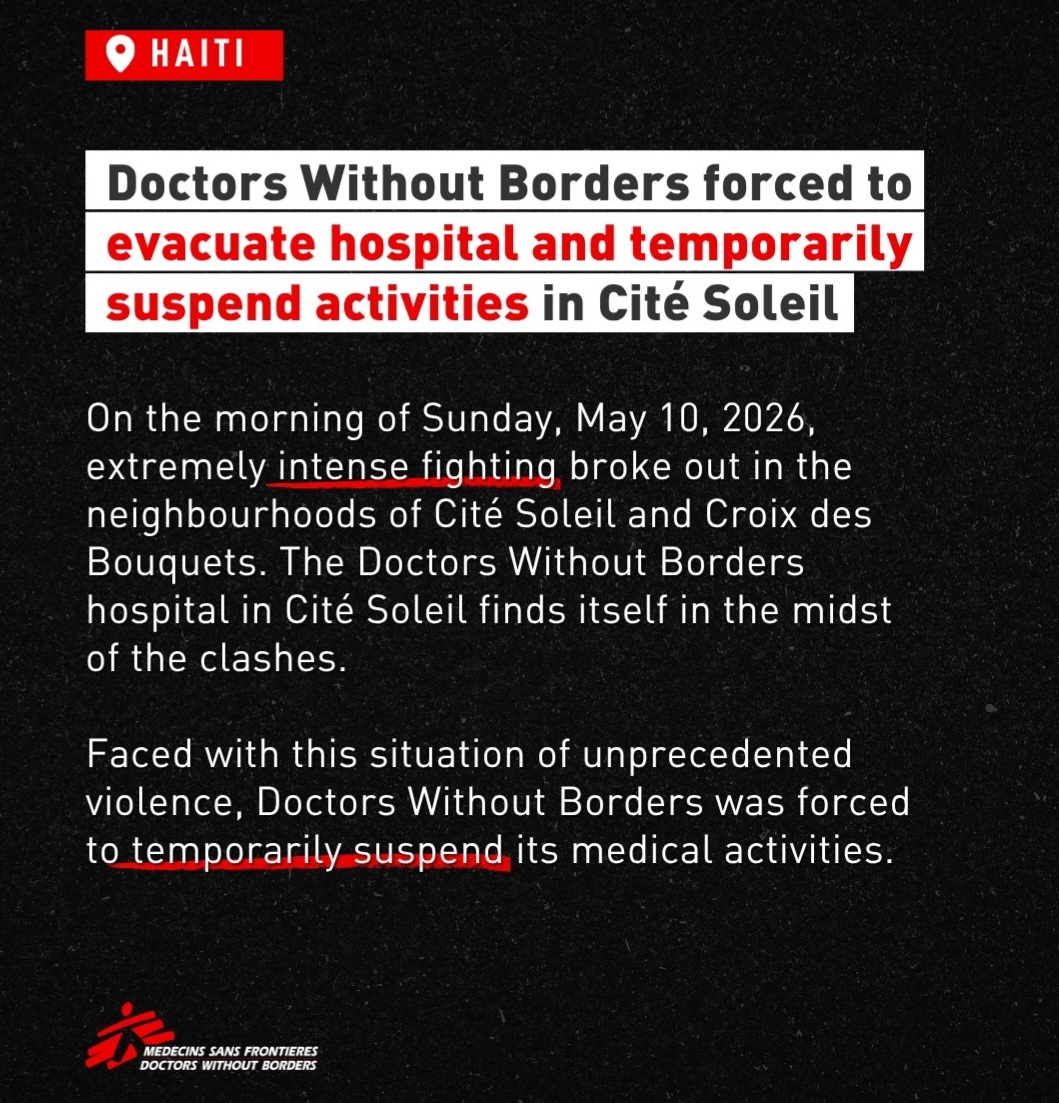
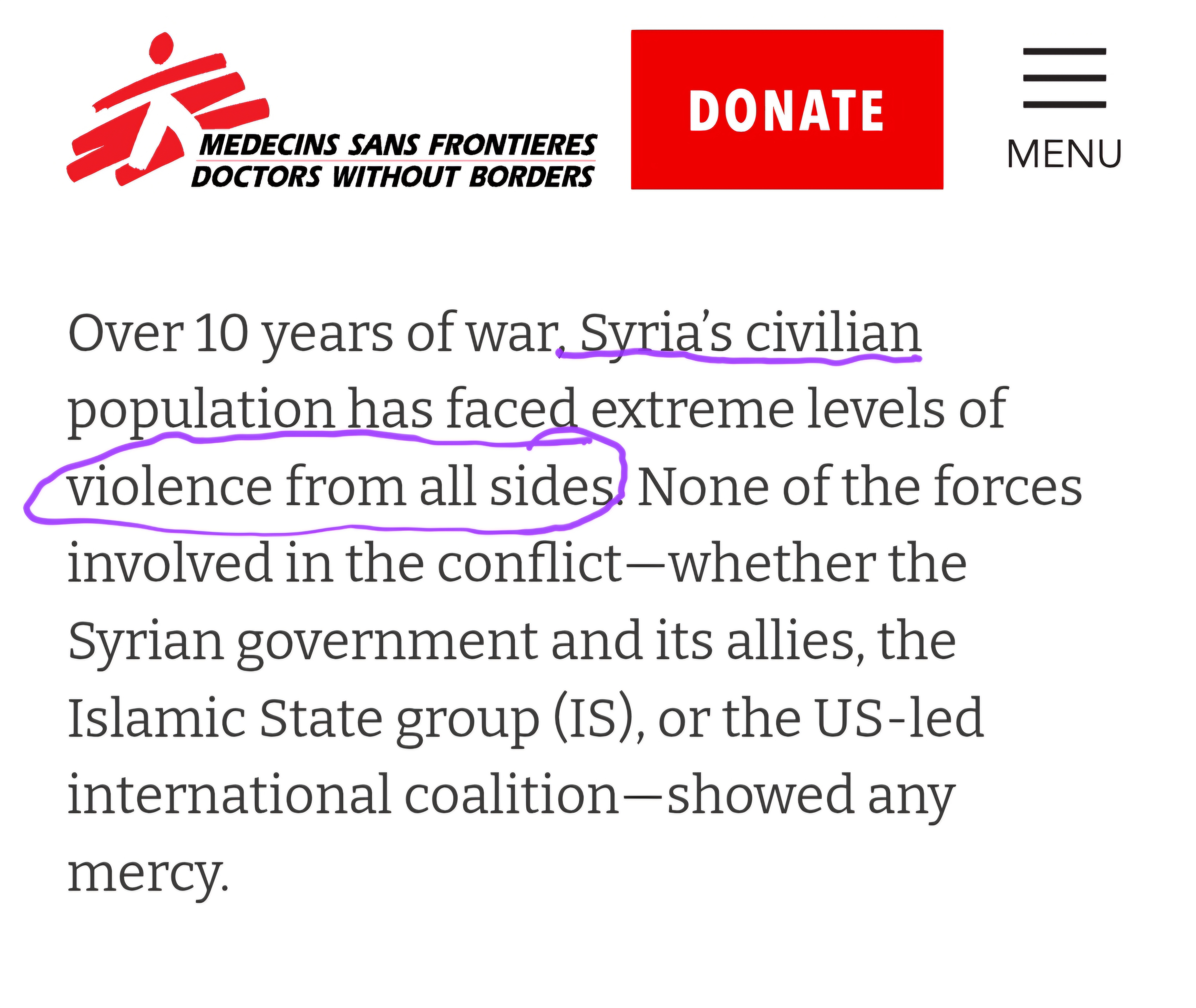
Doctors Without Borders doesn’t do this in other conflicts. Not in Sudan nor Somalia. Not in Syria nor Haiti. In those wars, either no one is called out or “all sides” are vilified.
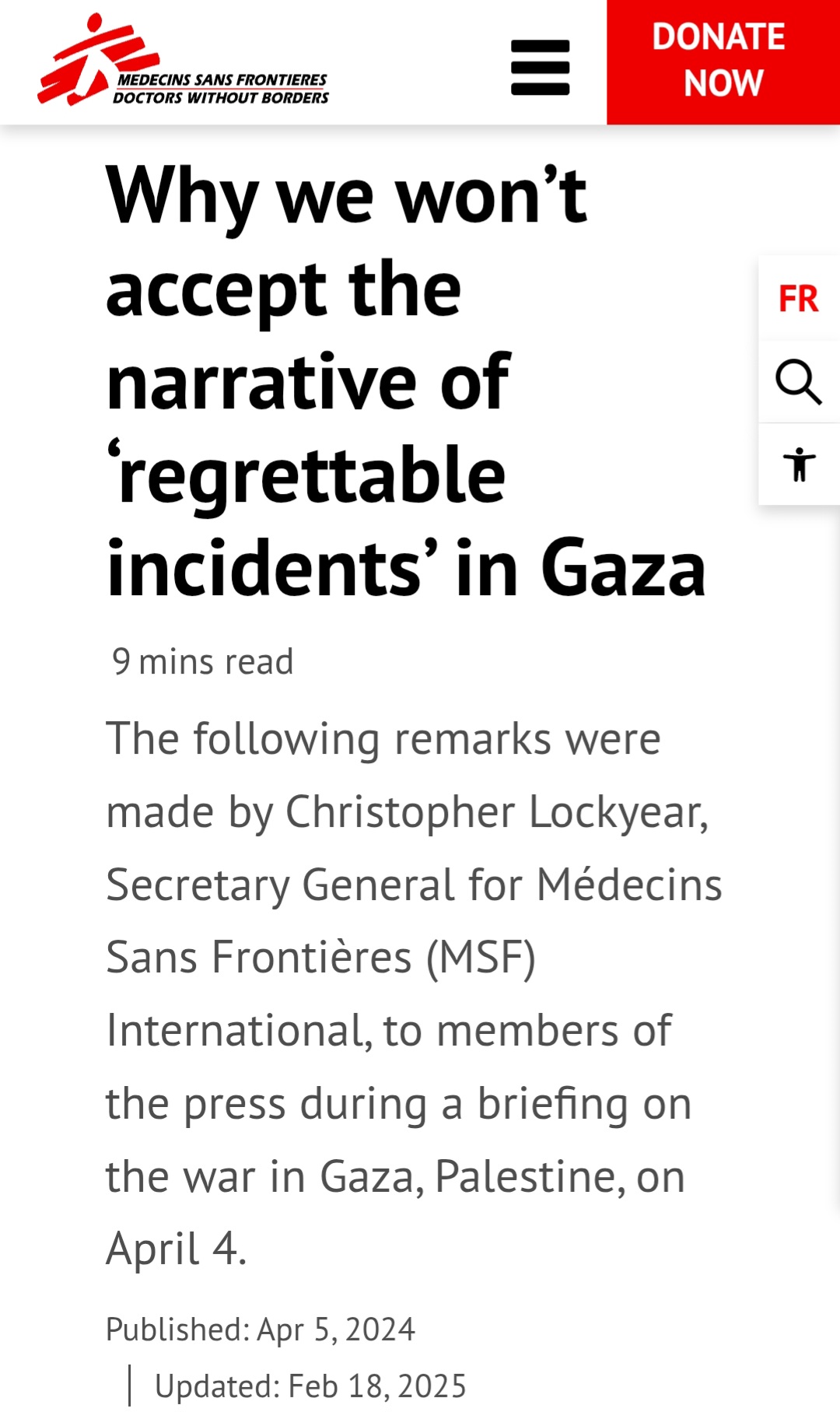
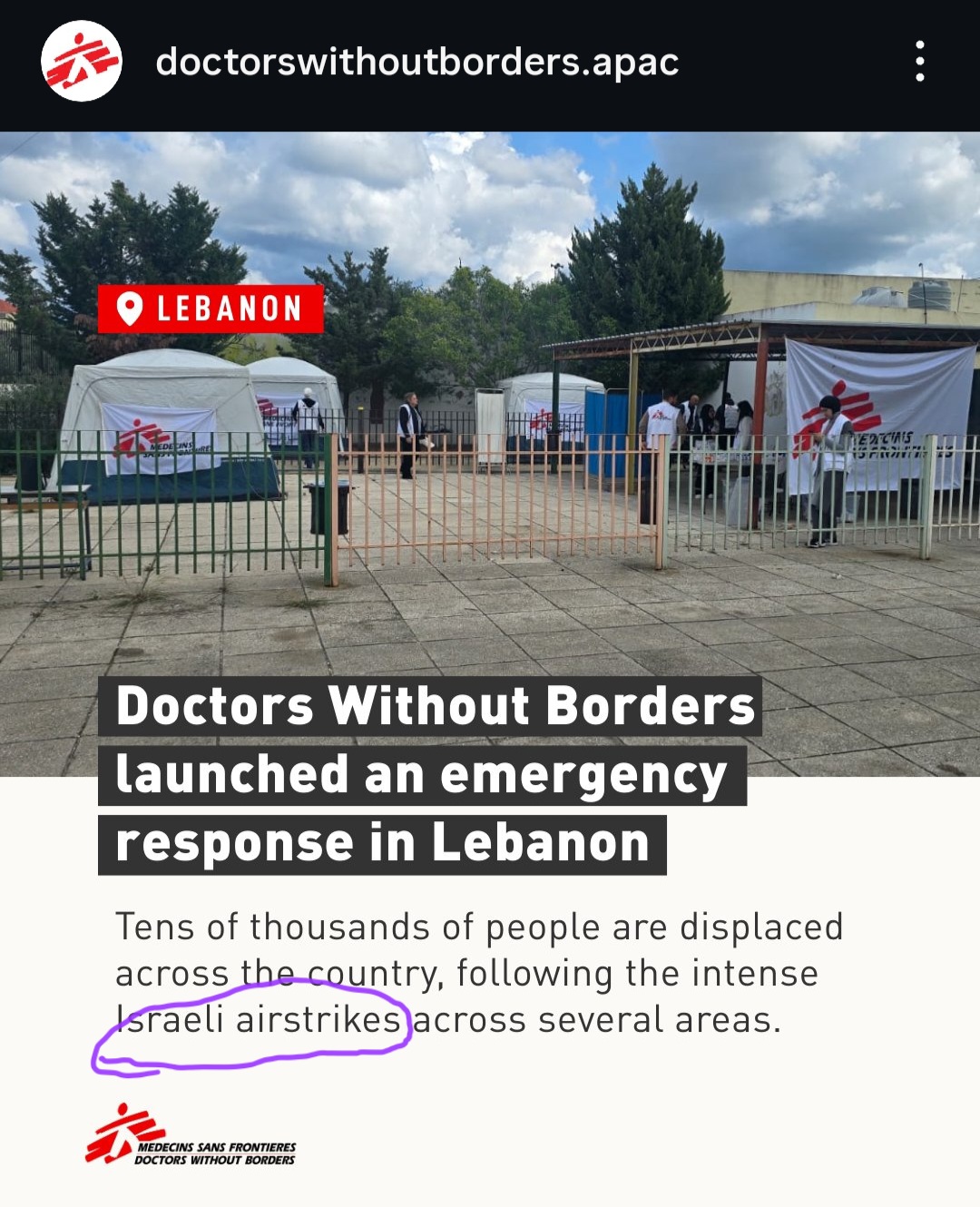
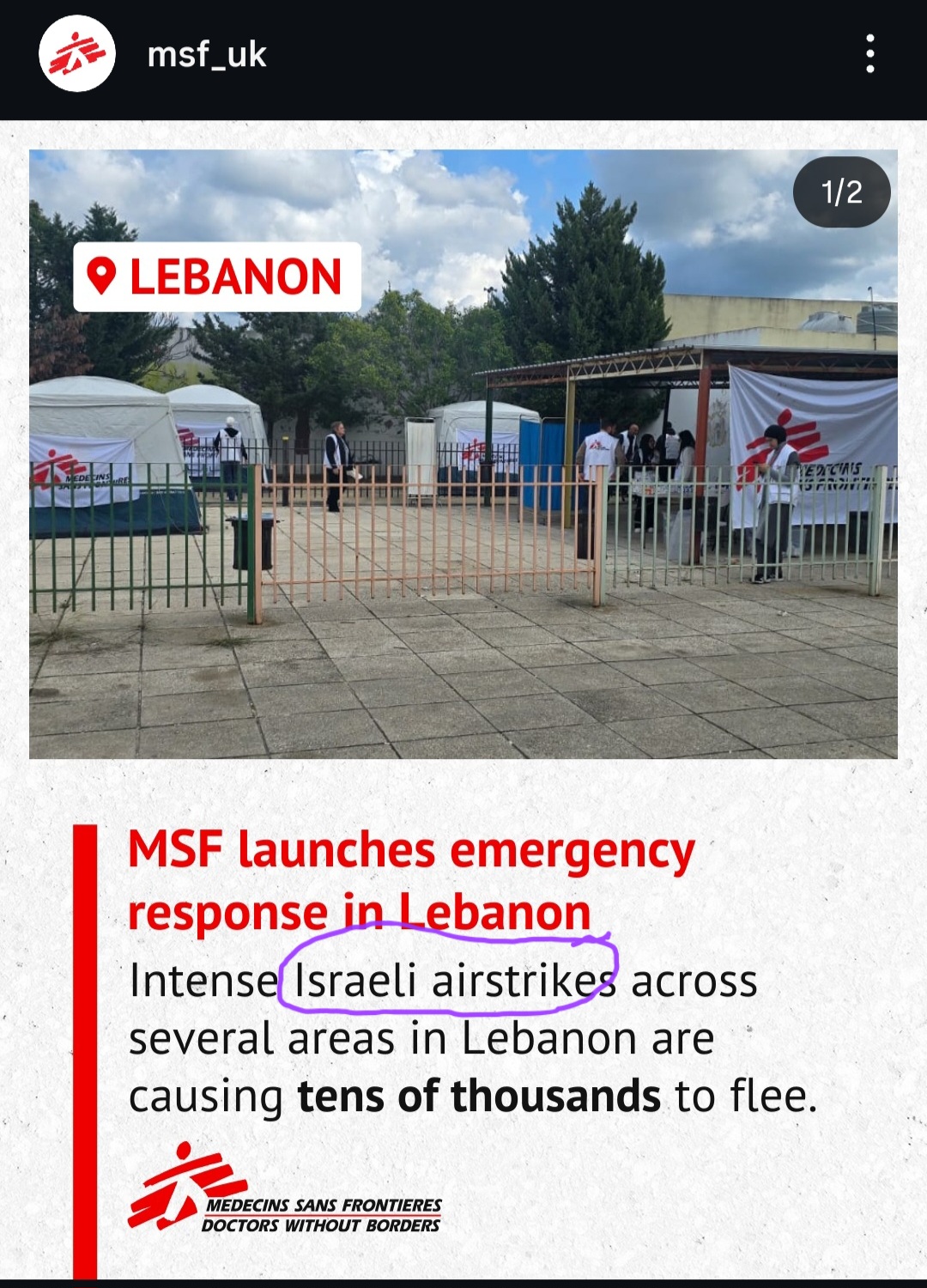
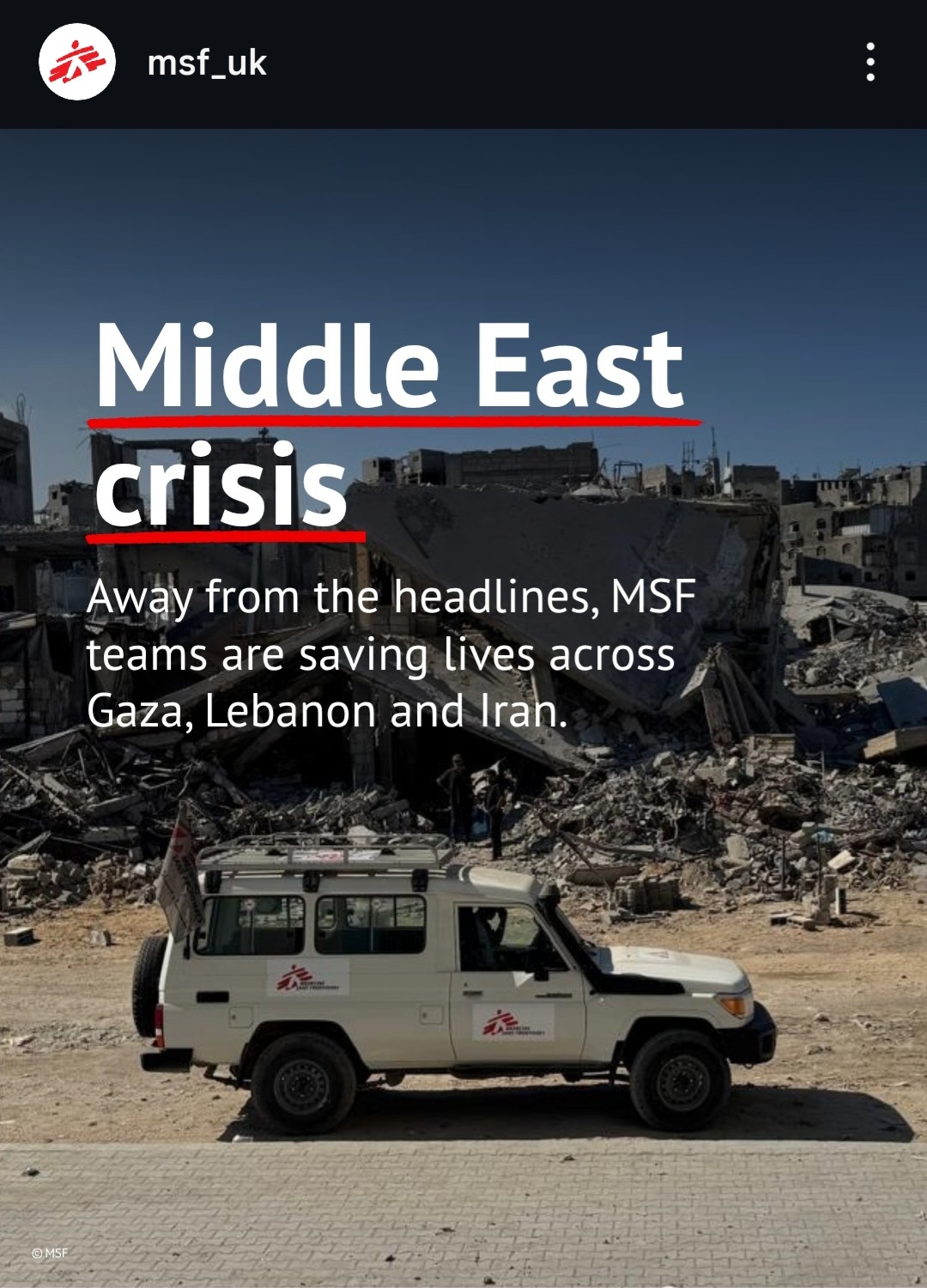
And MSF takes its anti-Israel campaign on the road. Wherever Israel is dragged into a defensive war against those determined to annihilate it, like Lebanon and Iran, MSF is standing guard and pointing fingers.
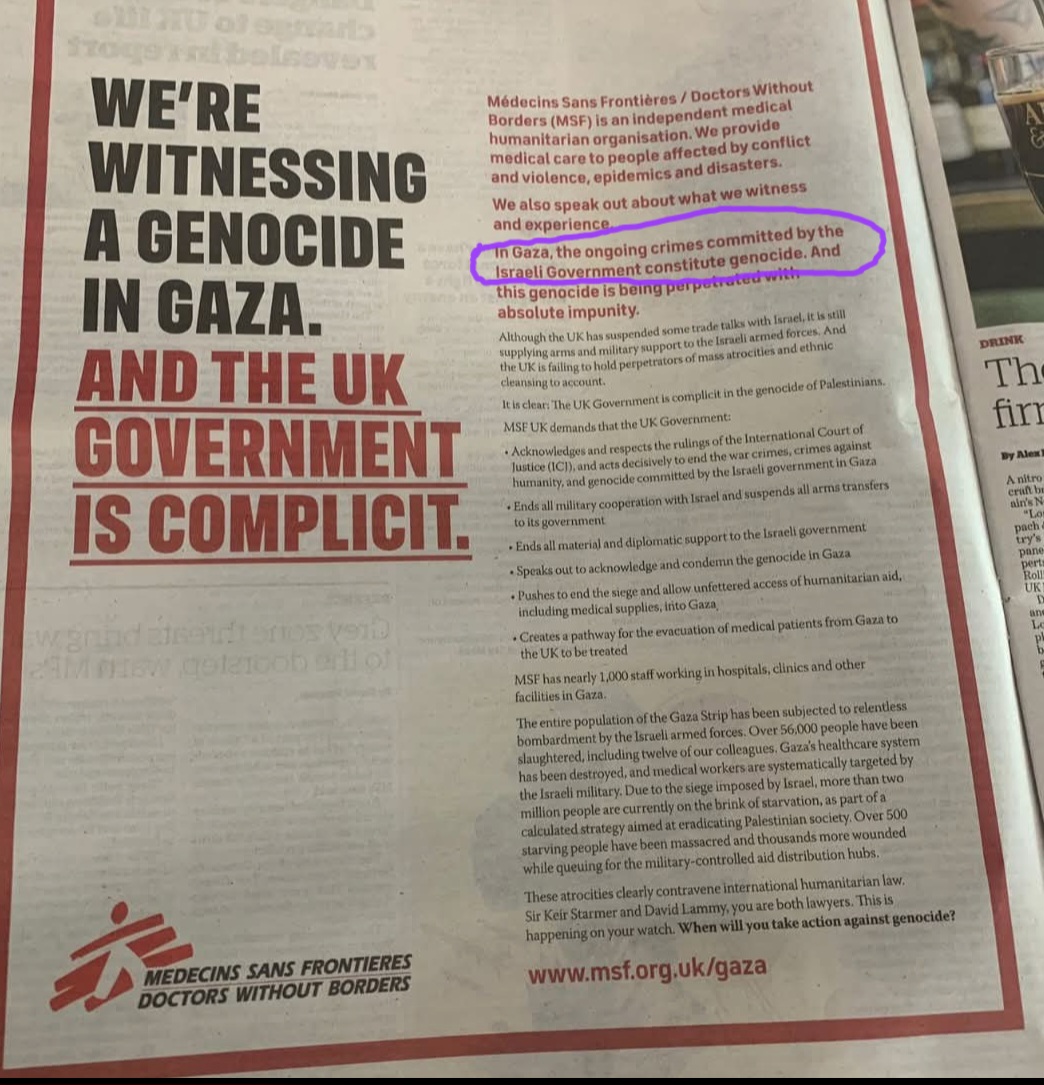
MSF does not limit itself to smear campaigns against Israel. It is a full lobbying shop, taking out full page ads in newspapers to rally the public against Israel. It pushes governments to stop supporting Israel in its defensive war.
So it is no surprise that MSF has officially backed the entire Iranian proxy war against Israel, telling the world that it rushes to protect “Gaza, Lebanon and Iran” from Israel.
Doctors Without Borders: 1) runs to assist jihadists in their active war against Israel; 2) raises money claiming the belligerent parties are the victims; 3) lobbies to have governments stop supporting Israel and 4) calls for the masses to protest the Jewish State. It does all of this, uniquely in Israel’s war.
Doctors Without Borders is not a humanitarian organization but an active instrument in the war to destroy Israel.
In February 2001, long before Hamas ruled Gaza, long before Israel withdrew from Gaza, long before the security barrier, and long before the phrase “genocide in Gaza” became a campus chant, a United Nations “anti-racism” conference in Tehran was already accusing Israel of being a racist apartheid state guilty of crimes against humanity and “a form of genocide.”
The language was not improvised after October 7. It was drafted decades earlier.
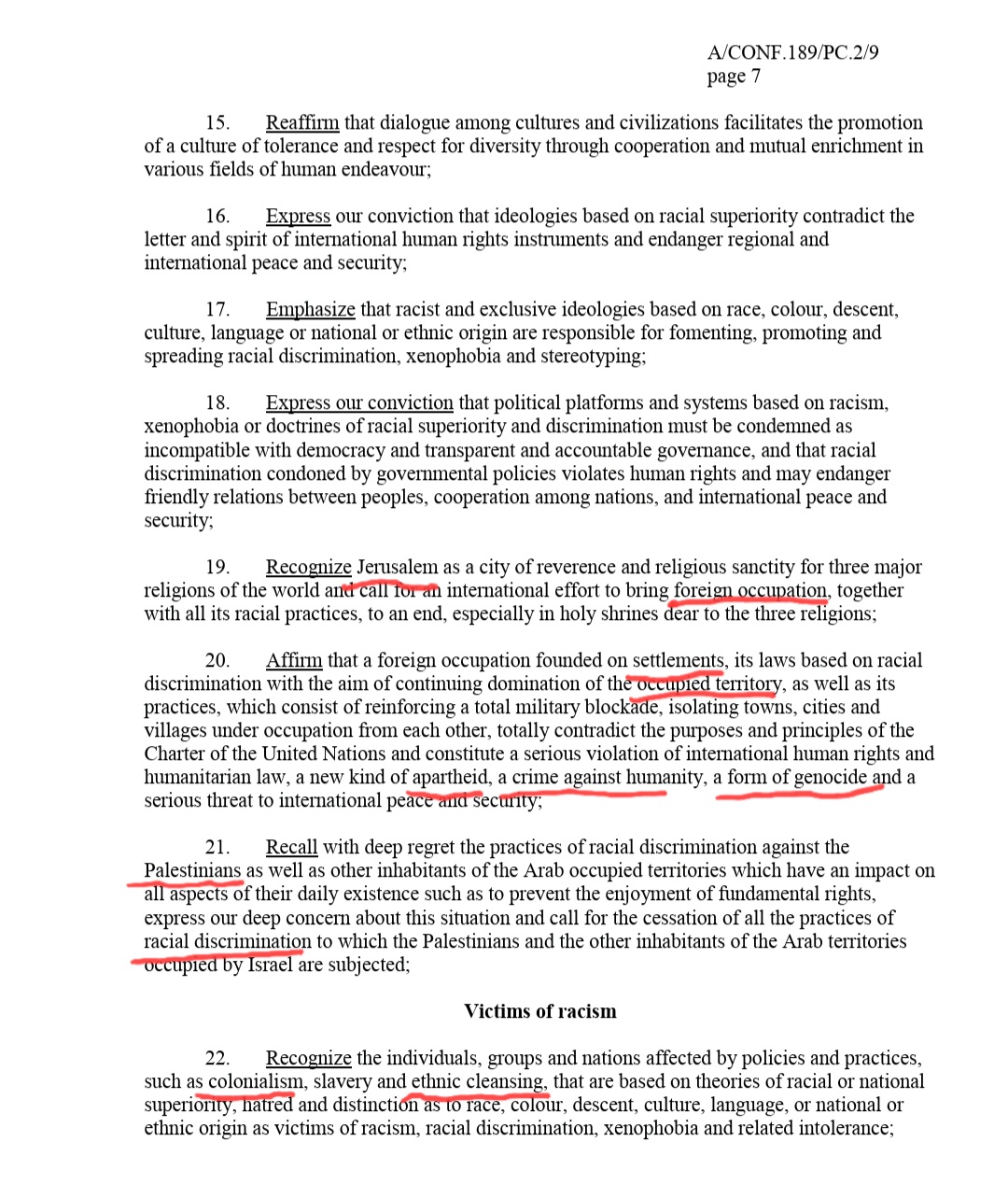
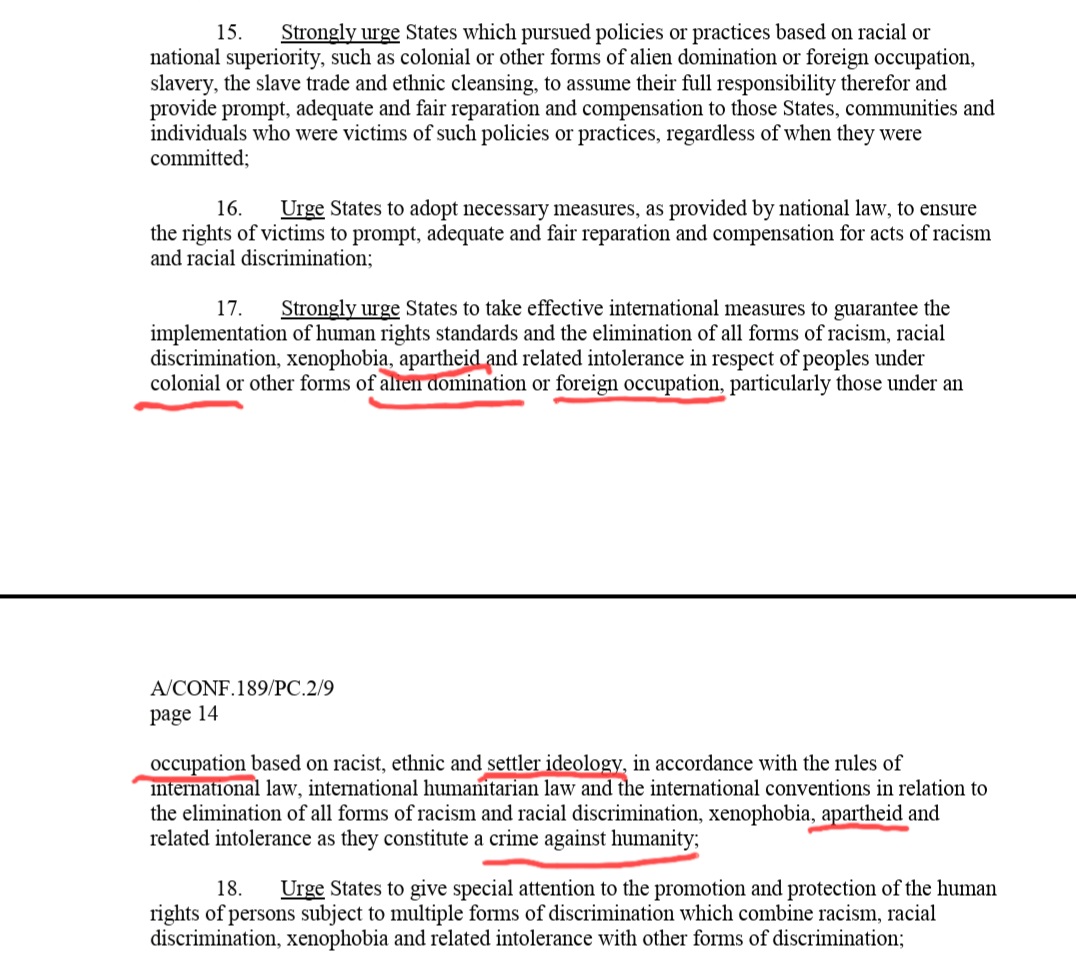
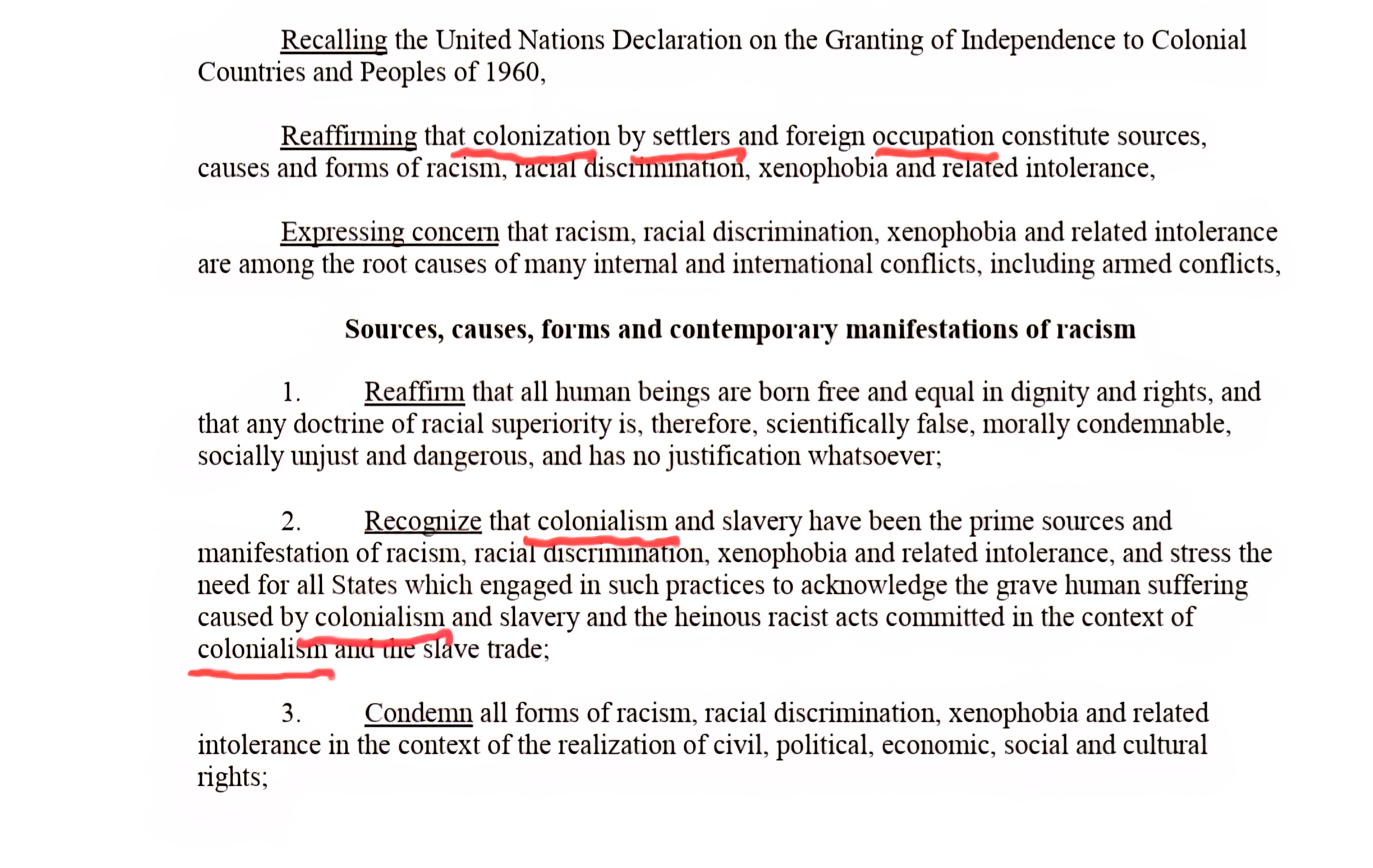
Buried in the archives of the UN World Conference Against Racism sits a document that now reads like the prototype for today’s anti-Israel activism. Hosted by the Islamic Republic of Iran as the Asian preparatory meeting for the infamous Durban Conference, the 2001 declaration accused Israel of “racial discrimination,” “settler ideology,” “apartheid,” and genocide years before the events now routinely cited to justify those accusations.
The Tehran declaration described Israeli policy as “a new kind of apartheid,” “a crime against humanity,” and “a form of genocide.” It condemned “foreign occupation founded on settlements” and portrayed Israel as a uniquely racist state. It attacked Israel’s Law of Return as “racially based” while endorsing a Palestinian “right of return,” and framed the conflict almost exclusively through the language of colonialism and racial supremacy.
This was February 2001. Hamas would not seize Gaza for another six years. Israel had not yet disengaged from Gaza. The major Gaza wars had not occurred. There was no October 7 massacre. There were no TikTok videos, no encampments, no “Globalize the Intifada” marches winding through Western capitals.
Yet the ideological framework already existed in complete form.
The core vocabulary was already there:
apartheid
settler colonialism
genocide
racial supremacy
alien domination
decolonization
The slogans were set. The distribution system under the framework of “anti-racism” needed time to become global.
Iran understood this battlefield earlier than much of the West did.
The Islamic Republic did not wage war against Israel on only one front. It developed a multi-front strategy: terror proxies, missile programs, regional encirclement, propaganda networks, diplomatic campaigns, university activism, NGO penetration and information warfare. The battlefield extended from southern Lebanon to UN conference halls.
Iran understood something many Western governments failed to grasp: narratives can outlive battlefields. Terror attacks shock people temporarily. Moral frameworks reshape generations.
The achievement of the campaign was not inventing new hatred. It was laundering their own very old anti-Jew hatred through the moral vocabulary of human rights.
The regime in Tehran openly sought the destruction of the Jewish state while simultaneously helping construct an international framework portraying the Jewish state itself as the great racist evil of the modern world. The inversion was deliberate. A regime animated by antisemitism and eliminationist rhetoric repositioned itself as an anti-racist moral authority while recasting Israel as a global pariah.
Reality itself had to be inverted for the framework to function:
The Jewish people had to be stripped of indigenous identity despite Judaism being born in the Land of Israel and the core of the Hebrew Bible.
Jerusalem had to be detached from Jewish history despite being the holiest city in Judaism for three thousand years, and the direction of daily Jewish prayer.
Hebrew had to become the language of “colonizers” despite originating in the same soil activists insist Jews have no connection to.
The objective was to transform the Jewish state from a country that could be criticized into a moral obscenity that could not legitimately exist.
The Tehran document placed Israel into the moral category occupied by apartheid South Africa, colonial domination and crimes against humanity. Once a country is assigned that status, compromise becomes collaboration and coexistence becomes moral surrender.
Iran supplied the ideological fuel. Large parts of the Western activist ecosystem supplied the distribution network. The result was one of the most successful political rebranding campaigns of the modern era.
NGOs, academics, journalists, activist groups and eventually corporate and educational institutions absorbed the vocabulary and repackaged it as the language of progressive morality. Traditional antisemitism had become morally discredited after the Holocaust, so hostility toward the Jewish state was translated into the vocabulary of anti-racism, anti-colonialism and social justice.
The old image of the malevolent Jew became the malevolent Zionist.
Ancient hatreds were repackaged as the language of anti-racism and liberation.
The old demand that Jews disappear became “decolonization.”
And because the rhetoric arrived wrapped in the language of human rights, millions of educated Westerners could participate while imagining themselves enlightened rather than radicalized.
The asymmetry inside the Tehran declaration is particularly revealing. The document devoted extraordinary attention to portraying Israel as the embodiment of racism while saying nothing about antisemitism in the Arab world, terrorism against Israeli civilians, the expulsion of Jews from Arab countries, or the openly eliminationist ideologies as the bedrock of Hamas and Hezbollah.
The imbalance was not accidental.
The conference was not constructing a universal anti-racism framework. It was constructing a hierarchy of permissible outrage in which Jewish sovereignty itself could increasingly be reframed as a moral offense.
The Durban process that followed later became notorious for antisemitic incidents, anti-Israel propaganda and efforts to revive the old “Zionism is racism” framework using newer terminology. Western democracies eventually began boycotting later Durban conferences because they viewed them as platforms for anti-Israel demonization masquerading as anti-racism initiatives.
But by then the political grammar had already escaped containment.
Over time, phrases first drafted in Iran migrated into university syllabi, NGO reports, newsroom style guides, faculty petitions, diversity trainings and street protests. Students who have never heard of the Tehran conference now repeat its vocabulary almost word for word, unaware they are echoing a political script written decades earlier by regimes that openly sought Israel’s destruction.
Long before October 7, the architecture had been built, the slogans drafted, and the moral categories assigned. More powerful than even the 1975 UN resolution equating Zionism with racism, the new format for the 21st century is anti-Zionism is anti-racism.
For twenty years the distribution system slowly penetrated the world, and reframed Jew-hatred as morally acceptable under willing and unwilling eyes.
October 7 did not write the script. It activated one that had been waiting since 2001.