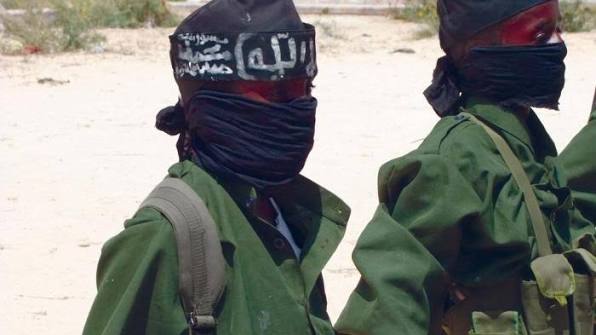
Back to School in Somalia: The Jihadi Classroom

Summary: Millions of children do not attend school in Somalia; many of those who do are trained in jihad to fight “infidels” by al Shabab. It is a terrifying story of radical Islamic terrorism mapped for generations.

“I was always worried when they were at school,” a Somali mother told Human Rights Watch after her 17-year-old daughter was abducted by Al-Shabaab during a school tea break in Mogadishu. “Every day you get your child back at the end you are thankful.”

For parents in most countries, back to school means teachers, books, friends and homework. In parts of Somalia, it can mean wondering whether the child who left for school in the morning will return in the afternoon – or whether the school itself will become the beginning of a journey into jihad.

“I was with al-Shabaab for three months in 2010…. They wanted to train us to fight and I was afraid. I didn’t want to kill people. I wanted to go back to school and learn.” – Amare A. (not his real name), 10-year-old boy from Mogadishu, living in Kenya, June 2, 2011

Somalia has one of the world’s most severe education crises. UNICEF says more than three million Somali children are out of school, while its more recent educational work puts the out-of-school rate at approximately 65% for primary-age children and 75% at the secondary level. Poverty, displacement, drought, insecurity, distance and a shortage of teachers all contribute to the enormous educational vacuum.

Into that vacuum has stepped Al-Shabaab, an Al-Qaeda affiliate.

The European Union Agency for Asylum estimated that Al-Shabaab controls around 30% of Somalia’s territory, including large rural areas and numerous district capitals, while exercising influence or forms of co-governance well beyond the territory it directly controls. Its leadership remains intact, and the group has continued making territorial gains.

That combination should be terrifying: millions of children disconnected from conventional education alongside a jihadist organization controlling substantial territory and building an education system of its own.

A “Jihadi Worldview”

The Hiraal Institute, a Mogadishu-based security research organization, examined Al-Shabaab’s education system in a report appropriately titled The Fighters Factory. Its description should receive far more attention than it has.

“Children are indoctrinated in the Islamic institutes and made to understand current affairs through a Jihadi worldview. Additionally, the illegitimacy of the Somali government and the obligatory nature of the AS Jihad are ingrained upon them. Quran teaching is done at a faster pace than in traditional schools in order to make time for Jihadi literature. Most children graduate within two years, with many being sent directly to a training camp if they have passed age 15, the Islamic age of maturity.” – Hiraal Institute

The objective is not hidden. Hiraal concluded that Al-Shabaab built the system to create “a steady stream of ideologically pure fighters.”

The U.S. State Department independently documented what that ideology means inside Al-Shabaab-controlled schools: that students should wage war against those the organization considers “infidels,” including people in neighboring countries as well as Somalia’s federal government and international forces.

Consider the progression.

A child does not begin with an assault rifle. He begins with an explanation of the world.

The government is illegitimate. Jihad is obligatory. There are infidels against whom war should be waged. Martyrdom is honorable. The organization providing the lesson possesses religious authority.

This is hatred taught; prejudice as obligation.

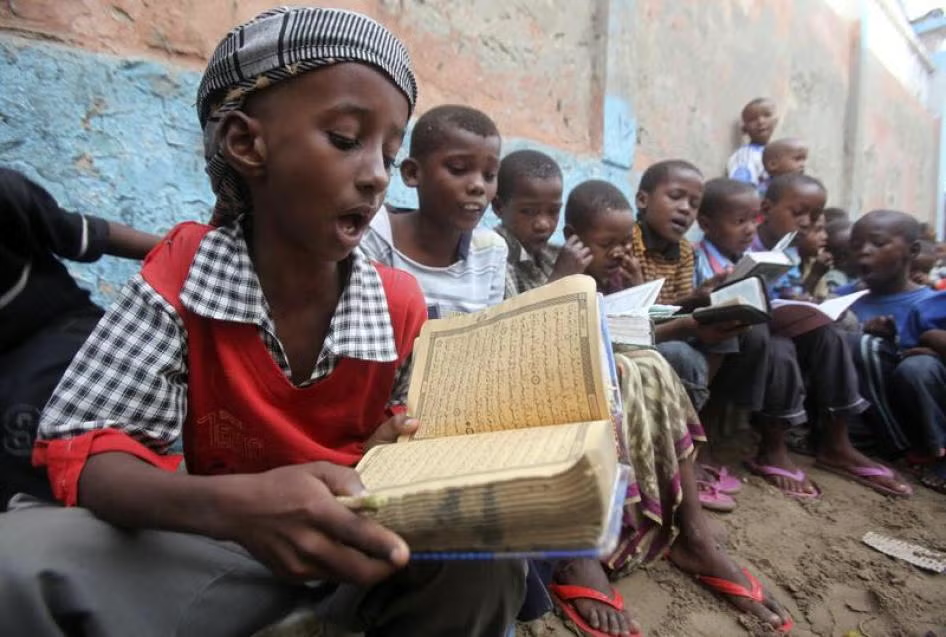
Children learning to read the Quran at the Gaabow Islamic school in Somalia’s capital, Mogadishu, August 2013. (photo: REUTERS/Ismail Taxta)

From Classroom to Training Camp

The distinction between education and recruitment consequently begins to disappear.

Hiraal reported that children educated entirely inside the Al-Shabaab system could become some of its most ideological and fanatical fighters because they had never been exposed to an opposing argument.

American and international reporting describes what can happen next.

The State Department has repeatedly documented Al-Shabaab raiding schools, madrassas and mosques, coercing families and clan elders and recruiting children into its ranks. Children in its camps have undergone physical and religious training alongside weapons training. They have been used to carry ammunition, gather intelligence, plant explosives, fight in combat and serve as human shields and suicide bombers.

The State Department reported that training has even included forcing children to punish and execute other children.

This is not merely recruitment of child soldiers – already a war crime. It is the attempted manufacture of a worldview capable of reproducing violence from one generation to the next.

Young child in al Shabab training camp in Somalia

The Lesson Does Not Stay in Somalia

The categories taught in the classroom can become categories for selecting who lives and who dies. “Infidel” is not merely an ugly word; it is placing a target according to religion to facilitate murder.

That is why the education system deserves to be studied as part of Al-Shabaab’s terrorist infrastructure.

The Jihad Factory

The individual facts have been documented for years. What has been missing is the decision to put them in the same frame.

  • One institution records children out of school.
  • Another documents Al-Shabaab’s curriculum.
  • Another counts child recruitment.
  • Another records religious persecution.
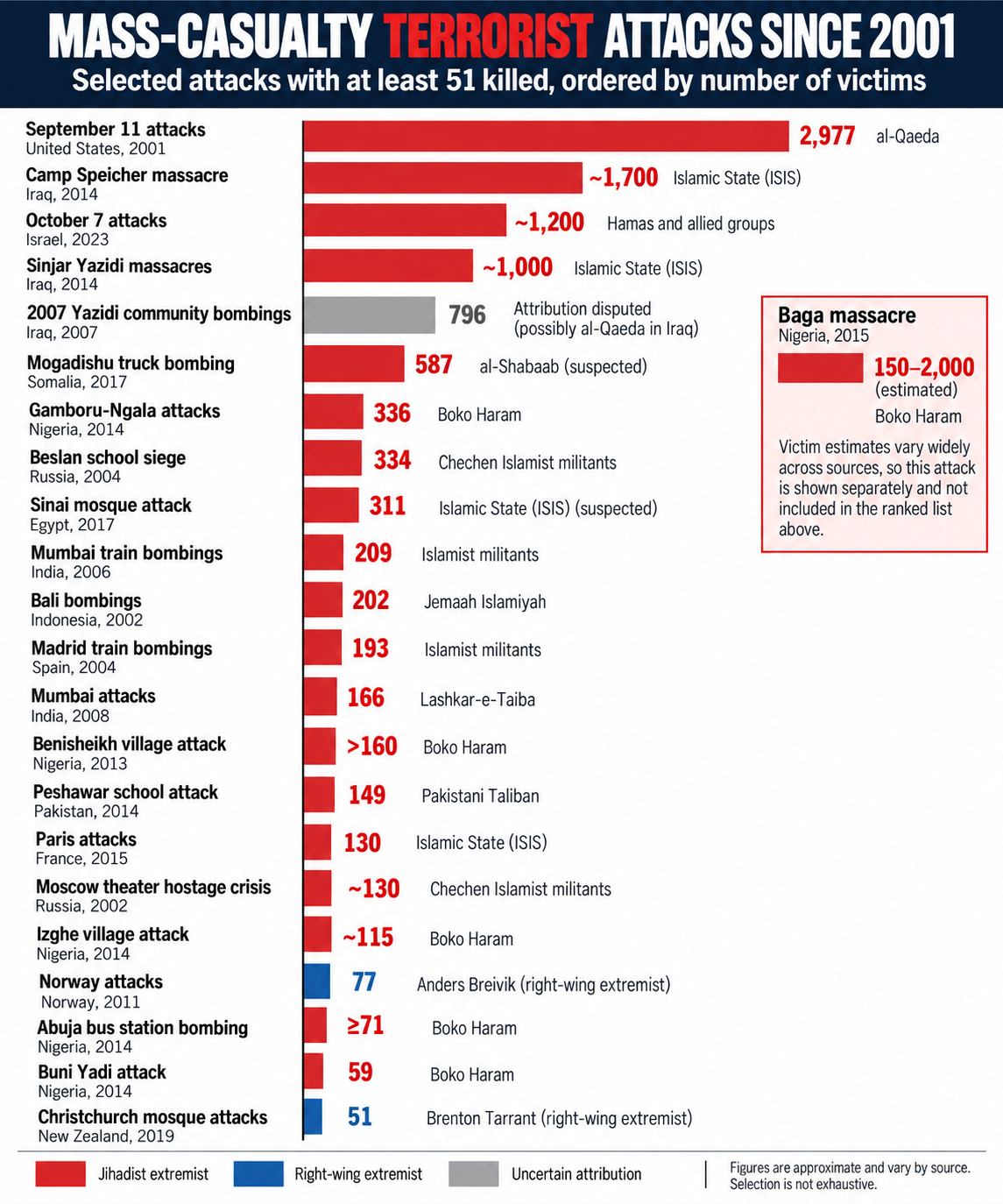
  • Terrorism researchers count the dead.

Each is describing a different station along the same potential pathway: educational vacuum, ideological instruction, identification of the infidel, glorification of jihad, weapons training, recruitment and violence.

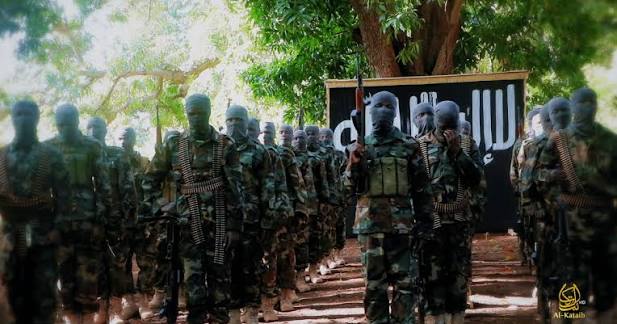
Al Shabab fighters in Somalia

That is why Al-Shabaab’s schools matter far beyond Somalia’s education statistics. A terrorist killed on a battlefield is one fewer terrorist. A child taught a “Jihadi worldview” represents something altogether different: a wager that the ideology can survive the men currently fighting for it.

Millions of Somali children remain outside school today. Across substantial territory, the organization positioned to exploit that vacuum has already demonstrated what it wants children to learn and, in documented cases, what it has subsequently demanded that children do.

The frightening question is therefore not how many Al-Shabaab fighters can be killed this year. It is how many replacements are sitting in classrooms.

1979: The Year Terrorism Changed and Jihadism Became Impossible To Ignore

Look at the world’s prominent terrorist organizations in the 1960s and 1970s and something is striking: religion is largely absent.

The PLO and its factions pursued Palestinian nationalism. The IRA fought over Northern Ireland. ETA sought Basque independence. The Red Brigades in Italy, Red Army Faction in Germany and Japanese Red Army embraced revolutionary leftist ideologies.

An analysis by RAND captures what happened next. In 1968, it identified zero religiously motivated international terrorist groups. In 1980, there were two among 64. By 1992 there were 11 among 48. By 1995, 25 of 58—43 percent—were religiously motivated.

Some point to 1979 as the pivotal year, when radical Islam found permanent footholds and inspiration.

In Iran, Ayatollah Ruhollah Khomeini’s revolution overthrew the Shah and established an Islamic Republic. Political Islam had demonstrated that it could overthrow a western-aligned government.

Iranian revolution of 1979

Iran then exported its revolutionary ideology and supported armed Shiite Islamist movements. Hezbollah, established in Lebanon in the early 1980s, became its most consequential manifestation.

Then came Afghanistan.

The Soviet Union invaded in December 1979. Resistance to a non-Muslim foreign army occupying a Muslim country became an international Islamic cause. Saudi and other Gulf money flowed to the “resistance.” Pakistan became its essential staging ground. The United States supplied extensive assistance as part of its Cold War campaign against Moscow.

Afghanistan became a transnational incubator for Sunni jihad. Militants from different countries met, fought together and developed recruiting, financing and logistical networks. Osama bin Laden joined this world, and al-Qaeda eventually emerged from it.

Fondapol calls the Soviet-Afghan war the “matrix of contemporary Islamist terrorism.”

Other events show 1979 to be a pivotal year.

Islamist militants seized the Grand Mosque in Mecca, denouncing the Saudi monarchy as corrupt and insufficiently Islamic. The episode helped push Saudi Arabia toward greater religious conservatism just as it entered an intensifying competition with revolutionary Iran for leadership and influence across the Muslim world.

Meanwhile, Egypt and Israel made peace. Along with it, secular Arab nationalism, which had dominated much of Middle Eastern politics, began to lose prestige. Islamist movements increasingly presented themselves as the alternative. [Think of Hamas’s 2023 attempt to disrupt the expanding Abraham Accords].

The consequences of radical Islamism entering global terrorism developed gradually and then exploded.

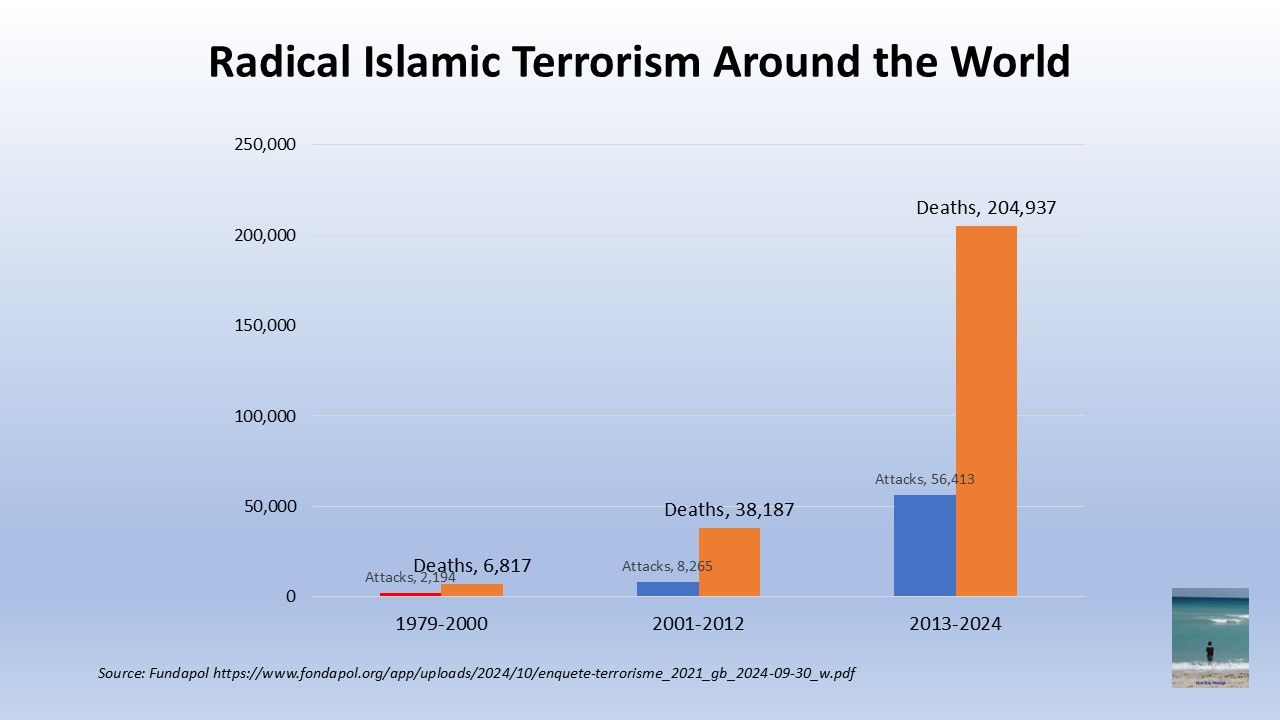
Fondapol records 2,194 Islamist terrorist attacks and 6,817 deaths from 1979 through 2000. From 2001 through 2012, it records 8,265 attacks and more than 38,000 deaths. From 2013 through April 2024, the toll surged to more than 56,000 attacks and roughly 205,000 deaths.

Altogether, its database catalogs 66,872 Islamist terrorist attacks killing nearly 250,000 people between 1979 and April 2024.

And this is not principally a story of Muslims attacking the West. Nearly 89 percent of those deaths occurred in Muslim-majority countries. The Taliban, Islamic State, Boko Haram, al-Shabaab and al-Qaeda became the five deadliest organizations in the database.

The transformation was both ideological and geographic. Al-Qaeda built affiliates. ISIS built provinces. Boko Haram devastated communities around Lake Chad. Al-Shabaab entrenched itself in Somalia and East Africa. Jihadist organizations spread across the Middle East, South Asia and increasingly Africa.

Iran demonstrated the revolutionary potential of political Islam; Afghanistan created the great transnational Sunni jihadist network; Mecca exposed another radical Islamist current; and the decline of secular Arab nationalism created room for Islamism to expand.

1979 was the year several forces converged and the center of gravity began to shift.

We readily study how nationalism, communism, fascism, white supremacy and other ideologies produced political violence. Jihadism has become the leading driver of terrorism in the world and must have the same intellectual clarity.

The UN’s Jihadi Exception

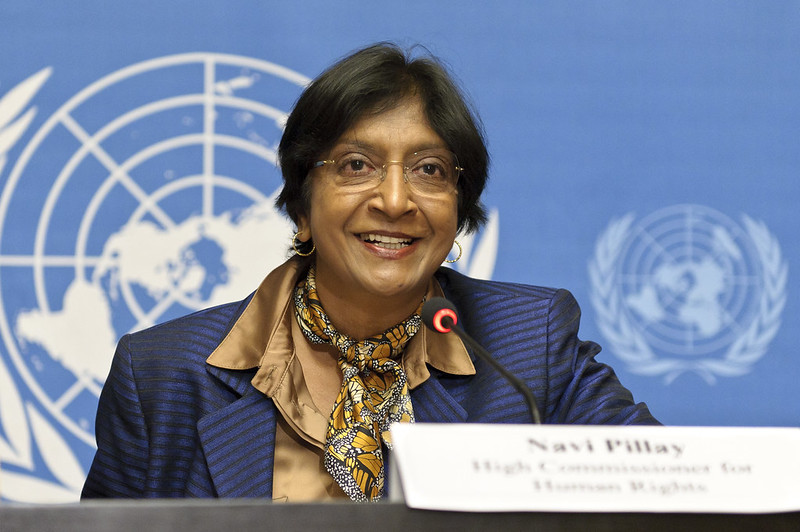
Twenty-five years after September 11, the United Nations remembered the 2,977 people murdered in what it called the “heinous terrorist attacks” of September 11, 2001, “an assault on humanity itself.” It declared that “the fight against terrorism is a shared, unfinished task.”

But something rather important was missing.

Who were the terrorists? What did they believe? Why did they do it?

There was no al-Qaeda. No Osama bin Laden. No Islamist extremism. No jihadism. Nothing about an ideology whose most famous declaration called for jihad against “Jews and Crusaders.”

Perhaps the United Nations simply avoids attaching ideologies to terrorism. It does not.

After a white supremacist murdered 49 Muslims at two Christchurch mosques in 2019, the UN spoke explicitly about “anti-Muslim hatred,” “anti-Islamic sentiments” and Islamophobia. Secretary-General António Guterres described the Pittsburgh Tree of Life massacre as the “worst antisemitic attack in the history of the United States.” Discussing the Halle synagogue attack and related violence, the UN warned about “antisemitic hatred,” “Neo-Nazis and white supremacists” and their “poisonous ideology.”

That is exactly what an institution confronting extremism should do. Terrorism is an act; ideology can explain its motivation.

Then consider Sri Lanka.

On Easter Sunday 2019, radical Islamist suicide bombers attacked churches and hotels, killing roughly 270 people. Sri Lanka subsequently told the UN that the terrorists had been “inspired and indoctrinated” by extremist organizations including ISIL/Daesh and had “specifically targeted churches.”

Yet on the seventh anniversary in 2026, the UN remembered the victims of the “Easter Sunday attacks.” Not terrorist attacks. Not ISIS-inspired terrorism. Not jihadism or Islamist extremism. Not anti-Christian hatred. The killers’ ideology had vanished.

That makes the 9/11 omission considerably harder to dismiss as an unfortunate choice of words. When Muslims are murdered by an anti-Muslim extremist, the ideology matters. When Jews are murdered by antisemites or neo-Nazis, the ideology matters. But when jihadists murder Americans or ISIS-inspired suicide bombers slaughter Christians at Easter, the UN retreats into the bloodless vocabulary of “terrorism” and “attacks.”

The problem is not that the UN says Islamophobia, antisemitism, white supremacy or neo-Nazism. The problem is its apparent inability to apply the same principle to jihadism.

That is no longer merely a question of consistency.

A 2024 study by the French think tank Fondapol catalogued 66,872 Islamist terrorist attacks since 1979, killing nearly 250,000 people. Roughly 243,000 of those deaths occurred after 2001. Almost 89 percent of the dead were killed in Muslim-majority countries. The Taliban, Islamic State, Boko Haram, al-Shabaab and al-Qaeda accounted for more than four-fifths of the victims.

“Islamist attacks around the world are more numerous today than ever before.” – Fondapol study

Jihadist ideology is therefore hardly an extinct doctrine being dredged up to explain a 25-year-old atrocity. Al-Qaeda survives. ISIS and its affiliates survive. Jihadist organizations continue to recruit and kill around the world, with Muslims overwhelmingly among their victims.

Calling that ideology jihadist or Islamist extremism no more condemns Muslims generally than calling an ideology neo-Nazi condemns Germans. In fact, refusing to make that distinction does Muslims no favor. It obscures an extremist ideology that has slaughtered enormous numbers of Muslims themselves.

Nor are the extremists coy about what they believe. They publish it, preach it, recruit with it and murder in its name. It is the international institutions confronting them that increasingly seem afraid to repeat what the killers themselves say.

So the UN should answer a straightforward question: Why can it say “white supremacist” and “neo-Nazi,” but not “jihadist”?

Has fear of accusations of Islamophobia—or pressure from states and organizations determined to shield Islamist ideology from scrutiny—become so powerful that jihadist supremacy alone receives a linguistic sanctuary at the United Nations?

Whatever the explanation, the consequence is dangerous. An ideology does not become less lethal because international institutions refuse to name it. It simply becomes harder to confront.

When terrorists can proclaim their ideology more plainly than the United Nations can describe it, sensitivity has crossed the line into surrender.

Related:

Pick Your Jihad; Choose Your Infidel (September 2014)

CAIR’s 9/11 Curriculum: Erase the Jihadists, Center Muslims as Victims

On September 11, 2001, nineteen al-Qaeda terrorists hijacked four airplanes and murdered nearly 3,000 people. They were followers of Osama bin Laden, who had declared jihad against the United States and explicitly invoked religion, Jews and “Crusaders” in explaining the war he believed he was fighting.

The Council on American-Islamic Relations (CAIR) has a guide for teaching September 11 to American children in grades 6 through 12. Its approach to that history is remarkable: don’t call the people who committed 9/11 “jihadists,” but make sure students learn extensively about Muslims as victims after 9/11.

CAIR’s Remembering and Reflecting on Sep. 11, 2001 in the Classroom tells educators to avoid language that “associates” the mass murder with Islam and Muslims. It specifically identifies three terms it considers “inaccurate and inflammatory”: “Islamic terrorists,” “jihadists” and “radical Islamic terrorists.”

“Avoid using language that validates the claims of the 9/11 attackers by associating their acts of mass murder with Islam and Muslims. For example, avoid using inaccurate and inflammatory terms such as “Islamic terrorists,” “jihadists,” or “radical Islamic terrorists.”” – CAIR teaching guide

The objection to “jihadists” is particularly revealing. The word does not describe Muslims generally. Quite the opposite: it distinguishes a radical movement from the enormous population of Muslims who do not subscribe to it. Likewise, adding “radical” to Islamic terrorism is an explicit qualifier. A teacher can explain precisely what al-Qaeda believed while simultaneously making clear that its ideology was rejected by countless Muslims.

CAIR instead recommends removing the distinction.

That might seem like a dispute over terminology until one reaches the guide’s recommended reading list. Then the editorial direction becomes unmistakable.

Among the eleven articles CAIR recommends are “Commemorate 9/11 by Confronting Islamophobia,” “9/11 at 10: Lessons Learned From Anti-Muslim Haters,” “Muslims in America, post 9/11,” “Hope and Despair: Being Muslim in America After 9/11,” “How Being Muslim In America Has Changed Since 9/11,” “Remembering the Muslims who were killed in the 9/11 attacks,” and “How 9/11 Caused An Increase In Islamophobic Hate Crimes.”

Seven of the eleven titles are explicitly centered on Muslims, Islamophobia or anti-Muslim discrimination. Another recommended reading concerns federal civil-rights engagement with Arab and Muslim communities.

The videos follow much the same path. Students are offered “How 9/11 Shaped the Lives of American Muslims,” “Minorities targeted in 9/11 ‘revenge attacks,’” “9/11 Changed Life For American Muslims,” and “Post 9/11 Detention Of American Muslims.”

What is conspicuously absent from CAIR’s article list is a comparable body of material about why September 11 happened in the first place and who conducted the heinous acts of mass murder.

There is no recommended article devoted to al-Qaeda’s ideology. None to the development of jihadism. None examining bin Laden’s religious declarations. None exploring why al-Qaeda spoke of Jews and “Crusaders,” or why its followers believed their mass murder of civilians was justified as jihad.

Instead, CAIR explicitly tells teachers what they should add: Muslim condemnations of the attacks, solidarity from Muslim-majority countries, Muslim leaders joining President George W. Bush at a mosque and Muhammad Ali participating in a fundraiser. When discussing the aftermath, teachers are instructed to include hate crimes and bigotry against Muslims, Sikhs, Arabs and other minorities.

Those are legitimate subjects. Americans who attacked innocent Muslims, Sikhs or Arabs after September 11 committed reprehensible crimes. Muslim Americans who died in the World Trade Center deserve to be remembered alongside every other innocent victim.

But that is precisely why the imbalance matters.

A history lesson should be capable of holding two ideas simultaneously: radical Islamists murdered nearly 3,000 innocent people on September 11, and innocent Muslims subsequently became targets of bigotry by people who wrongly held them responsible.

In fact, accurately naming the first proposition makes the second easier to understand. “Jihadist” separates the extremists from Muslims generally. “Radical Islamist” identifies an ideology rather than an ethnicity or an entire faith. Students can then examine that ideology, understand why most Muslims reject it and understand why blaming ordinary Muslims for al-Qaeda’s crimes is both factually wrong and morally indefensible.

CAIR takes the opposite route.

Religion becomes something educators should carefully detach from the perpetrators, even though the perpetrators themselves repeatedly invoked it. Then religious identity becomes central when discussing the victims of the aftermath.

The inversion is extraordinary.

Consider what a student following CAIR’s bibliography is encouraged to encounter. The student can read about anti-Muslim haters, Islamophobic hate crimes, Muslim life after 9/11, Muslim heroes, Muslim victims, Muslim detention and civil rights for Muslim communities.

But where is the corresponding invitation to study the jihadists?

Where is bin Laden’s worldview? Where is al-Qaeda’s theology? Where are its declarations? Where is its obsession with “Crusaders” and Jews? Where is the intellectual history that transformed religious extremism into airplanes crashing into buildings filled with civilians?

September 11 did not begin with Islamophobia. It began with an ideology and 19 men prepared to murder thousands of strangers in the name of radical Islam.

CAIR is not asking schools merely to protect Muslim students from collective blame. It is asking educators to perform something far more consequential: strip the perpetrators of the language that identifies their radical ideology while repeatedly directing students toward the victimization of Muslims that followed their attack.

That is not historical sensitivity. It is historical inversion.

And it invites conspiracy theories that Jews committed 9/11, when the slaughter was done in the name of genocidal jihad.

Graffiti in London in 2019 claiming that Jews did 9/11, or that another mass murder is coming for Jews

CAIR’s approach leaves students with a grotesquely rearranged history: the Muslims who suffered bigotry after 9/11 retain their religious identity, while the jihadists who caused 9/11 are stripped of theirs.

CAIR calls that responsible teaching. A better description is laundering the ideology of the killers out of the history of their crime.

Related:

Your Neighbors Are Celebrating December 7, 9/11, and October 7 (December 2024)

On 9/11, Commit To Blocking Iran and Saudi Arabia From Ever Possessing Weapons Of Mass Destruction (September 2022)

Trends in Anti-Muslim and Anti-Semitic Attacks Post-9/11 (September 2021)

The Temple Mount Status Quo Is Being Rewritten

The Palestinian Authority has declared the Temple Mount — the holiest site in Judaism — the “exclusive right of Muslims.”

That is not the historic status quo. It is an attempt to rewrite it.

After Israel took control of Jerusalem’s Old City in 1967, day-to-day religious administration of the Temple Mount/Haram al-Sharif remained with the Islamic Waqf, while Israel retained responsibility for security and substantial control over access. The Waqf permitted Muslims to pray on the Mount, while non-Muslims could visit, prayer was restricted.

The arrangement governed administration, access and worship. It did not declare the Temple Mount the exclusive possession or religious entitlement of Muslims.

The Palestinian Authority’s Jerusalem Governorate crossed that line explicitly on September 6. It condemned Jews conducting “Talmudic rituals and prayers” as attempts to “alter its religious character,” declared the entire 144-dunam compound the “exclusive right of Muslims” and warned against changing its “identity.”

Those words matter.

Waqf administration is one thing. Restrictions on Jewish prayer are another. Declaring the site itself the “exclusive right” of Muslims is something else entirely.

The status quo regulates what Jews may do there. It never determined what the place is.

The First and Second Jewish Temples stood on the Temple Mount. Jewish prayer has faced Jerusalem for millennia. Jewish liturgy, mourning and hopes for redemption are bound to it. Many observant Jews have historically declined to walk upon portions of the Mount precisely because they consider the ground too holy to enter without the required ritual purity.

For some Jews, not ascending is itself an expression of the Mount’s extraordinary Jewish sanctity.

That makes the new language especially provocative. Jews visiting Judaism’s holiest place become “settlers” conducting “incursions.” Jewish prayer becomes threatening “Talmudic rituals.” A restriction accepted to preserve religious peace is transformed into evidence that Jewish religious expression does not belong there at all.
Jewish restraint was supposed to preserve coexistence. It cannot become a permission slip for Jewish erasure.

The international reaction sharpens that dynamic. The United Nations itself has called upon the parties to refrain from “provocative actions, incitement and inflammatory rhetoric,” especially in places of “religious and cultural sensitivity.” In the very next paragraph, it demanded that Jerusalem’s historic status quo be respected “in word and practice” and urged “all sides” to halt provocations and incitement at the holy sites.

By the UN’s own standard, words can threaten the status quo. Yet when an official Palestinian governmental authority declares Judaism’s holiest site the “exclusive right of Muslims,” it is greeted with a silent nod of approval.

And this occurs as the anti-Israel horde discusses so-called “Jewish supremacy.” Zohran Mamdani has attacked privileging one religion over another (meaning Jews over Muslims). Hasan Piker denounces “ethnoreligious supremacist values.” At the Jewish Temple Mount, the principle stripped of abstraction: one religion claiming exclusive entitlement to the holiest site of another.

And that raises a more fundamental question about the status quo itself.

Perhaps placing religious administration of a multi-faith holy site exclusively in the hands of one of the religions claiming it was always structurally unstable.

The Waqf is not a neutral administrator. It is an Islamic religious institution representing one faith at a site sacred to several. That arrangement can function while custodianship means administration. It becomes difficult to justify when the authority entrusted with the site participates in or endorses a doctrine that denies another faith any legitimate claim to it.

The test should be remarkably simple: Can the authorities administering the Temple Mount state unambiguously that it is Judaism’s holiest site?

Acknowledging that fact surrenders nothing about Islam’s attachment to Al-Aqsa. But an administrator that cannot acknowledge the most basic religious identity of the people whose holiest site it administers has a profound conflict with the responsibilities of custodianship.

If the Waqf and Jordan cannot pass that test, their fitness to exercise exclusive administration should be questioned.

The logical alternative is administration by a political authority obligated to protect multiple religions rather than a religious authority representing one of them. Israel already bears responsibility for security at the compound and exercises substantial control over access. Any new arrangement would have to fully protect Muslim worship and Islamic holy places while recognizing rather than suppressing the religious attachments of others.

The status quo was built on the assumption that Islamic administration could coexist with Jewish restraint. The assertion of “Muslim exclusivity” is breaking that bargain.

If the Waqf cannot acknowledge Judaism at Judaism’s holiest site, it should no longer be entrusted to administer it.

Related:

US Embassy In Israel Only Invites Muslims To US To Study (September 2023)

The Religious Formula for Ethnic Cleansing Jews

WAFA, the Palestinian Authority’s official media, has spent years describing Jews who enter the Temple Mount as “storming Al-Aqsa.” I have written about that linguistic sleight of hand before.

Now WAFA is promoting something more dangerous: that Jews have no right to enter Judaism’s holiest site without Muslim permission, and that Jewish worship there is an assault on Islamic sanctity.

In April 2026, WAFA reported a Palestinian statement declaring the site one that “belongs exclusively to Muslims, to which no one else has any right of entry without their consent.”

On August 13, WAFA carried an Arab League statement condemning Jews entering the site and performing religious rituals as a “blatant violation of the sanctity of the mosque.”

WAFA promoted several lies:

  • Muslims do not control entry. Israel controls security and access to the Temple Mount. The Jordanian-backed Waqf administers Muslim religious affairs there. Presenting Muslim consent as a prerequisite for Jewish entry is totally false.
  • The compound does not “belong exclusively to Muslims.” That is a religious and political claim masquerading as settled fact about the Temple Mount—the holiest site in Judaism.
  • Jewish presence does not inherently violate Islamic sanctity. Islam does not have a general rule that a Jew entering Muslim sacred space desecrates it. Restrictions on Jewish prayer under the status quo are one issue; declaring Jewish worship itself an assault on Islam is another.

Then comes another sleight of hand.

Having defined Jewish presence as an offense against Islam, these organizations pivot to demanding action by the international community on behalf of Palestinians.

But those categories – Muslims and Palestinian Arabs – are not interchangeable.

Some 1.85 million Muslims live in Israel, nearly one-fifth of the country’s population. And the Muslim religious administration of the Temple Mount is handled by the Jordanian-backed Waqf. Palestinian Arabs do not exercise control over entry to the site, nor do they represent all Muslims in the region.

So why transform an asserted Muslim religious grievance into a Palestinian national claim demanding international intervention?

Because the lies are the tell.

The argument is no longer about protecting Muslim worship. It takes an assertion of Muslim religious exclusivity, converts it into a Palestinian territorial right, and then asks the world to enforce that right against Israel and Jews.

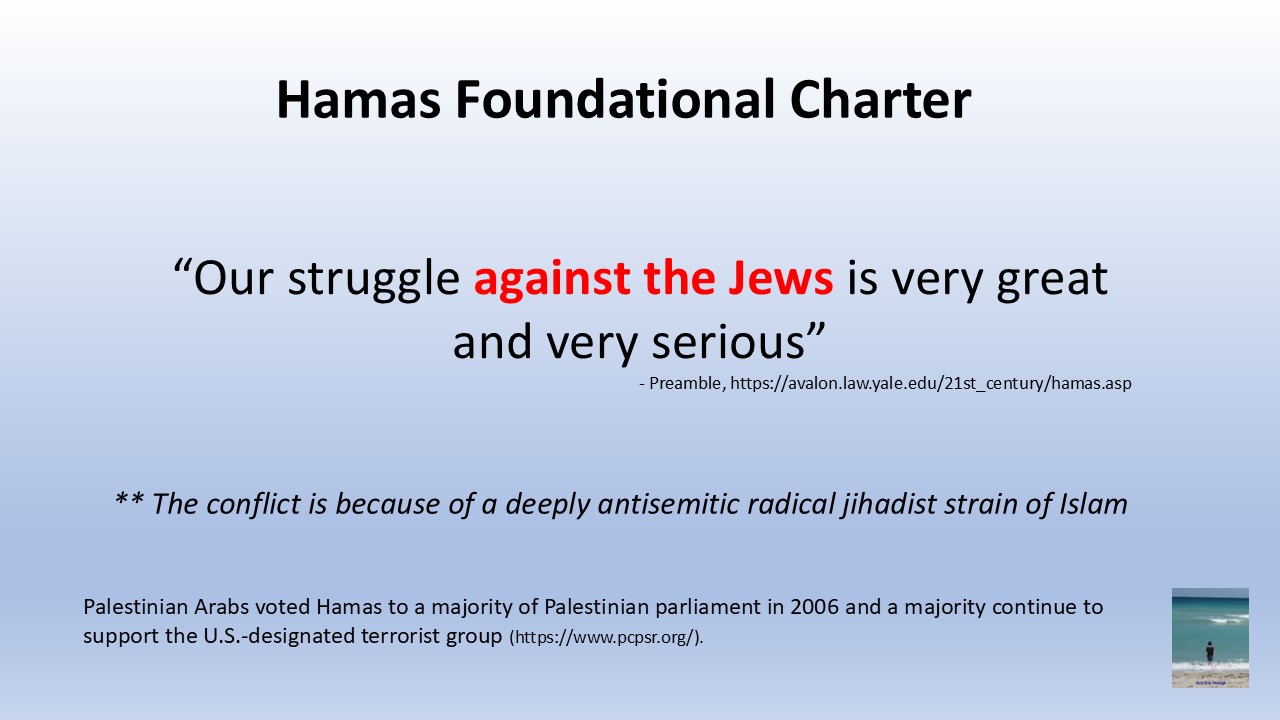
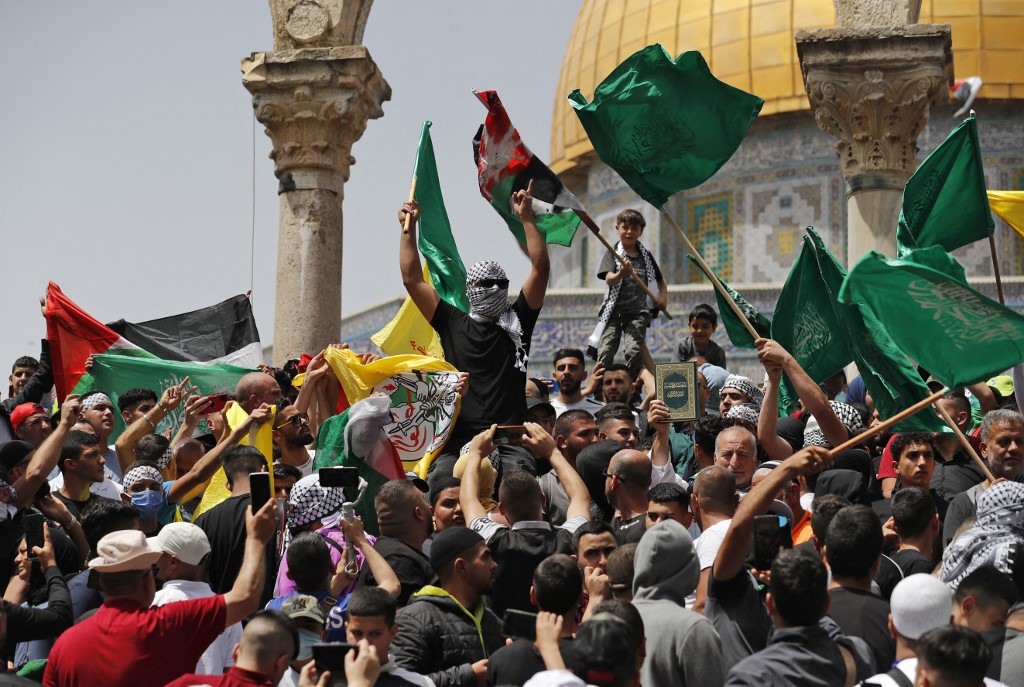
The implications become darker when the same logic is applied beyond the Temple Mount. Hamas’s 1988 charter declared all of Palestine an Islamic waqf. Combine that doctrine with the claim being promoted around Al-Aqsa—that Jewish physical presence and worship offend Islamic sanctity—and expelling Jews can be transformed into protecting Muslim holy land.

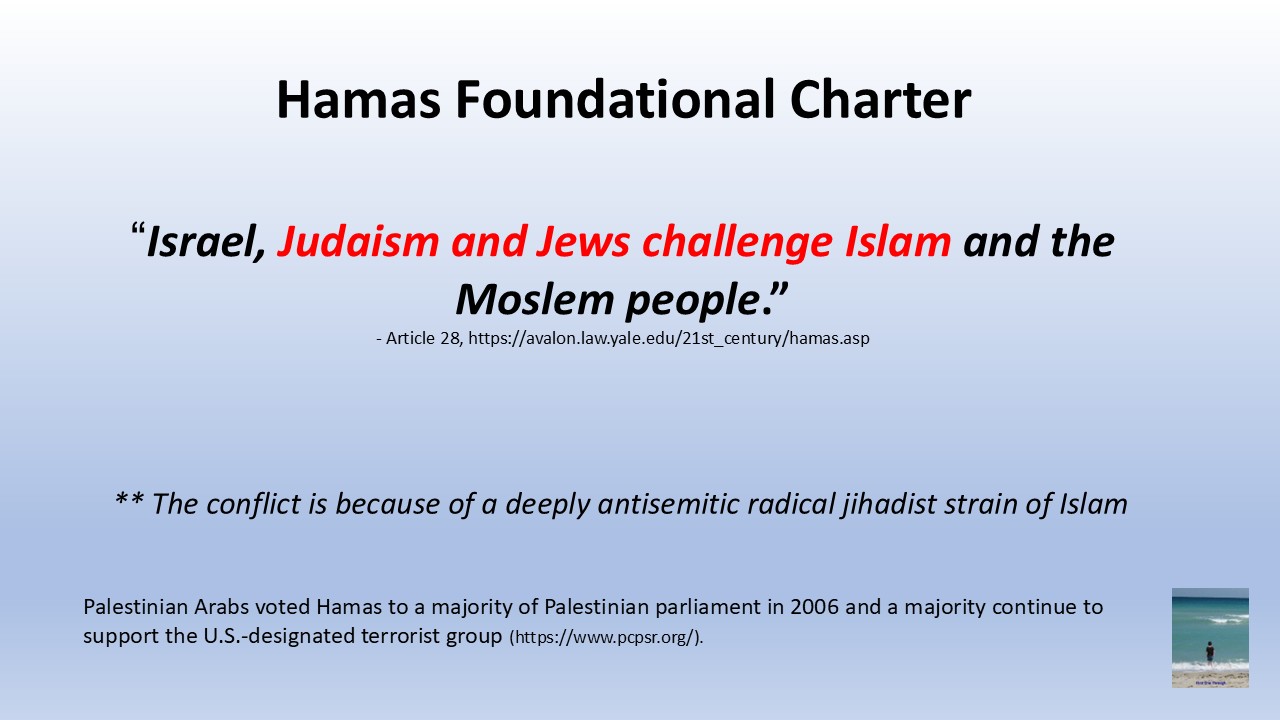
“the land of Palestine is an Islamic Waqf consecrated for future Moslem generations until Judgement Day. It, or any part of it, should not be squandered: it, or any part of it, should not be given up.” – Hamas Foundational Charter, Article 11

That is why the Arab League and WAFA’s language matters. By repeatedly publishing these false assertions, it helps turn a Palestinian territorial claim into a purported Islamic prohibition against Jewish presence.

And it begins at the most perverse possible location: Judaism’s holiest site.

The progression is stark:

  • Declare the Jewish holy site exclusively Muslim.
  • Deny Jews the right to enter without Muslim permission.
  • Call Jewish presence and worship a desecration of Islam.
  • Turn that religious claim into a Palestinian territorial right.
  • Ask the world to enforce it.

The Arab League and Palestinian Authority are building a religious and political case for removing Jews from their own holy land.

American Hamas

Social scientists have long observed that ideas do not need majority support to transform a community. Research on social norms has repeatedly found that once a committed minority reaches roughly 25 to 30 percent of a group, opinions once considered beyond the pale can become normalized. The Overton window shifts. People become more willing to voice views they once kept private because they no longer fear social disapproval.

That is what makes Pew Research Center’s July 2026 findings so alarming.

In 2024, Pew found that 37% of American Muslims viewed Hamas favorably. Two years later, that figure has risen to 44%.

July 2026 Pew Poll showing 44% of American Muslims support Hamas, almost the same as the Palestinian Authority. This is a gross outlier relative to all other Americans.

Vile extremism has not only been mainstreamed in the American Muslim community, it is accelerating.

Hamas is not merely another Palestinian political movement. It is a U.S.-designated terrorist organization that carried out the October 7 massacre. Its members murdered civilians, took hostages, committed widespread sexual violence, and burned families alive. Hamas has long promoted antisemitic ideology, seeks Israel’s destruction, refuses to disarm or allow civilians to use its protective shelters, and has repeatedly embedded military operations among civilians, leaving Gaza’s population to be destroyed.

Forty-four percent is not a fringe. It is well above the level social scientists associate with changing social norms. It IS the norm.

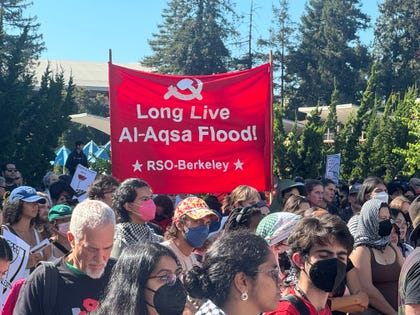
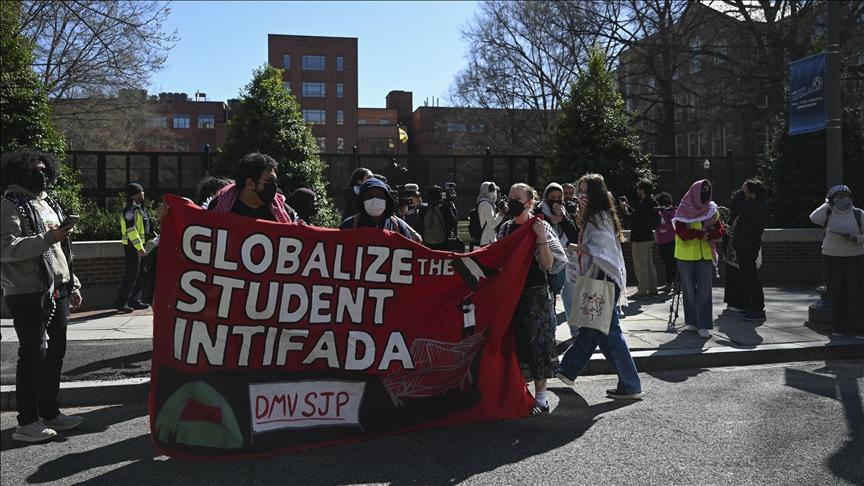
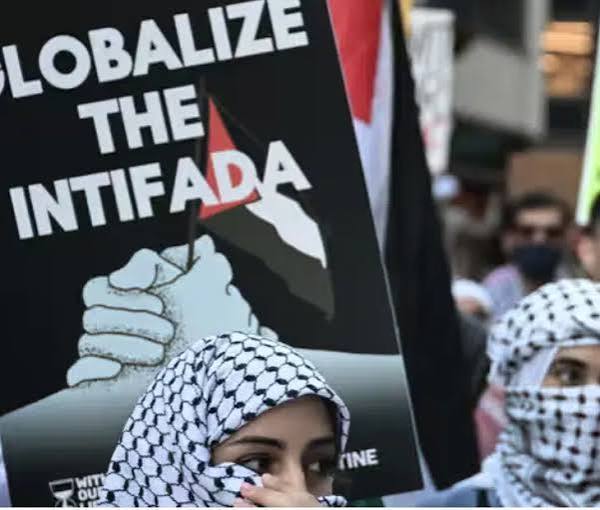
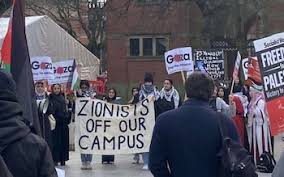
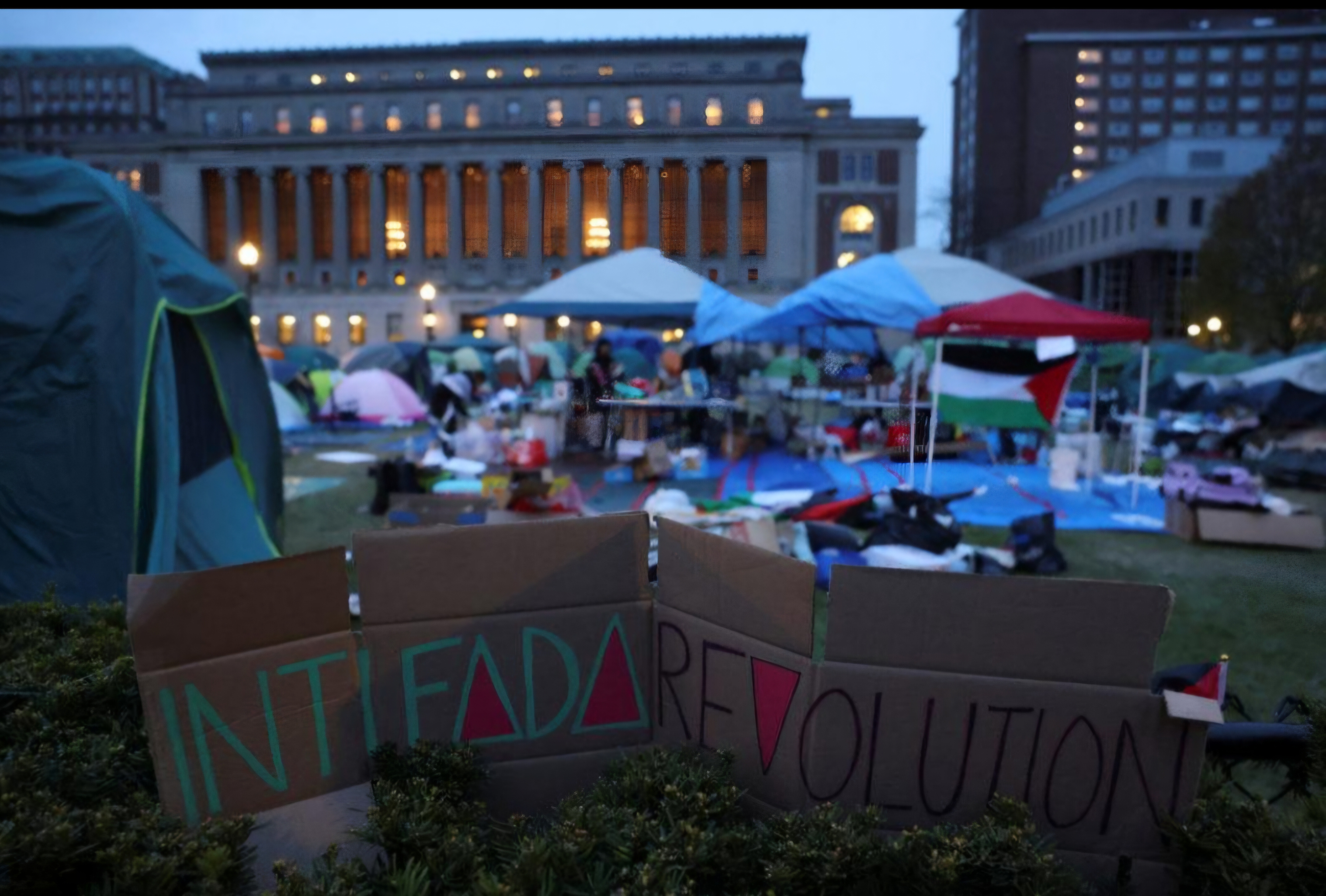
Viewed through that lens, the chants heard on American streets become easier to understand. “Globalize the Intifada” is no longer merely the slogan of isolated radicals. Celebrating the killing of Jews no longer needs to be hidden but can be posted on social media.

For American Jews, this is not an abstract polling result. Hamas and “Globalize the Intifada” mean antisemitic violent jihad. It is the embrace of a death cult. A poll showing growing favorability of Hamas inevitably deepens fear that the moral barrier has been broken and violence is near.

But this is not only a Jewish concern.

No society should become comfortable with growing support for a terrorist organization whose defining acts include the deliberate murder of civilians, hostage-taking, and an explicitly antisemitic ideology. When favorable views of such an organization increase rather than decline after its atrocities, the implications extend beyond the community it targets. They speak to the moral health of the the American Muslim community.

Every community contains extremists. The defining question is whether they remain isolated or become influential enough to reshape what is considered acceptable. Pew’s findings suggest that sympathy for Hamas is no longer confined to the margins of American Muslim opinion. It has become substantial enough to influence public discourse and to shape the boundaries of acceptable speech, and likely action.

The Hamas Charter is the most antisemitic governmental charter ever produced

The issue has grown beyond Hamas in Gaza. It is American Hamas – the normalization of support for a terrorist organization within American society. If support for Hamas among American Muslims has risen from 37% to 44% in just two years, Americans should ask not only what this means for Jews, but what it says about the values we are willing to tolerate in America.

The greatest danger is not merely that extremists exist. It is that extremism ceases to be recognized as extreme.

When the Status Quo Becomes the Threat

For decades the argument over the Jewish Temple Mount has been framed in one direction only: Jewish prayer must be restricted because Jewish prayer may trigger Muslim violence. The legal scaffolding for that argument is old and sturdy. The British Mandate for Palestine built it directly into Article 13, promising free exercise of worship while “ensuring the requirements of public order and decorum.” Later arrangements, including Oslo, preserved the same operating logic in practical form, with Israel retaining security authority even while leaving day-to-day religious administration to the Jerusalem Islamic Waqf.

That logic has governed the Mount for a century.

Israeli police block a Jew from ascending steps to the Temple Mount at the Cotton Gate in November 2025 (photo: First One Through)

But what happens when the status quo itself becomes the source of disorder?

This is the question no one wants to ask.

Every few weeks, Palestinian media like WAFA warns that “the Al Aqsa Mosque is in danger” from “radical settlers.” The phrase has become ritualized, almost liturgical in Palestinian political culture. A Jew walking quietly on the Mount becomes a provocation. A Jew moving his lips in silent prayer becomes an assault. A Jew bowing his head becomes a threat to Islam itself.

That rhetoric has had a practical effect. It has transformed Jewish prayer into a public order problem.

But there is another side to this equation.

What if the continued suppression of Jewish prayer is itself becoming a generator of instability? What if the status quo, designed to contain conflict, has begun producing it?

A legal order built to preserve peace cannot become a machine for preserving grievance.

Under the British Mandate, the answer is surprisingly clear. Article 13 protects “existing rights,” but only while ensuring public order. That means the status quo is protected only insofar as it serves order. If preserving inherited arrangements creates recurring confrontation, the law and history allows recalibration.

That was the hidden flexibility in the Mandate and ongoing governing principle. Status quo is presumptive; order is mandatory.

Oslo is even more direct, though in a different way. Oslo does not sanctify the Temple Mount arrangement. It simply leaves it in place while preserving Israeli security. That means if Israeli authorities conclude that the present arrangement itself is a long term security risk, they possess the legal architecture to modify access, prayer rules, and crowd management.

The Old City of Jerusalem including the Jewish Temple Mount/ Al Aqsa Compound. Thousands of Jews can be sound in the Western Wall Plaza, unable to ascend onto the Temple Mount.

The irony is brutal.

For decades the legal doctrine has been used to suppress Jewish prayer because Muslim violence was threatened. But if that suppression itself produces radicalization, frustration, and growing confrontation, the same legal doctrine could justify expanding Jewish prayer in order to restore order.

The law cuts both ways.

“The status quo” sounds ancient and immovable. In truth it is neither. It is a management system. And management systems are judged by outcomes.

If a system preserves peace, it earns its legitimacy. If a system preserves resentment and recurrent crisis, its legal rationale weakens.

The day may soon be arriving that structured, regulated Jewish prayer may become the stabilizing mechanism rather than the destabilizing one.

A designated time. A designated place. A formalized right.

The central legal truth of the Temple Mount has always been misunderstood. The governing principle was never the status quo itself. The governing principle was order.

No Hashtag for Khartoum or Mogadishu

Before October 7 reordered the world’s attention, a war in Sudan had already begun killing at scale. April 15 marked the three year anniversary of the latest incarnation of war. It has since produced one of the largest humanitarian crises on earth—millions displaced, famine conditions spreading, entire cities shattered. Over 2,000 healthcare workers killed. And yet it has generated almost none of the global mobilization that defines our era of outrage.

No encampments. No slogans. No sustained moral urgency that travels.

Two forces—the Sudanese Armed Forces and the Rapid Support Forces—fight for control. Civilians are not incidental to the conflict; they are its terrain. Hospitals are looted, neighborhoods erased, aid convoys blocked. Darfur, a name once synonymous with “never again,” has quietly returned to the same vocabulary of mass killing.

The scale should compel attention. It doesn’t.

For years, much of the global discourse—across media, universities, and international institutions—has sorted conflict through a particular lens: Global North and Global South. The North is cast as inherently evil, colonial and imperial. The South as perpetual victim.

Sudan does not fit neatly inside such lens. There is no clear external oppressor to anchor outrage, no simple narrative that translates easily into the moral shorthand of our time. The violence is internal, complex, resistant to reduction. And so the system hesitates. Attention drifts. Outrage never organizes.

Look at the response architecture. The United Nations convenes, issues appeals, and struggles to convert urgency into action. Funding remains short of need. Access remains constrained. The gap between rhetoric and relief is not marginal—it is structural. Mechanisms that elsewhere become focal points of accountability have not galvanized comparable pressure here. Even institutions like the International Court of Justice sit far from the center of global attention on Sudan, not because the crimes are lesser, but because the political energy that drives action is missing.

Attention follows narrative. Narrative follows familiarity. Sudan offers neither.

The victims do not map cleanly onto categories that travel well. There is no easy compression into a slogan or a symbol. And in a world that increasingly organizes around moral shorthand, what cannot be simplified is often ignored.

This is not only about Sudan. Or Somalia where war has also ravaged the landscape. It is about how the past is taught—and how its lessons travel.

Holocaust education stands as a cornerstone of moral instruction across much of the Global North. Its lessons are intended to be universal. But when it is absorbed as a contained European tragedy, rather than a case study in how societies turn inward, weaponize identity, and destroy their own, its warning loses portability. It becomes history, not instruction. The Global South doesn’t bother to listen to the lesson, and the Global North is focused elsewhere.

In Sudan, mass violence is just statistics without racism and a colonial script. Here is a catastrophe that should activate every alarm built in the twentieth century—and does not. An estimated 400,000 killed in Sudan. Over 500,000 killed in nearby Somalia.

Reducing these to “internal conflicts” explains nothing. It does something worse. It lowers the urgency. It signals, quietly, that this is a tragedy the world can observe rather than confront.

Universities that mobilize rapidly around conflicts that fit prevailing frameworks struggle to sustain engagement here. Media cycles that can fixate for months elsewhere let Sudan and Somalia slip into the margins. International bodies calibrated to respond to pressure find little of it applied.

Sudan is a statistic. Somalia is a statistic. Yet Gaza has a narrative.

Victims should not need a more compelling narrative. They need corridors that function, aid that arrives, and accountability that does not wait for a more convenient story. They need a world capable of responding to human suffering even when it does not fit the frameworks that dominate discourse.

Gazans who launched a genocidal jihadi war never deserved particular sympathy. Especially compared to nearly a million killed in Sudan and Somalia.

Storming Words, Not Mosques

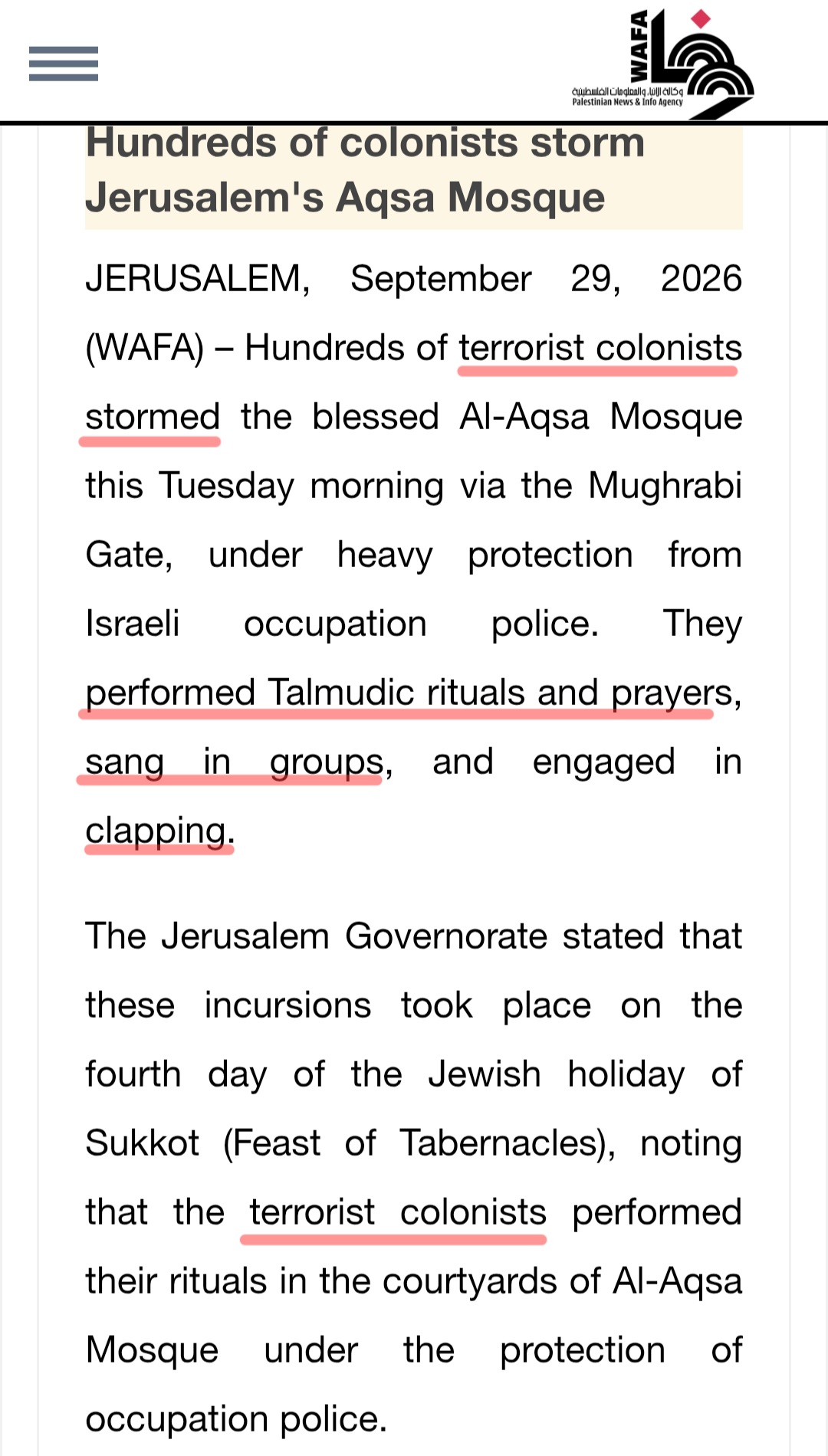
The jihadi war begins in the headline: “Israeli colonists storm Al-Aqsa Mosque under police protection.” Before a single fact appears, the verdict is already written—by the Palestinian Authority’s media outlet—in words designed to inflame.

  • Colonists erases history, recasting Jews as foreign intruders with no connection to the Temple Mount. 
  • Storm supplies violence whether any occurred or not. 
  • Al-Aqsa Mosque collapses the entire compound into the most sensitive Islamic structure to heighten the sense of desecration. 
  • Under police protection reframes standard security by the Israel Police, coordinated with the Jerusalem Islamic Waqf, as state-backed aggression.

Then the language tightens. “Talmudic and provocative rituals.” “Frequent Israeli provocations, including repeated raids.” These aren’t descriptions. They’re verdicts. Quiet presence becomes intent. Routine visits become raids. Silent prayer becomes something suspect.

And then the omission that completes the frame. The site is only described as Islam’s third holiest. It is never described as Judaism’s holiest. The reader is left with a single conclusion: sanctity on one side, violation on the other.

This is narrative design. Islamic Supremacy.

Strip legitimacy. Recast presence as desecration. Elevate exclusive holiness. Repeat it daily through a state-backed outlet overseen by the Palestinian Authority.

That is how a holy war is narrated into existence. By the “moderate” Palestinian Authority.