Antisemitism As Political Currency

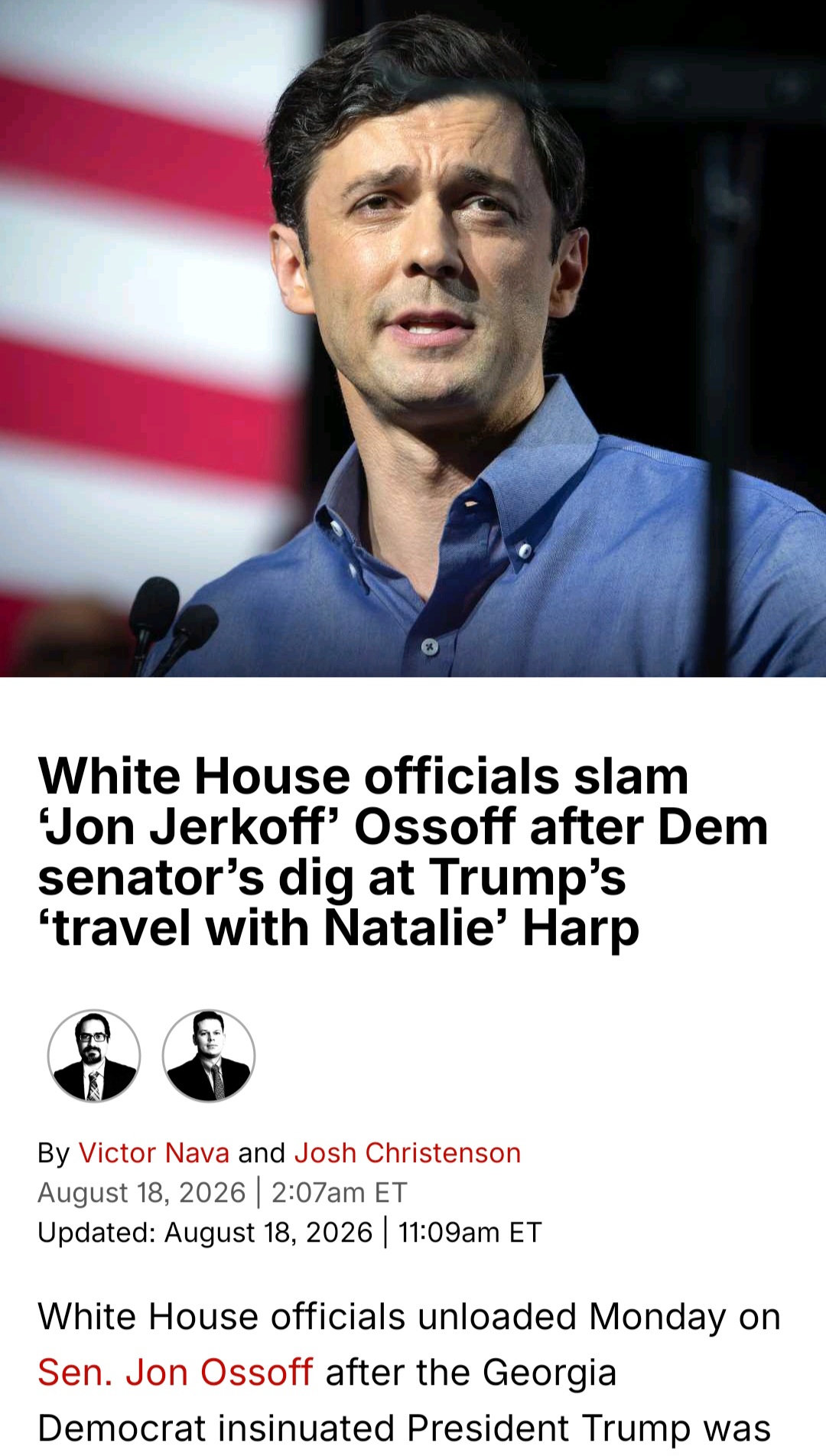
It is very strange that Sen. Jon Ossoff would make fun of Donald Trump.

Trump has many more followers and, candidly, is much better at insulting people than just about anyone. So it begs the question as to Ossoff’s motivation.

At an Atlanta rally, Ossoff mocked Trump for supposedly not wanting to do the job of president, saying Trump wanted to “build his ballroom and travel with Natalie on their apparently defenseless flying palace,” referring to Trump aide Natalie Harp. He later doubled down, describing Harp and other aides around Trump as a kind of “security blanket” to make him feel good about himself.

Ossoff had to know that would provoke Trump’s ire and generate targeted insults.

And it did.

Trump mocked Ossoff as a “Pee-wee Herman” look-alike, while White House officials piled on with insults of their own.
But those insults would go out to millions of Trump followers. Ossoff’s supporters and anti-Trump people would simultaneously pile on online. Suddenly, Ossoff becomes the topic of conversation, and people start talking about him running for president in 2028. Indeed, that is already part of the discussion surrounding the episode.

It is all manufactured to improve his visibility.

Ugly. Vapid. And that’s politics.

But what about Rep. Jamie Raskin claiming that Trump manufactured the antisemitism-in-schools narrative?

Raskin seized on a whistleblower complaint from former Justice Department attorney Haley Van Erem, who alleged that the Trump administration’s investigations of antisemitism at Harvard, Brown and Columbia were driven by predetermined political objectives and, in some instances, pursued without sufficient factual or legal grounds. The Justice Department disputes those allegations and stands behind its investigations.
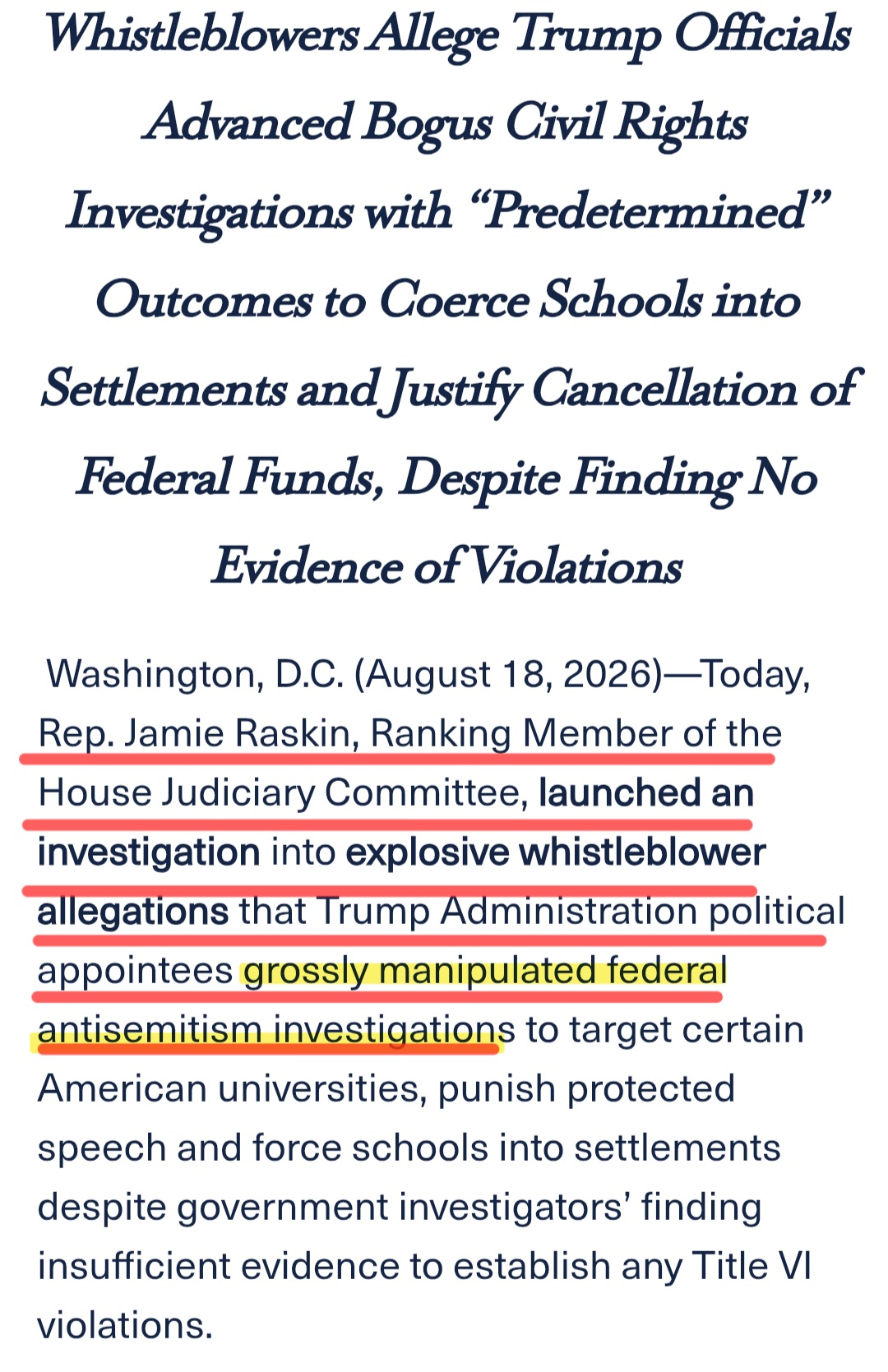
Raskin went considerably further in describing what the report meant. He accused Trump officials of abusing Title VI investigations to attack universities while using “antisemitic discrimination as a pretext and a ‘ruse.’

That is not a silly swipe at Trump. It is an anti-factual smear about Jews under attack.

Why would Raskin do that?

In politics, it is to generate views and, consequently, power. He might get picked up by Hasan Piker or others who trade in Jew hatred online. He chums for antisemites to get their support for his own personal brand while simultaneously scrubbing any scent of Jew from his person.

That is a whole different kettle of fish than silly insults about Trump.

And it says terrible things about the state of the Democratic Party, that Jewish progressive politicians are whitewashing antisemitism in an appeal to votes from antisemites.

Checkpoint in California and Checkpoint in the West Bank. Only One Sparked Outrage.

There are many ways to measure whether politicians are guided by principle or politics. One is to compare what provokes their outrage and what does not.

In April 2024, a Jewish student at UCLA tried to walk across his own campus.

Pro-Palestinian protesters physically blocked his path and decided, on their own authority, who could and could not pass. UCLA security officers stood by and did nothing. A federal judge later ruled that UCLA could not permit Jewish students to be excluded from parts of campus because of their identity or beliefs, calling such exclusion “unimaginable” and “abhorrent.”

Where were California’s Democratic members of Congress about the incident? Other “progressive” members of Congress? Where were the press conferences, the demands for investigations and the flood of social media condemnations?

Their silence was striking.

Then came Rep. Ro Khanna’s recent 7,500-mile trip to the West Bank in July 2026.

Khanna claimed that armed settlers and Israeli soldiers prevented his delegation from proceeding and that U.S. Embassy involvement helped resolve the situation. Israeli officials, the U.S. embassy, and various parties dispute key parts of that account, saying the delegation entered a restricted security area without proper coordination and denying Khanna’s characterization of the encounter.

Yet progressive members of Congress like Ilhan Omar quickly rallied behind Khanna, condemning Israel and amplifying his account around the world.

The comparison is not between two people who were blocked. It is between two very different reasons for being blocked and the reactions that followed.

At UCLA, private protesters established their own checkpoint and allegedly decided which Americans could pass based on who they were or what they believed. A federal court concluded that a public university could not allow that to happen.

In the West Bank, the issue was about security. The area was subject to access restrictions because it was an active conflict zone. The dispute is over whether those security measures were properly applied not whether Ro Khanna had a right to unrestricted entry.

One concerns equal treatment under American law, the other concerns the exercise of security authority in a foreign conflict zone. Yet the louder political outrage came in response to the latter.

If elected officials cannot summon the same moral urgency when a Jewish American student is excluded from his own campus as they do when a colleague encounters a disputed security checkpoint overseas, the question is no longer whether they oppose injustice. It is what kinds of injustice – and for whom – they choose to notice.

We are witnessing more and more of the elected progressive wing marking American and Israeli Jews as “absolutely vile” people unworthy of basic protections and rights who “must be stopped.”