Coalitions Don’t Survive Purity Tests

One of the more curious developments in American politics is watching mainstream Democrats increasingly tailor their positions to satisfy activists who still refuse to support them.

The answer lies in understanding the difference between a coalition and an ideology.

A coalition exists to win elections. It is broad by design. People disagree on taxes, immigration, foreign policy, and the Middle East, yet work together because they share enough common ground to govern. Coalitions ask one question: Can we work together despite our differences?

An ideological movement asks a different question: Do you believe what we believe?

That distinction changes everything.

Purity tests are not an accident of ideological movements; they are their natural consequence. If your goal is to advance a comprehensive worldview, disagreement is no longer just a different opinion but evidence that someone has failed the test.

This helps explain the relationship between the Democratic Party and organizations such as the Democratic Socialists of America. The Democratic Party is trying to hold together one of the broadest electoral coalitions in America. The DSA is advancing an ideology. It has shown little hesitation about opposing Democratic incumbents who fail its litmus tests, whether on capitalism, Israel, policing, or other defining issues.

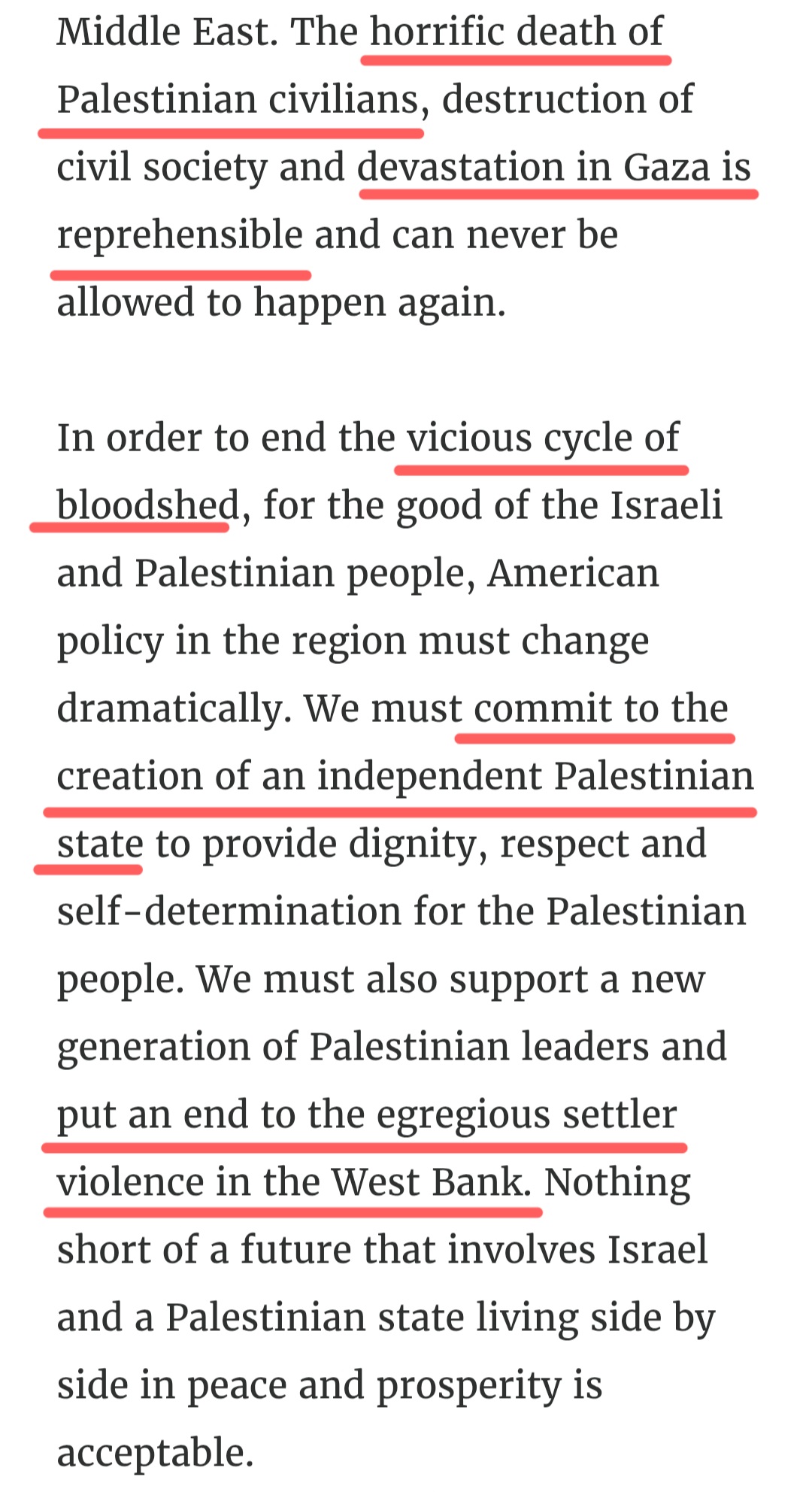
Israel illustrates the divide clearly. Within a coalition, someone can support Israel’s defensive war while criticizing particular government officials or military actions. Within an ideological movement, those distinctions may not be enough.

That is why the political response of some mainstream Democrats is so puzzling. They often behave as though they are negotiating with another coalition partner. They are not. They are seeking approval from a movement whose purpose is to distinguish believers from non-believers. Incremental concessions rarely earn lasting acceptance. They simply establish a new baseline for the next demand.

The DSA’s own long-term political vision underscores the point. It has argued that America’s two-party system should ultimately be replaced by a multi-party parliamentary democracy. That is an entirely coherent position for an ideological movement. But it also reveals why the tension is so persistent. A movement that seeks its own distinct ideological party will naturally find itself in conflict with a broad coalition whose purpose is to assemble majorities among people who disagree on fundamental questions. The friction is inevitable.

Perhaps the better response for mainstream Democrats is not to seek the DSA endorsement at all.

Every endorsement tells voters something about shared values. If an organization rejects your belief in a market economy, your support for the Jewish State’s continued existence, or your willingness to govern through compromise rather than ideological purity, why should the DSA’s endorsement be considered a prize? A politician should not be embarrassed to say, “We simply have different visions for the country.”

In fact, the willingness to disappoint ideological movements may be one of the clearest signs that a politician still understands the difference between governing and evangelizing.

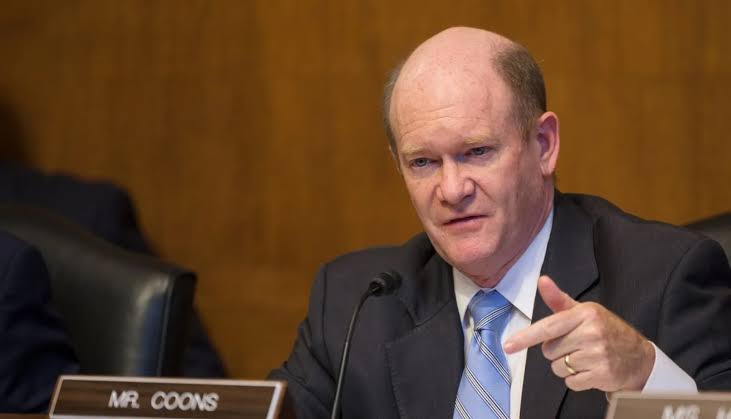
Sen. Chris Coons (D-DE) is a mainstream Democrats who has not been bullied into positions at odds with his belief

There is a lesson here for the pro-Israel community as well.

Politics rewards participation, not nostalgia. Elected officials respond to the people who organize, communicate with their offices, volunteer, build local networks, and vote. If supporters of the U.S.-Israel relationship want their voices heard, they must become a consistently visible part of the political coalition—not merely assume their support will be taken for granted.

Building coalitions by attempting to contort to the demands of extremist ideologues will be a painful exercise to watch. And to live with. It has made many Democrats feel abandoned by their party as it chases the far-left which despises most of the coalition.

Coalitions are built by persuading people who disagree to work together. Ideologies are built by deciding who belongs. The Democratic Party will remain a relevant governing party only if it remembers which one it is.

Related:

Hamas and the DSA: Ideology + Grassroots Mobilization to Power + Destruction (January 2026)

The Revolutionary Theology Has Gone Operational (December 2025)

The Leadership Democrats Didn’t Provide

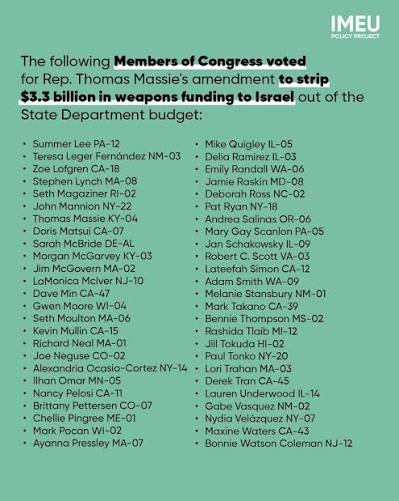
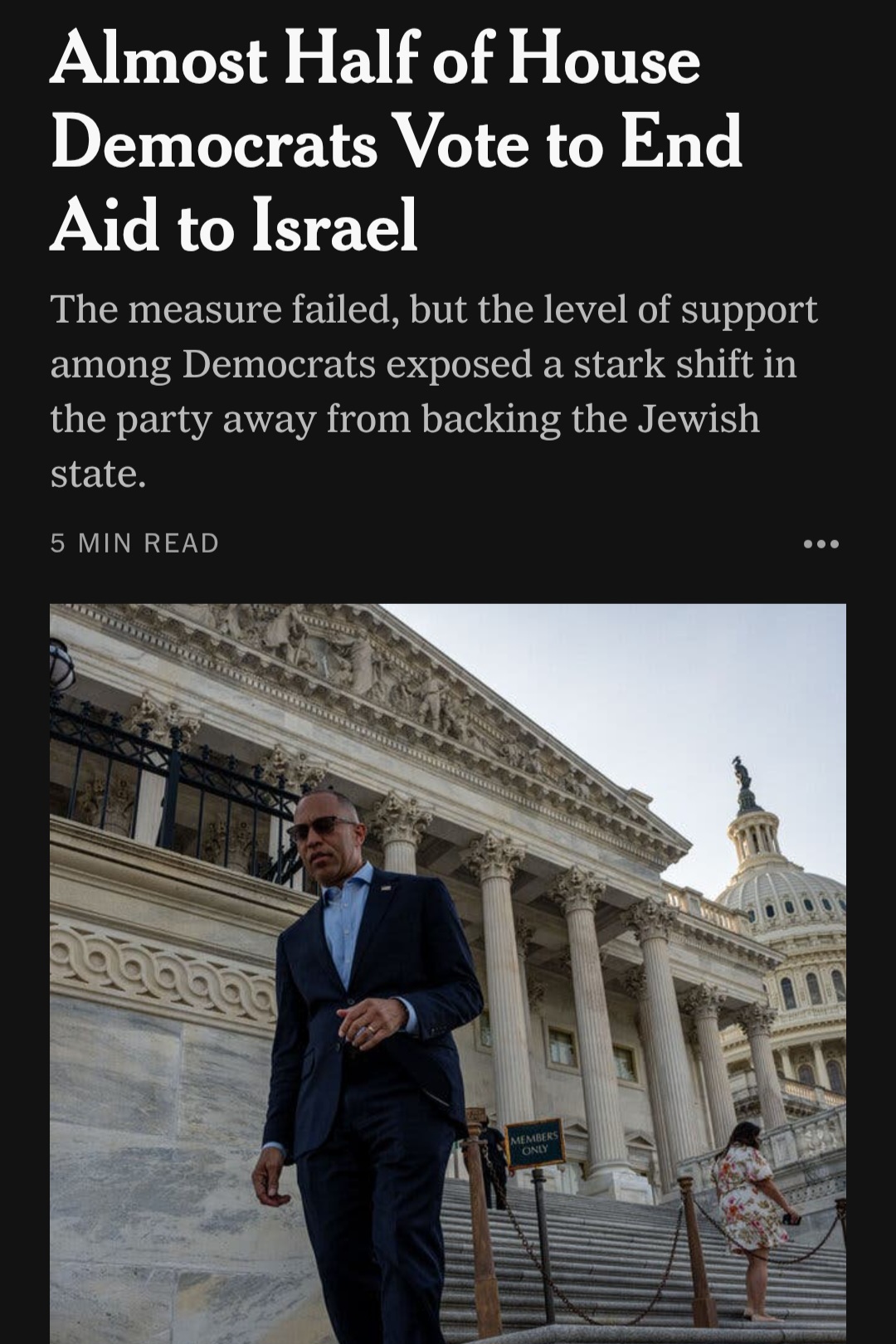
This week’s House debate over Israel’s $3.3 billion in annual military assistance was more than a vote. It was a test of leadership.

Many Democratic members of Congress allowed the debate to become one of competing sympathies: Israel versus American families, Israel versus veterans, Israel versus schools and health care. Some even embraced that framing themselves.

But leadership is not about amplifying the loudest voices in your coalition. It is about explaining difficult truths.

Over the past months, I wrote two essays that made straightforward strategic arguments.

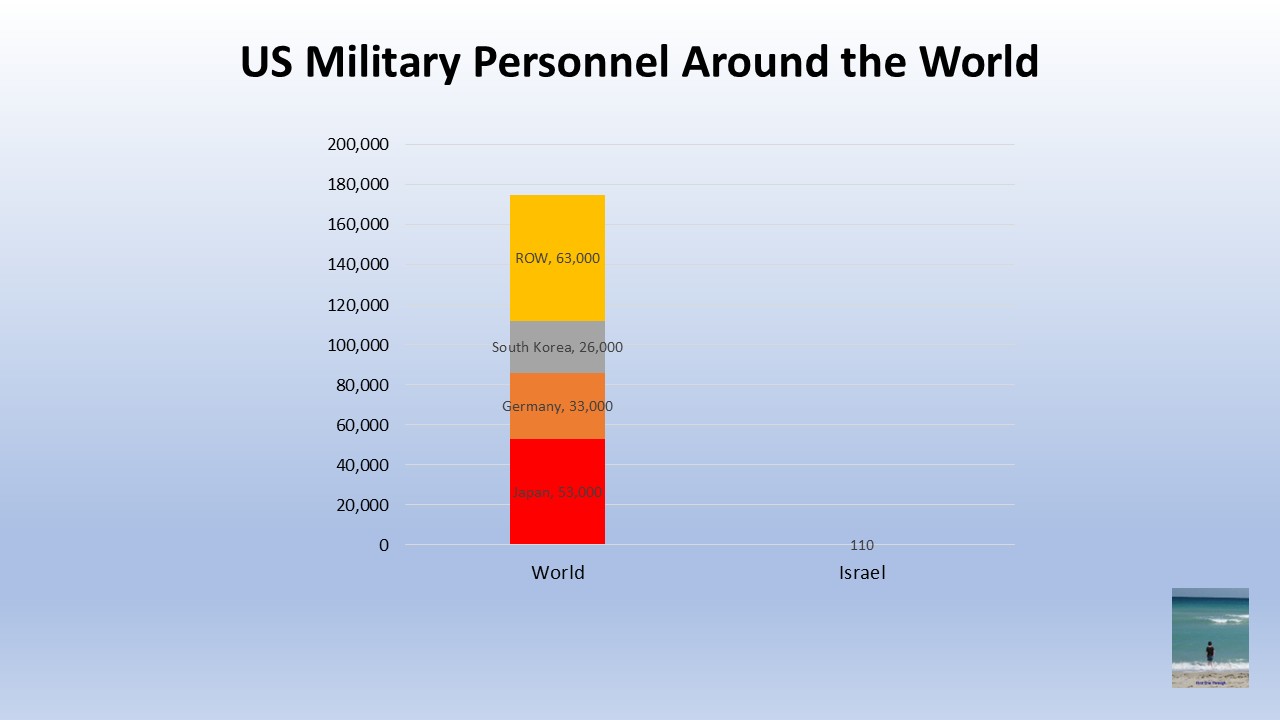
In Nobody Protests the Military Bases in Germany,” I argued that Americans have long understood military commitments abroad not as charity, but as investments in American security. We maintain troops, aircraft, and bases around the world because we believe confronting threats abroad is less costly than confronting them at home. It runs around $75 billion annually.

In America’s Greatest and Quietest Military Victory in Nearly a Century, I argued that the wars in Israel and Ukraine should be viewed together, not separately. Two American allies have spent the last several years severely weakening two of America’s principal adversaries—Iran and Russia—while requiring virtually no American combat casualties and only a fraction of the cost of wars like Iraq and Afghanistan.

One can disagree with either argument. What is remarkable is how rarely Democratic leaders even attempted to make it.

  • Instead of explaining that military aid is part of a broader American strategy, they allowed it to be portrayed as a gift to a foreign country. And to only one country – Israel.
  • Instead of explaining that weakening Russia and Iran advances American interests, they permitted the conversation to revolve almost entirely around domestic tradeoffs. Only relative to Israel.
  • Instead of educating their constituents about seventy-five years of American global defense strategy, they surrendered the debate to slogans about “blank checks.” Specifically to the Jewish State.

Leadership requires more than counting votes. It requires helping citizens understand why America stations forces overseas, why it supports allies under attack, why it spends money beyond its borders, and why deterrence is almost always less expensive than war.

That conversation becomes even more important when the facts are uncomfortable.

  • The United States has committed far more aid to Ukraine than to Israel. Over eight times as much.
  • The wars involving Ukraine and Russia have produced far greater casualties than the war in Gaza. As much as eight times as much.
  • It spends vastly more each year defending allies through bases and military deployments across Europe and Asia. About 18 times as much.

Yet Israel alone has become the symbol of America’s supposedly misplaced priorities.

Statesmanship is not measured by how well elected officials echo the passions of the moment. It is measured by whether they are willing to explain complex realities even when doing so is politically difficult.

This week’s vote exposed more than a divide over Israel.

It exposed a failure to teach. A failure to lead. And a willingness to lean into vile antisemitic tropes.

Look Right

There are signs on the streets of London that read “LOOK RIGHT.” They are painted boldly on the pavement to protect visitors—especially Americans—who are used to glancing left before stepping into the street. In the U.K., traffic comes from the opposite direction, and those who rely on old instincts can find themselves in sudden danger.

So it is now with American Jews.

For generations, they have turned instinctively to the Democratic Party—to the left—out of habit, heritage, and a deep belief that liberal ideals best protected minorities. But the political landscape has shifted beneath their feet. The party that once championed freedom, tolerance, and support for Israel has been co-opted by radicals: anti-Israel voices, socialists, and anarchists who now wield growing influence in its ranks.

These are not the Democrats of old. They are activists who view capitalism as oppression, who denounce Israel as colonial, and who see Jews not as a vulnerable minority but as part of a power structure to be dismantled. They are coming for capitalism—and for the Jews who helped build and sustain it.

This election, American Jews must recognize that the public square is not what it used to be. The political traffic now comes from the right direction—but the danger comes from the left.

Times have changed. Look right.

Westchester’s Forgotten Minority: Jews

When Government Champions Some, and Leaves Jews to Defend Themselves

Westchester County, NY, like much of America, has learned the vocabulary of inclusion. It now boasts a tapestry of advisory boards, task forces, and community liaisons — each designed to protect and empower those who have known prejudice.

There is a Westchester County Asian American Advisory Board, formed after a surge of anti-Asian hate crimes during COVID. It partners with the District Attorney’s office on the #SpeakUpWestchester campaign, translating safety materials into Korean, Mandarin, and Japanese so that no one’s fear goes unheard.

There is also an LGBTQ+ Advisory Board, formally empowered to advise the County Executive, coordinate events, and oversee inclusivity training. The county even facilitated an LGBTQ+-affirming senior housing complex in downtown White Plains with The LOFT Community Center at its core — an unprecedented public-private partnership to create safe spaces for queer residents.

But there is one group that still has to do it all on its own: Jews.

There is no County Jewish Advisory Board.
No county liaison for antisemitism.
No government program translating “Never Again” into action.

While Asian and LGBTQ+ residents have been given official seats inside government, Jews have been told — quietly, politely — to use their own.

Even the collection of antisemitic incident data — which rose 22 percent in Westchester in 2024 — is largely managed by private watchdogs, not public offices.

The disparity is not just institutional; it is measurable.

Westchester County has 1 million residents, including about 137,000 Jews (14% of the population) and about 65,000 Asian Americans (7%).

According to state hate-crime data and ADL monitoring, there were about 40 antisemitic incidents and 8 anti-Asian incidents reported in Westchester in 2024. That translates to an estimated 29 antisemitic incidents per 100,000 Jewish residents versus roughly 12 per 100,000 Asian residents — a per-capita rate more than twice as high.

Rather than address the antisemitism squarely, Westchester District Attorney Susan Cacace made an inclusive Hate Crimes Advisory Board which had its inaugural meeting on September 29. Cacace was proud of the giant tent and said “the communities represented on this board are broad and diverse, and board members will be able to provide me with direct input from their constituents so that my office may more readily address their concerns.”

The Westchester County District Attorney’s Office’s new Hate Crimes Advisory Board

The all-Democratic Westchester establishment seemed to echo the Democratically-led House of Representatives which refused to condemn antisemitism without adding language about Islamophobia in 2019. Jew protection cannot exist in isolation for some reason for the Blue Team. It seemingly repulses them so much, that when Republicans target antisemitism, they argue that President Trump is “weaponizing antisemitism” and not really concerned about Jews at all.

No one begrudges others their protection. Jews, more than anyone, know the cost of silence. But the imbalance is glaring.

When the Asian community faced hate during COVID, Westchester created a formal board within months. When LGBTQ+ residents sought recognition, government became a partner in building physical spaces of affirmation. But when antisemitic assaults, harassment, and vandalism spiked across campuses, streets, and synagogues, the government offered sympathy — not structure.

Graffiti on Jewish stores in Scarsdale, NY, January 2024

The Jewish paradox

Jews are trapped in a paradox. Their success is cited as proof they don’t need help; their vulnerability dismissed as self-inflicted.
They are “white” enough to be privileged, but “Jewish” enough to be blamed.

And so, when antisemitism surges, the reflex of government is not to protect but to delegate — to community partners, to philanthropists, to the victims themselves. Or to give the general feeling of blanket protection alongside others, masking the fact that they are persecuted more frequently than every other minority group.

Dozens of anti-Israel protestors outside a Jewish day school in Westchester with banners “Palestinian liberation by any means necessary” had virtually no police presence

For centuries, Jews have thrived where societies upheld justice and faltered where governments outsourced their duty.

Antisemites have no issue singling out Jews for attack, yet government officials are loathe to single out Jews for protection which they do so for every other group. It begs the question as to why: are current government leaders antisemitic, or are Jewish leaders telling the government that Jews don’t want special treatment, just to be like everybody else.

If so, what does that mean when “everybody else” gets special treatment?

Why can California, with its Democratic super-majority, advance a mandatory ethnic studies curriculum which empowers Black, Brown, Latin, Asian and Native American communities but disparages Jews?

While Democrats are correct, that Jews would rather be treated the same as everyone else, they cannot sit on the side when special privileges and protections are afforded to every group except Jews, especially while they are under attack. To exclude Jews in favor of victims of preference – or just constituents of preference – is deeply antisemitic.

#DemocraticConstituentsOfPreference

Will Jews Pivot To Law, Order And Self-Interest?

American Jews have long favored Democrats in presidential elections. The best showings that Republican candidates have had since World War II among Jews was 40% (Eisenhower 1956), 39% (Reagan 1980) and 36% (Eisenhower 1952). Since the 1992 election, Democrats have sailed to clear majorities with between 68% and 80% of the Jewish vote for president. On average, 71% of Jewish voters chose Democratic candidates and 26% chose Republicans since 1968.

Historians consider that Jews aligned themselves with Democrats as it was considered the party of working class immigrants, just as the Jews were coming to the country from Europe and the USSR in the first half of the 20th century. As Jews became more established in America, and the Second Vatican Council of 1965 pushed antisemitism out of the Catholic doctrine, Jews sought candidates which had greater support for their economic and religious (Judeo-Christian) interests between 1972 and 1988 and began to vote for Republicans more frequently. Bill Clinton’s popularity helped bring Jews back overwhelmingly to the Democrats but that faded as Democratic candidates emerged from left-wing states of Illinois, New York and Massachusetts.

President Ronald Reagan (R-CA) at a Jewish synagogue

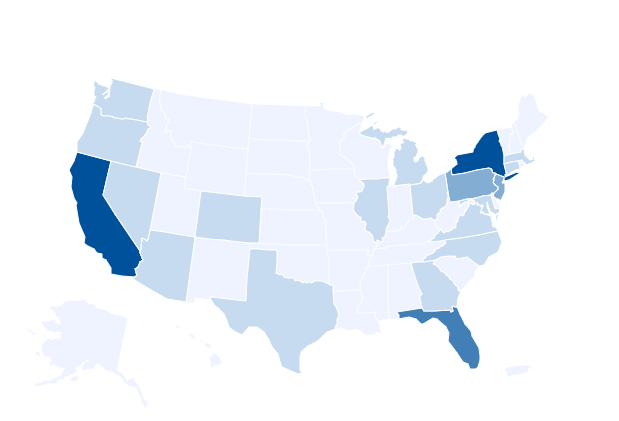
The majority of Jews still live in liberal states including New York, California, New Jersey, but many now reside in conservative Florida and moderate Pennsylvania. Overall, Jews are moving away from the Northeast (from 63% in 1971 to 40% in 2020) to the South (12% in 1971 to 25% in 2020) according to Brandeis. They are going for the sun and lower taxes to live with more conservative neighbors.

This 2024 election may yield a breakthrough of Jews voting for the Republican candidate, former President Donald Trump. No Republican candidate crossed the 30% of Jewish vote threshold since George HW Bush in 1988 collected 35% of the Jewish vote. Trump’s share of the Jewish vote jumped from 24% in 2016 to 30% in 2020.

And it is likely to be higher in 2024.

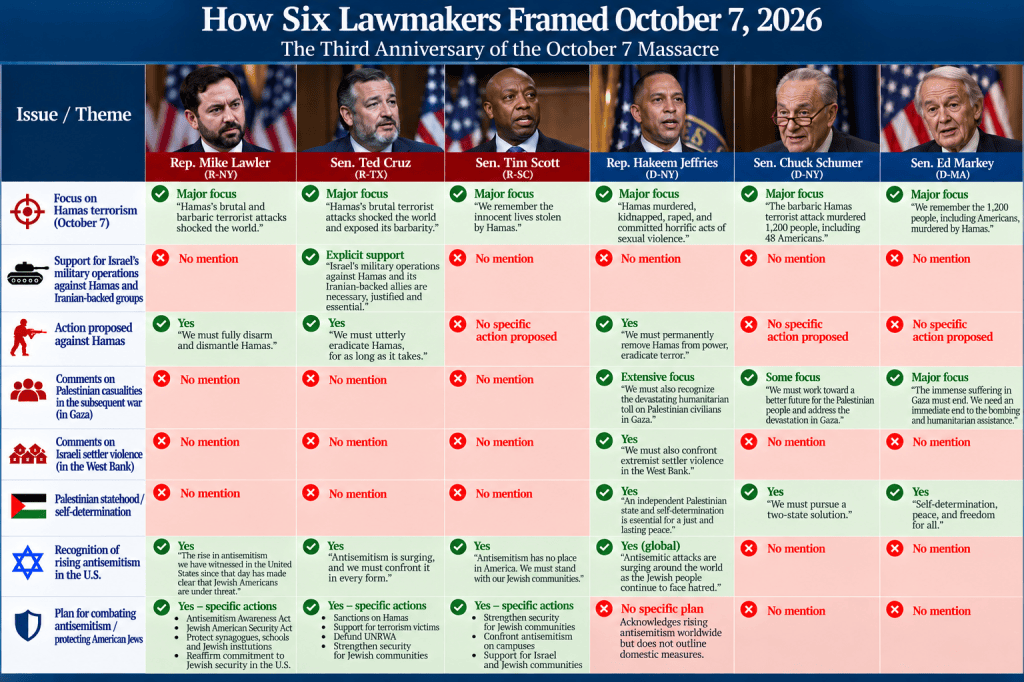
His opponent, Vice President Kamala Harris comes from California, a radical liberal state, and she had a voting record among the most liberal in the country while she served as senator. Moreso, fellow leading Democrats like Sen. Chuck Schumer have shown no interest in combatting the alarming level of antisemitism in the country over the past year, and the “woke” fringe of the party has grown and shown itself to have alarming levels of antisemitism.

If Trump pulls over 30% of the Jewish vote – particularly in Pennsylvania (where the Jewish population is about 430,000 or 3.3% of the state), Georgia (140,000; 1.3%) and Michigan (87,000, 0.9%) – it might prove to be the tipping point to help Trump win the electoral college.

American Jewry: Approximately 5%, 2% and 2% of American Jews live in swing states of Pennsylvania, Georgia and Michigan, respectively (Brandeis)
Jews outnumber Muslims in Pennsylvania by almost 3-to-1

The trend of Jews voting more Republican is likely to continue into the future. Orthodox Jews are currently the only denomination to vote Republican (75% according to Pew) and they have much higher fertility rates than the non-Orthodox streams. Orthodox Jews made up roughly 12% of American Jewry in 2021, which is expected to grow to 29% by 2063 according to a study by Yale. That will likely yield a more conservative voter base for the Republican party.

Republican candidate Donald Trump visits grave of the Lubavitch rebbe

The media is focused on the Israeli record of Trump and Biden-Harris in their analysis of how Jews will vote, and it is a factor amid the Iranian proxy-Israel war. But so is the growing segment of Jews who do not want to see economic interests and religion trampled by liberal laws, nor suffer overt (physical attacks and harassment) and covert (DEI mandates) discrimination.

Related articles:

The Most Important Congressional Races For Your Engagement (September 2024)

‘Tis The Season To Vote And Donate Jewish (April 2024)

Biden Counts Votes, As He Pushes For Non-Orthodox Jews And Against Orthodox Jews In Jerusalem (April 2023)

Liberals Blame Orthodox Jews’ Unfounded Fear For Loss of Congress (November 2022)

An Orthodox Rabbi at the Capitol (January 2017)

Powerful Democrats Tell Leaders To Wait Out The Jews

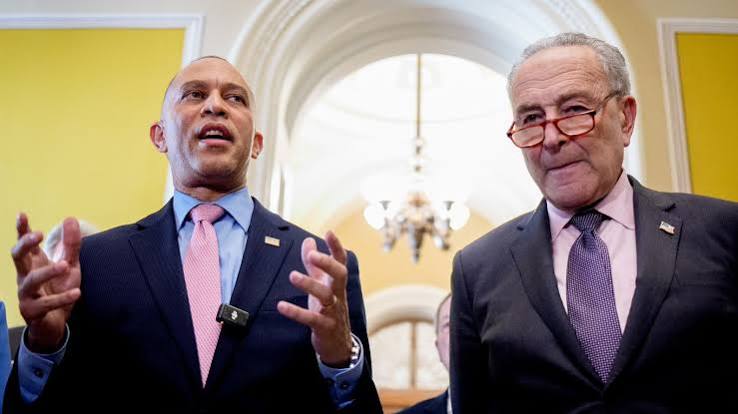
It has now been revealed that Democratic Senate Majority Leader Chuck Schumer told the administration of Columbia University to “keep heads down” and ride out the controversy of antisemitism on campus. He said that issue of rampant Jew hatred were “political problems are really only among Republicans,” and that Jews and the country would soon move on.

To unpack those statements, the most powerful Democratic politician outside of the Executive branch dismissed the Jew-hatred at Columbia despite one of the rabbis on campus telling Jewish students to go home, “no one should have to endure this level of hatred, let alone at school.” He encouraged the university to do nothing to assist the beleaguered Jews, and that once Democrats took over the House of Representatives, university presidents would no longer be dragged to Washington.

Others also believe that only Republicans cared about the systemic Jew hatred at American universities. Rep. Virginia Foxx, Chairwoman of the House Committee on Education and the Workforce, said that Democrats would drop investigating Jew hatred at universities should they win the House in the November 2024 election.

Schumer’s suggestion that leaders wait out setbacks in attacking Jews has precedent.

During Donald Trump’s term in office, former Secretary of State John Kerry under Democratic President Barack Obama passed a message to Mahmoud Abbas, President of the Palestinian Authority “that he should stay strong in his spirit and play for time, that he will not break and will not yield to President [Donald] Trump’s demands.” Kerry predicted that Trump would last a single term and then a Democratic Administration would go easy on the PA, and apply hard pressure on Israel.

Sen. Chuck Schumer and Secretary of State John Kerry discuss the Iranian nuclear deal in 2015

Democrats know that Jews are a minority-minority, a very small and forgiving people. The old guard Democratic leaders like Schumer and Kerry believe that Jews’ ongoing quest for “tikkun olam / repairing the world” would include self-annihilation, if so required. They believe they know history that Jews (non-Orthodox at least) will look past any insult and cleave to the Democratic Party regardless of actions. Jews will give up land, rights and dignity just as they handed over the Judaism’s holiest site of the Temple Mount in Jerusalem, if peace so dictated.

The new generation of Democratic leaders is less convinced. It is waging a war to strip Jews of power, position, wealth and property in a broad redistribution to majority-minority groups like Blacks, as chanted by Reps. Alexandria Ocasio Cortez and Rashida Tlaib, and their sponsor at Justice Democrats.

The cleft in the Democratic Party between the old and new guards is a tactical decision whether to wait for Jews to hang themselves or to give clearance to rob, rape and murder them immediately. Regrettably – no, frighteningly – the party’s view of Jews has been buried under an avalanche of DEI (diversity, equity and inclusion) that elevates Victims of Preference, even when those groups are directly coming for Jews.

Related articles:

Jews Are Still Living, Hiding and Dying In The Dark Shadow Of Obama’s Second Term (October 2024)

Senator Schumer Is No ‘Shomer’ (October 2024)

Socialist-Jihadi Alliance Attempts To Make Israel A Wedge Issue For Jews (August 2024)

DSA Goes Full Antisemite (July 2024)

Congressional Socialists Won’t Support Israel After Hamas Massacre (October 2023)

The Most Antisemitic Thing (August 2023)

As Democrats Become More Liberal And Anti-Israel, DMFI Sticks Fingers In The Dike (July 2022)

Politicians In Their Own Words: Why We Don’t Support Defending Jews (January 2022)

I See Dead People (July 2019)

This July 4, I am Leaving the Democratic Party that Left Me Long Ago (July 2018)

The Democratic Party is Tacking to the Far Left-Wing Anti-Semitic Fringe (January 2017)

John Kerry: The Declaration and Observations of a Failure (December 2016)