
One of the more curious developments in American politics is watching mainstream Democrats increasingly tailor their positions to satisfy activists who still refuse to support them.
The answer lies in understanding the difference between a coalition and an ideology.
A coalition exists to win elections. It is broad by design. People disagree on taxes, immigration, foreign policy, and the Middle East, yet work together because they share enough common ground to govern. Coalitions ask one question: Can we work together despite our differences?
An ideological movement asks a different question: Do you believe what we believe?
That distinction changes everything.
Purity tests are not an accident of ideological movements; they are their natural consequence. If your goal is to advance a comprehensive worldview, disagreement is no longer just a different opinion but evidence that someone has failed the test.
This helps explain the relationship between the Democratic Party and organizations such as the Democratic Socialists of America. The Democratic Party is trying to hold together one of the broadest electoral coalitions in America. The DSA is advancing an ideology. It has shown little hesitation about opposing Democratic incumbents who fail its litmus tests, whether on capitalism, Israel, policing, or other defining issues.
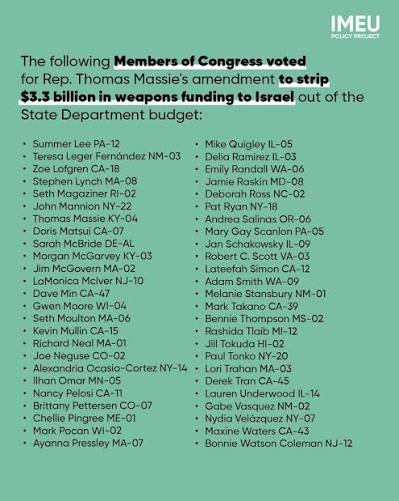
Israel illustrates the divide clearly. Within a coalition, someone can support Israel’s defensive war while criticizing particular government officials or military actions. Within an ideological movement, those distinctions may not be enough.
That is why the political response of some mainstream Democrats is so puzzling. They often behave as though they are negotiating with another coalition partner. They are not. They are seeking approval from a movement whose purpose is to distinguish believers from non-believers. Incremental concessions rarely earn lasting acceptance. They simply establish a new baseline for the next demand.
The DSA’s own long-term political vision underscores the point. It has argued that America’s two-party system should ultimately be replaced by a multi-party parliamentary democracy. That is an entirely coherent position for an ideological movement. But it also reveals why the tension is so persistent. A movement that seeks its own distinct ideological party will naturally find itself in conflict with a broad coalition whose purpose is to assemble majorities among people who disagree on fundamental questions. The friction is inevitable.
Perhaps the better response for mainstream Democrats is not to seek the DSA endorsement at all.
Every endorsement tells voters something about shared values. If an organization rejects your belief in a market economy, your support for the Jewish State’s continued existence, or your willingness to govern through compromise rather than ideological purity, why should the DSA’s endorsement be considered a prize? A politician should not be embarrassed to say, “We simply have different visions for the country.”
In fact, the willingness to disappoint ideological movements may be one of the clearest signs that a politician still understands the difference between governing and evangelizing.
There is a lesson here for the pro-Israel community as well.
Politics rewards participation, not nostalgia. Elected officials respond to the people who organize, communicate with their offices, volunteer, build local networks, and vote. If supporters of the U.S.-Israel relationship want their voices heard, they must become a consistently visible part of the political coalition—not merely assume their support will be taken for granted.
Building coalitions by attempting to contort to the demands of extremist ideologues will be a painful exercise to watch. And to live with. It has made many Democrats feel abandoned by their party as it chases the far-left which despises most of the coalition.
Coalitions are built by persuading people who disagree to work together. Ideologies are built by deciding who belongs. The Democratic Party will remain a relevant governing party only if it remembers which one it is.
Related:
Hamas and the DSA: Ideology + Grassroots Mobilization to Power + Destruction (January 2026)
The Revolutionary Theology Has Gone Operational (December 2025)


