The Depravity of Antisemitic Socialism Has Become a Movement

From his perch at The New York Times, Thomas Friedman wants to be “very clear” about Hamas. Instead, his formulation gets the moral order backwards.

“Hamas is a terrible organization,” he writes, “first and foremost for Palestinians.”

Hamas is not primarily a terrible organization. It is a terrorist organization whose foundational ideology targeted Israel and Jews.

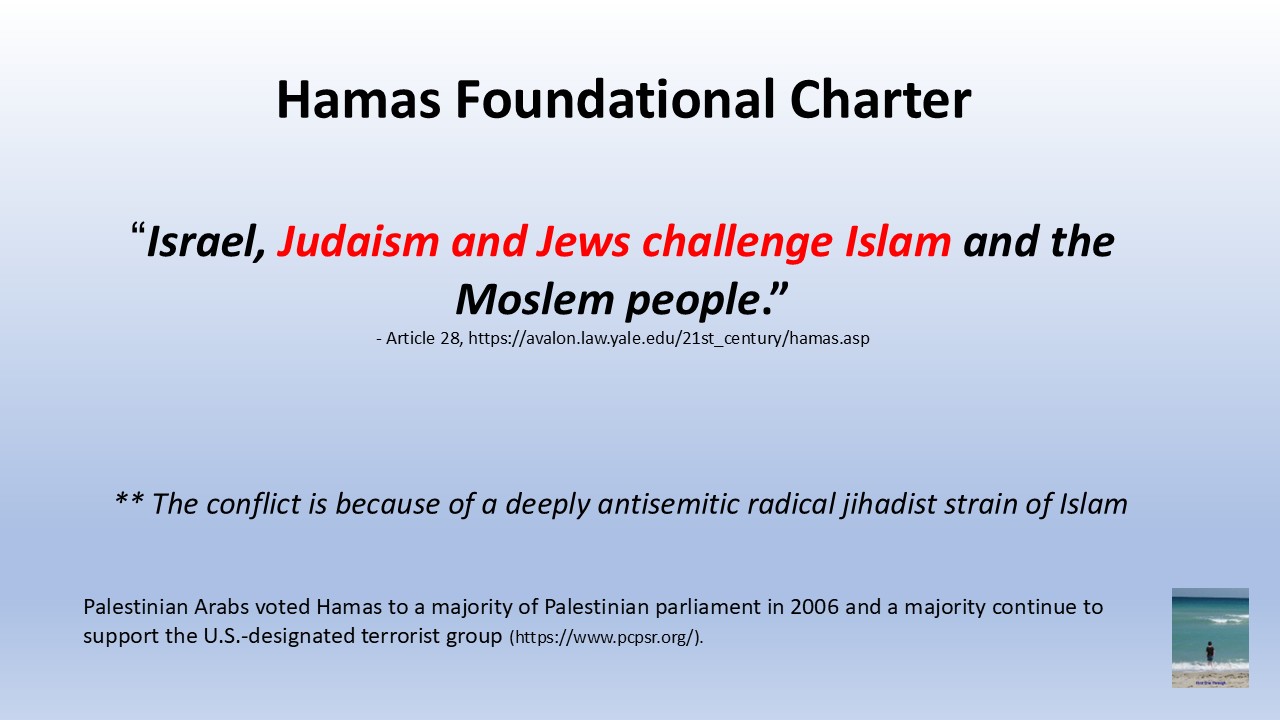
Hamas said so itself. Its 1988 charter declares that “Israel will exist and will continue to exist until Islam will obliterate it.” Article 7 invokes a religious tradition about Muslims fighting and killing Jews. Article 13 rejects negotiated settlements: “There is no solution for the Palestinian question except through Jihad.”

October 7 was the depravity of those words turned into action. Hamas terrorists crossed into Israel, attacked civilian communities, murdered families and kidnapped hundreds of people. Terrorism was not an unfortunate byproduct of Hamas rule. It was the method of an organization whose charter had openly described its enemy and objective.

Nor was Hamas imposed upon Palestinian Arabs. In the 2006 Palestinian legislative elections, voters handed Hamas 56% of the seats in parliament — 74 of 132 — and control of the legislature.

October 7 did not sever that political connection. In December 2023, the Palestinian Center for Policy and Survey Research found that 72% of Palestinians believed Hamas’s decision to launch the October 7 attack was correct, including 57% in Gaza and 82% in the West Bank. Even in October 2025, 53% still called the decision correct.

That context makes Friedman’s criticism of Western Hamas apologists particularly revealing. He calls the “free pass” Hamas receives from some pro-Palestinian progressives “shameful.”

The issue runs much deeper than shame.

There is a straight line from a charter describing the destruction of Israel and the killing of Jews, to terrorists carrying out a massacre in Israel, to people defending the decision to launch that attack. The depravity lies in the ideology, the terrorism committed in its name and the willingness to celebrate or excuse it afterward.

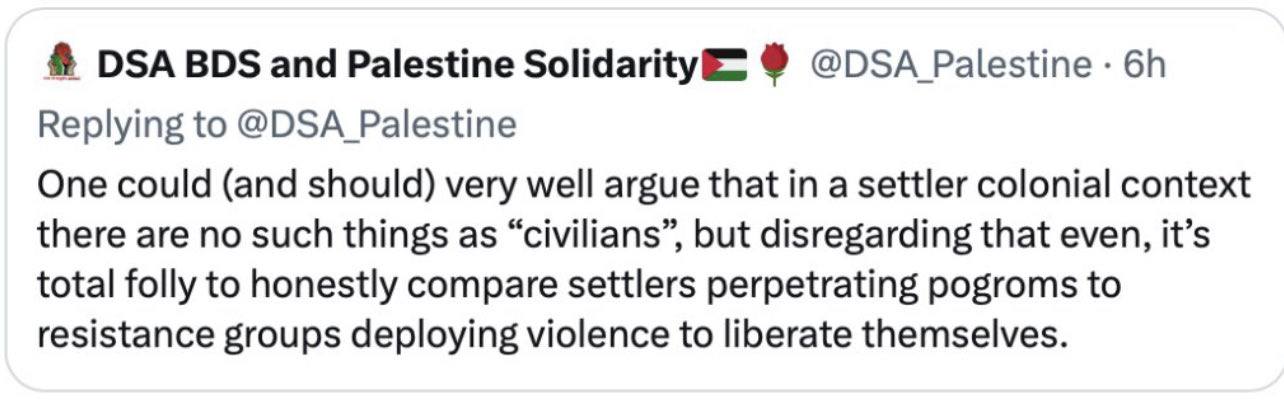
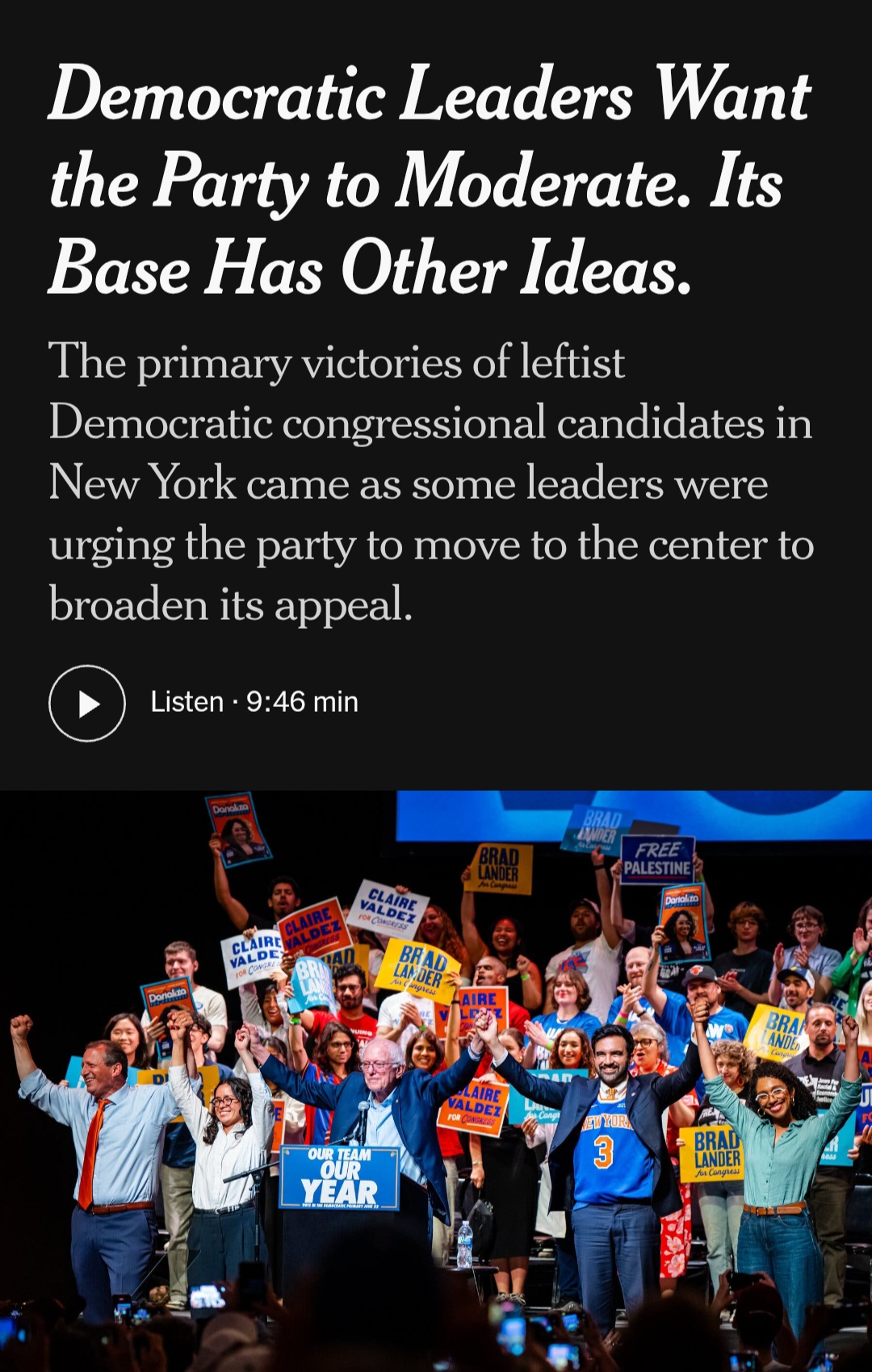
And that depravity has migrated into American politics. The Democratic Socialists of America and radical left-wing university professors describe Israel as a colonial project and Israelis as “colonialists,” a framework to erase the distinction between combatants and civilians and recast violence against Israeli Jews as “resistance.” This movement is no longer confined to demonstrations and campuses; DSA member Zohran Mamdani has ridden the democratic-socialist movement into the New York City mayoralty and is now helping other left-wing candidates like Mohamed El-Zayed in Michigan win office.

Friedman’s formulation reverses the danger. Hamas becomes “terrible” rather than terrorist. Palestinians become its primary victims rather than a population which supports Hamas. And those in the United States and elsewhere who give Hamas political cover are merely “shameful.”

That formulation grants absolution to terrorists and their knowing supporters.

The endorsement and celebration of mass violence against Jews — a tiny minority-minority — is becoming a motivating force in American politics. That should terrify Thomas Friedman. It should terrify every decent American.

Because when a movement can watch the mass murder of Jews and explain why their killers were engaged in “resistance,” the problem is no longer simply Hamas.

The depravity has become a movement.

The Beginning of the End for the Establishment-led Democratic National Committee

For a decade, Democratic leaders have sought to preserve control of their party. Each decision made sense in the moment. Together, they have steadily eroded the confidence of both the activist base and, increasingly, the donor class.

The first crack appeared in 2016.

Bernie Sanders inspired millions of Democrats with a vision that challenged the party’s Clinton-era consensus. Yet the Democratic establishment rallied behind Hillary Clinton. Leaked DNC emails and the resignation of Chair Debbie Wasserman Schultz convinced many progressives that party insiders—not Democratic voters—were choosing the nominee.

And maybe the DNC’s action could have been excused had Hillary won. But she lost to Donald Trump.

Rather than disappear, the Sanders movement organized.

In 2017, former Sanders organizers founded Justice Democrats with a simple mission: elect a new generation of progressive Democrats and replace incumbents they believed had become too close to corporate donors. The movement was no longer asking for influence. It was organizing for control.

A year later, Alexandria Ocasio-Cortez defeated Joe Crowley, one of the most powerful Democrats in Congress and a presumed future Speaker of the House. At the same time, the Democratic Socialists of America expanded from a fringe organization into a national political force.

For years, party leaders dismissed these victories as isolated upsets. They can win in Brooklyn. They can win in Berkeley. But they cannot win statewide.

So the Democratic establishment continue to abuse its base. It lied to the country that President Joe Biden was fit for office long after it was clear he was not. The party leaders then coronated Vice President Kamala Harris to be the party nominee for president without a vote, in what many viewed as an act of treachery.

And now, Michigan has proven that the local alt-left phenomenon is much larger than the DNC pretended.

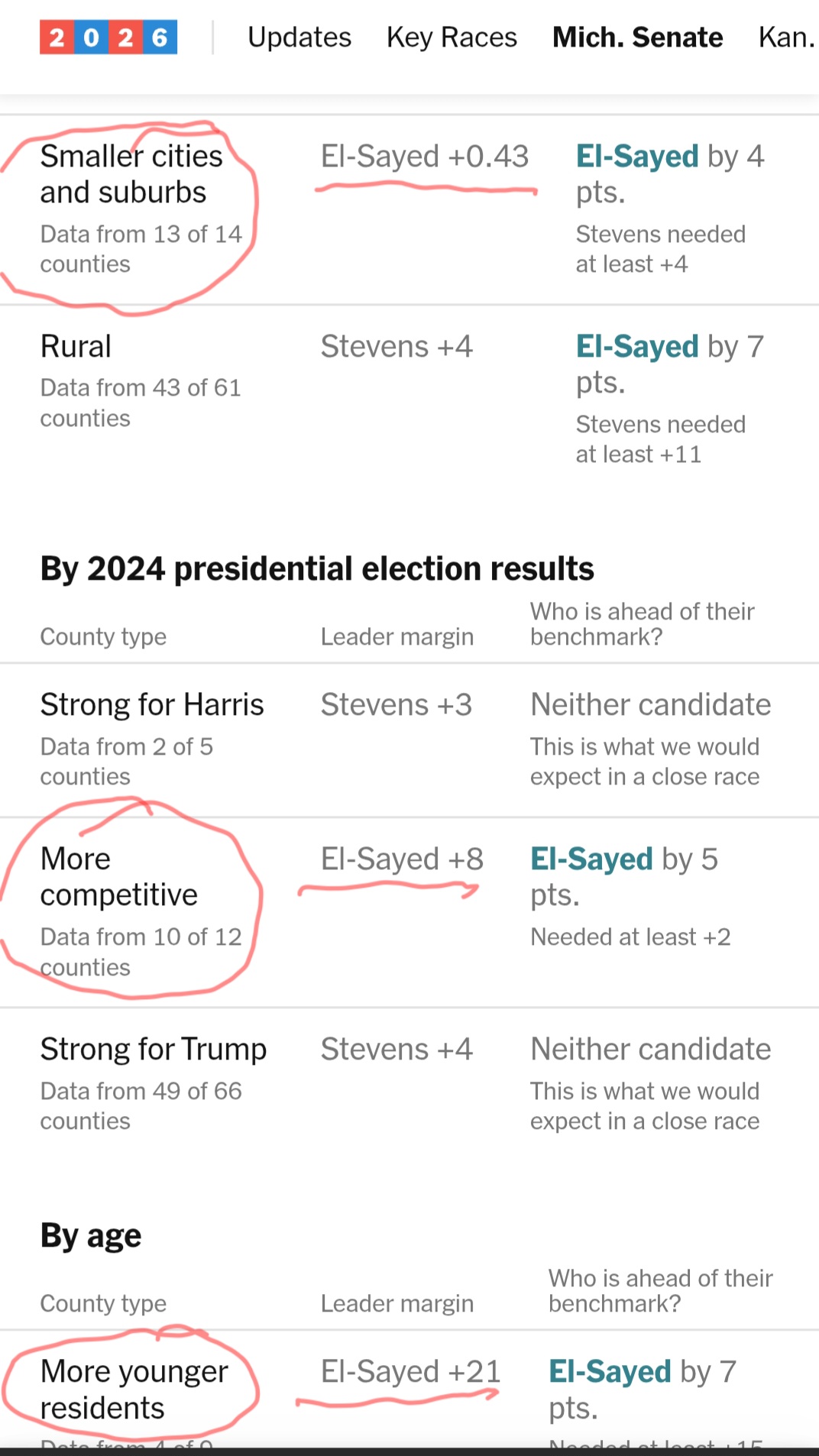
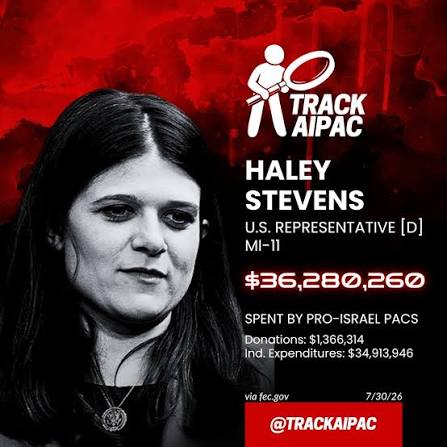
Representative Haley Stevens was exactly the kind of pragmatic, mainstream Democrat the party once expected to lead its next generation. Her defeat by Abdul El-Sayed, backed by the Democratic Socialists of America, suggests the insurgency has moved beyond city councils and safe House districts. It is now capturing statewide nominations in one of America’s most important swing states, predominantly with the support of young people who are turning out to vote in record figures.

Now even the donors are beginning to revolt.

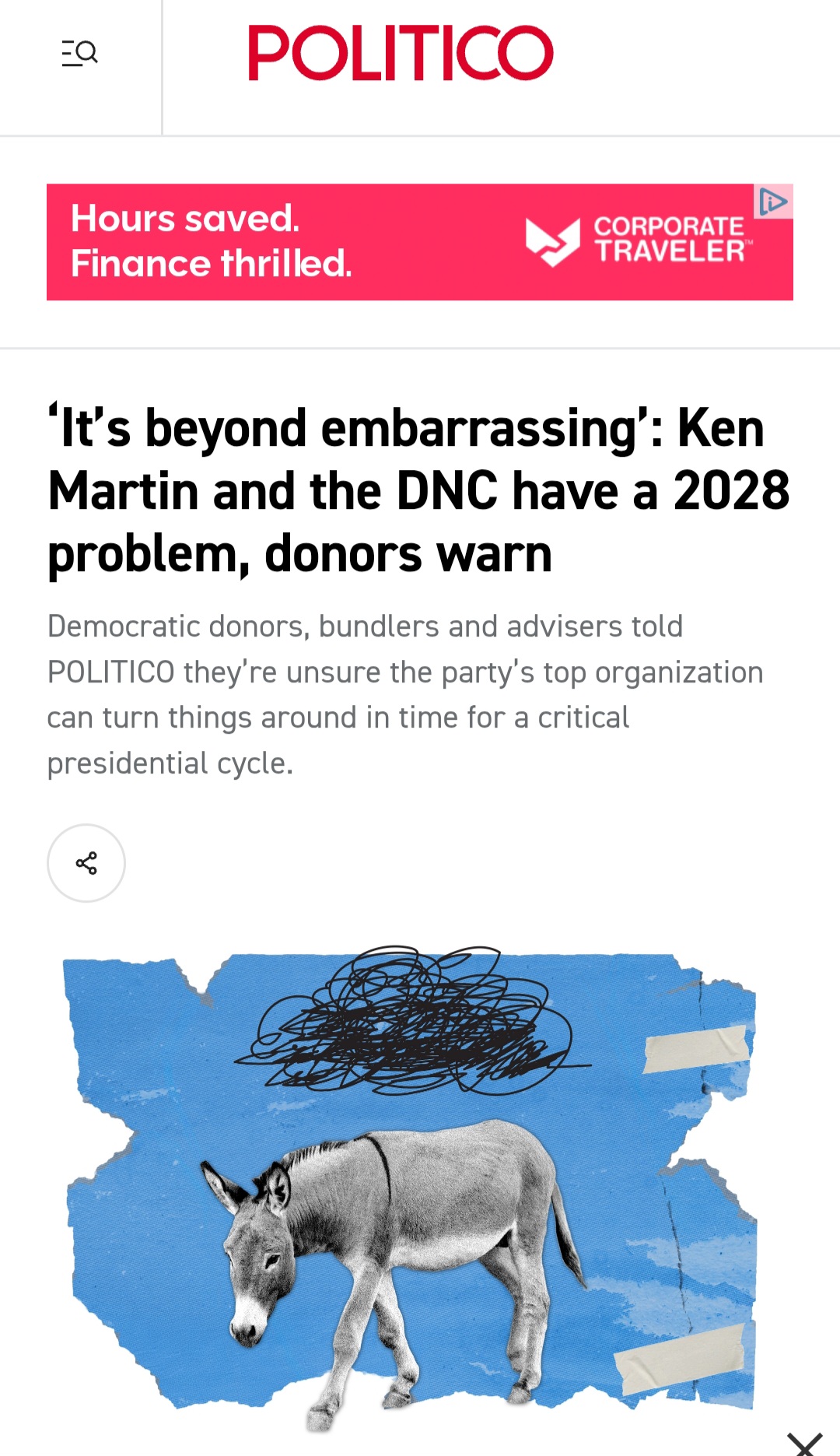
According to a recent Politico report, major Democratic donors are openly questioning the direction and competence of the Democratic National Committee. Fundraising has weakened. Confidence has faded. One longtime donor summarized the mood in four words: “It’s beyond embarrassing.”

At the same time, the party’s ideological center has moved toward jihadists.

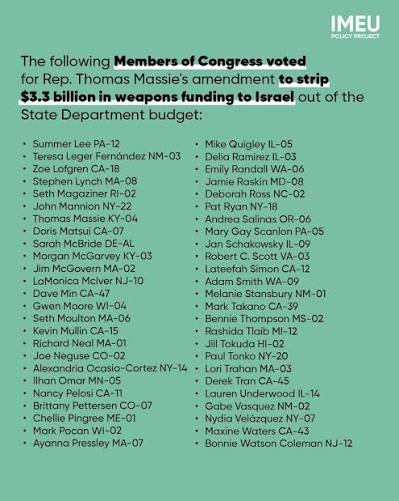
For generations, military support for Israel during wartime against those seeking its destruction was a bipartisan assumption. During Israel’s current multi-front war against Hamas, Hezbollah, the Houthis, and Iran itself, most congressional Democrats voted to block or condition additional military assistance. A position that would have been unimaginable when Barack Obama entered office has become increasingly mainstream within today’s Democratic coalition.

Trashing Israel has even become a primary tool to get out young voters on social media.


The struggle inside the Democratic Party is no longer about one primary, one chairman, or one election cycle.

The DNC establishment that repeatedly tried to manage its succession is undergoing a hostile takeover by the far-left. The donor class got the message and is leaving. Only older lifelong Democrats seem blind to the transformation of the party, or unable or unwilling to vote Republican to turn the tide.

Related:

Hamas and the DSA: Ideology + Grassroots Mobilization to Power + Destruction (January 2026)

Racism In The Old and Antisemitism In The Youth (February 2024)

New York’s Supermajority: The Real Election Is the Legislature

Worried about New York City Mayor Mamdani’s politics going statewide and national? You need to do a lot more than show up to a protest with placards.

New York is not simply a Democratic state. It is a Democratic supermajority state.

The governor, Governor Kathy Hochul is a Democrat. Democrats hold 41 of the State Senate’s 63 seats and 103 of the Assembly’s 150 seats—more than enough for a veto-proof supermajority in the Assembly and just one seat shy of one in the Senate. The practical result is that currently, Republicans have little ability to force negotiation or compromise. The state’s most important political debates now occur almost entirely within the Democratic Party.

That is critical at a moment like this.

When organizations such as the Democratic Socialists of America (DSA) succeed in electing candidates or moving Democratic primaries to the far-left, the effects are no longer confined to activist circles. Ideas that gain traction within the Democratic caucus can become state policy without needing bipartisan support. Whether the issue is criminal justice, taxation, housing, energy, education, labor regulation, or Israel policy, the decisive battle is often the Democratic primary, not the general election.

This does not mean every progressive proposal becomes law. Democratic legislators disagree on many issues. But a supermajority means there are fewer institutional checks when one faction gains influence.

For New Yorkers who want a different direction than being advanced by the DSA and NYC Mayor Mamdani, the answer is not simply to oppose legislation after it is introduced. It is to change the composition of the Legislature itself.

That is why a relatively small number of competitive districts carry outsized importance this year.

Competitive legislative races do more than elect a senator or assemblymember. They build volunteer networks, raise money, increase turnout, and strengthen candidates throughout the ticket.

Congressman Mike Lawler’s race in the Hudson Valley is a prime example. His campaign in New York’s 17th Congressional District is again expected to be one of the nation’s most competitive House races. A strong Republican legislative effort in the region can reinforce his campaign, just as a strong Lawler campaign can help Republican candidates for the State Senate and Assembly. The same dynamic applies across Long Island, Staten Island, and other competitive suburban districts.

Congressman Mike Lawler (R-NY17)

Among the key legislative opportunities Republicans will target are suburban Senate districts on Long Island and in the Hudson Valley, along with competitive Assembly districts in Nassau and Suffolk Counties, Staten Island, Monroe County, Onondaga County, and the Capital Region.

Every election cycle, voters are told that one legislative seat cannot make much difference. In New York, the opposite is true.

A handful of seats in New York’s election can determine whether the Legislature remains a near-unchecked trifecta supermajority allowing radical far-left motions to become law or becomes a body where broader consensus is once again required. Those races will shape not only who governs in Albany, but how New York is governed.

Coalitions Don’t Survive Purity Tests

One of the more curious developments in American politics is watching mainstream Democrats increasingly tailor their positions to satisfy activists who still refuse to support them.

The answer lies in understanding the difference between a coalition and an ideology.

A coalition exists to win elections. It is broad by design. People disagree on taxes, immigration, foreign policy, and the Middle East, yet work together because they share enough common ground to govern. Coalitions ask one question: Can we work together despite our differences?

An ideological movement asks a different question: Do you believe what we believe?

That distinction changes everything.

Purity tests are not an accident of ideological movements; they are their natural consequence. If your goal is to advance a comprehensive worldview, disagreement is no longer just a different opinion but evidence that someone has failed the test.

This helps explain the relationship between the Democratic Party and organizations such as the Democratic Socialists of America. The Democratic Party is trying to hold together one of the broadest electoral coalitions in America. The DSA is advancing an ideology. It has shown little hesitation about opposing Democratic incumbents who fail its litmus tests, whether on capitalism, Israel, policing, or other defining issues.

Israel illustrates the divide clearly. Within a coalition, someone can support Israel’s defensive war while criticizing particular government officials or military actions. Within an ideological movement, those distinctions may not be enough.

That is why the political response of some mainstream Democrats is so puzzling. They often behave as though they are negotiating with another coalition partner. They are not. They are seeking approval from a movement whose purpose is to distinguish believers from non-believers. Incremental concessions rarely earn lasting acceptance. They simply establish a new baseline for the next demand.

The DSA’s own long-term political vision underscores the point. It has argued that America’s two-party system should ultimately be replaced by a multi-party parliamentary democracy. That is an entirely coherent position for an ideological movement. But it also reveals why the tension is so persistent. A movement that seeks its own distinct ideological party will naturally find itself in conflict with a broad coalition whose purpose is to assemble majorities among people who disagree on fundamental questions. The friction is inevitable.

Perhaps the better response for mainstream Democrats is not to seek the DSA endorsement at all.

Every endorsement tells voters something about shared values. If an organization rejects your belief in a market economy, your support for the Jewish State’s continued existence, or your willingness to govern through compromise rather than ideological purity, why should the DSA’s endorsement be considered a prize? A politician should not be embarrassed to say, “We simply have different visions for the country.”

In fact, the willingness to disappoint ideological movements may be one of the clearest signs that a politician still understands the difference between governing and evangelizing.

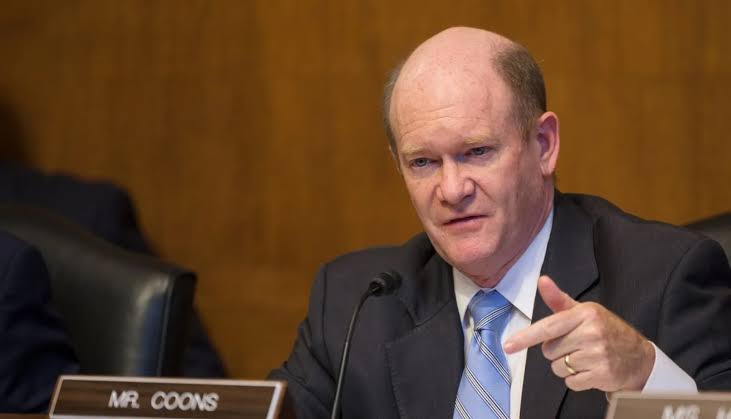
Sen. Chris Coons (D-DE) is a mainstream Democrats who has not been bullied into positions at odds with his belief

There is a lesson here for the pro-Israel community as well.

Politics rewards participation, not nostalgia. Elected officials respond to the people who organize, communicate with their offices, volunteer, build local networks, and vote. If supporters of the U.S.-Israel relationship want their voices heard, they must become a consistently visible part of the political coalition—not merely assume their support will be taken for granted.

Building coalitions by attempting to contort to the demands of extremist ideologues will be a painful exercise to watch. And to live with. It has made many Democrats feel abandoned by their party as it chases the far-left which despises most of the coalition.

Coalitions are built by persuading people who disagree to work together. Ideologies are built by deciding who belongs. The Democratic Party will remain a relevant governing party only if it remembers which one it is.

Related:

Hamas and the DSA: Ideology + Grassroots Mobilization to Power + Destruction (January 2026)

The Revolutionary Theology Has Gone Operational (December 2025)

How New York City Was Lost

There was a time when many New Yorkers dismissed the Democratic Socialists of America (DSA) as a fringe movement. Their rallies were loud. Their rhetoric was provocative. But surely the city that built Wall Street, welcomed millions of immigrants, and was attacked on September 11 would never hand real political power to a movement whose rhetoric after October 7 shocked so many Americans.

Rally in Times Square the day after the massacre of 1,200 people in Israel and abduction of 251.

Yet here we are.

The new mayor is part of the DSA. DSA-backed candidates continue to win elections across New York City.

This is not merely a debate over tax rates or rent control. After Hamas murdered more than 1,200 Israelis on October 7, the New York City chapter of DSA helped organize demonstrations almost immediately afterward. Slogans and statements in Times Square celebrated the attack as “resistance” and chanted for it to continue “long live the Intifada!” DSA-NYC had long argued that Israeli civilians should not be viewed as innocent because they were participants in a “settler-colonial” society.

One might have expected that such rhetoric would permanently marginalize it. Instead, it grew. How?

Because its opponents fought the wrong war.

Organizations such as AIPAC concentrated enormous resources on defeating individual candidates where the ground game already indicated it could win. Sometimes they succeeded spectacularly. Millions of dollars were spent. Headlines proclaimed another victory over the anti-Israel Left.

But every expensive primary also reinforced the story DSA wanted to tell.

They were no longer simply neighborhood activists. They became the underdogs standing up to a wealthy political establishment. Every television advertisement became another fundraising email. Every outside dollar became another recruiting tool. Every victory over one candidate left the movement itself intact and often stronger.

AIPAC won campaigns but DSA built a movement.

Politics is ultimately about culture before it is about elections. Elections simply reveal where the culture already stands.

While establishment organizations measured success by defeating a particular candidate, DSA measured success by opening another neighborhood chapter, training another organizer, recruiting another volunteer, and persuading another generation that its worldview represented justice.

The results are now visible. A virtual sweep of DSA candidates in New York this week.

New York did not suddenly become socialist. It was organized into becoming more receptive to socialist candidates over many years. One neighborhood at a time. One group at a time.

J Street spent considerable time and effort over the past few years bashing AIPAC to build better alliances with the far-left. Now that multiple anti-Israel extremists have entered office while effectively echoing J Street’s smears of AIPAC, the left-wing “pro-Israel” group stayed mum and didn’t print a single press release.

That should be the lesson – not only for those who support Israel, but for anyone concerned about the city’s future.

Money can influence an election. It cannot substitute for a movement.

If New York is to change course, it will not happen because one organization writes larger checks. It will happen because people who believe in liberal democracy, civic responsibility, pluralism, and the moral distinction between murdering civilians and defending them begin organizing with the same patience and persistence that their opponents have displayed for years.

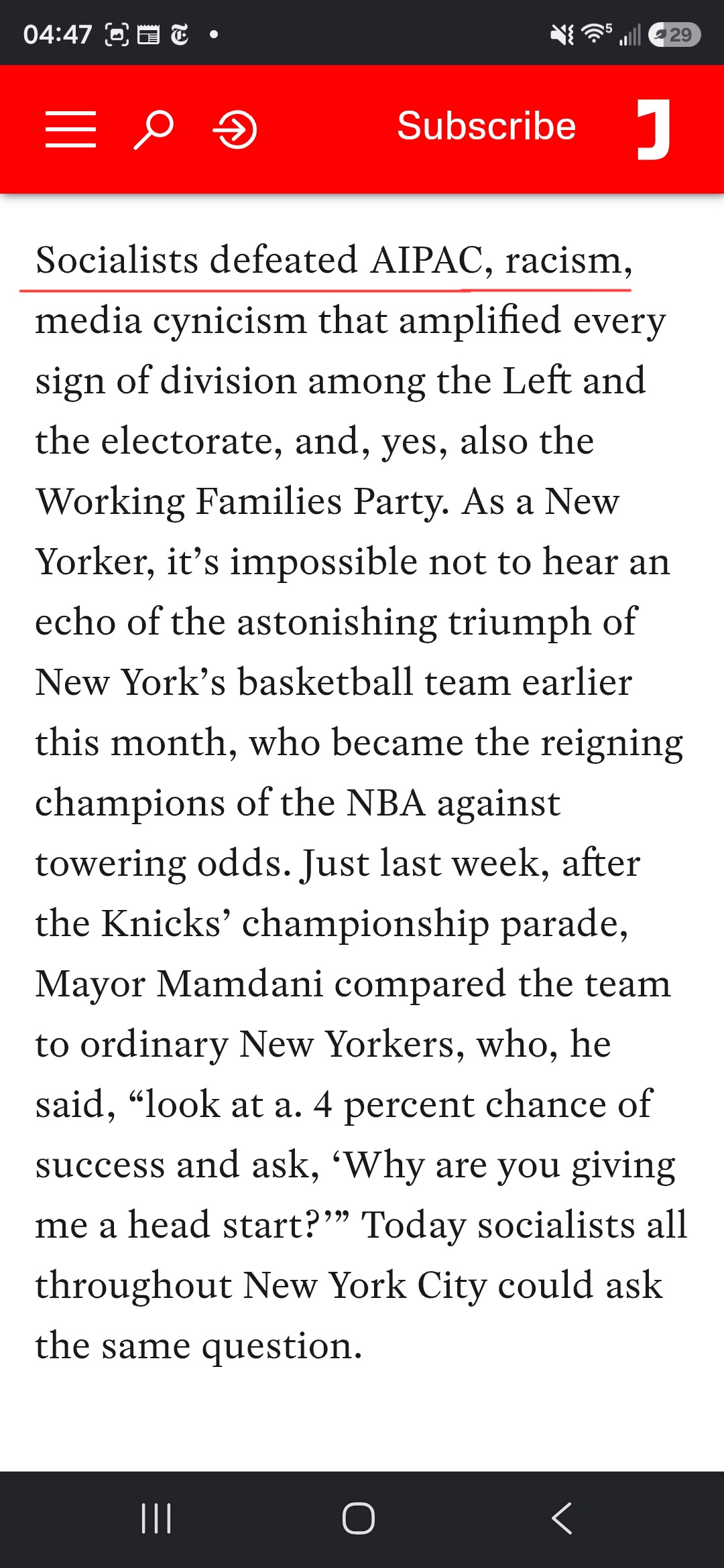
Jacobin lead is that Socialists defeated “AIPAC, racism” before anything else

Cities are not lost in a single election. They are lost one neighborhood at a time.

Related:

Overwinning (Sept 2025)

Names and Narrative: Violence

Even a word as straightforward as “violence” can no longer be exchanged among people who strongly disagree.

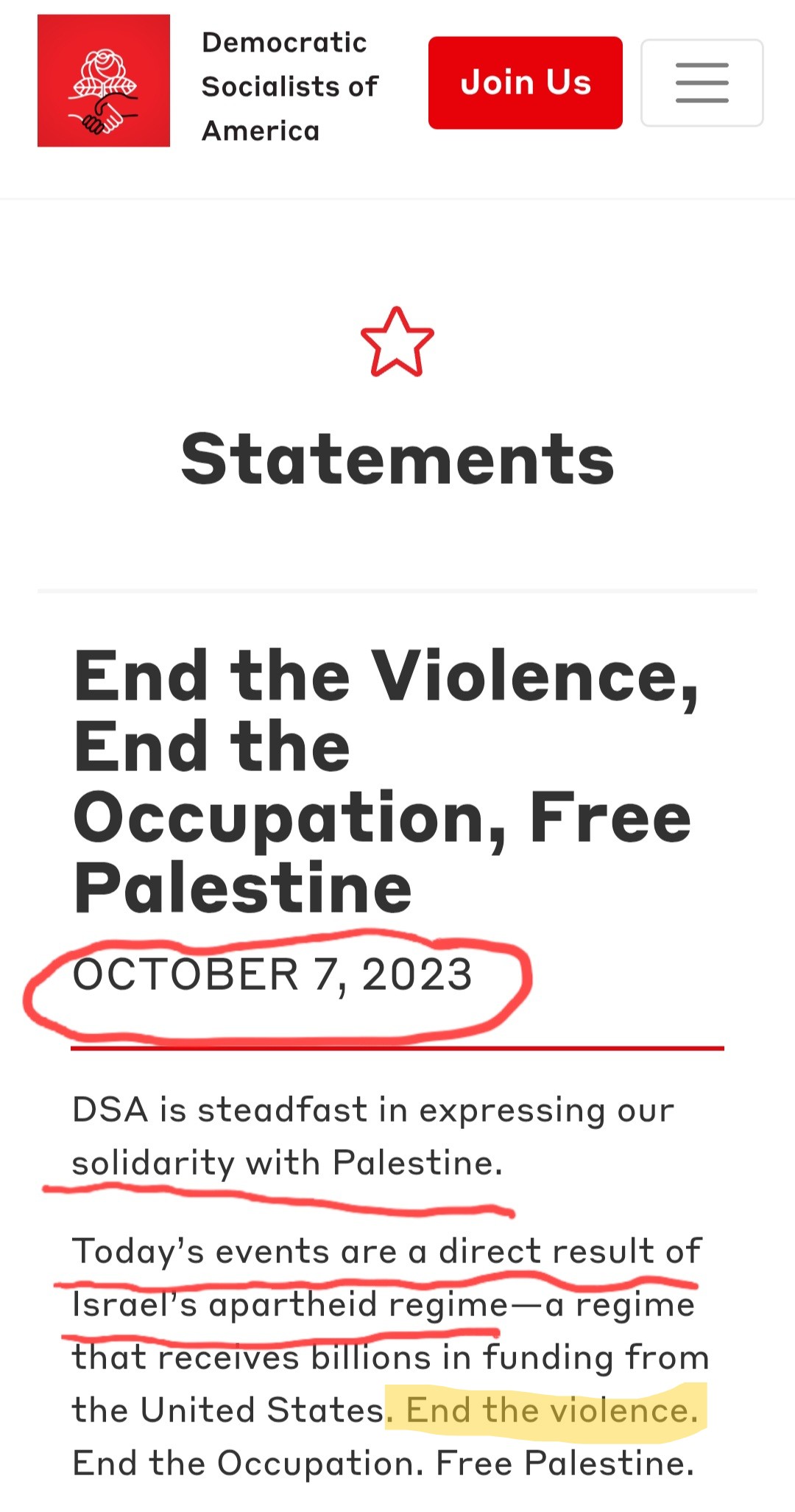
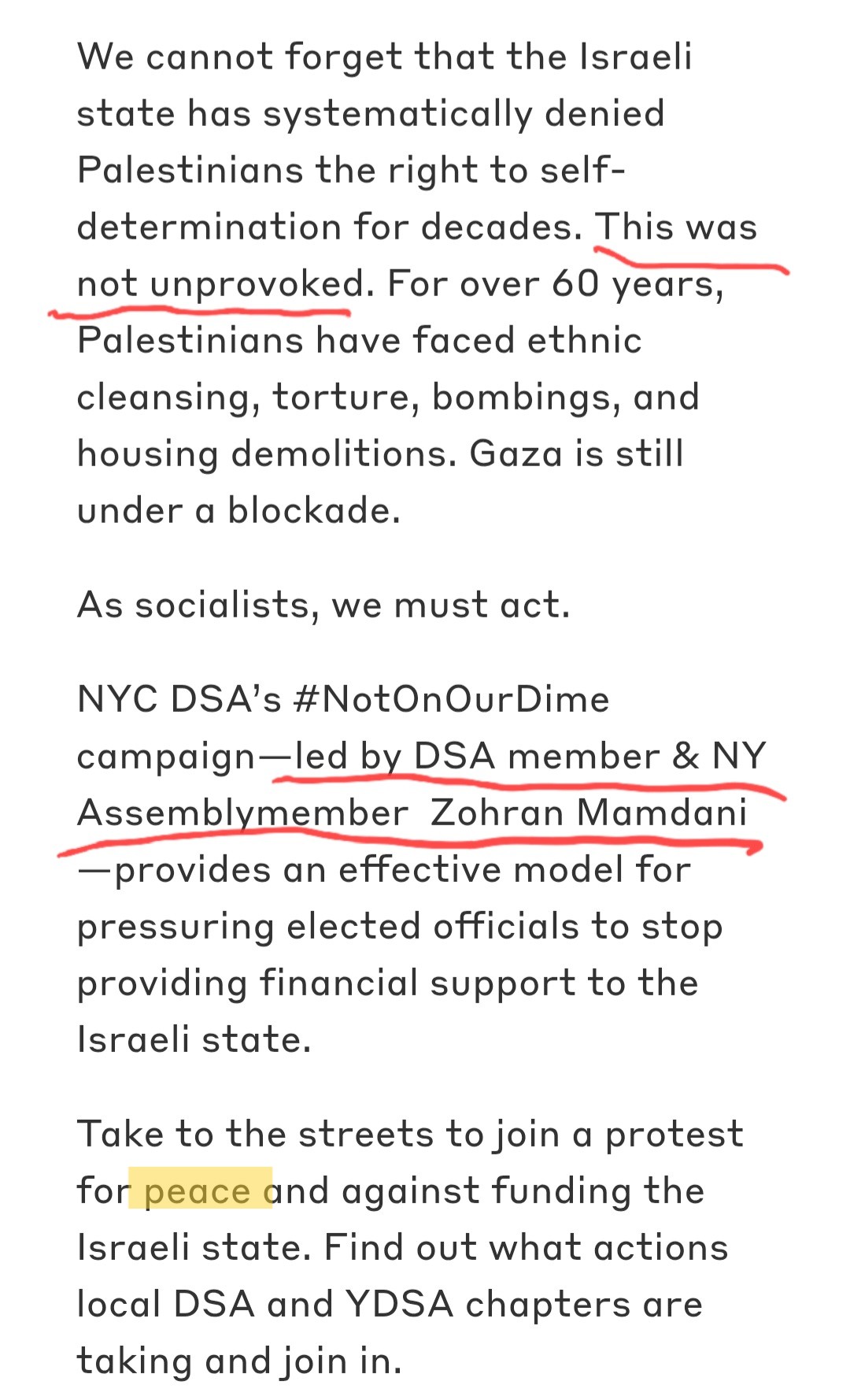
On October 7, while Israeli families were still being burned alive in their homes, while women were being brutalized and dragged into Gaza, while children and grandparents were being taken hostage, the Democratic Socialists of America issued a statement expressing solidarity with Palestinians and calling for an end to violence.

Read that sentence again.

Solidarity with the side carrying out the massacre whicle simultaneously being opposed to violence.

Under any normal understanding of language, those two positions cannot coexist. Even if one sides with Palestinian Arabs doing the slaughter, one cannot deny that killing 1,200 people and taking over 250 people hostage is anything but violence.

Yet for much of today’s activist left, there is no inconsistency because violence has been redefined.

Violence is no longer judged by the act itself. It is judged by the political identity of the actor and the victim. Violence against the oppressed is evil. Violence by the oppressed is resistance.

That single inversion explains nearly everything.

It explains why people can chant “globalize the intifada” and insist it is not a call for violence. Because intifada, in their lexicon, is not violence. It is justice.

But words have histories. And intifada has a very specific one.

The fact is that the Second Intifada was not a symbolic protest. It was suicide bombings on buses, massacres in cafés, shootings in markets, families murdered at holiday tables. The later “stabbing intifada” turned sidewalks and bus stops into hunting grounds. The “car intifada” transformed vehicles into weapons aimed at civilians.

So when Jews hear “globalize the intifada,” they do not hear an abstract call for liberation. They hear a political tradition with a body count. They hear the globalization of a tactic that has repeatedly targeted Jewish civilians.

That is why the argument over this slogan so often goes nowhere.

Congressional committee on the phrase “Globalize the intifada” on June 24, 2025

One side hears history. The other hears ideology. One side sees violence in the act itself. The other sees violence only when the “wrong” people commit it.

The socialist-jihadi moral framework launders murder into resistance and terror into liberation, because the victims are placed on the wrong side of the political hierarchy.

October 7 exposed with horrifying clarity that while the massacre itself was monstrous, the reaction to it revealed something even deeper: a political culture that could look directly at burned families, raped women, butchered children, and kidnapped grandparents and still speak of “ending violence” while standing in solidarity with those who had just committed it.

And when Jews and decent people watch those same people – in the same breadth – call for following the charge of a young aspiring politician named Zohran Mamdani to redefine both violence and “peace” in the cause of annihilating the oppressor class, they have reason to fear.

The sanitation of violence against certain undesirable groups – Zionists for example – was voted into power in New York City. With easy smiles that come from people who have long internalized that eradicating “oppressors” is a noble cause in which bloody hands do not stain the oppressed.

The End of Civilization

The defining moral line of civilization is simple: civilians are off limits.

Once that line breaks, atrocity is no longer an exception. It becomes a method.

Over the last five years, some of the worst deliberate mass killings of civilians have come at the hands of jihadist movements and regimes built on political Islam.

In Sudan, militias tied to the Rapid Support Forces slaughtered an estimated 10,000 to 15,000 civilians, largely from the Masalit community. Whole neighborhoods were emptied through organized murder.

On October 7, thousands of Gazans crossed into Israel and hunted Jewish civilians deliberately—families in their homes, young people at the Nova Music Festival, children, the elderly. Terror itself was the objective.

In Iran, the regime’s 2025–2026 crackdown on protests has left more than 6,000 civilians dead, according to rights monitors, killed for dissent against an Islamic revolutionary order.

Across Nigeria and the Sahel, Boko Haram and Islamic State West Africa Province continue village massacres, church bombings, kidnappings, and executions. Civilians are the intended victims.

These conflicts differ in geography and politics. Sudan is tribal and ethnic. Hamas is nationalist and religious. Iran is a regime. Boko Haram is insurgent.

What unites them is the same moral collapse: the civilian is no longer protected by being uninvolved. Civilian blood becomes a signal of conviction.

And here is where the West has developed its own moral blind spot.

For years, parts of the activist left have embraced an oppressor-oppressed framework so rigid that civilian status itself becomes negotiable. The first question is no longer who was killed, but who held power.

That inversion was laid bare after October 7, when elements within Democratic Socialists of America and allied activist circles framed the massacre in the language of “resistance” and “decolonization,” making slaughter politically understandable so long as it came from the “oppressed.”

The jihadist says civilians may die because ideology sanctifies it. The regime says civilians may die because dissent threatens power. The activist says civilians may die because power determines innocence.

Different justifications. Same result.

Once innocence becomes conditional, civilization becomes conditional too.

Because the moment civilians become fair game, everyone eventually becomes fair game.

NYC, Now It’s at Your Front Door

It looked like a technical vote. In New York City, a proposed buffer zone around houses of worship. A few feet of space so people could enter synagogues, churches, and mosques without confrontation.

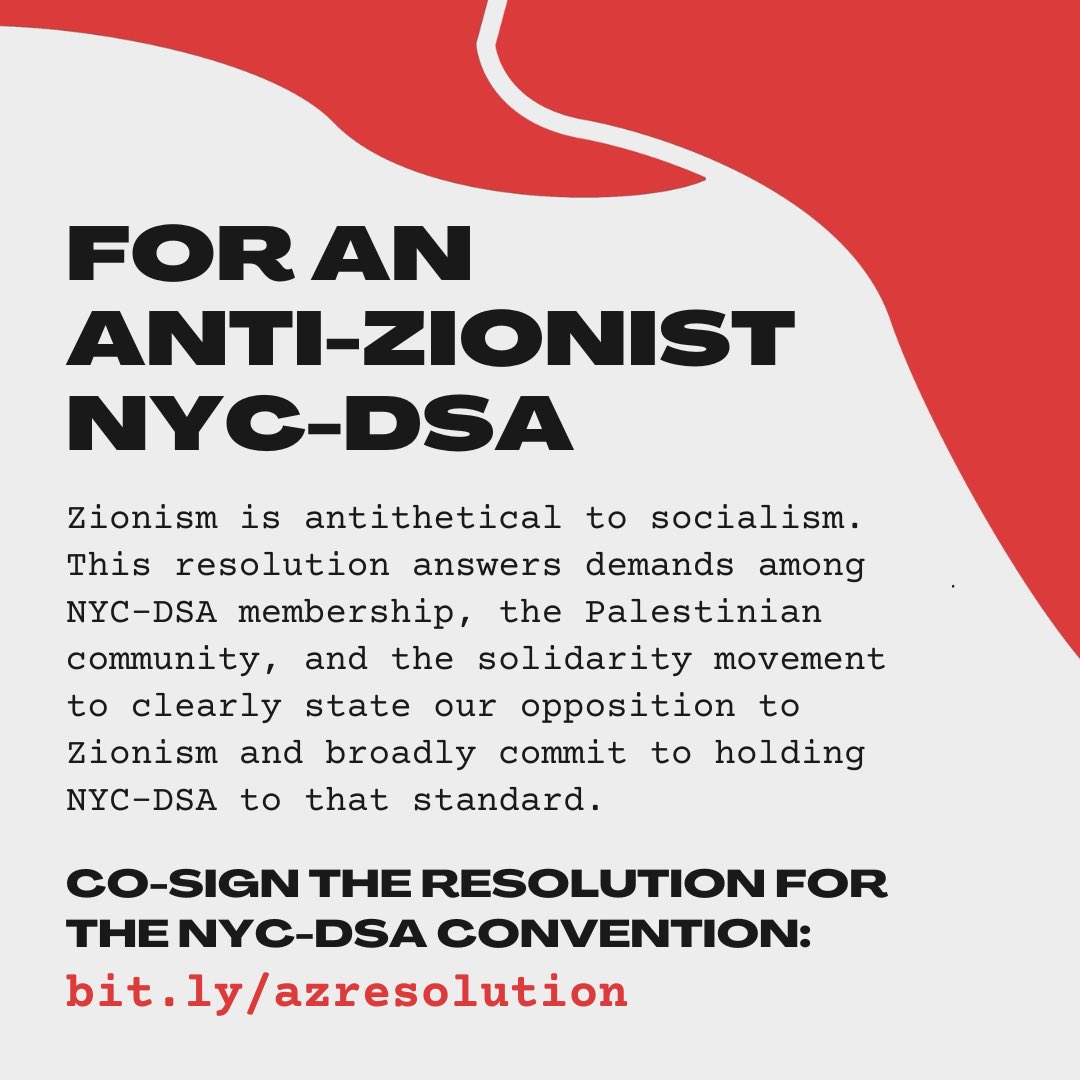
And the Democratic Socialists of America bloc on the City Council voted no.

Shahana Hanif (District 39), Alexa Avilés (District 38), Tiffany Cabán (District 22), Chi Ossé (District 36), and Kayla Santosuosso (District 47) held the same line. Protect protest at all costs. Treat any restriction as a threat to speech. Keep the sidewalks open, no matter what is happening on them.

Shahana Hanif (District 39)

On paper, that sounds principled. In practice, it lands somewhere else entirely.

Because in this city, right now, protests are not showing up randomly. They are showing up outside synagogues in growing numbers. The line between Israel and the Jew has been erased, and the synagogue has become a stand-in.

This is where ideology stops being abstract.

For years, the DSA has defined itself through opposition to Israel. That posture has moved from foreign policy into local reality. When Zionism is framed as uniquely illegitimate, and most Jews see it as part of who they are, the translation is inevitable. The target shifts.

No manifesto is needed. The pattern speaks for itself.

Vote against a resolution recognizing hatred against Jews. Argue about the sponsors instead of the substance. Reject a minimal buffer around houses of worship at a moment when Jewish institutions in New York are under visible pressure.

That movement is no longer adjacent to power in New York City; it has the power. With Zohran Mamdani as the city’s new mayor, the worldview is moving from activist circles into the city’s governing core.

New York City Mayor Zohran Mamdani is a member of the DSA

And the expansion is already underway.

On Tuesday April 28’s special primary day, Mamdani has backed Lindsey Boylan, a member of the DSA to take another seat on the City Council. Jewish City Council Speaker Julie Menin has endorsed Carl Wilson in an effort to stop the radical left gaining even more power in New York.

In the June primaries, NYC-DSA is backing a coordinated slate:

  • Darializa Avila Chevalier (Upper Manhattan/Bronx)
  • Claire Valdez (Brooklyn/Queens)
  • David Orkin (Queens)
  • Diana Moreno

—alongside a broader Assembly slate backed by the same network.

Endorsements from figures like Jamaal Bowman and Mamdani for radical anti-capitalists, anti-west, anti-Israel DSA members like Aber Kawas reinforce the same ideological through-line—where opposition to Israel is no longer one issue among many, but a defining filter.

Aber Kawas has long supported the dismantling of the Jewish State, now running as part of the DSA to gain a seat in the New York State Senate. She is backed by Zohran Mamdani and Jamaal Bowman

This is how local elections stop being local.

When protests move from slogans to synagogue doors in Brooklyn, Queens, and Manhattan, who holds the line?

Will NYPD treat intimidation outside Jewish institutions as a line to be enforced—or a situation to be managed?

Power shapes behavior. When activists see their worldview reflected in City Hall and Albany, boundaries loosen. What once felt marginal begins to feel sanctioned. The distance between protest and confrontation narrows.

The question is no longer what DSA believes about Israel where they believe every man, woman and child is a fair target for violence. The question for New York voters is what they are comfortable normalizing here.

On sidewalks outside synagogues. At the doors of people trying to pray. In the space between protest and intimidation.

The City Council vote on buffer zones answered part of that question.

The rest will be answered this coming Tuesday and in June—at the ballot box, and on the sidewalks outside your door.

ACTION ITEM

Support Carl Wilson in the primary on April 28.

Support opponents to the DSA candidates in the June elections.

Related:

Bernie Sanders and the Antisemitism in People Capitalism

Capitalism disciplines hatred only where it can still touch it. Where contracts exist, behavior can be checked. Where they don’t, mobs rule.

Kanye West (Ye) didn’t begin by attacking Jews. He began by denigrating Black people—calling slavery a “choice,” sneering at collective memory, mocking historical suffering. The reaction was outrage softened by indulgence. He was criticized, contextualized, excused. His Black identity functioned as camouflage. The lesson was clear: you could insult your own people and still be protected.

So Ye escalated. Antisemitism offered a bigger payoff—more visibility, more fear, more leverage. It worked until money intervened.

When Adidas cut him loose, the spell broke. Capitalism finally touched him and apologies followed—not from moral awakening, but because the incentive structure flipped.

This is often cited as proof that “the system works.” It doesn’t—at least not anymore.

Ye performing

Capitalism disciplines behavior only where value is concentrated. Ye had a centralized choke point: Adidas. Today’s antisemitism largely does not. It thrives where contracts don’t exist, boards don’t answer, and outrage itself is the reward.

That vacuum has produced a new Ye-like template: antizionist Jews who denigrate Jews. They celebrate October 7. They call Israelis “Nazis.” They launder moral inversion through identity—and are absolved because of it. Jewishness becomes armor, converting bigotry into “bravery,” hatred into “critique,” massacre into “context.” The uglier the claim, the louder the ovation.

Poorly named “Jewish Voice for Peace” partners with terrorist-supporting group Samidoun

The center of gravity is social media—especially TikTok—where attention replaces contracts, outrage outperforms restraint, and individuals have nothing material to lose. There is no Adidas-scale counterparty. Condemnation becomes fuel. Challenge confirms righteousness.

This is where the political story locks in and takes flight.

For years, the far left has discredited institutions under the banner of “corporate Democrats.” At the Democratic Socialists of America’s 2025 convention, a delegate said it plainly: the movement should organize people “that the corporate Democrats and Republicans have abandoned for dead.” In this frame, institutions aren’t imperfect—they’re illegitimate. Friction isn’t restraint—it’s oppression.

On the ground, the rhetoric sharpens. New York councilmember Alexa Avilés urged activists to “root out ‘corporate Democrats’ backed by AIPAC,” recasting pro-Israel Democrats as bought and disposable. Structural critique becomes moral license. Identity becomes proof. Mobs become “the people.”

DSA’s Alexa Aviles

Far-left media and politicians amplify the message—outlets like The Young Turks and figures such as Jamaal Bowman. They know that institutions impose friction > Friction slows mobs > Mobs hate friction. So the institutions must be delegitimized—and the most extreme voices elevated.

The Young Turks coin a term and come for “Corporate Democrats”

This is sold as empowerment. In reality, it is power to the algorithm. Algorithms reward the loudest, angriest, least accountable claims. In that environment, antisemitism doesn’t just survive; it thrives. Jews are too small a minority to outvote a mob optimized for rage.

The reality is that capitalism was never the moral engine here, but it was sometimes a brake. Contracts could snap shut and money could impose limits. When those limits vanish—when speech floats free of consequence and identity shields cruelty—nothing restrains the mob.

Ye was stopped because capitalism still touched him when he crossed from trashing Blacks to bashing Jews.

The antizionist Jewish influencers celebrating October 7 are not stopped because nothing touches them. In People Capitalism, attention is the asset, outrage is the yield, and antisemitism is rewarded, and boosted on a litter—especially when Jews attack Jews.

Every such system needs a moral absolver.

That role is played by Bernie Sanders—the mob’s messiah. He doesn’t organize the mob; he legitimizes it by claiming it isn’t radical, reframing rage as righteousness by declaring institutions corrupt, restraint oppressive, and “corporate Democrats” illegitimate. His function isn’t governance. It’s permission to come for mainstream Democrats and other Jews.

Sen. Bernie Sanders swears in DSA’s Zohran Mamdani as mayor of New York City

This is the final logic of People Capitalism:

  • markets once imposed limits; crowds impose none.
  • institutions once punished bigotry; mobs reward it.

When the people become the market, antisemitism becomes a ladder
and the mob’s messiah has sanctified the climb.

Free Speech Is Not on Trial. Antisemitism Is.

Every time antisemitism is called out on the left, the same dodge appears on cue:
“It’s just free speech.”

That response is not a defense. It is a red herring.

No one is arguing that anti-Israel speech is illegal. Under American law, almost nothing is. You can shout racist slogans. You can be misogynistic. You can mock religions. You can hold a Draw Muhammad contest outside a mosque. You can call for the destruction of a country. You can deny a people’s history.

All of that is protected speech. That has never been the question.

The question is what that speech is.

And much of what now passes as “anti-Israel discourse” is not political critique at all. It is hate speech, clearly, historically, and deliberately so.

Calling for the destruction of the Jewish State is not foreign policy analysis.
Denying Jewish history in the Land of Israel is not academic debate.
Declaring that Jews alone have no right to national self-determination is not progressive politics.
Passing a law that Jews cannot live somewhere and cannot pray at their holiest location is not a free exchange of ideas.

It is the application of a single moral standard to one people — and only one people — that says: you do not belong anywhere.

It is naked antisemitism.

Organizations like Democratic Socialists of America, Students for Justice in Palestine, Within Our Lifetime and Palestine Youth Movement are not tolerating this rhetoric. They are chanting it, platforming it, amplifying it, and treating it as virtuous. They deny Jewish peoplehood, erase Jewish indigeneity, excuse violence against Jewish civilians, and then insist this is nothing more than robust debate.

It is not.

It is hate speech — even if the Constitution protects the right to utter it.

And then there is Zohran Mamdani, who embodies the selective blindness at the heart of this moment. No serious person believes he would tolerate a mass of protesters outside mosques depicting Muhammad as a terrorist, screaming at Muslims as they enter prayer. That would be — correctly — labeled Islamophobia, regardless of whether it was technically legal.

Yet Mamdani casually removed buffer zones around entrances to synagogues, insuring his excited comrades can yell epithets at Jews.

When Jewish institutions are targeted, when synagogues are surrounded, when Jewish national identity is declared illegitimate, the alt-left response suddenly becomes procedural: free speech.

Free speech does not launder bigotry. The First Amendment protects the right to speak; it does not cleanse the moral content of what is said. When people accuse Mamdani and the DSA of promoting Jew-hatred, they are not confused about constitutional law. They are describing the reality of ingrained Jew hatred.

“Most Americans are familiar with the classic Western flavors of anti-Semitism: the Christian, European, white-supremacist and Communist types. But little attention has been paid to the special case of Muslim anti-Semitism. That is a pity because today it is anti-Semitism’s most zealous, most potent and most underestimated form.” – Ayaan Hirsi Ali, July 2019

Invoking free speech is an evasion. A way to avoid responsibility while continuing to normalize ideas that would be instantly condemned if aimed at any other minority.

The tragedy – and fear – is that liberals understand this perfectly well in every other context. They simply refuse to apply it to Jews. Or at least, when uttered by a community of preference, Muslims.

Free speech is not on trial, do not be confused by the misdirection. Antisemitism is, and it is winning.