In May 2014, Macklemore walked onto a Seattle stage wearing a large prosthetic nose, dark wig, beard and black suit. Then he performed “Thrift Shop,” a song about being cheap.
Macklemore in Jewface in 2014, singing about being cheap
It would be difficult to construct a more recognizable antisemitic spectacle: the exaggerated Jewish nose, the beard, the dark clothes, all while singing about bargain hunting. Actor Seth Rogen mocked Macklemore’s explanation that it was merely a random disguise: if someone were instructed to assemble an antisemitic Jewish costume, Rogen wrote, “they’d have that exact shopping list.”
As criticism mounted, Macklemore apologized. He acknowledged that the outfit could be understood as a Jewish caricature but maintained that no Jewish stereotype had crossed his mind.
Yeah, right. That should have been a simple moment for the Anti-Defamation League to clearly denounce the spectacle.
Instead, the ADL chose absolution.
“We take him at his word that he did not have any ill intent,” then-ADL director Abraham Foxman said, “and unreservedly accept his apology.” And then Macklemore gave the ADL a promotional shout-out. “Through this situation I’ve got hip to some incredible groups like the ADL,” he wrote, encouraging people to check out their “great work.”
The country’s best-known antisemitism organization publicly and “unreservedly” accepted his apology and also his advertisement. It is unclear whether there was a quid-pro-quo and whether the ADL was trying to promote its antisemitism study it released the week before.
As they say in text-land: “WTF?”
Twelve Years Later
It is now 2026, and antisemitism is raging through American public life. Much of it no longer arrives wearing a fake nose and beard. It travels under political banners, frequently through rhetoric about Zionists and Israel.
And Macklemore is back on a concert stage.
Opening for Ed Sheeran at MetLife Stadium, he told tens of thousands of people why he had joined the tour: so that he could stand in stadiums and say, “Free Palestine.” He accused Israel of genocide, performed “Hind’s Hall” against a backdrop of footage from pro-Palestinian campus encampments and turned part of the concert into a political demonstration.
This time, the ADL wasn’t offering absolution.
“They came for a concert, not performative, biased and hateful anti-Israel ‘activism’ from his opener, Macklemore,” the organization declared. It pointed to what it describes as his record of demonizing Israel and Israelis, falsely accusing Israel of genocide and engaging in antisemitic rhetoric and behavior.
When Macklemore was subsequently removed from the remainder of Sheeran’s tour, head of ADL Jonathan Greenblatt applauded the decision, saying that “for years, Macklemore has pushed antisemitic tropes and demonized Israel and Israelis.”
What a difference twelve years makes.
The Permission Slip
The problem in 2014 wasn’t only that the ADL accepted an apology. It was that it seemingly confused forgiving the man with minimizing the act.
America’s leading antisemitism organization effectively told the public that Macklemore’s updated and revised intentions settled the matter. A concocted and forced apology after multiple attempts to satisfy the offended, became another chip on the accused – I’m sorry you were offended, not I’m sorry that I have done something terrible that offended you.
Jews are the subject. Always. The antisemite is a victim of Jewish sensitivity.
The ADL granted a permission slip of sorts to this vulgarity and inanity. Permission for American culture to treat an astonishingly recognizable Jewish caricature as something that could be quickly explained away if the right person said he hadn’t meant it.
Now, the ADL that once took Macklemore at his word is no longer particularly interested in his assurances about what he means. It considers impact. The false charge of “genocide” against Israel in Israel’s defensive war is a common pretext to attack Jews today. Macklemore’s appeal to thousands wasn’t a call for peace but incitement to pogrom.
But that was precisely the lesson the ADL could have taught in 2014.
There is an important role for forgiveness in fighting hatred. People must be allowed to recognize mistakes, apologize and change. That is what the Ten Days of Repentance we are in right now is about.
But forgiveness without the party internalizing the matter coupled with contrition is meaningless. It is actually much worse. It is a wink with a get-out-of-jail card. Carry on with spreading antisemitism; we’ll only call it out when the situation becomes intolerable.
Neither October 7, 2023 nor October 8 appeared magically. First One Through has been writing about this phenomenon nearly every day since those same days in May 2014, when it wrote about the UN’s Richard Falk stating that Israel’s “criminal intention [toward Palestinians] is genocidal.”
Does that word have a familiar ring to it? The UN has been using it constantly for well over a decade; before the wars of 2014, 2021 or 2023.
At the Beacon Theatre, Itzhak Perlman offered a reminder that Jewish memory is not only something Jews mourn; it is something they dance to.
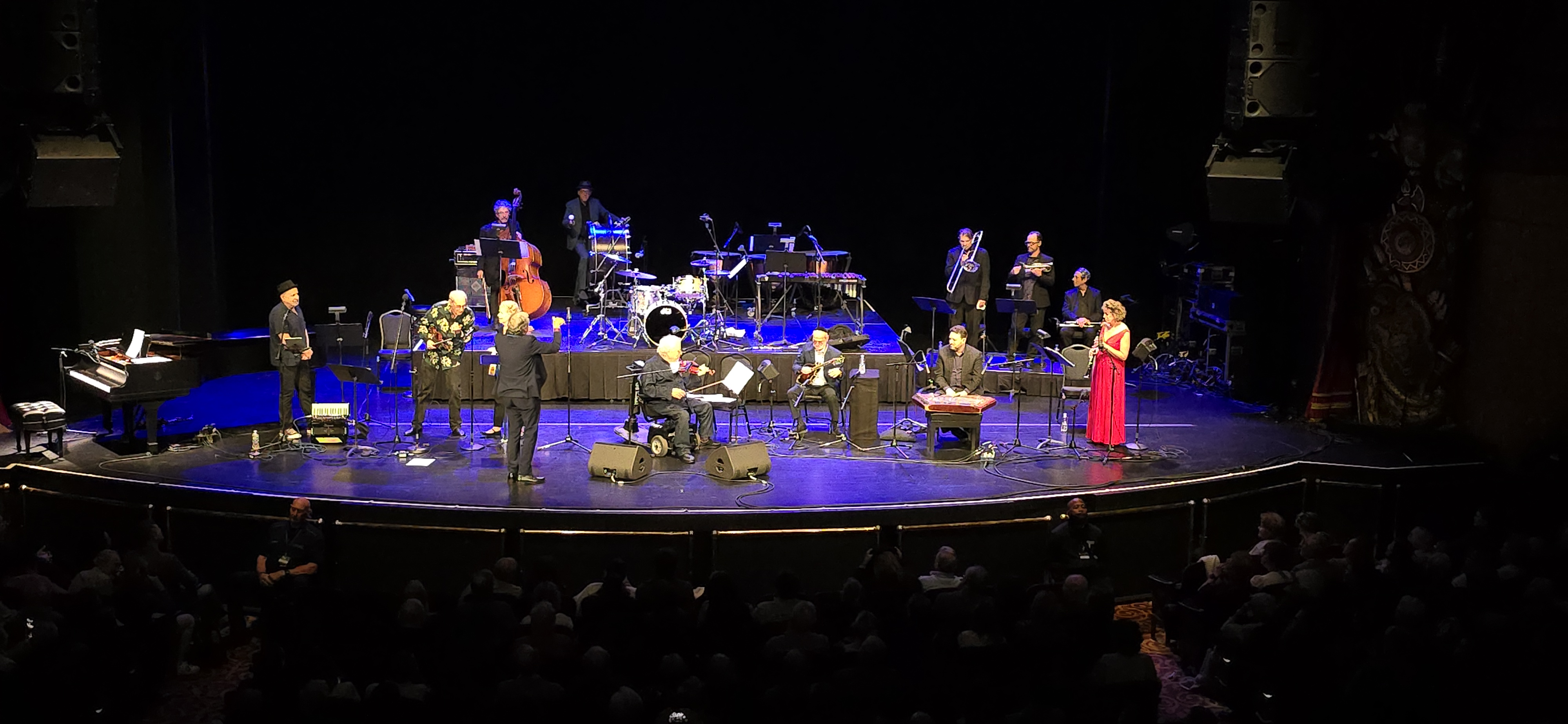
Four days after New York marked the 25th anniversary of September 11, and just after Rosh Hashanah ushered in another Jewish year, Itzhak Perlman sat at center stage at the Beacon Theatre and played klezmer.
The concert celebrated Perlman’s 81st birthday and roughly three decades since In the Fiddler’s House, his landmark embrace of the music of his Jewish roots. Perlman said he wanted people “to dance in the aisles.”
Itzhak Perlman, with members of the Klezmatics and Andy Statman at the Beacon Theater September 15, 2026 (photo: First One Through)
That is where klezmer belongs.
The word comes from the Hebrew klei zemer – “vessels of song” – but klezmer was never simply a genre of music. It was music woven into the life of Eastern European Jews, played at celebrations and, most famously, weddings.
It sounds like the world that created it. The violin can plead like prayer. The clarinet can cry, tease and laugh. A melody can begin in longing and, almost without warning, become a demand to get out of your chair.
Klezmer can sound sad without being sad music. It carries memory into celebration.
Even more, klezmer turns Jewish memory into Jewish motion.
Much of the Eastern European Jewish world that created this music was eventually destroyed. Whether Jews fled pogroms of the 19th and 20th century or were wiped out in the Holocaust, the ground which birthed klezmer has lost almost all of its Jewish feet.
But the music crossed oceans and generations. Jewish immigrants carried it to America, where later musicians recovered and revived the tradition. Andy Statman, who joined Perlman on stage at the Beacon, became one of its great modern interpreters. Perlman’s In the Fiddler’s House brought klezmer to audiences who knew him primarily as one of the world’s greatest classical violinists.
That makes the choice itself significant.
Perlman could have celebrated his birthday playing Bach, Beethoven or Brahms. Instead, he gathered klezmer musicians at the Beacon to play the music of Jewish weddings and Jewish celebrations.
And there was something particularly striking about hearing it in New York at this moment in time.
The city outside the Beacon has been experiencing a terrible surge in antisemitism. Jews have been harassed and assaulted on New York streets, while antisemitic incidents have repeatedly represented a disproportionate share of reported hate crimes. America’s youth has largely moved away from Israel and the Jewish State, leaving the future very uncertain.
That was the world outside the theater doors.
Inside was a different New York.
The audience appeared predominantly Jewish and older. For many, these melodies likely carried associations extending beyond a night at the Beacon: to parents and grandparents, weddings and synagogues, holidays and communities. To the Yiddish language rarely spoken anymore – let alone sung by a woman in public.
But the audience was not exclusively Jewish or old. The handful of younger people mostly wore kippahs or were Asian. Some may have come for klezmer; others simply for the opportunity to hear one of the greatest violinists alive.
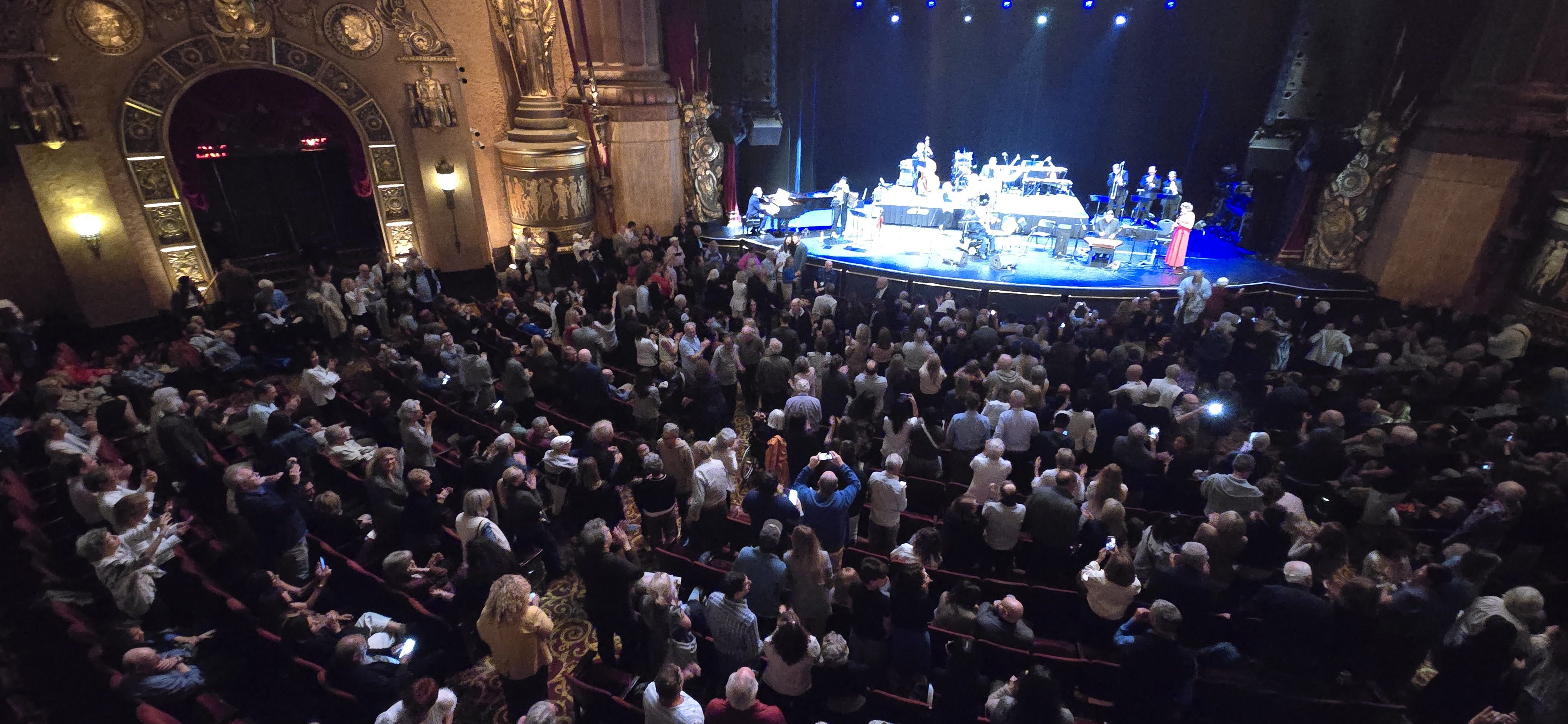
And then Perlman got his wish. People got out of their seats, filled the aisles and danced.
Crowd at the Beacon took to the aisles and started dancing around the theater as Perlman and the band played wedding music (photo: First One Through)
The scene captured something that yet another speech condemning antisemitism could not. Outside were the streets of a city where Jewish identity has increasingly been met with hostility and Jews hid their identity. Inside, an 81-year-old Jewish violinist who cannot walk himself, was playing unmistakably Jewish music inherited from communities that no longer exist – and Jews and Asians alike were on their feet celebrating it.
Dancing in the aisles at The Fiddler’s House to music by Itzhak Perlman and the Klezmatics at The Beacon in NYC, September 15, 2026
The timing made the scene still richer.
The Jewish year had just begun with the blast of the shofar. Rosh Hashanah demands reflection. Yom Kippur will demand repentance and fasting. But the Jewish calendar does not end there. It moves to Sukkot and then Simchat Torah, when Jews take the Torah from the ark, hold it in their arms and dance.
That progression says something essential about Judaism. It remembers the good and the bad. It prays. It fasts. It builds. It dances.
And it refuses to make sorrow the destination.
On a September night in New York, with antisemitism again confronting Jews on the streets outside, an old Jewish musical legend lifted his violin and played old Jewish melodies. And Jews clapped and danced in the aisles.
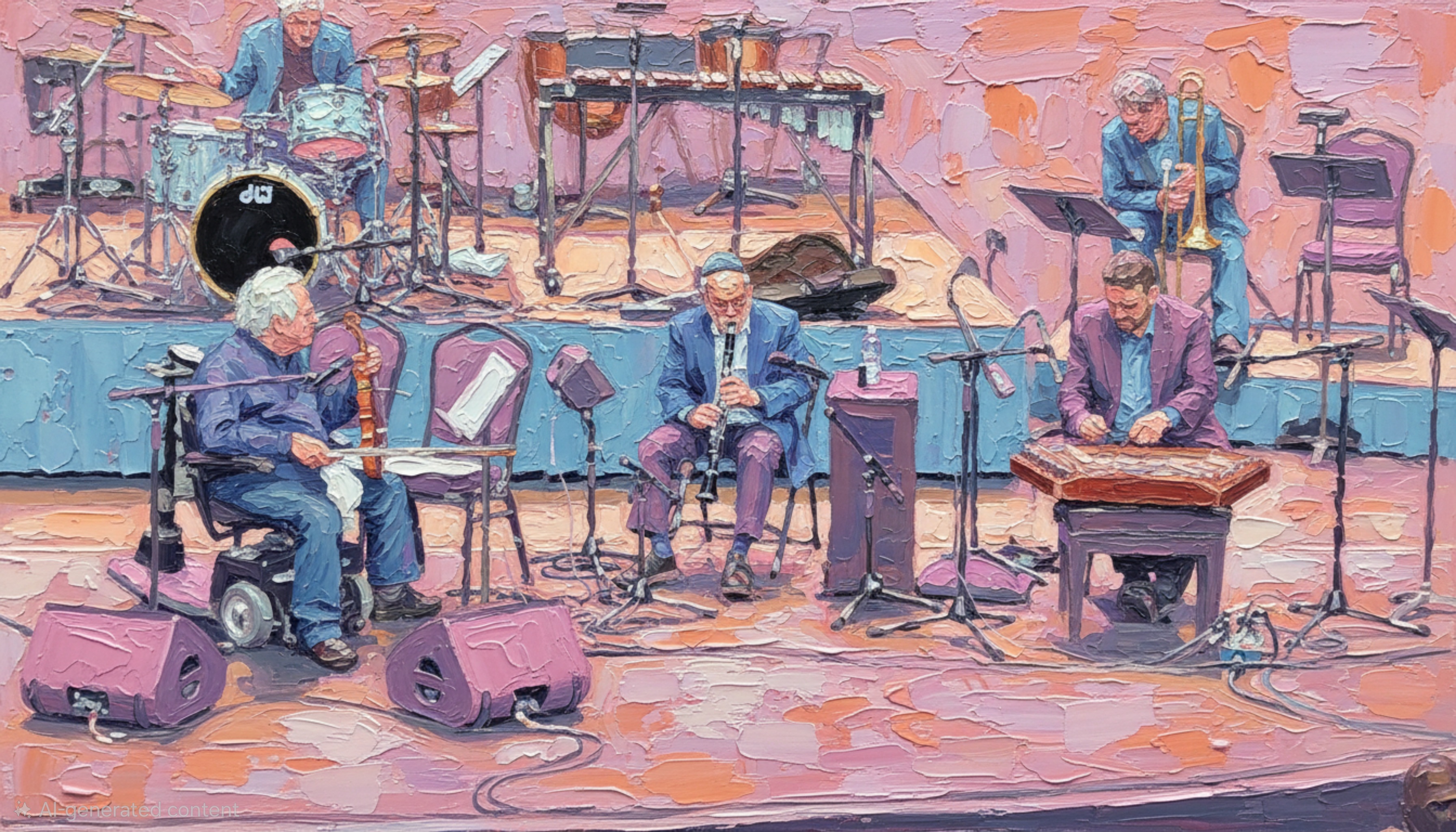
Itzhak Perlman and Andy Statman at The Beacon in NYC for Itzhak’s 81st birthday (made by First One Through with AI)
The Met has promised a replacement. And to go bigger.
Instead of John Galliano, the Costume Institute will honor Kanye West. It is an inspired substitution. Kanye is enormously influential in fashion, globally famous and has expressed considerably more recent thoughts about Hitler and Jews. He brings the Met’s original concept fully into the 21st century.
But fashion is only one artistic medium. The Met will establish the Anna Wintour Center for Antisemitic Excellence, celebrating achievement across the arts, literature, media and public life.
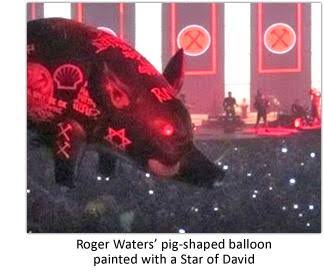
Roger Waters will anchor the music galleries and show clips of “Protocols of the Elders of Zion, The Musical.” Inflatable pigs adorned with Jewish stars will be available for purchase in the gift shop.
The children’s wing will celebrateRoald Dahl. Parents can walk their children through an oversized exhibit of Charlie and the Chocolate Factory, Matilda and James and the Giant Peach, followed by an interactive display of Dahl’s thoughts about Jews.
The Met’s new Film Department will honor Mel Gibson, ensuring his legacy.
The American Wing will have a permanent exhibit for Henry Ford. Many of the automobiles will remain in Detroit, but the Met will showcase Ford’s other publishing achievement, The International Jew, allowing visitors to explore how an industrial genius helped mass-produce something besides automobiles.
Contemporary media deserves its own galleries.
Candace Owens can become Director of Jewish Studies.
Tucker Carlson can chair the Department of Contextualization.
Nick Fuentes can lead Emerging Voices, introducing younger audiences to one of civilization’s oldest traditions.
Institutional leadership should reflect the museum’s expanded mission.
Representative Rashida Tlaib (D-MI) has been asked to join the Board’s Committee on Jewish Community Relations.
The Met should also dramatically expand accessibility.
All United Nations personnel receive complimentary membership. Security Council members receive Patron status. UN Human Rights Council members enter through a dedicated express lane.
And the Met needs an international partner for 2027. Fortunately, Iran has experience.
In 2006, Tehran hosted its Holocaust-denial conference. Two decades later, the Islamic Republic can bring the concept to New York as a special Met partnership: ERASURE: Reimagining Holocaust Memory Presented in partnership with the Islamic Republic of Iran and the Anna Wintour Center for Antisemitic Excellence.
Vogue will commemorate each new addition to the Met lineup with a full spread in every international edition. Antisemitism, after all, should never be allowed to suffer from poor distribution.
New York City Mayor Zohran Mamdani cheered the latest Met and Vogue moves and is considering making attendance to the museum mandatory for all public school students.
John Galliano was still disappointed about being canceled but was thrilled to see how the Met stepped up with counter-measures. He has moved on. He is pushing Britain and France to move past their memories of World War II, and reimagine their police uniforms to echo the outfits donned by the military of Nazi Germany.
Jeffrey Epstein’s crimes revealed something important about American society that had nothing to do with criminal law.
Many people who knew Epstein committed no crime. Association alone was not illegal. Flying on his plane, attending dinners or appearing in his address book did not make someone criminally liable.
Yet many still paid an extraordinary price.
Apollo co-founder Leon Black resigned as CEO after scrutiny over his financial relationship with Epstein, despite an independent review finding no evidence that he participated in Epstein’s crimes. MIT Media Lab director Joichi Ito resigned after revelations that he accepted Epstein donations. Others quietly stepped away from hospital boards, museum trusteeships, and prominent civic roles.
None of these penalties came from a courtroom. They came from boards, donors, shareholders, alumni, customers, and communities that reached the same conclusion: institutions entrusted with the public’s confidence should be led by people whose judgment inspires trust. The standard was higher than legality.
America’s moral code was not confined by the criminal code. It asked something more.
Can this person still represent us?
So consider terrorist groups like Hamas. Federal law makes providing material support to Hamas a serious crime. But simply expressing support for Hamas, absent conduct that crosses legal lines, is generally protected by the First Amendment. Americans remain free to express offensive or deeply disturbing political views.
But how can such a person represent us? Why is expressing support for terrorists or protecting them not grounds for cancelation? In a society where just an association with a pedophile can cost so much, how can active expressions of support for murderers and rapists cost anything less?
On October 26, 2023, just weeks after the massacre of nearly 1,200 people and abduction of 251 as hostages in Israel, sixteen members of the House of Representatives refused to condemn the barbarity. Those voting against condemnation were Ilhan Omar (D-MN), Rashida Tlaib (D-MI), Jamaal Bowman (D-NY), Summer Lee (D-PA), Cori Bush ( D-MO), Alexandria Ocasio-Cortez (D-NY), André Carson (D-IN), Al Green (D-TX), Delia Ramirez (D-IL) and Thomas Massie (R-KY). Those voting “present” were Greg Casar (D-TX), Ayanna Pressley (D-MA), Joaquin Castro (D-TX), Nydia Velázquez (D-NY), Jesús “Chuy” Garcia (D-IL) and Pramila Jayapal (D-WA). [Those whose names have been crossed out have since lost their seats or retired since the vote, as of this writing.]
The legal question is straightforward. Politicans can say horrible things. But why aren’t more people paying the price of promoting hatred and violence?
The answer comes from a second dynamic beyond trust: attention.
Over the last decade, as Americans have allowed influencers to dictate their worldview, a new question has emerged: will you entertain us?
The attention culture operates on an entirely different calculus than trust.
Consider Hasan Piker. He has repeatedly drawn criticism for rhetoric about Israel and Hamas that minimize or excuse terrorism. He has faced advertiser pressure, platform suspensions, and other controversies. Yet his overall influence has grown. Millions follow him across platforms. He has interviewed major political figures. He attended the Democratic National Convention as credentialed media. He has mobilized thousands to vote.
Controversy did not marginalize him. It expanded his audience. That is because social media does not ask the same question that institutions ask.
Institutions ask: Can this person still represent us? Algorithms ask: Will people keep watching?
Those are fundamentally different moral systems. And America’s youth is addicted to the latter.
More pointedly, politics increasingly resembles social media more than institutional leadership.
Young Americans are less likely to learn politics from newspapers or civic organizations than from livestreams, podcasts, TikTok clips, and YouTube personalities. The people shaping civic values increasingly answer to subscriber counts and recommendation engines, not to trustees or the establishment.
The old model of leadership rewarded persuasion, restraint, and credibility. The new model often rewards performance.
The Roman poet Juvenal warned that a republic could decline into a politics of spectacle. In Gladiator, the same questions are shouted at the crowd: “Are you not entertained?” The crowd is caught in the frenzy, unaware of how the barbarity has advanced another level, a new hero crowned, and a potential new political leader anointed.
Algorithms have perfected that logic. Every outrage becomes content. Every controversy becomes engagement. Every conflict becomes a step towards power.
Whether the personality is Donald Trump, Alexandria Ocasio-Cortez, Hasan Piker, or someone not yet famous, the incentive structure is remarkably similar. Constant visibility. Constant reaction. Constant performance.
And incremental steps towards political power.
Rank
Person
Followers
1
Barack Obama
~200+ million followers. ~ 131 million followers on X and 42+ million on Instagram
2
Donald Trump
~100+ million followers. 90+ million followers on X, and ~13 million on Truth Social
3
Kamala Harris
~35 million followers. Mostly Instagram, supported by millions on X and TikTok
4
Bernie Sanders
~20+ million followers. Primarily on X, Instagram, and Facebook
5
Joe Biden
~16 million followers. Largely across X and Instagram
6
Alexandria Ocasio-Cortez
15+ million followers. On X, Instagram, and Twitch
The politicians with enormous following on social media are almost exclusively Democrats
The real question is not whether social media has changed politics. It is whether politics has become social media.
If the next generation chooses its leaders using the same instincts it uses to choose influencers, then America’s civic culture will inevitably begin to resemble the platforms that shaped it.
Perhaps that explains why lawful association with Jeffrey Epstein could end a corporate career while despicable rhetoric can become fuel for greater online influence. The outrage of social media enlists the youth who turn out the votes for the revoluntionaries.
The youth vote propelled Abdul El-Sayed to victory in the Michigan Democratic Senate primary
The greatest danger may not be that one controversial figure gains another million followers. It is that the engine of engagement and vitriol has overtaken our politics, and weakened the country in this fast-changing and volatile world.
Standing before a grieving audience, Bono argued that the terrorists wanted more than bodies. They wanted souls. They wanted free people to surrender their openness, joy, and humanity. His message was simple: we cannot become monsters to defeat the monsters.
But that never meant the monsters should be left undefeated.
A decade later, Bono’s words resonate with renewed force. Islamist terrorists butchered hundreds at the Nova Music Festival in Israel on October 7, 2023, turning a celebration of life into a killing field. Yet Nova has refused to surrender. The festival has returned, even as Hamas and its supporters continue to mock the victims and celebrate the massacre.
That is the challenge every free society faces.
Love is not an alternative to defeating evil. Without security, there can be no concerts, no festivals, no freedom to gather. Evil must be confronted and defeated, or it will make love, music, and joy impossible.
The West must therefore pursue twin imperatives: defeat those who seek to destroy civilization, while steadfastly embracing the values of love, creativity, and human dignity that make civilization worth defending. Terror must never be allowed to decide either who lives or how we live.
Noa Beer, one of the SuperNova X music and arts festival organizers.
A lecture on the archaeology of ancient Israel and Judah was supposed to take place at the British Museum this month. Instead, it was postponed after organizers learned that protesters intended to disrupt the event.
The subject was not the Gaza war nor settlements nor Israeli Prime Minister Benjamin Netanyahu.
It was archaeology.
It has happened before. In 2014, UNESCO canceled an exhibition on the Jewish people’s 3,500-year history in the Land of Israel after objections from Arab states. More recently, Palestinian Authority President Mahmoud Abbas repeatedly denied that the Jewish Temples stood in Jerusalem, at one point claiming they were actually located in Yemen.
These episodes share a common thread. The dispute is no longer simply about the modern State of Israel nor its policies or actions. It is increasingly about the history of the Jewish people themselves.
Yet the evidence is overwhelming. The kingdoms of Israel and Judah are among the best-documented societies of the ancient Near East. Their existence is attested through inscriptions, seals, coins, manuscripts, monuments, and the records of neighboring civilizations. The British Museum itself houses artifacts that tell this story.
Seal of King Hezekiah found in Jerusalem, around 700 BCE
That is why archaeology poses such a problem for those who seek to portray Jews as foreign interlopers – colonizers – with no ancient connection to the land. Artifacts cannot be pressured into changing their testimony. Every discovery points in the same direction: the Jewish story in the Land of Israel stretches back thousands of years, before the births of Jesus and Mohammed.
Few people would tolerate a museum debating whether ancient Egypt existed or whether Rome stood in Italy. Yet Jewish history is increasingly treated as uniquely negotiable.
Curiously and alarmingly, the protest at the British Museum had a much more immediate backdrop than the current war. This talk was to take place during Jewish Culture Month and the protestors were assembled by an anti-Israel group called “Jewish Artists for Palestine.” The museum’s efforts to highlight Jewish history in the land of Israel during a period of focus on Jewish culture brought out Jewish anti-Israel protestors.
Institutions are backing away from Jewish history and culture with the backing of fringe extremist Jews and anti-Israel Arabs. So basic history becomes debate, and the debate has moved from the policies of the Israeli government to Jews themselves.
The Nazis physically annihilated the Jews of Europe as it sought to place their culture as historical artifacts in museums. Now, museums and institutions seek to erase Jewish history and culture as a prelude to eradicating Jews in the Middle East.
The new play Giant has revived the scandal of Roald Dahl, the beloved children’s author whose antisemitism became inseparable from his legacy. Dahl’s hatred had its roots in an obsession with Israel, especially after the 1982 Lebanon War, which hardened into something older and darker: Jews as a collective object of blame. Political fury dissolved the line between a state and a people.
Matt Chun shows where that road now leads.
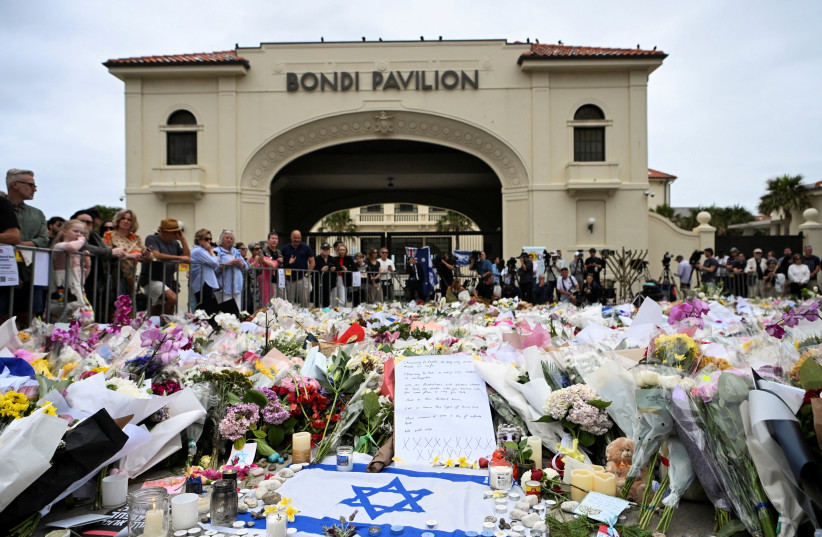
Chun is an Australian children’s book illustrator, part of a profession entrusted with shaping how children understand innocence, cruelty, and empathy. But when Jews were murdered at a Jewish Hanukkah celebration in Bondi, his response in an article title “Never mourn a fascist,” exposed something far beyond political critique: raw antisemitism. The victims were neither Israelis nor soldiers. They were Australian Jews gathered in communal celebration, among them a ten-year-old girl. Chun denied their innocence and treated their deaths as politically qualified, as though Jewish identity itself diminished the claim to grief.
People stand near flowers laid as a tribute at Bondi Beach to honour the victims of a mass shooting that targeted a Hanukkah celebration at Bondi Beach on Sunday, in Sydney, Australia, December 16, 2025. (credit: REUTERS/Flavio Brancaleone)
That marks the evolution. Dahl saw war and blamed Jews. Chun sees Jews and explains away their murder.
That is why the cancellation of Chun’s forthcoming children’s book Bila by University of Queensland Press was fitting. Children’s books are an act of trust. Parents place them in their children’s hands believing that the people behind them understand something fundamental about innocence and human worth. A creator who cannot recognize the innocence of a murdered Jewish child at a Hanukkah celebration has forfeited any claim to shape the moral imagination of children.
Dahl’s antisemitism traveled through Israel before landing on Jews. Chun begins with Jews.
Chun wrote that “lands have been pillaged, poisoned, desecrated, and set ablaze by colonisers,” as he celebrates the slaughter of people at a holiday party. Alas, he is only the latest author instilling venom in the ink of books being marketed to children.
Claude Monet (1840-1926) spent his life chasing light.
He helped launch Impressionism by shifting painting away from fixed objects and toward the unstable conditions of the act of seeing itself. Through a variety of subjects – haystacks, cathedrals, train stations, coastlines – Monet returned again and again, capturing what never held still: morning light, evening shadow, fog, heat, atmosphere. The object remained. Perception changed.
And then, late in life, he turned almost entirely to water.
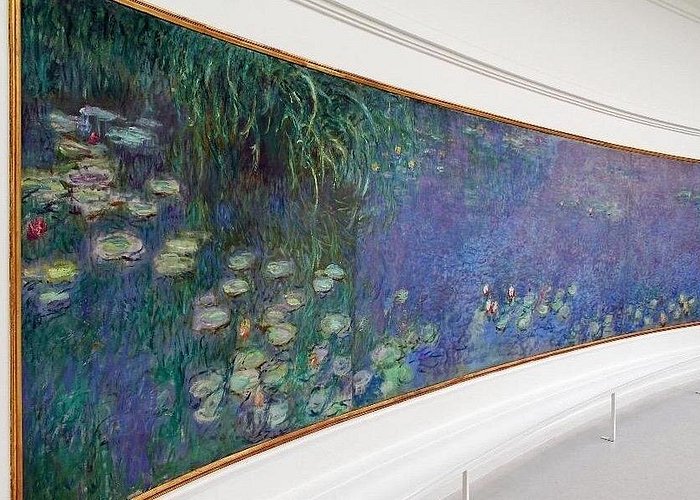
At Claude Monet’s House and Gardens in Giverny, France, Monet painted the pond in his garden more than 250 times, producing the vast Water Lilies series that consumed the final decades of his life. These were far more than decorative studies of flowers on water. They became his great final act, culminating in enormous panoramic canvases so large they stop functioning like ordinary paintings.
They become environments.
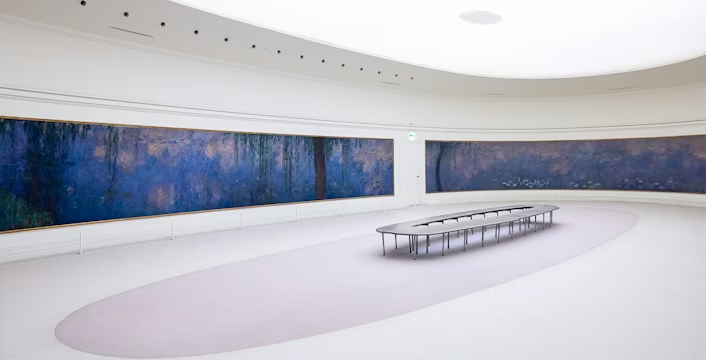
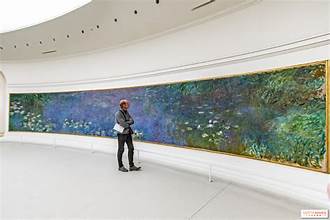
Stand inside the oval rooms at Musée de l’Orangerie in Paris and something unusual happens: you lose orientation.
Musée de l’Orangerie in Paris
There is no horizon line to stabilize the eye. No clear beginning or end. Water stretches outward without boundary. Sky descends into the pond as reflection. Trees fracture into color and light. Surface and depth collapse into one another.
You are no longer looking at a pond. You are inside a field of undifferentiated perception.
That is what makes the late Water Lilies so unsettling. And beautiful.
Monet strips away the architecture of the ordinary. In most painting, the world arrives in layers: foreground, middle ground, background. Here, those distinctions dissolve. What is above enters below. What is solid becomes liquid. What seems stable flickers and shifts.
The eye searches for boundaries and cannot quite find them. One is left with colors, sometimes sharp and other times diffuse, as solid and liquid vie for primacy.
And that is where the Bible begins. In tohu va-vohu.
The phrase describes a world before distinction. Existence is present, but unformed. Darkness over the deep. Water everywhere. No stable land, no horizon, no orienting line for human perception in the world before humans.
A world new and present, but unreadable.
Genesis begins in the same visual condition Monet creates: immersion in undifferentiated reality.
In the Bible, God focuses on creation through separation. Light from darkness. Waters above from waters below. Sea from dry land. Creation is manifest by distinction. Reality becomes intelligible because boundaries emerge.
This is the radical claim of Genesis: the natural world emerged from chaos, from the topsy-turvy world of tohu va-vohu. And Monet performs the reverse. He takes the natural world and loosens its boundaries, dissolving it back into its primal elements: light, water, color, reflection.
And yet it remains nature. That is the wonder of the Water Lilies.
They allow us to see the natural world as if it were returning to its chaotic first condition, before edges hardened, before boundaries settled, before the eye could fully distinguish one thing from another.
Monet, at the end of his life, took the simple beauty of his backyard garden and let humanity imagine the entire natural world at the moment of creation, before there were objects, before perception was even possible.
It was a remarkable end of a career for the gifted painter who chased light throughout his days, to conclude at the very First Day.
Surrealism did not invent the language of dreams and symbols; it applied the principles to art. For the Jewish people, that language had long been central: a civilization built on ritual, memory, and meaning encoded in objects, stories, and repeated acts of remembrance.
When Surrealism emerged from Freud’s ideas, it offered a new lens to examine what Jews had already lived: that symbols shape identity, and that dreams can carry a people across time. In the aftermath of Europe’s destruction, that lens reveals a stark contrast: while others turned to common stories to process loss, the Jewish people used their symbolic tradition to rebuild and to turn dream into reality.
Interpreting Dreams
At the turn of the twentieth century, Sigmund Freud (1856 Czechia – 1939 United Kingdom) proposed something radical: that the human mind operates on two planes at once. The conscious – ordered, rational, disciplined. And beneath it, the unconscious – restless, suppressed, filled with fears and desires that shape behavior without announcing themselves.
Dreams, Freud argued in The Interpretation of Dreams (1899), are the bridge between these worlds.
They are not noise. They are language.
A language built on symbols: recurring forms that carry meaning across individuals and cultures. A house becomes identity. Water becomes birth or transformation. Men are featured as long cylindrical objects while women are enclosed spaces. Objects are never just objects. They are carriers of something deeper, something shared.
Freud did not invent symbolic thinking. He revealed that we are already immersed in it.
And once that realization entered European culture, it transformed how artists saw their role: not as imitators of reality, but as revealers and interpreters of the unconscious.
The Dream Made Visible
Surrealism emerged from collapse.
World War I shattered Europe’s faith in reason. The same systems that promised progress delivered mechanized death. Logic, order, and scientific advancement had not restrained violence but refined it.
Into that rupture stepped André Breton (1896 France -1966 France). In 1924, his Surrealist Manifesto defined the art movement as “pure psychic automatism,” an attempt to express the true functioning of thought, unfiltered by reason or convention. It was a deliberate rejection of the structures that had failed and a search for truth in the raw, unmediated currents of the mind.
Surrealism was not escapism. It was rebellion against a reality that could no longer be trusted.
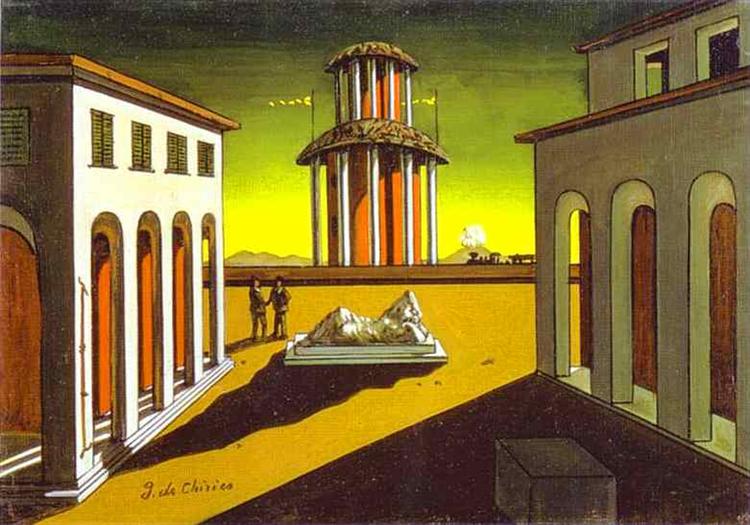
Artists like Giorgio de Chirico (1888 Greece – 1978 Italy) created haunting spaces – empty plazas, long shadows, objects placed together without explanation. These works do not resolve into meaning. They create a feeling of dislocation, of being suspended in a waking dream where logic loosens its grip.
Piazza d’Italia by Giorgi de Chirico (1913)
Jane Graverol (1905 Belgium – 1984 France) made the point plainly, saying that her canvases are “waking, conscious dreams.”
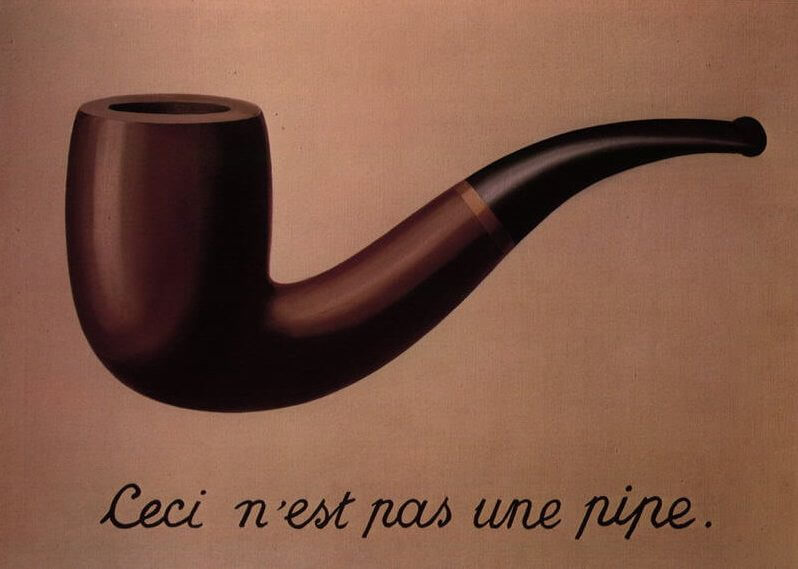
René Magritte (1898 Belgium – 1967 Belgium), strips away ambiguity and addresses the viewer directly. His 1929 painting The Treachery of Images confronted viewers with the bold statement “This is not a pipe” that what they were seeing was not an object but the symbol of an object.
The Treachery of Images by Rene Magritte (1929)
The statement is instructional.
Magritte is not playing with illusion. He is teaching a fundamental principle: that art is inherently symbolic. The painted pipe is not a pipe but a representation of a pipe. A constructed stand-in for reality. The viewer’s instinct is to collapse that distinction, to treat the symbol as the object itself. Magritte interrupts that instinct and forces recognition.
This is not just a lesson about art. It is a lesson about perception.
Before and After the Abyss
Then came World War II. And the question of perception became far more dangerous.
Before the war, Surrealism destabilized reality with intellectual daring. It exposed how fragile meaning could be, and how easily the mind imposed order where none existed. De Chirco expressed this when he said “although the dream is a very strange phenomenon and an inexplicable mystery, far more inexplicable is the mystery and aspect our minds confer on certain objects and aspects of life.”
After the war, the issue was not mystery. It was blindness.
The European Holocaust was not carried out by a primitive society. It was executed by one of the most intellectually advanced cultures in the world – Germany and Austria – lands of philosophy, music, and scientific achievement.
Civilization did not prevent barbarism. It coexisted with it.
And in that realization, Surrealism’s inquiry deepens.
Consider Magritte before and after the war.
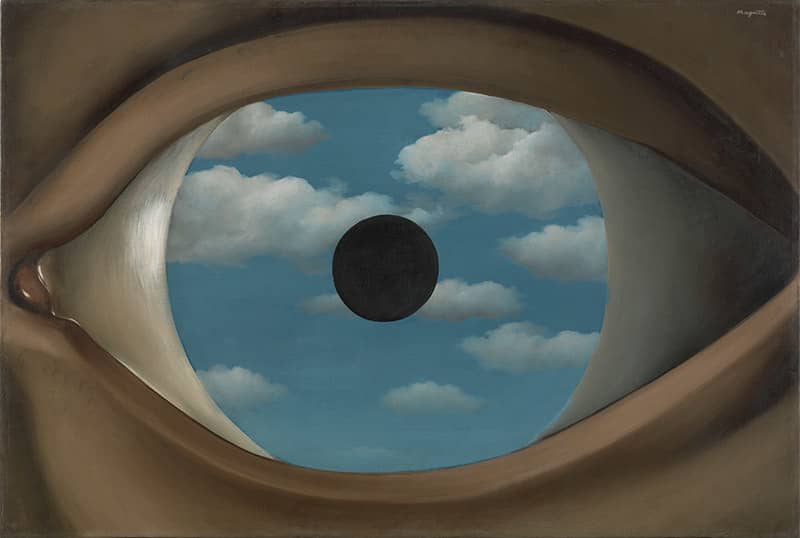
In The False Mirror (1928), the eye is open—wide, consuming the sky. There is a sense of total perception, of a world fully visible, even overwhelming.
The False Mirror by Rene Magritte (1928)
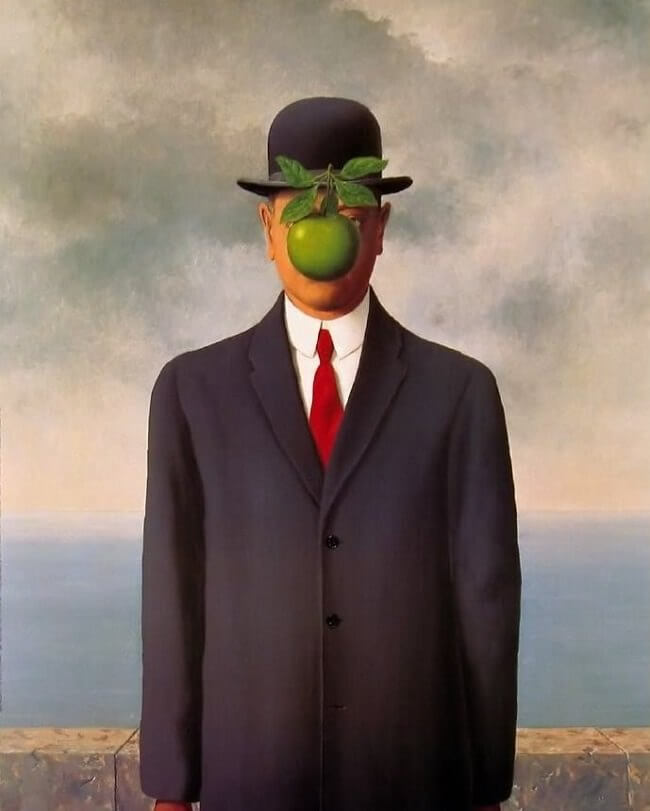
By 1964, in The Son of Man, the face is obscured by a green apple.
The Son of Man by Rene Magritte (1964)
The shift is profound.
The apple is not arbitrary. It carries centuries of symbolic weight: knowledge, intellect, the pursuit of understanding. It evokes Eden, the awakening of consciousness, the belief that human reason elevates and refines. And simultaneously leads to destruction, despair and the loss of paradise.
Here, that very symbol blocks the face.
What if the world’s admiration for European intellect – its reverence for German philosophy, Austrian culture, scientific brilliance – functioned as a kind of blindness? What if our advances in science and knowledge was ultimately too much responsibility for our minds to handle and yielded ultimate weapons of mass destruction to end all life?
A society’s fixation on knowledge obscured the capacity for evil.
The world saw the body and the apple. It saw a society of culture, sophistication, refinement. It did not see the face – the person, the emotion, the intent – behind it. And that face? It saw nothing at all, blinded completely by knowledge.
Magritte’s post-war image reads as indictment of willful misperception. The failure was not that reality hid the truth. It was that humanity chose not to see it.
Myth as Reconstruction
In the aftermath of this rupture, some Surrealist artists turned to mythology, a common history and culture of a now divided Europe. Myth offered what history cannot: a structure to process loss.
Consider Orpheus.
He descends into the underworld to retrieve his lost wife, Eurydice, only to lose her forever when he looks back. The story is not about failure of effort; it is about the finality of loss.
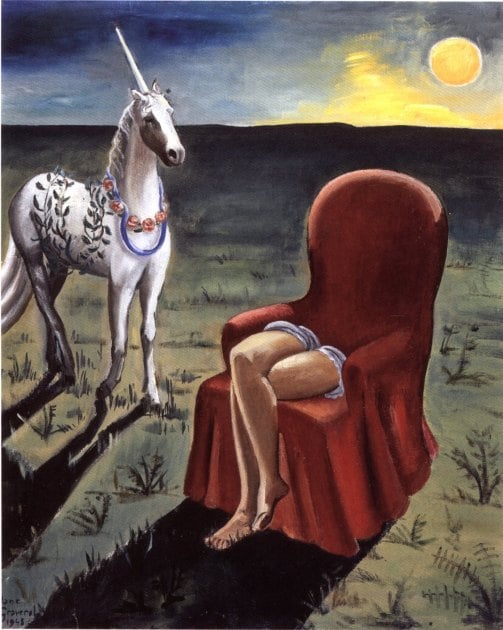
Jane Graverol paints this in 1948, as a Belgian artist from a country invaded and devastated in a war it did not seek. As Europe begins to absorb the reality of the concentration camps – the industrial killing, the desecration of bodies – the imagery becomes unbearable.
The Procession of Orpheus by Jane Graverol (1948)
A woman fused into a chair – half human, half object – evokes not abstraction, but transformation of person into material. A world in which the boundary between human and furniture was grotesquely violated.
This is not simply Orpheus losing Eurydice, disappearing as they emerged from the underworld. It is Europe recognizing that what was lost cannot be restored.
Now consider Ulysses.
After the Trojan War, Ulysses (Odysseus) spends ten years trying to return home to Ithaca. His journey is long, disorienting, and filled with trials – temptation, destruction, loss of companions, divine obstacles. When he finally arrives, he is not recognized. His home has been overtaken. He must reclaim it, rebuild it, reassert his place within it.
Return is not restoration. It is confrontation.
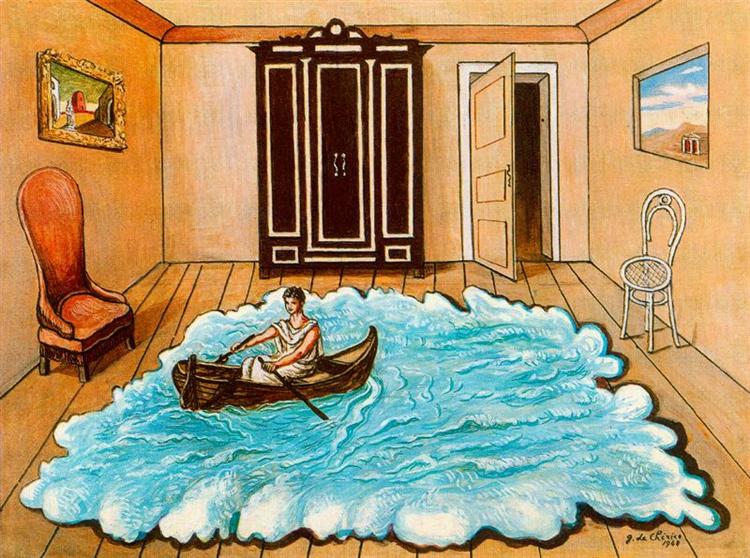
Giorgio de Chirico captures this in The Return of Ulysses.
The Return of Ulysses by Giorgio de Chirico (1968)
The painting is divided.
On the left, a framed work from decades earlier sits beneath a heavy red chair. It anchors the past.
On the right, a frail white chair sits beneath an open window – exposed, stripped, uncertain. The solidity and comfort of the past gives way to fragility.
And in between, Ulysses. Small. Reduced. Rowing across water inside a room forcing the viewer to confront the symbolism.
Water, the symbol of birth, of transition, of beginning again.
He is not standing in triumph. He is navigating between worlds—between what was and what might be.
And then, something unexpected. An open door.
Not the past. Not the fractured present. But a third path.
Ulysses rows toward it. The hero moves toward something new.
The artist, from a country aligned with Germany during the war, was not focused on loss but a chance for a new future within his homeland, inside the familiar surroundings of his room.
The Jewish Path: Beyond Myth
And yet, there is a story that does not fit neatly within this framework of the Surrealist artists of the Allies and Axis. Because the Jewish people after World War II were neither and both.
They were the decimated. A people shattered, displaced, nearly erased – and forced to ask how to return, where to return.
There was no home to reclaim in the way of Ulysses.
No possibility of retrieving what was lost, like Orpheus.
There was only one path forward. Rebirth, in a new land.
And in a way unparalleled in history, they achieved it.
The reestablishment of the State of Israel was not simply political. It was civilizational. A people dispersed for nearly two thousand years, speaking different languages, living across continents, reconstituted sovereignty in its ancestral land.
Here, myth gives way to reality.
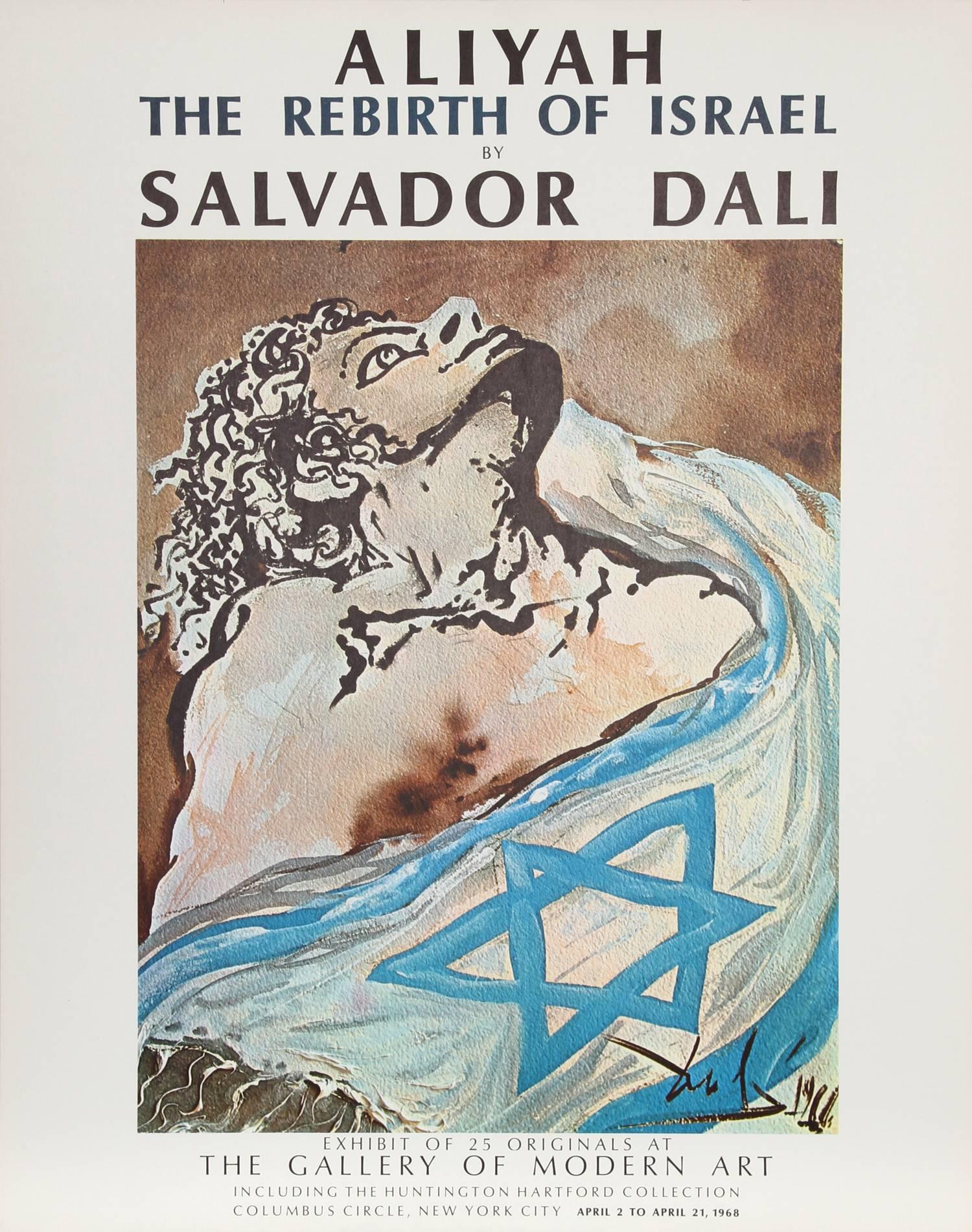
In 1968, Salvador Dalí – the master of dream imagery – was commissioned to create a series of 25 watercolor paintings for the Hartford Museum to mark Israel’s 20th anniversary. The timing was not incidental. It came just one year after the Six-Day War, when Israel not only survived existential threat but reunited Jerusalem, returning Jews to their holiest sites in the Old City.
If Theodor Herzl declared, “If you will it, it is no dream,” then Surrealism—an art form built on dreams—became the perfect language to express that transformation.
Aliyah, the rebirth of Israel by Salvador Dali (1968)
Dalí’s Aliyah: The Rebirth of Israel, the centerpiece of the series, captures this moment.
A figure rises, draped in the Israeli flag. And what is more symbolic than a national flag?
Two blue stripes evoking both the Mediterranean Sea and the Jordan River, the geographic bounds of the land, while simultaneously recalling the tallit, the Jewish prayer shawl. Nationhood and spirituality fused into a single image.
The figure is not merely standing. He is emerging naked and staring at the heavens.
This is not return. This is creation.
The Arc of Surrealism
Surrealism begins as an education, an attempt to translate Sigmund Freud’s insight into visual form, to show that human beings do not simply see the world, but interpret it through symbols, through dreams, through layers of meaning that sit beneath the surface. It teaches the viewer to slow down, to recognize that an image is not the thing itself, that representation is constructed, that what feels obvious may be anything but.
At its inception, it is a project of illumination, shaped by a Europe that still believed in its own intellectual coherence. From Paris to Brussels to Rome, it carries the confidence of a continent trying to understand itself through deeper, more elusive truths.
But that confidence does not survive World War II.
When Europe fractures, Surrealism fractures with it. The symbolic language remains intact, but it begins to tell different stories depending on where it is spoken.
In Belgium, through Jane Graverol, myth becomes a language of irreversible loss. The world she paints is one in which the human can be reduced to object, where dignity can be stripped away, where what has been taken cannot be restored. The symbols haunt.
In Italy, through Giorgio de Chirico, the question shifts. It is no longer about loss alone, but about return—about what it means to come home when home itself has changed. The past lingers, heavy and inescapable, while the future appears fragile, uncertain, barely formed. And yet, within that uncertainty, there is movement—a quiet insistence on choosing a path forward, even when the destination is unclear.
And then there are the Jews.
Not aligned with either side of Europe’s divide, but decimated, displaced, and exposed. They are not asking how to interpret what has been lost, or how to return to what was. Those paths are closed to them.
They are asking whether anything can be built again at all.
And it is here that Surrealism, for all its depth, turns to the Jews for answers.
Because the Jewish people did not need to be taught how symbols work. They had lived within that framework for centuries—through ritual, through memory, through stories that transformed objects into meaning and meaning into continuity. What Surrealism sought to uncover as theory had already been sustained as practice.
The Passover seder has been educating Jewish children for three thousand years about symbols, about the birth of a nation, and about the dream of Jerusalem.
Surrealism’s arc from the 1920s to 1960s was a story of Europeans wrestling with the mind and meaning before and after the war. It ends when those long familiar with symbolism left their nightmare and made their dream a reality.
There is something striking about Parshat Vayikra.
Just weeks after the drama of Exodus – splitting seas, revelation at Sinai, a nation coming into being – the Torah seemingly turns inward. The focus shifts to offerings, detail, repetition, and discipline. It feels quieter, but far more demanding.
Because the Torah is no longer telling the story of a history of a people. It is shaping the inner life of a person and framing a community.
Korban: The Work of Drawing Close
The word korban comes from the Hebrew word karov, to draw close.
This is the Torah’s language for repairing distance. Every lapse in judgment, every compromise, every moment we fall short creates space between who we are and who we are meant to be. That distance accumulates. It dulls awareness. It reshapes identity over time.
Korban is the act of closing that gap through deliberate engagement.
The Offering as Mirror
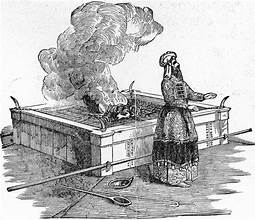
The individual places hands on the offering before it is brought forward. The gesture is direct and personal.
The animal reflects the instinctive layer of the self: of impulse, appetite, anger, ego. The act forces recognition: this energy exists within me. It must be directed, refined, elevated.
The fire on the altar becomes the mechanism of transformation. What is raw is lifted. What is uncontrolled is shaped into something purposeful.
Responsibility leads to possibility.
Atonement Requires Engagement
Vayikra establishes a system built on participation. Atonement unfolds through action, awareness, and presence.
A person must recognize the failure, step toward it, and engage with it. That process creates movement. It slows the instinct to gloss over mistakes and replaces it with something more durable: change that is earned.
The Hidden Becomes Visible
As important, korbanot were not private moments.
They took place in the open, at the center of the community. A person brought an offering in full view; sometimes for something no one else knew, a failure that could have remained hidden.
That public act carries a dual force. It is a form of confession. It acknowledges that private actions shape a public self.
It also reshapes how we see each other. Everyone comes forward. The composed, the successful, the admired, all stand at the same altar. They, too, confront failure. They, too, seek repair.
The system dismantles the illusion of perfection and replaces it with something far more stable: a community built on shared imperfection and ongoing effort.
The World We Built Instead
Today, we have constructed the opposite system.
Our lives are increasingly public, yet carefully edited. Success is broadcast. Struggle is concealed. Identity becomes something managed rather than lived.
Platforms reward the appearance of control, clarity, and achievement. Failure is filtered out. Weakness is reframed or hidden entirely.
The result is a quiet distortion.
People begin to believe that others are living more complete, more resolved lives. The gap between appearance and reality widens. Struggle becomes isolating rather than connective.
In a world like this, growth becomes harder. Without visibility, there is less accountability. Without shared imperfection, there is less permission to confront what is broken.
The Measure Is Intent
The mincha, the simple grain offering, carries the same weight as more elaborate offerings.
A handful of flour stands beside an animal offering because the Torah measures sincerity. The system resists performance and centers intention, reinforcing that what matters is the internal work, not the external display.
The Real Offering
At the center of Vayikra is a simple idea: the offering is the self, refined over time.
The challenge today is not understanding that idea. It is living it in a world that encourages concealment over confrontation.
Vayikra describes a life where people engage their shortcomings directly and are willing to be seen in that effort. The question that remains is whether we can build lives that allow for that kind of honesty again.