
Jeffrey Epstein’s crimes revealed something important about American society that had nothing to do with criminal law.
Many people who knew Epstein committed no crime. Association alone was not illegal. Flying on his plane, attending dinners or appearing in his address book did not make someone criminally liable.
Yet many still paid an extraordinary price.
Apollo co-founder Leon Black resigned as CEO after scrutiny over his financial relationship with Epstein, despite an independent review finding no evidence that he participated in Epstein’s crimes. MIT Media Lab director Joichi Ito resigned after revelations that he accepted Epstein donations. Others quietly stepped away from hospital boards, museum trusteeships, and prominent civic roles.
None of these penalties came from a courtroom. They came from boards, donors, shareholders, alumni, customers, and communities that reached the same conclusion: institutions entrusted with the public’s confidence should be led by people whose judgment inspires trust. The standard was higher than legality.
America’s moral code was not confined by the criminal code. It asked something more.
Can this person still represent us?
So consider terrorist groups like Hamas. Federal law makes providing material support to Hamas a serious crime. But simply expressing support for Hamas, absent conduct that crosses legal lines, is generally protected by the First Amendment. Americans remain free to express offensive or deeply disturbing political views.
But how can such a person represent us? Why is expressing support for terrorists or protecting them not grounds for cancelation? In a society where just an association with a pedophile can cost so much, how can active expressions of support for murderers and rapists cost anything less?
On October 26, 2023, just weeks after the massacre of nearly 1,200 people and abduction of 251 as hostages in Israel, sixteen members of the House of Representatives refused to condemn the barbarity. Those voting against condemnation were Ilhan Omar (D-MN), Rashida Tlaib (D-MI), Jamaal Bowman (D-NY), Summer Lee (D-PA), Cori Bush ( D-MO), Alexandria Ocasio-Cortez (D-NY), André Carson (D-IN), Al Green (D-TX), Delia Ramirez (D-IL) and Thomas Massie (R-KY). Those voting “present” were Greg Casar (D-TX), Ayanna Pressley (D-MA), Joaquin Castro (D-TX), Nydia Velázquez (D-NY), Jesús “Chuy” Garcia (D-IL) and Pramila Jayapal (D-WA). [Those whose names have been crossed out have since lost their seats or retired since the vote, as of this writing.]
The legal question is straightforward. Politicans can say horrible things. But why aren’t more people paying the price of promoting hatred and violence?
The answer comes from a second dynamic beyond trust: attention.
Over the last decade, as Americans have allowed influencers to dictate their worldview, a new question has emerged: will you entertain us?
The attention culture operates on an entirely different calculus than trust.
Consider Hasan Piker. He has repeatedly drawn criticism for rhetoric about Israel and Hamas that minimize or excuse terrorism. He has faced advertiser pressure, platform suspensions, and other controversies. Yet his overall influence has grown. Millions follow him across platforms. He has interviewed major political figures. He attended the Democratic National Convention as credentialed media. He has mobilized thousands to vote.
Controversy did not marginalize him. It expanded his audience. That is because social media does not ask the same question that institutions ask.
Institutions ask: Can this person still represent us? Algorithms ask: Will people keep watching?
Those are fundamentally different moral systems. And America’s youth is addicted to the latter.
More pointedly, politics increasingly resembles social media more than institutional leadership.
Young Americans are less likely to learn politics from newspapers or civic organizations than from livestreams, podcasts, TikTok clips, and YouTube personalities. The people shaping civic values increasingly answer to subscriber counts and recommendation engines, not to trustees or the establishment.
The old model of leadership rewarded persuasion, restraint, and credibility. The new model often rewards performance.
The Roman poet Juvenal warned that a republic could decline into a politics of spectacle. In Gladiator, the same questions are shouted at the crowd: “Are you not entertained?” The crowd is caught in the frenzy, unaware of how the barbarity has advanced another level, a new hero crowned, and a potential new political leader anointed.
Algorithms have perfected that logic. Every outrage becomes content. Every controversy becomes engagement. Every conflict becomes a step towards power.
Whether the personality is Donald Trump, Alexandria Ocasio-Cortez, Hasan Piker, or someone not yet famous, the incentive structure is remarkably similar. Constant visibility. Constant reaction. Constant performance.
And incremental steps towards political power.
| Rank | Person | Followers |
|---|---|---|
| 1 | Barack Obama | ~200+ million followers. ~ 131 million followers on X and 42+ million on Instagram |
| 2 | Donald Trump | ~100+ million followers. 90+ million followers on X, and ~13 million on Truth Social |
| 3 | Kamala Harris | ~35 million followers. Mostly Instagram, supported by millions on X and TikTok |
| 4 | Bernie Sanders | ~20+ million followers. Primarily on X, Instagram, and Facebook |
| 5 | Joe Biden | ~16 million followers. Largely across X and Instagram |
| 6 | Alexandria Ocasio-Cortez | 15+ million followers. On X, Instagram, and Twitch |
The real question is not whether social media has changed politics. It is whether politics has become social media.
If the next generation chooses its leaders using the same instincts it uses to choose influencers, then America’s civic culture will inevitably begin to resemble the platforms that shaped it.
Perhaps that explains why lawful association with Jeffrey Epstein could end a corporate career while despicable rhetoric can become fuel for greater online influence. The outrage of social media enlists the youth who turn out the votes for the revoluntionaries.
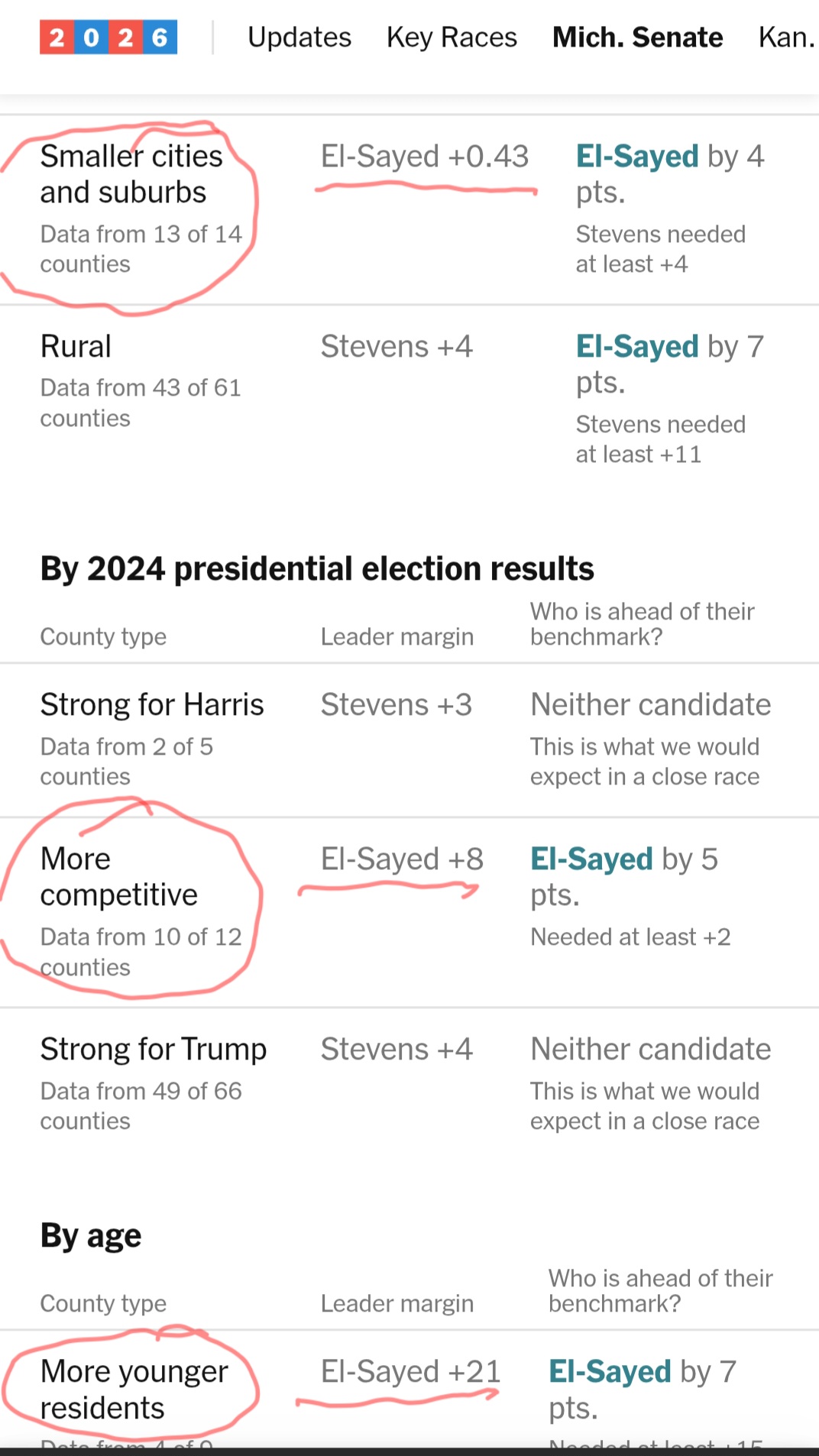
The greatest danger may not be that one controversial figure gains another million followers. It is that the engine of engagement and vitriol has overtaken our politics, and weakened the country in this fast-changing and volatile world.
The idealism and sincerity of Mr. Smith Goes to Washington belong to a bygone era. Today, we elect Gladiators who entertain us.
Related
We Listen To Idiots (November 2022)


Pingback: The Audience Has Changed | First One Through