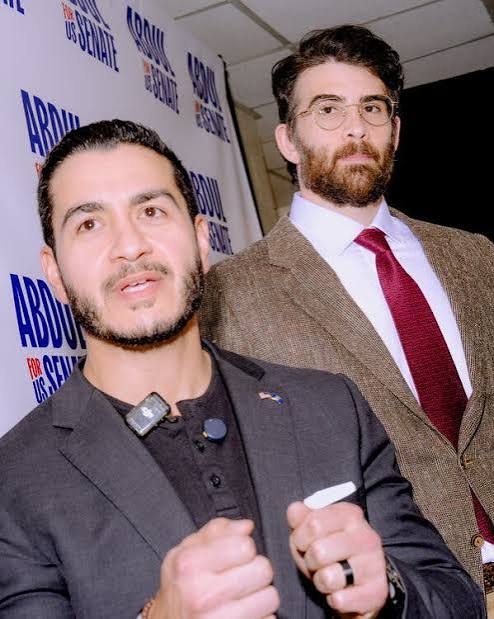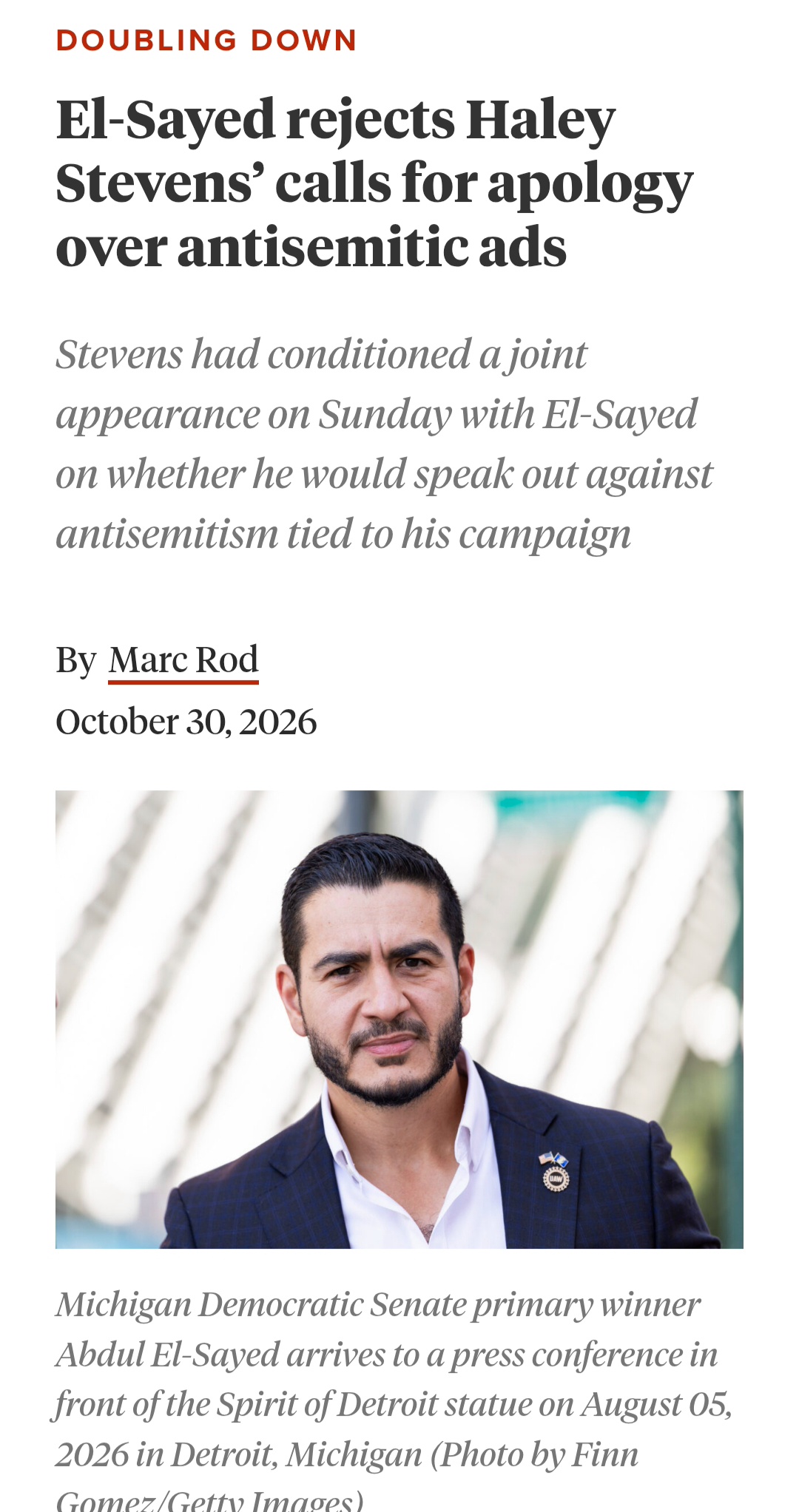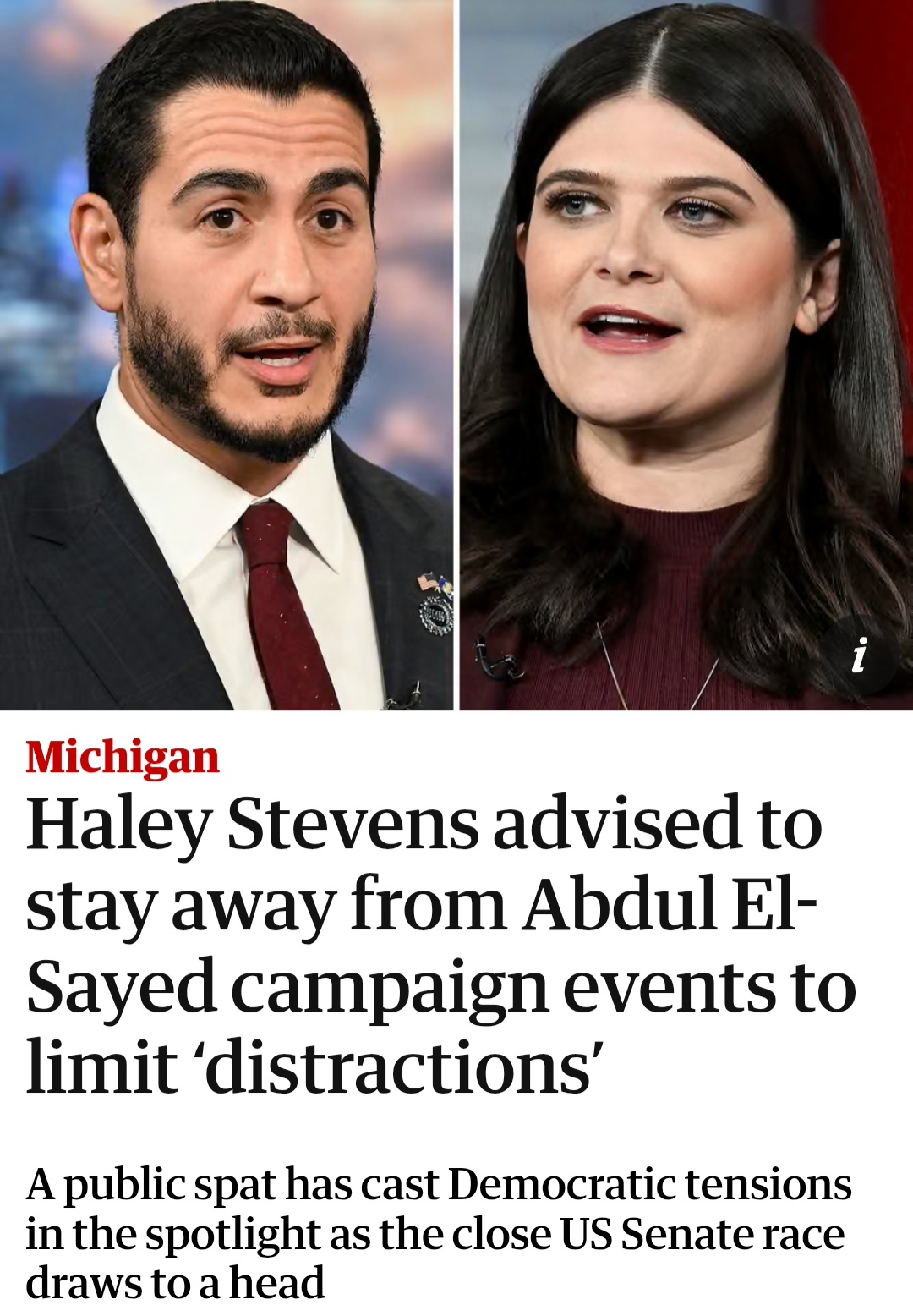
With the help of alt-left Jews.
Hasan Piker recently compared the heavily Jewish Detroit suburb of West Bloomfield to a Ku Klux Klan neighborhood, calling its supposed supremacist attitude “identical” to that of the KKK. The influential political streamer was condemned by the Anti-Defamation League for his vile, antisemitic comparison.
But Piker did not invent the accusation of Jewish supremacy. Over decades, language once associated with political extremists and provocateurs gained legitimacy through academics, journalists and Jewish organizations, moving from criticism of Israel to accusations against American Jewish communities.
From Provocation to Political Argument
Israeli philosopher Yeshayahu Leibowitz notoriously used the expression “Judeo-Nazis” in criticizing Israeli conduct around the 1982 Lebanon War. Hamas incorporated conspiracy theories from The Protocols of the Elders of Zion into its 1988 founding charter, portraying Jews as manipulating international finance, media and world events. These were distinct episodes that helped establish the historical backdrop.
A modern wave emerged at the end of the century. In 1998, Iranian Supreme Leader Ali Khamenei compared Zionists to Nazis. In 1999, Israeli Jewish historian Ilan Pappé described early Zionist settlement as establishing “a society based on Jewish supremacy.”
During the Second Intifada, the terminology appeared across ideological extremes. Columbia University professor Joseph Massad delivered a February 2002 lecture titled On Zionism and Jewish Supremacy. That same year, former Ku Klux Klan leader David Duke published Jewish Supremacism, promoting conspiracy theories about Jewish control of world affairs. Palestinian Arab BDS co-founder Omar Barghouti accused even the Israeli left of perpetuating Jewish supremacy in 2007.
These were provocateurs and political figures operating from sharply different ideological positions. Their accusations demonstrated the flexibility of the terminology, but its use remained particularly associated with contentious political movements.
Turning the Accusation Around
The collapse of the Obama–Kerry Israeli-Palestinian peace initiative in April 2014 was followed by another Gaza war that summer. The language soon acquired a new political purpose: turning accusations of antisemitism and racism back against those making them.
In November 2014, Jewish American journalist Max Blumenthal faced accusations of antisemitism and efforts to prevent him from speaking in Germany. Rather than simply defend his criticism of Israel, he accused American Jewish organizations of using antisemitism allegations to protect their privilege. He argued that American Jews had generally displaced WASPs as a new elite and declared that “pro-Israel organizations on American college campuses are functioning as White Students Unions.”
The target was no longer simply Israeli policy. American Jewish-associated organizations were being portrayed as defenders of racial privilege, reversing the accusation of antisemitism into an accusation of Jewish racism.
American white nationalist Richard Spencer employed a related reversal. Challenged over the antisemitism surrounding the August 2017 Charlottesville rally, he described himself as a “white Zionist,” comparing his desire for a white homeland with Jewish nationalism. Spencer had used similar arguments earlier, but Charlottesville gave the analogy greater public attention.
Naomi Dann of Jewish Voice for Peace responded in The Forward that Spencer’s comparison contained a “kernel of truth,” while acknowledging differences between the movements. Her article asked whether Spencer might be right about Israel. ADL chief Jonathan Greenblatt answered with an article titled Zionism Is Nothing Like White Supremacy.
The comparison had become a political weapon. Blumenthal used it to turn accusations of antisemitism against his critics; Spencer used it to defend white nationalism; and anti-Zionist activists found in the analogy a new argument against Zionism.
From Accusation to Institutional Authority
January 2021 marked another turning point.
B’Tselem, one of Israel’s “human-rights” organizations, published a report titled A regime of Jewish supremacy from the Jordan River to the Mediterranean Sea: This is apartheid. Its argument concerned the political system governing Israelis and Palestinian Arabs.
The following day, Jewish American political commentator Norman Finkelstein, a Princeton-educated author with an international following, explicitly urged broader use of the expression. He argued that calling Israel a “Jewish supremacist state” would “compellingly resonate in public discourse.”
Finkelstein went further, recommending that advocates routinely refer to Benjamin Netanyahu as a Jewish-supremacist prime minister and identify the Anti-Defamation League and British Board of Deputies as supporters of a Jewish-supremacist state. He explicitly invoked B’Tselem’s standing to defend the terminology.
Other Jewish voices added their institutional reputations. In February 2022, the Rabbinic Council of Jewish Voice for Peace declared that Israel’s system of control rested on “the idea of Jewish supremacy.” In March 2023, Peter Beinart, the former editor of The New Republic, CUNY professor and Jewish Currents editor-at-large, called for legal equality rather than Jewish supremacy. Jewish Currents publisher Daniel May discussed the terminology in 2024, while Independent Jewish Voices Canada issued a declaration opposing Jewish supremacy that November.
These were rabbis, Jewish professors, editors, authors and organizations with established audiences. Their participation helped move the terminology beyond fringe polemics into recognizable institutional and intellectual discourse.
The criticism also extended into Jewish communal life. In June 2025, former Jewish Currents editor-in-chief Arielle Angel described a “voracious rot” infecting Jewish institutions. Her argument prompted concern from another Jewish left-wing editor that such sweeping criticism risked making Judaism itself, rather than Zionism, appear to be the problem.
When Jews Become the KKK
Piker had already described violent Israeli settlers as “Jewish KKK brigades” in 2024. In 2025, during an interview with Representative Rashida Tlaib, he compared liberal Zionism to liberal Nazism. By October 2026, he no longer needed Israeli settlers or Zionist ideology as his target. A Jewish neighborhood in Michigan would suffice.
Over the decades, the accusation of Jewish supremacy underwent a remarkable transformation. It moved from the political fringes into respected institutions, from jihadists of Hamas and Iran to prominent Jewish voices, and from a defensive response to accusations of racism into an affirmative charge of racism. Criticism of conduct during wars and political conflicts increasingly became a judgment about the character of Zionism, Jewish institutions and ultimately Jews themselves.
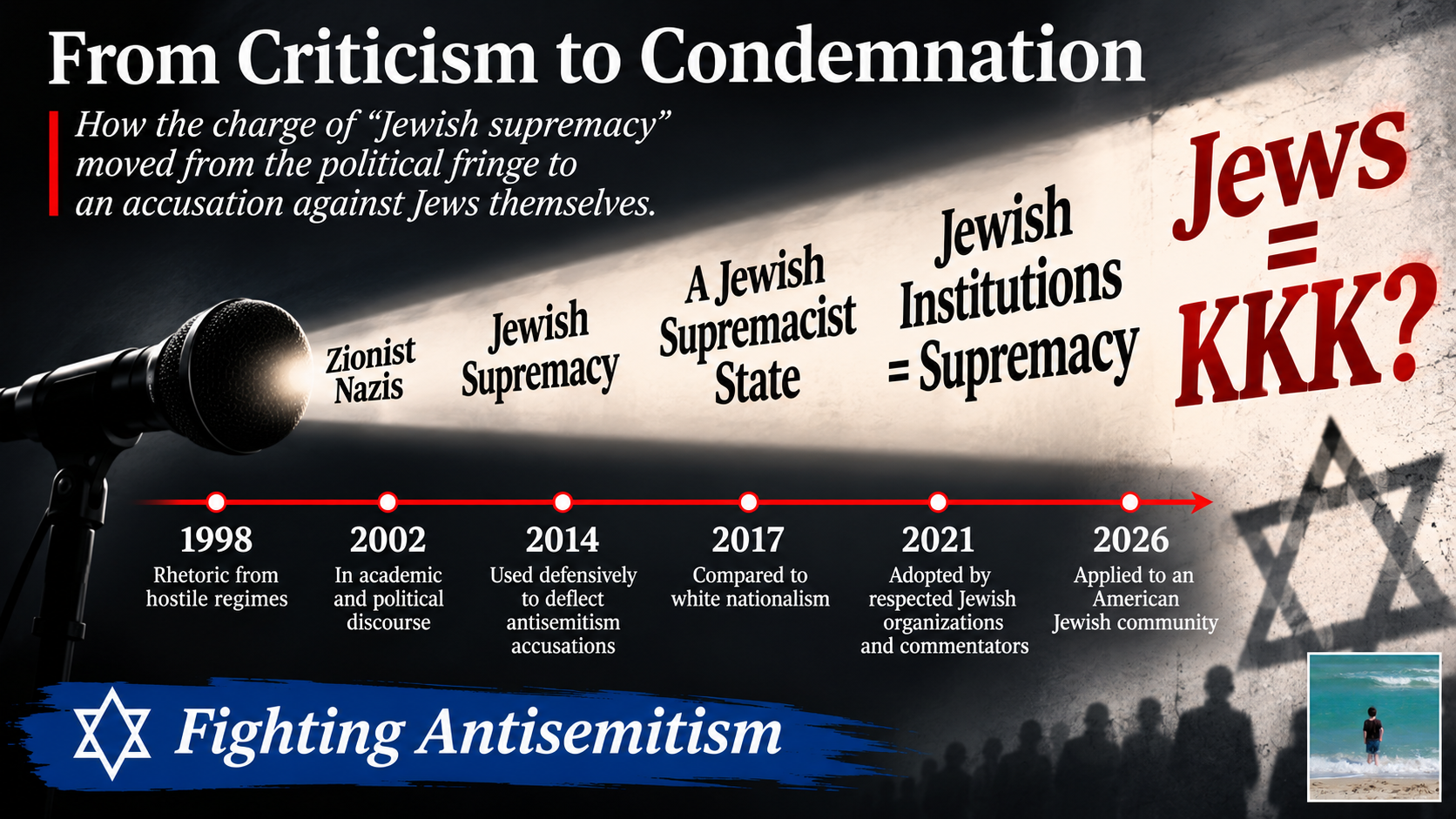
Governments can change policies, armies can end wars, and political movements can change direction. But a people accused of being inherently supremacist cannot reform their way out of the accusation. Their identity has become the offense.
That is a conspiracy theory made manifest, and it will kill Jews around the world.
Four-part series tracking the root of attacks on Jews is tied to believing in conspiracy theories:
Part 1: Antisemitism Around the World: What the Numbers Tell Us
Part 2:Why Did Antisemitism Explode Around the World?
Part 3: When Antisemitic Conspiracy Theories Enter the United Nations
Part 4:The Limited Counter To Antisemitic Conspiracy Theories