
“Too big to fail” entered our vocabulary when governments rescued banks whose collapse threatened the global economy. General Motors and Chrysler were bailed out because too many jobs and communities depended on them. Jensen Huang, Nvidia’s CEO, may be too critical to permanently dismiss, given his central role in the AI revolution.
Size and importance confer protection. When the cost of losing something exceeds the cost of saving it, society finds a way to protect it.
But what happens when the calculation runs in reverse?
There are fewer than 16 million Jews worldwide, less than 0.2% of humanity. Even before the Holocaust, there were only about 16.5 million. Israel, the world’s only Jewish state, is smaller than New Jersey.
Jews may simply be too small to matter.
Consider the calculation facing a politician, university president, corporate executive, or international institution. Defending Jews may win the appreciation of a tiny minority. Remaining silent may cost nothing. Attacking Israel may even bring political rewards.
And consider the other side of the calculation.
There are roughly two billion Muslims worldwide, alongside insanely wealthy governments, powerful international organizations, and activist movements hostile to Israel. Even a small fraction of this much larger population can exert substantial political and financial pressure. Qatar alone has invested enormous resources in universities, media, sports, and international influence.
For politicians and institutions calculating rewards and consequences, defending Jews can become a liability. Abandoning them can be the easier choice.

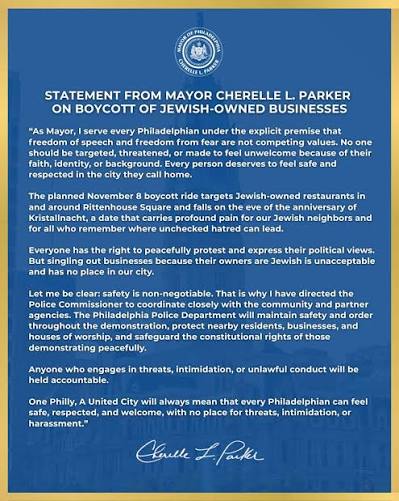
And Jews face a peculiar contradiction. Despite their tiny numbers, antisemitic conspiracy theories portray them as controlling governments, banks, media, and world events. Israel, a small country, is depicted as an outsized threat to international peace.
Jews are simultaneously too small to command protection and supposedly too powerful to deserve it. Their actual vulnerability makes them easy to abandon. Their imagined power makes them easy to attack.
An ancient people who survived empires, exile, persecution, and the Holocaust are still being judged by whether defending them is worth the political cost. On a purely selfish basis, abandoning Jews may be the rational choice.
But morality is not arithmetic.
A society that protects only those powerful enough to demand protection is not defending rights. It is accommodating power.
Jews seek no special protection. They are entitled to equal protection, even when providing it is politically costly. This is where the treatment of Jews becomes a test of something much larger than antisemitism.

Majority rule is democracy’s mechanism, and minority rights are among the essential safeguards of a liberal democratic republic. Without those safeguards, elections can become little more than a means for the powerful to impose their will on the powerless.
Jews lack the numbers to guarantee their own protection through the ballot box. Their security depends on a society’s willingness to uphold principles that transcend political advantage. And if those principles can be discarded when Jews become inconvenient, they can be discarded for any minority.
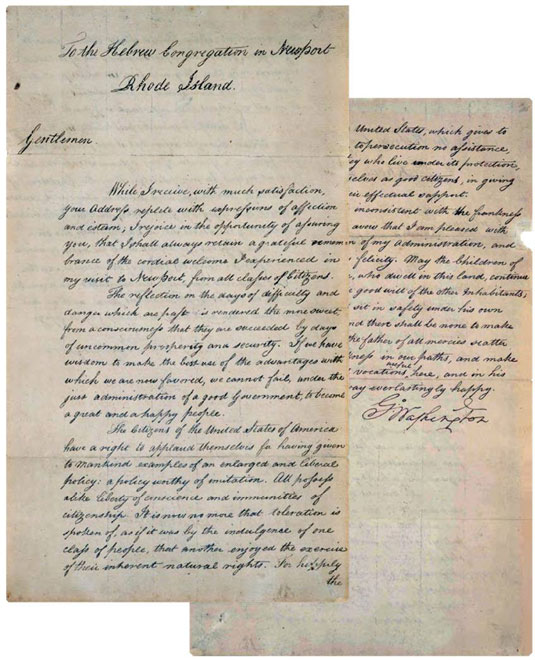
The banks were too big to fail. The automobile companies were too important to lose. Jews may be too small to matter in the calculations of political power. Yet their treatment represents a moral threshold for every society claiming to embrace liberal values.
The truest test of a democratic republic is not how it serves the majority, but whether it protects the rights of those too few to protect themselves.


