From the United Nations to New Jersey
In 1999, Muslim-majority countries launched a campaign at the United Nations to protect Islam from criticism. Led by Pakistan on behalf of the Organization of Islamic Conference, now the Organization of Islamic Cooperation (OIC), they sought international condemnation of the defamation of religion, particularly Islam.
Governments already prohibited religious discrimination and violence. The OIC wanted to go further, establishing protections for religious beliefs themselves against disparagement.
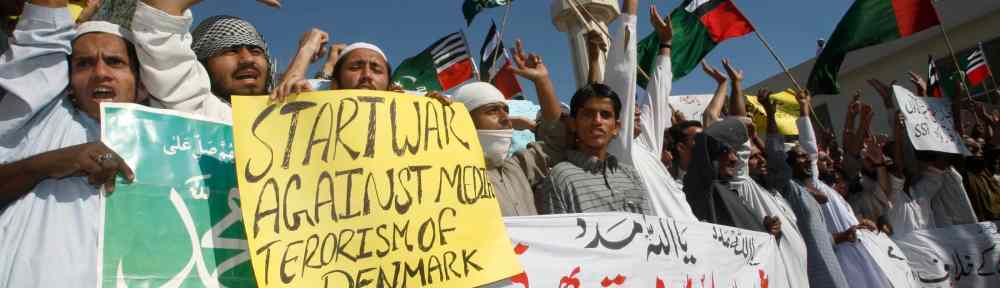
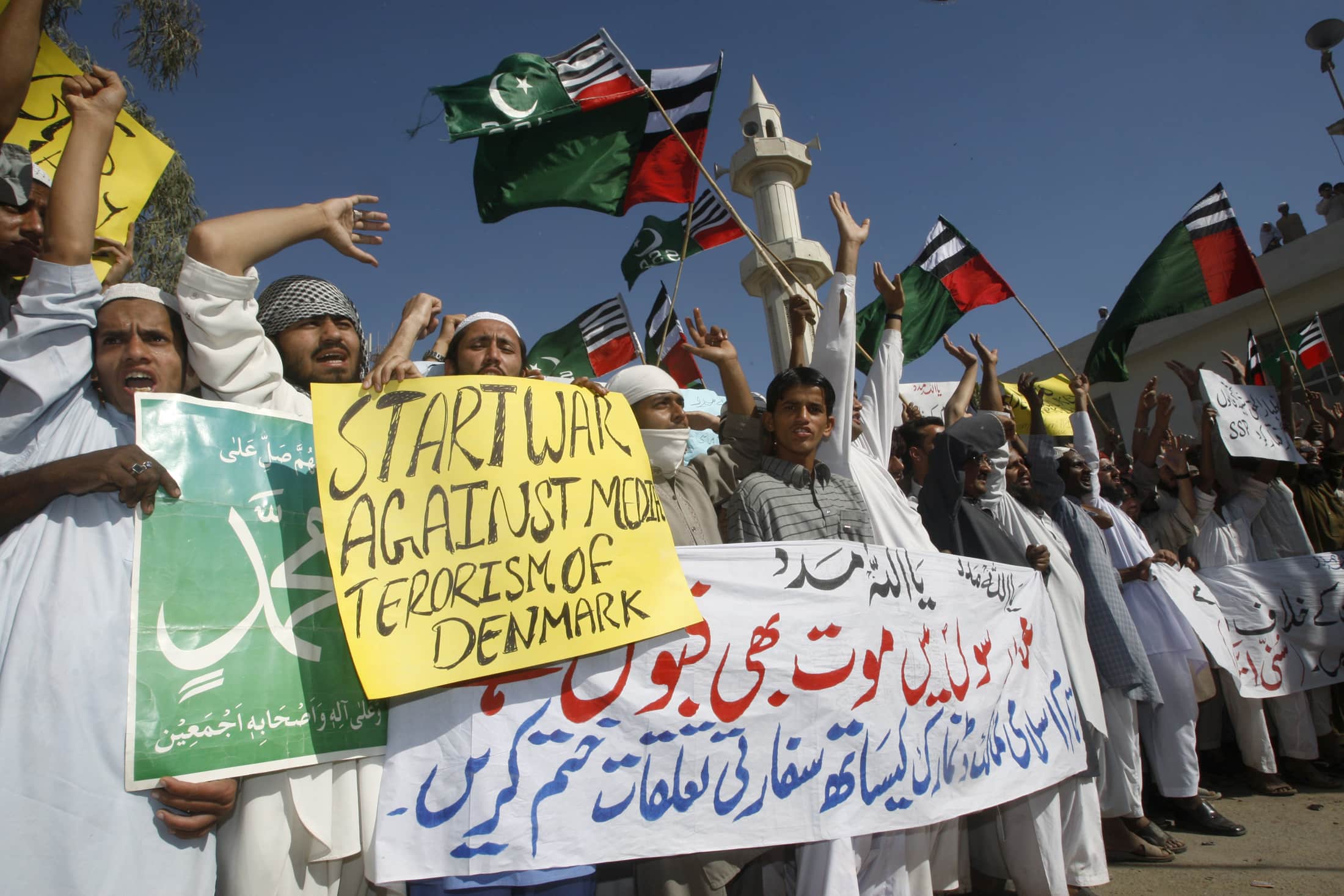
In 2005, a Danish newspaper published twelve cartoons of Muhammad, including one depicting the Islamic prophet with a bomb in his turban. Protests erupted across the Muslim world. Embassies were attacked, hundred of people were killed, and cartoonists received death threats.
The cartoons had not denied Muslims jobs, housing or religious freedom. They had insulted Islam. That was precisely the offense the OIC wanted governments to address.
The campaign had intensified after September 11, 2001, as Muslim governments sought to prevent Islam from being associated with terrorism. In 2007, the UN Human Rights Council included respect for religions among the considerations for restricting freedom of expression.
But the effort eventually met resistance. In 2011, the Human Rights Council shifted its emphasis away from defamation of religions toward protecting individuals from religious discrimination and violence. The UN Human Rights Committee subsequently reaffirmed that blasphemy prohibitions were generally incompatible with freedom of expression.
People have rights. Religions do not have a right to be free from criticism.
Yet the world contorted to the sensitivities of two billion Muslims. Consider that it has become standard policy of many institutions in the west – such as universities and mainstream media – to not show pictures of the Islamic prophet to protect the sensitivities of some religious Muslims.
Twenty-seven years after the OIC launched its campaign, New Jersey is considering legislation that threatens to blur that boundary about speech against an ideology and discrimination against people.
Assemblyman Joe Danielsen introduced Assembly Bill A1146 for the 2026 legislative session, establishing a definition of Islamophobia for use in discrimination investigations.
Much of the legislation addresses genuine prejudice against Muslims, including conspiracy theories about Muslim control of government, accusations of divided loyalty, and assertions that Muslims have a unique propensity for terrorism. But the definition also includes: “hostility and fear of Islam, and as a result, a fear of and aversion to all Muslims or the majority of Muslims.”
Islam is a religion. Muslims are people. They are not interchangeable.
A Jew can fear Islamic teachings that call for the murder of Jews without hating all Muslims. A Hindu can condemn Islamic persecution of Hindus. A former Muslim can denounce apostasy laws. A woman can oppose Islamic restrictions on women. A cartoonist can draw Muhammad. None should have to demonstrate affection for Islam to establish that they harbor no prejudice against Muslims.
New Jersey directs public officials and law enforcement officers to consider its definition when investigating alleged discrimination. A university professor who criticizes Islamic law and subsequently faces a discrimination complaint from a Muslim student could find his statements examined as evidence of prejudice.
The bill does not completely outlaw criticism of Islam. It expressly preserves First Amendment protections, and its definition requires fear of Islam to result in aversion toward Muslims. But it invites government investigators to consider criticism of a religion when determining whether someone is prejudiced against its followers.
What the OIC could not secure at the United Nations may now find its way into American law.
The legislation contains another revealing contradiction.
New Jersey’s definition borrows heavily from the International Holocaust Remembrance Alliance (IHRA) definition of antisemitism. Both address conspiracy theories, divided loyalty and prejudice against religious minorities. The IHRA definition explicitly protects criticism of Israel comparable to criticism of any other country, and New Jersey’s bill similarly protects criticism of Muslim-majority countries.
Yet it offers no comparable protection for criticism of religion itself. This omission is especially striking given the position of the Council on American-Islamic Relations (CAIR). CAIR-New Jersey supported earlier versions of the Islamophobia legislation while opposing New Jersey’s proposed adoption of the IHRA definition of antisemitism.
The legislation’s sponsors have described their proposal as the nation’s first state definition of Islamophobia. If adopted, it could become a model for other states. That would be problematic.
New Jersey can protect Muslims without protecting Islam from criticism. Strike the reference to hostility and fear of Islam. Define Islamophobia as prejudice against Muslims. Explicitly protect criticism of Islamic teachings, religious figures and practices, just as the legislation protects criticism of Muslim-majority countries.
Christians cannot demand that government protect Jesus from ridicule. Jews cannot demand that government prohibit criticism of the Torah. Muslims cannot demand that government shield Muhammad or the Quran from scrutiny.
The OIC sought international recognition that insulting Islam was an offense requiring government intervention. New Jersey proposes something different, but potentially just as troubling: allowing criticism of Islam to become evidence of prejudice against Muslims.
Muslims deserve protection from discrimination just like every one else. Islam does not deserve protection from criticism just like every other faith.


