
I always look forward to Tikvah’s annual Jewish Leadership Conference. This year, some 1,100 people packed a New York City venue to hear Ruth Wisse, Dara Horn, Micah Goodman and an extraordinary collection of Jewish thinkers and political leaders.
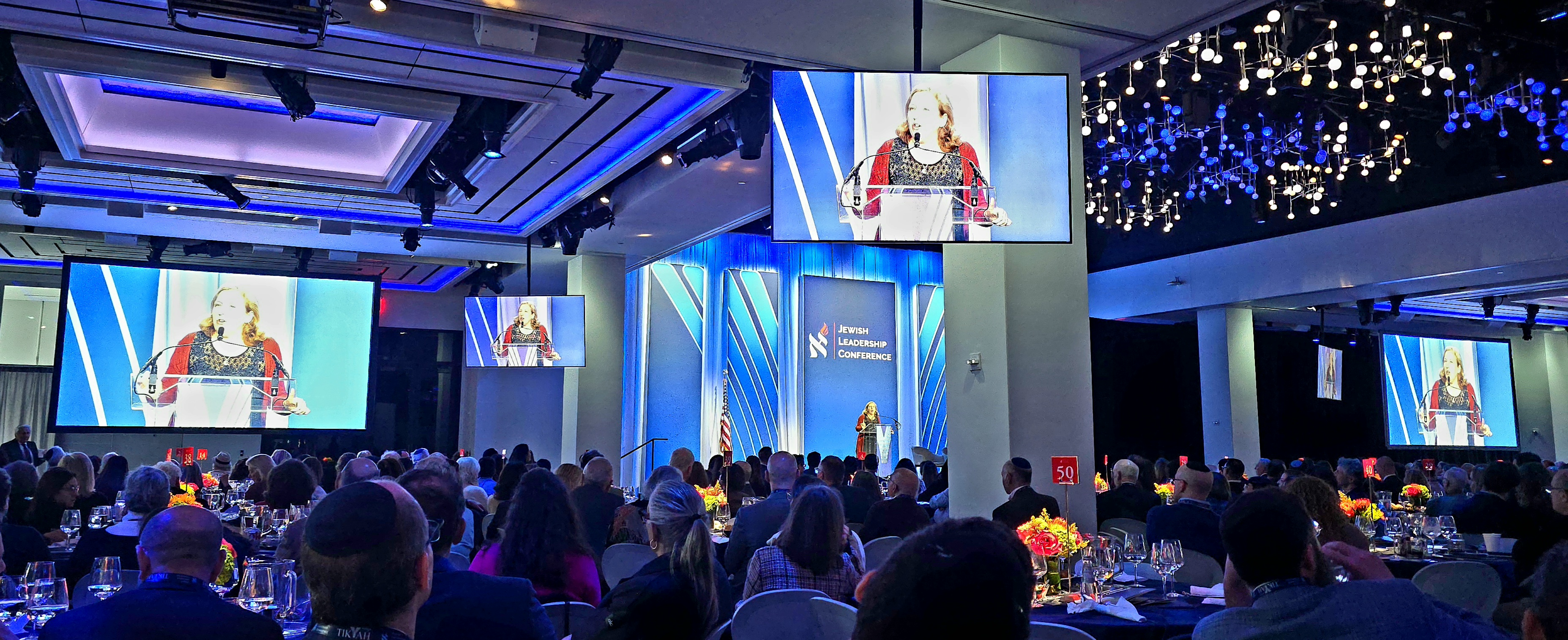
Several speakers noted that the conference invitation had listed the location as “TBD,” as Jewish gatherings increasingly conceal their venues until shortly before the event for security reasons. What once would have seemed extraordinary has become routine.
Yet the atmosphere was uplifting. There was warmth in seeing familiar faces and being surrounded by people who shared a deep concern for the Jewish people and the direction of American society.
The conference itself has evolved since it was founded in 2017. In earlier years, Tikvah offered breakout sessions, allowing attendees to choose among competing speakers and subjects. The unified program eliminates the logistical challenges and frustration of missing other sessions. But it also reflects something deeper.
People come for the intellectual content, but increasingly for chizuk, the strength that comes from being among fellow travelers. They want to bond with people who understand their concerns and share their distress at what is happening around them. The gathering has become as much about strengthening a community as expanding its knowledge.
The format also gives Tikvah a larger platform to showcase its growing ambitions. For years, the organization has emphasized the Judeo-Christian foundations of American civilization. This year’s preceding weekend programming, and the presence of numerous Christian pastors, demonstrated how central that mission has become.
Tikvah recognizes that Jews alone cannot preserve America’s Judeo-Christian inheritance. Its growing partnership with the vastly larger Christian community reflects an ambition extending well beyond Jewish education to the renewal of American civilization.
The organization announced expanding initiatives to train teachers and leaders of Jewish day schools, develop educational materials and bring stronger curricula into America’s struggling public schools. These are substantial and worthwhile undertakings, aimed at raising young adults with the knowledge, confidence and moral grounding to withstand the pressures of contemporary society.
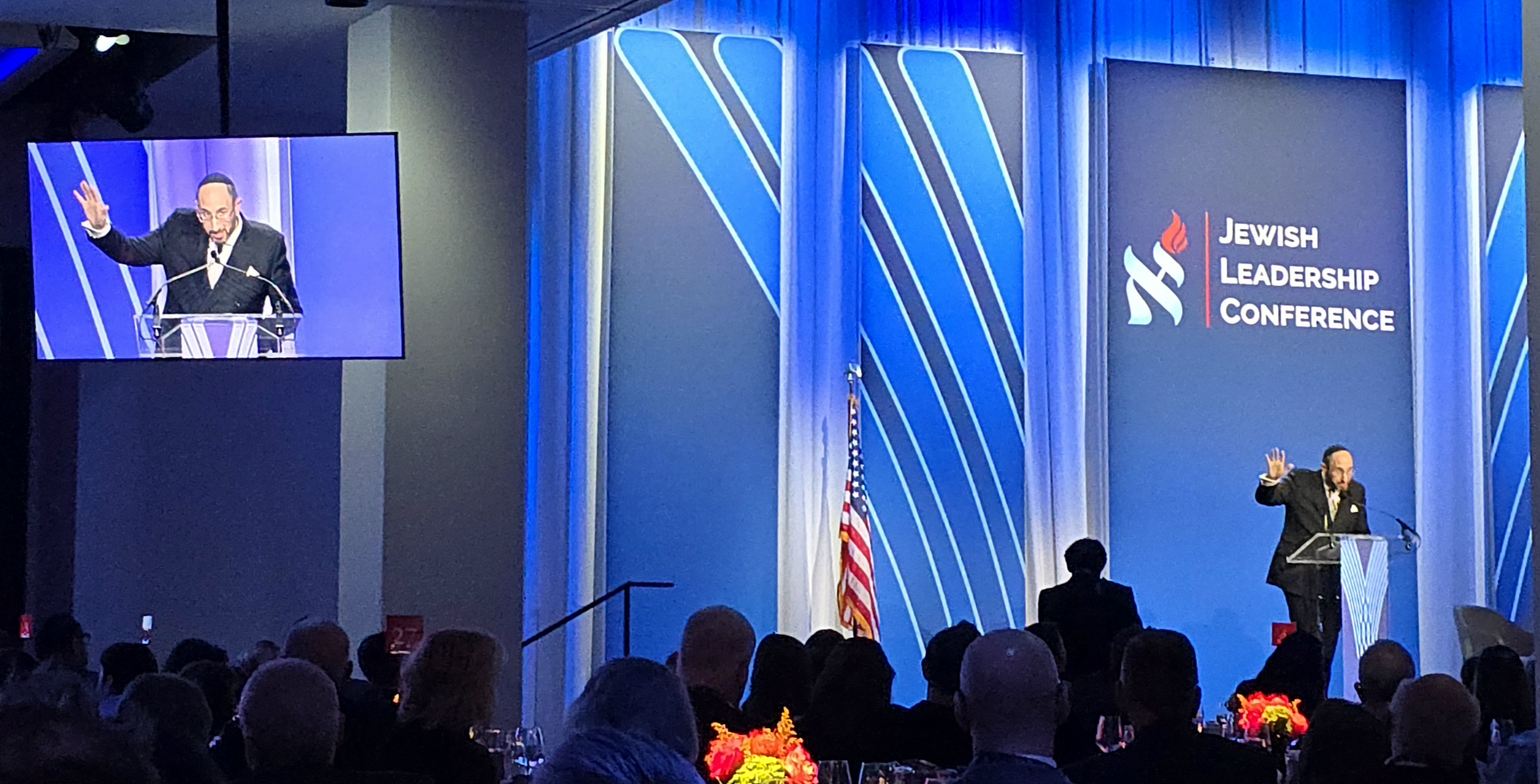
Senator Ted Cruz (R-TX) comments were particularly striking. Since the Obama administration, Cruz has warned about growing hostility toward Israel and Jews on the political left. Now he spoke with dismay about the antisemitism within his own Republican Party, calling out several right-wing bigots whom he said must be expelled and expunged completely and permanently.
The conference did not avoid the uncomfortable realities of contemporary America. Yet as the day progressed, I became increasingly uneasy about the prescriptions.
Education. Facts. History. Better storytelling.
Rabbi Meir Soloveichik concluded the day with an appeal for the power of stories. It was a fitting message for a gathering devoted to Jewish civilization. For thousands of years, Jews have preserved their identity through books, teachers, arguments and stories. Tikvah excels at all of them.
But where was the discussion about engagement for those less hungry for the richness of culture, history and honest debate?
In 2022, I bemoaned that We Listen to Idiots. I explored the growing disconnect between intellectual authority and popular influence. We fight with facts, they fight with feelings. We build logic, they build engagement. We look for truth, they look for traction.
As I observed then, “America has replaced “In God We Trust” with “In Influencers We Trust.”” It was an extension of the 2016 observation, “In a world where facts are extraneous, we are only left with a clash of emotions.” Society is running for the quick emotional adrenaline pushed by their favorite stars.
Tikvah had assembled some of the finest Jewish minds in America. But millions of Americans under 35 are getting their understanding of Jews, Israel, America, politics and history from influencers whose principal qualification is their ability to attract attention.
The People of the Book are trying to win an argument in a world that increasingly refuses to read.
For decades, parents have worried about what their children eat. We understand the dangers of excessive sugar, trans fats and processed junk food. Yet we allow young people to spend hours every day consuming intellectual junk food.
Algorithms reward outrage. Influencers compete through provocation. Foreign propagandists and bot networks exploit platforms whose business models reward attention, regardless of whether the content is truthful or poisonous.
Young people are fed a continuous diet of anger, resentment and ideological certainty. Their attention spans, patience and willingness to consider competing arguments are being shaped by the same machinery.
And our response is to improve the curriculum. Tikvah is improving the quality of the meal while the younger generation is consuming poison throughout the day.
There is an urgent battle to be fought at local school boards over curricula and educational priorities, and nationally over foreign funding and influence in American education. The social media platforms themselves must also be confronted. Foreign manipulation and coordinated bot networks need to be exposed and disrupted, while the algorithms that amplify hatred and conspiracy deserve the same serious scrutiny we apply to harmful ingredients in our children’s food.
But protecting young people from intellectual junk food is only part of the challenge. We must also compete for their attention.
Yes, we need Ruth Wisse and Andrew Roberts. We need Micah Goodman, master educators, rabbis and pastors. But we also need the cultural reach of a Sydney Sweeney.
The people shaping the next generation are not necessarily the people with the greatest knowledge. They are the people who command its attention.
Tikvah’s educational programs will take years to mature. Will they reach enough young people? Will its Christian alliances achieve sufficient scale? Will either move quickly enough to counter the cultural forces already shaping an entire generation?
By the end of the conference, I was grateful for the extraordinary minds Tikvah had assembled, the community it had strengthened and the ambitious programs it was building. Those gathered had enjoyed an intellectual feast and received the chizuk they desperately needed.
But outside that room, millions of young Americans were consuming another meal entirely. And I fear that Tikvah’s intellectual feast cannot nourish a generation raised on a steady diet of poison.


