
The Tikvah Society recently gathered in lower Manhattan to celebrate America’s 250th birthday and make the Jewish case for American exceptionalism.
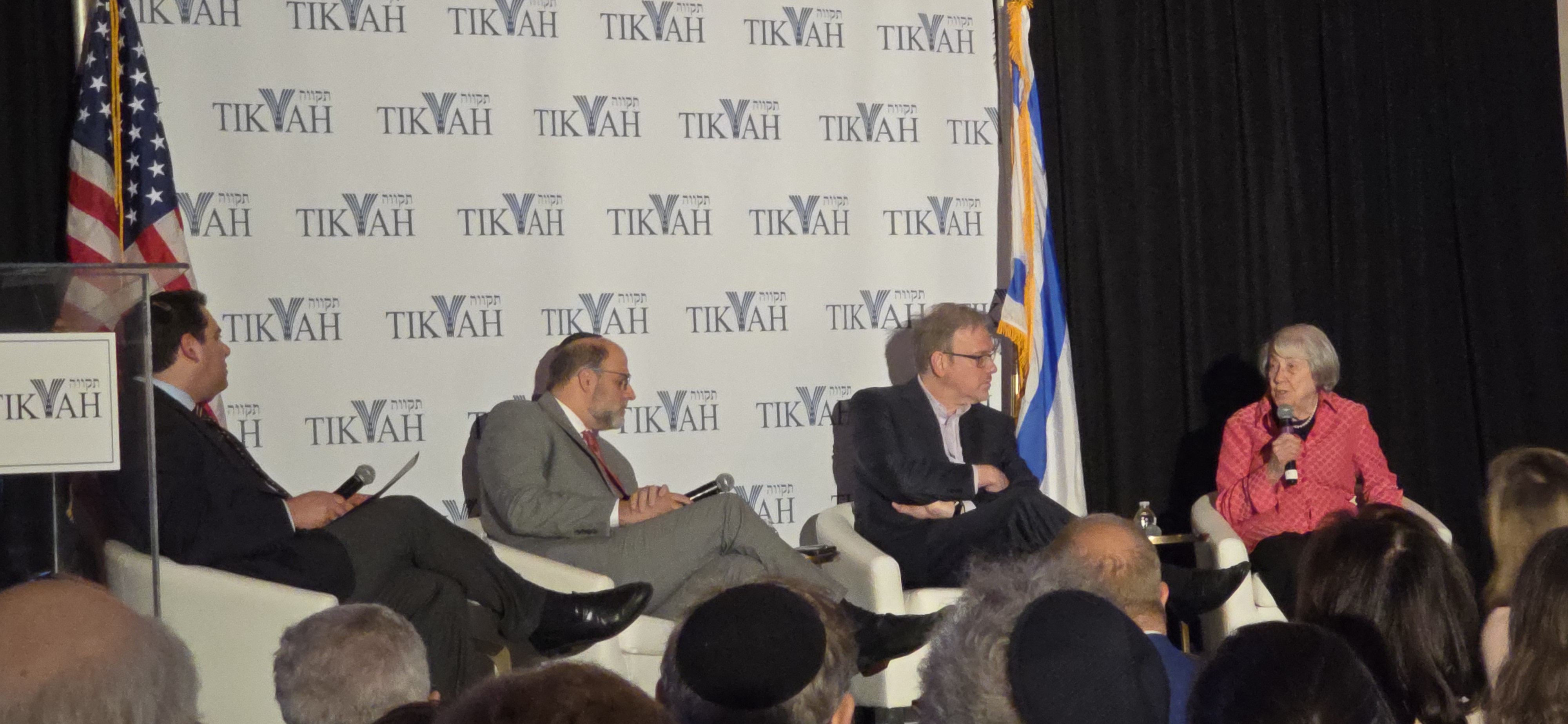
It was an impressive gathering. Jonathan Silver moderated a conversation between Ruth Wisse, Bret Stephens, and Eric Cohen. Yet as the evening unfolded, a question lingered:
Who was missing?
Not from the audience, but from the conversation itself.
The answer matters because the people in the room represent a remarkably small slice of both America and American Jewry. Jews comprise roughly 6 million people in a nation of 330 million (1.8%). Within American Jewry, the Modern Orthodox and strongly Zionist non-Orthodox communities that dominate much of American Jewish intellectual life represent only a fraction of the next generation. And the attendees represented the most engaged of that small sliver.
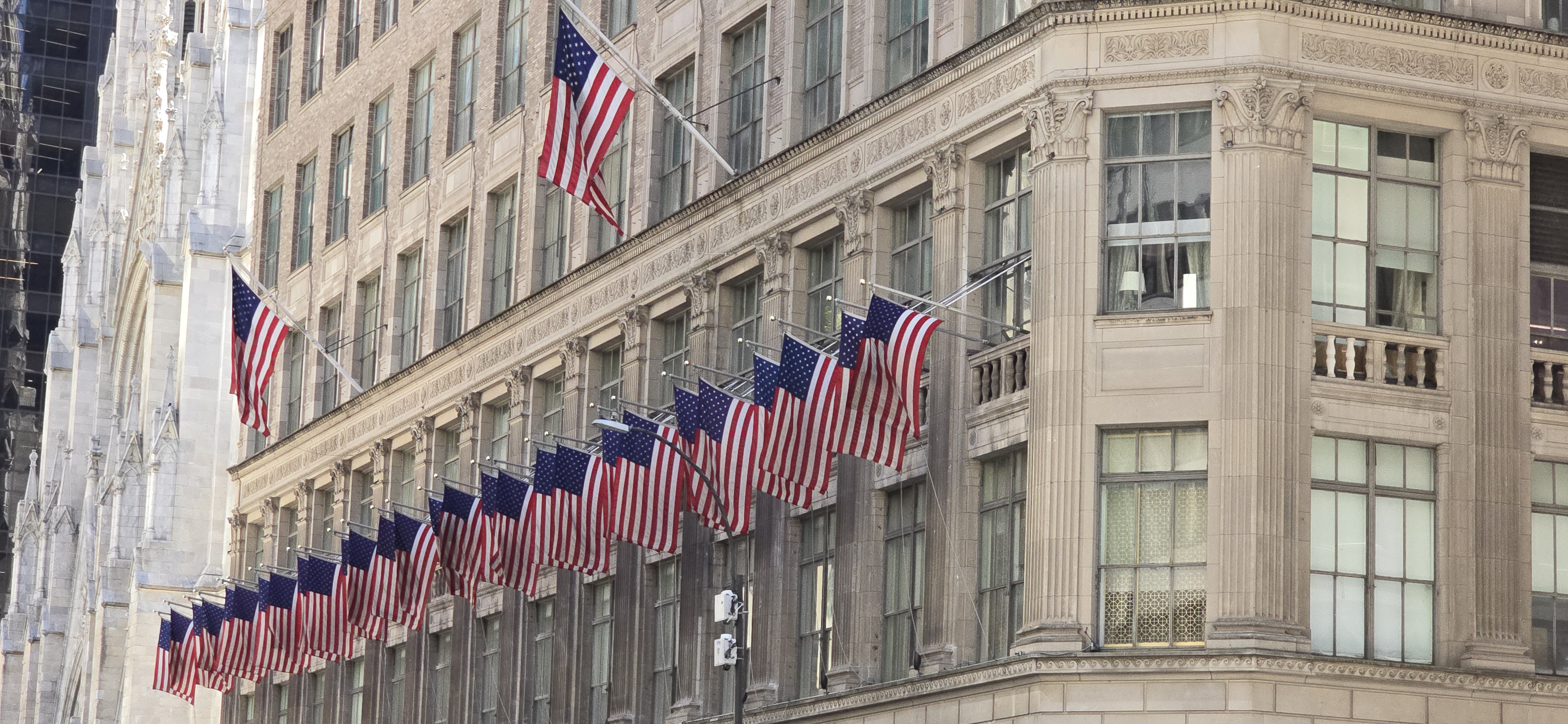
The setting itself made the omission more striking. The discussion took place in the very neighborhood where some of the foundational events of the American Republic unfolded. Within walking distance stand the sites of Washington’s inauguration, the first Congress, and the earliest experiments in American self-government. Yet for an event dedicated to celebrating America, surprisingly little attention was paid to the place itself.
Instead, the conversation focused on the future of Jews, universities, religion, and politics.
The panelists disagreed on important questions. Wisse argued that Jewish unity is not paramount if unity comes at the expense of conviction: better a smaller community of committed Jews than a larger one saturated in ambivalence. Stephens returned to a theme he has emphasized before: stop obsessing over the haters and invest in Jewish education. Cohen broadened the argument, suggesting that both Jewish and Christian religious education are essential to strengthening America itself. The country’s experiment with secularism, he argued, has weakened the civic and moral foundations on which the Republic depends.
Both Stephens and Cohen spoke favorably about Chabad. It is not difficult to see why. Chabad has become one of the few institutions capable of reaching Jews across virtually every level of observance. The Rebbe’s army continues to grow because it understands something many institutions have forgotten: people are attracted to confidence, purpose, and personal relationships. Tikvah has absorbed this – it is curious how it plans on applying it.
Education
The discussion of education was compelling. Nothing is more important than good teachers, and few things are more destructive than bad ones. The panelists lamented the continuing flow of Jewish philanthropy into institutions such as Columbia University, where many faculty members and students openly disparage Zionism, America, and increasingly Jews themselves.
Yet the evening largely avoided a more uncomfortable reality.
In the greater New York area, roughly 490,000 Jewish students attend K-12 schools. Only about 40,000 (8.2%) are found in the Modern Orthodox and Zionist day-school ecosystem (“The 8%”) that forms the backbone of many organizations such as Tikvah. The largest and fastest-growing populations are elsewhere. The majority remain in public and secular schools. Even more significant is the extraordinary growth of Chassidic and Yeshivish communities, which now educate approximately 145,000 students (“30% and Growing”).
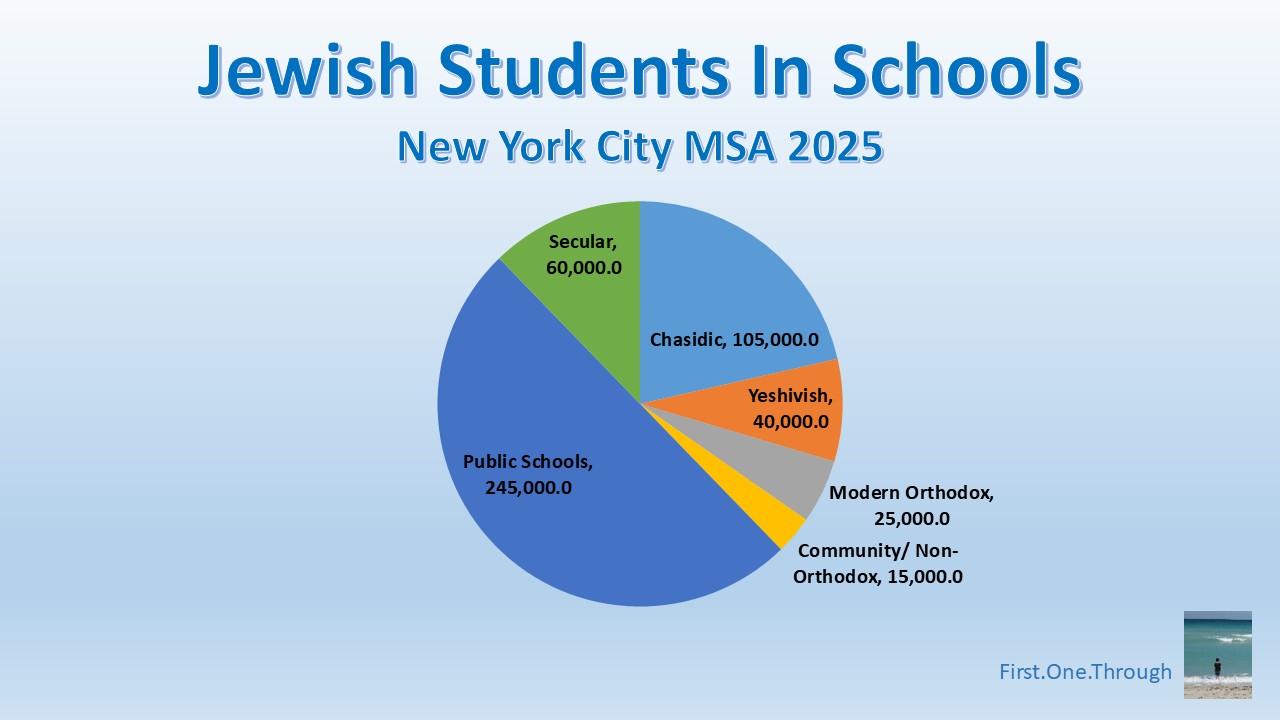
Those numbers matter.
Ultra-Orthodox
A strategy centered solely on strengthening the already committed may preserve one segment of Jewish life. It does not answer the larger demographic question facing American Jewry. The central challenge is will Tikvah and “The 8%” engage the overwhelming majority of Jewish children who are either in public schools or in the rapidly growing ultra-Orthodox world.
The same demographic blind spot appeared later in the discussion. Cohen argued that religious Jews and religious Christians should work more closely together to defend the values that built America. There is logic to that argument. Tikvah itself appears to be moving in that direction through its decision to award its Herzl Prize to U.S. Ambassador to Israel Mike Huckabee, one of Israel’s most outspoken Christian supporters.
Yet there is a striking irony here. As Jewish leaders search for allies among millions of religious Christians, they overlook the “30% and Growing” communities. Leaders commend Chabad for successful outreach to the secular but don’t consider building bridges to the Chasidic and Yeshivish communities, and engaging the majority of students in public and secular schools.
Public Schools
The challenge facing American Jewry is therefore not simply how to build alliances with Christians who share Jewish concerns. It is also how to build relationships among Jews whose lives increasingly unfold in separate educational, cultural, and social worlds.
The same issue applies to America’s educational crisis. If America is worth saving, public schools matter. Any serious defense of American exceptionalism must include an effort to improve the institutions educating most American children. Reforming public education should not be viewed as somebody else’s problem. It is central to the future of both America and American Jewry.
American Jews need to become highly engaged in local school boards. They need to help moderate and defend the institutions form the worst influences which are overwhelming America’s public schools, poisoning America’s future. The evening was silent on this crucial point.
Universities
The conversation about universities also requires greater precision.
Harvard is not a monolith. Columbia is not a monolith. Administrations, trustees, faculty, students, and donors often have different interests and agendas. Too often Jewish philanthropists write nine-figure checks in exchange for buildings bearing their names. It is a poor investment.
The activists and professors who dominate many campuses are not impressed by another Jewish donor’s name on a wall. In some cases, they actively mock the very people who funded the buildings in which they teach.
A better approach would be to invest in people rather than structures: scholars, faculty, teachers, fellowships, civic education programs, and scholarships for students committed to the values that made America successful. Buildings create monuments. Educators create generations.
| Area | Tikvah Approach | Reality | Better Tactic |
|---|---|---|---|
| Ultra-Orthodox | Ignore. Focus on Christian groups | Fastest growing population | Engage, perhaps via important issues for both like public funding for religious schools |
| Public Schools | Unaddressed | Largest current segment | Engage school boards |
| Universities | Don’t fund or send students / make new ones | Still prevalent and dominant | Redirect contributions |
Perhaps the most important lesson from the evening is that preserving American exceptionalism requires more than celebrating it.
American exceptionalism was never simply a belief that America was superior. At its best, it reflected an understanding that liberty is fragile and must be constantly renewed by citizens willing to sacrifice for something larger than themselves.
The people gathered in that room care deeply about America and about the future of the Jewish people. Their commitment is admirable. But commitment alone is not enough. The arithmetic cannot be ignored.
A movement centered on “The 8%” in a community of 1.8% of Americans (0.15%) cannot secure the future.
The challenge is larger than preserving one vision of Jewish life. It is rebuilding the institutions that form Americans in the first place: families, schools, synagogues, churches, civic organizations, and local communities. That is where outreach to BOTH Christian and Ultra-Orthodox groups matters.
And that work begins with Humble Faith. Humble faith built the America being celebrated in lower Manhattan. Humble faith may also be the only way to bridge the growing divides within the Jewish community itself. As we search for a better America, American Jews may first need to rediscover one another.


