
Ninety-one years ago today, on November 20, 1935, British police killed Izz ad-Din al-Qassam in a gun battle near Jenin. His jihad began against European imperial powers. In Palestine, it also became a war against Jews seeking to rebuild their homeland.

Al-Qassam was born in 1882 in Jableh, Syria, then part of the Ottoman Empire. He studied Islamic theology at al-Azhar in Cairo and became a militant preacher advocating jihad against foreign powers in Muslim lands.
When Italy invaded Libya in 1911, he raised money and recruited volunteers to fight the Italians. He later joined armed “resistance” against the French in Syria, earning a death sentence. In 1920, he fled to Haifa, two years before the League of Nations formally approved the British Mandate for Palestine.
Al-Qassam brought two causes to Palestine.
The first was expelling European powers from Arab and Muslim lands: Italy in Libya, France in Syria and now Britain in Palestine. Today, this would be called anti-colonialism.
The second was preventing Jews from reestablishing their national homeland.
Jews were not Italians in Libya or Frenchmen in Syria. Jews are an ancient, land-based people whose religion, identity and history are rooted in the Land of Israel. Jewish communities had lived there continuously for millennia, while generations in the diaspora prayed and yearned to return.
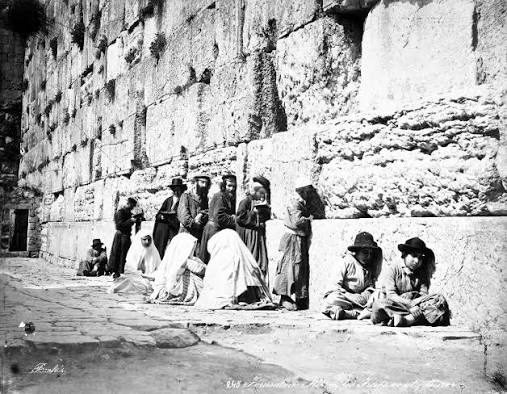
One cause opposed foreign imperial rule. The other sought to deny Jews the very national rights he claimed for Arabs.
In Haifa, al-Qassam recruited followers and organized clandestine armed cells. By the early 1930s, he had established the Black Hand, a militant network that targeted Jewish communities and opposed British rule.
On November 7, 1935, Jewish police sergeant Moshe Rosenfeld was killed near Ein Harod in an attack attributed to al-Qassam’s armed group. Later that month, al-Qassam took his followers into the hills near Ya’bad to wage jihad.
British authorities pursued the group. Surrounded on November 20, al-Qassam reportedly refused surrender, declaring that he was fighting a holy war for God and the homeland. Al-Qassam and several followers were killed, along with a British policeman. Thousands attended his funeral. He became a celebrated martyr.
Five months later, on April 15, 1936, militants associated with al-Qassam’s movement attacked Jewish motorists near Tulkarm. Historical accounts describe the attackers invoking revenge for his death and seeking money for weapons. They shot three Jewish passengers, killing two.
The British killed al-Qassam. His followers killed Jews to avenge him.
The murders helped ignite the Arab Revolt of 1936–1939, during which Jews and British authorities were targeted in a sustained campaign of violence.
Hamas eventually named its military wing after al-Qassam. Palestinian Authority schools have borne his name supported by European funds, and activists in Sweden advertised a gathering honoring him as recently as November 2025.
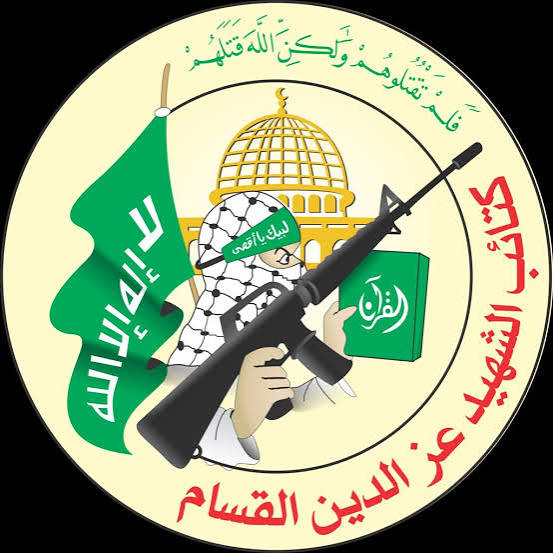
Al-Qassam died before Israel existed. Before anyone called Judea and Samaria the “West Bank.” Before there was an Israeli occupation to oppose.
In 1948, Britain left Palestine and with it, the European imperial rule he had fought. But the other war did not end.
The colonial power departed nearly eight decades ago. The Arab war against Jewish sovereignty in their ancestral homeland continues.


