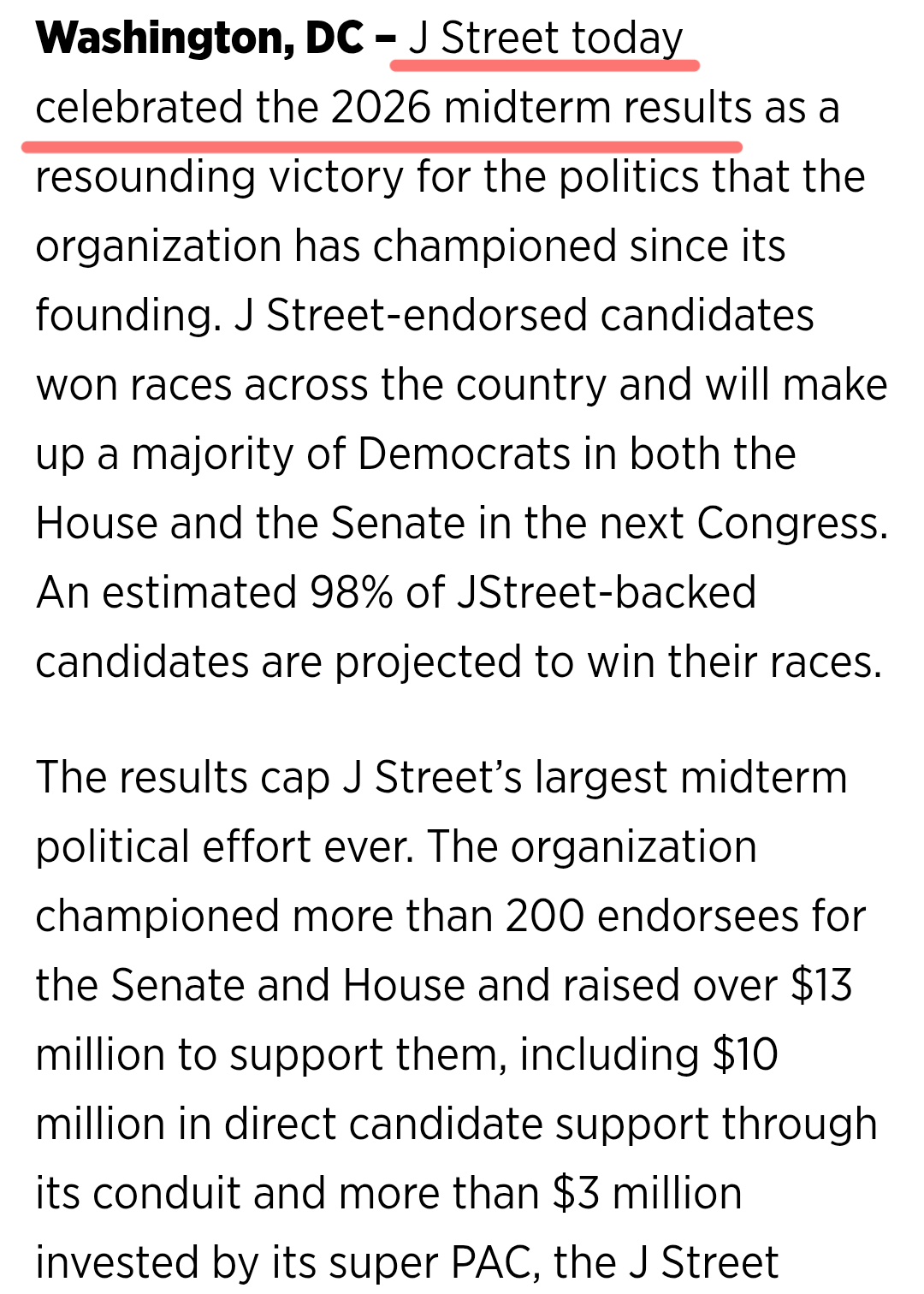
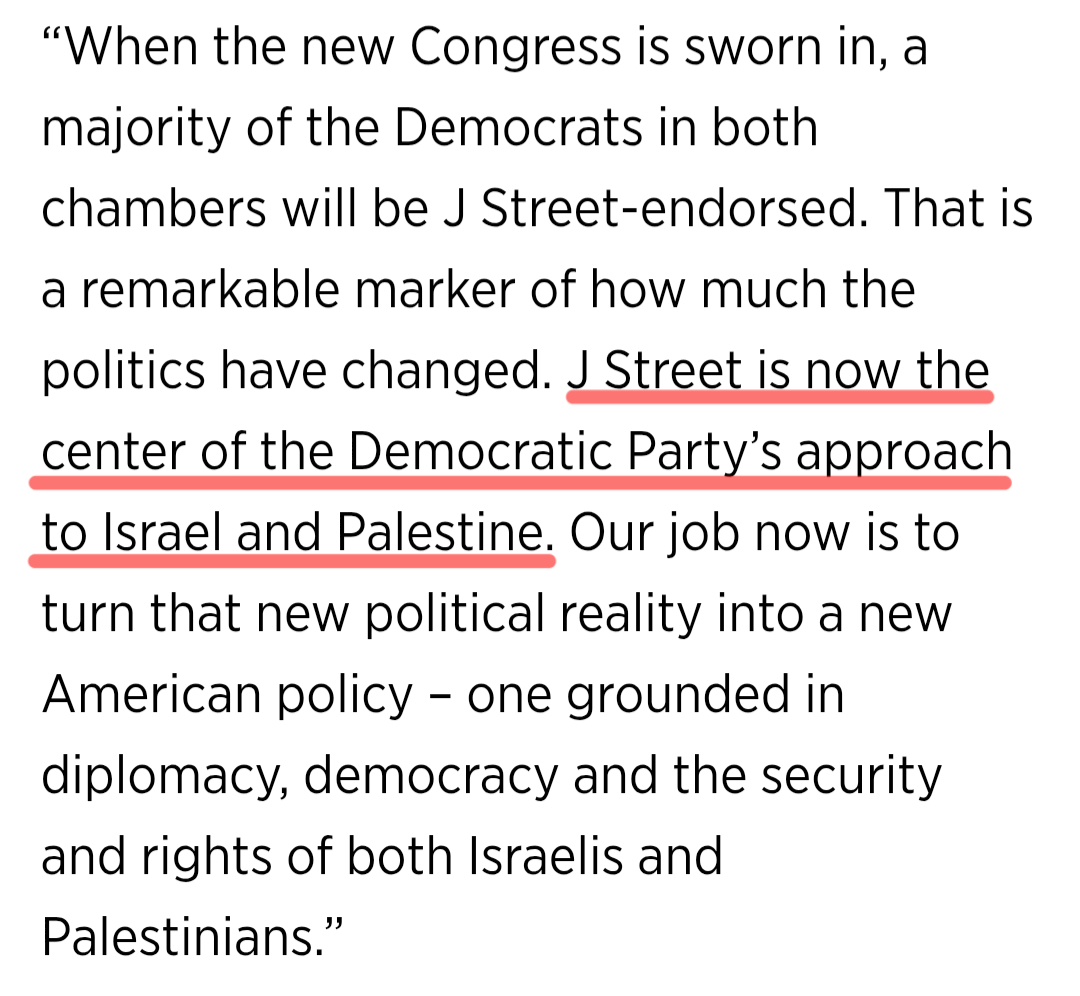
The self-described “pro-Israel” organization endorsed more than 200 congressional candidates in the 2026 midterms, raised over $13 million and projects a 98% victory rate. Its president, Jeremy Ben-Ami, declared that J Street had become the center of Democratic politics on Israel.
The election results tell a larger story about how far that center has moved, and the role a progressive Jewish organization has played in legitimizing increasingly hostile positions toward Israel within the Democratic Party.
When Genocide Crossed the Line
In January 2024, J Street withdrew its endorsement of Congressman Jamaal Bowman following growing disagreements over his rhetoric, including accusations that Israel was committing genocide and his praise of controversial anti-Israel commentator Norman Finkelstein. Ben-Ami declared “When the rhetoric, the framing and the approach go too far, that’s where we are going to hold our line.”
No longer.
In November 2025, Congresswoman Rashida Tlaib introduced a resolution titled Recognizing the genocide of the Palestinian people in Gaza, calling on the United States to officially recognize that Israel had committed “genocide.” Ten original cosponsors appeared among J Street’s successful 2026 endorsees:
Becca Balint — Vermont
André Carson — Indiana
Greg Casar — Texas
Hank Johnson — Georgia
Pramila Jayapal — Washington
Ro Khanna — California
Jim McGovern — Massachusetts
Mark Pocan — Wisconsin
Delia Ramirez — Illinois
Lateefah Simon — California
In less than three years, language that helped cost one politician J Street’s support had become acceptable among its endorsed candidates.
Beyond Genocide
The change extends beyond one accusation.
Congresswoman Pramila Jayapal called Israel a “racist state” in 2023. Congressman Ro Khanna and Congresswoman Delia Ramirez were among the politicians who formally sponsored the genocide resolution, while Khanna has also criticized Israeli rule in the West Bank as “apartheid.”
Their congressional votes reveal additional differences over America’s relationship with Israel.
On April 20, 2024, thirty-seven House Democrats voted to provide military assistance to Ukraine while opposing a separate assistance package for Israel. J Street-endorsed politicians André Carson, Greg Casar, Pramila Jayapal, Ro Khanna, Mark Pocan and Delia Ramirez were among them.
On October 25, 2023, the House passed a resolution condemning Hamas’s October 7 massacre and affirming American support for Israel by a vote of 412–10. Carson and Ramirez voted against it, while Jayapal and Casar merely voted present. Curiously, J Street supported that resolution and subsequently endorsed politicians who declined to vote for it.
The widening range of accepted positions also includes economic boycotts. J Street officially opposes the global Boycott, Divestment and Sanctions movement but supports targeted import bans and sanctions involving Jews and Jewish businesses from Judea and Samaria. In September 2026, it welcomed such restrictions and urged similar American measures.
This has been a trend for years. Several endorsed politicians, including Carson, Jayapal and Pocan, voted against a 2019 congressional resolution opposing BDS.
J Street’s endorsements now accommodate accusations of genocide and apartheid, opposition to military assistance and a wider range of positions supporting economic pressure on Israel.
Moving the Political Center
J Street’s endorsements offer something an explicitly anti-Israel organization cannot: political cover from an organization identifying itself as progressive, Jewish and pro-Israel. That validation gives Democratic politicians room to advance positions once considered outside of liberal pro-Israel boundaries.
This unquestionably harms the State of Israel. It has also increasingly created a cleft inside the American Jewish community.
J Street may claim to be “the [new] center of the Democratic Party’s approach to Israel and Palestine,” but it has become a fringe extremist group among pro-Israel Americans.
Jewish law still sanctions Jews who deliberately harm other Jews. Why has the community become so reluctant to consider that authority when the harm threatens thousands or millions?
In 1656, the Jewish community of Amsterdam excommunicated a 23-year-old philosopher named Baruch Spinoza (1632–1677). Its leaders pronounced a devastating herem, a religious ban that severed him from communal Jewish life. Members were forbidden to associate with him, speak with him or read his writings. The condemnation became one of the most famous excommunications in Jewish history.
For centuries, Jewish communities disciplined members whose conduct threatened religious obligations or communal life. Jewish law developed several levels of sanctions, most notably nidui and herem.
Nidui was the lesser punishment, a form of temporary religious and social ostracism, traditionally lasting 30 days in diaspora (non-Israel) communities. It restricted ordinary social interaction, sometimes requiring others to maintain a distance of four cubits, roughly six feet. Its purpose was to induce repentance and correction of the offending behavior.
Herem was more severe, imposing deeper and potentially indefinite exclusion from communal life. Depending on the circumstances, it could restrict social relationships, commercial dealings and religious participation. In tightly integrated Jewish communities, exclusion could devastate a person’s livelihood and standing in society.
Maimonides, the Rambam (1138–1204), enumerated 24 grounds for nidui in his Mishneh Torah. They included maintaining dangerous conditions, such as a vicious dog or unstable ladder; refusing to obey a religious court; and preventing the public from performing a commandment.
That last provision is particularly important. Jewish law recognized that obstructing a community’s religious obligations could warrant religious discipline.
These sanctions remain part of modern Jewish life. Orthodox communities still employ religious and social pressure against husbands who refuse to grant their wives a get, the Jewish divorce document required for remarriage under Jewish law. When a rabbinical court determines that a husband must grant a get and he refuses, communal measures may include exclusion from synagogue honors, religious gatherings and other forms of participation. Depending on the circumstances, formal nidui or herem may also be considered.
The Organization for the Resolution of Agunot (ORA) organizes communal pressure against recalcitrant spouses, including public demonstrations and campaigns encouraging synagogues to impose restrictions, with appropriate rabbinic authorization.
Jewish communities recognize that one Jew’s deliberate conduct can cause another such serious harm that communal intervention becomes necessary. Yet these sanctions are rarely discussed when the threatened harm extends beyond an individual to an entire Jewish community.
A husband who refuses a get may face public ostracism for trapping one woman in a marriage. What of a Jew who deliberately works to prohibit circumcision, obstruct synagogue security or prevent entire communities from fulfilling religious commandments?
Three fundamental obligations provide a framework: protecting Jewish lives, preserving religious observance and sustaining Jewish communal continuity.
Protecting Jewish Lives
Jewish law places the preservation of human life, pikuach nefesh, above almost every other religious obligation. Leviticus commands, “Do not stand idly by the blood of your neighbor.” The Talmud extends this principle into an affirmative obligation to rescue someone facing danger.
The clearest case involves a Jew knowingly facilitating violence against other Jews or deliberately obstructing their rescue from an immediate threat. Such conduct directly violates the obligation to protect human life and demands serious religious and communal accountability.
Consider a person deliberately sabotaging essential security at a synagogue or yeshiva facing credible threats. Jewish institutions increasingly depend on trained guards, controlled entrances and protective infrastructure. Knowingly interfering with necessary safeguards could expose worshippers and children to foreseeable danger.
A related question arises when someone campaigns to eliminate protective buffer zones around synagogue or school entrances. Where violent intimidation or obstruction threatens access, removing necessary security measures could endanger the community.
The issue becomes more complicated when the discussion moves to Israel’s national defense. Israeli missile-defense systems, including Iron Dome, David’s Sling and Arrow, protect civilians against incoming rockets and missiles. Campaigning to eliminate essential defensive capabilities without adequate alternatives could foreseeably increase the danger to millions of people.
Broader opposition to American military assistance to Israel presents a less direct case. Military assistance encompasses different weapons, defensive systems and strategic objectives. A Jew who advocates eliminating defensive funding despite a demonstrated threat raises different questions from someone disputing a particular military appropriation.
Jewish law has long required Jews to address threats to human life. Religious authorities should be prepared to examine whether deliberately undermining essential security, whether at a synagogue or across Israel, violates that obligation.
Protecting Jewish Religious Observance
A Jewish community can endure poverty, exile and political upheaval while preserving its identity through religious practice. The covenant of circumcision, the laws of kashrut, prayer, Torah study and communal institutions have sustained Jewish life across generations.
Maimonides explicitly includes preventing the public from fulfilling a commandment among the grounds for nidui. This provides a classical foundation for examining deliberate interference with Jewish observance.
Consider a Jew actively working to outlaw brit milah, the covenant established with Abraham. A successful prohibition would directly prevent Jews from performing one of their foundational commandments. A campaign specifically intended to achieve that result should invite serious halachic examination.
A campaign to prohibit kosher slaughter, shechita, presents a similar concern. Such a law would prevent traditional ritual slaughter within the jurisdiction and could make religious observance substantially more difficult.
The same questions arise when Jews advocate prohibitions on synagogue worship, Torah education or the construction of religious facilities such as mikvaot. Restrictions on kippot and other religious clothing can also interfere with Jewish practice, depending on their scope.
These are precisely the kinds of conflicts in which religious authorities should examine whether conduct constitutes the deliberate obstruction of commandments. Where a recognized court determines that a violation warrants nidui, continued defiance may raise the question of stronger sanctions under Jewish law.
Further along the spectrum lies the controversy over government funding for yeshivas. Some advocates want public funding conditioned on students meeting secular educational standards in English and mathematics. Such requirements may create financial pressure on religious schools, while educational oversight also serves legitimate public purposes.
Jewish law must distinguish legitimate public oversight from deliberate obstruction of religious commandments. Where that boundary is crossed, religious authorities should be prepared to act.
Protecting Jewish Communal Continuity
The Jewish connection to the Land of Israel is integral to Judaism. Jerusalem occupies a central place in Jewish prayer, religious memory and law. Nachmanides, the Ramban (1194–1270), regarded settling the Land of Israel as a positive biblical commandment, although later authorities have debated its precise scope and application.
Consider a Jew advocating a prohibition on Jewish immigration to Israel. Such a restriction would interfere with the ability of Jews to settle in their ancestral homeland, an act that major halachic authorities regard as religiously significant.
Preventing Jews from visiting or praying at their holy sites raises related questions about religious access and worship. Restrictions on Jewish homeownership introduce another dimension, particularly where they specifically target Jewish purchasers.
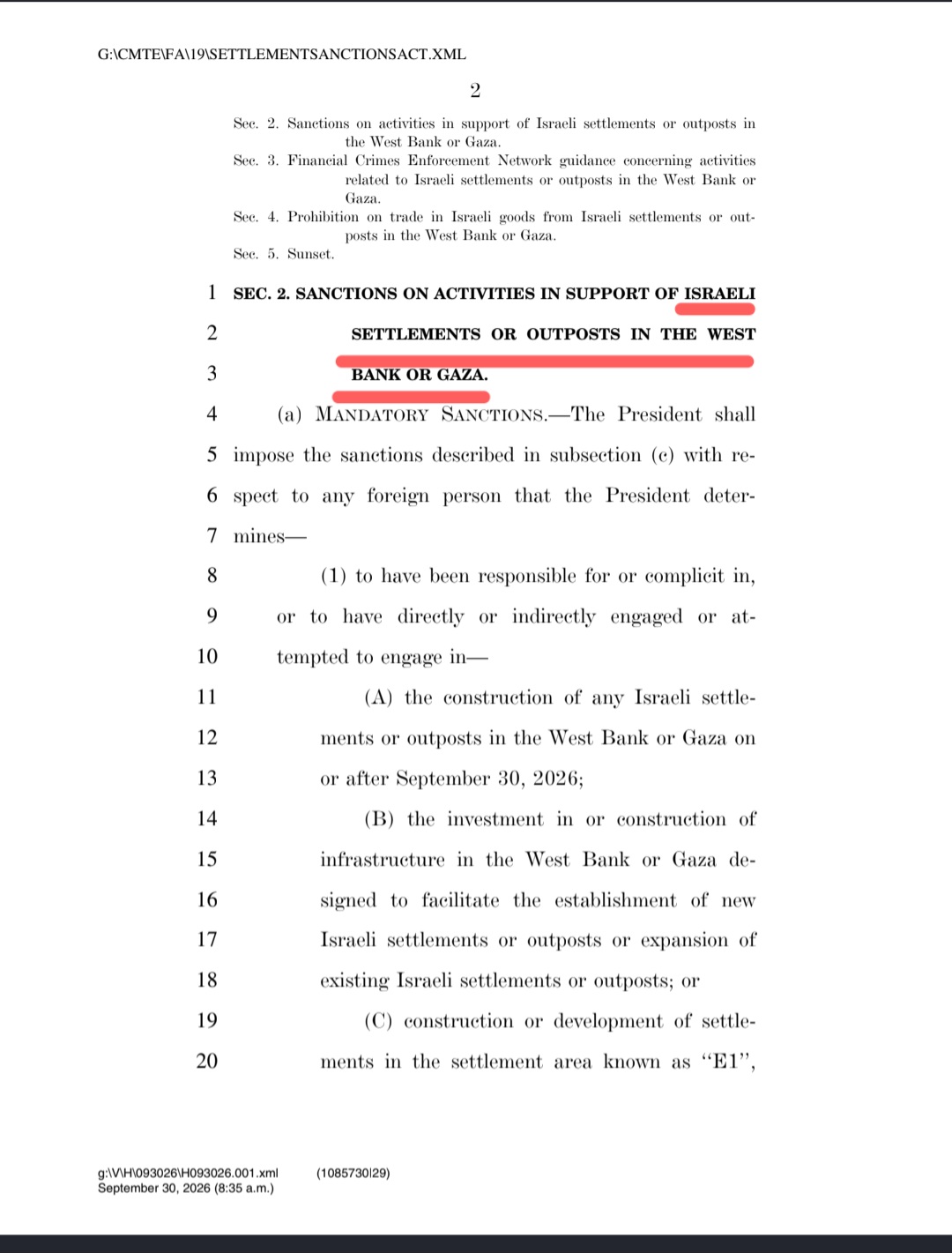
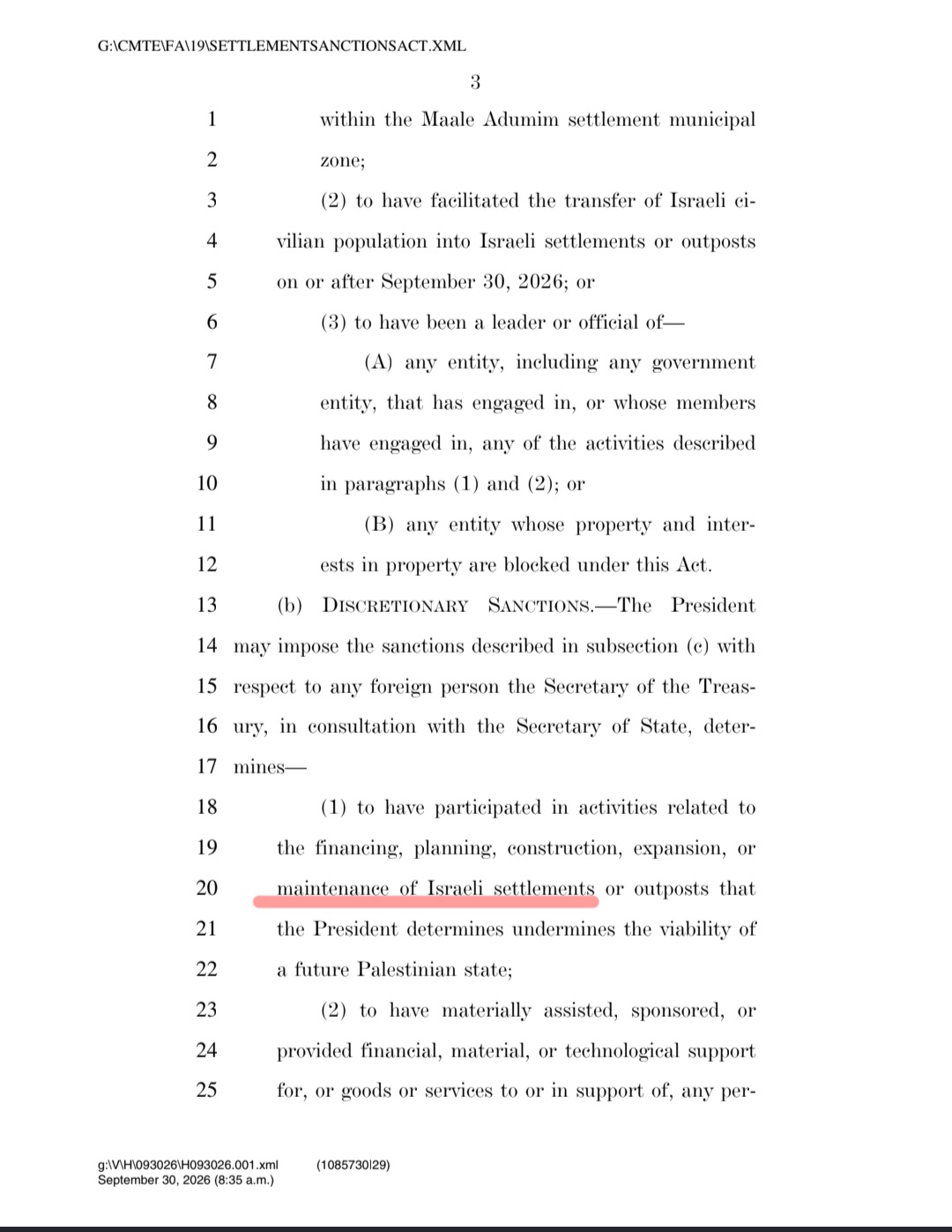
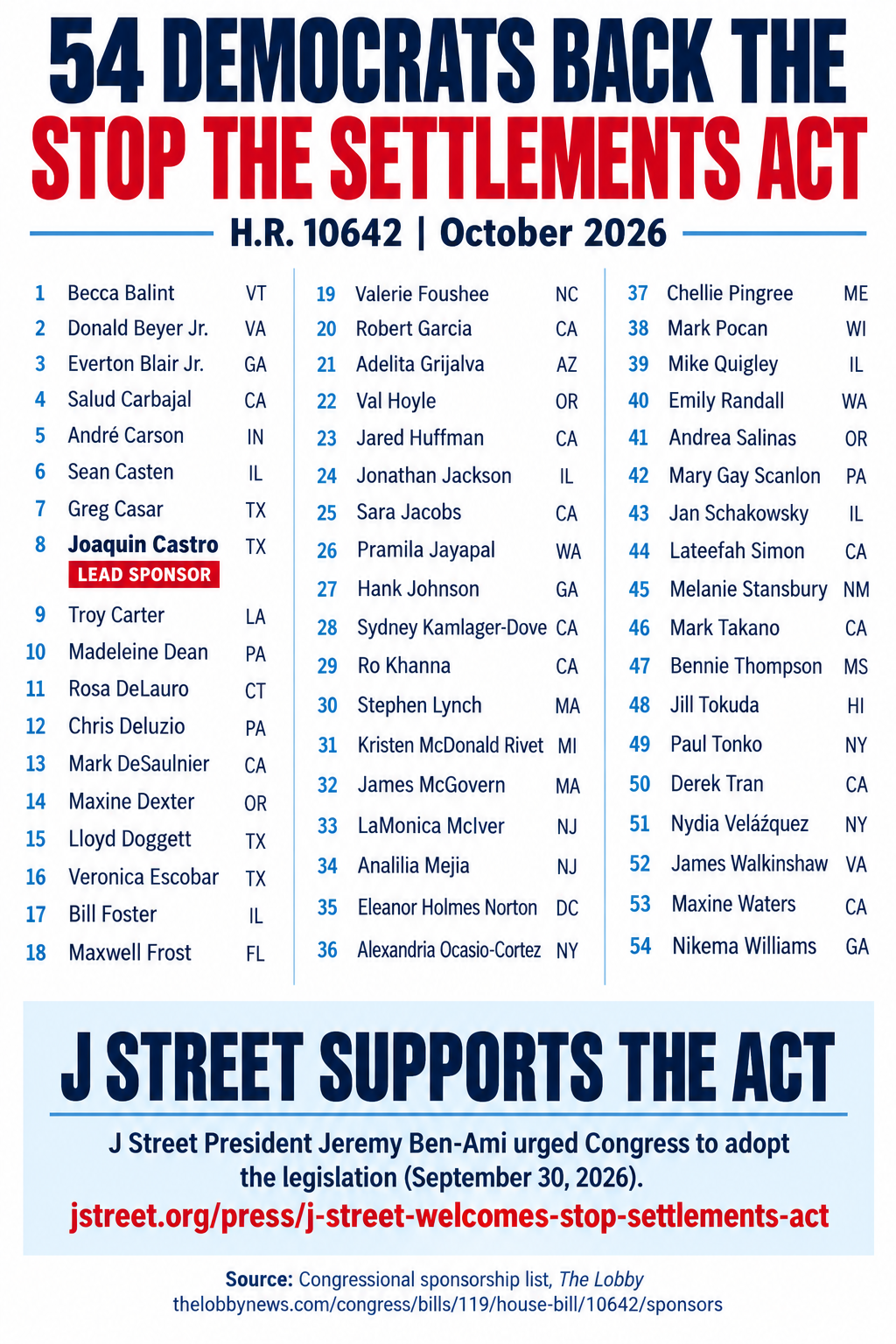
These concerns are already entering American legislation. In October 2026, Representative Joaquin Castro introduced the Stop the Settlements Act, backed by dozens of Democratic lawmakers. The bill would impose sanctions on certain foreign persons involved in “settlement” activities and prohibit imports from covered settlements. Its reference to the West Bank raises a disturbing question: Would eastern Jerusalem, including the Jewish Quarter of the Old City, fall within its reach?
If so, Jewish organizations involved in purchasing and renovating homes, restoring historic synagogues such as Tiferet Yisrael, or supporting archaeological projects at the City of David could face sanctions-related consequences. The bill leaves critical questions about its application to these activities unresolved. Its sponsors should be required to explain whether Jewish religious and communal institutions in Jerusalem could become targets.
The possibility that American Jewish lawmakers would support legislation reaching Jewish religious institutions in Jerusalem is extraordinary. If Jews knowingly work to obstruct other Jews from maintaining synagogues, owning homes or fulfilling religious obligations in Jerusalem, why should their conduct escape the scrutiny of Jewish law?
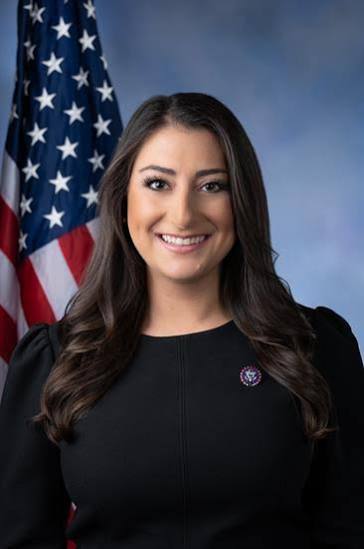
Rep. Sara Jacobs (D-CA) co-sponsored the Stop the Settlement Act
Further along the spectrum are efforts to boycott Israeli universities, exclude Israeli rabbis or educators, or discourage purchases of Israeli goods. Such actions may weaken educational, economic and communal relationships, although their connection to established grounds for nidui is less direct.
The case for religious sanctions is strongest where conduct directly obstructs an identifiable commandment or violates another established halachic obligation.
From Nidui to Herem
Jewish communities have historically imposed sanctions on individuals and movements. In 1772, rabbinic authorities associated with the Vilna Gaon (1720–1797) supported bans against the emerging Hasidic movement, a precedent that also illustrates the danger of communal authorities misjudging religious differences. Today, institutions such as Hillel restrict partnerships with organizations supporting BDS such as Jewish Voice for Peace, while the Conference of Presidents rejected J Street’s membership application in 2014. Between silence and herem lies a range of communal measures, from public censure to restrictions on institutional membership and leadership. These measures require clear standards and responsible authority.
The Jewish community is fraying. Its religious institutions, security and connection to Israel face growing internal conflict. Jewish law already recognizes that deliberate harm to another Jew can warrant communal sanctions. Qualified religious leaders should be prepared to examine serious violations, distinguish them from political disagreement and apply appropriate measures where justified.
If Jewish law can sanction a man for trapping one Jewish woman in a marriage, how can Jewish leadership refuse even to consider sanctions against those who deliberately endanger Jewish communities or obstruct their commandments?
Imagine three American Jews participating in their cultural heritage: one American Jew buys an apartment in Jerusalem’s Old City, and hires an Israeli contractor to repair the roof and renovate the kitchen. Another American contributes to archaeological excavations uncovering ancient Jewish Jerusalem, say in Ir David. A third donates to rebuilding a synagogue destroyed by the Jordanians in 1948.
Rebuilding the Tiferet Yisrael Synagogue in the Old City of Jerusalem, which was destroyed by the Jordanian army when it illegally seized the city in 1949 (photo: First One Through 2023)
Under legislation sponsored by 54 congressional Democrats, each may face federal prosecution, a million-dollar fine or even 20 years in prison.
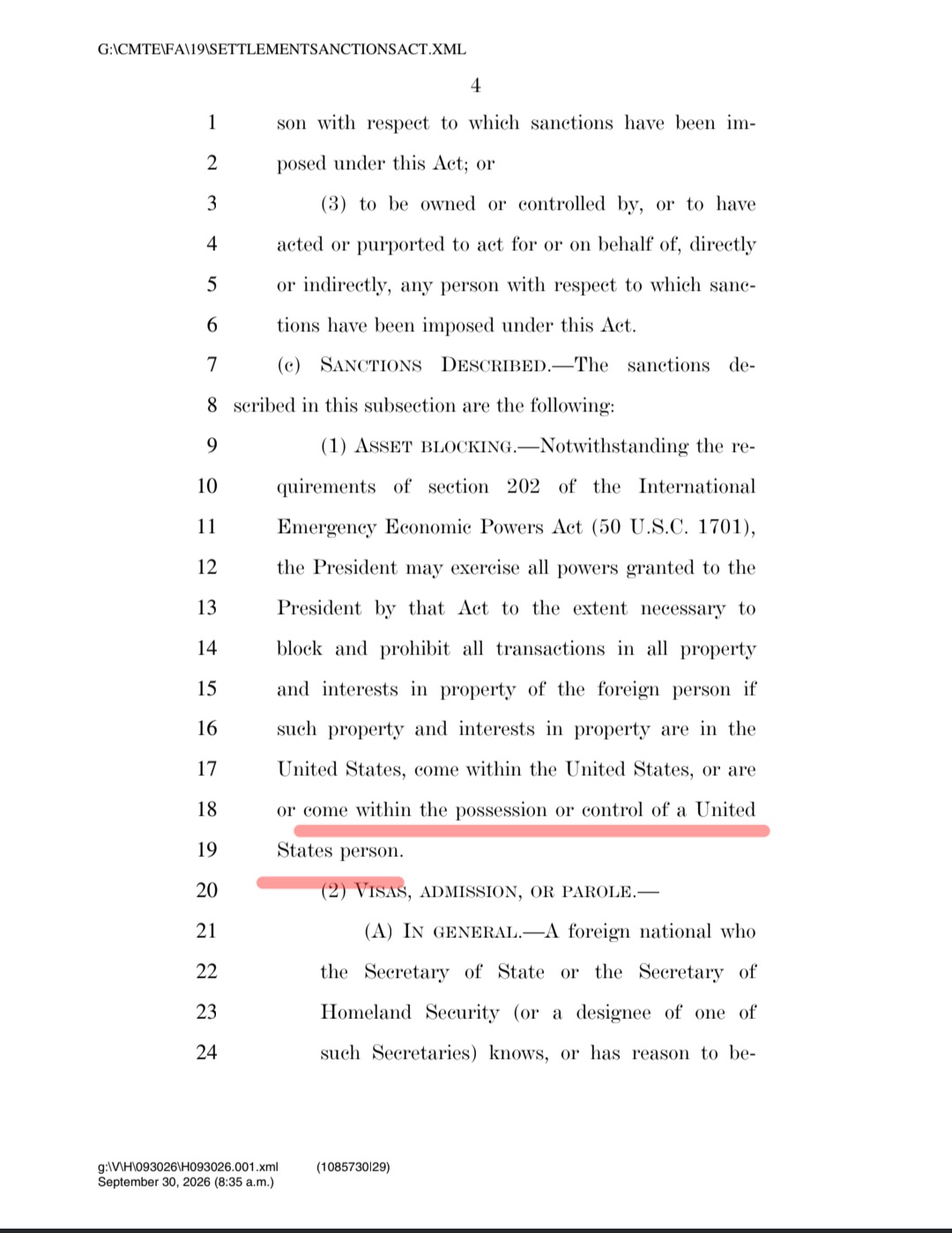
Congressman Joaquin Castro’s Stop the Settlements Act, H.R. 10642, reaches far beyond stopping new Israeli housing construction in disputed territories. It authorizes sanctions against foreign persons involved in the financing, planning, construction, expansion or maintenance of Israeli settlements or outposts, subject to certain determinations.
This is not legislation targeting building a new neighborhood in the middle of the West Bank. It targets even maintaining what already exists, even in cities with thousands of years of Jewish history and presence. Democrats in Congress have chosen language broad enough to raise questions about the ordinary upkeep of Jewish communities.
The bill repeatedly refers to “settlements” in the “West Bank and Gaza.” It never explicitly states whether eastern Jerusalem including the Old City is included.
Palestinians claim “East Jerusalem,” part of a divided city that existed as a result of the 1948-9 war, which lasted for 18 years until 1967, as part of their future state. Israel considers united Jerusalem its capital, including the Old City.
Congress knows these competing positions. Congress knows that the Jewish Quarter contains homes and synagogues predating Israel’s establishment in 1948. Yet 54 Democrats have attached their names to legislation without clarifying whether these historic Jewish neighborhoods fall within its reach. Deliberately.
Consider the consequences. A future Democratic president may decide to state that “East Jerusalem” actually exists and that it is part of the West Bank. The activities described above become a crime.
An American buys an apartment in the Jewish Quarter, where Jews lived for centuries before Jordan expelled its Jewish residents in 1948. He hires an Israeli company to restore the property. If an American administration classifies the Old City as a settlement (at least, any location where a Jew buys land) and sanctions that company for its broader construction or maintenance activities, paying the contractor could become a federal offense.
Now consider Ir David, the City of David, where archaeological excavations uncover the streets, structures and artifacts of ancient Jerusalem. An American donor might contribute money to uncover archaeological remains. But if the recipient organization were sanctioned, that donation could become prohibited.
Ir David excavations unearthing Jerusalem at the time of the Second Temple. (photo: First One Through July 2024)
The ramification would be to halt Jews from connecting to their past and only enable Arabs to excavate or destroy Jewish history.
Then there is Tiferet Yisrael Synagogue. Built in 1877 in Jerusalem’s Jewish Quarter, the synagogue was destroyed during Jordan’s conquest of the Old City in 1948. Its reconstruction restores a Jewish house of worship that existed generations before Israel recaptured the Old City in 1967.
Could the organization rebuilding it be sanctioned for construction or maintenance in territory an administration considers a settlement? In addition to being obtuse about Jerusalem, the bill contains no express exemption for historic synagogues, religious restoration or Jewish institutions predating 1948.
Domes of the Tiferet Yisrael (top center) and Hurva Synagogues (above right) return to the Old City skyline (photo: First One Through November 2025)
The legislation invokes the International Emergency Economic Powers Act. Willful violations of applicable prohibitions can carry criminal fines of up to $1 million and imprisonment for up to 20 years. Civil penalties may apply even without criminal intent.
If an administration designates locations in Jerusalem’s Old City, an American could potentially be barred from ordering a handmade menorah or other merchandise produced there for shipment to the United States.
Castro says his legislation is intended to stop settlement expansion and Palestinian dispossession. Yet its language raises questions about the Old City of Jerusalem, the maintenance of existing homes, archaeological preservation, religious reconstruction and ordinary commercial activity.
Despite the language, the self-declared “pro-Israel” group J Street has endorsed it.
Fifty-four Democrats have attached their names to legislation that could reach into the Jewish Quarter of Jerusalem. And the list of Democratic co-sponsors and anti-Israel alt-left Jewish groups supporting it continues to grow.
J Street calls itself “pro-Israel and pro-peace.” Apparently, that requires pretending Hamas has no agency nor role in the conflict.
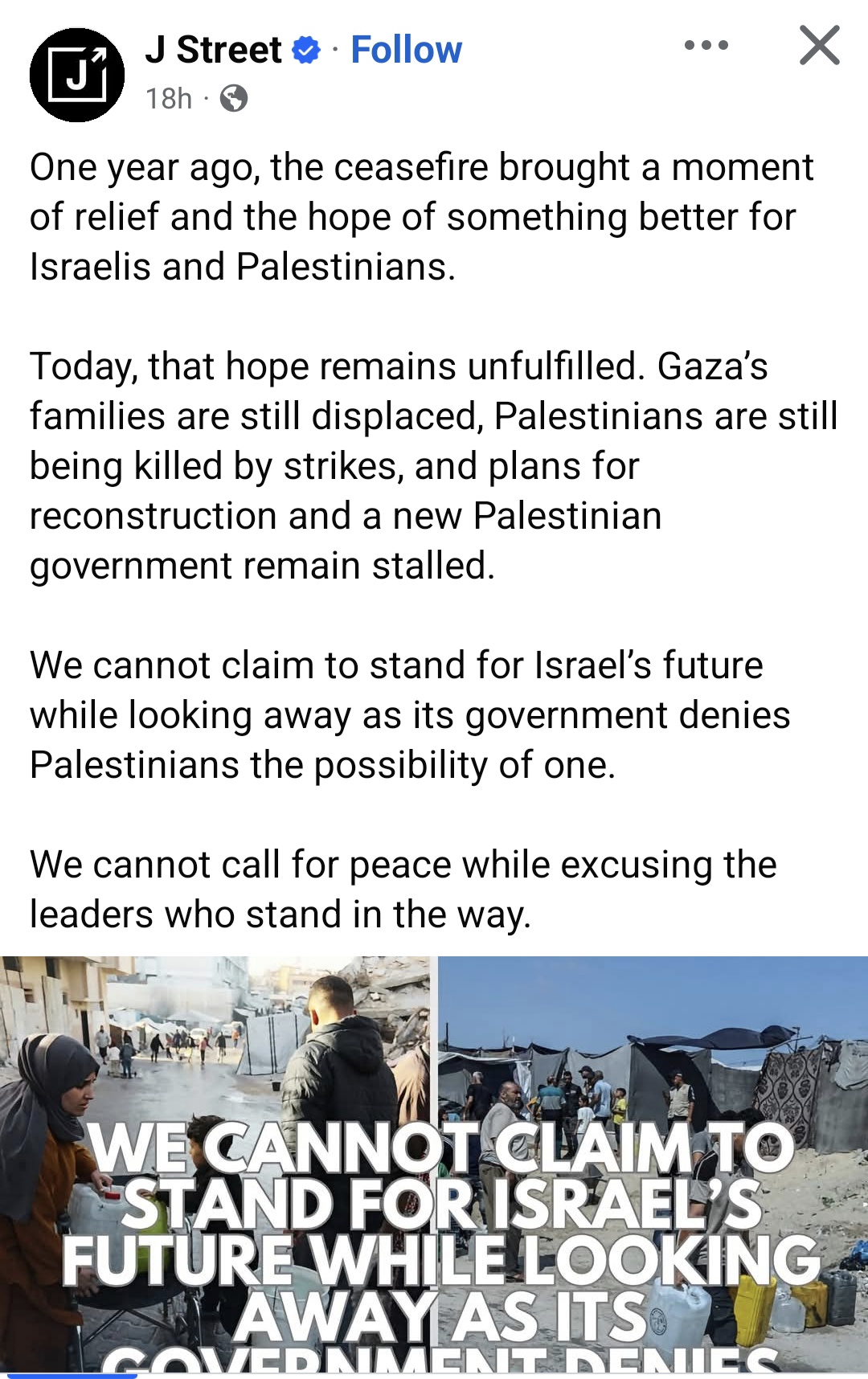
In a Facebook post marking the anniversary of the Gaza ceasefire, J Street laments displaced Palestinians, continuing deaths, stalled reconstruction and the absence of a new Palestinian government. It then delivers its indictment:
“We cannot claim to stand for Israel’s future while looking away as its government denies Palestinians the possibility of one.”
Notice who is missing from this account of Gaza’s future: Hamas.
Hamas launched the October 7 massacre. Hamas continues to maintain an armed organization. Hamas has resisted surrendering its weapons and relinquishing military control. Yet in J Street’s telling, the obstacle to peace is Israel’s government.
Hamas becomes a passive spectator to its own war. Palestinians become people without political leadership or responsibility. Israel alone possesses agency, and therefore Israel alone receives blame.
J Street knows better. Its own policy analyses acknowledge Hamas’s continued armed presence and the necessity of disarmament. Yet when communicating with its Facebook audience, those inconvenient facts disappear.
J Street claims to be pro-Israel and pro-peace while treating Hamas as an innocent bystander and Israel as the sole villain. That is more than intellectual dishonesty. It is moral cowardice masquerading as moral clarity.
HISTORICAL ECHO
We have seen this in Jewish history before – those in leadership positions enabling the mob rather than confronting depravity.
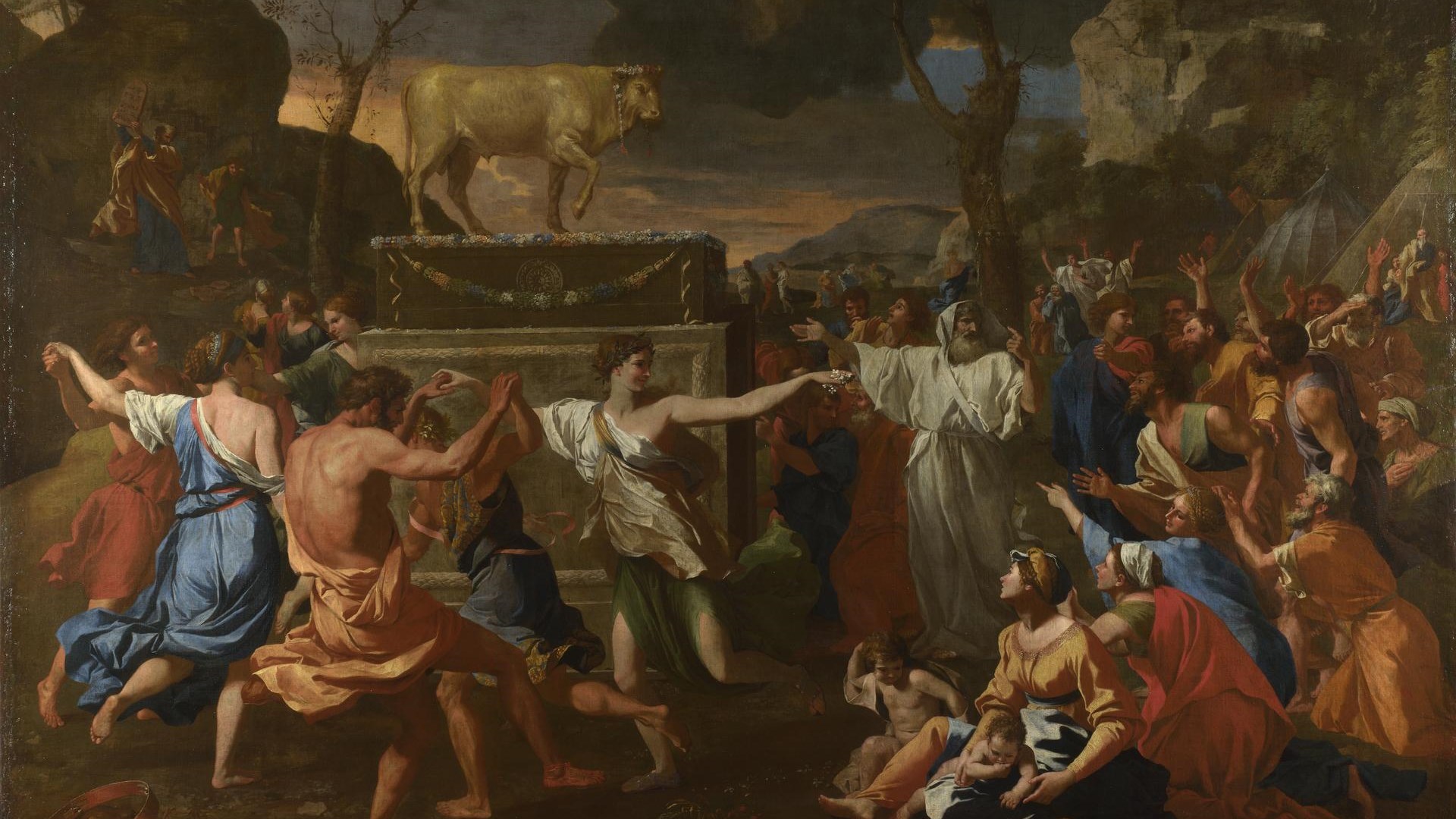
In the wilderness, Aaron fashioned a Golden Calf rather than confront a crowd demanding an idol. Today, condemning Israel has become a new Golden Calf, an act of public devotion that substitutes fashionable outrage for moral judgment. J Street, which claims to speak for Jewish values and Israel’s future, should recognize the biblical warning. Instead, it leads and joins the worshippers, sacrificing moral clarity on the altar of popular approval.
J Street has long described itself as “pro-Israel.”
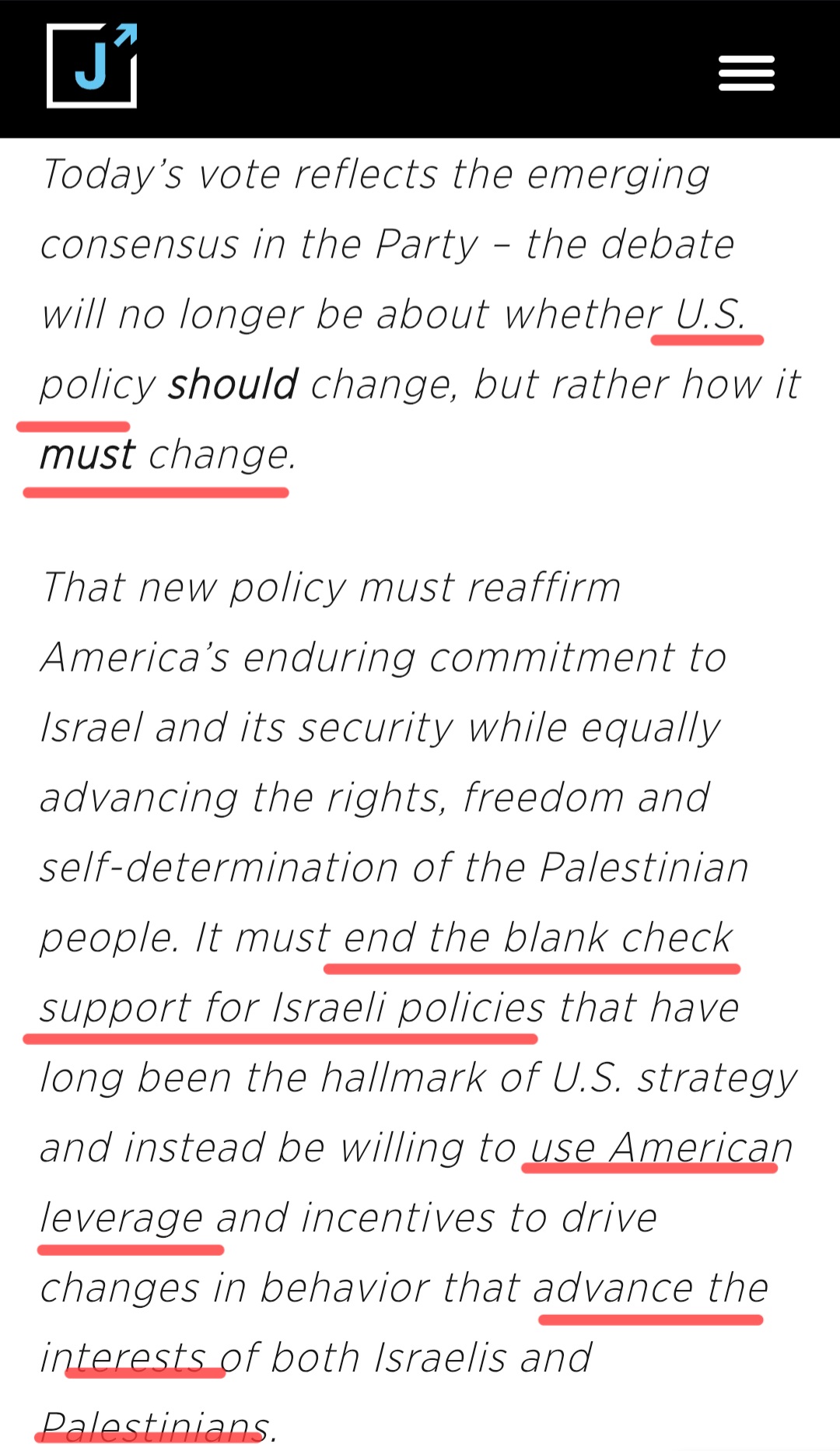
This week, after the House vote on military aid to Israel, it celebrated what it called the end of the old Washington consensus.
It welcomed House Democratic leaders for taking “a stronger stance” by using American leverage to pressure Israel’s government. It called for ending the “blank check” of military support. It declared that the debate was no longer whether U.S. policy toward Israel should change, but “how it must change.” [bold in original]
Those are remarkable statements.
They are not expressions of disagreement with a particular Israeli policy. They are a lobbying agenda urging the United States to use its military and financial support to compel Israel’s democratically elected government to change course while Israel is fighting the most complex, multi-front war in its history.
That is no longer simply criticism. It is an organized effort to change Israeli policy through pressure from a foreign government.
Every organization has the right to advocate for the policies it believes are best. But organizations should also be honestly described by what they do.
If an organization’s central mission is persuading Washington to pressure Israel, reduce military support, and override the strategic decisions of Israel’s elected government during wartime as its enemies desire, it is fair to ask whether “pro-Israel” remains the most accurate description.
And that question should extend to the institutions that continue to grant it the legitimacy of the broader organized Jewish community, such as those which represent the pro-Israel consensus within umbrella organizations.
These umbrella organizations exist to build Jewish consensus and strengthen support for Israel.
If one member organization is actively lobbying the United States to use military aid as leverage against Israel during wartime, then the question is no longer merely one of ideological diversity. It is whether the organization’s mission remains compatible with the mission of the coalition itself.
Pluralism is an important Jewish value but so is intellectual honesty.
The organized Jewish community has a right—and perhaps an obligation—to decide whether an organization dedicated to lobbying against the policies of Israel’s elected government during war should continue to be presented as part of the mainstream pro-Israel tent.
As these pages wrote back in 2017, “the Jewish State and pro-Israel groups will never have uniformity of opinions, but it should have unity of purpose,” especially within umbrella organizations. J Street has affirmed that its mission is more akin to Jewish Voice for Peace and the New Israel Fund, who occupy a very different tent.
And it knows this, which is why it created its own umbrella group, Progressive Israel Network. It is why they banded together to boycott a major pro-Israel event in Washington, D.C. in 2024, sponsored by the other mainstream groups.
It was one thing for the Conference of Presidents and AZM to not admit J Street. Will Jewish groups which have J Street as a member organization, now finally ask it to leave?
On November 21, 2024 the House of Representatives approved H.R. 9495 by a vote of 219-184 with 30 people not voting. The bill was called the “Stop Terror-Financing and Tax Penalties on American Hostages Act” and principally involved relaxing laws about tax collection if people are “detained” like hostages in Gaza, as well as to terminate “the tax-exempt status of terrorist supporting organizations.”
J Street, the left-wing pro-Palestinian group marketed as Jewish and pro-Israel was “dismayed” at its passage. It had joined with 50 other progressive groups in a letter to members of Congress to oppose the bill on the grounds that “the bill threatens to politicize decisions.”
On July 13, 2010, J Street called for a “Treasury investigation into settlement charities.” It claimed that “tax-exempt organizations are working to undermine a two-state solution by deepening the occupation.”
The head of J Street, Jeremy Ben Ami, would not relent on this Holy Grail quest and tried to push the willing ears of President Barack Obama in his fight. On September 9, 2016, Ben Ami posted an urgent plea: “J Street Calls on Treasury Department to Review Tax Deductibility of Donations to Groups Entrenching Settlements.” It stated that the best way to advance its preferred public policy goals was to terminate tax exempt status for those with different agendas.
J Street called on its supporters and all who support a just Israeli-Palestinian peace agreement to urge the US Treasury to review the tax-deductibility status of contributions to groups working to entrench or expand Israeli settlement activity in the West Bank.
J Street September 9, 2016
The call to stifle free speech and expression was obvious to all. Eugene Kontorovich wrote in Tablet Magazine on October 6, 2016 that called J Street’s action “unprecedented and clearly unconstitutional” in attacking charities “pursuing goals at odds with the foreign policy of the President.”
Snapshot of article by Eugene Kontorovich in Tablet on October 6, 2016
Now that a Republican president is about to take office, progressive groups are suddenly worried about politicizing the tax-exempt status of charities, an effort they had inaugurated.
And that’s a red herring as it’s not what the bill states. It is not trying to rob charities of donations for having different opinions, the bill specifically is about supporting terrorism. As laid out, “the term ‘terrorist supporting organization’ means any organization which is designated by the Secretary [of Treasury] as having provided, during the 3-year period ending on the date of such designation, material support or resources (within the meaning of section 2339B of title 18, United States Code) to an organization described in paragraph (2) (determined after the application of this paragraph to such organization) in excess of a de minimis amount.”
J Street has long fought to strip the tax-exempt status of charities operating east of the 1949 Armistice Lines (E49AL), such as a charity which provides wheelchairs for the elderly in the Old City of Jerusalem. It is now crying foul as Congress passed an act to fight terrorism, because of the long list of Palestinian terrorist groups and even longer list of its supporters.
Jewish organizations once again rallied people to Washington, D.C. for a “Stand Together” event. The Jewish Federations of North America invited many groups to attend, a spectrum of religious leaders and those with diverse political views to assemble and stand with fellow Jews and the Jewish State of Israel, including Sen. Joni Ernst (R-IA) and Gov.Gretchen Whitmer (D-MI). The speakers included Blacks and native Americans, soldiers and children.
They had a variety of backgrounds and beliefs but were united in being pro-Israel and for fighting antisemitism.
But there were a number of left-wing radical groups which refused to join the unity event. J Street published a joint statement that a number of groups in its orbit including Ameinu, Americans for Peace Now, Habonim Dror North America, New Israel Fund, New York Jewish Agenda, Partners for Progressive Israel and T’ruah had joined it in boycotting the event.
Joint statement by far left-wing groups to boycott an event in Washington DC which included a wide range of pro-Israel organizations
This cohort didn’t simply decide to quietly not show up for the event but banded together and issued a joint statement denouncing unity at moment when it is sorely needed. [Note that Ameinu and Americans for Peace Now merged in February 2024, although they are still listed separately by the Conference of Presidents.]
Instead, J Street took to the soapbox to demand the U.S. withhold weapons to Israel as the Jewish state engages in a multifront war. It slammed President-elect Donald Trump’s appointment of ambassador to Israel, Mike Huckabee.
And it is urging the U.S. Congress – and perhaps the Biden Administration at the United Nations – to use its remaining months in office to severely punish Israel. This same pro-Palestinian (marketed as “pro-Israel”) group has never once suggested harming the Stateless Arabs from Palestine (SAPs).
At the end of President Barack Obama’s term in 2016, J Street effectively lobbied the administration to allow UN Security Council Resolution 2334 to pass, making it illegal for Jews to live east of the 1949 Armistice Lines (E49AL), including in the Old City of Jerusalem. It publicly thanked Obama and disgraced Secretary of State John Kerry for their efforts to make Jerusalem Jew-free as a “moral” matter.
Full page J Street ad in The New York Times in January 2017 quoting Secretary of State John Kerry after the Obama administration allowed UN Security Council 2334 to pass, making it illegal for Jews to live in Jerusalem and the “West Bank.”
Many Jewish groups are assessing whether to allow radical groups that harm Israel and the Jewish people to remain in the same tent. These umbrella groups should make plain that if these groups lobby the U.S. administration to punish Israel in the lame duck session, they will be kicked out of the community, much like they removed themselves from Standing Together in Washington.
ACTION ITEM
Write the various umbrella groups to warn J Street, New Israel Fund and others that lobbying Congress to punish Israel will result in their exclusion and/or expulsion.
To mark one year since the most brutal massacre of Jews since the Holocaust, and a year which saw the most dramatic spike in antisemitism in the United States – especially on college campuses – the young members of J Street doubled down on pushing the American government to combat Israel.
On October 7, 2024, J Street U, the university-oriented section of J Street, issued a press release on J Street’s site. On that day of mourning, J Street U recalled the brutal Hamas massacre while also expressing empathy “over the suffering of the Palestinian people and mourn every innocent life lost in Gaza.” On that day of mourning, J Street U sought balance about “vile antisemitism and Islamophobia.” On that day of mourning, J Street U urged the US government to ONLY pressure the Israeli government about the defensive war they didn’t start nor wanted.
J Street press release on October 7, 2024
In March 2022, Students for Justice in Palestine, a rabidly anti-Israel and antisemitic group, called J Street a gateway for Jews to become anti-Zionists. J Street U’s jihadi grooming gangs normalized anti-Zionism on campus much like Jewish Voice for Peace, to set the stage for what the world has witnessed on campuses since October 7, 2023.
J Street is not only harmful to the Jewish State, it has normalized antisemitism we see on college campuses today.
ACTION ITEM
Here is a list of rabbis associated with J Street. If you know them, contact them to tell them your feelings about the group, to get them to either fight for change within or to leave the group.
J Street, the far left-wing pro-Palestinian group which markets itself as pro-Israel pushed the Obama Administration in 2016 to label Jews living east of the Green Line (EGL) as illegal settlers at the United Nations. That action laid the foundation for a rash of anti-Israel measures around the world.
Now, after the October 7 massacre in Israel, J Street is once again pushing the United States to stop protecting Israel at the UN Security Council.
On December 21, 2023, J Street issued a press release with four goals: 1) to pause fighting to enable Hamas to rearm; 2) get the US to “stop vetoing Security Council resolutions related to the conflict“, so more global pressure can come down on Israel; 3) get “an American commitment to recognition of Palestinian statehood” since Palestinians have clearly shown they are decent and responsible actors; and 4) put in place “strict oversight and scrutiny of arms” purchased by Israel, because J Street is convinced that conditioning aid to Israel while Iran and its proxies pursue a genocide of Jews is critical right now.
J Street;s Jeremy Ben Ami
The release concluded: “We urge the Biden administration to take immediate action to ensure that the Israeli government significantly shifts course before this conflict costs more lives and wreaks more pain and devastation. The way the current campaign is being pursued only jeopardizes Israel’s efforts to defeat Hamas and secure the release of the hostages – while laying the groundwork for even deeper, long-term security challenges.”
No such calls for “immediate action” by the US and others to pressure Hamas. J Street called for only Israel to be pressured.
Students for Justice in Palestine at Tufts wrote in March 2022 “that many Jewish people begin their anti-zionist political journey through J Street U,” J Street’s university division. The anti-Israel community knows that the woke Jewish group is a tool for young and old people in America to find their anti-Israel bona fides, to change America’s pro-Israel positions.
The United States is Israel’s sole supporting voice at the United Nations and J Street is doing its utmost to weaken that voice, just as Iran and Hamas desire.
Rep. Jamaal Bowman (D-NY16) is a slick promoter who markets himself as an educator working for the working class who will not play games with Republican politicians.
In truth, he lives the game of politics, and it is well beyond a focus on Republicans as he plays games with antisemitism and anti-Zionism.
Reacting to his own insulting boycott of a bipartisan and bicameral invitation to Israeli President Isaac Herzog addressing a joint session of Congress, and fellow left-wing extremist Rep. Pramila Jaypal (D-WA07) calling Israel is a racist state, Bowman tweeted that he voted against a resolution condemning antisemitism because of Republican “idiotic games.”
Note that Jaypal herself posted a lengthy release about her poorly chosen words that Israel is a racist state. Her 414-word statement affirmed her belief that “words do matter and so it is important that I clarify my statement.“
Almost every Democrat joined all Republicans in backing the resolution, except for the radical left-wing fringe that is adamant about playing with the toxic hatred in the Middle East.
Almost every Democrat joined all Republicans to attend the speech by a liberal pro-peace leader in the Middle East.
The contingent that instead chose to play politics was Bowman and the Squad.
This is not new to Bowman.
Anti-Israel and Anti-Semitic
Bowman has a long history of voting against Jews and the Jewish State:
Would not sign letter to Department of Education to fight antisemitism at colleges (February 4, 2022)
Original sponsor of resolution calling the founding of Israel a “catastrophe” (May 17, 2022)
Does not recognize discrimination against Jews (March 9, 2023)
Authored letter to President Biden to condition aid to Israel (April 23, 2023)
Voted against the Abraham Accords (April 25, 2023)
Voted against condemning antisemitism, and that Israel isn’t a racist state (July 18, 2023)
Boycotted speech by the Israeli president to a joint session of Congress (July 19, 2023)
Bowman takes these positions because radicals fund him. They are his real constituents.
On September 20, 2021, Bowman thanked the radical anti-Israel group, IfNotNow for their “partnership.” His top donors in the 2021-2 election cycle were another anti-Israel group, J Street, and the powerful leaders controlling schools, the American Federation of Teachers and the City University of New York, which has become a hotbed of rampant antisemitism and anti-Zionism. He is also a top recipient of money from Justice Democrats, a radical group backing alt-left politicians.
Bowman believes that liberal Jews will look past his nods to antisemitism and insults to Israel if they value the embrace of intersectionality more than from fellow Jews and Zionists. He is leaning into the cleft opening among American Jews, betting he can divide the most persecuted minority in America.
It is an ugly game that not only fans the flames of Jew hatred globally but pits Jews against themselves.
And there’s a big pot of money at the end of the anti-Jewish rainbow, a trough from which Bowman plans to feed.