
J Street has long described itself as “pro-Israel.”
This week, after the House vote on military aid to Israel, it celebrated what it called the end of the old Washington consensus.
It welcomed House Democratic leaders for taking “a stronger stance” by using American leverage to pressure Israel’s government. It called for ending the “blank check” of military support. It declared that the debate was no longer whether U.S. policy toward Israel should change, but “how it must change.” [bold in original]
Those are remarkable statements.
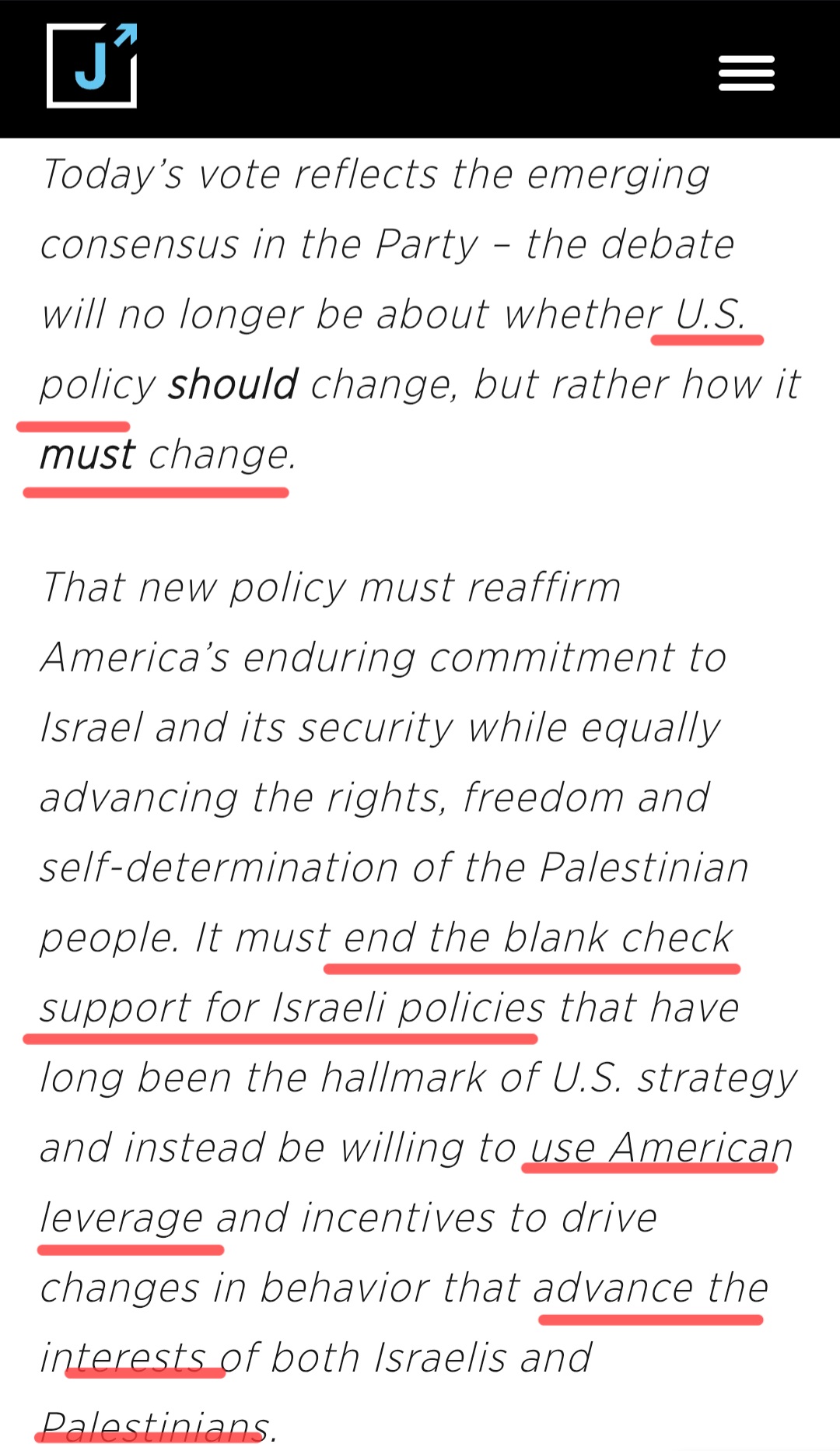

They are not expressions of disagreement with a particular Israeli policy. They are a lobbying agenda urging the United States to use its military and financial support to compel Israel’s democratically elected government to change course while Israel is fighting the most complex, multi-front war in its history.
That is no longer simply criticism. It is an organized effort to change Israeli policy through pressure from a foreign government.
Every organization has the right to advocate for the policies it believes are best. But organizations should also be honestly described by what they do.
If an organization’s central mission is persuading Washington to pressure Israel, reduce military support, and override the strategic decisions of Israel’s elected government during wartime as its enemies desire, it is fair to ask whether “pro-Israel” remains the most accurate description.
And that question should extend to the institutions that continue to grant it the legitimacy of the broader organized Jewish community, such as those which represent the pro-Israel consensus within umbrella organizations.
The Conference of Presidents of Major American Jewish Organizations excluded J Street. As has the American Zionist Movement. But what of local Jewish community relations councils that also house organizations like Israel Bonds?
These umbrella organizations exist to build Jewish consensus and strengthen support for Israel.
If one member organization is actively lobbying the United States to use military aid as leverage against Israel during wartime, then the question is no longer merely one of ideological diversity. It is whether the organization’s mission remains compatible with the mission of the coalition itself.
Pluralism is an important Jewish value but so is intellectual honesty.
The organized Jewish community has a right—and perhaps an obligation—to decide whether an organization dedicated to lobbying against the policies of Israel’s elected government during war should continue to be presented as part of the mainstream pro-Israel tent.
As these pages wrote back in 2017, “the Jewish State and pro-Israel groups will never have uniformity of opinions, but it should have unity of purpose,” especially within umbrella organizations. J Street has affirmed that its mission is more akin to Jewish Voice for Peace and the New Israel Fund, who occupy a very different tent.
And it knows this, which is why it created its own umbrella group, Progressive Israel Network. It is why they banded together to boycott a major pro-Israel event in Washington, D.C. in 2024, sponsored by the other mainstream groups.
It was one thing for the Conference of Presidents and AZM to not admit J Street. Will Jewish groups which have J Street as a member organization, now finally ask it to leave?


