J Street is celebrating its greatest political victory.
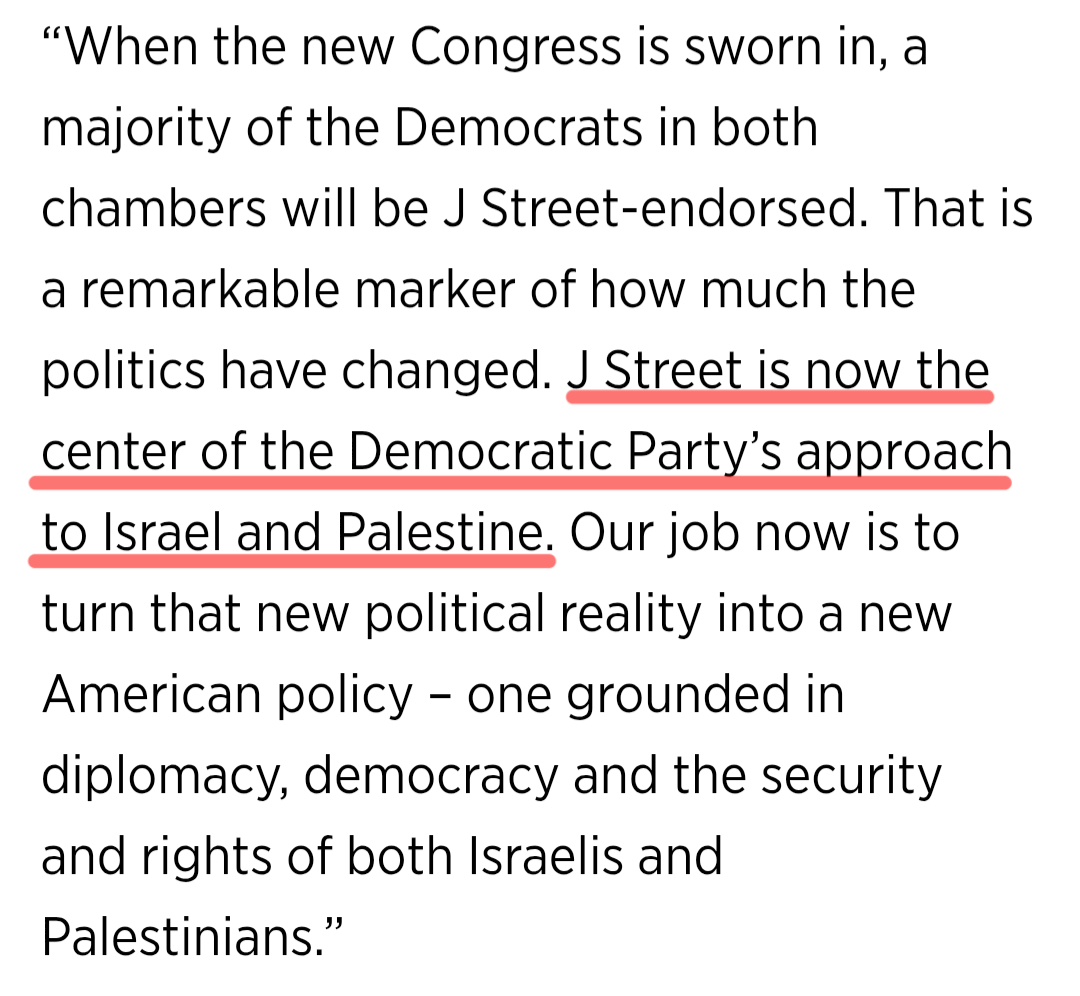
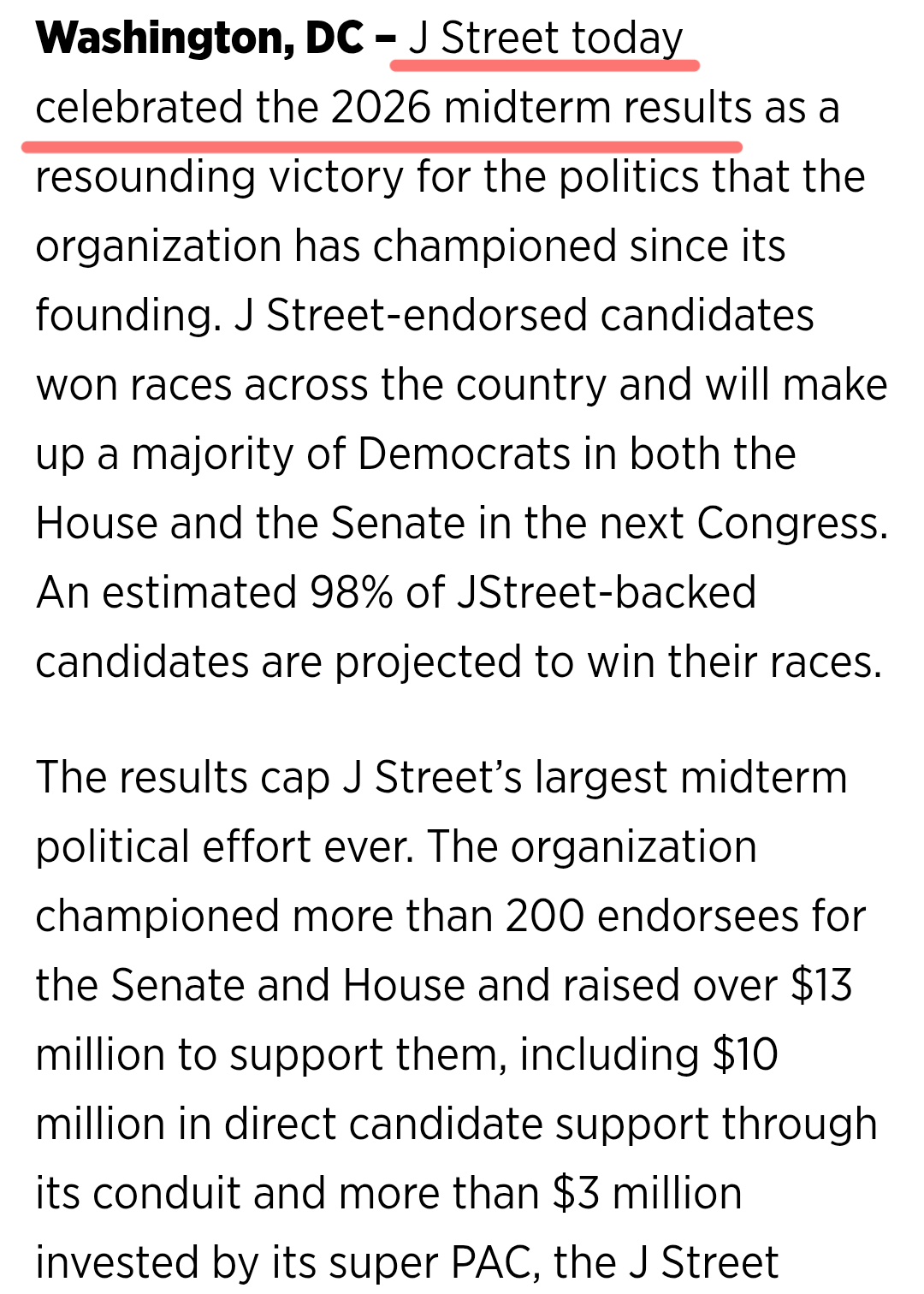
The self-described “pro-Israel” organization endorsed more than 200 congressional candidates in the 2026 midterms, raised over $13 million and projects a 98% victory rate. Its president, Jeremy Ben-Ami, declared that J Street had become the center of Democratic politics on Israel.
The election results tell a larger story about how far that center has moved, and the role a progressive Jewish organization has played in legitimizing increasingly hostile positions toward Israel within the Democratic Party.
When Genocide Crossed the Line
In January 2024, J Street withdrew its endorsement of Congressman Jamaal Bowman following growing disagreements over his rhetoric, including accusations that Israel was committing genocide and his praise of controversial anti-Israel commentator Norman Finkelstein. Ben-Ami declared “When the rhetoric, the framing and the approach go too far, that’s where we are going to hold our line.”
No longer.
In November 2025, Congresswoman Rashida Tlaib introduced a resolution titled Recognizing the genocide of the Palestinian people in Gaza, calling on the United States to officially recognize that Israel had committed “genocide.” Ten original cosponsors appeared among J Street’s successful 2026 endorsees:
- Becca Balint — Vermont
- André Carson — Indiana
- Greg Casar — Texas
- Hank Johnson — Georgia
- Pramila Jayapal — Washington
- Ro Khanna — California
- Jim McGovern — Massachusetts
- Mark Pocan — Wisconsin
- Delia Ramirez — Illinois
- Lateefah Simon — California
In less than three years, language that helped cost one politician J Street’s support had become acceptable among its endorsed candidates.
Beyond Genocide
The change extends beyond one accusation.
Congresswoman Pramila Jayapal called Israel a “racist state” in 2023. Congressman Ro Khanna and Congresswoman Delia Ramirez were among the politicians who formally sponsored the genocide resolution, while Khanna has also criticized Israeli rule in the West Bank as “apartheid.”
Their congressional votes reveal additional differences over America’s relationship with Israel.
On April 20, 2024, thirty-seven House Democrats voted to provide military assistance to Ukraine while opposing a separate assistance package for Israel. J Street-endorsed politicians André Carson, Greg Casar, Pramila Jayapal, Ro Khanna, Mark Pocan and Delia Ramirez were among them.
On October 25, 2023, the House passed a resolution condemning Hamas’s October 7 massacre and affirming American support for Israel by a vote of 412–10. Carson and Ramirez voted against it, while Jayapal and Casar merely voted present. Curiously, J Street supported that resolution and subsequently endorsed politicians who declined to vote for it.
The widening range of accepted positions also includes economic boycotts. J Street officially opposes the global Boycott, Divestment and Sanctions movement but supports targeted import bans and sanctions involving Jews and Jewish businesses from Judea and Samaria. In September 2026, it welcomed such restrictions and urged similar American measures.
This has been a trend for years. Several endorsed politicians, including Carson, Jayapal and Pocan, voted against a 2019 congressional resolution opposing BDS.
J Street’s endorsements now accommodate accusations of genocide and apartheid, opposition to military assistance and a wider range of positions supporting economic pressure on Israel.
Moving the Political Center
J Street’s endorsements offer something an explicitly anti-Israel organization cannot: political cover from an organization identifying itself as progressive, Jewish and pro-Israel. That validation gives Democratic politicians room to advance positions once considered outside of liberal pro-Israel boundaries.
This unquestionably harms the State of Israel. It has also increasingly created a cleft inside the American Jewish community.
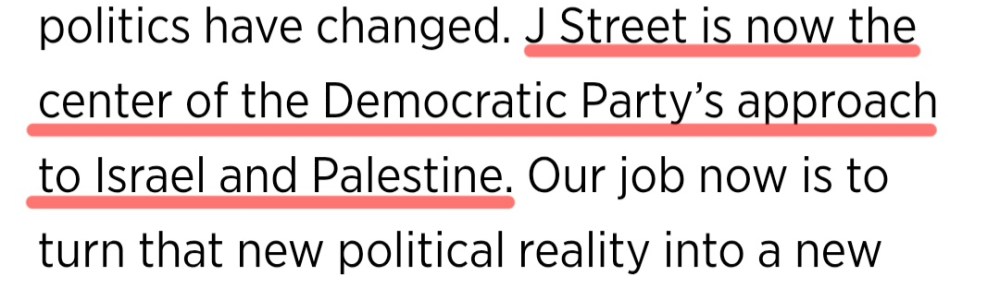
J Street may claim to be “the [new] center of the Democratic Party’s approach to Israel and Palestine,” but it has become a fringe extremist group among pro-Israel Americans.