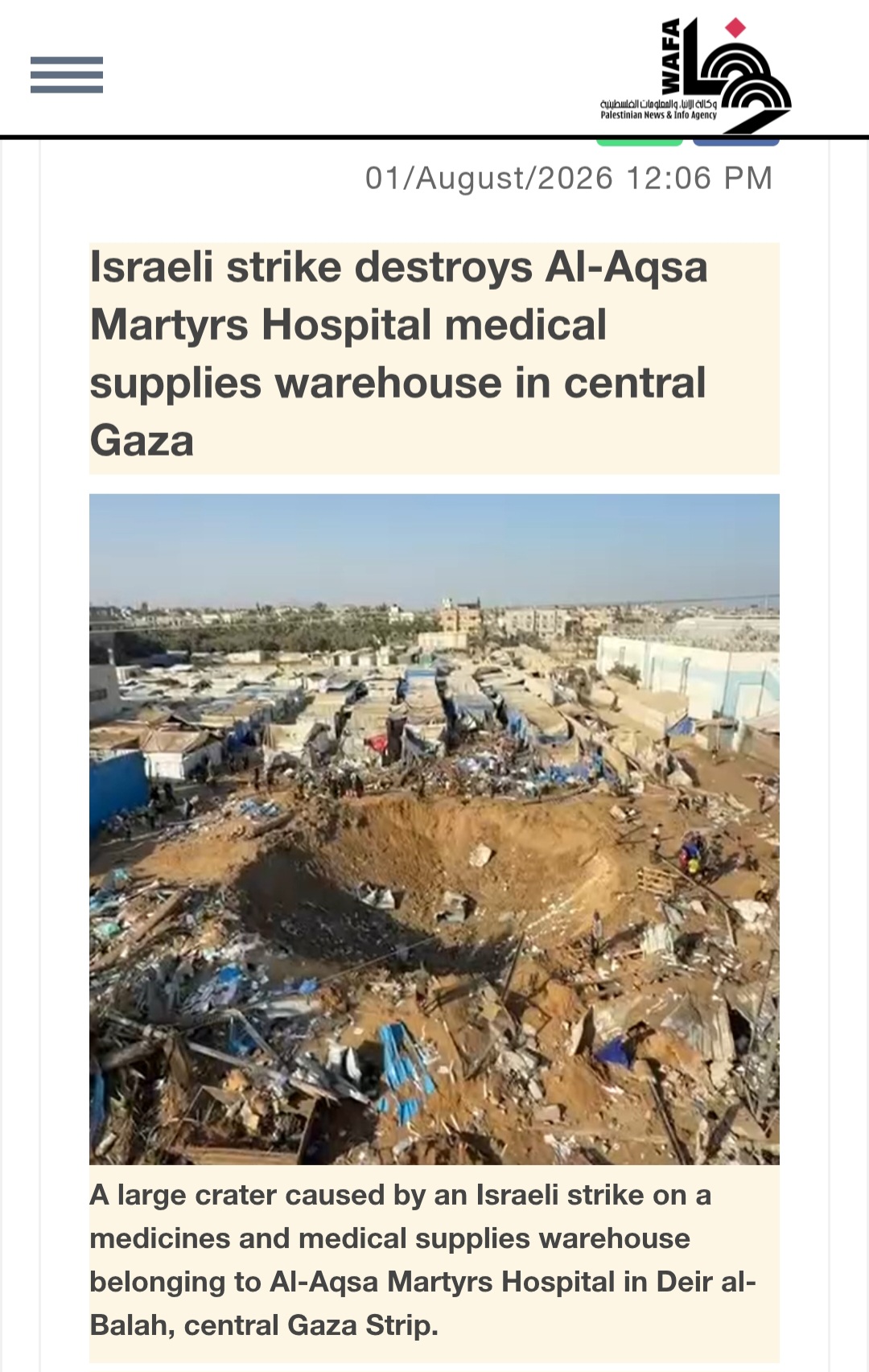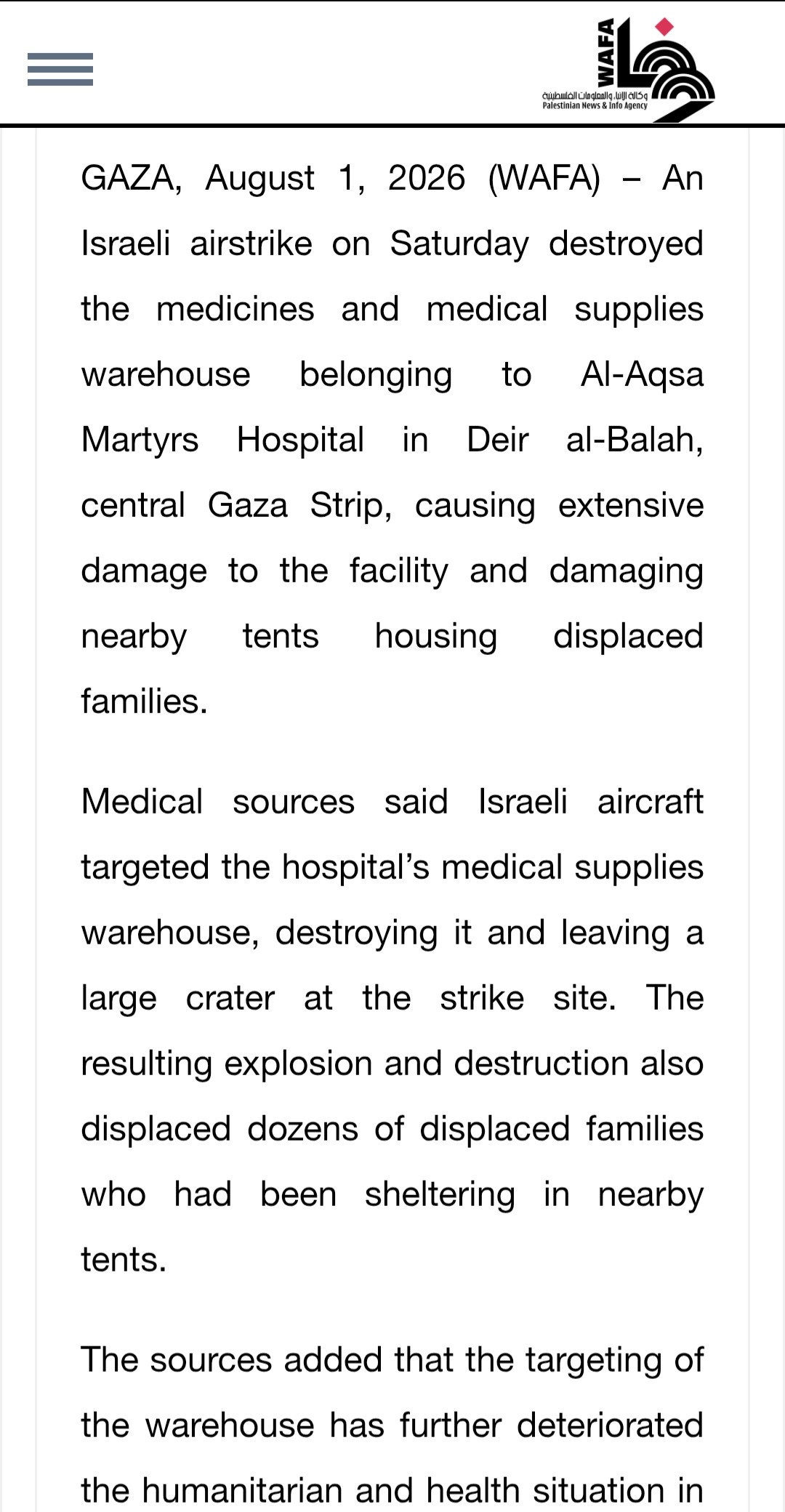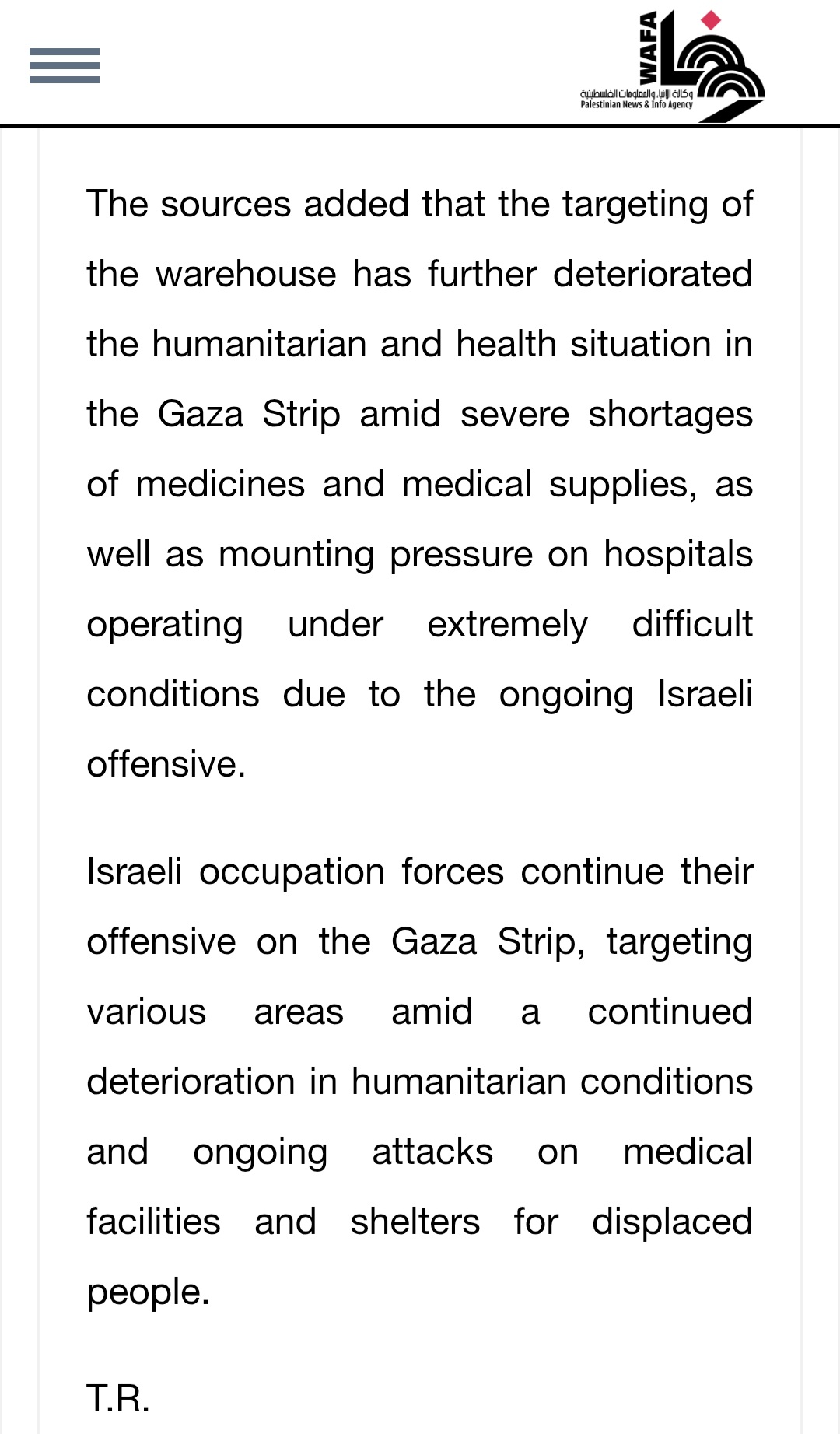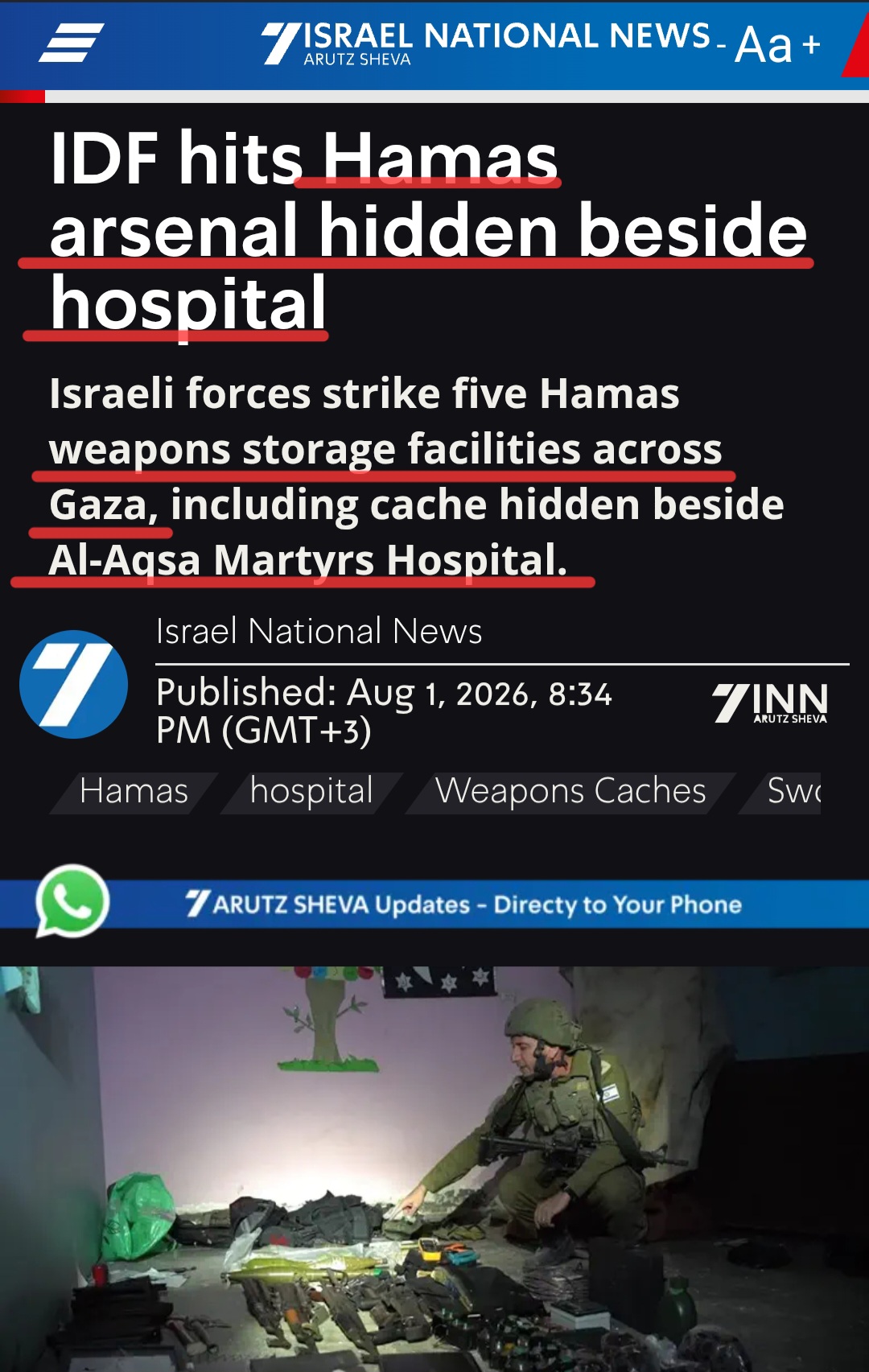
The Great Return to Sender

For years, the world was told the “Great March of Return” was peaceful theater. Demonstration. Symbolism. Political performance staged at Israel’s border fence. The real outrage, activists insisted, was not thousands of Gazans converging on a sovereign frontier controlled by a terrorist regime openly committed to Israel’s destruction. The outrage was that Israel refused to let them through.

Every breach attempt became a morality play. The fence itself was cast as villainous. Hamas was downgraded from genocidal jihadist organization to stage manager for a humanitarian spectacle. Foreign correspondents photographed smoke, flags, and crowds surging toward the barrier while carefully avoiding the central question: what exactly did “return” mean in practice?

A picture taken on March 30, 2018 from the southern Israeli kibbutz of Nahal Oz across the border from the Gaza strip shows tear gas grenades falling during a Palestinian tent city protest commemorating Land Day, with Israeli soldiers seen below in the foreground.
(Photo credit JACK GUEZ/AFP/Getty Images)

October 7 answered it.

The world spent years romanticizing the idea of border penetration into Israel. Then Hamas finally achieved it. The infiltrators entered and what followed was not symbolic “resistance,” not coexistence, not liberation theology with subtitles for Western consumption. It was slaughter. Torture. Kidnapping. Burning families alive. Mass rape. Entire communities transformed into killing fields within hours.

The “Great March of Return” was not a protest but a rehearsal for an invasion.

The flotilla theatrics now replay the same script at sea.

Once again, activists sail toward a Hamas-controlled enclave insisting their mission is humanitarian symbolism. Once again, cameras arrive before facts. Once again, Israel is expected to participate in a choreographed morality play where interception itself becomes the crime. The activists want confrontation because confrontation produces images, and images produce headlines, and headlines produce another cycle in which Israel defending its borders is treated as inherently suspicious.

But after October 7, Israel no longer has the luxury of indulging symbolic breaches.

A blockade around a terrorist enclave is not abstract political philosophy. It is a security perimeter. Every intercepted vessel is being measured against the memory of what happened when infiltrators were not stopped. The Israeli Navy does not have the privilege enjoyed by European activists thousands of miles away who can romanticize “breaking barriers” while knowing they will never personally absorb the consequences if those barriers collapse.

That is why the flotilla activists are ultimately engaged in theater. They know they will be intercepted. Israel knows it must intercept them. The performance depends on the interception itself. Their goal is not to deliver aid more efficiently than established channels. Their goal is to create imagery in which Israeli enforcement appears oppressive by definition.

Sumud flotilla

The irony is impossible to miss. For years, activists treated Israel’s insistence on secure borders as paranoia. Then October 7 became the bloodiest validation imaginable of exactly why those borders existed.

And so the boats are seized and returned to port. The activists call it repression. Israel calls it survival.

Perhaps the flotillas deserve a more honest name: the Great Return to Sender.

Doctors Without Borders Is Coming For Israel

Every modern humanitarian organization insists the same thing: suffering is not a business. The starving child is not a marketing asset. The bombed hospital is not a fundraising funnel. The crying mother under rubble is not a revenue generator.

Then the annual reports arrive.

Médecins Sans Frontières (MSF) / Doctors Without Borders crossed roughly €2.3 billion in annual revenue in 2022. Then roughly €2.35 billion in 2023 and €2.36 billion in 2024. Three consecutive years above €2 billion. Ninety-eight percent of funding came from private donors. More than seven million donors worldwide.

The organization presents this as proof of global compassion. It is also evidence of something else: misery has become one of the most effective fundraising products on earth. Especially if loaded with charges: “Genocide.” “Starvation.” “Ethnic cleansing.”

The humanitarian industry now operates inside the same emotional attention economy that drives political campaigns, cable news, and social media outrage. The more horrifying the imagery, the more morally charged the narrative, the more emotionally shattered the audience becomes, the faster the money moves.

And nobody understands this dynamic better than MSF.

MSF’s public communications increasingly fused emotionally maximalist language with direct fundraising infrastructure. A visitor no longer encountered merely medical updates. They encountered emotional conversion architecture.

The modern humanitarian sector has discovered what every digital platform already knows: emotionally devastating content converts. A dusty child under rubble produces more engagement than a policy paper. A charge of genocide and starvation moves directly into emotional reflex.

The uglier the images and explosive the charges, the healthier the fundraising pipeline becomes.

Doctors Without Borders is very selective in its explosive terminology regarding Israel. For MSF, Israel is the cause of all the ills in Gaza, not Hamas. Israel is directly called out, not the genocidal terrorist group that launched the war and hides in tunnels without letting civilians use them for protection. No excuse proffered by Israel will satisfy.

Doctors Without Borders doesn’t do this in other conflicts. Not in Sudan nor Somalia. Not in Syria nor Haiti. In those wars, either no one is called out or “all sides” are vilified.

And MSF takes its anti-Israel campaign on the road. Wherever Israel is dragged into a defensive war against those determined to annihilate it, like Lebanon and Iran, MSF is standing guard and pointing fingers.

MSF does not limit itself to smear campaigns against Israel. It is a full lobbying shop, taking out full page ads in newspapers to rally the public against Israel. It pushes governments to stop supporting Israel in its defensive war.

So it is no surprise that MSF has officially backed the entire Iranian proxy war against Israel, telling the world that it rushes to protect “Gaza, Lebanon and Iran” from Israel.

Doctors Without Borders: 1) runs to assist jihadists in their active war against Israel; 2) raises money claiming the belligerent parties are the victims; 3) lobbies to have governments stop supporting Israel and 4) calls for the masses to protest the Jewish State. It does all of this, uniquely in Israel’s war.

Doctors Without Borders is not a humanitarian organization but an active instrument in the war to destroy Israel.

The Most Important Debris To Clear in Gaza is Ideological

The world now knows what Gaza costs to rebuild: $71.4 billion. What it still does not know is what Gaza is supposed to become.

That is the number in the 2026 Rapid Damage and Needs Assessment (RDNA), produced by the United Nations with the World Bank and the European Union in April 2026. It is a vast and meticulous ledger of destruction, broken into sectors, sub-sectors, losses, and needs. It is also a revealing document, because the table tells you what the world thinks Gaza is.

A physical problem.

  • Housing: $16.21 billion.
  • Health: $10.03 billion.
  • Agriculture: $10.49 billion.
  • Commerce and industry: $8.99 billion.
  • Social protection: $5.78 billion.
  • Education: $4.71 billion.
  • Water and sanitation: $4.24 billion.
  • Energy: $2.73 billion.
  • Transport: $1.54 billion.

Total direct damages: $35.2 billion.
Total economic losses: $22.7 billion.
Total reconstruction needs: $71.4 billion.

RDNA assessment of cost to rebuild Gaza, April 2026

It is a complete inventory of physical devastation. Buildings crushed into powder. Water systems ruptured. Hospitals crippled. Roads fractured. Farms destroyed. Markets emptied.

The UN has priced the debris.

It has even priced the removal of the debris: $1.7 billion just to clear more than 68 million metric tons of wreckage.

But the table reveals something else.

There is no line item for civic reconstruction. That is the missing category. There is something for “social protection” and even calls to improve “gender equality, and social inclusion,” but a refocus on building a healthy culture is absent.

RDNA report on rebuilding Gaza, April 2026

Not because it is unimportant. Because it is the hard. And the public may still be unwilling to accept it.

Civic reconstruction is the rebuilding of the political and social architecture of a society: education, norms, legitimacy, coexistence, rule of law, pluralism, and the delegitimization of political violence as a governing method.

Without it, reconstruction is replacement. There will be new buildings but the same “deformity” of ideology, to quote James Zogby in his testimony to the United Nations in June 2023.

Civic reconstruction requires power. And commitment. The UN has frameworks, funding channels, and institutional tools. It does not have sovereignty. It cannot rewrite a society by decree.

And that only makes the omission more consequential.

The UN report itself hints at the deeper crisis. It states that Gaza’s human development has been pushed back 77 years, with the Human Development Index projected to collapse to 0.339, the lowest level ever recorded.

Human development is not just electricity and sewage. It is the civic conditions that make human flourishing possible.

The report includes gender equality. Social inclusion. Employment. Governance.

All necessary.

But governance itself is budgeted at just $530 million, and that is administrative. Municipal function, institutional capacity and service delivery. Not civic transformation.

That distinction matters.

There is no budget line for:

  • coexistence education
  • curriculum reform
  • dismantling political incitement
  • independent civil society
  • women’s civic and legal empowerment beyond emergency protection
  • minority rights
  • ideological deradicalization

That is not a technical omission. It is the central question.

Postwar Germany was rebuilt through more than roads and housing. It went through total defeat, disarmament, a state monopoly on force, educational overhaul, and the systematic delegitimization of the ideology that had led it into catastrophe.

Postwar Japan followed the same path: constitutional redesign, political restructuring, educational transformation, and a new civic contract.

The physical debris mattered. But so did the ideological debris.

And ideological debris is harder to clear.

It does not sit in the streets. It lives in textbooks, political institutions, media ecosystems, religious messaging, and the stories a society tells itself about violence and legitimacy.

That debris remains.

The UN has measured Gaza’s physical debris. It has priced the roads, the hospitals, the pipes, the farms, the power grid. What it has not priced is the ideological wreckage underneath them.

That is the danger.

Physical reconstruction without civic reconstruction does not produce peace. It produces restoration.

And restoration means returning to the conditions that made destruction inevitable.

Schools can teach coexistence or sanctify martyrdom.
Hospitals can preserve life or sustain armed rule.
Roads can carry commerce or carry war.

A rebuilt Gaza can become the foundation of peace or the staging ground for the next war.

You can clear 68 million tons of rubble and still leave the most dangerous ruins standing.

No Hashtag for Khartoum or Mogadishu

Before October 7 reordered the world’s attention, a war in Sudan had already begun killing at scale. April 15 marked the three year anniversary of the latest incarnation of war. It has since produced one of the largest humanitarian crises on earth—millions displaced, famine conditions spreading, entire cities shattered. Over 2,000 healthcare workers killed. And yet it has generated almost none of the global mobilization that defines our era of outrage.

No encampments. No slogans. No sustained moral urgency that travels.

Two forces—the Sudanese Armed Forces and the Rapid Support Forces—fight for control. Civilians are not incidental to the conflict; they are its terrain. Hospitals are looted, neighborhoods erased, aid convoys blocked. Darfur, a name once synonymous with “never again,” has quietly returned to the same vocabulary of mass killing.

The scale should compel attention. It doesn’t.

For years, much of the global discourse—across media, universities, and international institutions—has sorted conflict through a particular lens: Global North and Global South. The North is cast as inherently evil, colonial and imperial. The South as perpetual victim.

Sudan does not fit neatly inside such lens. There is no clear external oppressor to anchor outrage, no simple narrative that translates easily into the moral shorthand of our time. The violence is internal, complex, resistant to reduction. And so the system hesitates. Attention drifts. Outrage never organizes.

Look at the response architecture. The United Nations convenes, issues appeals, and struggles to convert urgency into action. Funding remains short of need. Access remains constrained. The gap between rhetoric and relief is not marginal—it is structural. Mechanisms that elsewhere become focal points of accountability have not galvanized comparable pressure here. Even institutions like the International Court of Justice sit far from the center of global attention on Sudan, not because the crimes are lesser, but because the political energy that drives action is missing.

Attention follows narrative. Narrative follows familiarity. Sudan offers neither.

The victims do not map cleanly onto categories that travel well. There is no easy compression into a slogan or a symbol. And in a world that increasingly organizes around moral shorthand, what cannot be simplified is often ignored.

This is not only about Sudan. Or Somalia where war has also ravaged the landscape. It is about how the past is taught—and how its lessons travel.

Holocaust education stands as a cornerstone of moral instruction across much of the Global North. Its lessons are intended to be universal. But when it is absorbed as a contained European tragedy, rather than a case study in how societies turn inward, weaponize identity, and destroy their own, its warning loses portability. It becomes history, not instruction. The Global South doesn’t bother to listen to the lesson, and the Global North is focused elsewhere.

In Sudan, mass violence is just statistics without racism and a colonial script. Here is a catastrophe that should activate every alarm built in the twentieth century—and does not. An estimated 400,000 killed in Sudan. Over 500,000 killed in nearby Somalia.

Reducing these to “internal conflicts” explains nothing. It does something worse. It lowers the urgency. It signals, quietly, that this is a tragedy the world can observe rather than confront.

Universities that mobilize rapidly around conflicts that fit prevailing frameworks struggle to sustain engagement here. Media cycles that can fixate for months elsewhere let Sudan and Somalia slip into the margins. International bodies calibrated to respond to pressure find little of it applied.

Sudan is a statistic. Somalia is a statistic. Yet Gaza has a narrative.

Victims should not need a more compelling narrative. They need corridors that function, aid that arrives, and accountability that does not wait for a more convenient story. They need a world capable of responding to human suffering even when it does not fit the frameworks that dominate discourse.

Gazans who launched a genocidal jihadi war never deserved particular sympathy. Especially compared to nearly a million killed in Sudan and Somalia.

Peacekeeping Without Peace

The international community keeps reaching for the same tool and calling it a solution.

It wasn’t in southern Lebanon. It won’t be in Gaza.

After the 2006 Lebanon War, the United Nations Security Council passed Resolution 1701 with clarity: no armed groups south of the Litani River except the Lebanese state and United Nations Interim Force in Lebanon. Hezbollah would withdraw. The area would be demilitarized.

It never happened.

Hezbollah didn’t disarm. It adapted. Fighters disappeared into civilian life. Weapons moved into homes and tunnels. Infrastructure embedded deeper. Over time, Hezbollah became stronger in the very zone it was supposed to vacate.

UNIFIL patrolled. It reported. It de-escalated when it could.

It did not enforce.

It could not.

That is not a tactical failure. It is the model.

A peacekeeping force without the authority or backing to impose outcomes becomes a bystander to violations it is tasked to prevent.

UNIFIL soldiers

Now the same model is being proposed for Gaza.

Disarm Hamas. Install a new authority. Deploy a multinational force to secure the peace.

It sounds familiar because it is.

Hamas, like Hezbollah, is not just a militia. It is a political and social organism backed by the Islamic Republic of Iran that is embedded in the population, sustained by ideology, and built to survive pressure. It will not voluntarily disarm into irrelevance.

And no external force—operating with limited mandate, constrained rules, and no appetite for sustained combat—will disarm it for them.

This is where the illusion breaks.

Peacekeeping works when peace already exists. It locks in outcomes. It does not create them. When deployed in the absence of resolution, it manages conflict. It does not end it.

That is what happened under 1701.

The “demilitarized zone” became a monitored one. Violations became routine. The temporary became permanent.

Hezbollah didn’t defy the system. It learned how to live inside it.

There is every reason to expect Hamas would do the same.

The problem is not execution. It is the belief that presence equals control. Blue helmets, patrols, liaison offices—they project order. They do not establish it.

Without a force willing and able to dismantle armed infrastructure and impose monopoly on violence, disarmament is not policy. It is aspiration.

Lebanon already ran this experiment. It didn’t produce peace.

It produced a battlefield with spectators.

The UN Says It Must Change. Gaza Is Where It Refuses To.

António Guterres keeps saying the United Nations is no longer the institution it was 80 years ago. Power must be rebalanced he claims. The Security Council must reflect today’s world he urges. Post–World War II structures must evolve.

Fine. But if that claim is serious, the UN’s most glaring failure to modernize is Gaza.

The system built never to end

One UN body remains frozen in 1948: UNRWA. One vision for a state is lost to contours proposed in 1947: Palestine.

“The world of 2026 is not the world of 1946.” – UN Secretary General Antonio Guterres, January 17, 2026

UNRWA administers a refugee regime found nowhere else:

  • Refugee status is inherited indefinitely
  • It never expires through citizenship or resettlement
  • It is tied to a “right of return” not to Gaza or a future Palestinian state, but to Israel itself

No other refugee population is treated this way.
Bosnians were not. Syrians are not. Ukrainians are not.

Every other refugee crisis is handled by UNHCR, where refugee status is temporary and meant to end. Only Palestinians are placed in a system designed to remain permanent.

Ending inherited refugee status would not end humanitarian aid.
It would end the political weaponization of refugeehood.

Why Bosnia exposes the category error

After the Balkan wars, the Dayton Accords included a right of return—but it was finite, individual, and intra-state. It applied to homes lost in the same war for the same people, and aimed to undo ethnic cleansing, not undo borders.

Gaza’s claimed “right of return” is fundamentally different: intergenerational, extra-territorial, and demographic—designed to reopen 1948 and negate another UN member state.

Guterres’ contradiction

Guterres calls for reform everywhere except where reform would actually make peace possible.

As long as the UN maintains an inherited right of return into Israel and the proposed borders which have long since past their expiry:

  • Maximalism is rewarded
  • Compromise is delegitimized
  • Negotiations become theater
  • Gaza remains permanently “temporary”

This is not neutrality; it is an institutional choice to preserve claims that prevent settlement.

Reform that applies everywhere except where it matters most is not reform.
It is avoidance.

The unavoidable conclusion

Until the UN ends the one system designed never to end, Gaza will not be governed toward peace—but toward the permanence of conflict.

And no amount of rhetoric about modernization can disguise that refusal.

The Kotel Plaza Is an Open-Air Prison

In July 2023 alone, 67,769 Gazans were allowed to exit Gaza through Israeli crossings according to the United Nations. In the entire year of 2023, only 50,098 Jews were allowed onto the Temple Mount — Judaism’s holiest site — in Jerusalem, the capital of the Jewish state according to Beyadenu a Jewish rights advocacy group.

One month versus one year.
A border crossing versus a holy site in a nation’s capital.
The comparison is damning.

The Jewish state allowed more Gazans to cross its border in one month before the Gaza leadership launched a war, than it allowed Jews to step foot on their holiest site over an entire year.

That is not security policy. That is civilizational self-sabotage.

Every country controls its borders. That is normal. What is not normal is a nation blocking its own people from their central religious site in their own capital city.

Jews face time windows, group limits, police escorts, and de-facto prayer bans to walk on ground their ancestors sanctified 3,000 years ago. The result is obvious: Jewish presence is suppressed by design.

Fifty thousand Jews in a year is not demand.
It is managed scarcity.

Thousands of Jews congregate in the Kotel plaza on Passover, unable to ascend onto the Jewish Temple Mount

The Western Wall Plaza is sold as Jewish religious freedom. It isn’t. It is a containment zone — a consolation prize engineered to keep Jews away from the mountain that actually matters.

This is why the Gaza comparison cuts so deep.

Israeli policy makers allowed in more Gazans into Israel, during a blockade, knowing that the area is led by an antisemitic genocidal jihadist group sworn to destroy the Jewish State, than for Jews just seeking a basic human right of prayer.

A sovereign nation that polices Jewish prayer more aggressively than cross-border traffic has lost the plot. A capital that cages its own sacred history is not free.

Until Jews can walk onto the Temple Mount without escorts, quotas, and humiliation, the Kotel Plaza remains exactly what it is: an open-air prison with good lighting and a propaganda budget.

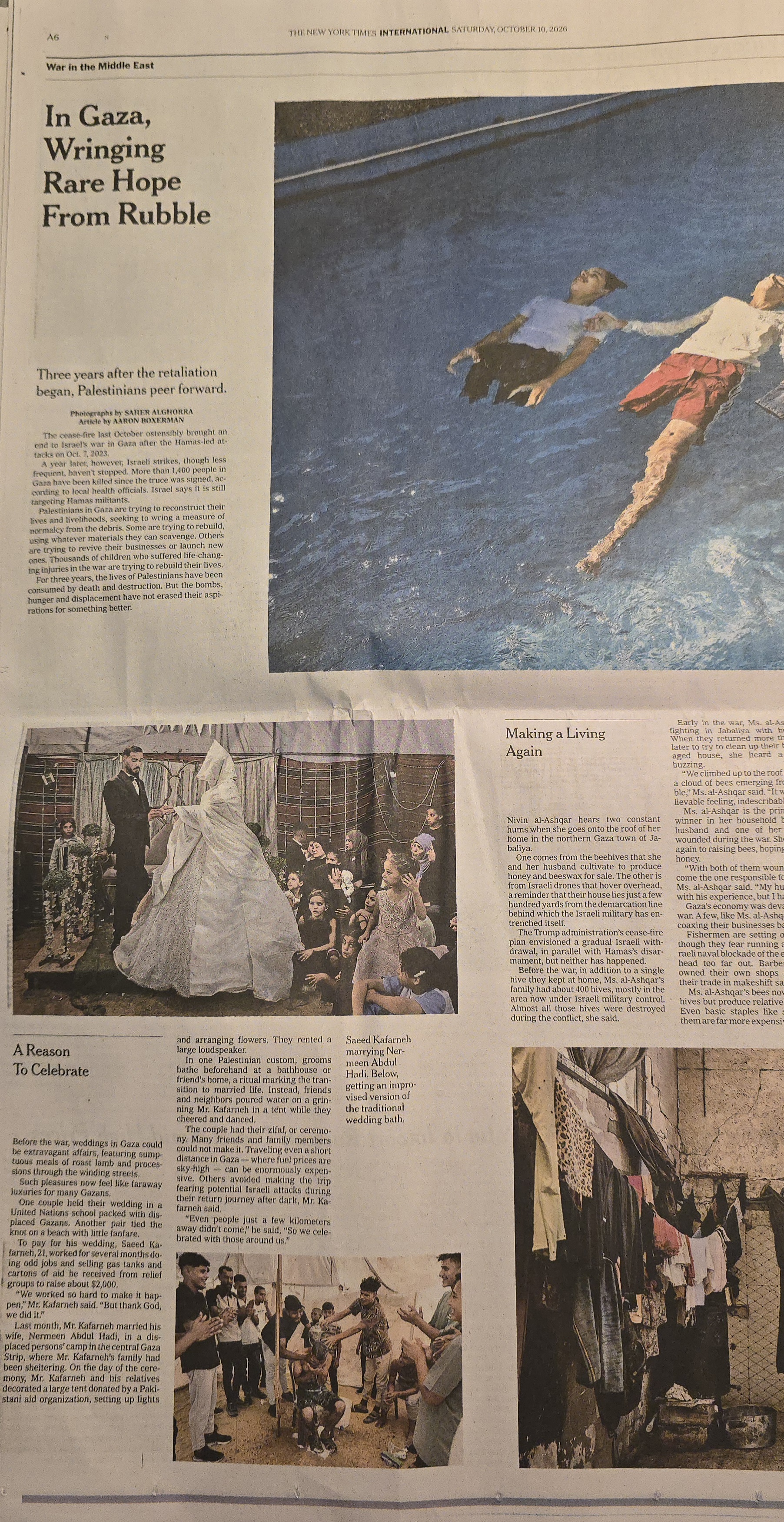
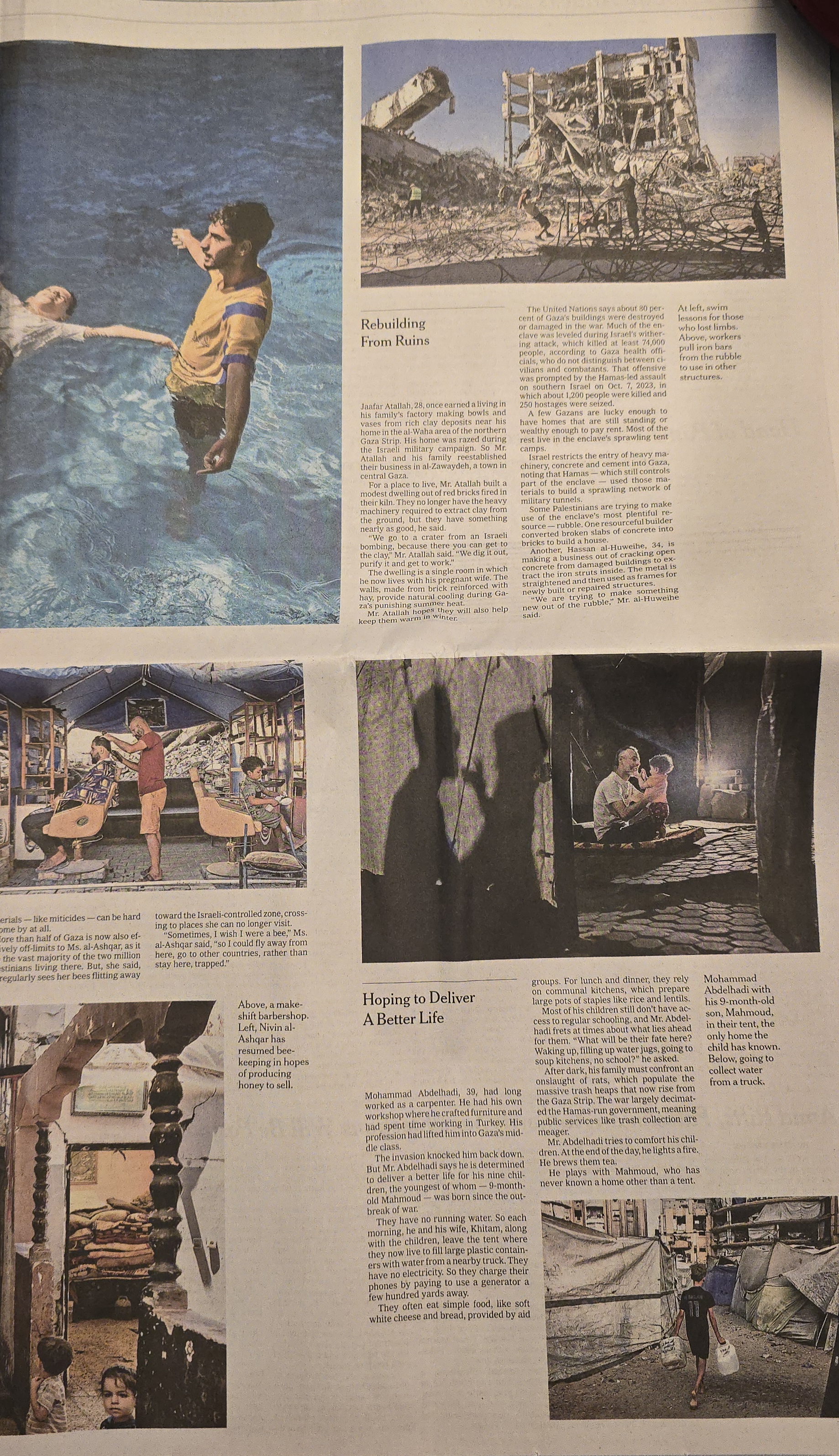
Every Picture Tells a Story: The War Gazans Didn’t Start—and Aren’t Ending

The headline asked why hundreds of Gazans have been killed. The article never answered.

In its December 24 piece, The New York Times assembled an inventory of grief—names, faces, photographs, shattered families—documenting civilian death in Gaza with intimate precision. What it did not assemble was an explanation. The question at the top functioned as decoration; the answer was assumed. Israel hovered everywhere as implication, never as argument.

What the article omitted is not marginal. It is decisive.

It did not say that Hamas still holds an Israeli hostage, in violation of the ceasefire framework. As long as that person remains captive, the war has not ended and the terms of the ceasefire have not been met.

It did not say that Hamas has refused to disarm—flatly, publicly—even though disarmament is a core requirement of the multi-point plan meant to end the fighting. The vast majority of Palestinian Arabs in both Gaza and the West bank agree. This is not procedural quibbling. A movement that keeps its weapons is declaring its intention to keep killing. Leaving that fact out does not clarify the story; it inverts it.

“a core, cross-regional [Gaza and West bank] red line remains: overwhelming opposition to disarming Hamas, complicating any post-war arrangement.” – PCPSR poll of October 28, 2025

It did not say that Hamas continues to state openly that it will pursue the war until the Jewish state is destroyed. These are not coded remarks. They are repeated commitments. When a belligerent announces genocidal intent and retains its arsenal, civilian deaths are not mysterious. They are the predictable outcome of strategy.

“The resistance is capable of continuing, and I am confident that the outcome of this conflict will be the demise of this entity [Israel].” – Senior member of the Palestinian resistance movement Hamas, Osama Hamdan on December 23, 2025

Instead, The Times presented Gaza as a place acted upon—its people rendered passive, its leadership reduced to background noise. The governing reality was blurred, that the popular, armed movement that began the war – with overwhelming local support – insists on continuing it. Palestinian Arabs appeared as if history were happening to them, rather than through institutions that still mobilize society for conflict.

The photographs – eleven in all, a remarkable number for an article, mostly featuring children – did their work. They always do. Images narrow the moral aperture. They locate causality at the edge of the frame. What lies outside—tunnels, refusals, threats, the last hostage—falls away. Repetition turns absence into innocence.

This is not empathy. It is evasion.

Civilian death is tragic and deserves coverage. But tragedy without agency becomes accusation by implication. When Arab suffering is anatomized down to the last tear while their popular elected leadership’s war-making is erased, journalism is no longer news but advocacy.

The Times did not lie. It curated. It acted as the political-terrorist group’s propaganda arm.

Readers are left asking why Israel is still fighting, when the honest question is why Hamas is still waging war—still holding the last hostage, still refusing disarmament, still promising destruction.

Every picture tells a story. This one tells a story about the author.

Two Things To Do Now To Prevent October 7 From the West Bank

For twenty years, Israel relied on a security barrier to prevent the suicide bombings and shootings of the Second Intifada. It worked. While ninety percent of that barrier was not a concrete wall, but a high-tech fence—cameras, sensors, patrol roads, and layered detection system – it still reduced terror attacks from the West Bank by over 90 percent. Israelis and the Stateless Arabs from Palestine (SAPs) rebuilt their lives believing that a fence, not a fortress, was enough.

Then came October 7.

SAPs crashing through the fence between Gaza and Israel on October 7, 2023

Hamas gunmen bulldozed, exploded, and burned their way through what was—on paper—one of the most advanced border fences in the world. They murdered, raped, tortured, and kidnapped civilians in a genocidal assault that shattered the central premise of Israel’s security doctrine: that a fence and technology could stop an army of terrorists long enough for the IDF to respond.

That assumption is gone.

If a similar surprise assault were launched from the West Bank near the country’s major population centers—Tel Aviv, Jerusalem, the coastal cities—the casualties could be catastrophic. Israel is nine miles wide at its narrowest point. One breach is not a tactical event. It is an existential one.

The Barrier Must Change Because the Threat Has Changed

A fence can be cut, rammed, or climbed. A reinforced, multi-layered wall—physical, electronic, aerial, and subterranean—is a different proposition. The lesson of Gaza is not to abandon the idea of separation, but to upgrade it to match the enemy’s capabilities and intentions.

Israel does not have the luxury of guessing whether future attackers will try to slaughter dozens or thousands. The security architecture must assume the worst case—because the worst case already happened.

In Hashmonaim, Israeli backyards are a stone’s through away from the Security Barrier (photo: First One Through)

Disarming Militias Is Not Just for Gaza

The world is focused on disarming Hamas in Gaza. It must also confront a parallel obligation: militant groups in the West Bank cannot remain armed if there is to be any political horizon, for Palestinian Arabs or Israelis.

If Gaza is demilitarized but the West Bank is not, the threat simply shifts geography. The barrier is not a substitute for disarmament. It is a second line of defense, not the first.

Lasting security requires:

1️⃣ Complete disarmament of organized militant groups seeking Israel’s destruction.
2️⃣ Security control capable of preventing re-armament.
3️⃣ A barrier strong enough to make a surprise attack militarily unachievable.

Without those three components, diplomatic talk of a “future Palestinian state” is not a peace process—it is a gamble with tens of thousands of civilian lives.

A wall is not a symbol of failure. It is the price of survival when the alternative is the erasure of towns near the 1949 Armistice Lines with Jordan.

A move towards coexistence between Israelis and Palestinian Arabs cannot be limited to the threat from Gazans but from West Bank Arabs as well. Disarmament of West Bank Arabs and an upgrade of the security fence must happen now as well.

Peace requires trust. Trust requires time. Time requires security that cannot be breached in seven minutes by men with bulldozers and grenades and genocidal jihadi rage.

Until a day comes when coexistence is real—not chanted, not theorized, not negotiated—Israel must ensure that no armed faction can cross its border. The time to implement that plan is now.

Who Will Shoot Hamas?

The western world keeps repeating the same slogan: Gaza must be demilitarized. Every peace plan, every UN speech, every press conference insists that Hamas cannot continue to rule Gaza with guns in its hands. Billions of dollars for reconstruction are on hold until someone ensures those weapons are taken away.

There is only one problem: Hamas says it will never disarm. Not yesterday, not tomorrow, not for a state, not for the UN, not for Europe, not for the Americans, and certainly not for Israel. Hamas did not slaughter and rape Israelis on October 7 to abandon its quest to vanquish the Jewish State.

So a question hangs over every diplomat and every cabinet meeting from Cairo to Paris, a question no one wants to speak out loud: If Hamas refuses to disarm, who is going to shoot Hamas?

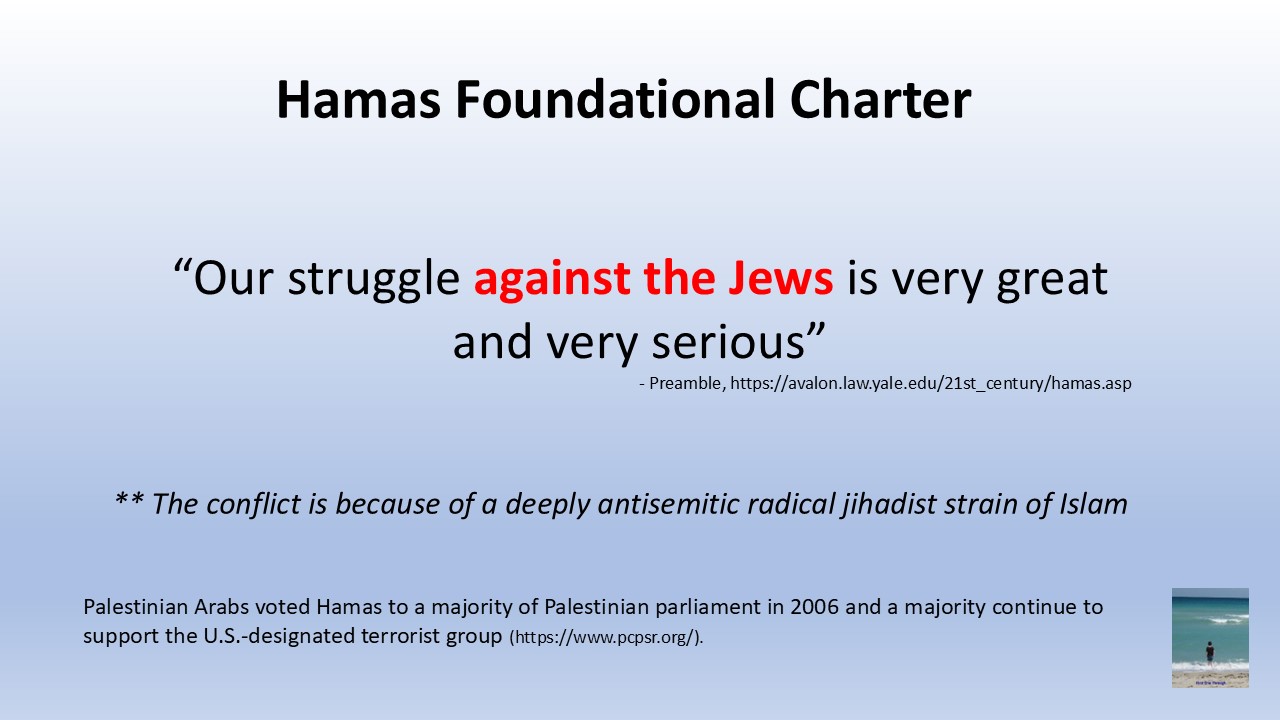
The West calls Hamas a terrorist organization responsible for massacres, rape, torture, kidnapping, and the deliberate targeting of civilians. But to many Palestinians, Hamas is not a rogue gang. It is the leadership they voted for, winning 58% of parliament in the last elections, and polling suggests they would win again today. To disarm Hamas is not to disarm a fringe—it is to confront their popular governmental leaders and legitimate military.

So who will go into Gaza, walk into the war tunnels, into the apartments, into the mosques used for rocket storage, and take those weapons away? Who will drag commanders from basements and seize the launchers hidden under family homes?

Hamas in Gaza war tunnels

Israel? The world says no. Israel may have destroyed Hamas battalions, but the same leaders who demand demilitarization say Israel must not stay in Gaza to enforce it.

The Palestinian Authority? Hamas threw them off rooftops in 2007. The PA’s authority barely extends through parts of the West Bank. They are not disarming anyone in Gaza without outside troops and a graveyard’s worth of casualties.

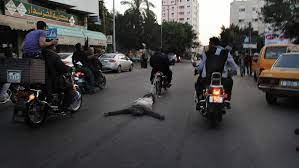
Members of Hamas drag the body of a “collaborator” through the streets of Gaza

Arab and Muslim states? This is the newest fantasy. An “International Security Force” of Egyptian, Jordanian, Saudi, Emirati, Moroccan or other troops is supposed to enter Gaza, secure the borders, keep the peace, and—if necessary—shoot Hamas fighters to take their weapons. Will Egyptian soldiers do that? Jordanians? Saudis? The UAE? And what of Qatar, which housed Hamas leaders in luxury hotels for years? Will Qatar now arrest the men it financed?

The UN? NATO? Peacekeepers do not storm bunkers or raid arms factories. It has never happened in the Middle East, and it will not start in Gaza.

Which leaves one final option, the one everyone pretends not to see: No one will disarm Hamas. The world will congratulate itself on a “post-war framework,” aid will pour in, cement will be shipped, tunnels will be rebuilt, rockets will reappear—and we will repeat this in two years, five years, ten years, with more dead children on both sides.

This is the part no diplomat wants quoted back to them: You cannot demand a demilitarized Gaza, forbid Israel from disarming Hamas, refuse to disarm Hamas yourself, and still pretend you are building peace. Those positions cannot coexist. Either someone will use force against Hamas, or Hamas remains armed, and Gaza remains a terrorist enclave.

Ask the diplomats, ask the presidents and prime ministers, ask the foreign ministers drafting communiqués they will never enforce: Who will shoot Hamas?

Peace is not built on Security Council resolutions. It is built on the willingness to confront those who would destroy it.