
The world now knows what Gaza costs to rebuild: $71.4 billion. What it still does not know is what Gaza is supposed to become.
That is the number in the 2026 Rapid Damage and Needs Assessment (RDNA), produced by the United Nations with the World Bank and the European Union in April 2026. It is a vast and meticulous ledger of destruction, broken into sectors, sub-sectors, losses, and needs. It is also a revealing document, because the table tells you what the world thinks Gaza is.
A physical problem.
- Housing: $16.21 billion.
- Health: $10.03 billion.
- Agriculture: $10.49 billion.
- Commerce and industry: $8.99 billion.
- Social protection: $5.78 billion.
- Education: $4.71 billion.
- Water and sanitation: $4.24 billion.
- Energy: $2.73 billion.
- Transport: $1.54 billion.
Total direct damages: $35.2 billion.
Total economic losses: $22.7 billion.
Total reconstruction needs: $71.4 billion.
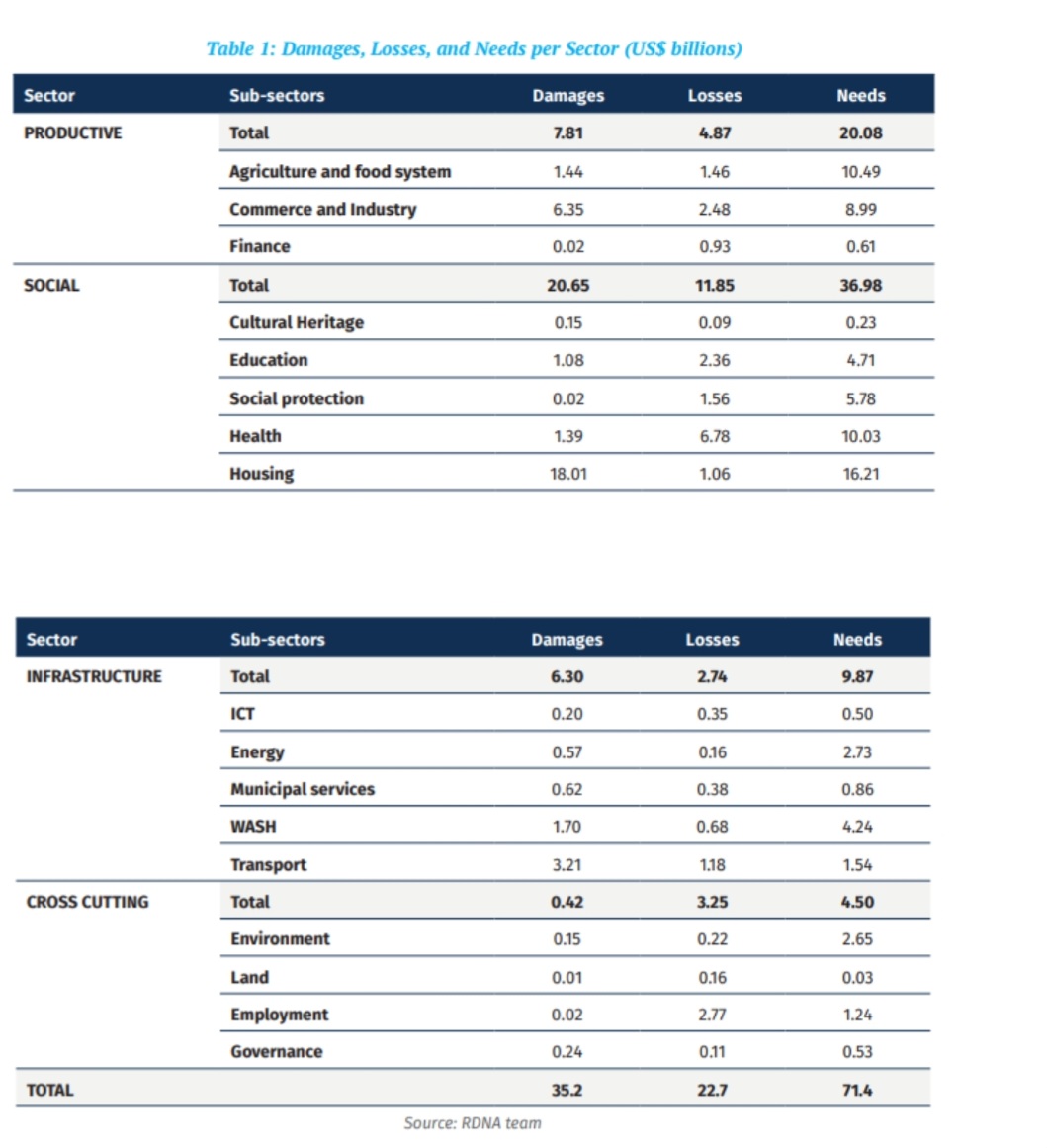
It is a complete inventory of physical devastation. Buildings crushed into powder. Water systems ruptured. Hospitals crippled. Roads fractured. Farms destroyed. Markets emptied.
The UN has priced the debris.
It has even priced the removal of the debris: $1.7 billion just to clear more than 68 million metric tons of wreckage.
But the table reveals something else.
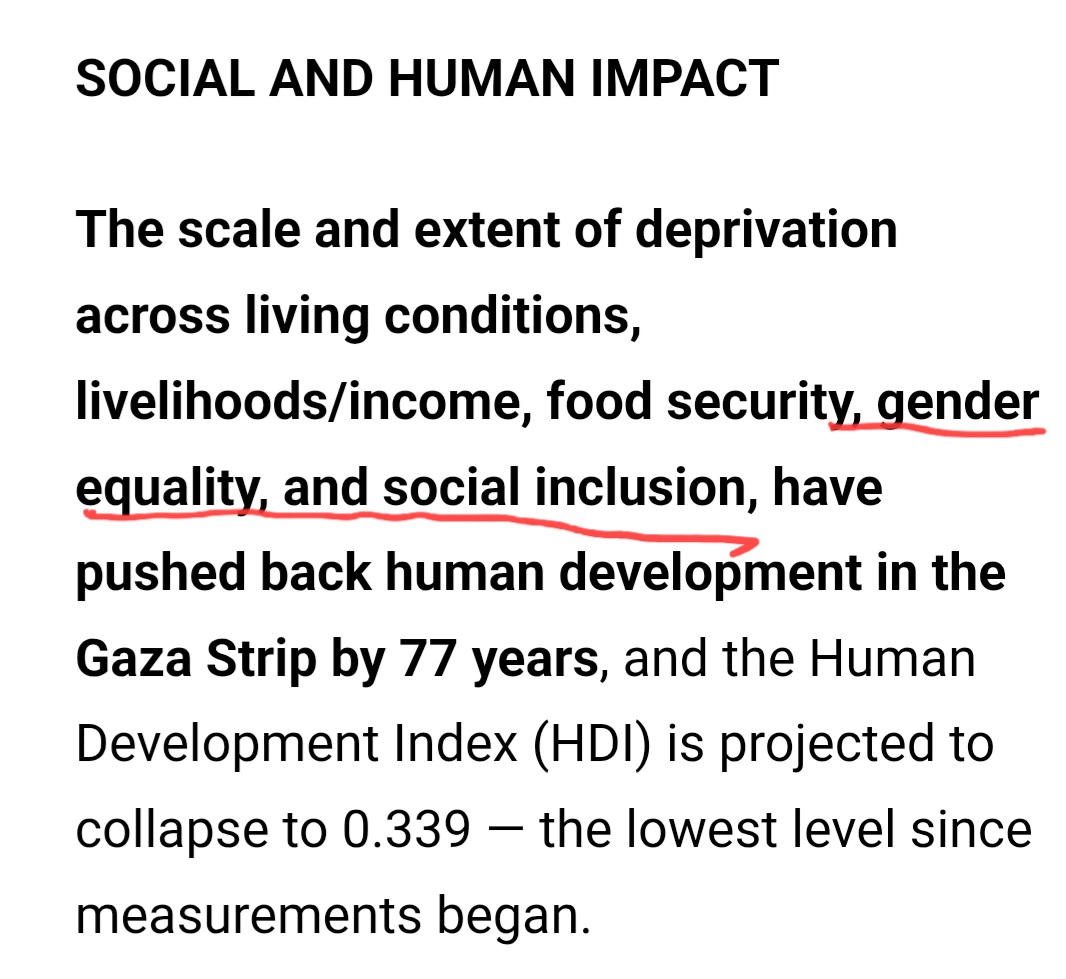
There is no line item for civic reconstruction. That is the missing category. There is something for “social protection” and even calls to improve “gender equality, and social inclusion,” but a refocus on building a healthy culture is absent.
Not because it is unimportant. Because it is the hard. And the public may still be unwilling to accept it.
Civic reconstruction is the rebuilding of the political and social architecture of a society: education, norms, legitimacy, coexistence, rule of law, pluralism, and the delegitimization of political violence as a governing method.
Without it, reconstruction is replacement. There will be new buildings but the same “deformity” of ideology, to quote James Zogby in his testimony to the United Nations in June 2023.
Civic reconstruction requires power. And commitment. The UN has frameworks, funding channels, and institutional tools. It does not have sovereignty. It cannot rewrite a society by decree.
And that only makes the omission more consequential.
The UN report itself hints at the deeper crisis. It states that Gaza’s human development has been pushed back 77 years, with the Human Development Index projected to collapse to 0.339, the lowest level ever recorded.
Human development is not just electricity and sewage. It is the civic conditions that make human flourishing possible.
The report includes gender equality. Social inclusion. Employment. Governance.
All necessary.
But governance itself is budgeted at just $530 million, and that is administrative. Municipal function, institutional capacity and service delivery. Not civic transformation.
That distinction matters.
There is no budget line for:
- coexistence education
- curriculum reform
- dismantling political incitement
- independent civil society
- women’s civic and legal empowerment beyond emergency protection
- minority rights
- ideological deradicalization
That is not a technical omission. It is the central question.
Postwar Germany was rebuilt through more than roads and housing. It went through total defeat, disarmament, a state monopoly on force, educational overhaul, and the systematic delegitimization of the ideology that had led it into catastrophe.
Postwar Japan followed the same path: constitutional redesign, political restructuring, educational transformation, and a new civic contract.
The physical debris mattered. But so did the ideological debris.
And ideological debris is harder to clear.
It does not sit in the streets. It lives in textbooks, political institutions, media ecosystems, religious messaging, and the stories a society tells itself about violence and legitimacy.
That debris remains.
The UN has measured Gaza’s physical debris. It has priced the roads, the hospitals, the pipes, the farms, the power grid. What it has not priced is the ideological wreckage underneath them.
That is the danger.
Physical reconstruction without civic reconstruction does not produce peace. It produces restoration.
And restoration means returning to the conditions that made destruction inevitable.
Schools can teach coexistence or sanctify martyrdom.
Hospitals can preserve life or sustain armed rule.
Roads can carry commerce or carry war.
A rebuilt Gaza can become the foundation of peace or the staging ground for the next war.
You can clear 68 million tons of rubble and still leave the most dangerous ruins standing.


