
Long before the current war began, prominent advocates for the Palestinian cause were describing Gaza as “hell on earth.”
In January 2009, Palestinian Queen Rania of Jordan released a video for UNRWA titled “Hell on Earth.” Eight months later, speaking at UNRWA’s 60th anniversary, she recalled that video and lamented that Gaza was still “Hell on Earth.”
In May 2021, UN Secretary-General António Guterres declared, “If there is a hell on earth, it is the lives of children in Gaza today.”
When Israel began to respond to the war waged by Gazans in 2023, UNRWA Commissioner-General Philippe Lazzarini said Gaza had become “a living hell.” In January 2024, UN humanitarian coordinator Sigrid Kaag told the Security Council, “Gaza is hell on earth.”
The description has been remarkably consistent. What has often been missing is the question: Why?
Hell is not merely a place of suffering. It is a place where evil reigns.
Hamas violently seized Gaza in 2007 after defeating Fatah in a brief but brutal civil war. Fighters executed political rivals, threw some from rooftops, publicly brutalized opponents, and dragged the bodies of alleged collaborators through the streets. Those who challenged Hamas risked imprisonment, torture, or death. Independent political life disappeared, and an entire generation grew up under the rule of an armed Islamist movement that prioritized rockets, tunnels, and perpetual conflict over building a prosperous society.

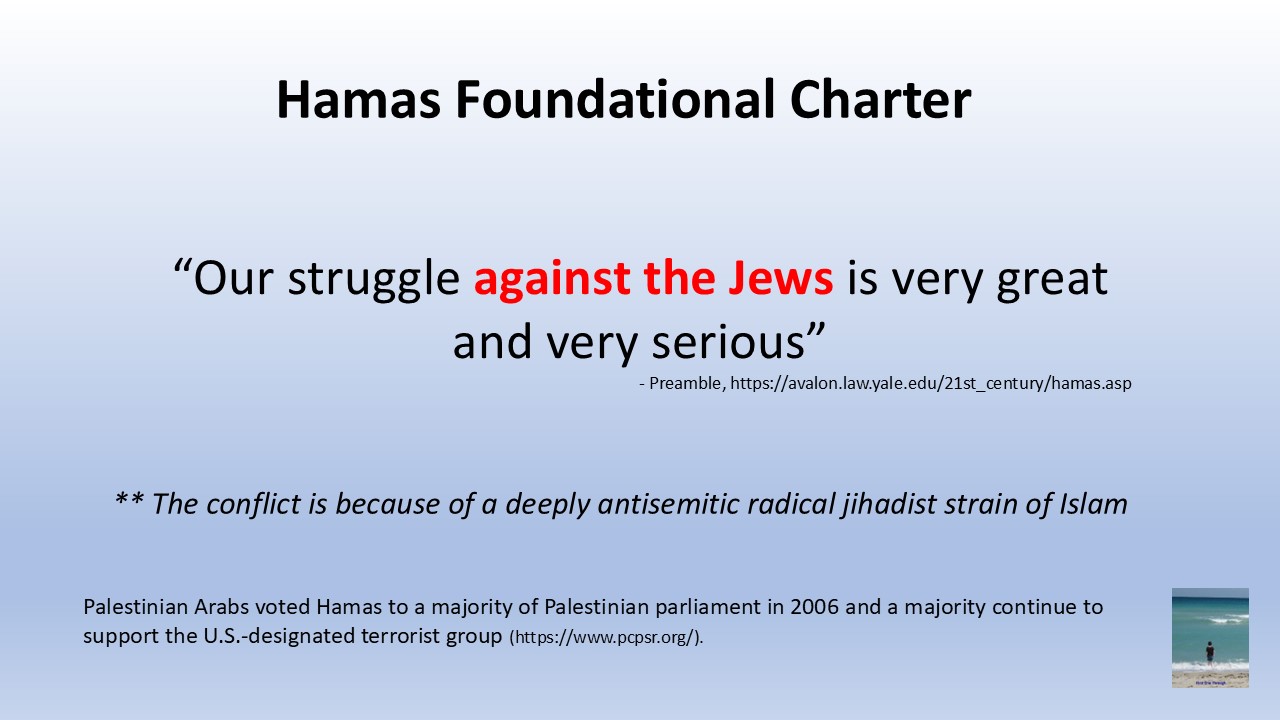
And Hamas was a known entity, a political party which won 56% of Palestinian parliament in elections with the most antisemitic political charter ever written. It remains the most popular political group to this day, expected to win Palestinian elections in every poll.
Calling Gaza “hell on earth” without acknowledging who built that system leaves the story unfinished. Should people want to transform the region, they must work to end the evil rule and worldview that turned part of the holy land into such a place in the first place.


