You No Longer Have to Listen Closely

When I wrote I’m Offended, You’re Dead in 2015, I argued that the West fundamentally misunderstood violent jihadism. It was routinely described as the work of a tiny fringe because Western observers were looking almost exclusively at Europe and North America. But that was never where most Muslims lived or where most of the violence occured.

The view that a few “extremists” have hijacked Islam and are attacking the freedom of press is both myopic in terms of history and geography, and hazy in terms of numbers and scope

In the Global North, Muslims make up only about 2.6% of the population. Across the Global South, they account for roughly 28%. Excluding Latin America and China, that figure rises to about 42%. The attitudes that gave rise to violent jihadism were therefore never confined to a handful of isolated extremists. Across large parts of the Muslim world, Islamist movements and deeply illiberal religious doctrines already exercised enormous influence and persecute people attempting to live with basic human rights. The West mistook a geographic illusion for an ideological one.

Terrorist movements do not emerge in an ideological vacuum. An ideology does not need majority support to convince a determined minority that violence is both righteous and necessary.

And you no longer have to listen carefully to hear that message.

Over the past decade, migration, social media, and global communications have brought that ideological current into the daily background of Western life. Many will be alarmed and others will feel called. Either way, it has become ever-present and one no longer needs to search to find it.

The attacks increasingly follow a familiar pattern because they spring from the same worldview.

The gay patrons of the Pulse nightclub in Orlando were condemned as morally corrupt and massacred by a man with ties to al Qaeda and Hezbollah. This week, a Berlin Pride parade became the target of a man who had reportedly sought to join ISIS. Christmas markets in Germany have repeatedly been attacked by men invoking Islamist causes. Trucks and cars have been used as weapons against civilians in France, Germany, and Israel. In Manhattan, a deranged man allegedly shouted “Allahu Akbar” while carrying out a stabbing spree.

Moses Grunhaus after he was stabbed by a man yelling “Allahu Akbar.” He was in New York City to clear out his apartment to move to Florida because of the election of Mayor Zohran Mamdani

Different countries. Different perpetrators. Different personal histories.

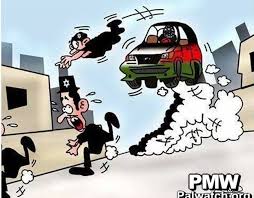
Official Palestinian media produced cartoons calling for Arabs to run over Jews

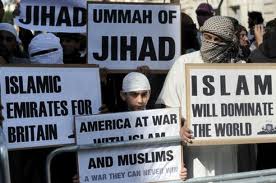
Yet the underlying message is strikingly similar: for the jihadists, those who offend do not merely deserve criticism – they deserve elimination.

That is the lesson many in the West still refuse to absorb. We continue to interpret these attacks through the lens of isolated extremism, mental illness, or individual grievance. Those factors may help explain why one person acts and another does not. They do not explain why the same religious slogans, the same enemies – the West, and the same methods appear again and again across continents.

The lesson of I’m Offended, You’re Dead is even more relevant today than it was a decade ago. The argument was never that every Muslim is a jihadist. It was that an ideology can become pervasive enough to inspire violence far beyond the ranks of organized terrorist groups. Even beyond “lone wolves.” It becomes the default language of the street.

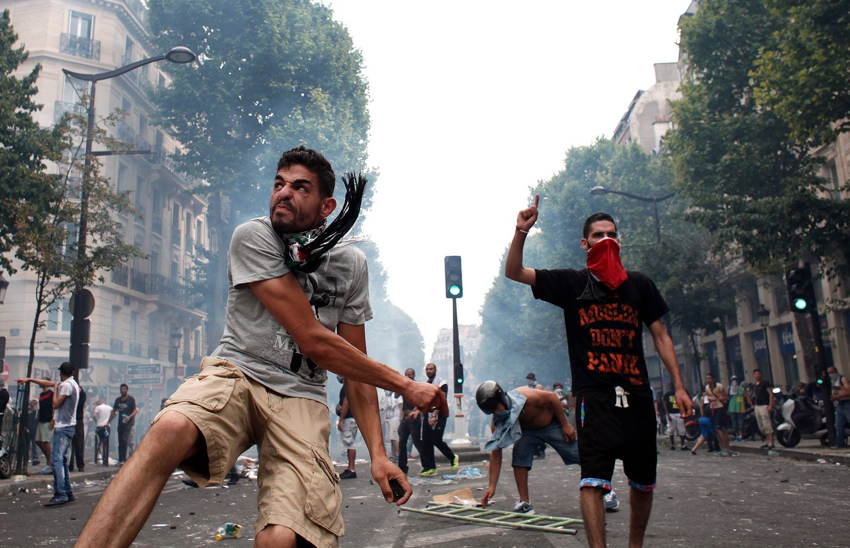
Islamic radicals riot in Paris, France

The West believes it is engaged in an argument over speech and tolerance. About the quantitative size of immigration and the culture of new arrivals. Because that is the culture of the West – to debate, to find compromise, to coexist.

But violent jihadism is engaged in something else entirely. It is not trying to persuade those it finds offensive. It seeks to destroy them.

A decade ago, you had to look for that message, to parse that difference. Today, you don’t.

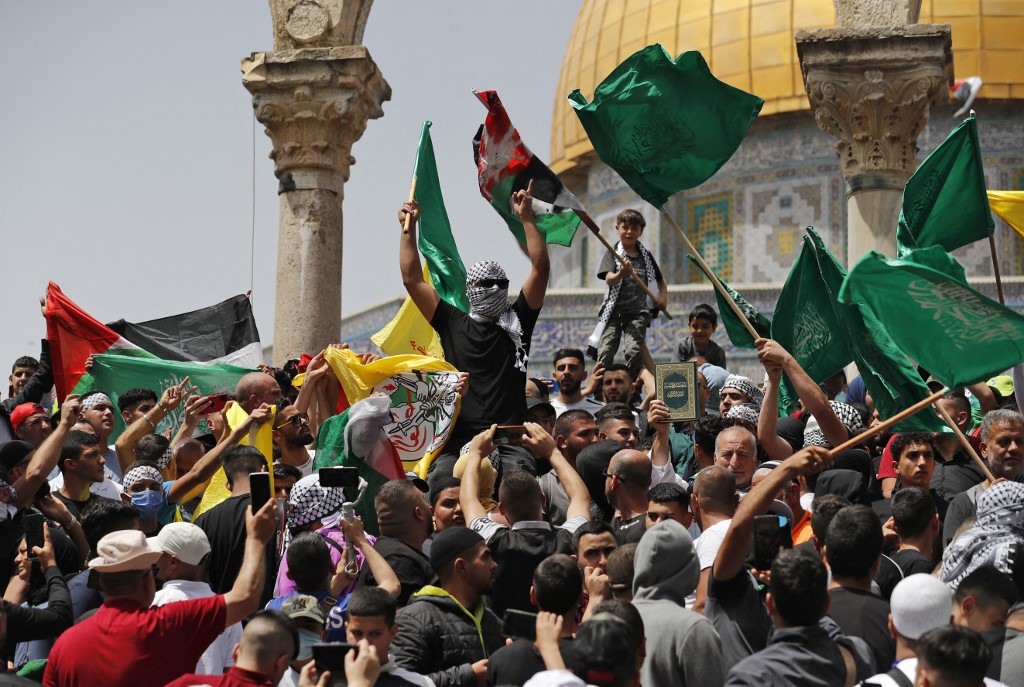
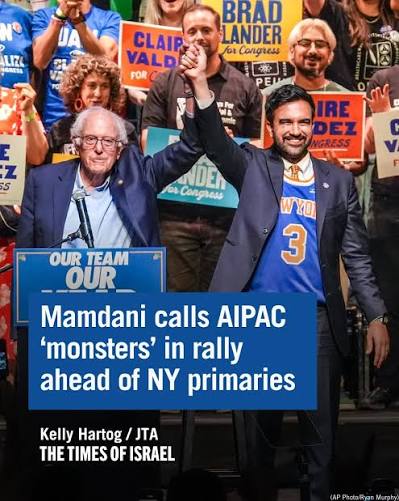
The call of “Allahu Akbar” is no longer confined to jihadi groups or even “lone wolf” radicals as they commit attacks. Because the anti-West lexicon has become normalized on the angry streets, hunting people perceived of as “monsters.”

Trading Antisemitism in US For Help in Foreign Wars?

Al Jazeera is the global media company funded by Qatar, governed through a board appointed by the Qatari state and used to project Qatari influence around the world. Its digital arm, AJ+, was built in 2013 specifically for younger Americans who consume news through social media rather than television. By the late 2010s, it had become one of Facebook’s largest news-video publishers, generating billions of views and millions of followers while focusing heavily on race, social justice and the Israeli-Palestinian conflict, a peculiar cocktail of a socialist-jihadi alliance at that time, which is now mainstreamed.

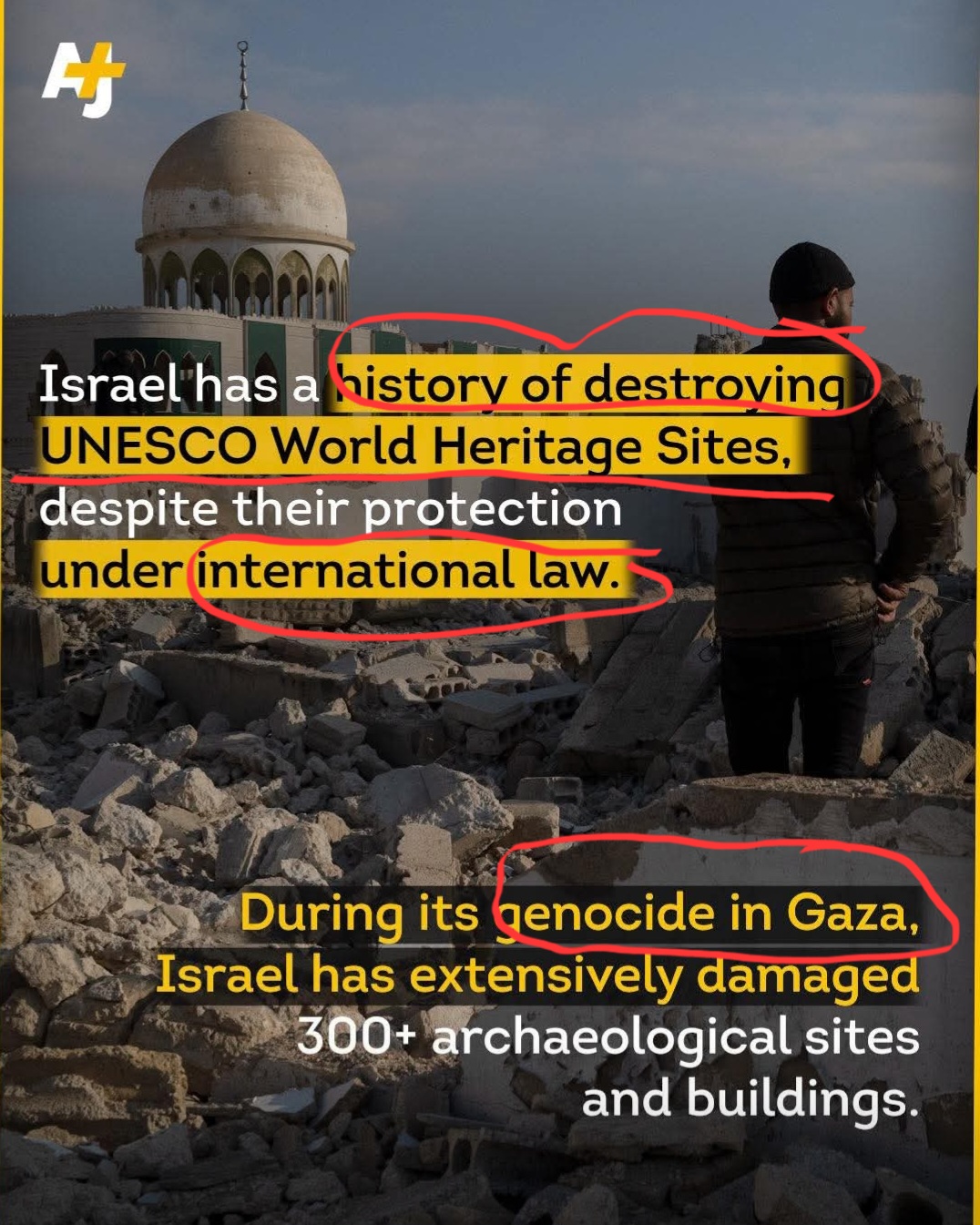
AJ+ has a long history of peddling Hamas propaganda

In September 2020, the Trump Justice Department concluded that AJ+ was acting on behalf of a foreign principal and ordered it to register under the Foreign Agents Registration Act (FARA). Registration would not have restricted its journalism, but simply would have required public disclosure of its relationship with Qatar and periodic reporting similar to that required of other foreign state-backed media organizations like those from Turkey (TRT), China (CGTN) and Russia (RT).

AJ+ refused to register. Republican lawmakers including Chuck Grassley, Marco Rubio, Tom Cotton, Ted Cruz and Todd Young pressed DOJ to enforce its own determination.

Then, in May 2022, the Biden Justice Department withdrew the order after reviewing additional information submitted by AJ+. What changed has never been publicly explained. DOJ has not identified the decisive new facts, released its legal analysis or explained why AJ+ was treated differently from other foreign state-funded broadcasters.

“AJ+’s reporting ‘supports an inference’ that its broadcasts are ‘designed to influence the opinions and perspectives of its U.S. audience as directed by the foreign principals and for their principal benefit.’…

Given Al Jazeera’s and TikTok’s public prominence in the U.S., mounting evidence of their use to advance foreign agendas, and the Biden Administration’s own national security concerns with the two companies, the Committee is puzzled that the Department appears to have either ceased or paused enforcement of FARA registration requirements for the companies without explanation.” – February 8, 2024 letter from the Committee on Oversight and Accountability

The timing naturally raises questions.

Only months earlier, the United States had completed its withdrawal from Afghanistan. Qatar had become indispensable to Washington—hosting negotiations with the Taliban, assisting the evacuation from Kabul and serving as one of America’s principal diplomatic intermediaries in the region.

There is no public evidence that the FARA reversal was connected to Qatar’s diplomatic role but it is reasonable to ask whether a government relying heavily on Doha’s cooperation became less interested in forcing Qatar’s flagship media network to register as a foreign agent.

The same question now confronts the second Trump administration. Although Trump’s first Justice Department initiated the FARA action, his current administration has not publicly reopened the case. That may simply reflect DOJ’s legal judgment or competing priorities. It may also reflect Qatar’s continuing importance as a partner in addressing Iran, Gaza and other regional crises.

A final question – closer to home – may be the most consequential. During this same period, antisemitism reached levels not seen in decades while anti-Israel activism surged across American campuses and social media, principally from young people. And AJ+ was one of the most influential foreign state-funded digital news brands reaching young Americans, peddling such hatred over this time.

The unanswered question is whether Washington accepted greater Qatari influence inside the United States – including directly and indirectly promoting antisemitism – in exchange for Qatar’s assistance abroad.

Whether making Al Jazeera and AJ+ register under FARA would suddenly change these trends is unknown. But it is also unknown and curious why the government stopped asking the Qatari media powerhouse to do so.

The OIC’s Hamas Exception

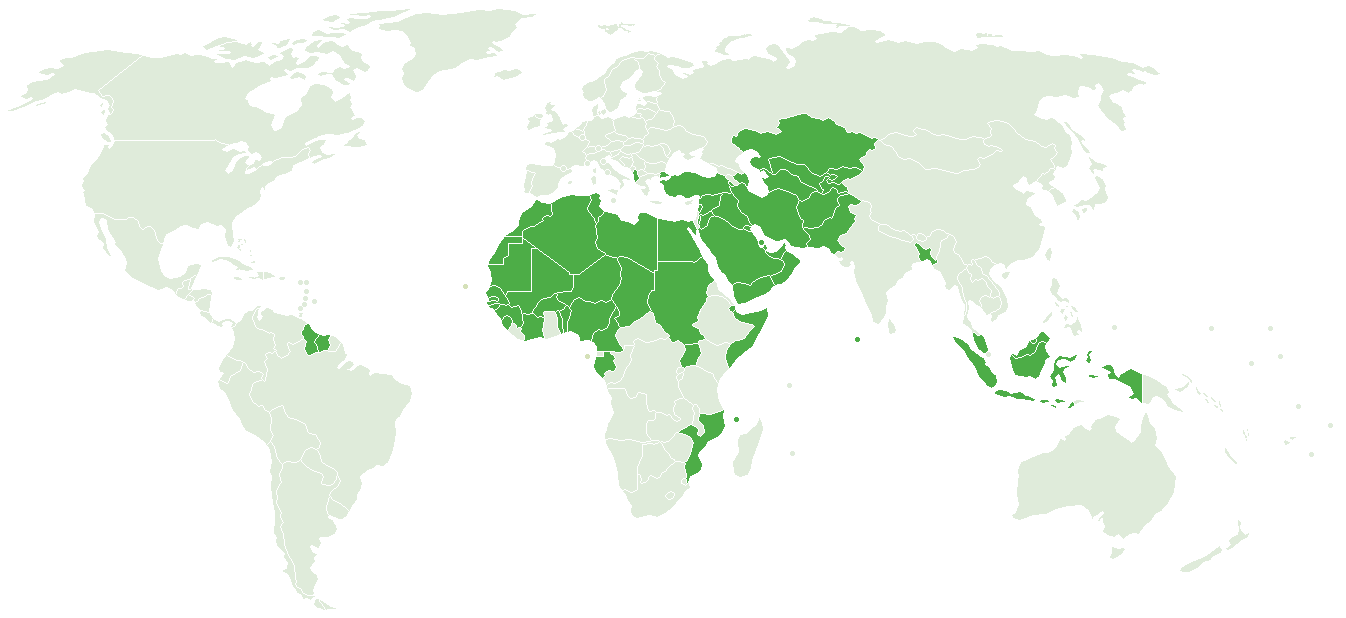
Founded in 1969, the Organization of Islamic Cooperation (OIC) is a coalition of 57 Muslim-majority nations, making it the second-largest intergovernmental organization in the world after the United Nations. Stretching from Morocco to Indonesia, and from Kazakhstan to Nigeria, it represents roughly a quarter of the world’s countries and speaks collectively on issues affecting the Muslim world.

OIC Member states

One of the organization’s longstanding positions is that extremist groups claiming to act in the name of Islam do not represent Islam. Over the years, the OIC has repeatedly condemned organizations such as:

  • ISIS (Daesh) — for attacks across Iraq, Syria, Libya, Afghanistan, and Nigeria, all OIC member states.
  • Al-Qaeda — for attacks in Saudi Arabia, Yemen, Pakistan, Afghanistan, Somalia, Iraq, and other Muslim-majority countries.
  • Boko Haram — for its insurgency in Nigeria, Niger, Chad, and Cameroon.
  • Al-Shabaab — for attacks centered in Somalia and extending into neighboring countries.
  • ISIS-K (Islamic State Khorasan Province) — for terrorism in Afghanistan and Pakistan.
  • Tehreek-e-Taliban Pakistan (TTP) — for its campaign against the government and civilians of Pakistan.

The common thread is unmistakable. Every one of these organizations has waged war against governments, civilians, or institutions in Muslim-majority countries, mostly members of the OIC itself.

The OIC has consistently argued that Muslims have been among the principal victims of jihadist terrorism. These groups bomb mosques, seek to overthrow Muslim governments, and destabilize OIC member states are denounced as terrorists and rejected as contrary to Islam.

Yet one jihadi terrorist groups is not called out. It is embraced.

Hamas is an Islamist movement whose founding charter and rhetoric have long drawn on jihadist themes and whose October 7, 2023, attack deliberately targeted civilians. Nevertheless, the OIC has not designated Hamas as a terrorist organization or issued the kind of sweeping institutional condemnations that it has directed at ISIS, al-Qaeda, Boko Haram, Al-Shabaab, ISIS-K, or TTP.

The most obvious distinction is not the use of Islamist ideology or armed violence. It is the target: Israel, the Jewish State.

For an organization that frequently states that terrorism has no religion and that Muslims are among terrorism’s greatest victims, its record reveals a clear pattern. When jihadist groups attack the Muslim world, the OIC is unequivocal in its condemnation. When an Islamist movement wages jihad against the Jewish state, the organization’s response is support.

American Hamas

Social scientists have long observed that ideas do not need majority support to transform a community. Research on social norms has repeatedly found that once a committed minority reaches roughly 25 to 30 percent of a group, opinions once considered beyond the pale can become normalized. The Overton window shifts. People become more willing to voice views they once kept private because they no longer fear social disapproval.

That is what makes Pew Research Center’s July 2026 findings so alarming.

In 2024, Pew found that 37% of American Muslims viewed Hamas favorably. Two years later, that figure has risen to 44%.

July 2026 Pew Poll showing 44% of American Muslims support Hamas, almost the same as the Palestinian Authority. This is a gross outlier relative to all other Americans.

Vile extremism has not only been mainstreamed in the American Muslim community, it is accelerating.

Hamas is not merely another Palestinian political movement. It is a U.S.-designated terrorist organization that carried out the October 7 massacre. Its members murdered civilians, took hostages, committed widespread sexual violence, and burned families alive. Hamas has long promoted antisemitic ideology, seeks Israel’s destruction, refuses to disarm or allow civilians to use its protective shelters, and has repeatedly embedded military operations among civilians, leaving Gaza’s population to be destroyed.

Forty-four percent is not a fringe. It is well above the level social scientists associate with changing social norms. It IS the norm.

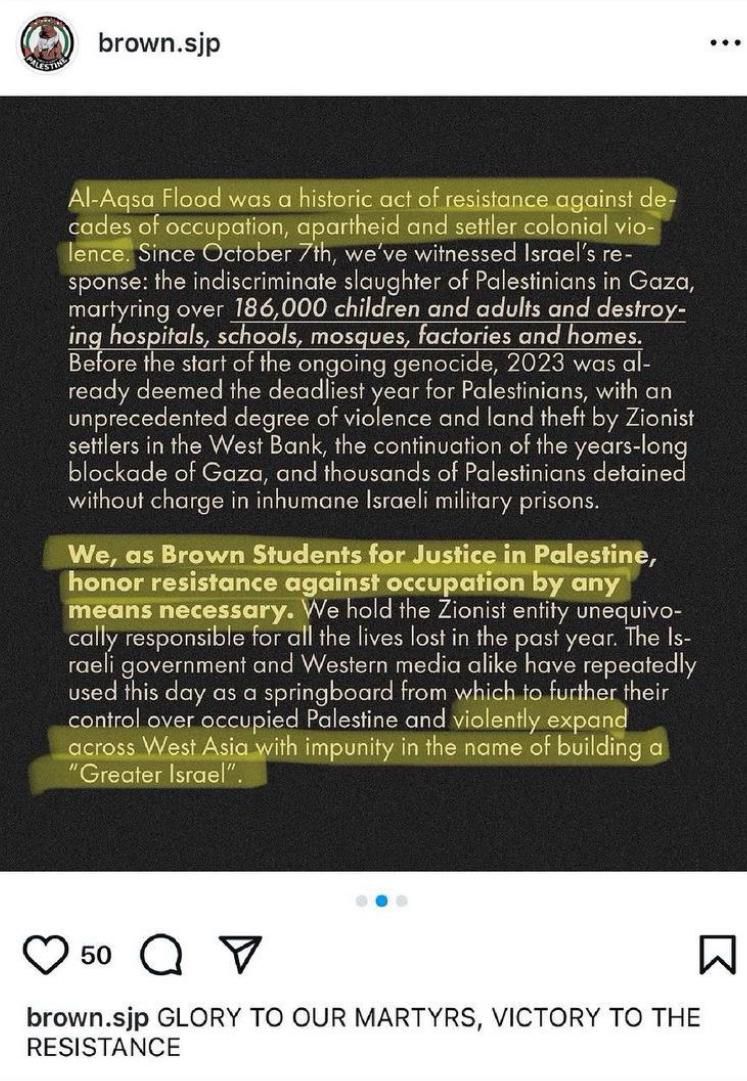
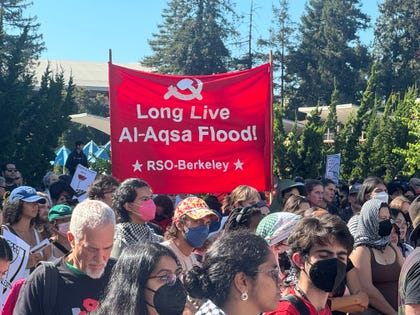
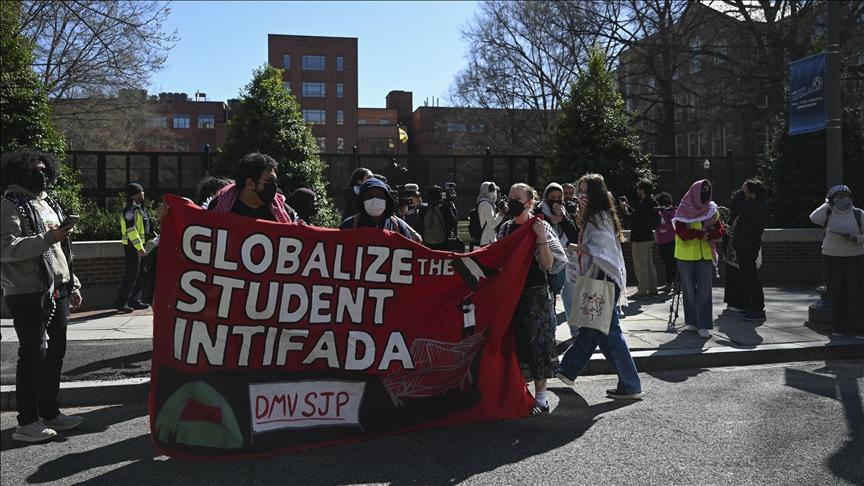
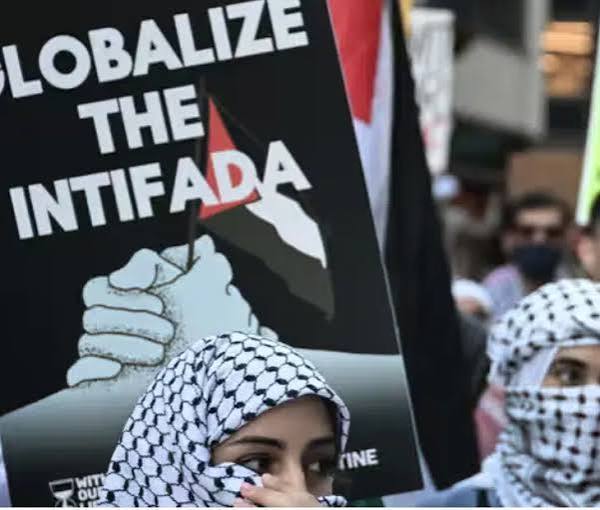
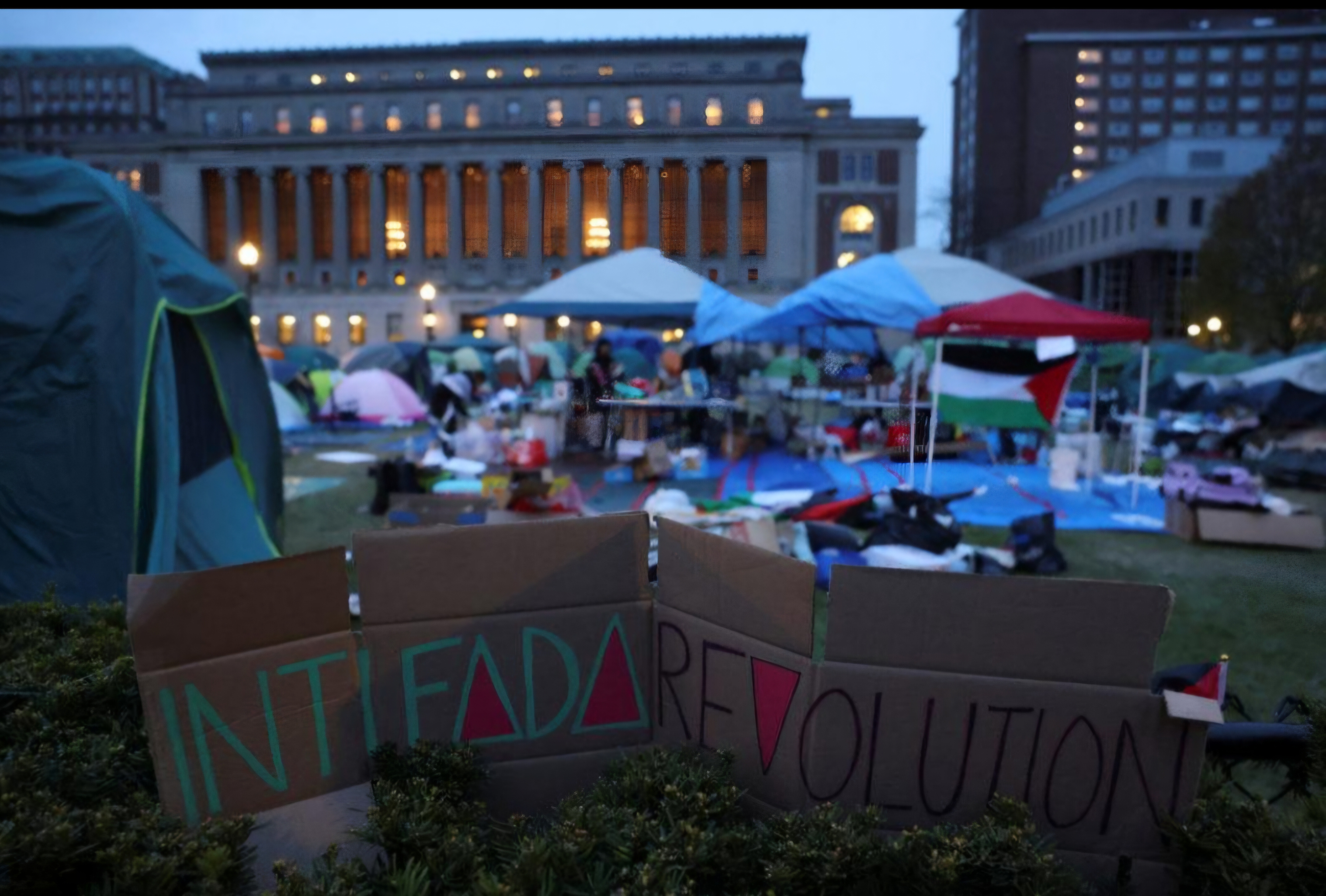
Viewed through that lens, the chants heard on American streets become easier to understand. “Globalize the Intifada” is no longer merely the slogan of isolated radicals. Celebrating the killing of Jews no longer needs to be hidden but can be posted on social media.

For American Jews, this is not an abstract polling result. Hamas and “Globalize the Intifada” mean antisemitic violent jihad. It is the embrace of a death cult. A poll showing growing favorability of Hamas inevitably deepens fear that the moral barrier has been broken and violence is near.

But this is not only a Jewish concern.

No society should become comfortable with growing support for a terrorist organization whose defining acts include the deliberate murder of civilians, hostage-taking, and an explicitly antisemitic ideology. When favorable views of such an organization increase rather than decline after its atrocities, the implications extend beyond the community it targets. They speak to the moral health of the the American Muslim community.

Every community contains extremists. The defining question is whether they remain isolated or become influential enough to reshape what is considered acceptable. Pew’s findings suggest that sympathy for Hamas is no longer confined to the margins of American Muslim opinion. It has become substantial enough to influence public discourse and to shape the boundaries of acceptable speech, and likely action.

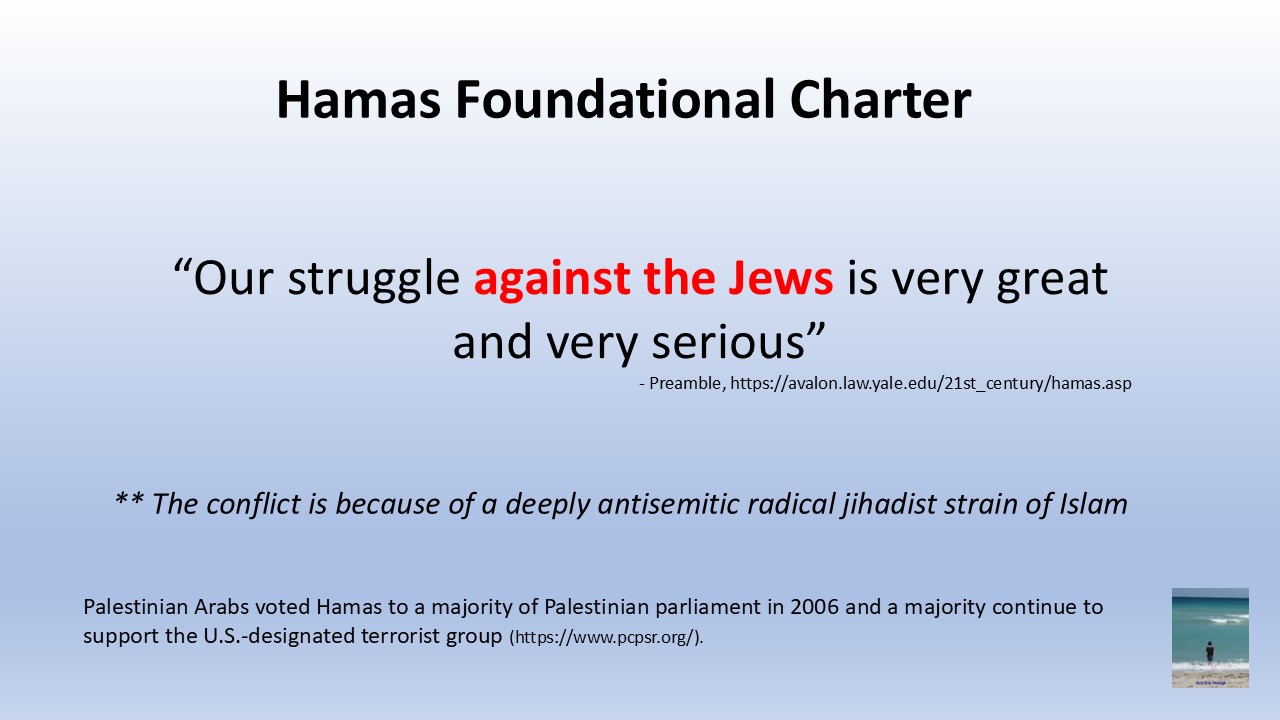
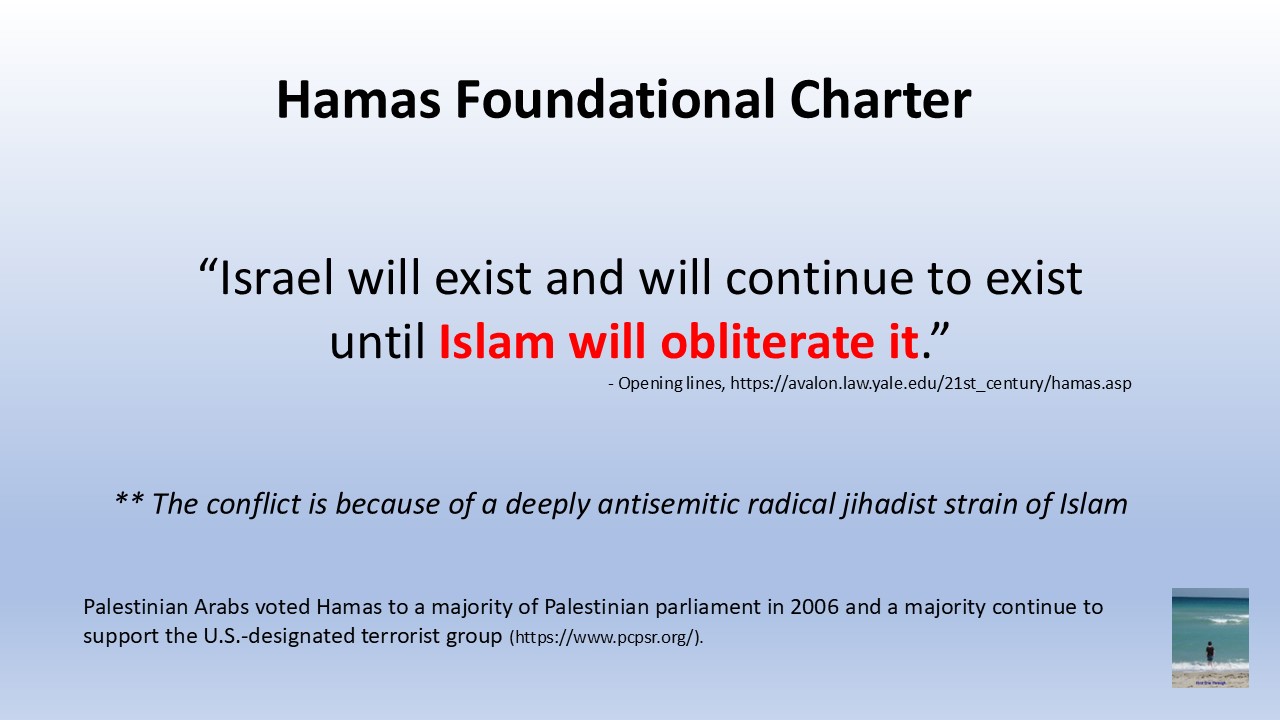
The Hamas Charter is the most antisemitic governmental charter ever produced

The issue has grown beyond Hamas in Gaza. It is American Hamas – the normalization of support for a terrorist organization within American society. If support for Hamas among American Muslims has risen from 37% to 44% in just two years, Americans should ask not only what this means for Jews, but what it says about the values we are willing to tolerate in America.

The greatest danger is not merely that extremists exist. It is that extremism ceases to be recognized as extreme.

The Most Antisemitic Line in Erdoğan’s Speech Was the One English Readers Never Saw

When Turkish President Recep Tayyip Erdoğan attacked Israel this week, most English-language reports focused on his accusations of genocide, his attacks on Israeli Prime Minister Benjamin Netanyahu, and his warnings about regional instability.

But Arabic and Turkish media focused on a different line.

According to Turkey’s own state-run Anadolu Agency, Erdoğan declared:

“We know very well what the ultimate objective of the delusions of the Promised Land is, and God willing, we will never allow it.”

It is a line he has used for years. It’s a headline phrase across the Arab world. Al Jazeera highlighted it. Egypt’s Al-Ahram highlighted it. Al-Quds Al-Arabi highlighted it. He uses it as a charge that Israel is coming for Turkey itself.

Yet the English-language media ignored it.

That omission matters because Erdoğan was no longer criticizing Israeli policy. He was ridiculing a foundational Jewish belief.

The Promised Land is not a policy of Benjamin Netanyahu. It is not a platform of the Israeli government. It is a central element of Jewish faith, history, and identity dating back more than three thousand years. It appears throughout the Hebrew Bible and has been part of Jewish religious life through centuries of exile.

Calling that belief a “delusion” is no different than mocking Christian belief in the Resurrection or Muslim belief in the divine revelation of the Quran.

There is a word for dismissing the core religious beliefs of Jews as uniquely illegitimate: antisemitism.

Yet English-language audiences were shielded from that reality. Readers were told Erdoğan was criticizing Israel. They were not told he was deriding one of Judaism’s foundational beliefs. That this is a Muslim war against the Jews.

For years, Western audiences have been told that criticism of Israel must be distinguished from hostility toward Jews. But when a foreign leader publicly mocks a core tenet of Judaism and the press translates it into a story solely about Israeli policy, the distinction is being used in reverse. Anti-Jewish rhetoric is sanitized and repackaged as ordinary criticism of Israel.

Arabic readers saw what Erdoğan actually chose to emphasize. English readers did not, guided on a narrow path to direct the public.

And that may be the most revealing story of all.

Whitewashing Antisemitism at the NY Times: Cornell University

What happened at Cornell University is not complicated.

A student threatened to bomb, stab and rape Jews and was eventually convicted. A professor described the mass slaughter of Jews and the burning of families as “exhilarating.” Jewish students faced open hostility in spaces that were supposed to protect them.

That is the story.

But you would not know any of it from reading The New York Times.

There, the story is something else entirely.

It is about leverage and negotiations. About a university navigating pressure from Washington, in which “[t]he principal incentive for Cornell to settle was to restore hundreds of millions of dollars in research money.”

Antisemitism is not the subject. It is merely the backdrop.

Once Jew-hatred is relegated to the background, everything else falls neatly into place. Cornell is no longer responding to hatred; it is managing a dispute. The federal government is no longer addressing civil rights concerns; it is applying political pressure. The moral stakes dissolve into process and incentives.

This is not omission by accident. It is construction by design.

Because centering what actually happened – explicit threats against Jews, open celebration of their murder – would force a conclusion that cannot be comfortably absorbed into the paper’s worldview: that serious, virulent antisemitism has taken root inside institutions it instinctively protects.

So the frame shifts.

Facts that clarify are excluded, while context that softens is elevated, and the reader is guided, carefully, away from the obvious.

It is a familiar pattern.

When antisemitism comes from ideological adversaries – white supremacists, Christian nationalists, “your father’s antisemitism” – mainstream media names it plainly and condemns without hesitation. It is the headline, the thesis, the moral center.

But when it emerges from favored spaces – elite campuses, activist movements, intellectual circles – the noxious hatred disappears. It is reframed as protest, as speech, as tension, as politics. Anything but what it is.

Because if every instance of antisemitism were treated with the same clarity, the same urgency, the same willingness to name what is happening, then the victims of preference would face unwanted scrutiny.

So it is managed instead.

Turn a story about Jews being threatened into a story about money. The antisemitic horde combines the two naturally anyway.

The New York Times is no longer just erasing antisemitic actions by majority-minorities and woke institutions, it is participating in the targeting of Jews for future attacks.

All Muslims Are Not Jihadists

There is a temptation in moments of fear and anger to reach for the bluntest possible instrument: collective blame.

We are seeing it again now, in calls from some politicians and commentators to treat Muslim Americans not as individuals, but “as a class.” It is offensive. It is wrong. And it is profoundly un-American.

We have been here before.

American history offers a warning that should never be forgotten: General Ulysses S. Grant’s order expelling Jews “as a class” from parts of the South during the Civil War. It was born of frustration, prejudice, and expedience. It is remembered today as a stain.

That is what collective guilt produces. Not security. Not clarity. Just injustice.

And it obscures the truth.

Because the truth is more important: not all Muslims are jihadists. The overwhelming majority are not. But there exists, within every society, a subset animated by radical, supremacist ideology. In this case, that subset is jihadists and they are a very real problem.

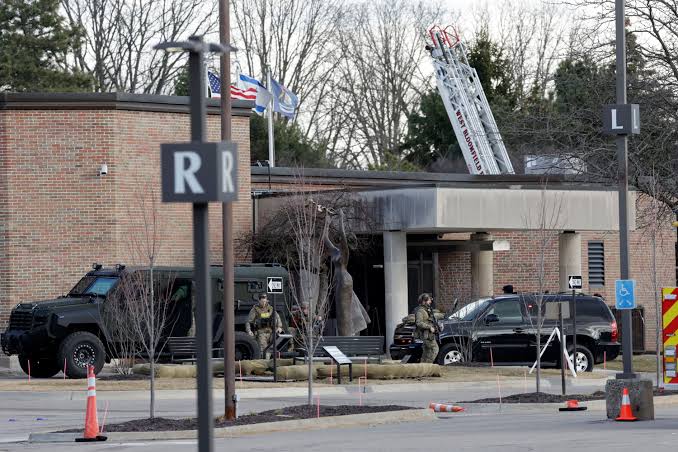
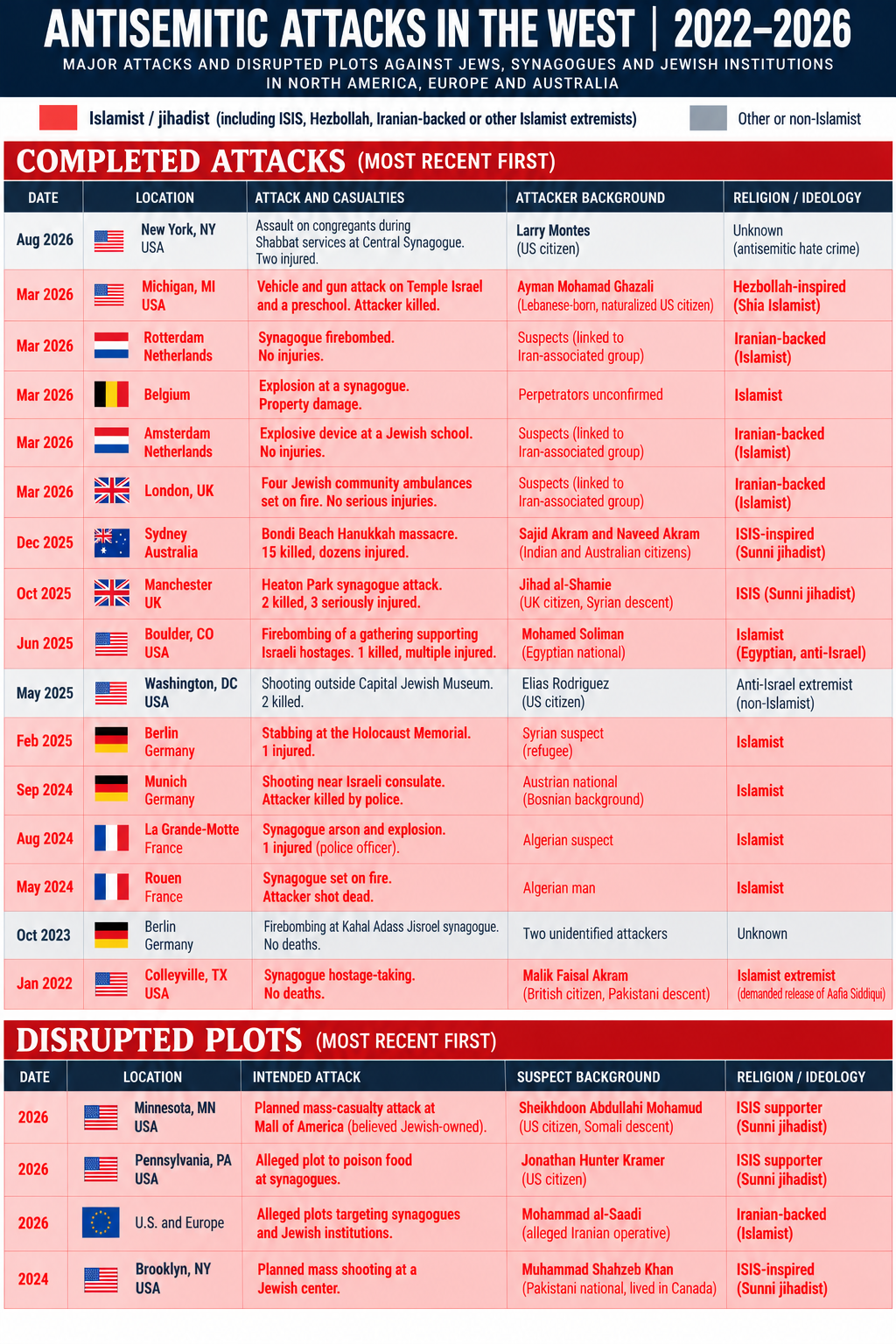
We have seen synagogues attacked, Jewish schools targeted, and civilians murdered around the world – from New York to Paris, from Sydney to Jerusalem. These acts are not isolated. They are the violent edge of a broader ideological ecosystem that glorifies terror, sanctifies hatred, and seeks legitimacy in the West.

That ecosystem is not confined to foreign battlefields. It has nodes here.

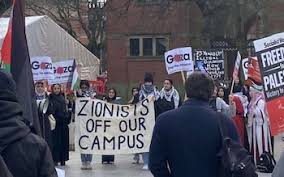
Organizations like Students for Justice in Palestine (SJP) and Within Our Lifetime do not operate as neutral advocacy groups. Their rhetoric, tactics, and alliances echo the narratives of jihadist movements – erasing terrorism, justifying atrocities, and turning mass violence against Jews into something to be rationalized and celebrated.

This is where scrutiny belongs.

Not on millions of Muslim Americans living ordinary lives who are part of the American fabric. But on the networks, organizations, and ideologies that radicalize, that excuse violence, and that deliberately blur the moral line between protest and terror.

Failing to make that distinction is not only unjust but dangerous.

When everything is labeled the problem, nothing is. When all Muslims are treated as suspects, actual jihadists disappear into the noise. They benefit from that confusion. They rely on it.

And worse, it hands them a propaganda victory: proof, in their telling, that the West is inherently hostile, that coexistence is impossible, that radicalism is justified.

That is why calls to expel Muslims from the United States are not just racist; they are strategically self-defeating. They punish the innocent, betray American principles, and distract from the real threat.

A serious society does not fight ideologies with hysteria. It fights them with precision.

It identifies the threat clearly: jihadist ideology, its enablers, and the institutions that normalize or legitimize it. It protects the innocent. And it refuses, no matter how charged the moment, to abandon the principles that distinguish a free society from the movements that seek to destroy it.

First Comes the Word “Enemy”

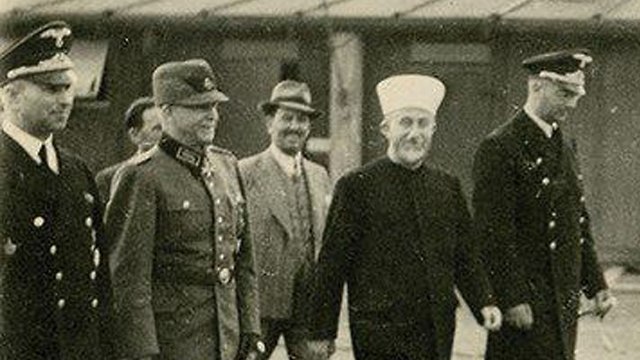
In November 1943, Heinrich Himmler sent a telegram to Haj Amin al-Husseini on the anniversary of the Balfour Declaration.

He wrote of a “shared recognition of the enemy” and “the joint fight against it.”

“The enemy” meant world Jewry.

That phrasing did real work. It turned a people into a threat. Once Jews were cast as a civilizational danger – “Jewish invaders” – their removal became a duty. Vocabulary cleared the ground and policy followed. Then came the machinery.

This is how collective persecution begins: define a group as the problem.

Eighty years later, the same grammar keeps resurfacing.

In Doha, Francesca Albanese, the United Nations Special Rapporteur on the occupied Palestinian territories, used the phrase “common enemy” to describe Israel. The target was the world’s only Jewish state. The effect was to cast Jewish sovereignty itself as something humanity must oppose.

That language strips legitimacy and treats existence as offense. It moves from argument to exclusion with the implied goal of eradication.

The pattern appears in American activism as well. Speaking at a conference hosted by American Muslims for PalestineZahra Billoo of the Council on American-Islamic Relations urged audiences to “oppose the polite Zionists too,” grouping mainstream Jewish institutions — synagogues, federations, Hillel chapters, civil-rights groups — into the camp of adversaries, “they are your enemies.”

The construction never changes.

Nazi Himmler: Jews are the common enemy.
CAIR Billoo: Zionists are the enemy.
UN Albanese: Israel is the common enemy.

Different decades. Different accents. Identical structure.

Demonization targets identity. Once identity becomes the indictment, anything feels justified and the line between debate and dehumanization disappears.

After World War II, the human-rights system was built to prevent precisely this logic — the idea that an entire people could be pushed outside the moral community. Yet the vocabulary has returned, polished and respectable, spoken from podiums that claim the language of justice.

When the Nazis called Jews “the enemy,” the world should have drawn the line right there. No conferences. No nuance. No excuses. Anyone who speaks that way disqualifies themselves.

That same rule applies now.

Human-rights officials who talk like antisemitic propagandists should lose their mandates. Activists who label Jews the enemy lose the claim to civil-rights leadership positions. Institutions that tolerate this language lose credibility.

The mob put a yellow Jewish Star on Jews 80 years ago and told everyone that they are the enemy. The mob is labelling Jews as Zionists today and doing the same. We shouldn’t pause to take action, if “never again” means anything.

The Only Place Jewish Murder In a Synagogue Isn’t Antisemitism

When Jews are murdered in synagogues in Europe, the United Nations speaks plainly. The attacks are labeled antisemitic. The violence is called terrorism. Solidarity with the Jewish community is explicit, and justice is demanded.

UN Secretary-General calls killing of Jews in Germany “demonstration of antisemitism” in 2019
UN Secretary-General calls killing of Jews in United Kingdom in 2025 “antisemitism” and “stresses the urgent need to confront hatred and intolerance in all their forms.”

When Jews are murdered in synagogues in Jerusalem, that clarity vanishes.

The same act—killing Jews at prayer—suddenly requires “context.” Terrorism is softened into “violence.” Antisemitism dissolves into “tensions.” Victims are anonymized, motives left unexplored, ideology carefully avoided. Language that flows easily in Europe locks up entirely in Israel’s capital.

UN Secretary-General never calls killing of Jews in Jerusalem rooted in “antisemitism.”

This is not rhetorical drift. It is doctrine.

The UN has formally adopted the Palestinian demand that Jews should not live in Jerusalem. Through measures such as UN Security Council Resolution 2334, it asserts that Jews may not alter the city’s “demographic composition.” That position freezes Jerusalem at a moment immediately following the Jordanian army’s ethnic cleansing of all Jews from the eastern half of the city between 1948 and 1967. Jewish expulsion is accepted as a legitimate baseline. Jewish return is treated as a violation of international law.

This is not neutrality. It is the institutionalization of an antisemitic premise: that Jews, uniquely among peoples, have no right to live in their holiest city.

UN Secretary-General calls killing of Jews in United States “antisemitism” THREE TIMES.

Once that premise is accepted, Jewish life in Jerusalem becomes conditional. Jewish neighborhoods are labeled illegal. Jewish prayer is framed as provocation. Jewish presence itself is cast as destabilizing. Violence against Jews no longer reads as antisemitism but as political reaction to an allegedly illegitimate reality.

Under those conditions, motive cannot be named. Calling synagogue murders in Jerusalem “antisemitic terrorism” would require acknowledging that Jews are being targeted for who they are, in a city where the UN has already ruled they should not be. It would expose the connection between UN doctrine and the moral evasions that follow.

So the motive is omitted.

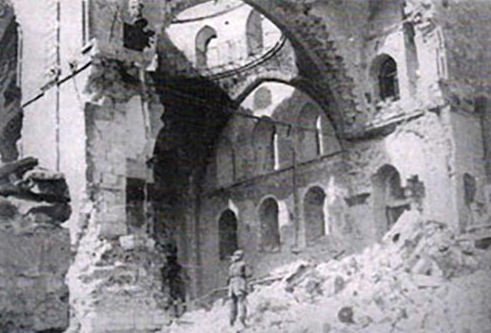
Aftermath of Jews slaughtered in synagogue

The UN does not merely tolerate the idea of Jews being removed from Jerusalem; it has encoded it. The language is bureaucratic—demographics, international law, peace—but the result is stark: a city where Jewish existence is treated as unlawful, and Jewish murder as a political complication.

The contrast with the rest of the world makes the pattern undeniable. The UN knows exactly how to speak about antisemitism. That moral vocabulary disappears only in Judaism’s holiest city, in the Jewish State’s capital, because the United Nations has endorsed the antisemitic wishes of radical jihadists.

Call Out Antisemitism. Period.

New York Governor Kathy Hochul delivered her State of the State address on January 13, 2026. In her prepared remarks, she condemned antisemitism and Islamophobia in the same breath, as if they were parallel crises in New York. They are not.

“In 2026, we’ll take new steps to protect our houses of worship against the rising tide of Antisemitism and Islamophobia.” – NY Gov. Kathy Hochul

In 2025, antisemitic attacks in New York City were over ten times more frequent than attacks against Muslims. That is not a nuance. It is the entire story. When one form of hatred overwhelms all others by orders of magnitude, collapsing them into a single moral gesture is not fairness—it is evasion.

Worse, “Islamophobia” is now routinely invoked as a political shield, not a measured diagnosis. It is wheeled out whenever radical Islamic antisemitism becomes too obvious to ignore, functioning as a way to halt scrutiny. Name the attackers. Name the ideology. Name the chants. The response is immediate: Islamophobia.

Today’s antisemitism is not abstract, historical, or evenly distributed across society. It is being driven openly and energetically by Islamist movements and their Western enablers, celebrated in the streets and sanitized as “anti-Zionism.”

Leadership requires prioritization. Data requires honesty. And moral clarity requires the courage to say that when Jews are being attacked ten times more than anyone else, they do not need their suffering balanced away.

False symmetry is not inclusion.
It is worse than cowardice.
It is vulgar absolution.