Cornell’s Socialist Revolution and Its Jewish Students

There is something rotten in Ithaca.

In October 2023, Cornell professor Russell Rickford described Hamas’s massacre of Israelis as “exhilarating” and “energizing.” Weeks later, a Cornell student threatened to shoot Jewish students, rape Jewish women and murder Jewish babies. Three years later, Rickford remains on the faculty, socialist organizations have gained political influence across campus, and anti-Israel activists have transformed Cornell’s student government and political culture.
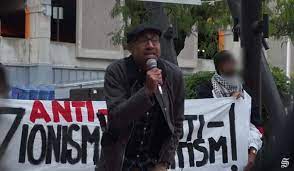
A speaker addresses a crowd at a protest, with a banner in the background reading 'ANTI-ZIONISM IS NOT ANTI-SEMITISM'.
Cornell Professor celebrated the October 7 massacre of 1,200 in Israel

Cornell’s socialist revolution has unfolded alongside a disturbing deterioration in the environment for Jewish students. Organizations promoting socialism and campaigning against Israel have become political partners, winning elections, organizing demonstrations and challenging the university’s institutional relationships with Israel.

Rickford’s October 2023 remarks were captured on video just days after Hamas terrorists murdered, raped and kidnapped Israelis. Jewish students questioned whether they could safely express opposing views in his classroom. Cornellians for Israel president Zoe Bernstein and Hillel executive vice president Simone Shteingart publicly challenged his remarks. Rickford apologized, took a leave of absence and eventually returned to teaching, including a course titled Socialism in America.

Within weeks, Cornell student Patrick Dai threatened to attack the university’s kosher dining hall, shoot Jewish students, rape Jewish women and murder Jewish babies. The threats terrified Cornell’s Jewish community, prompting a police investigation. Dai was arrested, pleaded guilty and sentenced to federal prison.

Mugshot of a young man with glasses, wearing a plain white t-shirt, looking directly at the camera.
Cornell student Patrick Dai

Cornell’s Young Democratic Socialists of America chapter lists more than 300 members in the university’s student organization directory. One Cornell organizer advanced to national YDSA leadership, while another won election to Ithaca’s Common Council.

YDSA increasingly works alongside Students for Justice in Palestine, Jewish Voice for Peace and Cornell Progressives. Their joint campaigns seek divestment from weapons manufacturers, opposition to Israeli institutions and an end to Cornell’s relationship with Israel’s Technion. The broader Coalition for Mutual Liberation has claimed participation by more than 40 campus and community organizations.

The transformation is particularly striking when measured against Cornell’s recent history.

In 2014, Cornell’s Student Assembly voted 15–8–1 to table an Israel divestment resolution. A decade later, nearly 70% of participating undergraduates supported a divestment referendum. Graduate students approved another referendum in 2025. By 2026, every Student Assembly candidate jointly endorsed by SJP, YDSA and Cornell Progressives had won.

That political ascent was accompanied by increasingly confrontational activism. Protesters established encampments, disrupted a career fair involving defense contractors and interrupted an appearance by former Israeli foreign minister Tzipi Livni. Cornell imposed disciplinary sanctions and temporarily suspended SJP before reinstating it under conditions.

The Anti-Defamation League assigned Cornell a C in its 2026 campus antisemitism report card.

The relationship between socialism and anti-Zionism became especially visible in September 2026, when Hasan Piker addressed approximately 450 students inside Cornell’s Sage Chapel at an event involving YDSA and other anti-Israel organizations.

Piker had previously declared that Hamas was a thousand times better than Israel. When challenged about that comparison on Pod Save America, he responded, “I stand by that.”

At Cornell, Piker celebrated socialist electoral victories, including the rise of New York City Mayor Zohran Mamdani, and joined a chant of “From the river to the sea, Palestine will be free.”
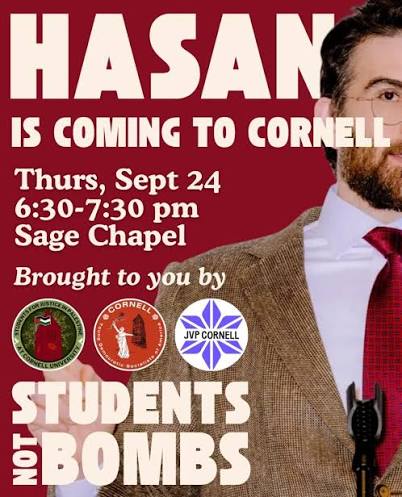
Event poster announcing Hasan's talk at Cornell on September 24, from 6:30 to 7:30 pm at Sage Chapel, sponsored by student organizations.

Governor Hochul sits on Cornell’s Board of Trustees by virtue of her office. Together, the university’s leadership and trustees bear responsibility for protecting the freedom of political expression while ensuring that Jewish students can participate in university life without intimidation.

Cornell has spent three years demonstrating how much ideological extremism its academic culture can accommodate. A professor celebrated the slaughter of Israelis. A student threatened to murder Jews. Socialist and anti-Israel organizations expanded their political influence, and a speaker who publicly stood by his favorable comparison of Hamas to Israel was welcomed into Sage Chapel.

Cornell’s Jewish students have watched this transformation from the receiving end of threats and intimidation.

Cornell has decided to shut down fraternity events and parties for the rest of the year after a suit alleging gang rape at a fraternity in 2024 came to public attention. Will the school take similar action against the socialism and anti-Israel clubs?
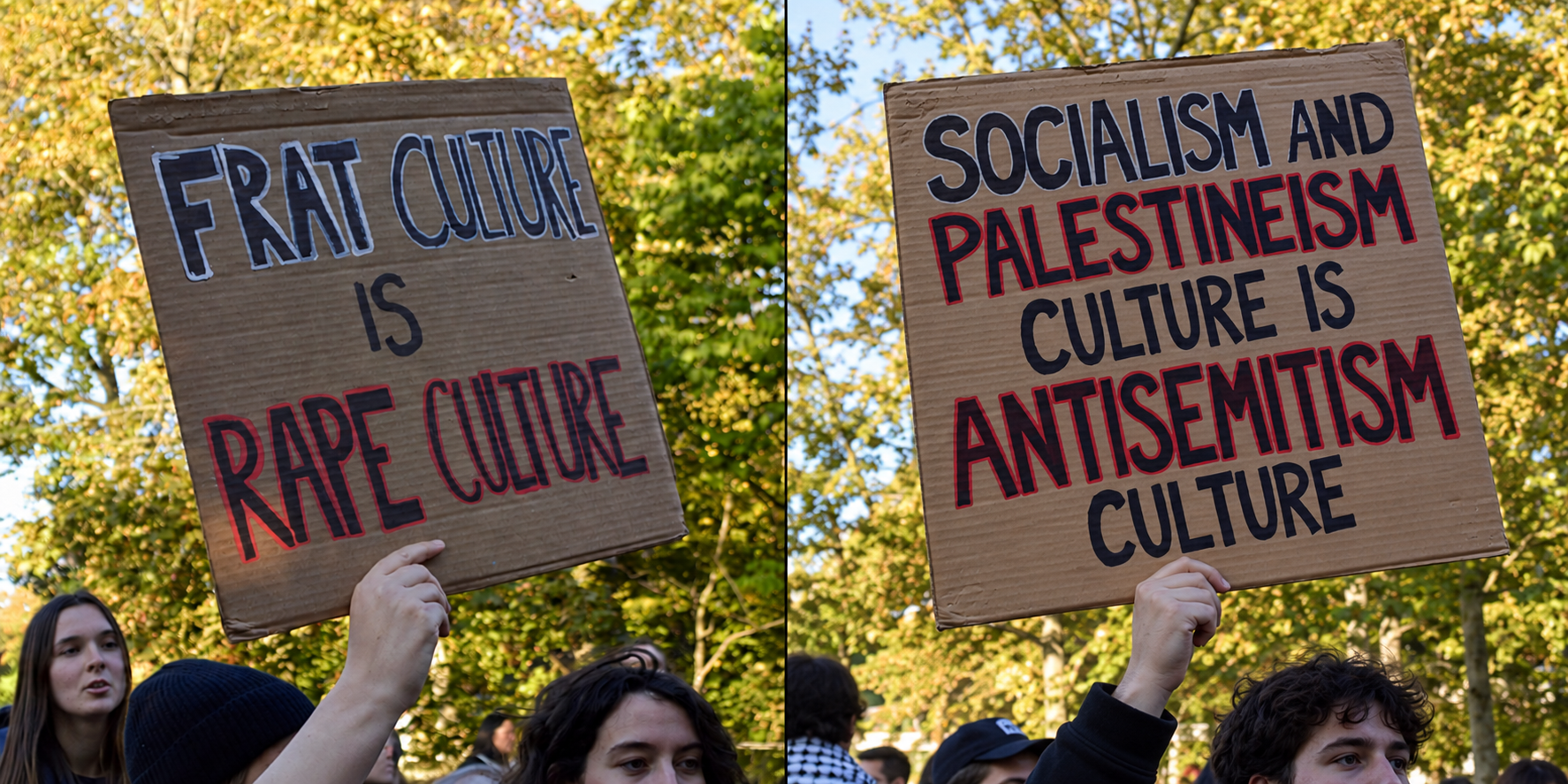
Sign reading 'FRAT CULTURE IS RAPE CULTURE' held up during a protest.

The Antisemitism Report That Missed The Prevalent Jihadi Antisemitism

The U.S. Commission on Civil Rights released a 220-page report on September 26, 2026 on the explosion of antisemitism on American college campuses after October 7, 2023. Search those 220 pages for “jihad,” “Islamist” or “radical Islam” and you find nothing.

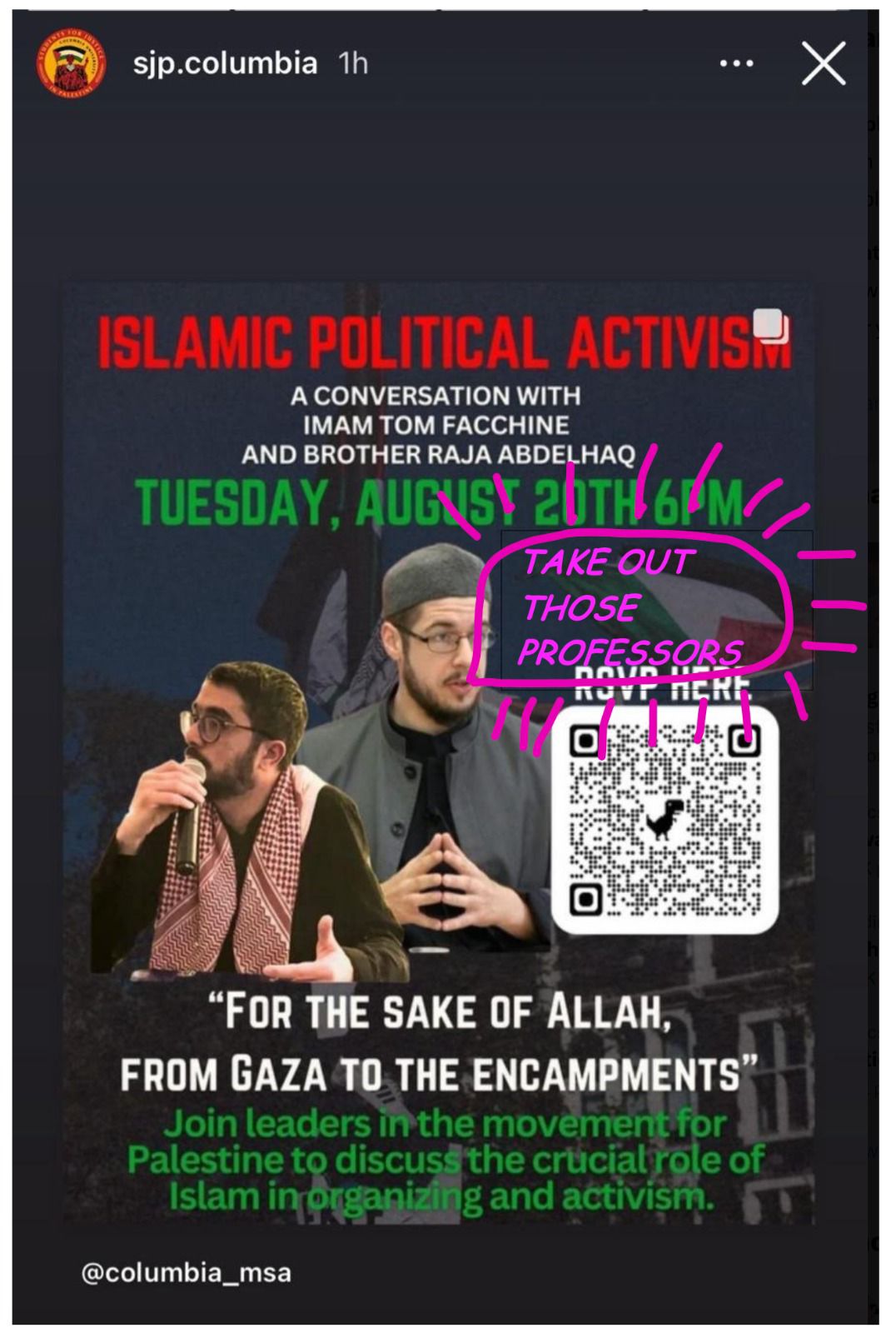
Columbia University’s SJP chapter featured “Islamic political activism”

That is an extraordinary omission because October 7 was not the opening battle in a campus dispute between supporters of Israel and Palestine. It was a massacre carried out by Hamas, a jihadist organization with a long history of explicit antisemitism. Yet the Commission largely interprets what followed through a political framework: Jewish and Israeli students on one side, Muslim and Palestinian students on the other, each reporting hostility and discrimination while universities struggled to balance Title VI, political expression and the First Amendment. Indeed, the Commission describes its own inquiry principally in terms of institutional and federal responses to allegations of antisemitism following the Hamas attack, with substantial attention to the distinction between unlawful discrimination and protected political expression.

In that framework, Jews increasingly become the pro-Israel constituency in an Israeli-Palestinian political dispute. What largely disappears is that some of what erupted on campuses reflected a very different phenomenon: jihadist antisemitism.

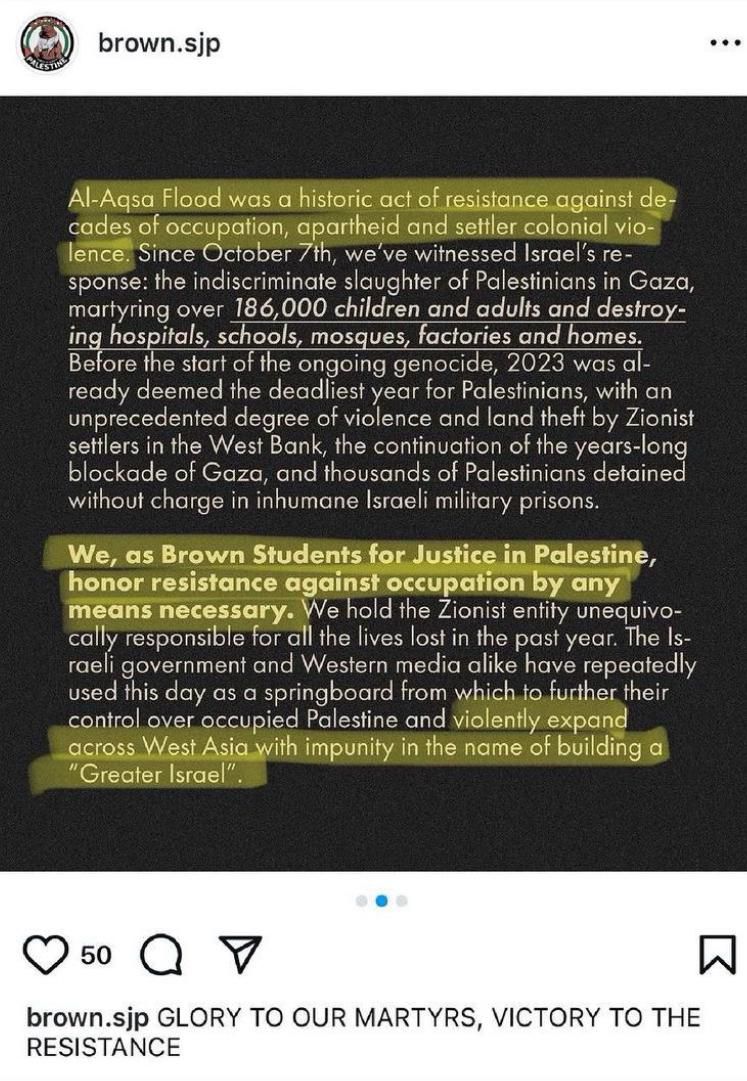
Brown University chapter of Students for Justice in Palestine “by any means necessary”

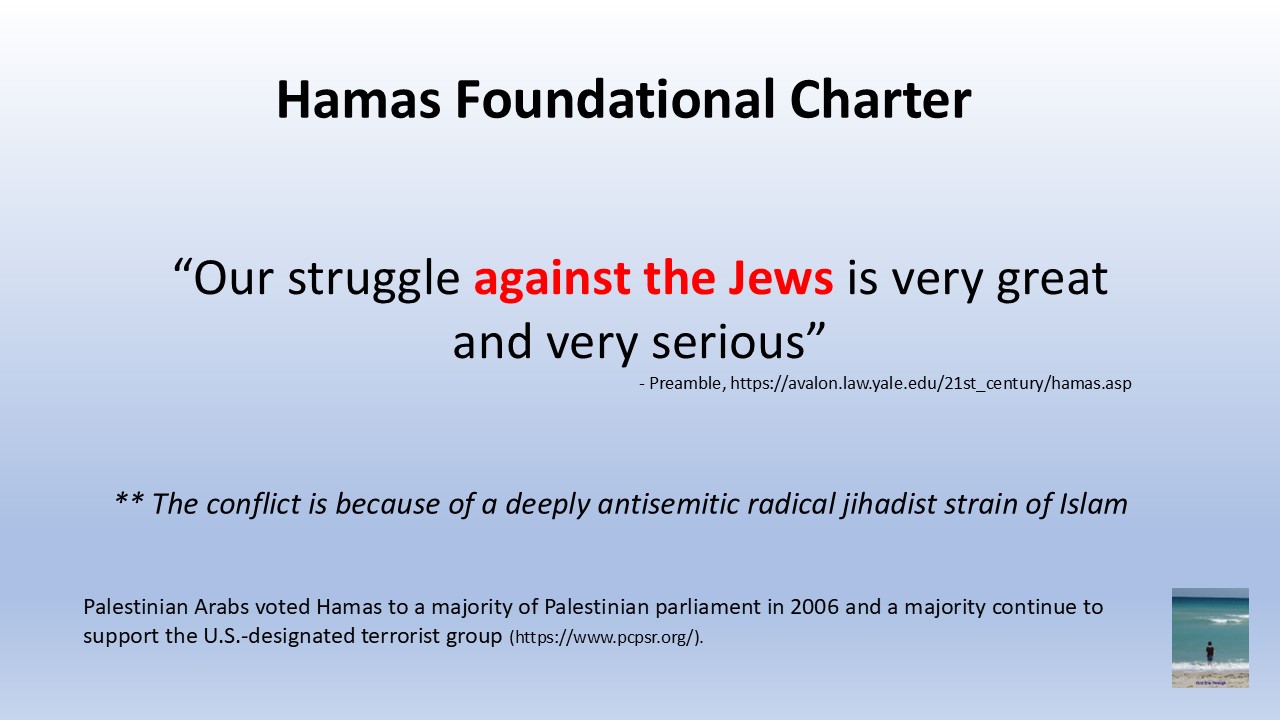
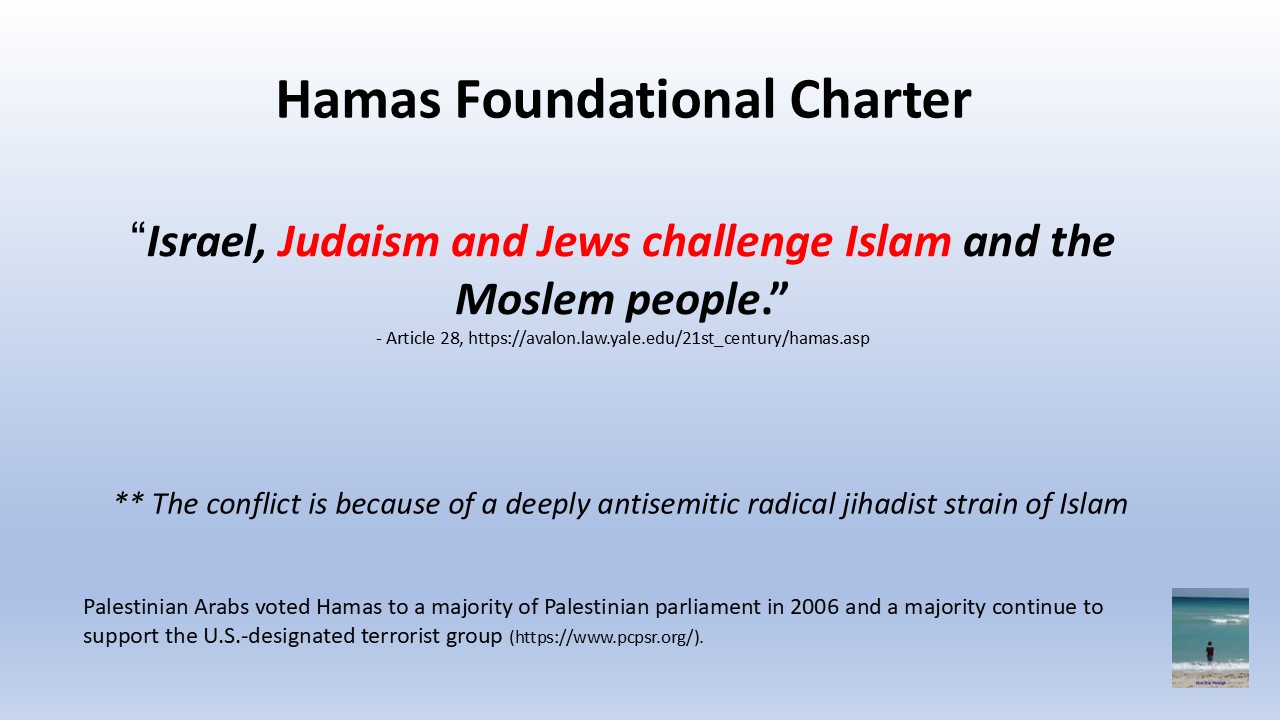
Hamas’s history should have made that an obvious subject of inquiry. Its 1988 founding covenant placed the struggle within an Islamic religious framework, declared that there was “no solution” to the Palestinian question except jihad, trafficked in antisemitic conspiracy theories and invoked a hadith envisioning Muslims fighting Jews.

Gazan jihadist calls parents to celebrate his slaughter of Jewish civilians

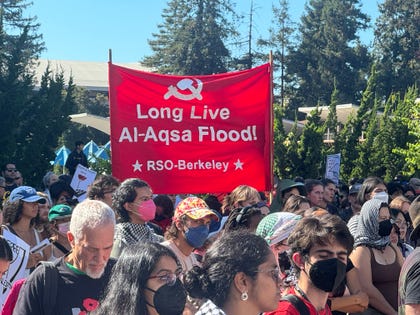
Nor did Hamas remain thousands of miles away from the American campus debate as an abstraction. The Commission itself received evidence of faculty-sponsored protests featuring “Long Live Al-Aqsa Flood,” Hamas’s name for its October 7 operation, along with a flag of the Popular Front for the Liberation of Palestine, which the report identifies as a U.S.-designated terrorist organization.

Berkeley celebrates the “Al-Aqsa Flood” massacre, named for the Islamic shrine atop the Jewish Temple Mount in Jerusalem

The Commission saw the evidence but never seriously followed the ideological trail.

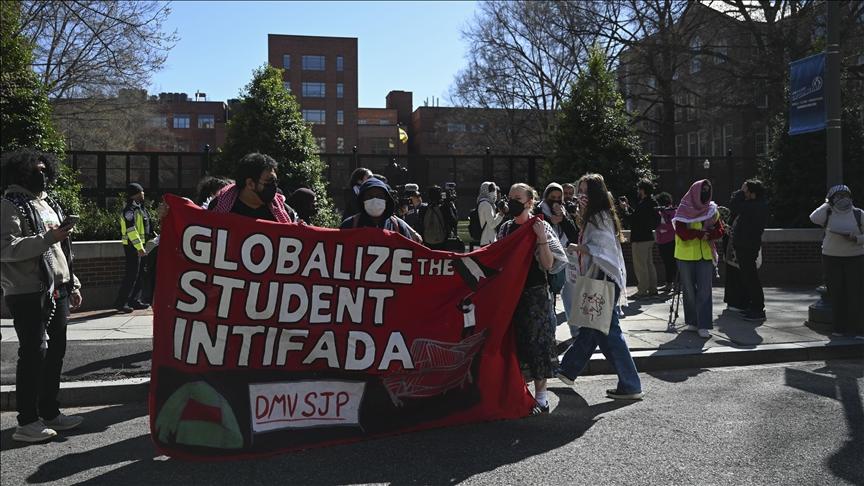
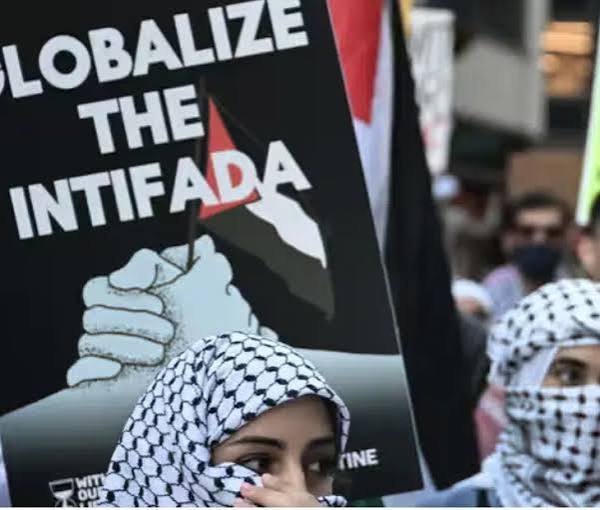
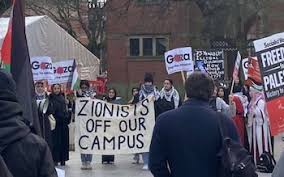
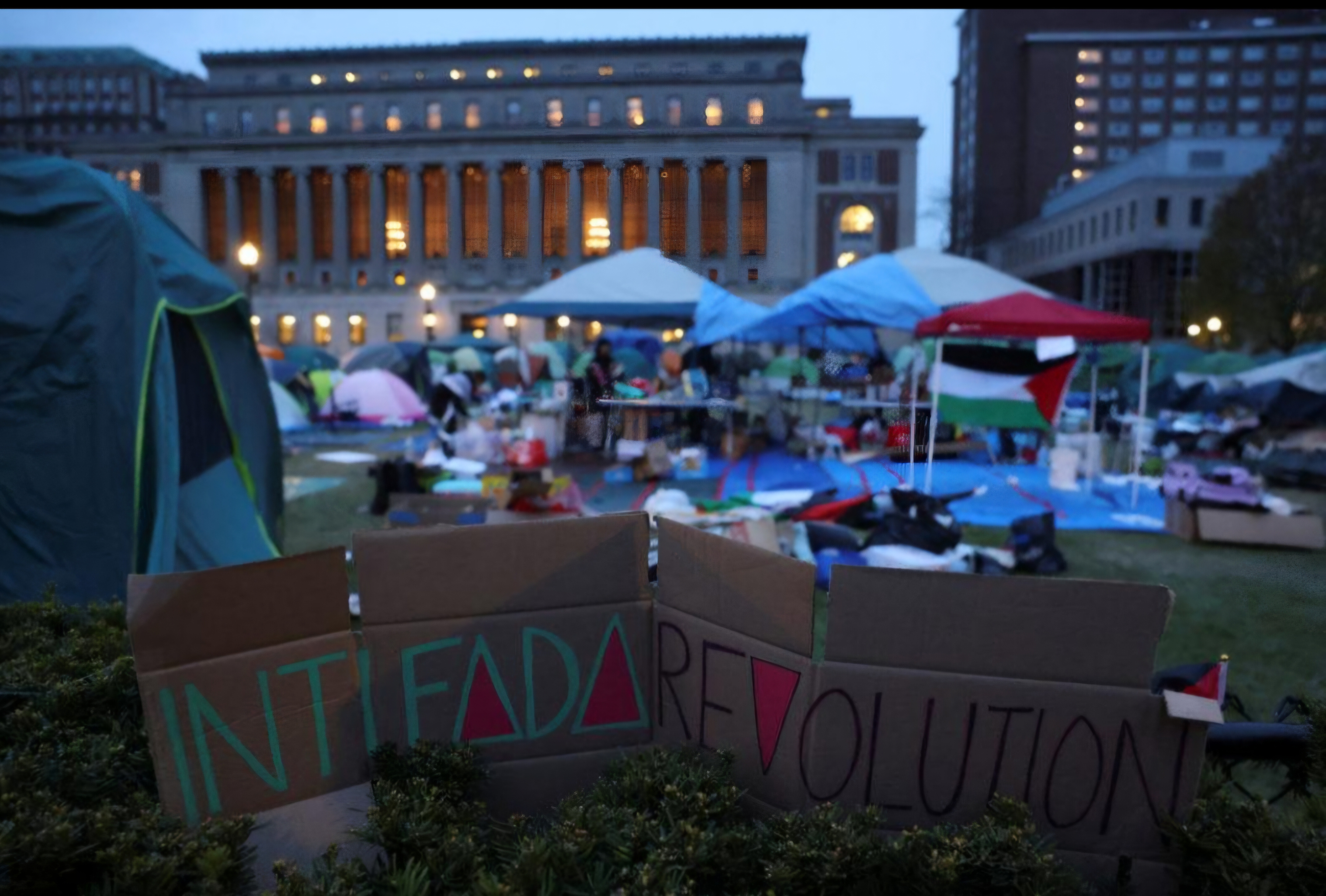
Consider “Globalize the Intifada.” The phrase appears only once in the report, in its discussion of Rutgers. Yet contemporary campus reporting documented it many times among the very universities the Commission selected for study. At Stanford, students chanted “From Stanford to Gaza, globalize the Intifada.” At Cornell, protesters chanted both “globalize the intifada” and “There is only one solution, intifada revolution.”

SJP chapter for D.C., Maryland and Virginia

Cornell was not some campus the Commission lacked information about. The university supplied nearly 2,000 pages of material and received one of the longest individual university treatments in the report. Yet “Intifada Revolution” appears zero times.

Cornell professor said he was “exhilarated” by the October 7 massacre of Jews. The NY Times reported a story about Jews taking away public funds from students.

The gap becomes even more striking when compared with the Commission’s treatment of other ideological sources of antisemitism. The report examines far-right antisemitism, describing Jews portrayed as conspiratorial financial elites, competitors with white Americans and secret manipulators of political power. It discusses neo-Nazis and white nationalism. It also examines antisemitism arising from the political left, including depictions of Jews as privileged, capitalist or oppressive and the intersection between those ideas and hostility toward Israel.

Where is the corresponding examination of jihadi antisemitism?

Rutgers professor online account replete with antisemitism. He denied the posts were anti-Semitic

Where is the history of Hamas’s antisemitic ideology, the examination of Hamas rhetoric about Jews, or the investigation of how the language and symbols of violent extremist organizations appeared in American campus protests immediately after October 7?

The Commission instead devotes considerable attention to deciding when anti-Israel rhetoric should be understood as political speech rather than discrimination. It examines “From the River to the Sea” at length, including competing interpretations of the slogan. It notes that “Intifada” can be frightening while remaining protected expression. At Rutgers, for example, it records “Globalize the Intifada” among the protest activity Jewish students said made them feel unsafe.

Imagine – feeling unsafe around a jihadist cry to kill non-Muslims everywhere.

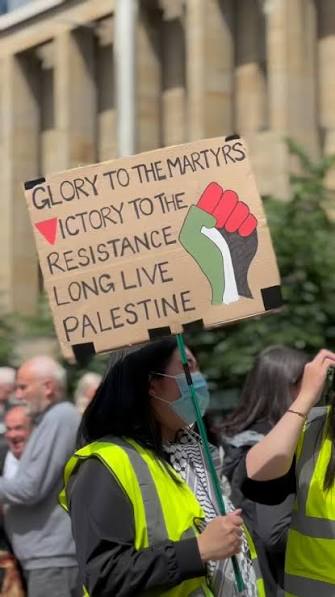
Rutgers “Glory to the martyrs”, praising the jihadists murderers

But cataloguing whether a slogan is legally protected is different from investigating the ideology being expressed by the people using it. The First Amendment can protect vile political speech. That does not make its ideological origin irrelevant to a federal investigation trying to understand antisemitism.

The omission is particularly consequential because the language of the campus protests did not develop in an intellectual vacuum. American universities have increasingly employed professors who view Israel through a settler-colonial framework. In its most categorical form, that theory casts Jews as foreign colonizers and Palestinians as the indigenous population resisting them. This screed is about Jewish presence in their homeland, not particular Israeli policies. It attempts to sever Jews from the land at the center of their history, religion, language and national identity and then uses that manufactured foreignness to challenge Jewish national self-determination. It is rank antisemitism that provides a logic other than Islamic supremacism to excuse Muslims preventing Jews from living and having self-determination “in any part of Palestine.”

“The conflict is cast in western circles as a local conflict over land between Jews and Arabs which can find compromise, but radical Islamists see it as a global religious matter between Muslims and Jews.” – First One Through July 2025

In such distorted worldview, October 7 becomes “resistance.” Hamas’s “Al-Aqsa Flood” becomes liberation. The intifada becomes something to globalize. Zionists become people to exclude, while Jews who object to any of this are reduced to the pro-Israel participants in a contentious political debate.

This is where the Commission missed the virulent strain of antisemitism it was supposed to investigate. The fear that swept through many Jewish communities after October 7 was not simply that Palestinian students disagreed with Jews about Israeli policy or conduct. Jews had watched an organization steeped in antisemitic ideology slaughter Israelis and take hostages. They then watched people in the West celebrate or rationalize the attack with the vocabulary of “resistance,” “intifada” and “Al-Aqsa Flood.”

While the Commission’s own evidence contained pieces of that story, its analytical framework never assembled them.

Columbia University encampment with “Intifada Revolution”

That failure has consequences. America has learned to recognize white-supremacist antisemitism – your father’s antisemitism – as an ideology rather than merely a collection of offensive statements. A swastika does not need to be accompanied by a dissertation on National Socialism before institutions understand the hatred behind it. The same intellectual seriousness should apply when antisemitism emerges from another extremist tradition.

Instead, this federal civil-rights report has provided universities with a framework that can make jihadist antisemitism remarkably difficult to see. While Jew hatred expressed in the vocabulary of white supremacy arrives already classified as extremism, similar hostility wrapped in the language of decolonization, resistance and intifada can be processed as politics, scholarship or protest. The Jewish student confronting it becomes the “pro-Israel” participant in a dispute, rather than a target of noxious hatred.

Jihadi antisemitism does not become benign when its vocabulary is translated for an American campus. Leaving that vector out of a federal investigation leaves universities less prepared to identify it, challenge it or protect the Jews it threatens.

The Commission set out to expose the forces driving contemporary campus antisemitism and instead helped preserve one of their safest hiding places: the assumption that when hatred of Jews arrives speaking the language of “resistance,” it is merely politics.

Related:

The UN’s Jihadi Exception (September 2026)

Intifada The Universities

Liberal media has rallied to liberal universities.

Newspapers like The New York Times call the Trump administration’s investigations into campus antisemitism as a targeted attack on institutions of higher learning, with over-sensitive Jews acting as useful pawns. The Times reporting actively omits and whitewashes the calls for violence against Jews to frame the discussion as impinging on minority rights for its remaining readers.

Consider the story of Kehlani, an anti-Israel singer who called “Long live the Intifada” in one of her music videos. She was invited and then disinvited to sing at Cornell when Jewish students found out about her coming to a campus-wide event. Under the banner “Campus Crackdown,” the Times headline was that her “support for Palestinians” and “her stance on the war in Gaza” led to her cancellation, leading to students being disappointed.

The article did not shy away from her call for intifada, and provided context that while some Jews might infer it as a call for violence, pro-Palestinian voices “regard it as a cry for liberation and freedom from oppression.”

At no point in the article did the Times discuss the 1,000 Jews slaughtered in the Second “Intifada,” including babies blown apart in pizza stores by Jew-haters like “journalist” Ahlam Aref Ahmad Al-Tamimi who lives freely in Jordan.

At no point did the Times describe the environment at Cornell, where a professor celebrated the slaughter and rape of people in Israel on October 7, 2023, saying he has “exhilarated” because “Hamas has punctured the [Israel’s] illusion of invincibility” during a student-led protest a week later off-campus. Russell Rickford was invited back to campus to teach this 2024/5 academic year according to Insider Higher Ed, because his comments were made “in his free time.”

The Times did not write about student Patrick Dai who threatened to kill Jews (in his free time), who was sentenced to 21-months in jail in August 2024.

Instead, the article highlighted “a queer person of color” who was “disappointed” at the cancellation of Kehlani’s performance. It listed a “Gambian-British citizen” who left the country, fearing “possible deportation.”

Why omit the targeting of Jews in the story about antisemitism?

Because the media wants to define antisemitism by its own distorted lexicon, and to shield the systemic Jew-hatred on campus from the Trump administration. If Jews are intimidated, harassed or unable to enjoy campus life, that’s too bad because any modifications might strip fun and opportunities from victims of preference.

According to the ADL, antisemitic attacks in the US reached record levels in 2024. Campus antisemitism jumped 84% from 2023 to 2024, accounting for 18% of all incidents, also an all-time high.

The Times would not write about that either.

Americans are fed distorted media which sanitizes institutions rife with Jew-hatred. The Times raises alarms about “campus crackdowns” because Trump is shattering universities’ “illusion of invincibility,” of tramping Jewish rights with billions of taxpayer dollars.

There really may be only one solution: a revolution to intifada the universities.

Protest outside of AIPAC conference in Washington, DC in June 2023, months before the October 7, 2023 massacre

Related articles:

Context For “Intifada” (March 2025)

Global South’s Beachhead On American Universities (March 2025)

Intifada The Intifada (October 2024)

The Diaspora Intifada (September 2024)

Globalize The Intifada With Socialists (May 2024)

Considering Campus Antisemitism (November 2023)

The Rising Generation Discusses Universities (October 2023)

The Campus Inquisition (April 2022)

Courageous Jews On Hostile Campuses (December 2021)

The Global Intifada (July 2021)

Toss The Ivy Paper Monsters

There was a time when elite institutions successfully hawked their wares in an effort to stuff more cash into their bloated pockets. Universities like Harvard, Columbia and Cornell would shill like snake oil salesmen that thousands of dollars ponied up for pieces of paper with their embossed emblems would lead to greater riches, so a worthwhile investment.

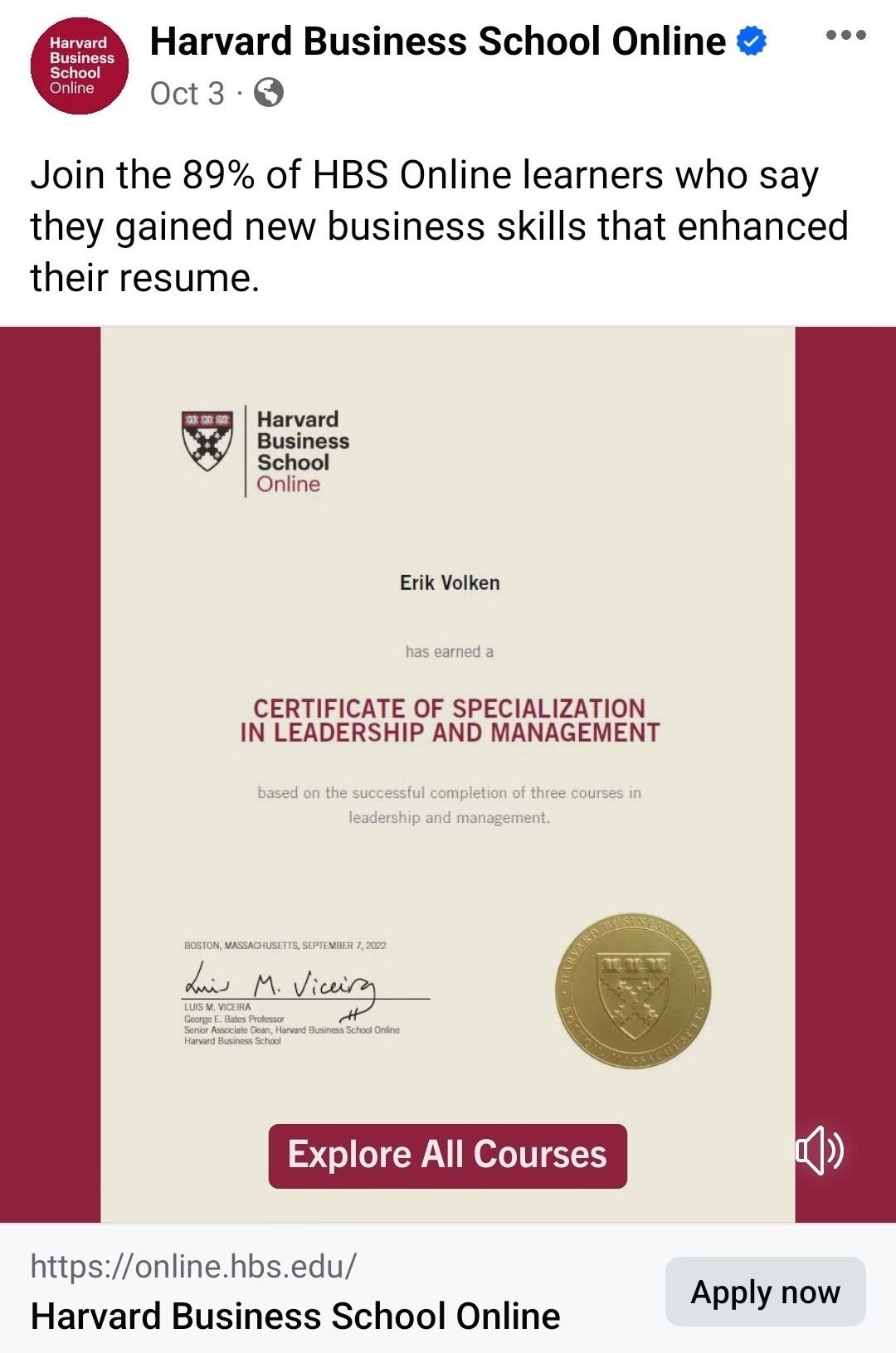
Harvard’s online course on “leadership”

But the fragrance has left the rose and all that remains are prickly thorns from these former institutions of higher knowledge.

The weeks of October 2023 will be remembered for when the world blanched at the horrific comments stemming from the institutions’ leadership, professors and students, either endorsing or excusing the maiming and butchering of over 1,000 people in Israel.

At Cornell, professor Russell Rickford called the Hamas atrocity “exhilarating” and “energizing” before a crowd. Jewish students at the school were threatened with violence in a number of online posts.

Somehow, the school thinks that people still believe that the institution has a shred of morality to offer a course on the “psychology of leadership.”

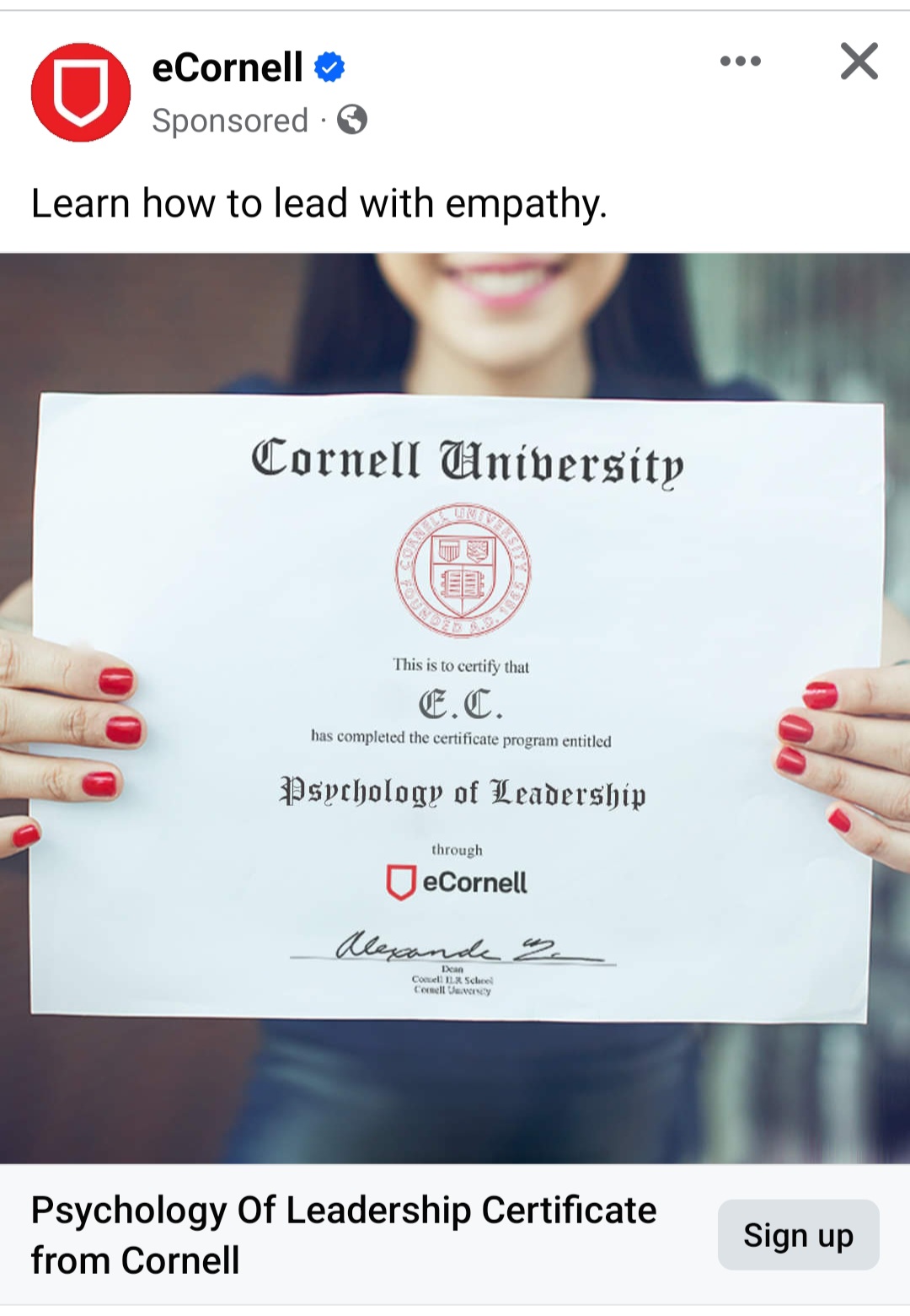
Cornell University offering a course on “leadership” pitching that it “leads with empathy”

Columbia University professor Joseph Massad thought Hamas’s burning families alive was “awesome.” This is the same university that INVITED Malaysian Prime Minster Mahathir Mohamad to speak on campus, even though he is a known Holocaust denier and “proud antisemite.” It also INVITED Iranian President Mahmoud Ahmadinejad who threatened to wipe Israel off the map.

No worry. For several thousands of dollars you can get a paper from the school attesting to your skills at “communication,” because maybe you can find an employer stupid enough to believe that the certificate you bought from a formerly elite university is worth something.

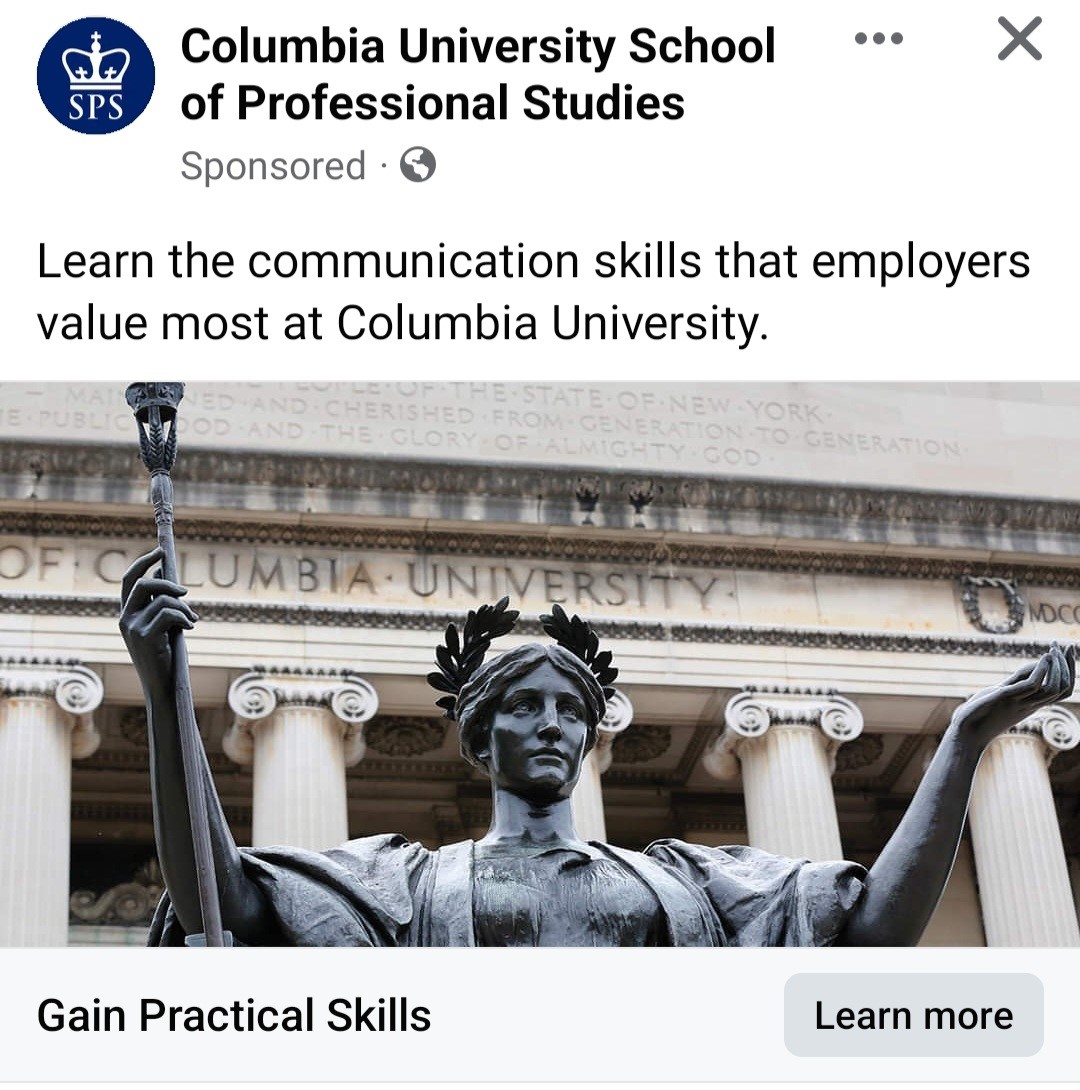
Columbia hawking a communications degree for anyone willing to pay

Harvard is producing so many quality students that gleefully stand in support of Hamas that the school’s paper will now be known as the Bloody Crimson. Clearly everyone should purchase a “leadership” piece of paper from a school that produces such evil creatures.

America’s universities have become cesspools of radical socialism and jihadism, and the world has taken notice. People will no longer pay for worthless pieces of paper from morally bankrupt institutions which funnel proceeds to classes labeling Zionism a form of “European settler colonialism.” Employers are now shunning the schools, and people are removing any mention of them from their LinkedIn profiles.

Ivy League universities are churning out monsters. Finally, Americans are recognizing the rot and seeking to quarantine them before they destroy what was once the land of the free.

Related articles:

The Rising Generation Discusses Universities

Students for Justice in Palestine’s Dick Pics

The Antisemitic Campus: Decolonize Palestine

The Problem With Antisemitism On College Campuses Stems From Where Jews And Arabs Focused Their Donations

Biden Enables Anti-Semitism On College Campuses

Should The KKK Open Chapters In Every American University, What Say You?

Deformity Of Palestinian Culture In America’s Youth

Columbia University Completely Fails Mission. And Jews

Hamas And Harvard Proudly Declare Their Anti-Semitism And Anti-Zionism