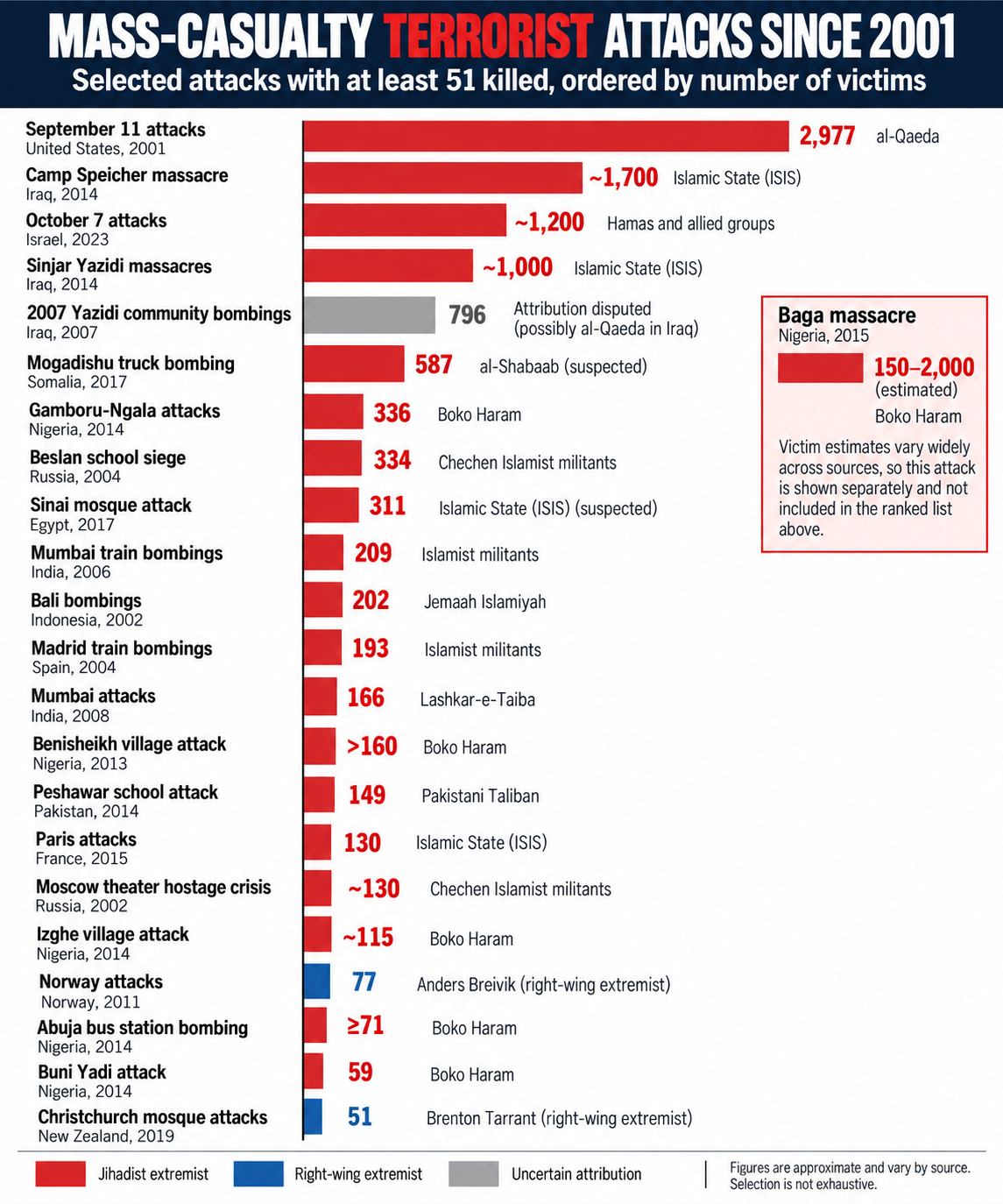
After 51 Muslims were murdered in Christchurch, the UN established an international day against Islamophobia. Jihadists have murdered thousands more, including Muslims, yet there is no equivalent day dedicated to combating jihadism.
On March 15, 2019, a white supremacist murdered 51 Muslims praying at two mosques in Christchurch, New Zealand. Three years later, the United Nations General Assembly designated March 15 the International Day to Combat Islamophobia. Pakistan introduced the resolution on behalf of the Organization of Islamic Cooperation, and the General Assembly adopted it by consensus.
Consider the terrorist atrocities of recent decades:
On September 11, 2001, al-Qaeda murdered 2,977 people in the United States.
Jemaah Islamiyah murdered 202 in Bali in 2002.
Islamist terrorists killed 193 commuters aboard Madrid trains in 2004.
Lashkar-e-Taiba murdered 166 people in Mumbai in 2008, including six Jews at the Chabad House.
In 2014, ISIS massacred approximately 1,700 Iraqi military cadets at Camp Speicher.
That same year, the Pakistani Taliban murdered 149 people, including 132 schoolchildren, at a school in Peshawar.
In 2015, al-Shabaab murdered 148 people at Kenya’s Garissa University, separating Christian students from Muslims before killing them.
Months later, ISIS murdered 130 people across Paris.
In 2019, Islamist suicide bombers murdered approximately 269 people at churches and hotels in Sri Lanka on Easter Sunday.
On October 7, 2023, Hamas-led terrorists murdered approximately 1,200 people in Israel, including families in their homes and young people attending a music festival.
These were different countries and different jihadist movements. The victims included Muslims, Christians, Jews and of other backgrounds. Every attack killed more people than Christchurch, sometimes by orders of magnitude.
The United Nations has established annual observances for victims of terrorism generally, on August 21, and victims of religious violence, on August 22. None of these massacres has its own comparable UN international day tied to its anniversary.
Yet Christchurch received something these other massacres did not: a permanent place on the UN calendar dedicated to combating the hatred behind the attack.
The contrast is especially striking because jihadists have slaughtered so many fellow Muslims. The victims at Camp Speicher and Peshawar were overwhelmingly Muslim. ISIS, al-Qaeda, the Taliban and their ideological counterparts have terrorized Muslim populations for decades, murdering those who resisted their demands for religious submission.
The UN created an International Day to Combat Islamophobia. It is long past time for an International Day to Combat Jihadism. Its victims include the very Muslims the UN claims to protect.
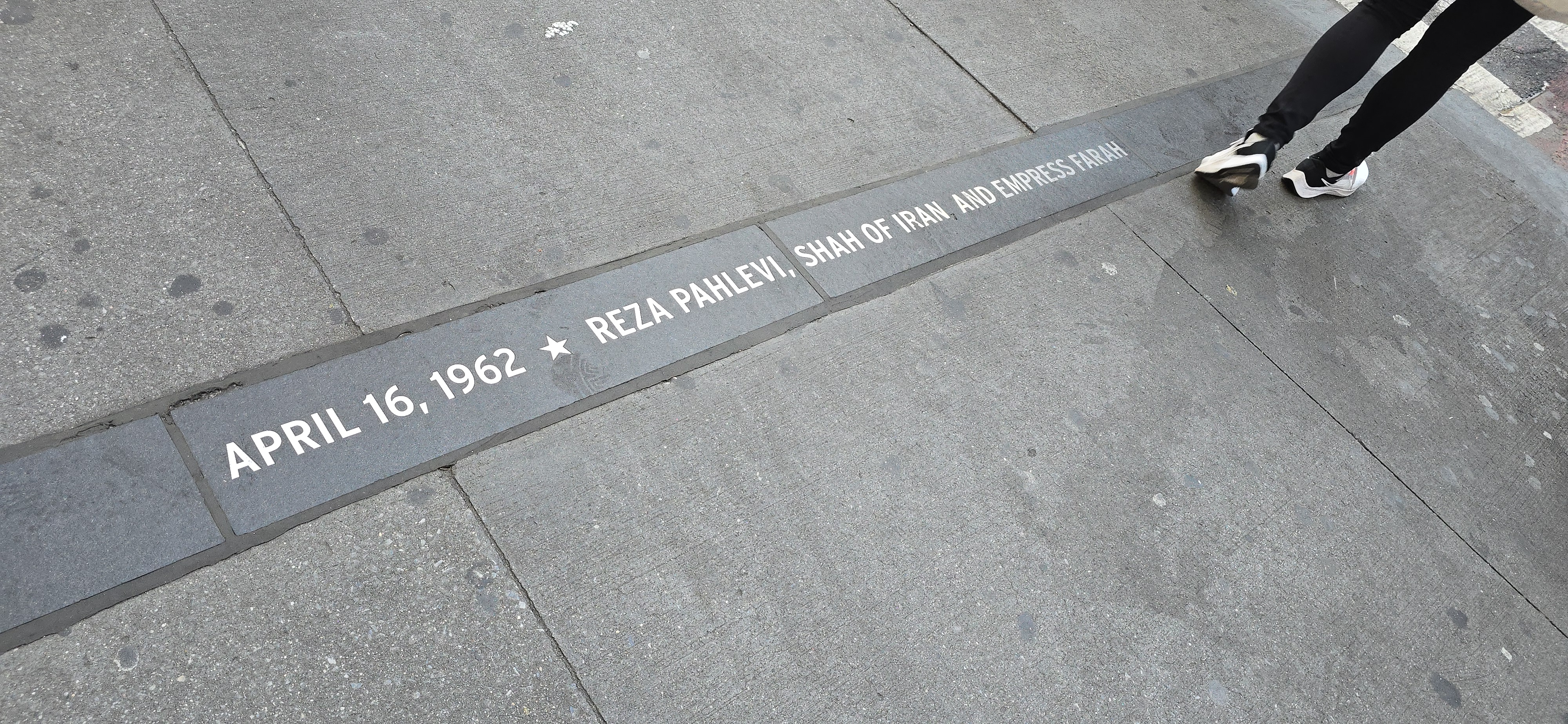
On April 16, 1962, New Yorkers lined Broadway to welcome Mohammad Reza Pahlavi, the Shah of Iran, and Empress Farah. The ruler of a Muslim-majority American ally received a ticker-tape parade through Lower Manhattan’s Canyon of Heroes. A plaque embedded in the sidewalk still commemorates their visit.
Marker on downtown Broadway sidewalk commemorating ticker tape parade for Shah of Iran and his wife (photo: First One Through)
Seventeen years later, the Islamic Revolution overthrew the Shah. Ayatollah Khomeini established a theocratic regime that called America the Great Satan, sought Israel’s destruction and held 52 Americans hostage for 444 days.
America had welcomed a Muslim ally. The jihadists who seized power declared America their enemy.
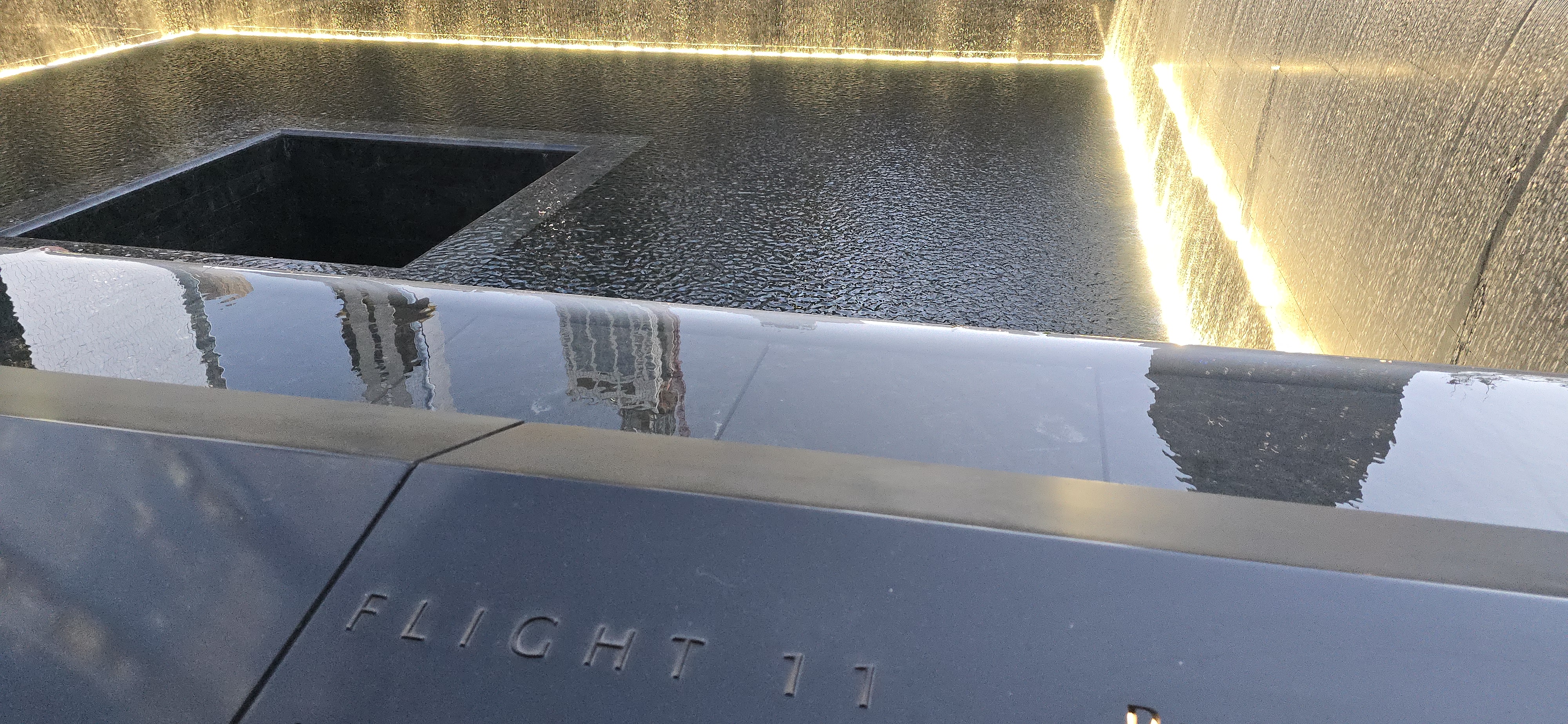
Their war against the West did not remain in the Middle East. Iranian revolutionaries seized Americans in Tehran, while Sunni jihadists carried their violence to American soil. Just blocks from the Shah’s parade route, Islamist terrorists bombed the World Trade Center in 1993 and destroyed its towers on September 11, 2001, murdering nearly 3,000 people.
World Trade Center memorial for those who died in the jihadi war on America on September 11, 2001 (photo: First One Through)
Different branches of radical Islam pursued their own visions of religious domination. ISIS declared a caliphate spanning national borders. Hamas, supported by Iran, sought an Islamist Palestine in place of Israel, massacring approximately 1,200 people and abducting 251 on October 7, 2023.
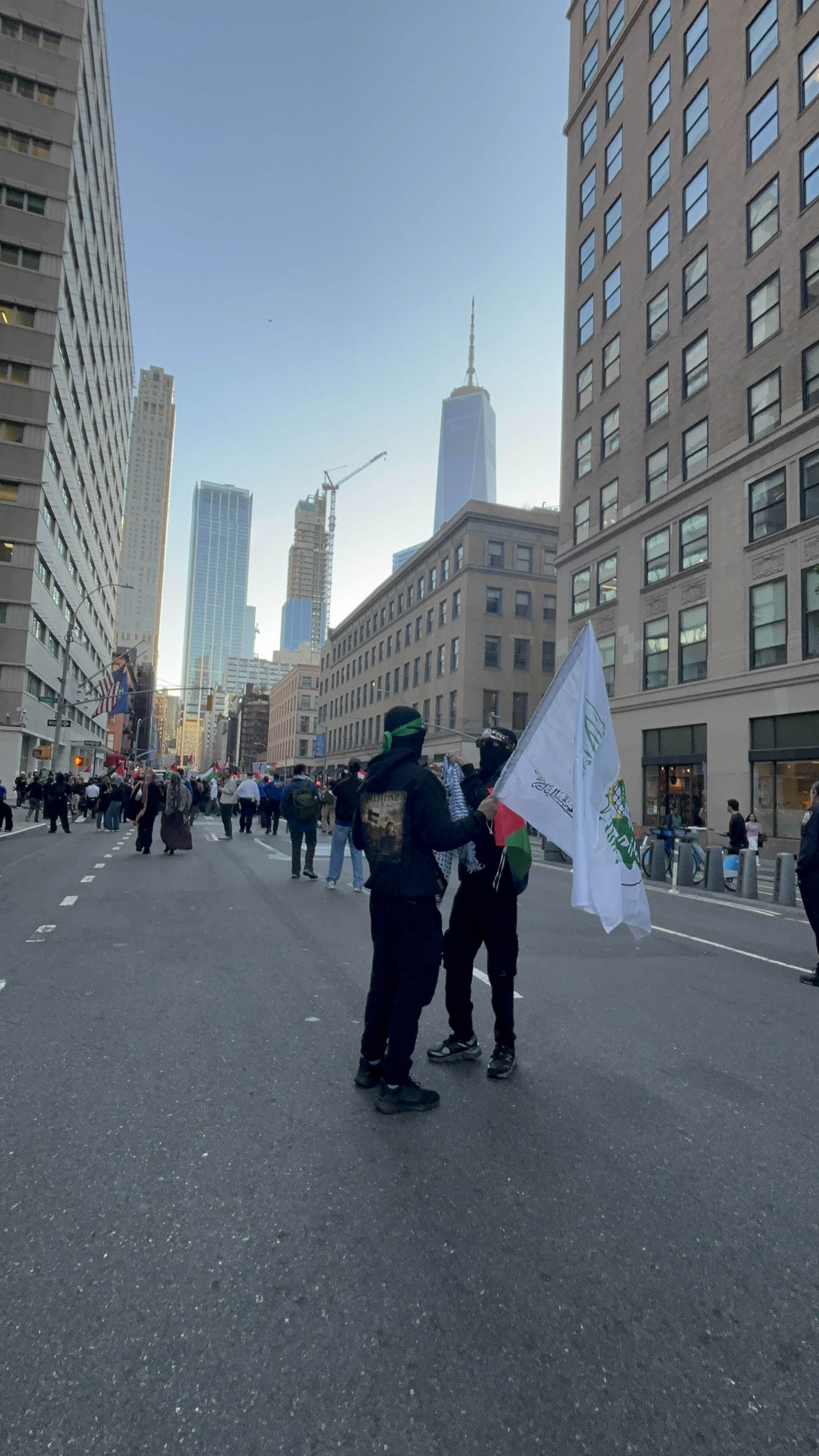
Three years later, masked demonstrators wearing green headbands marched along Lower Broadway displaying Hamas-associated symbols, with City Hall nearby and the rebuilt One World Trade Center rising behind them.
Young men with faces covered and Hamas headbands sporting jihadi flag, stand on Broadway before the World Trade Center to call for the continued war on Israel on the third anniversary of the October 7, 2023 jihadi massacre in Israel (photo: Gideon Askowitz)
Within a few blocks, the Canyon of Heroes had become the setting for three extraordinary encounters: Americans celebrating a Muslim ally, mourning the victims of Islamist terrorism and tolerating demonstrators displaying the symbols of a jihadi movement responsible for massacring Jews.
For decades, America has welcomed Muslims as allies, immigrants and citizens, embracing religious freedom and coexistence. At the same time, jihadist movements have declared their own war against the West, seeking religious and political domination. They carried that confrontation beyond the Middle East, taking American hostages, destroying American landmarks and massacring American allies.
The intersections of narrow streets in downtown Manhattan seemingly have compressed history into a web of toxins poisoned by Islamic radicals. Coexistence will only be permissible “under the wing of Islam,” as their “struggle” is perpetual and voracious.
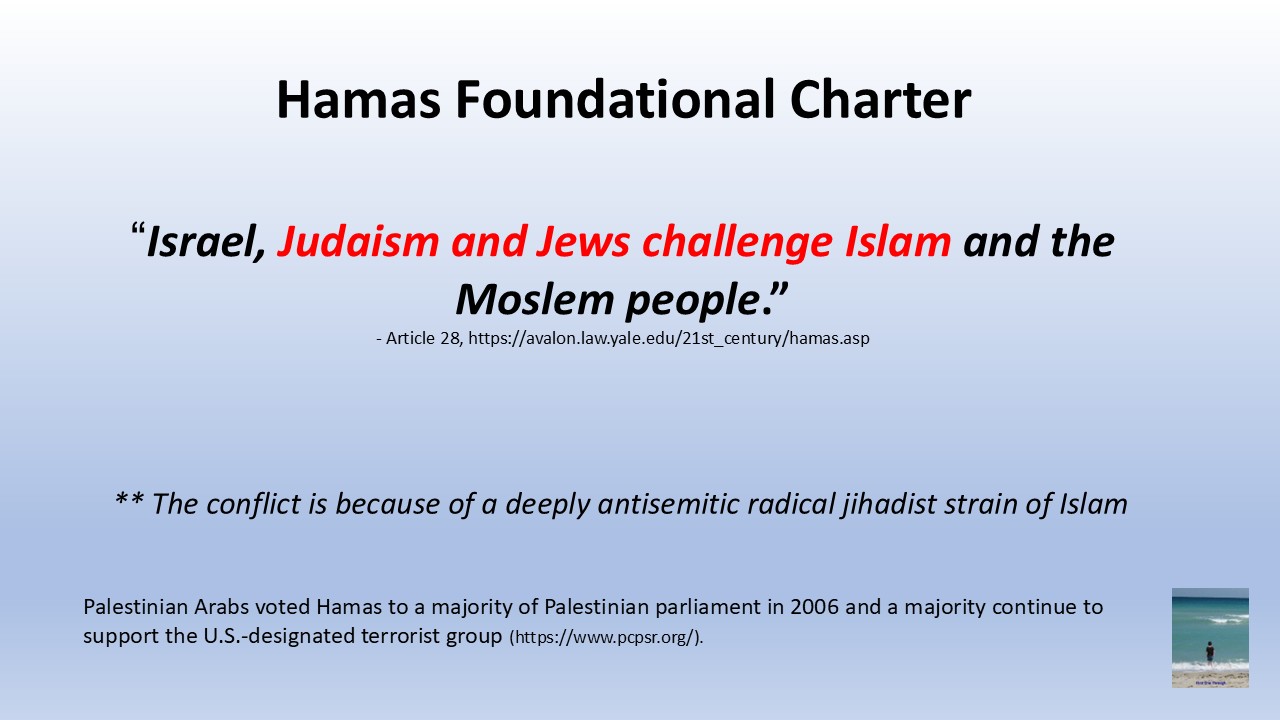
“under the wing of Islam followers of all religions can coexist in security and safety where their lives, possessions and rights are concerned. In the absence of Islam, strife will be rife, oppression spreads, evil prevails and schisms and wars will break out.” – 1988 Hamas foundational charter
The West is in a defensive war against radical Islam. One can see the progression clearly on the streets of lower Broadway.
The U.S. Commission on Civil Rights released a 220-page report on September 26, 2026 on the explosion of antisemitism on American college campuses after October 7, 2023. Search those 220 pages for “jihad,” “Islamist” or “radical Islam” and you find nothing.
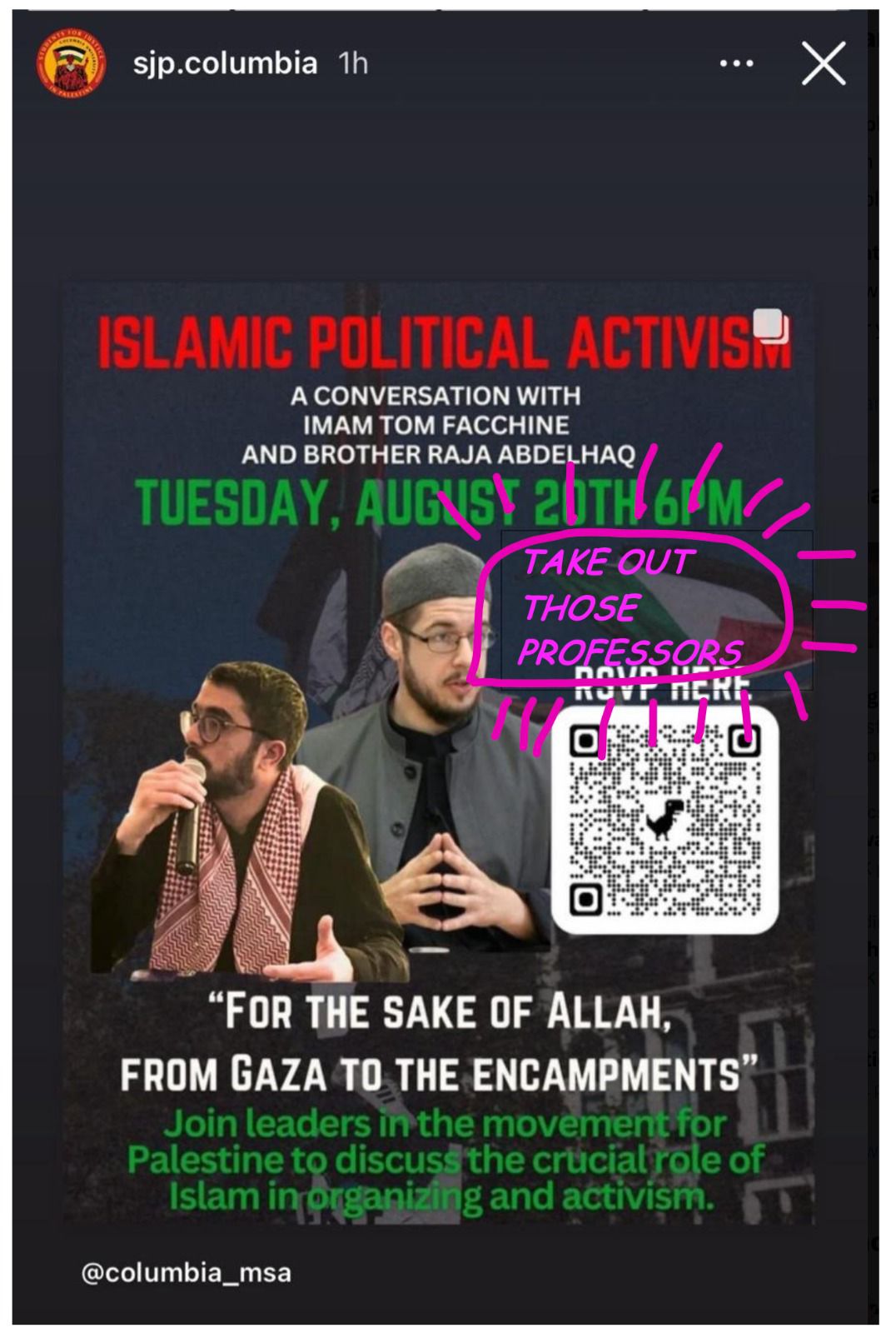
Columbia University’s SJP chapter featured “Islamic political activism”
That is an extraordinary omission because October 7 was not the opening battle in a campus dispute between supporters of Israel and Palestine. It was a massacre carried out by Hamas, a jihadist organization with a long history of explicit antisemitism. Yet the Commission largely interprets what followed through a political framework: Jewish and Israeli students on one side, Muslim and Palestinian students on the other, each reporting hostility and discrimination while universities struggled to balance Title VI, political expression and the First Amendment. Indeed, the Commission describes its own inquiry principally in terms of institutional and federal responses to allegations of antisemitism following the Hamas attack, with substantial attention to the distinction between unlawful discrimination and protected political expression.
In that framework, Jews increasingly become the pro-Israel constituency in an Israeli-Palestinian political dispute. What largely disappears is that some of what erupted on campuses reflected a very different phenomenon: jihadist antisemitism.
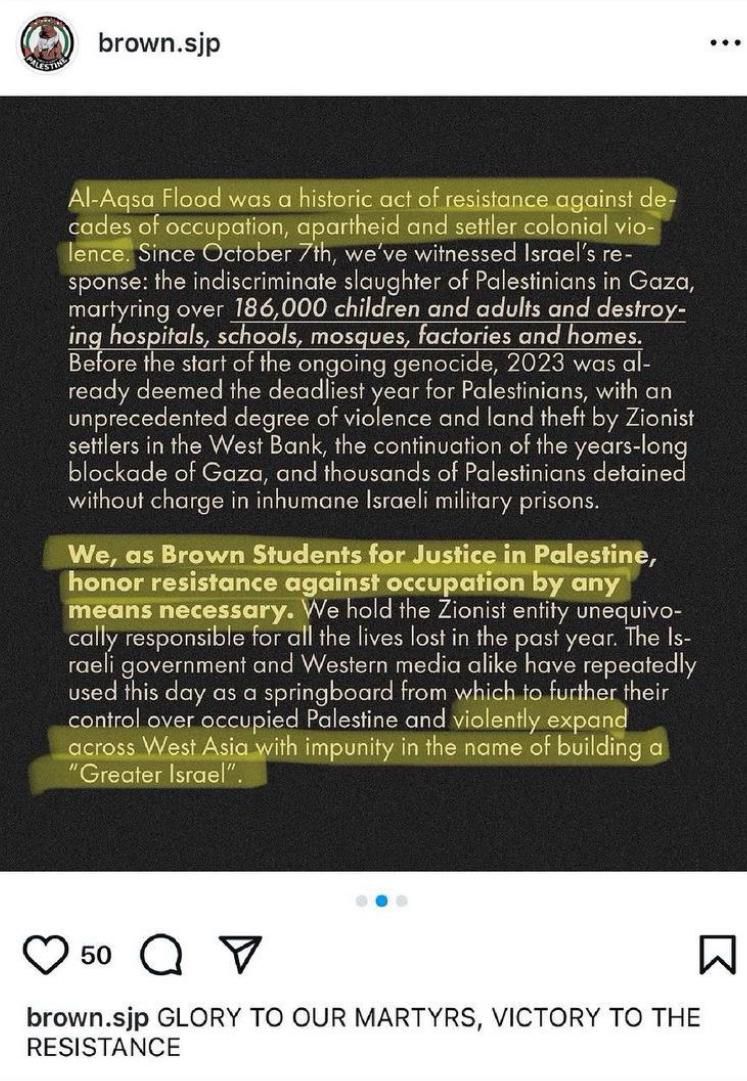
Brown University chapter of Students for Justice in Palestine “by any means necessary”
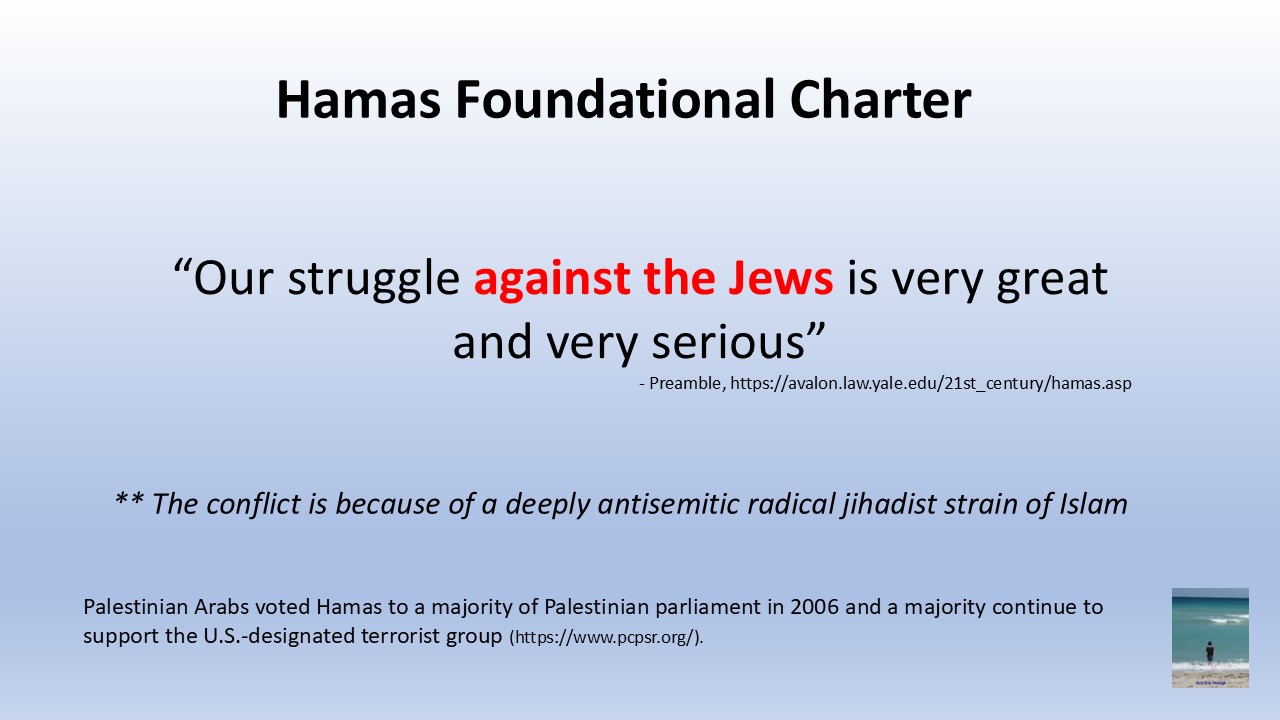
Hamas’s history should have made that an obvious subject of inquiry. Its 1988 founding covenant placed the struggle within an Islamic religious framework, declared that there was “no solution” to the Palestinian question except jihad, trafficked in antisemitic conspiracy theories and invoked a hadith envisioning Muslims fighting Jews.
Gazan jihadist calls parents to celebrate his slaughter of Jewish civilians
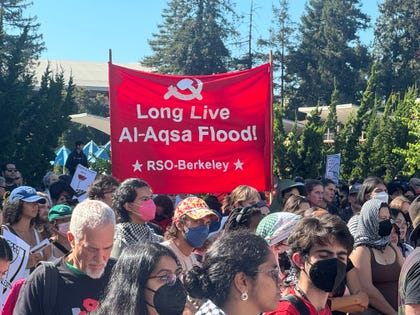
Nor did Hamas remain thousands of miles away from the American campus debate as an abstraction. The Commission itself received evidence of faculty-sponsored protests featuring “Long Live Al-Aqsa Flood,” Hamas’s name for its October 7 operation, along with a flag of the Popular Front for the Liberation of Palestine, which the report identifies as a U.S.-designated terrorist organization.
Berkeley celebrates the “Al-Aqsa Flood” massacre, named for the Islamic shrine atop the Jewish Temple Mount in Jerusalem
The Commission saw the evidence but never seriously followed the ideological trail.
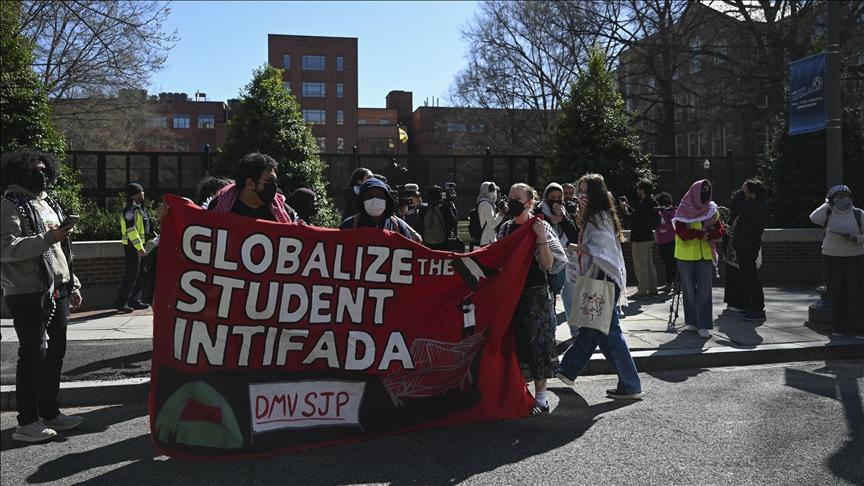
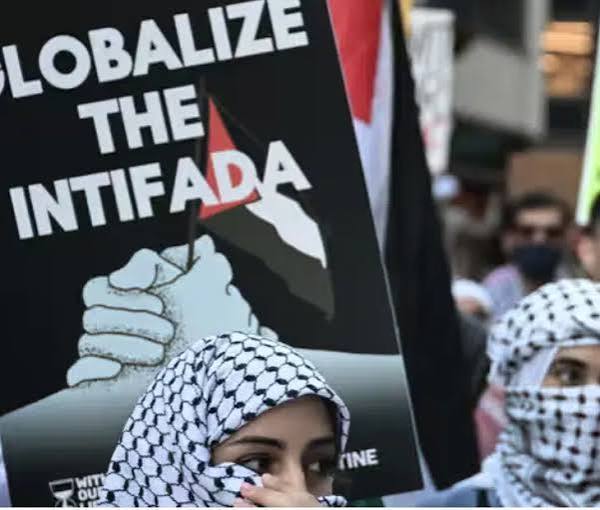
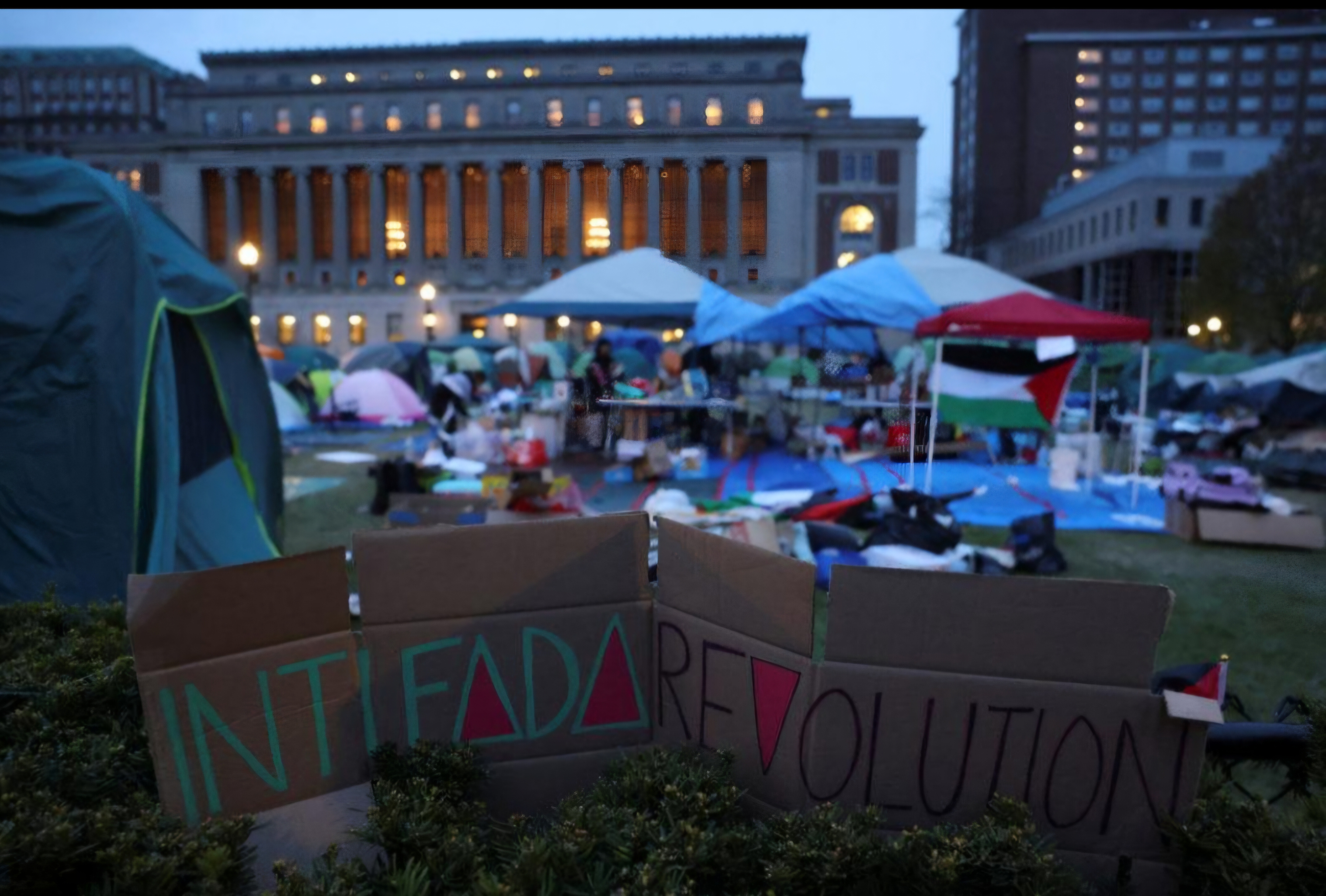
Consider “Globalize the Intifada.” The phrase appears only once in the report, in its discussion of Rutgers. Yet contemporary campus reporting documented it many times among the very universities the Commission selected for study. At Stanford, students chanted “From Stanford to Gaza, globalize the Intifada.” At Cornell, protesters chanted both “globalize the intifada” and “There is only one solution, intifada revolution.”
SJP chapter for D.C., Maryland and Virginia
Cornell was not some campus the Commission lacked information about. The university supplied nearly 2,000 pages of material and received one of the longest individual university treatments in the report. Yet “Intifada Revolution” appears zero times.
Cornell professor said he was “exhilarated” by the October 7 massacre of Jews. The NY Times reported a story about Jews taking away public funds from students.
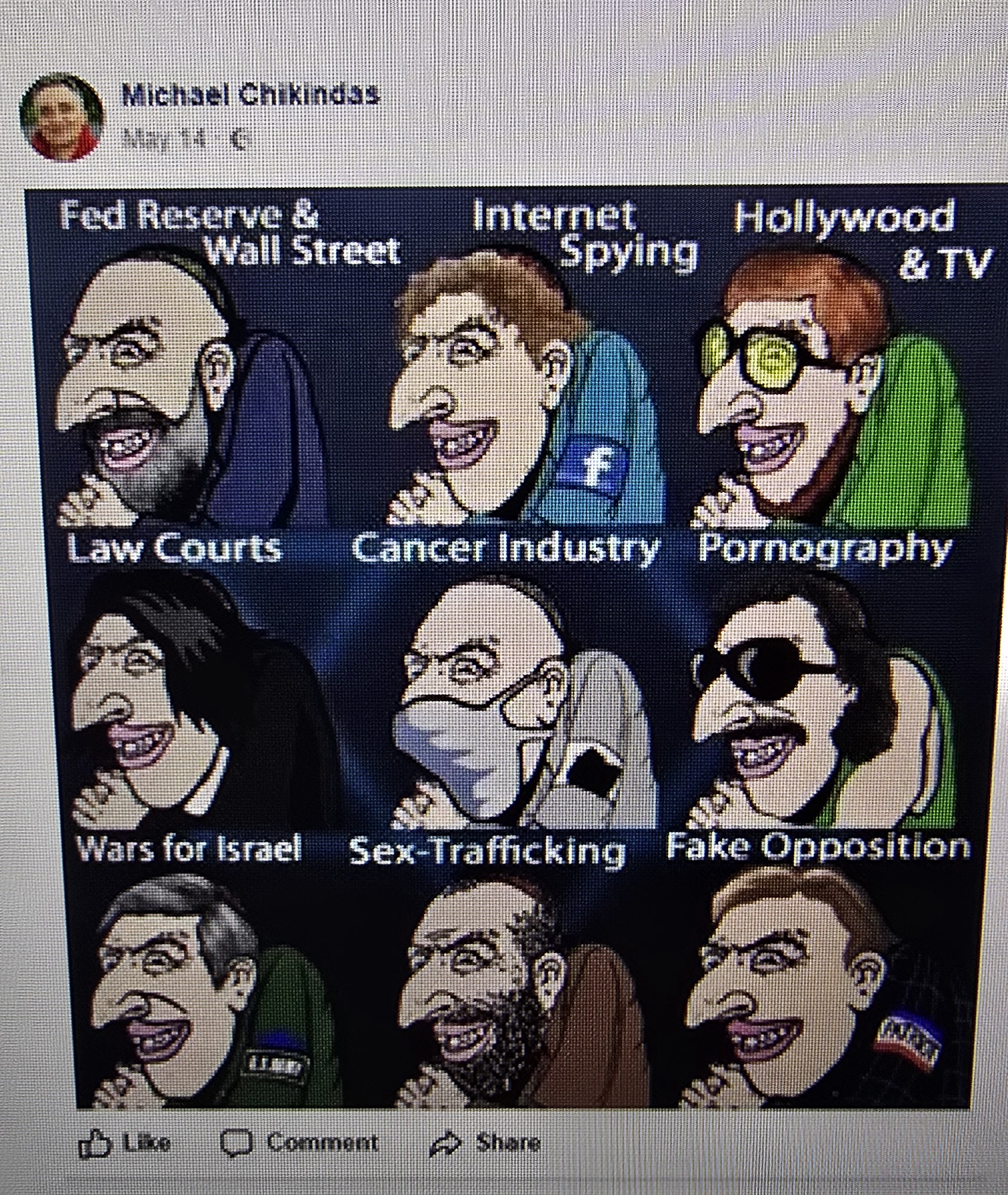
The gap becomes even more striking when compared with the Commission’s treatment of other ideological sources of antisemitism. The report examines far-right antisemitism, describing Jews portrayed as conspiratorial financial elites, competitors with white Americans and secret manipulators of political power. It discusses neo-Nazis and white nationalism. It also examines antisemitism arising from the political left, including depictions of Jews as privileged, capitalist or oppressive and the intersection between those ideas and hostility toward Israel.
Where is the corresponding examination of jihadi antisemitism?
Where is the history of Hamas’s antisemitic ideology, the examination of Hamas rhetoric about Jews, or the investigation of how the language and symbols of violent extremist organizations appeared in American campus protests immediately after October 7?
The Commission instead devotes considerable attention to deciding when anti-Israel rhetoric should be understood as political speech rather than discrimination. It examines “From the River to the Sea” at length, including competing interpretations of the slogan. It notes that “Intifada” can be frightening while remaining protected expression. At Rutgers, for example, it records “Globalize the Intifada” among the protest activity Jewish students said made them feel unsafe.
Imagine – feeling unsafe around a jihadist cry to kill non-Muslims everywhere.
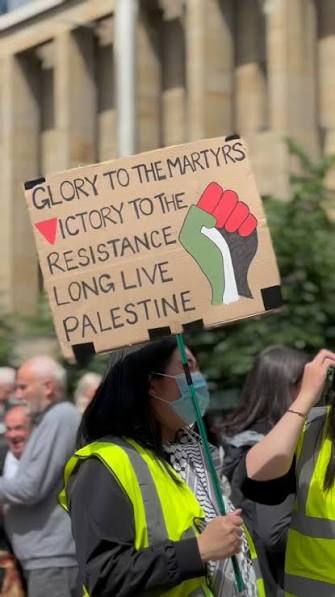
Rutgers “Glory to the martyrs”, praising the jihadists murderers
But cataloguing whether a slogan is legally protected is different from investigating the ideology being expressed by the people using it. The First Amendment can protect vile political speech. That does not make its ideological origin irrelevant to a federal investigation trying to understand antisemitism.
The omission is particularly consequential because the language of the campus protests did not develop in an intellectual vacuum. American universities have increasingly employed professors who view Israel through a settler-colonial framework. In its most categorical form, that theory casts Jews as foreign colonizers and Palestinians as the indigenous population resisting them. This screed is about Jewish presence in their homeland, not particular Israeli policies. It attempts to sever Jews from the land at the center of their history, religion, language and national identity and then uses that manufactured foreignness to challenge Jewish national self-determination. It is rank antisemitism that provides a logic other than Islamic supremacism to excuse Muslims preventing Jews from living and having self-determination “in any part of Palestine.”
“The conflict is cast in western circles as a local conflict over land between Jews and Arabs which can find compromise, but radical Islamists see it as a global religious matter between Muslims and Jews.” – First One Through July 2025
In such distorted worldview, October 7 becomes “resistance.” Hamas’s “Al-Aqsa Flood” becomes liberation. The intifada becomes something to globalize. Zionists become people to exclude, while Jews who object to any of this are reduced to the pro-Israel participants in a contentious political debate.
This is where the Commission missed the virulent strain of antisemitism it was supposed to investigate. The fear that swept through many Jewish communities after October 7 was not simply that Palestinian students disagreed with Jews about Israeli policy or conduct. Jews had watched an organization steeped in antisemitic ideology slaughter Israelis and take hostages. They then watched people in the West celebrate or rationalize the attack with the vocabulary of “resistance,” “intifada” and “Al-Aqsa Flood.”
While the Commission’s own evidence contained pieces of that story, its analytical framework never assembled them.
Columbia University encampment with “Intifada Revolution”
That failure has consequences. America has learned to recognize white-supremacist antisemitism – your father’s antisemitism – as an ideology rather than merely a collection of offensive statements. A swastika does not need to be accompanied by a dissertation on National Socialism before institutions understand the hatred behind it. The same intellectual seriousness should apply when antisemitism emerges from another extremist tradition.
Instead, this federal civil-rights report has provided universities with a framework that can make jihadist antisemitism remarkably difficult to see. While Jew hatred expressed in the vocabulary of white supremacy arrives already classified as extremism, similar hostility wrapped in the language of decolonization, resistance and intifada can be processed as politics, scholarship or protest. The Jewish student confronting it becomes the “pro-Israel” participant in a dispute, rather than a target of noxious hatred.
Jihadi antisemitism does not become benign when its vocabulary is translated for an American campus. Leaving that vector out of a federal investigation leaves universities less prepared to identify it, challenge it or protect the Jews it threatens.
The Commission set out to expose the forces driving contemporary campus antisemitism and instead helped preserve one of their safest hiding places: the assumption that when hatred of Jews arrives speaking the language of “resistance,” it is merely politics.
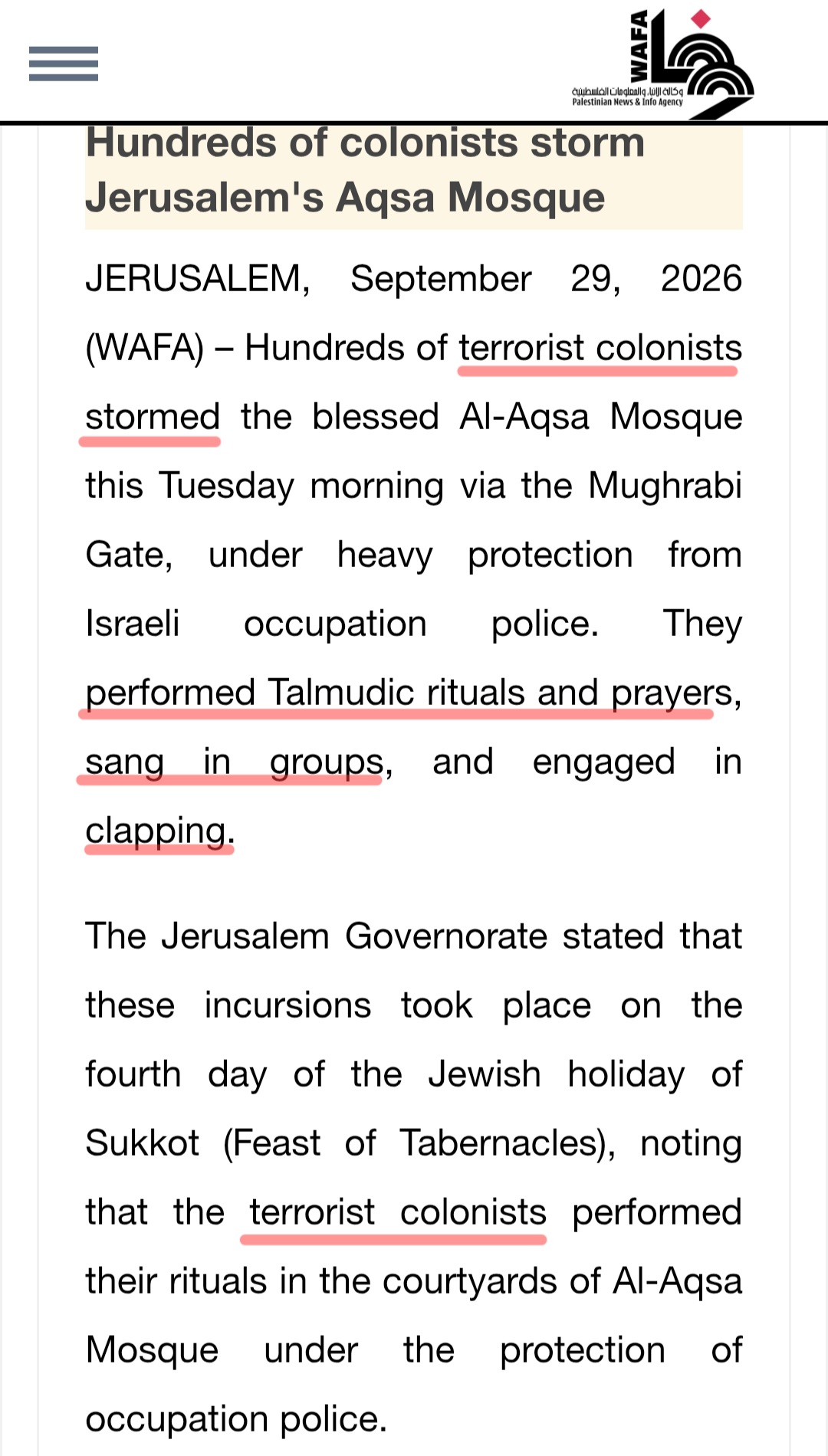
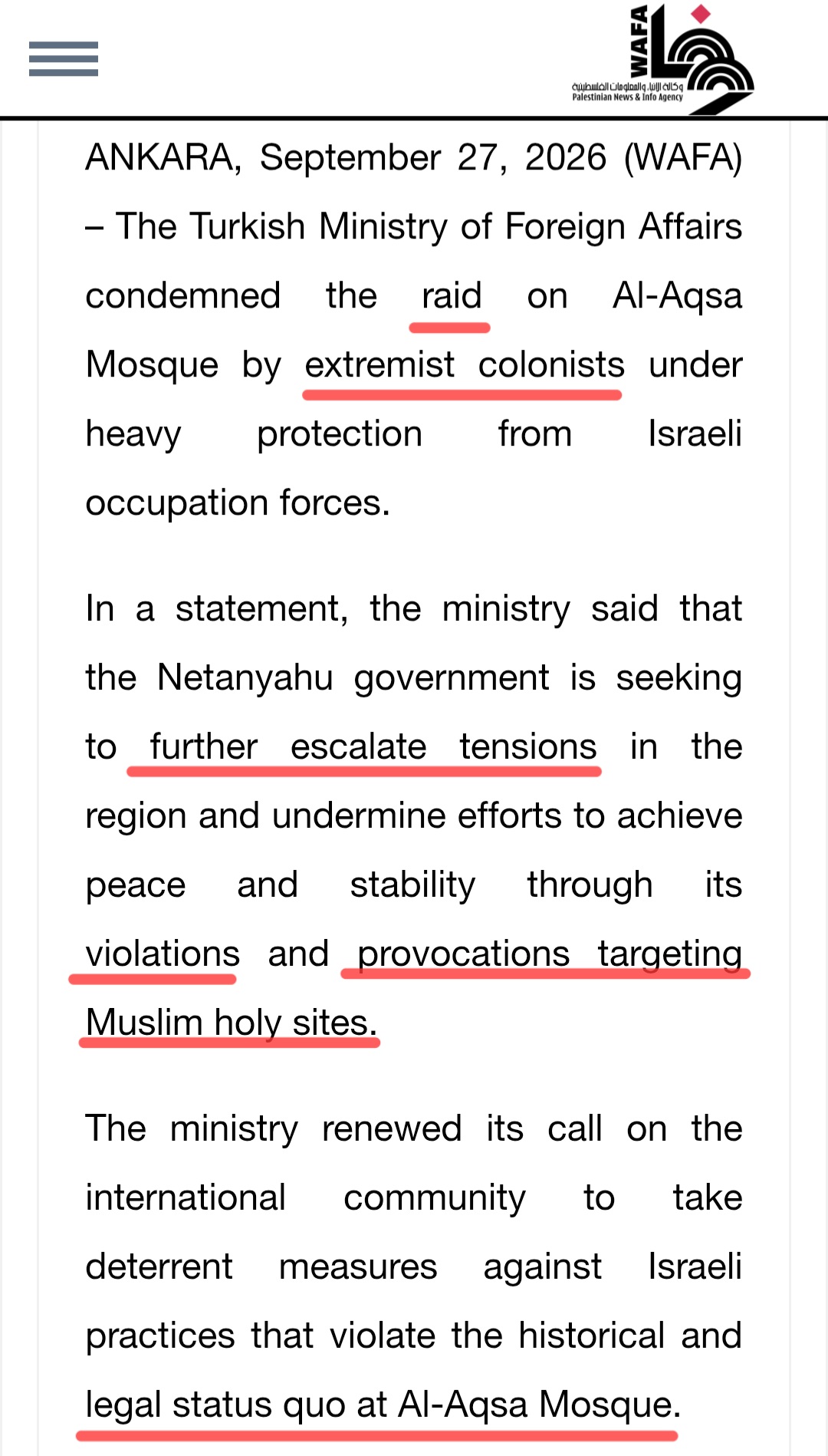
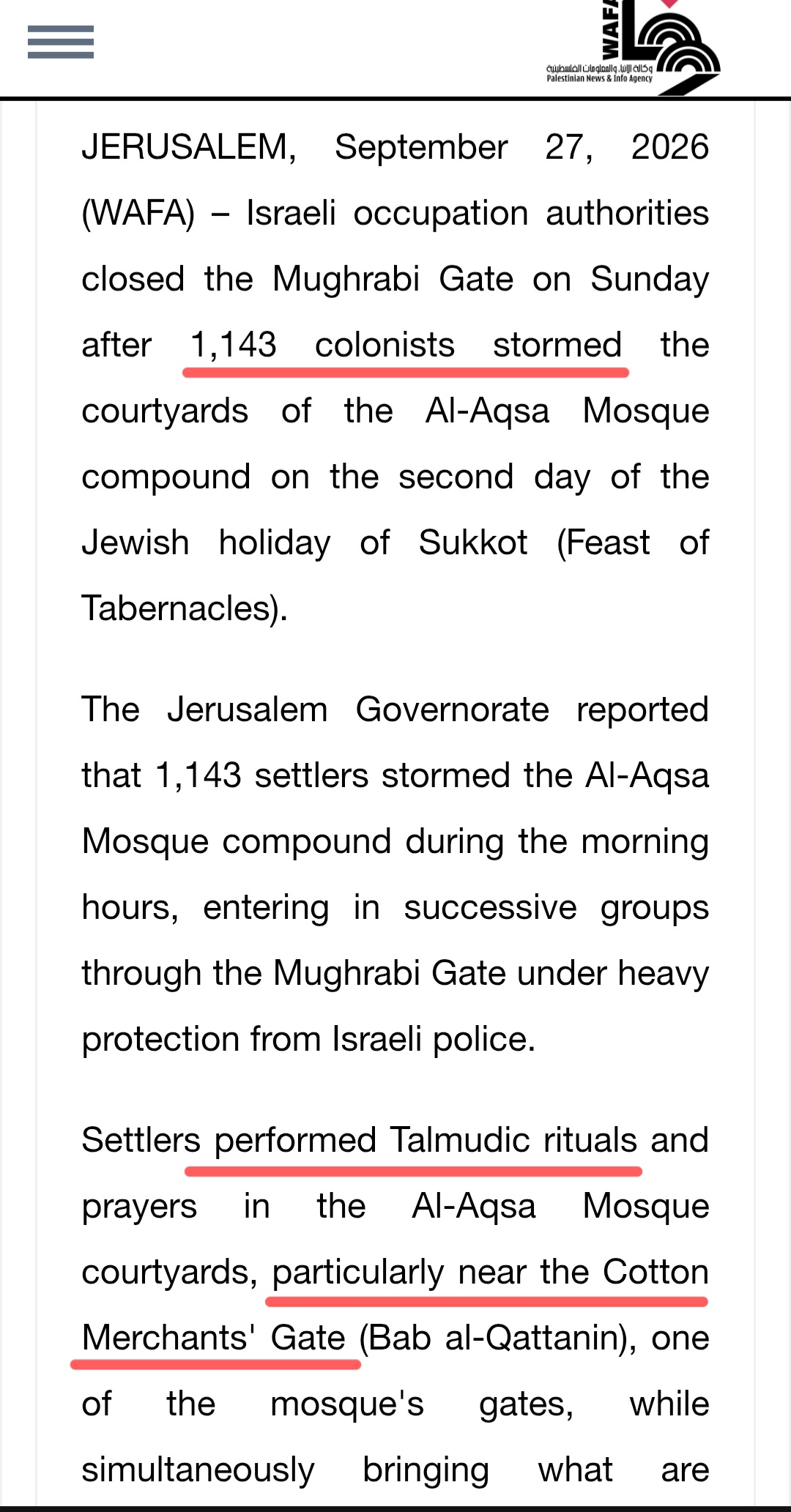
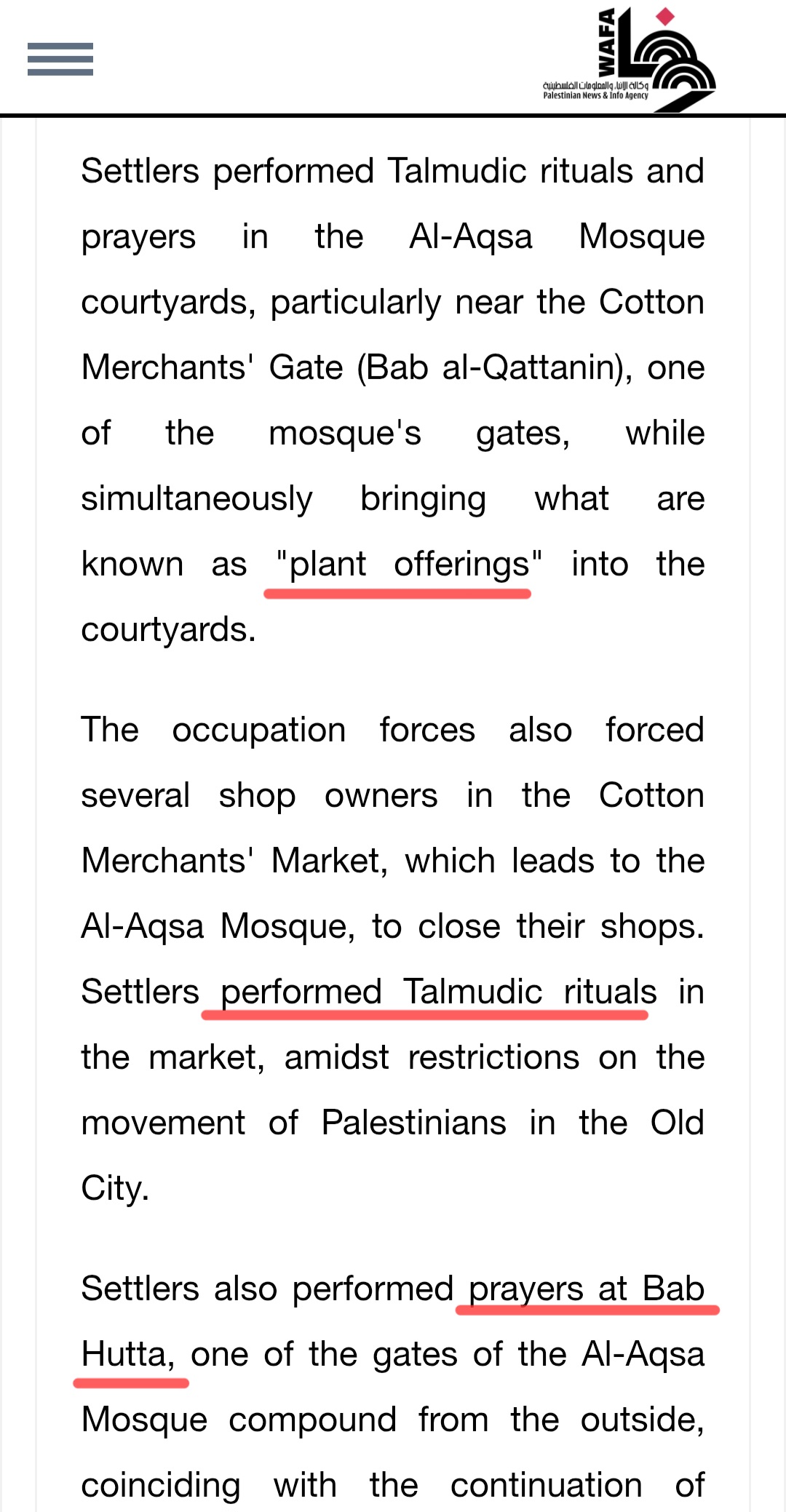
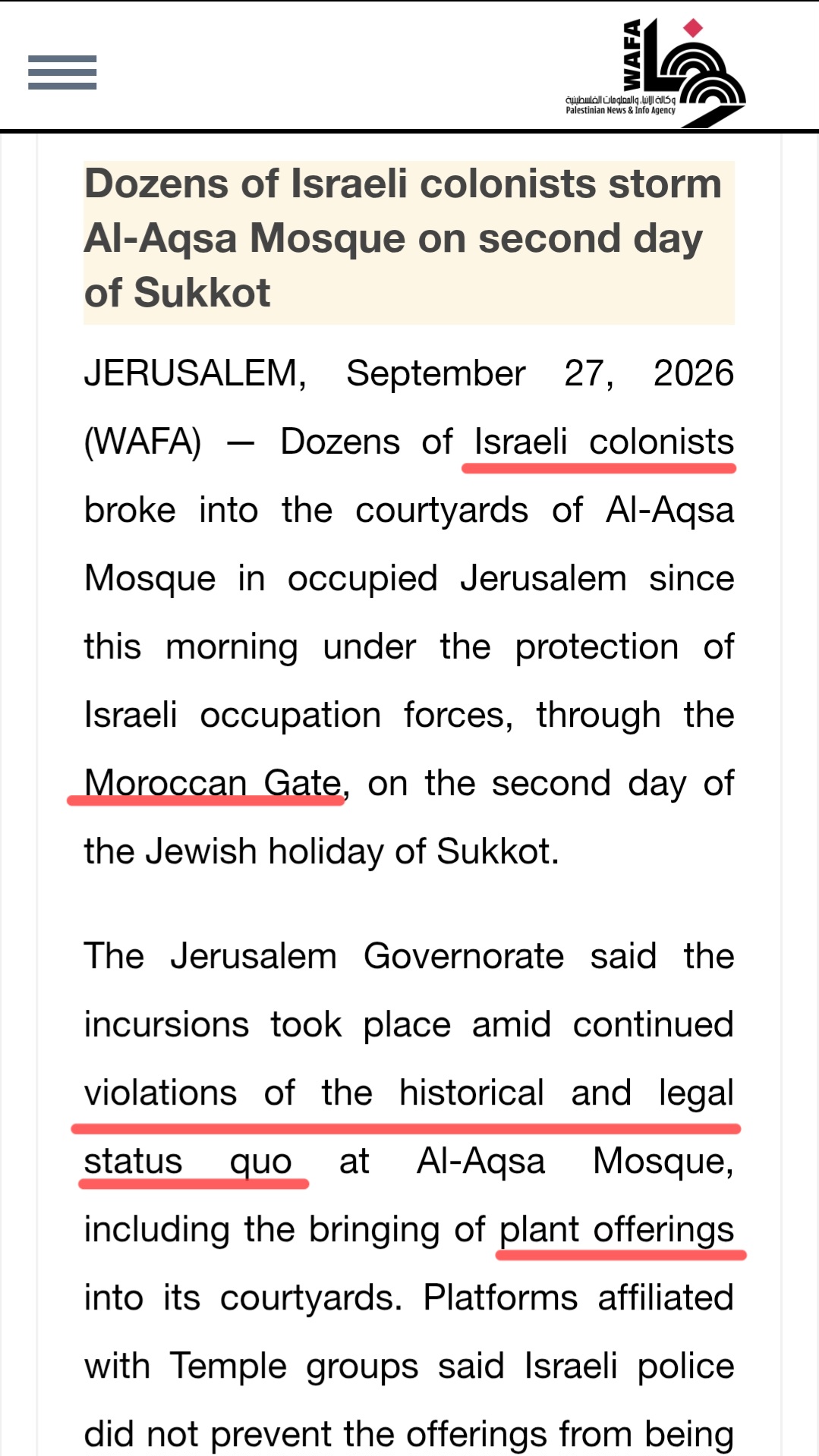
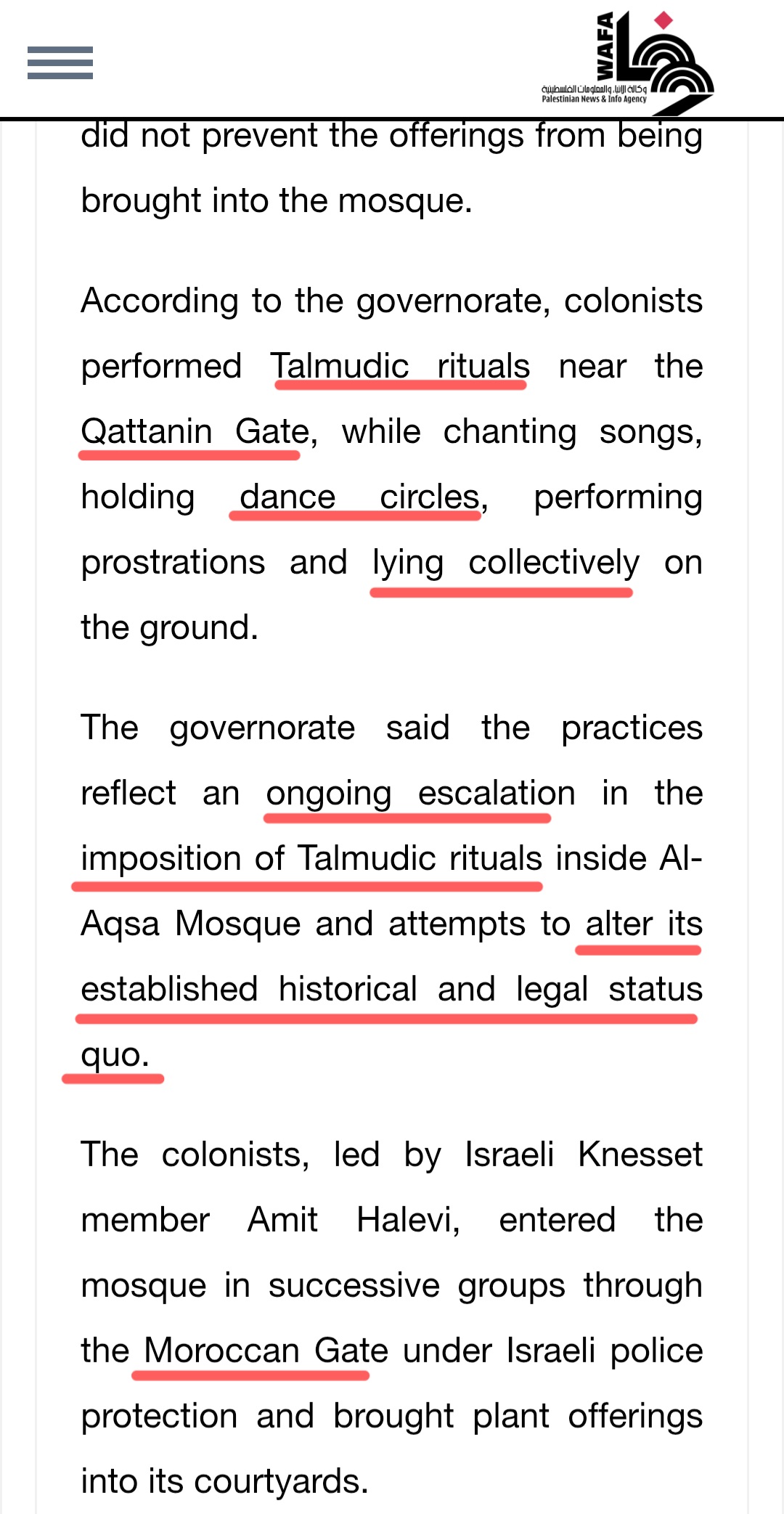
For the Palestinian Authority, Jews who visit Jerusalem during Sukkot, one of Judaism’s three pilgrimage holidays, are “terrorist colonists.”
What did these Jewish “terrorists” do? According to WAFA, the Palestinian Authority’s official news agency, they prayed, sang and clapped together. They gathered among themselves for peaceful Jewish worship at Judaism’s holiest site during a Jewish pilgrimage holiday.
This is terrorism?
This is the language of jihad. It begins by transforming ordinary religious practice into aggression. A Jew praying becomes a provocateur. A group singing together becomes a threat. A religious pilgrimage becomes an invasion. Once worshippers have been labeled “terrorists,” hostility toward them has already been given a vocabulary of supposed self-defense.
That is radical Islam applied to one of the most contested religious sites in the world: not simply insisting upon Muslim rights, but denying equivalent Jewish religious rights and portraying their exercise as an attack.
Every global leader taking the podium at the United Nations should condemn this screed. So should political leaders around the world asking voters to believe they oppose antisemitism and religious extremism.
The question is simple: Do you condemn the Palestinian Authority calling Jews engaged in prayer at their holiest site “terrorist colonists”?
Ignoring this rhetoric while rallying to the defense of the Palestinian Authority encourages the targeting of Jews around the world. The people WAFA describes are not firing weapons or fighting soldiers. They are Jews praying, singing and observing Sukkot.
Islamic supremacy does not only call for expelling every Jew. It also means insisting that Jews remain religiously subordinate – that Muslim prayer is a right while Jewish prayer is a provocation.
Calling Jewish worship terrorism is where the demand for Islamic domination becomes even darker. It turns Jews practicing Judaism into the enemy and fuels a global jihad.
In July, 2026 the United Nations and the Organization of Islamic Cooperation convened a conference in Cairo devoted to Jerusalem. The UN described Jerusalem as sacred to the three monotheistic religions and the conference as an “important platform for interreligious dialogue.”
Then it offered a remarkable description of what that dialogue looked like: “Muslim and Christian leaders reflected on Jerusalem’s profound significance to the three monotheistic faiths.”
Three religions. Two of them discussing what Jerusalem means to all three.
This was not a conference where religion was incidental. Its first substantive session was a two-hour panel titled “Saving the Holy City, Safeguarding the historic status quo at the Holy Sites.” The speakers included representatives of the Hashemite Fund for the Restoration of Al-Aqsa Mosque and the Dome of the Rock, Al-Azhar, the Latin Patriarchate, the Jerusalem Awqaf and Al-Aqsa, and the Coptic Orthodox Church.
There was no Jewish religious representative.
That absence was consistent with the conference’s design. The UN announcement said the gathering would highlight the “concerns of Christian and Muslim leaders regarding restrictions on worship and threats to Holy Sites.”
Not Jewish leaders.
That left an empty chair at precisely the discussion where a Jewish voice might have asked some uncomfortable questions.
Start with the name of the place being discussed.
The conference repeatedly spoke of Al-Aqsa Mosque and Al-Haram al-Sharif. But this same 144-dunam platform is the Temple Mount, location of the First and Second Temples and the holiest site in Judaism. Yet throughout the conference, the Islamic name and Islamic religious administration were the starting point for discussing the site. Where was the Temple Mount? A conference devoted to Jerusalem’s “multireligious character” could have acknowledged both names.
Then there is the considerably larger question of worship.
The Cairo conference repeatedly invoked freedom of worship and access to sacred places. Yet the historic status quo it sought to protect has restricted Jewish prayer on the Temple Mount. Muslims worship there. Jews have historically been allowed to visit only during restricted periods but denied the same right to pray.
At Cairo, former Jerusalem Awqaf official Atallah Naser warned about “settler incursions and rituals” and what he considered an emerging “temporal and spatial division” of Al-Aqsa. Another speaker complained about increased “religious rituals” by Jews at the site.
At a conference about religious freedom, that should have produced an obvious question: Why is peaceful Jewish prayer at Judaism’s holiest site itself treated as a threat?
Nobody on the panel was there to ask it.
Nor was anyone there to ask why the practical restrictions on Jewish worship received so little attention:
Why should Jewish visits be confined to particular hours?
Why are Jews only allowed to enter the Temple Mount via single portal while Muslims can use any?
Why should Jewish religious practice require close police management?
Why does a conference concerned with restrictions imposed upon Muslim and Christian worshippers not apply the same scrutiny to restrictions affecting Jews?
Then there is the question of who administers the site.
Cairo speakers repeatedly defended the Islamic Waqf and Jordan’s Hashemite custodianship. The Waqf retains the central religious administrative role at a site that is the holiest place in Judaism. Why?
Why should Judaism’s holiest site have an Islamic religious authority but no corresponding Jewish religious authority? Why should Jewish representatives have no formal role in decisions involving Jewish worship there? Why not shared administration? Why not a multifaith governing or consultative structure? Why not Muslim administration of the mosques alongside recognized Jewish religious rights elsewhere on the enormous platform?
Those possibilities were apparently not part of Cairo’s “interreligious dialogue.”
Instead, the conference treated preservation of the “historic status quo” and protection of “freedom of worship” as though they necessarily meant the same thing.
They do not.
If the status quo restricts the religious practice of one faith at its holiest location, preserving that restriction is not the same question as protecting religious freedom.
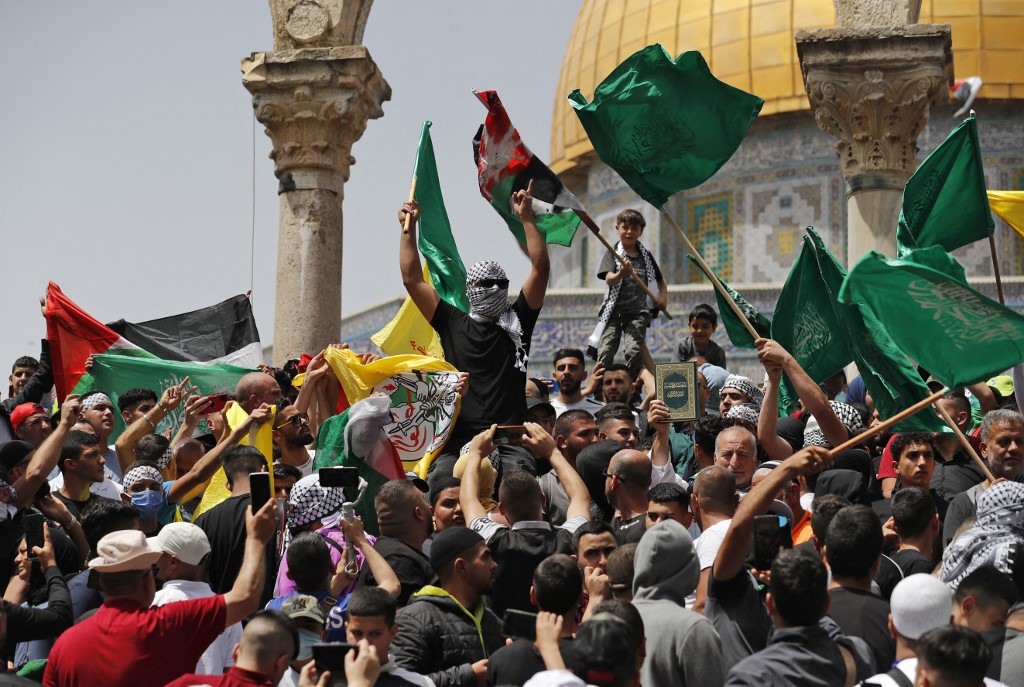
Palestinian protesters wave Palestinian and Islamic flags as they rally at the Dome of the Rock following the last Friday prayers of the Muslim month of Ramadan, on April 29, 2022. (Photo by Ahmad GHARABLI / AFP)
UN Committee Chairman Coly Seck supplied the principle that should have started this discussion. “For Muslims, Christians and Jews,” he said, “Jerusalem carries prayers, history and hope.” He declared that freedom of worship is a right and that “No worshipper should be stopped because of who they are. No community should feel that its faith is being pushed out of its own city. Jerusalem’s religious character must not be used as a tool of control. It must remain a bridge connecting people from the three major faiths. A meeting point. A shared responsibility.”
Those words raise obvious questions about Jewish worship on the Temple Mount.
Cairo simply lacked someone at the table to ask them.
The United Nations called Jerusalem sacred to three religions and convened an interreligious dialogue in Cairo about protecting their holy places. But only Muslim and Christian representatives came. They pretended to discuss the religious interests of three faiths, while using it as an opportunity to blame all religious tension on the Jews not in the room.
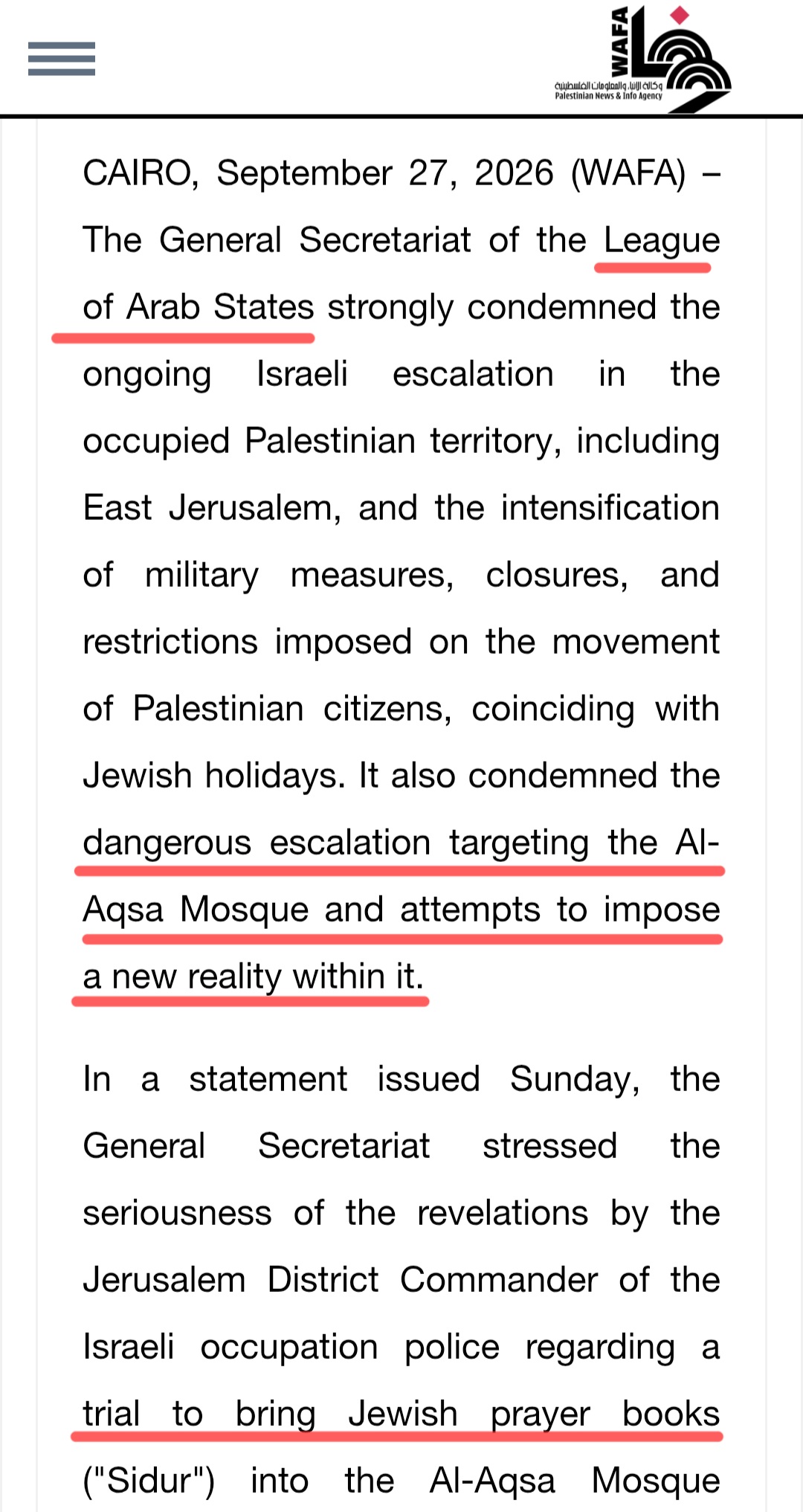
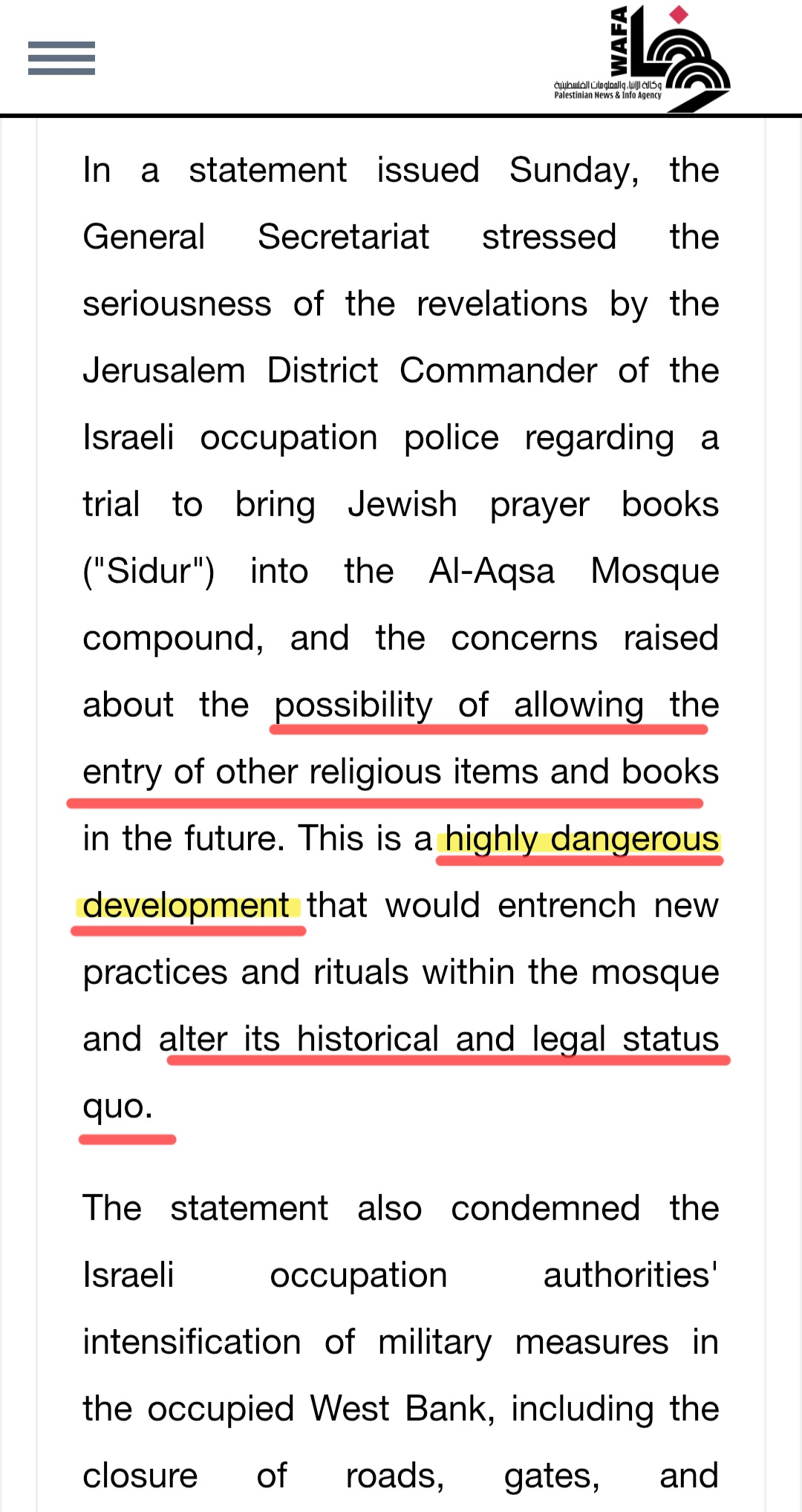
A Jewish prayer book is now a “highly dangerous development” in the Middle East according to the region’s Muslim leaders.
That was the Arab League’s description Sunday of reports that Israeli police are testing allowing Jewish prayer books — siddurim — onto the Temple Mount. The League warned that allowing them could establish new Jewish religious practices and alter the “historical and legal status quo.”
It wasn’t the only alarm sounded during Sukkot.
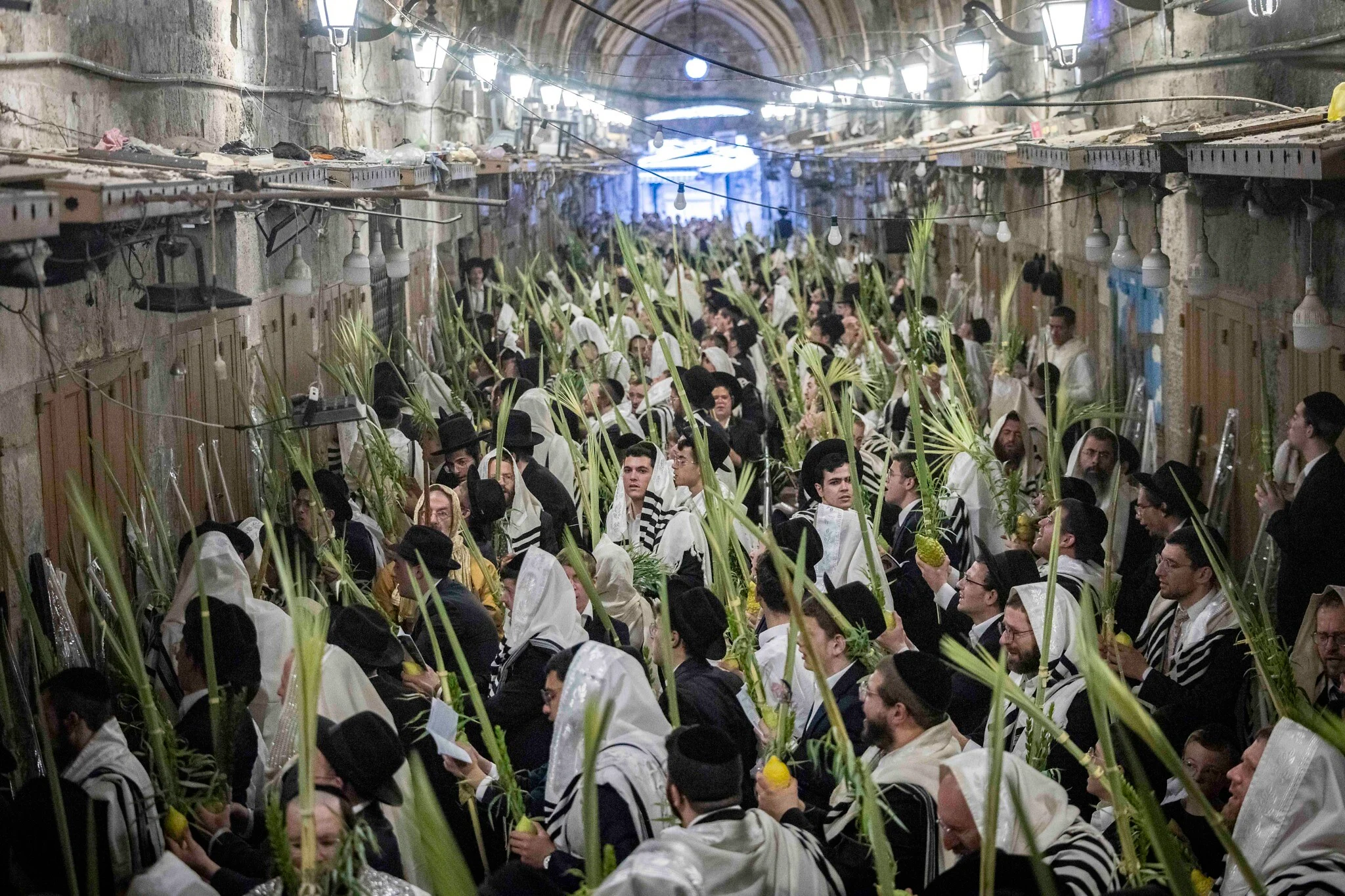
Over 1,000 Jews visited the Temple Mount on Sunday, with some openly praying and carrying the Four Species.
For perspective, roughly 80,000 Muslims attended the first Friday prayers at Al-Aqsa during Ramadan earlier this year. In normal years, Ramadan Friday attendance can reach 200,000.
For the Muslim world, Muslims were “worshippers” while Jews were “extremist” Israelis conducting “Talmudic rituals.”
Jewish men covered in prayer shawls hold the Four Species as they take part in morning prayers during the holiday of Sukkot at the Cotton Merchant’s Gate entrance to the Temple Mount in Jerusalem’s Old City, September 27, 2026. (Chaim Goldberg/Flash90)
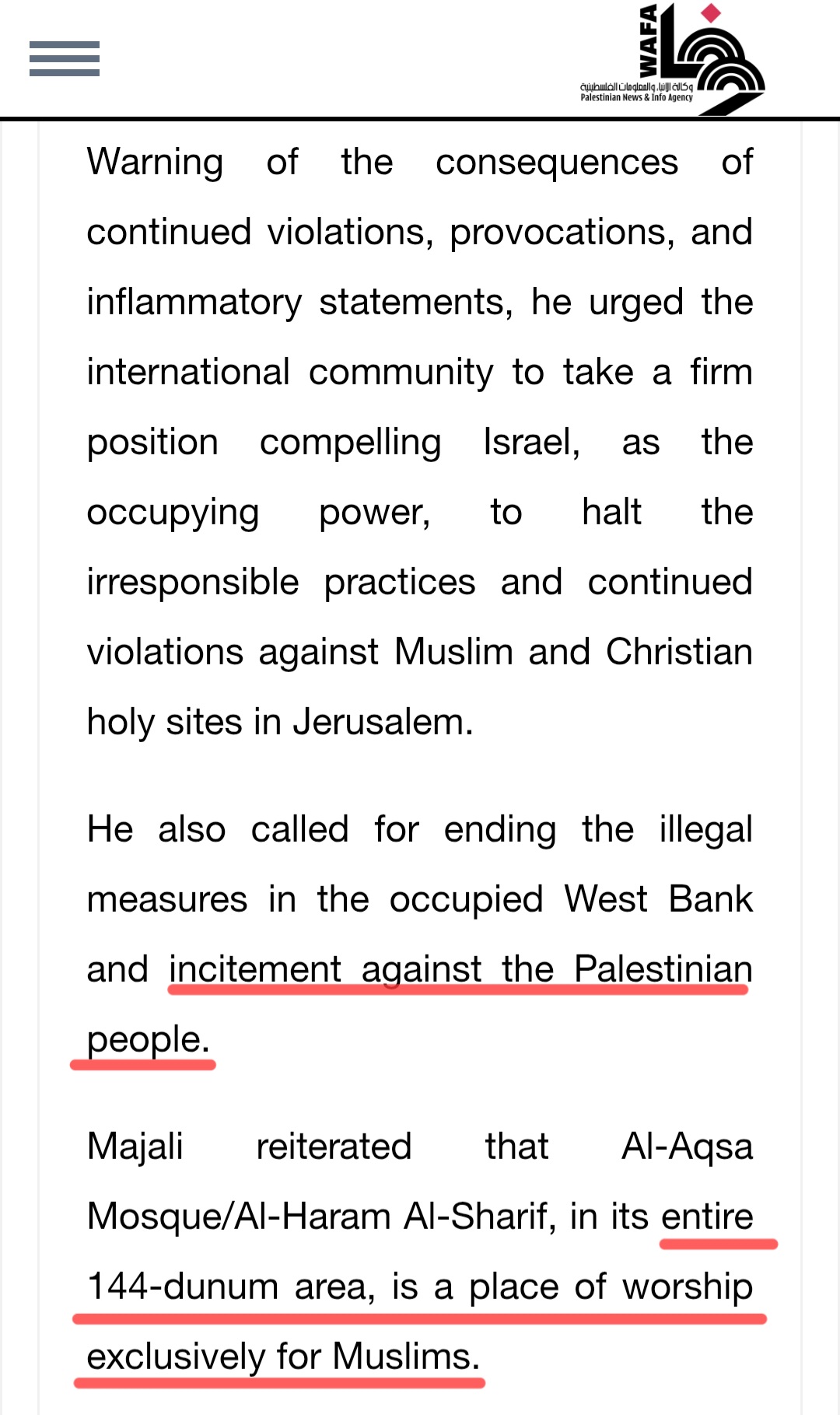
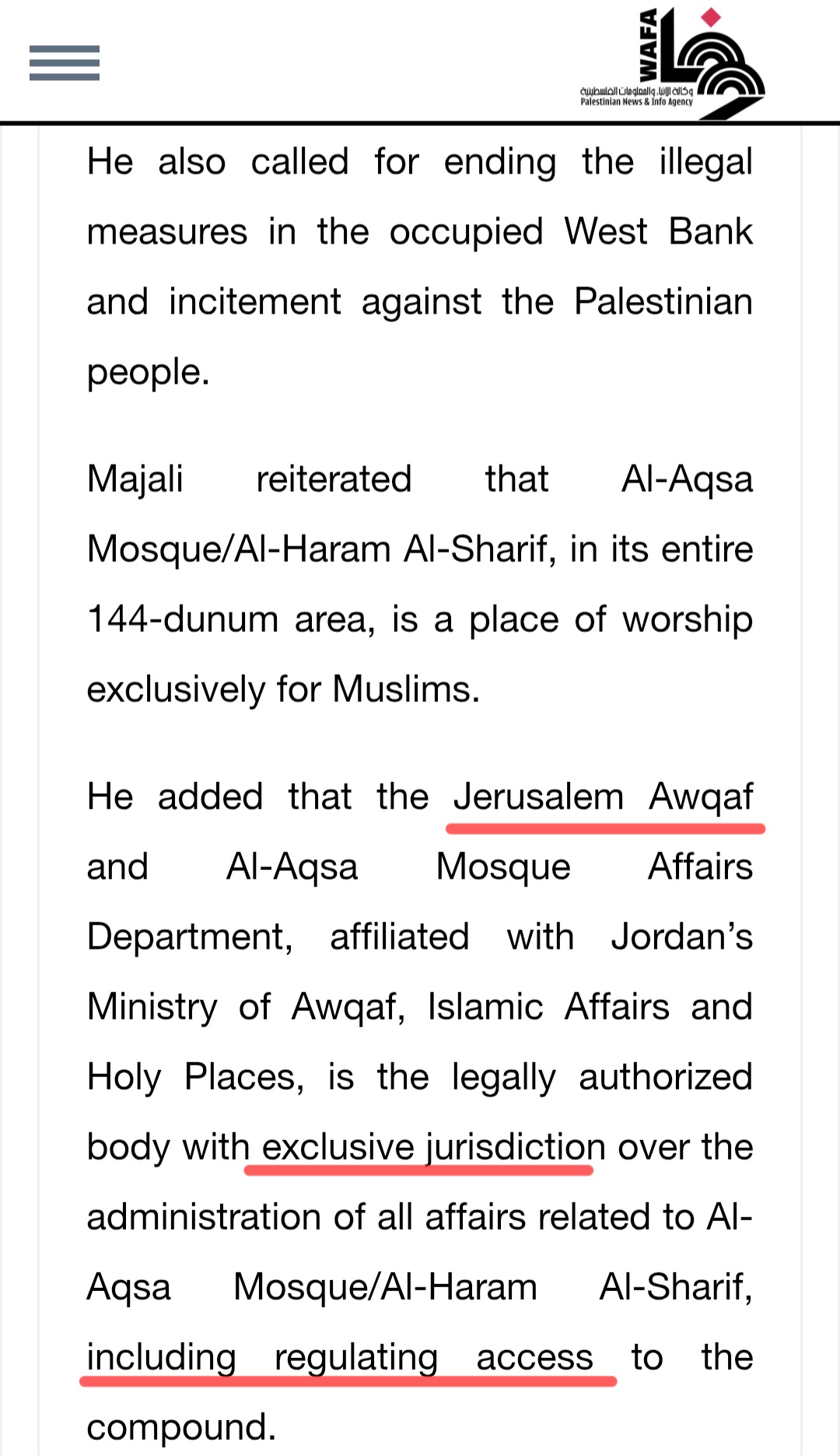
Palestinian Authority spokesman Nabil Abu Rudeineh warned that Israel risked transforming the political conflict into a “religious war.” He declared the entire 144 dunams of the Temple Mount an exclusively Muslim place of worship that cannot be divided or shared.
The reaction extends well beyond the Palestinian Authority.
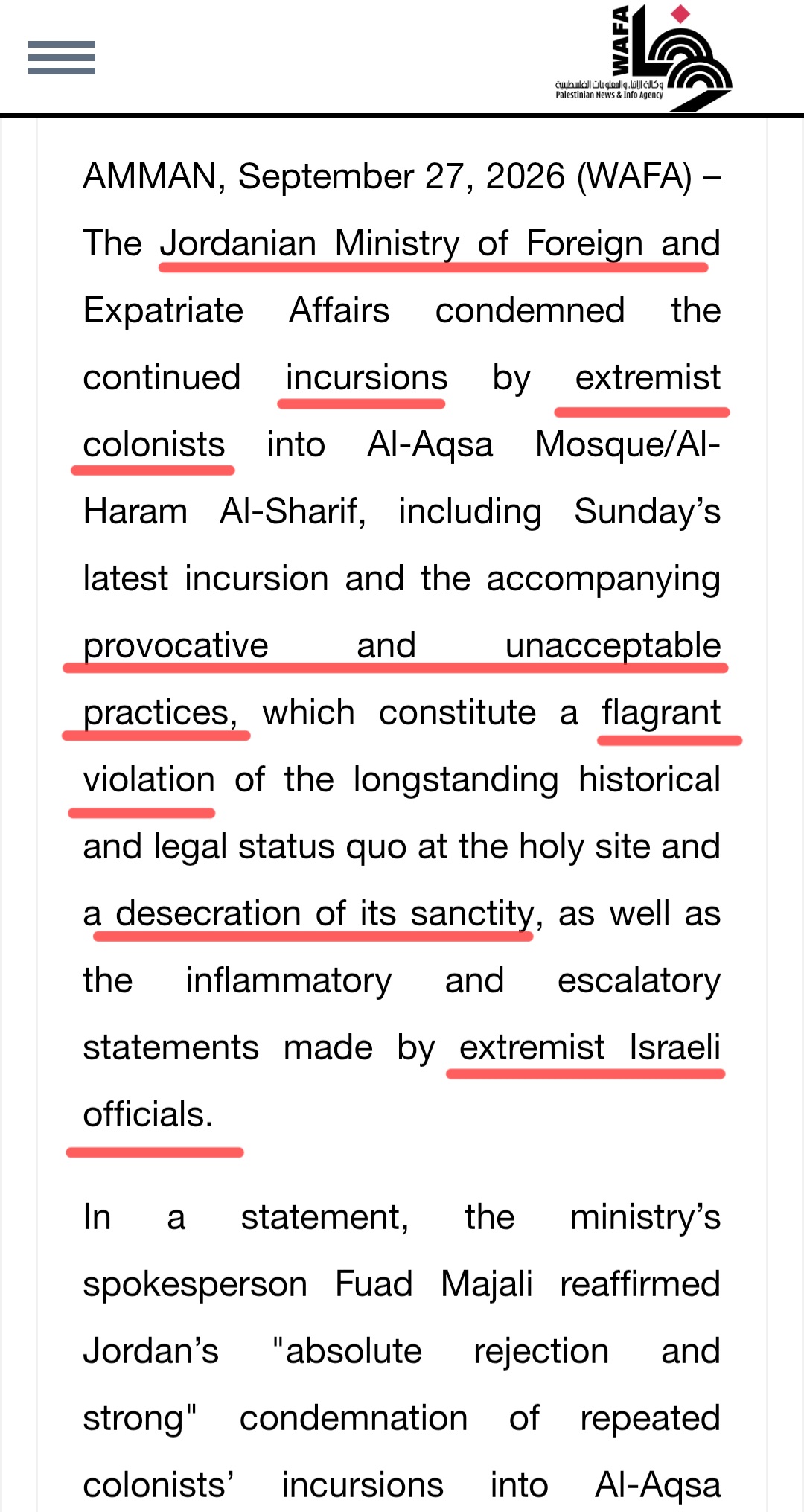
Jordan condemned Sunday’s Jewish visits and again declared all 144 dunams exclusively Muslim. And Turkey, Egypt, Indonesia, Jordan, Pakistan, Qatar, Saudi Arabia and the United Arab Emirates have jointly used the same formulation: the entire compound is exclusively for Muslim worship and the Jordanian Waqf has exclusive jurisdiction to administer it and regulate entry.
Three weeks ago, I wrote about the effort to redefine the Temple Mount “status quo,” transforming restrictions on Jewish prayer into a broader claim that the entire compound is exclusively Muslim.
Sukkot takes the story further.
There is no question that Israel is changing its own practice. For decades, Israeli governments maintained the policy that Muslims prayed on the Temple Mount while non-Muslims visited. Israeli police restricted Jewish prayer and barred siddurim and other Jewish religious objects.
Israel observed those restrictions for decades. But it never enacted a permanent statutory ban on Jewish prayer or agreed that the entire Temple Mount would forever be exclusively Muslim.
Now Israel is allowing some Jews to worship at Judaism’s holiest site.
The response is not simply a demand that Israel return to its previous practice. Multiple Muslim governments are declaring that all 144 dunams are exclusively Muslim. The possibility of a Jew carrying a siddur is described as a “desecration of its sanctity,” and jihadi calls for a “religious war.”
And this is happening during Sukkot, one of Judaism’s three biblical pilgrimage festivals, historically centered on Jews traveling to Jerusalem and the Temple. Jews were making pilgrimage there during Sukkot more than a thousand years before Islam existed.
A small number of Jews praying peacefully at their holiest site during their pilgrimage holiday is used as incitement to jihad. And Muslim governments demanded that the “international community” take actions against the Jews.
Perhaps it is time for the international community to explain to radical Islamists what coexistence means.
Summary: Millions of children do not attend school in Somalia; many of those who do are trained in jihad to fight “infidels” by al Shabab. It is a terrifying story of radical Islamic terrorism mapped for generations.
“I was always worried when they were at school,” a Somali mother told Human Rights Watch after her 17-year-old daughter was abducted by Al-Shabaab during a school tea break in Mogadishu. “Every day you get your child back at the end you are thankful.”
For parents in most countries, back to school means teachers, books, friends and homework. In parts of Somalia, it can mean wondering whether the child who left for school in the morning will return in the afternoon – or whether the school itself will become the beginning of a journey into jihad.
Somalia has one of the world’s most severe education crises. UNICEF says more than three million Somali children are out of school, while its more recent educational work puts the out-of-school rate at approximately 65% for primary-age children and 75% at the secondary level. Poverty, displacement, drought, insecurity, distance and a shortage of teachers all contribute to the enormous educational vacuum.
Into that vacuum has stepped Al-Shabaab, an Al-Qaeda affiliate.
The European Union Agency for Asylum estimated that Al-Shabaab controls around 30% of Somalia’s territory, including large rural areas and numerous district capitals, while exercising influence or forms of co-governance well beyond the territory it directly controls. Its leadership remains intact, and the group has continued making territorial gains.
That combination should be terrifying: millions of children disconnected from conventional education alongside a jihadist organization controlling substantial territory and building an education system of its own.
A “Jihadi Worldview”
The Hiraal Institute, a Mogadishu-based security research organization, examined Al-Shabaab’s education system in a report appropriately titled The Fighters Factory. Its description should receive far more attention than it has.
“Children are indoctrinated in the Islamic institutes and made to understand current affairs through a Jihadi worldview. Additionally, the illegitimacy of the Somali government and the obligatory nature of the AS Jihad are ingrained upon them. Quran teaching is done at a faster pace than in traditional schools in order to make time for Jihadi literature. Most children graduate within two years, with many being sent directly to a training camp if they have passed age 15, the Islamic age of maturity.” – Hiraal Institute
The objective is not hidden. Hiraal concluded that Al-Shabaab built the system to create “a steady stream of ideologically pure fighters.”
The U.S. State Department independently documented what that ideology means inside Al-Shabaab-controlled schools: that students should wage war against those the organization considers “infidels,” including people in neighboring countries as well as Somalia’s federal government and international forces.
Consider the progression.
A child does not begin with an assault rifle. He begins with an explanation of the world.
The government is illegitimate. Jihad is obligatory. There are infidels against whom war should be waged. Martyrdom is honorable. The organization providing the lesson possesses religious authority.
This is hatred taught; prejudice as obligation.
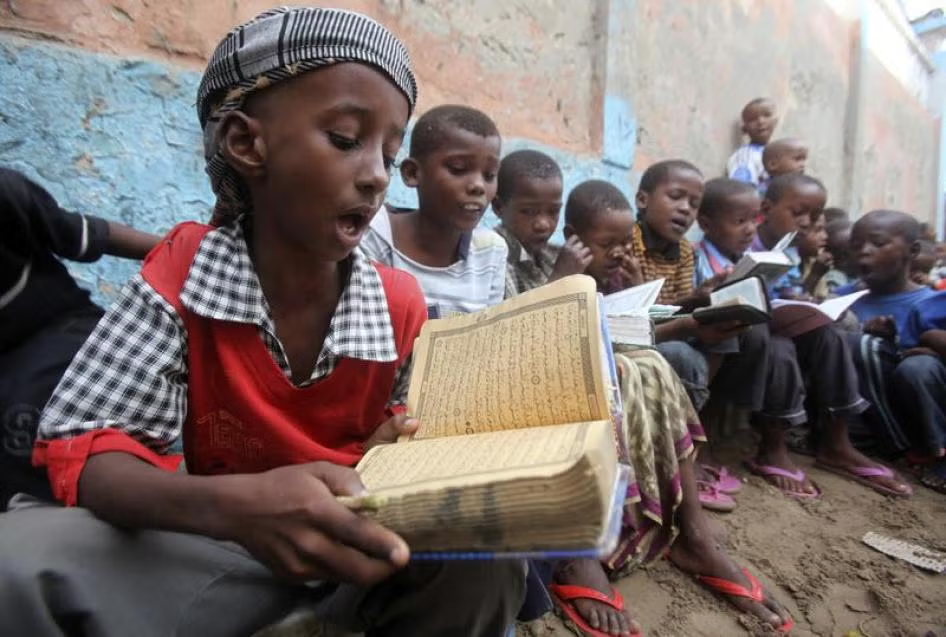
Children learning to read the Quran at the Gaabow Islamic school in Somalia’s capital, Mogadishu, August 2013. (photo: REUTERS/Ismail Taxta)
From Classroom to Training Camp
The distinction between education and recruitment consequently begins to disappear.
Hiraal reported that children educated entirely inside the Al-Shabaab system could become some of its most ideological and fanatical fighters because they had never been exposed to an opposing argument.
American and international reporting describes what can happen next.
The State Department has repeatedly documented Al-Shabaab raiding schools, madrassas and mosques, coercing families and clan elders and recruiting children into its ranks. Children in its camps have undergone physical and religious training alongside weapons training. They have been used to carry ammunition, gather intelligence, plant explosives, fight in combat and serve as human shields and suicide bombers.
The State Department reported that training has even included forcing children to punish and execute other children.
This is not merely recruitment of child soldiers – already a war crime. It is the attempted manufacture of a worldview capable of reproducing violence from one generation to the next.
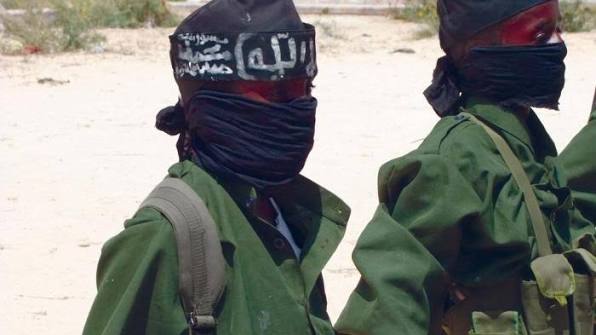
Young child in al Shabab training camp in Somalia
The Lesson Does Not Stay in Somalia
The categories taught in the classroom can become categories for selecting who lives and who dies. “Infidel” is not merely an ugly word; it is placing a target according to religion to facilitate murder.
That is why the education system deserves to be studied as part of Al-Shabaab’s terrorist infrastructure.
The Jihad Factory
The individual facts have been documented for years. What has been missing is the decision to put them in the same frame.
One institution records children out of school.
Another documents Al-Shabaab’s curriculum.
Another counts child recruitment.
Another records religious persecution.
Terrorism researchers count the dead.
Each is describing a different station along the same potential pathway: educational vacuum, ideological instruction, identification of the infidel, glorification of jihad, weapons training, recruitment and violence.
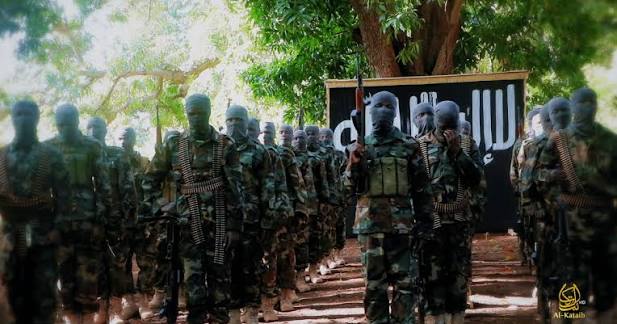
Al Shabab fighters in Somalia
That is why Al-Shabaab’s schools matter far beyond Somalia’s education statistics. A terrorist killed on a battlefield is one fewer terrorist. A child taught a “Jihadi worldview” represents something altogether different: a wager that the ideology can survive the men currently fighting for it.
Millions of Somali children remain outside school today. Across substantial territory, the organization positioned to exploit that vacuum has already demonstrated what it wants children to learn and, in documented cases, what it has subsequently demanded that children do.
The frightening question is therefore not how many Al-Shabaab fighters can be killed this year. It is how many replacements are sitting in classrooms.
Look at the world’s prominent terrorist organizations in the 1960s and 1970s and something is striking: religion is largely absent.
The PLO and its factions pursued Palestinian nationalism. The IRA fought over Northern Ireland. ETA sought Basque independence. The Red Brigades in Italy, Red Army Faction in Germany and Japanese Red Army embraced revolutionary leftist ideologies.
An analysis by RAND captures what happened next. In 1968, it identified zero religiously motivated international terrorist groups. In 1980, there were two among 64. By 1992 there were 11 among 48. By 1995, 25 of 58—43 percent—were religiously motivated.
Some point to 1979 as the pivotal year, when radical Islam found permanent footholds and inspiration.
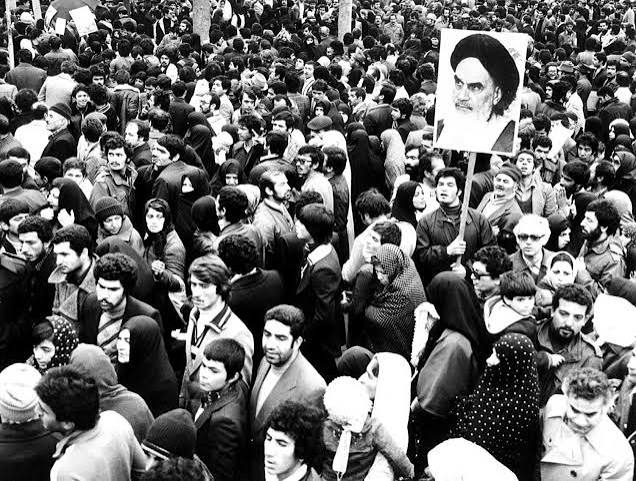
In Iran, Ayatollah Ruhollah Khomeini’s revolution overthrew the Shah and established an Islamic Republic. Political Islam had demonstrated that it could overthrow a western-aligned government.
Iranian revolution of 1979
Iran then exported its revolutionary ideology and supported armed Shiite Islamist movements. Hezbollah, established in Lebanon in the early 1980s, became its most consequential manifestation.
Then came Afghanistan.
The Soviet Union invaded in December 1979. Resistance to a non-Muslim foreign army occupying a Muslim country became an international Islamic cause. Saudi and other Gulf money flowed to the “resistance.” Pakistan became its essential staging ground. The United States supplied extensive assistance as part of its Cold War campaign against Moscow.
Afghanistan became a transnational incubator for Sunni jihad. Militants from different countries met, fought together and developed recruiting, financing and logistical networks. Osama bin Laden joined this world, and al-Qaeda eventually emerged from it.
Fondapol calls the Soviet-Afghan war the “matrix of contemporary Islamist terrorism.”
Other events show 1979 to be a pivotal year.
Islamist militants seized the Grand Mosque in Mecca, denouncing the Saudi monarchy as corrupt and insufficiently Islamic. The episode helped push Saudi Arabia toward greater religious conservatism just as it entered an intensifying competition with revolutionary Iran for leadership and influence across the Muslim world.
Meanwhile, Egypt and Israel made peace. Along with it, secular Arab nationalism, which had dominated much of Middle Eastern politics, began to lose prestige. Islamist movements increasingly presented themselves as the alternative. [Think of Hamas’s 2023 attempt to disrupt the expanding Abraham Accords].
The consequences of radical Islamism entering global terrorism developed gradually and then exploded.
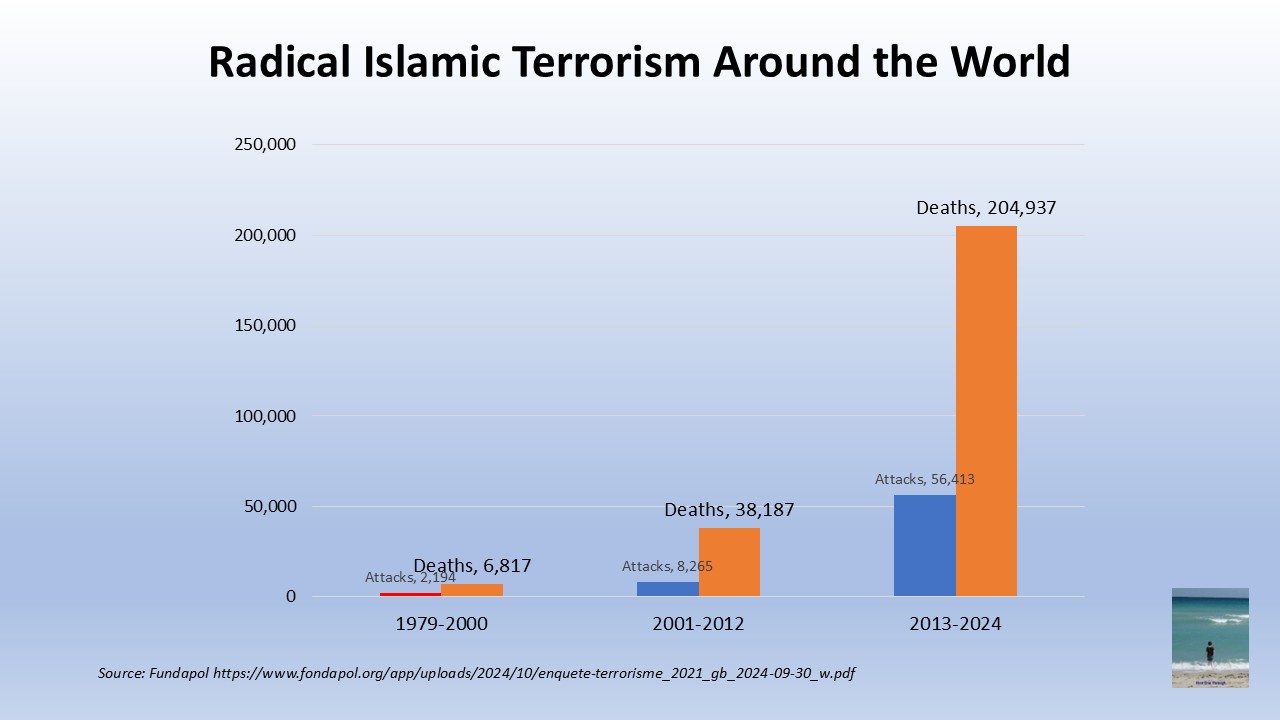
Fondapol records 2,194 Islamist terrorist attacks and 6,817 deaths from 1979 through 2000. From 2001 through 2012, it records 8,265 attacks and more than 38,000 deaths. From 2013 through April 2024, the toll surged to more than 56,000 attacks and roughly 205,000 deaths.
Altogether, its database catalogs 66,872 Islamist terrorist attacks killing nearly 250,000 people between 1979 and April 2024.
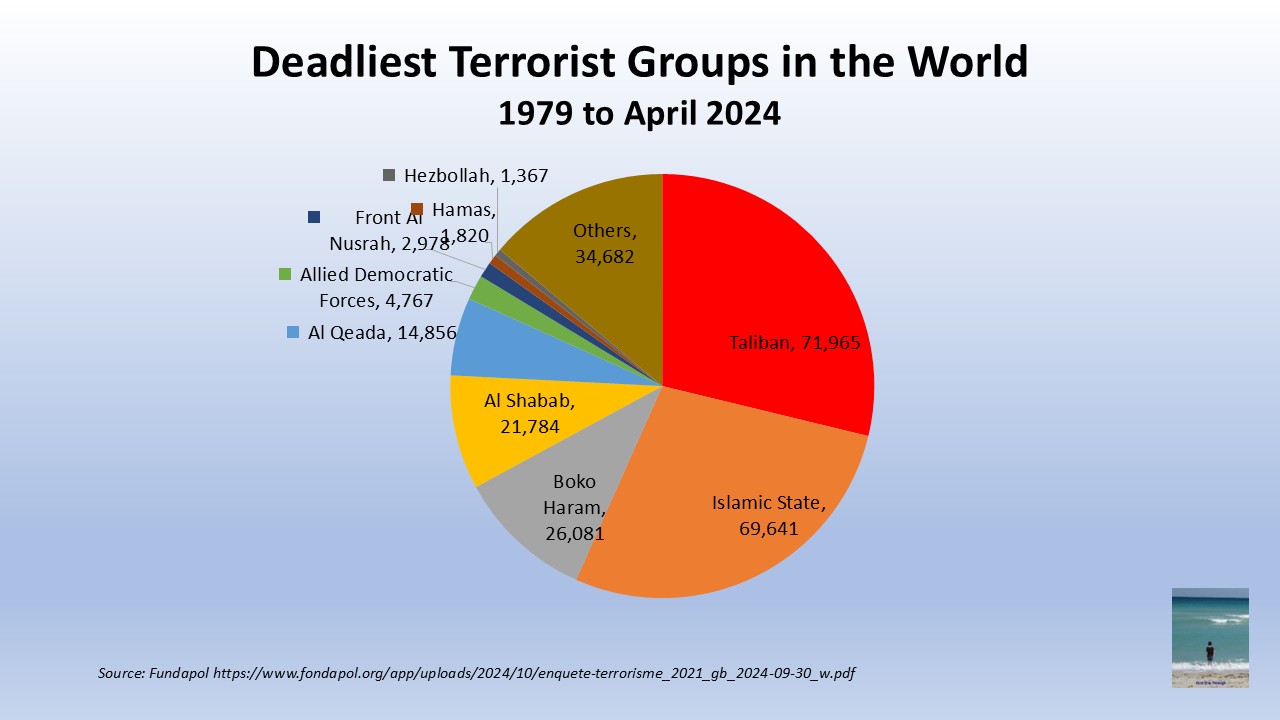
And this is not principally a story of Muslims attacking the West. Nearly 89 percent of those deaths occurred in Muslim-majority countries. The Taliban, Islamic State, Boko Haram, al-Shabaab and al-Qaeda became the five deadliest organizations in the database.
The transformation was both ideological and geographic. Al-Qaeda built affiliates. ISIS built provinces. Boko Haram devastated communities around Lake Chad. Al-Shabaab entrenched itself in Somalia and East Africa. Jihadist organizations spread across the Middle East, South Asia and increasingly Africa.
Iran demonstrated the revolutionary potential of political Islam; Afghanistan created the great transnational Sunni jihadist network; Mecca exposed another radical Islamist current; and the decline of secular Arab nationalism created room for Islamism to expand.
1979 was the year several forces converged and the center of gravity began to shift.
We readily study how nationalism, communism, fascism, white supremacy and other ideologies produced political violence. Jihadism has become the leading driver of terrorism in the world and must have the same intellectual clarity.
Twenty-five years after September 11, the United Nations remembered the 2,977 people murdered in what it called the “heinous terrorist attacks” of September 11, 2001, “an assault on humanity itself.” It declared that “the fight against terrorism is a shared, unfinished task.”
But something rather important was missing.
Who were the terrorists? What did they believe? Why did they do it?
There was no al-Qaeda. No Osama bin Laden. No Islamist extremism. No jihadism. Nothing about an ideology whose most famous declaration called for jihad against “Jews and Crusaders.”
Perhaps the United Nations simply avoids attaching ideologies to terrorism. It does not.
After a white supremacist murdered 49 Muslims at two Christchurch mosques in 2019, the UN spoke explicitly about “anti-Muslim hatred,” “anti-Islamic sentiments” and Islamophobia. Secretary-General António Guterres described the Pittsburgh Tree of Life massacre as the “worst antisemitic attack in the history of the United States.” Discussing the Halle synagogue attack and related violence, the UN warned about “antisemitic hatred,” “Neo-Nazis and white supremacists” and their “poisonous ideology.”
That is exactly what an institution confronting extremism should do. Terrorism is an act; ideology can explain its motivation.
Then consider Sri Lanka.
On Easter Sunday 2019, radical Islamist suicide bombers attacked churches and hotels, killing roughly 270 people. Sri Lanka subsequently told the UN that the terrorists had been “inspired and indoctrinated” by extremist organizations including ISIL/Daesh and had “specifically targeted churches.”
Yet on the seventh anniversary in 2026, the UN remembered the victims of the “Easter Sunday attacks.” Not terrorist attacks. Not ISIS-inspired terrorism. Not jihadism or Islamist extremism. Not anti-Christian hatred. The killers’ ideology had vanished.
That makes the 9/11 omission considerably harder to dismiss as an unfortunate choice of words. When Muslims are murdered by an anti-Muslim extremist, the ideology matters. When Jews are murdered by antisemites or neo-Nazis, the ideology matters. But when jihadists murder Americans or ISIS-inspired suicide bombers slaughter Christians at Easter, the UN retreats into the bloodless vocabulary of “terrorism” and “attacks.”
The problem is not that the UN says Islamophobia, antisemitism, white supremacy or neo-Nazism. The problem is its apparent inability to apply the same principle to jihadism.
That is no longer merely a question of consistency.
A 2024 study by the French think tank Fondapol catalogued 66,872 Islamist terrorist attacks since 1979, killing nearly 250,000 people. Roughly 243,000 of those deaths occurred after 2001. Almost 89 percent of the dead were killed in Muslim-majority countries. The Taliban, Islamic State, Boko Haram, al-Shabaab and al-Qaeda accounted for more than four-fifths of the victims.
“Islamist attacks around the world are more numerous today than ever before.” – Fondapol study
Jihadist ideology is therefore hardly an extinct doctrine being dredged up to explain a 25-year-old atrocity. Al-Qaeda survives. ISIS and its affiliates survive. Jihadist organizations continue to recruit and kill around the world, with Muslims overwhelmingly among their victims.
Calling that ideology jihadist or Islamist extremism no more condemns Muslims generally than calling an ideology neo-Nazi condemns Germans. In fact, refusing to make that distinction does Muslims no favor. It obscures an extremist ideology that has slaughtered enormous numbers of Muslims themselves.
Nor are the extremists coy about what they believe. They publish it, preach it, recruit with it and murder in its name. It is the international institutions confronting them that increasingly seem afraid to repeat what the killers themselves say.
So the UN should answer a straightforward question: Why can it say “white supremacist” and “neo-Nazi,” but not “jihadist”?
Has fear of accusations of Islamophobia—or pressure from states and organizations determined to shield Islamist ideology from scrutiny—become so powerful that jihadist supremacy alone receives a linguistic sanctuary at the United Nations?
Whatever the explanation, the consequence is dangerous. An ideology does not become less lethal because international institutions refuse to name it. It simply becomes harder to confront.
When terrorists can proclaim their ideology more plainly than the United Nations can describe it, sensitivity has crossed the line into surrender.
On September 11, 2001, nineteen al-Qaeda terrorists hijacked four airplanes and murdered nearly 3,000 people. They were followers of Osama bin Laden, who had declared jihad against the United States and explicitly invoked religion, Jews and “Crusaders” in explaining the war he believed he was fighting.
The Council on American-Islamic Relations (CAIR) has a guide for teaching September 11 to American children in grades 6 through 12. Its approach to that history is remarkable: don’t call the people who committed 9/11 “jihadists,” but make sure students learn extensively about Muslims as victims after 9/11.
CAIR’s Remembering and Reflecting on Sep. 11, 2001 in the Classroom tells educators to avoid language that “associates” the mass murder with Islam and Muslims. It specifically identifies three terms it considers “inaccurate and inflammatory”: “Islamic terrorists,” “jihadists” and “radical Islamic terrorists.”
“Avoid using language that validates the claims of the 9/11 attackers by associating their acts of mass murder with Islam and Muslims. For example, avoid using inaccurate and inflammatory terms such as “Islamic terrorists,” “jihadists,” or “radical Islamic terrorists.”” – CAIR teaching guide
The objection to “jihadists” is particularly revealing. The word does not describe Muslims generally. Quite the opposite: it distinguishes a radical movement from the enormous population of Muslims who do not subscribe to it. Likewise, adding “radical” to Islamic terrorism is an explicit qualifier. A teacher can explain precisely what al-Qaeda believed while simultaneously making clear that its ideology was rejected by countless Muslims.
CAIR instead recommends removing the distinction.
That might seem like a dispute over terminology until one reaches the guide’s recommended reading list. Then the editorial direction becomes unmistakable.
Among the eleven articles CAIR recommends are “Commemorate 9/11 by Confronting Islamophobia,” “9/11 at 10: Lessons Learned From Anti-Muslim Haters,” “Muslims in America, post 9/11,” “Hope and Despair: Being Muslim in America After 9/11,” “How Being Muslim In America Has Changed Since 9/11,” “Remembering the Muslims who were killed in the 9/11 attacks,” and “How 9/11 Caused An Increase In Islamophobic Hate Crimes.”
Seven of the eleven titles are explicitly centered on Muslims, Islamophobia or anti-Muslim discrimination. Another recommended reading concerns federal civil-rights engagement with Arab and Muslim communities.
The videos follow much the same path. Students are offered “How 9/11 Shaped the Lives of American Muslims,” “Minorities targeted in 9/11 ‘revenge attacks,’” “9/11 Changed Life For American Muslims,” and “Post 9/11 Detention Of American Muslims.”
What is conspicuously absent from CAIR’s article list is a comparable body of material about why September 11 happened in the first place and who conducted the heinous acts of mass murder.
There is no recommended article devoted to al-Qaeda’s ideology. None to the development of jihadism. None examining bin Laden’s religious declarations. None exploring why al-Qaeda spoke of Jews and “Crusaders,” or why its followers believed their mass murder of civilians was justified as jihad.
Instead, CAIR explicitly tells teachers what they should add: Muslim condemnations of the attacks, solidarity from Muslim-majority countries, Muslim leaders joining President George W. Bush at a mosque and Muhammad Ali participating in a fundraiser. When discussing the aftermath, teachers are instructed to include hate crimes and bigotry against Muslims, Sikhs, Arabs and other minorities.
Those are legitimate subjects. Americans who attacked innocent Muslims, Sikhs or Arabs after September 11 committed reprehensible crimes. Muslim Americans who died in the World Trade Center deserve to be remembered alongside every other innocent victim.
But that is precisely why the imbalance matters.
A history lesson should be capable of holding two ideas simultaneously: radical Islamists murdered nearly 3,000 innocent people on September 11, and innocent Muslims subsequently became targets of bigotry by people who wrongly held them responsible.
In fact, accurately naming the first proposition makes the second easier to understand. “Jihadist” separates the extremists from Muslims generally. “Radical Islamist” identifies an ideology rather than an ethnicity or an entire faith. Students can then examine that ideology, understand why most Muslims reject it and understand why blaming ordinary Muslims for al-Qaeda’s crimes is both factually wrong and morally indefensible.
CAIR takes the opposite route.
Religion becomes something educators should carefully detach from the perpetrators, even though the perpetrators themselves repeatedly invoked it. Then religious identity becomes central when discussing the victims of the aftermath.
The inversion is extraordinary.
Consider what a student following CAIR’s bibliography is encouraged to encounter. The student can read about anti-Muslim haters, Islamophobic hate crimes, Muslim life after 9/11, Muslim heroes, Muslim victims, Muslim detention and civil rights for Muslim communities.
But where is the corresponding invitation to study the jihadists?
Where is bin Laden’s worldview? Where is al-Qaeda’s theology? Where are its declarations? Where is its obsession with “Crusaders” and Jews? Where is the intellectual history that transformed religious extremism into airplanes crashing into buildings filled with civilians?
September 11 did not begin with Islamophobia. It began with an ideology and 19 men prepared to murder thousands of strangers in the name of radical Islam.
CAIR is not asking schools merely to protect Muslim students from collective blame. It is asking educators to perform something far more consequential: strip the perpetrators of the language that identifies their radical ideology while repeatedly directing students toward the victimization of Muslims that followed their attack.
That is not historical sensitivity. It is historical inversion.
And it invites conspiracy theories that Jews committed 9/11, when the slaughter was done in the name of genocidal jihad.
Graffiti in London in 2019 claiming that Jews did 9/11, or that another mass murder is coming for Jews
CAIR’s approach leaves students with a grotesquely rearranged history: the Muslims who suffered bigotry after 9/11 retain their religious identity, while the jihadists who caused 9/11 are stripped of theirs.
CAIR calls that responsible teaching. A better description is laundering the ideology of the killers out of the history of their crime.