Major news organizations covering the extraordinary Flydubai incident have omitted a striking piece of context: five days earlier, a senior adviser to Iran’s Supreme Leader warned that if Iranian aircraft could not use regional airports, nobody else should expect to fly either.
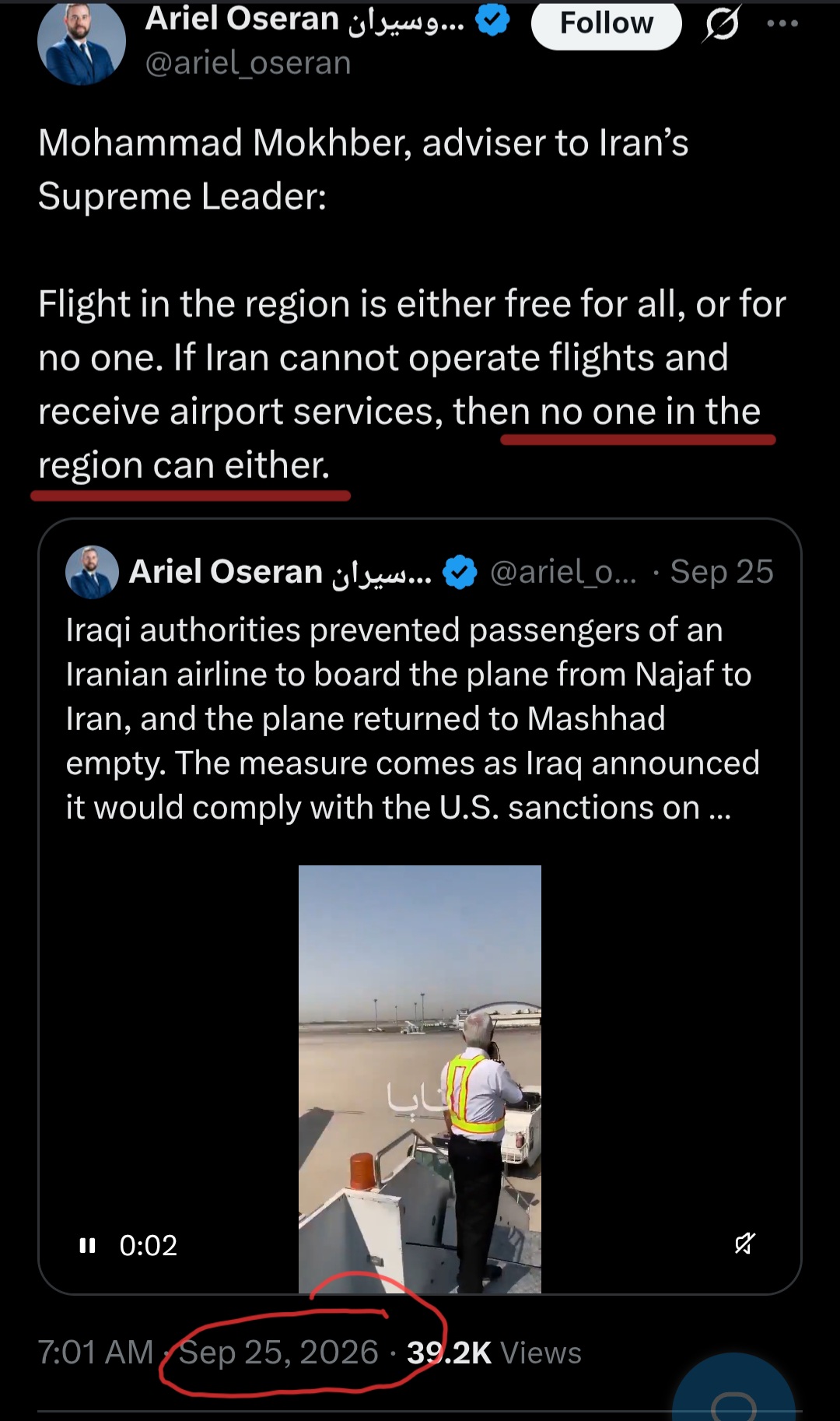
On September 25, Mohammad Mokhber, Iran’s former acting president and current adviser to Ayatollah Ali Khamenei, declared:
“Flight in the region is either free for all, or for no one.”
He added: “If Iran is denied the possibility of flight and access to airport services, no country in the region will have this possibility either.”
Days earlier, another senior Iranian official, Mohsen Rezaei, had issued a similar warning concerning neighboring airports.
Five days after Mokhber’s statement, a Flydubai aircraft carrying mostly Israelis from Dubai to Tel Aviv suffered an attempted hijacking. The captain was attacked, the aircraft rapidly lost altitude and the flight made an emergency landing in Saudi Arabia. The motive remains under investigation. There is no immediate evidence connecting Iran to the incident.
But Iran’s warning is missing from major coverage reviewed from Reuters, the Associated Press, the Guardian, Al Jazeera and The National. Reuters had itself reported Mokhber’s statement when he made it.
That omission is difficult to understand. A senior Iranian official had publicly warned that regional aviation could be disrupted. Five days later, an Emirati aircraft carrying over one hundred Israelis is put at risk by an Omani pilot.
Consider that Al Jazeera and the Guardian continue to say that Israel is at war with Iran even though that hasn’t been true for many months. They insert Israel into the war against Iran while they leave Iran out of the discussion about a potential killing of nearly two hundred Israelis.
Readers are being lied to by acts of insertion and omission, especially about Israel and Iran. It is critical to understand those basic facts and begin to ask why.
Look at the world’s prominent terrorist organizations in the 1960s and 1970s and something is striking: religion is largely absent.
The PLO and its factions pursued Palestinian nationalism. The IRA fought over Northern Ireland. ETA sought Basque independence. The Red Brigades in Italy, Red Army Faction in Germany and Japanese Red Army embraced revolutionary leftist ideologies.
An analysis by RAND captures what happened next. In 1968, it identified zero religiously motivated international terrorist groups. In 1980, there were two among 64. By 1992 there were 11 among 48. By 1995, 25 of 58—43 percent—were religiously motivated.
Some point to 1979 as the pivotal year, when radical Islam found permanent footholds and inspiration.
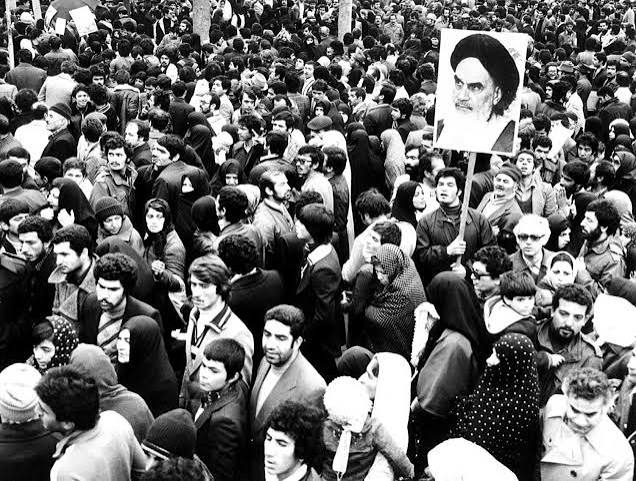
In Iran, Ayatollah Ruhollah Khomeini’s revolution overthrew the Shah and established an Islamic Republic. Political Islam had demonstrated that it could overthrow a western-aligned government.
Iranian revolution of 1979
Iran then exported its revolutionary ideology and supported armed Shiite Islamist movements. Hezbollah, established in Lebanon in the early 1980s, became its most consequential manifestation.
Then came Afghanistan.
The Soviet Union invaded in December 1979. Resistance to a non-Muslim foreign army occupying a Muslim country became an international Islamic cause. Saudi and other Gulf money flowed to the “resistance.” Pakistan became its essential staging ground. The United States supplied extensive assistance as part of its Cold War campaign against Moscow.
Afghanistan became a transnational incubator for Sunni jihad. Militants from different countries met, fought together and developed recruiting, financing and logistical networks. Osama bin Laden joined this world, and al-Qaeda eventually emerged from it.
Fondapol calls the Soviet-Afghan war the “matrix of contemporary Islamist terrorism.”
Other events show 1979 to be a pivotal year.
Islamist militants seized the Grand Mosque in Mecca, denouncing the Saudi monarchy as corrupt and insufficiently Islamic. The episode helped push Saudi Arabia toward greater religious conservatism just as it entered an intensifying competition with revolutionary Iran for leadership and influence across the Muslim world.
Meanwhile, Egypt and Israel made peace. Along with it, secular Arab nationalism, which had dominated much of Middle Eastern politics, began to lose prestige. Islamist movements increasingly presented themselves as the alternative. [Think of Hamas’s 2023 attempt to disrupt the expanding Abraham Accords].
The consequences of radical Islamism entering global terrorism developed gradually and then exploded.
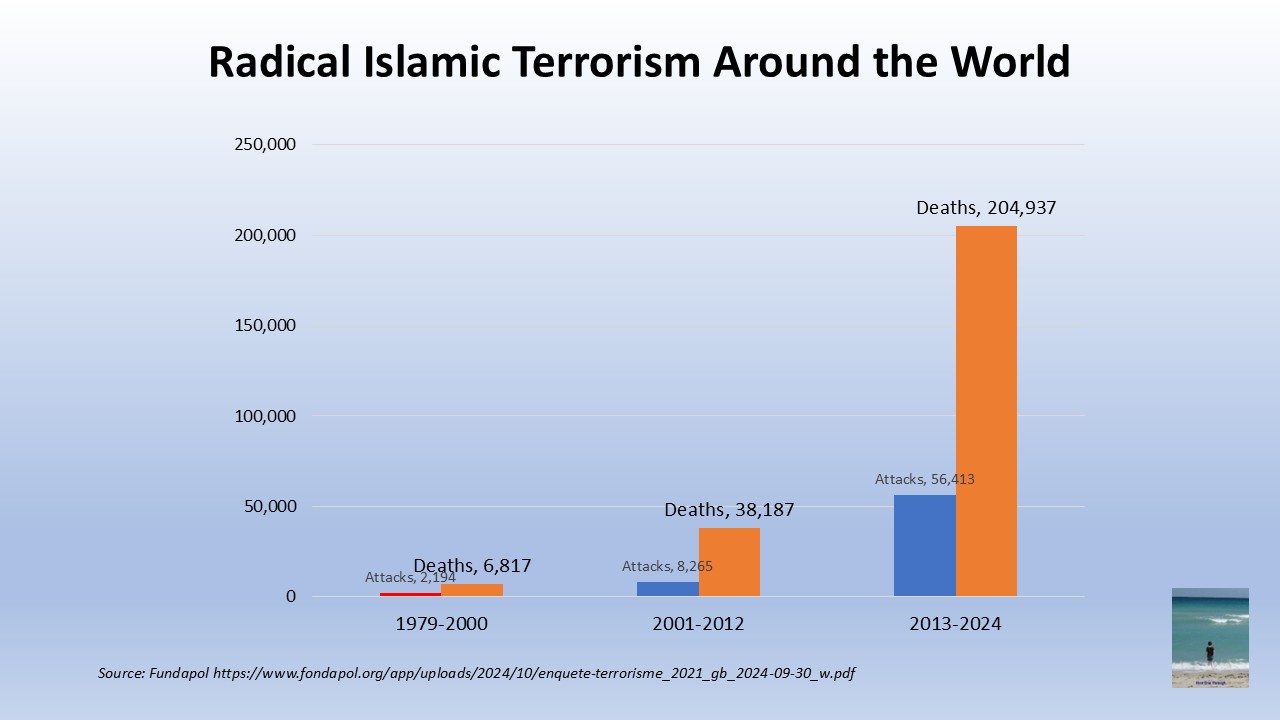
Fondapol records 2,194 Islamist terrorist attacks and 6,817 deaths from 1979 through 2000. From 2001 through 2012, it records 8,265 attacks and more than 38,000 deaths. From 2013 through April 2024, the toll surged to more than 56,000 attacks and roughly 205,000 deaths.
Altogether, its database catalogs 66,872 Islamist terrorist attacks killing nearly 250,000 people between 1979 and April 2024.
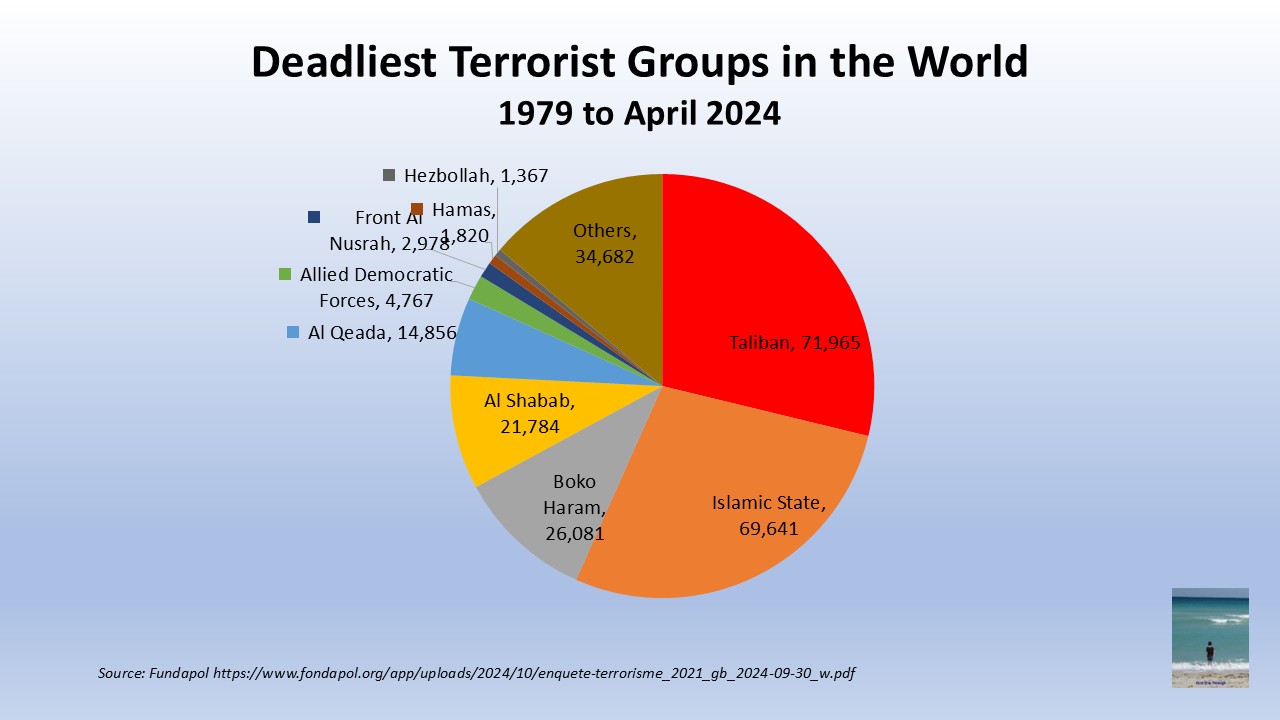
And this is not principally a story of Muslims attacking the West. Nearly 89 percent of those deaths occurred in Muslim-majority countries. The Taliban, Islamic State, Boko Haram, al-Shabaab and al-Qaeda became the five deadliest organizations in the database.
The transformation was both ideological and geographic. Al-Qaeda built affiliates. ISIS built provinces. Boko Haram devastated communities around Lake Chad. Al-Shabaab entrenched itself in Somalia and East Africa. Jihadist organizations spread across the Middle East, South Asia and increasingly Africa.
Iran demonstrated the revolutionary potential of political Islam; Afghanistan created the great transnational Sunni jihadist network; Mecca exposed another radical Islamist current; and the decline of secular Arab nationalism created room for Islamism to expand.
1979 was the year several forces converged and the center of gravity began to shift.
We readily study how nationalism, communism, fascism, white supremacy and other ideologies produced political violence. Jihadism has become the leading driver of terrorism in the world and must have the same intellectual clarity.
In Greek mythology, the Hydra was almost impossible to kill.
It had many heads. Cut one off and more grew in its place. Heracles eventually understood that killing the monster required more than endlessly chopping at whichever head was attacking him. Each severed neck had to be cauterized so it could not regenerate.
Heracles battling the Lernean Hydra
For nearly three years, Israel has been told that Hamas is a Hydra. Kill its leaders. Destroy its tunnels. Eliminate its fighters. It won’t matter. Hamas—or something worse—will simply grow back.
Queen Rania of Jordan articulated the underlying argument shortly after the October 7 massacre, that Israel’s actions against Hamas:
“create a new generation of resistance that is fiercer and more violent” – Queen Rania of Jordan
Retired U.S. Army Colonel Peter Mansoor was more explicit, predicting that “Hamas 2.0 will rise” from the destruction.
They identified a real danger. But regeneration is not immortality.
Hamas is more than leaders, tunnels, rockets and gunmen. It is a political and military organization built around an ideology. Destroy the organization while preserving everything capable of regenerating it and another head may indeed grow.
The question is whether everything capable of regenerating it must also be allowed to survive.
Nearly three years of Palestinian polling shows the problem.
As detailed recently in Palestinian Arabs Turn Inward, But Not Away From Hamas, Palestinian Arabs have dramatically lowered their expectations after three years of war. Support for Hamas and armed struggle has fallen sharply from the extraordinary levels recorded after October 7. But losing faith in Hamas’s ability to win is not the same thing as rejecting Hamas.
In the August 2026 PCPSR poll, 72% opposed Hamas disarming before a complete Israeli withdrawal from Gaza. Asked what Hamas would become if it gave up its weapons, 53% envisioned it remaining both armed and political and another 36% solely political. In all, 89% envisioned Hamas surviving in some form.
That is the Hydra problem.
And Hamas is only one head.
Hezbollah sits to Israel’s north. The Houthis attack from Yemen. Palestinian Islamic Jihad fights alongside Hamas. Above them, the Islamic Republic of Iran spent decades financing, arming and connecting organizations surrounding Israel.
October 7 exposed not simply a Hamas problem, but an ecosystem.
That is why eliminating Hamas militarily cannot be the entire definition of victory. As FirstOneThrough argued in From a Hamas Double Standard to the Hamas Dangerous Standard, an organization cannot maintain an independent army committed to destroying another state while simultaneously being normalized as an ordinary participant in democratic politics.
And military defeat addresses only part of what allows another head to grow.
FirstOneThrough addressed another part in The Only Way The Conflict Can End: the Palestinian claim to a so-called “right of return” into Israel itself.
A Palestinian state alongside Israel cannot simultaneously mean millions of Palestinians receive a state of their own while millions more retain a claim to move into Israel. That is 1.5 states for Arabs and 0.5 of a state for Jews.
American policy once said this plainly.
The 2004 Democratic Party platform called for Palestinian refugees to settle in a Palestinian state “rather than in Israel.” The 2008 platform repeated the position before the language was omitted in 2012.
President George W. Bush made the same commitment directly to Israeli Prime Minister Ariel Sharon in April 2004 as Sharon prepared the Gaza disengagement. A realistic solution, Bush wrote, would involve establishing a Palestinian state and “the settling of Palestinian refugees there, rather than in Israel.”
The principle was straightforward: Palestinian statehood was supposed to resolve Palestinian statelessness, not provide another mechanism for eliminating the Jewish State.
Defeating the Hydra therefore requires ending not only Hamas’s ability to wage war, but the expectation that Israel is temporary.
History offers another model.
Nazi Germany did not fight alone, and victory did not consist of killing Hitler while leaving the Axis intact. Germany and its allies were defeated or surrendered.
Then came political defeat. The Nazi military and political apparatus was dismantled. The Nazi Party was outlawed. Its leaders were prosecuted. Germany was not invited to preserve a rebranded Nazi Party so its supporters could recover through elections what they had lost through war.
The Axis was defeated as a system.
The same principle should define the defeat of Hamas.
Hamas cannot be permitted to lose its army, change clothes and emerge as an internationally accepted political party. Global institutions and governments should treat Hamas as one organization, dismantle its financing and international infrastructure, and isolate organizations that materially finance or facilitate its terrorism.
Prohibition is only half the answer.
Muslim governments, religious leaders and international institutions should strengthen Muslim movements committed to peaceful coexistence, religious equality and acceptance of Jewish sovereignty. Muslim-majority countries that have made peace with Israel already demonstrate that Islam and permanent war against Jewish sovereignty are not synonymous. Isolate the jihadis in the Jihadi-Israel Conflict and empower the moderate Arab and Muslim countries.
Make the institutions of coexistence stronger while making the institutions of violent supremacy militarily, financially and politically untenable.
The Hydra has many heads.
Hamas is a head. Hezbollah is a head. The Houthis are a head. The Islamic Republic supplies the Hydra with blood. The ideology gives it reason to regenerate.
The Hamas 2.0 warning should therefore be taken seriously—but not accepted as prophecy.
The Hydra is difficult to kill. It is not immortal.
The name made sense at Israel’s founding. Israel fought wars against the armies of Egypt, Jordan, Syria, Iraq and other Arab states. The conflict was understood principally as one between the Jewish State and the surrounding Arab world.
Then the map changed.
Egypt made peace with Israel in 1979. Jordan followed in 1994. During the horrific Second Intifada, the suicide bombings, shootings and other attacks were overwhelmingly part of a localized war involving Palestinian Arabs. The terminology narrowed accordingly. The Arab-Israeli Conflict increasingly became the Palestinian-Israeli Conflict.
That description is now inadequate too as the map evolved again over the past several years.
The Abraham Accords fundamentally changed the regional picture. The United Arab Emirates, Bahrain and Morocco normalized relations with Israel. Trade, tourism, investment and security cooperation followed. Other Muslim-majority countries have also maintained or developed relations with the Jewish State.
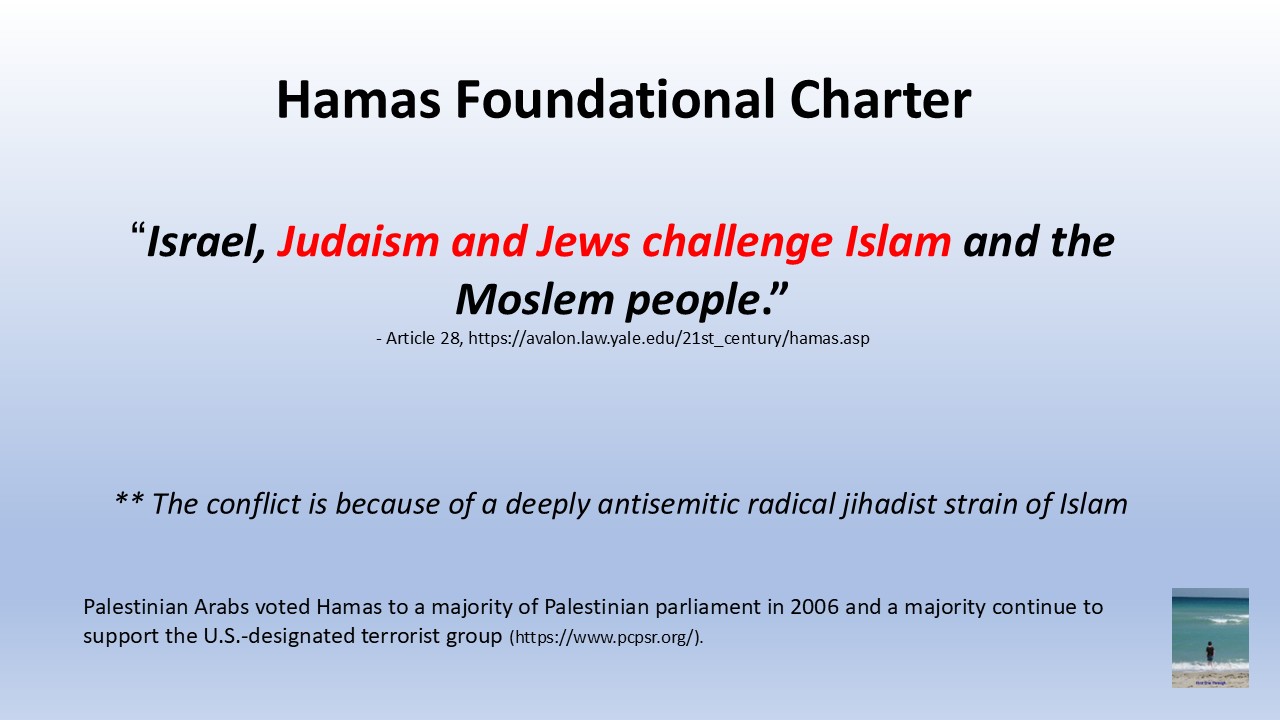
Yet at the same time, Israel has faced repeated war from Hamas in Gaza, Hezbollah in Lebanon, the Houthis in Yemen and, increasingly directly, the Islamic Republic of Iran. These forces are separated by borders, ethnicity and even the Sunni-Shiite divide. What connects them is not Arab identity. It is a radical Islamist rejectionism that refuses to accept a sovereign Jewish state in the Middle East.
It is therefore time for the terminology to catch up. This is increasingly the Jihadi-Israel Conflict.
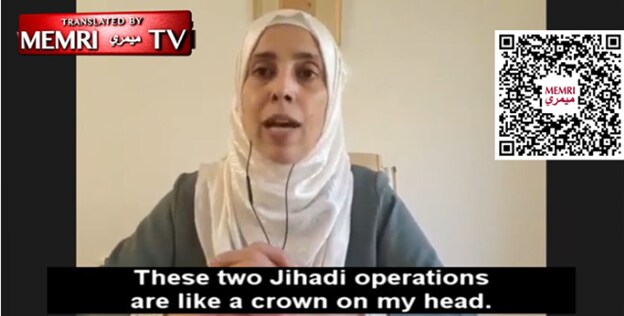
Ahlam Tamimi, who helped plan and transported the suicide bomber to the 2001 Sbarro restaurant bombing in Jerusalem and now lives in Jordan.
The term captures the venom, vitriol and violence of Hamas and the armed Islamist movements aligned against Israel. It encompasses Hezbollah and the Houthis and, most importantly, the Islamic Republic of Iran that has armed, financed and supported much of the network surrounding Israel.
It also leaves room to describe the roles of Qatar and Turkey, whose close relationships with Hamas and fierce political hostility toward Israel place them in a very different category from Muslim and Arab governments pursuing normalization.
Most importantly, the new terminology does something the old terminology cannot: it separates Muslims and Arabs who seek peace with Israel from radical Islamists committed to its destruction and the slaughter of Jews.
Hamas leader calling for slaughtering Jews as a religious Islamic principle
The dividing line has moved.
And that makes the choices facing Lebanon, Syria and Saudi Arabia especially important. They can move toward a Middle East built around trade and coexistence, or remain trapped in a conflict driven by radical Islamist movements that reject Jewish sovereignty, basic human rights and self-determination.
The conflict has become crystallized for what it likely always was: the Jihadi-Israel Conflict.
Two events separated by three months in 2021 delivered the same message to Islamist movements confronting more powerful enemies:
Keep fighting. Keep waiting. Eventually the infidels leave.
The first came in Israel.
In May 2021, Hamas launched rockets toward Jerusalem and Israeli cities, casting itself as the defender of Al-Aqsa and Palestinian Arab families facing possible eviction in Sheikh Jarrah.
Eleven days later came a ceasefire and the Israelis never moved forward with the evictions.
Immediately after the fight, the Palestinian Center for Policy and Survey Research’s June 2021 poll described a “paradigm shift” toward Hamas and armed struggle. 77% of Palestinian Arabs believed Hamas had won, versus 1% who thought Israel had won. And 65% believed Hamas had achieved its declared objectives regarding Sheikh Jarrah and Al-Aqsa.
The perceived lesson was simple: Violence worked.
Then came Afghanistan a few months later.
On August 15, 2021, the Taliban returned to Kabul, twenty years after the United States had removed it from power. The lesson for jihadist movements was not that they needed to defeat a stronger enemy. They needed to outlast it.
As described at the time in Gaza, The Terrorist Enclave, Hamas met with the Taliban and congratulated it for expelling Western forces from Afghanistan.
By June 2023, Palestinian confidence had moved beyond believing Hamas could win a confrontation. PCPSR asked Palestinian Arabs whether Israel, then celebrating its 75th anniversary, would survive to celebrate its 100th. 66% said no. Only 27% believed Israel would still exist. Another 51% believed Palestinian Arabs would eventually recover historic Palestine and return refugees to their former villages and cities.
Just four months later came October 7.
Nearly three years of war have weakened that opinion – in the near-term. As FirstOneThrough detailed in Palestinian Arabs Turn Inward, But Not Away From Hamas, support for armed struggle has fallen sharply and only 20% of Palestinian Arabs now believe Hamas won the Gaza war but 89% believe Hamas will continue to exist in some capacity.
Weakened but waiting. “Resistance” with resolve.
Which brings the argument from the Taliban and Hamas to the Islamic Republic of Iran.
Iran is making the same wager on time. That it can outlast the United States and send it packing much as the Taliban did in Afghanistan.
But for the United States, Iran is not Afghanistan.
Iran has called America the “Great Satan” since 1979 and built a regional military network directed against American forces and allies. Iran has developed increasingly long-range ballistic missiles and pursued nuclear weapons capabilities that could threaten far beyond its borders.
Afghanistan did neither.
Iran also sits on the Strait of Hormuz, through which roughly one-fifth of the world’s petroleum consumption passes. Disruption there reaches energy markets and economies around the world.
Afghanistan had no comparable leverage over the global economy.
America had no long-term goals of staying in Afghanistan. It was not going to keep thousands of troops and pour billions of dollars in a region thousands of miles from its shores to make sure girls went to school and women had equal rights.
But Iran is a real concern for the entire western world, both militarily and economically.
The current U.S. war has already achieved important aims by severely degrading Iran’s nuclear, missile and proxy capabilities. But degraded is not finished.
Iran does not need to reverse its losses today. It only needs to survive long enough for politics to change.
And two elections are approaching. Israelis vote on October 27 and Americans vote in November 3.
For Iran, Hamas and the broader jihadist world, those are more than elections. They are milestones testing the strategy of patience.
While the strategic logic for Israel and U.S. to continue the fight may be sound, their citizens may vote differently. And that is what the jihadists are waiting to observe.
Israel cannot leave Israel. America cannot simply walk away from an Iran threatening its forces and allies, pursuing nuclear and long-range missile capabilities, and holding a critical artery of the global economy at risk.
But jihadist strategy places a different bet: Can they wait until Israelis and Americans vote to stop fighting?
The summer of 2021 taught Islamists that they don’t have to win the wars against more powerful foes. Iran has ten more weeks to stall negotiations and wait for democracies to decide whether to pursue long-term strategic benefits or move on to more immediate matters.
Democracies have elections. Their enemies know it.
Will Israelis and Americans turn their elections into the jihadists’ exit strategy.
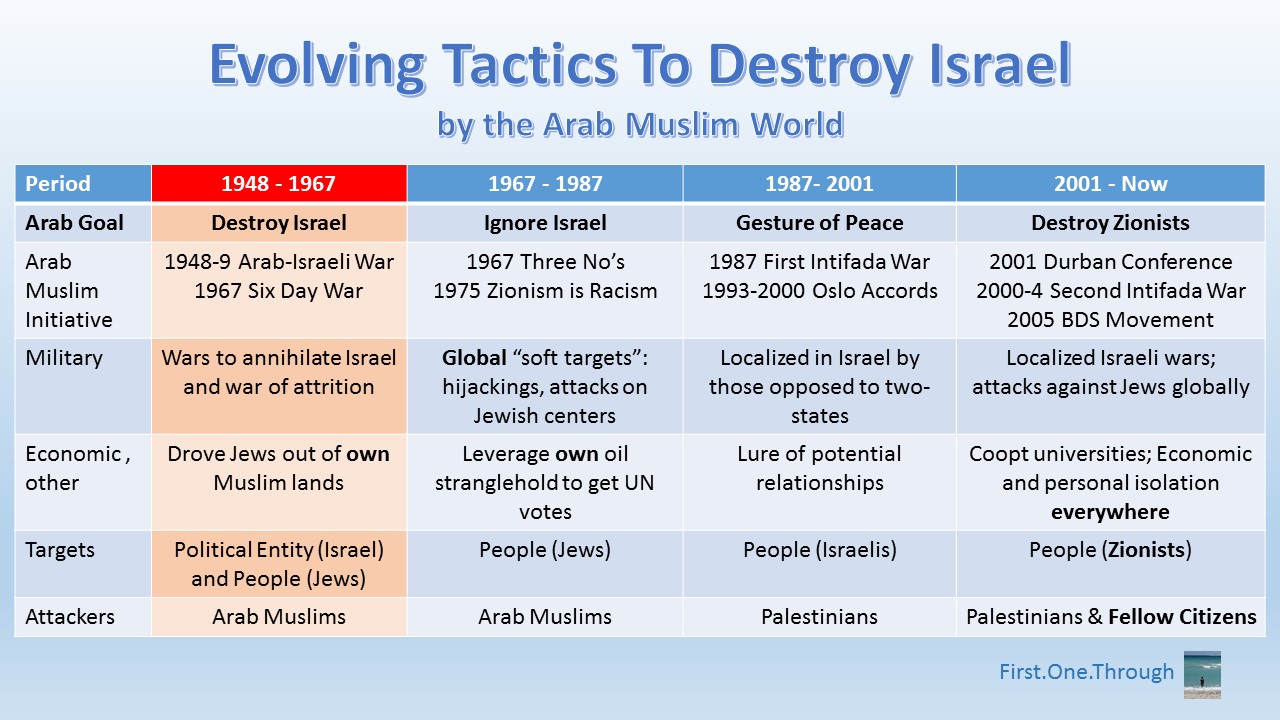
When armies lose wars, the battlefield does not always disappear. It often moves to softer targets.
That is what happened after the Six-Day War, when Israel delivered a devastating defeat to the combined armies of Egypt, Jordan, and Syria. In six days, territories changed hands, military reputations collapsed, and the promise that Israel would soon be destroyed evaporated.
The defeat reverberated far beyond the battlefield. It humiliated governments across the Arab world and shattered the image of inevitable victory that had surrounded the campaign against Israel.
But the war did not end. It simply changed form.
In the years that followed, militant organizations such as the Popular Front for the Liberation of Palestine and the Black September Organization exported the conflict around the world.
The targets were no longer Israeli armies; they were civilians.
Airplanes became battlegrounds. Diplomats became targets. Jewish institutions across the diaspora suddenly found themselves on the front lines of a war being fought thousands of miles away.
The Munich massacre shocked the world when Israeli athletes were murdered at the Olympic Games by Palestinian Arab terrorists. It demonstrated that the battlefield could be moved to the most international stage imaginable.
Another defining moment came with the Entebbe hijacking, when Palestinian terrorists seized an Air France flight and diverted it to Uganda. There, Jewish and Israeli passengers were separated from the others and held hostage in an old airport terminal. The episode ended with a daring Israeli rescue, but the hijacking revealed something chilling: Jews anywhere could be turned into targets for a war militants could not win against Israel itself.
Synagogues and Jewish community centers were attacked in cities far removed from the Middle East battlefield. Rome. Athens. Istanbul. Hezbollah and Iran were often behind the atrocities.
These were not military targets. They were chosen precisely because they were vulnerable.
The message was unmistakable: if Israel could not be defeated in the Middle East, Jews everywhere would become targets.
Today there are worrying signs that the same pattern may be returning.
Iran and its regional network of militias face mounting military pressure from Israel and the United States. When regimes and movements cannot confront stronger armies directly, history shows they often search for targets they can reach more easily.
Recent intelligence chatter has suggested that Iran may have issued signals intended to activate sleeper operatives abroad. Western security services have increased monitoring of potential networks across North America, Europe, and Australia. Whether these warnings prove accurate or not, the concern reflects a familiar strategic logic: when the battlefield is lost in one region, pressure is applied elsewhere.
As the United States becomes the central military opponent of Iran, American Jews may face the threat most acutely.
Extremist movements have repeatedly treated Jewish communities abroad as symbolic stand ins for Israel and its allies. When Israel gains the upper hand militarily, Jews in distant cities have often become the targets that terrorists believe they can reach.
This time the danger may be compounded by a new environment.
Terror no longer requires direct command structures. Groups such as Islamic State pioneered a model of “inspiration terrorism,” where individuals absorb propaganda online and act independently without formal membership or training, such as happened this week in New York City.
At the same time, a troubling ideological convergence has taken shape in parts of Western society. Radical Islamist movements and segments of the revolutionary left increasingly share a political vocabulary built around anti-imperialism, anti-colonialism, and the demonization of Israel. In that narrative, Israel becomes the embodiment of oppression. Jews are portrayed as agents of imperial power rather than a people with a three thousand year connection to their homeland.
When those ideas spread through social media, activist networks, and even parts of the educational system, hostility toward Israel can easily spill over into hostility toward Jews themselves.
The result is combustible.
A generation is growing up hearing that violence against Israel is “resistance,” that Jews represent colonial domination, and that the conflict is part of a global struggle against oppression.
History shows where that logic can lead.
If history is echoing once again, the streets of Western cities may soon remind us of a grim truth: the losers of wars do not always accept defeat.
We are witnessing the next phase of the War on Zionists.
In a sharp escalation of transatlantic tensions, U.S. President Donald Trump announced that the United States will “cut off all trade with Spain”, publicly castigating the Spanish government for refusing to allow U.S. military bases on its soil to be used in operations linked to strikes against the Islamic Republic of Iran and for what he termed Spain’s failure to contribute sufficiently to NATO defense spending. Trump declared that he “doesn’t want anything to do with Spain,” framing the dispute as a response to Madrid’s resistance to what he described as confronting evil in the Middle East and paying its fair share for collective defense.
What follows is not about this immediate crisis. It’s about deeper historical currents that help explain some of the underlying dynamics in Spanish public life that stretch back to the fifteenth century and still matter today.
In Western Europe outside Scandinavia and the United Kingdom, the two countries with the smallest Jewish presence relative to population are Spain and Portugal (about 0.02% of each countries’ overall populations).
That is not a statistical curiosity. It is a civilizational fact.
Five centuries ago, the Iberian Peninsula expelled its Jews. What had been one of the great centers of Jewish life vanished over a five and a half year short window. The Alhambra Decree in 1492 ordered practicing Jews out of Spain. Portugal followed with forced conversions and the Inquisition. Open Jewish life disappeared. What had been woven into the intellectual, commercial, and spiritual fabric of the peninsula was purged.
And it stayed removed.
Unlike other parts of Western Europe where Jewish communities, even after catastrophe, remained visible and rebuilt, Iberia entered the modern era with almost no Jews at all. Medieval synagogues became churches, then museums. Sephardic music became heritage. Jewish quarters became tourist sites. The living community remained tiny.
Fast forward to the present.
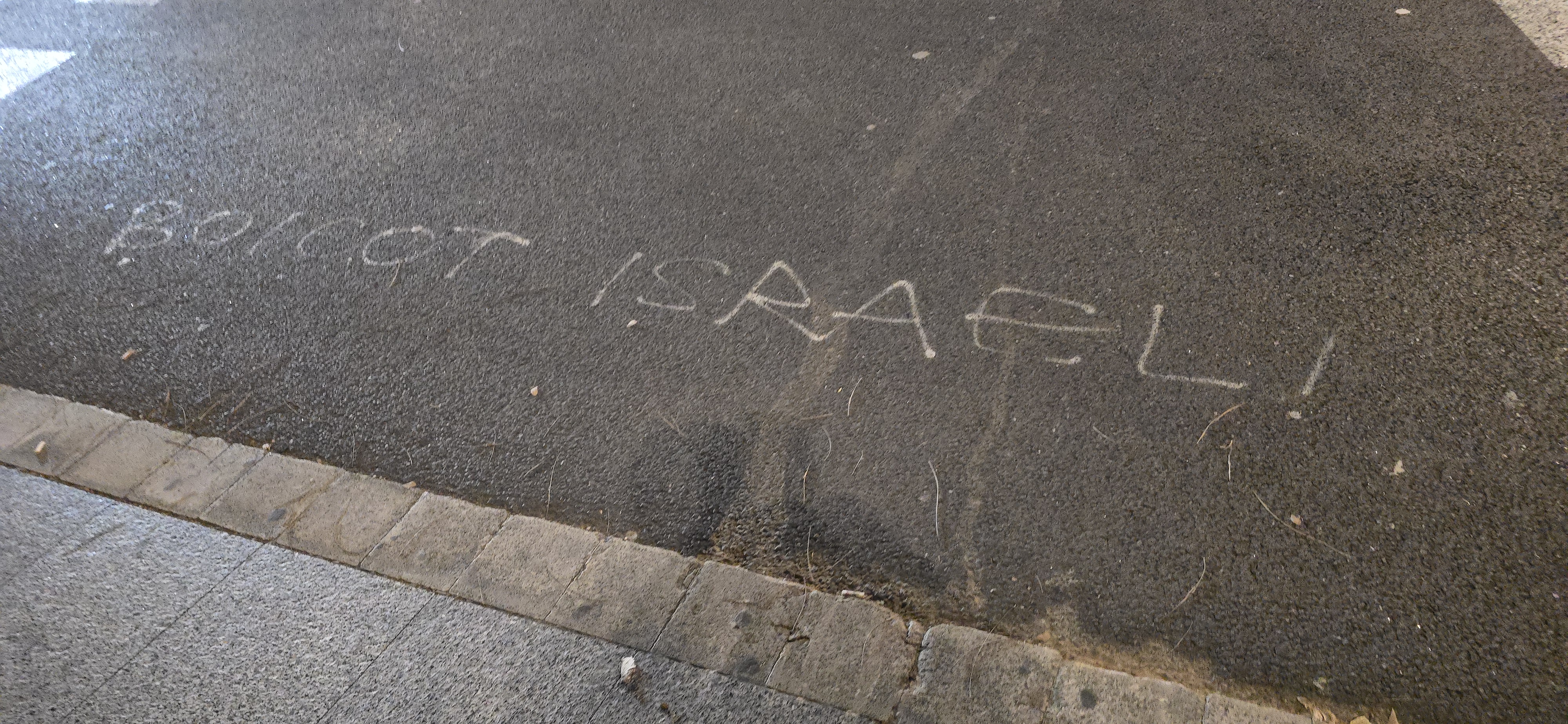
In Spain, large protests erupt over the Israeli-Stateless Arabs from Palestine (SAPs) conflict. Municipal councils pass symbolic measures aligned with boycotts. Parliament debates recognition of Palestine. Streets fill with Palestinian flags while graffiti targets Israel.
Anti-Israel graffiti on Barcelona street in March 2026 (photo: First One Through)
In Portugal, while public demonstrations are generally smaller, political and diplomatic critiques of Israeli policy align with broader European debates.
And yet.
There are no comparable national protest cultures around Sudan. No sustained marches over Somalia. No municipal votes over Afghanistan. Iran’s repression and mass slaughter of its citizens cannot find a sympathetic voice in Iberian plazas, and the Rohingya tragedy never became a regular mobilizing cause.
The difference is not just geopolitical proximity or media cycles. It is structural.
Germany, by contrast, carries the Holocaust in living memory. Its leaders speak of Israel’s security as part of state responsibility. Jewish life is visible, rebuilt, acknowledged. The past is recent enough to shape policy language. The moral vocabulary is immediate.
Spain does not carry that twentieth-century reckoning. Its rupture with Jewish life occurred in 1492, so there is no generational memory of deportation trains. The story of Jews is medieval, not modern.
When a society has lived five hundred years without Jews, when Jewish presence is primarily historical exhibit rather than daily reality, does Israel become easier to turn into abstraction? Does outrage attach more easily to a distant Jewish state when there is little lived Jewish experience at home?
Or is it even worse than detachment?
A peninsula that removed its Jews in the fifteenth century now hosts some of the smallest Jewish communities in Western Europe, public squares with the most intensely anti-Israel protests, and a government unwilling to mobilize in the slightest manner to defang the leading state sponsor of terror, especially against Jews.
Five centuries is not only long enough for history to fade; it is long enough for it to harden into culture.
On June 5, 1968, on the one year anniversary of the 1967 Arab-Israeli War, Sirhan Sirhan, a Palestinian Arab, shot and killed Senator Robert Kennedy while he was campaigning to be the president of the United States. Sirhan assassinated the American politician because of his support for Israel.
On October 7, 2023, on the fiftieth anniversary of the 1973 Yom Kippur Arab-Israeli War, the Iranian proxy of Hamas massacred 1,200 people in Israel and took over 250 people hostages. In the ensuing months, other Iranian proxies went to war with Israel including Hezbollah from Lebanon and the Houthis from Yemen, while the Islamic Republic of Iran attempted to assassinate former President Donald Trump as he campaigned to be the next president.
Republican presidential candidate former President Donald Trump is surrounded by U.S. Secret Service agents as he is helped off the stage at a campaign rally in Butler, Pa., Saturday, July 13, 2024. (photo: Gene J. Puskar / AP)
On February 1, 2024, the FBI filed a lawsuit against members of the US designated foreign terrorist group Hamas. The suit mentions Iran 79 times as a partner for Hamas’s October 7 massacre, as well as ongoing support for the group. Beyond that gruesome day, the suit alleges that Hamas and Iran “knowingly and intentionally combined, conspired, confederated, and agreed together and with each other to kill nationals of the United States.“
The Iranian proxies are public with their threats on the U.S. On October 28, 2023, one of Hamas’s leaders broadcast “The U.S. Administration and the Western countries supporting the aggression are full partners with the occupation in the genocidal war and the cascade of blood that flows from defenseless civilians.This blood will be a curse and a volcano of fury from the masses of our Ummah [i.e., the Muslim community] and the free people of the world against these killers.” An October 18 broadcast from Hamas had a similar message that Hamas is “stating loud and clear that the American administration and the Western countries that support the aggression are full partner countries along with the occupation forces in this annihilation war.” On December 2, 2023, a Hamas official said on Hamas media that “[t]here is not a single crime that the U.S. has not committed against Gaza. May Allah settle the score with America, and may He take revenge on that criminal Nazi country.”
The jihadi war against the United States predates the October 7 jihadi massacre. For example, as stated in the lawsuit, “On or about December 22, 2017, Hamas spokesman Abd Al Qadir Al-Hawajiri spoke at a Hamas rally that was broadcast on a Hamas media outlet. In his speech, Al-Hawajiri condemned American support for Israel, proclaiming that ‘that entity [i.e. , Israel] will cease to exist, as will America.‘”
The vitriol against the United States accelerated after President’s Trump’s pro-Israel actions, specifically mentioning “the American Declaration that the U.S. recognizes Jerusalem to be the entity’s [i.e., Israel’s] capital, as well as to America’s recognition of the legality of the settlements.”
But the jihadi war against Israel is not about the “settlements” or the capital, but Jewish presence in any form. As Ismail Haniyeh, a leader of the Hamas movement said months before he was assassinated in Iran, “We do not want to see you [Jews] on this land; this land is ours, Al-Quds is ours, all of it is ours… there is no place or residing for you.” He went on to commit to waging war and never negotiating or compromising with Israel.
Iran and Hamas actively recruited monetary support from the United States and elsewhere to wage their genocidal war. In November 2020, Hamas’s Al Aqsa TV held a “First Electronic Pioneers Conference” in which Haniyeh said “We need to upgrade the support, from support through soft power to support by means of money and weapons. Yes, I would like to make it perfectly clear: I am talking about support by means of money and weapons, for the mujahideen and the murabitun [the people who harass Jews visiting the Jewish Temple Mount] in Jerusalem and its environs.” Members of South African parliament were in attendance.
Millions of dollars were routed – and continue to be routed – to Hamas via Gazan charity groups. That money is used to kill Israelis, Americans and to fund assassination attempts on American leaders.
Jihadi groups are not just waging a war on Israel but also on America. The genocidal assassins are not limited to the fanatical leaders of Iran and Palestinian groups and include members of the socialist-jihadi alliance in the United States who provide material support for the violence.
There are very few news services that remain unbiased in the Arab-Israel Conflict. Progressive media like The New York Times report over and again that Israel is a far right-wing racist country while the Arab countries are moderates. Meanwhile, Fox News will forever take Israel’s side in the conflict. It often seems that the only party to report on the news while providing context in a neutral fashion is Reuters.
That had been the hope anyway.
On February 16, 2019, Reuters posted an article called “Iran Rejects Anti-Semitism Allegation by Pence.” In the first two paragraphs, Reuters relayed the charge by the US Vice President against Iran, without including a single word of an actual quote. Over the next three paragraphs, the media outlet relayed the response by Iran that the Pence accusation was ridiculous and quoted two Iranian officials, using 71 of their own words.
US Vice President visits Auschwitz Death Camp in Poland
Reuters had quoted a few words from Pence a few days earlier when he made the comments about Iran after to visiting the Auschwitz Nazi Death Camp in Poland. In that article, Reuters sought to give some context to the state of Jews in Iran:
“Iran’s ancient Jewish community has slumped to an estimated 10,000-20,000 from 85,000 at the time of the 1979 Islamic Revolution, but it is believed to be the biggest in the Middle East outside Israel.”
It would repeat the exact sentence in the February 19 article.
How is a drop in the Jewish population by 82% over the past 40 years not underscored with horror? Why did Reuters add the word “but,” to make it sound that the Islamic Republic of Iran isn’t ruthless and horrible in its treatment of the minority Jewish population? First, the only reason why Iran has more Jews than other Arab countries in the region including Morocco, Tunisia, Algeria, Libya, Egypt, Yemen, Syria and Iraq was that those countries wiped out their ancient Jewish populations between 1948 and 1978, while the pre-1979 Islamic Revolution Iran (headed by the American ally, the Shah) retained most its Jews. But once Iran declared war on the West in 1979, it has been rapidly ridding its Jews. Second, to put the 82% decline of the Jewish population in perspective, the Arab population in Israel over the past 40 years has grown by 166%, from 706,000 to 1.88 million. If the Israeli Arab population had gone the way of Iranian Jews for the past 40 years, the current Arab population in Israel would be just 127,000, less than 7% of the current total. Where is the false outcry of ethnic cleansing and where is it actually happening, and why is Reuters failing to point it out?
The February 19 article went on to quote an Iranian leader that “the Holocaust was a disaster,” seemingly refuting Pence’s charge. However Reuters would write nothing about the annual Holocaust cartoon contest that Iran holds each year. It made no mention of the Supreme Islamic Leader of Iran, Ayatollah Ali Khamenei questioning whether the Holocaust ever happened. A curious omission, considering the basis of Pence’s comment stemmed from his visit to a Nazi Death Camp.
The February 19 article would continue with another paragraph meant to provide context for the reader, this one about the nature of Iran’s threats against Israel:
“A senior Iranian Revolutionary Guards commander in January threatened Israel, which Iran does not recognize, with destruction if it attacks Iran, state media reported.”
Note that Reuters wrote that Iran said it would destroy Israel as a matter of self defense, seemingly a reasonable stance. Reuters neglected to write about Khamenei’s comment that Israel is a “cancerous tumor” that must be fought and removed to realize the “complete liberation of Palestine.” Those vile Iranian comments from its Supreme Leader have absolutely nothing to do with Iran responding to an Israeli attack; they were simply threats of destruction.
Biased reporting against Israel is a hallmark of outfits like The New York Times and CNN. It is distressing to see more balanced media like Reuters whitewashing the genocidal calls and actions from Iran. #AlternativeFacts
The New York Times has been advancing the notion that liberal values are popping up in the Middle East. Despite the actual murder and mayhem brought by the “Arab Spring,” the Times published articles about the advancement of women’s rights in Iran and Saudi Arabia, as well as the acceptance of the gay and lesbian communities in Lebanon.
These recent phenomena may be true, but it is interesting that Israel is never mentioned in the articles – the one country that has equality for women and the LGBT community.
LGBT Rights
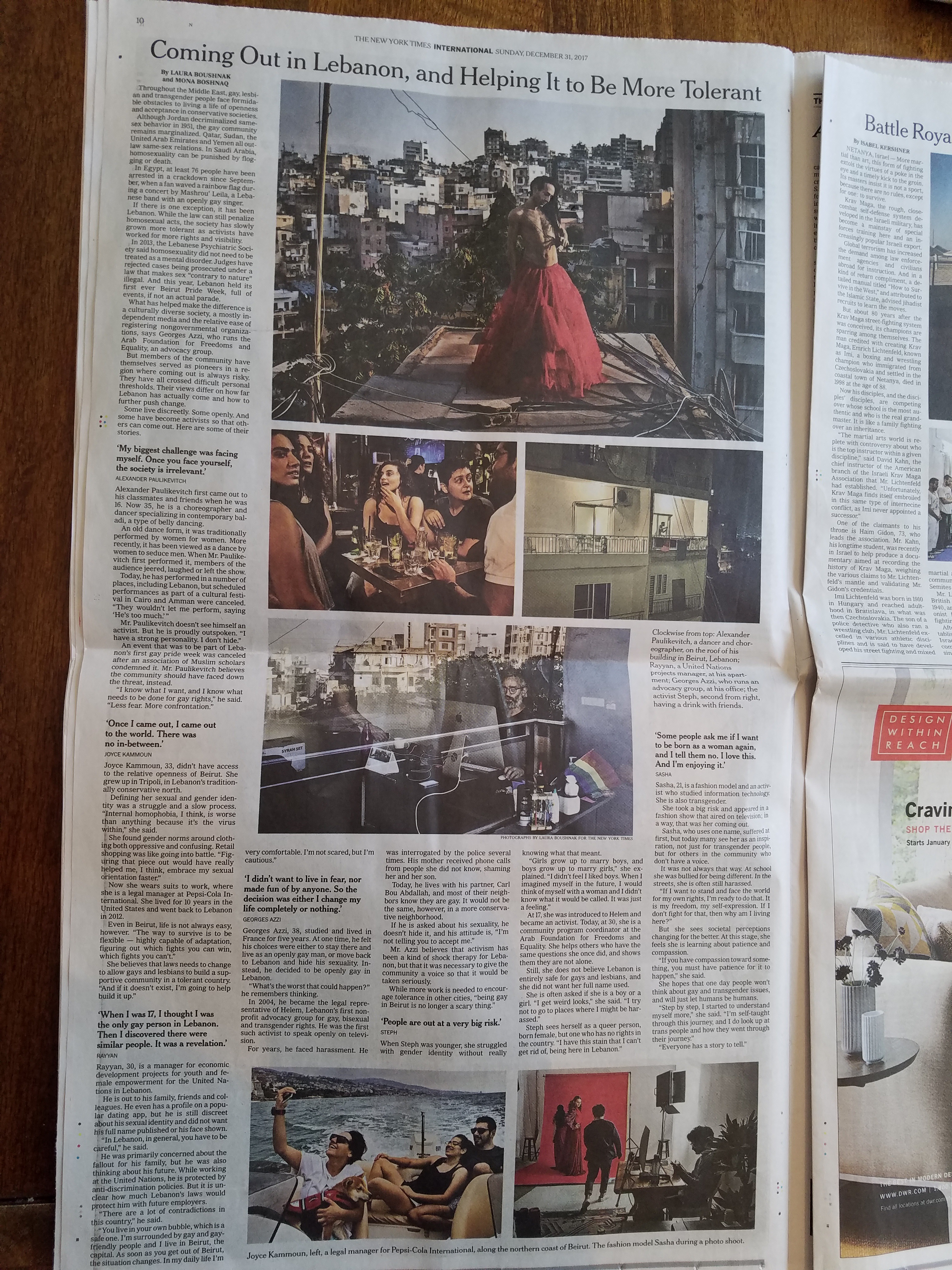
Consider the December 31, 2017 article “Coming Out in Lebanon, and Helping it to be More Tolerant.” The article detailed that most of the countries in the Middle East have laws punishing homosexual activity, naming several Arab countries before highlighting the unique position of Lebanon:
“Throughout the Middle East, gay, lesbian and transgender people face formidable obstacles to living a life of openness and acceptance in conservative societies.
Although Jordan decriminalized same-sex behavior in 1951, the gay community remains marginalized. Qatar, Sudan, the United Arab Emirates and Yemen all outlaw same-sex relations. In Saudi Arabia, homosexuality can be punished by flogging or death.
In Egypt, at least 76 people have been arrested in a crackdown since September, when a fan waved a rainbow flag during a concert by Masrou’ Leila, a Lebanese band with an openly gay singer.
If there is one exception, it has been Lebanon. While the law can still penalize homosexual acts, the society has slowly grown more tolerant as activists have worked for more rights and visibility.”
This is preposterous. The “one exception” of tolerance “throughout the Middle East” is Israel, not Lebanon.
The International Lesbian, Gay, Bisexual, Trans and Intersex Association (ILGA) produced detailed reports about the countries of the world that protect or criminalize LGBT relationships. In every year, Israel stands out as an island of acceptance for the LGBT community for thousands of miles.
From Morocco to Taiwan and from South Africa to Russia, there is a single country that has laws protecting the LGBT community. And it is not Lebanon, but Israel.
The New York Times December 31, 2017 article on page 10 claiming that Lebanon is the only country in the Middle East with gay rights.
Women’s Rights
On December 29, 2017, the New York Times published an article on its cover page called “Unlikely Iranian-Saudi Race: Easing Restrictions on Women.” The article advanced the notion that Iran and Saudi Arabia are both slowly easing restrictions on women in their countries in a competitive environment of liberalization. Saudi Arabia changed laws allowing women to drive, so Iran eased the law regarding women wearing a hijab.
The article quoted “Suad Abu-Dayyeh, a Palestinian who is the Middle East and North Africa (MENA) consultant for Equality Now, a global women’s advocacy group.” The article noted that “she was cautious about concluding that the changes in Iran were related to the Saudi relaxation,” but she did state that “any advancement in any country will really affect the situation in the neighboring countries.”
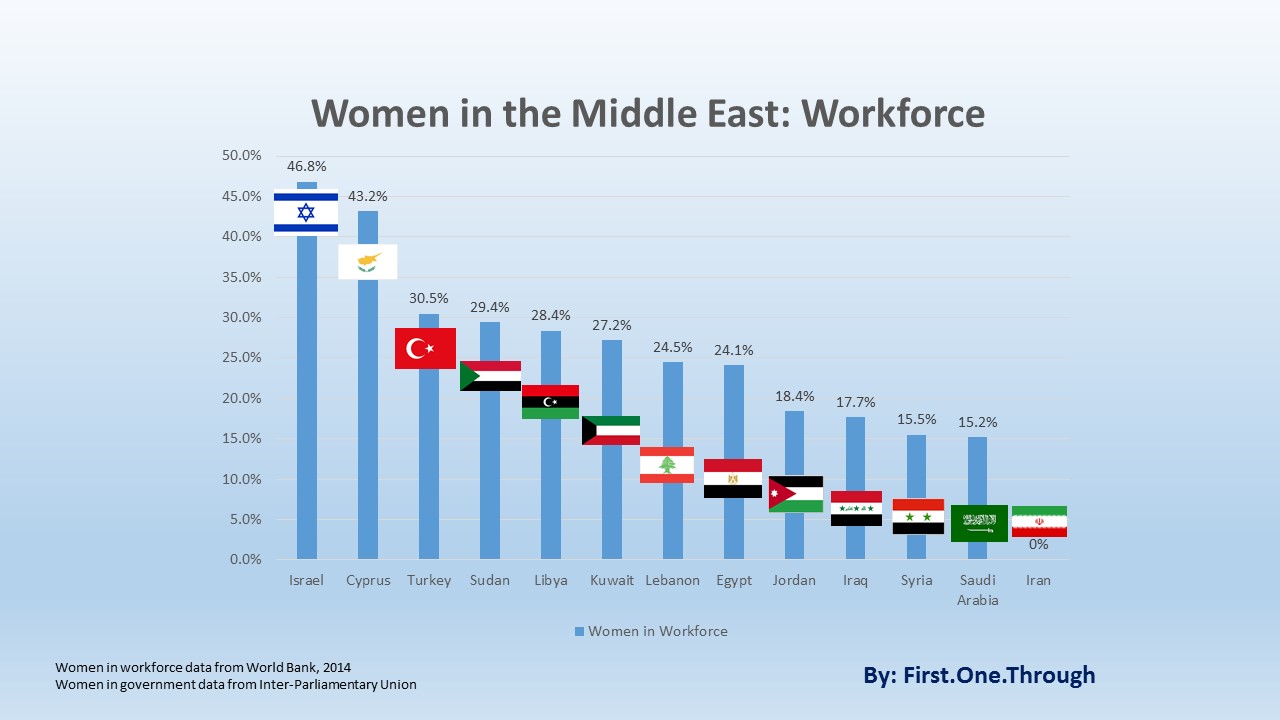
And still, the New York Times did not mention Israel which leads the MENA region in women’s rights.
If the Times really believed in the concept that it opted to cite, that the activity in one country could influence the actions in neighboring countries, why not mention the country that leads the entire region in human rights, especially for women and the LGBT communities? Is it too remarkable to assume that the countries in the region are trying to catch up with Israel, whether in technology, the economy or human rights? Saudi Arabia announced its Vision 2030 plans just a few months ago, as noted by the NY Times on October 25, 2017, that the country needed to move beyond oil into technology. Are all of these events regarding the economy and human rights simply coincidences with no relationship to the marvel of Israel next door?
In the closing days of 2017, the Times sought to educate its readership that the Muslim and Arab countries are in the process of liberal reformation – on their own. The paper did so while deliberately excluding the factual presence of Israel in the Middle East and its possible positive influence of reforming the Muslim nations in the region.
The New York Times has moved beyond the “pinkwashing” of Israel into new levels of #AlternativeFacts.