
Three years ago, Palestinian Arabs thought October 7 might change their future by changing Israel. Polls show how much that ambition has changed.
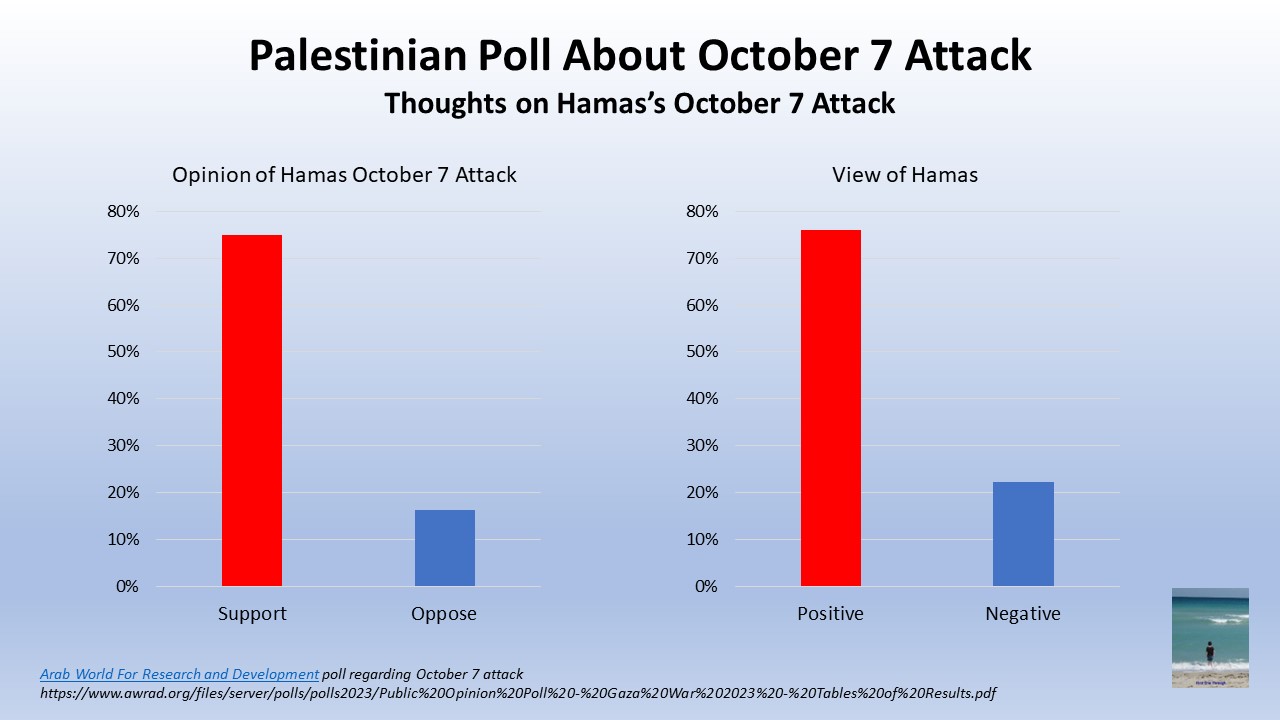
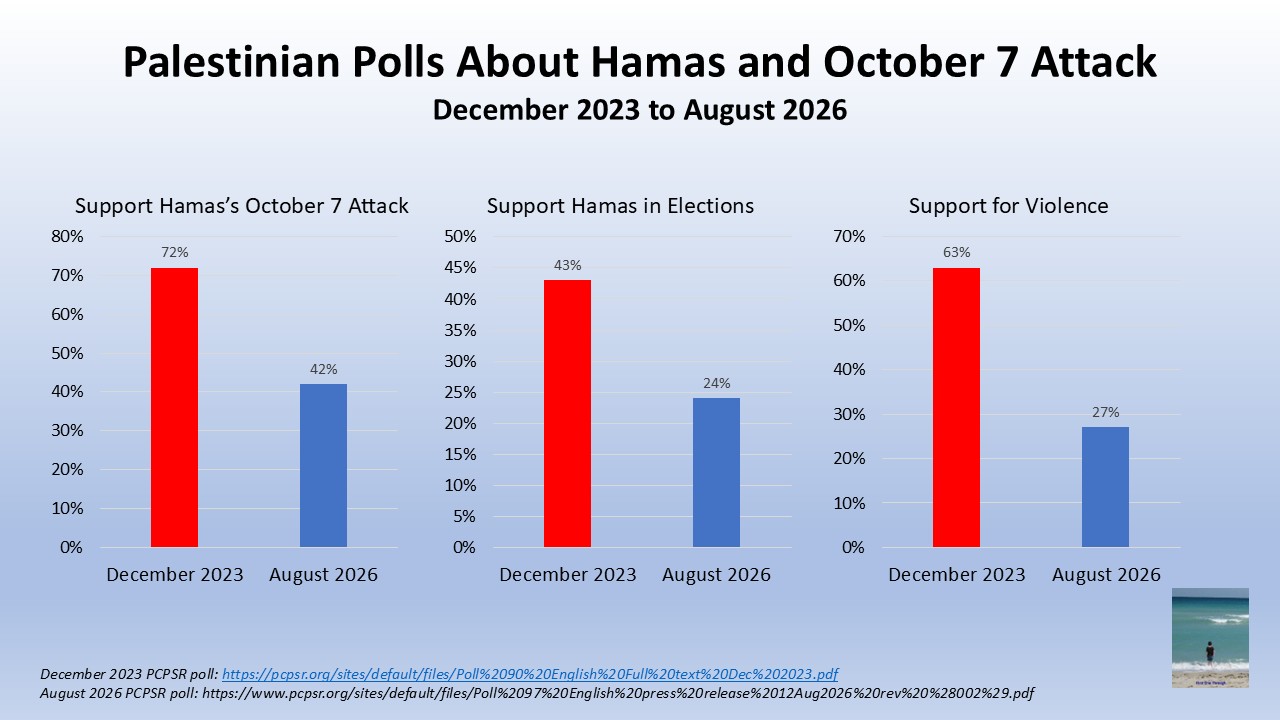
In December 2023, 72% of Palestinian Arabs said Hamas was correct to launch the October 7 attack. 70% believed Hamas would emerge victorious. 63% preferred armed struggle as the best way to achieve Palestinian goals.
Nearly three years of war produced something very different.
According to PCPSR’s August 2026 poll, only 20% now believe Hamas won the Gaza war. Hamas political support has fallen to 24%. Half of Palestinian Arabs say “armed resistance” (aka massacring Jewish civilians) failed to protect them or end the “Israeli occupation” and instead brought destruction. Among Gazans, 65% say so.
Support for armed struggle has fallen from 63% to 27%. 44% now choose negotiations as the most effective strategy.
Their priorities have shifted with it.
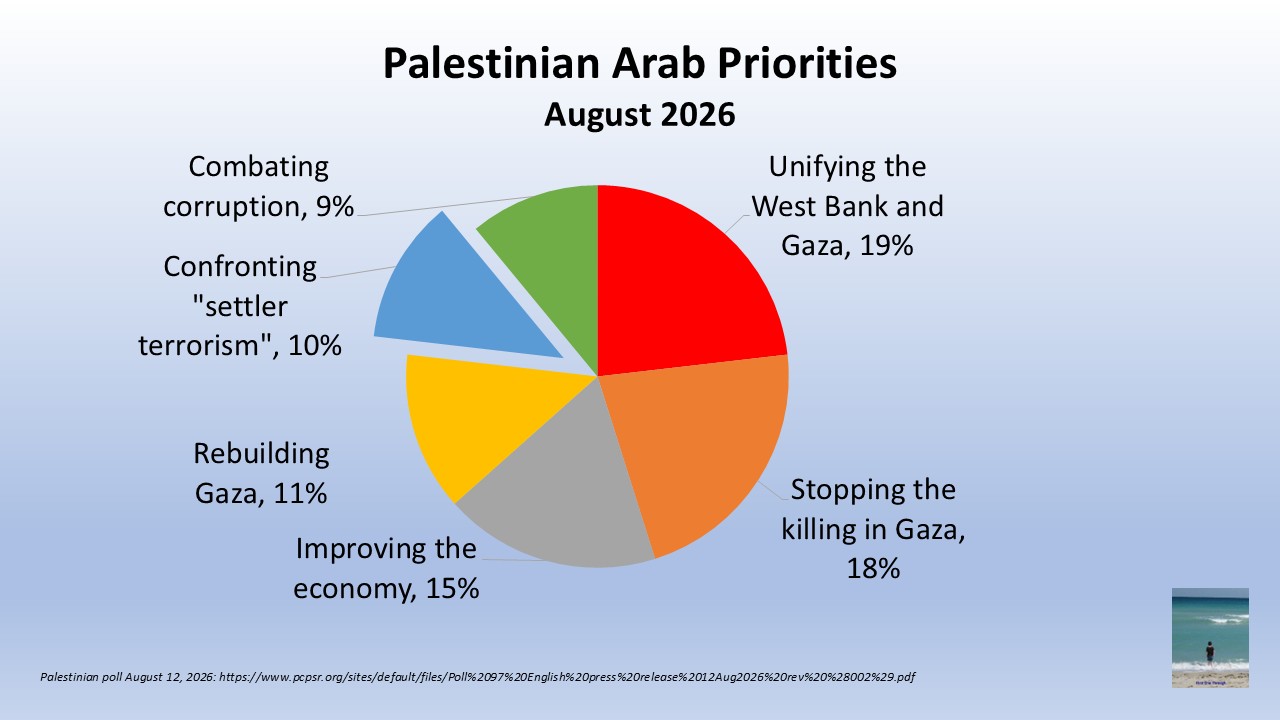
Asked in the August 2026 poll what the next Palestinian legislature should address, Palestinian Arabs answered:
- 19% — Unifying the West Bank and Gaza
- 18% — Stopping the killing in Gaza
- 15% — Improving the economy
- 11% — Rebuilding Gaza
- 10% — Confronting “settler terrorism”
- 9% — Combating corruption
Settler violence ranks fifth.
That is a very different Palestinian Arab story from the one dominating international headlines. Palestinian Arabs put reunification, ending the Gaza fighting, economic recovery and rebuilding Gaza ahead of attacks from West Bank Jews.
While the ambitions of October 2023 were directed outward, towards ending the Jewish State, the priorities of August 2026 are directed inward, to unification, rebuilding and recovering.
And Hamas remains part of that project.
The Palestinian Authority wants candidates in the coming elections to accept the commitments of the Palestine Liberation Organization, including its agreements with Israel. 66% of Palestinian Arabs oppose that requirement. Only 27% support it.
Because Palestinian Arabs envision Hamas remaining part of their future.
Asked what Hamas would become if it gave up its weapons, 53% said it would remain both an armed resistance and political movement. Another 36% said it would become solely a political movement. That means 89% see Hamas continuing as a political movement in some form.
There is a historical lesson in what happens after a genocidal society launches a disastrous war and loses.
Postwar Germany did not rebuild by simply disarming the Nazi Party and inviting it to contest elections. The Nazi Party was abolished and banned. Its political structures were dismantled. Germany’s reconstruction required a break with the movement that had led it into catastrophe.
Palestinian Arabs are not making that equivalent break. While they increasingly recognize that Hamas’s war failed, they want Hamas to be part of the Palestinian future.
As the western media and United Nations narrows a focus on violence committed by Israeli Jews against Palestinian Arabs, those same Arabs are no longer focused on those Jews. Instead, the Arabs prioritize rebuilding after the disaster while maintaining the eliminationist ideology in their society for a future war.


Pingback: The Summer of 2021 and the Wars of Today | First One Through
Pingback: The Hydra Can Die | First One Through