
It was once called the Arab-Israeli Conflict.
The name made sense at Israel’s founding. Israel fought wars against the armies of Egypt, Jordan, Syria, Iraq and other Arab states. The conflict was understood principally as one between the Jewish State and the surrounding Arab world.
Then the map changed.
Egypt made peace with Israel in 1979. Jordan followed in 1994. During the horrific Second Intifada, the suicide bombings, shootings and other attacks were overwhelmingly part of a localized war involving Palestinian Arabs. The terminology narrowed accordingly. The Arab-Israeli Conflict increasingly became the Palestinian-Israeli Conflict.
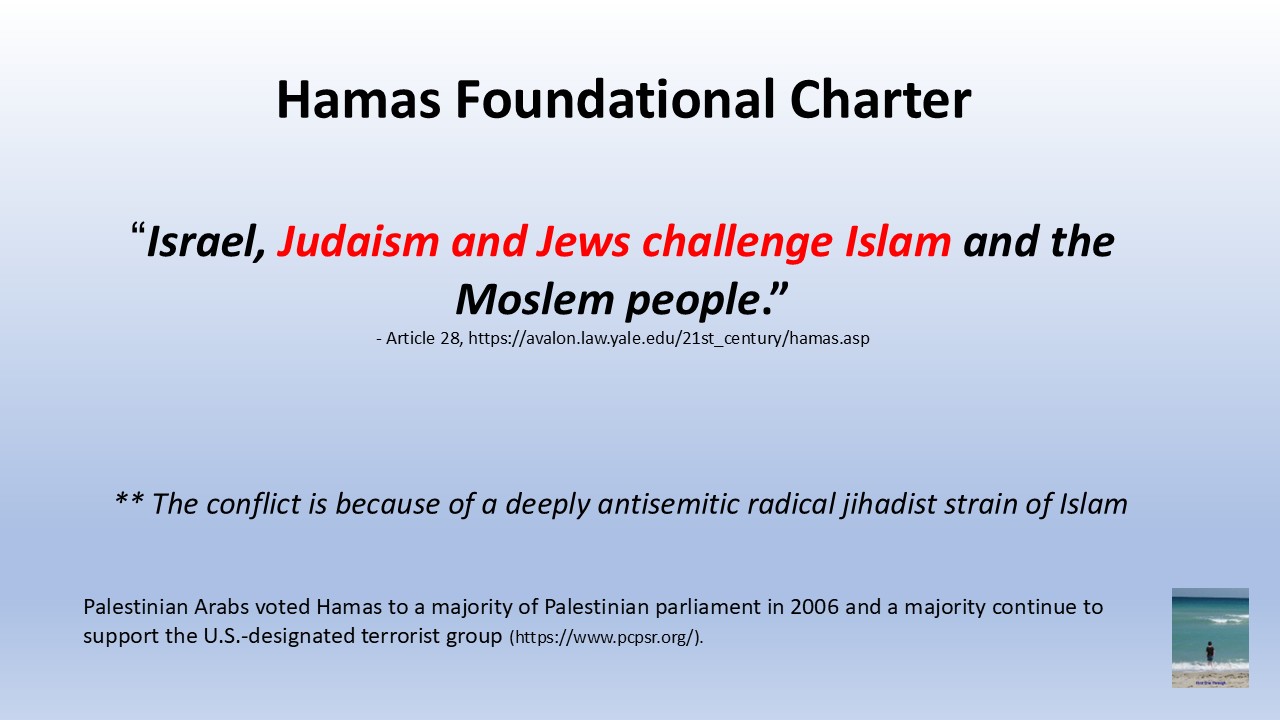
That description is now inadequate too as the map evolved again over the past several years.
The Abraham Accords fundamentally changed the regional picture. The United Arab Emirates, Bahrain and Morocco normalized relations with Israel. Trade, tourism, investment and security cooperation followed. Other Muslim-majority countries have also maintained or developed relations with the Jewish State.
Yet at the same time, Israel has faced repeated war from Hamas in Gaza, Hezbollah in Lebanon, the Houthis in Yemen and, increasingly directly, the Islamic Republic of Iran. These forces are separated by borders, ethnicity and even the Sunni-Shiite divide. What connects them is not Arab identity. It is a radical Islamist rejectionism that refuses to accept a sovereign Jewish state in the Middle East.
It is therefore time for the terminology to catch up. This is increasingly the Jihadi-Israel Conflict.
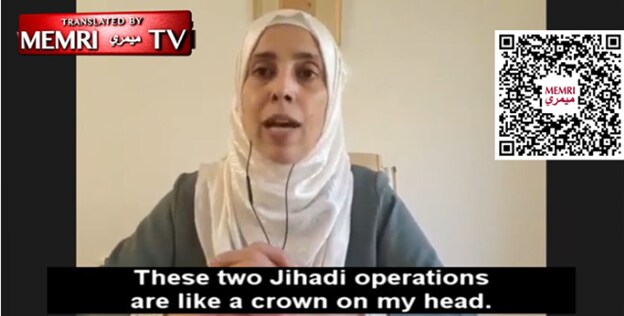
The term captures the venom, vitriol and violence of Hamas and the armed Islamist movements aligned against Israel. It encompasses Hezbollah and the Houthis and, most importantly, the Islamic Republic of Iran that has armed, financed and supported much of the network surrounding Israel.
It also leaves room to describe the roles of Qatar and Turkey, whose close relationships with Hamas and fierce political hostility toward Israel place them in a very different category from Muslim and Arab governments pursuing normalization.
Most importantly, the new terminology does something the old terminology cannot: it separates Muslims and Arabs who seek peace with Israel from radical Islamists committed to its destruction and the slaughter of Jews.

The dividing line has moved.
And that makes the choices facing Lebanon, Syria and Saudi Arabia especially important. They can move toward a Middle East built around trade and coexistence, or remain trapped in a conflict driven by radical Islamist movements that reject Jewish sovereignty, basic human rights and self-determination.
The conflict has become crystallized for what it likely always was: the Jihadi-Israel Conflict.


Pingback: The Hydra Can Die | First One Through
Pingback: The New York Times Has Some Questions for the Jews | First One Through
Pingback: The New York Times Has Some Questions for the Jews | First One Through