
The New York Times wants to know what New York Jews think about Israel.
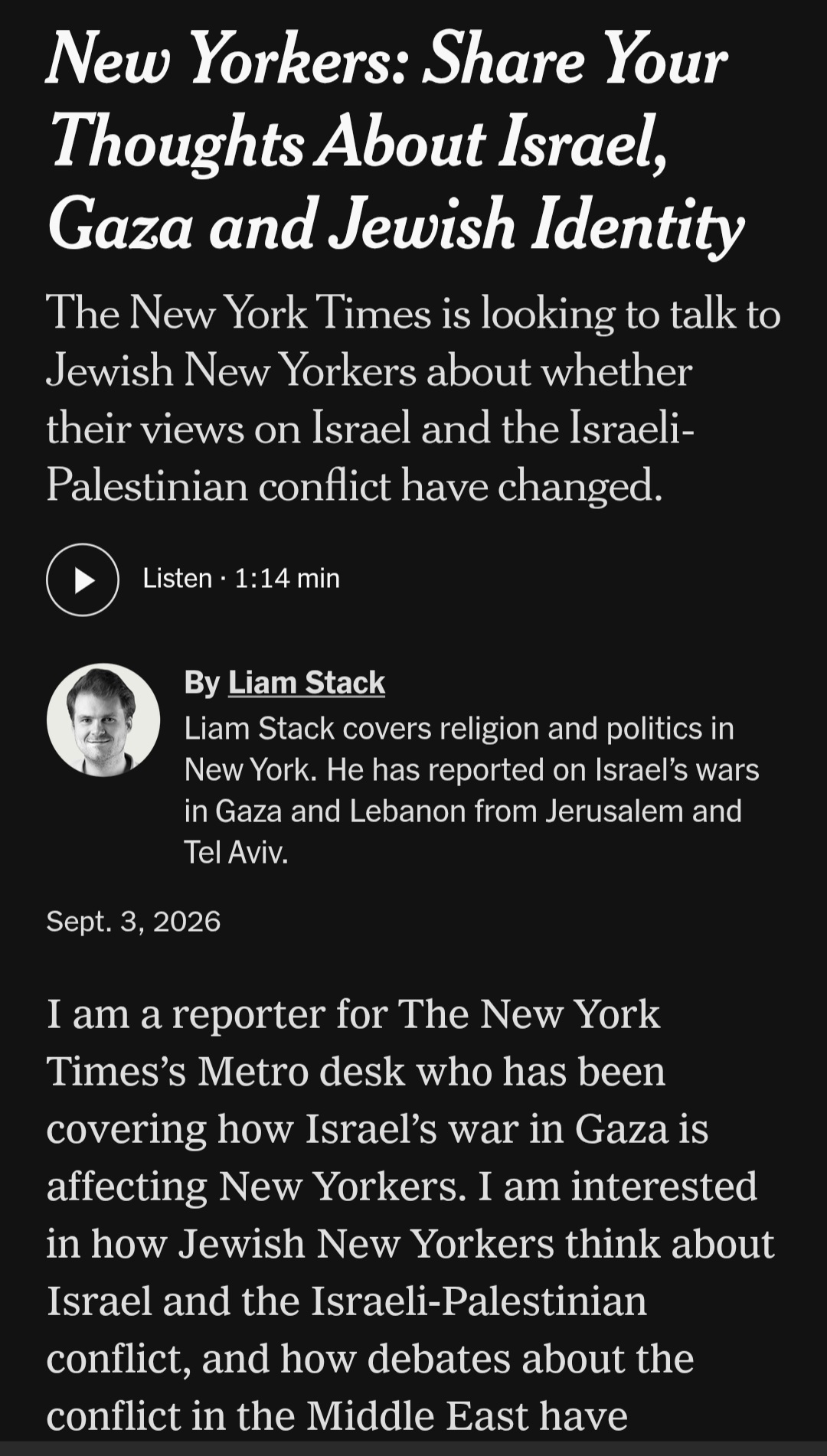
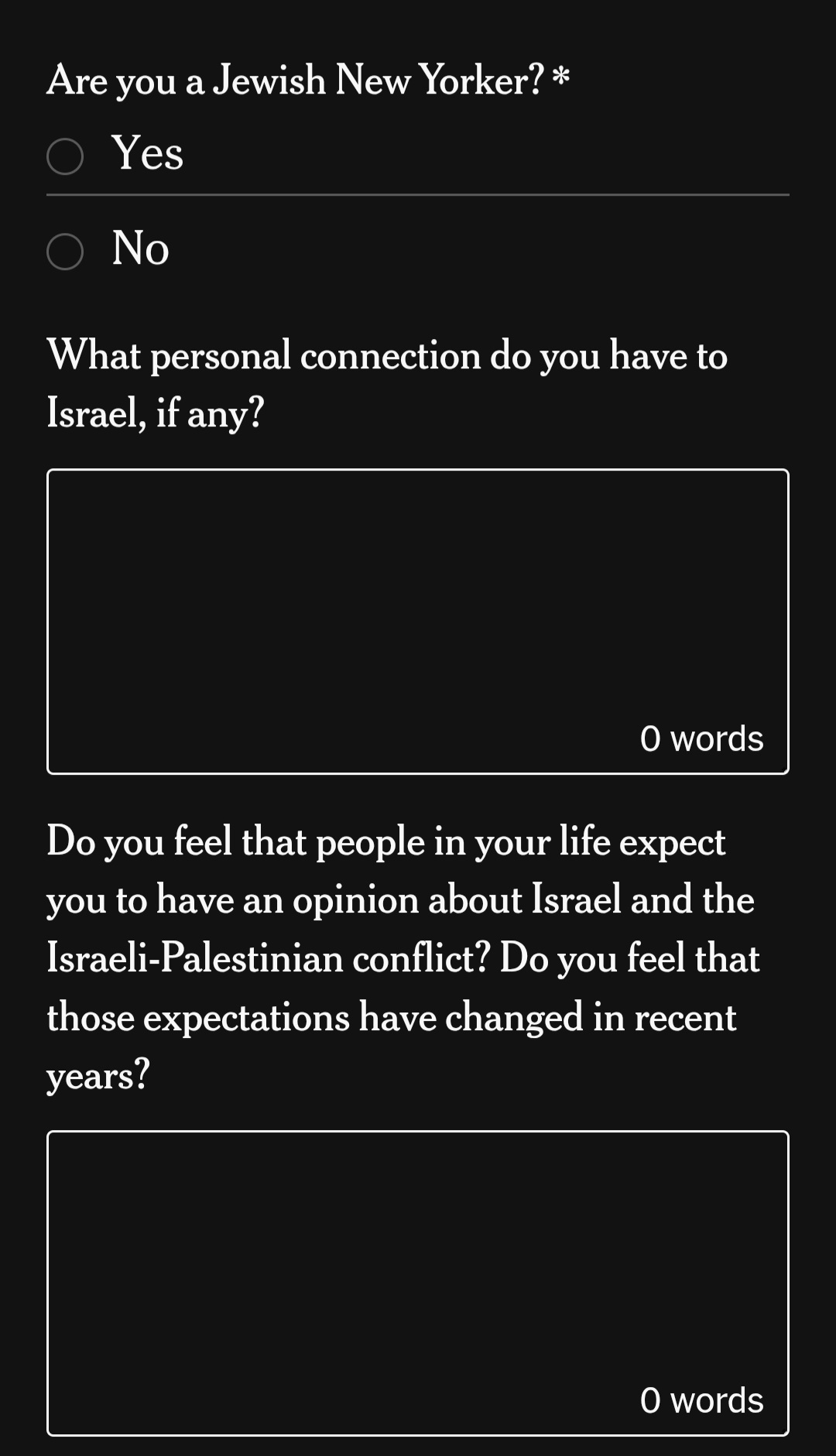
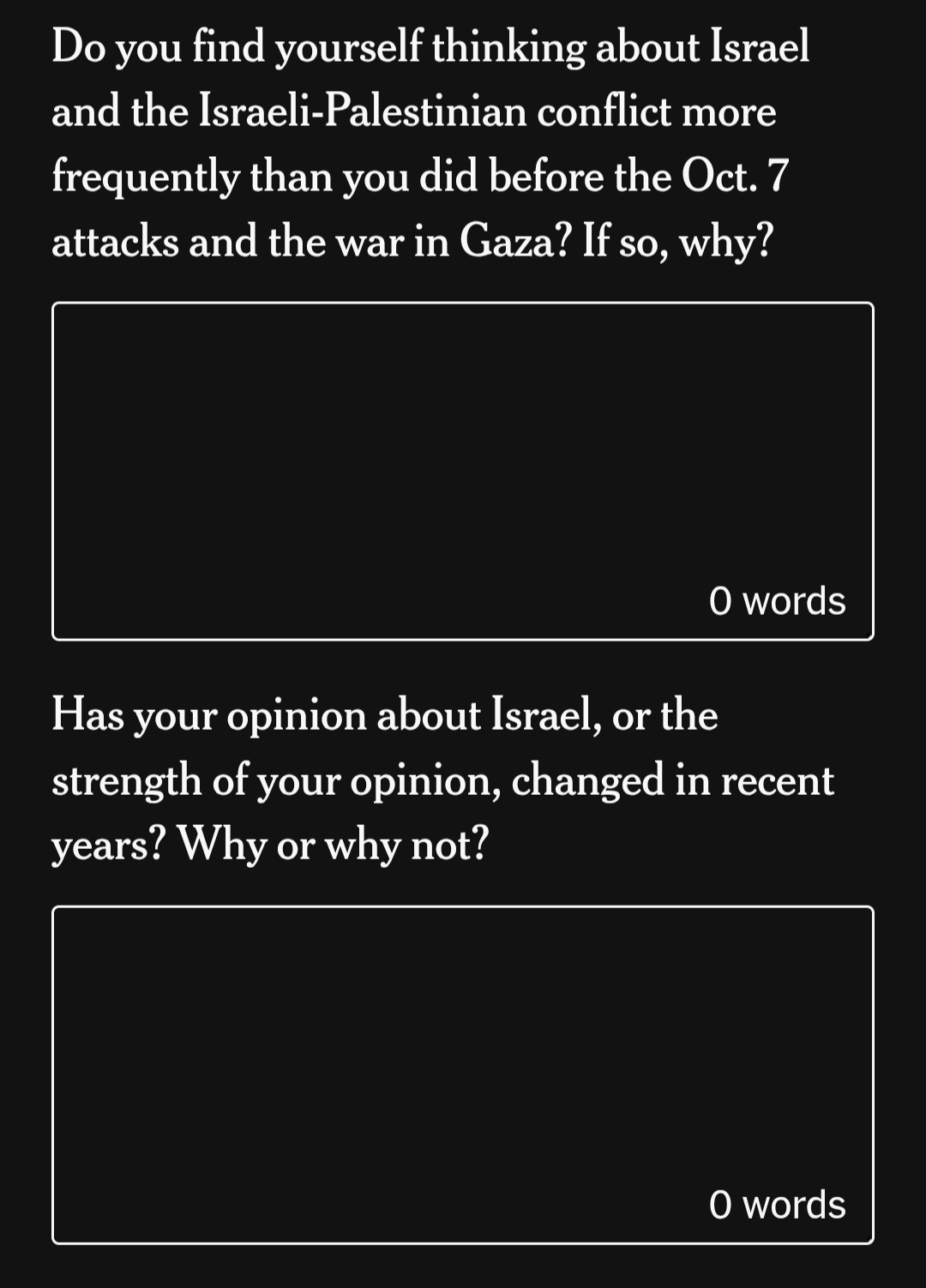
Its new questionnaire asks Jewish New Yorkers whether they think about Israel more since October 7. Whether their opinion of Israel has changed. Whether they call themselves Zionists. Whether they have become more vocal or politically active.
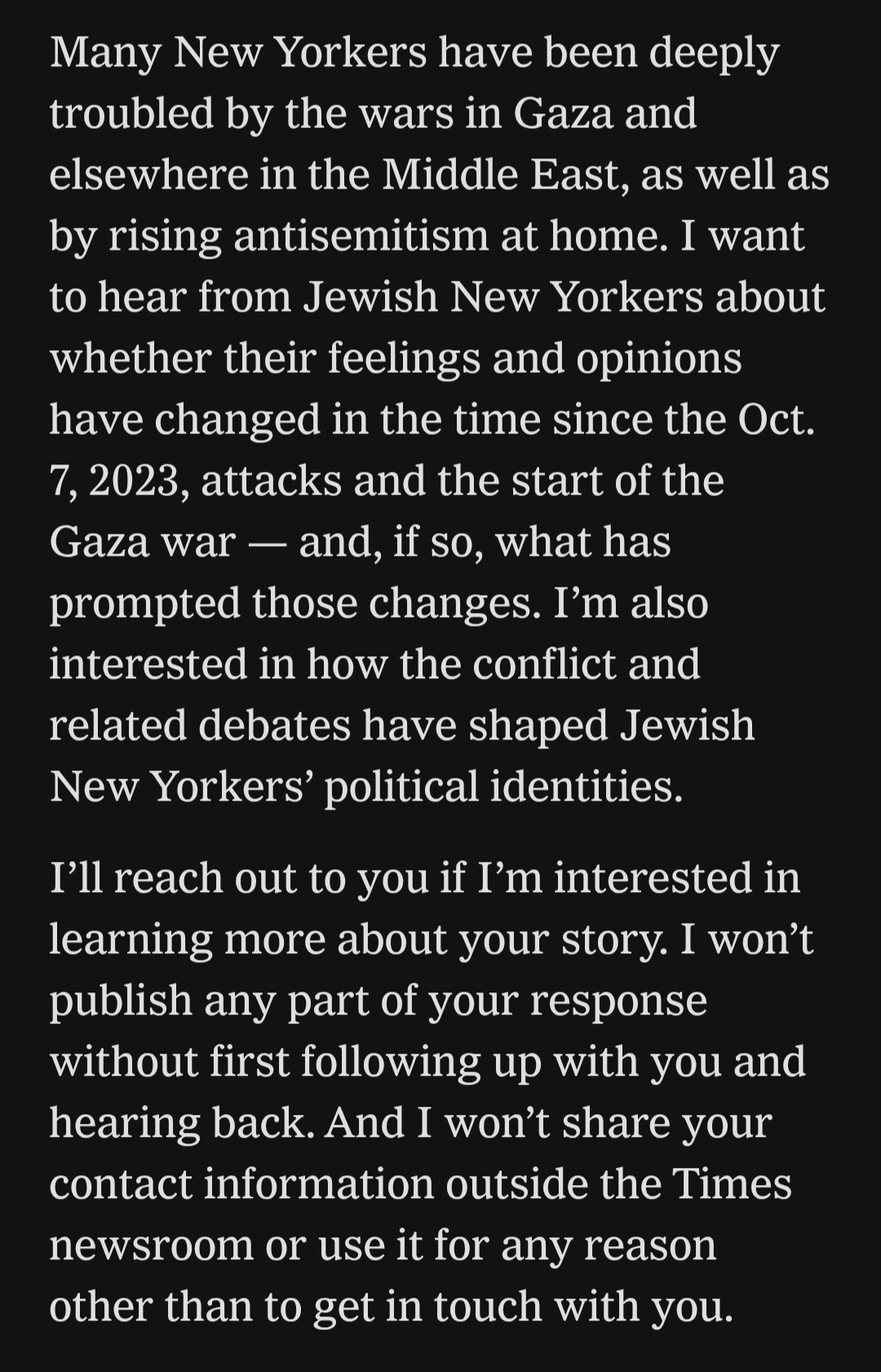
The frame is revealing.
The Times wants to know how Israel has changed the Jews.
It does not ask whether October 7 changed their opinion of Hamas.
Did the murder, rape and kidnapping of Israelis change their understanding of the conflict? Did years of Israelis held hostage in Gaza change it? What have they learned about Hamas, its genocidal antisemitic foundational charter, Palestinian politics or jihadist movements committed to Israel’s destruction?
Those questions aren’t there.
Neither is another actor in the past three years: the New York Times.
Has its coverage changed your trust in the newspaper? Do you believe its reporting on Israel and Gaza has been fair? Has its treatment of antisemitism changed your relationship with the paper? Has its language surrounding “genocide”, “occupation” and “resistance” changed how you understand the conflict or how you perceive of the media?
The newspaper wants to know what changed the Jews without asking whether the newspaper helped change them.
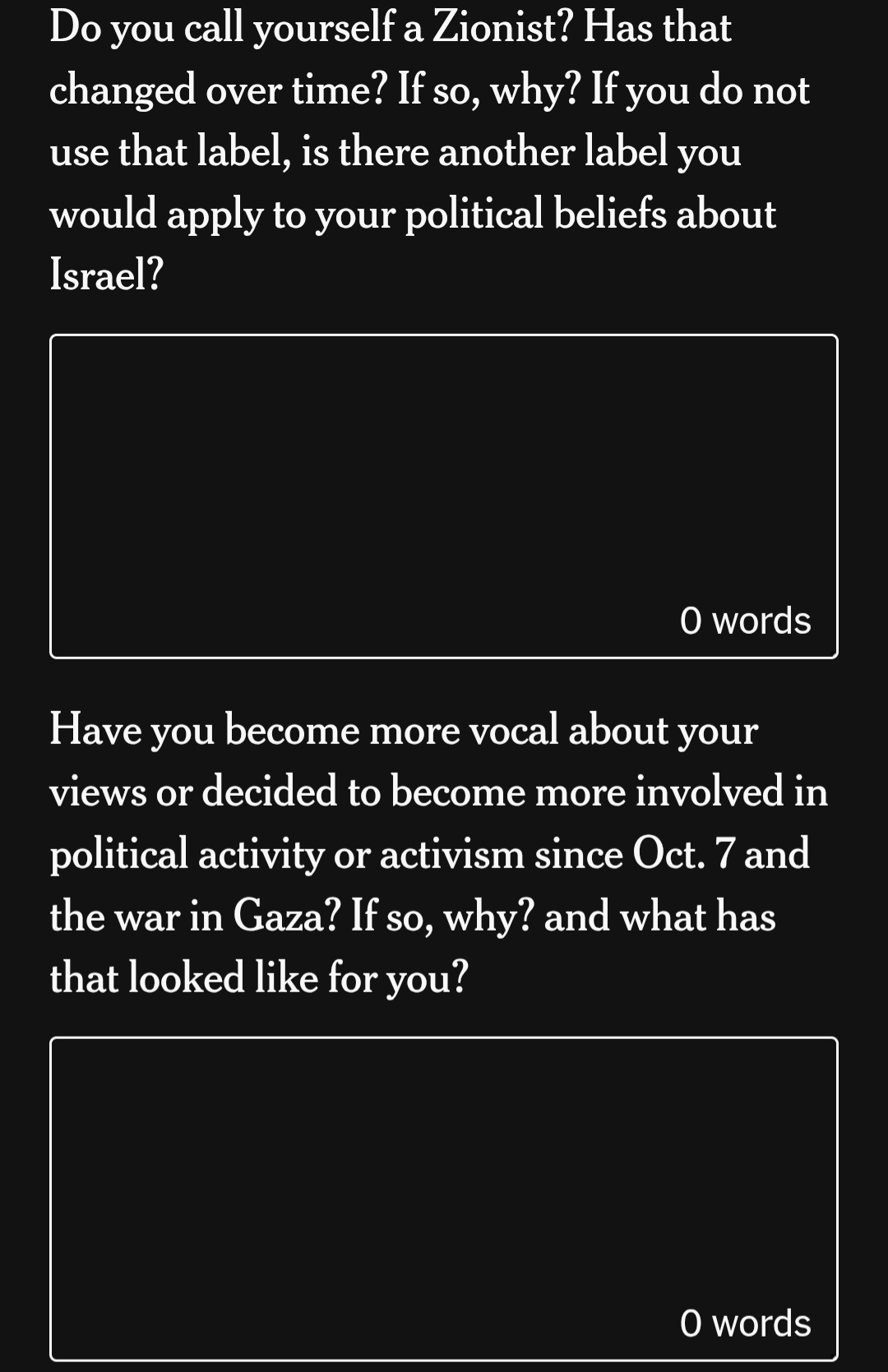
Then there is the matter of which Jews.
The questionnaire asks whether you are a Jewish New Yorker. It does not ask whether you are 22 or 72. Orthodox, Conservative, Reform or secular. Democrat, Republican or independent. Progressive, moderate or conservative. Those differences may explain the answers, as discussed in many other polls.
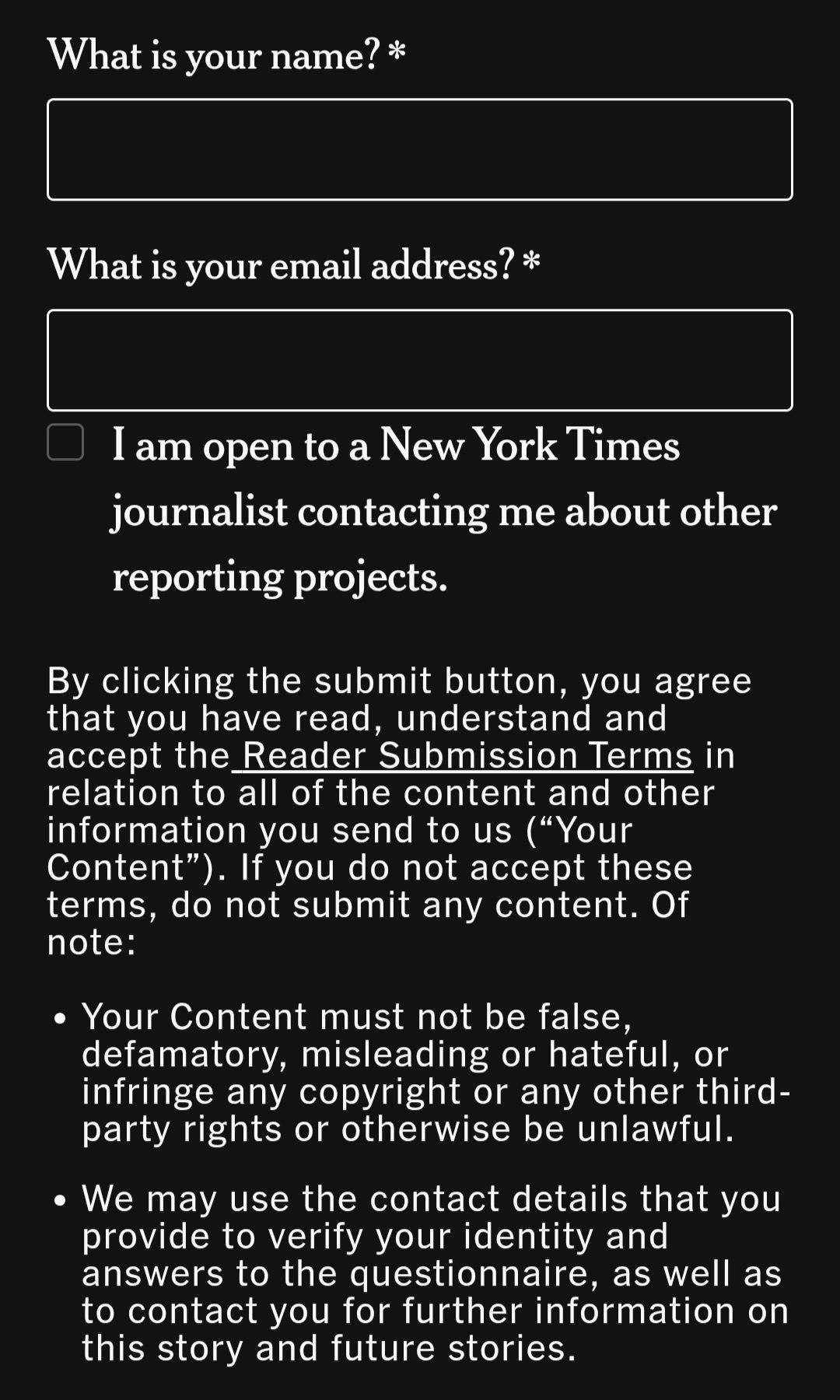
More important, this is an open call published by the New York Times. It is not a random survey of New York Jews. For years, parts of the Jewish community have fought bitterly with the paper over its coverage of Israel and antisemitism. Many longtime Jewish readers have publicly canceled their subscriptions over that coverage. Thousands more privately.
The Jews most alienated by the Times may also be the least likely to see its callout, trust its reporter or volunteer their thoughts. Jews comfortable with the newspaper and its worldview may be more inclined to respond, biasing the poll results. It could collect hundreds of responses showing its Jewish respondents moving away from Israel without knowing whether the Jews moved or its sample did.
Then comes the missing questionnaire.
Where are the questions for Arab and Muslim New Yorkers?
Did October 7 change your opinion of Hamas? Do you consider Hamas a terrorist organization? Do you believe Jews are entitled to national self-determination? Should Jews be allowed to freely access and pray at their holiest site? Should Hamas and other Palestinian armed groups surrender their weapons? Has your opinion of Israel changed? Of Jews?
Those answers would tell New Yorkers quite a lot too.
And the timing is particularly ugly.
Hasan Piker has recently been asking his own version of precisely this question: How attached are American Jews to Israel?
Piker has called Israel “Jewish ISIS” and previously said Hamas was “a thousand times better” than Israel. More recently, he warned that if American Jews continue presenting themselves as deeply invested in Israel, eventually someone may take action against American Jews rather than Israel.
That is antisemitism dressed up as a warning.
And now the New York Times arrives with a questionnaire measuring whether Jewish New Yorkers still call themselves Zionists and whether their feelings about Israel have changed.
The disturbing convergence is the question itself: How attached are the Jews to Israel now? The New York Times wants to know. Millions of antisemites that follow Piker want to know.
ACTION ITEM
So answer the poll. But not their questions.
Tell the Times exactly how October 7 changed your thinking.
Tell it what you think about Hamas. Tell it what you have learned about jihadism, hostage-taking and fighters operating among civilians. Tell it whether Palestinian Arabs support for the October 7 massacre and Hamas have changed your understanding of the conflict.
Then tell it about the New York Times.
Tell it whether its coverage has increased or destroyed your trust in the newspaper—its language, its emphasis, its omissions, its telling of the Jihadi-Israel conflict.
Hasan Piker and The New York Times are polling Jews for their attachment towards Israel. Tell them what you think of the global jihad sweeping the world.


