
For most of the Torah, the covenant looks backward.
God remembers Abraham, Isaac and Jacob. Their children inherit promises made before they were born. The land before them was promised to their fathers.
Jewish history begins with memory.
Then, near the end of the Torah, the direction reverses.
Moses gathers the people on the edge of the Land of Israel and tells them:
“Not with you alone do I make this covenant… but with those who are standing here with us today before the Lord our God, and with those who are not here with us today.” (Deuteronomy 29:13–14)
The covenant changes tense. Until now, we are bound to people who came before us. Now people who do not yet exist are bound to us.
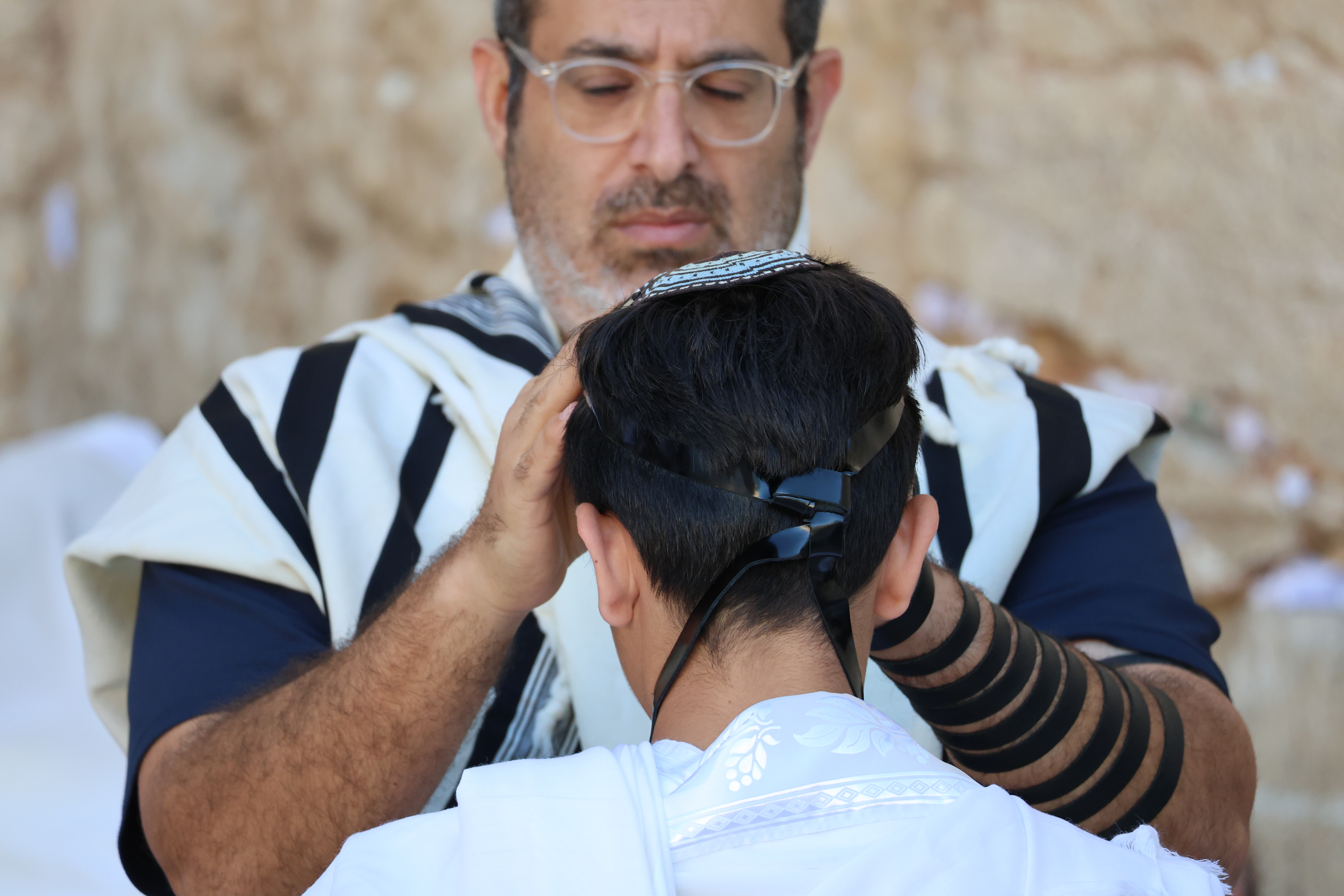
Abraham enters a covenant whose fulfillment he will never see. Generations later, his descendants stand together and accept a covenant for generations they will never see.
Genesis says: You are here because of those who came before you.
Nitzavim says: Those who come after you are part of what you do here.
And connecting them is the land.
Almost immediately after extending the covenant to generations yet unborn, Moses foretells that the Jewish people will be scattered among the nations. Then God will gather them and “bring you to the land that your fathers possessed, and you shall possess it.” (Deuteronomy 30:5)
The land comes from the fathers.
The covenant passes to the children.
Exile comes between them.
And still the chain holds.
It is a story that cannot begin at a convenient modern date. Jews do not suddenly appear in Europe, in Israel in 1948, or Jerusalem in 1967. Nitzavim describes a people moving through time, bound backward to its ancestors and forward to its descendants, with the land running through it all.


